• Category Archives Tourist Attractions
  • Christmas 2008

    Today’s photo is a collage of some of the Christmas postings I have done since 2006. There are many; the links are provided below if you would like to see the original postings.

    Merry Christmas and Happy Holidays to all! Thanks for your support 🙂

    Christmas Postings: Tiffany’s Windows, Saks Windows, Christmas Spirit, Winter Wonderland, Dyker Lights, National Tree, Nested Embraces, Comfort and Joy. Surly Santas, Santa, Just Like Everyone Else


  • Fifth Avenue

    Some things are so monumental and important that they live in a world of assumption. I have written of many things located on Fifth Avenue, but never specifically on the street itself.

    Fifth Avenue is the literal and visceral center of the city. To say Fifth Avenue, whether to someone in New York or not, is to connote all things luxurious – the quintessential urban thoroughfare and, by many accounts, the most expensive real estate in the world.

    Of course, an important part of the street’s image is due to the presence of its high-end retailers, virtually all of them iconic, even legendary. These are flagship stores, many of which remain as the company’s only location. Others have a small number of other national/international locations.

    At Christmas, Fifth Avenue is transformed into a holiday extravaganza. People come from all corners of the earth to see the store window displays and Rockefeller Center with its tree and skating rink, as well as just to experience being there. Everything conspires to squeeze joy and holiday spirit out of even the most hardened and least sentimental. The density of these establishments makes a Fifth Avenue stroll a continuous, jam-packed adventure.

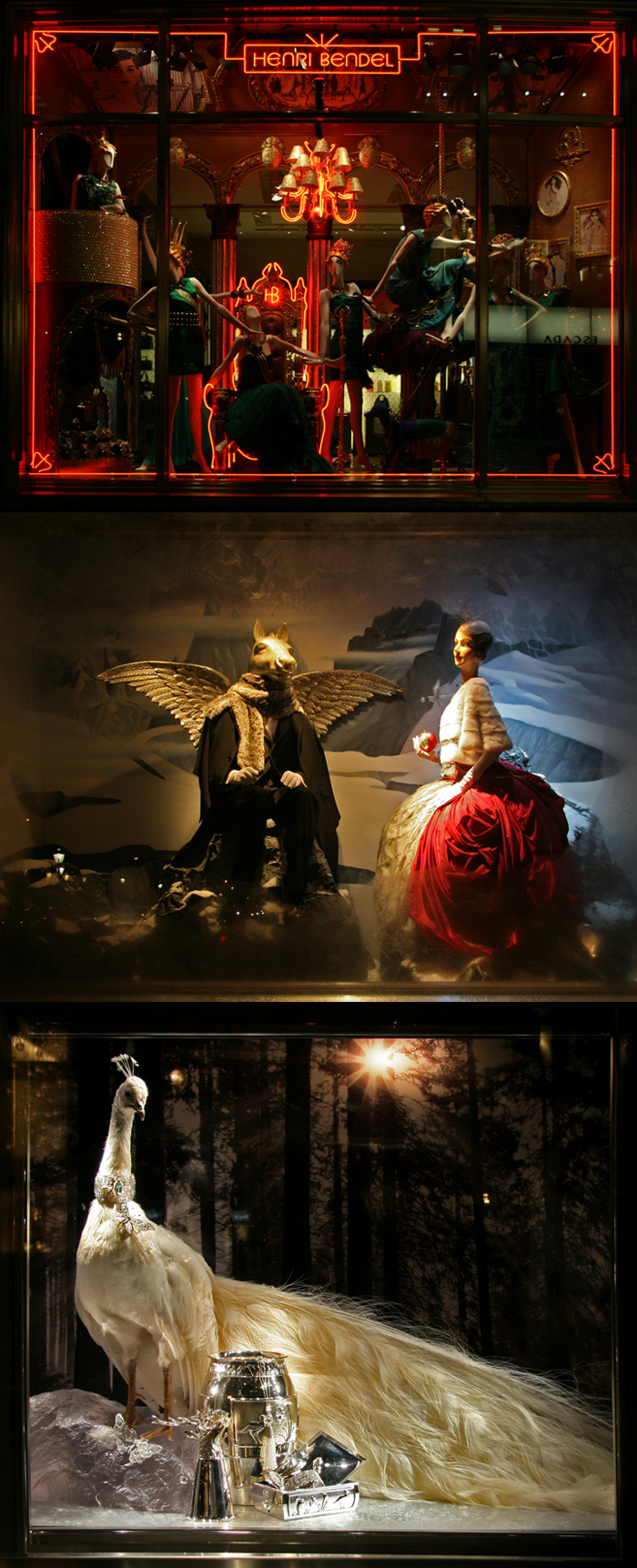
    In today’s photos, I show the windows of Henri Bendel, Bergdorf, and Tiffany’s.
    I obviously cannot do Fifth Avenue justice here on a single blog posting – the subject could easily fill many books, which it has. But no need to read if you have neither the time nor inclination, because when it comes to Fifth Avenue, a leisurely walk in any season will tell all – this street can speak for itself…


  • Winter Wonderland

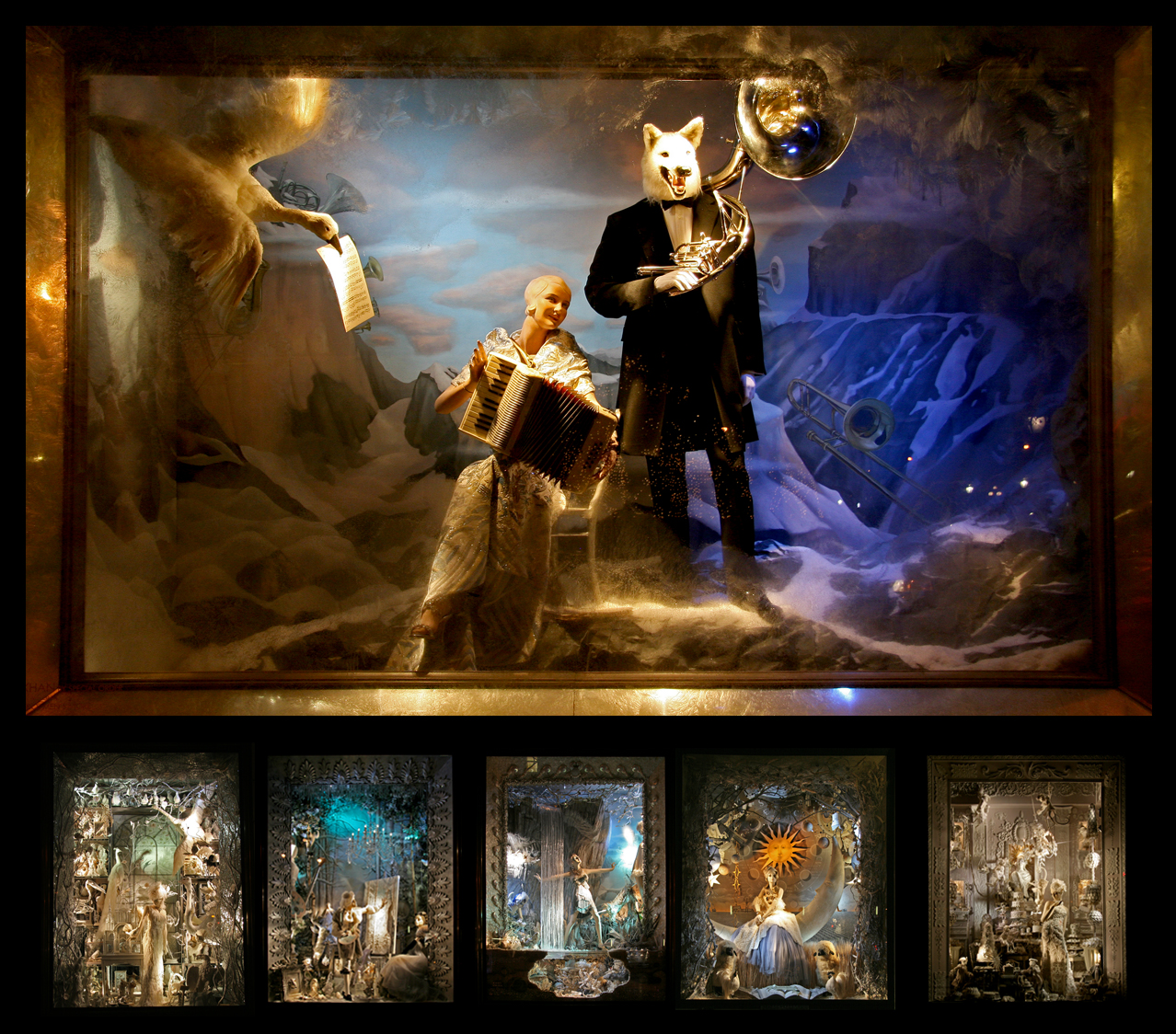
    In previous years, I have featured the windows at Saks Fifth Avenue. I certainly love their windows and interiors, and in no way do I want to demerit any window displays, but the real holiday pièce de résistance is Bergdorf Goodman. In doing background research for this article, I was surprised to find that every major New York City news publication as well as many blogs have done a story on this. And with good reason – the windows are spectacular and imaginative and are a must-see.

    A large degree of the fascination with Bergdorf’s windows this year owes to their eerie, surreal character. Many retailers hire outside firms to to their windows, but Bergdorf does theirs with their own window design team, headed by David Hoey, Senior Director of Visual Presentation. The painstaking work is done outside the city in a Queens warehouse – preparations start as early as October.

    This year’s theme is a white winter wonderland, “Calendar Girls.” From the Bergdorf website:

    “Winter Spring, Summer, Autumn and Holiday are all beautifully celebrated in this holiday season’s windows. Artful scenes that invite you to go on a year-round journey with Bergdorf Goodman. Utilizing a range of imagery all done in an ethereal, white on white scheme, each window draws inspiration from Natural History Museum Dioramas to created a blend of natural wonders and opulent big splendor.”

    The windows wrap around the building with three exposures to the street: 57th Street, Fifth Avenue, and 58th Street. Bergdorf’s location is one of the most prime in the entire city, with unobstructed views of Central Park, the Plaza Hotel, Fifth Avenue, and 57th Street. The perfect spot in New York City to enjoy a white-on-white winter wonderland…


  • Christmas Spirit

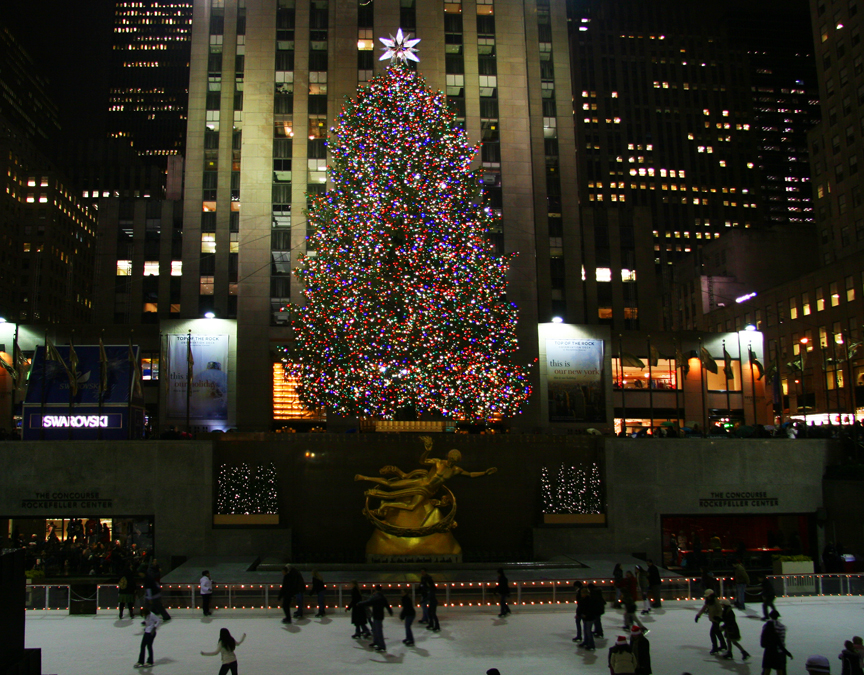
    Assuming you want to feel the Christmas spirit, I suggest you head for Fifth Avenue between 49th and 59th Street. The place to start, of course, is at the Channel Gardens Promenade at Rockefeller Center. Here, you have so many iconic views: the Christmas tree, ice skaters in the sunken plaza with the gilded statue of Prometheus (sculpted by Paul Manship), and the gardens lined with illuminated angels.
    If you face Fifth Avenue from the gardens (top photo), you will see Saks Fifth Avenue and their spectacular illuminated snowflake display timed to music. And, of course, their legendary holiday store window displays. Many people come from far and wide to see them – there are typically lines for viewing. Their beautiful interior winterscape decor is also worth a visit. At the corner of Fifth and 50th is St. Patrick’s Cathedral – a must-see for anyone. And what better time than the Christmas season?

    A stroll up Fifth Avenue will take you through a who’s who of flagship retailers, all of which are bedecked for the holidays. Cartier has decorated their entire building to look like a gift box, Tiffany’s has winter/holiday scenes with subjects adorned with various jewels (see their beautiful display in 2006 here), Henri Bendel has a themed window, and Louis Vuitton has an electronic display. Everyone participates – Takashimaya, Piaget, Gucci, Pucci, Bottega Veneta, Trump Tower, Prada, Abercrombie, Fortunoff, Disney, Versace, and Bergdorf Goodman. I give Bergdorf the prize for their imaginative, impeccably crafted windows, which I will feature at a later date.

    The annual tree is the epicenter of it all, and the whole selection, installation, and lighting process is a story in itself (see here). This year’s tree is a 77-year-old, 8-ton, 72-foot-tall Norway spruce from the Varanyak family in Hamilton, N.J. The family had it as their Christmas tree in 1931, then planted it outside.

    I hope you get a chance to stroll this area. Be prepared for crowds, but they are easily tolerated if you have the Christmas Spirit 🙂


  • Ice Blue

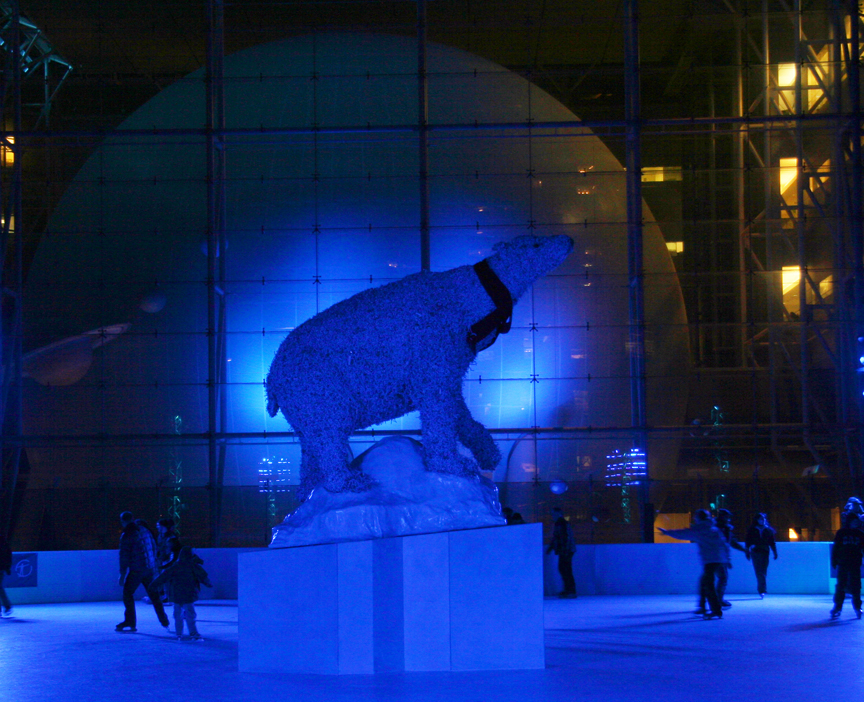
    This is the new Polar Rink at the American Museum of Natural History. I was invited to attend a press preview before the official opening on Saturday, November 22nd. The rink is beautifully situated on the Arthur Ross Terrace, with magnificent views of the Rose Center for Earth and Space glowing in blue and the surrounding Theodore Roosevelt Park. Skaters glide around a 17-foot-tall polar bear made of openwork stainless steel festooned with pine boughs and twinkling lights. And of course, access to the Rose Center (with the new Hayden Planetarium) and the Museum itself is just a stroll away. It is nice to see the museum make efforts and investments in modernizing to keep up with changing times and patrons who have become more used to an increasingly technological world.

    One thing that fascinated me was that the rink was using synthetic ice. Apparently, synthetic ice has been around since the 1960s (most using polyoxymethylene, i.e. Delrin), but widespread adoption has been held back by inherent limitations of the polymers – to glide on the surface as one can on real ice, there must be a regular application of a silicone compound. This compound builds up on the surface, collects dirt, and has been a source of much dissatisfaction among skaters. Also, joinery of the panels was an issue – earlier synthetic ice products used simple butt joints which could be felt by the skater. These shortcomings have been addressed by Perry Boskus, developer/inventor of the Super-Glide surface, which is being used at the Polar Rink and is manufactured by Florida Skating, Inc. The product is made in-house with their own technology. Lubricating ingredients have been injected into the core material to provide a surface which provides glide properties regardless of wear. A new joinery system (a variation of a dovetail joint) was also developed to hold the panels together to make the seams nearly undetectable.

    I had the privilege of meeting Perry at the ceremony. He was quite enthusiastic about the new installation and worldwide interest in his product. There are hundreds of commercial and residential installations around the world.
    I subsequently learned through my reading that Perry was North Atlantic Figure Skating Champion, Eastern Seaboard Speed skating Champion, a hockey player, and Professional Figure Skating Coach.

    I love blue, and the aura of the evening was decidedly blue. I was pleased to read the Super-Glide brochure this morning and find out that the latest incarnation of the product is called Ice Blue

    Note: Hours and additional information about the rink can be found here (update 1/9/12: Link no longer works). Skate rentals are available and included with the admission.


  • Swimming Against the Tide

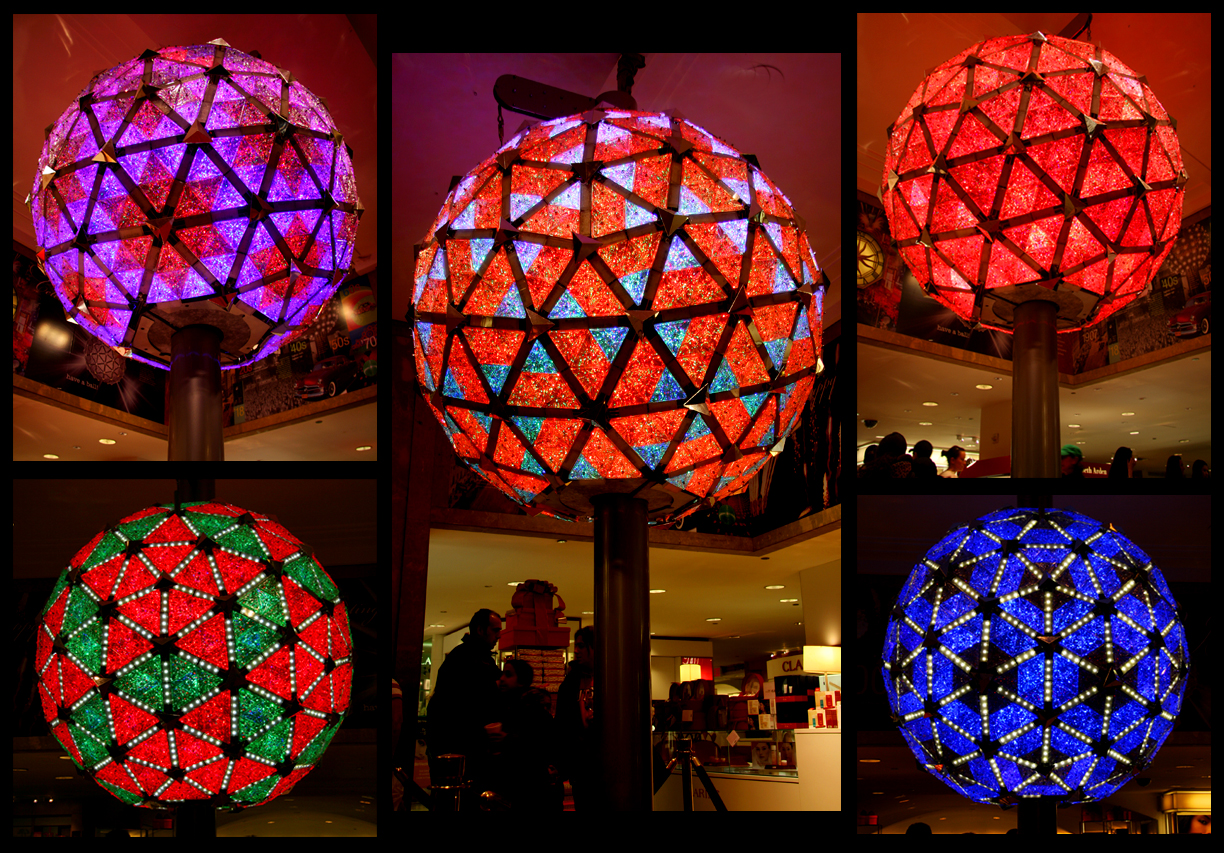
    On New Year’s Eve in 2007, I wrote of the ball drop in Times Square. At the time, I was disappointed to learn that prior to the drop, the ball was displayed at Macy’s, and I did not get a chance to see it closeup. On a recent visit, I was pleasantly surprised to see that the ball was already installed on the main floor and that I had completely forgotten about this recent tradition.

    It feels like Christmas promotions and retail store decorations come earlier every year as the push to maximize holiday business accelerates. At one time, Black Friday was the demarcation point for the start of the Christmas countdown, and even at that time, it seemed rather early to begin preparations over one month in advance. But any retailer has little choice in order to keep up with the competition. It is difficult to swim against the tide – barring some supreme effort, most will be swept by the current.
    This very posting is driven by the same pre-holiday frenzy – the ball is on display early. To write about it later would look like I missed the boat. Even though I do not see this blog as competing per se with conventional journalism, I still feel an obligation to “do” certain stories in a timely manner.

    Additionally, everything moves so much more quickly – in the electronic world, almost immediately. We no longer have the luxury of doing things at our pace. The speed of everything around us often dictates when we must do things. Of course, there are many ways and situations where one can buck the trend. To appreciate things on one’s own terms is a laudable goal and can provide respite from the pressures of living in a technological world.

    But for me, at Christmas time, readers here do not want a rebel, an iconoclast, or a man who swims against the tide. They want to see all the trappings of the holiday season – the windows at Saks or Tiffany’s, the tree at Rockefeller Center, and Santa at Macy’s. And perhaps I do too, for sometimes I tire of swimming against the tide…


  • Moveable Feast

    There are healthy measures (and medicines) one should take. But most are not enjoyable – they all involve some degree and elements of deprivation, denial, restriction, discipline, and holding one’s nose. One of the great joys of living in this city is that many of the things one should do or see are very enjoyable. It’s like waking up one day to the New York Times and reading that the American Medical Association has just found that the healthiest thing you can do is eat Häagen-Dazs chocolate ice cream every day.

    Here is why we do it – the answer to what is so perplexing to many visitors – why we would endure such hardship to live here, where ordinary tasks can become such large endeavors. The answer is that living here can be like being a boy or girl in a candy store, with its plethora of culture and activities, all so convenient, typically a walk or short subway ride away. And, like any good shop, there are new products and the old standbys.

    Visiting Palm Court at the Plaza Hotel is to sample one of those delectable confections New York has to offer. As many an old standby (the Plaza dates to 1907), traditions remain, and one is the afternoon tea, which has been recently been brought back to the Palm Court – a magnificent room with a European flair.
    Welcome to a world with harp and classical guitar, tables with the finest linen, crystal, Bernaudaud-Limoges china, Christoffle silver, outstanding floral arrangements, high-backed blue velvet upholstered chairs, and memories of fictional character Eloise (who lived in the hotel). Ellen Easton serves as tea consultant, and pastries are made by Executive Pastry Chef Nicole Kaplan, named as one of the top ten pastry chefs in the USA.

    Dine under the Palm court’s recently recreated stained-glass laylight while surrounded by palm trees. The Palm Court tea menu will set you back $60, so if you don’t have a desire to finance a meal here, at least drop in and feast your eyes…

    Related Posts: The Plaza, Stairway to Heaven


  • Stairway to Heaven

    Carrying a professional-looking camera can be either an asset or a liability, depending on time and place. It is an asset when in a situation where being a photographer is either a rite of passage or, perhaps, when it offers credibility that you are a pro and belong there – important if you are looking for stairways to heaven.

    However, there are many situations, especially post-9/11, where having a large camera is a real problem – a virtual branding where you will be observed, supervised, and forewarned that there is “no photography.”

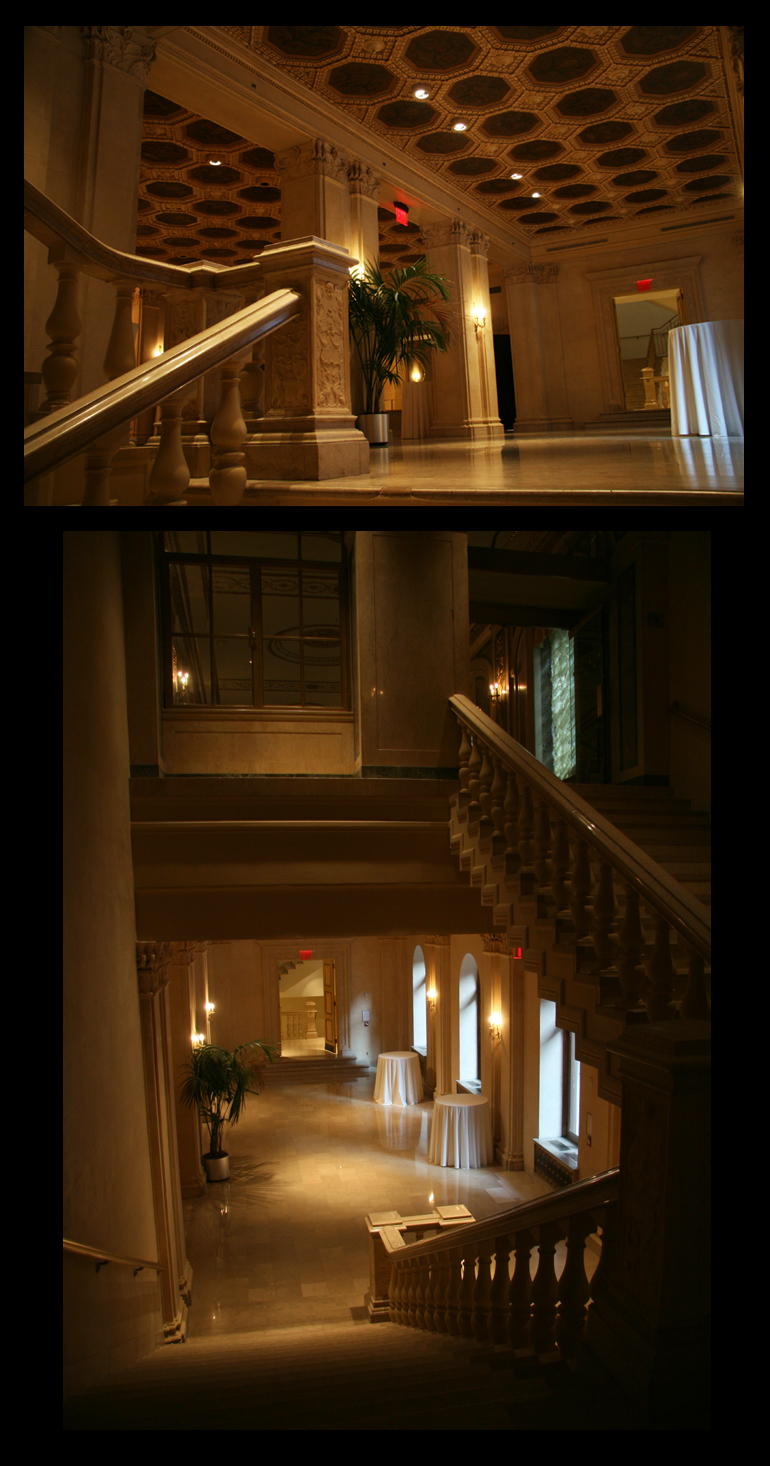
    So I was extremely surprised in my last visit to the Plaza Hotel to get free access to a stairwell and various adjoining rooms. See here for photos of the stairwell. It appeared that a rehearsal was taking place; camera and video crews were scattered about (see photo here). Perhaps I was seen as one of the crew. When properly outfitted and with an attitude that you belong, even security will frequently let down their guard.

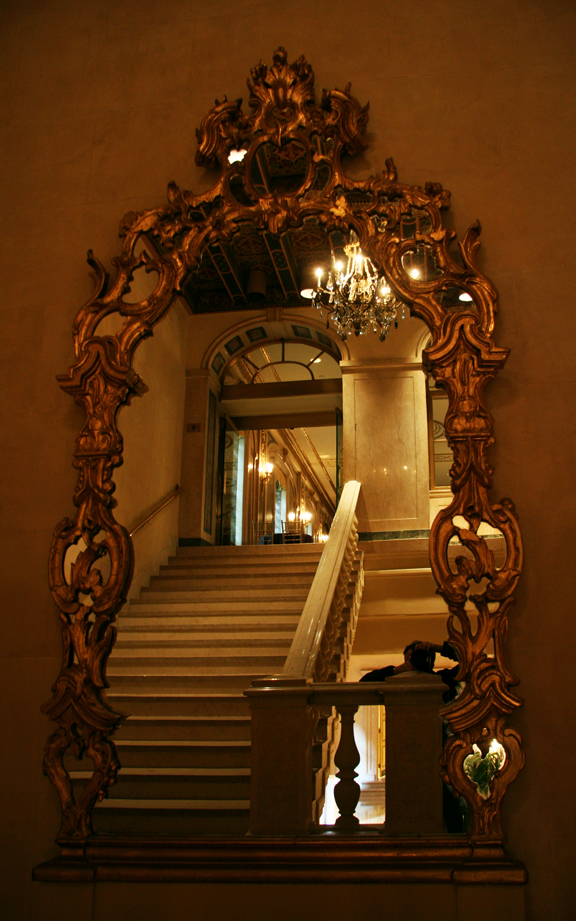
    I have been to the Plaza numerous times, and this was the first time since it was newly renovated. The public rooms on the ground floor have been beautifully done. Around the perimeter of the central Palm Court, there are many small boutiques. In touring this area, I was startled when I came across this huge ornate mirror in a stairway. The reflection actually afforded one of the best views and ways to capture the stairway photographically. So if you act like you belong, and with a little luck, you may find a stairway to heaven…


  • Hot Dogs and Fries

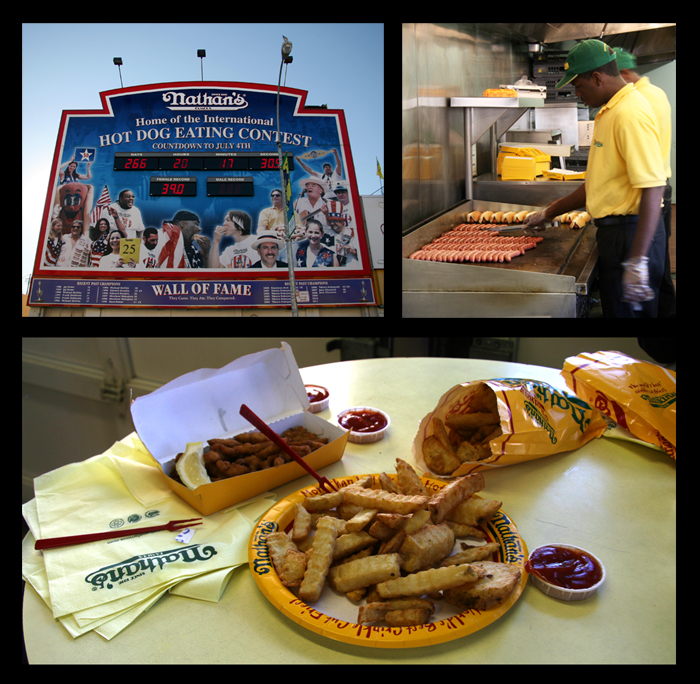
    As a child, I loved hot dogs. In fact, were it not for dietary concerns, I would still be eating them. And as you descend the slippery slope of fast food and stratospheric calories, you might as well throw in some French fries. On my recent pilgrimage to Coney Island, which I wrote about yesterday, four of us decided to stop by the original Nathan’s Famous on Surf and Stillwell Avenues in Brooklyn, started in 1916 by Nathan Handwerker. I wrote of Nathan’s in 2006 (see here).
    We had decided to snack only and ordered French fries and fried clams. For myself, since I eat fries so infrequently, there are only good fries or very good fries.

    What’s more American than hot dogs and fries? Eating to excess, so a hot dog eating contest is the perfect American sport. Since 1916, Nathan’s has been sponsoring a hot dog eating contest. In 2007, the Japanese hegemony was finally broken by Joey “Jaws” Chestnut, eating 59 dogs in 10 minutes, beating Takeru Kobayashi, who had held the record for 6 years straight.

    I learned today that competitive eating is actually an official sport with an organization: International Federation of Competitive Eating (IFOCE). They sponsor more than 100 international eating events. Personally, I find eating contests rather disturbing. At a time where health consciousness, obesity, and food-related illnesses are paramount, I do not see embracing a sport like this as sending the right messages to society. But perhaps if it were found that eating large amounts of French fries or ice cream was actually a health benefit…


  • Partial Remission

    If you want to taste neglect over a period of decades, New York City has a good menu selection. I imagine that many beaten-down areas have resistance to change, and wholesale renovations do not necessarily see the type of lasting transformation that was initially planned. There just is enormous inertia when it comes to areas which have had a long history of decline. However, NYC has not really put quality of life or beautification at a priority. Managing this large city and just getting things (such as the subway system) to work is an achievement, and most residents learn to be satisfied with this.

    We have many areas that have deteriorated for decades. Times Square is a perfect example. Although substantial improvements were made, the immediate surrounding area still has a seedy feel to it. It’s just like a cancer with only a chance of partial remission – we irradiate the problem, but cancer just creeps back.

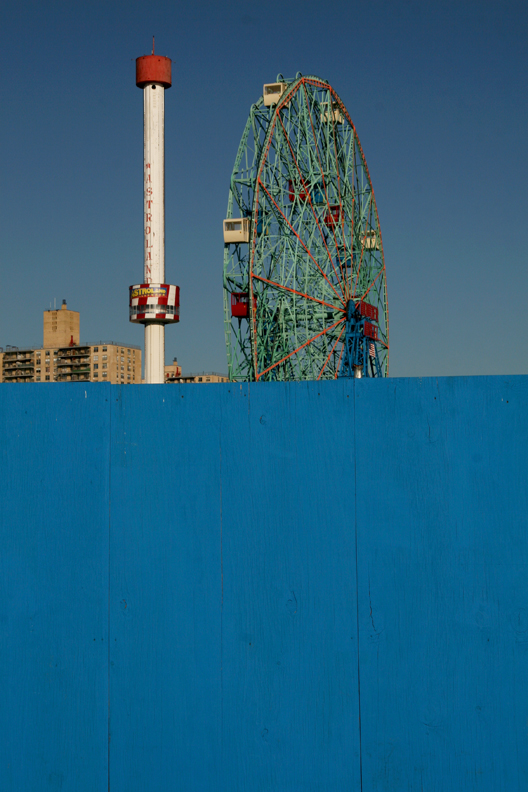
    Time will tell whether we will see the same effect at Coney Island; 2008 saw the final closing of Astroland and other amusements, with big plans for redevelopment.
    Coney Island was a world-class resort at one time, with millions of visitors annually. It was the world’s largest amusement area between 1880 and World War II. There were numerous competing amusements parks – the three largest were Luna Park, Dreamland, and Steeplechase Park. I recommend viewing photos and films of these parks in their heyday; they are shockingly beautiful and spectacular. Luna Park burned down in 1944.

    In my visits over the last several years, I have found Coney Island rather depressing, excepting for the annual Mermaid Parade. This last Saturday, however, I found it pleasant – absolute perfect weather, spectacular blue skies, and good company with three spirited friends, including a former NYC (Brooklyn) resident, all conspired in a great day. See the series of photos here.

    A stop at Nathan’s required a greasy snack – we shared French fries and fried clams. Chain link fences and vestiges of former rides and games made for good photo ops. The boardwalk was pleasant, particularly with the few isolated merchants. They were actually attractive set against wood, sky, and sea. Partial remission?


  • The Plaza

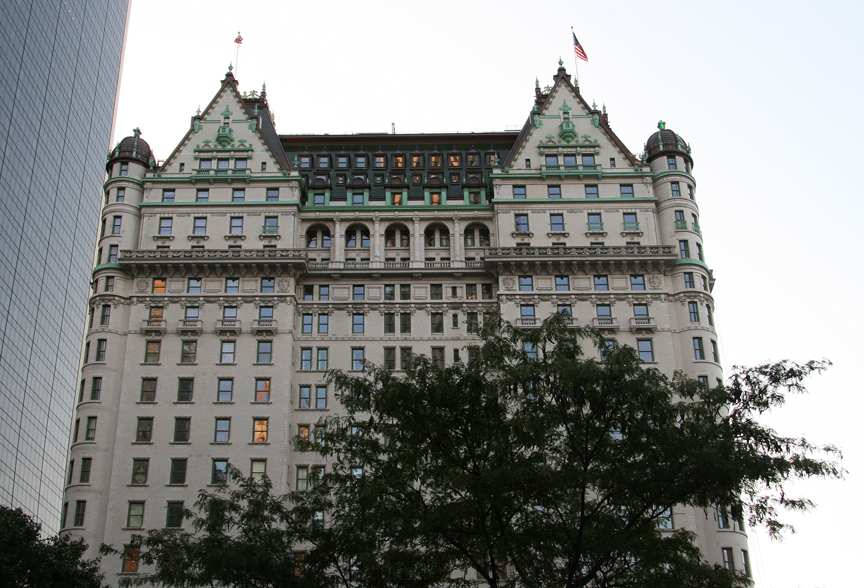
    A number of readers have inquired why I have not done a posting on the Plaza Hotel in the two and a half years I have done this site. It may come as a surprise to those who know this city, and it should – the Plaza is one of the most important landmarks in the entire city.

    So why I have I waited? The primary reason has been the ongoing construction with exterior scaffolding since 2005. This property has changed hands a number of times, briefly owned by Donald Trump (from 1988-1995). It was then purchased by the current owner, El Ad Properties, for $675 million. $400 million has been invested in renovations. All the rooms along Central Park are now residential condominiums. It has been designated a National Historic Landmark; the only other hotel with this status is the Waldorf Astoria.

    It is difficult to do this hotel justice and communicate the importance of this structure. Its stature is enormous, both physically and symbolically. The Plaza sits at the crossroads of two of the most important thoroughfares in New York City: Fifth Avenue and Central Park South.  Any property located on Central Park immediately gains importance and caché. The same is true for Fifth Avenue, particularly where it flanks Central Park from 59th Street to 110th Street.

    The current property is the second to be built on the site; the first was built in 1900, and the second was rebuilt in 1907, designed by Henry Hardenbergh in the style of a medieval French chateau. The name derives from Grand Army Plaza, the public space adjoining the front entrance of the hotel along Fifth Avenue. The plaza is the site of Pulitzer Fountain, Abundance, by Karl Bitter.

    At one time in the 1950s and 60s, half of the hotel rooms were occupied by residents living there full time, such as Frank Lloyd Wright and Marlene Dietrich. Many clebrities have graced its rooms: F. Scott Fitzgerald, Alfred Hitchcock, Truman Capote, the Vanderbilts, et al. The Beatles performed there on their first USA visit in 1964.

    One could name drop all day, and certainly there may be “better” hotels or rooms in the city, but for any New Yorker, one name says it all: the Plaza


  • Stamp of Approval

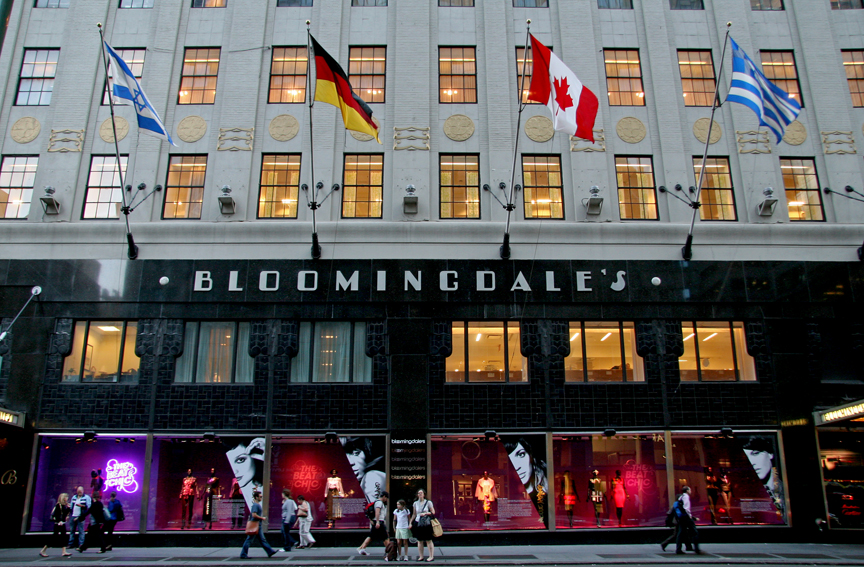
    When I moved to New York City, there were certain icons that absolutely defined the city for me, and one of those was Bloomingdale’s. This has always been the sine qua non of Manhattan for me and always will be. NYC symbolized many things, but the primary reason for moving here was for a University education and to get ahead. And part of getting ahead was having money. To shop at Bloomingdale’s meant you had money and that you had made it.

    There were other stores, of course, that had the ring of money – Saks, Bergdorf, Tiffany, Cartier, Altman, and Gucci, and I saw them all. But Bloomingdale’s was also big – like Macy’s, it occupied an entire city block. And for a young man looking for American symbols of success, BIG was better. I had my own visualization of Manhattan – like Saul Steinberg’s View of the World from 9th Avenue, my vision of view New York City had its own iconography, with Macy’s and Bloomingdale’s as Westside and Eastside anchors.

    How obsessed was I with this place? Well, for one, when establishing my business in the 1970s, I wanted my company logo to be in the very same typeface that Bloomingdale’s used. My best friend, who was a graphic artist, did some close examination and determined that the font Horatio Light appeared to be an identical match. Go here to see their logo. Now go here to see mine. See the resemblance? I remember when my logo was completed – I had a business in New York City and a French name in the same typeface as Bloomingdale’s. I certainly must have made it, and my announcement was plain for all to see.

    I recall persuading my sister on one of her first visits here to get underwear with “bloomies” printed across the back. Now my sister also had the stamp of approval…

    About Bloomingdale’s: Ironically, with all this fascination with Bloomingdale’s, I never read their history until this morning. The business was established in 1860 by brothers Joseph and Lyman G. Bloomingdale selling hoop skirts. The move to their current location at 59th Street and Lexington Avenue came in 1886. Marketing acumen catapulted the store to international fame, with visitors such as Queen Elizabeth. Cutting-edge fashion of designers like Ralph Lauren, Perry Ellis, and Norma Kamali got their first truly big opportunities at Bloomingdale’s. Read the history here at their website or here.


  • Sheep Meadow

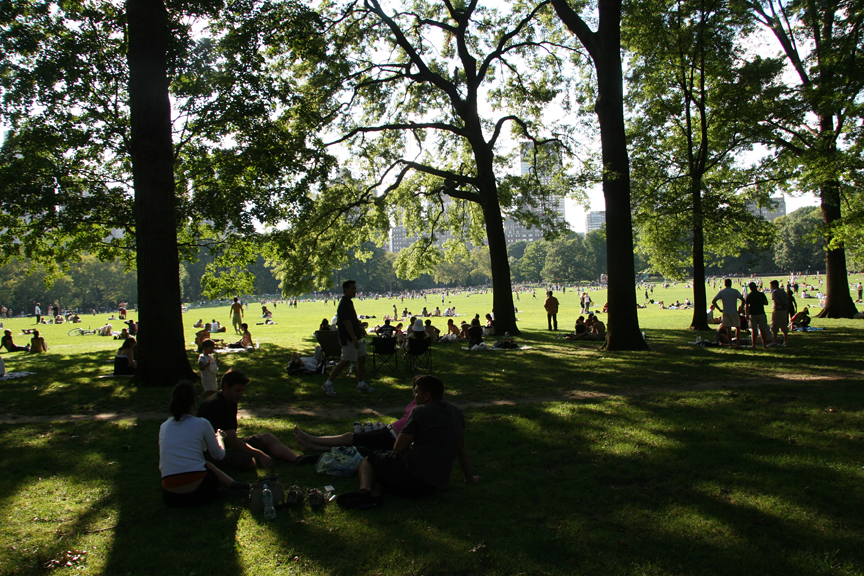
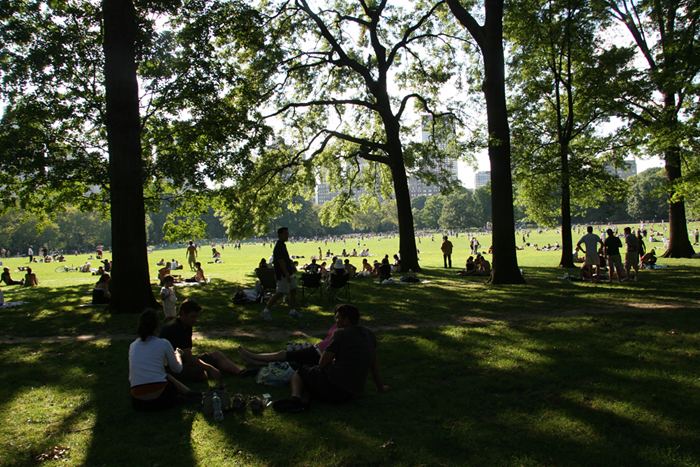
    In looking over my archives, I was shocked to find that I have never done a posting on Sheep Meadow. Why shocked? Because, for me and many New Yorkers, this patch of grass is one if the most special and important places in New York City. Why did I wait so long? To get a photo that does justice to the feeling of this pastoral place. And as time passed, I just assumed that it was a fait accompli.

    As I have written before, parks are so important in New York City. These are the only outdoor spaces we have. In many cases, they have become much more than just what one thinks of as a park. They have evolved into centers for a myriad of activities – tennis, running, walking, biking, chess, birdwatching, model boating, kite flying, frisbee, horseback riding, baseball, theaters, ice skating, roller skating, swimming, boating, music performances, street performing, and, of course, people watching. A world of recreation and entertainment.

    And let’s not forget relaxing. Perhaps a picnic. Or just reading. Many a weekend I have found myself in Sheep Meadow with a magazine, book, or a copy of the Sunday New York Times, a veritable ritual in the city.

    Sheep Meadow is located in Central Park, which is literally (and, for me, figuratively) at the geographic center of Manhattan – both east-west and north-south. Fold a map of Manhattan and you will see what I mean. The 30-acre meadow itself is located in the lower portion of the park. Until the 1930s, sheep did actually graze there. They were moved to Prospect Park by Robert Moses.

    The meadow is convenient to various trains and buses, making it an egalitarian place, accessible by all. The space gets heavy traffic, yet it has been consistently well-maintained. Remarkable for this city…


  • Belvedere Castle

    Posted on by Brian Dubé

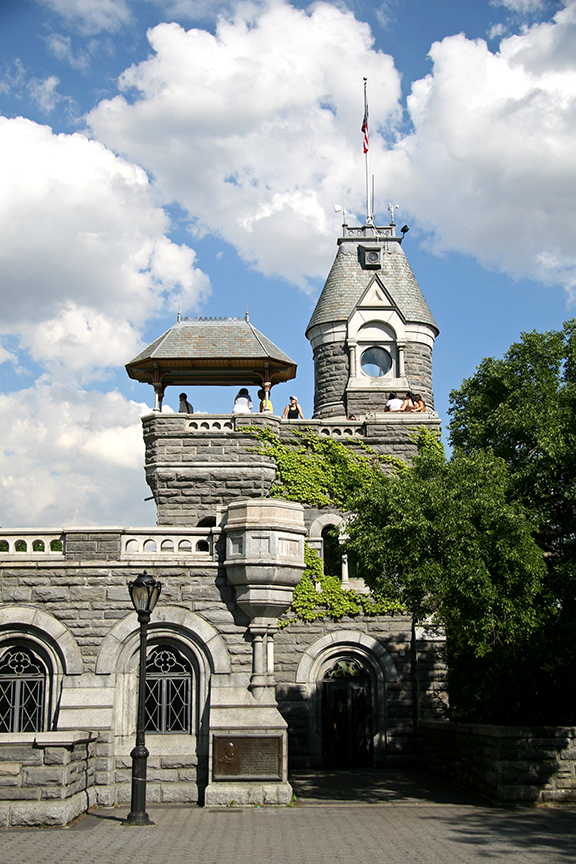
    Yes, we do have castles too, albeit small ones. This is not one of the most well-known or often visited spots in the city, but given good weather, I would put Central Park and Belvedere Castle on a must-do list. The castle, built from Manhattan schist, is in a secluded area near the Ramble. Two narrow staircases each bring you to an observatory level. There are excellent vistas, greenery, the Shakespeare Garden, the Duck Pond, and the Great Lawn. For those of you interested in the Castle’s history and purpose, read this description from the official Central Park website:

    In 1867, Central Park designer and architect Calvert Vaux (1824-1895) created an observation tower atop Vista Rock to overlook the old reservoir that is now the Great Lawn. The Gothic-style Castle was designed as a landmark for the pedestrian park visitor. The castle’s United States flag could be seen from the Mall, drawing the walkers down to Bethesda Terrace, over Bow Bridge, and through the Ramble to the castle itself.
    The original plans for the building included another elaborate two-story structure on the site of today’s pavilion, but financial concerns halted construction and left the castle in its present state. Portions of the castle are made from the same type of schist as the Vista Rock, creating the illusion of a castle rising out of the park itself. Its light colored stone trim is made of granite quarried from Quincy, Massachusetts. Its roofs are made of colored slate from Vermont, Virginia, and New York.
    Belvedere Castle was once an open-air structure, with no doors or windows. This changed in 1919 when the United States Weather Bureau moved the Central Park Observatory to the castle. Until that time, weather measurements were taken from the Arsenal at Fifth Avenue and 64th Street where Dr. Daniel Draper founded a meteorological observatory in 1869. The Weather Bureau took over the operation in 1911, and moved it here eight years later, enclosing the castle and altering the turret’s shape to accommodate their scientific instruments.
    In the early 1960s, the Weather Bureau replaced the lab with automated instruments and closed the castle offices. The empty building was left to deteriorate until 1983, when the Central Park Conservancy replaced the original turret, rebuilt the pavilions, and converted the castle into a visitor’s center. The Henry Luce Nature Observatory in the castle, created in 1996, provides interactive nature exhibits inside the castle as well as bird-watching kits, which can be used throughout the park.

    Note: Belvedere is an architectural term from the Italian “beautiful view”, referring to any architectural structure sited to take advantage of such a view.

    Posted on by Brian Dubé

  • Let’s Have a Parade

    Posted on by Brian Dubé

    This extraordinary display is typical of a new generation of high-performance LED signage which has virtually replaced all of the older neon of Times Square, a trend which is universal. Like most New Yorkers, I rarely travel to Times Square, and I do so only when there are specific reasons. On a recent trip, I unexpectedly ran across this massive display which is part of the new M&M’s Retail World. See here for the set of photos.

    I am not so fond of over zealous business establishments which are essentially mega-branding and marketing tools. Legacy businesses such as Coca-Cola, Disney, Warner Brothers, and many others have entered this new world of advertising, selling lines of branded products via their own retail stores. But I had to grant that this enormous LED display was just fascinating as I watched it cycle through image after image.

    What can easily be seen as a gratuitous display and waste of money reminds me of a conversation I had with someone many years ago. My friend’s concluding assertion always bothered me, because at one level I didn’t like it, but at another, it rang true. He and I were discussing extravagance and celebrations. I mentioned how, in many cases, money could be better used for any one of a myriad of needy causes. His response was, “Yeah, but you gotta have parades.” This really hit me. People really do occasionally need to express joy and exuberance even if it is not always “practical” or “sensible.” We can’t live life with the souls of accountants. A world without love, flowers, laughter, and parades would be a dreary one.

    So for now, just for a few minutes, let’s put aside aside our criticism, skepticism, and cynicism. Let’s have a parade 🙂

    About the display and store: The 32½-foot-high by 31¼-foot-wide LED panel display was done by Union City, NJ-based D3 LED. The display content was designed by New York-based Show & Tell Productions. Store 25000-sq ft, 3-story design by Ohio firm Chute Gerdeman Retail.

    Posted on by Brian Dubé


  • dinamic_sidebar 4 none

©2026 New York Daily Photo Entries (RSS) and Comments (RSS)  Raindrops Theme