• Category Archives Natural NYC
  • FishBridge Garden

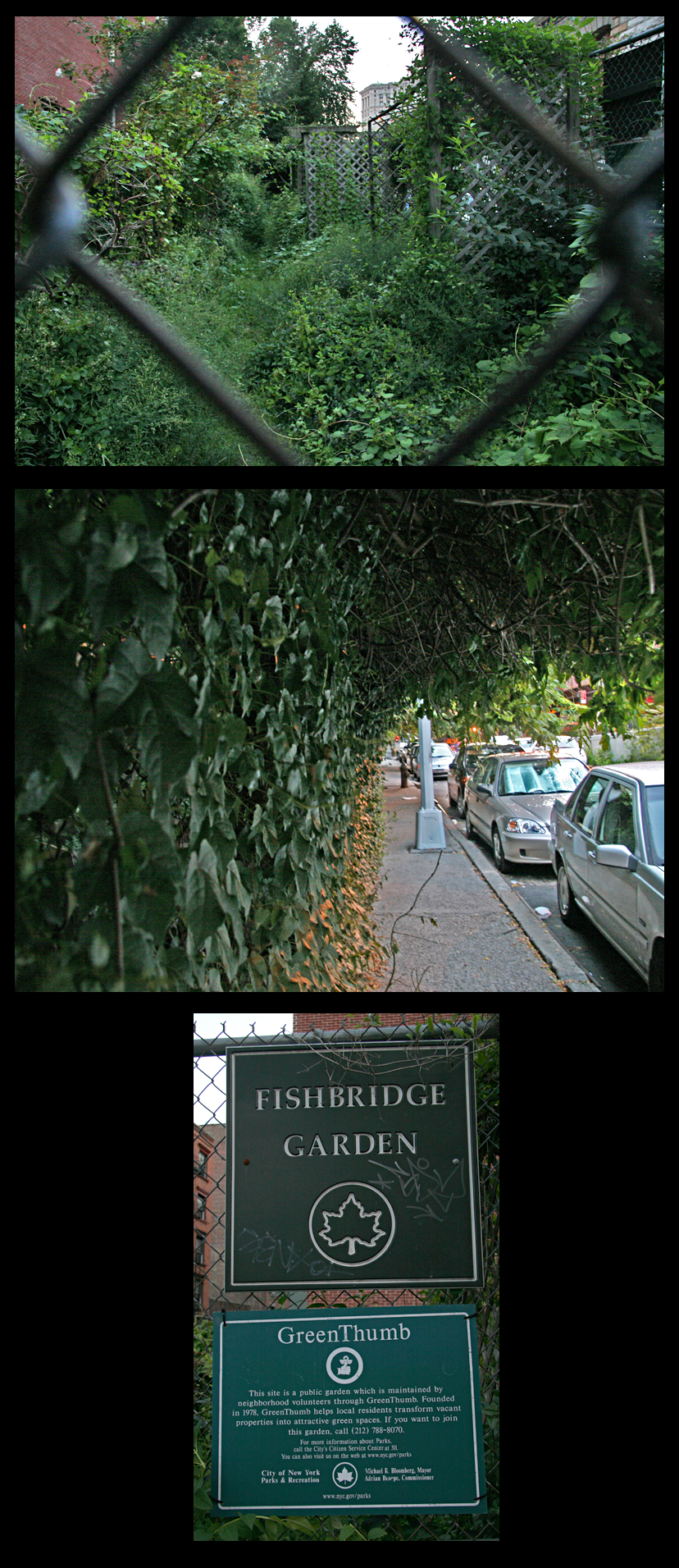
    Fishbridge Garden is REALLY off the beaten path; I did not find it in any secret or hidden New York sites or guides. Online, you will find a description on the Parks Department website (click here). A friend and I stumbled into this place while walking the South Street Seaport area on Front Street. At the Fulton Street end, you have shops, the Pier 17 complex, and ships, all well-known to tourists. This area was the home of the Fulton Fish Market, one of the country’s (and world’s) largest. It was also one of the last working areas of the Manhattan waterfront and one of the last of the city’s outdoor wholesale markets. Six days a week, from midnight until about 9 a.m., the Fulton Fish Market was a dynamic bedlam of rubber-booted workers cleaning, boning, icing, unpacking, and repacking fish from throughout the world. Walking away from Fulton Street along Front Street towards the Brooklyn Bridge, one is treated with impeccably restored buildings of the neighborhood; one can see many signs of former fish dealers. Some may find the area over-gentrified, with too many nationally known retailers at the street level. But we chose to enjoy the architecture of this area on a beautiful day and leave the nay saying at home.

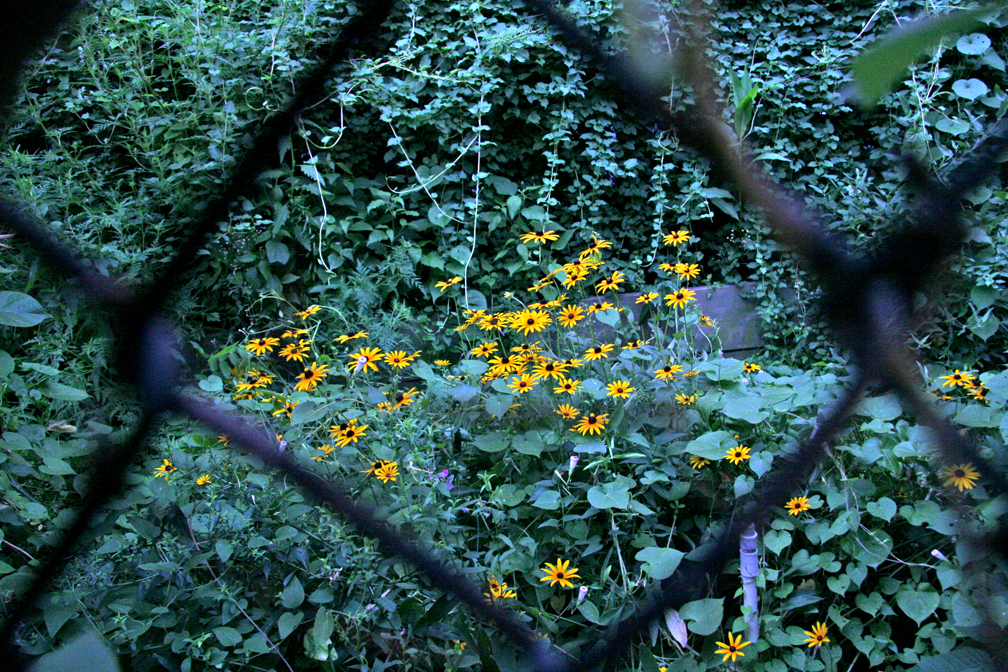
    At the end of Front Street at Dover Street, one will find a tiny park/garden running a short block to Water Street. Click here for more photos. This park/garden was built between 1990 and 1992 on the site of a former parking lot and rat-infested garbage dump. Local volunteers cleaned up the site and built a garden, children’s play area, barbecue area, and dog run. Unfortunately, the garden was closed when we got there, so we only go to peer through the fence. Next time…
  • More Air

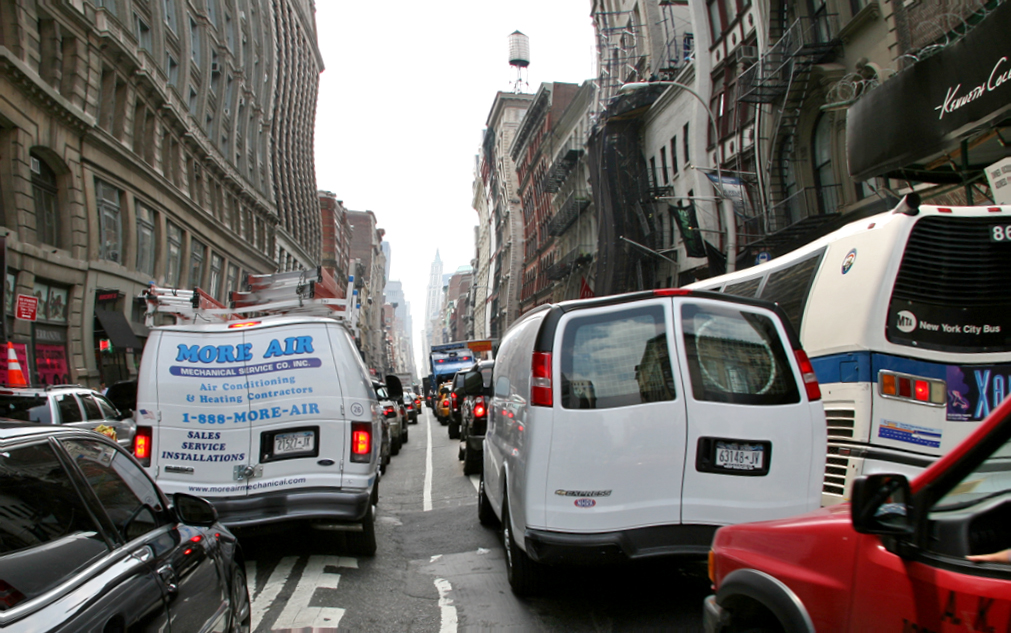
    Hot summer days are never a picnic in any big city, but yesterday, NYC was particularly nightmarish. Start with a torrential rainstorm overnight that dropped 3 inches of rain in an hour, causing massive flooding of roadways and the subway system, where service was seriously disrupted – in some cases, actually suspended – leaving many New Yorkers with essentially no way of getting to work. Resorting to auto transportation was not the best idea either. Traffic snarls were everywhere, as seen in the photo looking down lower Broadway.

    A tornado (confirmed by the National Weather Service) hit the Sunset Park and Bay Ridge areas of Brooklyn (the first there since 1950), ripping up building roofs and felling trees. Click here for the Gothamist’s story of Wild Wednesday. As a result of the heavy rain, the combined sewer overflow (CSO) system (which I wrote about in Waterworld) dumped tons of sewage into the ocean and waterways around the city – there may be beach closings due to contamination. And we had blistering heat in the 90s with humidity typical of a hot, steamy, August day. It was stifling. More Air, anyone?


  • Mayberry, NYC

    Posted on by Brian Dubé

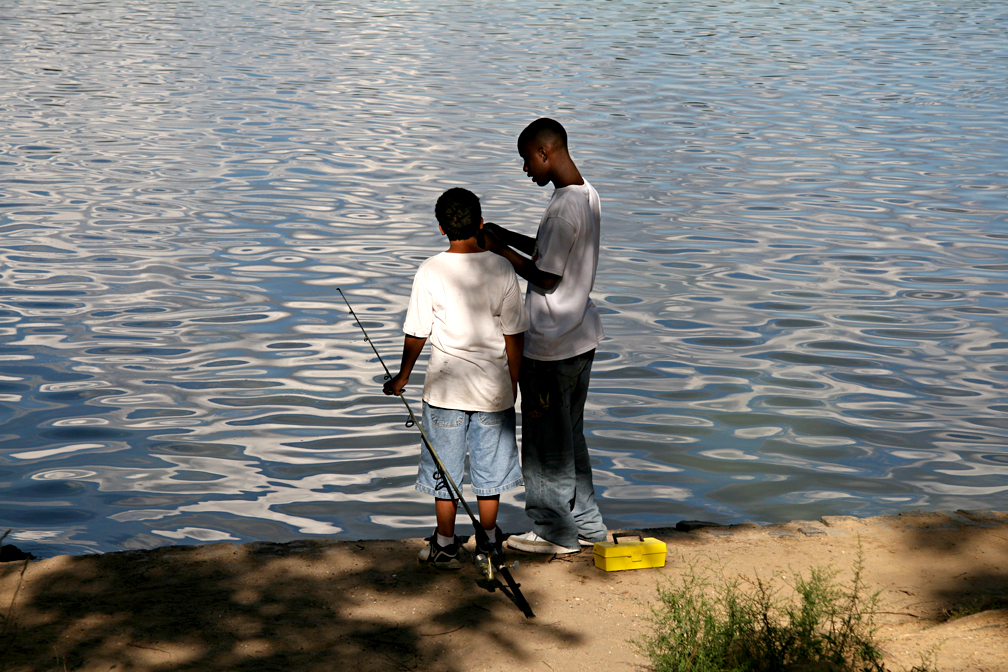
    This was the perfect summer image: two young boys standing lakeside preparing to fish in dappled late afternoon light. The scene made me feel like I was in the archetypal small town – transported to Mayberry. A Saturday or Sunday afternoon in the park is the perfect respite from the hustle and concrete of the big city – the Tuileries gardens of Paris, Hyde Park in London, or Sheep Meadow in Central Park.

    For many, fishing is relaxing and a way to connect with the outdoors. Fishing in New York City is not as uncommon as one might think. As I wrote in a previous posting about the shore of NYC, 4 of the 5 boroughs are islands or part of islands – there are over 500 miles of shoreline along rivers and an ocean. The waterways surrounding New York have become much cleaner, so there is quite a bit of fishing in the various waterways around the boroughs and in the various lakes in the larger parks, such as Central Park and Prospect Park (Brooklyn), where this photo was taken. Yes, some of the fish can be eaten, but there are health advisories regarding recommended species and number eaten on a weekly or monthly basis. And my understanding is that fresh water fishing is catch and release only. Enjoy your Sunday – sorry, no treatises today, I think I’m going to take it easy 🙂

    Posted on by Brian Dubé

  • Full Moon

    Posted on by Brian Dubé

    With all the goings on and distractions of being in the city, why look up? Because sometimes you are rewarded with spectacular natural occurrences, like this moon. Although this was not a vista unique to New York City, seeing such a phenomenon in an urban setting always magnifies the experience. And frequently, the imposition of the moon in the right setting provides a nice counterpoint to various city structures, like this one.

    In various conversations over the years, I have been surprised to learn that many people are unaware that apart from moving through phases, the moon rises and sets daily like the sun, with its own timetable (there is one day each month with no moonrise and one with no moonset). Of course, due to atmospheric conditions, times when the moon is out during bright daylight, etc. the moon is not always as readily and consistently visible as the sun. Click here for a lunar calendar customizable for your location. Here, you will be able to see the times of the moonrise, moonset, sunrise, sunset, and the moon phase. I learned today that a full moon or new moon occurs when the earth, moon, and sun are in approximately a straight line – this conjunction is called a syzygy. I also learned that the full moon rises at sunset, sets at sunrise, and hence is visible all night…

    Posted on by Brian Dubé

  • Contrast

    Posted on by Brian Dubé

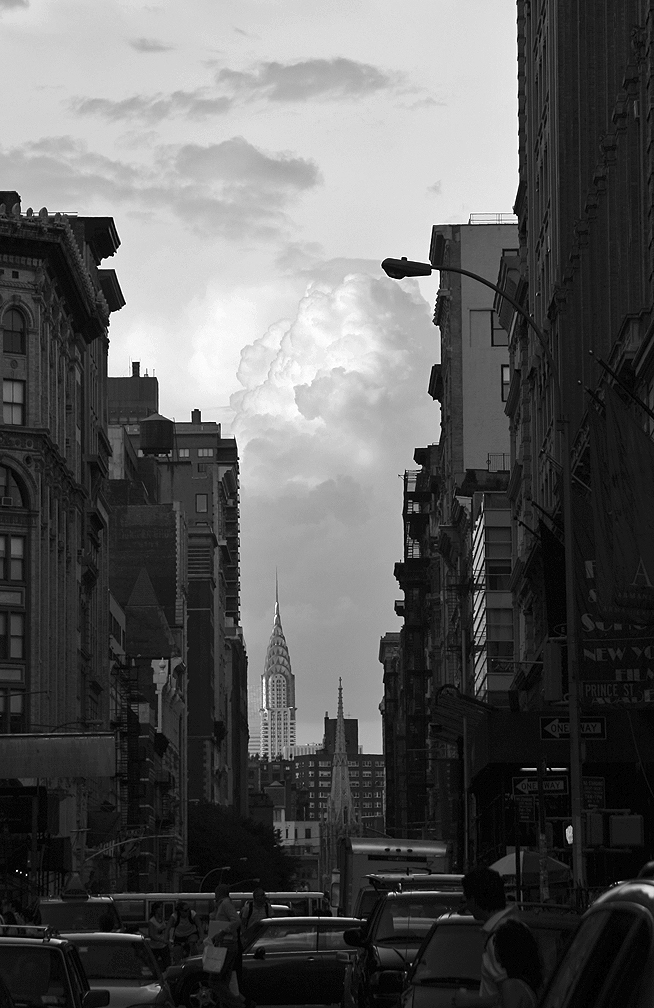
    As I have stated previously in this blog, it is easy to become inured to vistas, regardless of where or how dramatic, and it is no different in New York City. It frequently takes a change in mindset or perhaps conditions to jog ones perception and see something anew. I see the view in the photo on a daily basis – looking uptown from lower Broadway in SoHo, with the Chrysler building and Grace Church framed perfectly by the chasm formed by the buildings. Of course, I do notice, but I really don’t appreciate it the way an unfamiliar observer would.

    On this day however, the cloud formations were spectacular and moving rapidly. In the course of nine minutes, I had six very different photos. This kind of drama between clouds and buildings doesn’t occur that often, and even the jaded, hardened New Yorker can’t help but notice. On June 22, 2006, I posted a most remarkable cloud occurrence and provided a link to the Cloud Appreciation Society. No surprise, I suppose, that there are groups and websites exclusively oriented to clouds. Sorry, today there is no architectural dissertation, social commentary, history, or NYC factoids – just some cloud and vista appreciation. After all, this is supposed to be a photoblog 🙂

    Posted on by Brian Dubé

  • Signs of Summer

    Posted on by Brian Dubé

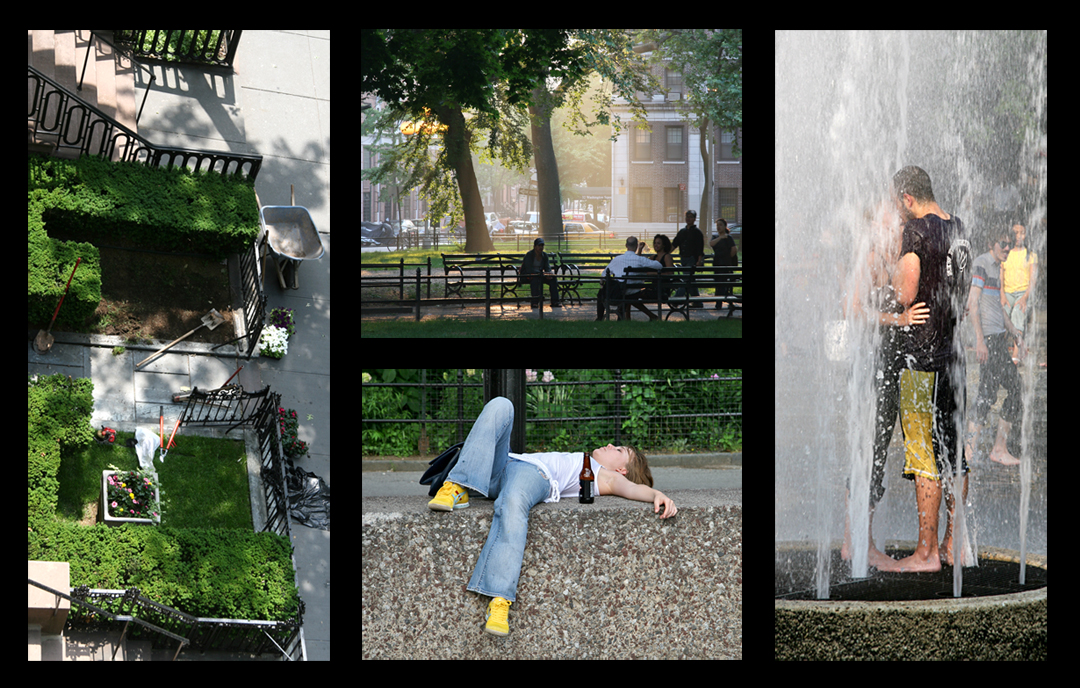
    These are signs that summer was coming, which I have witnessed over the last 2 weeks. Starting with the photo on the left, we have gardening on Washington Square North. It is surprising how much gardening goes on in NYC, much of it out of view behind buildings. In the top photo, we have a day that was a real steam bath. The humidity was so heavy, you could easily see it as this afternoon haze – it looked like the deep South. At the far right, we have two lovebirds in a PDA, but this time in the fountain (click here for last summer’s frolic in the fountain). Kind of fun if you don’t mind getting your clothes soaking wet. At the bottom, we have a young woman sleeping – she was out cold. But not inebriated (the beverage was soda, not beer).

    Today is the solstice and first day of summer in the Northern Hemisphere (and the first day of winter in the Southern Hemisphere). This is the day where the sun is furthest north, or at highest point in the sky, and takes the most time to cross the sky. This means it’s the longest day of the year. The days actually start getting shorter from here, so please enjoy your summer…

    Posted on by Brian Dubé

  • Aspiration

    Posted on by Brian Dubé

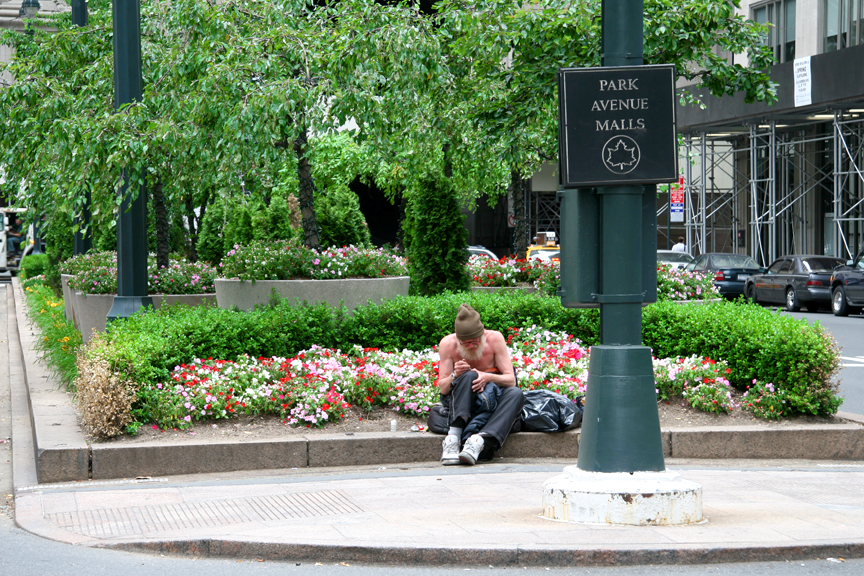
    Here, we have the Park Avenue Malls, a central 2.5 mile-long median (broken by cross streets) extending from 46th Street (at the Helmsley Building, 230 Park Avenue) to 96th Street, where the Metro-North railroad tracks surface to run above ground (they run under Park Avenue from Grand Central to 96th Street). The Fund for Park Avenue, a private organization, is responsible for the plantings and maintenance of the Park Avenue Malls. In the spring, tulips are planted – these flower along with the cherry trees. In the summer, when the tulips have faded, wax begonias are planted. According to Margaret Ternes, chairman of the Fund for Park Avenue, wax begonias are chosen for their hardiness. Their waxy leaves retard pollution, and begonias can stand the hot sun – they do not require the type of watering many flowers do, such as impatiens (there is no automatic watering system for the Malls).

    I was surprised to see a homeless person on the Mall, a rather uncommon and unexpected occurrence. More surprising was to see him cleaning his nails. Many aspire to live on the highly coveted Park Avenue. Some find unconventional ways of getting there, like Joe Ades, gentleman peeler. But there are necessary conditions for living here, such as wealth and many personal habits which would be highly recommended if one were to associate with high society. I would guess that good grooming is one of them…

    Posted on by Brian Dubé

  • Manhattanhenge

    Posted on by Brian Dubé

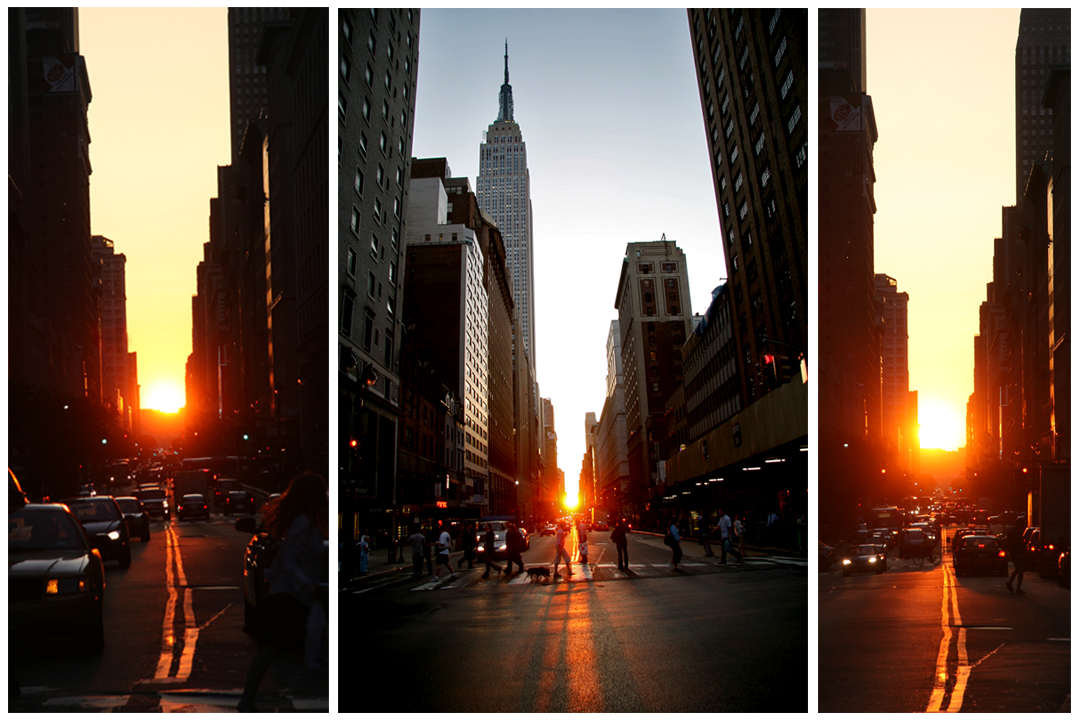
    Depending on your source, either yesterday or today is Manhattanhenge, a biannual occurrence where the setting sun aligns with the east-west streets of Manhattan’s main street grid (14th Street and farther north). Manhattan has two such days, generally cited as May 28th and July 12th, with some small yearly variation (there are also two days when the effect can be seen at sunrise: December 5 and January 8).

    The term Manhattanhenge was coined in 2002 by Neil deGrasse Tyson, an astrophysicist at the American Museum of Natural History, and is based on an analogous occurrence at Stonehenge, where, on the summer solstice, the sun rises in perfect alignment with several of the stones. On the Manhattanhenge days, the sun fully illuminates every cross street on the grid during the last fifteen minutes of daylight. The sun’s center sets exactly on the street’s center line, with the sun 50% above/below the horizon. The effect can be seen from river to river (and from Queens). The effect is good for a day or so on either side.

    Many people question the idea that this effect takes place simultaneously at every crosstown street in the grid, regardless of location. This may be counter intuitive, but it is true. The sun’s distance from the Earth at 93 million miles, in comparison to the length of the city’s grid of only a few miles, means that the sun’s rays are essentially parallel once reaching the earth – the deviation from parallel is too small to make a perceptible difference. Also note that Manhattan is rotated 29 degrees from geographic north. If the island’s grid was perfectly aligned with geographic north, Manhattanhenge would occur on the spring and autumn equinoxes.

    Viewing recommendations and photo notes: You still have time to see this effect in the next day or so. Recommended viewing is as far east as possible. However, keep in mind that many streets do not go clear through or have obstructions on the west side, the slight hilliness of the city may limit the view from First Avenue, and the actual horizon cannot be seen due to various buildings on the skyline in New Jersey. Queens or Roosevelt Island would also be good viewing areas. The photos were taken at 34th Street and Park Avenue – there was a fairly good crowd for the event. We dodged traffic, standing in the center of the street between changing lights.

    Posted on by Brian Dubé

  • Desert Pavilion

    Posted on by Brian Dubé

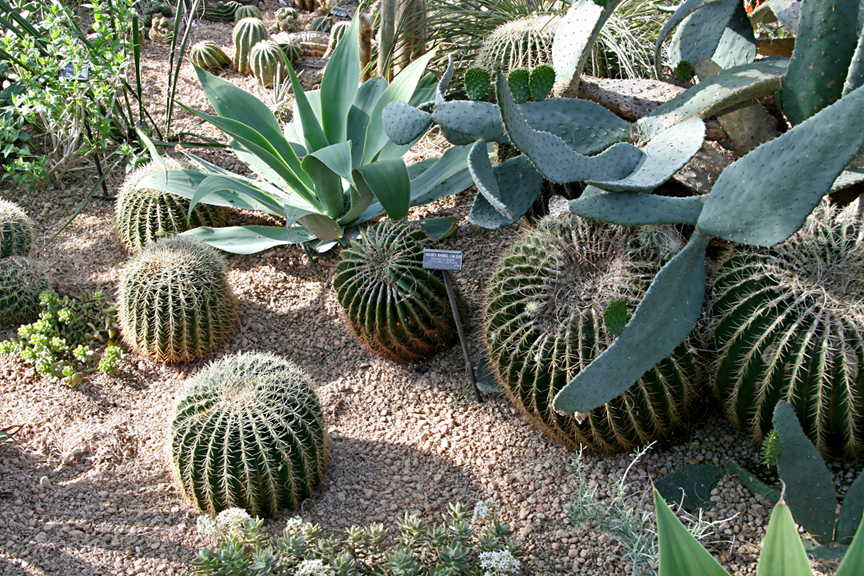
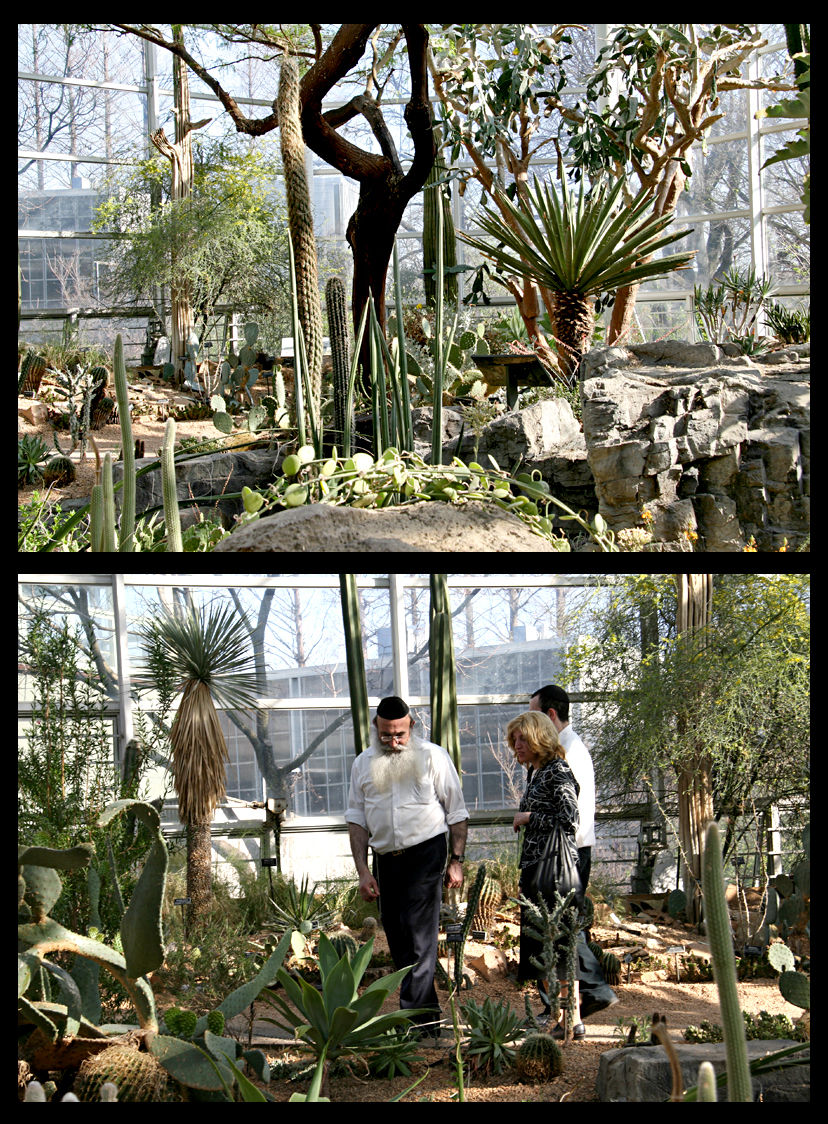
    This is the second of the three pavilions in the Steinhardt Conservatory at the Brooklyn Botanic Garden. Click here for more photos; click here for the posting on the Tropical Pavilion. A desert environment is one of the most surprising to the uninitiated. Someone I once knew who was a naturalist traveler made an interesting remark about the desert: many see it as a lifeless, barren void, when in actuality, the desert is teeming with life, both flora and fauna. He also made a comment (with which others have concurred) that one of the most beautiful sites is the desert at springtime, when everything is in bloom. The Desert Pavilion has a selection of plants from around the world.

    From the Botanic Garden site:

    “The Desert Pavilion houses plants from arid regions in both the Old and New World. The New World cacti, located on the left side of the room, are from the American Southwest, Mexico, Peru, Bolivia, and Chile. The Old World succulents on the right side of the pavilion are from South Africa, Namibia, Madagascar, the Canary Islands, and North Africa. Shrubs, trees, and wildflowers from these regions are included in the display to illustrate the diversity of desert plant life. Special exhibits include a glassed-in display of lithops (or “living stones”) and information on succulent survival strategies, convergent evolution, and the Sonoran and African deserts.”

    So, until you have the opportunity to travel to deserts far and wide, take a journey through the garden’s pavilion right in the heart of the city…

    Posted on by Brian Dubé

  • West Side Community Garden

    Posted on by Brian Dubé

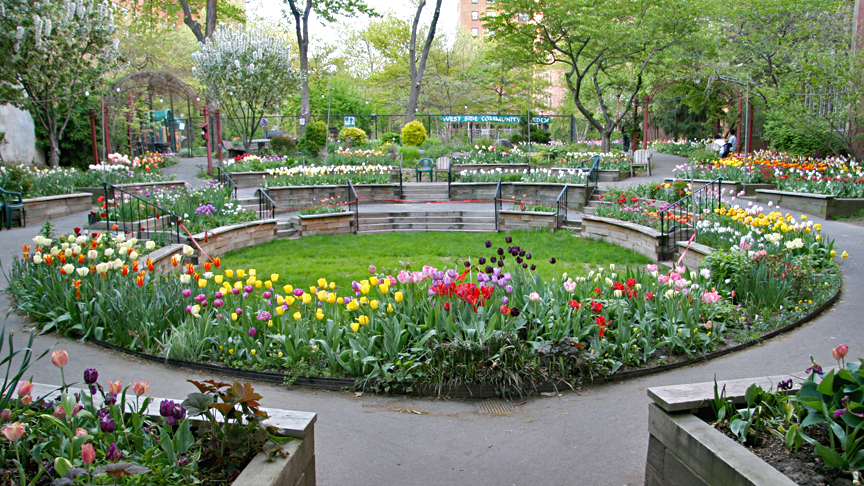
    This is the West Side Community Garden, which spans between 89th and 90th Streets between Amsterdam and Columbus Avenues on the Upper West Side of Manhattan and is one of the largest public gardens in the city. Click here for more photos. These blocks are home to an array of institutions: Ballet Hispanico, Stephen Gaynor School, Claremont Riding Stables (recently closed), and St. Gregory the Great School.

    During the 1970s, half the block facing Columbus Avenue was razed for new buildings. Inadequate funds led to an abandoned plot. By the time real estate developers were ready to build, the space had been transformed into a garden by local residents (many community gardens in the city have started this way). The community was aided in saving this space by Community Board 7, the Trust for Public Land, private fundraising, and developer Jerome Kretchmer, who included the garden in his development plan. “How could a green open space not be a good amenity?” Kretchmer asks. “I get my money’s worth a hundred times a year.”

    The garden officially opened to the public in 1988. There is a vegetable garden area with over 100 individual, private plots where vegetables can be grown and harvested. As would be expected for such a privilege in the city, there is a waiting list for vacant plots. Of course, the primary focus is flowers; each spring, the garden is home to over 300 varieties of tulips, daffodils, hyacinths, and roses. Students of St. Gregory the Great School are responsible for the planting and maintaining of two plots. Gardens and parks are not only beautiful in their own rights but also in juxtaposition to urban structures, providing necessary respite and sanctuary…

    Posted on by Brian Dubé

  • Tropical Pavilion

    Posted on by Brian Dubé

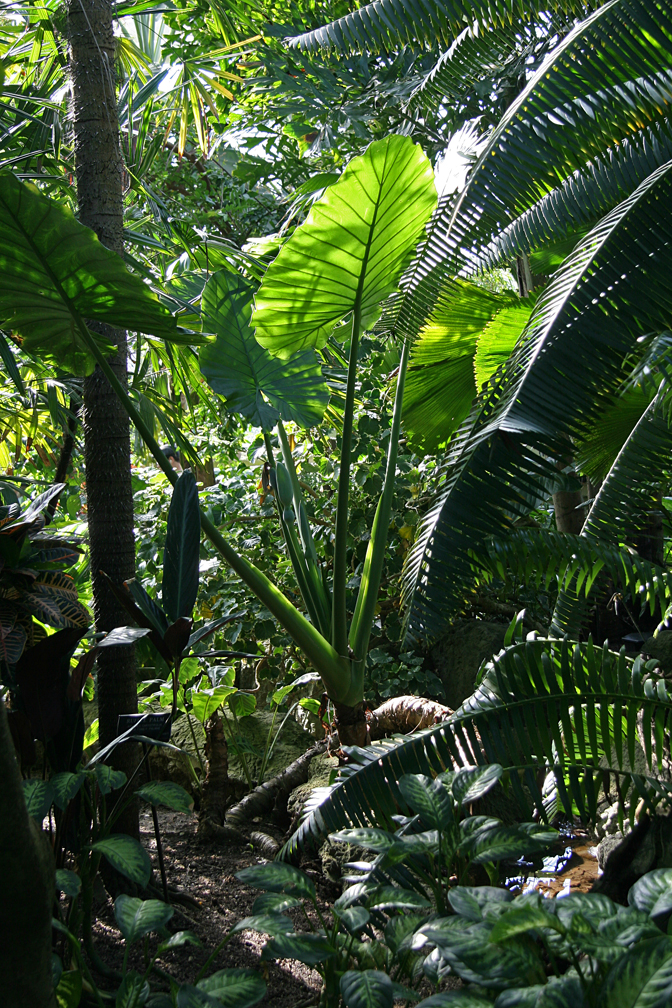
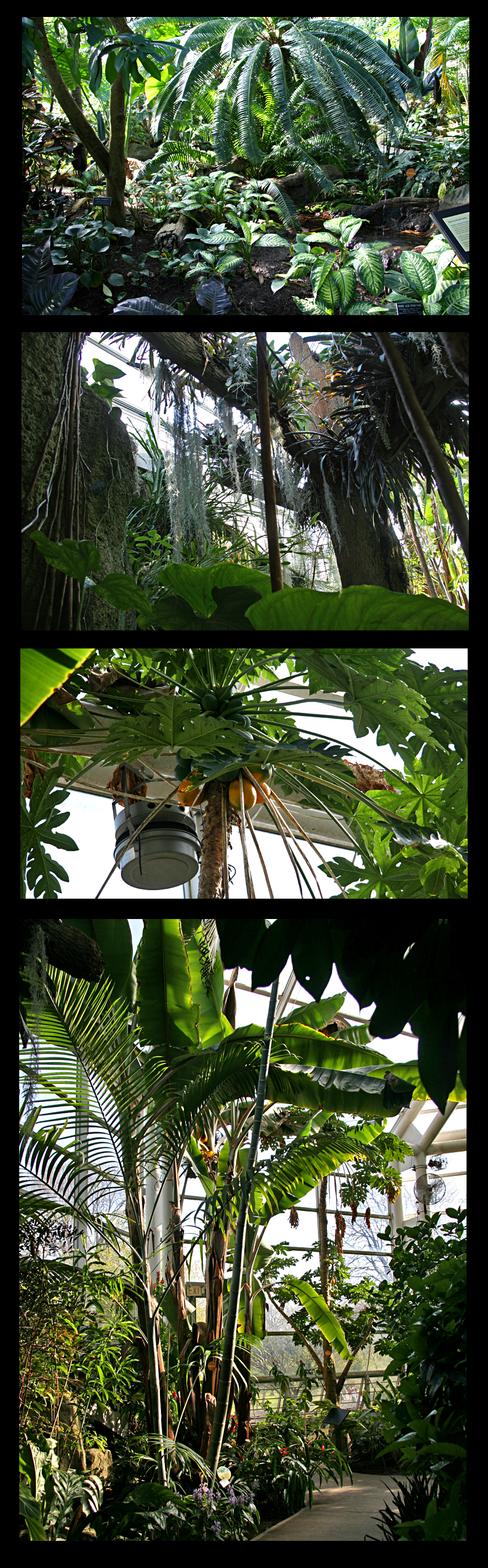
    Yes, this is NYC too. The photos for this posting were all taken in the Tropical Pavilion in the Steinhardt Conservatory at the Brooklyn Botanic Garden, which was founded in 1910. Brooklyn Botanic is a world unto itself, one of NYC’s (and the country’s) premier urban oases – 52 acres with over 10,000 different kinds of plants in a variety of outdoor and indoor environments – gardens, walks, esplanades, and conservatories. The Steindhardt Conservatory (built in 1988 to replace buildings from 1917) is a complex of greenhouses in realistic environments that simulate a range of global habitats – Desert, Warm Temperate, and Tropical pavilions, along with a Bonsai Museum (the largest collection in the US – a must see), the Trail of Evolution exhibit, and an Aquatic House.

    The Tropical Pavilion, the largest of the conservatories, soars to a height of 65 feet to accommodate the tallest trees. It recreates a tropical forest, including waterfalls and streams, representing the primary tropical regions of the world: the Amazon basin, the African rainforest, and tropical eastern Asia. Plantings are arranged to represent the categories of fragrance, food, medicine, and industry, along with ornamental plants. Here, you can find mango, banana, breadfruit, coffee, cola, vanilla, cinnamon, chocolate, papaya, star fruit, latex, and mahogany – it’s amazing to see tropical fruits actually growing in the middle of New York City! I would recommend a visit any time of year, although a steamy August day would perhaps not be the best choice for the Tropical Pavilion.  Try a dreary winter day and be transported to another world…

    Posted on by Brian Dubé

  • Flora

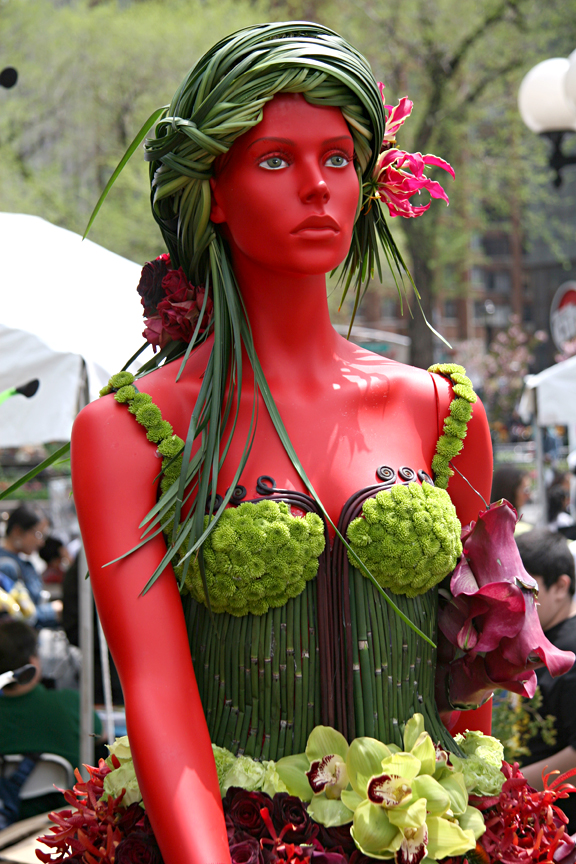
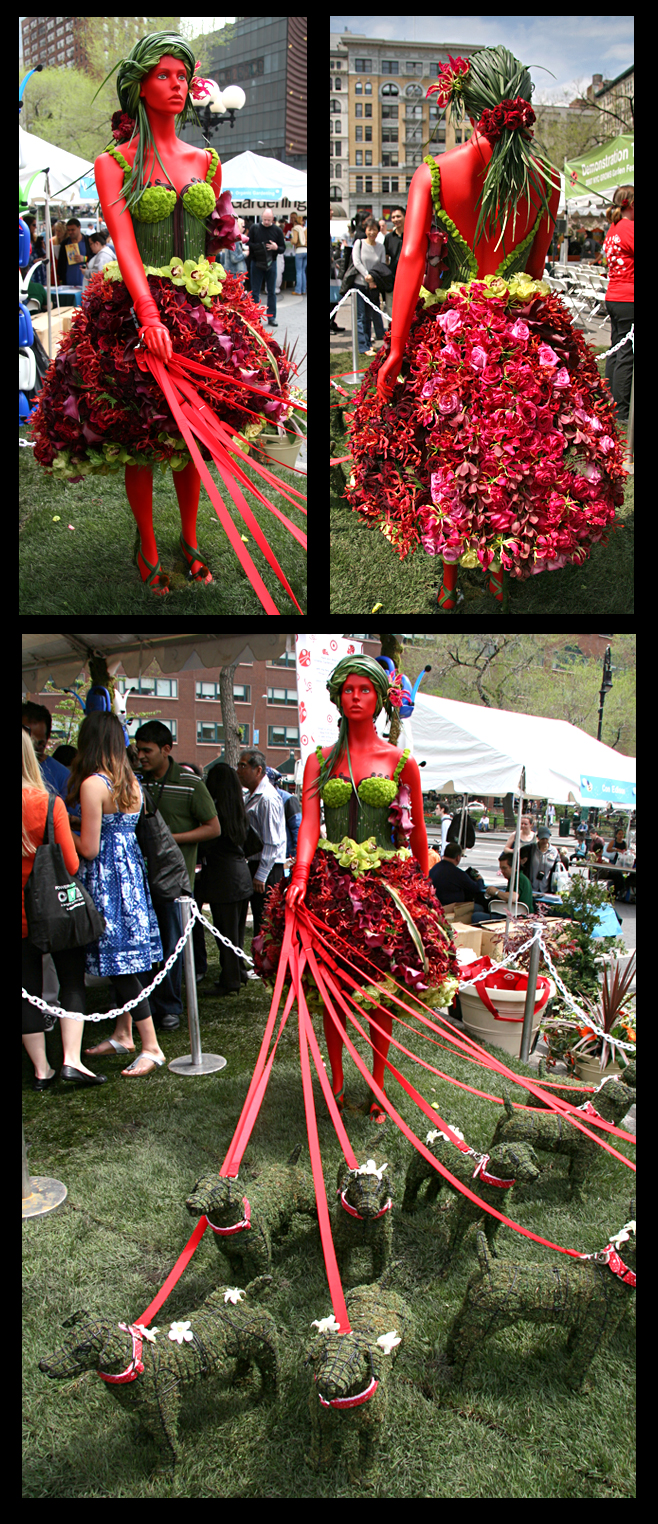
    Yesterday was the NYC GROWS Garden Festival, which was held in Union Square. This event was NYC’s celebration of National Garden Month. Our lady in the photo was created by Target, who sponsored the event. She was a big hit, with visitors taking photos of each other with her as backdrop. I thought she was beautifully done, with all manner of plants/flowers so cleverly used and her bevy of topiary dogs. Click here for more photos.

    I am not a gardener, but I can understand the benefits of being connected to something as important as plant life and seeing living things grow. In a time where everything is about speed and immediate gratification, gardening is a useful antidote by teaching patience – involvement in a process that can’t be rushed, where one MUST wait for results. A useful metaphor, for many of the things of value in life take time to come to fruition. I asked a Target rep if she had a name, and sadly, she did not. After considering many options this morning, I thought Flora might be an appropriate choice…


  • Sakura

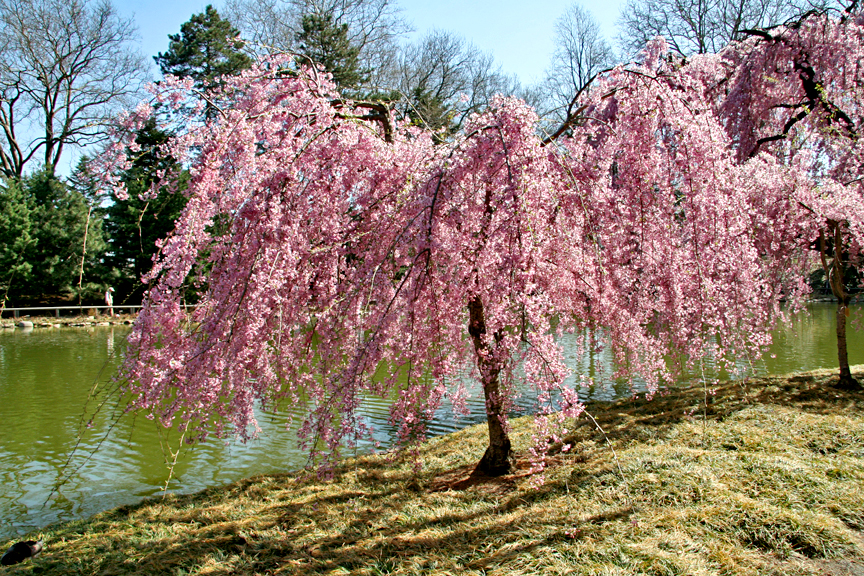
    One of the most beautiful phenomena in nature is the flowering of cherry trees in the spring. I remember one of my first family trips to Washington, D.C. to see the Cherry Blossom Festival and the display around the tidal basin. However, one does not have to travel that far – the Brooklyn Botanic Garden has their own display and festival (considered one of the world’s finest displays outside of Japan). Trees can be found at the Cherry Walk and Esplanade and in the Japanese Hill and Pond Garden.

    There are two cherry tree events going on: Hanami and Sakura Matsuri. Hanami (April 7 – May 6) is “the Japanese cultural tradition of viewing and cherishing each moment of the cherry blossom season—from the first buds to the brilliant blossoms to the petals falling like pink snow.” Sakura Matsuri is the Cherry Blossom Festival, which will be held this coming weekend (Saturday, April 28, and Sunday, April 29, 10 a.m.–6 p.m). There are over 200 trees in bloom with over 60 Japanese cultural events and performances over the entire weekend: pop concerts (happyfunsmile, ZAN, & hip-hop artist Akim Funk Buddha), a taiko drum concert, history of geisha, traditional music and dance, ice sculpture, ikebana, origami, kirigami, samari sword, bonsai, Go, tea ceremonies, craft demonstrations, and workshops. I highly recommend it – I think I may go again for the Festival…


  • Nor’easter

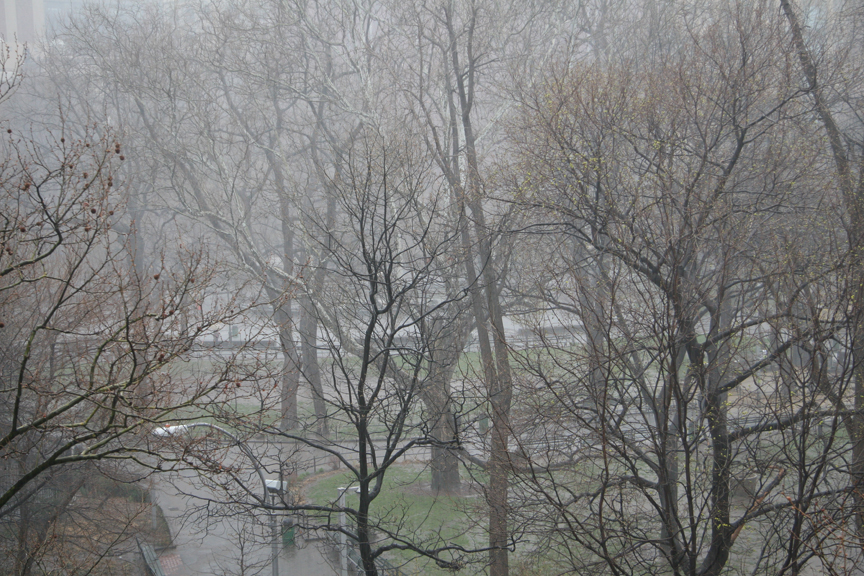
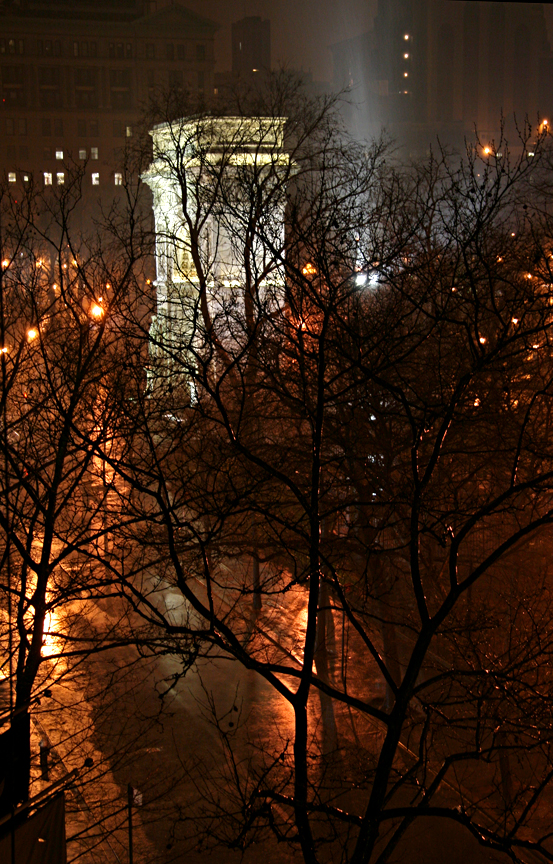
    Until recently, we have had a very sunny early spring, albeit colder than usual. However, this is the northeast, and in its typically unpredictable way, spring has now brought us rain in the form of a nor’easter, with brisk winds, flooding, transportation delays, power outages, leaking roofs, snapping trees, and other havoc. Some areas in upstate NY and northern New England with colder climates are experiencing snow storms. The photo was taken of Washington Square Park (click here for night shot).

    A nor’easter (contraction for northeaster) gets its name from its strong north east winds blowing in from the ocean, causing high seas and coastal damage. The coast of Massachusetts along with Cape Cod and Nantucket have historically been particularly brutalized by nor’easters. Tragically, today is the Boston Marathon, and apparently they are still running…


  • Gothic Night

    Posted on by Brian Dubé

    I find monuments so exquisite when illuminated at night – this is one of the great things about cities like Paris. New York City has its small share of night time beauties, and Grace Church at night is one of them. This night was the perfect Gothic experience, with a near full moon over the starkly lit contrast of the church spire. The illuminated world of New York at night gives residents and visitors a whole other window of opportunity for activities normally relegated to the daytime – sightseeing, strolling, biking, even socializing and sitting in parks. A city that never sleeps must keep its lights on…

    Posted on by Brian Dubé


  • dinamic_sidebar 4 none

©2026 New York Daily Photo Entries (RSS) and Comments (RSS)  Raindrops Theme