• Category Archives Homes and ‘Hoods
  • Meatup

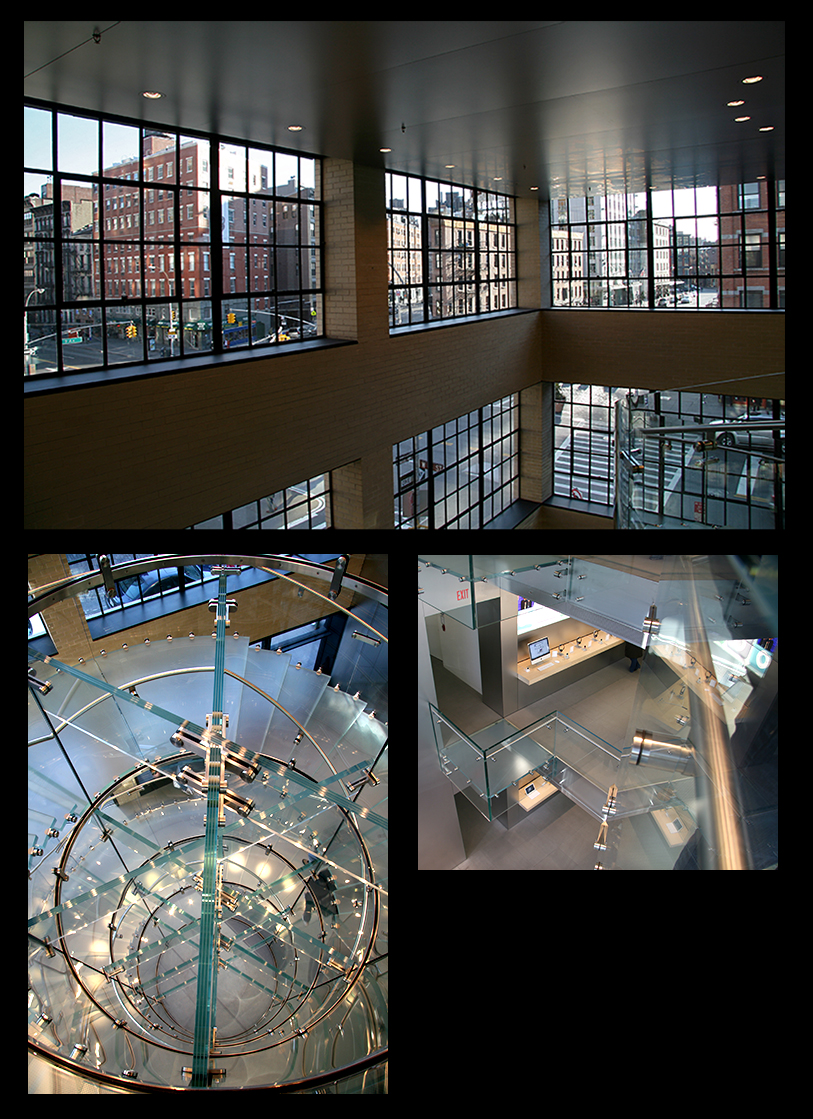
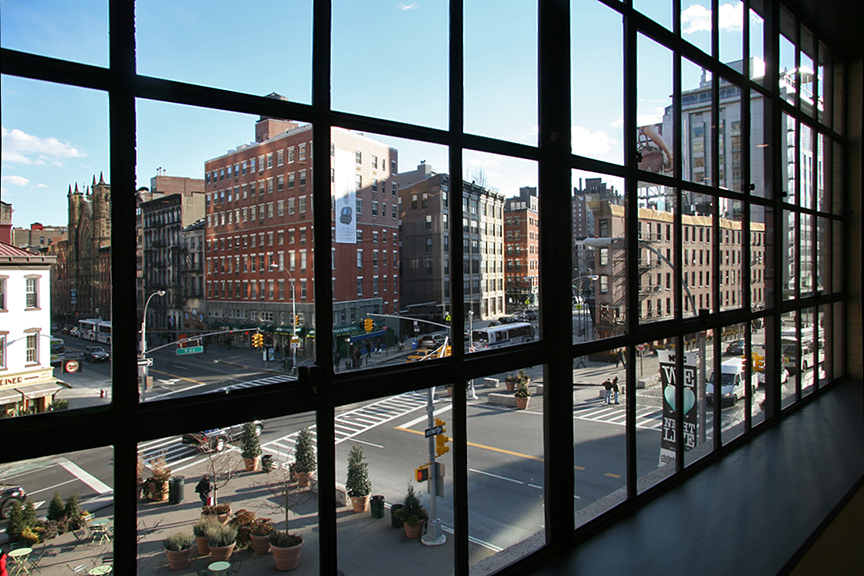
    In the two years I have done this blog, I have yet to do a posting on the Meatpacking District per se (I will in the future). I brushed the area with my posting on the Old Homestead Steakhouse. Today’s photo is taken from the new Apple Store on 14th Street and 9th Avenue in the heart of the meatpacking district, a surprising choice for a retail store of this type. Click here for more photos. The area has been gentrified but is primarily restaurants and clothing boutiques.

    Intrigued after hearing that this new store is their 2nd largest (after one in Chicago), a friend and I decided to make the pilgrimage in the frigid cold. The 4-story store was a buzz of activity, as are all the NYC Apple stores. If you want to witness the cult that is Apple, visit one of their stores. One of their keys to success has been the evangelism on the part of the users – a phenomenon described in the Macintosh Way by Guy Kawasaki, one of the original Apple employees responsible for marketing of the Macintosh in 1984.

    Today’s title is more than an obvious play on the phrase “meet up.” It seems that everything nowadays needs to be branded or organized to have legitimacy, whether it’s storytelling, beekeeping, or walking. So why not organize groups under one umbrella? In 2002, Meetup.com (Meetup) was formed by Scott Heiferman, Matt Meeker, and Peter Kamali.

    The primary inspiration was the book Bowling Alone, by Harvard sociologist Robert Putnam, about the decline of community in America. The founders knew that people were spending more and more time in front of their computers, DVD players, and TVs and losing personal connections. So the organization was formed to get people to reconnect in their own communities. There are millions of members worldwide, thousands of topics, and hundreds of thousands of local groups. Although there is an online site – meetup.com – the primary function is to facilitate the offline meetings.

    In high school, I used to belong to numerous clubs. The same fundamental elements were operative – people meeting in the flesh to share a common interest or activity…

  • Bleecker Street

    The problem with Bleecker Street is nothing new – a place being a victim of its own success. Over time, the South Village has gone through several incarnations. In the early 19th century, the area around Minetta Street became known as Little Africa. A large portion of the city’s black population was living within a few blocks of Minetta Street; these were freed African-Americans (New York State abolished slavery in 1827). The area saw the nation’s first black church, the first black theater (African Grove), and the first black newspaper (Freedom Journal).

    By the 1850s, the area just slightly east, where the Washington Square Village apartment complex now stands, became settled with an immigrant French community – in fact, the area was known as Frenchtown. By the 1870s, most of the French had moved uptown, tourists invaded, and the area became commercialized. Known as the Latin Quarter, it was populated with brothels and taverns.

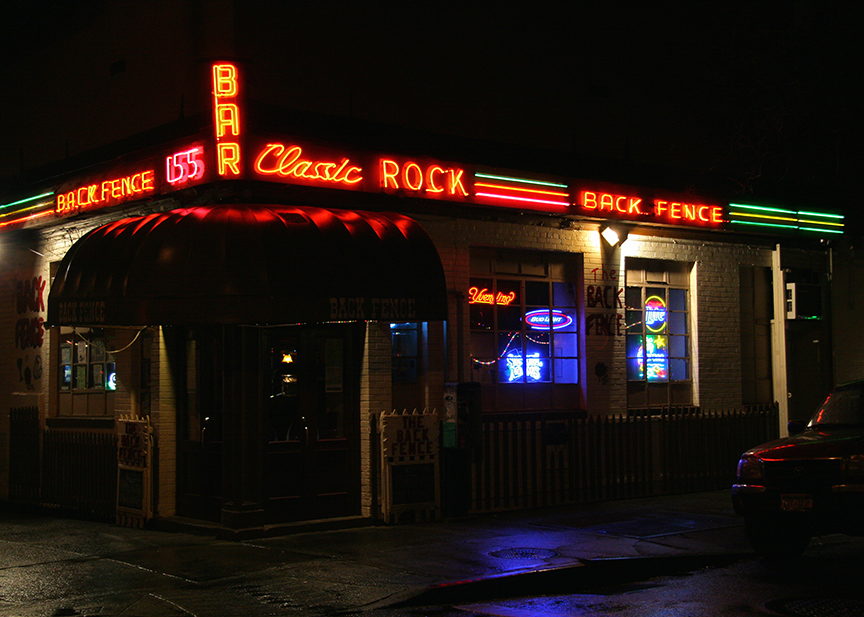
    Later, of course, from the early 20th century through the 1950s and 60s, the area became a renowned bohemian center and still has that reputation to this day. Where does that leave us? Well, it leaves me with very mixed feelings about a street that has had quite a run and been virtually synonymous with Greenwich Village. The few blocks just between 6th Avenue and LaGuardia Place has had many landmark establishments: the Village Gate, Bleecker Street Cinema, the Back Fence, Kenny’s Castaways, Terra Blues, the Little Red Schoolhouse, Le Figaro Cafe, the Bitter End, Peculier Pub, Cafe Au Go Go, and the Actor’s Studio Drama School.

    In fairness, I must say that there are still many quality business establishments on the street, such as Terra Blues. When a place has been beaten hard with an onslaught of tourists for over a century, you do the best you can. And on a quiet weeknight with a little drizzle in the air and the soft neon glow of the Back Fence’s neon signs, things don’t look all that bad…

    A note about the street name: Bleecker Street is named for Anthony Bleecker (1770–1827), a poet and friend of Washington Irving and William Cullen Bryant. The street ran through his farm, and in 1807, Bleecker and his wife deeded the land to the city.


  • Better When

    I’m very surprised that I can find nothing written online or offline about this exquisite little building at 176 MacDougal Street in the Village. It sits at the corner of MacDougal Street and MacDougal Alley (click here). It is unusual in that much of it is unattached on four sides, atypical of small buildings like this in Manhattan. Coupled with its white-painted exterior, the building has a very free feeling to it. The detailing and window boxes gives it a European, perhaps Parisian, flavor. The retail space has gone through a number of incarnations over the years; currently, it is a laundromat. At one time, there was a restaurant called Shakespeare’s here.

    Along 8th Street, there were numerous bookstores; the one at the corner of MacDougal is where Bob Dylan was introduced to Allen Ginsberg in 1964. I was told that Robert Joffrey of the Joffrey Ballet lived atop the building in the photo, but today I have learned that it was next door at 180 MacDougal. Across the street was Capezio, a renowned maker of dance shoes. The Joffrey Ballet company was around the corner on 6th Avenue. The neighborhood had the type of places that gave the Village its Bohemian, artsy, iconoclastic character.

    But all this nostalgia with remembrances, reveries, and reminiscing reminds me of a great article in the New York Times which had a profound impact on me. It was written in 2001 by Jill Eisenstadt, a Brooklynite who recounts her parent’s telling (ad nauseum) of how everything was better back when – seltzer, candy stores, cafeterias, stickball, stoopball, the trolley, mickeys, egg creams, Ebbets field, and the Dodgers. I will leave you with the final few sentences of that article:

    “Years from now, I’ll probably tell my grandchildren about the old neighborhood. How merchants let me run up a tab if I was short on cash, how the pediatrician offered to make a house call in an emergency, how the baker made me promise to bring the babies in for their first cookies, how we all helped each other shovel the one snowfall of 1999. But when they ask what a shovel is, I hope I’ll tell them the truth. That a shovel is a heavy tool. That nostalgia is a heavy comfort. That I don’t really miss Brooklyn way back when. What I miss is being young. That everything is probably a lot better now.”

    Related Postings: Left Bank, New York; MacDougal Alley; Re-Creation; Washington Mews


  • Housing Stock

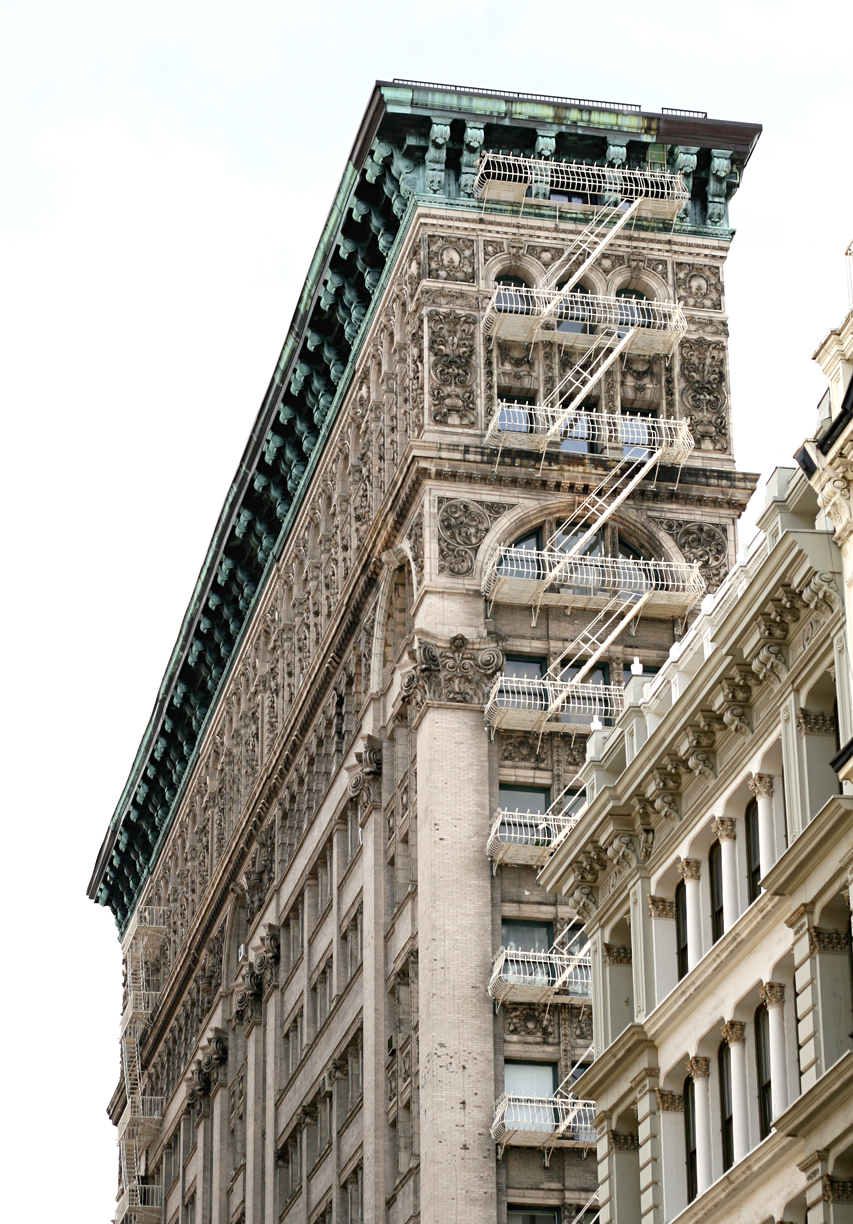
    This magnificent building at 451 Broome Street in the SoHo Historic District caught the eyes of a couple of photographer friends and myself on a recent walk. I could find no details on this building specifically. Amazing, since in another locale, something of this quality would be worthy of group tours. But SoHo is packed with quality structures, so a building has to really stand out in an extraordinary way architecturally or historically to make itself known.

    SoHo is bounded by Houston Street to the north, Lafayette Street to the east, Canal Street to the south, and Varick Street to the west. Like much of the city in the 1960s-70s, this industrial neighborhood was in decline and was discovered and populated by artists who found upper story floors (which became known as lofts) with their enormous spaces, large windows, and cheap rents to be very desirable. Most of the use of these spaces for living was technically illegal, however, the state of the neighborhood caused these violations to be overlooked.

    SoHo has also been known as the Cast Iron District – the ornate facades of many of these 19th-century buildings are done in cast iron. Like Tribeca and DUMBO, the quality of housing stock ultimately determines the degree of gentrification a place will attain. We see this all over the world with places like the Marais in Paris or Providence, Rhode Island, which is seeing a renaissance, driven by its old factory buildings. Contrast this with neighborhoods like Williamsburg, Brooklyn, or the East Village – they certainly have been gentrified, but I do not believe you will ever see these neighborhoods approach the level of SoHo, with Madison and Fifth Avenue retailers such as Louis Vuitton, Cartier, and Coach. Here, we had a centrally located neighborhood with beautiful architecture and cobbled streets. It was just a matter of time…

    Related postings: Bleecker Tower, Scholastic Building, Bayard Condict, The Wall, Jersey Girls, Stephanie, Hoopmobile, Gourmet Garage, Alidoro


  • No Local Color

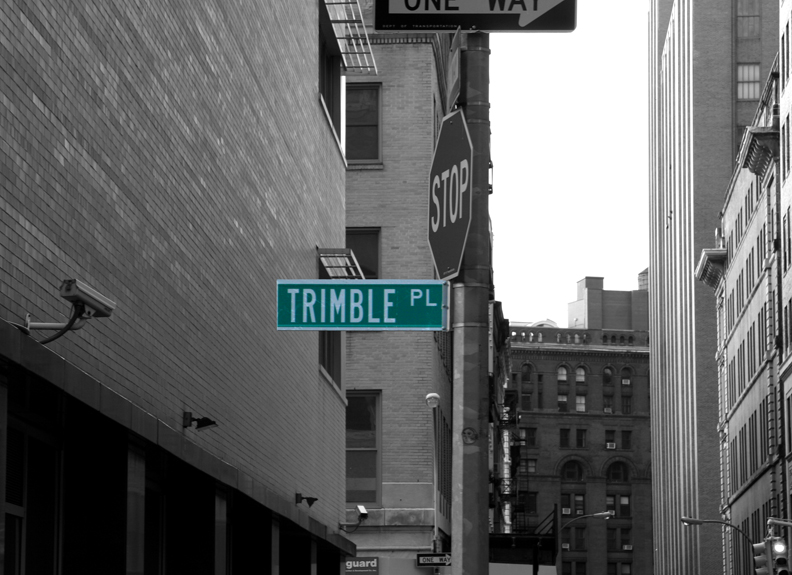
    What can be said about this obscure little private, one-block alley which lies between Duane and Thomas Streets, parallel to Church Street and Broadway in lower Manhattan? Not much at all. Would I recommend visiting it? No, not unless, like myself, you like to visit alleys. Are there any interesting tidbits or stories? None that I could find.

    Trimble Place is very uninteresting and drab, with no outstanding features or businesses and very little history other than it was named in 1874 for George Trimble, a 19th-century merchant, director of New York Hospital and an officer of the Public School Society. The most interesting things about the alley are the buildings that surround it, like the controversial 52-story residential tower next door and the bizarre, 550-foot, monolithic, windowless AT&T Long Lines Building at 33 Thomas Street. There are actually many small alleys like this in lower Manhattan: Mosco Street, Florence Place, Benson Street, Ryders Alley, Mill Lane, Mechanics Alley, and Jersey Street. And in the Village, there are several which are residential and much more bucolic and historic in nature, such as Grove Court, MacDougal Alley, and Washington Mews. Unlike most of Manhattan, the mayhem of small streets and alleys downtown is due their creation prior to the Commissioners’ Plan of 1811, which established an orthogonal grid north of 14th Street.

    I find the very TRULY nondescript interesting just for that reason – it’s not easy being that featureless, like the tract housing of Levittown, NY, or luggage areas at the airport. But there is always hope that Trimble Place may have its day. Look at what happened to Seinfeld, a show reputedly about nothing…


  • Front Street

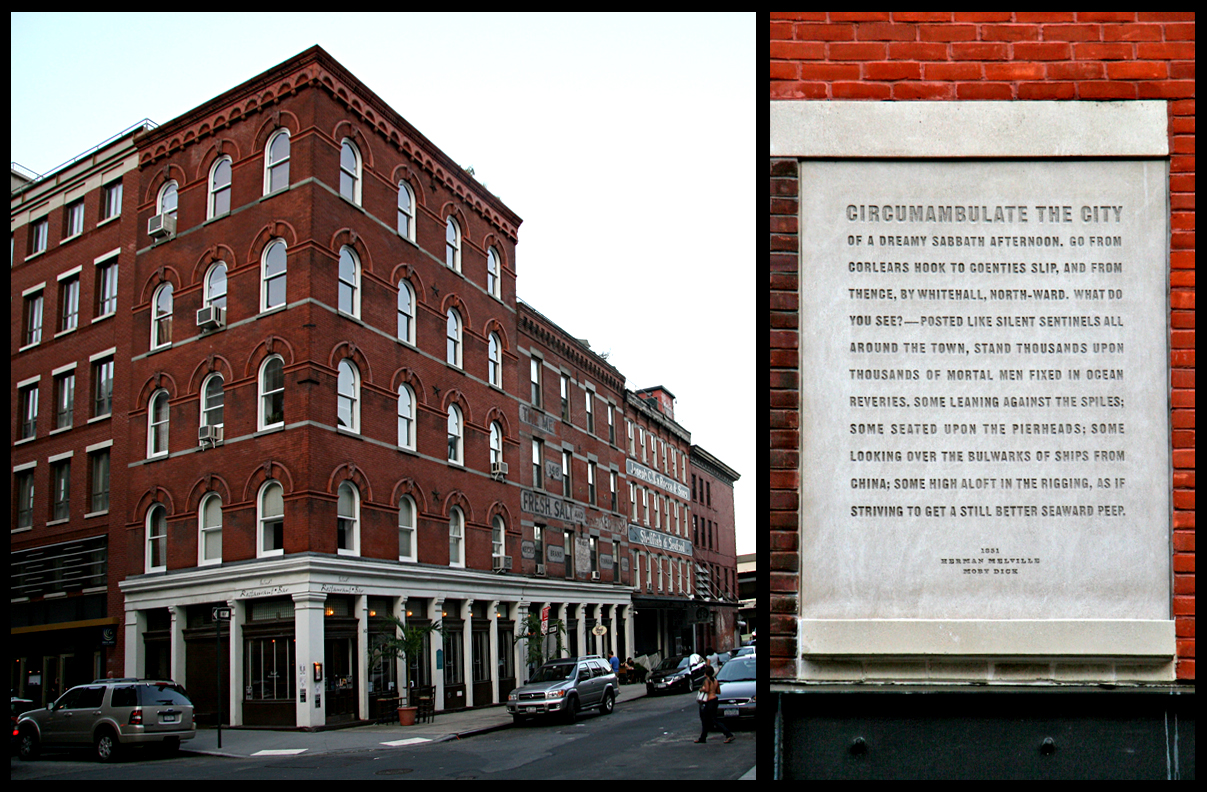
    Front Street is part of the Historic Cobble Stone District in South Street Seaport. The area has been renovated, gentrified, and developed (by the Rouse company); I discuss the cloned look with other areas of the country in my posting on South Street Seaport. The original architecture, however, has been preserved, as you can see by the signage on the buildings in the photo above left. A walk down any of the streets is rewarding, and the area’s history can still be felt.

    I like the quote from Moby Dick which is inscribed on a placard on Front Street. It captures the spirit of New York City at a time and in a place where its true nautical nature must have been preeminent:

    “Circumambulate the city of a dreamy Sabbath afternoon. Go from Corlears Hook to Coenties Slip, and from thence, by Whitehall, northward. What do you see?- Posted like silent sentinels all around the town, stand thousands upon thousands of mortal men fixed in ocean reveries. Some leaning against the spiles; some seated upon the pier-heads; some looking over the bulwarks of ships from China; some high aloft in the rigging, as if striving to get a still better seaward peep.”

    I have done several postings on aspects of this neighborhood: Belle de Jour, Dead to the World, Fishbridge Garden, Spiegeltent


  • Esperanto

    Geography matters. If one looks at a map of Manhattan, you will see that from 125th Street down to 23rd Street, it is essentially a rectangle, with First Avenue being the easternmost North-South Avenue. South of 14th Street, the island bulges on the east side. Here you have the Lower East Side and Alphabet City – Avenues A, B, C, & D.
    This area is one that is furthest from subway lines in the city. It is nearly a mile from Avenue C and the nearest station at Astor Place or 2nd Avenue. I believe that this frontier land location has been one factor in its later gentrification. The area has a rich ethnic history, occupied by the German, Polish, and most recently the Latin community (Avenue C has been given the name Losaida, meaning Lower East Side in Spanish).

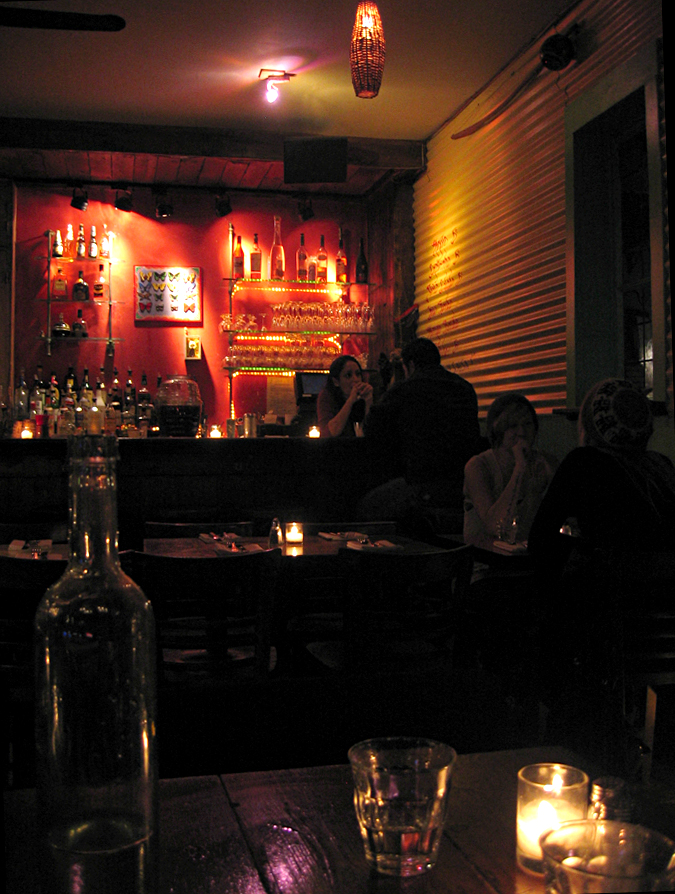
    In my recent explorations of the community gardens in the area, I discovered a real gem of a restaurant at 145 Avenue C and 9th Street: Esperanto. In warm weather, their French-style doors are open, and there is al fresco sidewalk dining – beautiful, since a large community garden faces each exposure. The food is pan-Latin, with Brazilian and Cuban drinks. There are two rooms with a warm, dark atmosphere. The main room (in the photo) has burnt-orange walls, tiled floors, and a bar. The other room is painted in turquoise. The food is excellent and very well priced. There are prix fixe dinners and brunches. Some have complained about the wait staff being inattentive, but I found it acceptable. Highly recommended…

    Related Postings (click any link): Shangri-La, La Plaza Cultural Garden, Albert’s Garden, Devil’s Playground, Howl!, Vegan Chic, Bluestockings


  • Bridge Cafe

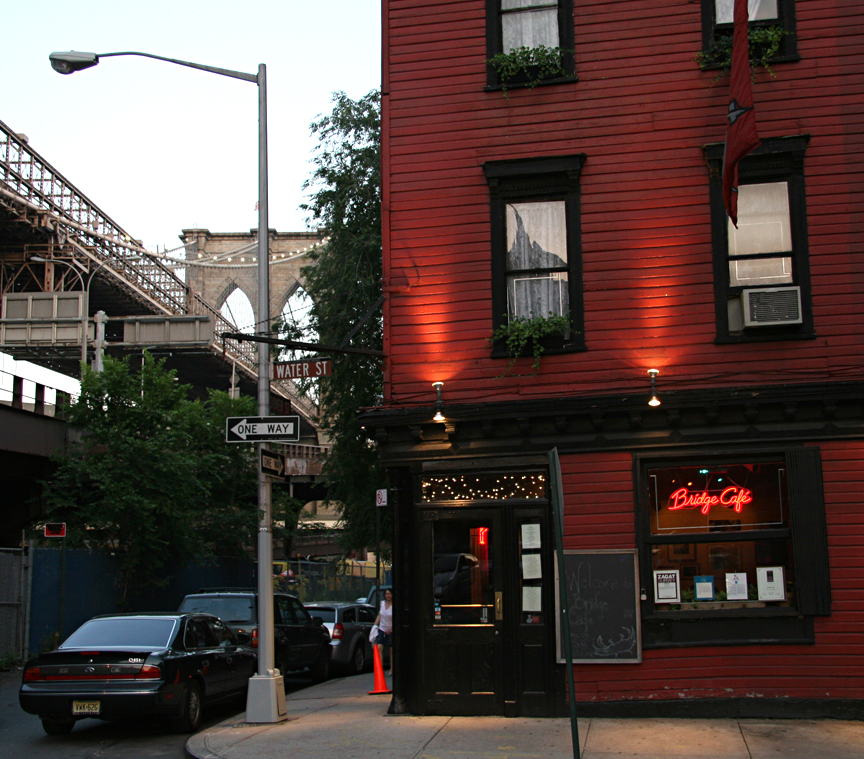
    Many New Yorkers avoid the South Street Seaport area (barring an occasional visit for a performance like that of Spiegelworld), seeing the area as too touristy. This is a legitimate complaint, but there are also good reasons to visit this neighborhood. Once one gets away from the beaten path of Fulton Street, you quickly start to appreciate the charms of this area, the oldest area of the city. The buildings are beautifully restored, streets are cobbled, and there are a number of establishments worth patronizing, such as museums, restaurants, bookstores, and galleries.

    The Bridge Cafe, at 279 Water Street, is one of those places. The restaurant, at the end of Water Street and the corner of Dover Street, is virtually under the Brooklyn Bridge, housed in a wood-frame building erected in 1794 (click here for photo). This historic gem is believed to be the oldest business in NYC and the oldest drinking establishment. In 1847, Henry Williams opened a porter house in this section of Water Street, known for its saloons and brothels. The cuisine is eclectic New American. I have not eaten there, but reviews appear to be consistently good – I intend to to soon…

    Notes: At the time the place was built, before land-fill projects expanded the area of Lower Manhattan, the East River actually came right up to the building.
    When Ed Koch was mayor, he met here twice weekly at a private table.

    Related Postings. Click on any link: Belle de Jour, South Street Seaport, Dead to the World, Fishbridge Garden, Jet Ski


  • Bomb Factory

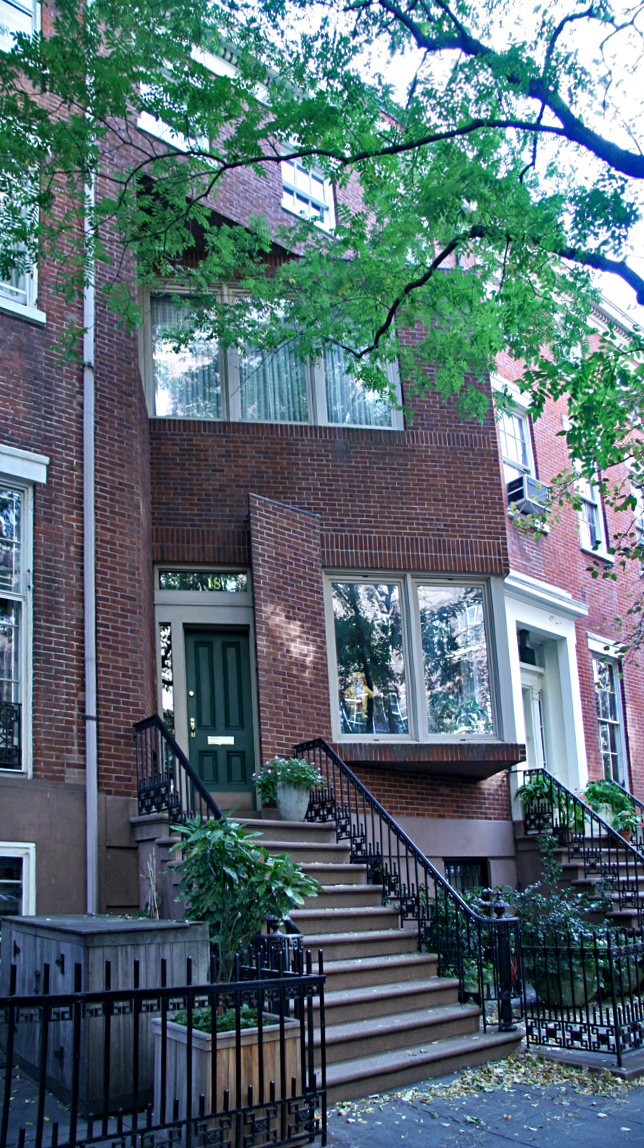
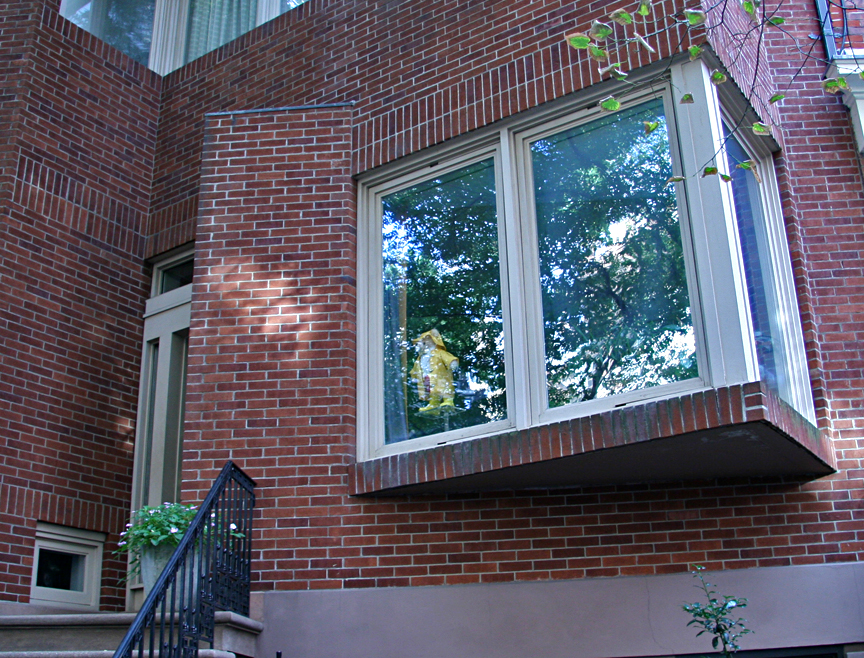
    On March 6, 1970, a townhouse at 18 West 11th Street exploded, leaving the entire building destroyed and damaging the neighboring building at number 16, where Dustin Hoffman was resident. An accidental detonation had occurred in a subbasement bomb factory run by members of the Weathermen. Weatherman (or the Weathermen and later the Weather Underground Organization) was a small group of radicals formerly from the SDS (Students for a Democratic Society).

    This group was very extreme, calling for the revolutionary overthrow of the U.S. Government using violent means. The bombs had been intended to be used at Columbia University. The explosion killed three members and sent Cathy Wilkerson and Kathy Boudin running into the street naked (Wilkerson’s family owned the building and were away on vacation). An F.B.I. report said that ”had all the explosives detonated, the explosion would have leveled everything on both sides of the street.”

    The building, built in the 1840’s by Henry Brevoort Jr., was once owned by Charles Merrill, a founder of Merrill Lynch & Company. His son, the poet James Merrill, was born there. James wrote a poem after the incident entitled 18 West 11th Street. There are too many details in this amazing story to go into here, so I highly recommend this article by Mel Gussow from the New York Times in 2000.  The lot sat vacant for nearly a decade before a replacement house, designed by Hugh Hardy, was built in 1978. As you can see from the photo, the modern design was quite a departure from the 19th-century row houses around it. The new design, with its angular facade jutting out, was controversial and took some effort to finally pass the landmarks commission. Very radical…

    Note: There is a Paddington Bear which the current residents keep in the picture window. His attire is changed according to the weather. Click here for photo.


  • Building Gone Wild

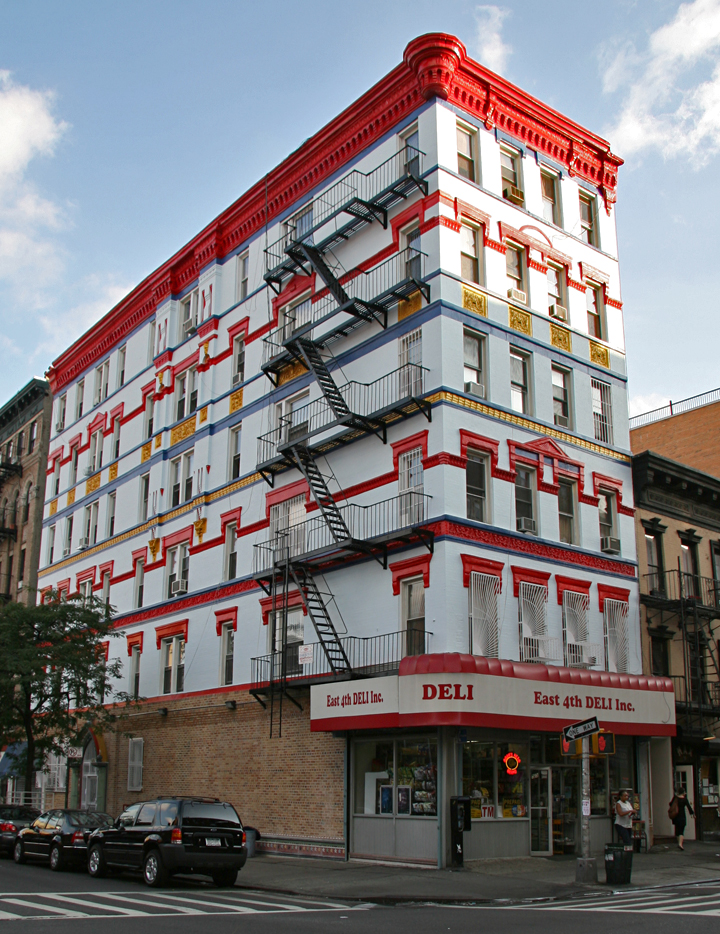
    The building in this photo, located at 246 East 4th Street at Avenue B in the East Village, is a mystery. The raison d’etre for the super bright colors, the history, the architecture with its friezes and exterior sculptures, etc. are unknown to me. The red, blue, gold, and white painted structure stands out dramatically from anything around it and screams for attention. There are virtually no references to it online. I did find two residents in a phone directory who are doing business from the building.

    I also found a reference to “Otnoob,” which appears to have a retail canopy (all I could find about the word “Otnoob” is a World of Warcraft character – a human, rogue). If you are interested in finding this place, the East 4th Deli at 53 Avenue B is located in the same building, but I don’t think you will miss it 🙂


  • Pied-à-Aire

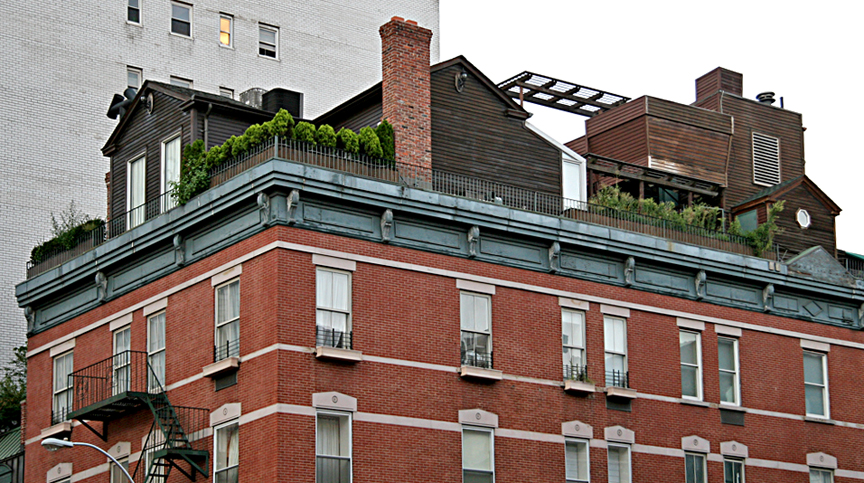
    There are many secret worlds in New York City, and rooftop houses are one of them. I am sure that having a private little Shangri-la in the city is a fantasy that many have had, but few realize that these pied-à-aires have been actualized by a fortunate few. I was somewhat surprised to find out how little information is available on this phenomenon – one would not expect a lot in print, allowing for the fact that photographing these properties is going to be difficult without an invitation, but typically one would expect a few feature articles. I found none (I do recall an article many years ago about a rooftop cabin).

    The gabled structure in the photo is not strictly a rooftop house – it is an extension of a top-floor apartment. It sits atop the building at 203 East 13th Street on the corner of 3rd Avenue in the East Village. The building itself was built in 1910 and was converted to condominiums in 1986. In the early ’90s, the owner of the top floor apartment built the cedar-shingled structure. Originally, a spiral staircase led to a small rooftop room; this was torn down and replaced with the rooftop complex, which includes a master bedroom and bath, a small greenhouse, a darkroom, a hot tub, outdoor decks, and plantings. I wish I had closeups and interior photos of the property but alas, I could not find any…


  • Bloomberg

    Posted on by Brian Dubé

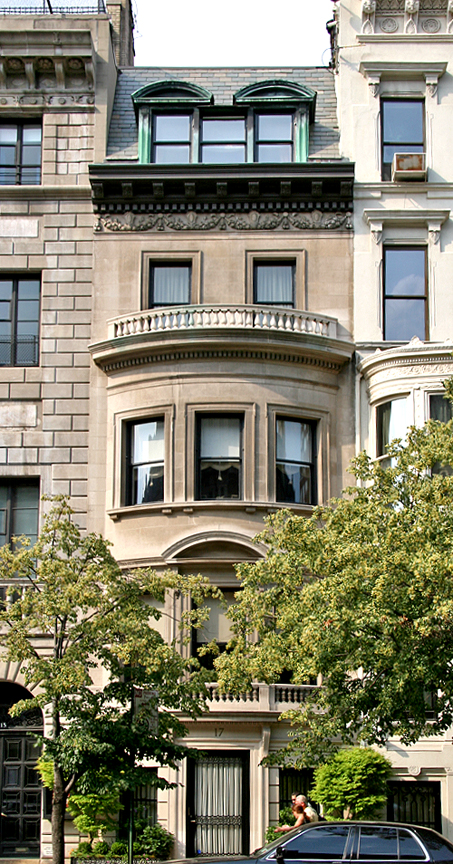
    This is the residence of Michael Bloomberg, mayor of NYC. Elected in 2001 and for a second term in 2005, Bloomberg opted to live in his Manhattan residence rather than Gracie Mansion (the official Mayoral residence since 1942, when Robert Moses paved the way for Fiorello LaGuardia to become Gracie Mansion’s first resident). The 5-story, 7,500-square-foot townhouse at 17 East 79th St. was built in 1889 and purchased by Bloomberg in 1986 for $3.5 million – ($17 million today). Don’t be deceived by the understated elegance of this building – these small townhouses and limestone mansions between Fifth and Madison on the Upper East Side are among the most coveted properties in NYC in one of the most desirable neighborhoods in the world. This is super prime real estate.

    Bloomberg has been a unique office holder, not coming from the world of politics. With a B.S. in electrical engineering from Johns Hopkins and a Harvard MBA, he certainly had the intellectual acumen and academic achievement for his forays into the business world using his background in technology, after his stint at Salomon Brothers. A self-made billionaire from a humble background, Bloomberg is in various Forbes’ lists as one of the world’s richest men, with homes around the world. His Bermuda home has billionaire Ross Perot and Italian Prime Minister Silvio Berlusconi as neighbors. He has a 20-acre farm in North Salem, NY, a Victorian townhouse in London, and a condominium in Vail, Colorado. He is a private pilot with a fleet of aircraft at his disposal. Yet, ever to be practical and demonstrate that at some level he is still one of us plain folk, he continues to take the subway every morning to City Hall (albeit with bodyguards) and list his address and phone number in the white pages (yes, I checked)…

    Posted on by Brian Dubé

  • Father Demo Square

    Posted on by Brian Dubé

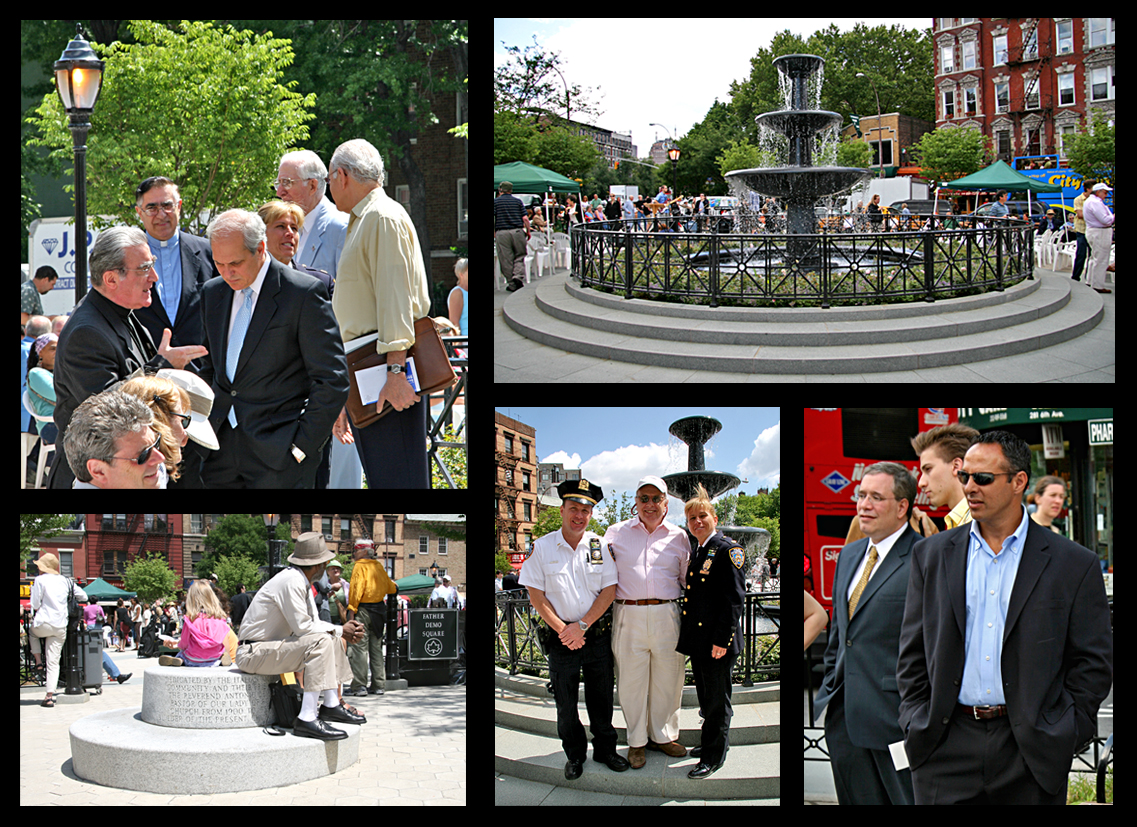
    This was the ceremony for the eagerly awaited reopening of the newly renovated “vest pocket” park at Father Demo Square. Although this park space may appear small and inconsequential, park spaces, large or small, are very important to the fabric of the city – these urban oases provide the only outdoor space most New Yorkers ever see. The park is also at a very strategic location – one of the busiest intersections in the Village. The triangular park is bounded by 6th Avenue (Avenue of the Americas), Bleecker Street, and Carmine Street. The square is named after Father Antonio Demo (1870-1936), who was pastor of the neighboring Our Lady of Pompeii Church in 1935.

    Residential buildings also flank the park. Many visitors forget that there are residents who live amidst all this, so apart from the physical deterioration and much-needed repair, one of the concerns was crowd control. Historically, people were in this park all hours; the homeless started setting up home, performers attracted enormous audiences, and noise, revelry, and fights were common. Hence the decision to include a 3-foot-high perimeter fence to the design. The renovations were overseen by the Parks Department (with George Vellonakis as the landscape architect) and David Gruber, local resident, real estate developer, and president of the Carmine Street Block Association. The renovation included decorative tiles, a new fountain, trees, and flower beds. The $1.3 million dollar project took somewhat longer than anticipated – there were additional issues involved since the park was located over the 6th Avenue subway lines.

    The ceremony, which included live music, was presided over by David Gruber. Attending were Borough Park president Scott Stringer, the pastor of neighboring Our Lady of Pompeii Church, NYPD sixth precinct commander Theresa Shortell (the sole female police precinct commander in New York), and the general contractor for the project. I also recognized a number of local community activists. For reasons unknown, the Parks Commission decided to cancel their attendance at the last minute. Word has it that they are planning an official ribbon cutting in a couple of months…

    Posted on by Brian Dubé

  • 121 Charles

    Posted on by Brian Dubé

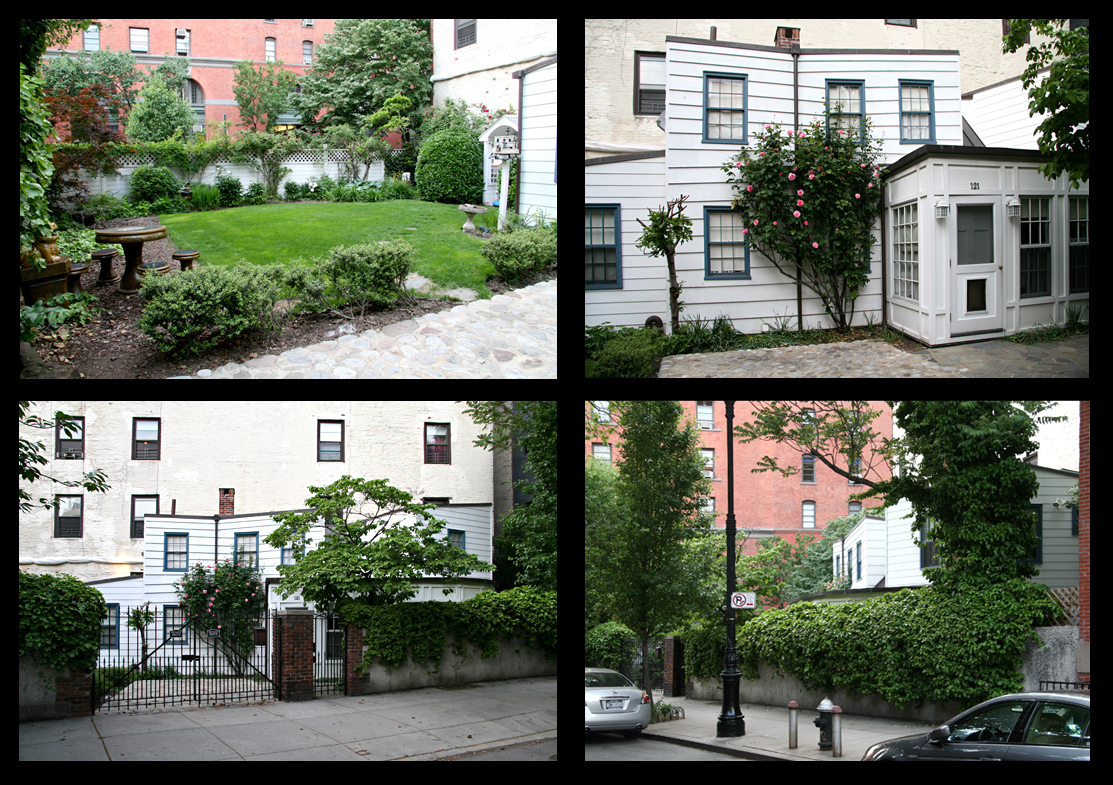
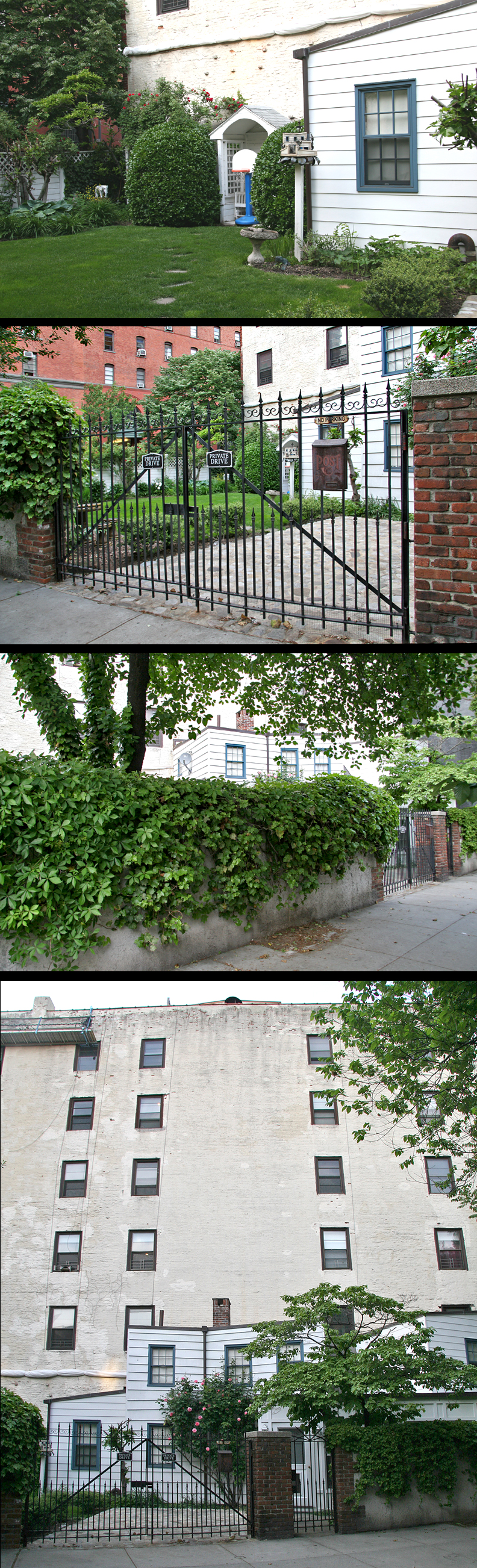
    I have been virtually obsessed with this place and was looking forward to posting photos and the story behind one of the most amazing properties in the entire city. Here, we have a 200-year-old farmhouse on its own piece of land, with a yard and driveway, the six-room wood-frame house stuck against a neighboring brick building. Click here for more photos. The first time I encountered this tiny house at 121 Charles Street, I couldn’t believe it. An anomaly and a time warp in a bucolic setting. There is little information on this place, so I had to dig.

    This house was originally on a rear lot at 71st and York Ave. The exact date of its origin is unknown. The house was occupied in the 1940s by Margaret Wise Brown,  author of ”Goodnight Moon.” In 1960, it was occupied by Swedish-born Mr. and Mrs. Sven Bernhard, who, after extensive renovations, won ownership in 1966. However, the land was owned by the Roman Catholic Archdiocese of New York, who intended to demolish the house for the building of a new Mary Manning Walsh Home for the Aged. Wanting to keep the home, the Bernhards decided to move the entire house intact. With the help of architect William C. Shopsin, they located a vacant 3600-square foot lot on Charles Street.

    On March 5, 1967, the entire house was moved five miles (at a cost of $6500) from its Upper East Side location down Second Avenue and across 14th Street to its new home in the West Village, with the Bernhards following by car. In 1988, Suri Bieler and her husband Eliot Brodsky began a restoration of the property with architect George Boyle. A room for their 7-year-old, Jack Brodsky, was added. You won’t find anything like this in Manhattan, trust me. I understand that it’s not for sale…

    Posted on by Brian Dubé

  • Pen And Brush

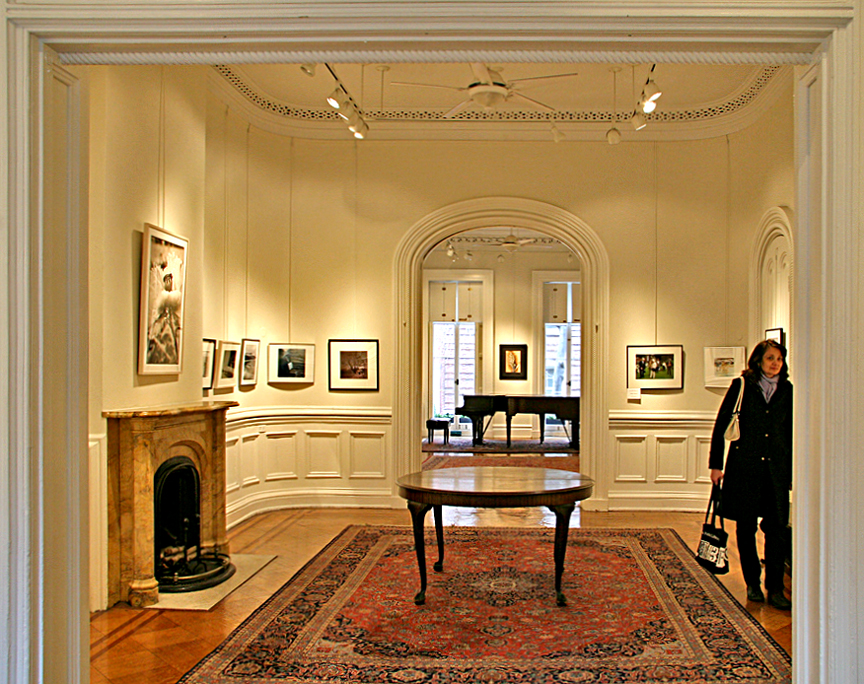
    This is the Pen and Brush Club, which has its home in the exquisite townhouse at 16 East 10th Street. In the 1890s, the arts were dominated by men, but women were beginning to gain prominence – many women artists had studios around the Washington Square area. In 1892, in response to the exclusionary climate towards women (the Salmagundi Club around the corner on 5th Avenue excluded women until 1973), the Pen and Brush Club was formed by painters Janet and Mary Lewis (sisters), who invited three other artists and eight writers to their studio in Chelsea. Early members included journalist Ida Tarbell, first ladies Eleanor Roosevelt and Ellen Axson Wilson, and Pulitzer Prize winner Pearl Buck.

    In 1923, the club purchased the 1848 Greek Revival townhouse which it has occupied ever since. As women became more accepted in the art world, the club became more insular. However, the art world is still relatively dominated by men, and director Janice Sands sees the club’s original mission to be just as relevant today. She has been on a campaign to expand exhibitions to outside non-member artists and recruit new members, shedding its older image and bringing in younger artists.

    The photo shows the exhibit space on the parlor floor with its intricate crown moldings, marble fireplaces, parquet floors, 16-foot ceilings, and its Steinway grand piano (read about the club and its facilities here). Its main rooms are open to the public, and the exhibits are always free of charge…


  • dinamic_sidebar 4 none

©2026 New York Daily Photo Entries (RSS) and Comments (RSS)  Raindrops Theme