• Category Archives Homes and ‘Hoods
  • Cherry Lane Theatre

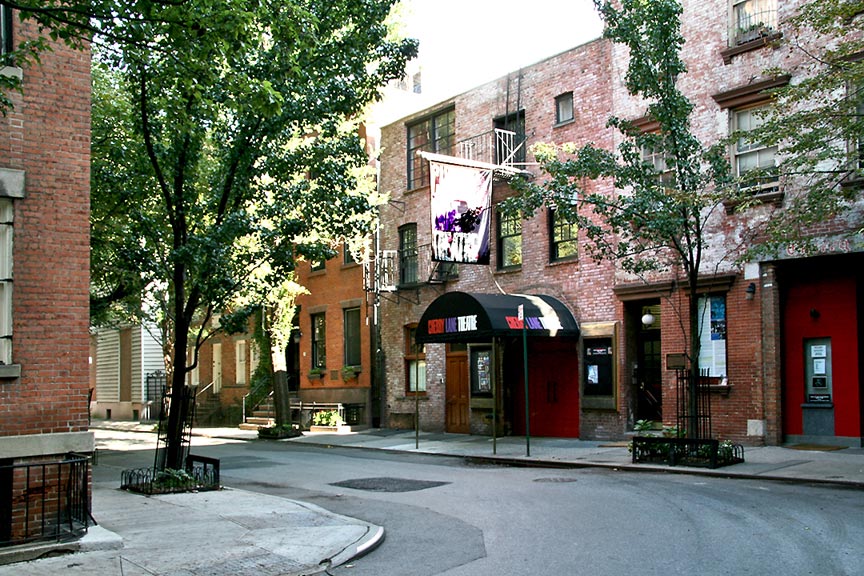
    On one of the most charming and bucolic streets in the city, you will find the Cherry Lane Theatre. This small, quaint theater at 38 Commerce Street in the West Village is, however, not small in reputation or impact. The building site was originally a silo on the Gomez Farm in 1817 – the building that now stands was first built in 1836 as a brewery and was later used as a tobacco warehouse and box factory. Click here for more photos.

    It was founded as the Cherry Lane Playhouse in 1924 by a group of colleagues of Edna St. Vincent Millay. The roster of playwrights and actors that have worked there is truly astonishing and voluminous: O’Neill, Beckett, Albee, Pinter, David Mamet, Sam Shepard, John Malkovich, Gene Hackman, Barbra Streisand, James Earl Jones, Rod Steiger, Dennis Quaid, Kevin Bacon, and Harvey Keitel, to name just a few. If you are not familiar with this theater, I suggest you peruse their extensive website and learn more about it.

    As a laboratory for theater with a groundbreaking heritage, it is quite fitting that New York’s longest running Off-Broadway playhouse is located on a street with a bend and left off the grid of the Commissioners’ Plan of 1811…
  • San Gennaro

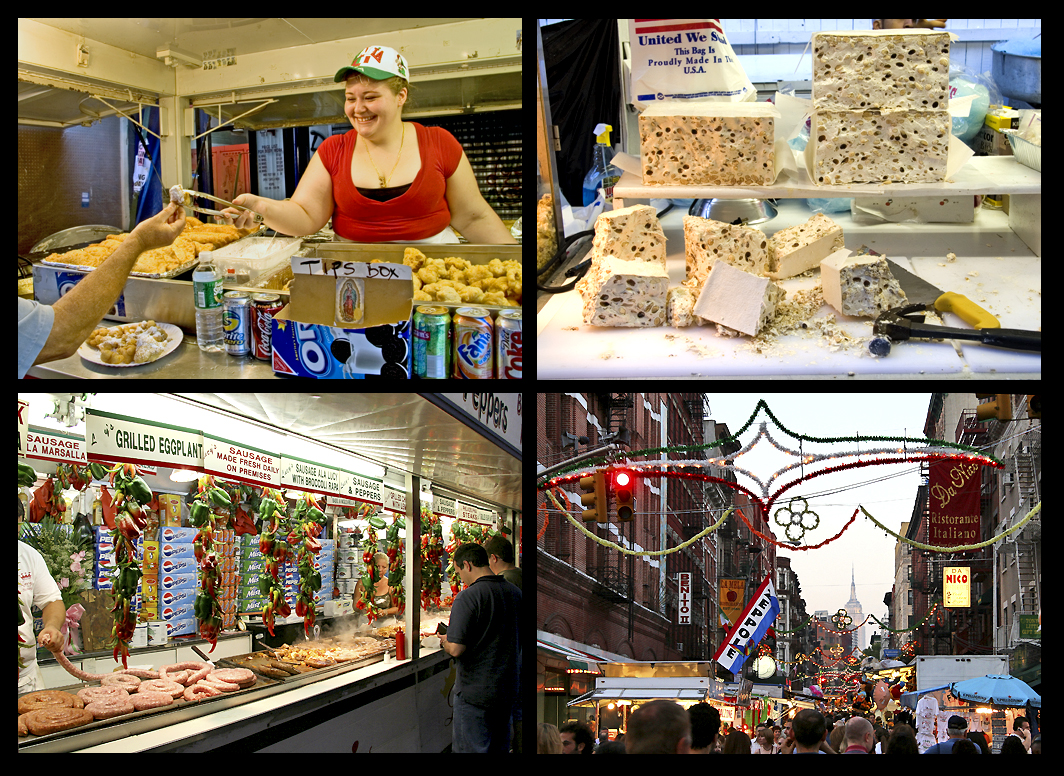
    The Feast of San Gennaro is celebrating its 79th year. It started in 1926 as a one-day event and now spans 11 days (Sept 14-24). San Gennaro was the patron saint of Naples. Newly settled Neapolitan immigrants started the annual festival, continuing the tradition from Italy, commemorating the day in 305 AD when Saint Gennaro was martyred for his faith.

    The feast takes place in Little Italy along Mulberry Street, which is closed to traffic for the duration. Homemade food is the main attraction: sausages, calzone, braciole, zeppole, funnel cakes, pastries, torrone, seafood, pizza, and more. Restaurants on the street set up outdoor seating. There is an annual Grand Procession. Today, the official feast day, there will be a Celebratory Mass and a religious procession. On Saturday the 23rd, there will be a parade. On the more mundane side, there will also be a cannoli-eating contest. Live entertainment is provided every day. Click here for schedule of all events at the official site. Carnival style games of chance are popular, and there are even a few rides.

    The event brings over 1 million visitors – many neighborhood residents see it as a serious invasion, and many New Yorkers avoid it, seeing it as much too commercial. I think everyone should experience it at least once…


  • Northern Dispensary

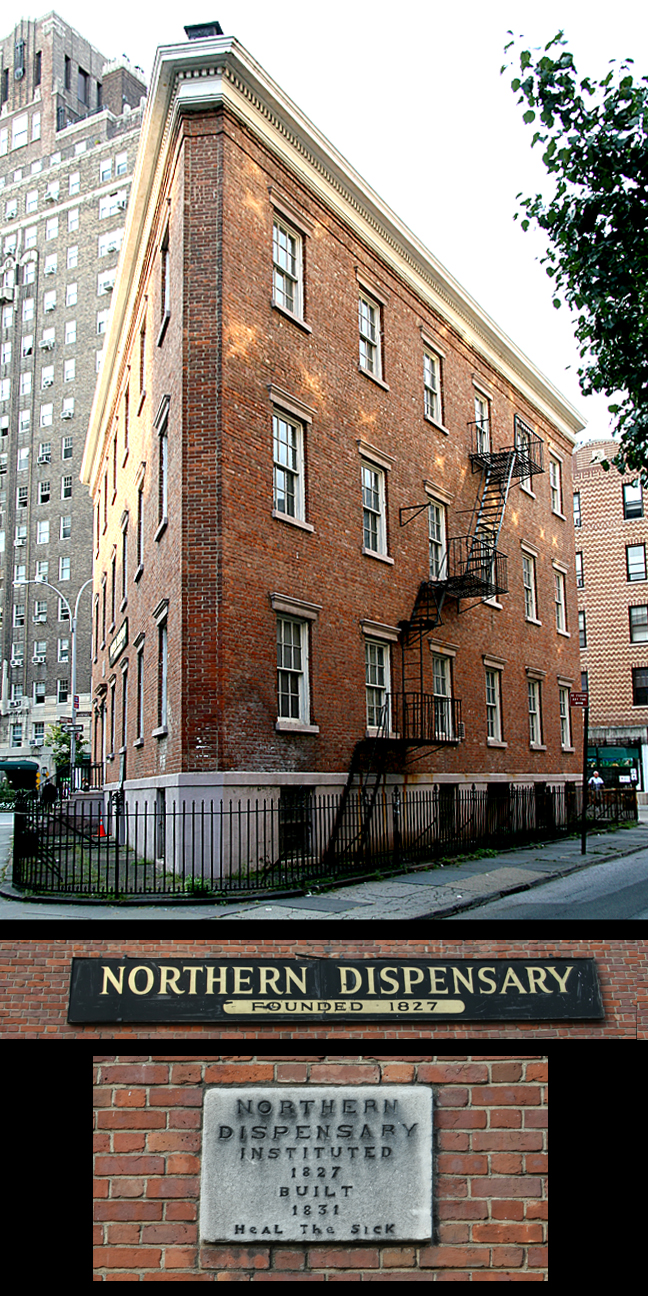
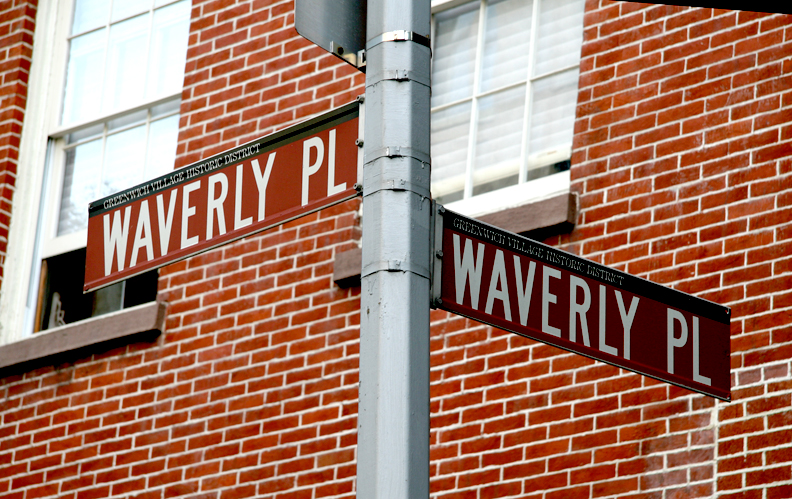
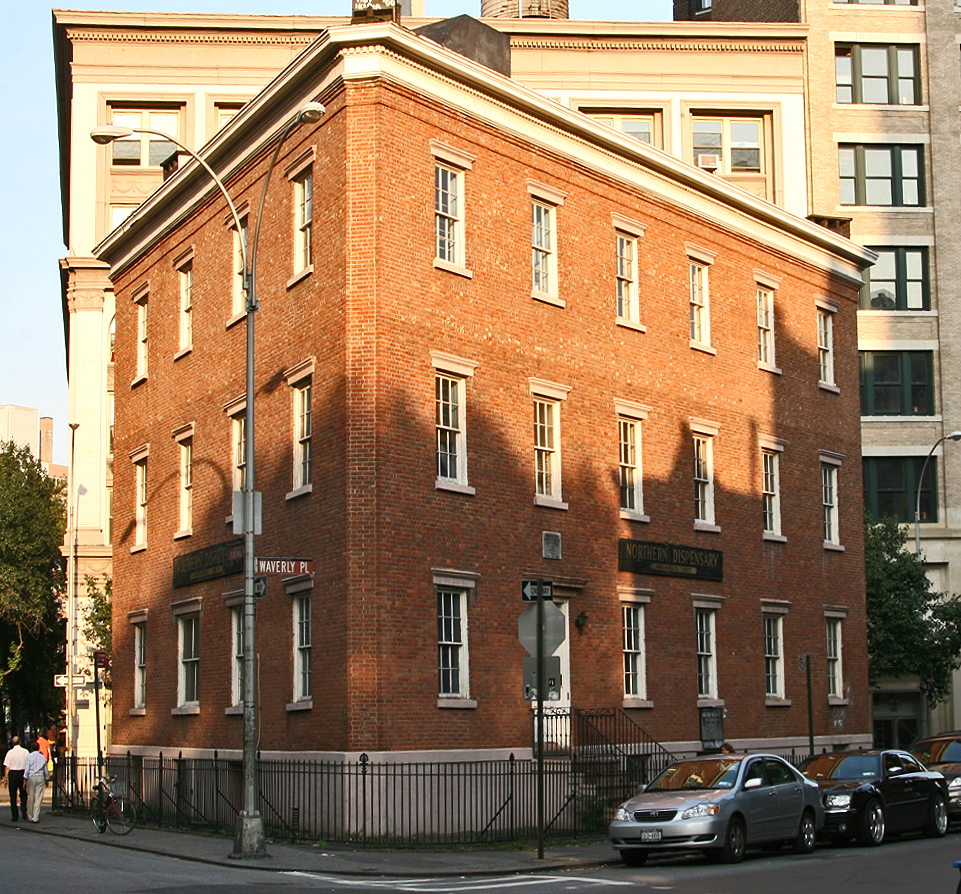
    On one of the most unique corners in NYC sits one of the most mysterious buildings, previously owned by one of the most eccentric real estate investors: the Northern Dispensary, a triangular Georgian brick building, unoccupied since 1998. Click here for more photos. It is remarkable for having been continuously operated since 1827 as a public clinic – Edgar Allen Poe was treated here at no charge for a cold in 1837. It is also unique in that it has one side on two streets (Grove meets Christopher) and two sides on streets with the same name, where Waverly meets Waverly.

    The previous owner, William Gottlieb, drove a beat-up station wagon with broken windows, yet after his death in 1999, his collection of properties was found to have a value of between 100-300 million dollars. He was notorious for acquiring properties and doing nothing with them; his sister, Mollie Bender, continues the Gottlieb tradition, with no apparent plans for the building. A private deed placed on the building stated that the property had to be used to provide medical care to the “worthy poor.” However, since the deed is private, it is not clear whether or not it could be enforced. So its future is very unclear as the building stands eerily empty…


  • MacDougal Alley

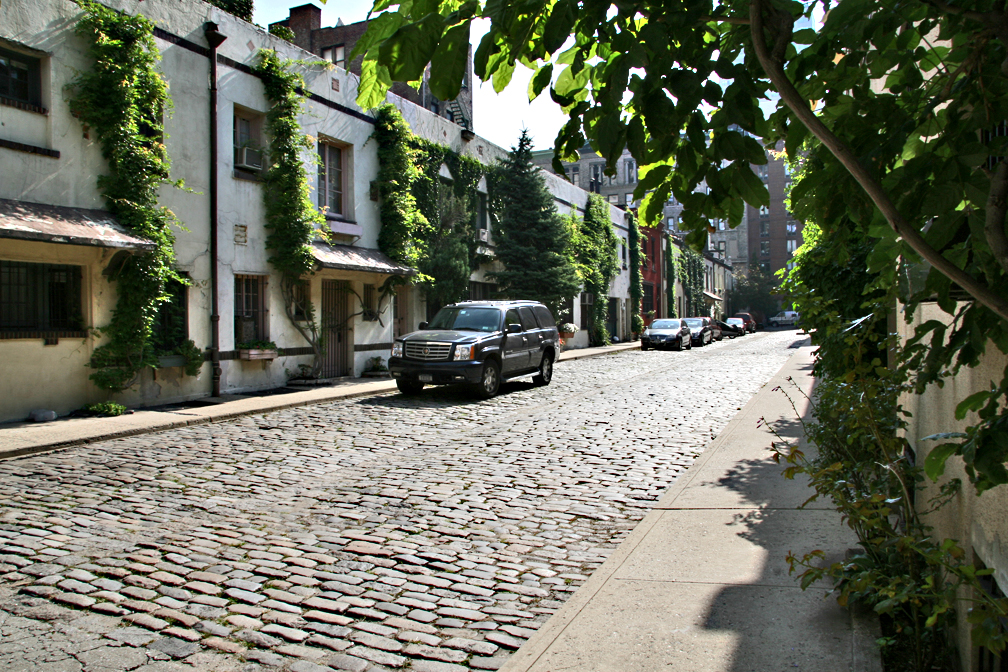
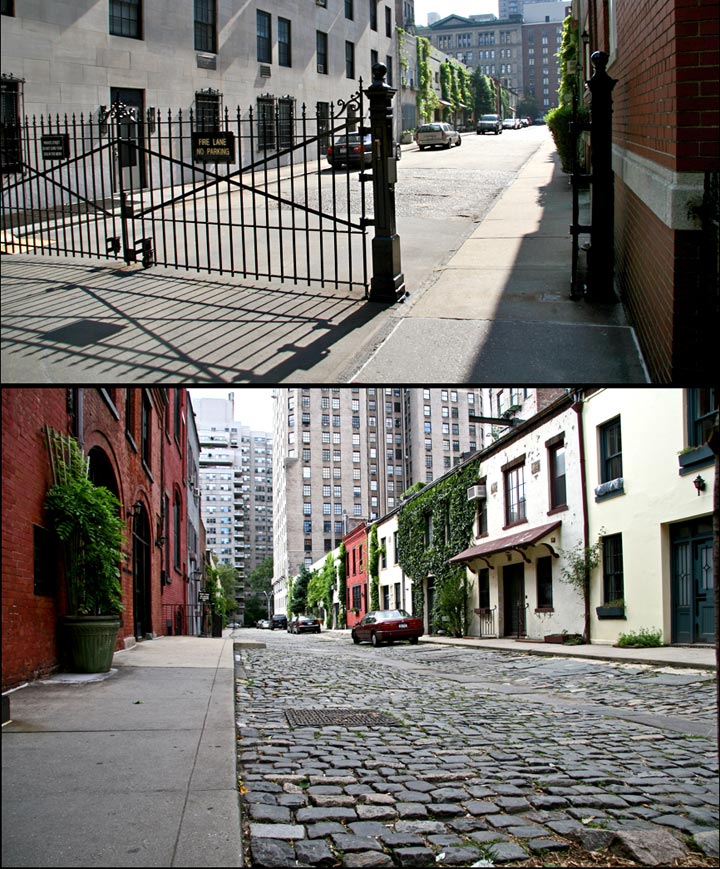
    This is the second of the Village alleys I am featuring. Most of the small buildings on this charming gated cul-de-sac were built in the 1830s as stables for the larger homes on Washington Square North and 8th Street, much as those on Washington Mews. As the well-heeled moved uptown, however, this alley became quite seedy.
    According to an article by Christopher Gray, the alley was rescued by sculptor Frederick Triebel in 1902; by 1906, the street was already a fashionable art district. In 1907, Gertrude Vanderbilt Whitney had a studio there and later established the Whitney Museum on 8th Street. There is a longer roster of well-known artists and sculptors who have resided here.

    Originally the alley went from MacDougal Street to Fifth Avenue until the behemoth 2 Fifth Avenue was built in 1955 (the large building in the center of the photo). MacDougal Alley had the last remaining gaslights in NYC…


  • Washington Mews

    Washington Mews is one of my favorite NYC alleys. It runs between 5th Avenue and University Place, one block north of Washington Square North. The majority of these small, charming, two-story buildings are converted stables, built in the 1830s for the brownstones on Washington Square and 8th Street. A few on the south side were built in 1939. The street retains its original Belgian block paving, a major factor in its historic feel. Click here for more photos.

    As the area became popular as a bohemian enclave, artists did begin to occupy these buildings as studios. Today, these buildings are primarily used as residences by NYU faculty or offices. Click here for an article from the NY Times. Although the street is private and signed as such, pedestrians are not really discouraged. Private alleys like this are extremely rare in NYC. A walk down it is a step back in time – it never fails for me…


  • Park Avenue

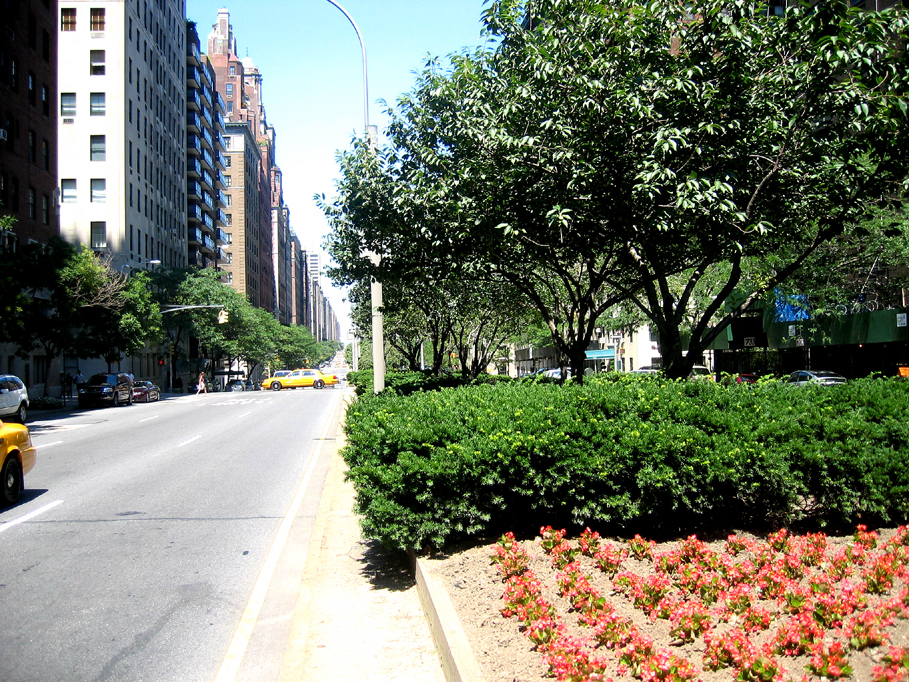
    Park Avenue is one of the most well-known NYC streets in the world. This wide boulevard runs two-way through the Upper East Side, what is considered to be one of the most affluent neighborhoods, with many large magnificent prewar apartment buildings. The legendary Waldorf-Astoria Hotel is located here. Park Avenue’s wide center median with trees and plantings is unique in the city. For those who believe that it is a product of favoritism by the public sector, it is not – it is maintained by a private organization: the Fund for Park Avenue. Begonias are a popular flower owing to its ability to withstand sun without constant watering.

    Park Avenue actually runs through several different neighborhoods (including Grand Central), starting at 4th Avenue (its original name) in the Village. This photo was taken at 70th Street, prime territory in the neighborhood, with Woody Allen’s new home just down the block. But that’s the subject of another future post…


  • The San Remo

    Posted on by Brian Dubé

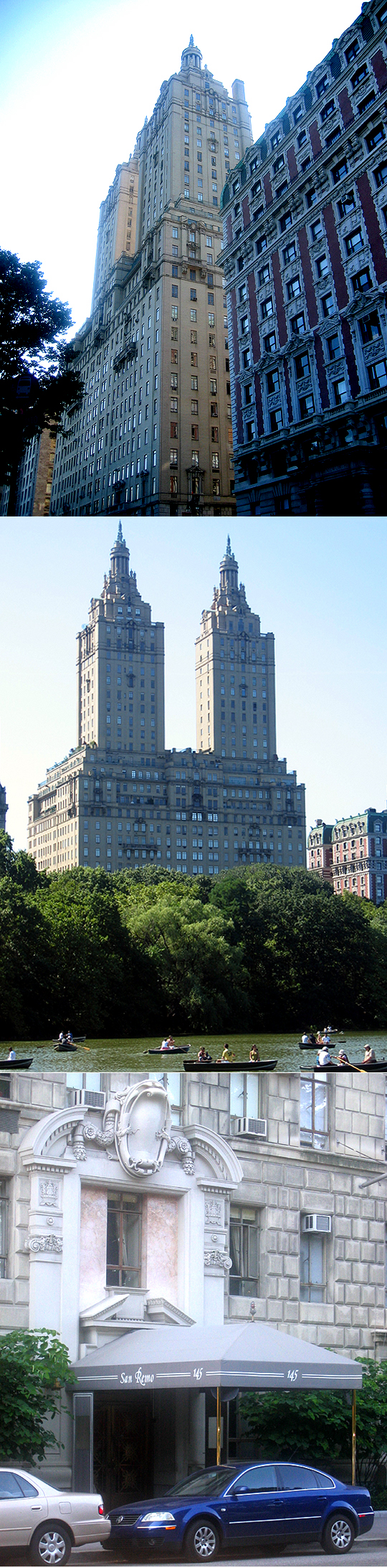
    Nothing defines New York City like money and real estate, especially in recent years, where prices have shot through the roof. Real estate is on everyone’s mind, whether a rental, a 7-figure coop, or a condo. And nothing defines real estate in NYC like being on or near a park – particularly Central Park.

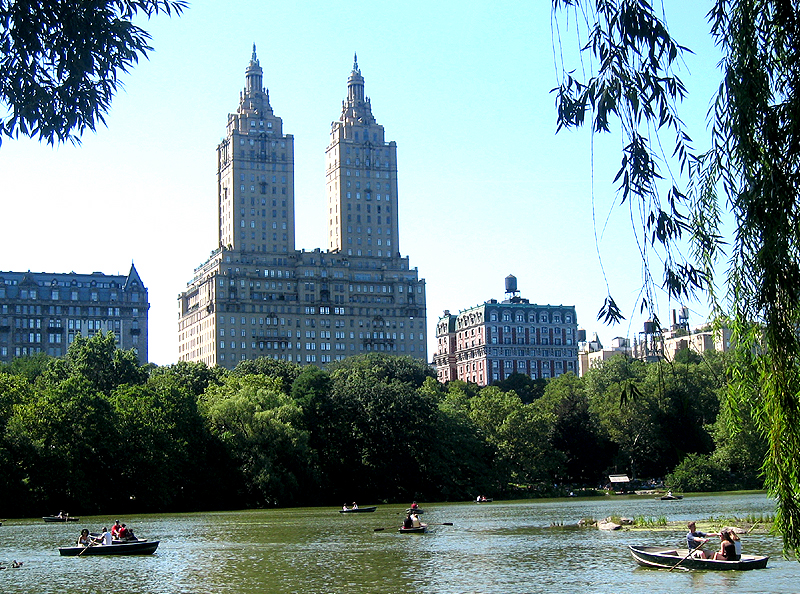
    Many upscale apartment buildings are known by name to the public, such as the San Remo, one of the three most prestigious buildings on the Upper West Side (the other two being the Dakota and the Beresford). Of course, all three are on Central Park West. Their profiles are unmistakable and can be seen from many areas in the park, where all the photos for this post were taken. Many celebrities reside (or have resided) at the San Remo: Steven Spielberg, Donna Karan, Steve Jobs, Demi Moore, Dustin Hoffman, Bono, Steve Martin, Bruce Willis, Rita Hayworth…

    Posted on by Brian Dubé

  • Urban Renewal

    Posted on by Brian Dubé

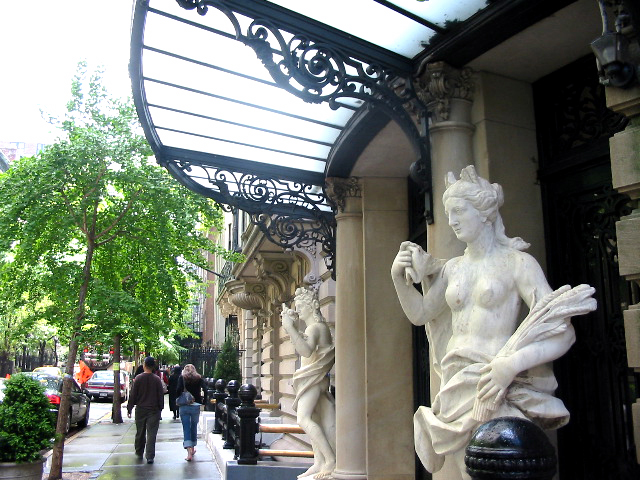
    Across from the Metropolitan Museum of Art, facing Central Park, are blocks of townhouses which are something like a slice of an old European city set down in NYC. They are generally late nineteenth century and quite elaborate – some of them have been turned into embassies, etc., but there are still many that are occupied by single families.

    Something that is commonly done by this crowd is to completely gut renovate the building at every turnover. Typically, the entire interior is ripped out, rebuilt with the most state-of-the-art modern comforts, and completely refurnished with the most extravagantly expensive antiques and/or fine interior decoration. Because of divorce, death, remarriage, or the rise and fall of fortunes, these places do turn over, usually about once every three years. It seems a shame that all the work that has been put into these fine homes is not preserved, but the city thrives on providing luxury services to this ever growing elite, and the wealth keeps expanding and changing hands frequently, as it has always done in NYC. Here is an example of one of these streets and the corner house which had workmen inside going about their business of interior demolition…

    Posted on by Brian Dubé

  • Boat Basin

    Posted on by Brian Dubé

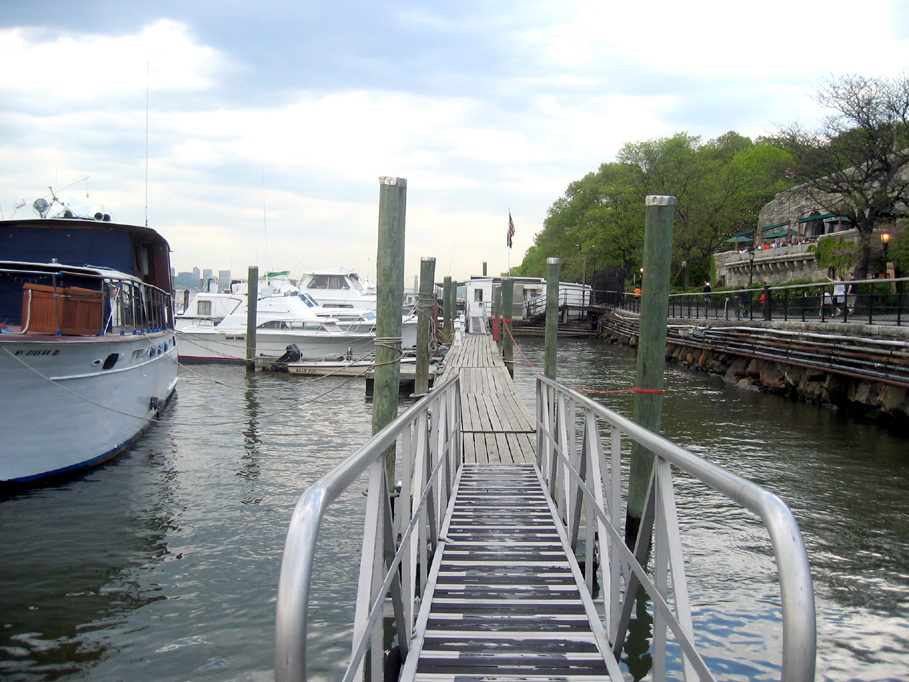
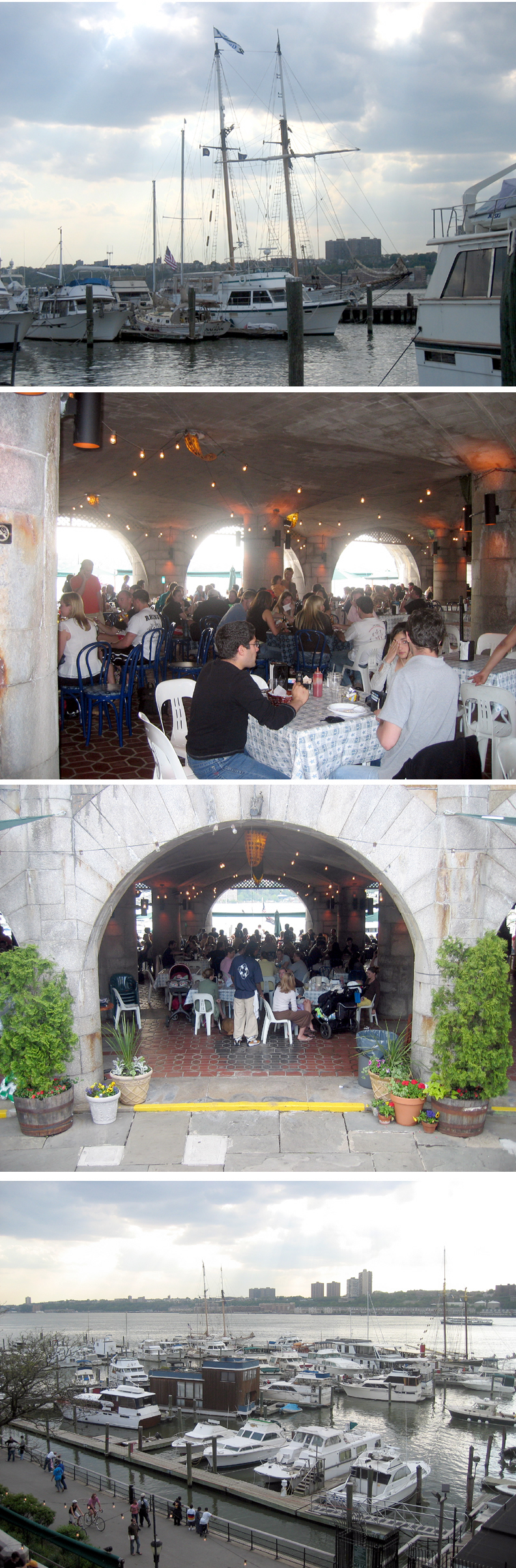
    Not far from Lincoln Center, on the west side along the Hudson River and Riverside Park, is the 79th Street Boat Basin, built in 1937, originally for yachts and now home to many houseboats and recreational boats. Some tenants live there to escape the high costs of housing in Manhattan. There’s a cafe (the Boat Basin Cafe), which is open in the warm weather and set into arches facing the River (see right side of photo), which is worth trying if you come to this part of the city. The views and the crowds of neighborhood people out enjoying themselves make it a very enviable spot; otherwise, it’s just a basic bar that serves a very simple lunch, brunch, and dinner. The pedestrians, runners, baby carriages, dogs, rollerskaters (all on the Greenway), and people who watch them go by from the benches show a good cross section of the typical Upper West Side neighborhood residents. More photos here…

    Posted on by Brian Dubé

  • Ansonia Hotel

    Posted on by Brian Dubé

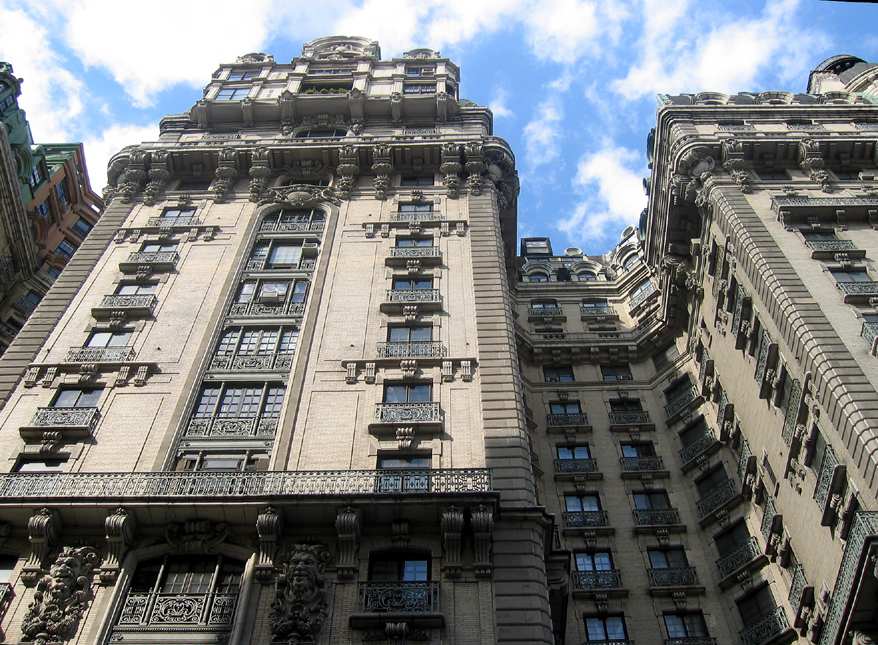
    The Ansonia Hotel is one of the most notable and fascinating buildings in NYC. Located in the Upper West Side on Broadway and 73rd Street, it was built between 1899 and 1904. It is enormous, with 2500 rooms, and is one of the most European-looking buildings, with its striking Beaux-Arts facade and Parisian-styled Mansard roof and corner turrets.

    Babe Ruth, Theodore Dreiser, Igor Stravinsky, Enrico Caruso, Arturo Toscanini, Yehudi Menuhin, and Tony Curtis are just a few of its many prominent guests and residents of the past. There is much wonderful history about this building – it makes great reading (article with more photos). It was converted to condominiums in 1992.

    Posted on by Brian Dubé

  • Gwathmey Astor Place

    Posted on by Brian Dubé


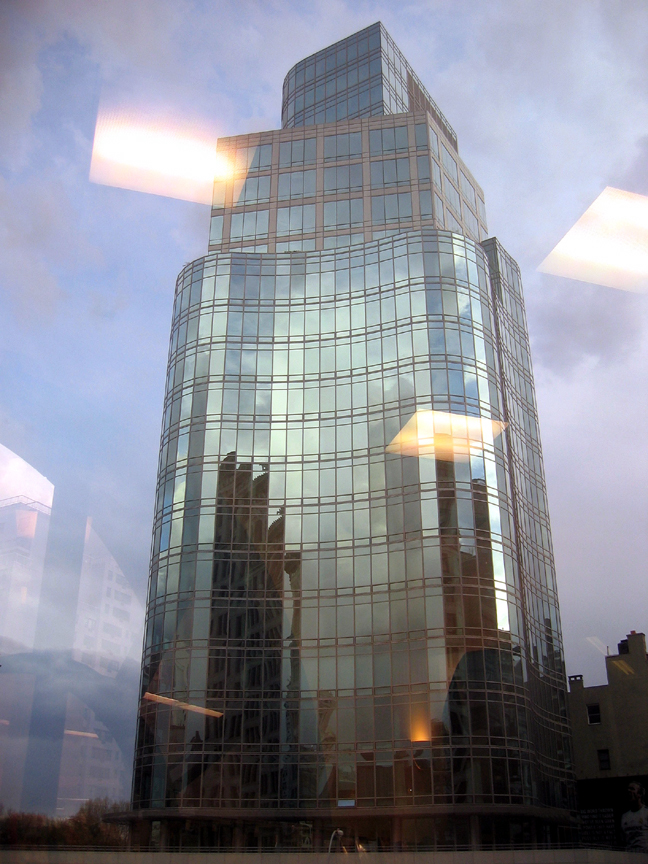
    The East Village, even though very gentrified now, was always the center of the most radical political and artistic activities in NYC. This recently completed residential building, new and controversial in style and impact, has brought the forces of the old and new into visual conflict. Some love it, some hate it, and some praise the interiors and very much dislike the exterior (article).

    Surrounded by old buildings that still have the feeling of the tenement about them, even if they cost the earth to live in these days, this “starchitected” building raises the stakes considerably – prices start at $3 million and go to $12 million. About half of the units are sold, rumor has it to wealthy media people along the lines of well-known actor and director types.
    We are trying to imagine the changes that will certainly come when these people actually move in and start interacting in a neighborhood still full of cheap student restaurants, street vendors, and fierce hold out residents from the old radical days. But, as usual, we get used to changes and upheavals quickly, and eventually this place will blend into the background once it gets weathered in a bit…

    Posted on by Brian Dubé

  • Jane Jacobs

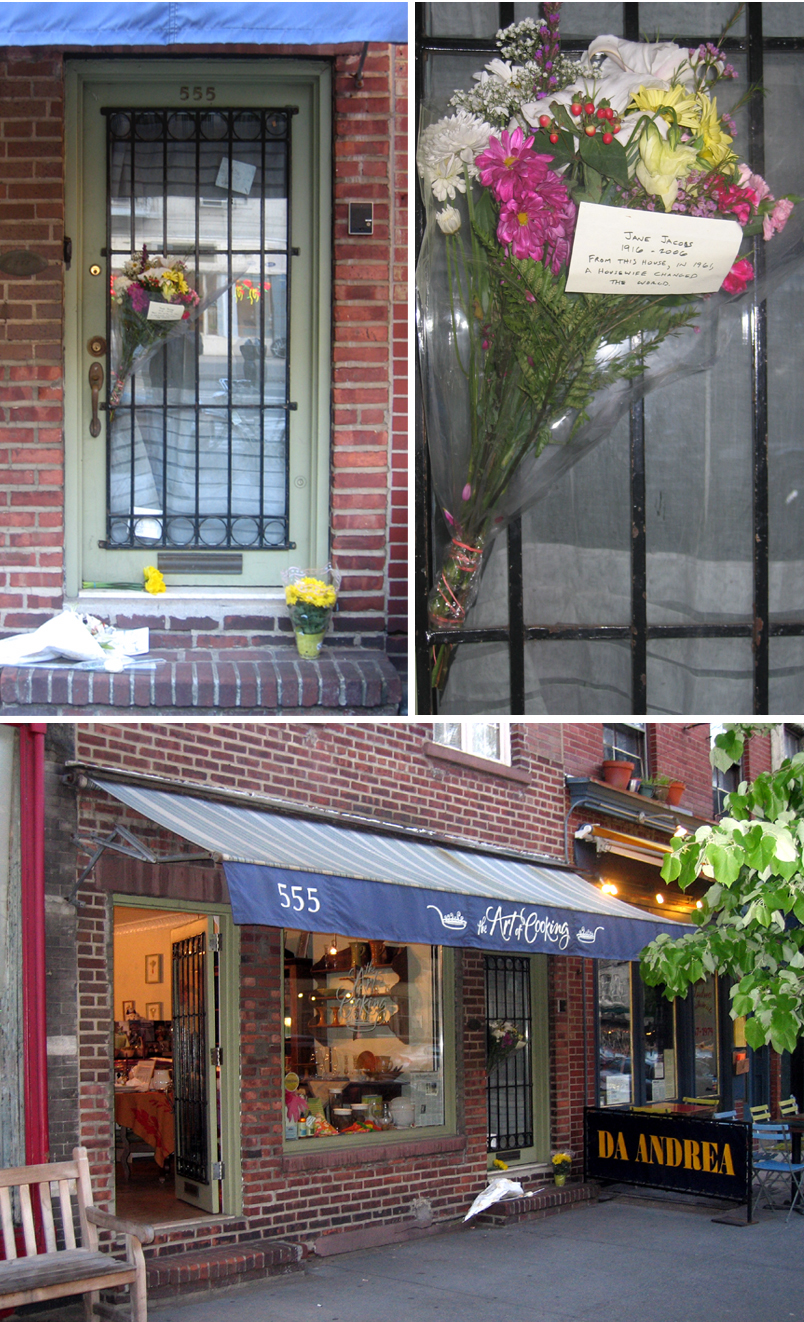
    This is the house where Jane Jacobs, who died yesterday, wrote the Death and Life of Great American Cities. From those windows, she observed the urban life of her West Village neighborhood, which she offered as an alternative to the suburban sprawl and car culture taking over the country. Her work became a major influence on urban planning and the appreciation of city life in the US, convincing many Americans that cities were good. She was instrumental in saving the Village and Soho neighborhoods, which were threatened by urban planners who wanted to build the Lower Manhattan Expressway. She was a self-taught outsider who criticized and triumphed over very entrenched authorities. More photos here.


  • Washington Square North

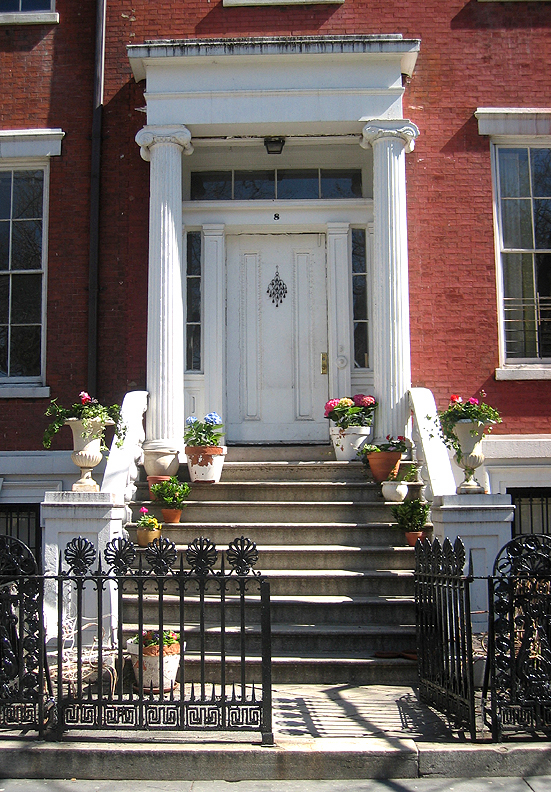
    One of the doorways of “the Row” on Washington Square North, once a center of gentility in NYC in the 1830s and a good example of one of our best eras for architecture and decorative arts, now remains one of the last survivors of that era and is still in constant use. It is considered one of the finest rows of Greek Revival houses in the country. Romanticized in novels such as Washington Square by Henry James and Age of Innocence by Edith Wharton, this row started out as the home of the wealthiest and later became inhabited by Village bohemians and many legendary artists, such as Edward Hopper and Albert Pinkham Ryder, who were inspired by the environs.

    In 1939, the row of townhouses numbered 7-13 were gutted and converted to an apartment house, retaining the facades, with a common entrance on Fifth Avenue around the corner. They are now NYU residences. Number 8 in the photo was once the former residence of the mayor. You can see these doorways from the park, and it is peaceful to look on such a strong reminder of the past still vibrant in the present.


  • dinamic_sidebar 4 none

©2026 New York Daily Photo Entries (RSS) and Comments (RSS)  Raindrops Theme