• Santa


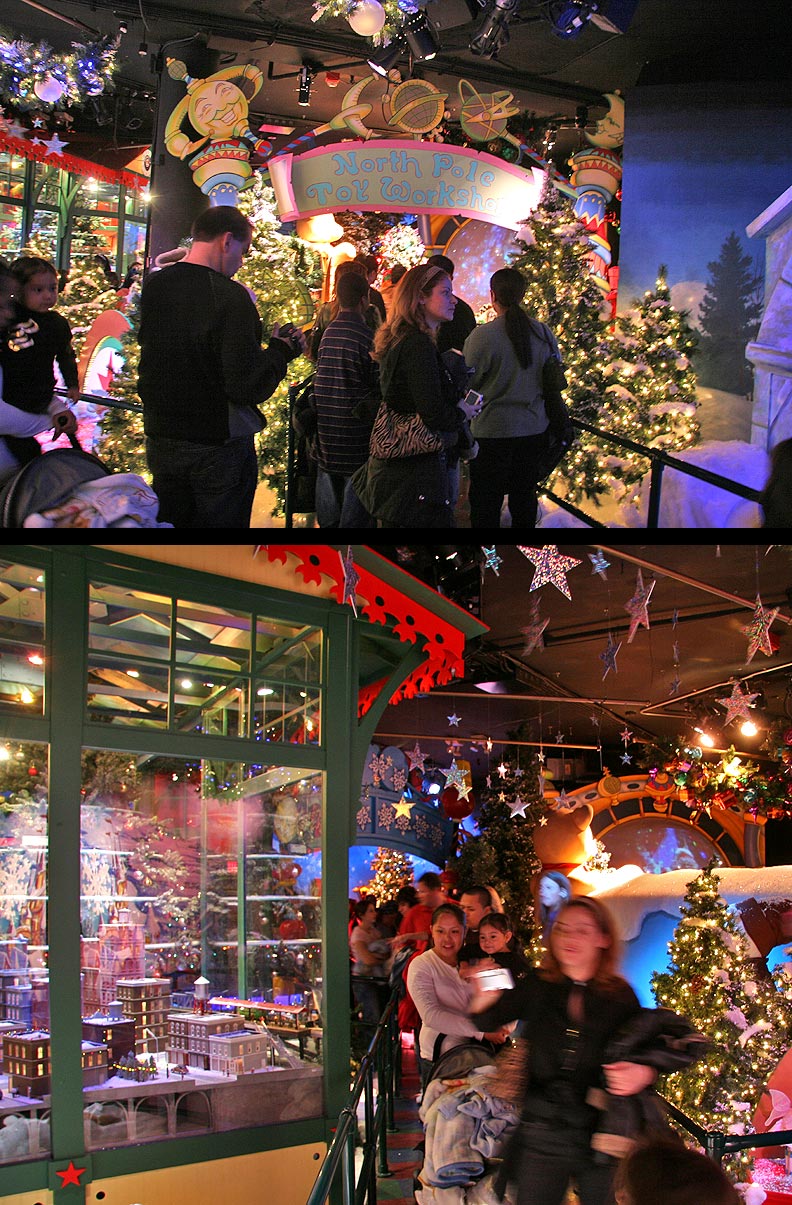
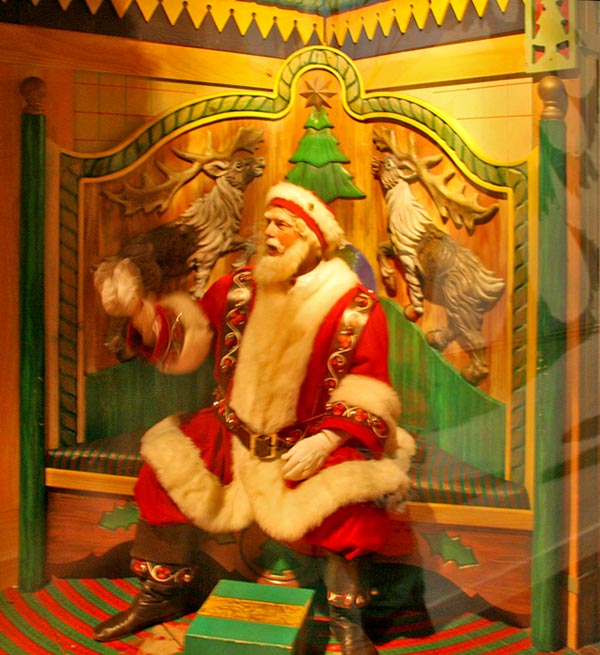
    Everyone knows there are lots of Santa’s helpers around the world. But we also know that there is only one real Santa. And where is he? 34th Street and Broadway, of course, at Macy’s – on the 8th floor in Santaland (a mere glance at the quality of Santa’s wardrobe should alleviate any doubts). Click here for photos of Santaland. The lines were long, and I thought it was a good idea to leave sitting on Santa’s lap and gift-wishing to the younger ones. So I opted to go to the line where one could get a peek at Santa – he was behind glass, hence the reflections.


  • Saks Windows

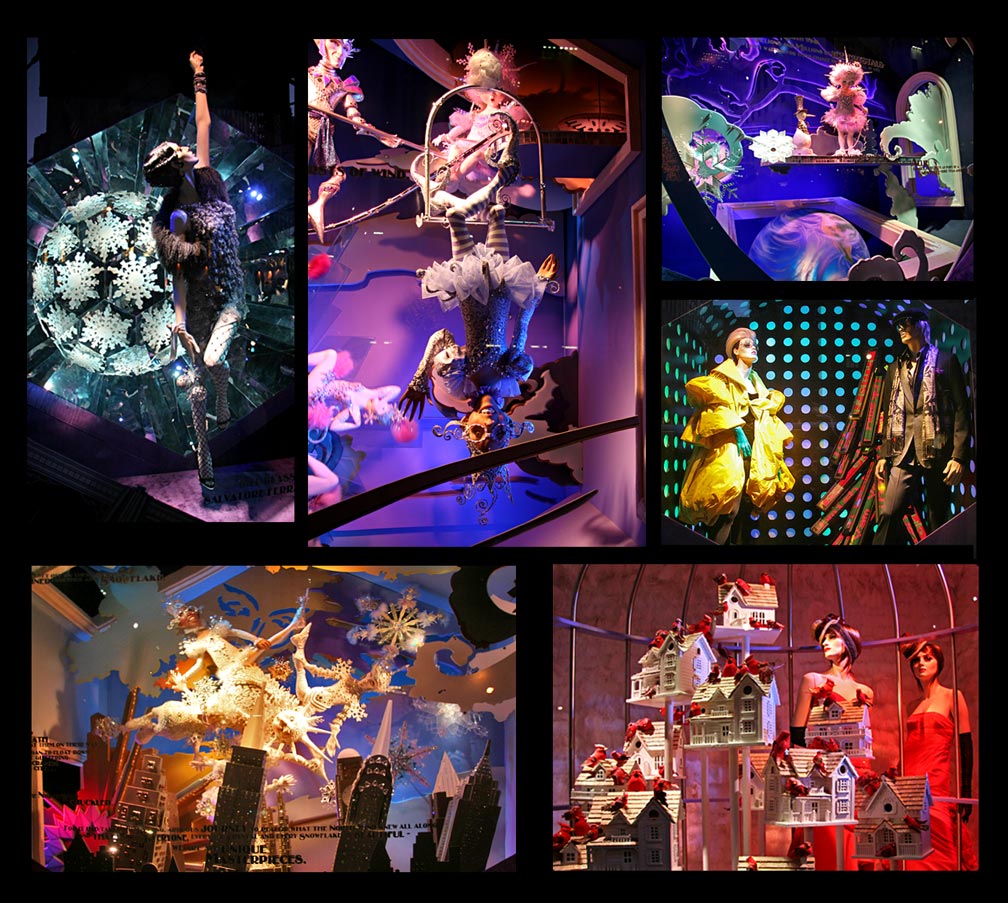
    These are the window displays at Saks. I created a collage – it was too difficult to pick one photo. To see the entire window display set, click here. These are the windows I always associate with Christmas in New York – beautifully done, themed, on Fifth Avenue near all the flagship stores and St. Patricks, and facing Rock Center and the big tree. You wait in line to see the windows, but no one seems to complain. Moving slowly is welcome and gives more time to enjoy them.

    The in-house visual creative staff creates these windows – the primary group has a storyline about outsider crystals finally joining together to become a unified snowflake. Christmas has become an extremely commercial holiday. But, no matter how jaded, frustrated with the crowds and traffic, or disappointed one gets with the commercialism of Christmas, one should try not to become a bitter malcontent. Leave a place for sentiment, giving, nostalgia, and joy…


  • National Tree

    There are millions of Christmas trees in the U.S., but arguably the one at Rockefeller Center is the Unofficial National Tree. Click here for more photos. In a tradition that goes back to 1933, a near perfect tree is selected – nearly always a Norway Spruce, a non-native ornamental tree with a typical lifespan of 80-100 years. Growers who hope theirs will be selected submit photos; the top selections are surveyed and inspected by helicopter. The preferred tree is 75 to 90 feet tall and typically over 50 years old.

    This year’s Norway Spruce is from the property of Rob Kinnaird in Ridgefield, Connecticut, who watched it growing up – their driveway was moved 4 times over the years to accommodate its growth. This year’s tree is 88 feet tall, 45 feet in diameter, and weighs 9 tons. It was trucked to the city on a custom, telescoping trailer, decorated with 30,000 lights, and crowned with a custom-made, 9-foot, 550-pound Austrian Swarovski crystal top! The tree lighting ceremony on November 29 was nationally televised and included Christina Aguilera, Bette Midler, Lionel Richie, Sarah McLachlan, and Sting as guests. It will be up until January 9th…


  • 11 Spring Street

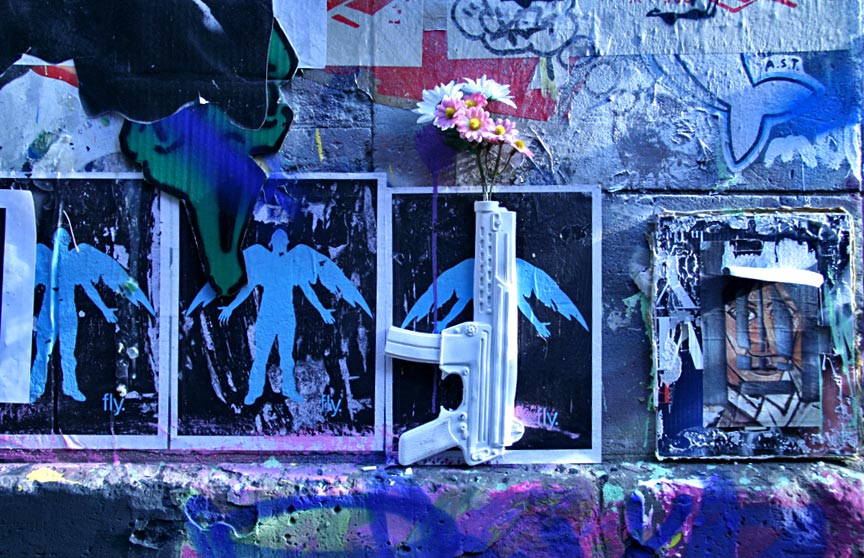
    The mysterious former carriage and horse stable at 11 Spring Street has been (virtually) unoccupied for decades. Click here for more photos. Built in 1888, its most famous owner was John Simpson, who purchased the building in the 1970s. An eccentric inventor, Simpson lived in the massive 5-story building alone with his bizarre mechanical gadgets. In 2003, the building was sold to Lachlan Murdoch, son of media mogul Rupert Murdoch, with the intention of converting it into a spectacular single-family residence. Left to languish again, the building was again sold, this time to developers Caroline Cummings and Bob Elias – it will be converted to luxury condominiums.

    During all this time, graffiti accumulated on the exterior walls. The place became “known worldwide as a mecca for street artists, some of whom have covered its sooty facade with a pastiche of graffiti and poster art.” The new owners wanted to pay tribute to the street art, so they arranged a gala “grand closing” with the Wooster Collective, called Wooster on Spring. Forty-five of the world’s best street artists were invited to cover the walls of all five floors with artwork. After two months, the show was opened to the public for three days – December 15, 16, and 17, after which all the art was to be destroyed. It was an unbelievable mob scene – lines to get in going around a full city block with a 3-4 hour wait. Gothamist did an extensive job of covering this story, and I recommend this link (and the various links there) to see photos of the interior art


  • Museum of Sex

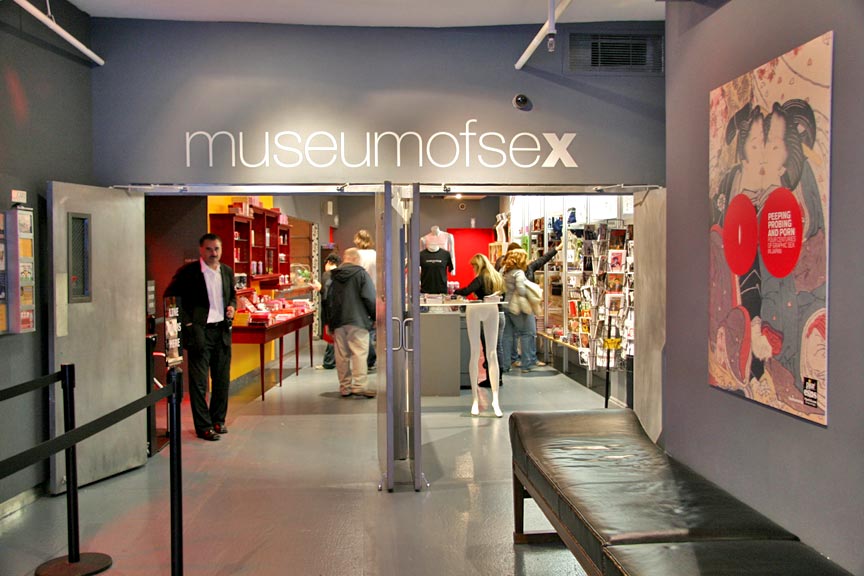
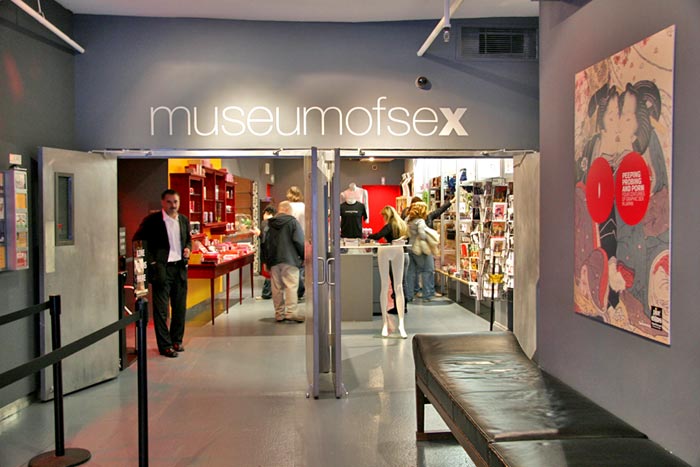
    This is one of the most fascinating stories I’ve read in a long time. MoSex, located at 27th Street and 5th Avenue, occupies two floors of a 5-story building that reputedly was a brothel. Then there was the denial by the Board of Regents to charter it as a cultural nonprofit organization, saying that a “museum of sex” made “a mockery” of the concept of museums. And, of course, the controversy: immediately after opening in 2002, William Donohue of the Catholic League, condemning it as MoSmut, said, “If the museum’s officials were honest, they would include a death chamber that would acknowledge all the wretched diseases that promiscuity has caused.”

    The museum is “wholly dedicated to the exploration of the history, evolution, and cultural significance of human sexuality,” according to the mission statement of founder Daniel Gluck, who has endeavored to give the museum an educational format. Gluck, a suburban family man, is a fine arts graduate of UPenn with a business degree from the Wharton School. The executive curator, Grady Turner, was a former director of exhibits at the New York Historical Society. There are 18 Ph.Ds on the board of advisors. He accepted no funding from anyone in the porn industry. Still, the content is explicit, and visitors must be 18. Exhibits include photos, film, porn, BDSM, lesbian and gay history, erotica, fetishism, and history – like that of Julius Schmid, an impoverished German-Jewish immigrant, who, in the 1880s, turned from sausage making to condoms, (illegal but later widely sold under the Ramses brand name) (read here).

    The museum acquired the collection of Ralph Whittington, a retired curator who worked at the Library of Congress for 36 years and had collected and documented pornography since the 1970s (click here for article). The collection includes more than four hundred 8-mm films, 700 videos, 1,500 magazines, 100 books, and artifacts (such as blow-up dolls and artificial genitalia). And at 57, he lived with his mother…

  • St. Patrick’s Cathedral

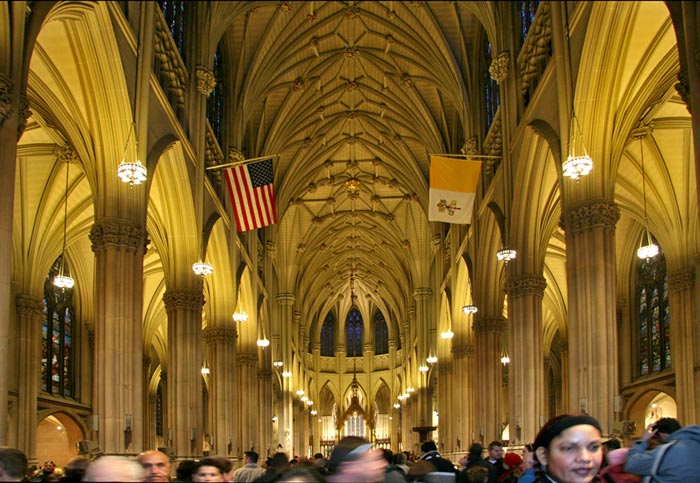
    St. Patrick’s is the largest Gothic Catholic cathedral in the United States. It was designed by James Renwick based on the French Gothic style and built over a substantial period of time, from 1858-1879, with the towers added in 1888. The cathedral and its ancillary buildings occupy an entire city block, spanning from 50th to 51st Street and from 5th Avenue to Madison Avenue.

    Interestingly, at the time of its construction under the stewardship of Archbishop John Hughes, the proposed site was ridiculed as “Hughes’ Folly” because the area was near wilderness, with slaughter houses and cattle yards. Hughes persisted, believing that this site would one day be “in the heart of the city.” A detailed history can be found on the Cathedral’s site.

    The Cathedral is obviously a huge subject with many famed features – its pieta, burial crypt, organs, stained glass, altars, and architectural details. So if you are interested in learning more, I leave it to you to explore online and, of course, to visit in person…


  • Apple and Sherry

    There are many recipes for Apple and Sherry, but this is my favorite:
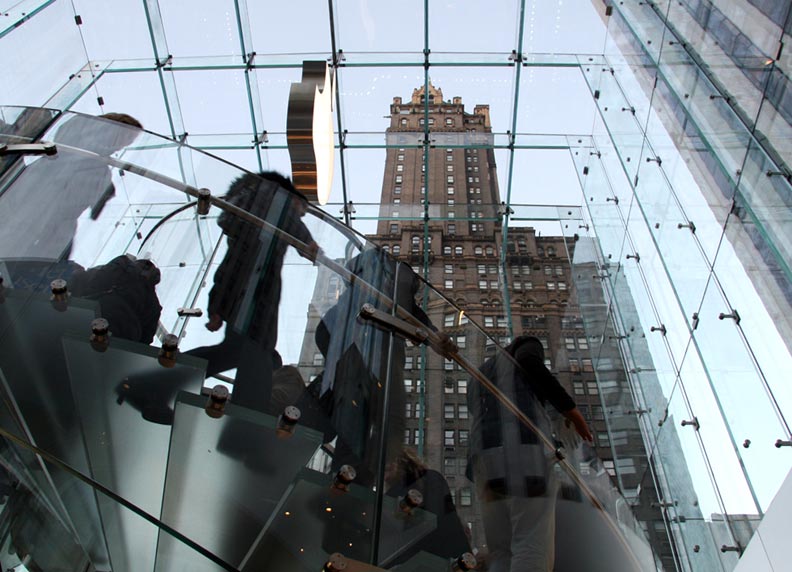
    In this version, we mix the magnificent Sherry Netherland Hotel (built 1927) at 781 Fifth Avenue and 59th Street with the new Apple Store’s spiral staircase (add a pinch of the GM building on the right). This Apple Store, open 24/7, is the subject of a previous post. For more photos, click here.
    Note: Look for ripple in the middle of the photo – that’s the result of stirring…


  • Charles Scribner

    This Beaux Arts masterpiece and designated NYC Landmark at 597 Fifth Avenue was designed in 1912 by renowned American architect Ernest Flagg. It is a 10-story, French-inspired building with a limestone and ironwork facade. Click here for more photos. Flagg, who was married to Scribner’s sister, received this design job as one of his first major commissions from Charles Scribner, who owned the publishing house Charles Scribner’s & Sons. At the time of the building of the 5th Avenue structure, Scribner had reached the summit of publishing with authors such as Edith Wharton, Henry James, Robert Louis Stevenson, Rudyard Kipling, Theodore Roosevelt, Thomas Wolfe, F. Scott Fitzgerald, and Ernest Hemingway. Scribner was friends with many of these authors and brought out many of their seminal works.

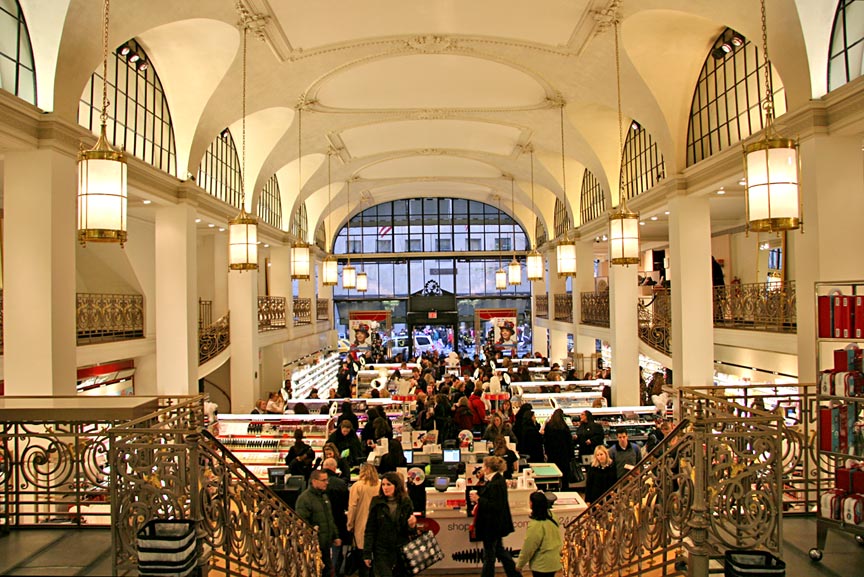
    The space was occupied from 1984-88 by Rizzoli, then by Brentanos Bookshop. In 1996, Benetton took over the space and opened its first U.S. flagship store, completely restoring the space to its former glory with renovations of spiral staircases, Caen stone finishes, glass brick flooring, Carrera marble grand staircase, skylight, etc. It is now occupied by Sephora. The interior vaulted space (with ceilings as high as 30 feet) was designed to feel like a small library. It’s really one of the grandest interior spaces in NYC. Many do miss the bookstore – it was such a grand space for a noble pursuit. I suggest a visit…


  • Dyker Lights

    There are Christmas tree lights, and then there is Dyker Heights. This Brooklyn neighborhood (between Bay Ridge and Bensonhurst) is known worldwide for its elaborate Christmas light displays (more photos here). PBS did a 2001 documentary detailing the phenomenon – apparently many of the displays have been motivated by various family events and crises. When I first visited this area in the 1980s, I had never seen anything remotely like it.

    The predominantly Italian neighborhood is quite affluent – many of the homes are mini-mansions. The premier block is 84th Street between 10th and 12th Avenue. Here, the traffic becomes bumper to bumper as gawkers cruise slowly down the block (click here for photo). In addition to the myriad of lights, you will find animated characters, motorized dolls, miniature villages, armies of illuminated soldiers and choirboys, live Santa, free toys, huge nativity scenes, synchronized music, and computerized displays like that of Robert DeLauro, who, with Light-O-Rama software, a programmable microprocessor, and a computer in his basement, controls 10,000 lights using 32 extension cords. Apparently, extravagant computerized displays are becoming more common nationwide – check out the home displays on planetchristmas.com.


  • Life at Night

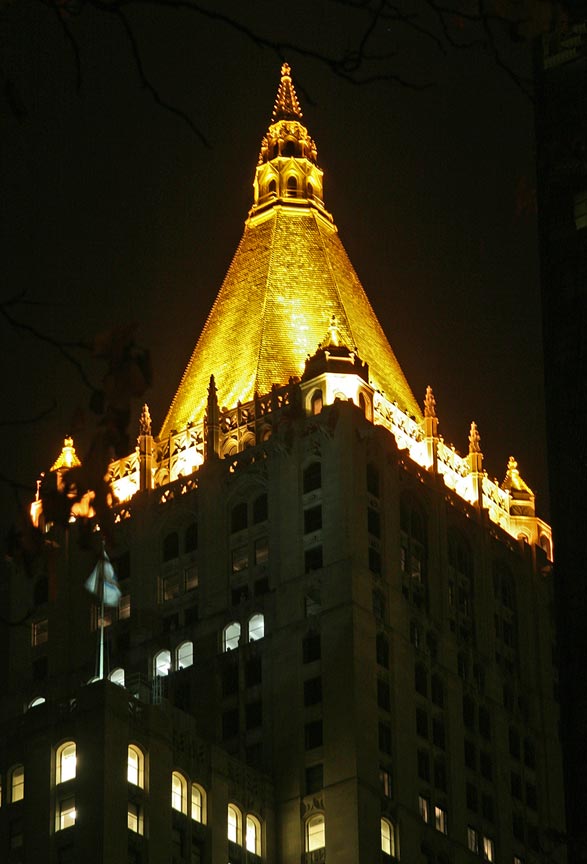
    The New York Life Insurance Building has been described as limestone renaissance at the bottom and birthday cake at the top. This 1928, 40-story structure, which towers over Madison Square Park at 51 Madison Avenue, was designed by Cass Gilbert, who had a love of pyramidal tops on his buildings, which you see in his Woolworth Building. The design is a fusion of Gothic (there are 72 gargoyles at the roof line) with more modern elements.

    The New York Life Insurance was founded in 1845 and is the largest mutual life insurance company in the U.S. The famed gold top was built in 1967 and has been illuminated since 1985 on the company’s 140th anniversary. In 1995, on the 150th anniversary, new gold leaf ceramic tiles were installed. The lit top is one of the major nighttime NYC icons which can be seen and easily identified from afar, along with the Empire State Building, the Con Ed Tower, the Met Life Tower, the Citicorp Building, and a handful of others.
    BTW, the site for this building has a fascinating history – Union Depot, Gilmore’s Garden, P.T. Barnum’s Hippodrome, and the original location for Madison Square Garden…


  • Tongues and Flames

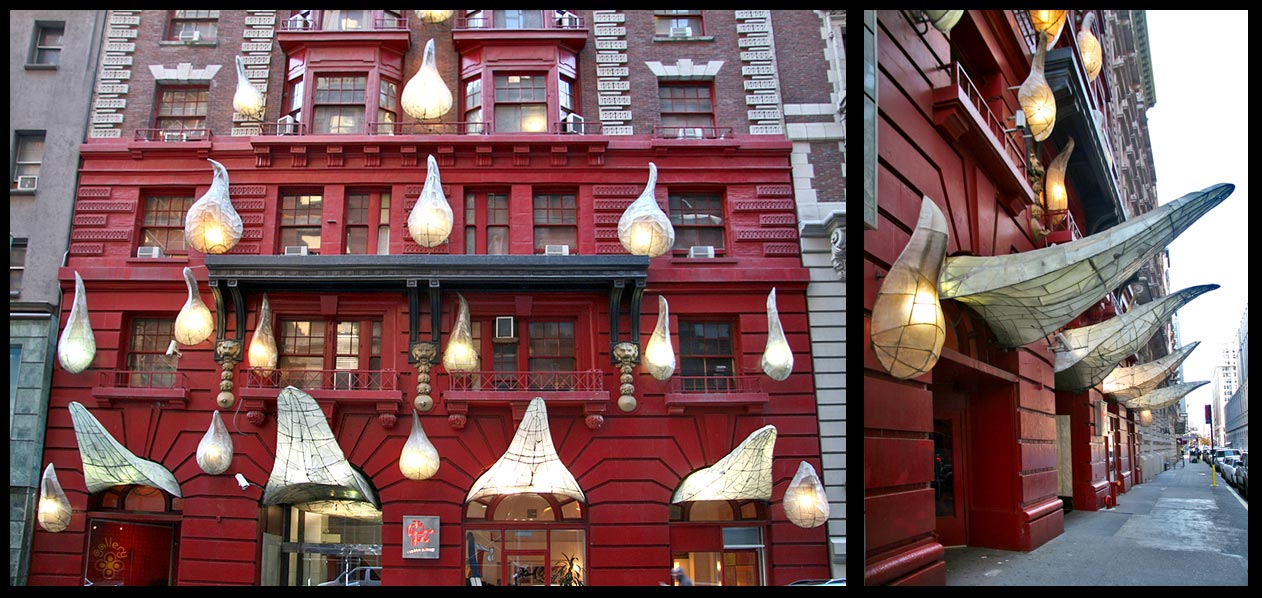
    When a friend and I on a photography shoot ran across this place, our reactions were the same: “WHAT?” Not only is the exterior unusual, but the business concept is also atypical. The Gershwin, at 7 East 27th Street in the historic Flatiron district, is a hybrid hotel and hostel, providing everything from 8-bedded rooms to more standard accommodations, even maintaining two separate websites (gershwinhotel.com and gershwinhostel.com – these now link to the same website as of 2012).

    The fiberglass sconces on the facade were created by Finnish artist Stefan Lindfors, who was asked to create something to distinguish the 1905 building. ”This hotel is always on fire,” said Lindfor, whose piece is called Tongues and Flames. The entire hotel has created has created an atmosphere to cater to the young, chic, arty, and European with the requisite amenities: Internet access, The Living Room featuring jazz and comedy, an onsite gallery, and a pop art-adorned lobby with a signed Andy Warhol soup can…


  • Left Bank New York

    From 1900-1950, there was a community of some 200 artists who lived and worked in the two blocks north of Washington Square. The artists’ spaces, converted stables and townhouses, evoked the atmosphere of the Left Bank of Paris. Among the noted artists were Paul Manship, Gertrude Vanderbilt Whitney, Gaston Lachaise, Isamu Noguchi, and Edward Hopper.

    Virginia Budny has curated a new show (at NYU’s La Maison Francaise) and authored a book on this subject: New York’s Left Bank: Art and Artists off Washington Square North, 1900-1950.
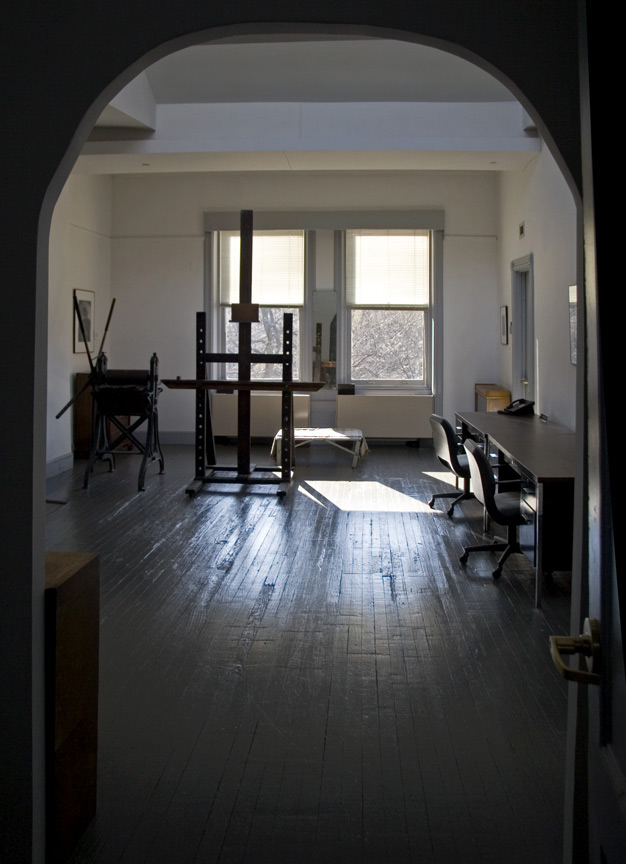
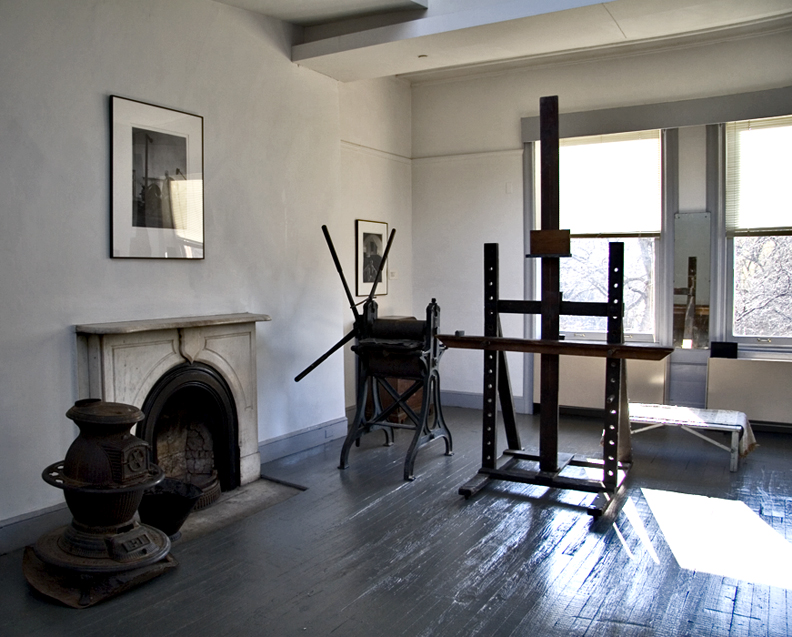
    I was privileged, along with a handful of others, to get a tour with Virginia as guide of Hopper’s studio and the areas featured in the book and show: Washington Square North, Washington Mews, MacDougal Alley, and 8th Street. The photo shows Hopper’s studio with an easel, a printing press, and framed photos of Hopper (click here for second photo). The windows look out to Washington Square Park…


  • Fred F. French Building

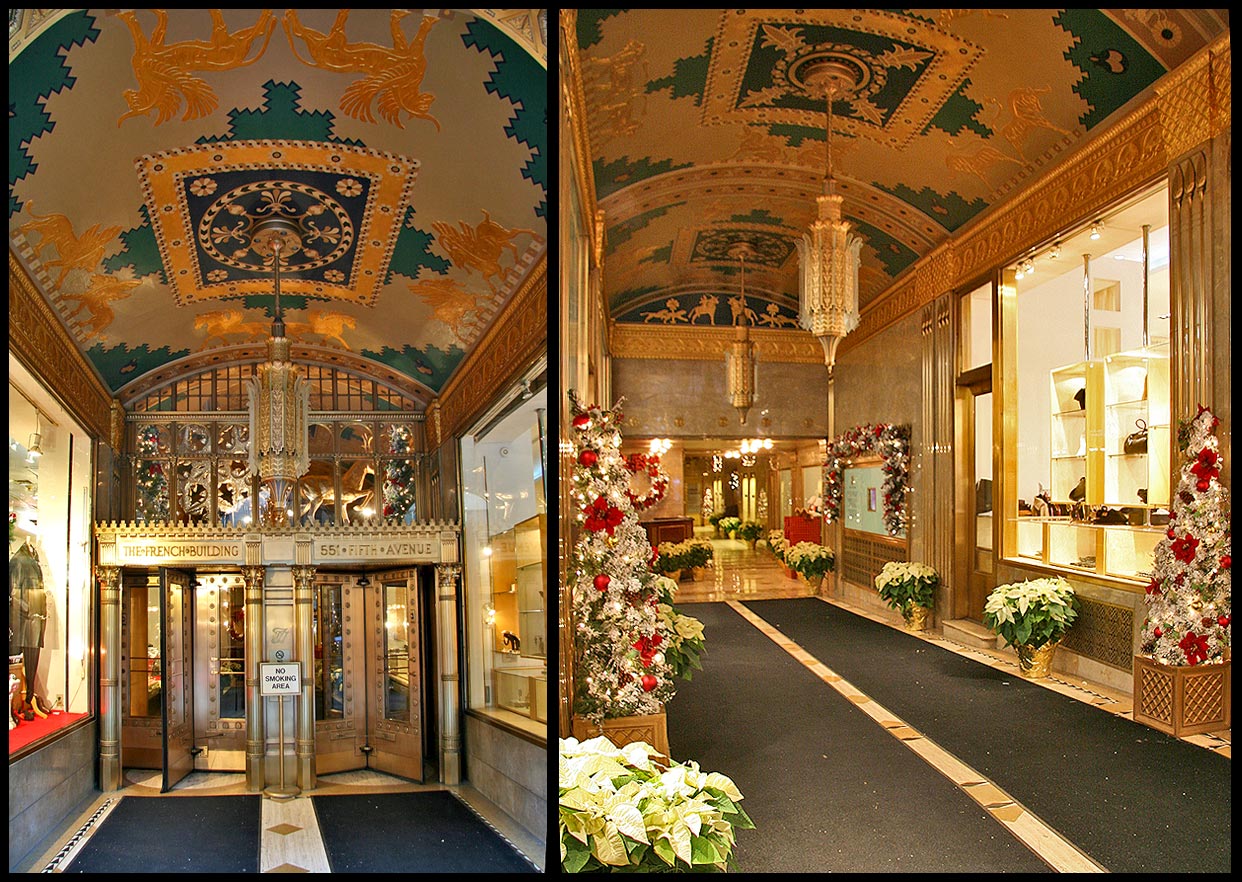
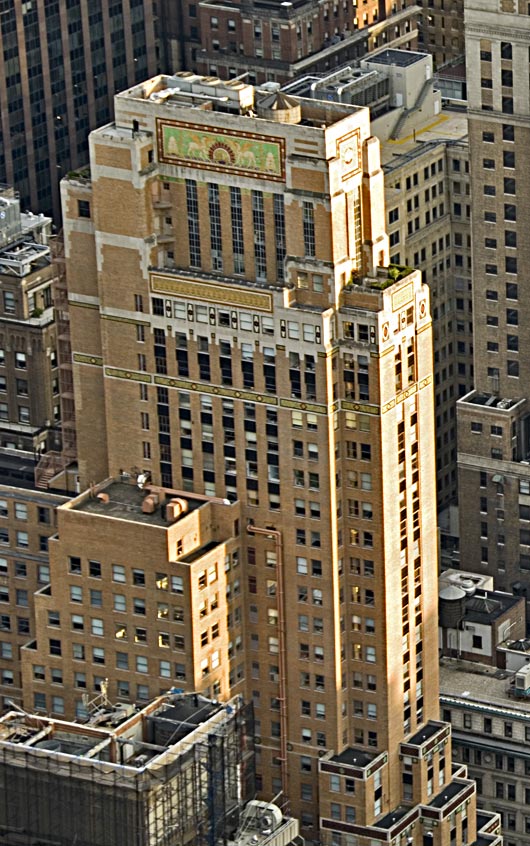
    This is the vestibule and lobby of the Fred F. French building at 551 Fifth Avenue at 45th Street. They have been designated as an interior landmark. On the exterior, the 38-story Art Deco building uses a variety of materials – a limestone base, orange brickwork, terra cotta decor on the setbacks, and themed rectangular panels. Click here for photo.

    The structure was built in 1927 as business headquarters for real estate tycoon Fred F. French. French was a self-made man – read his rags-to-riches story here. He was also responsible for Tudor City and Knickerbocker Village. Tudor City was funded by selling investor shares under the “French Plan.” Knickerbocker Village, a low-income publicly subsidized urban-redevelopment housing project, on the other hand, became a problem with disputes between French and his tenants – this eventually led to creation of NYC’s rent-control laws.

    A Babylonian influence runs through the French Building and can be seen in the lobby. From New York 1930 Architecture and Urbanism Between the Two World Wars, published by Rizzoli in 1987: “Inspired by the Ishtar Gate, the decorative program was a most literal evocation of Manhattan as the New Babylon, of the skyscraper as Nebuchadnezzar’s hanging garden in the desert.”


  • Nested Embraces

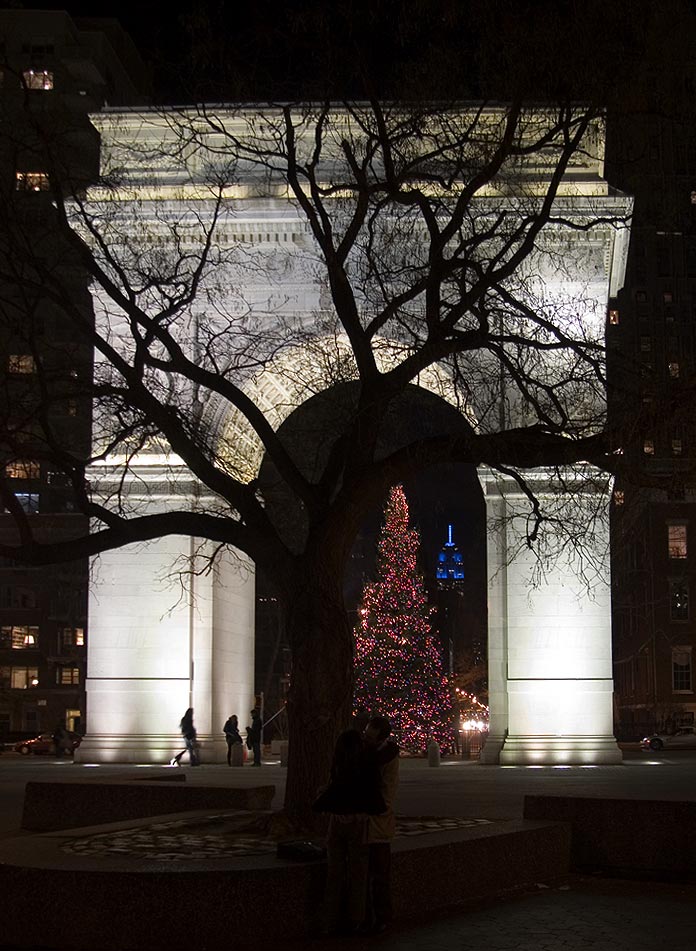
    With the large, spectacular tree in Rockefeller Center, it is easy for other trees to be left out of the limelight. Washington Square Park gets its own large, 45-foot-tall tree this year, delivered from a farm in Canada and installed centered under the arch. Click here for more photos.

    There was an annual tree lighting ceremony on Dec. 5th, led by Keith Borden with the Rob Susman Brass Quartet and sponsored by the Washington Square Music Festival and the Washington Square Association. The carol singing and music is repeated on Christmas Eve.

    If one is fortunate, as I was, you can see the Empire State Building lit in blue (60th anniversary of UNICEF) along with the Christmas tree, framed by the arch, with a silhouetted tree and two lovers kissing as foreground. It was a special moment to see these nested embraces…


  • Gargoyles

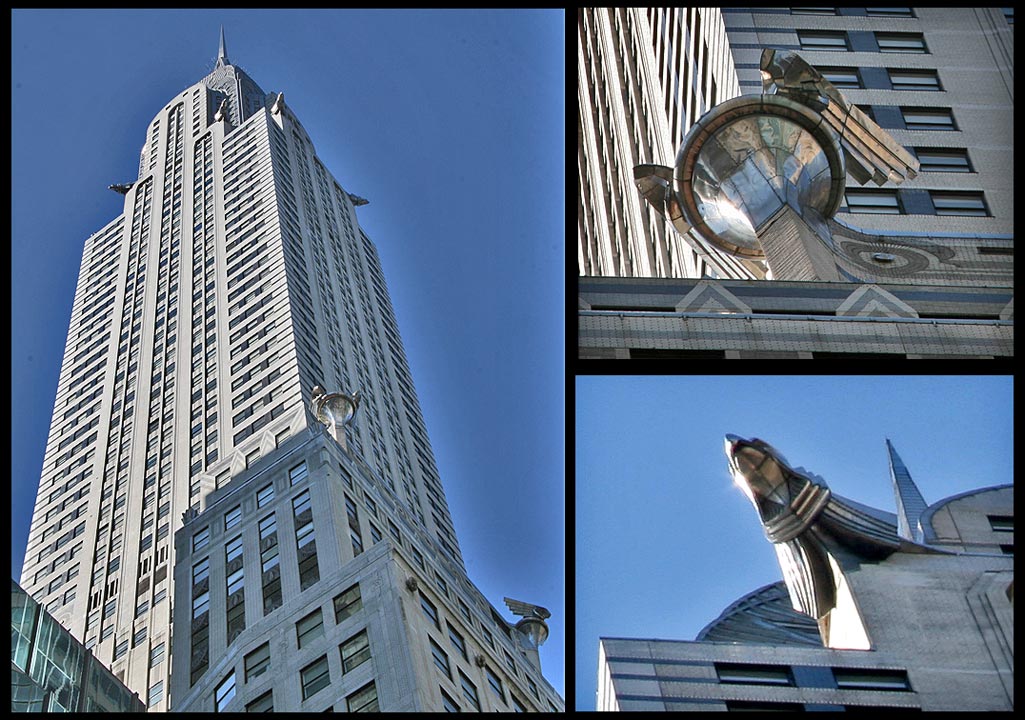
    The most distinctive features of the Chrysler Building’s exterior are the stainless steel-spired crown and the gargoyles based on Chrysler automobile ornaments, built from Krupp Enduro KA-2 Nirosta stainless steel. The gargoyles at the 61st Street floor setback depict American eagle hood ornaments. On the 31st floor setback, there are replicas of the radiator caps used in the late 1920s, modeled after the winged helmet of mercury (see here).

    One of the most striking photographs is of Margaret Bourke-White atop one of the eagle gargoyles. Bourke-White was one of America’s most distinguished photojournalists. There is a tremendous amount of material about her both on and offline – I leave it to you to peruse. The extensive use of metal on the exterior of the building, along with the ornamental references to the automobile, makes the Chrysler Building one of the enduring icons of the machine age…


  • dinamic_sidebar 4 none

©2026 New York Daily Photo Entries (RSS) and Comments (RSS)  Raindrops Theme