• Vista

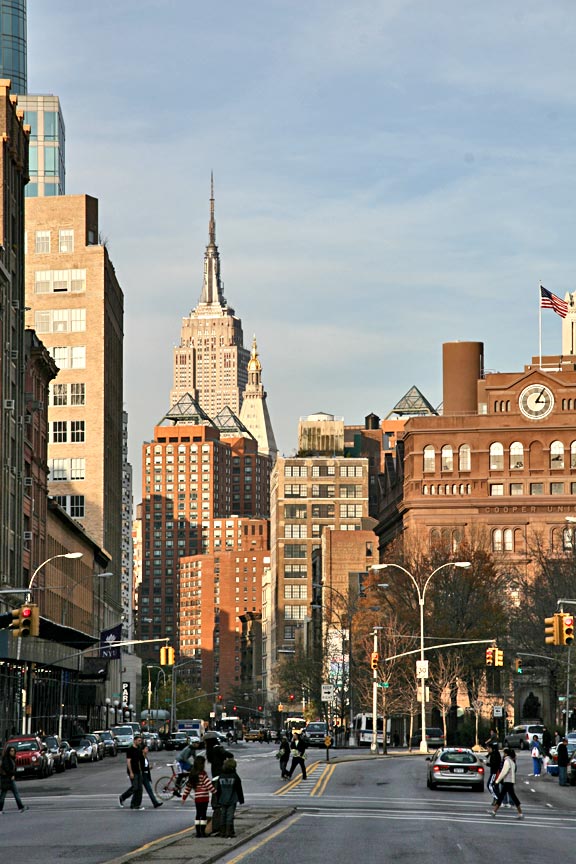
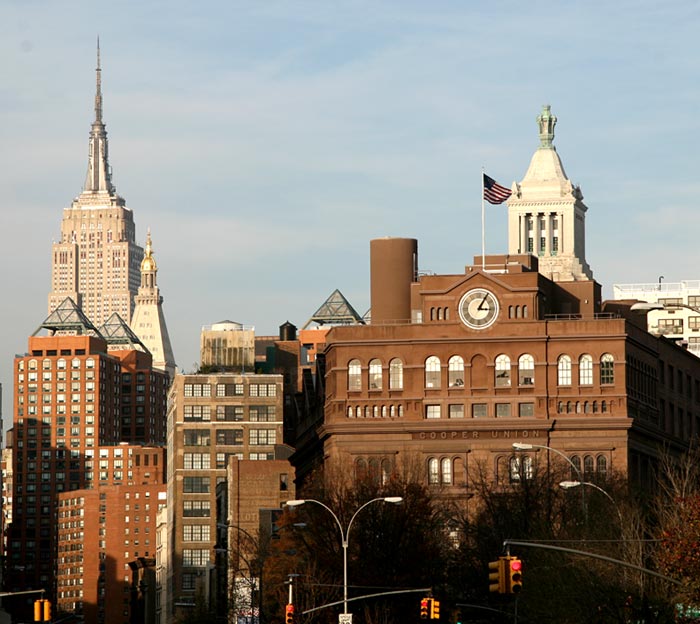
    We New Yorkers are fortunate to have beautiful and inspiring streetscapes at nearly every turn. This vista is looking north along the Bowery from the Village. Click here for second photo. Here, we have a nice grouping of NYC landmarks: the Empire State building, of course, on the upper left; to its immediate right is the Metropolitan Life Tower. The 4 glass pyramids are the tops of the residential Zeckendorf Towers at Union Square. To the right is the Con Ed tower, headquarters of Consolidated Edison, our NYC utilities provider. The building below (with the flag atop it) is brownstone clad Cooper Union, the art, architecture, and engineering college.

    The city is harsh, and most of us do complain. However, sights like these remind us of what we have and remind us not to become too inured or jaded…
  • Cartier

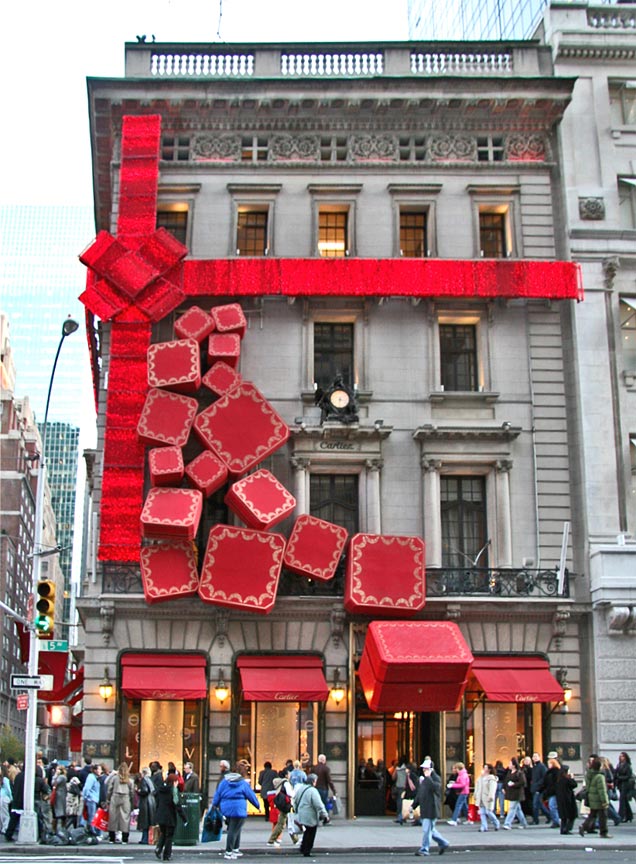
    This is the American home of the multi-generational Cartier empire at 52nd Street and 5th Avenue, decorated for the holiday season. Cartier is a legacy business, started in 1847. Louis Francois Cartier created the first wristwatch for a friend in 1904.

    This magnificent limestone structure was built for railroad investor Morton Plant in 1904, who purchased the lot from the Vanderbilts. The Vanderbilts and other wealthy residents who owned mansions in the area were not pleased when the first business (Cartier’s first shop in 1909) went up on 5th Avenue.

    The acquisition of the Plant house by Cartier is a famous story. From the book Cartier — Jewelers Extraordinary” (Harry N. Abrams): ”Cartier proposed a deal in 1917 to buy the building in exchange for his most valuable two-strand pearl necklace.” The necklace was valued at $1 million at the time. The building underwent extensive renovations in 2001 and exudes old-world charm – wood paneling, soft lighting, etc. Click here for more photos. A visitation is de rigueur for all, especially this time of year…


  • Little Church Around the Corner

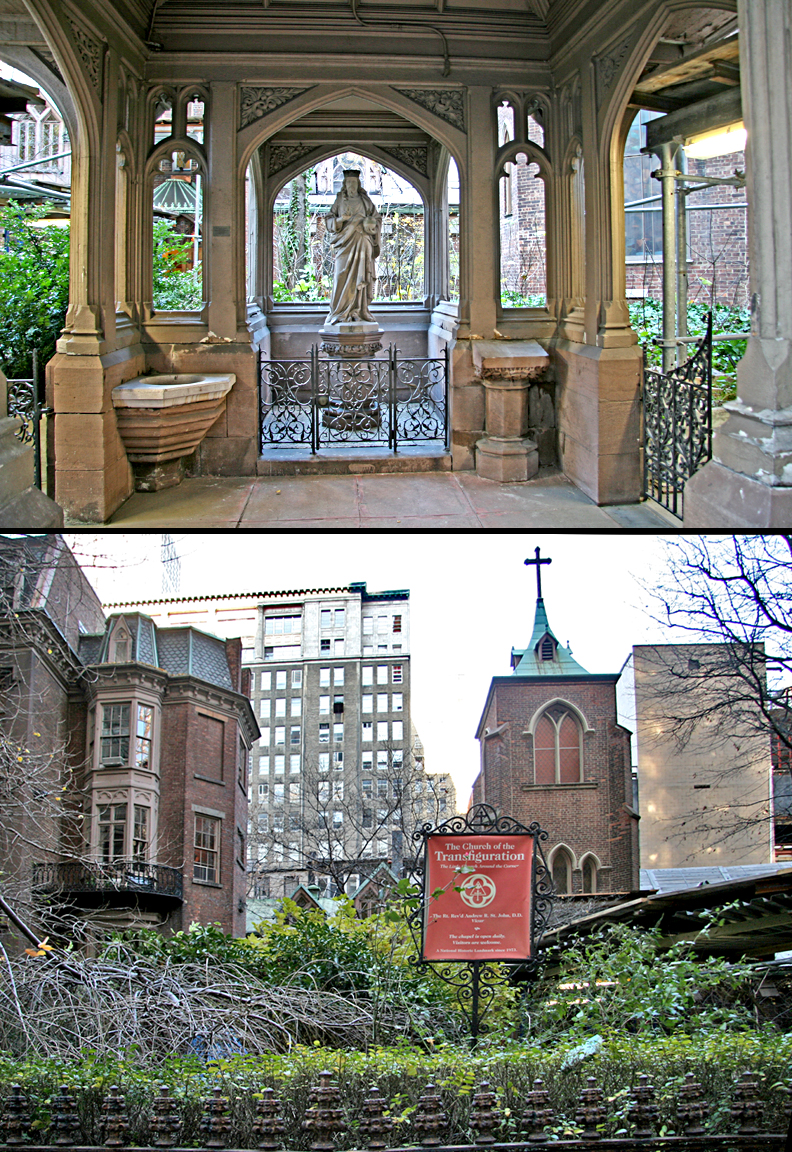
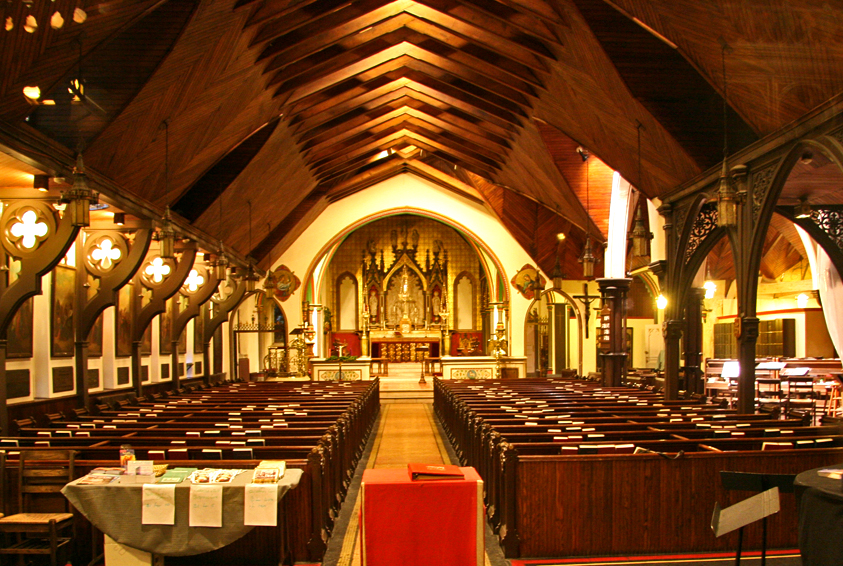
    The Church of the Transfiguration is one of the most famous parishes of the Episcopal Church in the United States, known throughout the country as “The Little Church Around the Corner.” For 150 years, it has been a very visible worshiping community in an urban setting which has welcomed all classes, all races, and particularly all those marginalized by society for whatever reason, as were actors and actresses, who had theretofore been on the fringes of both society and the Episcopal Church. It also has stressed service to the poor and oppressed from its earliest days.

    The founder, Dr. Houghton, sponsored bread lines and worked vigorously for the abolition of slavery and harbored runaway slaves. In 1870, when the rector of a neighboring church refused to perform a funeral for an actor named George Holland, he suggested the “little church around the corner,” where “they do that sort of thing.” Fellow actor Joseph Jefferson, who was trying to arrange Holland’s burial, exclaimed, “God bless the little church around the corner!” and the church began a long-standing association with people of the theater. For more information, including a history, I direct you to their site.

    The church, at 1 E. 29th Street, was built in 1849. The church is set back behind a garden – the atmosphere is one of an English parish church in the countryside. Currently, the property is undergoing extensive renovations. More photos here…


  • Takashimaya

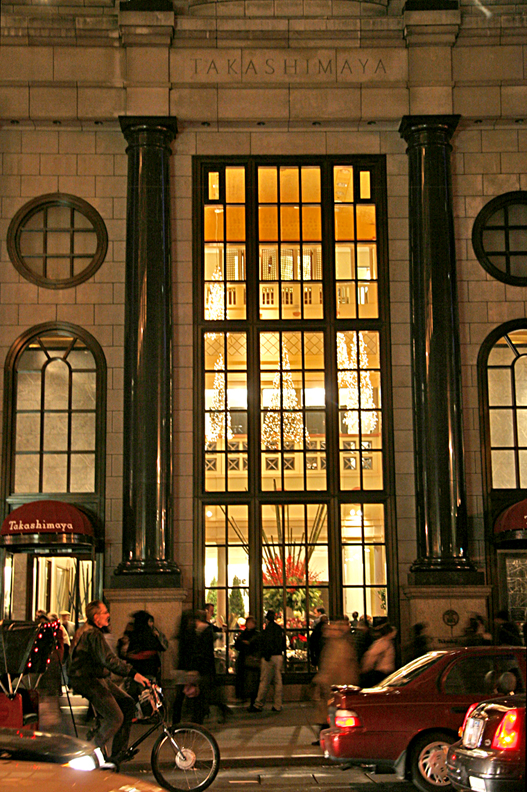
    Takashimaya is much less known to residents and visitors than its neighbors on Fifth Avenue. Many people I have queried have never heard of it at all. Surprising, because it is an exquisite aesthetic experience to visit this high-end retailer (perhaps not surprising – their NY website is in Japanese with no English version.) Click here for interior photos.

    Takashimaya NY is a mini version of the Japanese department store which was founded in Kyoto in 1829 – they have stores throughout Japan and now in New York, Taipei, Paris, and Singapore. What’s interesting is that Takashimaya has had a few previous small retail gift shops/salons on Fifth Avenue which were not particularly successful. In 1991, they built a 20-story building and took occupancy of the first five floors at 693 Fifth Avenue (54th-55th Streets), investing $60 million in the project.

    The facade is a beautiful limestone with black granite columns. The lobby has high ceilings with a beautiful flower shop and an enormous striking floral centerpiece which can be seen from the street windows. The store has an unusual selection of merchandise – each floor is a serene boutique experience. The store carries Japanese clothing, housewares, and gifts and is also home to the Tea Box cafe and the Babor spa. Even if you are not a shopper, I recommend a visit…

    Update: Takashimaya closed its New York location in June of 2010. See article here.


  • Step Softly

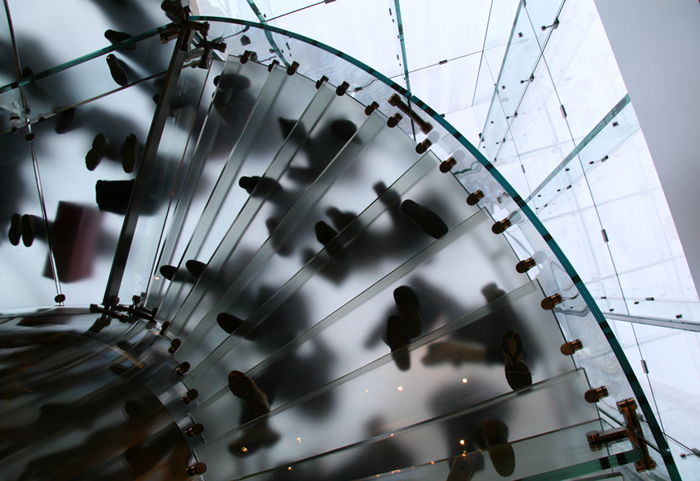
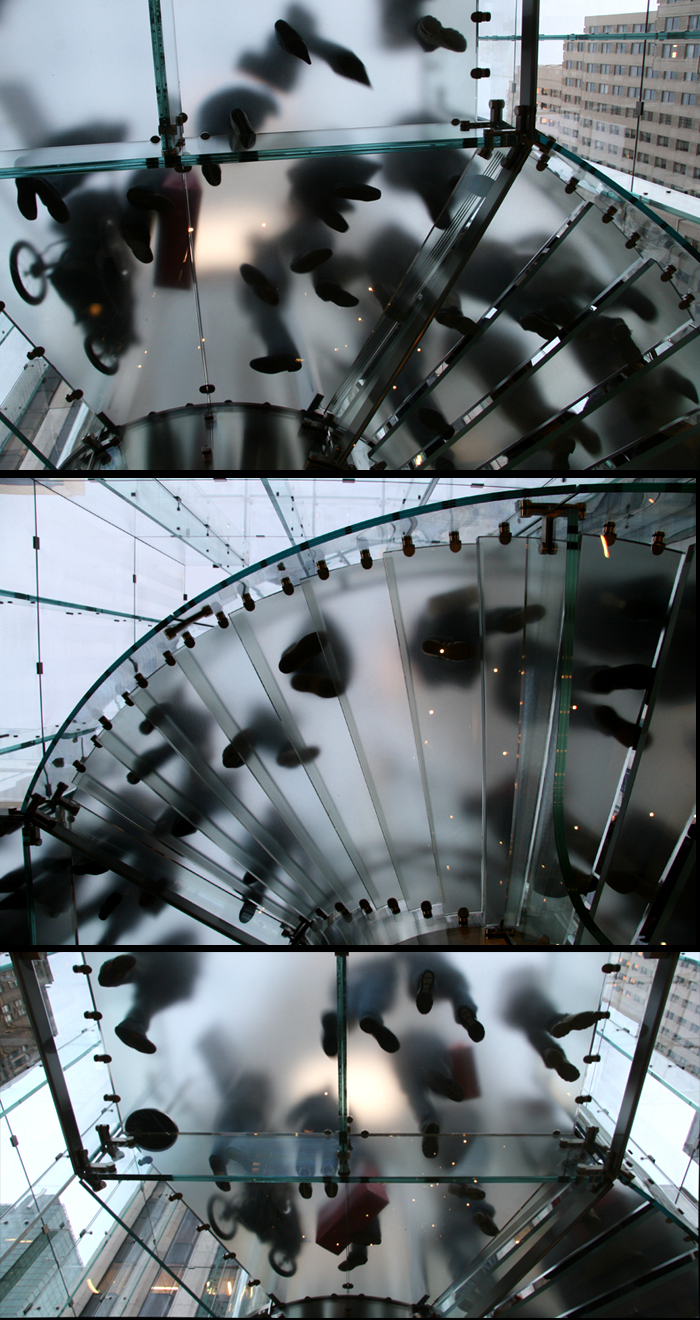
    I was awed by the images created by falling and rising footsteps up and down the spiral glass staircase at the new Apple store at 59th Street and Fifth Avenue. Click here for more photos. This new store opened on May 19th, 2006 with much fanfare, including dozens of celebrities and CEO Steve Jobs himself. People had camped out overnight in the rain on the street for the opening at 5 PM.

    This location is super prime – across the street from the Plaza Hotel and Central Park. A glass cube entrance sits atop the plaza in front of the GM building and FAO Schwartz’s flagship store; the 10,000-square foot retailing space itself is below street level. The store is open 24/7, 365 days a year – a first for Apple. When seen lit at night, this becomes NYC’s own I.M. Pei glass work. In fact, Steve Jobs has worked with Pei in the past and credits the glass pyramid entrance to the Louvre in Paris as being an influence in the store design…


  • Atlas

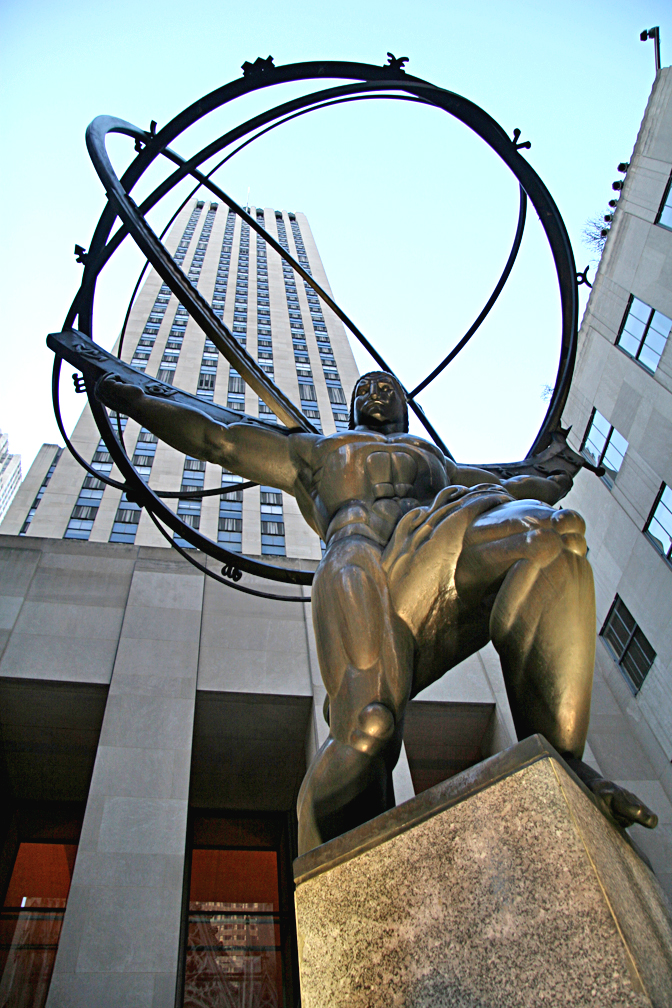
    Nearly everyone is familiar with this Art Deco bronze sculpture at the Rockefeller Center complex, with Atlas shown holding up the heavens, his punishment by Zeus after his loss in the Battle of the Titans. It was created by Lee Lawrie in 1936 – he has 14 pieces attributed to him at Rockefeller Center. Lawrie (1877-1963) was born in Germany and moved to Chicago in 1882. At age 14, he began working for many sculptors in Chicago; he later moved east, where his work with Ralph Adams Cram and Bertram Goodhue brought him into the art world limelight.

    The sculpture sits in the small entrance courtyard to the International Building; this is a great viewing area for St. Patrick’s Cathedral (click here for more photos). It is interesting to note that there is a frieze on the curved beam on Atlas’s shoulders which shows symbols for the planets, the moon, and the 12 constellations of the zodiac. However, Pluto, discovered in 1930, is absent from the planetary group – a glaring omission, given that this was created in 1936. Ironically, Pluto’s status as a planet is now being called into question. Another example of art predicting life?


  • Huddled Masses

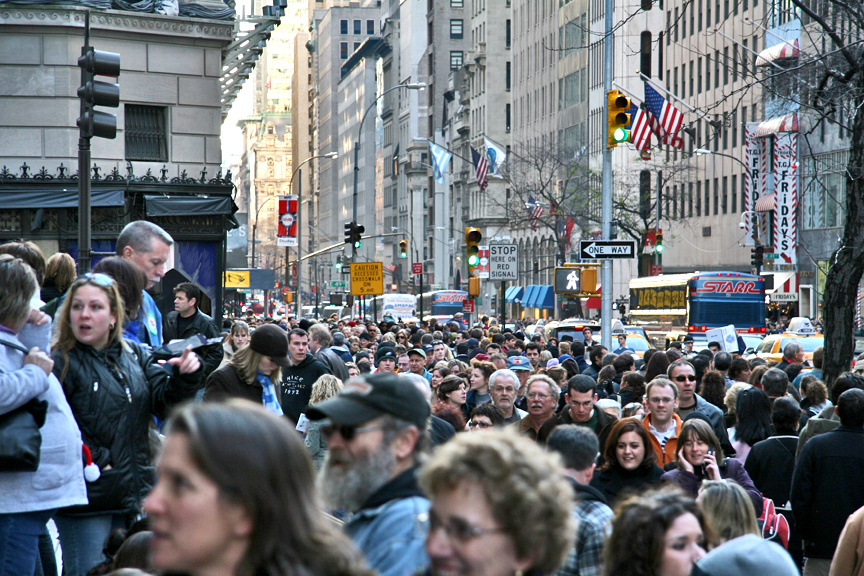
    These may be huddled masses, but I’m not sure if they’re yearning to be free. Certainly not free of shopping on 5th Avenue. I usually avoid such environments, but I thought capturing the hordes of holiday shoppers would depict the ultimate in cliched New York City crowds.

    Fifth Avenue is NYC’s most upscale shopping district and one of the world’s premier shopping streets, with many retailing icons (such as Tiffany’s). This photo was taken on the steps of St. Patrick’s Cathedral at 50th Street looking south along 5th Avenue. It is now so crowded during holiday season that police barricades have been put up for several blocks to provide additional walking space in the street itself.

    If you come to this area, I suggest that you embrace and surrender to the experience. Fighting the crowds is a no-win proposition and certainly will not lead to enjoyment of the holiday season and its festive spirit…


  • Tiffany’s Windows

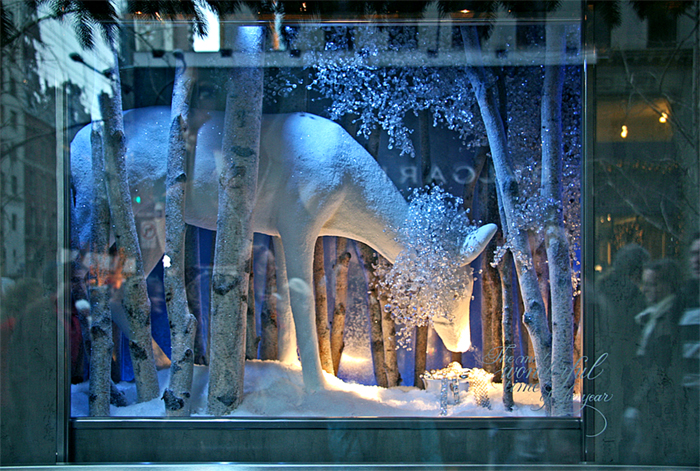
    There’s nothing like 5th Avenue in NYC at Christmas. I’m not a shopper, and I’m not crazy about crowds, but it’s hard for even the hardest types to resist a little softening up when you’re in an environment like this – Tiffany’s, Cartier, Saks, Bergdorf Goodman, Henri Bendel, Louis Vuitton, Harry Winston, St. Patricks Cathedral, Rockefeller Center with its tree, and Macy’s not too far away. These are not just average places at Christmas – they are classic American icons. The festive mood is everywhere – the buildings, the lights, the music, and the people.

    Many of the Christmas window displays of the top retailers along 5th Avenue are known worldwide, and millions of visitors come to see them – in some cases, lines are established for viewing. The windows at Tiffany’s were quite beautiful, with their winter scenes and slogan: The most Beautiful Time of the Year. I imagine many would not mind sharing the jeweled setting with that snowy deer…


  • Engine Company 33

    Until I began working on this website, I never paid really close attention to the firehouses of NYC. With so many distractions and so much fine architecture, it is easy to overlook things in one’s travels.

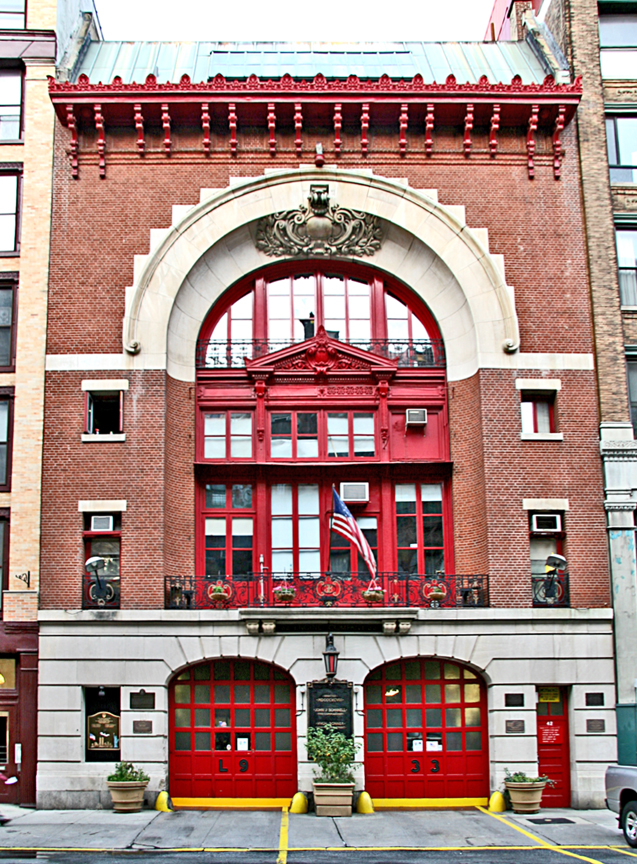
    This firehouse, home of Engine Company Number 33 of the New York Fire Department, at 44 Great Jones Street in the East Village, is spectacular. More photos here. It was built in 1898 and designed by renowned Beaux-Arts architect Ernest Flagg, who did a number of firehouses and other city landmarks. From the Guide to New York City Landmarks: “This Beaux-Arts firehouse is one of the grandest small-scale civic buildings in New York City.” And, like all firehouses and the immediate surrounding area, it is superbly maintained, giving the whole property a crisp quality.
    Engine Company 33 had the unfortunate distinction of losing 10 of the 14 firemen who went out on the 9/11 call…


  • Milligan Place

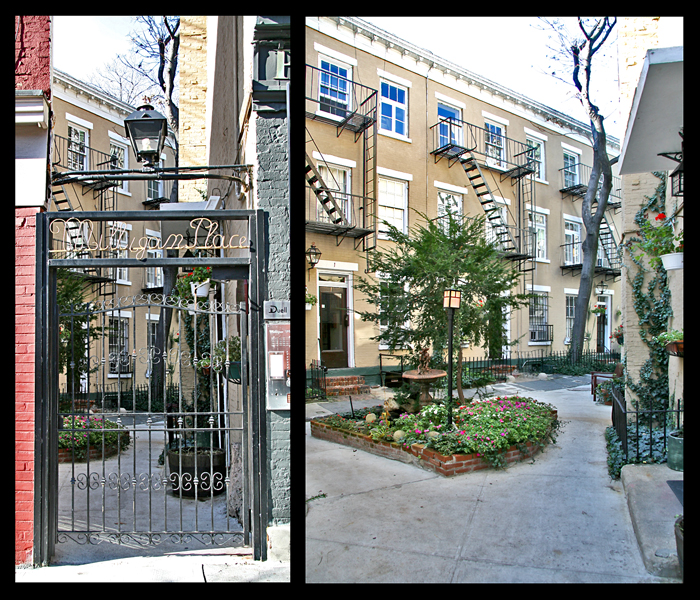
    Of all the small alleys and courtyards in Manhattan, Milligan Place can perhaps be most easily missed, with its small gateway sandwiched between two buildings on 6th Avenue near 10th Street in the Village. The four buildings in this cul-de-sac were built in 1852 as second-class boarding houses for waiters (primarily Basque) working at the nearby Brevoort House hotel. The land was purchased from the large Peter Warren estate in 1799 by Samuel Milligan, who built a home here. After his death in 1852, the house was replaced by the four row houses which we now find here.

    Originally, Milligan Place was entered from Skinner Road (later named Christopher Street). In time, of course, these types of enclaves caught the fancy of the bohemian artists and later became gentrified. The cofounder of the Provincetown Players, George Cram Cook, and his wife, playwright Susan Glaspell, lived here from 1913-1917. Eugene O’Neill lived here as well. In 1963, an attempt to tear the buildings down (and those in nearby Patchin Place) was thwarted by a community group led by Ed Koch. Milligan Place is not so much charming for its architecture but rather for the peaceful oasis in the city it represents and that passersby may long for…


  • Fete

    NYC is a continuous smorgasboard of dos, galas, events, happenings, openings, presentations, and parties. If one has the time, interest, and inclination to go, you could keep very busy flitting from one to the next. And I know many who do occupy their time this way. Many events have substance; many are attended by those who want to see and be seen. Or both, or anywhere on the spectrum in between.

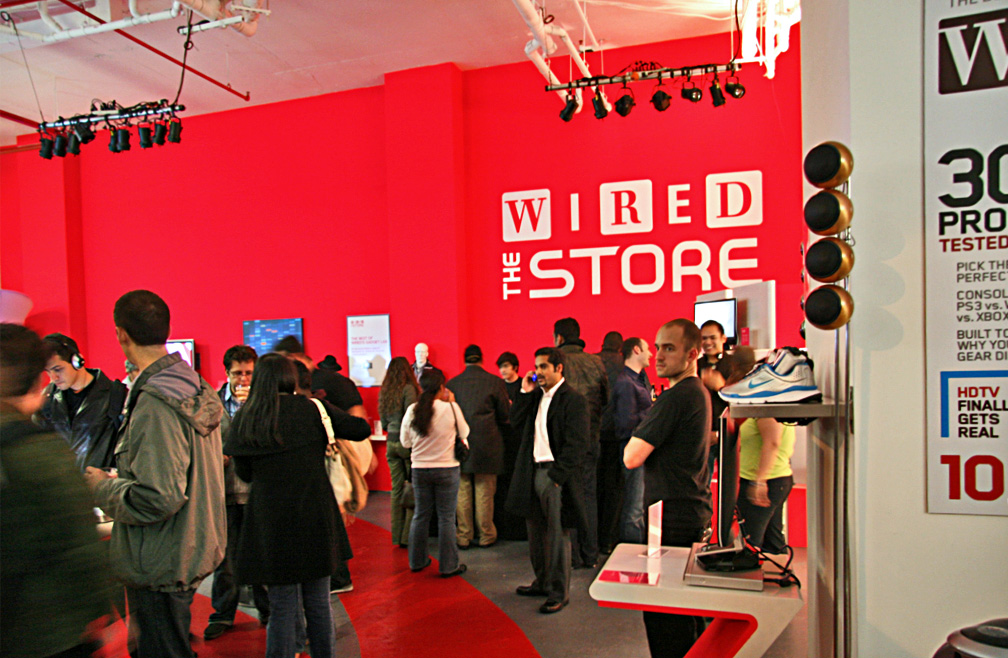
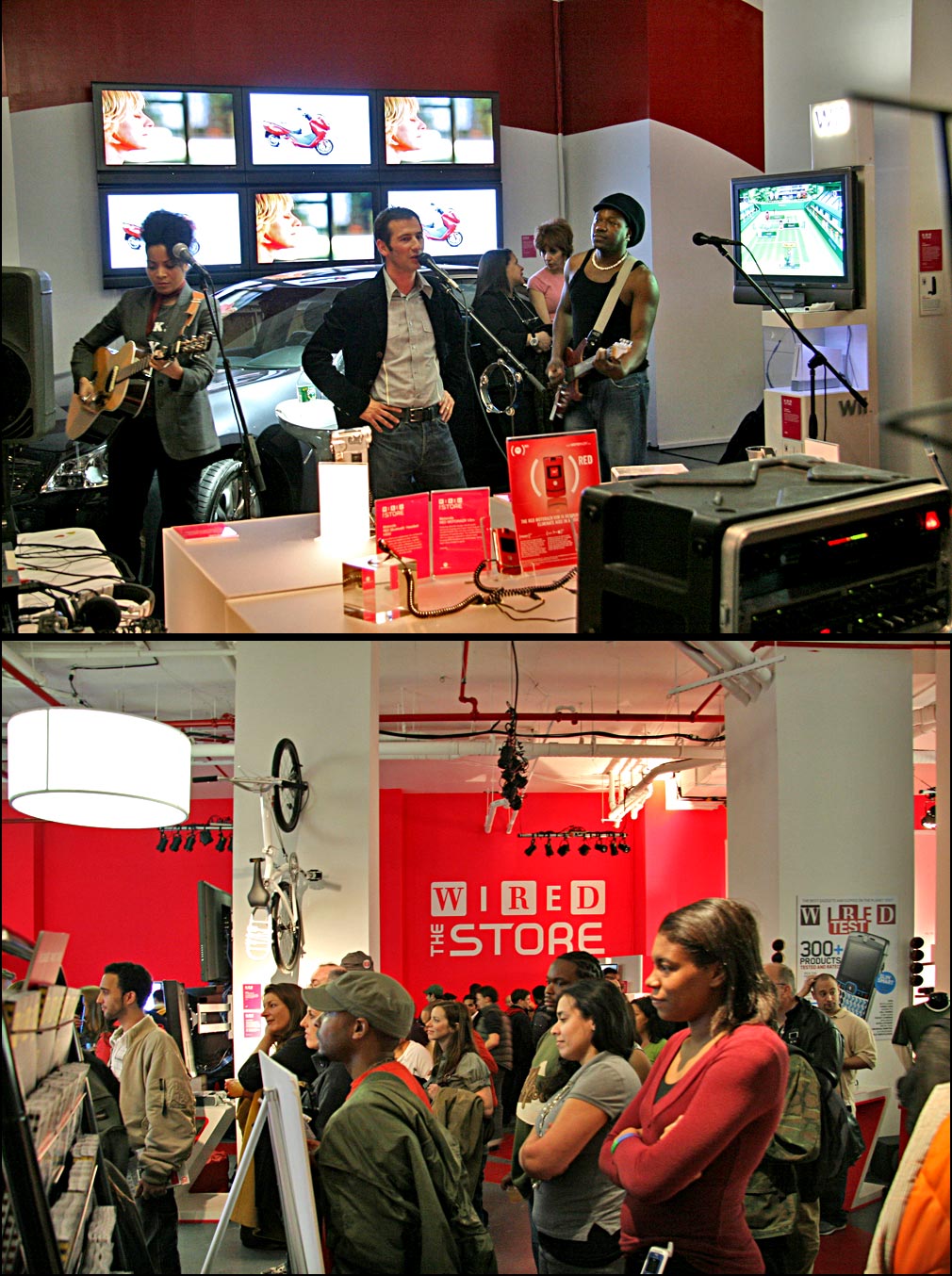
    The Wired Magazine people have been running a temporary retail store during the Christmas season, featuring the hottest gadgets, with their motto Geek Out in Style. The Wired Store, at 160 Wooster Street in SoHo, is open this year from November 17 to December 31. Last nite was the Wired Music Spotlight, sponsored by Giant Step and Knob Creek, which featured “the latest in the world of Latin and Soul grooves, with acoustic performances from Stephanie McKay (Astralwerks), Malena Perez (Cubanita Grooves), and music selects provided by Rafe Gomez (The Groove Boutique).” Click here for more photos. There were plenty of freebies, beverages, and music…


  • Carlton Hotel

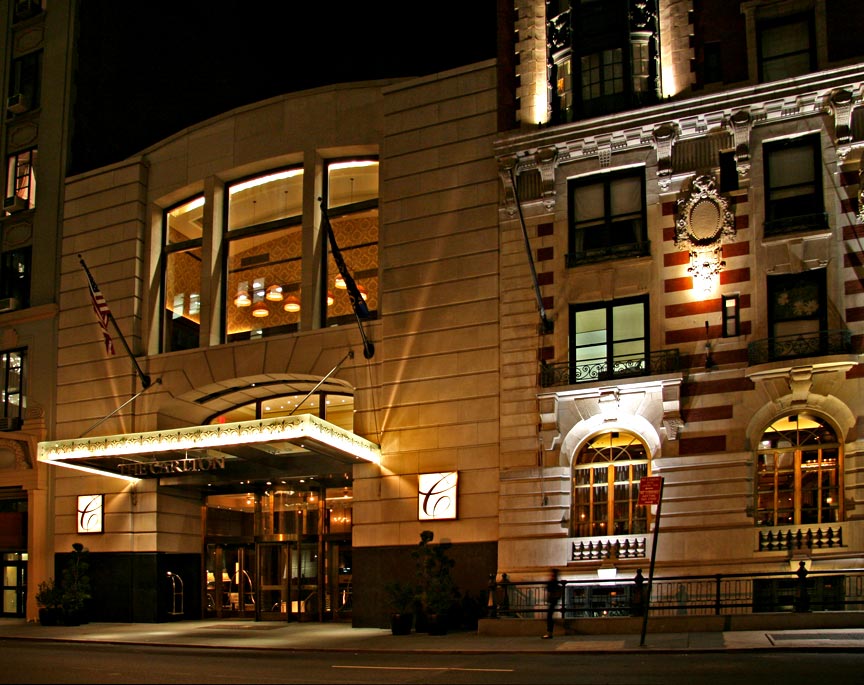
    This is the Carlton Hotel at 88 Madison Avenue at 29th Street. I had no plans to photograph this building, had never seen it before, and knew nothing about it. But walking by it at night, I found the lighting on this Beaux-Arts building quite spectacular.

    My research, both on and offline returned very little, so I really had to dig. I learned the most from the recent press – click here for the hotel’s website with these articles. Built as the Seville Hotel in 1904, it was in steady decline until it recently underwent a 5-year, $60 million renovation led by starchitect David Rockwell.
    One of the high points of the renovation was the discovery of a stained glass skylight dome (believed to have Tiffany glass) hidden above a dropped ceiling above an old barroom and severely blackened. This dome was restored and installed over the new restaurant Country, with chef Geoffrey Zakarian – a lot of positive buzz on this place. A new 3-story annex serves as entrance (click here for photo), with a limestone balcony, a turn-of-the-century curved staircase, and a waterfall. One of these days, I need to get in there and see that dome…


  • Met Life Tower

    This is the Metropolitan Life Insurance Company Tower at One Madison Avenue and 23rd Street. Click here for closeup. Designed by Napoleon LeBrun & Sons and completed in 1909, it reigned as the world’s tallest building (700 feet) until 1913, when the Woolworth Building surpassed it (792 feet). The building was modeled after the St. Mark’s Campanile in Venice, Italy, and is a National Historic Landmark. The tower itself was an add-on to the 1893 building, which encompasses a full city block. Click here for article.

    The tower lit at night is one of NYC’s most prominent and recognizable sights, along with the Empire State Building, the New York Life Insurance Building, and a handful of others. It can be seen from around the city and outer boroughs; one of the most spectacular views is coming into Manhattan from Brooklyn via one of the bridges. As part of a 3-year restoration completed in 2002, a computerized colored lighting system was installed – the system allows them to achieve any colors in the spectrum. The color schemes can be changed for holidays or special events…


  • Hidden Cemetery

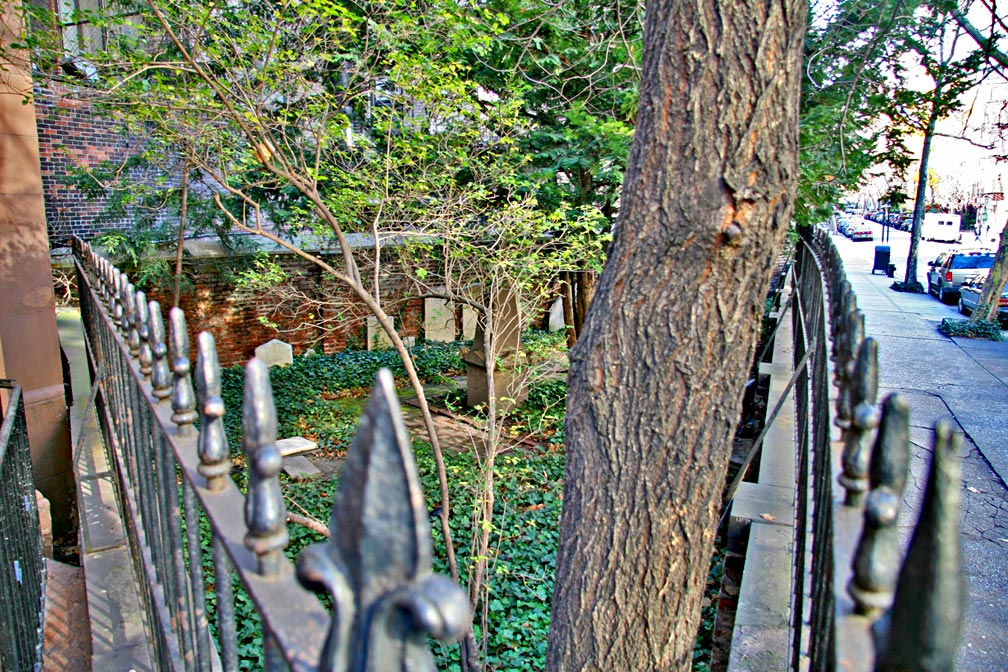
    Tucked in one of the Village’s nicest blocks, at 72-76 West 11th Street between 5th and 6th Avenues, is the tiny Second Cemetery of the Spanish and Portuguese Synagogue, Shearith Israel, in the City of New York (1805 – 1829). This is one of 3 cemeteries belonging to the synagogue. The original cemetery here was larger. However, in 1830 (after the commissioners’ plan of 1811 establishing a street grid), 11th Street was cut though, reducing the size to this small triangle. Disturbed graves were moved to the Third Cemetery on West 21st Street. Burials in Manhattan were outlawed in 1852, explaining why cemeteries here are so few and far between.

    This grim little plot has just a few simple, worn headstones. I shot this from several angles (click here for more photos). In the words of writer James Zug: “The cemetery has a sad appearance, especially in a downpour, this forgotten place, no one to come to tend to the graves, and no one alive who knows any of the people resting there.” I couldn’t have said it better…


  • Transportation

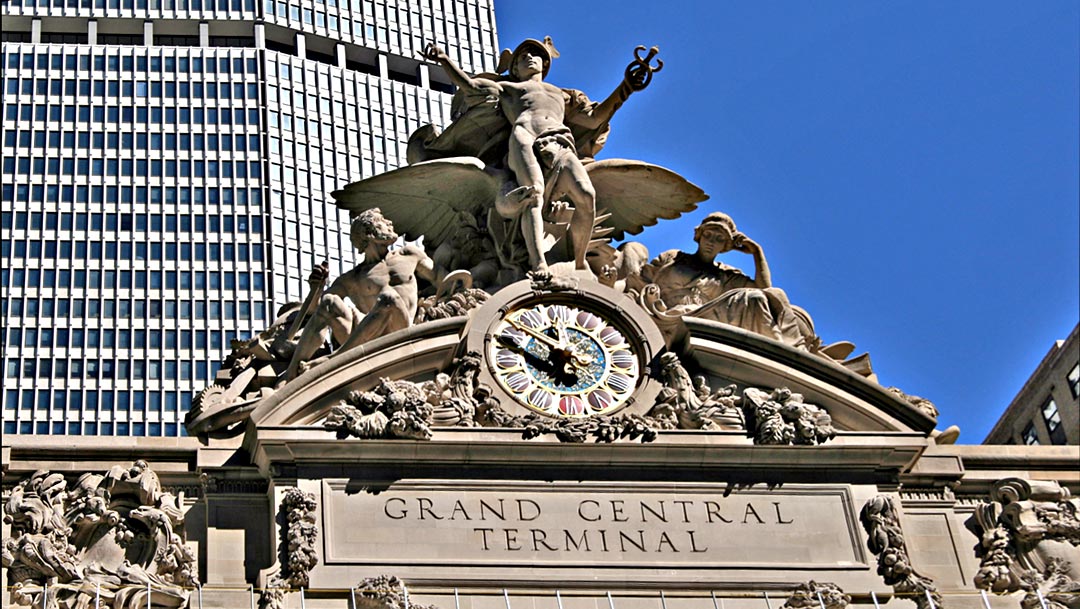
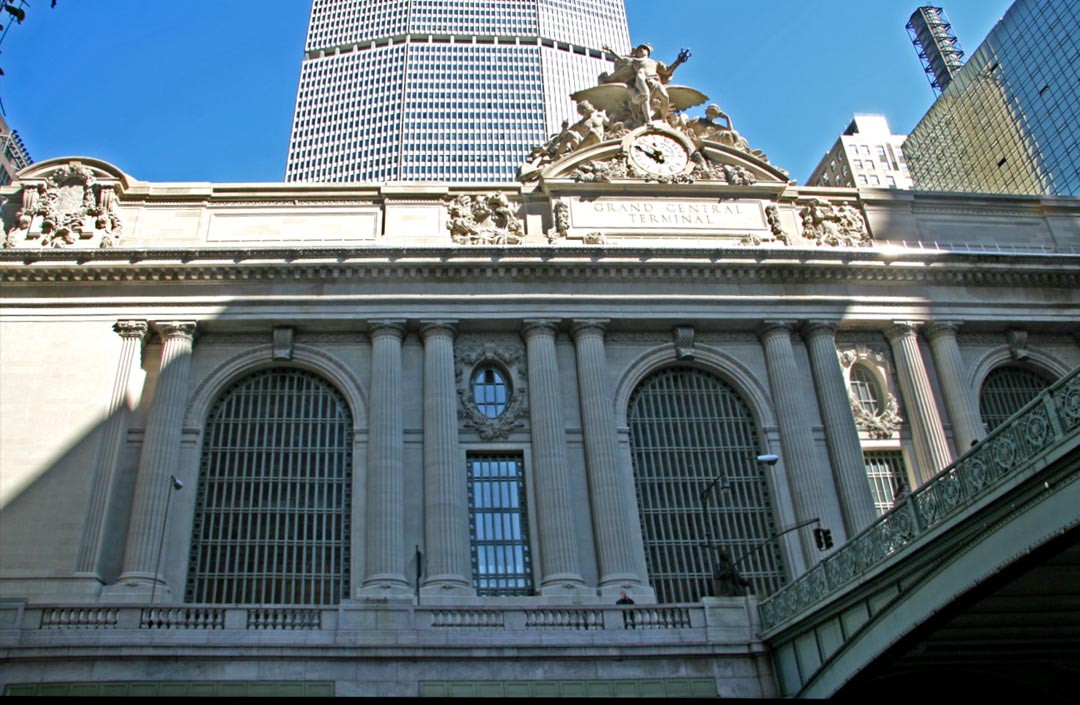
    This magnificent sculpture, Transportation, was placed atop Grand Central Terminal in 1914, a year and a half after the terminal’s opening. At the time of its installation, this enormous sculptural group (48 feet high) was considered the largest of its kind. Click here for second photo. Renowned French sculptor Jules-Felix Coutan created a 1/4 scale plaster model in his Paris studio and shipped it to New York, where local sculptor John Donnelly made the final version in his Long Island City studio.

    The sculpture has three Roman deities and an American eagle with outspread wings behind them: in the center is Mercury, god of commerce, travel, speed, and messenger of the gods. To his right is Hercules, symbolizing strength, and to his left is Minerva, goddess of wisdom. The trio surmounts an enormous clock in Tiffany glass – 13 feet in diameter, surrounded with cornucopias, symbols of abundance. If you visit Grand Central Terminal or are in the area near the 42nd Street entrance, make sure to look UP…


  • dinamic_sidebar 4 none

©2026 New York Daily Photo Entries (RSS) and Comments (RSS)  Raindrops Theme