• Pastis

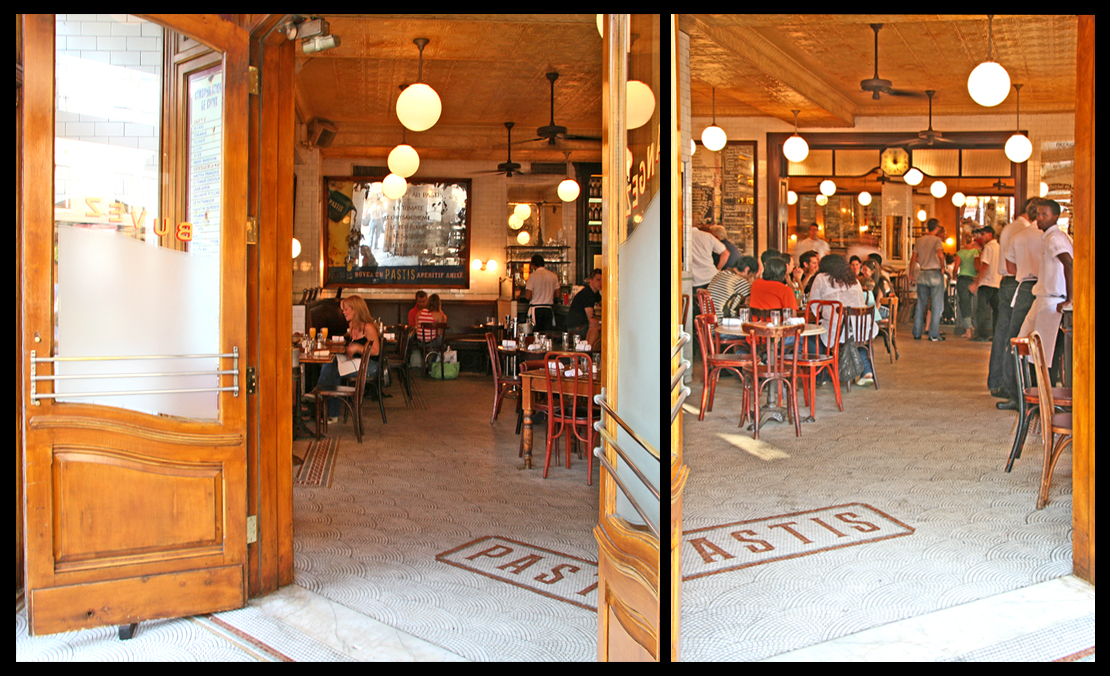
    It seems everyone likes the ambiance of a French bistro – certainly enough to keep Pastis highly popular. Restaurateur and meat-packing district pioneer Keith McNally has started many of the city’s trendiest restaurants, including Lucky Strike, Pravda, and Balthazar. The furnishings are all French, giving Pastis one of the most exquisite authentic looks in town – zinc topped bars, brass railings, light globes, etc. These photos were taken quickly – I was prevented from taking photographs inside – many restaurants are sensitive about this. However, there are three virtual tours on the Pastis site.

    The place is typically packed with those seeking to see and be seen. Not everyone has been charmed – see this 2000 article from the New York Times. I think it is difficult, however, to meet service expectations when a place becomes this popular and crowded. Without a reservation for dinner, this place is virtually impossible. If you are interested in trying it out, perhaps lunch or brunch…
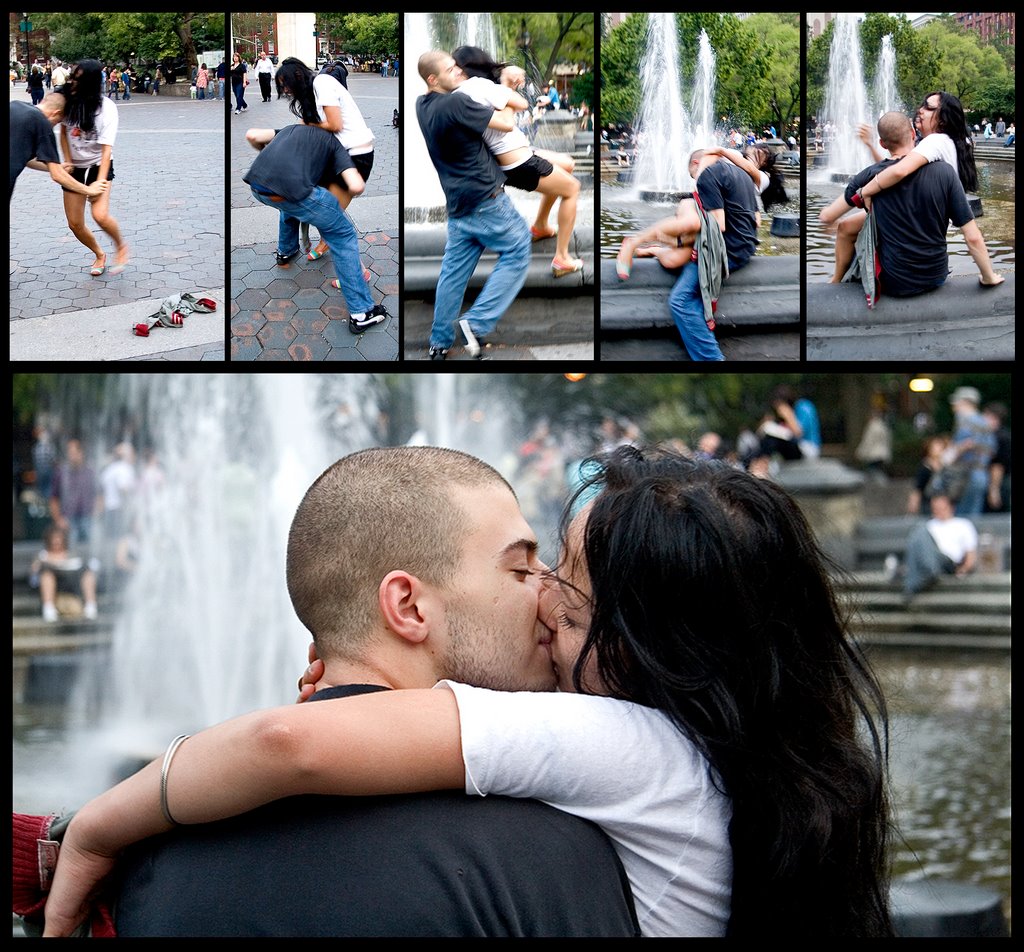
  • Circus Amok

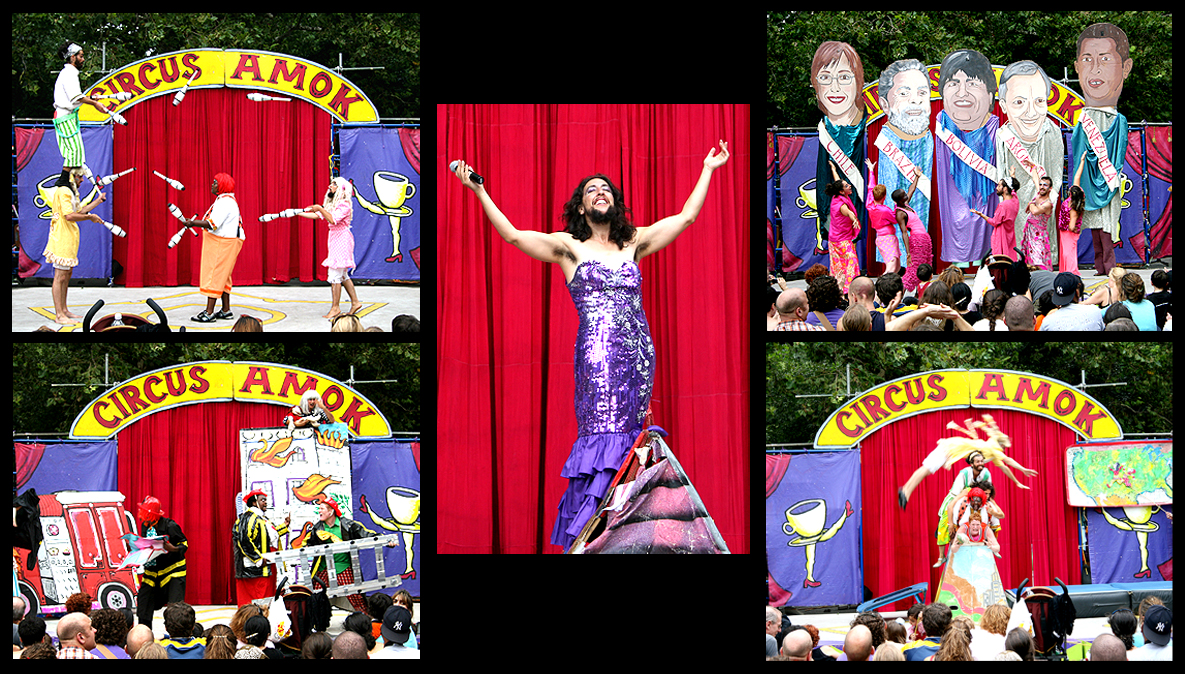
    Since 1989, Circus Amok has been performing its circus/theater free in parks and public spaces in the boroughs of NYC. Circus Amok is an amalgam of traditional circus arts with political theater. Each year’s production has a new, loosely defined sociopolitical theme around which its wild acts are created, all with their caustic brand of humor. This year’s show was entitled Citizen-Ship An Immigrant Rights Fantasia in 10 Short Acts. And yes, that’s a real bearded lady in the photo – Jennifer Miller, who is director of the company. She previously worked in the Coney Island Sideshow.

    I appreciate the creative talent, dedication, and hard work of this non-profit traveling show – juggling, acrobatics, stiltwalking, clowning, large scale puppetry, dance, and theater accompanied by their own 7-member live band. If you want to see a Circus with EDGE that thinks out of the box, plan to see them next year – this was their last show of the 2006 season…


  • War … and Peace


  • Maritime Building

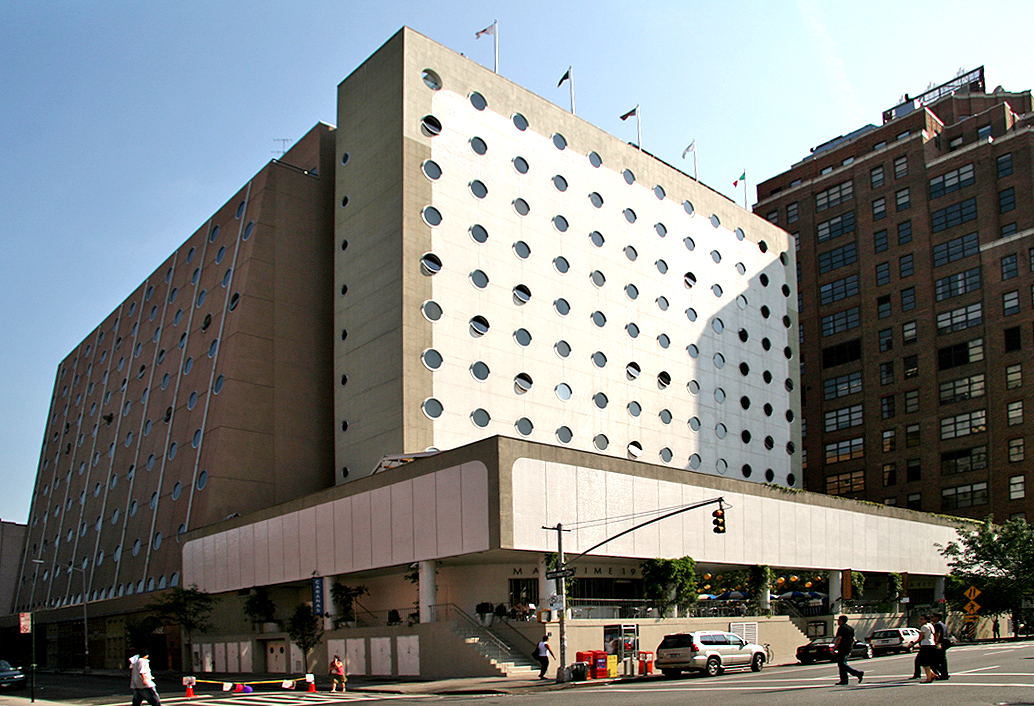
    This stark white, tile faced building with 5-foot portholed windows was originally built in 1966 for the National Maritime Union by Albert C. Ledner, a New Orleans architect. The 8.5 degree front sloping wall was the architect’s solution to a 1961 zoning requirement (20-foot setback above 85 feet). The building included living quarters and instructional, medical, and recreation space for sailors. In 1987, it was acquired by Covenant House, a shelter for runaways started by Franciscan priest Bruce Ritter (who, in a sad scandal, resigned both from Covenant House and the priesthood in 1990). In 1996, the building was sold to the New York Service Center for Chinese Study Fellows, which provided housing and education for Chinese students, artists, and business people.

    In its most recent incarnation, it has been converted to the Maritime Hotel, purchased in 2001 for $19 million by Sean K. MacPherson and Eric Goode, who partnered with developers Richard Born and Ira Drukier (who also did the Perry Street Condos by Richard Meier). The hotel has an elevated plaza, a garden with pond and lily pads, two restaurants, patio, roof bar, and beautiful teak furnished rooms with white ceilings (each with a porthole window), evoking a ship’s staterooms…


  • Meier World

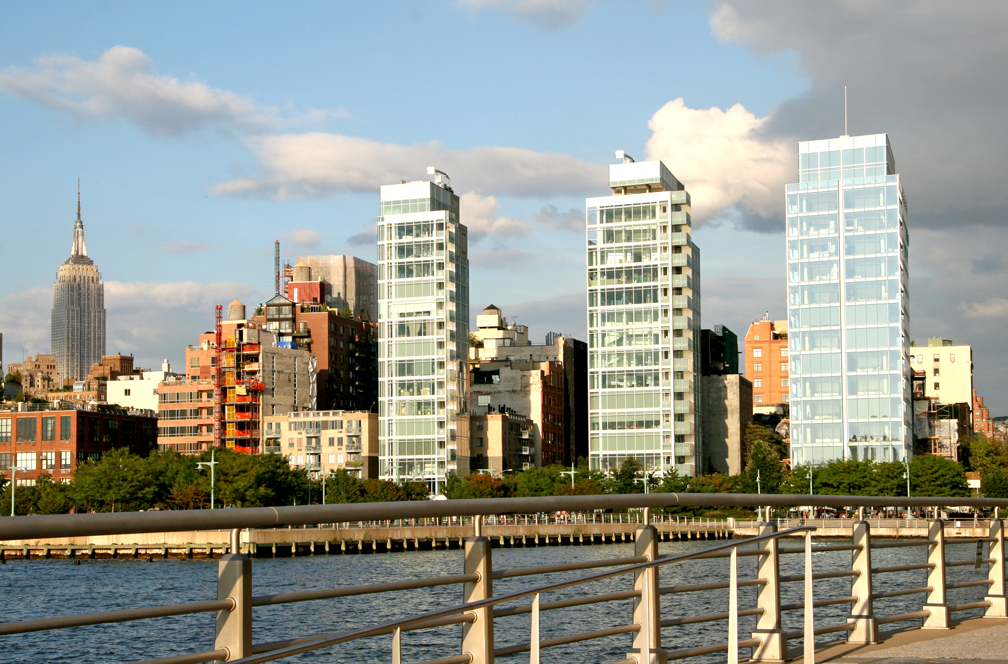
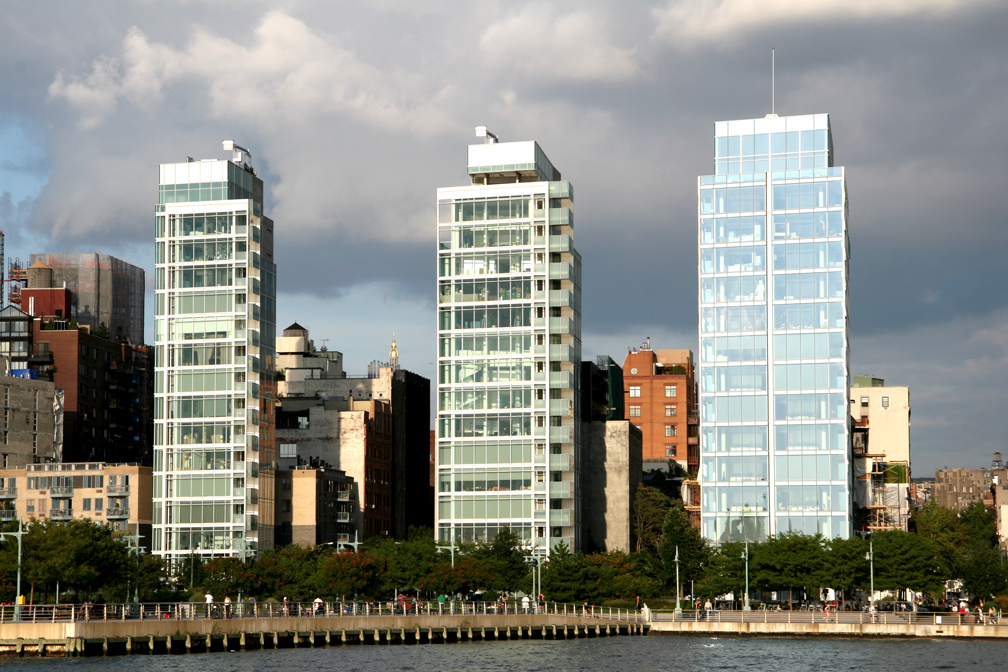
    In the far West Village, flanking the Hudson River and the new, immensely popular Hudson River Park (this photo was taken from the Christopher Street Pier) are three residential 16-story towers all designed by starchitect Richard Meier. The projects all share a crystalline structure, clad in insulating laminated glass. Click here for additional photo.

    The two buildings on the left are 173/176 Perry condominiums (completed 2002), the first Meier construction in NYC. The spaces are open lofts with interior design and furnishings completed by the owners. The building on the right is 165 Charles (completed 2006). The interiors of the units in this property, in contrast to Perry Street, were completely designed and finished by Meier and apparently are spectacular. And the roster of tenants includes celebrities (Martha Stewart, Nicole Kidman, Calvin Klein, et al).

    These projects are a big subject, so I leave it to you to read further online, perhaps starting with the Richard Meier official site. Of course, anything this outspoken in a historical neighborhood will provoke controversy – many nearby streets are cobbled, and the surrounding area has predominately low-rise dwellings. However, new construction is a part of our world, and the appropriate architectural solution for a given context is difficult…


  • Cherry Lane Theatre

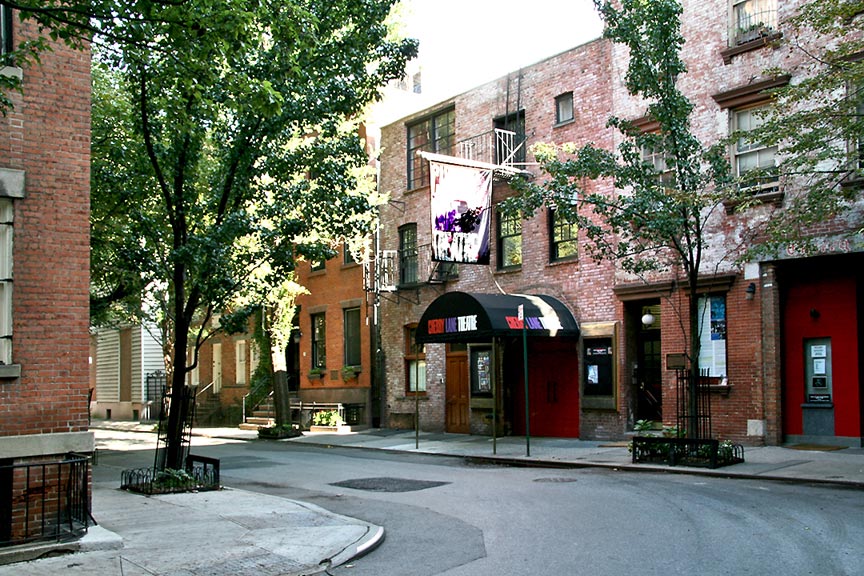
    On one of the most charming and bucolic streets in the city, you will find the Cherry Lane Theatre. This small, quaint theater at 38 Commerce Street in the West Village is, however, not small in reputation or impact. The building site was originally a silo on the Gomez Farm in 1817 – the building that now stands was first built in 1836 as a brewery and was later used as a tobacco warehouse and box factory. Click here for more photos.

    It was founded as the Cherry Lane Playhouse in 1924 by a group of colleagues of Edna St. Vincent Millay. The roster of playwrights and actors that have worked there is truly astonishing and voluminous: O’Neill, Beckett, Albee, Pinter, David Mamet, Sam Shepard, John Malkovich, Gene Hackman, Barbra Streisand, James Earl Jones, Rod Steiger, Dennis Quaid, Kevin Bacon, and Harvey Keitel, to name just a few. If you are not familiar with this theater, I suggest you peruse their extensive website and learn more about it.

    As a laboratory for theater with a groundbreaking heritage, it is quite fitting that New York’s longest running Off-Broadway playhouse is located on a street with a bend and left off the grid of the Commissioners’ Plan of 1811…


  • Luna Park Cafe

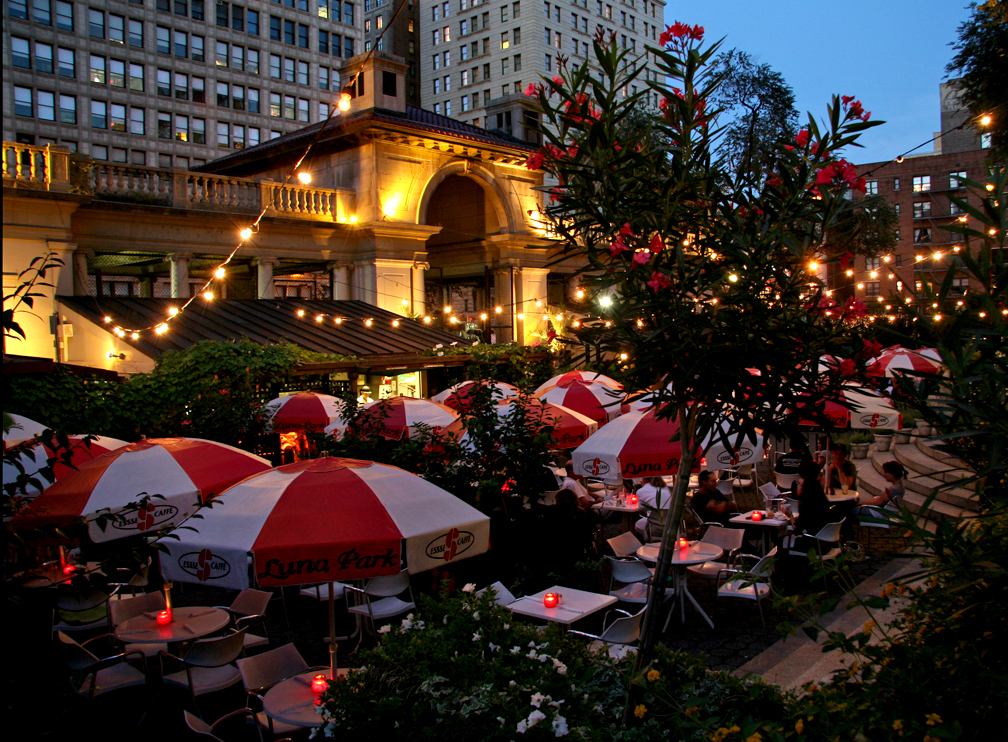
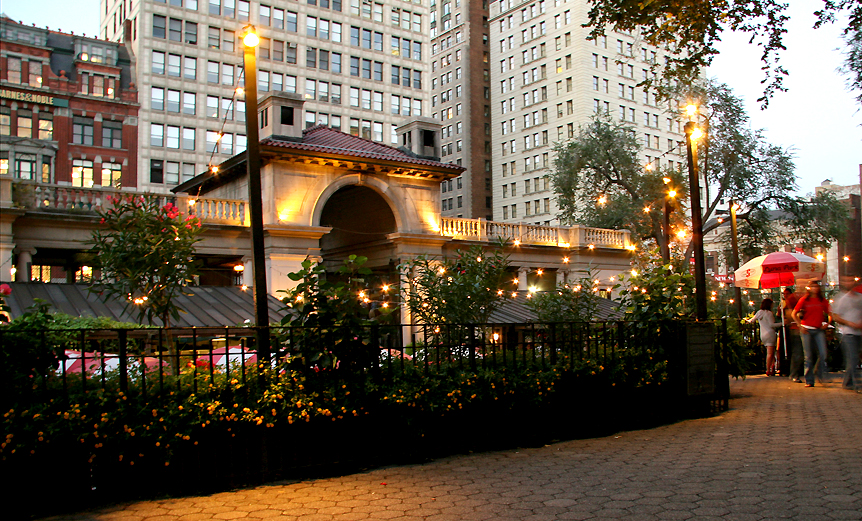
    At the north end of Union Square Park (50 E. 17th Street), near the farmers’ Greenmarket, is an outdoor seasonal bar/restaurant called Luna Park Cafe. Al fresco dining and drinking is, of course, popular everywhere there is suitable weather and more so in cities where outdoor space is at a premium. In NYC, there are only a small number of restaurants in public parks, so Luna Park’s location makes it a formula for success (and pricey).

    Open April through October, the place is a hotspot, particularly in the evening, when this photo was taken (another photo here). It appears that the north end of the park is getting a complete redesign and much-needed overhaul. The pavilion that houses the restaurant is being redone and Luna Park will be replaced. Of course, any change always sparks controversy, but I believe that the renovation will be a good thing, especially if done in a timely manner…


  • San Gennaro

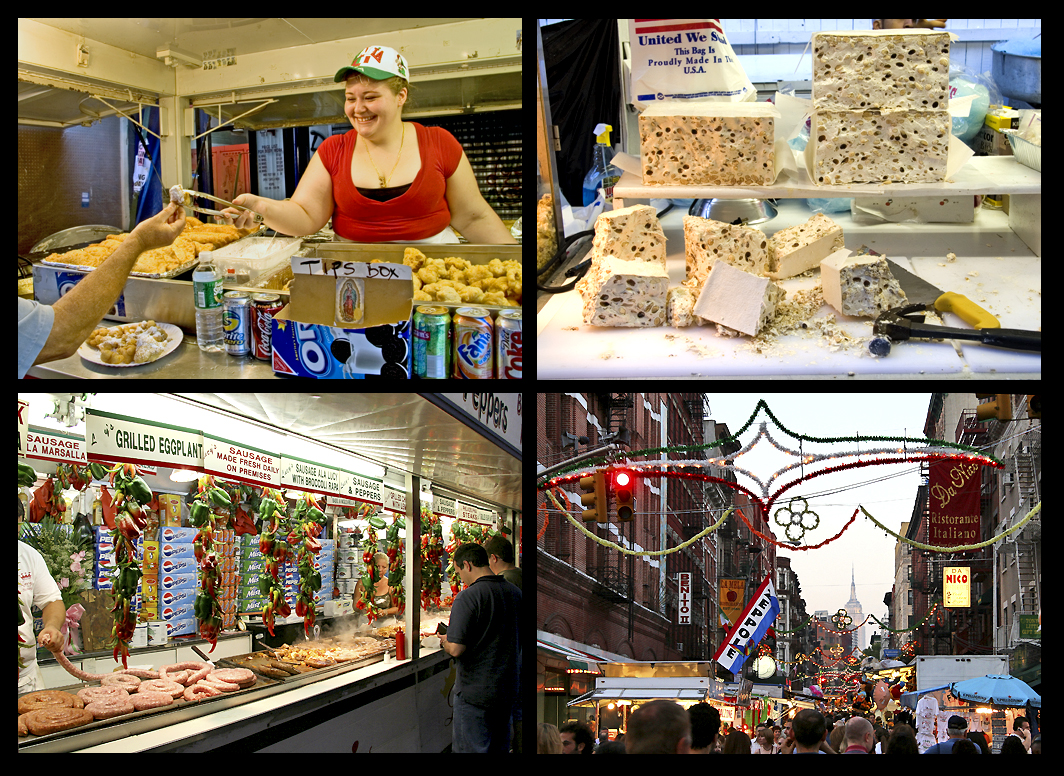
    The Feast of San Gennaro is celebrating its 79th year. It started in 1926 as a one-day event and now spans 11 days (Sept 14-24). San Gennaro was the patron saint of Naples. Newly settled Neapolitan immigrants started the annual festival, continuing the tradition from Italy, commemorating the day in 305 AD when Saint Gennaro was martyred for his faith.

    The feast takes place in Little Italy along Mulberry Street, which is closed to traffic for the duration. Homemade food is the main attraction: sausages, calzone, braciole, zeppole, funnel cakes, pastries, torrone, seafood, pizza, and more. Restaurants on the street set up outdoor seating. There is an annual Grand Procession. Today, the official feast day, there will be a Celebratory Mass and a religious procession. On Saturday the 23rd, there will be a parade. On the more mundane side, there will also be a cannoli-eating contest. Live entertainment is provided every day. Click here for schedule of all events at the official site. Carnival style games of chance are popular, and there are even a few rides.

    The event brings over 1 million visitors – many neighborhood residents see it as a serious invasion, and many New Yorkers avoid it, seeing it as much too commercial. I think everyone should experience it at least once…


  • Northern Dispensary

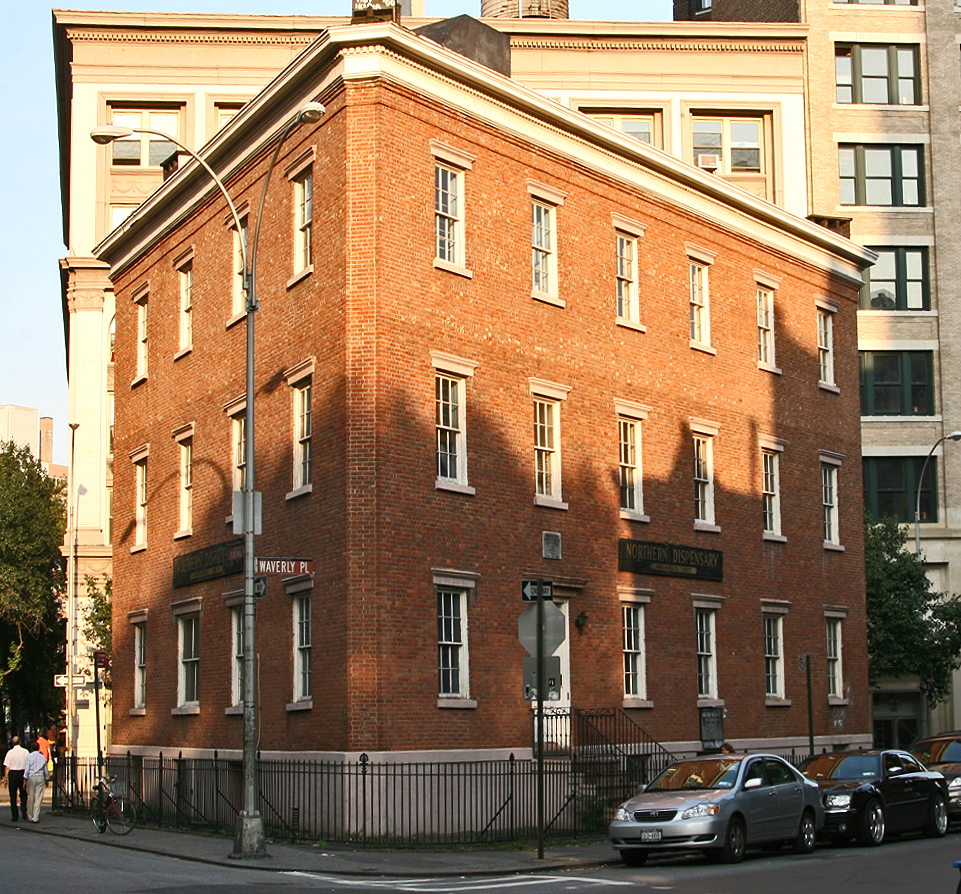
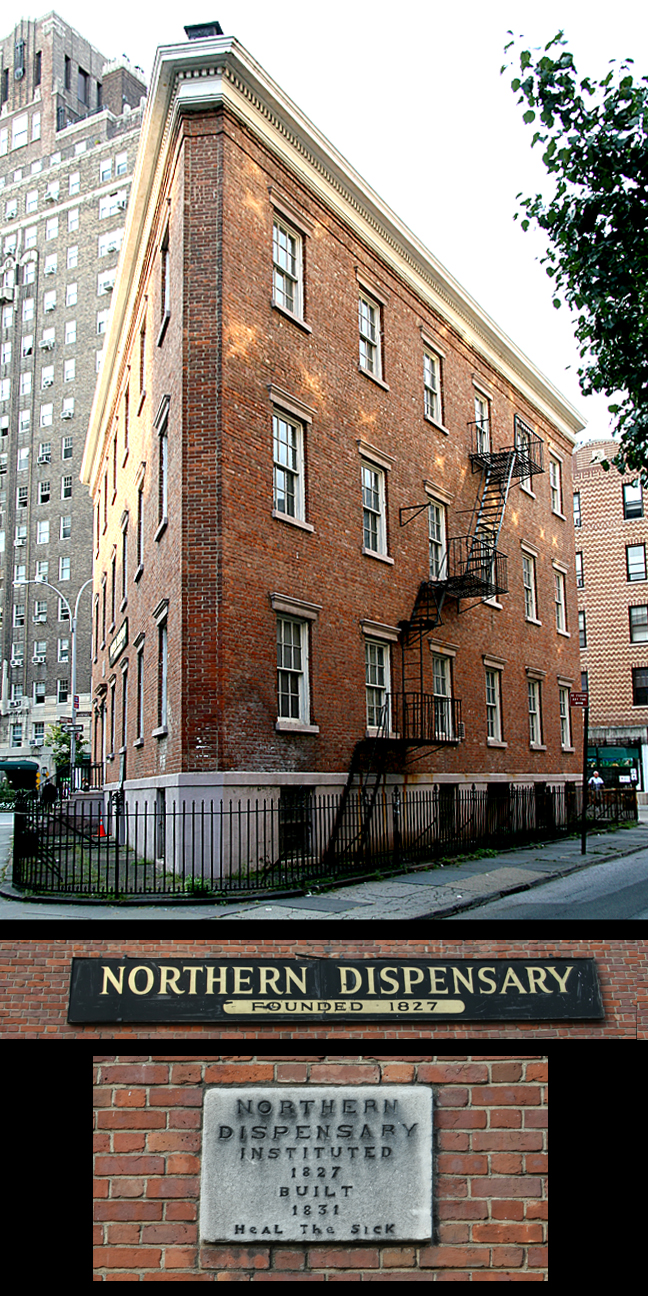
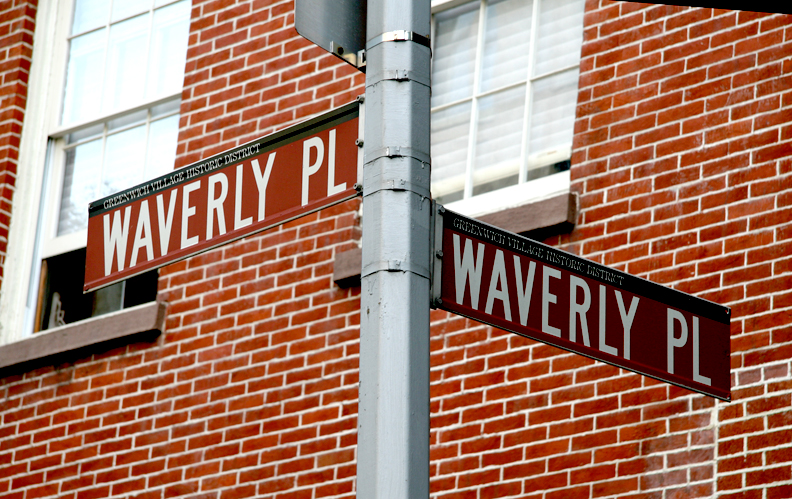
    On one of the most unique corners in NYC sits one of the most mysterious buildings, previously owned by one of the most eccentric real estate investors: the Northern Dispensary, a triangular Georgian brick building, unoccupied since 1998. Click here for more photos. It is remarkable for having been continuously operated since 1827 as a public clinic – Edgar Allen Poe was treated here at no charge for a cold in 1837. It is also unique in that it has one side on two streets (Grove meets Christopher) and two sides on streets with the same name, where Waverly meets Waverly.

    The previous owner, William Gottlieb, drove a beat-up station wagon with broken windows, yet after his death in 1999, his collection of properties was found to have a value of between 100-300 million dollars. He was notorious for acquiring properties and doing nothing with them; his sister, Mollie Bender, continues the Gottlieb tradition, with no apparent plans for the building. A private deed placed on the building stated that the property had to be used to provide medical care to the “worthy poor.” However, since the deed is private, it is not clear whether or not it could be enforced. So its future is very unclear as the building stands eerily empty…


  • Tank Worship

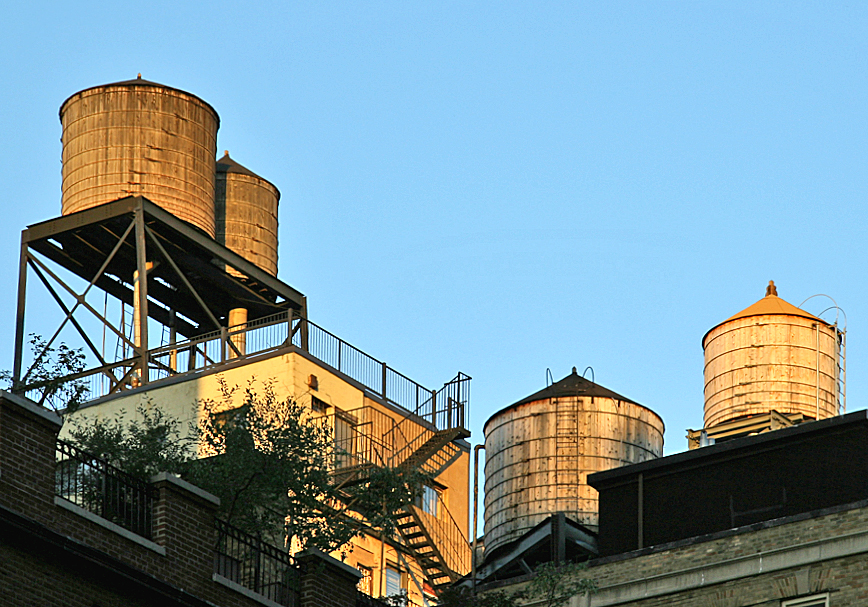
    The NYC skyline is known for its many icons, but water towers are not generally among them. However, one of the most ubiquitous sights in the city, from the street and above, is the water tower. Estimates are that there are over 10,000 in the city, with over 100 being built or replaced each year. And there are only two companies that make them, both dating back to the 19th century: Isseks Brothers and Rosenwach Group.

    The city’s natural gravity-driven system is adequate to supply buildings up to six stories in height. After that, additional pressure is needed. By storing a typical day’s supply in a rooftop tank, adequate water pressure for the entire building is able to be supplied by gravity. At night, the tanks are filled by pump – this eliminates a much more expensive pumping system to supply water at all times and at peak demands. Click here for a more detailed description with links on the operation of water towers.

    These wood tanks were photographed on University Place. Most of the city’s towers are exposed, and some have them covered with elaborate cupolas. Like many things in the city, there has been a romanticization of the water tank – in Tribeca, tanks are considered a decorative element. The ultimate validation of tank worship? In 1998, an art project was funded called Water Tower, now part of the Museum of Modern Art’s permanent collection


  • East

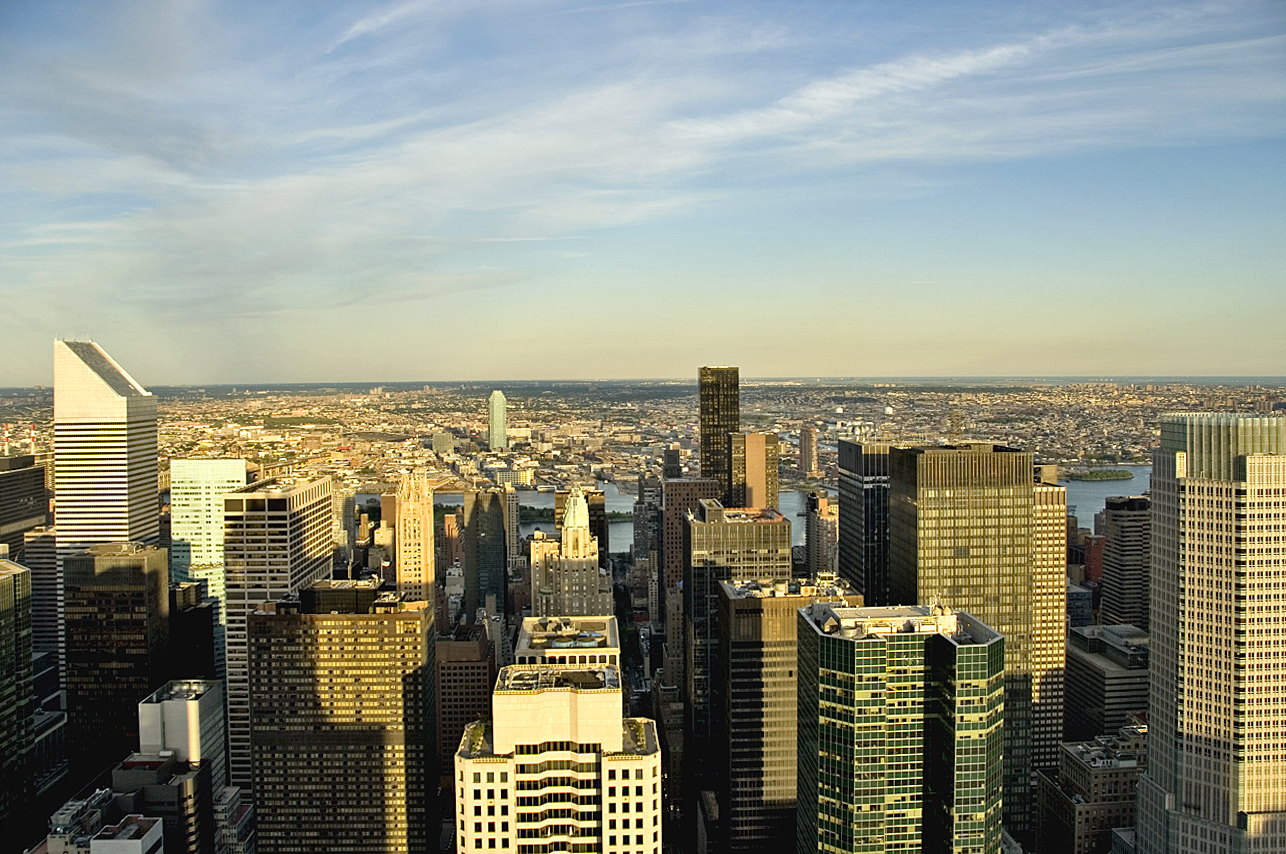
    This is Manhattan facing east towards Queens, shot from the Rockefeller Center observatory just before sunset. The Citicorp building is at the far left; the lone tall building in the distance just left of center is the Citicorp Building in Queens (the tallest building in that borough). The green topped building in the center is the Waldorf Astoria hotel, and to its immediate left is the GE Building at 570 Lexington Ave. The green strip of land in the middle of the East River is Roosevelt Island. I always find aerial views of NYC so inspiring. The density just makes me feel like everything is there and anything is possible – the New York of dreams, song, and film…


  • Columbus Circle

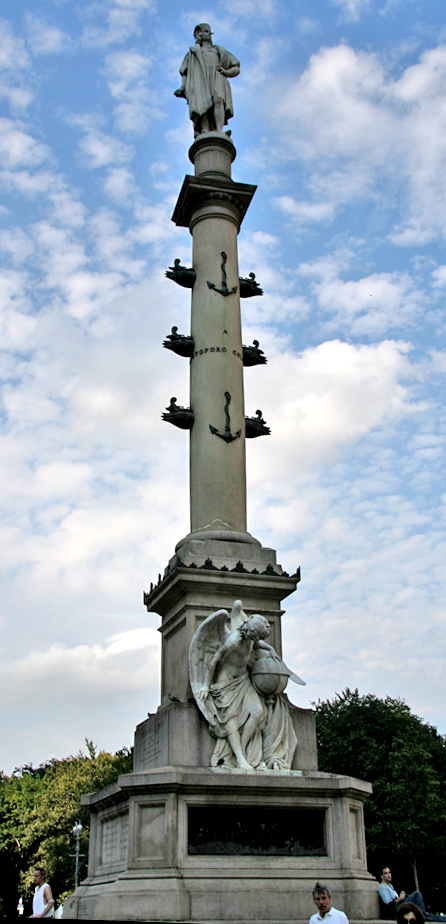
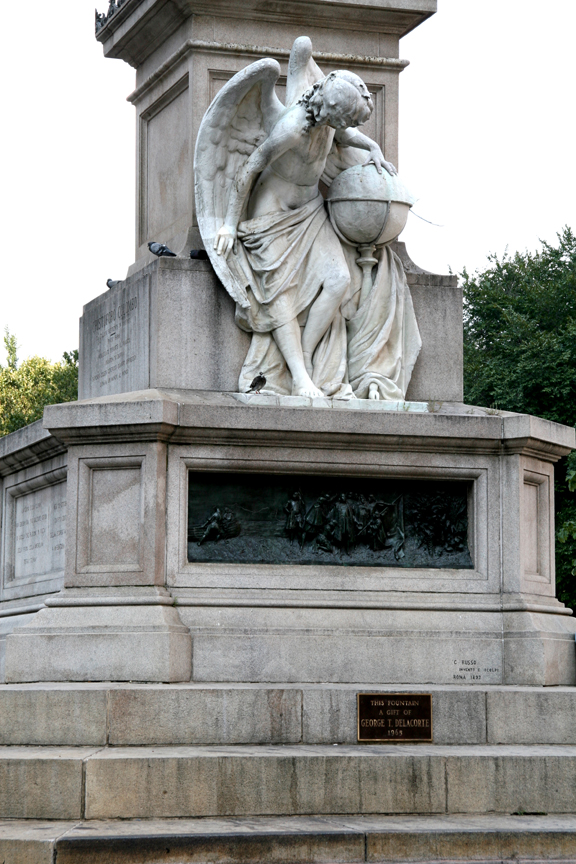
    Columbus Circle is a major nexus in NYC at the southwest corner of Central Park. It is the intersection of Central Park South (59th Street), Eighth Avenue, Central Park West, and Broadway. It is also a major transportation hub for numerous subway and bus lines. A marble monument of Christopher Columbus sits atop a 70-foot granite column – the pedestal has an angel with a globe. The monument was built in 1892 (completed in 1905) as part of NYC’s commemoration of the 400th anniversary of Columbus’ first voyage to the Americas.

    It is difficult to capture the area in a single photo – there are points of interest around the entire circle: the Time Warner Center and shopping complex, Trump International Hotel, Merchant’s Gate to Central Park with the Maine monument, and, of course, the fountain and statue area itself, which underwent a renovation in 2005, winning a landscape architecture award. This traffic circle has always been hectic and difficult to navigate; now with the new wooden benches, fountains, and plantings, it has become an island of calm in the storm of NYC…


  • 911

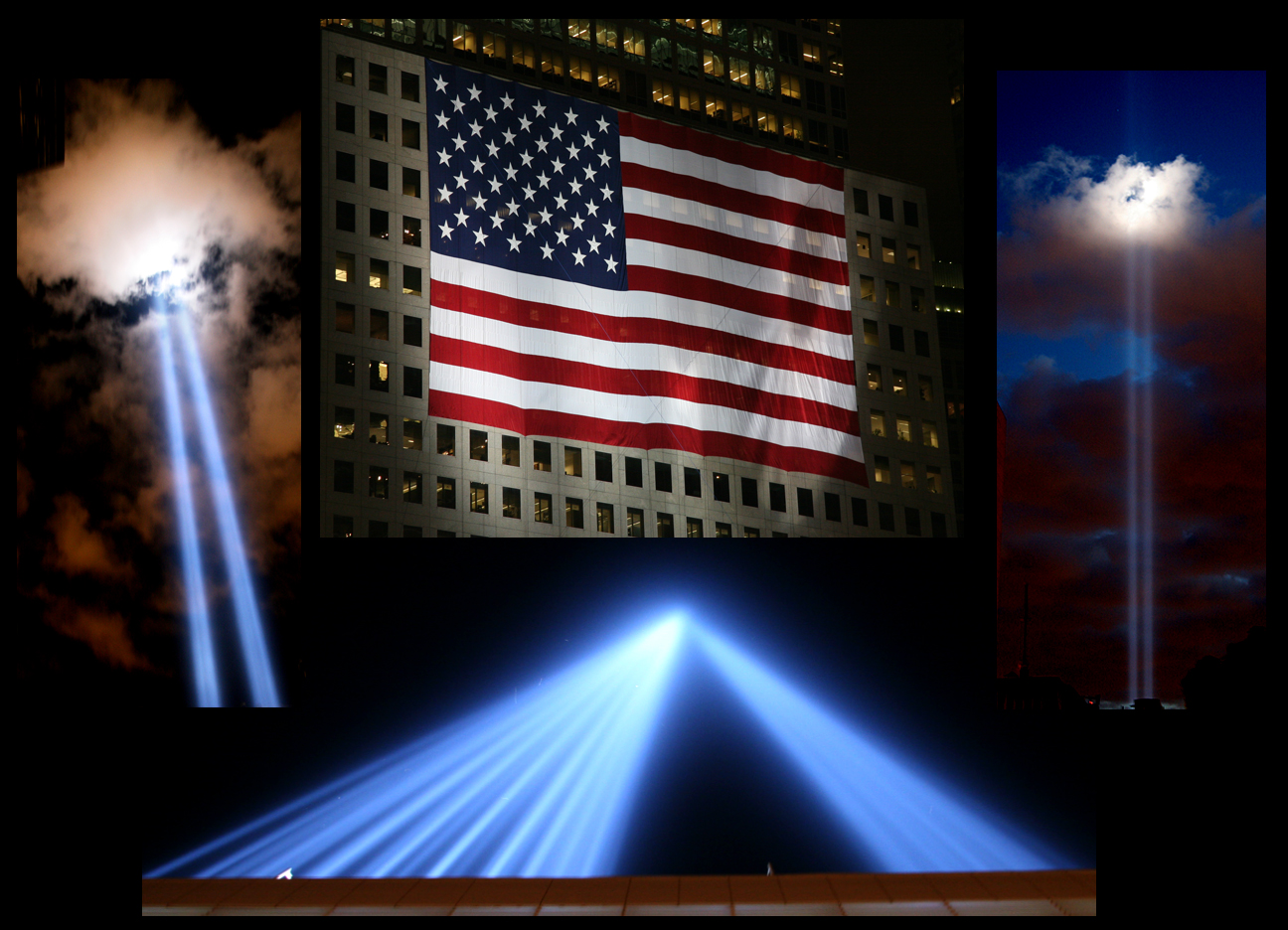
    A number of people asked why I put up no photos regarding the events of September 11 on Monday. I did take a number of photos and went to the actual site with a friend. However, I did not bring a tripod (an obvious mistake), and all the photos I took were handheld with long exposures. On reviewing the photos, I felt that they were too poor to post – there were thousands of great photos online – but friends who saw them (including three photographers) felt that I should post the better ones anyway, so here they are as a small collage.

    The illuminated clouds image on the right was taken from the Village. The other three were from the site itself. The two beams of light were visible from all over Manhattan, the boroughs, and New Jersey – they were not projected from Ground Zero itself but from the top of a parking garage just south, as seen in the bottom photo.


  • Pan Am Building

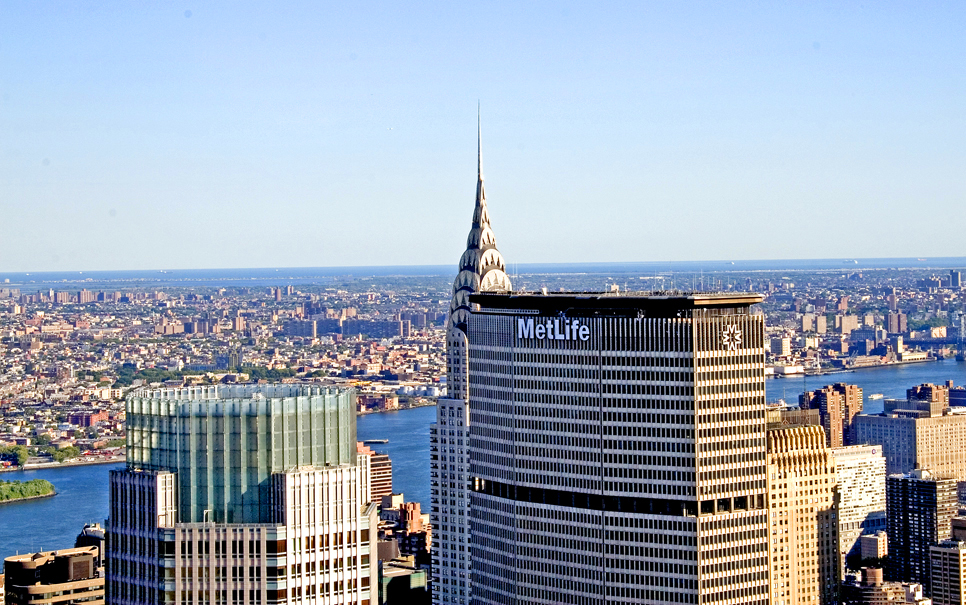
    I think of this as the Pan Am building – its name during my first years in NYC. Designed by Emery Roth, Walter Gropius, and Pietro Belluschi, it was the world’s largest commercial office building when it opened in 1963. The Pan Am building is located at 200 Park Avenue above Grand Central’s north shed. A controversial building – many have found it to be very unappealing, dominating the skyline from many nearby vantage points and occluding views such as that of the New York Central Building (now the Helmsley Building at 230 Park Ave.)

    It is perhaps best known for its helicopter service (it has a rooftop helipad). There was much excitement about their 7-minute ($7) flight to JFK airport, offered between 1965 and 1968 and reopened in 1977. However, service was closed after an accident that killed five people – broken landing gear caused a helicopter to tip over, killing four people waiting to board and a fifth person on the street with part of a rotor blade which had flown loose. Click here for a link showing early photos of the building with its iconic logo, including the helicopter service. And check out these photos showing stewardesses in uniforms from the glory days of aviation, when flying was a luxury and planes were not seen as a bus with wings, as they are today. More photos and an interesting article here.

    In 1981, the building was sold to Met Life. When Pan Am ceased operations in 1991, the Pan Am logo was removed and replaced with that of Met Life. Of course, revisionism rears its head after a loss (see this article from the NY Times). Apparently many now are less negative regarding the building now that time has passed…


  • MacDougal Alley

    This is the second of the Village alleys I am featuring. Most of the small buildings on this charming gated cul-de-sac were built in the 1830s as stables for the larger homes on Washington Square North and 8th Street, much as those on Washington Mews. As the well-heeled moved uptown, however, this alley became quite seedy.
    According to an article by Christopher Gray, the alley was rescued by sculptor Frederick Triebel in 1902; by 1906, the street was already a fashionable art district. In 1907, Gertrude Vanderbilt Whitney had a studio there and later established the Whitney Museum on 8th Street. There is a longer roster of well-known artists and sculptors who have resided here.

    Originally the alley went from MacDougal Street to Fifth Avenue until the behemoth 2 Fifth Avenue was built in 1955 (the large building in the center of the photo). MacDougal Alley had the last remaining gaslights in NYC…


  • dinamic_sidebar 4 none

©2026 New York Daily Photo Entries (RSS) and Comments (RSS)  Raindrops Theme