• Everything Looks Like a Screw


    Surgeons like to cut.
    I have always had a morbid fear of surgery. There’s just something about all that cutting that bothers me. However, I do understand that surgeons like to cut and I can imagine why. As a small manufacturer, I often have to troubleshoot products and there is nothing as effective as opening something up and getting inside to really see where the problem lies. Why play with less direct solutions if the problem lends itself to a mechanical solution?

    Builders like to build.
    Robert Moses was New York City’s master builder. He the most often cited figure in this website. This New York City planning czar had an unstoppable drive. He was never elected to public office, yet was responsible for the creation and leadership of numerous public authorities. He built bridges, tunnels, highways and shaped shorelines in New York City and environs.

    One of Moses’ projects which never came to fruition was the Lower Manhattan Expressway. This extremely controversial plan was to be a ten-lane elevated highway, I-78 & I-478, extending from the Hudson River to the East River, connecting the Holland Tunnel to the Williamsburg and Manhattan Bridges. It was seen by Moses as a much needed thoroughfare to ease congestion in Manhattan providing a roadway connecting traffic from New Jersey to Brooklyn and Queens. It was conceived by Moses in 1941 but delayed until the early 1960s.

    The highway plan would have required many structures to be demolished along Broome Street, passing through Little Italy and what is now known as SoHo. Community activists led by Jane Jacobs effectively thwarted the project. The effort is now seen by many as instrumental in preserving the character of lower Manhattan.

    Robert Moses and his works saw much public criticism. In 1974, The Power Broker was published. From the New York Times:

    He indicated no wish to change with the times, but held to his views more ardently than ever in his later years, dismissing community opposition to his vast projects by saying, as he did in a 1974 statement, ”I raise my stein to the builder who can remove ghettos without removing people as I hail the chef who can make omelets without breaking eggs.”

    The statement came in a much-publicized 3,500-word rebuttal that Mr. Moses offered to a highly critical biography of him by Robert Caro published in 1974, ”The Power Broker.” The exhaustive 1,246-page work, which won the Pulitzer Prize, was written from the perspective of the newer approach to planning and redevelopment, and it contended that Mr. Moses had callously removed residents of neighborhoods undergoing urban renewal, had destroyed the traditional fabric of urban neighborhoods in favor of a landscape of red-brick towers and throughout his career had worked somewhat outside the normal democratic process.

    Screwdrivers.
    Surgeons like to cut, lawyers like to litigate, and builders like to build. For someone with a screwdriver, everything looks like a screw…

    Photos: The upper photo is one of the supports of the Manhattan Bridge as seen from the walkway. The lower photo is a plan of the proposed Lower Manhattan Expressway.

    Note: It is ironic that Robert Moses, a man who favored highways over public transit, did not hold a driver’s license.

  • Bamboo Big as Pipe


    I have had a small obsession with bamboo for decades. Like palm trees and tropical islands, they are things rarely associated with New York City, so I have had to travel and explore to feed the passion. In the 1980s, my fascination with bamboo reached its apex. I purchased a hard cover coffee table book on bamboo, helped my father fabricate bamboo fly fishing rods and sought out bamboo bonsai at the Brooklyn Botanic Gardens.

    The pièce de rĂ©sistance was a trip to the island of Nevis in the West Indies, where I sought out my ultimate dream – a bamboo forest. My sister and her husband, who were traveling with me at the time, however, did not share my dream, but tolerated it, hoping that after an excursion, I may regain my sanity and normalcy. I did.

    On such a small island, networking to find services is virtually an effortless process. Shortly after arrival, I was able to find a local guide who would take me to a tropical jungle. This was easy, but the most imperative for me was whether or not we would see bamboo in its native habitat. He assured me yes, I would see “Bamboo Big as Pipe.”

    Bamboo is a remarkably versatile material and is used in furniture, flooring, molding, fencing, textiles (I have a bamboo t-shirt), paper, as a food, musical instruments, to build homes, scaffolding, even bamboo bicycles. All taking advantage of many unique properties of the wood – it is denser than oak, harder and lighter than maple. It is very attractive, distinctive and maintains well. It is stronger than wood, brick, concrete and steel and less expensive than many other woods. Unlike many trees, which can take 20-50 years to mature, bamboo takes only about five years, making it environmentally sustainable – this is the big plus from a marketing and consumer perspective. Some are calling this wonder grass the super material of the future.

    The appreciation and use of bamboo with related imagery permeates Asian cultures. This is true to a much lesser degree in the United States, however, I am not the only New Yorker to enjoy the symbolism of bamboo – scores of restaurants, spas and other shops use the word bamboo in their name.

    Recently, I found a retail store display of bamboo cutting boards. Nearby were two signs – one promoting bamboo as eco-friendly and the other, “why use bamboo?”, featured 5 bullet points: renewable resource, resists odors and bacteria, naturally beautiful finish, harder and lighter than maple, stronger than steel. At a number of home furnishing shops I am seeing more bamboo furniture.

    I am happy to finally see bamboo sprout all over the city in so many ways, helping to complete the overused but apt metaphor of New York City as the concrete jungle. No need to travel to the forests of Nevis – just look up and imagine Bamboo Big as Pipe 🙂


  • Room and Board

    Posted on by Brian Dubé


    When in high school in the late 1960s, I worked many part-time jobs, including McDonald’s. The working environment was brutal by today’s standards. At McDonalds, there was Zero tolerance for idleness – we had to remain moving at all times. If we had no customers, we were to clean and if there was nothing to clean, we were to clean again. And again. No exceptions.

    The manager would stand, arms crossed, in the center of the dining area behind the customers. If there were any lines, the manager was extremely displeased. Regardless of customer volume, and whether it was humanly possible to serve quickly enough to eliminate lines was of no matter. We would hear the terrifying “I see lines, gentlemen.”

    In this work environment, it would be hard to imagine an event momentous enough to warrant the entire staff taking a break. The world’s first manned moon landing on July 20, 1969 was just such an event. Someone had brought a small black and white television, placed it on the counter to see the moment Neil Armstrong take that first step onto the moon’s surface. The entire staff and group of customers all watched in silence for what was one of mankind’s greatest technological achievements, fulfilling President Kennedy’s vision nearly a decade earlier. We heard Armstrong say “That’s one small step for man, one giant leap for mankind.” And then it was back to work – customers were waiting.

    Although the deployment of technology was not perhaps as rapid and voluminous as what we have today, it was still an exciting time and the appetite for the newest and latest was as ravenous as it is now. With a smaller number of consumer product innovations, many new things were given attention, things which in today’s environment would likely be overlooked. It seemed everything had to be improved, and in some space age manner, if at all possible.

    One of these was 3D chess, where 3 or more chessboards are stacked above one another. A variant, Tri-D chess, was seen on the first series of Start Trek in the late ’60s. It was during this time that someone introduced the game to our high school chess club, of which I was a member. Most of us, however, saw it as rather gimmicky, adding complexity to a game which already offered enormous challenge and which diluted the beauty and classicism of the 2D version of the game.

    Chess is commonly seen played in the streets and parks of New York City, sometimes with makeshift setups. The resourcefulness of New Yorkers and their willingness to accommodate never ceases to amaze me. Here we have a world class city fully immersed in the technology of our time, yet should the conditions require it, there is a willingness to do whatever is necessary to achieve an end, regardless of how primitive the solution. At times, New Yorkers can be like spoiled children, but when duty calls, we can, like most people elsewhere, rise to the occasion.

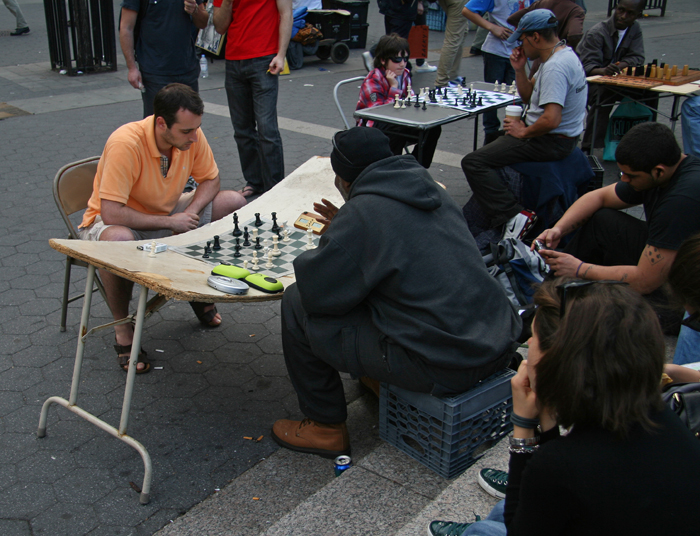
    In today’s photo, we see a player in Union Square Park with a milk crate for seating and a table so bowed it clearly demonstrates that to play 3D chess in this city, if the money, means or technology is not available, a New Yorker only needs a little Room and Board 🙂

    More Chess Stories: Good Fortune, Chess Monsters, Marshall Chess Club, Solid as a Rock, WFF ‘N Proof, Xiangqi, Guns or Big Heads.

    Posted on by Brian Dubé

  • Who Can Believe It?

    Posted on by Brian Dubé

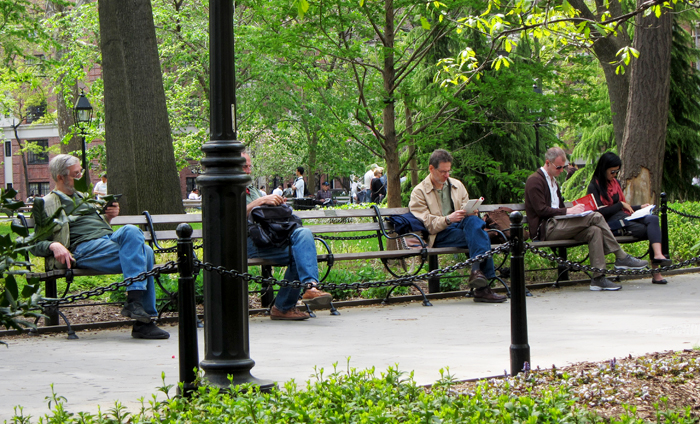
    Many cling to the remnants of things whose lives are fast diminishing or have diminished – technologies made obsolete and things that technology has made obsolete. We look for stability in a world of change, and as physical beings, we like physical things – it gives us comfort. We are tactile, and for many a reader, the feel of paper and the benefits of print are still preferable.

    One area in transition is that of books, newspapers, magazines and other printed matter. Perhaps it is a small act of defiance or display of iconoclasm, but the avid readers I know have all stated a preference of print over ebooks or other electronic versions of print media.

    This year it appears that ebooks are having a serious impact on the print business. According to the Association of American Publishers, in February 2011, ebook sales in the United States for the beginning of 2011 were up over 200% over the same period in 2010 and were the top selling format in all categories for the first time in publishing history. This one-month surge is primarily attributed to a high level of strong post-holiday ebook buying, or “loading,” by consumers who received the devices as gifts. However, industry experts now feel that it is no longer a matter if ebooks will overtake print, but when. The shift may not occur as dramatically or as completely as did vinyl records to CDs. The tide will turn when critical mass is achieved, or the tipping point, as Malcolm Gladwell may have it.

    Coming on the heels of this trend, my recent foray into ebook publishing (along with a purchase of a Kindle and Nook) and given the relative affluence of many New York City residents, it was ironic to see the row of book readers in today’s photo with not an ereader in sight (or was there one being used by the man behind the tree?).

    For the avid reader, a library can be a source of pride and show that a lover of books and reading is near, with the selection as a barometer of interests. Guests can peruse and discussions are inspired. Works of non-fiction and those that are photo heavy can be shared and circulated. A work like Ulysses on the shelf makes a strong statement as well as lively discourse.

    I feel great comfort and security surrounded by books. A library is an arsenal, with books as firearms and words as ammunition, all serving well to protect and defend against ignorance. What are we to do now? If I tell you that I have an enormous library all on a tiny electronic device on a coffee table and that I have read most of the books loaded on that ereader, will that be adequate evidence? Will you trust me or will you see me much like the huckster selling strawberries, whose refrain now you will repeat – who can believe it? 🙂

    Posted on by Brian Dubé

  • Really Long Shoes

    Posted on by Brian Dubé

    I have always been envious of horses who can sleep standing up. As I have tried to cram more into my life, I have contemplated for years how useful it would be to acquire the ability to sleep while standing. In addition to the short naps one may take at various times and places while sitting, now, sleep could be had while in the most inauspicious circumstances.

    And one can certainly learn to tune out the environment, even in New York City. I recall attending a talk where a well known yoga master was speaking of relaxation and meditation. He was making the point that the conditions for relaxation did not depend on a serene environment – he cited the enormous number of people that sleep on the streets of Calcutta daily, oblivious to the world around them.

    Add sleep deprivation and exhaustion to facilitate sleeping in atypical places and positions. I once read about patients complaining to a doctor that they were at wit’s end because they constantly felt sleepy. Upon inquiring about their sleep habits, the physician would typically learn that the patient was only getting a few hours per night. The remedy was simple – they were sleep deprived and just needed to sleep more.

    I have of late been guilty of getting too little sleep. I find myself falling asleep in places – like sitting up in restaurants, sometimes woken by food being served. Or at my desk in my office, home, or in parks. Or worse – while driving. As a child, I went through a period of occasional sleep walking, good early training for a life of too much to do and not enough time to do it. So, in one way or another, sleep has been one part of my multitasking activities – whether attempting to walk and talk while sleeping or sleep while working, dining or driving.

    I have never seen a more convincing and peculiar example of sleeping while standing than our photo subject in today’s photo. A feat that many deem impossible seems to have been achieved by just a handful of adaptations – super long shoes to provide a good base and what appears to be a horrific posture evolved over time to become S-shaped, providing a place to rest one’s head, much like the flamingo who sleeps standing on one leg. This man was taking catnips while onlookers stared in disbelief. While awake, his posture was not markedly different, seeming always to be poised for the next nap.

    I think I am ready now. Inspired by our photo subject, I see that what I thought was impossible may be possible. I only need to undo all the learning and efforts of others to maintain good posture. And I think you have to have a pair of really long shoes 🙂

    Posted on by Brian Dubé

  • Lonely in a Crowded Room

    Posted on by Brian Dubé

    There was always a bit of drunken revelry – such were the times and so was my family. Alcohol provides not only a social lubricant, but often social embarrassment. Now out of harm’s way, those times provide rich fodder for stories never told.

    Those parties were some of the highlights of my sisters’ and my childhood. Family was involved and so they were much more than parties, they were reunions. The affairs I have attended at gallery openings and such in New York City always feel so vacuous to me. Admittedly, their function and the attendees reasons for attending are entirely different, but nonetheless, I cannot help but feel disappointed.

    One trend in retail in recent years is the pop-up store or gallery. As our economic times worsen, many businesses look for new ways to market existing brands, feature new products, sell seasonal goods or just make some needed cash with reduced rent in a temporary space. Marketers are all looking to create buzz these days, and in Manhattan, many of these pop-ups will certainly create some buzz.

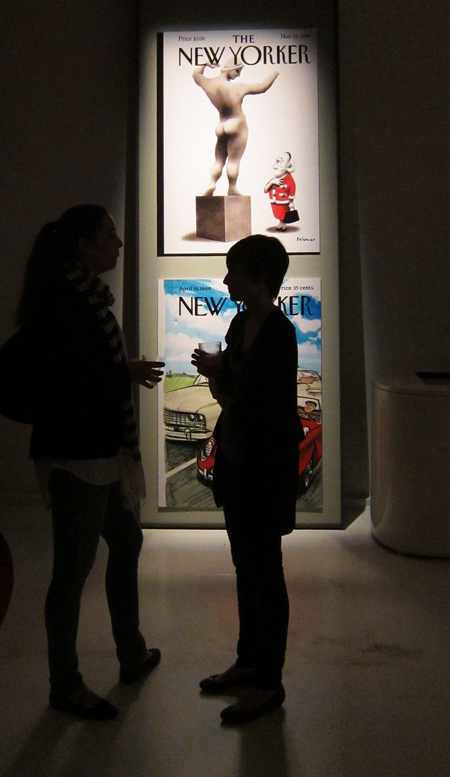
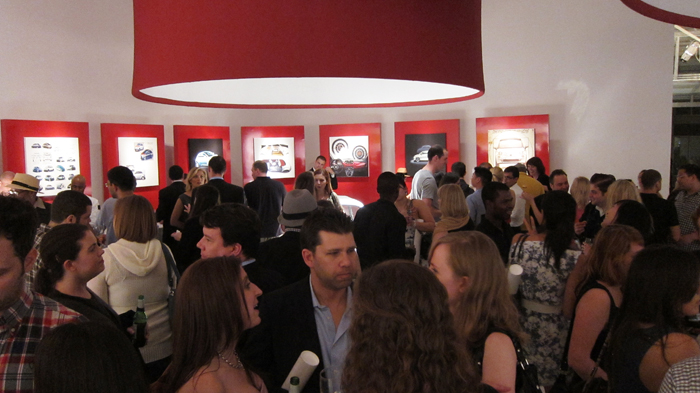
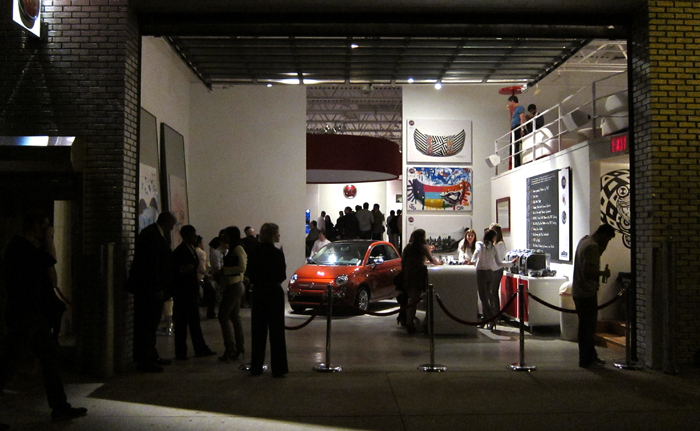
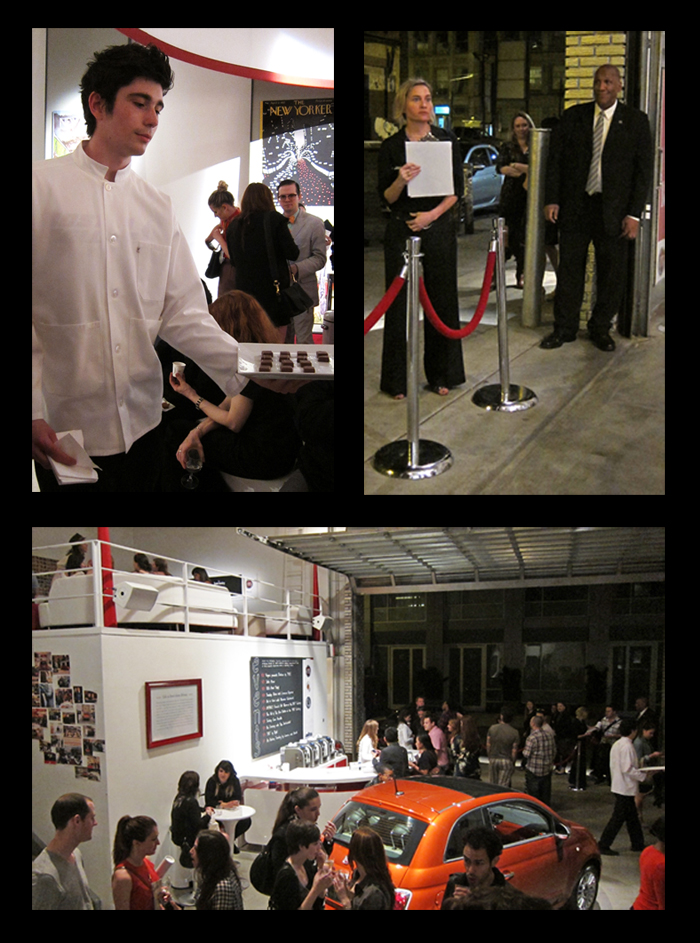
    I strolled through SoHo with a friend when returning from our expedition to Nom Wah Tea Parlor in Chinatown (see Part 1 here). At 18 Wooster Street, we stumbled upon a major soiree in full swing, with the gallery’s front completely open to the street. It was a Fiat pop-up store. The front was cordoned off and the entrance guarded by the requisite bouncer and a woman with the guest list. There are the practical concerns of controlling attendees, however, I suspect the greater reason for admission is to create the illusion of exclusivity and desire to get in, a technique employed for decades in private clubs. After all, what retailer really wants to restrict admission to their showroom?

    When we arrived, however, there had been a break in policing the gate and we were encouraged by a bystander to enter. The place was replete with booming music, fashionistas dressed to the nines, hors d’oeuvres and snacks on immaculate trays offered by formally dressed servers. There was all manner of meeting, greeting, eating, drinking and flirting.

    Oh, and yes, there were a few that looked at the new Fiats. A few snacks and the feeling for a few minutes that I was worthy to be at an event so important was enough. But really, deep inside, I was anxious to go home. There was no better evidence of how someone could be lonely in a crowded room…


    Posted on by Brian Dubé

  • Rattus rattus

    Posted on by Brian Dubé

    I am very disappointed to learn that the species of rat most common to New York City is the brown rat or Rattus norvegicus and not the black rat, Rattus Rattus. The repetition of genus and species seemed to fit so nicely with the popular: New York, New York, so nice they named it twice.

    The rat commonly seen in New York is the brown rat (Rattus norvegicus), aka the common rat, sewer rat, Hanover rat, Norway rat, Brown Norway rat, Norwegian rat, or wharf rat. It is one of the world’s most common rats. The name is actually a misnomer as they do not originate from Norway. After human beings, the rat is the most successful animal on the planet, having inhabited virtually every country and land mass. Read more here.

    Rat is also used to characterize New York’s landlords and store owners – see the use of the large inflated rat in my story Attention. For those who want to embrace the rat in order to appear edgy, there are establishments that use the rat for imaging and naming, such as the trendy SoHo shop Yellow Rat Bastard. According to the New York Times:

    When the flagship store opened in 1994, it installed cages with several dozen rats in its front window to create buzz. The rats were eventually removed from the window, but many employees said the rats continued to run around the store and the basement storeroom.

    The shop encouraged graffiti artists to tag the exterior of the shop. Ironically, in 2008, the store agreed to pay $1.4 million to settle a lawsuit over unpaid wages and overtime, paying back wages to more than a thousand employees.

    We have so many rats in New York City, that in a way it is a shame we do not have our own species. It would be so befitting of a city with such a large ego to be able to lay claim to Rattus rattus

    Photo note: I ran across the piece of graffiti in the photo on East 2nd Street in the East Village.

    Related Postings: I have done numerous stories on rats: i’m lovin’ it, Rats Gone Wild, Rats R Us, and Wildlife Control.

    Posted on by Brian Dubé

  • War Against Disservice, Part 2

    Posted on by Brian Dubé

    (see Part 1 here)

    I was discussing with a friend, Hellen, the extraordinary service I was experiencing at a local Indian restaurant I was frequenting at least once per week. The staff was now treating me like family. When the owner, Chandra, is present, I am not even given a menu – we only have a discussion. I am offered items not on the menu, free appetizers, and dessert. In short, the experience was now tantamount to eating at home.

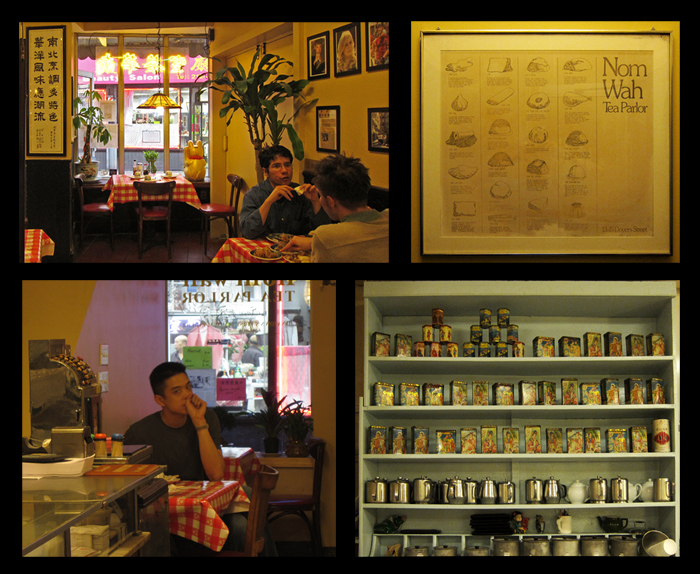
    Hellen told me of her own recent experience at Nom Wah Tea Parlor in Chinatown, where Wilson, the owner, was also personally very attentive to a customer’s needs. In Hellen’s case, she requires a gluten-free diet, a tough call in a Chinese restaurant, which, sadly for her, is her favorite cuisine. On her first visit, Wilson sat with Hellen and went over her dietary needs and food preferences. She is now a happy camper indeed, and she and her husband are regulars at Nom Wah. She was eager to share her discovery with me. Weekends are quite busy, so we chose a weeknight which gave me the opportunity to meet the owner.

    Nom Wah’s specialty is dim sum, a Cantonese-style cuisine involving small portions of food – various types of steamed or fried buns, dumplings and rice noodle rolls, filled with a variety of ingredients, including beef, chicken, pork, prawns, and vegetables. The small portions enable diners to sample a wide variety of food items. The meals are invariably eaten family style. Traditionally, dim sum was served from steamers on trolleys, wheeled through the restaurant. Nom Wah now uses a menu and checklist system where items are checked off and submitted with one’s order. Nom Wah also offers a broader menu for those wanting dishes other than dim sum.

    Originally dim sum was meant as a snack but now has become an entire meal. It is typically served from early morning until mid afternoon and is often a weekend family outing. Nom Wah is unique in that it serves dim sum for all its operating hours. Tea is a big part of dim sum – the overall dining experience is known as yum cha. Nom Wah has an extensive tea selection as well as dessert items and their almond cookies.

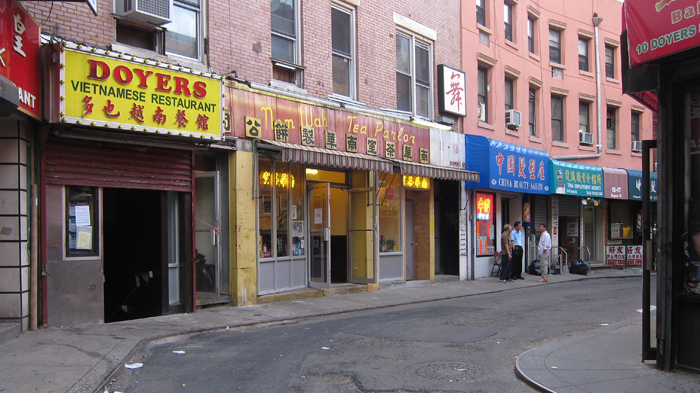
    Nom Wah Tea Parlor is a 90-year-old establishment located at 11-13 Doyers Street. Nom Wah Tea Parlor first opened at 13-15 Doyers Street back in 1920 as a bakery and a tea parlor. Wally Tang, who worked there since 1950, purchased the restaurant in 1974. Wilson Tang, his nephew, took over the business and renovated in 2010. preserving the vintage look and ambiance, keeping the fixtures and decor of the original establishment with its bright yellow walls, red and white checkered table cloths and antique tea tins. A poster by Milton Glaser hangs in the vestibule. See the Nom Wah website here.
    The exterior is a wonderful throwback with its faded red and yellow sign, awning and Chinese characters. Porcelain lucky cats wave from the behind the windows.

    Wilson, now 32, comes from a mixed background of finance and food service, working some years for Morgan Stanley and ING Direct. He also owned and operated a bakery in the Lower East Side for 5 years.

    Might Wilson be the type of person that really goes the extra mile? On Friday morning, when writing Part 1 of this story, I was curious if I could get Wilson’s take on the restaurant service experience I had in the Chelsea restaurant. I sent an email at 7:40 AM leaving my phone number – I received a reply at 7:50. He was leaving for work and on exiting the subway, a few minutes before 9 AM, Wilson called my home and discussed his take on my story. A number of additional emails were exchanged that morning. Here is his email response regarding the Chelsea incident:

    Brian,

    To answer your question, as a restaurant owner, I would never have any dispute with the customer. If there was a mistake with the food, I would always comp the item or do whatever they wanted to ensure that they are completely satisfied. In the restaurant business, it is very important to have repeat customers whose positive experience will spread with word of mouth. It’s not worth the few bucks of food cost that can turn the experience negative.

    Wilson’s policy is that of the fine dining establishment which will comp an entire entree if a mistake is made. Atypical perhaps for a lower priced eatery, but Wilson knows that there can never be too many examples of good management and that it will take many battles and warriors to win the War on Disservice 🙂

    Posted on by Brian Dubé

  • War Against Disservice, Part 1

    Sometime in the early 2000s, I experienced one of the most outrageous acts of customer disservice I have ever seen. A old friend, Jim, was visiting New York from San Francisco on business. We had been college roommates and he had lived here for a number of years. Jim loved the city and, like most, looked forward to the restaurants. My girlfriend suggested a trendy place in Chelsea, so we went.

    Jim ordered a pasta dish and was served a pasta dish with seafood. Before Jim discovered the error, the waiter had run off. Jim was an experienced world traveler, very easy and accommodating. He would eat just about anything and was not a complainer. The place was very busy and rather than send the dish back, Jim just ate it.

    When our check was delivered, Jim politely pointed out the mistake and asked for an adjustment of the bill. The waiter noted that Jim had eaten the entire meal and asked if he had liked it. Jim said yes. The waiter said that it was their policy that he had to pay for what he ate. We suggested we speak to the manager who said that if we had informed them of the mistake when being served, they would have replaced the dish and billed us the proper (lower) amount. But since Jim had eaten it, he stood by their policy and we had to pay the larger amount, a difference of about $3. I was OUTRAGED. But Jim paid and we left quietly.

    Most restaurants would have made the adjustment and even offered a free dessert or drink. Some may even have taken the entire item off the bill. Jim was more than happy to pay for what he ordered, only asking for an adjustment. For this small amount, the management would stand on “principle” and risk their reputation. It was so petty and certainly the restaurant would still make a profit on the meal. Or perhaps the issue was that we were seen as scam artists or liars?

    I have retold this story a number of times to various people and gotten a number of opinions, some defending the management. A former waitress said that a business has to guard against customer abuses, that it may get out of control. I see – so we go from the customer is always right to the customer is always suspect?

    Ask the management at B&H Photo what they think. I once returned a laptop, only to learn that laptop computers are one of the few items that are not returnable. I had, however, been told originally that it was returnable. A salesperson suggested I speak to the department manager. I was reluctant to bother asking, but decided to ask before I left.

    I found the manager, who asked for my receipt because it was encoded with the original salesman’s ID. He went off. When the manager returned, he told me that he had found the salesman and asked him what the policy was for returning laptops. The salesman told the manager that there was a 14 day return like all other products.
    Since I was misinformed, B&H was giving me full credit. He explained the reason for the policy: once used, a technician has to completely recheck a PC – software installations, hardware function, etc. The manager said that they would put the item in their used department, losing a few dollars. I felt badly, but he insisted and I was not to worry – it was their mistake.

    There are also restaurants whose owners value the customer very highly. Fortunately, not all operate like that place in Chelsea. It is in some of these establishments in New York City that a small war is being fought. In Chinatown on Doyers Street, once known as the Bloody Angle owing to gang warfare, there is a man engaging in a different kind of battle. In Part 2, you will meet him and learn how he is helping to win the war against disservice 🙂


  • She’s Too Tough to Care 2


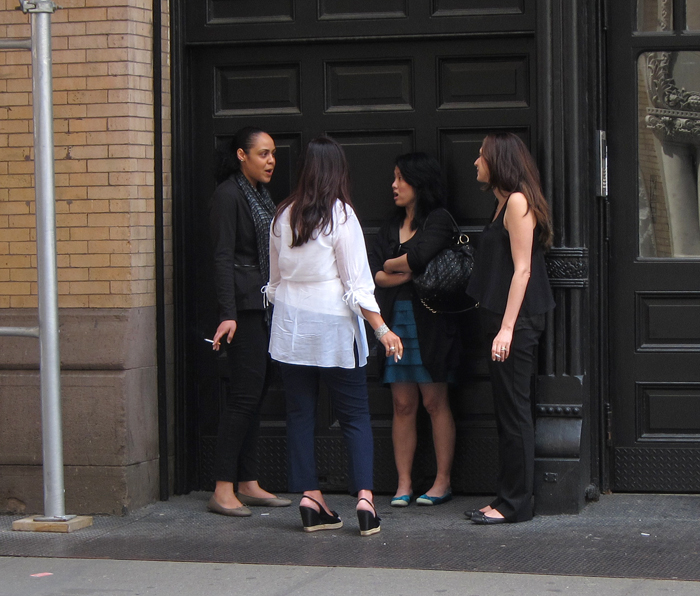
    Furtive glances at onlookers and passersby, foolishness thinly veiled as toughness. Packs of cigarettes going for as much as $14.50 each. Street dealers trading in “loosies” – cigarettes sold individually.

    In New York City, smokers on breaks huddle in doorways and alcoves in the streets, almost like common criminals or social pariahs. The walls are closing in rapidly. Effective May 23, 2011, smoking will be banned in all parks, boardwalks, beaches, recreation centers, swimming pools and pedestrian plazas. On April 1, 2003, smoking was banned in New York State in all enclosed workplaces, including all bars and restaurants and construction sites. Even France, considered by many the last bastion of cigarette smoking, banned smoking in public places in 2007.

    At one time, as opposition mounted and the negative effects of secondhand smoke were becoming known, there were debates about the freedom to smoke. There were even accolades for the joy of smoking. Empty words now. Many who have smoked (I did for a short time in college) will agree that joy neither lures people in nor keeps people habituated. The difficulty of quitting and withdrawal drives this more than anything else. Although I do not drink alcohol, and it remains a huge drug problem, a glass of wine with dinner is pleasurable and in moderation, alcohol may not be harmful.

    When I was young, cigarette smoking was permitted and tolerated virtually everywhere. Even those who despised smoking and had no smokers in the household, kept ashtrays and begrudgingly allowed guests to smoke in their home or car. It was considered courteous to accommodate. There was smoking in planes, trains and doctor’s offices.
    Efforts to discourage youth from smoking were ineffective since this was one of the major rites of passage to adulthood and an act of defiance for the very young. Movies like He’s Too Tough to Care, written comedically in an effort to be less preachy, were equally ineffectual. See She’s Too Tough to Care here.

    I enjoyed this New York Times headline from January 21, 1908 regarding the passage of the Sullivan Ordinance making it illegal for women to smoke outdoors:

    NO PUBLIC SMOKING BY WOMEN NOW; The Sullivan Ordinance, to be Passed by the Aldermen Today, Makes It Illegal. WILL THE LADIES REBEL As the Ladies of New Amsterdam Did When Peter Stuyvesant Ordered Them to Wear Broad Flounces?

    The ordinance was enforced – Katie Mulcahey was arrested on January 22 – however the law was vetoed by NYC Mayor George Brinton McClellan, Jr. two weeks after passage.

    With the Sullivan Ordinance far behind us, here on Spring Street, it’s another sequel to She’s Too Tough to Care 🙂


  • Too Too New York

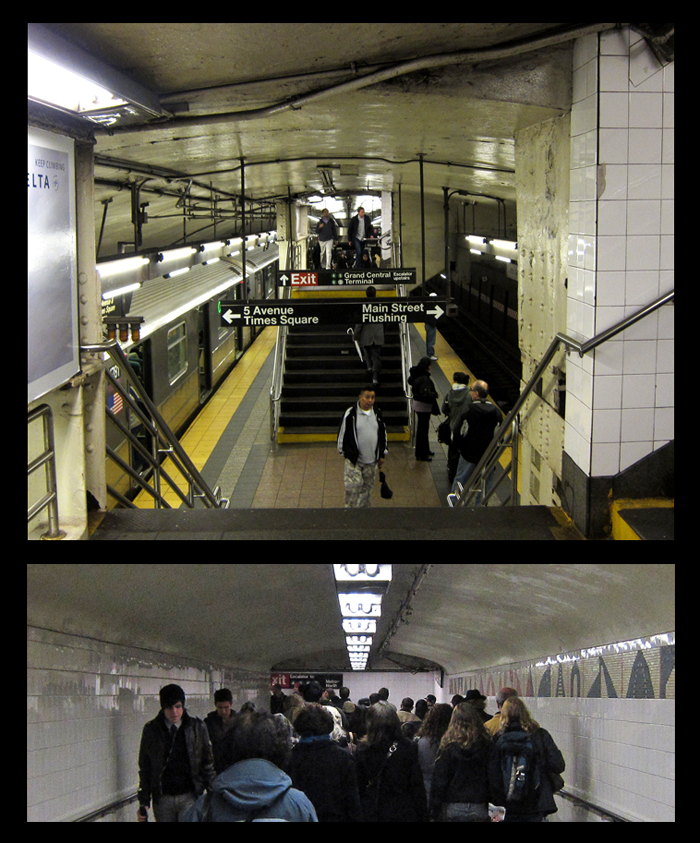
    A New York comic: “Are any of you here from out of town? Yes? For those of you unfamiliar with the subway, it’s an underground system of urinals connected by trains.” Perhaps I should add, “patrolled by rats.” 

    There is little that says New York like the subway system, lying just beneath the city’s surface, acting as its central nervous system. Trains and train service is a highly contentious subject, often maligned and frequently praised. Its failings are many as are the reasons for the problems. One reader response to a subway article on Gothamist says:

    The NYC subway system is evocative of some third-world country.
    All you need are some goats and chickens in the subway cars to complete the picture.

    Perhaps the most common word used in explanations regarding things that ail New York residents and visitors is TOO. Many have commented as I have over the years of how nice it would be to have subway trains with rubber tires as do many other cities. However, a transit authority spokesperson said it was not possible – too much wear and our trains are too heavy.

    The enormous number of people in a non-heterogeneous mix is one of the key factors to make New York what many tout as the greatest city in the world. Of course, population size alone does not insure greatness, but it certainly is a contributing factor, providing support for a seemingly endless number of services, businesses and cultural opportunities. How else could you support the world’s only 24 hour subway system? But there are numerous serious issues, not the least of which is that it is literally deafening – noise levels in the Spring Street station running the Lexington Avenue line having been measured at 105 decibels (see article here). Noise at this level for one or two minutes each day can do permanent hearing damage over time. For now, too bad.

    The New York City subway is one of the world’s cheapest rides. Many feel that cost and the 24/7 service trump all negative concerns. But for others, the TOOs are a deal breaker: too dirty, too loud, too hot in the summer, too dilapidated, too outdated, too smelly, too crowded, too many stairs, too confusing, too many shutdowns and reroutings and too few attended token booths. Got to go now. I hear a train coming and it’s screaming TOO TOO New York 🙂


  • Christ Is Risen


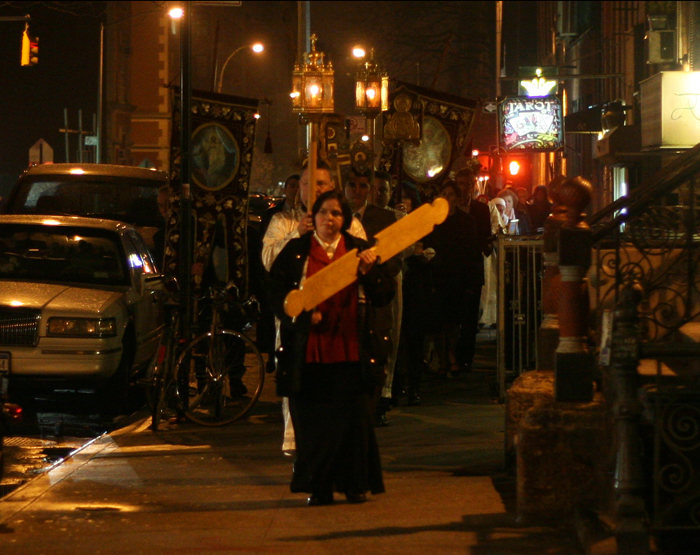
    It was suggested by a friend that I may want to attend, photograph and write about the Eastern Orthodox Pascha Vigil at the Cathedral of the Holy Virgin Protection located at 59 East Second Street in the East Village. He assured me it would be quite the fete and it was. The celebration begins at about 11:30 PM and typically goes on into the wee hours of the morning. I stayed only until 1AM, forgoing the later festivities.

    To see a procession of an Orthodox religious group in a neighborhood that historically has been the epicenter of the counterculture for such a long time is one of New York City’s great juxtapositions. However, from a much longer historical perspective, this congregation comes as a lesser surprise. Prior to the 1960s, this area was essentially the northern reaches of the Lower East Side, inhabited by a number of immigrant groups, notably Germans, Poles and Ukrainians. There are still remnants of these cultures in the populace and architecture – see Lone Voice here.

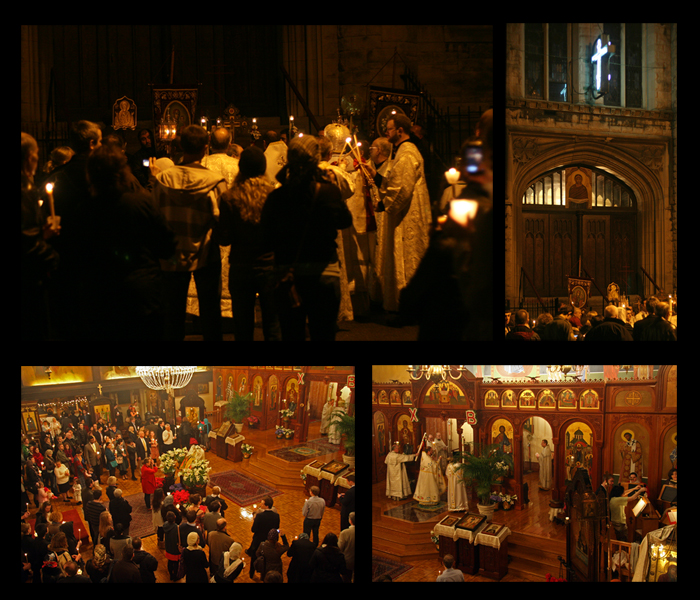
    The Eastern Orthodox Easter celebration begins on Holy Saturday, i.e. the night before Pascha (Easter), where the Midnight Office is served just before midnight in darkness. At midnight, the priest censes the Holy Table and all exit the church to the streets for a crucession around one city block. In the ultimate contrast, the group passes the NYC Hell’s Angels clubhouse. I understand the church stands in good stead with the Angels – one of the club members has a girlfriend who belongs to the church.

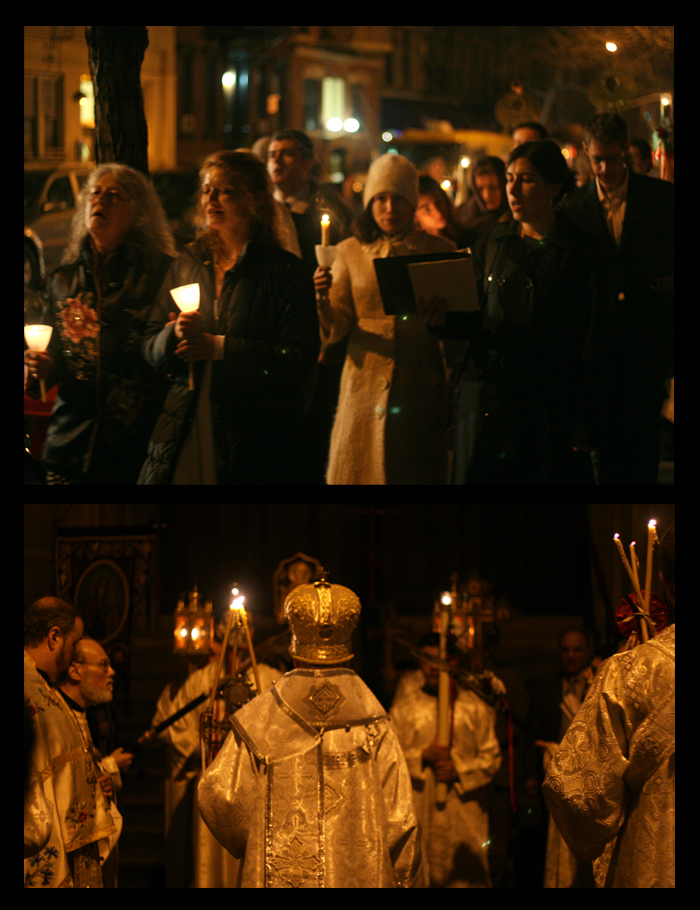
    The procession returned to the front doors of the church where the chief celebrant gave the blessing for the beginning of Matins (early morning prayer). The Paschal Troparian is sung and everyone reenters the church, where all is brightly lit and exultant, with singing and plenty of Paschal greetings, Christ is risen!

    The entire celebration was extremely ritualistic and formal, quite a departure from the iconoclasm and unorthodoxy found in this part of the city. The prevalence of organized religion in New York City, particularly the various orthodox sects, always comes as such a surprise. In light of urban cynicism, the large numbers of New Yorkers who are members of religious faiths is remarkable. I wrote of this in We Got Religion and Come Together.

    People of all walks of life were in attendance. I put aside any critical thoughts and theological meanderings and let the good feelings of celebration wash over me as I reflected on the power of words, symbols and what it means to the men and women of this faith to say or hear Christ is Risen…


  • Birds of a Feather Tied Together Part 2

    This is Part 2 of a two-part story. See Part 1 here.


    On March 5, I attended Pratt Institute’s annual juggling festival (sadly, their last). I have attended many of these over the last 36 years of business and in many ways these events are like family reunions to me – an opportunity to reconnect with many customers, some of whom I have known for decades.

    This is a subculture and over the years, other subcultures allied themselves, particularly the poi and fire spinning community and most recently, hoopers – see Viktoria’s Secret here and Supercute here. Many are part of the Burning Man community. The festival was held in a large gym and from time to time I would circulate, invariably meeting newcomers.

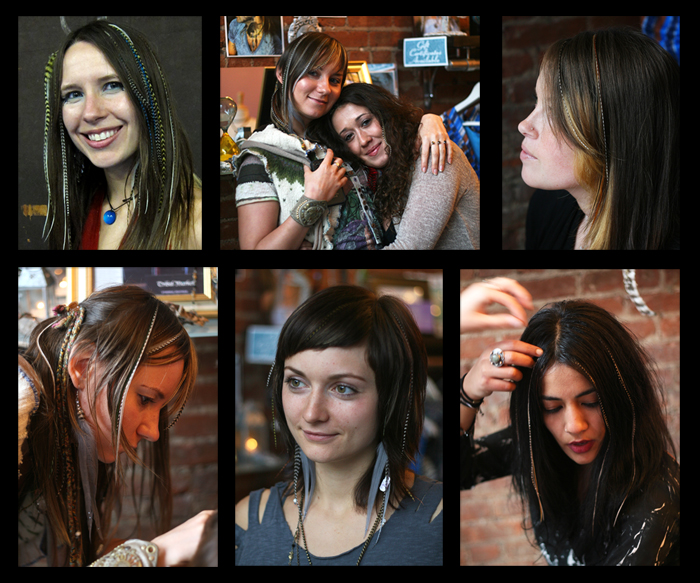
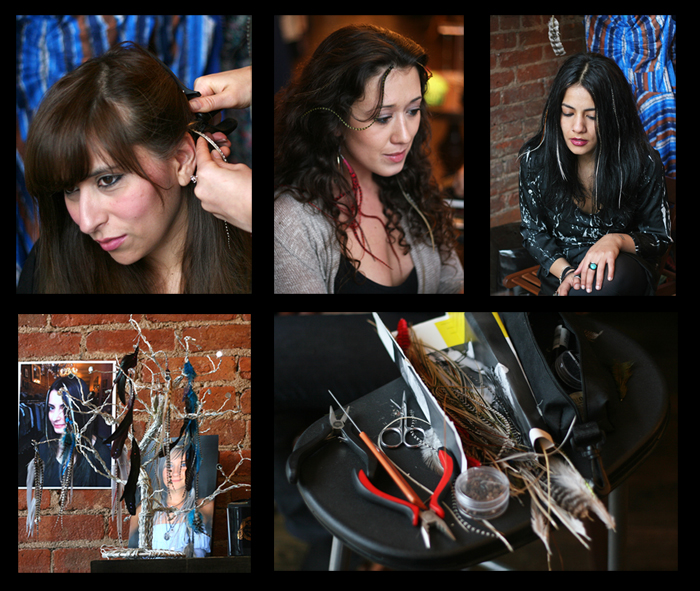
    My eye was drawn to a small group where hair was being examined. I made the acquaintance of Allison Kocar (upper left photo) who, it turns out, was a customer and had been to my showroom but I had never personally met. She was engaged in conversation about her hair extensions which I found extremely striking. I learned that these were rooster feathers, dyed various colors.

    I wanted to learn more and do a story. I asked her who does this type of hair installation. She knew of a couple of women. We exchanged emails and within a few days received two names. I chose to contact Masha Lunara – the name sounded intriguing. Masha was extremely receptive to my request to photograph a session. On Saturday April 16, she arranged an afternoon with six models.

    Everything was set, and I left for for a boutique located at 47-38 Vernon Boulevard in Long Island City, Queens. I had expected a hair cutting salon, but found instead Ethereal L.I.C., a clothing boutique. I was expected, I was greeted by Adriana the owner and asked if I was the photographer. Masha had called, concerned she was running a little late. No matter to me, it was a rainy day and I had set aside the afternoon.

    Masha arrived, quite feathered and easily mistaken for a bird. She explained that for her, this was a spiritual process and that she typically sets up her work space as a virtual altar. Over the course of the afternoon, six women had hair extensions done. The variety of hair styles and colors ran the gamut. Decisions had to be made jointly by both the client and Masha – how many feathers and what color(s). I had full cooperation in a controlled environment, so taking photos was a pleasure. See my photo gallery here.

    For some reason I had expected the environment of the hair stylist – running water, shampoo etc. However, the process involved only a few special tools and supplies – pliers for crimping, small tubular silicone coated micro links, hair clamps, a hair hook threading tool, scissors and hair clamps. Hair and a feather are slipped through the micro beads and crimped in place. They can be easily moved or removed.

    Feather extensions can be washed, blow-dried, brushed or even curled. They can last up to several months. I can understand the attraction since the extensions are semi-permanent and not damaging to the hair in any way. The end result is quite natural looking and when using undyed feathers and matched to a woman’s hair color, blends nicely.

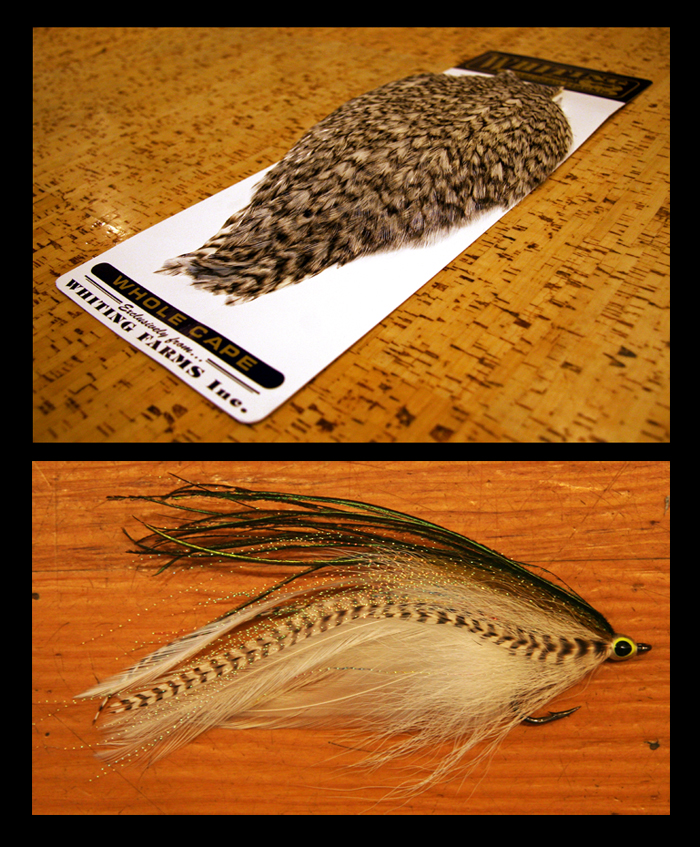
    Two and a half hours, the pleasant cooperation of six women and 111 photos later and I should have been satisfied, but I was curious about this rooster business. Perhaps I would be able to find a nearby rooster farm to take photos and include in this story. However, some investigation and I quickly learned that these were not ordinary rooster feathers at all. And all roads seem to lead to Whiting Farms in Delta, Colorado.
    My call of inquiry was met with a very pleasant response. I did not expect to speak to the man, however I was told that Tom preferred taking these calls himself. I called the next day – Tom was extremely congenial, apologizing for not returning my call the previous evening as it was too late. He answered all my questions along with follow up emails.

    Tom Whiting holds a PhD in poultry genetics. The roosters are bred specifically for the fly fisherman. The Whiting line derives from the genetic stock of early pioneers in breeding for dry flies: Hary Darbee, Andy Miner, Ted Hebert and Henry Hoffman. In 1989, Whiting purchased the Hoffman business. Birds are raised for about one year to obtain the quality needed before harvesting. Whiting Farms supplies over 650 shops worldwide. The feathers are sold as pelts. The grizzly hackle is most desired. The subject is deep and broad. If you are interested in more details, see the Whitings farm website here, a short film here. Tom Whiting supplied me with an official statement directed towards women concerned with the raising, treatment and harvesting of roosters for feathers. You can read it here.

    Feather extensions are fast becoming the rage with fashionistas and Hollywood celebrities, male and female. Salons nationwide are getting into the trend and the Internet is full of dealers, supplies and videos. The demand however has resulted in a shortage of feathers, with women purchasing feathers from fishing supply shops. When visiting the Urban Angler for Part 1 of this story (see here), staff member Tony confirmed this trend at their shop with women coming in and purchasing bundles of hackles at once.

    With some shops out of stock, many anglers are not pleased to be competing with the fashion industry for fine feathers. Tom Whiting takes it all in stride, anticipating that this will be a short-lived trend. But for the time being, fishermen will have to share a crowded nest with fashion and find they are Birds of a Feather Tied Together 🙂

    Note: My thanks to the models and Masha Lunara. You can contact Masha here.


  • Birds of a Feather Tied Together Part 1

    My father was a passionate fly fisherman. By passionate, I mean obsessed, often having to use various ruses to deflect his interest, which was, unfortunately for him, very thinly veiled. On family trips or drives, he would often point out some appealing aspect of the surrounding landscape, to which my mother would immediately comment “NO. We are not going fishing. Forget it.” She had mastered these preemptive strikes long ago, having put in her time as a fisherman’s widow as a young wife. She now knew all to well that in every natural setting, there is likely a stream with fish – fish who catch husbands.

    I never went fishing – the trips were too early and infrequent. Always curious about this obsession, I later learned the reason for the fly fisherman’s passion. My father is a quiet man and it took someone more verbal to explain it to me. Catching fish is a challenge. In some cases, there are specific fish in a lake which are legendary – so clever that they can not be caught and even go by name. In fly fishing there are skills to master, insects to study, knowing the type of fish to fish for, different conditions, flies to select and tailor to the situation and a myriad of other nuances to consider.

    Fly tying of artificial flies is art and science. There is a selection of feathers, both common and exotic, other materials and tools. Some tiers invent their own fly designs. These are often coveted and shrouded in secrecy – fish can become acquainted with flies and a new or lesser used design can provide a decided edge over other fishermen. To share that design means to dilute its effectiveness. My father once invented an effective fly which he shared with a friend only to later find that it was becoming known miles away throughout Pennsylvania. Rather than see this as a personal compliment, he was furious.

    Then there is where to fish. A fly fisherman is forever on a quest for that secret place where wild fish run rampant. Of course every other fly fisherman is on the same quest. Some will travel to locations so remote that they are inaccessible except by private plane. My father tells tales of the fishing in the back woods of Maine, using a vehicle with winches to pull themselves through particularly difficult dirt roads to some particular fishing mecca. But the end result – perhaps native or wild brook trout is ample reward for the fish lover.

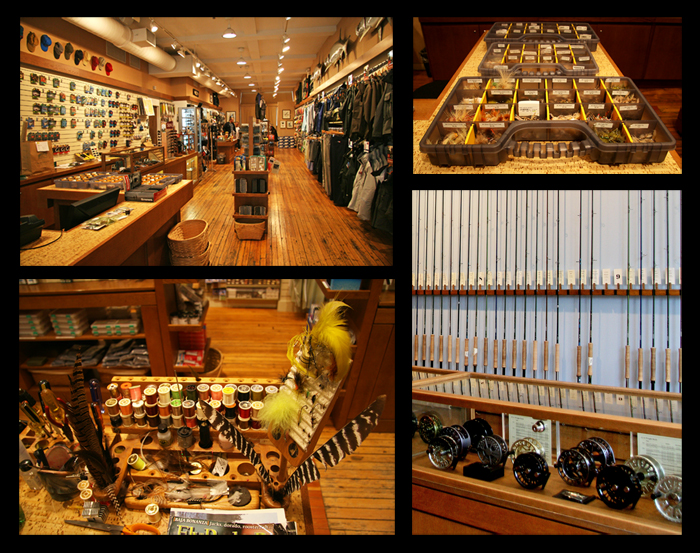
    In the 1980s, I decided that it was time for my father to own a high quality rod and reel, so I consulted with an old college friend who was an avid outdoors man. At the time, graphite rods were coming on to the market – these were the latest and greatest thing. To see this kind of performance had previously meant a bamboo fly rod, a very expensive proposition. I was surprised to learn that my shopping needs for fly fishing could be met in midtown Manhattan at the Urban Angler, a shop renowned amongst fishing enthusiasts and aficionados worldwide.

    I recently visited the Urban Angler at 206 Fifth Avenue, which I had wanted to do for this website for some time. The shop was founded in 1988 by Steve and his son Jon Fisher. The staff was accommodating to my photography needs. Tony, a native from Argentina and avid fly fisherman, guided me through the shop and answered questions. The shop is quite beautiful, situated in a third floor office building, overlooking Madison Square Park.

    This story, however, really has little to do with fishing. I went to Urban Angler for a very different reason. In Part 2, you will learn some secrets about an unusual and unexpected connection between people of different worlds. If you promise to keep it secret, I will show you why there are many different Birds of a Feather Tied Together 🙂


  • That Should Cover It

    On Sunday, April 17, two photographer friends and I were strolling in Washington Square Park where a man suddenly appeared with an enormous leashed iguana, which he proceeded to walk on the lawn. As we were taking photos, the owner became immediately hostile, demanding $3. We stopped. One of our group, however, pointed out that this was a public park and there were no restrictions regarding photography.

    This was not my first encounter with someone who displayed exotic pets in the parks of New York City. In 2006, I featured a story and photos about a man with a small trio of exotic animals that he marketed as photo ops to passersby (see Snake Charmer here). I also once witnessed a large Albino Burmese Python, slithering along in Central Park (see here).

    But I had suspicions regarding the iguana owner’s edginess – that he might have had some concern other than losing potential modeling fees for his critter. I never did investigate the laws regarding exotic pets in the city. A quick search and I learned that housing an iguana as a pet is a violation of the New York City Health Code. There is so much rumor mongering and misinformation in life, I have decided to reprint the code here in its entirety, exactly as written, directly from the New York City government website. So here, in the spirit of Everything No, is article 161.01 – Wild Animals Prohibited:

    (1) All dogs other than domesticated dogs (Canis familiaris), including, but not limited to, wolf, fox, coyote, hyena, dingo, jackal, dhole, fennec, raccoon dog, zorro, bush dog, aardwolf, cape hunting dog and any hybrid offspring of a wild dog and domesticated dog.

    (2) All cats other than domesticated cats (Felis catus), including, but not limited to, lion, tiger, leopard, ocelot, jaguar, puma, panther, mountain lion, cheetah, wild cat, cougar, bobcat, lynx, serval, caracal, jaguarundi, margay and any hybrid offspring of a wild cat and domesticated cat.

    (3) All bears, including polar, grizzly, brown and black bear.

    (4) All fur bearing mammals of the family Mustelidae, including, but not limited to, weasel, marten, mink, badger, ermine, skunk, otter, pole cat, zorille, wolverine, stoat and ferret.

    (5) All Procyonidae: All raccoon (eastern, desert, ring-tailed cat), kinkajou, cacomistle, cat-bear, panda and coatimundi.

    (6) All carnivorous mammals of the family Viverridae, including, but not limited to, civet, mongoose, genet, binturong, fossa, linsang and suricate.

    (7) All bats (Chiroptera).

    (8) All non-human primates, including, but not limited to, monkey, ape, chimpanzee, gorilla and lemur.

    (9) All squirrels (Sciuridae).

    (10) Reptiles (Reptilia). All Helodermatidae (gila monster and Mexican beaded lizard); allfront-fanged venomous snakes, even if devenomized, including, but not limited to, all Viperidae (viper, pit viper), all Elapidae (cobra, mamba, krait, coral snake), all Atractaspididae (African burrowing asp), all Hydrophiidae (sea snake), all Laticaudidae (sea krait); all venomous, mid-or rear-fanged, Duvernoy-glanded members of the family Colubridae, even if devenomized; any member, or hybrid offspring of the family Boidae, including, but not limited to, the common or green anaconda and yellow anaconda; any member of the family Pythonidae, including but not limited to the African rock python, Indian or Burmese python, Amethystine or scrub python; any member of the family Varanidae, including the white throated monitor, Bosc’s or African savannah monitor, Komodo monitor or dragon, Nile monitor, crocodile monitor, water monitor, Bornean earless monitor; any member of the family Iguanidae, including the green or common iguana; any member of the family Teiidae, including, but not limited to the golden, common, or black and white tegu; all members of the family Chelydridae, including snapping turtle and alligator snapping turtle; and all members of the order Crocodylia, including, but not limited to alligator, caiman and crocodile.

    (11) Birds and Fowl (Aves): All predatory or large birds, including, but not limited to, eagle, hawk, falcon, owl, vulture, condor, emu, rhea and ostrich; roosters, geese, ducks and turkeys prohibited or otherwise regulated pursuant to § 161.19 of this Code, the Agriculture and Markets Law or applicable federal law.

    (12) All venomous insects, including, but not limited to, bee, hornet and wasp.

    (13) Arachnida and Chilopoda: All venomous spiders, including, but not limited to, tarantula, black widow and solifugid; scorpion; all venomous arthropods including, but not limited to, centipede.

    (14) All large rodents (Rodentia), including, but not limited to, gopher, muskrat, paca, woodchuck, marmot, beaver, prairie dog, capybara, sewellel, viscacha, porcupine and hutia.

    (15) All even-toed ungulates (Artiodactyla) including, but not limited to, deer, antelope, sheep, giraffe and hippopotamus.

    (16) All odd-toed ungulates (Perissodactyla) other than domesticated horses (Equus caballus), including, but not limited to, zebra, rhinoceros and tapir.

    (17) All marsupials, including, but not limited to, Tasmanian devil, dasyure, bandicoot, kangaroo, wallaby, opossum, wombat, koala bear, cuscus, numbat and pigmy, sugar and greater glider.

    (18) Sea mammals (Cetacea, Pinnipedia and Sirenia), including, but not limited to, dolphin, whale, seal, sea lion and walrus.

    (19) All elephants (Proboscides).

    (20) All hyrax (Hydracoidea).

    (21) All pangolin (Pholidota).

    (22) All sloth and armadillo (Edentata).

    (23) Insectivorous mammals (Insectivora): All aardvark (Tubildentata), anteater, shrew, otter shrew, gymnure, desman, tenrec, mole and hedge hog.

    (24) Gliding lemur (Dermoptera).

    I think that should cover it 🙂


  • dinamic_sidebar 4 none

©2026 New York Daily Photo Entries (RSS) and Comments (RSS)  Raindrops Theme