• Todt Hill

    Posted on by Brian Dubé


    If you enjoy exploring New York City, then Todt Hill is a must. This residential hilltop neighborhood is certainly one of the most, if not the most, exclusive, secluded areas in the five boroughs of New York. Todt Hill, with an elevation of 410 feet, is the highest natural point on the Eastern Seaboard of the United States south of Maine.

    Staten Island is also the least populous of New York’s five boroughs, with under 500,000 residents. This much lower population density and its very hilly terrain create some very rural and remote feeling areas.

    I love hill and mountain tops, and Todt Hill had been on my list for quite some time, having only passed through the area once before a long time ago. On this trip, I explored the backroads and (along with Forest Hills Gardens, Bayside, Queens, and Dyker Heights, Brooklyn) found it to have some of the most extraordinary private homes in New York City – McMansions abound with topiary, bricked semicircular driveways, and fountains. See my photo gallery here.

    Most of Staten Island has a decidedly suburban feel – driving there is more akin to nearby New Jersey than New York City, with much of the developed areas of the borough revealing a plethora of strip malls and other visual clutter.

    Do not be misled, however. Staten Island has some of the most beautiful natural and historic environments in New York City – places like St. Andrews Church, historic Richmond Town, Snug Harbor, the Museum of Tibetan Art, the Kreischer Mansion, The Crimson Beech (residence designed by Frank Lloyd Wright), yacht clubs, waterways, and estuaries, the Latourette House (1836), Staten Island Botanical Garden, and the Fresh Kills landfill. This massive landfill, opened in 1947 and closed in 2001, has been cleaned up and is now undergoing development into a park larger than Central Park – plans include a bird-nesting island, boardwalks, soccer and baseball fields, bridle paths, and a 5,000-seat stadium.

    But, if like me, you really like lofty pursuits, head for Dongan Hills, Grymes Hill, Lighthouse Hill, and Todt Hill 🙂

    Posted on by Brian Dubé

  • Back to Our Main Feature

    Posted on by Brian Dubé

    Please understand that I, like most New Yorkers, do love Mother Nature, but the gifts nature bestows and the power she wields often feel secondary in a city like New York.

    Additionally, unlike California, the Rocky Mountains, the Pacific Northwest, the coast of Maine, Florida, or the southwest, where someone might move for quality of life and nature’s bounty, people live in New York City for culture, work, and all the things and opportunities that are man-made.

    Often, nature feels like a corporate perk or, at times, even like an irritant, standing between us and what we want. This is a city on the move, and nothing will stop a New Yorker from getting what he or she wants. Or at least trying until his or her tank is clearly empty.

    Most New York City residents use a combination of walking and public transportation to get around town. Few of us do more to adapt to changing seasons or weather than change wardrobe – this is one of many reasons why the impact of nature is mitigated. We typically do not shovel snow, salt our own walkways, put on snow tires, rake leaves, mow lawns, water the grass, or clean gutters – all the activities that connect humans with nature.

    Unfortunately, New York City is not ideally suited for those who want a comfortable ride in a roomy vehicle. That’s OK – not everyone is a driven Type A or has the need to be. There are many days when I question the prudence of the self-inflicted wounds from voluntary immersion in America’s biggest rat race.

    Last night, there was a brief lightning storm dramatic enough to make many of us look up and say wow. But unlike our country brethren, who may spend a pleasant evening watching shooting stars, we rarely indulge these natural phenomenon for very long. Glancing up to the sky, seeing a spectacular display of lightning complemented by a waxing moon, we acknowledge when nature has spoken. Yes, like any great commercial, we hear you, but now, back to our main feature 🙂

    Posted on by Brian Dubé

  • Pink Flamingos

    Posted on by Brian Dubé

    I was once gifted the book The Encyclopedia of Bad Taste, many parts of which I found hilarious. The writers, Michael and Jane Stern, have selected the most egregious infractions on good taste in American culture. There are chapters on Easy Cheese (in a spray can), Spam, Velvet Paintings, Chia Pets, celebrity death cars, lava lamps, etc. One article highlighted lawn ornaments.

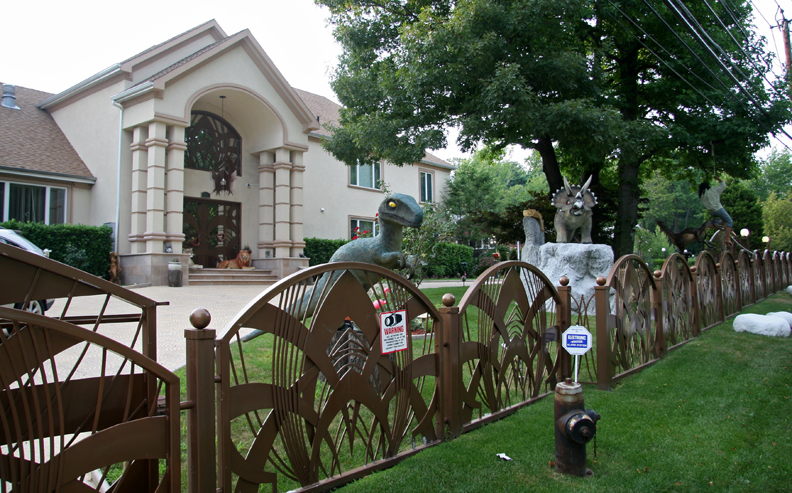
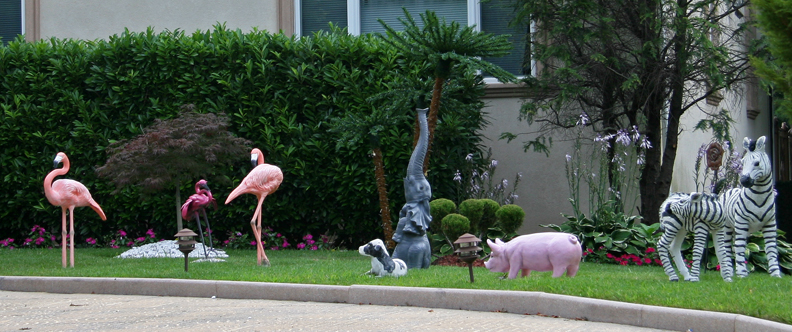
    Most of us have seen a lawn display featuring classics such as the plastic flamingo. I thought I was well-versed in lawn displays (particularly after seeing the Dyker Heights Christmas displays). That is, until I saw the display in front of the mansion of Alla and Alex Shchegol at 724 Todt Hill Road, Staten Island.

    I was happy to find a little information online about the house and the Shchegols, who have been collecting these lawn statues for years. However, I was not prepared to find a small uproar in Dongan Hills/Todt Hill, Staten Island, one of the wealthiest communities in New York City. An article in SI Live voices the concerns some have about the danger of distraction to motorists. It certainly comes as very startling to drive by this property and encounter Tarzan hanging from a tree over a lawn full of statues in a loosely themed jungle and Jurassic Park. There are dinosaurs, jungle animals, and other creatures.

    The many comments to the SI Live article range the gamut – see the article and comments here. Some say the huge ornaments are terribly distracting and dangerous, while other locals say the concerns are exaggerated. The vast majority of naysayers are just horrified at what they consider to be one of the supreme examples of tacky, bad taste.

    Actually, I was very surprised to read about the congeniality of the owners. Apparently, many passersby stop, some even knocking on the door for information about the display. Others ask permission to take photos with their children on the various animals, which the owners typically grant. A number of people, like the Shchegols themselves, just see this as harmless fun and encourage the outraged to lighten up.

    Most will agree, however, that no Encyclopedia (or lawn) of Bad Taste would be complete without Pink Flamingos 🙂

    Posted on by Brian Dubé

  • Miracle Garden

    Posted on by Brian Dubé

    In the 1960s and 1970s, the East Village was one of the most dangerous neighborhoods in Manhattan. Even the most brazen college student, carousing with reckless abandon, would think twice before strolling the East Village. Being mugged, even in broad daylight, was not fanciful paranoia; it was reality. I always traveled with at least one other person.

    On one occasion, a very aggressive panhandler, to whom we refused to give money, became extremely menacing, wielding a baseball bat and threatening us. This incident occurred at a pizza parlor on 3rd Avenue and St. Marks Place, a major intersection. Only by begging the shop employee for refuge were we spared a possible battering.

    Alphabet City was truly a no-mans land. The neighborhood was filled with drug addicts – there are only a few ways of feeding a drug habit. Unable to keep a job, most turn to theft or prostitution. For the male heroin or crack addict, a source of income comes down to robbing for money or stealing goods and fencing them. Many Village residents have had their bike stolen, only to see it being sold on the streets of the East Village. Rather than provoke an incident and risk the opportunity of getting it back (by calling the police), some have even resorted to buying their own bicycle back.

    So, in one way, it is surprising to see so many beautiful oases in the form of community gardens in the East Village. On the other hand, it is not surprising at all. This area has had a history of homesteading, squatting, and community takeover of buildings and empty lots. The neighborhood was extraordinarily blighted and largely abandoned by the city. Without the passion, grassroots efforts, and activism of community members, it is doubtful that this neighborhood would have been inhabitable at all. Even with all the gentrification over decades, the East Village still has a decided grittiness.

    Miracle Garden is located at 194-196 East 3rd Street between Avenues A and B. It was founded in 1983. According to New York Songlines, this urban garden was built on the site of a former crack house. What better name than Miracle Garden?

    Note: I have written about and photographed some extraordinary community gardens. See the related links: Shangri-La, Devil’s Playground, La Plaza Cultural Garden, Grapes, Stay Lean Stay Hungry, Urban Oasis, Alberts Garden, West Side Community Garden, Bird Country, Hua Mei Bird Garden, Paraiso

    Posted on by Brian Dubé

  • The Carlyle

    Posted on by Brian Dubé

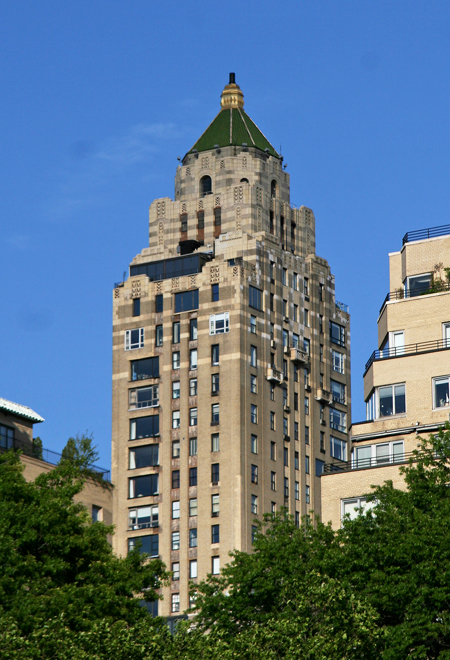
    There are worlds that few will ever know, and one of those is living in a luxury New York City apartment hotel – places such as the Carlyle, the Sherry-Netherland, the Waldorf Astoria, the Pierre, the Stanhope, the Gramercy Park, the St. Regis, the Ritz-Carlton, the Mandarin Oriental, and recently converted Plaza.

    New York is an international city with an enormous number of individuals who own more than one residence. This is one factor which accounts for the gravity-defying Manhattan real estate market.
    For the well-heeled looking for a pied-à-terre, the residential hotel fits the bill perfectly, with the amenities of an apartment and the services of a hotel (at the Carlyle Hotel, for example, there is a full-time staff of 400.) For those wanting to own a place, there are cooperative and condominium apartment hotels.
    These structures typically have a block of rooms which are strictly hotel room rentals, segregated from the privately owned rooms, often with a separate building entrance.

    The Carlyle Hotel has been called the grand dame of this world. The services abound with restaurants, clothing and jewelry boutiques, an art gallery, antique shop, and antiquarian book dealer. The Café Carlyle has featured numerous well-known jazz performers, with regulars such as Bobby Short (1968-2004) and Woody Allen, who has been a Monday night regular there since 1996.

    The Carlyle is renowned for guest privacy and why the New York Times called it a “palace of secrets.” It became best known when President John F. Kennedy owned an apartment there on the 34th floor. From Christopher Gray’s Streetscapes in the New York Times:

    The earliest hotel tenants included Chester Dale, an investment banker and art collector who was later president of the National Gallery of Art. His collection of French 19th- and 20th-century paintings was one of the finest of the mid-20th century. … Senator Kennedy took Dale’s former apartment, 34A. Kennedy held onto it throughout his presidency.

    The Carlyle is where Marilyn Monroe reportedly had a tryst with Kennedy, entering with him via a labyrinth of tunnels. On June 14, 2010, the FBI released a 2,352 page file (see it here). In the file are reports of alleged sex orgies in Kennedy’s suite, naming John, Robert, and Ted Kennedy, actor Peter Lawford and his wife Patricia Kennedy, Marilyn Monroe, Frank Sinatra, and Sammy Davis Jr. as participants. I have read many snarky comments about how this news is so old – who cares? But this is not just any family, this is the Kennedy family, and this is not just any hotel, this is The Carlyle.

    Note: The Carlyle, located at 76th Street and Madison Avenue in Manhattan’s Upper East Side, was built by Moses Ginsberg, designed by Bien & Prince and completed in 1930. The Art Deco residential hotel has 180 rental rooms and 60 privately owned residences.

    Posted on by Brian Dubé

  • A Terrible Mistake

    Posted on by Brian Dubé

    I have a customer whom I have known since the 1980s, when he was a teenager and a student at Stuyvesant High School. He was very bright, astute, and street smart. On one occasion, I was telling him about my dealings with a customer who was particularly upset. In his characteristic, lighthearted style, his prescriptive was simple and direct: “Brian, just tell them ‘I’m sorry, there’s been a terrible mistake.’ ” Funny and simplistic, yet his palliative contained customer service core principles – apologize, take responsibility, and don’t make the customer wrong.

    On April 27, 2009, I wrote a story called Pick Two, which highlighted the project triangle – good, fast, and cheap, and how you can only get two out three. My search for a restaurant where you could find the impossible three out of three led me to L’Annam.

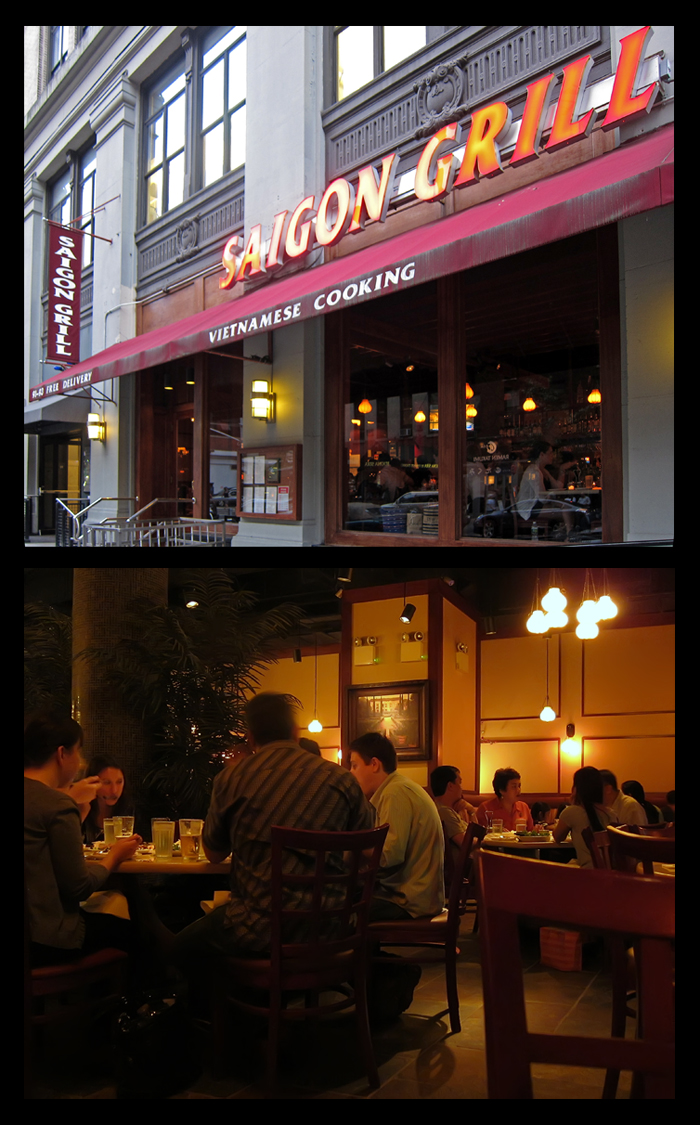
    Since that time, I have been frequenting another Vietnamese restaurant, just down the block on University Place – Saigon Grill. This place is rather remarkable. Its elegant decor bespeaks of a place which should be much more expensive. It is always clean, and the speed of food delivery is the fastest I have ever seen, other than at a fast-food takeout restaurant. The place is enormous, yet always busy. The food quality is very good.

    This place appeared to be another candidate for the rarified club of businesses who deliver three out of three. A little investigation, however, reveals one way in which owners can do the seemingly impossible.

    Saigon Grill has been embroiled in one of the biggest controversies I have ever seen in the New York City restaurant business. A battle between deliverymen and owners Simon and Michelle Nget raged for over two years with allegations by employees. During that period, there was picketing outside, blogs and articles calling for boycotts, and media spotlights.
    From the New York Times:

    The owners of the two Saigon Grill restaurants in Manhattan were arrested Wednesday on more than 400 criminal charges, including violating minimum-wage laws, falsifying business records and defrauding the state’s unemployment insurance system.

    Several deliverymen asserted that they usually worked more than 65 hours a week but were often paid only $520 a month, or less than $2 an hour, far less than the federal and state minimum wage.

    The deliverymen asserted — and a federal judge agreed in his October ruling — that the restaurants had illegally deducted from $20 to $200 of the workers’ pay when they committed infractions like letting the restaurant door slam on their way out.

    In the final decree, a federal judge awarded the deliverymen $4.6 million in back pay and damages. In the case of egregious criminal activity, my friend’s advice is no avail. Apparently, no federal judge or jury is going to believe “I’m sorry, there’s been a terrible mistake.

    Posted on by Brian Dubé

  • World of Sheep

    Posted on by Brian Dubé

    I once dated a woman just after college for a short time. A very short time. Actually, if I recall, it may have been only one date. This woman had been highly affected by her readings of the existentialists. I can’t say I liked her much, and I remember very little, except her assertion that “people were sheep.” She suggested, “Let’s do something different,” as if difference, in and of itself, insured a better experience. I vaguely recall her quoting some French philosopher, a role model of hers I imagine, to substantiate her negative views of humankind and extemporaneous living as the only antidote.

    Had it been 2010, her life would be considerably more difficult, if not near impossible. She would be a very unhappy camper for sure. Flash mobs, Twitter, email, texting, Facebook, satellite TV, blogs, ezines – everything conspires to disseminate information, literally at the speed of light. Whether it’s the latest, greatest neighborhood, product, or event, no stones are left unturned. Nothing of any interest to anyone remains secret for very long.

    In 2007, when I first heard about the biannual solar event coined Manhattanhenge by astrophysicist Neil deGrasse Tyson, I really felt privy to a very special near-secret event. And although I was not the lone photographer my first time seeing this spectacular New York City occurence, the experience I had in midtown Manhattan did not have the flavor of a feeding frenzy fueled by electronic networking or the feeling that one was part of a flock of sheep.

    I created a photo triptych which I posted along with my article on this blog on May 21, 2007. The photo collage was picked up and featured by Gothamist online. This year, I see a massive amount of imaging online – it is doubtful now that any given photo would be easily singled out for a media feature as mine was in 2007. B & H Photo now organizes an annual Manhattanhenge Gathering for photographers. On the photosharing website Flickr.com, there are two special photogroups for Manhattanhenge alone (2009 and 2010), and a search of images returns over 3000 results. Websites abound with stories, photos, and information about this natural occurrence.

    I have, of late, become very enamored of sheep – they are wonderful animals that do really appear to love the company of people. They may not be known as independent thinkers, but perhaps they are the new paradigm for our fast-moving world. I have not given up completely on creative or independent work, but I am preparing for the future and learning as much as I can now about the world of sheep 🙂

    Photo Note: I stumbled across this year’s Manhattanhenge unknowingly. The photo was taken just before sunset, looking west down 23rd Street.

    Posted on by Brian Dubé

  • Cup Runneth Over

    Posted on by Brian Dubé


    When it comes to a celebratory occasion, nothing seems to do the job like a good dousing. And when it comes to a good dousing, nothing does the job like a fountain. So it was natural that post-World Cup revelers would take their revelry to the fountain in Washington Square Park.

    There is something a little gratuitous about a public water fountain, which suits a post championship triumph just fine, since, inevitably, something as monumental as Spain’s first victory in the World Cup will necessitate some over-the-top behavior.

    This celebration caught me by surprise, since I was not aware of the final championship game results. A group worked their way from Fifth Avenue into the park and were joined by others. Soon the park’s central plaza became a sea of red and yellow, with chanting, flag waving, and water play. See my photo gallery here.
    There are celebrations which are primarily excuses to party – often the completely disinterested find it a perfect opportunity to engage in orgiastic debauchery with intoxication at its core. This was not one of those times. Extreme inebriation was the exception, not the rule, and the focus on the meaning of this event was obvious to all.

    Outside the United States, winning a soccer cup takes on a significance unparalleled here – these are international championships in the world’s most popular sport that take place only once every four years. It has been said that winning a cup can uplift the spirits and even boost the economy of an entire nation.
    It is a joyous time for the victors, and here in our fountain, there and everywhere, Spain’s cup runneth over 🙂

    Posted on by Brian Dubé

  • Fire Island

    Posted on by Brian Dubé


    With only one exception, all the photos on this website were taken in one of the five boroughs in New York City. I do not vacation or travel out of the city or post photos and stories of my exurban adventures or vacations.

    But Fire Island is a special case, and if you don’t include it in your discussions about New York City, then you do not have a complete picture of this city. Like the Hamptons and Montauk, Fire Island is a summer playground dominated by New Yorkers, particularly Manhattanites. There is a level of urbane sophistication – if you spend time there, you quickly get a real sense that this is a virtual microcosm of New York City.

    Fire Island is a barrier island, only half a mile wide and 31 miles long, off the south shore of Long Island. It is accessible by bridge at either end with public beaches – Robert Moses State Park at the western end and Smith Point County Park at the eastern end.

    However, the real allure are the 22-some odd private communities that dot the interior of the island, which are only accessible by ferry from Long Island. These communities span an entire range of environments and people, from conservative to wild. Point of Woods has the character of a New England town, while Fire Island Pines has roller coaster boardwalks tunneling through trees. Cherry Grove is dominated by the gay community, with a party atmosphere. Seaview is sedate. Ocean Bay Park sees many vacationers sharing homes. Water Island has the character of a remote outpost. See my photo gallery here.

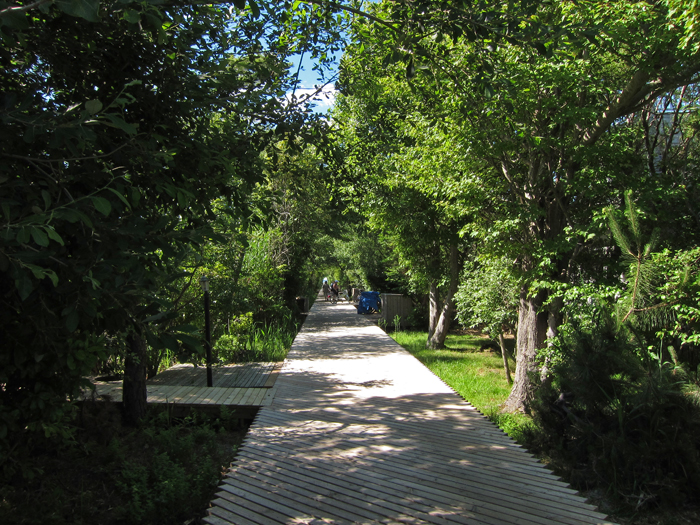
    My romantic love affair with Fire Island started on a day trip in the early 1970s. I immediately was swept away. There are many charms to Fire Island – the pristine beach and dunes, protected as Fire Island National Seashore, Sailors Haven, the Sunken Forest, and the Fire Island Lighthouse. But there is one big factor that defines everything – there are no automobiles.

    This is an extraordinary world where streets are often wooden walkways, transportation is by foot or bicycle, and goods are frequently carted by wagons left in town. Here, you can find the occasional little girl with a stand selling shells. Deer roam freely and can be easily hand fed. Less than 40 miles from New York City, and the quiet is just shocking.

    Sound like paradise? Yes it is. If you have a chance, visit Fire Island 🙂

    Posted on by Brian Dubé

  • Woody Was Right

    Posted on by Brian Dubé

    Don’t you see the rest of the country looks upon New York City like we’re left-wing, communist, Jewish, homosexual pornographers? I think of us that way sometimes and I live here. –Woody Allen as Alvy Singer from his 1977 film Annie Hall

    A 2008 study by the New York City health department found that more that one-fourth of adult New Yorkers are infected with Herpes Simplex Virus-2, the virus that causes genital herpes.

    An estimated one million New Yorkers are Jewish – the largest Jewish population in the world, outside of Israel. That’s 12% of our city population (8,363,710), 15% of the number in the United States, and 7% of the world’s total.

    4.5% of New York City’s population (272,493) is estimated to be gay.

    The Communist Party USA headquarters is based in New York City at 235 W. 23rd Street.

    A study found that over two-thirds of New York City residents regularly hear their neighbors having sex.

    Looks to me like Woody was right 🙂

    Photo Note: Sex and the City is a cable television series. Two films based on the series have been made. Sex and the City 2 was recently released – the photo was taken just before the release.

    Posted on by Brian Dubé

  • Blocks of Ice

    Posted on by Brian Dubé

    Like a pediatric prescriptive for the parent and desperate to show empathy and concern, city officials have made the usual hot weather warnings and announcements with gestures such as mobile cooling stations with free drinking water.

    But what can really be done about a crushing heat wave with temperatures over 100 degrees? Nothing. Just wait it out. You either have air conditioning and/or fans at home or not, and you either work in A/C or not. Plain and simple. The word that best describes New York City’s recent record smashing temperatures is blistering. Direct sun on the skin feels like it is literally being cooked.

    I empathize with those who must work outdoors in this heat. I had a brief conversation with New York City police detective Johnson, who was in Union Square in full uniform with temperatures hovering around 100 degrees. I asked how he could possibly tolerate the heat in full uniform – polyester, bullet proof vest, pants, heavy shoes. He replied that it isn’t easy and he just tries to stay hydrated.

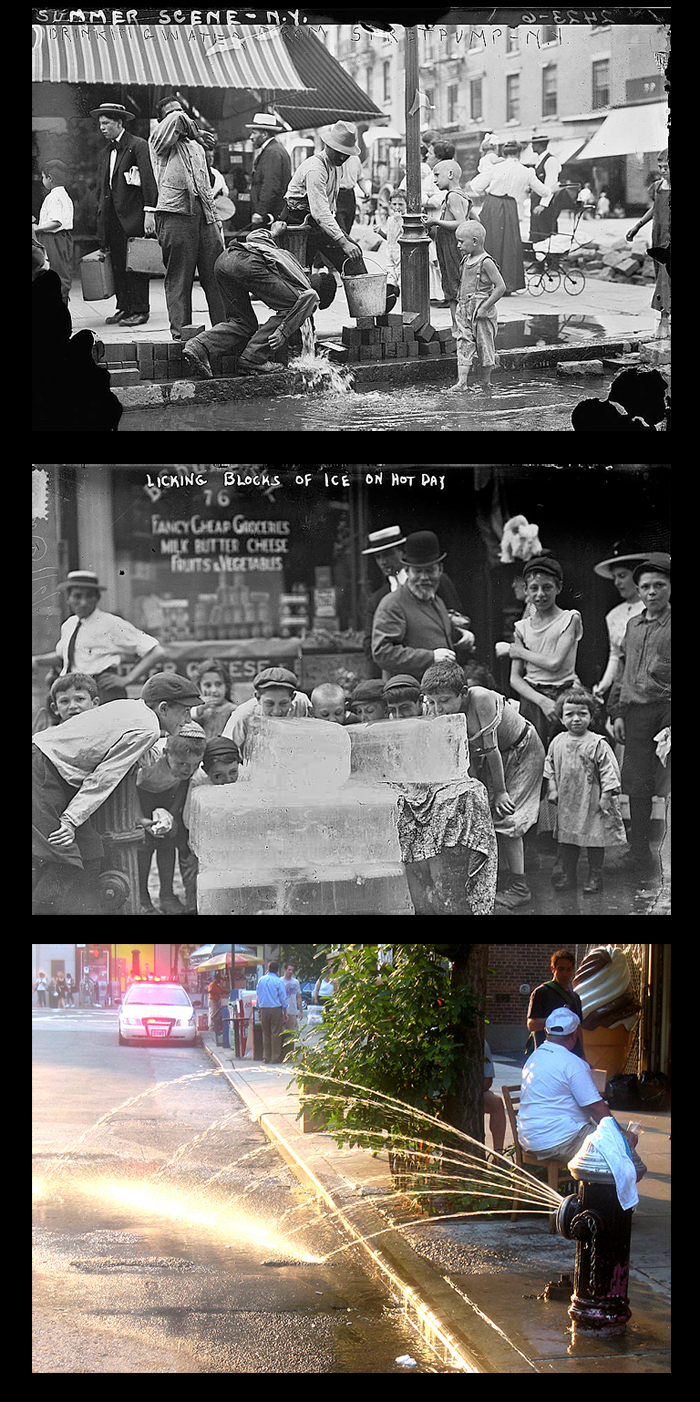
    None of the solutions offered to the populace are particularly new or novel – wear light clothing, stay hydrated, keep your blinds drawn, etc. In a world with extraordinary technology, ubiquitous WiFi, video telephony, organ transplants, and voice recognition, Mother Nature still shows a strong hand when it comes to heat. The drone of bulky, ugly, and noisy window air conditioners becomes our summer music. Looking over a number of historic photos of New York City from the early 20th century, we see the curbside water hydrant scene replayed 100 years later. And with all the suggestions, solutions, and technology, the most refreshing solution to me looks like those street side blocks of ice 🙂

    Photo note: The first two photos are New York City street scenes, circa 1910-15. The bottom photo is from my 2006 posting Heat Wave.

    Posted on by Brian Dubé

  • Let There Be Light

    Posted on by Brian Dubé

    The New York City subway system is not the place you would associate with natural lighting, but according to a 2002 article by Christopher Gray of the New York Times:

    John Tarantino, chief architect at New York City Transit, said the agency was working citywide to bring daylight back to the subway experience.

    In February 1904, The New York Times noted that ”a speck of dirt would find a difficult resting place” in the new subway stations, which were trimmed with oak, bronze, red granite and decorative tile. Instead of the bare bulbs now common to most stations, the original subway had simple but distinctive globes. Ventilation was closely considered, and an article in World’s Work magazine described the air as ”dry and sweet” and noted that ”glass roofs provide the stations with plenty of light.”

    Vault lights were also heavily used – in 1904, 20 of the 34 underground stations had vault lights. (See my posting, Sidewalk Vault Lights.) In the same article, Gray quotes from the 1904 commemorative book The New York Subway:

    At 20 of the underground stations it has been possible to use vault lights to such an extent that very little artificial light is needed.’ Photographs of stations in those days show great banks of sidewalk vault lights casting natural light onto the platforms directly below; presumably the platforms sent a soft glow to the streets at night, when artificial lighting was used.

    But not long after, most of the vault lights were removed. In 1938, an article by Laurence Bell in The American Mercury magazine entitled The Most Awful Ride in the World deplored the ”murky depths” with ”concrete even filthier than the stairs, a filth that is accentuated by the dim lights whose sole reflectors are the stained walls of once-white tile.”

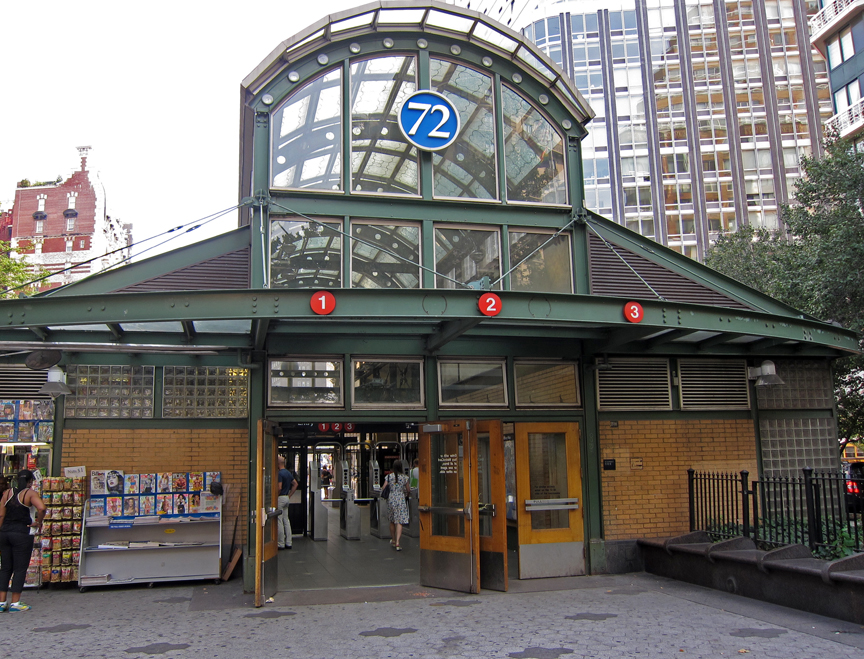
    Street-level station houses were not so well-liked. The well-known and heavily used station house at 72nd Street and Broadway is a particularly egregious example, with platforms and stairways that are unusually narrow. Until completion of the new control house, there was only one entrance to the station, access only via the middle of a traffic island, and no free transfer between the uptown and downtown sides of the station.

    In 2002, construction began on a new control house. The design was a joint venture between architects Richard Dattner & Partners and Gruzen Samton. Inspired by the Crystal Palace at the London Exhibition of 1851, the new structure has lots of glass. See additional photo here. However, although vault lights had been planned, cost-cutting issues and maintenance concerns of the proposed vault lights resulted in their elimination.

    Light is a precious thing, particularly in the New York City subway system, where natural illumination goes a long way to ameliorate the grim and grimy subterranean environment. I am sure I am not alone among New Yorkers when I ask of John Tarantino or any other NYC transit tsar, let there be light 🙂

    Posted on by Brian Dubé

  • Rocket Man

    Posted on by Brian Dubé

    Note: Please click and play audio link to accompany your reading.

    I recently discussed with my cousin the fireworks displays we saw as children in Pope Park, Hartford, Connecticut. These Fourth of July outings were all-night affairs – our families arrived early with blankets and picnics, staking out ground for a display which seemed like it lasted forever. Perhaps the childhood memory of this spectacular event looms larger than it really was for both of us, but we agreed that it lasted nearly one hour and was the best thing we had ever seen.

    As I grew up, I was no stranger to the boyhood love of pyrotechnics. This followed me into high school, where I became involved in the rocketry club. In my early years in New York City, we managed to put on our own bottle rocket displays for the Fourth of July.

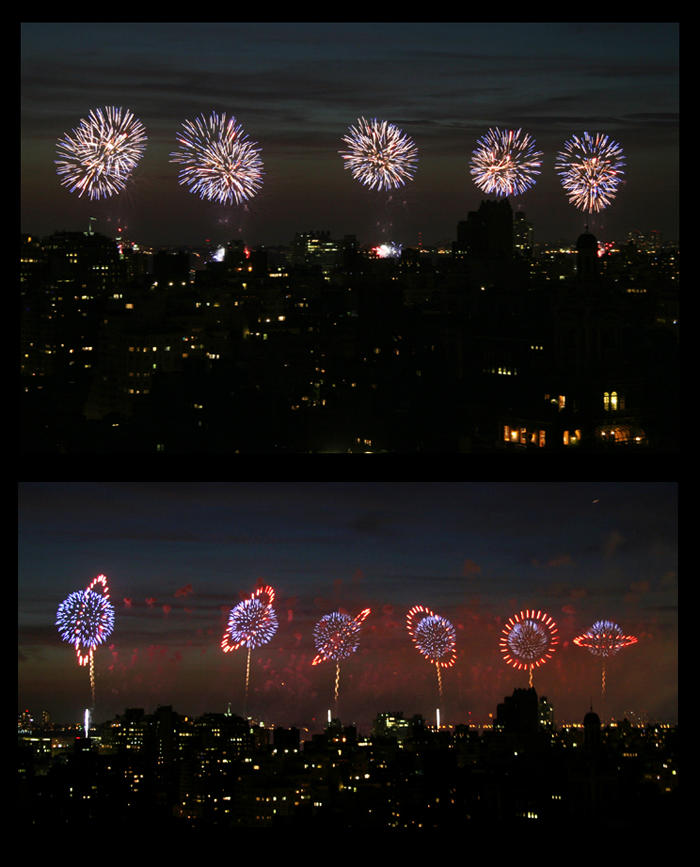
    Of course, little compares to Fireworks by Grucci or Pyro Spectaculars by Souza, which has been putting on the annual Macy’s fireworks display since 1982. Last night’s display was beautiful as always, with many new pyrotechnic effects.

    This year, my spectating experience was particularly pleasant. Rather than battle the masses on the west side of Manhattan for Hudson River views, I was invited by friends to the 26th floor rooftop deck of their apartment building. We were joined by a small number of building residents for a pleasant, trouble-free bird’s-eye view.

    In a extraordinary twist of fate, I learned today that Pope Park was designed by the Olmsted Brothers Landscape Architects in 1898. This company, the nation’s first landscape architecture company, was founded by Frederick Law Olmsted, designer of Central Park and Prospect Park in New York City. Olmstead’s sons, John Charles Olmsted and Frederick Law Olmsted, Jr. inherited the firm from their father. This company has an enormous portfolio of projects to their credit, including Pope Park. I have been unknowingly following the footsteps of the Olmstead Brothers.

    I am pleased to have echos of pyrotechnics and the Olmstead legacy here in New York City, because leaving my home and childhood behind is the fate of any Rocket Man 🙂

Posted on by Brian Dubé

  • Signs of Summer

    Posted on by Brian Dubé

    Imagine the perfect summer day. If you find that difficult at all, please join me in looking out my window – today is that day.

    Summer can be extremely unpleasant in the city – the grime and edge is exacerbated by the heat and humidity. Many areas look extremely unattractive. The impact of tourists, excess trash, and hot subway platforms does nothing to improve the experience.
    The iconic sights, sounds and smells of summer are largely unavailable in New York – butterflies, open fields, lawn mowers, cookouts, crickets at night, cicadas.

    Many prefer to leave the city on weekends, for extended vacations or for the entire summer. Neighborhoods like the Upper East Side are virtual ghost towns on a summer weekend. The well heeled have options, and spending the dog days of August in Manhattan is not high on their list. Not unique to New York, the summer exodus of urbanites has been replayed in cities around the world over history.

    Those that remain in the city will find many things to do and enjoy – summer concerts, festivals, parades, programs, the parks, botanic gardens, community gardens, promenades, the rivers, beaches, sampling fabulous gourmet ice cream/gelato, and, perhaps best, just strolling the city streets by day and night. Adjust and adapt to New York City’s brand, and you will easily recognize our own signs of summer…

    Photo Note: This is the fourth of a series of photos, one per season, taken from my window looking out to Washington Square Park. Today’s photo completes the cycle of seasons. Here are the links for Spring (Enchanted April), Fall (Wood, Glass, Brass and Trees), and Winter (White By Design 2).

    Posted on by Brian Dubé

  • Sticky

    Posted on by Brian Dubé

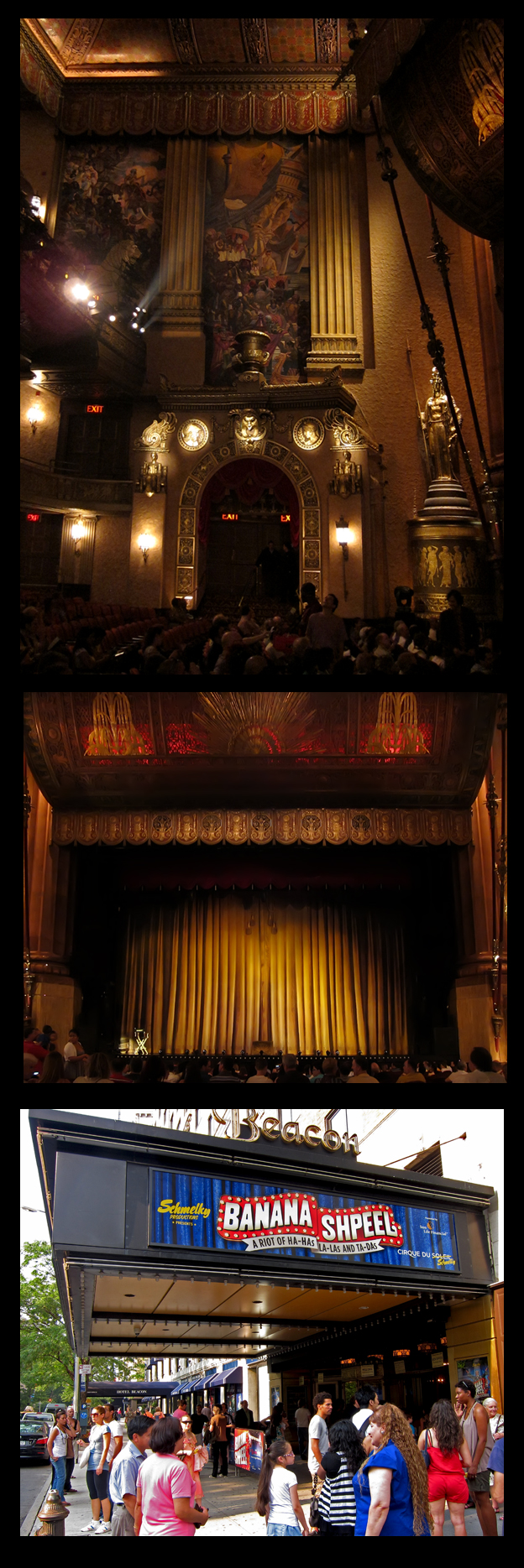
    Skip the exterior. It’s the opulent interior, second only to that of Radio City Music Hall, that counts. Go in, even if you must attend a concert that deafens you – the interior is Greco-Deco-empire with a Tudor palette. -AIA Guide to New York City

    In 1982, I saw the elite Japanese taiko drumming troup Kodo’s first American performance in New York City. My group of friends was absolutely astounded. My last visit to the Beacon Theatre (prior to this Sunday) was a big mistake – to see Kodo a second time and to introduce a friend to the group.

    The Beacon had taken a beating after decades of rock concerts. The balcony seats were filled with people talking, cell phones ringing, and, to add insult to injury, one heavy man repeatedly taking bathroom breaks. The floors were so laden with the sticky residue of spilled drinks that there was a loud ripping sound when lifting his foot after every step.

    We noticed the same effect as we lifted our feet while seated. This whole phenomenon became a source of great amusement and an exercise in controlled laughter. However, the whole experience was extremely disappointing – Kodo requires a quiet listening environment and complete attention to their nuanced performance, not all manner of noise, hilarity, and contained laughter.

    On Sunday, I went to the final performance of Cirque du Soleil’s Banana Shpeel. I was pleasantly shocked to see the Beacon Theatre’s decor after a recent renovation. See more photos here.
    I was able to enjoy the opulent interior in all its former glory without seeing a “concert that deafens you” or listening to feet ripping away from sticky stuff 🙂

    Note about the Beacon Theater: The Beacon was designed by Walter Ahlschlager and opened in 1929. In 1979, the historic venue was designated a national landmark and is on the National Register of Historic Places. Many of the greatest names in music have played the Beacon including the Rolling Stones, Jerry Garcia, Aerosmith, Michael Jackson, James Taylor, Radiohead, and Queen. The Allman Brothers hold an annual rite of spring concert series at the Beacon Theatre known as “The Beacon Run.” Since 1989, they have performed 173 shows at the Beacon.
    Read more about the Beacon here and here.

    Posted on by Brian Dubé


  • ©2026 New York Daily Photo Entries (RSS) and Comments (RSS)  Raindrops Theme