• Branding Gone Wild

    Posted on by Brian Dubé

    Let’s get the negatives out of the way. Neither M&Ms nor the MARS group needs to be promoted. We don’t need to market candy to children. Do we need a two-story shrine to M&Ms candy in Times Square? Is this another sign of the dumbing down of society? Why does a product like this need to be branded and line extended ad nauseum? Is this further evidence that shopping has now become America’s favorite pastime and that, as Reverend Billy has warned for some time, that we have excessive consumerism and a nation of shopaholics? Perhaps, but this is not the best economic times for anti-consumerist messages.

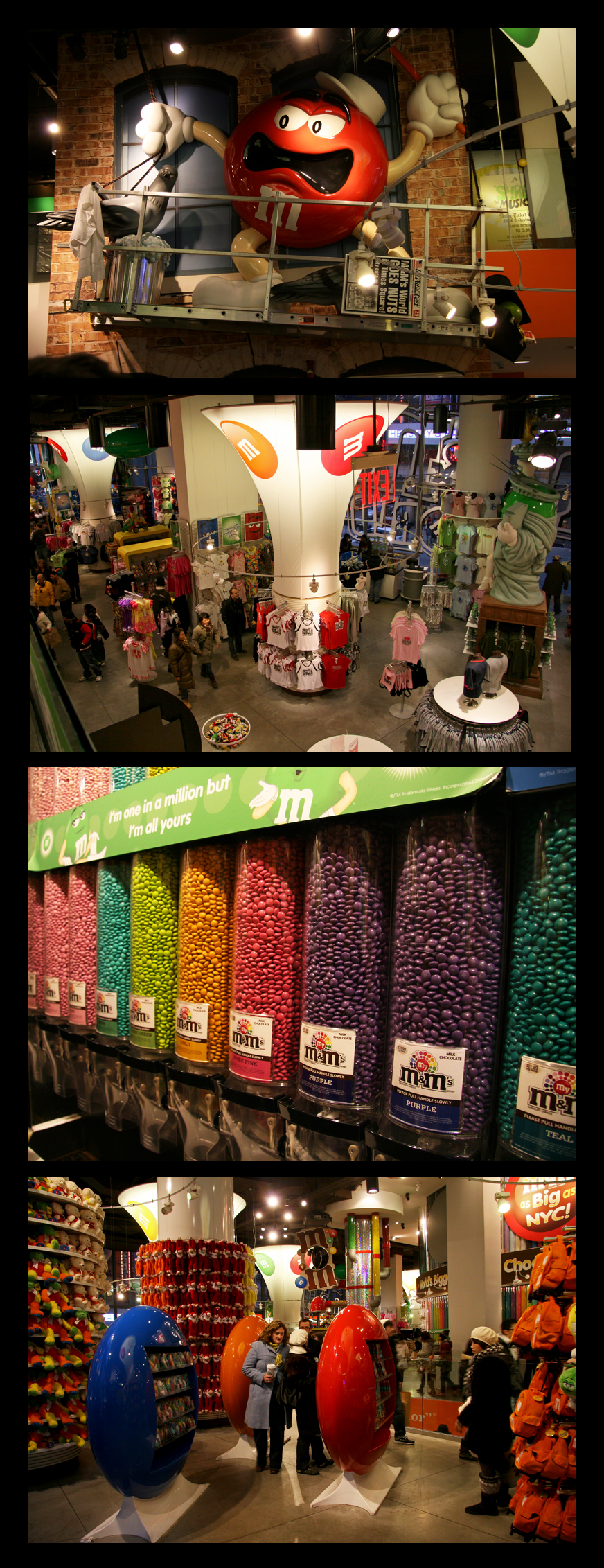
    The M&M Store, at 1600 Broadway in Times Square, like the Coca-Cola or Warner Brothers stores, is a quintessential example of branding merchandise and merchandising a brand. In this retail store, you will find application of the M&M iconography to every possible consumer item. And, of course, there is plenty of candy – self0serve M&Ms in large, transparent tubes in a staggering array of colors. For those who like blue, for example, you can get Blue, Dark Blue, Light Blue, Teal, or Aqua. See more photos of the interior of the store here. The exterior of the store has an enormous, spectacularly bright LED panel display, which I previously featured in Let’s Have a Parade.

    Technology is not the only thing in our world to see enormous advancement. Business and associated vocabulary have also become highly refined. Brand has become a buzzword in business marketing, and the term now goes beyond its original business usage. The meaning of brand at one time was much narrower and more specific, usually limited to consumer products such as food or appliances. Pepsi or GE was a brand.

    The first time I saw the word brand used in a broader sense was in a TV interview with Joseph R. Francis, the founder of Girls Gone Wild, a series of sexually explicit DVDs. In that interview, Francis referred to the Girls Gone Wild brand. I was surprised to learn that filming young, naked girls could be a brand or franchise, or at least referred to as such. Since that time, I have become very sensitized to the use of the words brand and branding as well as merchandising itself.

    But let us not forget another part of the picture, lest a curmudgeon squash all of life’s fun. These are M&Ms – one of the icons of our childhood which is virtually synonymous with pleasure. And they don’t melt in your hands 🙂

    Confession: I succumbed to the overwhelming presence of merchandise. 🙁 I bought an assortment of M&Ms and a nicely styled M&M glass. 🙂

    Posted on by Brian Dubé

  • In Like a Lion

    Posted on by Brian Dubé

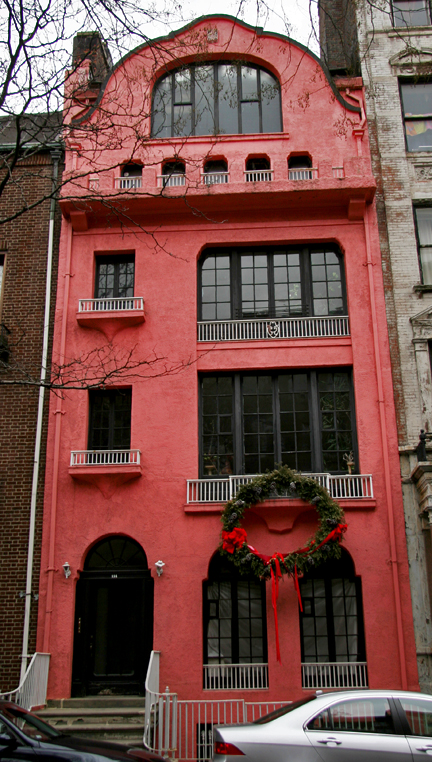
    How ironic. Just two days ago (March 1st), I took a photo of a very unique pink stucco building at 114 Waverly Place which was still sporting a Christmas wreath (see photo here). My intention was to illustrate how people can be so out of step with the time. It seemed particularly strange since temperatures had risen to 61 degrees on Friday, and many were strolling the streets in shirt sleeves and shorts. Yet one day later, feeling as we did that the worst was over, NYC was hit with a snowstorm of several inches (and a low today of 12 degrees F). The neighborhood was blanketed in white, and yesterday I found icicles over 12″ long hanging outside my window. So much for early spring fever.
    But this is old news for people in northern USA, who are prone to irregularity in climate. I wrote of an old friend’s view of contrasts between west coast and east coast weather in Weather Means Whether.

    But New Yorkers adapt very quickly – as easily as summer sandals and shorts are brought out in February, coats and scarves are ready for March’s last blast. So this year, it looks like the old adage will apply: “If March comes in like a lion, it will go out like a lamb.”

    Note: the expression has its origins with the constellations Leo, the Lion, and Aries, the ram or lamb, and their relative positions in the sky at the beginning and end of the month. On March 1 the constellation Leo, the lion, is rising in the eastern evening sky (“in like a lion.”) On March 31, the constellation Aries, the ram or lamb, sets in the western evening sky (out like a lamb).

    Posted on by Brian Dubé

  • Work and Play

    Posted on by Brian Dubé

    Everyone likes a discount, and theater tickets, which have always been pricey in comparison to other forms of entertainment, are one place where a deal is particularly welcome. Seeing a Broadway show is a virtual rite of passage for a visitor to New York City, so it should come as no surprise that TKTS, which offers up to 50% discounts on theater tickets, has been a huge success since its inception in 1973. The tickets at the Times Square location are sold on the day-of-performance only. This is a first come, first served operation. No sales online or offsite, so expect lines. The discounts are real. However, this service is for the flexible and patient; those willing to go to a show “last minute” choose from the shows available and wait in lines.

    In 2006, the original and rather primitive ticket booth closed to make way for a completely new, expanded booth and redesign of the plaza around it, Duffy Square. An illuminated bleacher-style glass stairway (fabricated by Eckelt Glass of Austria) has been installed above the white fiberglass booth, manufactured by boat hull manufacturer Merrifield-Roberts of Bristol, R.I. From a New York Times article on October 16, 2008:

    “the TKTS booth proper is topped by a sweeping cascade of 27 ruby-red structural glass steps, rising to a height of 16 feet 1 inch above the 47th Street sidewalk, where hundreds of people (as many as 1,500 if they squeeze in tight) will be welcome to congregate every day until 1 a.m.”

    The staircase is open to all for stoop sitting, eating, and, best of all, for great elevated views of the entire Times Square area.

    This was my first time atop these steps – I caught them at dusk. The glowing red glass steps are a magnet for everyone with plenty of frolicking and photography. I noticed a number of couples taking cell phone self portraits. I got into the spirit myself – taking a self portrait by hand holding a full-size DSLR camera is a little challenging, but I managed to get a couple of acceptable shots.
    The whole atmosphere was like the proverbial school day off for snow; the unexpected was a nice surprise for everyone and a pleasant diversion for the ticket buyer. All work and no play makes New York a dull city 🙂

    About TKTS: There are 3 TKTS locations in New York City: one in Duffy Square (north end of Times Square at 47th Street and Broadway), one at South Street Seaport in Lower Manhattan, and a third in downtown Brooklyn (Jay St. and Myrtle St. Promenade). There is also a location in London.

    Posted on by Brian Dubé

  • 11101

    If you want the full spectrum of contrasts, head for Long Island City. Here you have a borough with an industrial history and the buildings to prove it. This is the westernmost neighborhood in Queens, flanking the East River, so the area affords some of the best views of the Manhattan skyline along with the 59th Street Bridge, which connects it with Manhattan. There are historic districts with beautiful row houses/brownstones. The Citicorp Building stands at 658 feet – the tallest building in Queens and outside Manhattan. On the waterfront, a former dock facility was converted to Gantry Crane State Park. Large-scale residential conversions and developments have been undergone, such as a building which formerly housed the Eagle Electric Manufacturing Company and in areas of LIC such as Hunter’s Point.

    Long Island City was formerly its own city, created in 1870, and became part of the City of Greater New York in 1898. The area has gentrified, and many of the factories have been converted to other uses. The former Silvercup Bakery, whose iconic sign can be seen from many vantage points, is now Silvercup Studios. This studio has been used to film many well-known music videos, commercials, films, and television series such as the Sopranos, Sex and the City, Gangs of New York, and 30 Rock.

    Artists have been resettling to LIC for many years. Art organizations as well as independent artists are located in the neighborhood. P.S. 1 Contemporary Art and Sculpture Center is located here. Isamu Noguchi converted a photo-engraving factory into a workshop, now a museum dedicated to his work. 5 Pointz: The Institute of Higher Burnin‘, is an artists’ residence in a converted warehouse. Graffiti is allowed there – the structure is a living collage of graffiti.

    The largest fortune cookie factory in the United States, Wonton Foods, is in LIC. Donald Lau writes the fortunes. For a fascinating anecdote about this company and good fortune, see Fun with Numbers below.

    Fun with Numbers: I found the zipcode for Long Island City, 11101, very interesting for a number of reasons. The number is a string of ones and zeros only, making it binary. In decimal, this is 29, which when totaling the digits becomes 11. Stripping out the zero in the zipcode, we have 1111. Numerologists believe that events linked to the time 11:11 appear more often than chance or coincidence. In May 2005, Wonton Foods printed a series of lucky numbers. Five our of six of these coincided with the winning numbers in a Powerball drawing. Because of the large numbers of cookies printed, 110 people (binary again) won approximately 100,000 each.* And my own zipcode? – 10011. 🙂

    *According to an article in the the New Yorker: “Lottery officials suspected a scam until they traced the sequence to a fortune printed with the digits “22-28-32-33-39-40” and Donald Lau’s prediction: ‘All the preparation you’ve done will finally be paying off.’ “


  • Duffy

    I appeared hungry for knowledge and some good conversation, which is why, many years ago, a business associate recommended that I contact a man named Duffy. I was told that this man, who owned a large manufacturing business in New Jersey, was a wealth of knowledge, had valuable insights, and was always willing to share his ideas.

    So, with great enthusiasm, I contacted him. He was everything I had been told, and in fact, I made a short journey to visit him and his factory in New Jersey. I had a great tour of his facility and some inspiring conversation which went way beyond business mentoring. At the time, I was working 6 days a week, taking no time off. In one phone conversation, I complained of this to Duffy. I mentioned how I was frequently squandering my time and that even though I was at my office in the evenings and weekends, I found myself becoming less productive and often using that time for personal phone calls and other non-business related activities.

    Duffy compared me to an uncle of his who was a workaholic but was very inefficient. He made a comment I will never forget – that if you don’t take a vacation, your mind will. He told me of how he made it a priority to take regular time off to recharge his batteries. I recounted to him a summer where, for a month, I took 3-day weekends and by Monday morning, I could barely remember my agenda but was fresh and ready to go. Duffy pointed out that this was a clear sign of recharging. It all rang quite true, and although I have not taken his advice to heart, when I really immerse myself in a different environment or physical activity, I do notice the mental health benefits.
    It is very easy to get caught in the work mechanism in New York City. Costs are high, so it is easy to justify work. And physical activities or communing with nature require more effort and travel. There are a plethora of services in walking distance of most New Yorkers’ residences. All good reasons why is not uncommon to find people who rarely travel out of their neighborhoods.

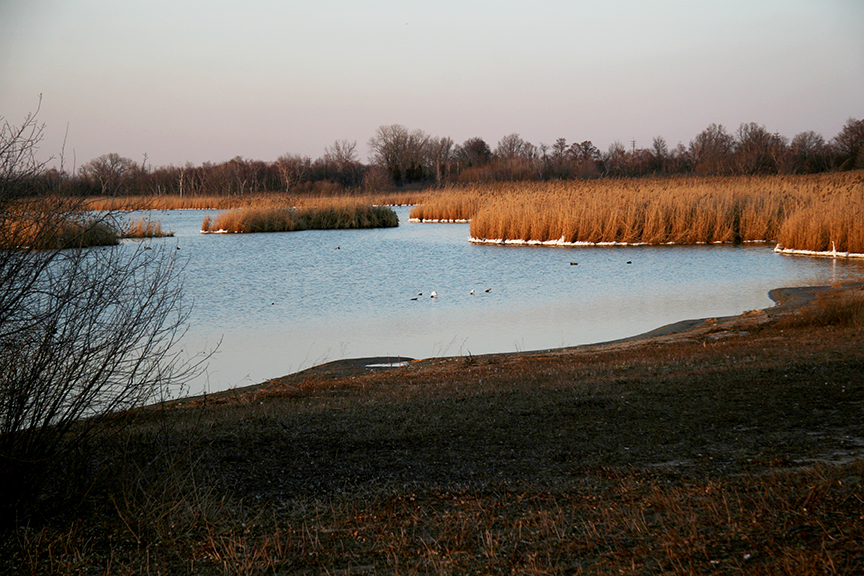
    These things passed through my mind on my recent (and first) trip to the Jamaica Bay Wildlife Refuge. This 9155-acre tract of land is part of Gateway National Recreation Area and is the only wildlife refuge in the national park system. This is one of the most important bird sanctuaries in the USA, and over 330 bird species have been sighted here – nearly half the species in the Northeast. It is one of the best places in New York City to observe migrating birds. There is also an array of native reptiles, amphibians, small mammals, over 60 species of butterflies, and one of the largest populations of horseshoe crabs in the northeast.

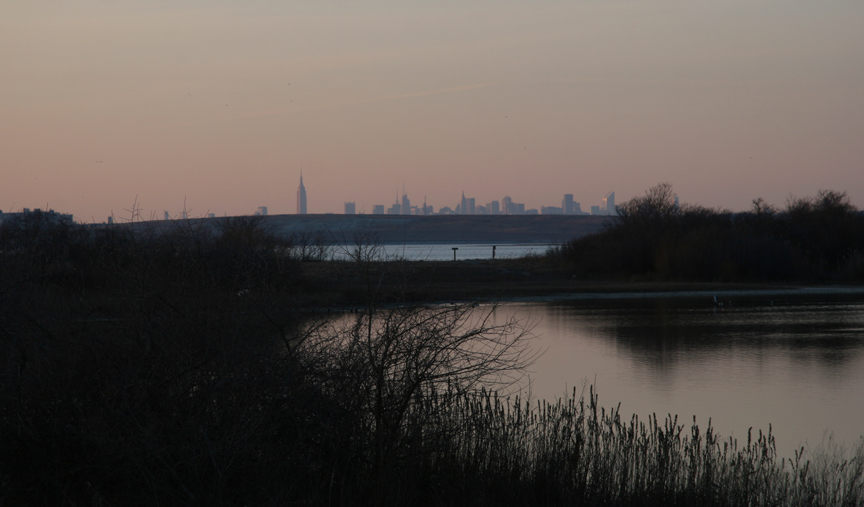
    There are beautiful walking trails and vistas of the bay, Manhattan, and Broad Channel. On my visit, I saw a number of aquatic birds, including what I believe to be an egret. The entire environment was pristine and quiet, yet remarkably, this refuge is accessible by subway.

    So if you want to recharge your batteries in New York City, this is the perfect place to do so. And I am sure Duffy would heartily approve 🙂


  • Toronto

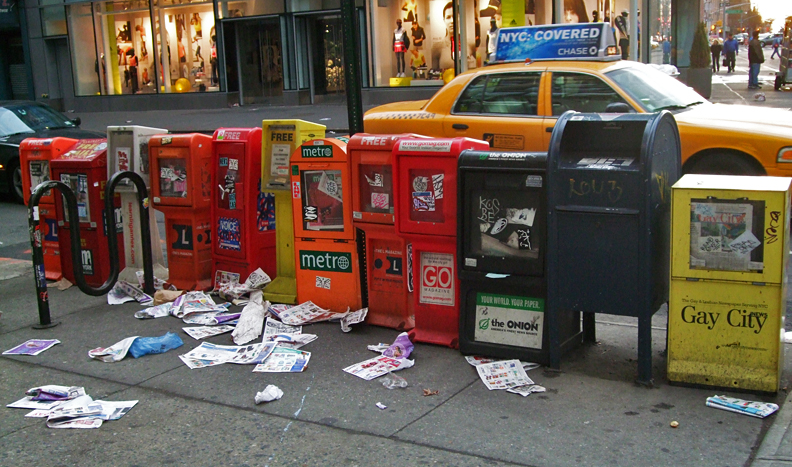
    On October 16, 2007, I wrote of a solution to one of my personal dislikes: the array of newsboxes that clutter the city streets. However, at the time, I did not have a photo which well represented the ugly side.

    Broadway can, at times, become a virtual wind tunnel. Recently, on a particularly windy day at Broadway and Houston Streets, huge gusts of wind created trash tornadoes, perfectly complementing the hideous newsboxes. Why hideous? Because the garish melange of these boxes looks like everything possible has been done to offend the eye – they are different shapes, heights, colors, and designs and are covered with stickers and ads, poorly maintained, and dirty. I have seen empty ones even used as trash receptacles. Many are chained to lampposts and various other structures.

    Regular readers know that I am all for street life, however, the issue here for me is aesthetic. In my story Very Practical, I wrote of how the practical tends to triumph in this city. I would reword that to say that practical and business interests tend to trump the aesthetic. I highly doubt that you would see a motley crew of newsboxes in this condition in most European cities.

    In researching this story, I saw articles going back 15 years in the New York Times concerning the problems and solutions with the boxes, which were even referred to as eyesores. But in any bureaucracy, inefficiency is the rule of thumb and a snail’s pace is the rate of progress, so the boxes remain while improvements slowly inch their way towards adoption.

    But many defend the edginess and grit of New York City as important, defining characteristics. I remember reading an article years ago speaking to this. The article was defending the edginess and made a suggestion for those who did not see the grit’s charm: “There’s a place for you. It’s called Toronto.”

    Related Postings: Garbage a la Mode, White Christmas, Jungle Gym, Unguent, Gummed Up


  • Who’s Getting Technical?

    The first time I went to the West Coast was by car, and it occurred to me at the time that one of the special new experiences to come was to see the sun set over the Pacific Ocean – the first time I would see a sunset over water. However, the assumptions regarding East Coast sunrises and West Coast sunsets over water are mistaken.
    Although it is not the rule, there are many places where it is possible to see sunsets over water on the East Coast (and sunrises over water in the West Coast). These do occur in special situations, such as bays and peninsulas. In these places, sunrises over water are also typically visible by making a short trip across the peninsula or island.

    In most cases, however, land is visible between the water and horizon, but there are locations where no land is visible at all and the sun sets entirely over water. The bay side of Cape Cod is one good example. Technically these sunsets are not over the open ocean, but when there is no land in sight, the experience is virtually the same.

    I thought I was the only one who gave serious consideration to the phenomenon of East Coast sunsets over water. But, surprisingly, there are others who share my interest, and I even found a blog on the subject it with locations, criteria, and discussions about horizons.

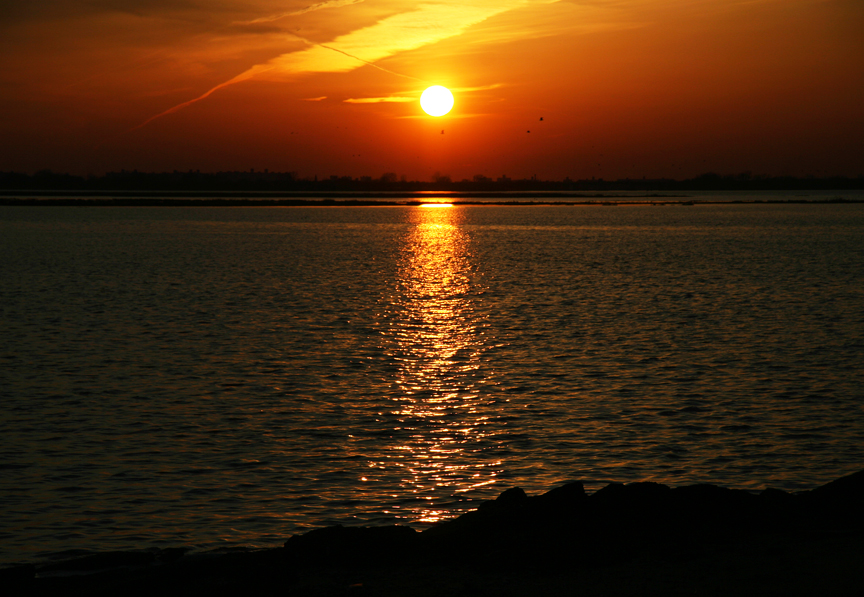
    I haven’t met a person that doesn’t enjoy a beautiful sunset, and on my recent excursion to Broad Channel, I was told that sunsets were some of the most spectacular. So it became an immediate agenda item for the afternoon. Being in the center of Jamaica Bay, surrounded by water, sunrises and sunsets over water can be enjoyed with a short stroll across town.

    When the sun sets at Broad Channel or at the Jamaica Wildlife Refuge, one can see land at the horizon, so for the sunset-over-water purists, Broad Channel does not strictly make the grade. But I doubt anyone really cares, because when it comes to sunsets like this, who’s getting technical?

    Note about the photo: Today’s photo was shot from the Jamaica Bay Wildlife Refuge and not in the town of Broad Channel itself.


  • Venice, New York

    I do try to limit my use of superlatives, lest I diminish their effectiveness through overuse or I run out of words to properly characterize the next greater thing. However, I am quite happy to take a few words from my superlatives bank account and spend them on Broad Channel, Queens. Because this is the most extraordinary neighborhood I have visited to date.

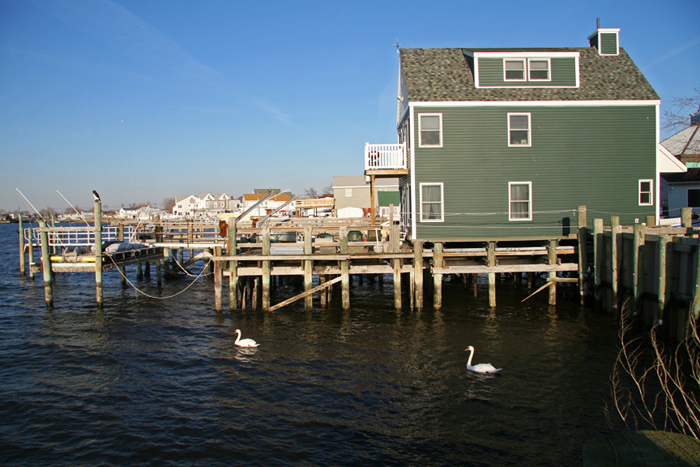
    A tour through this tiny enclave is truly a vacation to another time and place. As can be easily seen from today’s photo, Broad Channel is a maritime community. It is located on the only inhabited island in Jamaica Bay.
    The island was initially settled by the Lenape Indians. In the 1600s, a community was established by the Dutch. It was part of the Town of Jamaica and, in 1898, became part of New York City. In 1915, the city leased the island to the Broad Channel Corporation, which in turn leased properties to residents. It filed bankruptcy in 1939. Between that time and 1982, the city of New York took over. In 1982, properties were made available for sale to residents by the city for the first time.

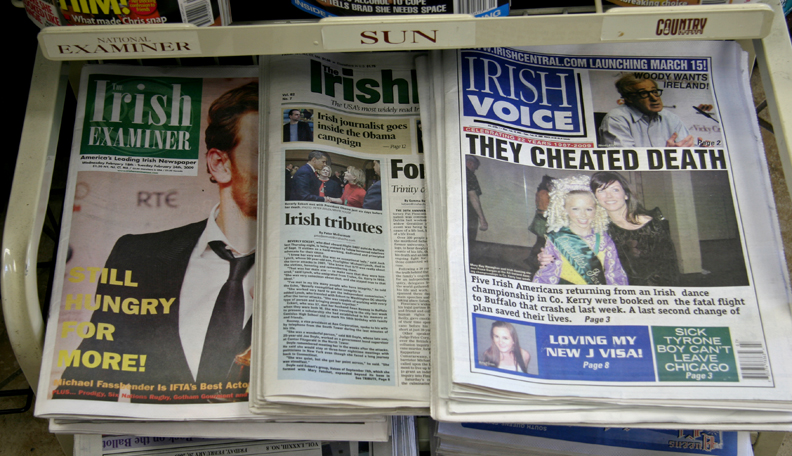
    I made a visit to the local grocery store and immediately made the acquaintance of two residents, one being Art McCarthy of over 50 years. I learned that the town is only 20 blocks long and 4 wide, cut in half by Cross Bay Boulevard, which is connected to land by two bridges: the Cross Bay Veterans Memorial Bridge to mainland Queens to the north and the Joseph P. Addabbo Memorial Bridge to the Rockaway Peninsula, with the Atlantic Ocean to the south. The population numbers approximately 3,000 with 1000 homes. I was told that the island was about 60% Irish. A quick glance at the newsstand confirmed this: three Irish newspapers were prominently displayed.

    Often referred to as the Venice of New York, dead end streets are separated by canals, and many residents have boats moored at their houses. Fishing, clamming, and other aquatic activities are the draw here. The weather was rather cold and windy, so my explorations were made by car with an occasional foray out for photos. The vistas were beautiful and reminiscent of my times in Cape Cod. The view west from town provides distant vistas of Manhattan, framed by the wildlife refuge and other islands of the Gateway Recreational Area and Jamaica Bay.

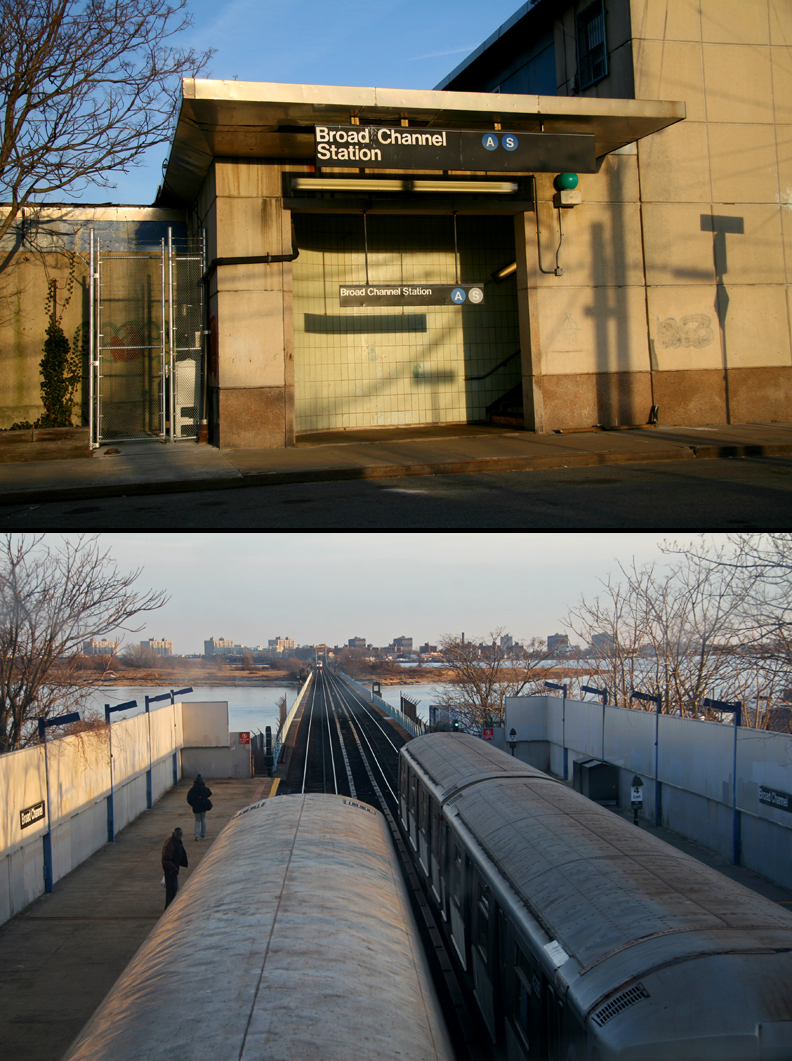
    A surprising feature of this community is its accessibility. It is an hour from Manhattan, and it can be reached by subway – the A train, which travels across the bay to Rockaway, makes a stop right in Broad Channel (see photos here).

    Broad Channel is certainly no secret among seekers of the the lesser known places of New York City. You will find it listed online and in books featuring hidden New York, forgotten New York, other islands of New York, nooks and crannies of New York, etc. The New York Times has run a number of articles on the enclave. Broad Channel is a natural target – the type of place people and media love to discover and talk or write about.

    Perhaps the most extraordinary thing is that the community is located within National Park land: the Jamaica Bay Wildlife Refuge, which can be accessed by foot from the town. But that’s another story…


  • Buddies

    I’m reminded of a classic episode of the TV comedy hit Seinfeld, where the two main characters, Jerry and George, are mistakenly taken as a gay couple. In order to express their rejection of the characterization but not appear homophobic, the writers came up with the brilliant response, “Not that there’s anything wrong with that.” The implication, of course, is that there is something wrong with that, even though the show is set in New York City, a place known for its extremely liberal population and large gay community.

    And so it is that even in 2009, many men feel they must justify and defend, even without accusation, any activities or relationships that could be perceived as gay. A male friend(s) is a potentially dangerous association.

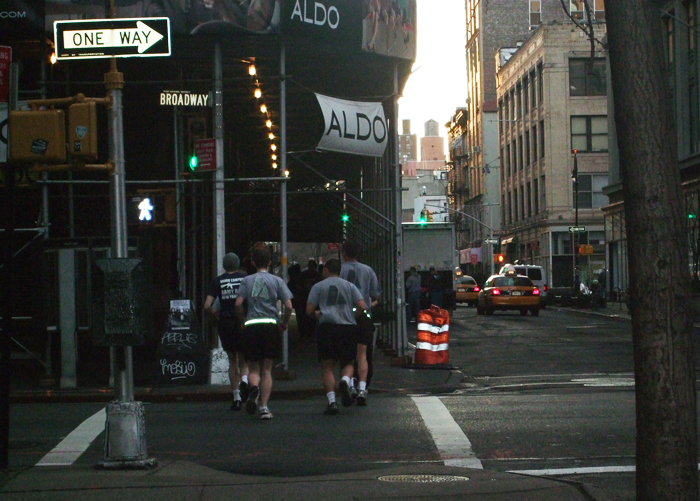
    Group male activities on the streets on New York are not a common sight, and when I saw the men in today’s photo jogging together, the first word that came to mind was “buddies”, a word often used when I grew up. For many men, using the word “buddy” carried with it enough machismo to deflect any homosexual inferences in advance, “friend” perhaps being a little too personal.

    Male friendship activities are pretty well delineated as to what can and can’t be done. Touching, for example, is very taboo – removing lint from another’s hair has to be done very carefully with just the right posturing. Perhaps safer just to say, “Hey, you have some junk in your hair.”
    The safest male activities are, of course, group involvement in sports. A sport immediately legitimizes the manliness of its participants, and a group best assures that there will be no private/suspicious activity. An announcement to the wife that one is going out with some buddies to play ball carries with it the clearest affirmation.

    To this day, men fear being gay or being seen as such, and gay slurs are still used by some men as the ultimate insults. I find homophobia rather silly. Women don’t labor under these constraints. Displays of affection, walking arm in arm, and reciprocal preening are all well accepted without stigma attached. Women realize that mere association with gays or displaying sensibilities which may appear gay has no effect on one’s sexual orientation. I have associated with many gays socially, hired them, and worked with them professionally.

    Personally, I think most gay associations and stereotypes are complementary and positive in nature, such as appreciation of finer things, fashion, the arts, etc. Things such as the Seinfeld comment and TV shows like Queer Eye for the Straight Guy have helped build a more positive image for gays.

    Now if I were accused of being gay because my mannerisms were highly affected like those of a flaming queen, perhaps I would be a little more self-conscious. Then I may feel the need to contact a few buddies for some male bonding – not that there’s anything wrong with that 🙂


  • Mystery Meat

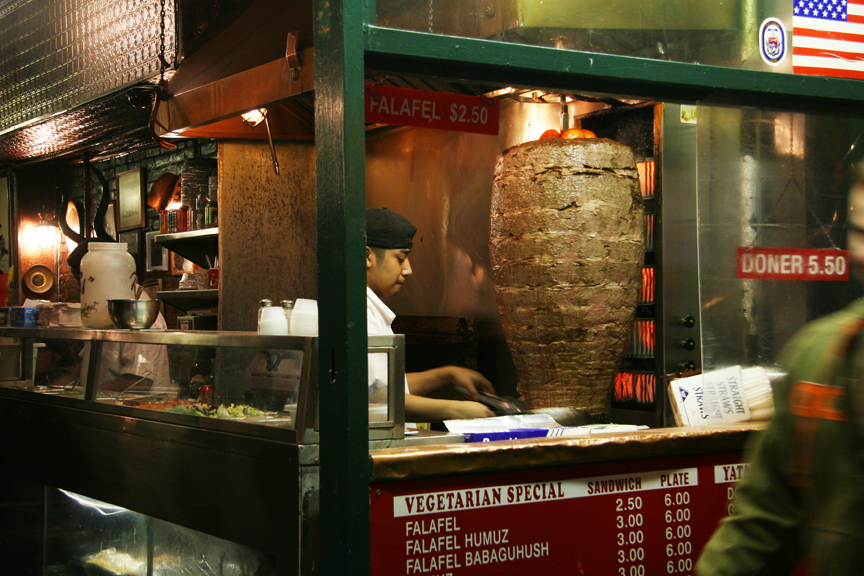
    My brother-in-law is pretty fussy, particularly about food. In the 1980s, he and my sister made frequent visits to the city. Although our budgets were much more limited at the time, there was no way that he was going to eat anything that was called Shawarma or looked like the hunk of meat on a spit in the photo. No “mystery meat” for him. On a hot summer’s eve, strolling down trash-littered MacDougal Street, eating a food like this being sold streetside was a line he would not cross. In his defense, I must agree that that spit of meat on MacDougal Street has never been very appealing.

    To this day, shawarma is a great little source of humor between us, and the mere use of the word will elicit chuckles, if not guffaws. But shawarma is a serious food served in countries around the world.
    Shawarma is a middle Eastern Arabic sandwich. The meat may be lamb, mutton, beef, goat, or chicken (and occasionally mixtures). It is skewered and roasted on a long spit and served in a pita, typically with tomatoes, onions, and yogurt sauce. There are a myriad of spellings* and the sandwich is similar to others in the region, such as the Gyros of Greece or döner from Turkey. Yatagan, at 104 MacDougal Street, serves the Turkish variant known as döner kebab.

    I keep an open mind and in reading various food reviews from many different sources, I find that numerous diners love a good shawarma or döner, and Yatagan appears to please. Comparison reviews of their döner kebab with others in the immediate area appear favorable. The falafels here are also touted by many to be superior to that of Mamoun’s, a village standby.

    However, there is more mystery here than in the meat. According to the New York Times, on October 22, 1987, the owner of the Yatagan Kebob House, Gultekin Ismihanli, went beserk:

    “A 42-year-old restaurant owner barricaded himself inside his Greenwich Village apartment last night, fired six shots from a .45 pistol into the air and held the police at bay for eight hours before surrendering early today, officials said. No one was wounded in the incident, which began around 4:25 P.M. when the man, Gultekin Ismihanli, fired the shots out of the second-floor window of his apartment at 106 Macdougal Street at Bleecker Street, the police said.”

    No reason was given for the incident. Perhaps my brother-in-law was right and there is something to fear in that amalgam of twirling mystery meat 🙂

    *Note about Shawarma: The word, which means turning in Turkish, is an Arabic transliteration, and like most middle eastern foods, the spellings are many: Shawerma, Shwarma, Shoarma, Shaorma, etc.


  • Absolutely

    I was recently at the Barnes and Noble Bookstore at 8th Street and 6th Avenue on the second floor, some minutes before closing. A woman, somewhat harried, was looking for a book – something along the lines of “How to Talk to a Republican.” She was apparently involved with one and was distressed about the prospects. Standing next to her was Whoopi Goldberg, to whom she asked rather frantically, “Can I date a Republican?”

    One of the greatest pleasures of being in this city are the talents and surprises lurking around corners. I try to make no assumptions about people based on appearance. Talent comes in many flavors here; there are the occasional obviously well-known figures, some who just look the part, and others who travel incognito. See my story Only in New York.

    I recently stopped into the Guitar Center on 14th Street with a friend who was unfamiliar with the place. My tour included a room I had never entered which was filled with DJ gear. Three Latino men were playing with a CD player with a pressure-sensitive scratch disc interfaced with an iMac. The equipment allows the manipulation of digital media as one would manipulate vinyl LPs. Fascinated, I watched them test the gear. I took some overhead “hail Marys”* and got a few acceptable photos.

    They appeared to be friendly, so I introduced myself with a New York Daily Photo business card. I learned that two were professional DJs, Juan and Albert. Juan Pablo was from Cuenca, Ecuador. I told him I would feature them on this website. As I wandered the store, Albert caught up with me to give me his card.

    And Whoopi’s response to “Can I date a Republican?” She answered, without hesitation or equivocation, “Absolutely!”

    *Hail Marys are photos taken blind, without using the viewfinder, typically overhead. The term “hail Mary” is used owing to the idea a prayer is needed to get a good photo.

    Related Postings: Crime Scene, DeliveryZiggy Plays, Singing Bowls


  • Light and Lights

    One of the best locations to enjoy vistas of Manhattan and the surrounding waterways is from the promenade in Brooklyn Heights. Here you will find postcard views of lower Manhattan, South Street Seaport, the Brooklyn Bridge, the East River, and many of New York City’s iconic landmarks – the American International Building, the Empire State building, the Chrysler Building, the New York Life Insurance Building, and the Met Life Tower.

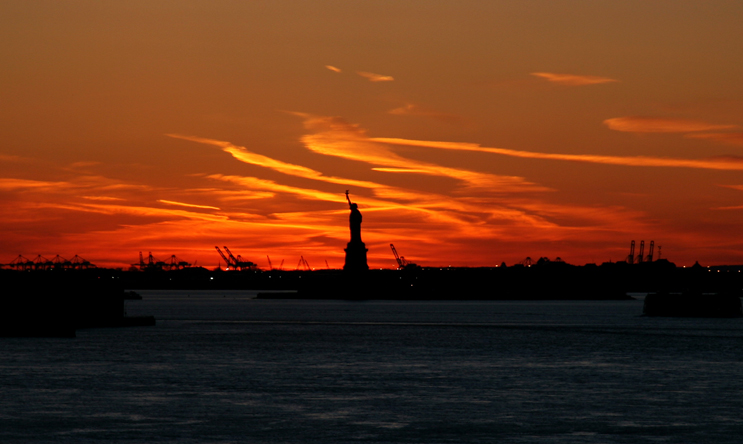
    An added bonus is that the promenade faces west, and that means sunsets. This is the time I would recommend visiting; during the evening, you have the best light and the gradual darkness coming over the city with a menagerie of lights. If you are fortunate, you will be rewarded with a sunset like this one – brilliant orange-red with streaks of yellow, all back lighting our Lady of Liberty. But I sell you no longer – I think the image speaks for itself…

    Note: If you look closely at this panorama, you will notice the silhouettes of container cranes, eerie and surreal. I have written before of the attractiveness that can be found in industrial landscapes in Hell’s Gate.


  • Perfect Attendance

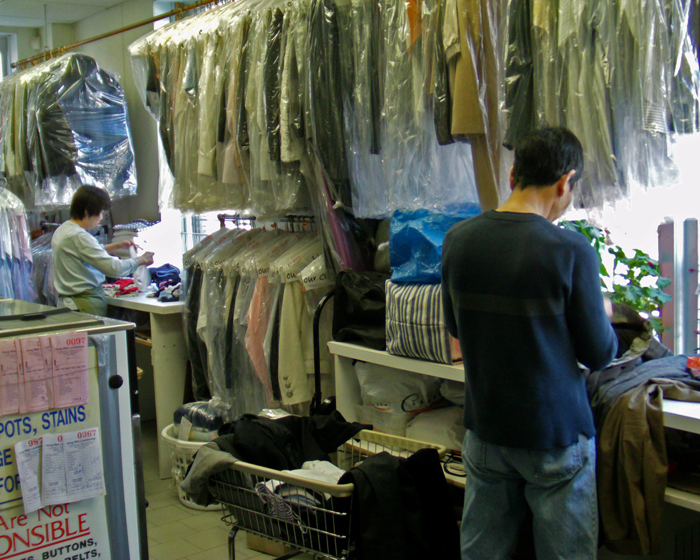
    Hong, the owner of Hong Wah Laundromat at 176 MacDougal, and I share very significant near misses. Let me explain.

    As I have grown older, I find myself doing more creative work. Product design and graphics in my business, and, recently, writing and photography for this website. But when I was younger, I always considered myself a numbers man. I loved math in high school and majored in math in college. I tried to quantify most things. Otherwise, how could one make any objective evaluations without measuring and numbers? One way to satisfy this thirst for all things numeric is setting records and noting the numbers. Like days attended in school.

    Very few students are awarded perfect attendance for 4 years of high school. I did, nearly. Yes, I did get sick with flus and colds, but I attended, under all conditions, every school day for four years. One day, I left early in the afternoon for a dentist appointment. I assumed, however, that I would get a perfect attendance award and was shocked on graduation day to find that I had been slighted. Apparently, leaving 2 hours early is not perfect attendance. Too late to protest at graduation ceremonies, and to this day, I still feel cheated.

    I don’t want to get into a pissing contest about who works hardest or competitive tales of hardship – everyone has one or more. But New York City is not a prison camp or the third world, and even though many New Yorkers are workaholics, there is always some accommodation made for holidays and time off. With some exceptions.

    Hong is the first and only person whom I personally have met that takes no time off from work. By work, I mean going to a place of work and putting in a full day.
    Hong Wah Laundromat is open seven days per week from 8AM to 9PM (Sunday until 8PM) -that’s 13 hours per day. He and his wife are there every day, all day. Some time ago, I asked Hong if he took vacations. He appeared mortified and just bristled at that concept. His immediate response was that he had to work every day.

    And by no time off, I don’t mean very little time off, I mean none. Or should I say nearly none, because recently, I learned a dirty little secret. Hong does close one day per year: New Year’s Day. So, like me, he misses that award by one day. But, unlike me, he has an easy solution to his near miss. I’d just work that extra day and give myself perfect attendance 🙂


  • Of Bikes and Things

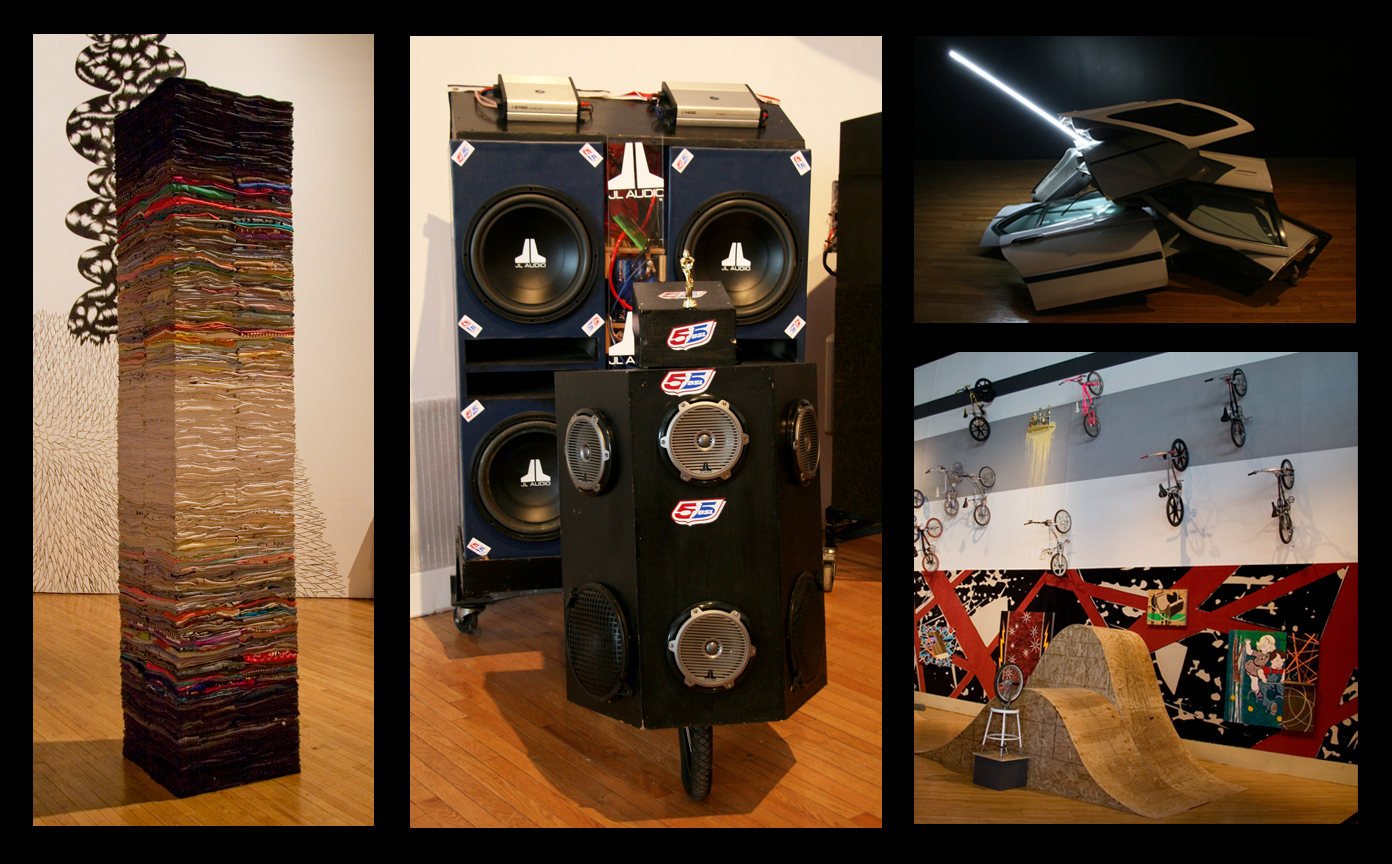
    This collage will give you an idea of the range of exhibits that is typically found in the Queens Museum of Art. The focus here is much more community involvement, with many displays of installation art and multimedia creations. When I was there most recently, Derick Melander was busy working with children to create a piece like that on display (left photo), Flesh of my Flesh.

    Articles of second-hand clothing were being neatly folded and stacked according to color value – darkest at the bottom and top, with a white center. The overall effect of the tower of colored clothing was quite striking, and the involvement of adults and children was a great success.

    In a small side gallery, an assemblage of car doors with a neon tube, Door Pile, by Corey D’Augustine, was being shown. In the main exhibit room, a number of BMX-style bikes affixed to the walls and skateboard ramps was featured.

    I was fascinated with the display of the stereobikes, Basszilla and Trebblezilla, made by Future Shock (center photo), made by a group of Trinidadians from Richmond Hill, Queens. The construction of these monster radio bikes is a popular hobby in Trinidad. Some of these can cost as much as $4000 and emit 5000 watts. Gangs of riders roam the streets of Richmond Hill. One report says that the police have been lenient with boom bikes, owing to their appreciation of the workmanship involved in making these things. These are obviously contentious creations, heralded by some as art and condemned by others as more unneeded contributions to a city already laden with noise pollution.

    In an ironic twist, on the exit ramp from the main exhibit room, we found a plaster cast of Pietà – a plaster cast of Michelangelo’s original work, which in 1964 was transported from the Vatican and displayed at the World’s Fair…


  • Rocket Thrower

    The thing about public sculpture is that once it is created, it isn’t going away, and when it is a large work, it really can’t be ignored.

    Regardless of criticism, a work can take on a life and persona of its own, due to its pure existence, irrespective of aesthetics. Even a work that may generally be regarded as an abomination will often take on a certain charm and, in time, become loved like an ugly duckling. The Eiffel Tower is an excellent example. Considered an eyesore by many at the time of its construction, it weathered quite well. Here is a comment made at the time by William Watson’s U.S. Government Printing Office publication of 1892’s Paris Universal Exposition: Civil Engineering, Public Works, and Architecture:

    “And during twenty years we shall see, stretching over the entire city, still thrilling with the genius of so many centuries, we shall see stretching out like a black blot the odious shadow of the odious column built up of riveted iron plates.”

    The Eiffel Tower was originally built in 1889 as the entrance for the Exposition Universelle, a World’s Fair marking the centennial celebration of the French Revolution. Plans were to have it torn down, but it remained. It is now generally seen in a positive light, and its presence is a major icon on the Parisian skyline.

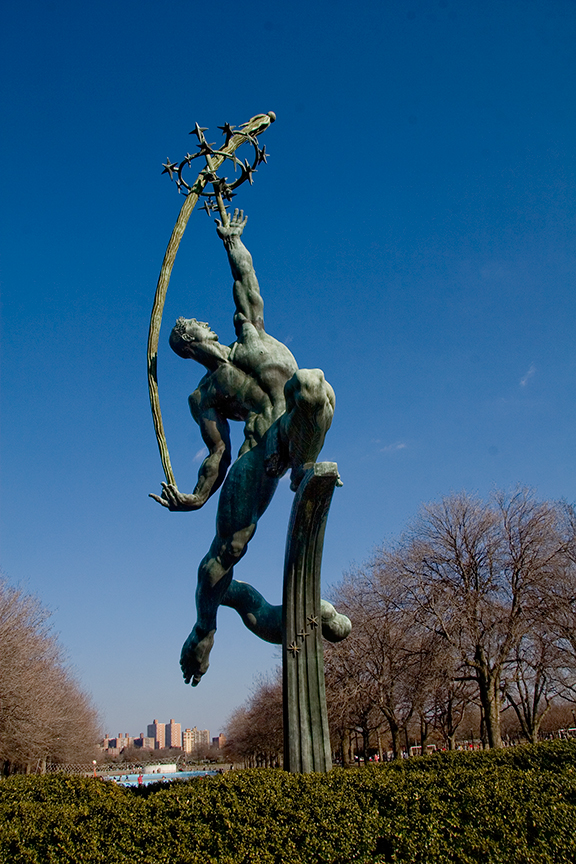
    The Rocket Thrower in the photo was created for the 1964 World’s Fair and is located in Flushing Meadows-Corona Park, just a stroll away from the Unisphere.
    It was designed by Donald De Lue. From the NYC parks website:

    “He designed the Rocket Thrower as a heroic, 43-foot high bronze figure hurling a rocket heavenward with his right hand, and reaching for a constellation of gilded stars with his left; this version was based on designs for the theme of man conquering space …”

    This sculpture was met with mixed reviews. The New York Times art reviewer John Canaday found the piece to be “the most lamentable monster, making Walt Disney look like Leonardo Da Vinci.” Robert Moses (organizer of the Fair), attempting to bolster the artist’s fragile ego, consoled De Lue by remarking, “This is the greatest compliment you could have…[Canaday] hates everything that is good . . .” Read more about it here.

    When I happened upon this sculpture, I found it quite striking and not at all a lamentable monster. But perhaps I have become inured to bad sculpture or I am not art critic enough…


  • dinamic_sidebar 4 none

©2026 New York Daily Photo Entries (RSS) and Comments (RSS)  Raindrops Theme