• Devil Ups the Ante

    It would be fair to accuse me of wanting to have my cake and eat it too, but I would not mind attending the New Year’s celebration at Times Square without the crowds. Crowds are obviously part of the experience, but it’s an experience most New Yorkers can do without. I can’t recall anyone I know attending in decades. I have attended a few times, including the millennium celebration.

    New Year’s Eve is very much a partying holiday, and most activities are overpriced, overcrowded, and many fraught with logistical issues. This is one holiday that scares many who opt for a less stressed night at home, perhaps watching the ball drop at Times Square on TV and looking forward to another workday off.

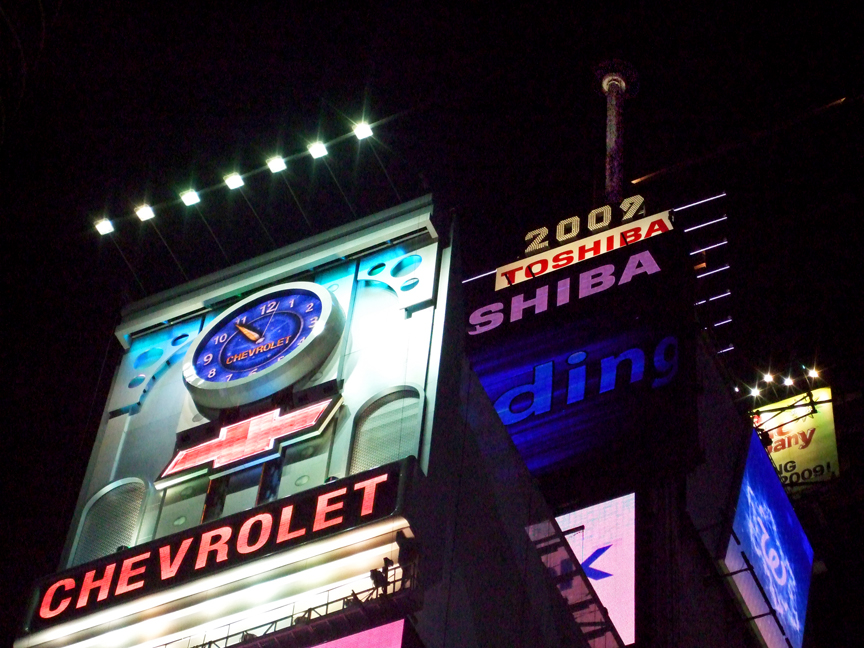
    I hope today’s photo does give evidence that I am not the complaining curmudgeon. Last night, before going to sleep, I decided to get dressed, go back out into the cold, and make a trip via subway to Times Square to see and photograph the preparations. I was surprised to find the area packed and abuzz at a late hour. Broadway theater-goers leaving shows contribute to the crowd. The media was already there, setup in as central and prime a location as one could have.
    The lighting in Times Square is now absolutely amazing, with an array of neon and state-of-the-art electronic displays. There is actually an ordinance requiring building owners to display illuminated signage.

    Whether visitor or resident, I recommend visiting this devil’s playground any night. The ante has been raised – even the devil needs plenty of new tricks to compete with so many other temptations…

    Photo note: This is the view looking south. Above the Toshiba display (where the count down appears) you can see the LED illuminated Waterford crystal ball atop a pole.

    Related New Year’s Postings: Times Square Ball Drop, New Year’s Day, Density and Intensity, Let’s Have a Parade, ArtKraft Strauss
  • White Christmas

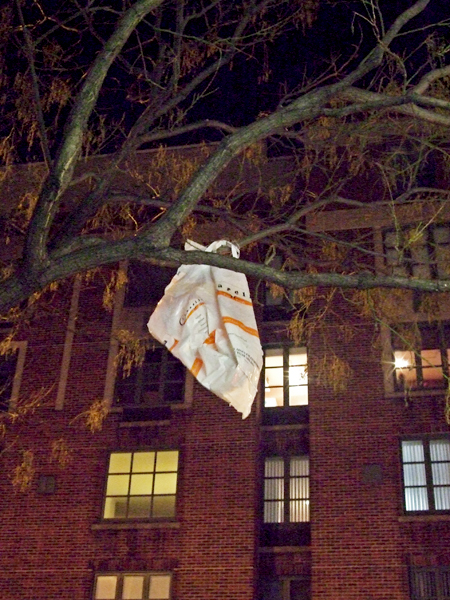
    Decorations of white for the holiday season? Hardly. Plastic bags being blown into trees is a serious problem worldwide. See how extreme it can become in this gallery of photos here. Astounding, isn’t it?

    New York City has more than 500,000 trees – candidates as bag magnets. As Clyde Haberman points out in his New York Times article NYC; In Winter, Trees Bear Plastic Fruit: “In summer, leaves obscure snarled plastic. The leaves are also splendid, parks people say, at repelling the polymerized intruders before they can land.” Like chewing gum on the streets, once you start looking for these “plastic fruit,” you start to notice them more.

    There is a global movement to reduce/eliminate the use of plastic bags, particularly for grocery checkout. The only really effective way to change behavior with issues such as this one appears to be a financial disincentive. City or country bans on plastic shopping bags usually involve a tax, unfortunately. In Ireland, a €0.15 levy on plastic shopping bags was instated on March 2, 2002 – there was a subsequent 90% reduction in use of plastic bags. China has banned the use of ultra-thin plastic bags. San Francisco has banned non-compostable bags. Much of Europe has various tax levies or bans. Mayor Bloomberg is proposing a $.06 tax on plastic shopping bags. However, this move is controversial – many see it primarily as a revenue-raising scheme disguised as a green effort.

    Plastic bags are such a complex issue – any simple assertions concerning their use usually miss some key points. The lists of pros and cons of paper versus plastic are quite long. Paper is not a clear winner – apart from trees, energy is require to produce paper bags, dioxins are released in production, and they do not decompose in landfills. Also, many reuse the bags for trash at home or cleaning up after their dogs, so reduction of plastic shopping bags may result in an increase in the purchase of plastic garbage bags. The best solution is a reduction in the use of bags to begin with.

    The reusable shopping bag is a good idea, however, in New York City, this is a problem due to the general lack of use of cars for shopping. Carrying reusable shopping bags is not realistic for most residents, and unplanned shopping also precludes their use.

    I think in the end, a real net reduction of energy and materials will require a wholesale change in behavior and habits regarding bags and trash. In years to come, I hope this is not a new interpretation for Irving Berlin’s I’m Dreaming of a White Christmas

    Photo Note: This tree was on Waverly Place near 6th Avenue. The bag was from Citarella, a gourmet food market. At least our tree trash is first class 🙂


  • ArtKraft Strauss

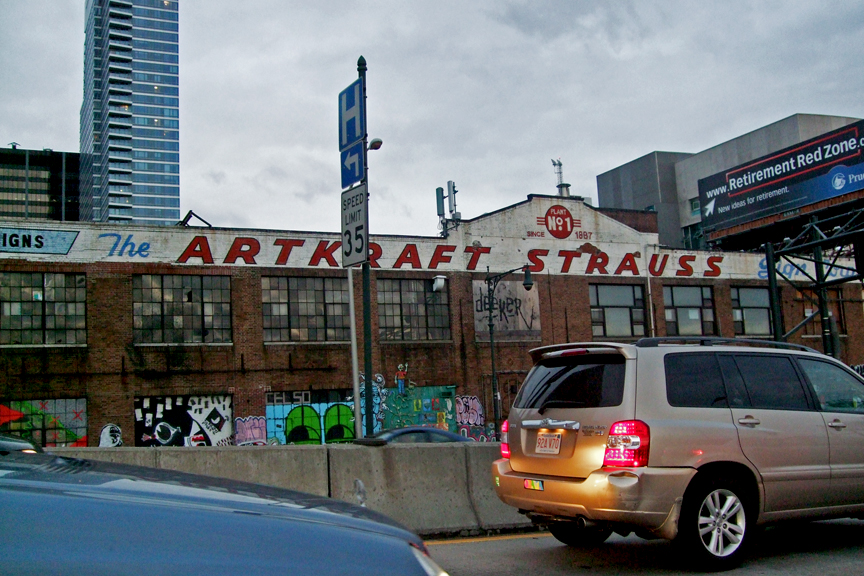
    Occasionally, something absolutely jumps out at me and screams. Seeing a weathering sign like this on a ramshackle industrial building is in itself interesting. And perhaps if I was familiar with every square inch of Manhattan and possessed a photographic memory, sightings like this one of the ArtKraft Sign Company would only be a short review class and not a major event.
    I have ridden by this location hundreds of times over the decades but never really made any note of it. However, in January 2007, I had written of this company in my article on the iconic Pepsi-Cola sign flanking the East River. So the name ArtKraft Strauss was somewhere in my subconscious mind, waiting to be triggered. The photo required some multi-tasking;  I only had seconds to find and grab a point-and-shoot camera, open a car window, and shoot while driving in slow-moving traffic on the West Side Highway.

    ArtKraft Strauss is the most important signage company in the history of New York City. They are responsible for signs known internationally, like the Camel cigarette man who puffed smoke rings over Times Square from 1941 to 1966. Signs like this were virtually de rigueur for visitors. Coca-Cola has had a sign here since 1907 and has gone through several iterations, with a 1992 spectacular, 42-foot model of a Coke bottle utilizing state-of-the-art electronic technology. For 87 years, this is the company that was responsible for lowering the ball at Times Square on New Year’s Eve. See a history of ArtKraft’s signs with photos and videos at their website.

    ArtKraft Strauss was founded in 1897 by Benjamin Strauss as Strauss Signs. This company merged in 1931 with Artkraft-New York, founded by Jacob Starr, a former employee of Strauss Sign. ArtKraft has dominated the signage in Times Square through the era of neon and since the 1980s with electronic displays such as that of Coca-Cola.

    Until 2006, ArtKraft Strauss utilized this space (40,000 square feet on two floors) at 57th Street and 12th Avenue for their manufacturing. They have since divested of manufacturing operations and now operate as a design, consulting, and project management sign company. The space is now occupied by the not-for-profit arts organization chashama and hosts over 24 visual artists in walled, open studios on the 1st floor, as well as rehearsal space on the 2nd floor for theater companies. I hope they keep that sign…


  • Lost and Found

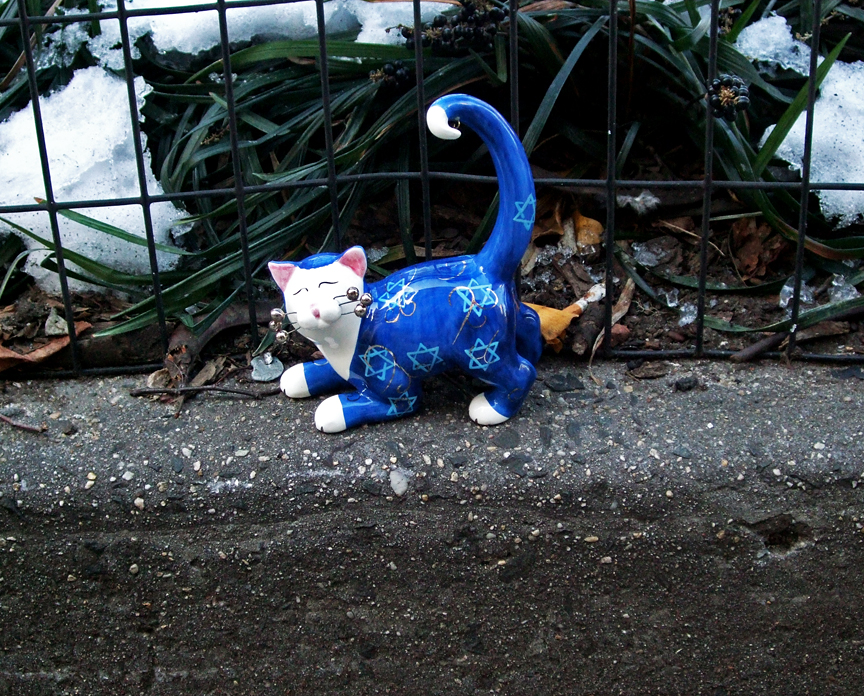
    I will never know for sure why this ceramic cat was perched so carefully on a sidewalk curbstone. Many may ask, why do I care? Initially, its bright colors made it jump out on a bleak winter day – so unexpected. However, what really piqued my interest was that its placement there was so obviously deliberate – there had to be some original intention. Was it an artistic statement, a discarded possession, or some act of rebellion? And since this occurred in New York City, such an occurrence also had a huge element of vulnerability. An object will only remain like this for a short time, and to witness it is a privilege with a very small window of opportunity (see Small Gestures here).

    Am I making too much of such a small thing? Perhaps, but the devil is in the details, and often, things like this can say a lot and also take one in unknown directions. I have an idea as to why it was there – an idea I want to believe.

    When I was in Paris once, strolling with a friend, we noticed a glove on a window ledge. In the same way as this cat, it had been obviously placed there deliberately; it was hard to imagine that it could have gotten there by accident. We also had the sense that it was intentionally undisturbed. These things were so curious that we indulged in conversation about it for some time and concluded that this glove was lost and was placed there for its original owner to be found.

    Speaking to others, we subsequently learned that we were correct and that this was a common practice in Paris. In all likelihood, the owner of an item will pass the same way again and find his or her lost personal belonging. We were so elated to learn that this small act of humanity had become common practice. How wonderful to learn of a variant on lost and found that required both the honesty and thoughtfulness of many by the thousands of passersby who participate in this act.

    Perhaps this explains the mystery behind the cat. For me, however, there is a greater gift than finding a lost possession. Like many New Yorkers who have become untrusting and cynical through years of living here, I have lost faith in the goodness of people. But I found it again in these acts of kindness…


  • Christmas 2008

    Today’s photo is a collage of some of the Christmas postings I have done since 2006. There are many; the links are provided below if you would like to see the original postings.

    Merry Christmas and Happy Holidays to all! Thanks for your support 🙂

    Christmas Postings: Tiffany’s Windows, Saks Windows, Christmas Spirit, Winter Wonderland, Dyker Lights, National Tree, Nested Embraces, Comfort and Joy. Surly Santas, Santa, Just Like Everyone Else


  • Color of Commerce

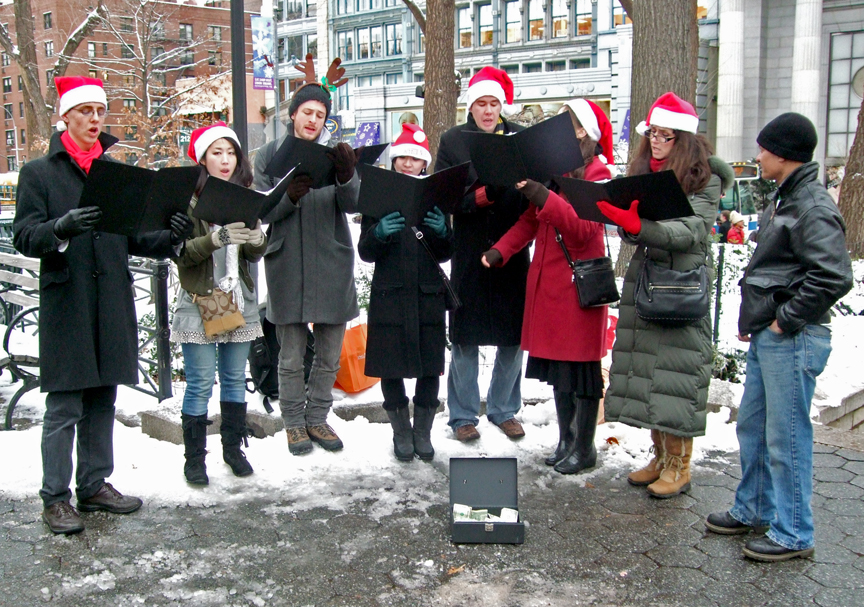
    Dr. Seuss was not part of my childhood. Certainly a lack of desire for reading was not a reason; Seuss’s books gained popularity somewhat after I grew up. But I love the storyline of How the Grinch Stole Christmas. There is no question that Christmas has become progressively more commercial every year, with retailers almost completely obfuscating its original meaning. It is easy to adopt a Grinch’s view of Christmas. Associated Christmas activities other than shopping have taken a back burner, and frequently these traditions are also marketed to death. And, of course, New York City is a true melting pot of ethnic and religious backgrounds – many do not celebrate Christmas, and for them, the commercial side is primarily what they see. It’s not necessary to share the worldview of Reverend Billy and his Stop Shopping Choir to see the devolution of Christmas.

    But I don’t want to be the Grinch that tries to steal Christmas or a 21st-century Scrooge – I have been accused of that. So I make an effort to seek out those things that are meaningful in the Christmas season, which at times feels like swimming against the tide. Trade is a necessary part of our world, and it makes no sense to completely shun anything that bespeaks of business as many do and be a purist who views the world through glasses that tint everything with the color of commerce. Perhaps if we take Dr. Seuss’s story to heart, we can all win back the true spirit of Christmas 🙂

    Photo Note: These carolers were in Union Square Park. I did not notice on first examination of the photo that they were collecting money for their efforts. Apparently I have lost or misplaced my tinted glasses 🙂


  • McNulty’s

    People love to complain, and a popular object is the demise of single-location businesses and the domination of retail chain stores. Americans, however, love a deal, and few can resist the lure of a huge selection and deep discounts. Even those most adamantly opposed to the retailing giants will, at times, find themselves at places like Home Depot for AA batteries or perhaps KMart for beach accouterments.

    The weaknesses in these places are staff knowledge and quality of goods. To enter a mom-and-pop, family-run specialty shop usually means cutting to the chase – learning what’s available, qualitative differences in products, and every other nuance. And in the case of smaller operations, all of this can be done quickly. I frequent many of these stores, smaller and larger, and have blogged several: Space Surplus Metals (now gone), Joe’s Dairy, Myers of Keswick, Murray’s Cheese, Raffetto’s, Pearl Paint, Faerman Cash Register, Eileen’s Cheesecake, Economy Candy, Canal Rubber, B & H Photo Video, Kate’s Paperie, Bleecker Bob’s, Strand Bookstore, Met Lumber, and Matt Umanov Guitars. Many other places, veritable NYC institutions, have closed, like Industrial Plastics on Canal Street.

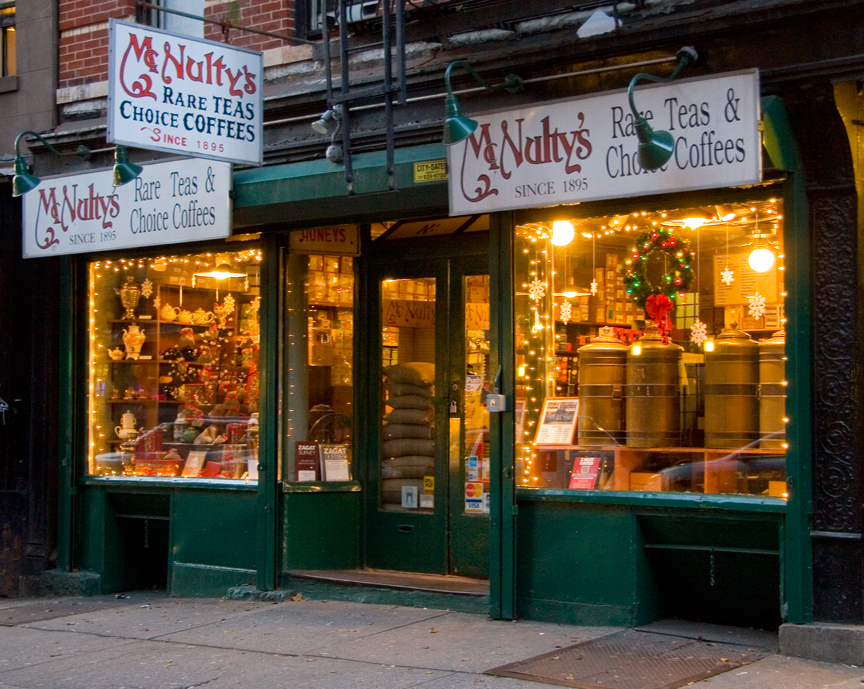
    Most chains whose primary strength is price create an illusion of good service and competency with buzz words which, I am sure, come down from the corporate headquarters. Phrases like “Did I give you excellent service today?” which is really more of an irritant, adding insult to injury. Why tell them the truth when they don’t really have the capability of giving you excellent service? How can young workers compete with people who have owned businesses for decades or even half a century? There are upscale retail chains like Starbuck’s and Whole Foods, but the size of their operations still makes it impossible to have the type of staffing you find in a smaller independent retailer, like McNulty’s Tea and Coffee. In fact, I just called with a coffee question while writing this – the owner answered and gave me an immediate, detailed, informed answer.

    I am not a coffee drinker, so my knowledge of McNulty’s is from browsing and buying for others. This place has that stamp of authenticity – you can feel it when you walk in – a place for serious coffee buyers managed by serious coffee merchants. McNulty’s, established in 1895, is located at 109 Christopher Street in the West Village and is run buy David Wong, the 7th owner of the shop. There are over 100 teas and 75 kinds of coffee from around the world, as well as, of course, many things you won’t find elsewhere – that’s why we live here and why others visit. Let’s hope for survival of the independents and coexistence with the chain stores…


  • Deep Freeze

    As one of the readers of this website commented on a previous posting, New York City has a climate tempered by its coastal location. I got quite absorbed this morning reading about climate classification systems, with names like Köppen, Strahler, and Thornthwaite. I was somewhat shocked to learn that according to the Köppen climate classification system, New York City is considered humid subtropical (a subclassification of the Temperate group), which is the same classification as most of Florida. Others say this classification is debatable, and some say the term subtropical is a misnomer and a mistranslation of the original German.

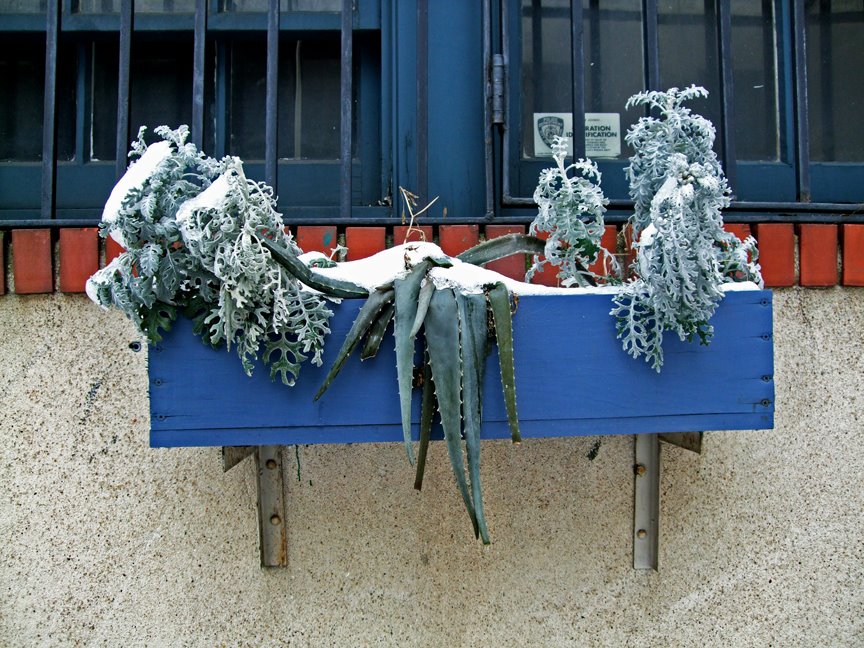
    The classification as temperate is a stretch for me. With summer days often in the 90s and winter days like today of 14° F (without windchill), temperate is not the word that comes to mind. Today’s photo was taken in Washington Mews with what appears to be frozen aloe vera – I have no idea if these plants survive a winter like this.

    Many New Yorkers spend a significant part of their work commute on foot to and from public transportation, or, like myself, have the privilege of walking to work. On non-work days, most of us will find the majority of our needs met and errands to be done in a walking distance within our neighborhoods. So the weather in New York City really affects lifestyles, habits, and decisions regarding activities.

    In my case, I have a 3/4-mile, 15-minute walk to my office. I appreciate this luxury, which on most days is a pleasant way to both exercise and enjoy the city streets. However, in the case of a driving rain or frigid weather with a howling wind, that 3/4 mile can be an unpleasant trek. Juggle some packages and an umbrella simultaneously in a rainstorm, and you can easily become envious of the comforts of suburban car culture with automatic garage door openers. Certainly preferable to a deep freeze…


  • Behind Door Number One

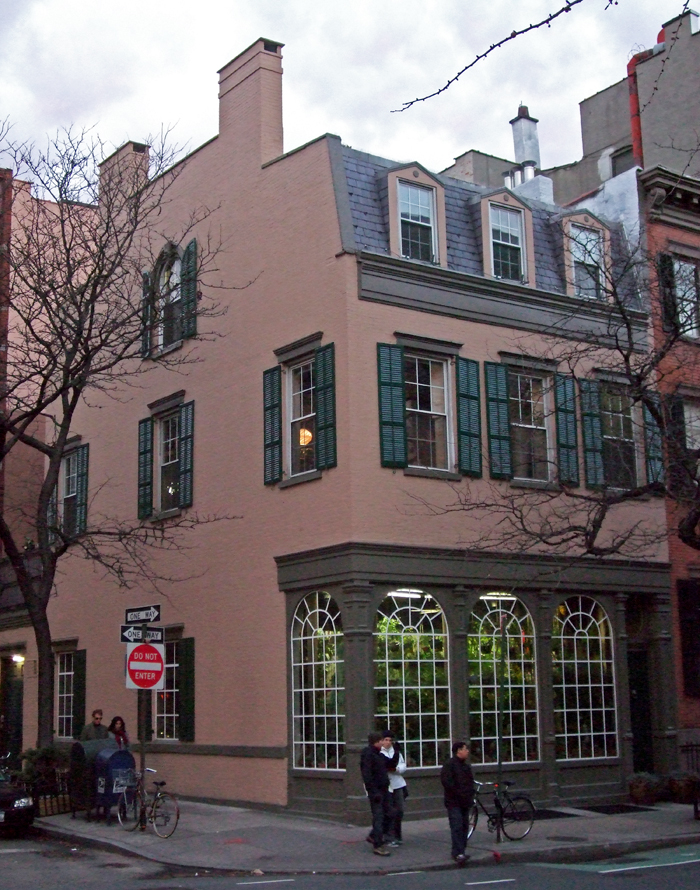
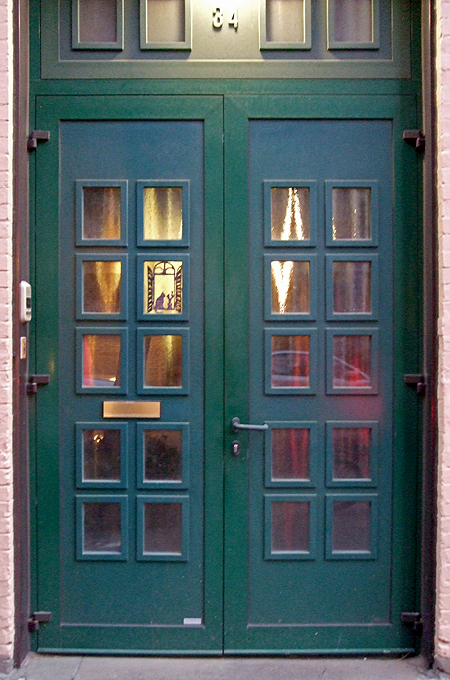
    There is a bigger story here, but I don’t have it. For years I have observed this extraordinary ground floor space. The exposure on Prince Street has huge windows and is completely filled with plants from floor to ceiling – it is a virtual botanic garden with foliage so thick and deep that you can’t see what lies behind it.

    There are a number of other peculiar things about this. Situated on a corner of Prince and MacDougal Streets, one would expect the ground floor space to be rented to a business – ground floors on busy streets or intersections almost always are rented, as they are relatively unlivable with such little privacy. The revenue from renting space like this is quite substantial, hence offsetting building expenses (assuming zoning permits it).

    The building itself is an immaculate, historic property with a mansard style roof line, dormers, chimneys, and dark green shutters. A bit of espionage led to the following interesting pieces of information. The corner property appears to have two entrances and street addresses – 34 MacDougal Street and 205 Prince Street. Katina Productions is listed at the MacDougal address. A small icon of a cat on the MacDougal entrance matches that on their website (see photo here). A visit to their website has a bio of Belgian filmmaker Simon Nuchtern, who owns Katina, a company involved in digital editing. Further investigation shows 205 Prince Street to be the residence of Anna and Simon Nuchtern, and property searches shows Anna Nuchtern to be owner of 205 Prince Street. I was told by a neighboring business that the building was owned by an “artist couple.” That’s quite a property for a couple to own and occupy, if they are the only tenants.

    So there you have it. But I still do not know why all those plants are there and what’s behind door number one…

    Postings of Other Mysterious Places: Enigma, Secret Society, Crime SceneBrutal, Pied-a-Aire


  • Unreported Acts of Kindness

    I remember a statement made by former mayor Rudy Giuliani years ago about his frustration with the media and their tendency to focus their news coverage on the negative. He cited specific instances at that time of kind, benevolent, humanitarian acts that were worthy of coverage but which the media had not covered at all. I think there is much truth in this – the positive does not sell. It takes an extraordinary act of kindness to compete with a smidgen of dirt. Gossip, divorce, murder, crime, natural disasters, infidelity, sex scandals, money, celebrities – these are the things people want to hear about.

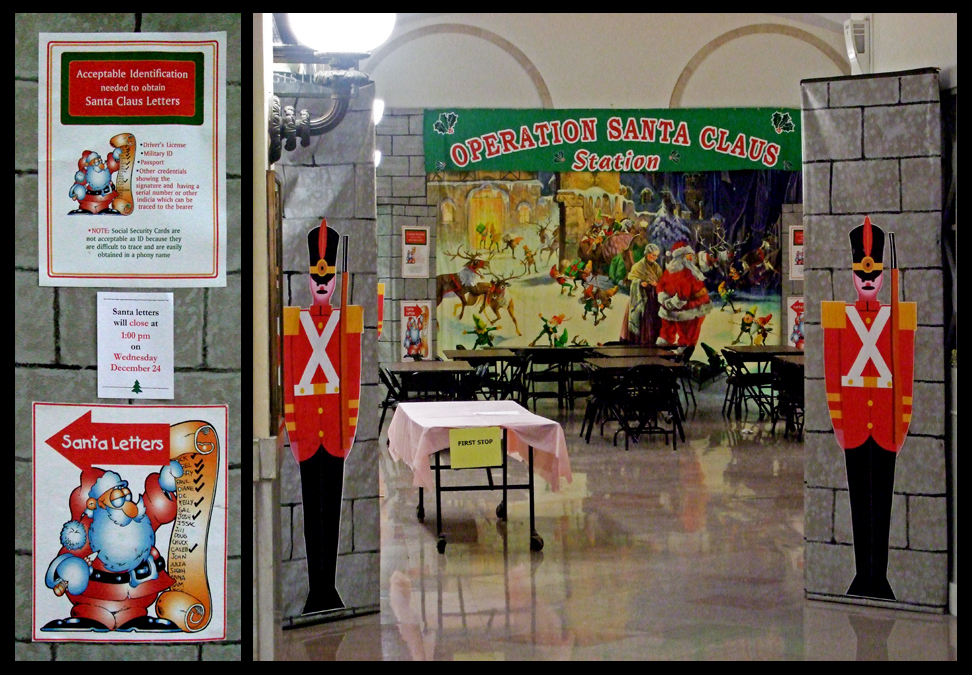
    So it is easy to understand how Operation Santa Claus could slip in under the radar or at least be relegated to a back story and forgotten. Each year, hundreds of thousands of letters are addressed to Santa Claus. Most of these are written by needy children asking for a variety of things. Sadly, many of the basic necessities are included, such as diapers, food, and clothing.
    Operation Santa Claus began informally in the 1920s when postal clerks began responding to letters from children addressed to Santa Claus which otherwise would have ended up in the dead letter box. The clerks contributed their own money to buy gifts for the needy. As the number of letters grew, the postal clerks asked the public for help, and Operation Santa Claus was born.

    Until two years ago, Operation Santa Claus was headquartered at the U.S. General Post Office in New York City. This is the big kahuna of post offices, in the James A. Farley Building, a massive structure occupying two full city blocks and the only postal station in New York City open 24/7. All the Santa letters ended up here, but recently, postal stations nationwide are beginning to participate (see here for a list of stations). Also, for security reasons, some of the policies have changed.

    Previously, calls could be made for letters to be mailed or faxed, but now access must be made in person. Up to 6 letters can be had per person or 100 for organizations. The operation is set up at the north end of the main interior lobby (see here for hours and information). The program ends December 24th. It’s still not too late for an unreported act of kindness 🙂

    UPDATE: A comment here referenced use of my photo for a Gothamist article on operation Santa Claus. Unfortunately, the article references one by the New York Times, which reported that Operation Santa Claus was suspended nationwide on December 18 without much information as to why or for how long. The Times article indicates that there was reason to believe the halt was because “a registered sex offender had “adopted” a letter.”


  • First Flakes

    Snow is a funny phenomenon – bemoaned by most once there is an accumulation, yet beloved during its first flakes. That was the case yesterday, when New York City had its first real snowfall for the winter of 2008 which stuck to the ground. At one point in the mid-afternoon, enormous flakes came down, and there wasn’t anyone that didn’t seem awed by the sight.
    New York is not really a very natural place, so displays by Mother Nature are particularly outstanding. A flood here rather than in a coastal area or a tornado here rather than in Kansas is going to be very dramatic juxtaposed against the urban backdrop.

    Snow brings out the child in many of us, with memories of play, days off from school, sleds, dogs barking, snowmen, and snowball fights. As I wrote in Small Gestures: “Like a child who does not need to go to school on a snowy day, a rainy day gives permission to play and indulge in the small things we often miss or forget. This opportunity can be for a pause for reflection – a welcome moment of respite for the weary New Yorker.” I have witnessed absolutely remarkable things during blizzards, such as people making snow angels in the middle of 7th Avenue and business men in suits cross-country skiing down Broadway to go to work!

    So it is with great pleasure that I observed the final moments of our first snow and the thin white blanket that was cast over Washington Square Park. The scene was reminiscent of photos by André Kertesz, a village resident, who produced many stunning black and white images of the park after a snowfall. Snow softens the city, and watching it can be a mesmerizing and relaxing experience.

    By morning, everything had melted, typical of the city with its warmer infrastructure and climate. Our snows often melt or turn to rain, quickly erasing all traces of childhood indulgences. I awakened to a gray day, reminding me that there’s work to be done…

    Related Postings: Small Gestures, First Snow, Anomalies, Nor’easter, New York Survivor


  • Just Like Everyone Else

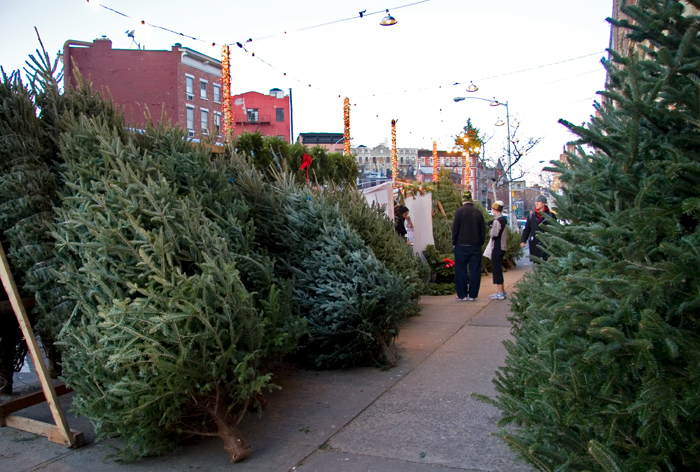
    New York City has its own solution and/or variation on most business services and holiday celebrations. In many cases, an innovative and resourceful approach is required to provide desired products and services in a city with limited space and astronomical rents. The sale of Christmas trees is this type of business, so here, we take it to the streets.

    Like umbrella sales people who sprout in the rain, Christmas tree vendors germinate at holiday time, offering an impressive array of trees. With such an affluent community as customers, sellers can offer a range of trees and variety of species: the classic Balsam Fir as well as the Noble Fir, Norway Spruce, Fraser Fir, Douglas Fir, Norfolk Island pine, Scots Fir, and potted trees.

    When vendors are needed with product expertise typically alien to city folk, outsiders, seeing opportunity, fill that need. In the case of Christmas trees, we have sellers from Quebec who camp out on the streets, setting up makeshift living quarters and selling trees around the clock. A number of reasons are cited to explain the domination of Quebecois – I think familiarity with the product in tandem with the hearty nature of French Canadians and their ability to tolerate days on end in cold weather are reasons enough. Read the fascinating story from the New York Times about Daniel Lemay, The Stranded Elf of Second Avenue.

    Many New Yorkers do leave the city to visit tree farms in the tri-state area (Connecticut, New Jersey, New York State), making it a day-trip adventure and saving some money.
    However, most New Yorkers love convenience, and are willing to pay for it.

    There has been a growing trend to order trees online which are delivered to your door by UPS, but most still enjoy the immediacy and holiday shopping process. The experience of choosing a tree from a large selection on a street in your neighborhood, having it bagged, and dragging it home is perhaps unique to the urbanite in its details. But it’s a real tree, we get to choose it, we bring it home, we decorate it, and its fun. Just like everyone else 🙂


  • Goin’ To Jersey

    If you live in New York City long enough, you will eventually hear something along the lines of “I’m goin’ to Jersey” or “I was in Jersey” or “They live in Jersey.” Most New Yorkers see the state of New Jersey as a grouping of bedroom communities to the city – there are over one half-million commuters from New Jersey to Manhattan daily.

    The state nickname is the Garden State, and one of the major highways is the Garden State Parkway. Now, in fairness, there are some nice areas of New Jersey, but if you have seen any of the well-known gardens in the UK, France (the Gardens of Versailles, e.g.), Italy (Boboli, e.g.), Japan, or the U.S., you would agree that to call New Jersey the “Garden State” is perhaps a bit disingenuous. This is the only state in America where every county has been designated as urban by the Census Bureau’s Combined Statistical Area. New Jersey is the most densely populated state in the USA, with 1,134 people per square mile.

    Whether you like New Jersey or not, it is an important part of the psychic makeup of a New Yorker’s mind (see View of the World here). In this classic image created by Saul Steinberg in 1976 for New Yorker magazine, New Jersey is depicted as one of a small handful of geographical landmarks. Ever present, looming in our minds, New Jersey is like background noise for the city. It is frequently the object of jokes by New Yorkers.*

    This small state is a place of extremes. It has the second highest median income in the United States, yet Camden is one of the poorest cities in America. It is the home of Princeton University. The state has a strong presence in chemical development and oil refining. The Port Newark-Elizabeth Marine Terminal is one of the world’s largest container ports. You have the Jersey shore with Atlantic City.

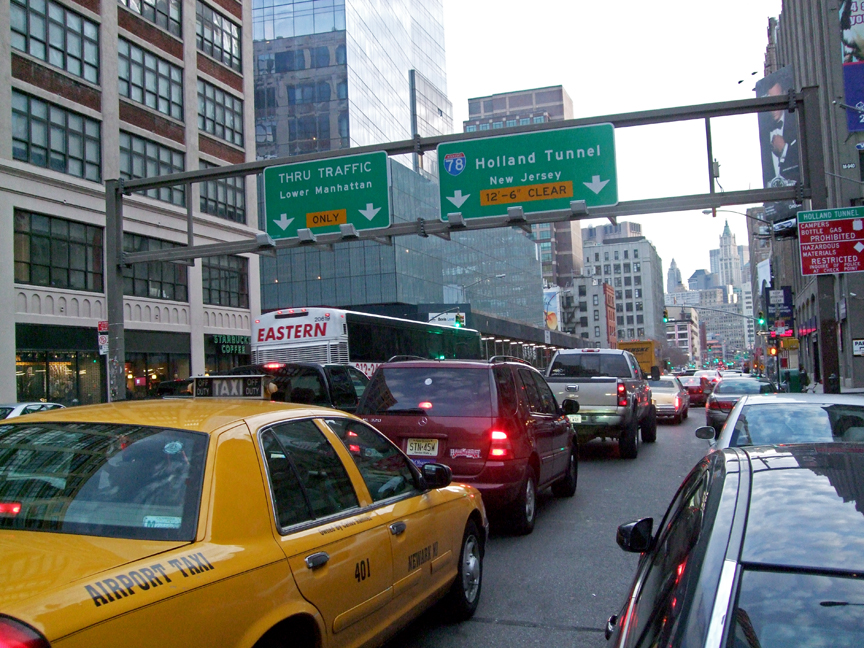
    There are only three ways to drive directly from Manhattan to New Jersey: the George Washington Bridge and the Lincoln and Holland Tunnels. So congestion is the rule of thumb. There is heavy traffic even at times that would be unexpected anywhere else – the photo was taken Sunday afternoon. Jersey anyone?

    *Why are New Yorkers so depressed? Because the light at the end of the tunnel is New Jersey!


  • Fifth Avenue

    Some things are so monumental and important that they live in a world of assumption. I have written of many things located on Fifth Avenue, but never specifically on the street itself.

    Fifth Avenue is the literal and visceral center of the city. To say Fifth Avenue, whether to someone in New York or not, is to connote all things luxurious – the quintessential urban thoroughfare and, by many accounts, the most expensive real estate in the world.

    Of course, an important part of the street’s image is due to the presence of its high-end retailers, virtually all of them iconic, even legendary. These are flagship stores, many of which remain as the company’s only location. Others have a small number of other national/international locations.

    At Christmas, Fifth Avenue is transformed into a holiday extravaganza. People come from all corners of the earth to see the store window displays and Rockefeller Center with its tree and skating rink, as well as just to experience being there. Everything conspires to squeeze joy and holiday spirit out of even the most hardened and least sentimental. The density of these establishments makes a Fifth Avenue stroll a continuous, jam-packed adventure.

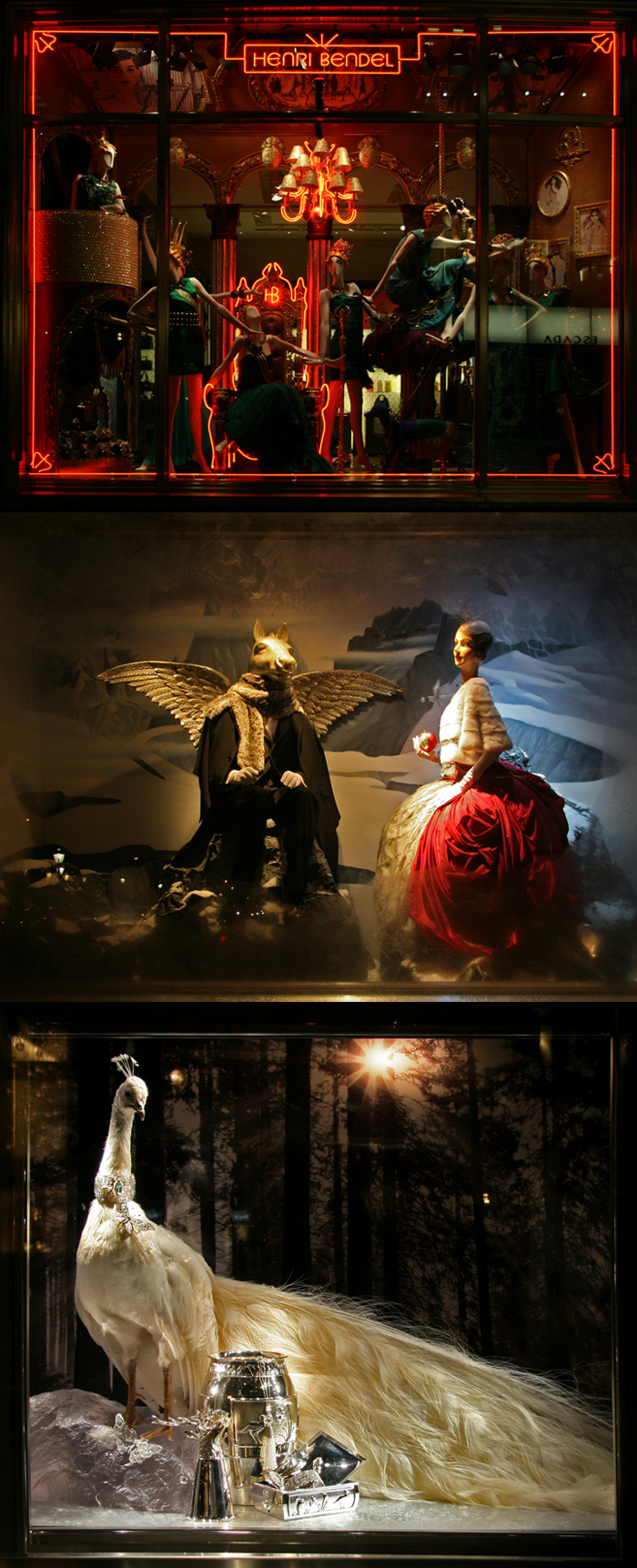
    In today’s photos, I show the windows of Henri Bendel, Bergdorf, and Tiffany’s.
    I obviously cannot do Fifth Avenue justice here on a single blog posting – the subject could easily fill many books, which it has. But no need to read if you have neither the time nor inclination, because when it comes to Fifth Avenue, a leisurely walk in any season will tell all – this street can speak for itself…


  • Comfort and Joy

    There is nothing like a small, intimate community or family gathering. Certainly the dramatic and lavish is enjoyable in New York, but in a city where stress and intensity dominate, immersion into a social activity is a good way to reconnect with humanity, providing a respite from all that is electric.

    Historically, I have been rather scroogish in my attitude towards Christmas, bristling at its overly commercial nature. But over time, I have softened and now realize that nothing is gained in being a curmudgeon. Why stand alone on principle and isolate yourself while the rest of the world is busy singing around you? I am not saying that one should throw principle into the wind, but certainly looking for the good is not the worst life approach. So I see holidays as opportunities to celebrate, and there are so many ways and places to celebrate everything imaginable here, both religious and secular. I wrote of this in Let’s Have a Parade.

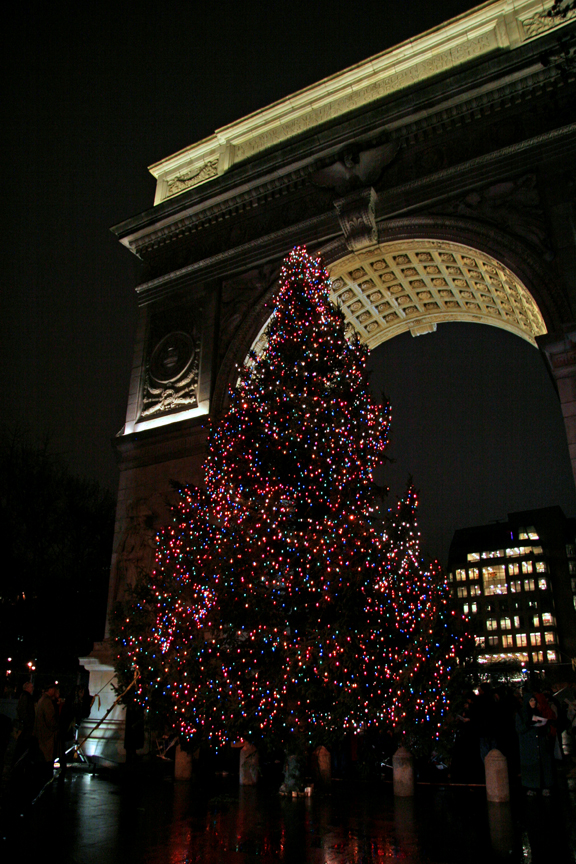
    I joined the annual tree lighting ceremony last night in Washington Square Park. In its 82nd year, the ritual actually dates back earlier than the tree lighting in Rockefeller Center. The weather was balmy and drizzly, with a small turnout huddled under the arch. Christmas carol books were distributed for a sing-along, guided by a small group of musicians.

    Not to be insensitive to the needs of the have-nots, but for most of us, there is much truth in Willy Wonka’s assertion: “If you want to view paradise, simply look around and view it.”
    New York City is a place of the driven and ambitious. Living here is costly. If you are interested in coasting through life, there are better places to do so. But work and purpose should not define acceptable behavior.

    So if you find yourself concerned that perhaps some activity or indulgence is perhaps capricious or not worthy of your time, remember this other morsel of wisdom from Wonka: “A little nonsense now and then, is relished by the wisest men.” To which I would add a little comfort and joy…

    Photo Note: Click on the photo to see the original green version.


  • dinamic_sidebar 4 none

©2026 New York Daily Photo Entries (RSS) and Comments (RSS)  Raindrops Theme