• Winter Wonderland

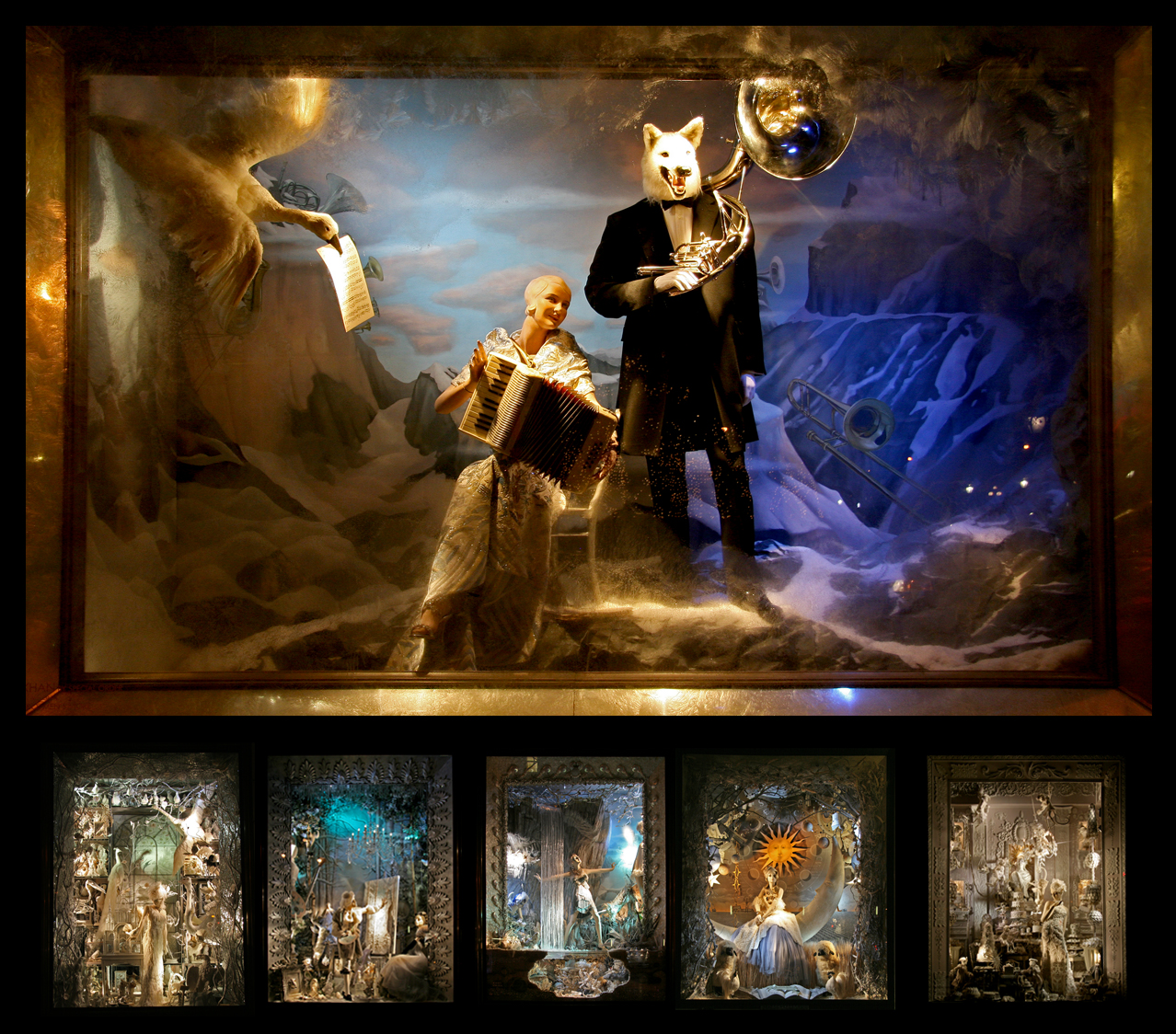
    In previous years, I have featured the windows at Saks Fifth Avenue. I certainly love their windows and interiors, and in no way do I want to demerit any window displays, but the real holiday pièce de résistance is Bergdorf Goodman. In doing background research for this article, I was surprised to find that every major New York City news publication as well as many blogs have done a story on this. And with good reason – the windows are spectacular and imaginative and are a must-see.

    A large degree of the fascination with Bergdorf’s windows this year owes to their eerie, surreal character. Many retailers hire outside firms to to their windows, but Bergdorf does theirs with their own window design team, headed by David Hoey, Senior Director of Visual Presentation. The painstaking work is done outside the city in a Queens warehouse – preparations start as early as October.

    This year’s theme is a white winter wonderland, “Calendar Girls.” From the Bergdorf website:

    “Winter Spring, Summer, Autumn and Holiday are all beautifully celebrated in this holiday season’s windows. Artful scenes that invite you to go on a year-round journey with Bergdorf Goodman. Utilizing a range of imagery all done in an ethereal, white on white scheme, each window draws inspiration from Natural History Museum Dioramas to created a blend of natural wonders and opulent big splendor.”

    The windows wrap around the building with three exposures to the street: 57th Street, Fifth Avenue, and 58th Street. Bergdorf’s location is one of the most prime in the entire city, with unobstructed views of Central Park, the Plaza Hotel, Fifth Avenue, and 57th Street. The perfect spot in New York City to enjoy a white-on-white winter wonderland…
  • Visceral

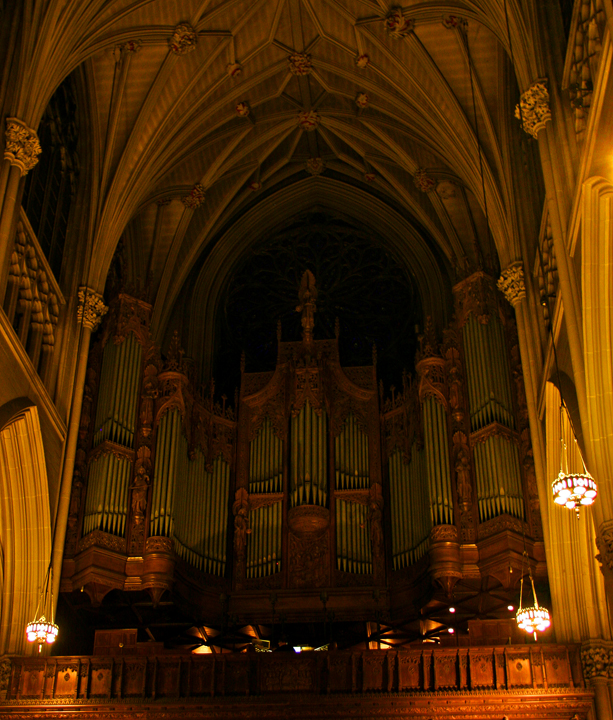
    I do not have any particular religious convictions – it would be fairest to say that I am an agnostic. But I do like inspiration, and the prospect of divine inspiration is extremely attractive if you have wandered in to St. Patrick’s Cathedral and unexpectedly run into an organ recital, as I did recently.

    The experience of listening to an organ like this is so visceral that only a person built of concrete would not be moved. Regardless of your religious preference (or not), I would highly recommend a visit to St. Patrick’s Cathedral, St. John the Divine, or Grace Baptist Church.

    One should be respectful, of course, but the volume of visitors is enormous, and anyone should feel quite comfortable visiting to admire the architecture and pipe organ.

    According to the New York City Guild of Organists :

    The original organ in Saint Patrick’s Cathedral was built in 1879 by Geo. Jardine & Son, one of New York’s organ builders during the later half of the 19th century. In 1926, Pietro Yon was appointed Organist/Director of Music, and plans were initiated to replace the Jardine organ. The St. Louis firm of Geo. Kilgen & Son was contracted to build two new instruments according to designs heavily influenced by Mr. Yon.
    In 1930, the Grand Gallery Organ, with one of the nation’s most glorious wood facades adorned with angels and Latin inscriptions, was completed.

    After more than six decades of continuous daily use, a complete restoration of the chancel and gallery organs was begun in 1993. The combined organs currently contain 12 divisions, 150 ranks, 177 stops, and over 9,000 pipes.

    In perusing the Guild of Organists site, I have found their website to be a tremendous resource. Organ concerts from the NYC metro area are listed for each day on their monthly calendar (see here). My organ concert experience has always been one of happenstance. It is nice to have listings like this available. This is a special time of year with many concerts.
    Bach’s Toccata & Fugue in D Minor or Mass in B Minor anyone?


  • Paddy Reilly’s

    I’m neither obsessed with free nor averse to paying admissions. Attending free events is a dual-edged sword like most things – although I find it to be a healthy antidote to a society where much is defined by the dollar, there is a danger of reducing your standards because something is free. No need to make contributions to dumbing down when the world is doing an adequate job already.

    So when I attend those things which are free in New York City, I do relax my standards somewhat, particularly regarding ambiance and other elements of the performance not related to the music itself. But, I try to not waste time on things that really are not very enriching when the city is brimming with quality entertainment. If you read my posting on the music conservatories, Free Lunch, I have written about free quality performances by sharp talents. Another great resource for entertainment are the various bars that have free music jams, frequently with no cover or minimum.
    In 2007, I wrote about the Baggot Inn (now closed) and the weekly bluegrass jams with Sheriff Bob. The energy at those sessions often built to frenetic level, as the musicians sometimes numbered over 20.

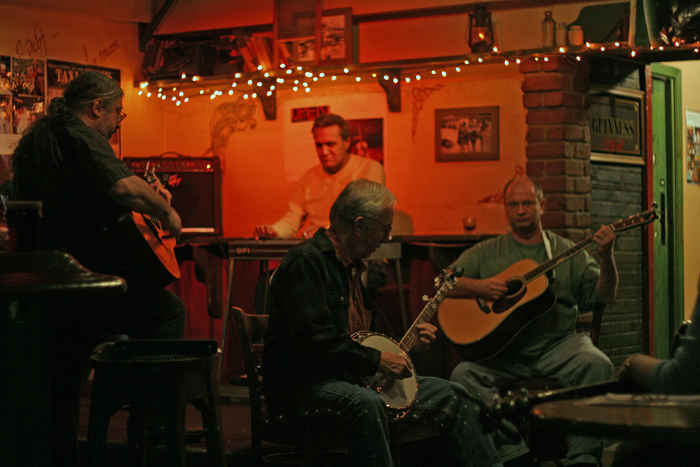
    Last night, I was invited with friends to Paddy Reilly’s Music Bar at 519 Second Ave. (bet. 28th & 29th Sts.). So we ventured out into the subfreezing weather on a Sunday evening. Sunday is a quiet night, so the audience was not large, which was to my liking. Over the evening, the jam had at least a dozen musicians/singers. The talent was excellent – it is always remarkable to see the level of artistic talent in this city. A jazz musician once told me that he has seen world-class jazz musicians play to empty rooms. Not unusual, particularly with less popular music genres such as blues, bluegrass, and jazz. I have written about the demise of blues clubs: Terra Blues is the last remaining one.

    Paddy Reilly is the owner of this music bar. Born in Dublin in 1939, Paddy Reilly is one of Ireland’s most famous Irish folk singers and guitarists, formerly a member of the group the Dubliners. I understand he plays at the bar from time to time. According to the bar, Paddy Reilly’s was the first and only all-Guinness draft bar in the world. There is a back room with darts and other activities.

    Check with the bar before you go because the music changes – some nights are traditional Irish, there are open mics, and on Sunday Night, from 5PM – 8PM. there is the bluegrass jam. And there are cover charges and minimums on Friday and Saturday nights…

    Related Posting: Only in New York


  • Christmas Spirit

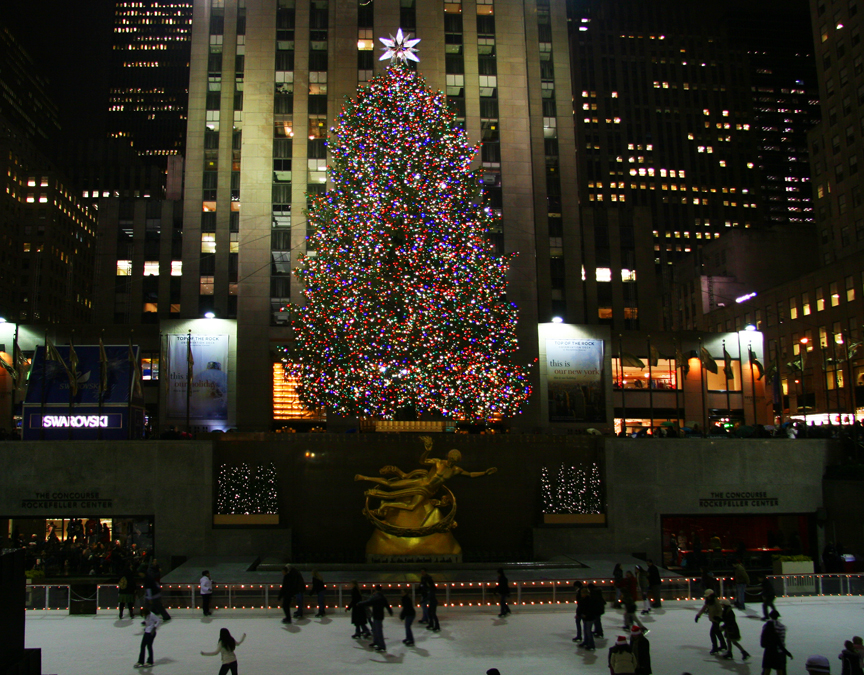
    Assuming you want to feel the Christmas spirit, I suggest you head for Fifth Avenue between 49th and 59th Street. The place to start, of course, is at the Channel Gardens Promenade at Rockefeller Center. Here, you have so many iconic views: the Christmas tree, ice skaters in the sunken plaza with the gilded statue of Prometheus (sculpted by Paul Manship), and the gardens lined with illuminated angels.
    If you face Fifth Avenue from the gardens (top photo), you will see Saks Fifth Avenue and their spectacular illuminated snowflake display timed to music. And, of course, their legendary holiday store window displays. Many people come from far and wide to see them – there are typically lines for viewing. Their beautiful interior winterscape decor is also worth a visit. At the corner of Fifth and 50th is St. Patrick’s Cathedral – a must-see for anyone. And what better time than the Christmas season?

    A stroll up Fifth Avenue will take you through a who’s who of flagship retailers, all of which are bedecked for the holidays. Cartier has decorated their entire building to look like a gift box, Tiffany’s has winter/holiday scenes with subjects adorned with various jewels (see their beautiful display in 2006 here), Henri Bendel has a themed window, and Louis Vuitton has an electronic display. Everyone participates – Takashimaya, Piaget, Gucci, Pucci, Bottega Veneta, Trump Tower, Prada, Abercrombie, Fortunoff, Disney, Versace, and Bergdorf Goodman. I give Bergdorf the prize for their imaginative, impeccably crafted windows, which I will feature at a later date.

    The annual tree is the epicenter of it all, and the whole selection, installation, and lighting process is a story in itself (see here). This year’s tree is a 77-year-old, 8-ton, 72-foot-tall Norway spruce from the Varanyak family in Hamilton, N.J. The family had it as their Christmas tree in 1931, then planted it outside.

    I hope you get a chance to stroll this area. Be prepared for crowds, but they are easily tolerated if you have the Christmas Spirit 🙂


  • Bowlmor

    I can’t think of anything that seems more antithetical to Manhattan than bowling. Firstly, it has a definite suburban cache. I realize that bowling is a serious sport requiring skill and discipline, but growing up outside the city, bowling was an act of desperation for bored and frustrated teenagers – one of the few activities sanctioned by adults.

    Also, bowling, like tennis, requires large amounts of space. In New York City, space is a luxury and is costly. Activities and usage of space always has to be considered, and like every business in New York City, usage is metered. To survive, you need to know the cost in dollars per square foot per hour. Bowling is not a particularly profitable use of space, which is why you don’t see many bowling alleys here – there are only four in the borough of Manhattan. They are typically low visibility, located off the beaten path like at Chelsea Piers or on upper floors like Bowlmor.

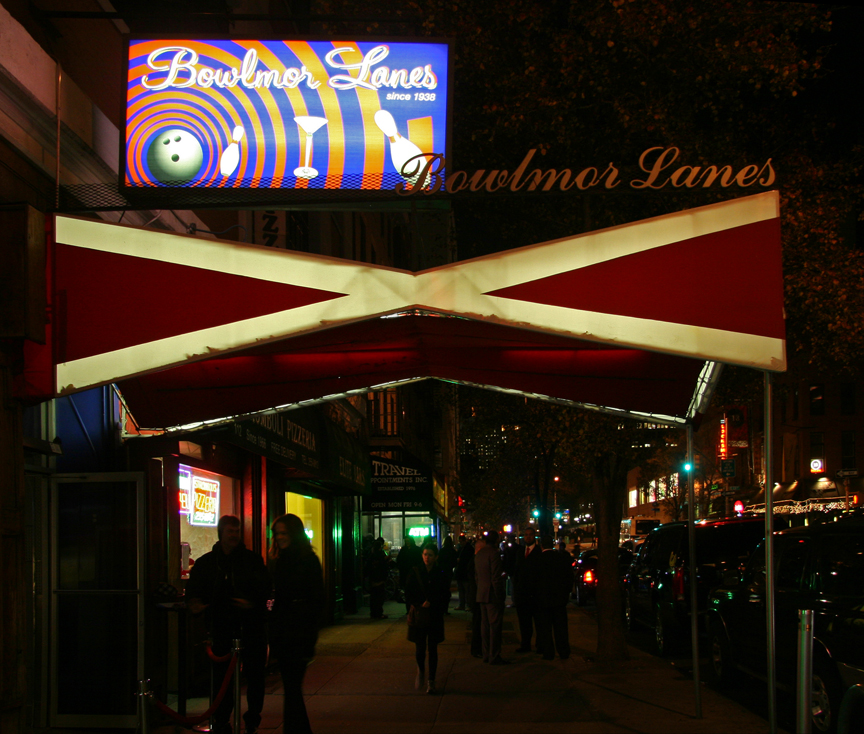
    Bowlmor is located at 110 University Place in the heart of the Village. Its bold bright signage can be easily overlooked, competing with a plethora of other attractions and Union Square nearby.
    I have been familiar with Bowlmor as long as I have lived in the city. It has been in business since 1938. Bowling was quite popular at one time in New York for 100 years, from the mid-1800s through the 1950s (Richard Nixon bowled there in 1955). The first lawn bowling grounds in the United States were built in downtown Manhattan (in an area still known as Bowling Green). But the familiar specter of rising rents and declining space put an end to many bowling alleys. Bowlmor is the only one remaining from those early days. However, it did go through its own near fatality.

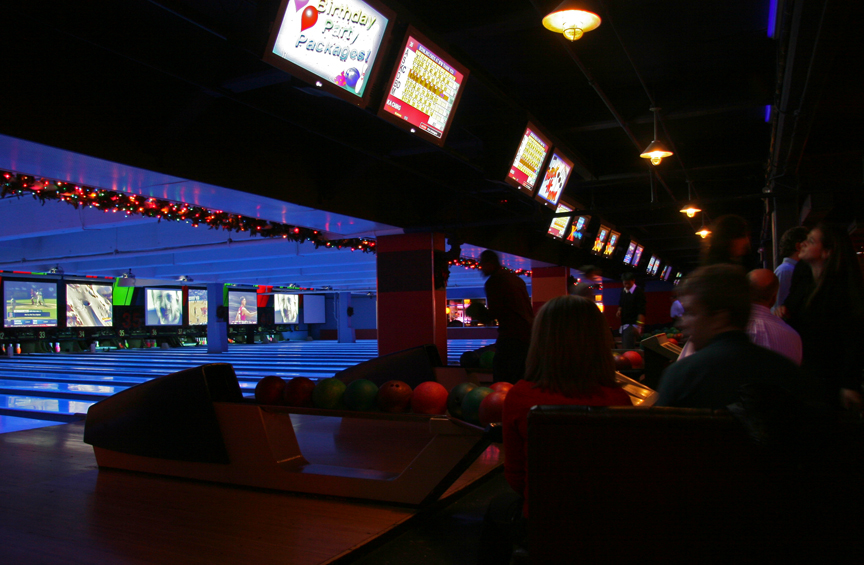
    In 1997, Bowlmor was purchased and rescued by Tom Shannon, who reinvented it as a trendy, chic nightclub operation. Their website uses words like sexy, naughty, tasty, and cool to describe what is essentially a nightclub with bowling. The business occupies two entire floors, with a total of 40,000 square feet and 42 lanes. It features glow-in-the-dark bowling, big screen video walls, a thumping sound system, a full service restaurant serving lane-side food and drinks, and a sports bar. They expanded in 2001 to a third floor with Pressure, a high-end event space.

    So I finally decided to make a personal inspection. On my visit, I was welcomed and encouraged to take photos. There were several special private parties, including a function for Novartis Pharmaceuticals. The place was abuzz with balls, pins, and drinks. Bowlmor has been visited by many celebrities, evidence of its place on the A-list. You can see a showcase of autographed bowling pins here


  • Greasy Spoon

    The same friend who introduced me to bankfacing money is the man who, one morning during my first college days, asked if I wanted to eat at the greasy spoon next door. To which I replied, of course, “What’s a greasy spoon?” I was informed that it was basically a diner and that the term greasy spoon suggested a place where utensils might not be as clean as one might hope for. But I had a sense that this was to be an authentic, edgy, New York experience and another small rite of passage to the city. So we went, and it was fun.

    Memories like these and the desire for simple pleasures can drive one to nostalgize, romanticize the past, and make the mistake of trying to recapture those feelings by recreating the experiences. The new experiences, however, do not often measure up to the past memories, and one wonders whether the past was as good as one remembers (see the great quote from Jill Eisenstadt in my posting Better When).

    Certainly some diners are better than others, and my breakfast with my aforementioned friend at Joe Jr’s on a recent visit of his to the city was fun. And what choice do you have but to eat breakfast at a diner when a Brooklynite comes back to town to visit and he’s the man that introduced you to greasy spoons? This outing, as well as recent postings on Joe Jr’s and the Anthora coffee cup, inspired my recent visits to local diners.

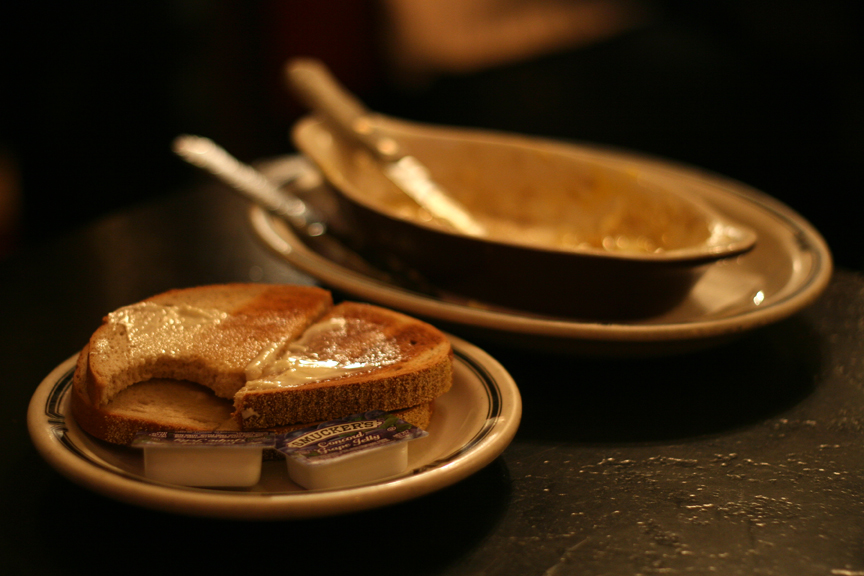
    My expectations of diners are realistic, and I am capable of adjusting my food standards. I have also learned lessons from the past and realize that one should narrow one’s choices to those things diners do best, or should I say those things diners do least poorly, like burgers (which I don’t eat), fries (which I love but try to avoid), and eggs (which I eat rarely). So, I opted for Eggs Benedict. A mistake. Sauces, like hollandaise, should also be avoided in a diner. The whole meal became rapidly unappetizing – eating it became a test of will. Everything was so salty, including the butter on the toast.

    What does all this have to do with New York City? Although we have some extraordinary dining establishments, many like comfort food and diners too. And much of the diner food here is just as bad as diner food elsewhere. I couldn’t even finish that toast…

    Want to know where I had this unappetizing meal? Read more here.


  • Ambassadors

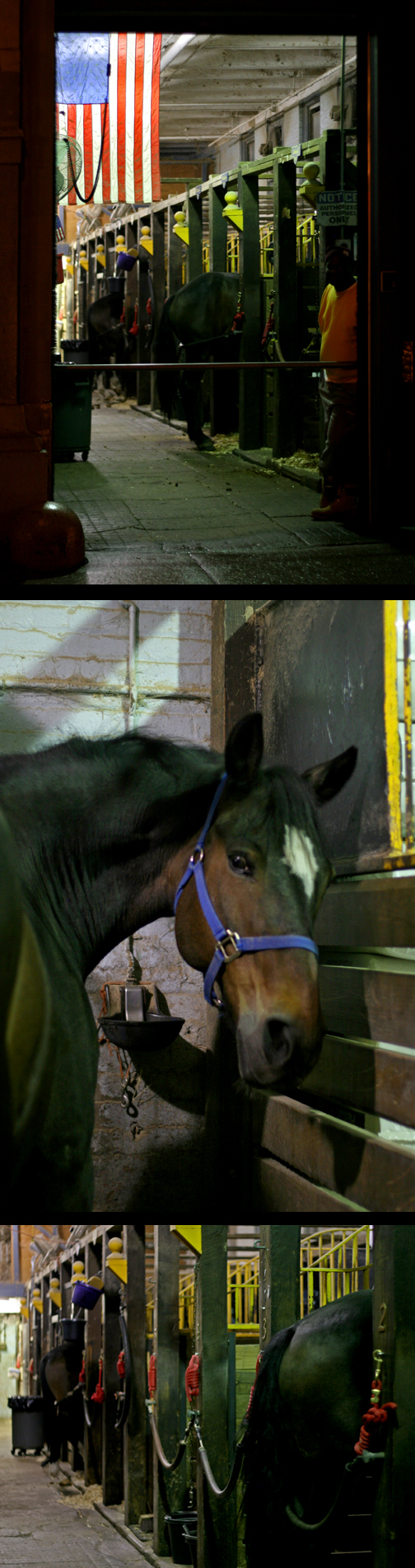
    It occurred to me on Sunday evening that the mounted police horse stables would make a great photo subject. The horse stables are very few, little known, and rarely visited. However in a post 9/11 world, regardless of how benign a person’s intentions might be and how unlikely a target for terrorism a place is, it is always reasonable to expect a “no photography” reception.
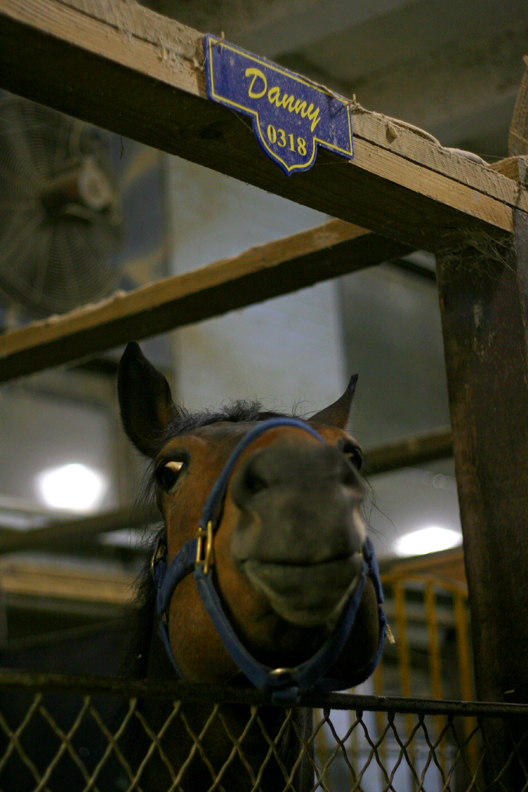
    So I went out into the foggy, drizzly night hoping for the best but expecting the worst. I was quite happy to find the stable entrance open to the street and immediately began taking photos – a preemptive strike is the best policy when in doubt about photo policies. The horses could be seen in their stables in the dim lighting with a large American flag hanging from aloft (see more photos here).

    The real surprise was when the stable keeper, upon seeing my interest, immediately waved me and my companion in. We learned that our gracious host, Daniel Allen, hailed from Panama and has been working with horses since he was a child. He was a race horse jockey in Panama (having won three races) and has worked various race tracks such as New York City’s Aqueduct.

    Sixteen horses are stabled here in quarters which abut the First Police Precinct at 16 Ericsson Place at Varick Street in lower Manhattan . To visit a place like this is decidedly an earthy experience, surrounded by hay, wood chips, and mice skittering about. And, of course, the horses – an animal which is extremely sensitive but whose size always commands immediate respect.

    There are stables in 4 of New York City’s boroughs: Coney Island in Brooklyn, Pelham Bay Park in the Bronx, Fresh Meadows in Queens, and a new facility at Pier 76 on Manhattan’s West Side. In total, there are 112 mounted police officers with approximately 80 horses. You can learn more about them and their training here.

    Many nonresidents of the city are surprised at the use of mounted police in an urban environment like New York City. However, a mounted officer has unique abilities. Police commissioner Raymond Kelly says, “Their impressive visibility make our mounted police officers and their horses great crime fighters and outstanding ambassadors to the public.”

    Related Posting: Horse Sense


  • Surely You’re Joking

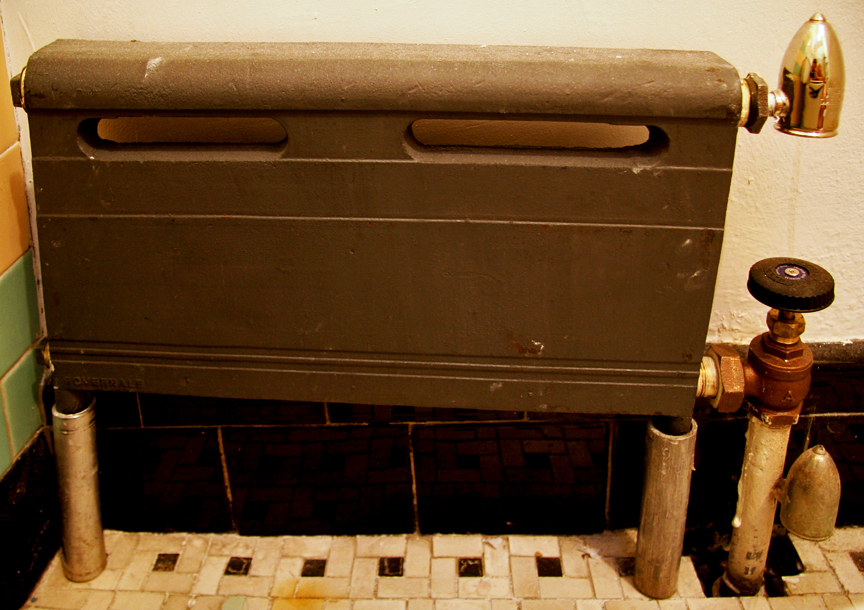
    Most would assume that the expenditure of money is the only thing that separates one from the dark ages and the 21st century. If you read my posting The Dark Ages, you can see the state of a radiator in a certain individual’s apartment (see the renovation here). That individual, thinking as any reasonable person might, expected that spending money and hiring a professional who came highly recommended would easily remedy the situation.

    The photo shows the finished job. The assignment was to remove the old radiator, replace it with a smaller, more compact model, and install it at floor level away from the wall. What I got was the radiator propped up at an angle on two hacksawed pieces of conduit, thus avoiding the work of removing riser pipe. I was assured that the uneven heights of conduit were necessary to create the pitch necessary for water flow in the steam system. The whole arrangement looked like a circus act. I was shocked and awed.

    Now the most common suggestion from others for a simple solution to this type of problem is always to have him come back and fix it or even hold back payment.
    But the real problem is that I made a grievous error in hiring. The contractor was not really capable of doing this plumbing job to an acceptable standard. So what avail is it to have him come back? The work would have to be policed and micromanaged, an extremely stressful process with dubious outcome. No, better to suffer the slings and arrows of outrageous work and hire another to make it right.

    Why do we suffer so? Because New York City has a captive audience for residents, and generally speaking, for these types of services in rental properties, the individual has virtually no consumer leverage. Take it or leave it. I understand that this type of problem is not unique to the city, but it is very exacerbated in New York.

    In hindsight, I think the best response to the completion of the work, had I not been so stunned, would have been, “Surely You’re Joking, Mr. Contractor.”*

    *Note: The book Surely You’re Joking, Mr. Feynman is a collection of anecdotes by the Nobel Prize-winning physicist Richard Feynman. In one story, Feynman makes a serious faux pas at a party, to which he is told, “Surely you’re joking, Mr. Feynman.”


  • Believe

    Today is Black Friday, and although the phrase has positive business connotations, this year there is an economic malaise in this country, where the more common meaning of the word black may better apply.

    I think most have to agree that the election of Barack Obama is being seen as a ray of hope in a very dark room. Turning a new leaf in a book that everyone has tired of reading. A young president with fresh ideas to take us into into a rapidly changing world.

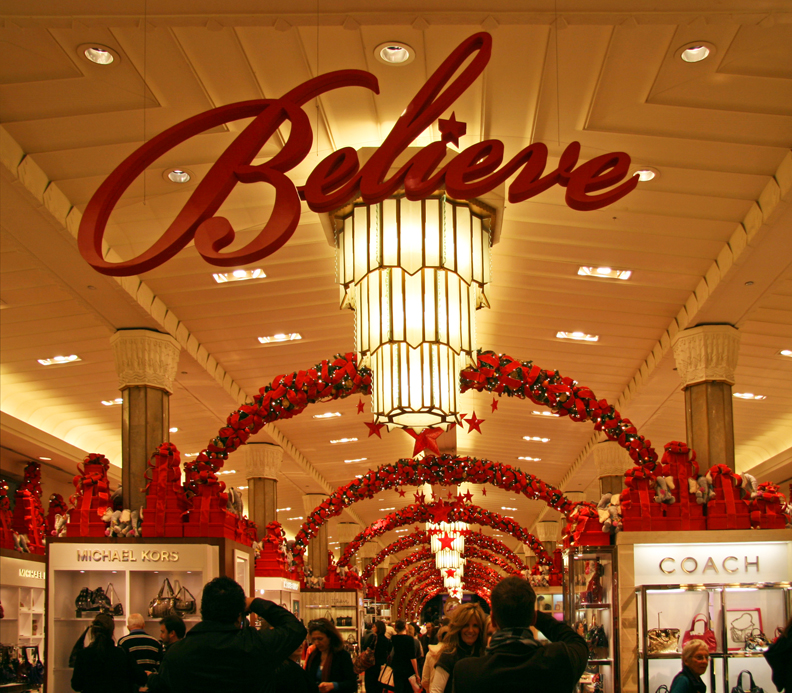
    When I first saw this Christmas display at Macy’s with the message Believe, I interpreted it to mean that the word believe was being used in a way one would expect during the holiday season – believe in Santa, believe in Christmas, etc.

    I don’t know the precise original intention of the store display designer or even whether there was a specific intended meaning, but in light of the international mood, allow me to interpret and suggest that we all make an effort to believe in better days to come …


  • Thanksgiving 2008

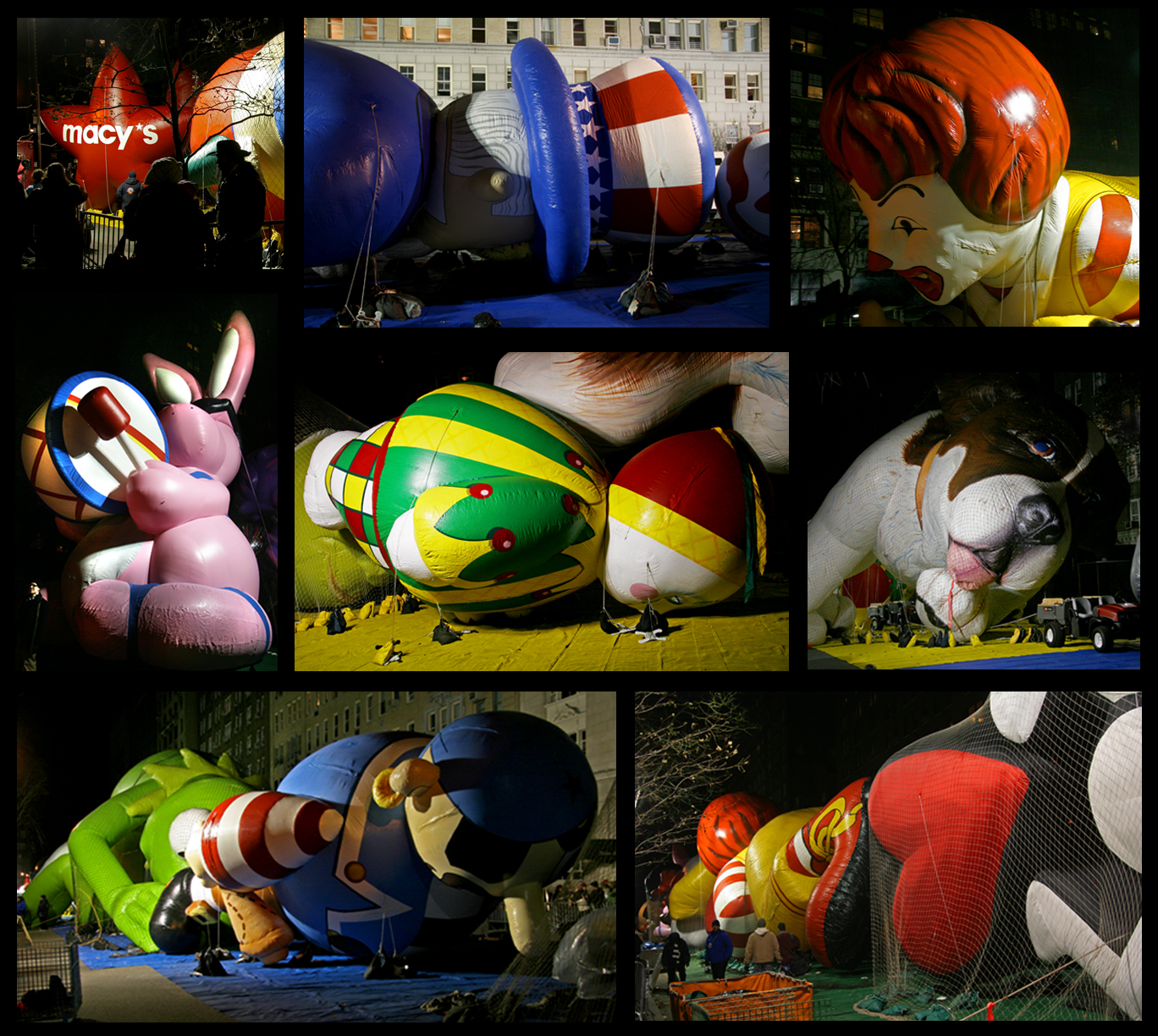
    One of the New York’s biggest events is the annual Macy’s Thanksgiving Day Parade, a tradition since 1924. On Thanksgiving eve, the inflation of the character balloons is an event itself. Thousands visit with many families and children. I have done this twice, however, both my visits were after the actual inflation, which occurs earlier in the evening. You can read about this event here in my posting from 2006.

    The parade route begins where the balloons rest for the night, at 77th-81st Streets and Central Park West. The parade makes its way down Central Park West to Columbus Circle, then down Broadway, ending at Macy’s at 34th Street.

    I wish to thank all the readers of this website. I greatly appreciate the positive support you have given me over the years.
    Happy Thanksgiving to all, with hopes for a brighter 2009.


  • Treasure Chest

    One of the most common questions I am asked by visitors is how often I partake of the city’s cultural institutions – theater, music venues, and museums. Sadly, the answer is not much or not enough. When I do so, the feeling is always the same: I should do more of this.
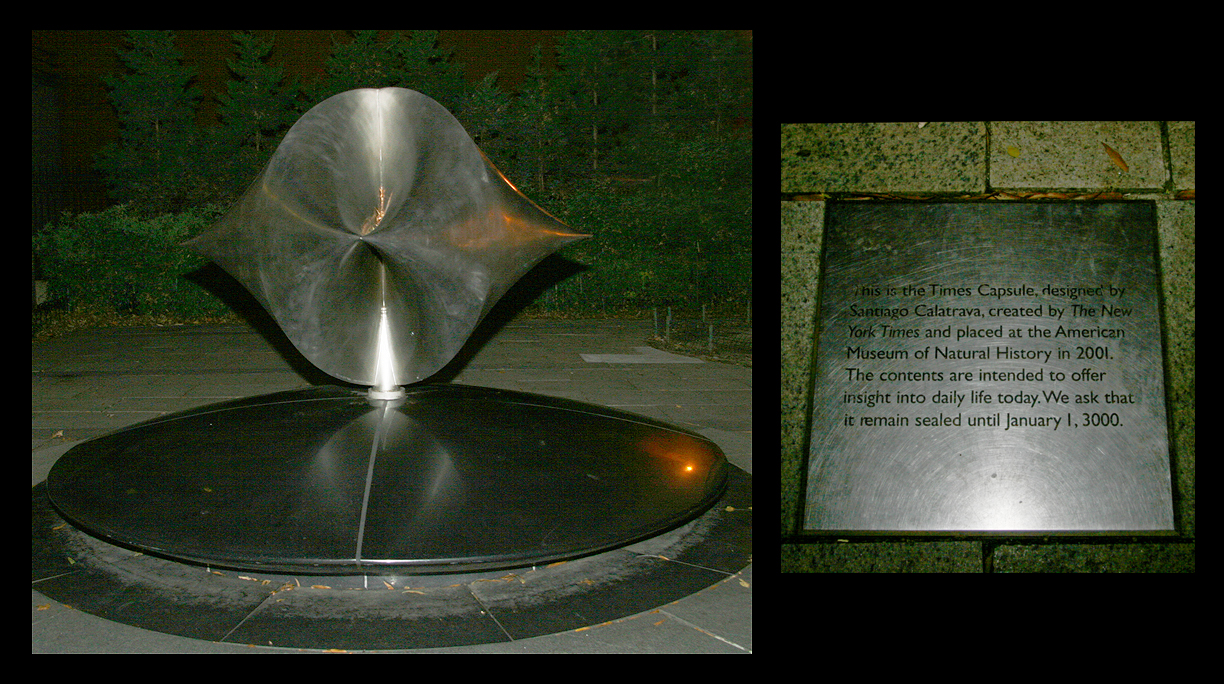
    It’s a shame, because this city is like treasure island. And unlike the buried treasures of fable and folklore, we have real maps with real treasures clearly marked. The process of discovery is exciting and rewarding. In the case of the New York Times Capsule, we actually have a veritable treasure, perhaps not actually buried but at least entombed with hidden contents, providing all the elements necessary to evoke the child within us.

    This Times Capsule is located at the Museum of Natural History outside the Weston Pavilion entrance on Columbus Avenue and 79th Street. It was installed in 2001. The design was the result of an international competition with a simple set of guidelines: devise a means of preserving information until A.D. 3000 that takes the concept of a time capsule in new directions. In the end, almost 50 designers, architects, and engineers from 15 countries submitted entries that ranged from the practical to the whimsical. A jury of New York Times editors and critics made the final selection. See some of the notable entries here.

    The winning design was that of internationally renowned architect, sculptor, and engineer Santiago Calatrava. The panel of judges was comprised of editors and writers at The New York Times Magazine. The Calatrava design is derived from a series of sculptures that explores the formal properties of folded spherical frames: the capsule can be sliced through horizontally, forming two halves, and then quartered. The four top segments are hinged to the bottom four, allowing them to open and close. The cavities are hollow, and the eight compartments together contain about 50 cubic feet of storage space filled with Nanogel to protect the contents placed inside. The stainless steel capsule was constructed at A.R.T. Design in Lancaster, Pennsylvania, using the “lost-wax” process.

    The choice of contents is, of course, quite fascinating. Items from Fountain, Colorado (the archetypal suburban American town), hair samples of well-known individuals, various magazines, books, catalogs, newspapers, articles of personal identification, etc. See the full list of contents here.

    I would love to be at the opening ceremony, January 1, 3000. That will be quite a treasure chest…

    Related Posting: Tired of Life?


  • Poor Whores

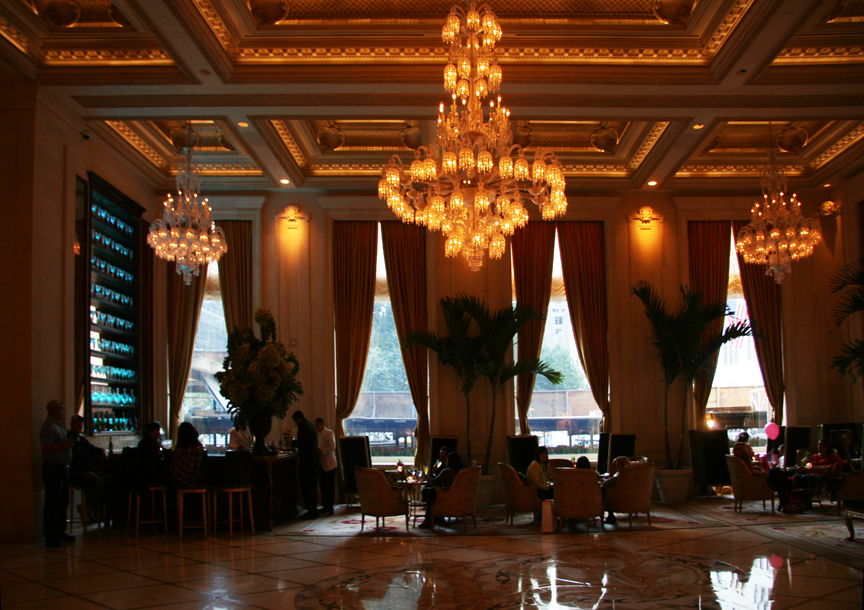
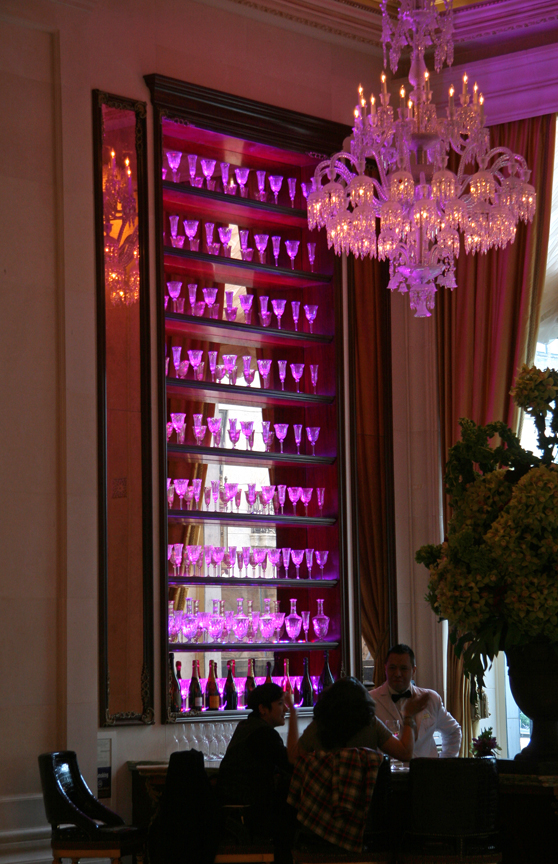
    It occurred to me while reading about the Plaza Hotel that, except to individuals such as Warren Buffet and Bill Gates and to sovereign nations, A BILLION BUCKS IS A LOT OF MONEY. That is what the total cost of the Plaza Hotel was: $675 million to purchase and $400 million to renovate. How do you make a return on that kind of money? Easy in New York City with a landmark property on Central Park. Start by renting rooms at $1000 per night. Sell off 182 rooms as condos (only 80 are now rented as hotel rooms). Read my story about the hotel here. The photo is of the corner lobby and its champagne bar with color-changing glassware display.

    I am perplexed by wealth. I have met wealthy individuals, and they are not all extraordinary individuals like Steve Jobs of Apple, Muhammad Yunus, or Sergey Brin and Larry Page of Google. Successful individuals appear to some combination of skills, instincts, and personality traits – I think pure chutzpah is one of them. And then there are the elements of luck, opportunity, and willingness to act on that opportunity.
    Some may feel that a love of money and a complete lack of scruples is all that separates them from success.

    Selling out is the key phrase. That if they adopted the mindset of a whore, riches would flow towards them, but their honesty and goodness keeps them in the middle or under class. I don’t think that is really true – I have met many who are willing to do anything for money, and their lives are a testament to bungling failure. So for me, the mystery remains, because although there are dishonest, unscrupulous businessmen and rich call girls, there are also many honorable millionaires/billionaires and poor whores…


  • United Palace Theater

    This is the spectacular United Palace Cathedral (aka Palace Theater), occupying a full city block at 4140 Broadway at 175th Street in Washington Heights. The 7-story structure was built in 1930 by Loews and “designed by Thomas W. Lamb in Byzantine-Romanesque-Indo-Hindu-Sino-Moorish-Persian-Eclectic-Rococo-Deco style,” as David W. Dunlap wrote in “On Broadway: A Journey Uptown Over Time” (Rizzoli International Publications, 1990). This place was one of Loews‘s five Wonder Theaters in New York City and was one of the most spectacular palace theaters of the 1920s. The 3,293 seat theater was home to vaudeville and movies. By the 1960s, however, movie places, unable to make expenses, closed.

    The Palace is now home to Reverend Ike’s United Church. I was astounded to learn that Reverend Ike (Frederick Eikerenkoetter) purchased this property in 1969 for a piddling $600,000! What a coup de theatre for them. Recently, in addition to its function as church headquarters, music concerts are also being held at the Palace with names like Neil Young, Annie Lennox, Van Morrison, Bjork, and Iggy Pop. The performances are managed by Andy Felz, who formerly ran the Beacon Theater.

    Reverend Ike himself is quite a controversial character. Rather than maintain a secretive and defensive posture regarding the church’s and the Reverend’s affluence, typical of most wealthy religious organizations, Reverend Ike has made it the cornerstone of his ministry with outrageous actions, such as the “Blessing of the Cadillacs,” where wealthy congregants were invited to drive their luxury cars past the church’s doors for his laying on of hands. The reverend owns a fleet of Rolls Royces appointed in mink as well as multiple mansions, and he flaunts diamond rings and expensive suits.

    I want to see Reverend Ike in action and the interior of this place. I will report back when I do.


  • Circuitous, Sinuous and Serpentine

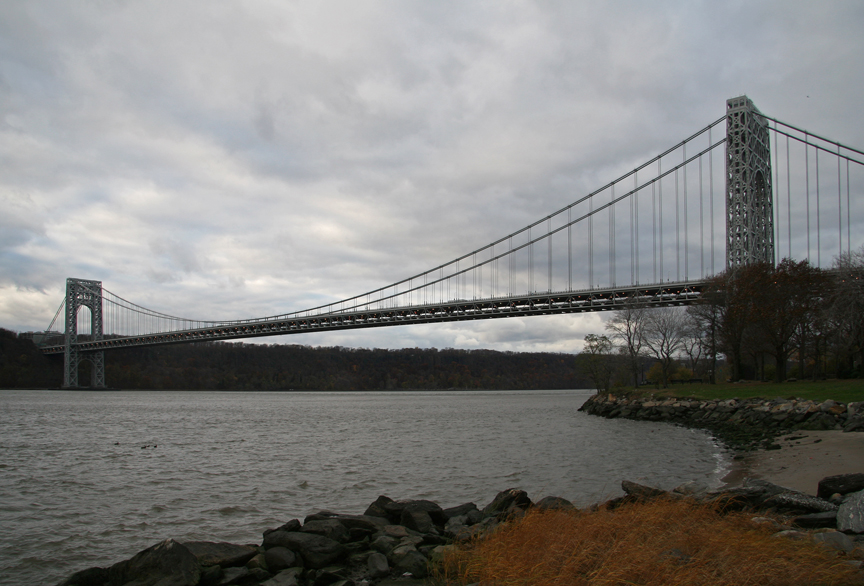
    There is a often repeated quote (1947) by French architect Le Corbusier extolling the George Washington Bridge as the most beautiful in the world. I can’t say whether I agree – I have not seen that many of the world’s bridges – but I certainly find it beautiful. The open steelwork is very distinctive – I recommend seeing it at night with the spectacular illumination created by Domingo Gonzalez Associates, for which an Award of Excellence was won.

    The GW is one of the most important bridges in the city. It is the only bridge spanning the Hudson River in New York City, connecting Washington Heights in Manhattan with Fort Lee, New Jersey. The Harlem and East Rivers are spanned by over a dozen bridges. Manhattan is an island, and its means of egress and ingress are crucial lifelines.

    The George Washington Bridge was built during a busy period in New York City’s history, with completion of the Empire State Building the same year (1931), the Lincoln Tunnel in 1934, the Holland Tunnel in 1927, and the Chrysler Building in 1930. The chief engineer was Othmar Ammann, with Cass Gilbert as architect. When it opened, it had the longest span in the world; it is now the 4th longest suspension bridge in the USA and 16th in the world. The bridge is the world’s busiest. Read more about the bridge here.

    Taking decent photography of a bridge does require being on foot. It is quite difficult to get a good photo while driving an automobile from a moving vehicle – I have tried. So I recently made a pilgrimage to the Washington Heights neighborhood of Manhattan specifically to photograph the bridge. It was windy and cold, but the cloudy, overcast day did make for nice photographic conditions. The bridge has a pedestrian walkway – I walked to the halfway point, which afforded some great vistas of the Hudson River and the city.

    But to get photos of the bridge requires getting off the bridge and finding a good vantage point. Waterfront park land on the Hudson River shoreline was clearly visible from the bridge, but no signage was present to find the way down. So I took a gamble on a path which appeared that it might lead to the water. The path went through various environments punctuated with litter, graffiti, and broken lights.

    The walkway turned out to be one of the most circuitous, sinuous, and serpentine. The investment did eventually paid off. It is here where I discovered the beach which I wrote about on November 17, 2008 (see here)  and where photos of the bridge were taken. It also justified use of words such as circuitous, sinuous, and serpentine 🙂


  • Ice Blue

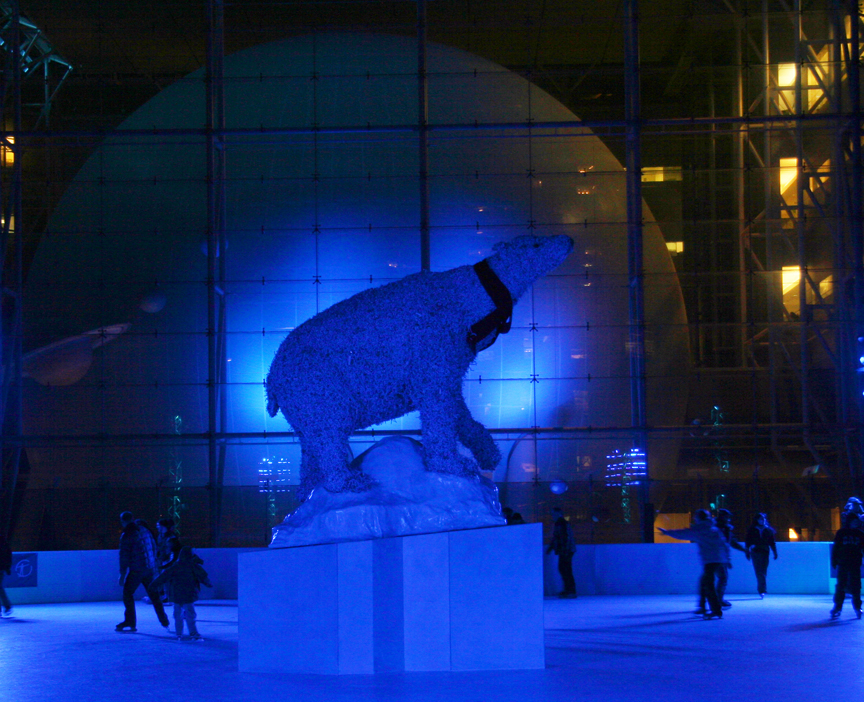
    This is the new Polar Rink at the American Museum of Natural History. I was invited to attend a press preview before the official opening on Saturday, November 22nd. The rink is beautifully situated on the Arthur Ross Terrace, with magnificent views of the Rose Center for Earth and Space glowing in blue and the surrounding Theodore Roosevelt Park. Skaters glide around a 17-foot-tall polar bear made of openwork stainless steel festooned with pine boughs and twinkling lights. And of course, access to the Rose Center (with the new Hayden Planetarium) and the Museum itself is just a stroll away. It is nice to see the museum make efforts and investments in modernizing to keep up with changing times and patrons who have become more used to an increasingly technological world.

    One thing that fascinated me was that the rink was using synthetic ice. Apparently, synthetic ice has been around since the 1960s (most using polyoxymethylene, i.e. Delrin), but widespread adoption has been held back by inherent limitations of the polymers – to glide on the surface as one can on real ice, there must be a regular application of a silicone compound. This compound builds up on the surface, collects dirt, and has been a source of much dissatisfaction among skaters. Also, joinery of the panels was an issue – earlier synthetic ice products used simple butt joints which could be felt by the skater. These shortcomings have been addressed by Perry Boskus, developer/inventor of the Super-Glide surface, which is being used at the Polar Rink and is manufactured by Florida Skating, Inc. The product is made in-house with their own technology. Lubricating ingredients have been injected into the core material to provide a surface which provides glide properties regardless of wear. A new joinery system (a variation of a dovetail joint) was also developed to hold the panels together to make the seams nearly undetectable.

    I had the privilege of meeting Perry at the ceremony. He was quite enthusiastic about the new installation and worldwide interest in his product. There are hundreds of commercial and residential installations around the world.
    I subsequently learned through my reading that Perry was North Atlantic Figure Skating Champion, Eastern Seaboard Speed skating Champion, a hockey player, and Professional Figure Skating Coach.

    I love blue, and the aura of the evening was decidedly blue. I was pleased to read the Super-Glide brochure this morning and find out that the latest incarnation of the product is called Ice Blue

    Note: Hours and additional information about the rink can be found here (update 1/9/12: Link no longer works). Skate rentals are available and included with the admission.


  • dinamic_sidebar 4 none

©2026 New York Daily Photo Entries (RSS) and Comments (RSS)  Raindrops Theme