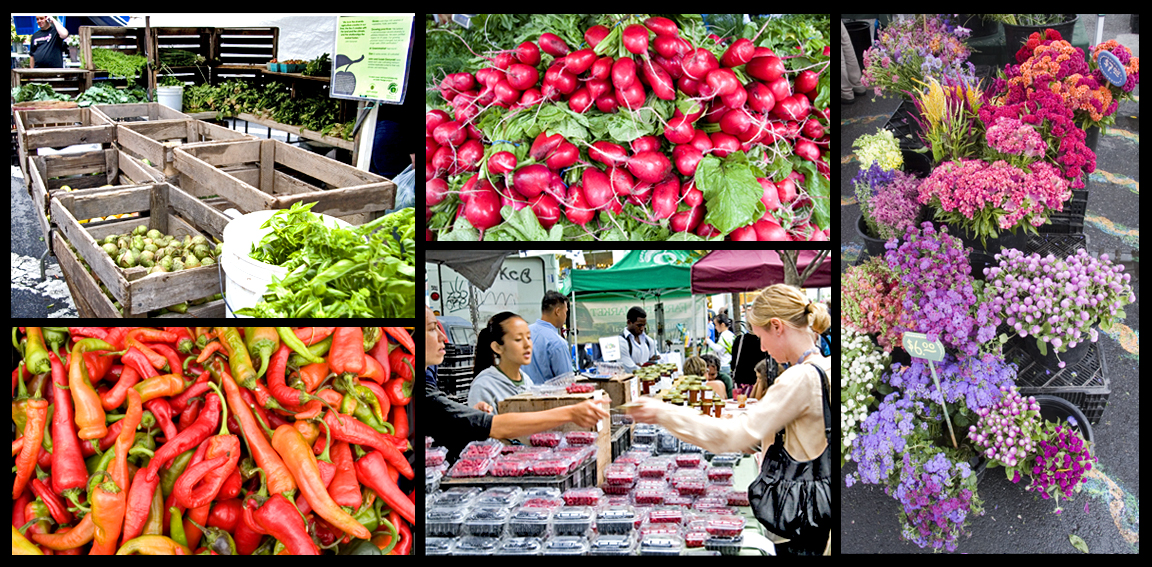
• Union Square Greenmarket

    The farmers’ markets of NYC are old news to residents. Established by the city in 1976, this program provides a marketplace for over 160 farmers from around the region. There are 45 of these markets in the five boroughs – 250,000 people shop weekly (read the facts at the official site). Over 100 restaurant chefs shop there also. The Greenmarket at Union Square is the most well-known and operates Monday, Wednesday, Friday, and Saturday.

    For many of us, this is one of the truly wonderful developments in NYC – the ability to have the fresh goods from hundreds of producers from around the region trucked to our doorstep. Even if you do not cook much, just to walk through is always a pleasure for New Yorkers or visitors, and you can grab a snack or beverage while there. The selection and quality exceeds what could be gotten in most rural or suburban areas – not a typical expectation for a city dweller. Fresh fruits and vegetables, cheese, fish, breads, pastries, herbs, honey, maple syrup, preserves, eggs, dairy products, meats and poultry, wines, plants, flowers…

  • Albino Burmese Python

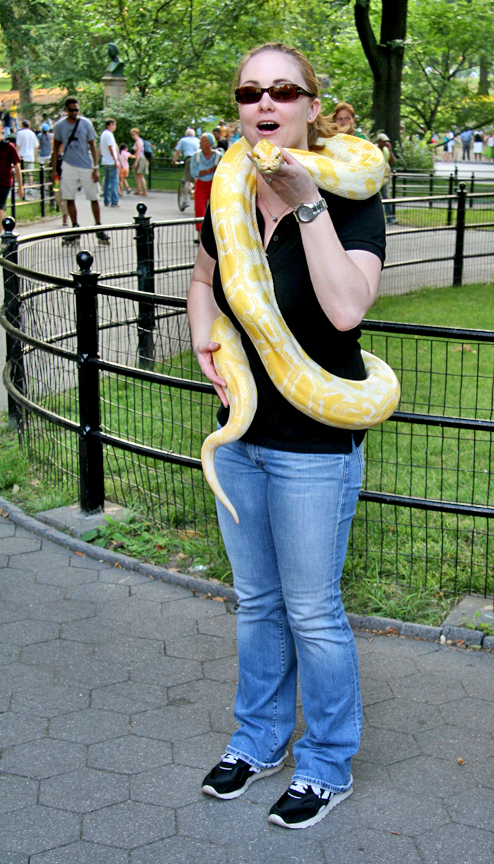
    Many New Yorkers like their things extreme – perhaps it helps prove that they live in what many consider to be the “greatest city on earth.” And if you want to impress others, what better way to do so than by not only owning an exotic snake but also by sporting an Albino Burmese Python in public?
    This snake was in Central Park – the owner was letting people enjoy it (see photo here of a woman with the snake wrapped around her). At one time I recall seeing on a regular basis a group of shirtless muscled guys with these snakes entwined around their bodies.

    Apparently Burmese Pythons hold the record for weight (read about them here). The Albino variety is reputedly docile. That and its striking color pattern owes to its popularity. However, Burmese Pythons can bite or kill by constriction. Then there is the issue of feeding, cleaning, and keeping them caged.
    Not exotic enough? Try a Leucistic Burmese Python – completely white with no pattern and black eyes. This is extremely rare – most sought after and most expensive – IF available, they can run into thousands of dollars…


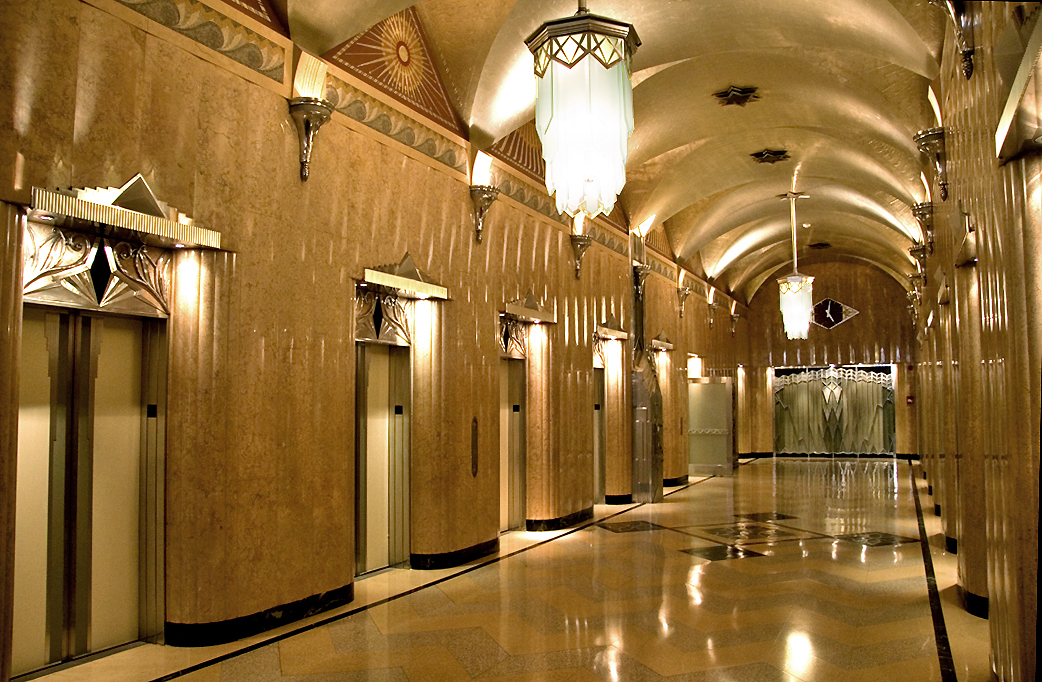
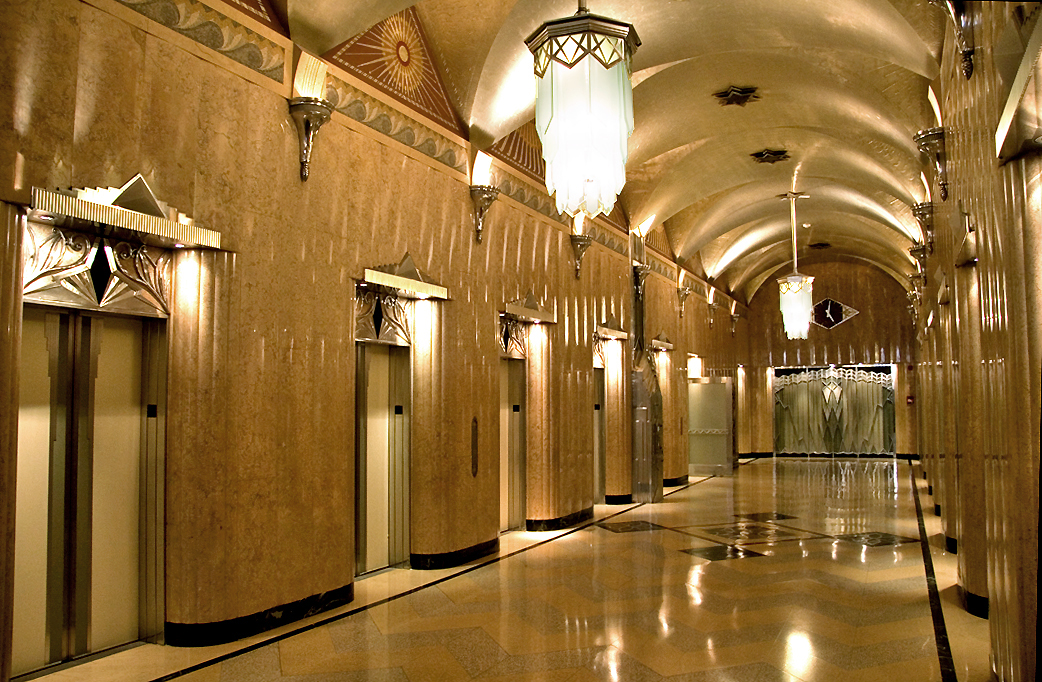
  • Art Deco Lobby

    This is the lobby of 570 Lexington Avenue, originally the RCA Building and later the GE building, one of the world’s finest Art Deco masterpieces. This small but exquisite and elegant lobby is one of my favorites in NYC – vaulted silver and terracotta ceilings, terrazzo floors, polished marble walls with mosaic wave frieze, reliefs of swords and electric bolts, lamps with aquamarine glass, and ornate nickel silver sconces. I love the elevators with the motifs above each – I understand that the elevator cabs inside are rosewood-paneled.

    The subtle lighting gives the lobby’s atmosphere a warm and wonderful feeling. I stop in anytime I am nearby. I recommend that you do also if you are in the neighborhood…


  • Homeless Art Scene

    I’m not an artist by training, but living in NYC, one does become acquainted with art and the various aspects of the “art scene.” So I recently was surprised to see a series of canvases in the park at night and with no attendant artist. The mystery was solved yesterday morning when I found this woman drawing and enjoying her work. She was in high heels, apparently the new requisite wardrobe item for artists 🙂 Her clothes were neatly folded on her chair. She became aware of my presence taking photos of her and at one point looked up, smiled, and said good morning. See more photos here of her and her art. If I see her again, I’ll let her know she’s had her 15 minutes of fame (I doubt she has Internet access to see this post though).

    Lingering doubts about her homeless status were quelled last night when I found her sound asleep in her chair (sorry, no photo). Thinking that this is the latest trend and that I was the last to know, I did an online search this morning of “homeless art scene” – it returned no results. However, an artist friend told me that there is a history of outsider artists, which includes ones who were homeless. Click here for the story of one of them: Bill Traylor…


  • Gotta Go?

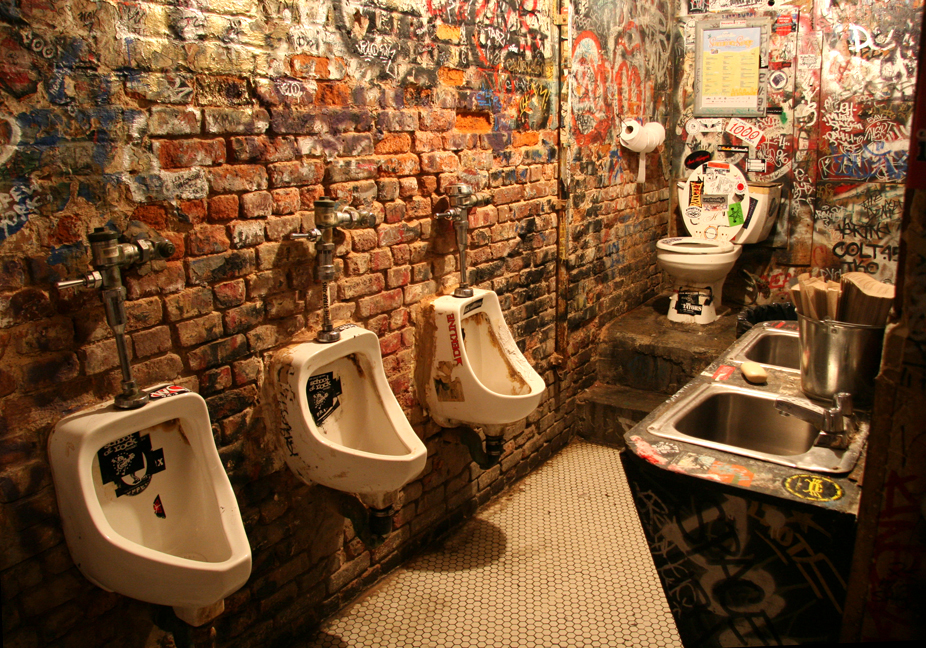
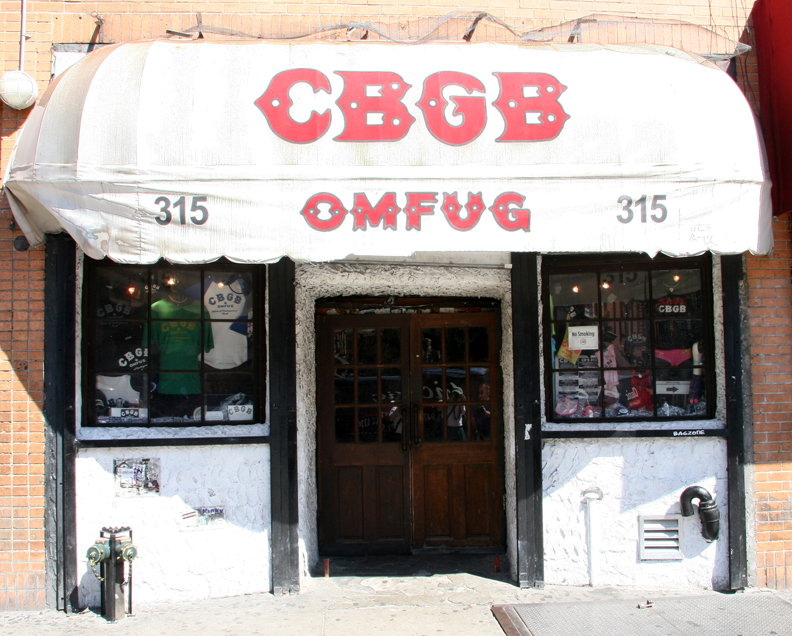
    This is the downstairs bathroom at CBGB. And, yes, it appears to be official: after 32 years, CBGB has gotta go – they are closing and moving to Las Vegas. Opened in 1973, they are the oldest rock club in continuous operation in NYC. The punk mecca has showcased the Ramones, Talking Heads, Blondie, the Patti Smith Group, Iggy Pop, etc.

    In a city of rising rents, closings of clubs is becoming standard fare – Wetlands, Fez, Luna Lounge, and Chicago Blues have all closed. Numerous efforts to save the NYC landmark have been made, including a festival in 2005, attended by the mayor. But economics rule – with a reported doubling of rent from $20,000 per month to $40,000 (and $80K per year liability insurance), it is just not economically feasible to stay open. For many, the closing is more of a disappointment than a real loss because it is emblematic of recent trends of displacement and gentrification.

    According to owner Hilly Kristal, they are taking everything with them to Vegas: “I intend to take everything out of there that represents CBGB. We’re going to take the bars, the toilets, the urinals, even the doors. We want to re-create the essence of the club.” But for me, looking at that bathroom, I’m not so sure I gotta go 🙂


  • Crisis at Citicorp

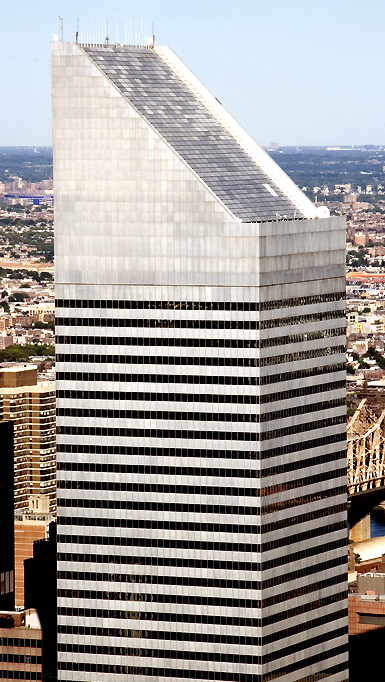
    In reading articles for this post, I came across an astounding story regarding the Citicorp Center. Built in 1978, this tower is one of the tallest in Manhattan and is considered one of the most important postwar structures in NYC. The building’s unusual design, with a nine story stilt-style base, allows it to cantilever over St. Peter’s Lutheran Church (Citicorp built a new church to replace the original, which had occupied much of the block).

    Very interesting, but here’s the real story – unknown to the general public until 1995, nearly 20 years later, unauthorized changes were made to the construction (bolted joints rather than welded). During construction, questions from an architecture student (about the stilt-style construction) prompted the structural engineer, LeMessurier, to recalculate the effects of the change to bolts. He discovered a fatal flaw – the design could not withstand the force of a 70 mph wind, an event which was predicted to occur on average every sixteen years. And, coincidentally a hurricane was approaching NYC. After contemplating suicide (really), he had meetings with the client – emergency repairs were made with workers working around the clock. Steel plates were welded over all 200 bolted joints to reinforce the structure. Read this excellent 1995 New Yorker article about the entire debacle here.

    By the way, the distinctive angled roof was originally designed for energy-saving solar panels, which were never installed.


  • Penny Farthing

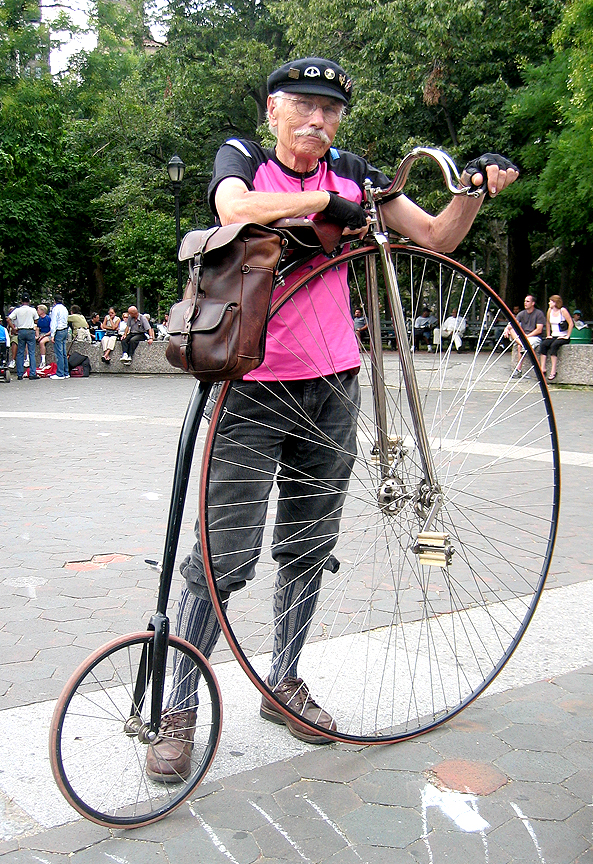
    It’s always a rare pleasure to see one of these beautiful, elegant cycles. Penny Farthing is the British term for this early style of bicycle – the term derives from two coins of the time: the penny (large) and farthing (small). This bicycle has also gone by the names Ordinary and High Wheeler. There was no gearing on these bikes – the pedals were attached directly to the axle, essentially making this like a large unicycle. To get greater speeds, the wheel size was made quite large. This design was quite treacherous – the rider sat high (and over the center hub), and any sudden stops sent him/her flying. Mounting was quite tricky – see Gary Anderson (in the photo) demonstrate mounting and riding in my video:

    These High Wheelers had a short history – the invention of the safety bicycle, with its gear-driven chain drive (and smaller wheels of the same size), made the High Wheeler obsolete in a short time. Riders, builders, and organizations of these enthusiasts (such as The Wheelmen) still live on, but the diamond frame design of the safety bicycle remains the standard today…


  • Water Sprites

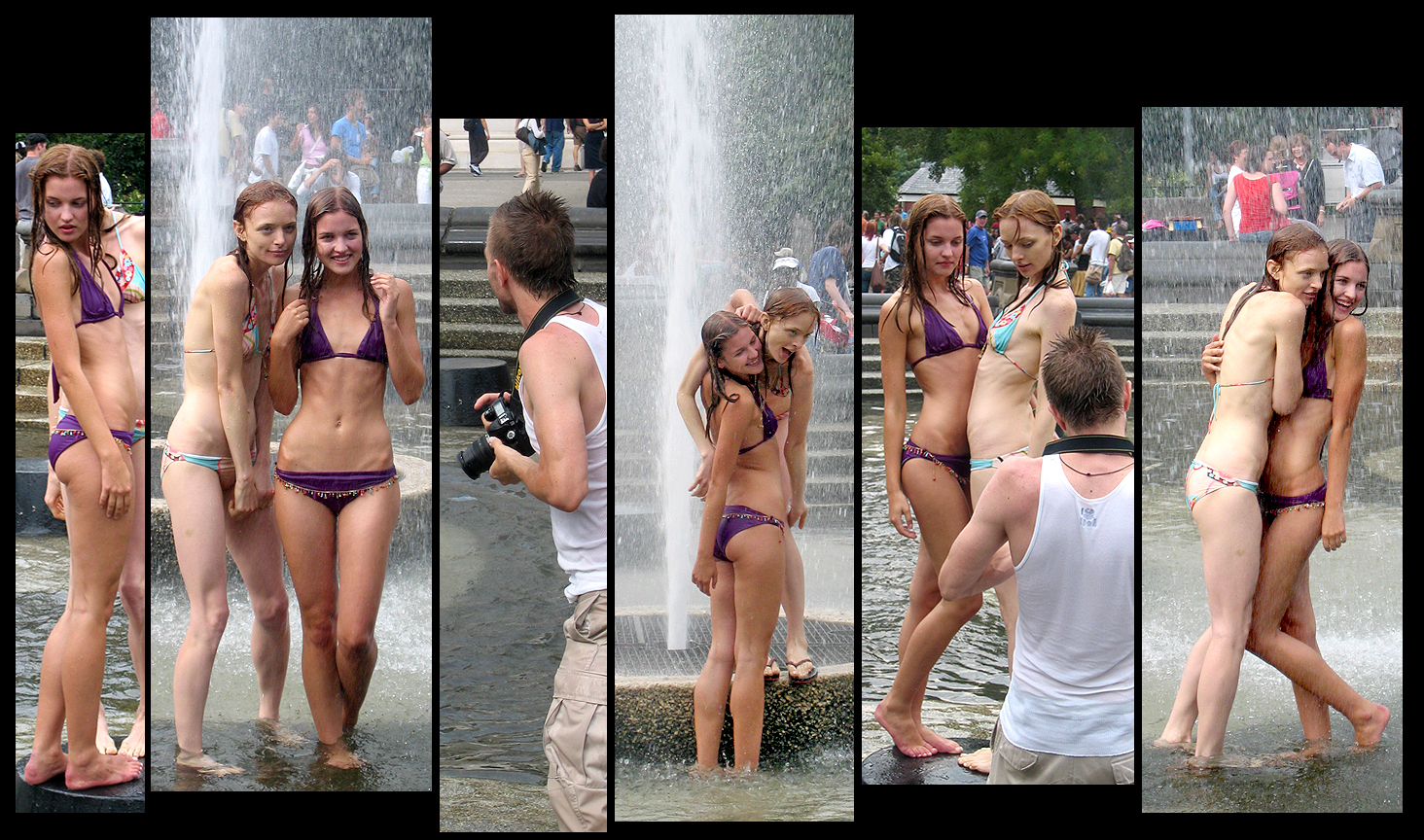
    It was too cold in the park yesterday for standing in bikinis near a blasting fountain with water spraying everywhere. I caught this photographer and his two models in a photo shoot – they were getting quite a bit of attention. Let’s hope they were at least getting paid. I noticed when they came out that they looked rather blue and that their first priority was to grab the towels offered to them.

    I have no links for you today, unless you would like to read about torpor. Perhaps this was the trick that prevented these endothermic girls from getting hypothermia and kept them smiling, but then again, perhaps they really are water sprites 🙂


  • Hearst Tower

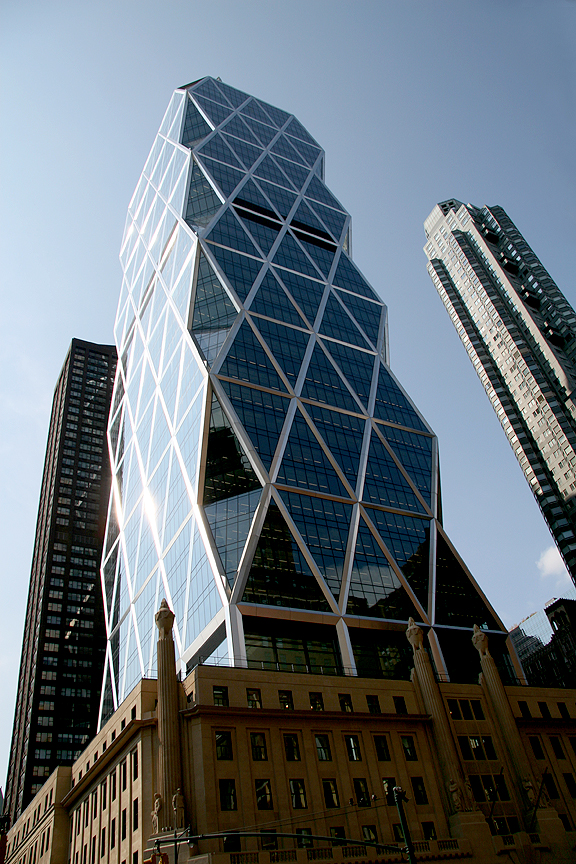
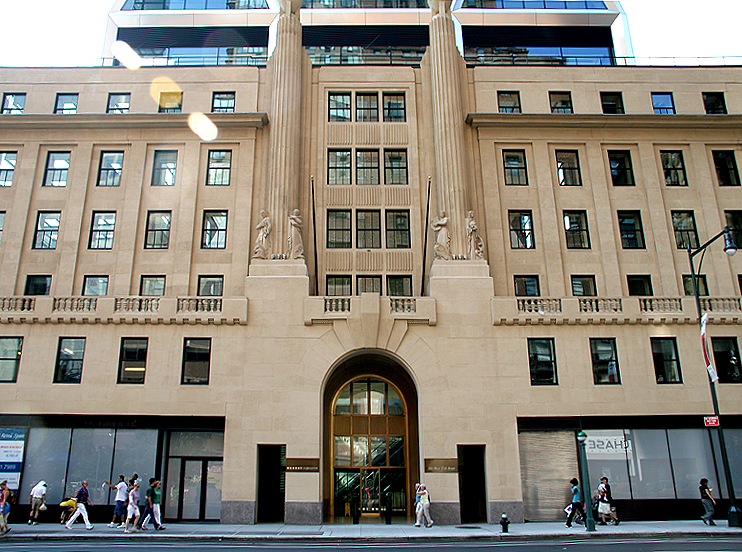
    The Hearst Tower (at Eighth Avenue and 57th Street) is world headquarters for the Hearst Corporation, a media conglomerate – they own newspapers, magazines and television networks. Architecturally, this building is notable for a number of reasons – the most obvious is its triangulated glass and faceted corners (or diagrid). The building was originally designed in 1927 as a six-story Art Deco structure (the Hearst Magazine Building) with limestone facade to house the magazines that William Randolph Hearst owned at the time. There were plans to add a tower, however, this did not come to fruition until May 2006, when the 42-story tower (designed by renowned architect Norman Foster) was added to the original limestone base.

    Note that the main entrance is flanked by statues: Comedy and Tragedy on the left and Music and Art on the right. Another distinguishing aspect of the new tower is its designation as a green building – built from recycled materials, operates with reduced energy requirements, is naturally ventilated, etc. For more photos, inside and out, check out this photo gallery.


  • Trumped Again

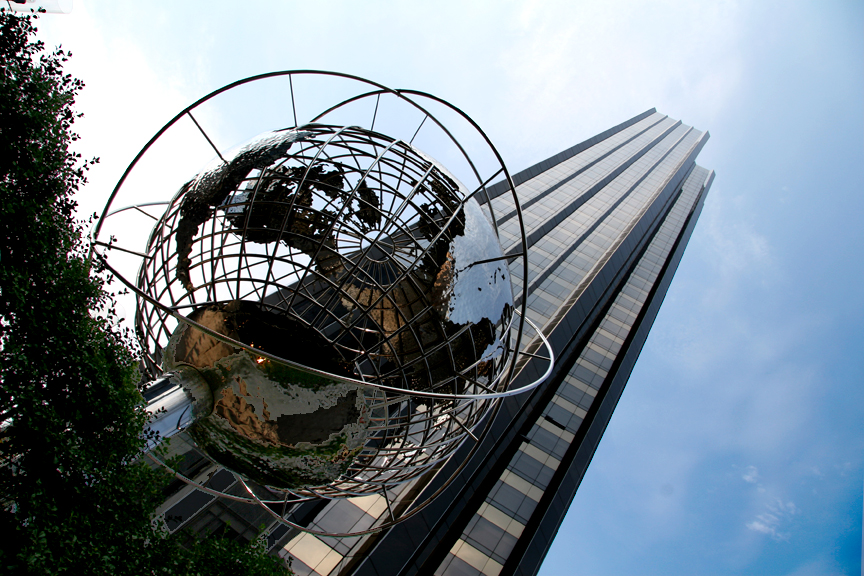
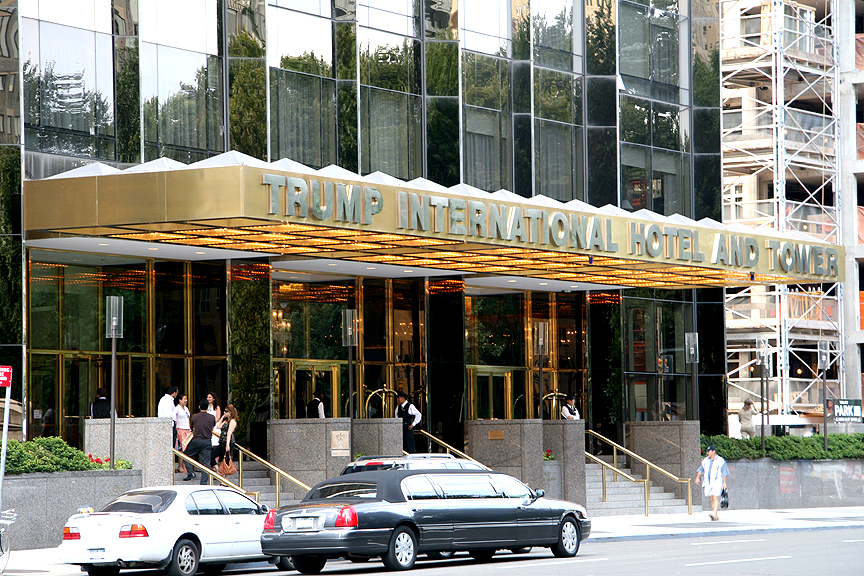
    Certainly The Donald (Trump) does not need anymore promotion – he’s done quite well, especially with his hit TV series, The Apprentice. From 1995 to 1997, he converted the former Gulf and Western Building, built in 1970. This previous building was rather unsuccessful with problems, one of which was its tendency to sway excessively on windy days (some occupants actually became seasick). Rather than rebuild from scratch (with zoning restrictions), Trump stripped the building to its steel skeleton and built the Trump International Tower and Hotel, shown in the photo (combination hotel and condominium), with its glitzy entrance and shiny accents (of course). See a 1994 NY Times article here.

    The address can’t be beat: One Central Park West, at Columbus Circle with views overlooking Central Park. The steel globe was designed by Kim Brandell. Trump’s presence permeates NYC, so for those who don’t relish his style, I must warn you – I don’t think he’ll be fired anytime soon 🙂


  • St. Patricks from the Rock

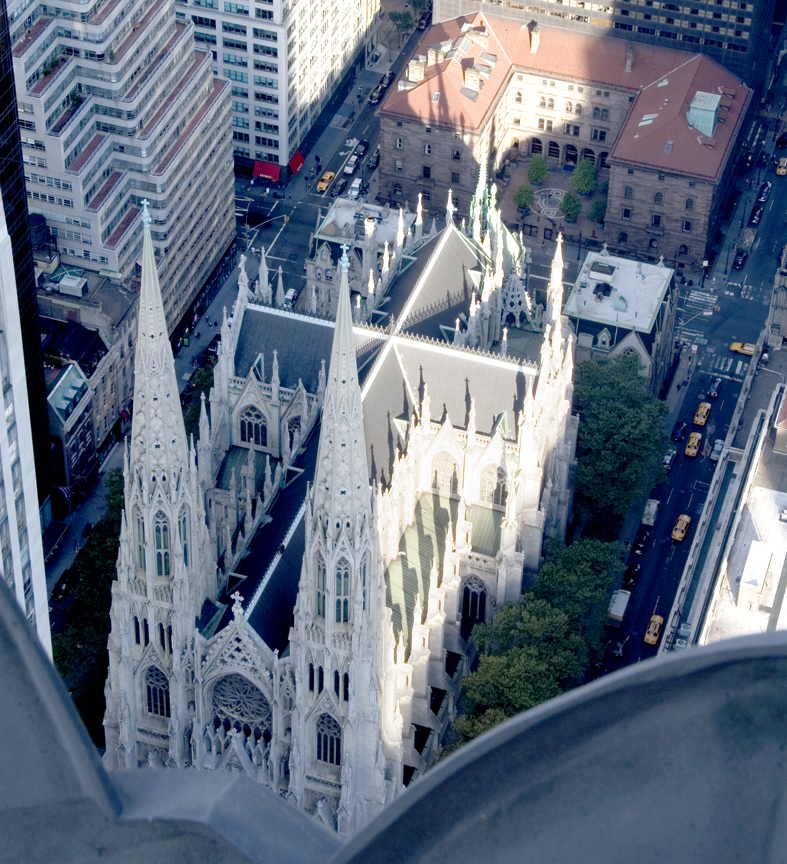
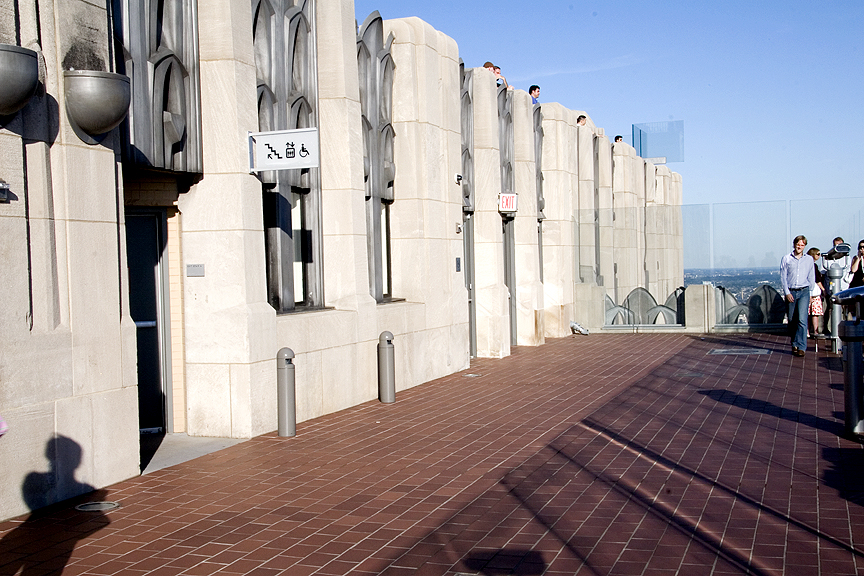
    This photo was taken from the recently reopened observation deck of Rockefeller Center now called Top of the Rock. Photography is challenging at the Rock – there are actually three observation decks. Two are surrounded by thick glass with spaces in between just large enough to squeeze a lens through. The third and uppermost deck (70th floor) is completely open, but set back, thereby preventing extreme downward shots (click here for a photo of the 69th floor deck – note the 70th floor deck on the upper left).

    In the photo facing East towards Fifth Avenue, you can see St. Patrick’s Cathedral (the subject of a future post) and behind it are the Villard Houses, a group of five brownstone mansions built in 1884 and attached to the New York Palace Hotel, built in 1980. I recommend the Rock Center deck – it’s open 365 days a year from 8AM to midnight, offering 360 degree views. Allow some time to enjoy…


  • Rose Reading Room

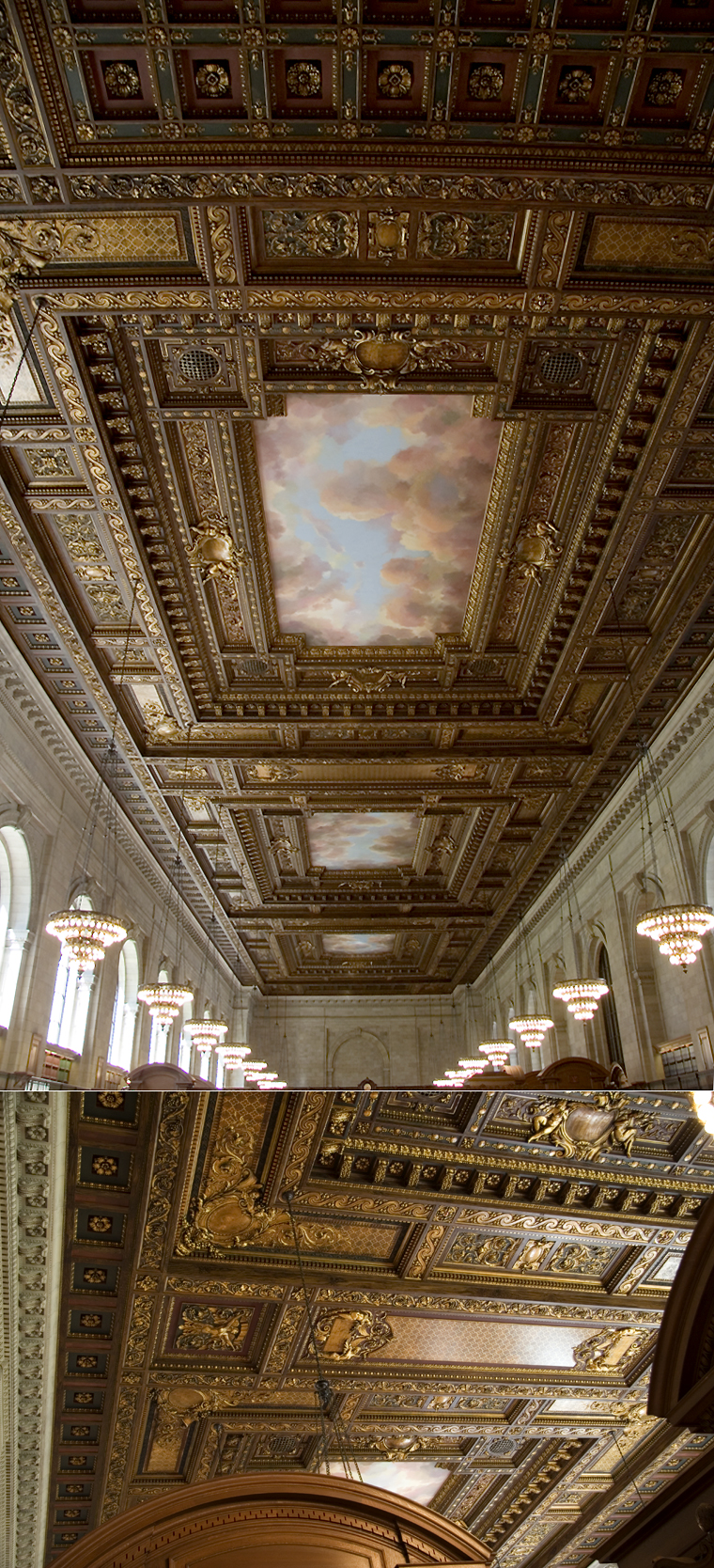
    The Rose Main Reading Room on the 3rd floor of the New York Public Library is one of the most spectacular rooms in the city and one of the world’s grandest interiors. However, over time, it fell into serious disrepair – the ceiling murals were barely discernible and windows remained blackened (done during World War II due to fear of air raids). A restoration was completed in 1998, with a 15 million dollar gift from the Rose family.

    The room is nearly two city blocks long (297 feet), 78 feet wide, and 51 feet high (note: this photo only shows one half of the room). It seats 636 people at its long oak tables with original bronze lamps and chandeliers. Here you can access 6 million books, 12 million manuscripts, and 2.8 million photos beneath magnificent ceilings with murals of blue sky and puffy clouds, inspired by Tiepolo and Tintoretto. See more photos here. This room is a must see for visitors and residents alike…


  • Bryant Park

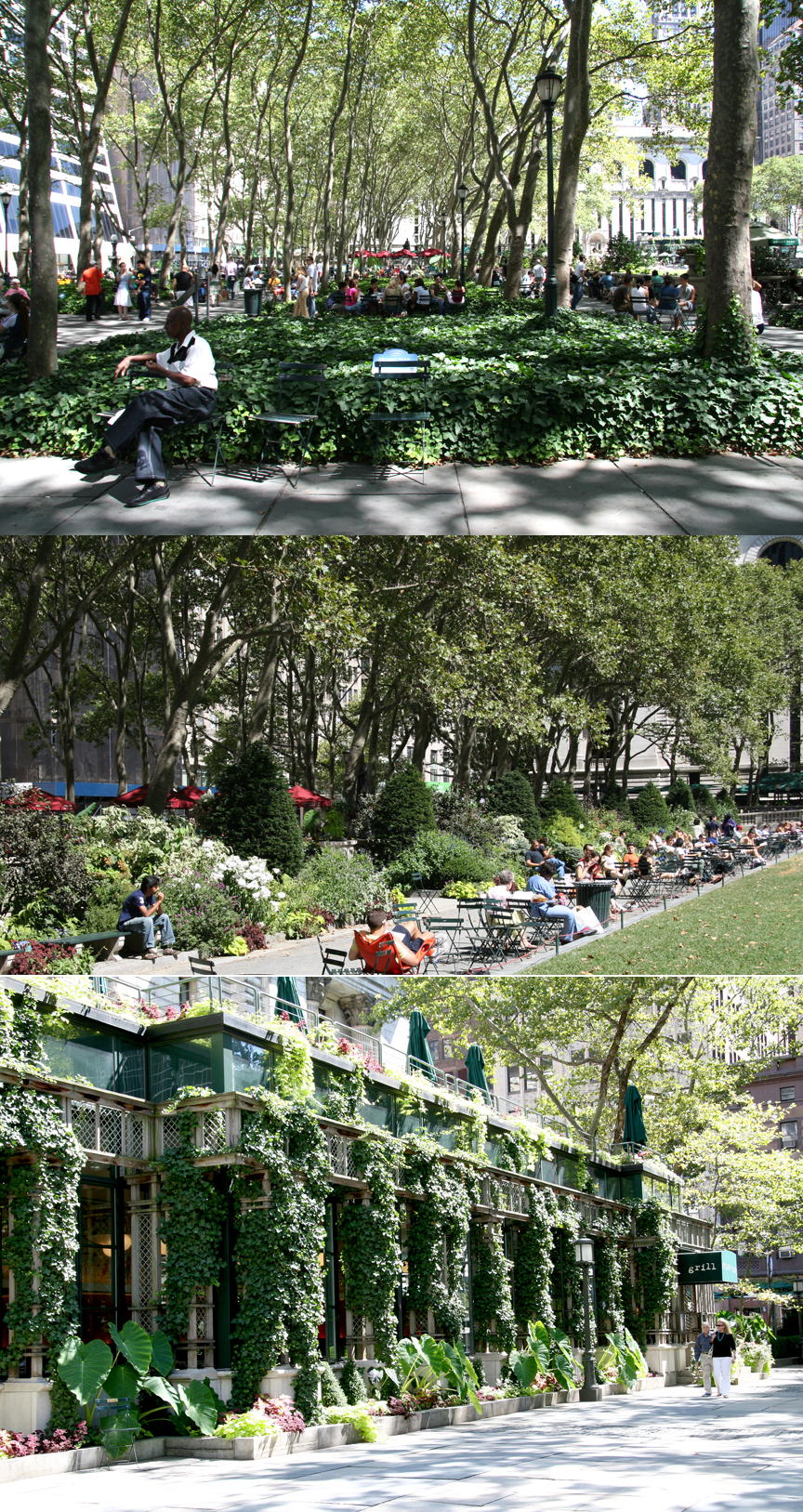
    Bryant Park, named after William Cullen Bryant, has had a long and uneven history – a potter’s field, Reservoir Park (sharing the block with the Croton Reservoir – future home of the NY Public Library), home of Civil War military drills, and the Crystal Palace Exhibition (1853). And it has gone through bleak periods – both in the 1930s and the 1970s, it became one of the worst parks in NYC. In the 1970s, the park was essentially dominated by drug dealers, prostitutes, and the homeless, often referred to as “Needle Park”. Click here for a history.

    In 1992, the park was reopened after a privately funded restoration. With its formal French gardens and crushed stone walkways, it is reminiscent of the Jardin du Luxembourg of Paris. The restoration has been one of the greatest turnaround successes in recent NYC history – the park is frequently cited as an example of how positive transformation can occur even in what appears to be a lost cause. Now the park has restaurants and cafes, kiosks, and free WIFI internet access (click here for more photos). On Mondays in the summer, HBO sponsors outdoor movies. The park also hosts many other programs and events. Check out the Bryant Park official site…


  • NYPL

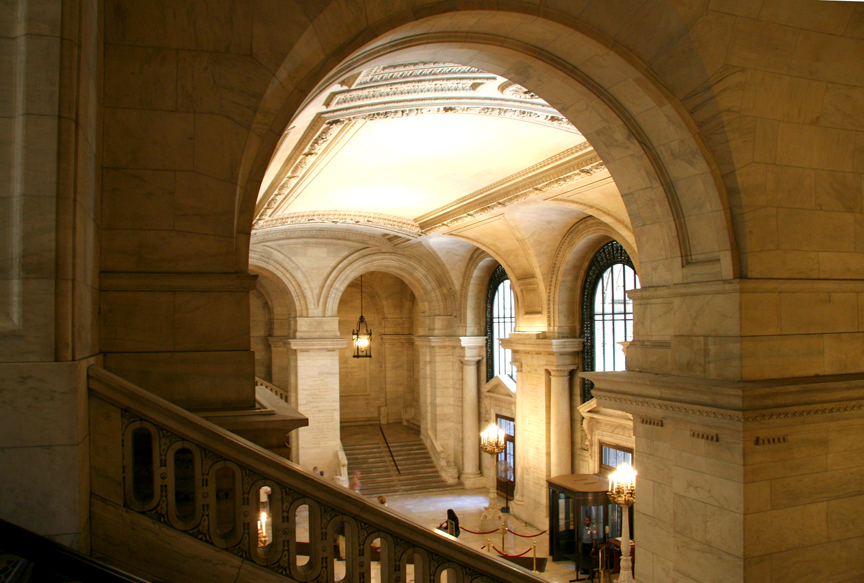
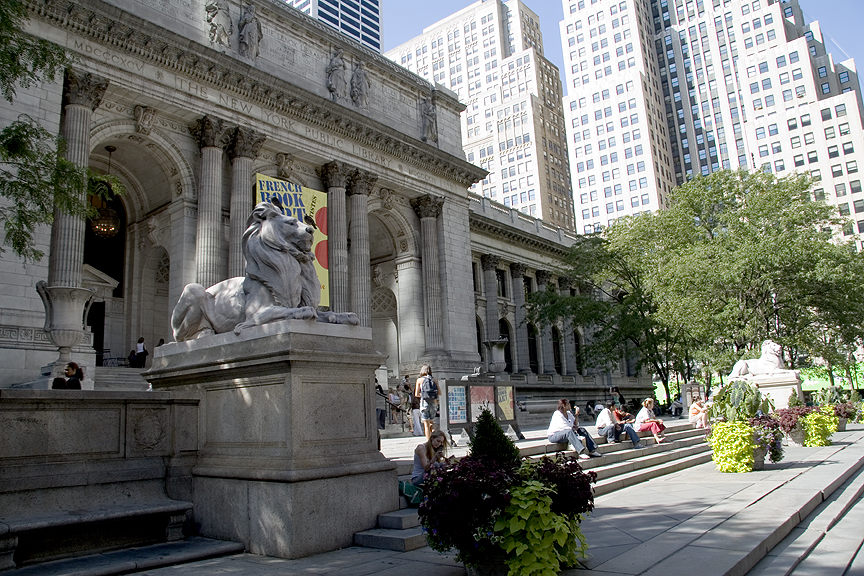
    No, this is not Paris or Italy. It’s the New York Public Library on Fifth Avenue in NYC, with its iconic set of lions flanking the entrance. The photo was taken from a stairwell looking down into the main lobby (click here for more photos). This majestic Beaux-Arts building replaced the Croton Reservoir (it took 2 years to dismantle) and became the largest marble project in the USA at its time – the entire project took 16 years from idea to completion (1895-1911). Its creation was the result of the consolidation of the two primary private libraries at the time: the Astor and Lenox (read a short history here at the NYPL’s website).

    In the 1980s, the library added 125,000 square feet of underground storage, which required the excavation of adjoining Bryant Park. I have found that this library is underappreciated by New Yorkers and tourists alike – I guess a library is not on the to-do list of the typical visitor. However, I highly recommend visiting it – it’s free, is centrally located, and one can get a good feel for it in a short visit…


  • Telephone Bar

    In the East Village at 2nd Avenue and 9th Street, we have the Telephone Bar and Grill with its iconic set of three red genuine British telephone booths outside. I chose this place because in the years I have gone there, it never fails to offer a consistent fare of food, drinks, and atmosphere. It has been in operation for nearly 20 years, a long time in restaurant years.

    The comfy atmosphere and food are upscale British pub, with classic offerings such as shepherd’s pie and fish & chips and a very extensive beer and drink selection. They also have free entertainment in their back room several nights a week: poetry readings, live music, a movie night, and other events. They have a very nice website (menus, events calendar, British links etc.)(update: no longer online)- I particularly like their logo and graphics…

    Update: As of January 2010, Telephone Bar and Grill is now closed.


  • dinamic_sidebar 4 none

©2026 New York Daily Photo Entries (RSS) and Comments (RSS)  Raindrops Theme