• Category Archives Curiosities of NYC
  • Do it in the Road

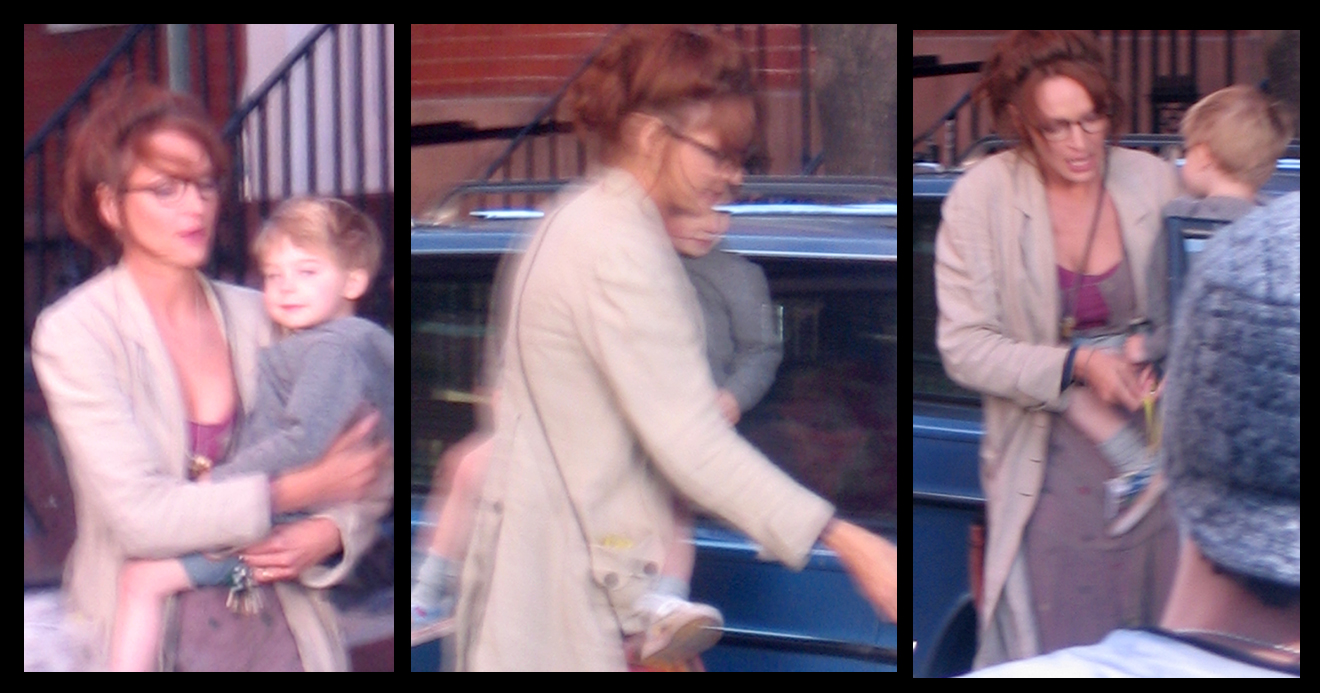
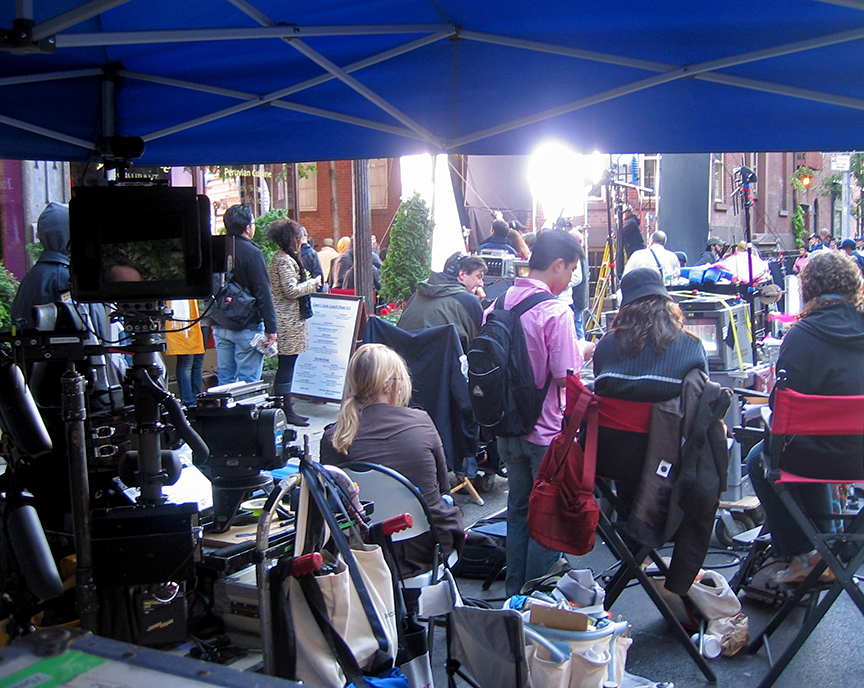
    We do it in the road. We have a real street life in NYC. The street is our front yard, backyard, driveway, and secondary sidewalk. We eat in the streets, walk in the streets, and fix our cars in the streets. Children play in the streets and we have fairs and parades in the streets. We make movies and commercials in the streets – where else is there? Last night, on the way to dinner on Christopher Street in the West Village, I ran across a movie set. They were filming Motherhood with Uma Thurman (see photos here).

    These occurrences appear suddenly and are quite common – the crowd watching was surprisingly small. Paparazzi with telephoto lenses were on hand. But we are jaded in NYC, and the novelty wears off quickly. Most onlookers only spend a short time observing, catch a celebrity, and move on. And most don’t even bother to do that. They just walk and navigate the street, slightly annoyed with the congestion, simultaneously avoiding the traffic. Cars and buses are a nuisance, really – they just get in our way…


  • Veggie Pride

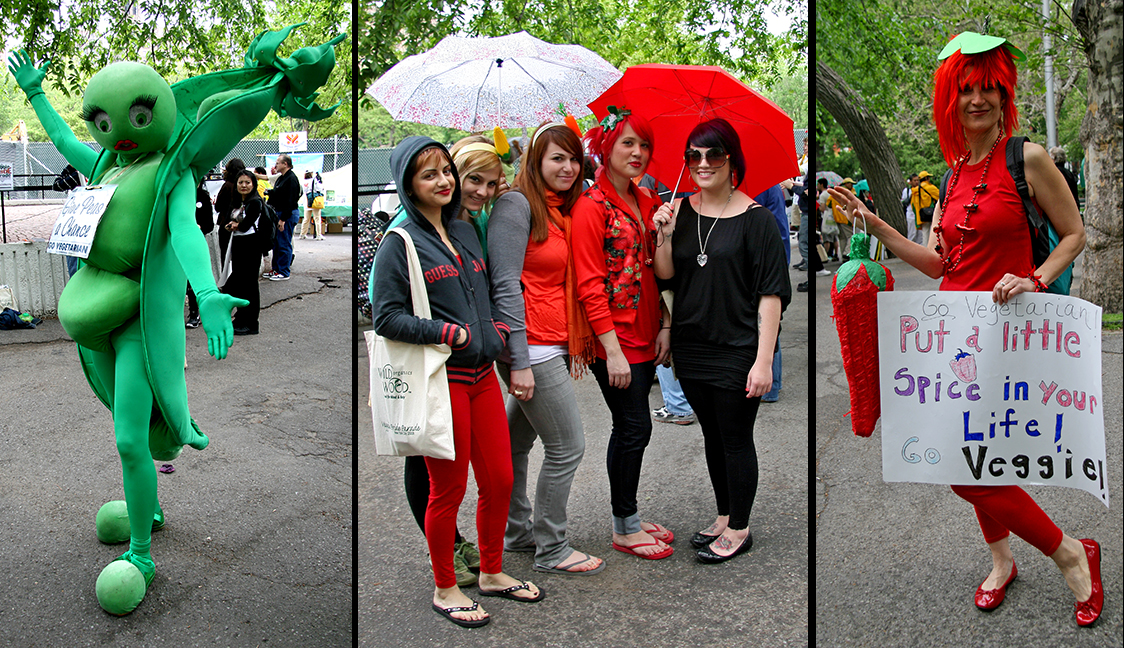
    Sunday was the first Veggie Pride Parade in America. Ironically, it started in the meatpacking district and ended in Washington Square Park, with various activities and speakers. The world’s first was held in Paris in 2001 – a surprise coming from the country that brought us foie gras. Marchers donned a variety of vegetable and fruit-inspired costumes. I am somewhat sympathetic to the cause, having been a vegetarian for decades and now only adding fish to my diet.

    A very interesting aspect of this movement are the various semi-vegetarian practices which, for many, are seen as types of vegetarianism. Many individuals now add certain flesh and animal foods to their diet, like poultry, fish, eggs, or dairy. So we have terms such as pollo vegetarianism, semi-vegetarianism, flexitarianism, pescetarianism, pesce-pollotarianism, ovo-vegetarianism, lacto vegetarianism, and lacto-ovo vegetarianism.
    And, of course, there are the hardcore adherents who consider many of these terms to be misnomers and abstain from any animal products. At the extreme end of the spectrum, we have vegans, fruitarians, natural hygienists, and raw foodists. Macrobiotic followers may or may not be strict vegetarians.

    The motivations also vary. People are vegetarians for a number of reasons: religious, ethical/ animal rights, cultural, economic, and environmental. For an overview of vegetarianism, see here.

    A number of us found one odd thing about the participants: the large number present who wore tattoos, piercings, and other manifestations some might consider out of character with a natural, vegetarian lifestyle (including a loud hard-rock band). One gets the feeling that for some, vegetarianism is more a faddish, style-driven choice. I wrote about this in my posting Vegan Chic.

    But overall, I think the message of reduction of meat is a useful one – over consumption of food in the USA is a general problem, and the reduction of red meat is a laudable goal for many, including members of the medical community…


  • Mary Celeste

    I have been frequently asked by visitors, “Where do you get gas in the city? I don’t see any gas stations.” Or, “Are there any supermarkets?”
    Blinded by the oversaturation of stimuli and the plethora of all things manmade, the last thing noticed in the city are the mundane, particularly those places which provide basic services. But all the basic services do exist, tucked away here and there, perhaps in atypical and unlikely places. Laundry, dry cleaning, shoe repair, auto repair shops, street level doctors’ offices, hardware, paint supplies, plumbing supplies, lumberyards, gas stations, supermarkets, schools, and playgrounds. The number of many of these has declined substantially as the real estate market has heated up, but they all can still be found.

    One of the most mysterious things to me is the public and private schools. Virtually invisible, yet there are 1,400 schools in the five boroughs.
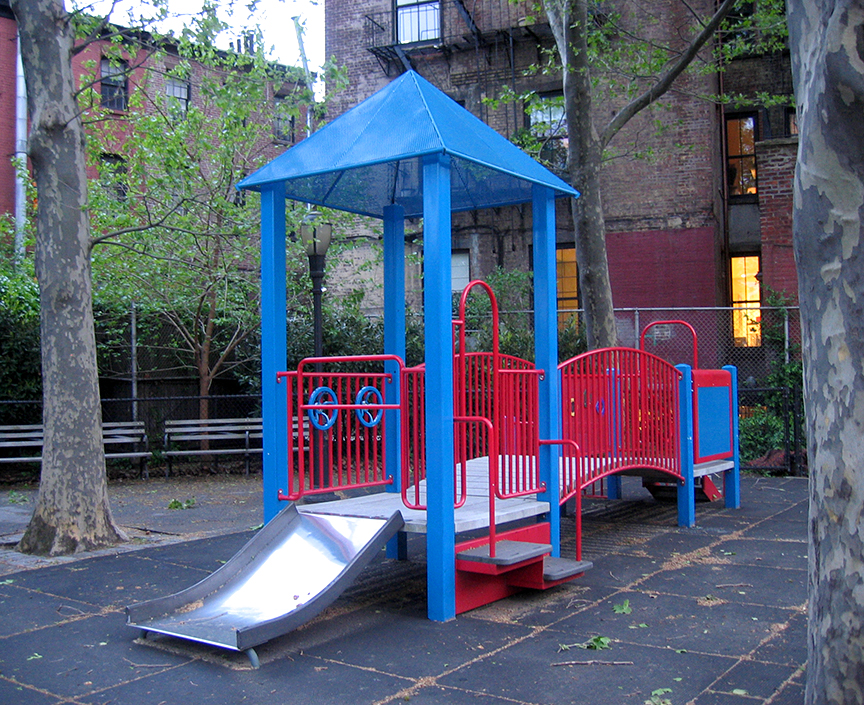
    And children need to play. Here, at one of the busiest intersections in Manhattan, Houston Street and 6th Avenue, we have the Playground of the Americas. But you never really notice it. In fact, I have walked by this playground for years, and this is the first time I have really looked at it.

    Due to my daily work schedule, I rarely see school children in action in the city, so schools and playgrounds are like the ghost ship Mary Celeste to me – cigarettes still burning in the ashtrays and food still cooking in the stove, but the crew and passengers have vanished…

    Note: The story of the Mary Celeste is a fascinating tale.


  • Left for Dead

    The Segway was heralded by inventor and design engineer Dean Kamen as a transport device that “will be to the car what the car was to the horse and buggy.” Go here if you are not familiar with Kamen or the Segway.
    There was tremendous buzz and speculation before its release – Steve Jobs claimed that it would be “as big a deal as the PC.” After the product release and its grandiose claims, I had a gut feeling it would be a failure, at least in urban areas like NYC, for many reasons: cost ($5000), regulations, traffic, weight, and parking (where would you put this thing?). I even emailed Kamen himself, addressing all the problems I saw, along with the biggest issue of all: VANDALISM.

    Kamen spoke of all the sophisticated security devices to prevent theft, but in my opinion, he missed the problem of vandalism, not theft. Perhaps he doesn’t know New York. Why would someone vandalize something that they could not steal? For many reasons (such as taking parts), as well as perhaps one reason not understandable to outsiders: because they can.

    I’m sure that people will take parts they do not know they have use for because they are there.
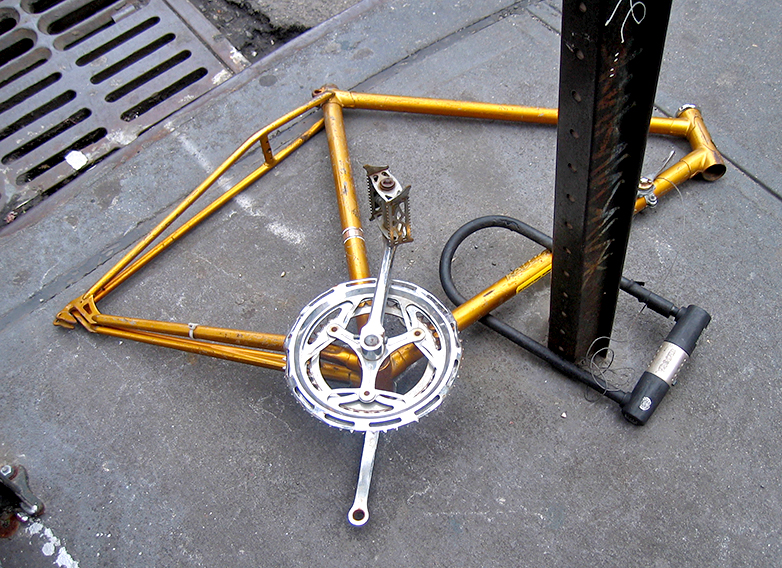
    Manhattan is a graveyard for abandoned bicycles, like the one in today’s photo taken on Spring Street. Many bikes are stolen, even with special locks like the Kryptonite, and if they can’t steal the bike, they will steal unlocked parts (yes, there are ways of locking individual components, like seats).
    When you arrive to see your bike stripped like that in the photo, I imagine it is rather disheartening. What’s the point in taking the frame, and where will you dispose of it anyway?

    In 2005, sculptor David Shapiro did an outdoor exhibit, Left for Dead, at the Socrates Sculpture Park in Long Island City. A melange of twisted abandoned bikes in various states were salvaged from the streets of the city. In the exhibit, Shapiro attached them to sign posts, embedded in the ground. And a thief was found to have attempted to steal a seat from an exhibited bike.

    The whole scenario starts to resemble soldiers who stole gold fillings from corpses in times of war. Even the dead are not safe…


  • Responsibilities

    Posted on by Brian Dubé

    I recently served jury duty. I was not pleased, but it is my civic obligation. This is New York Daily Photo – if you come here to see this great city and truly know it, I feel like I have some responsibilities and you do too, like learning about the city’s architecture and perhaps what that building is in the photo. And if you commit a crime, there are consequences. We all must take our medicine when needed.

    So here at 60 Centre Street is where obligations, responsibilities, and consequences meet. A rather serious matter and not the type of characterizations compelling to the tourist or visitor. I think courthouses connote obligations, responsibilities, and consequences more than justice.
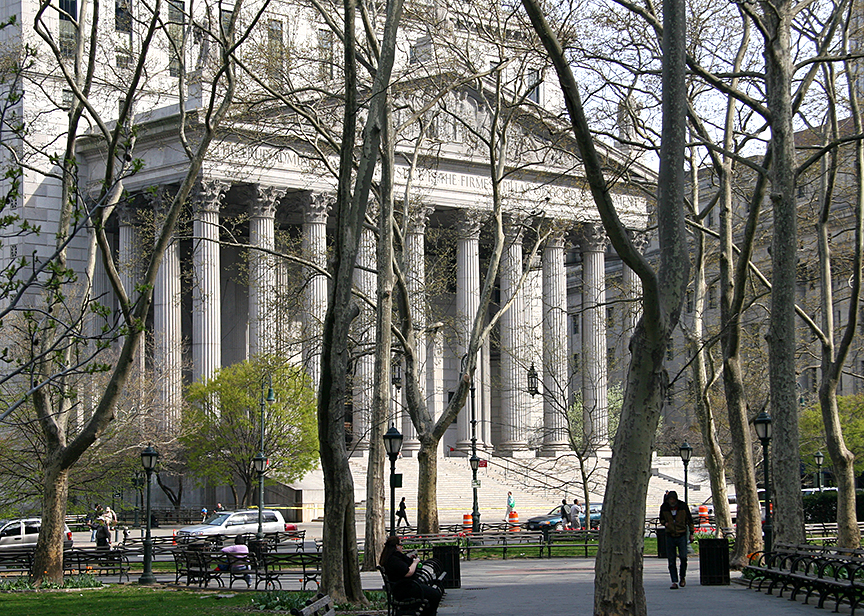
    This is the New York County Courthouse, aka the New York State Supreme Court building at 60 Centre Street. It was designed by Guy Lowell and was completed in 1926. The 10 granite Corinthian columns support a portico where the words of George Washington are engraved: “The true administration of justice is the firmest pillar of good government.”

    One of the outstanding features of this edifice is the 100-foot wide staircase. There is a great article by Paul Goldberger, architecture critic for the New York Times. In it, Goldberger bemoans the fact that great staircases will no longer be built: “…equal access for the handicapped and the elderly has become a determining factor in architecture. If everyone cannot partake equally in an architectural event, the argument goes, it should not exist at all. No one can argue with this goal, of course, but it is unfortunate that so much has been lost in its pursuit.” So, with new construction, everything is being flattened for equal access – it is our responsibility…

    Photo note: The vista here is from Thomas Paine Park at Foley Square. A unique feature of this building is that it is hexagonal, something best seen from above.

    Posted on by Brian Dubé

  • That’s Quite a Briefcase

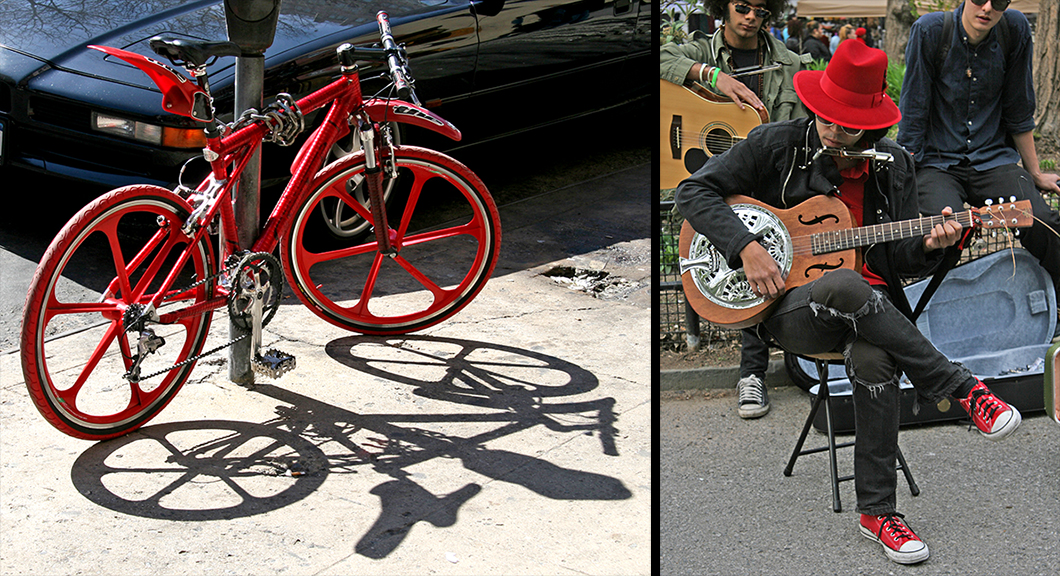
    In January, I did a story on a red car and my impressions of those who embrace red. In the posting, I also wrote a brief synopsis of the symbolisms regarding red in different times and places. I am intrigued by individuals who make a statement using red attire or possessions – it certainly is not the color of the shy and withdrawn. And personally, I like the color – I have a few articles of clothing in bright red, but I wear them infrequently and quite judiciously.

    There are other colors, like purple, which also send messages. I am reminded of a period of time where I was carrying papers to and from my office in a slim, translucent, plastic, PURPLE briefcase. This is rather unusual for a male business owner, but I have that privilege. And NYC is quite accepting of creative types and the unconventional. However, one day I had a salesman who called on me. He stepped into my office, noticed my purple case, and remarked in a sarcastic tone of voice, “That’s quite a briefcase.” I was actually quite insulted and found his remark very inappropriate, but I let it go. After he left, it occurred to me that I could have retorted, “But that’s why you’re on that side of the desk and I’m on this side.” But that would have just been nasty 🙂


  • Hookah

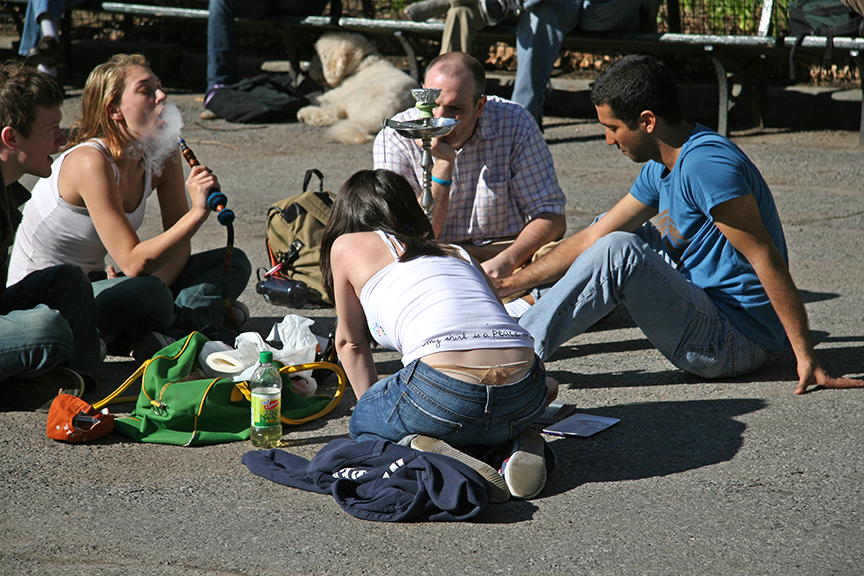
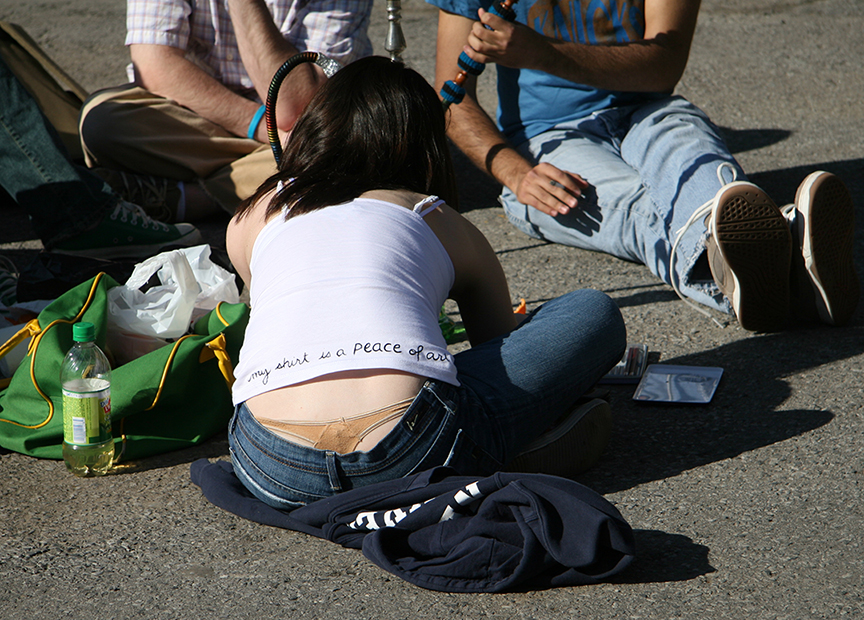
    The hookah is a social instrument, so it is not surprising that it would be adopted by students. Hookahs are now common in colleges around the country, as are hookah bars (this site gives a national hookah bar directory by state – Update 1/17/12: Blocked link.). Smoking bans in the city have made smoking all but impossible indoors. There are certain exemptions for cigar bars – hookah bars have been battling over this for some time. There are a number of hookah bars all over New York City – an area of Astoria (in Queens), known as Little Egypt, has quite a number of them.

    The hookah originated in India and, as most know, is ubiquitous* all over the Arab world, particularly in Turkey (read more here). In the last few years, the trend has been adopted by students, as seen in the photo, taken in Washington Square Park.

    There can be a certain naivete, however, when things become trendy. All of a sudden, the reinvention and new adoption, with perhaps some minor tweaks, somehow leads participants to believe that the old rules don’t apply. Hookahs are a good example. A variety of hookah tobaccos are used, called Shisha, including varieties that are flower- and fruit-flavored. But no matter – the evidence still indicates that although the water filtration makes the tobacco less harsh, the exposure to the dangers of nicotine are actually as great or even greater than cigarette smoking. I read that there are non-tobacco herbal alternatives, but websites have maasel on this list, including Wikipedia – my reading indicates that maasel is a fruit-flavored tobacco…

    *A note about ubiquitous: Doesn’t this word now seem predominantly used in a gratuitous manner by those trying to impress with their vocabulary? I saw it on a Top Ten Catchwords of the Literati, along with juxtaposition and iconoclasm.
    However, I also saw the word described as one used by pseudointellectuals, as well as a number of other articles that found it overused.

    Photo note: For those of you who are wondering what it says on the bottom of that girls T-shirt, see here.


  • Free Advice

    Many years ago, I had an idea to sell advice on the streets on New York City for $1. I proposed this to two friends, and they really liked the idea. Both had experience in therapy. We all had diverse backgrounds and strengths. Most importantly, we felt that we also shared a lot of life experience. And it would be fun.
    I thought it was a novel idea – I was a little disappointed when I found out that three women had done it years before and had written a book about it. Amy Alkon, Marlowe Minnic, and Caroline Johnson were three ad agency people who started giving free advice on the streets of SoHo in 1988 and published a book, Free Advice, in 1996.
    We plied our trade a few times. It was a lot of fun – we wanted to do more but never did.

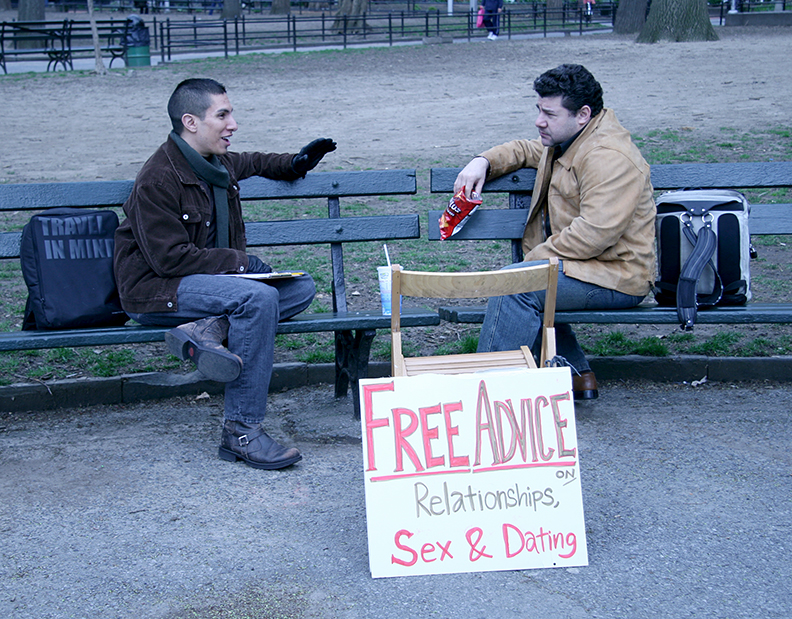
    So when a friend and I were strolling through the park and came across this fellow, I was quite startled to see him doing the same thing. For free.
    Now when I did this with my two friends, we had long discussions about charging money or doing it for free. Our feelings were that people take things more seriously when they have to pay for it – it’s about commitment. And the seller takes it more seriously too – we did. The dollar transaction made a difference. We only did it a few times and planned to again but never did.

    We were surprised to see how young this guy was and wondered how qualified he would be to advise on issues like relationships. I was going to try him out but didn’t get the chance. Let’s hope that in this case you don’t get what you pay for, but that the best things in life are free 🙂


  • Weather Means Whether

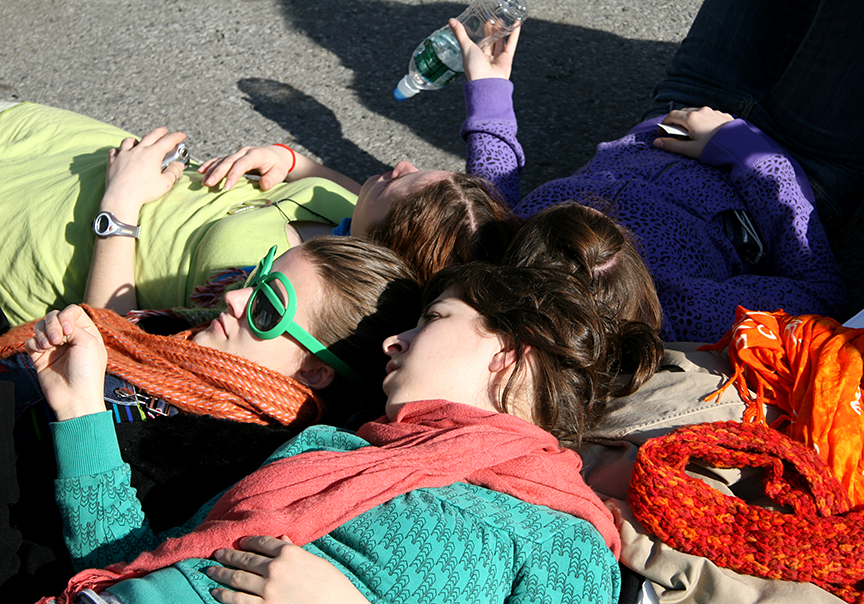
    What is as refreshing as a spring day? The attitude of a visitor excited by the city. And what surpasses that? The unbridled enthusiasm of youth. So what do you have when you mix the two? Girls resting on the ground, preparing for their next outburst.

    These girls were from Montreal – I asked because it appeared obvious that they were from out of town (or new university students). How can you tell an out-of-towner? New Yorkers, even young ones, don’t usually lie on asphalt. We know the types of things that go on down there and are not going to frolic in the residue. Sitting on the ground under duress is one thing, but lying on the pavement is another.
    But these women know as well as I do that clothes and people can be washed; I am just too rigid to take their lead. Their abandon is refreshing too.

    In my memory, I feel there is a day in the spring where you feel that the tide has finally turned and spring has sprung. It may be a little cool, but there is something about that day that speaks to you and whispers, this is the day. I thought that day had arrived several times this year, my hopes only to be dashed by a subsequently cold day. My heat is blasting as I write this.

    I once had a close friend, since passed away, who grew up on the East Coast and moved to the West Coast. He was an adventurer, extremely well-traveled to all corners of the earth. We were speaking of this very thing and how the weather and seasons here was so much more unpredictable in NYC compared to California. I scoffed at the term “temperate” zone. His comment was, “The East Coast has weather, the West Coast has climate.”

    So whether this year has been more unpredictable or my ruminations are wishful thinking with my memory clouded by impatience for warm weather, I do not know. But I do know that in New York, weather means whether…


  • Rhyme and Reason

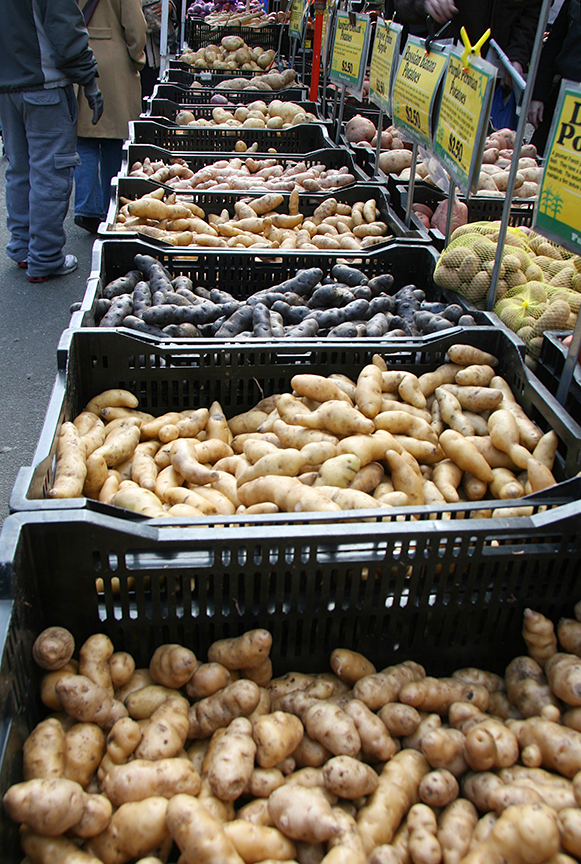
    Here we have the need for differentiation rearing its head again. Heirloom vegetables have been around for eons, but there has been no real need to promote them until the marketplace became very crowded with competing products. I wrote about the consumer and vendor sides of this in Where’s the Special and Claims and Hooks.

    Last year, I was introduced for the first time to heirloom tomatoes and was impressed (see here). On a recent trip to the Union Square Greenmarket, I ran across this array of heirloom potatoes. I had never really considered a world of heirloom vegetables beyond tomatoes, but there are many: beans, corn, cucumbers, lettuce, spinach, radish, melons, potatoes, okra, peppers, peas, squash, pumpkins, squash, tomatoes, and watermelons.

    As with any heirloom vegetable, there are many cultivars. A number of them can be seen in the photo with names like Purple Peruvian, Russian Banana, Rose Finn, LaRatte, etc.
    I have not tried any of these, but I plan to. With the plethora of food and product options out there, I think it only makes sense to judge on merit and on a case-by-case basis – some trends are great, while others are just a marketing spin.

    Regarding the title of this posting: It once occurred to me that there was something quite curious about potatoes and tomatoes; they only had each other as good word rhymes and they were also both members of the nightshade family (plant family Solanaceae which includes potato, tomato, peppers, eggplant, and tobacco. It also includes some poisonous plants). At one time, many years ago, a friend who was into Macrobiotics told me that the reason they avoid nightshades is because they are extremely yin. Many years later, a friend told me that the reason her mother, who had arthritis, avoided nightshades was because the alkaloids (primarily solanine) aggravate the condition. However, I’m still intrigued about the connections via rhyme and reason…


  • Claims and Hooks

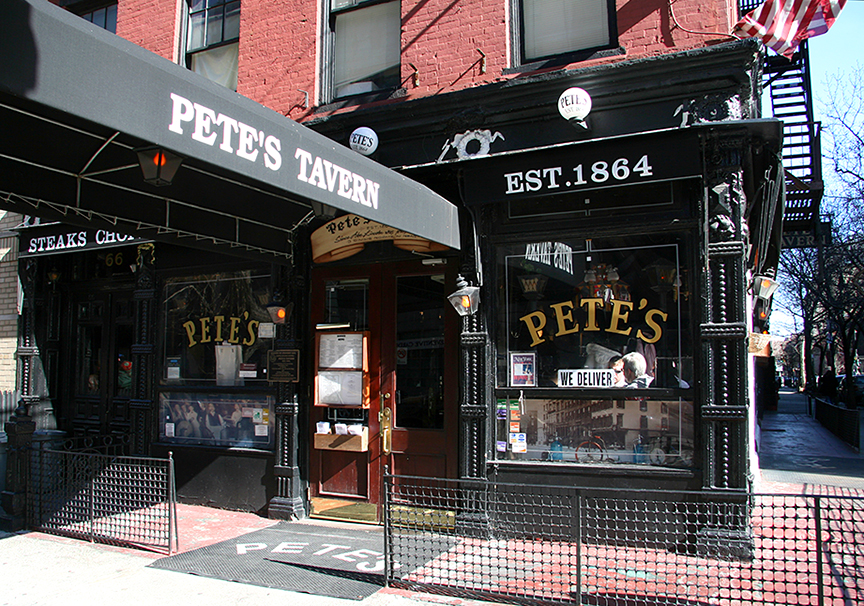
    In a competitive and crowded marketplace, many a business, product, TV program, or even political candidate needs a hook to distinguish itself. An idea, a claim, or an exclusive feature. In the case of bars, oldest is nice to be, and in NYC (like other places), the claim is sometimes made by more than one. After all, the prize of being first or oldest can be leveraged, so the battle of claims and counterclaims can be fierce. Adding a qualifier is a clever twist. This way, more than one establishment can take title to the same prize, a variation like oldest in continuous operation. For marketing, the qualifier can be dropped.

    Ray’s Pizzas are probably the most infamous in the city, with numerous pizza shops all using Ray in the name and some superlative or combination of superlatives – Original, Famous, Famous Original, etc. – and claiming to be first. The Ray’s Pizza name has actually involved lawsuits. We also had a rather serious war over Guss’ Pickles.

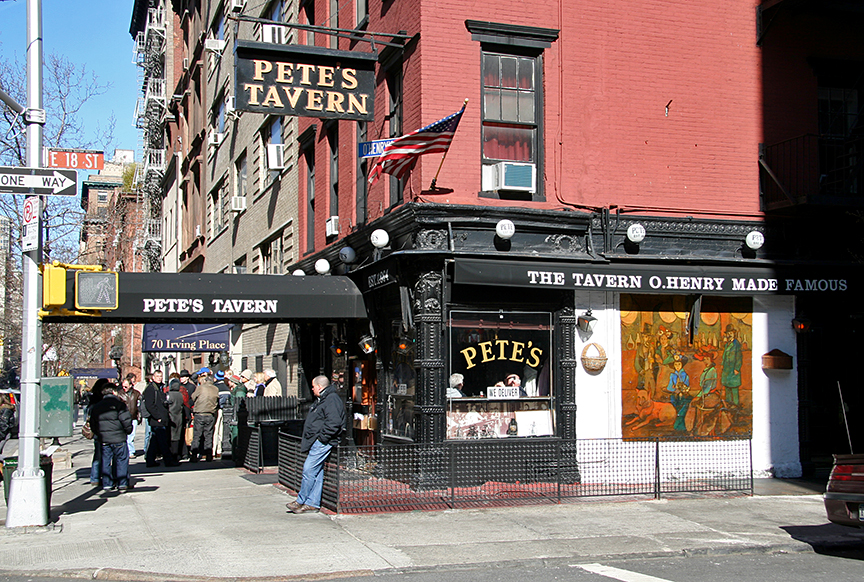
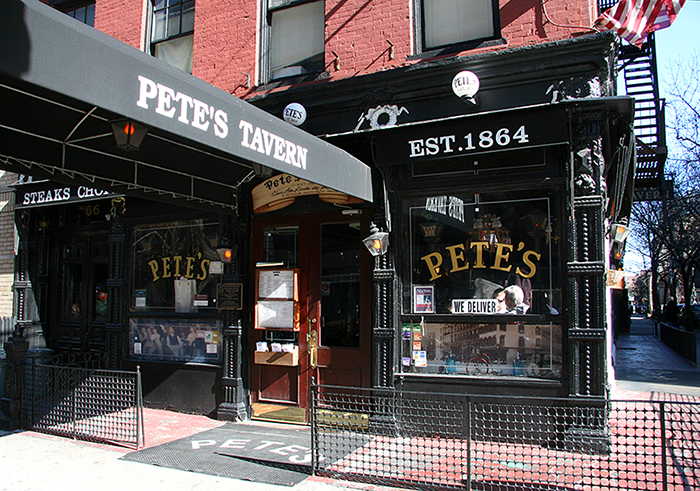
    In the world of oldest bars in NYC, we have several contenders, including Pete’s Tavern, the Bridge Cafe, and McSorley’s Ale House. Pete’s Tavern, located at 66 Irving Place at 18th Street, claims to be the longest continuously operating bar and restaurant in New York City (see 2nd photo here). They also say that “its most celebrated regular, O. Henry, wrote the classic Gift of the Magi here at his favorite booth by the front doors, in 1904.” Richard McDermott, a historian who has done a lot of digging, has cast doubts on all of these claims, including the O. Henry one. He has found that the Bridge Cafe is the oldest.

    But the facts, particularly a newly revised history, typically don’t stick in people’s minds. Once something has been accepted as “fact”, it is frequently repeated and believed forever.
    I find that when so much emphasis is placed on claims, sight of what’s important gets lost – the content and quality of the product or place. And, ironically, many of the places fighting over these things are not the best; they are frequently touristy spots hanging on to crumbs of questionable history to lure in customers. In the case of Pete’s Tavern, I can’t speak to the quality of the food or ambience – I have not spent time inside.

    We are all barraged and saturated with messages. Unfortunately, to get our attention, businesses must frequently resort to pulling out all the stops and relentlessly hammering a simple claim with hope that it hooks…

  • Little Comforts

    The longer you live in this city, the more you begin to appreciate the comforts that others have and take for granted, such as being able to drive places and park easily at your destination, or doing laundry in your home (not that many of these comforts can’t be had in the city, given the will and substantial money.) In time, even the little things start to become a treat, especially the unexpected – free gift wrapping of a package, delivery, a bike path, a dog run, or an unoccupied park bench on a sunny day.

    New York is a city of walkers. If you don’t like walking, this is not the best place to live or visit. Walking is nearly always the most reliable mode of transportation – rarely fraught with delays, traffic, rerouting, or any other myriad of problems with subways, buses, or cars. And for most New Yorkers, walking is an enjoyable activity in itself, with all there is to see in the vibrant, constantly changing landscape of this city. Of course, the biggest downside is braving the elements, particularly the unexpected, like getting caught in a rainstorm with no umbrella. At these times, a welcome comfort to the walker is a little shelter – an overhang, canopy, or pergola.
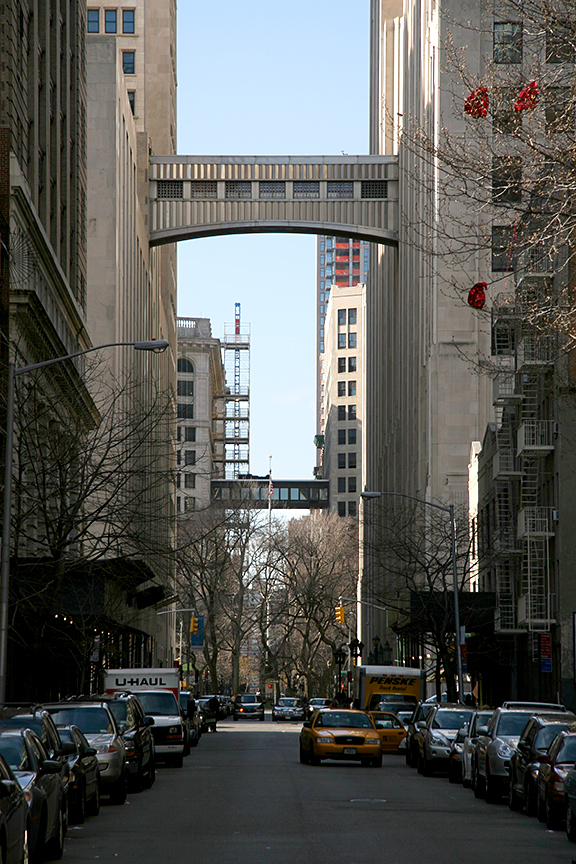
    So what better little comfort can one imagine than an enclosed pedestrian walkway (a.k.a. skyway or sky bridge) between buildings? I was startled at the sight of two while walking along Lexington Avenue and peering westward down 24th Street. It was a photo begging to be taken.

    I think if I worked in either of those buildings and could find reasonable excuses, I would pass through that little skyway as often as possible, particularly on a cold and rainy day, admiring the views and fully enjoying the little comfort of not having to step outside or grab an umbrella 🙂

    NOTE ABOUT THE BUILDINGS AND PHOTO: The closer of the two skyways in the photo connects the 10th floor of 1 Madison Avenue (on the left) to the 8th floor of 11 Madison Avenue (right). One Madison Ave is home to the Metropolitan Life Insurance Tower (previous posting here). Credit Suisse First Boston occupies the office spaces that this walkway connects.
    The second walkway in the background connects the buildings at 200 Fifth Avenue (left) and 1107 Broadway (right). These were formerly known as the Toy Center Buildings and served as offices for toy manufacturers; the American International Toy Fair has taken place there since the early 1900s. The buildings were recently sold (1107 Broadway is being converted to residential condos). The treed space in the center, separating the pairs of buildings, is Madison Square Park.


  • Every Move They Make

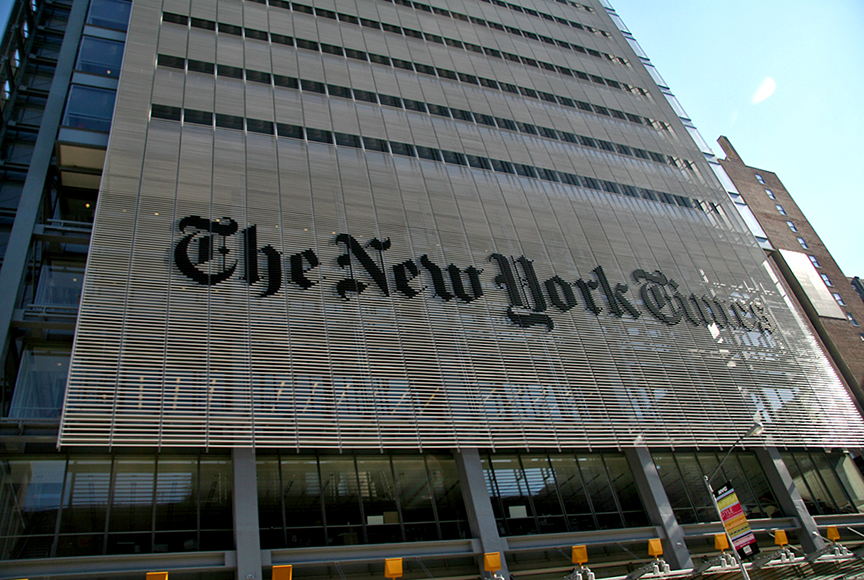
    Major NYC events just slip right by me. Maybe I should try reading the New York Times thoroughly on a regular basis. Then I would be better informed of things like the brand new New York Times Building, which is now tied with the Chrysler Building as 3rd tallest in the city and 7th in the United States (52 stories, 1046 feet).

    Designed by the Renzo Piano Building Workshop, it was completed in November 2007 and is located on Eighth Avenue in the Times Square area, across from Port Authority Bus Terminal. This historically unattractive area of midtown is finally seeing revival.

    The building itself is cutting edge and quite remarkable. It is the first building in the US with a ceramic rod curtain wall sunscreen. It is considered a green building, with features such as a power co-generation plant, low iron glass, mechanized shades, underfloor air distribution, and an interior garden.

    This photo was taken through the open passenger window of my car while I was driving (stopped at a light). Not realizing the significance of this building, I felt that it was too inconvenient to try and park somewhere and get photos of the entire structure. I intended to use this photo as a segue into the controversy about the article written in the Times recently concerning presidential candidate John McCain’s alleged inappropriate or romantic involvement with and favors for lobbyist Vicki Iseman (8 years ago). You can read the article, editorial response, and over 2400 comments here.

    Why is any of this important? Because the New York Times is considered the national newspaper of record – it is relied upon as the authority for news in the United States. Established in 1851, it is the largest paper in the US and has received 95 Pulitzer Prizes. Every move they make is of consequence…


  • Durian

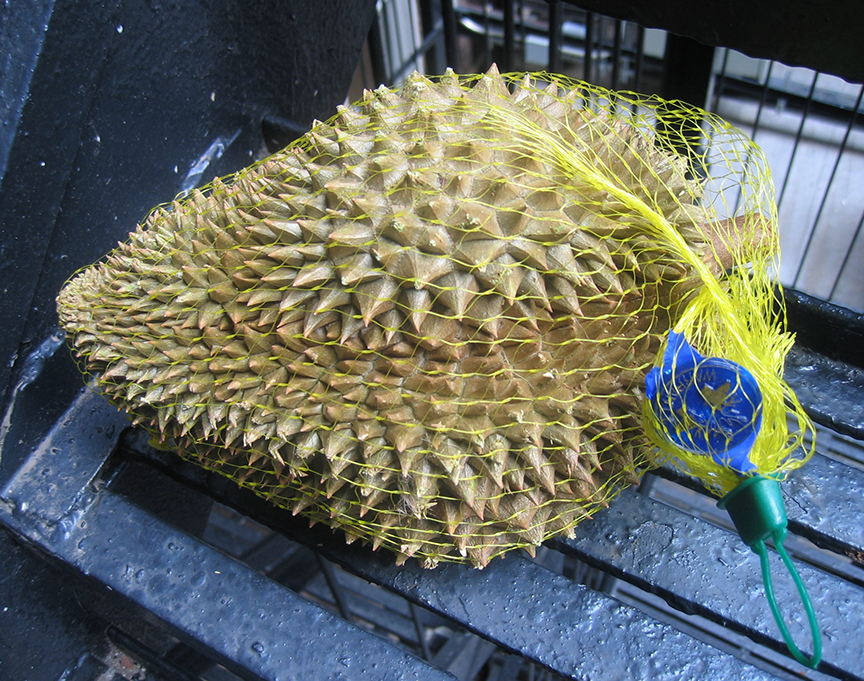
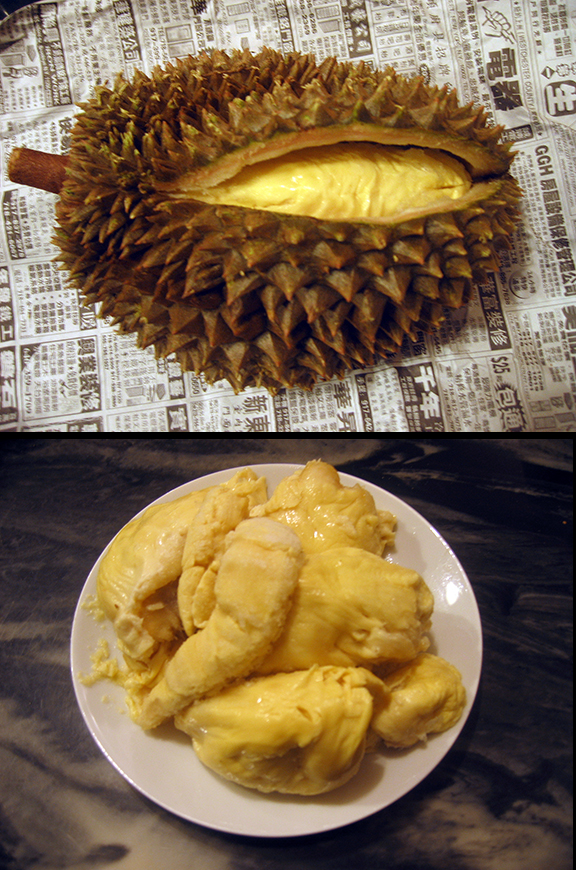
    No, I’m not lying – the smell of durian has been described as that of turpentine and onions, gym socks, civet, sewage, stale vomit, skunk spray, used surgical swabs, garbage, moldy cheese, rotting fish, and dead cats. Even where the fruit is popular in Southeast Asia, it is actually banned from some establishments such as hotels, subways, and airports. The scent is so strong that it can be picked up by animals half a mile away. The husk is incredibly spiky and dangerous to handle – mine was wrapped in newspaper before bagging. And I am not particularly enamored with the look of the flesh, which has been described by some as custardy in consistency – that’s being generous. Click here for photos of the fruit cut open and its flesh.

    The fruit is still relatively unknown in America, where it is found primarily in Asian markets. I purchased mine in Chinatown for $7 – it is not inexpensive. Durian is strictly tropical, originating from Indonesia and Malaysia, with Thailand now the primary exporter. In Asia, where it is hailed as the King of Fruits, the smell is prized – the smellier the better. Many eat it every day. Durian goes back to prehistoric times and is the subject of legend and myth. There is a virtual world surrounding this fruit (click here for an in-depth article).

    I’ve planned on writing about this fruit for sometime. Yesterday I finally purchased one and brought it back to the office for all to share. I can still see and taste this thing this morning, but I’m really giving it a second and third chance, hoping it grows on me. The first time I tried to eat durian, I was absolutely revolted, so this time I was better prepared. For those not used to it, Durian is truly an acquired taste. I’m going to try some again today. Wish me luck…

    Footnote: In an interesting twist, a no-stink variant was developed in 2007 in Thailand by scientist Dr. Songpol Somsri. After working for decades and crossing 90 varieties of durian, he has created Chantaburi No. 1. It reputedly has an odor as mild as a banana.


  • At Arm’s Length

    We like our fish served on a plate, beautifully filleted with decorative garnishes – a presentation where there is no hint of the necessary reality behind the process of getting an animal to the dinner table. No matter how humane the process is, most people would find a visit to the best of slaughterhouses, poultry farms, and perhaps some of the markets in Chinatown to be unsettling.

    One of my first postings on this website was a live poultry house on the Lower East Side – cages of birds stacked floor to ceiling with slaughtering done on site. I was just fascinated that such a place existed. No big deal for some people, but to a city dweller like me, this was a real eye opener.

    With overcrowding of residents, a concentration of immigrants, restaurants, and limited space, Chinatown is teeming with sights, smells, and customs alien to most outsiders, such as the sale of live frogs, birds, turtles, and fish. Walking down Mott Street with a friend, we watched a fish flop its final throws as a worker was tossing live fish onto ice. No mollycoddling innocent eyes here.

    There is a problem with all the the garbage from all these fish markets, which includes the various remains from the myriad the fish sold. This is not the place to spend a steamy August day. Community efforts are being made to improve the situation, but it is a tough situation.

    In a bizarre and surprising twist, one person has found a way to reuse animal parts. A recent story in the New York Times tells of artist Nate Hill, who conducts “Chinatown garbage taxidermy tours.” He and a group forage through garbage in Chinatown for fish parts. His A.D.A.M. Project (A Dead Animal Man) is a sculpture of a human built entirely from animal parts. Thirteen species are included in the finished human being: chicken, conch, cow, crab, deer, dog, duck, eel, fish, frog, lobster, rabbit, and shark. If you see the exhibit, let me know about it. I’ll be keeping it at arm’s length…


  • dinamic_sidebar 4 none

©2026 New York Daily Photo Entries (RSS) and Comments (RSS)  Raindrops Theme