• Category Archives Curiosities of NYC
  • The Honest Boy

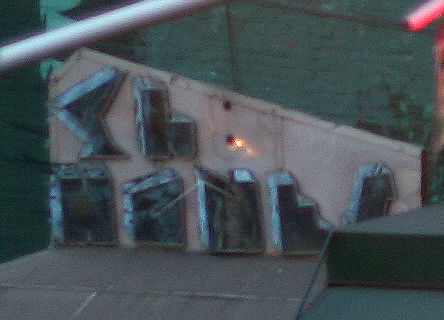
    I really wanted to get a photo of this place with the full original sign, THE HONEST BOY, before a canopy went up and blocked BOY (unfortunately, this blog was started after that). The sign, which originally wrapped around two sides, has the most unusual block lettering – virtually unreadable. Most people whom I have pointed it out to don’t even realize it is a series of letters. You can still read some of it (TH_ HONES) (click here for a closeup).

    Most people look for stability in a world of change, and the older they get, the more they dislike change. We want things we can count on, such as relationships, jobs, product quality, and landmarks. A lot of nostalgia is driven by this. In New York City, you have tremendous dynamics at hand – rapid change along with the classic, iconic, and durable. Many will fight to preserve and save any vestiges of the past; others welcome the bulldozers and see renewal as progress. And, of course, all of this leads to controversy, battles, and conflicted feelings.

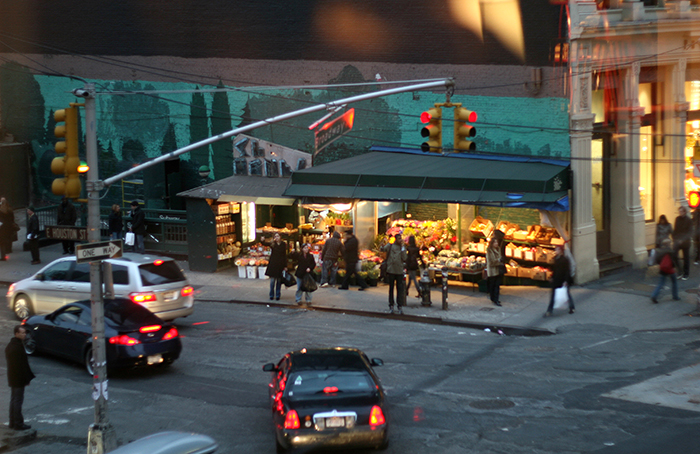
    All those elements are here in this little fruit and vegetable stand at Broadway and Houston Street, which has been a fixture for decades. It occupies a triangular wedge of land (of about 1000 square feet) abutting a subway station entrance. It is owned by the MTA (Metropolitan Transit Authority). In 1980, it was taken over by Louis and Carmen Arenas. In 1992, the MTA had plans to erect an electrical substation but abandoned them due to community protests.

    Since 1990, I have been a frequent customer of The Honest Boy. Until recently, they had tremendous buys – bags of good quality fruits and vegetables for $1. The Arenas ran it until 2005, when Louis Arena (due to poor health) transferred it to Pan Gi Lee. Since then, the goods have become pricier. No more bags of peppers, tomatoes, lemons, and potatoes…

    I have read several articles today, and a long thread of comments regarding new plans by the MTA to build a two-story glass, steel, and aluminum building would incorporate one of the entrances to the Broadway and Lafayette subway station. It’s interesting that on one website, all were in favor of the demolition and considered it a pathetic shack or shanty. They complained of rats, the homeless, the stench of urine, and an impossibly crowded corner to shop. Perhaps I have been in New York too long – what was the problem again? 🙂

    Photo Note: A good vantage point with poor conditions. This photo was taken across the intersection from the second floor of Crate and Barrel at an angle through a glass window.
  • Galvanic Response

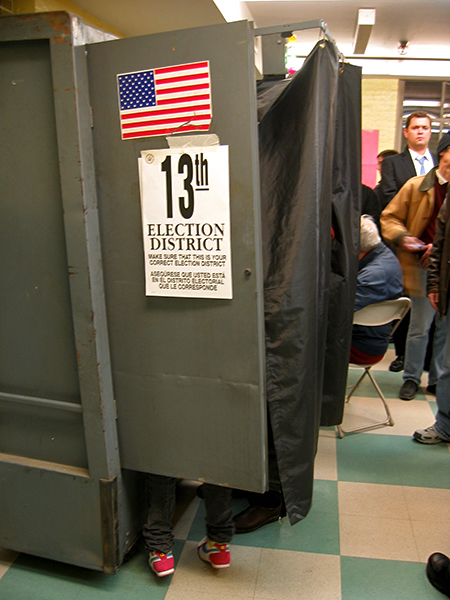
    Yesterday we had a triad of Super events in the city: Super Tuesday with voting in the Democratic primary, a ticker tape parade for the winning of the Super Bowl by the New York Giants, and “Fat Tuesday” (the day before Lent).
    I think that regardless of party affiliation, one has to admit that there is a pall hanging over the current Bush administration. The Iraq War has been highly contentious, with members of the Republican Party itself coming out against it.

    But this is not a political forum, and I am not a pundit by any means. My point is that there is much dissatisfaction, the country has become isolated globally, and people are looking for a breath of fresh air. There is a stable of good candidates. I like what appears to be a lesser focus on partisanship and more on issues; this lack of partisanship has actually alienated McCain from some of his party.

    Many see the populace as highly galvanized in this election year. We have the first serious woman and African American candidates and a Republican who looks more like an independent.

    I was curious about the term galvanized used in this way. I have always associated the term with galvanized metal, the process of electrodeposition which is the coating of steel with zinc to provide a protective barrier. But this is the more modern meaning.
    The term galvanize originally comes from the Italian Luigi Galvani and his discovery in 1783 that a frog’s leg could be made to move by applying an electric current, hence the term galvanism. This theme was picked up by Mary Shelley in Frankenstein, with the monster being animated using electricity.

    I’m glad we didn’t have to rely on Luigi Galvani, Volta, Tesla, or Mary Shelley to galvanize the public this year – I’m not sure we have the technology (yet) to resurrect them 🙂


  • "Who See the Red"

    Historically, online netiquette has viewed the use of ALL CAPS as shouting and therefore discouraged its use, at least when used for entire sentences or longer – a phrase or word can be used for emphasis.
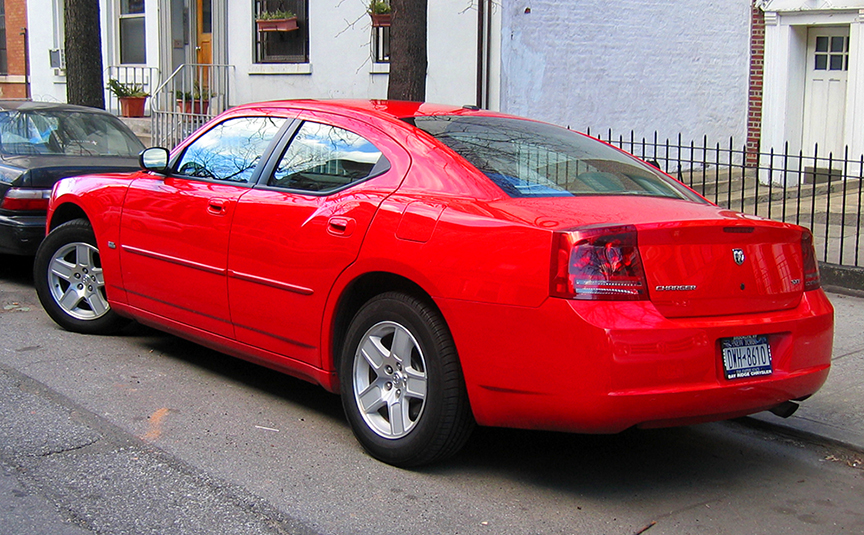
    I find the color red to be a visual analogue. This red Charger, on a bleak, overcast day, really shouted out as I walked by. My first reaction was, “Wow”! My second was, “Is this blog worthy”? My answer was, “Sure, just figure out how to spin it.” After all, we’re in an election year, when the art of the spin is at its zenith.

    Red is a primary color and is the longest wavelength the eye can see (anything longer is infrared.) Its associations and symbolism are staggering. It has represented energy; emotions including anger, passion; love; courage, sacrifice, and blood (which is why so many national flags use red); warning, danger, emergency (e.g. stop signs); sin and lust (e.g. the Scarlet Letter, the red-light districts of prostitution and brothels, Satan’s wardrobe); beauty (red roses); the sun and warmth; red ink, or being in the red. In various cultures, red plays a prominent role, such as in China, where its use and associations are myriad.

    A person that owns and drives a red car is certainly making a statement, and whatever that statement is, it’s not about modesty or discretion. There is a commonly held belief that red cars are involved in more accidents and that drivers of red cars get more speeding tickets. Whether this is an urban myth or not is debated, but the belief certainly speaks to the perception of the red car owner by others.

    So what does this have to do with NYC? I’m surprised that red is not the official color of New York or used more. After all, what city could better be thought of as one that SHOUTS money, power, biggest, and best. According to the patter of the con men playing three-card monte on the street, red can even make you money (good luck trying to win): ” Who see the red? You win my game, I don’t complain. Red’ll put you ahead, black’ll set you back. Who see the red?”


  • Big Boom Theory

    Having been in manufacturing most of my life and dealing with hundreds of trade suppliers, I can assure you of one thing: If you want to get things done without losing your mind, you had better know what things are called. And as the world becomes more specialized, this applies to most things – medicine, food, technology, or stationery. If you walk into a real lumber yard in NYC, look right, and call things by the popular, proper colloquial name used in the trade, you will garner respect and perhaps get decent service. Otherwise, you will be seen as the typical do-it-yourselfer, even a nuisance. Depending on the mood of the salesperson, you will be given the simplest thing to get you out of the store and not necessarily the best or correct item for the job. This is not to mention the difficulty in attempting to get what you want by using a combination of sketches, descriptions, hand gestures, and other sad, inaccurate, and ineffective ways of trying to communicate your needs. It’s like being a contractor in France and not speaking the language.

    Today’s photo shows how drywall (or sheetrock) is delivered to a high-rise building through a window opening (windows are frequently removed) by using a drywall boom truck (other variations of articulated lifts and their names include: cherry pickers, bucket trucks, boom lifts, basket cranes, scissor lifts, etc.). This method of delivery is a huge improvement over unloading sheets from a truck by hand a few at a time, carrying them into a freight elevator and then off into the job site.

    So perhaps your exercise machine is broken and you need a Delrin wire rope pulley with plain bronze bearings. Or you’re assembling a piece of furniture, a screw is missing, and what you actually need is a flange button, socket cap screw with hex drive in plain steel with a black oxide finish – oh, and you’ll need to know the size and pitch (such as 1/4-20). Of course, one solution is a sample – if you have one and can carry it – but if you want to rent a boom truck, it’s just best to know what it’s called…

    Photo Note: The location was a new residential condo development at 151 Wooster Street in SoHo.


  • Lockout

    I joke around about my fascination with prison documentaries, typically entitled something like Lockdown, which are presented with great drama. The drama here in the Village is at least as great with a war that has gone on for some time between community activists and the Parks Department and their plan to completely redo Washington Square Park, with activists preferring a rehab versus wholesale reconstruction. All agree that the park is in serious need of repair – the last renovation was done in 1967. The details of this battle (which is a replay of previous ones in this activist community) and its raison d’etre have been told blow by blow from the local papers all the way to the New York Times. My previous posting from May gives an overview of the various issues at hand, with links and more photos. Lawsuits have been brought against the City of New York (the last of which the city won), and on the week of December 10th, workers moved in, fenced off over half of the park, and began construction (which will be done in two phases in an estimated 2-3 years). Phase 1 is larger and includes the fountain area and plaza around it, where most gatherings and activities take place. In the warmer weather, it will be interesting to see how the regulars and visitors adapt to the very limited space.

    I am a regular user of the park and long-time community resident, and I have been involved as a close observer of this process. I understand the viewpoints of both sides in this debate, and I think it is important to remember that although opponents see the new design as radical, it will still remain a public park with a very similar layout. A radical proposition would have been the construction of high-rise condominiums in the Park’s place.

    The battle between opposing sides has appeared large, but I do not think most residents have really studied or weighed in on this situation at all, leaving the decisions to the powers that be. The number of voices on both sides are actually quite small when viewed in the context of a community with an estimated population of 150-200,00 people. There are aspects of the new design which some feel will substantially change the character of the park, such as a 4-foot high perimeter fence (to secure it at night). It will be interesting to see if the character or mood of the park and its activities and users change significantly once the project is completed.

    Architecture alone does not define a place, and New Yorkers are adaptable, resilient, and strong-willed. My prediction in the outcome of this card game is that the character of the neighborhood and will of the users easily trumps the design…


  • Advertising Gone Wild

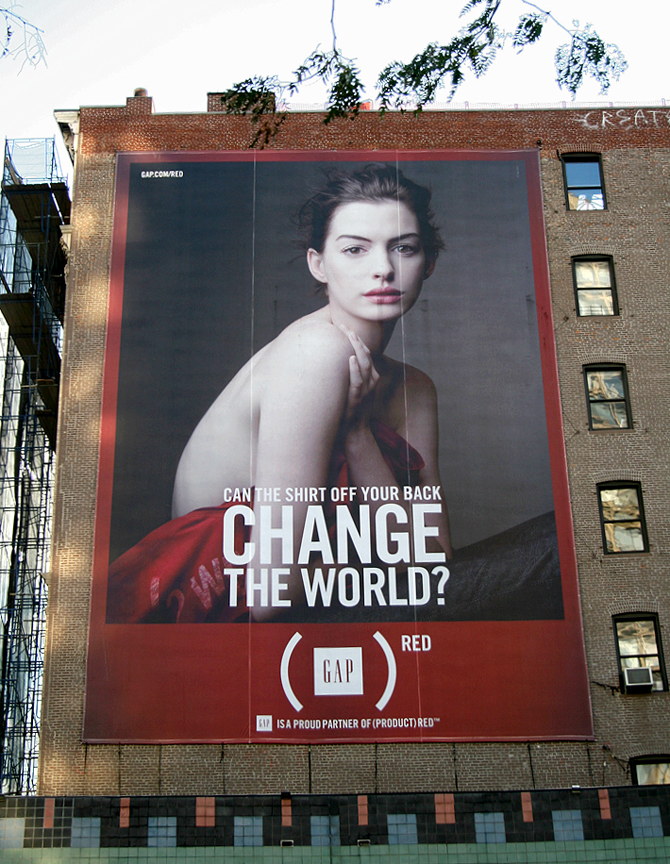
    New York City has always been a place where commerce and advertising have been prominent in the landscape; Times Square is a good example. However, the combination of digital technology (with the ability to print enormous signs on vinyl) and the lure of advertising revenue has taken it to new heights with building walls in the city being blanketed by ad murals, not to mention advertising in a myriad of other variations – newsboxes, ads projected on streets, etc.

    What the smug New Yorker always saw as a blighted feature of the suburbs, and believing that the sophisticated culture of NYC provided immunity from the same, has now become a prominent feature of the city. Commercial interests are relentless and tenacious, however, and keeping them in check requires, if I may borrow from the ACLU motto, eternal vigilance. Commerce usually wins – even in France, Apple Computer managed to hang Think Different banners, featuring Gustave Eiffel and Pablo Picasso, on the facade of the Louvre. The Gap ad in this photo hangs on Houston Street, a few blocks from The Wall.

    Houston Street is ideal for this type of ad – the street is heavily trafficked and has many large building facades. What surprises me most is that in many cases, these murals are placed over apartment windows, obstructing views and light (in some cases, you see cutouts for the windows). But alas, the issue of billboards is not new. I ran across this article in the New York Times which I thought was recent: BILLBOARD COMMISSION ADVISES DRASTIC REFORMS; Fire Hazard Is Increased, Real Estate Values Depreciated, and the Beauty of the City Marred, It Reports, by Many of the Big Signs and Their Structures.
    Date of article: 1914

    Related Postings: Big and Beautiful?, Manhattan Mural


  • Jack Be Little


    ‘Tis that time of year. Halloween, apple pickin’, school’s started, sun sets early, days are getting shorter, crisp air, holidays are coming, and everyone is moving a little more quickly. There are more things to do, less time to do them, and it’s getting a little too chilly to relax a la summer anyway. Tonight is the the annual Village Halloween Parade – one of the biggest parades in the country, with 1 million attending. I will be photographing the event and putting up the images on this site for the next couple of days. And don’t forget to change your clocks this weekend – set them back one hour on Sunday morning (November 4th this year) at 2 AM…

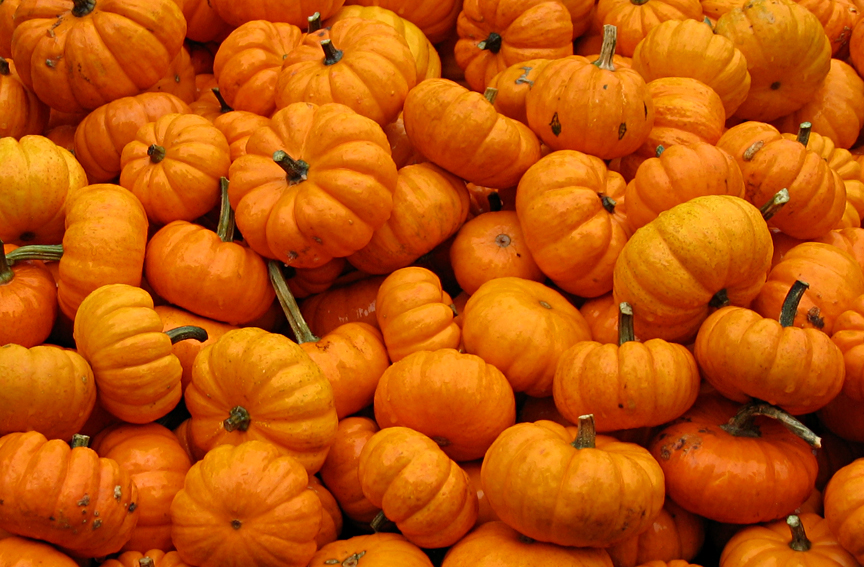
    Regarding the photo (taken in Union Square): I learned today that the small squash-like fruit in the photo is not a gourd (as I had thought) but a miniature pumpkin – a variety known as Jack Be Little. They can be used for decoration or eating. They are perfect for stuffing and I understand quite delicious. The skin is edible if boiled for 5 minutes before baking.

    Postings related to Union Square: Heirloom Tomatoes, Union Square Greenmarket, Republic, Vintage Mural, One-Man Band, Luna Park Cafe, Gentleman Peeler, Flora, Zeckendorf, Reverend Billy, W Hotel, Towers, Metronome


  • Moving Stuff

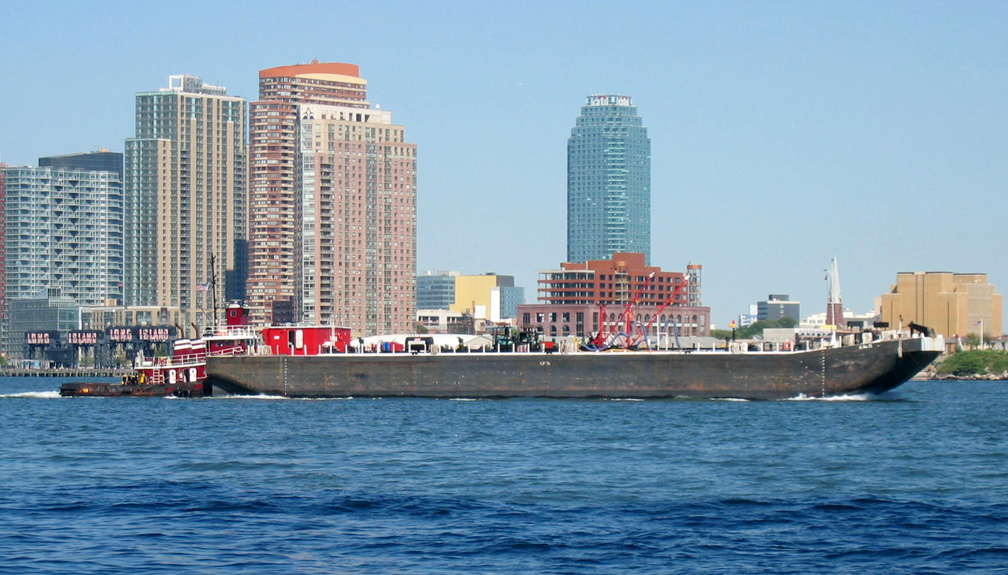
    New York is a very large city, and being large means having a lot of stuff to move around. Much of this goes on behind the scenes – moving people via subways and tunnels, and moving things such as water, sewage, garbage, electricity, gas, steam, and freight via their own subterranean or superterranean systems. The amount and numbers of things moved in the city is staggering, e.g. 24 million pounds of garbage per day, 2.6 million tons of air freight per year, or 1.3 billion gallons of sewage per day. It’s rather hard to believe that transports of this magnitude are even possible and that the systems needed for them continue to work day after day, with very infrequent major failures or breakdowns.

    If you like reading about this kind of thing, there is a wonderful book I was given as a gift: The Works: Anatomy of a City by Kate Ashler, which goes into all of these systems and features NYC throughout as its example. The waterways of the city are extremely busy, and tugboats pushing barges are a common sight (like these in the East River), along with other maritime activities. When you get a chance, head for the water and look around…

    Related Postings: Working Harbor, Big Allis, Jet Ski, Hollyhock, The Water Club, Manhattan Island, Cruising


  • Consumption

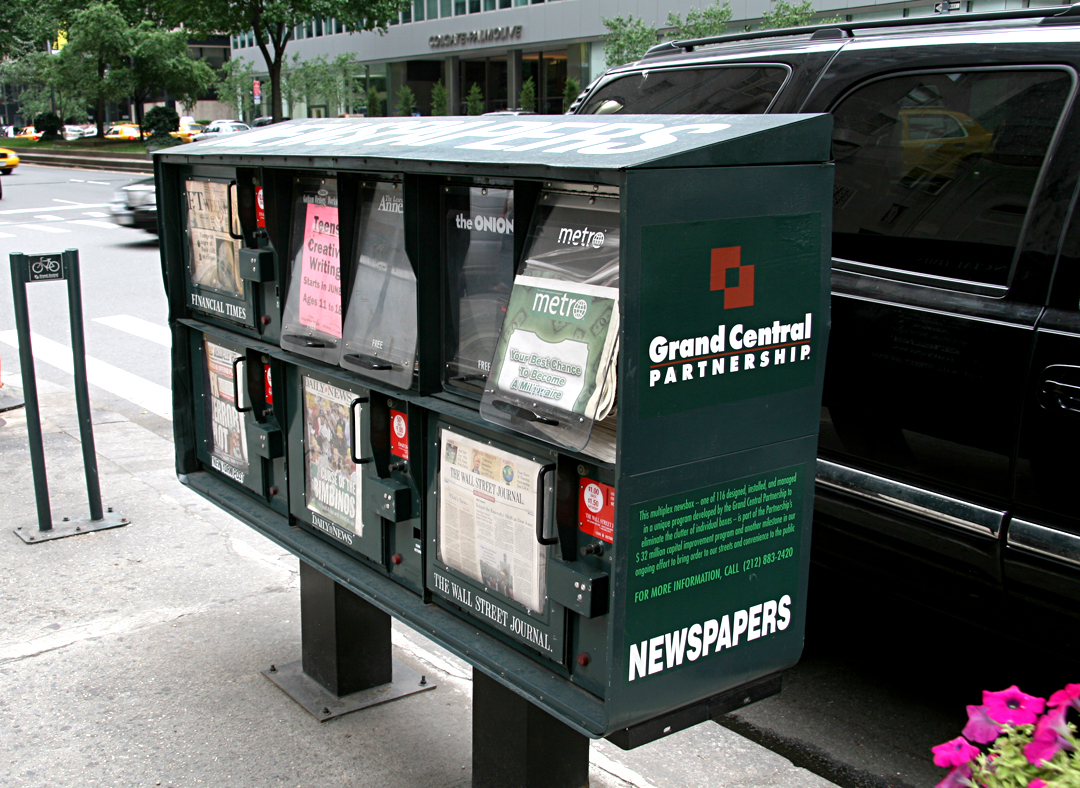
    A friend called this morning to let me know that today is Blog Action Day, where participating bloggers do a posting on an environmental issue. This is good timing, since I have wanted to do something on the clutter of newsboxes in the city. These boxes are typically extremely unattractive (with disparate sizes and colors) and poorly maintained, filthy, stickered, and broken, with some even being used as trash receptacles. I intended to show two sets of boxes: a hideous strip and the much more attractive approach as seen here on Park Avenue (here is an article indicating that this may be a trend). I intended to call the posting “Solution,” which it is at some level. But I am rethinking my position. It may be a solution if there is no reduction of production and distribution of this type of literature, but perhaps we need to reevaluate the need for materials like this to be printed at all.

    The three Rs of waste management, reduce, reuse, and recycle, form a hierarchical pyramid, with the most favored option at the top – reduction – and recycling at the bottom. Some studies have already shown that recycling is a net energy loss. Unfortunately, the three Rs are applied selectively – consumption is built into the fabric of American culture, with shopping and malls as recreation. Reduction is not seriously looked at by most citizens. No one really wants to make sacrifices on the consumption side. Activists such as Reverend Billy, with his stop shopping message, and organizations such as Burning Man are lone voices, frequently seen as fringe elements of society. With the Internet, electronic media, and portable devices such as the iPhone, laptops, and ereaders, we are at an optimal place in time to really reduce printed materials and move towards the elusive paperless office, predicted as far back as 1975 (in an article in Business Week). Unfortunately, technology has given us the ability to create more paper documents, and the amount has been growing.

    I am more of a stick than a carrot person, so I believe there will need to be penalties, sanctions, and legislation for us to break our consumptive habits and for effective change to begin. I understand that a society needs an economic engine and that commerce is a necessary component, but we need to achieve some balance with appropriate consumption before we are buried in trash…


  • Nap

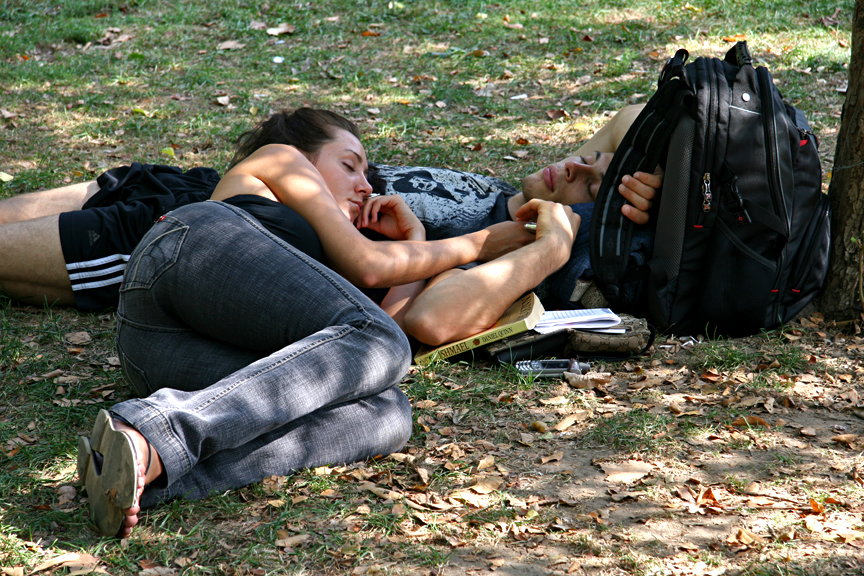
    There was something so incredibly relaxing about this couple. Perhaps it was their ability to sleep outdoors with the trust and self-assurance it requires. Or perhaps the bliss of youth, where the burdens and baggage of life have not yet accumulated. The gentleness of their embrace. Maybe the dappled light on a beautiful afternoon with the gift of an atypically warm day.

    Many people have problems sleeping, and taking a nap in a public place is probably inconceivable to them. The U.S. Department of Health reports that approximately 60 million Americans suffer from insomnia each year. The problem increases as one ages. So, for those of you who have no problem sleeping, celebrate and take a nap outdoors on a sunny day. Be careful, though – there are local ordinances against sleeping in public places (with some controversy) which are sometimes enforced…

    Note about naps: There are individuals who have experimented with polyphasic sleeping, an alternate sleeping pattern where the total number of hours slept in a day is substantially reduced by taking short naps at regular intervals (in lieu of sleeping a typical single session). In a popular variant, the Uberman’s Sleep Schedule, one takes six naps of 20–25 minutes each four hours apart throughout the day. Polyphasic sleep was most extensively studied by Dr. Claudio Stampi.

    Photo Note: The book being read? Ishmael by Daniel Quinn. Plot: A Socratic dialogue between and narrator Alan Lomax and a telepathic gorilla (Ishmael). Sounds interesting.

    RELATED POSTINGS: Dead to the World, The Art of Kissing, PDA, War and Peace, Signs of Summer, Extreme Camping, Caravan of Dreams, Aspiration, Stephanie


  • The Frying Pan

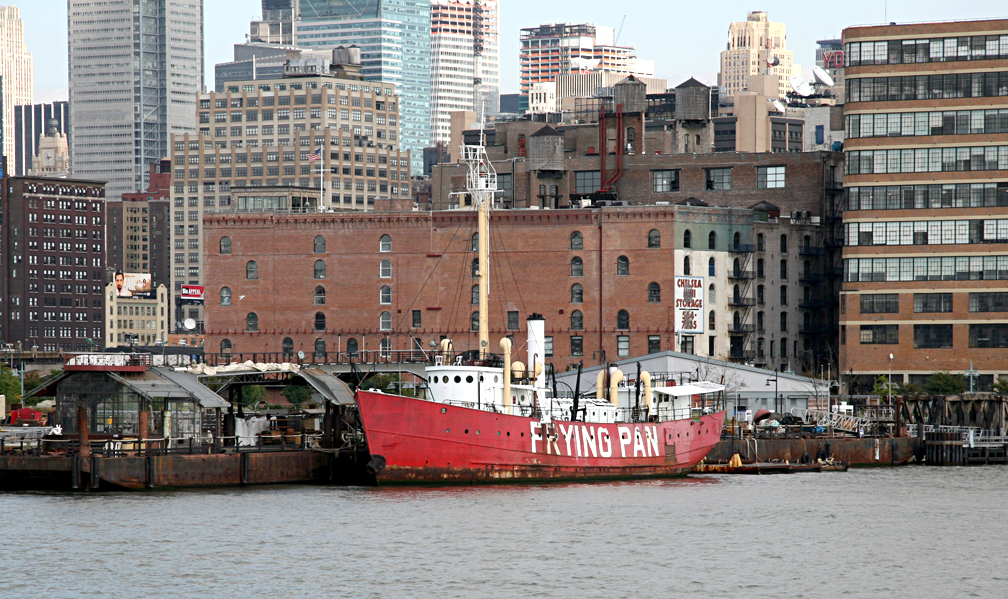
    There appears to be no end to ingenuity and appropriation in this city, particularly when it comes to business. The Frying Pan was unknown to me until Sunday, when I photographed it on a neighborhood boat ride. This historic boat, built in 1929, was used as a lightship at Frying Pan shoals off the coast of Cape Fear in North Carolina, a notoriously hazardous area for ships (lightships or lightvessels are used in place of lighthouses where the water is too deep for a lighthouse). The Frying Pan was finally decommissioned in 1967. It then served a number of uses at various locations until it capsized and sunk in Chesapeake Bay in 1984. The ship remained underwater until 1987, when she was raised, restored, and moved to NYC’s Pier 63 and docked to a Lackawanna railcar barge.

    The pair of ships served a number of maritime functions over the years (Manhattan Kayak Company, New York Outriggers, New York Polo, and the Hudson River Paddler’s Guild). Their lease was lost in 2006, and on April 9, 2007, they relocated a few blocks north at Pier 66 (26th-27th Streets). The barge and the Frying Pan are available for rental for functions, parties, etc. Check out their website and learn more about the boat and its uses.

    Please note: Their website is not up to date. I called this morning to confirm their location at Pier 66, which conflicts with their site…


  • Privy

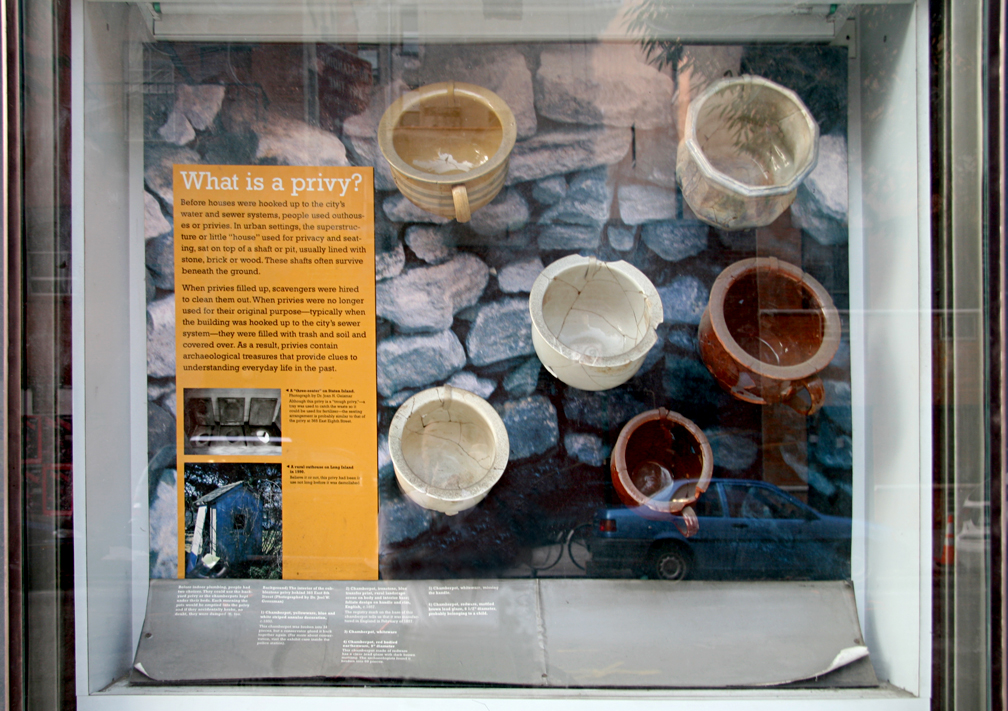
    In the East Village on 8th Street and Avenue C, there is a window display of various archaeological findings divided into several themed sections: The Time to Relax, Setting the Table, What is a Privy?, and The History of Our Block. The artifacts in the displays are circa 1850. Between 1846 and 1850, over 1200 buildings were erected in this area (now known as Alphabet City), which became known as Kleindeutschland or “Little Germany” due to the influx of German immigrants. The photo is of several chamberpots in the display on privies. The caption reads:

    “What is a privy? Before houses were hooked up to the city’s water and sewer systems, people used outhouses or privies. In urban settings, the superstructure or little “house” used for privacy and seating sat on top of a shaft or pit, usually lined with stone, brick or wood. These shafts often survived beneath the ground. When privies filled up, scavengers were hired to clean them out. When privies were no longer used for their original purpose-typically when the building was hooked up to the city’s sewer system-they were filled with trash and soil and covered over. As a result, privies contain archaeological treasures that provide clues to understanding everyday life in the past. Before indoor plumbing, people had two choices. They could use the backyard privy or the chamberpots kept under their beds. Each morning the pots would be emptied into the privy and they accidentally broke, no doubt, they would be dumped in, too.”

    I selected this group of artifacts because people seem fascinated by personal hygiene in other times and places. One of the most asked questions NASA gets involves bathroom use in space. There is even a book: How Do You Go To The Bathroom In Space?, by astronauts William Pogue and John Glenn…


  • Heirloom Tomatoes

    A photographer friend, Bill, and I routinely visit the farmers market at Union Square (see Union Square, Flora, Union Square Greenmarket, Luna Park Cafe, Metronome, and the fascinating story of Joe Ades – Genteleman Peeler). Bill has done a tremendous amount of fine work photographing fruit (click here). He has spoken of heirloom tomatoes often, yet I only first tried them recently at the Union Square Cafe, where they make an amazing Heirloom salad appetizer.

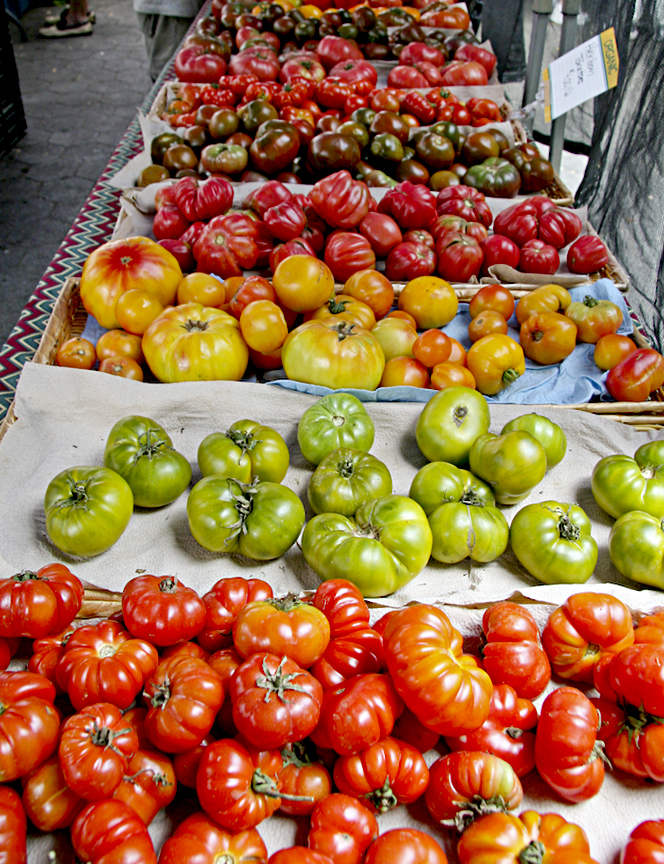
    Subsequently, on a visit to the farmer’s market at Tompkins Square, I finally purchased my first heirloom tomato and ate it. Heirloom tomatoes are hugely popular in the city right now, and this trend is for good reason. You only have to taste one to see how much flavor we have lost to the products of agribusiness and modern commercial farming.

    The definition of heirloom tomatoes varies somewhat. Some use age of seed strain (50 to 100 years or older), while others may use pre-World War II as a demarcation point. But in the most literal sense, heirloom tomatoes are ones where the cultivar has been nurtured and handed down from generation to generation. It is also generally agreed that they are open-pollinated and with no genetically modified organisms used. There are hundreds of varieties, with names like Mortgage Lifter, Green Grape, Cherokee Purple, Green Zebra, Black Krim, Brandywine, White Wonder, Amish Paste, Stupice, etc. (click here for a sample list).

    If you have not had an heirloom tomato before, I highly recommend that you get yourself to a good farmer’s market as soon as possible and buy at least one. No need to prepare it, just eat it like any fruit, with reckless abandon – watch the juice running down your arm…

    Note about the photo: This was taken yesterday at the farmer’s market (Norwich Meadows Farms stand) at Tompkins Square Park while attending the Howl festival, the subject of another posting this week.


  • Hollyhock

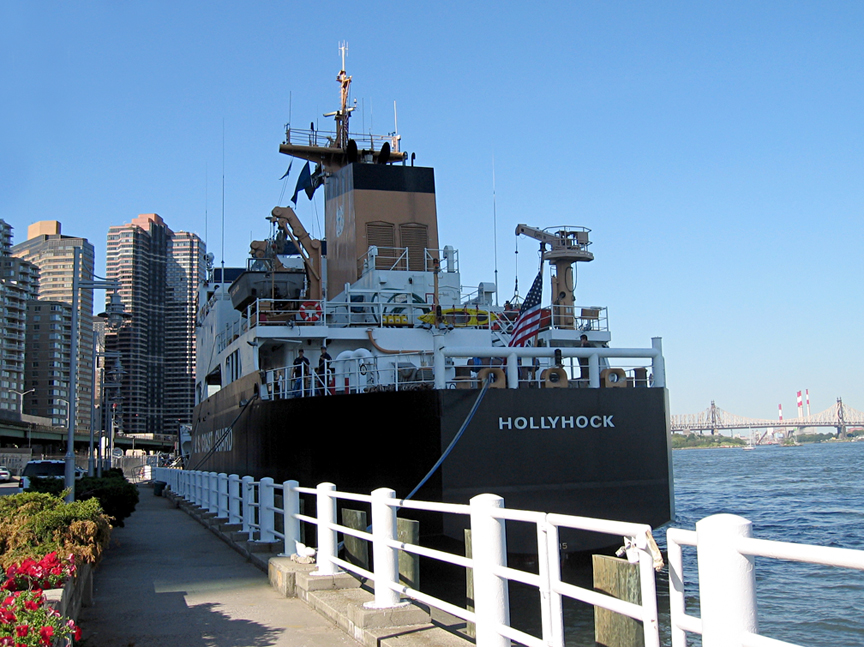
    As I have written before, it is easy in Manhattan to forget that this is an island. Which means that we are surrounded by water. So with the glorious weather we have had, I mounted my bicycle and, armed with a camera, made a short pilgrimage to the East River to see what I could see. To my surprise, I came across an enormous vessel – a U.S. Coast Guard cutter ship named Hollyhock, docked for a few days just north of the Water Club (a waterside restaurant), who permitted them to dock in their waters. Military force personnel always seem very happy to engage in conversation with civilians. According to a crew member with whom I spoke, the Hollyhock was on patrol and had traveled from its home base in Port Huron, Michigan via the St. Lawrence Seaway to NYC. Click here for a photo of two crew members examining my New York Daily Photo business card.

    In reading about the ship, I came across things like, “The Hollyhock is a 225-foot Juniper-class seagoing buoy tender that was launched January 25, 2003 in Marinette, Wisconsin.” Clarification was needed, so I read that “the Seagoing Buoy Tender is a class of U.S. Coast Guard Cutter originally designed to service aids to navigation, throughout the waters of the United States, and wherever U.S. shipping interests require.” Perhaps not the type of thing that excites most readers, but this ship does represent the latest in shipbuilding, propulsion, and ship control technology, allowing it to use a smaller crew. “A dynamic positioning system can hold the vessel within a 10-meter circle using GPS technology, allowing the crew to service and position navigation buoys more efficiently than before in 30-knot winds and 8-foot seas.”


  • The Watchtower

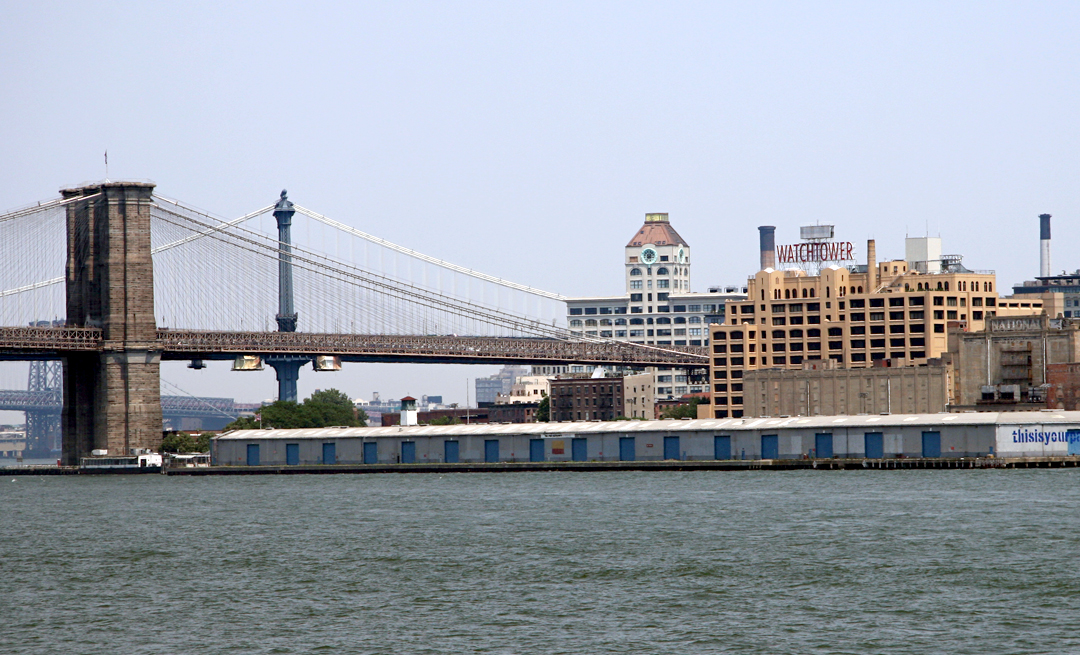
    The Watchtower sign on the Brooklyn waterfront is a site that nearly every New Yorker has seen – it’s visible from many vantage points. And most of us know that this is headquarters for the Jehovah’s Witnesses and their publication, Watchtower Magazine. The term Watchtower is a shortened version of the official name of the corporate entity in use by the religious organization and publishing division: The Watchtower Bible and Tract Society. The offices at 25 Columbia Street (where the sign is located) is not only the New York bethel but also world headquarters. The corporate entity is one of the 40 largest companies in NYC, with annual revenues of nearly 1 billion dollars.

    New Yorkers have also heard over the years that the religious organization owns much property in Brooklyn Heights – the subject of much controversy and covered in many articles over the years. As it turns out, this is true; they have been in the neighborhood since 1909 and own 18 properties there. They also own 12 properties in nearby Dumbo (click here). In 2004, they started divesting and selling off properties (they are selling 6 of the 18), including the Standish Arms Hotel on Columbia Heights and 360 Furman St., a former Bible-shipping facility (sold for $205 million) and being developed into luxury condos, One Brooklyn Bridge Park. The printing business has been consolidated to their Walkill, New York, facility. Click here for a photo tour through the properties, showing their printing facilities, residences (members live in a number of corporate owned buildings), the laundry building, etc.

    The religious beliefs of Jehovah’s Witnesses are quite a unique departure from mainstream Christianity. Only 144,000 will be chosen for immortal life. The wicked will be destroyed; the rest of mankind will live in earthly paradise during the Millennium…


  • dinamic_sidebar 4 none

©2026 New York Daily Photo Entries (RSS) and Comments (RSS)  Raindrops Theme