• Category Archives Curiosities of NYC
  • Spring Fever

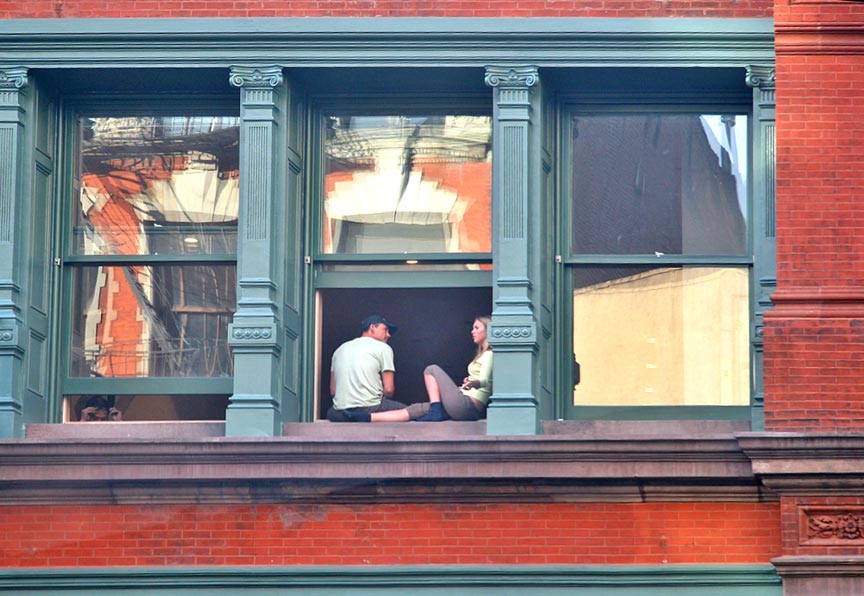
    There’s nothing temperate about this zone, and people are taking opportunities to enjoy the hints of spring as soon as and whenever they are available. We have gone from a low of 11 degrees last week to a predicted 69 degrees tomorrow. Clothing is being shed, the streets and parks are filling up, and windows are being opened. Window watching – from both sides of the glass – is a popular pastime in the city. The rewards usually pay off with all the activities to see.
    This brings back memories of the wonderful classic Hitchcock film Rear Window,starring James Stewart and Grace Kelly (the entire film takes place in the bedroom of a Greenwich Village apartment, where Stewart, confined to his apartment while healing from an injury, spies on neighbors and witnesses what he suspects might be evidence of a murder). The woman in the photo was precariously balanced on a window ledge 4 stories above the street on Broadway in SoHo – there was nothing to break her fall. Smoking a cigarette while balanced on a window sill gives a new meaning to living on the edge…


  • Defiant Hydrant

    Posted on by Brian Dubé

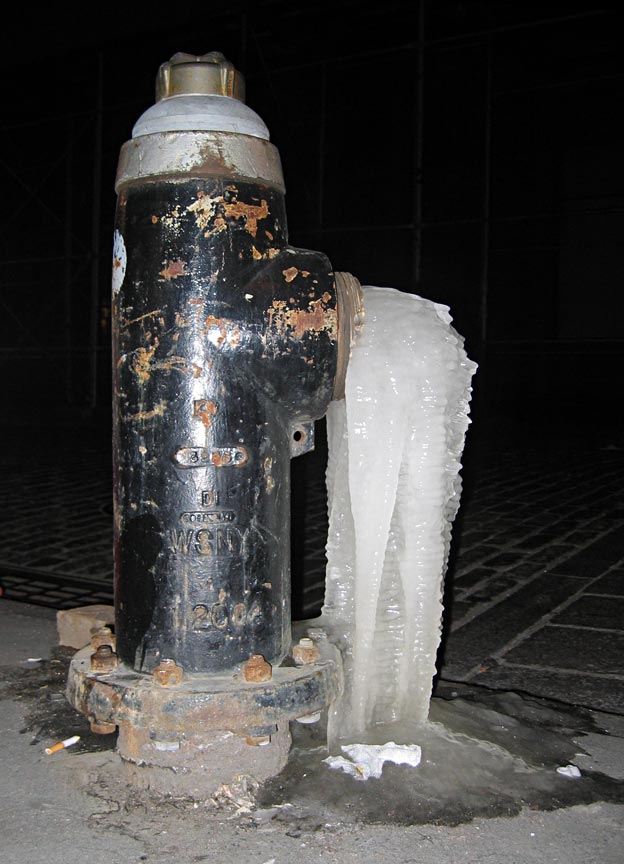
    Last night, a photographer friend alerted me to a slow leak in SoHo that he thought might be blog-worthy. (By the way, after conversations last year regarding the curious and ubiquitous standpipe, this friend got on a hydrant/standpipe kick and shot quite a number of excellent photos. Click here to see his gallery.)

    We have been in a cold-snap in NYC the last few days. and at 16 degrees F, water moves quite slowly, hence the photo. In July, of course, we see a different scenario. I suppose a question that comes to mind is why fire hydrants don’t normally freeze in the winter. The answer is that there is no water in the hydrant and the valve is below the frost line. Water is supplied to the hydrant via a riser which is controlled by a valve rod, which in turn is controlled with that special pentagonal nut (using a large wrench and matching socket). Hydrants are also equipped with an anti-siphon valve, so that any water remaining in the hydrant drains back into the ground. This is the theory. In practice, we find defiant hydrants, such as that in the photo…

    Posted on by Brian Dubé

  • Passing Time

    Posted on by Brian Dubé

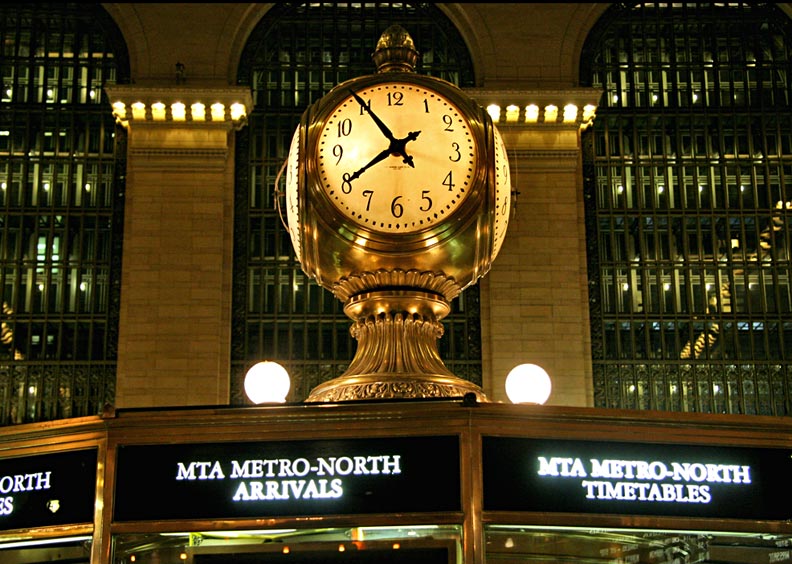
    This is probably the most well-known clock in the U.S. – the ball clock above the information booth at Grand Central Station. Many have used it not only to tell time – its most important function – but it has also served as a meeting place for travelers for nearly a century. The four faces of the brass ball clock are solid opal – Sotheby’s and Christie’s have valued it at between $10-$20 million. It was built in 1913 by the Self Winding Clock Company, a firm started by Charles Pratt (oil tycoon and founder of Pratt Institute) and engineer Henry Chester Pond in a Pratt-owned building at 205 Willoughby Street in Brooklyn, New York (later moved to Varick Street in Manhattan).

    From 1886 to 1957, the company built 50,000 clocks. These clocks were self-powered by dry cell batteries and automatic spring winding and synchronization. When properly maintained, they were highly accurate. Their clocks were used everywhere around the world: the Metropolitan Tower clock, the House of Representatives, battleships, NYC and London subways, railroads, airlines, the Strategic Air Command, stock exchanges, hospitals, schools, hotels, universities, department stores, and broadcasting systems. Over time, however, maintaining accuracy of all these historic clocks was a problem, so recently, all of the more than 55 clocks have been synchronized to a continuous satellite signal sent from an atomic clock at the U.S. Naval Observatory. The clocks are now accurate to within two microseconds. Everything is controlled by the terminal’s master clock, located behind locked doors near Track 117 on the lower level…

    Posted on by Brian Dubé

  • The El

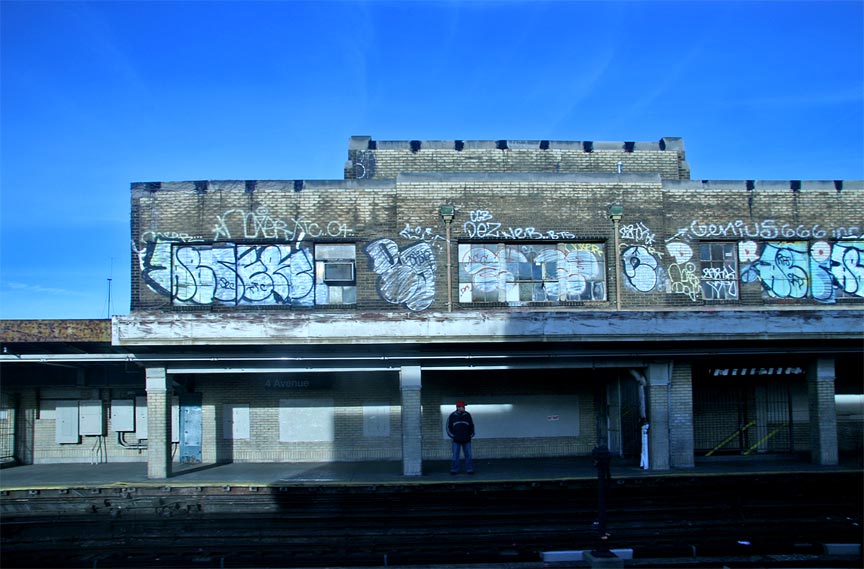
    Although it is referred to as the SUBway, the NYC train system does travel above ground on various lines in parts of the boroughs. These stretches of elevated tracks are frequently shortened to L or el. This photo was taken along the elevated section of the F Train between Brooklyn and Manhattan, at the 4th Avenue stop. This ride across a trestle affords some nice views of the city, particularly if you like the gritty side of urban landscapes. The break from underground travel is welcome, especially on a sunny day. The ride outside also allows wireless access, so it is common to see riders seizing the opportunity to make short calls on their cellphones.

    Riding on the L reminds me of the famous chase scene in The French Connection (1971), which many feel is the greatest car chase ever filmed (the chase was between a cop in a car and a hitman on an out-of-control train on a section of the L in Bensonhurst, Brooklyn). Most of the chase sequence was real and filmed without permission from the city. It includes an accidental car crash, left in the film. Only in New York…


  • Barbie

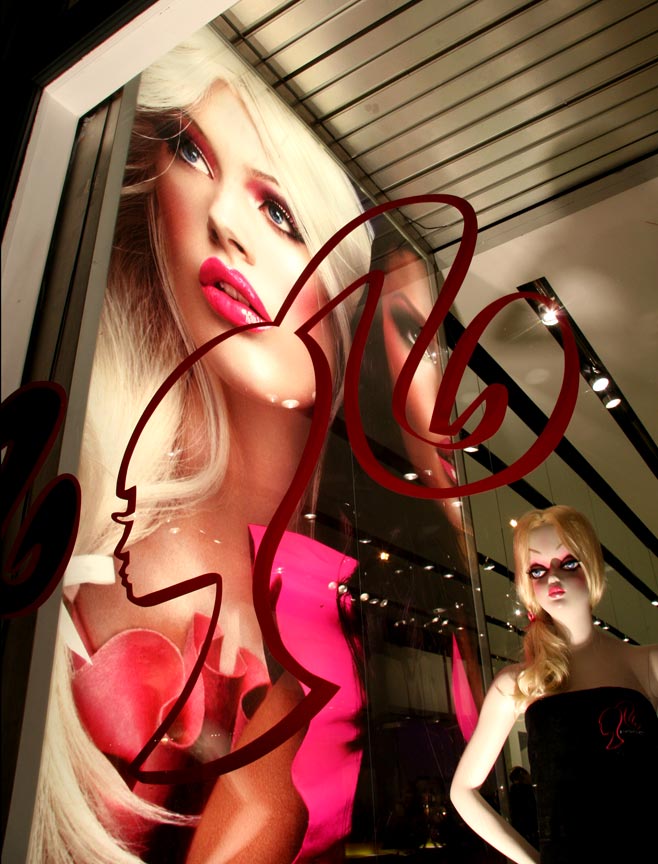
    Barbie has apparently changed her look. When I saw this striking window display at the MAC cosmetics store at 113 Spring Street in SoHo, I felt a little foolish. I went inside and asked a salesperson what the theme was, and she said incredulously, “Why, it’s Barbie!” Barbie Loves MAC is one of the looks they are now featuring. Barbie is big right now – the current March 2007 Vanity Fair has a Q&A interview with the new MAC Barbie doll.

    I’m fascinated with this country’s fascination with Barbie – she is a major icon with her share of controversy. This is way too large a subject to get into here – Barbie is a doll, a collectible, an idol, a role model, an industry, and a syndrome (Barbie Syndrome). She has a full name (Barbara Millicent Roberts), a birthday (3/9/1959), a birthplace (Willows, Wisconsin), a fascinating history, different looks and wardrobes, plenty of ethnically diverse friends, occupations, pets, and cars. And, of course, there have been parodies and lawsuits. There are Black and Hispanic Barbies. And pink is her color. For the first time, it appears she has some competition – Bratz is closing in…


  • Silvercup Studios

    Film/televsion has become the fastest growing industry in NYC. The city aggressively courts the business; contrary to what one might expect, the city does not charge for filming permits, parking, or police – it’s all free. The jobs and business bring substantial revenue. In 1983, brothers Stuart and Alan Suna converted the former Silvercup Bakery building (circa 1920) into Silvercup Studios, a film and television production facility. The first studio opened in the former “flour silo room.” They preserved the neon sign seen in the photo, adding the word Studios. Silvercup is now the largest independent full-service film and television studio facility in the northeastern United States. Many major films and television have been produced there (The Sopranos, Sex in the City, The Gangs of New York, etc.)

    In 2006, Silvercup announced Silvercup West, a $1 billion expansion – a complex with eight soundstages, production and studio support space, offices, stores, 1,000 apartments in high-rise towers, a catering hall, a cultural institution, and waterfront esplanade and plazas. The project, which will also incorporate environmentally sustainable “green building” features, has been described as a “vertical Hollywood.” The architect is Lord Richard Rogers, who designed the Pompidou Center in Paris and the Millennium Dome in London. It is to be built at the edge of the East River in Queens and will be the largest production house on the East Coast. Of course, there is competition – Kaufman-Astoria Studios and the new Steiner Studios in the Brooklyn Navy Yard…


  • Vegan Chic

    There has been a spate of articles recently covering the growing vegan movement and its fashionability. The New York Times alone has run two articles in just the last few weeks (one on vegan chef Isa Moskowitz). There are several stores in Manhattan catering to the movement, such as Organic Avenue, Mooshoes, Kaight, and NY Artificial.

    Vegans have been around for a long time – the Vegan Society (and the word itself) originated in 1944. The philosophy involves dispensing with all products derived wholly or partly from animals. This includes more than the obvious – purists eschew animal products, including meat, poultry, seafood, eggs, dairy products, fur, leather, wool, pearls, and mother of pearl, by-products, such as gelatin, lanolin, rennet, and whey, and items derived from insects, such as silk, honey, beeswax, shellac, and cochineal. Some even avoid items which use animal products in the manufacture even though none is in the product itself (cane sugar that has been filtered with bone char; beer or wine clarified with albumen, animal blood, or isinglass).

    What’s new in all of this is the new chic ethic surrounding the whole movement. It’s being embraced by a number of groups – the fringes (punks, goths, etc.), college students, and an upscale market with celebs such as Natalie Portman, Alicia Silverstone, Woody Harrelson, Joaquin Phoenix, and Stella McCartney.

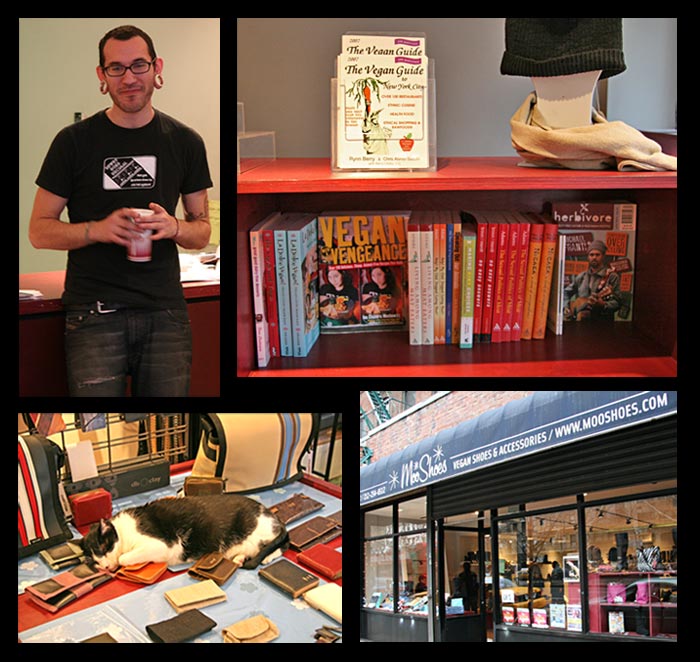
    The collage of photos was taken at Mooshoes, a new shop on the Lower East Side featuring vegan shoes, clothing, cosmetics, books, and videos/DVDs. In a way, I am not surprised at all, since everything seems to be about pushing the envelope, thinking out of the box, and living on the edge. Things are just getting more and more extreme. But there is still a little ways to go – I actually have a few older books on fruitarianism and breatharianism


  • Big Allis

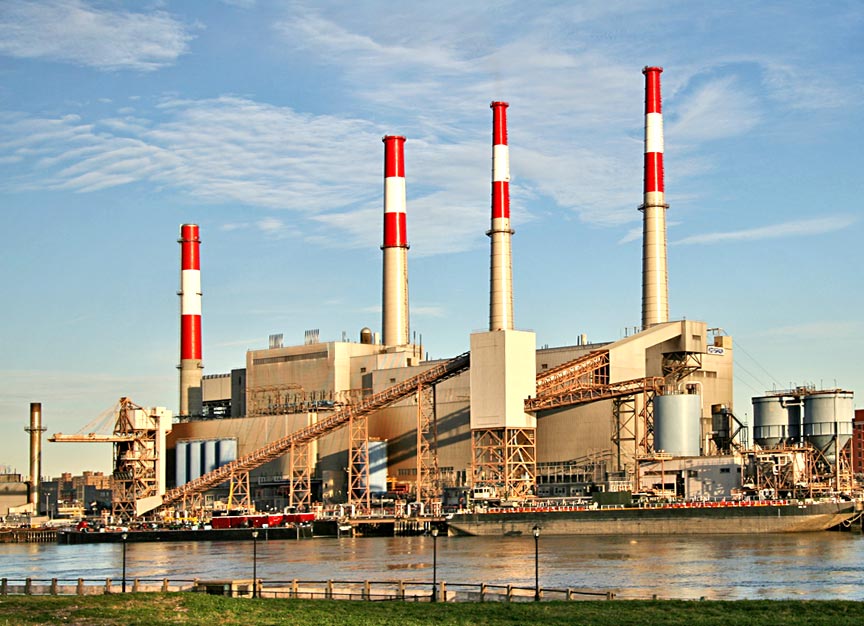
    These smokestacks, which are prominent on the NYC skyline, are part of the power-generating facility Ravenswood No. 3, also known as Big Allis (named after the turbine manufacturer Allis-Chalmers Corp.) The power plant sits on the shore of the East River in Queens on Vernon Boulevard, in a neighborhood known as Ravenswood in Long Island City. It was the world’s largest generating facility when it went into service in 1965, capable of producing 1 million kilowatts. It was sold by public utility Con Edison to KeySpan Energy in 1999.

    In 2004, the facility was expanded with new state-of-the-art technology amid community concerns over pollution. It is now capable of generating 25% of New York City’s power requirements. A New York Times article referred to the plant as the “Death Valley of New York City” – temperatures can reach 160 degrees Fahrenheit on the floor of the turbine room…


  • Working Harbor


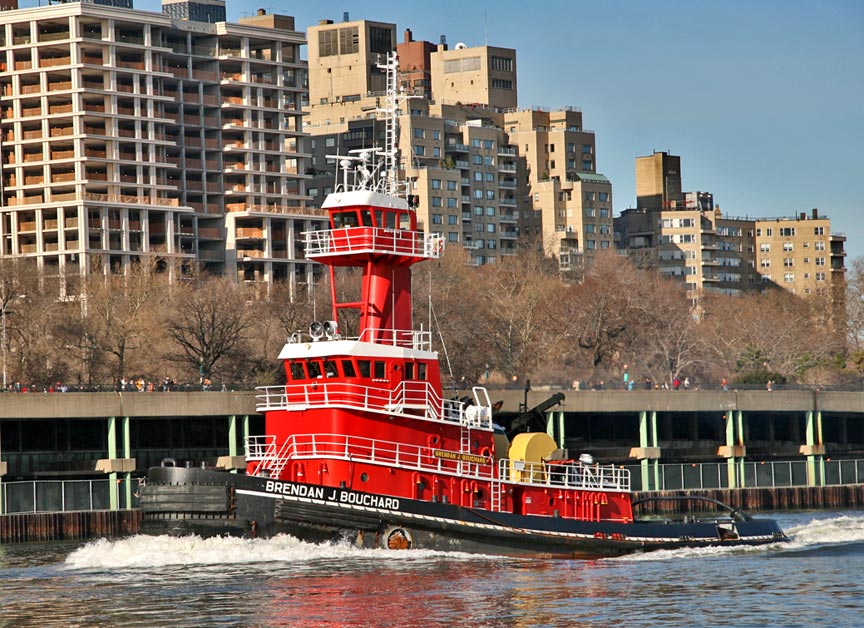
    It is easy to forget New York City’s role as an important port and that the waters around NYC are still a working harbor with an enormous amount of maritime freight and traffic (over 12,000 ships per year). In researching for this post, I am always reminded of how much goes on behind those things which most of us know little about. Like tugboats and barges. But there is a world and a history here, even with tugboat buffs and websites.

    The tug in the photo navigating the East River, the Brendan J. Bouchard, belongs to the Bouchard Transportation Company of Melville, NY, an oil barging company. Most barges are not self-propelled and need tugboats to move them. And tugboats are highly maneuverable – they help make the sharp turns necessary to negotiate shipping channels and harbors such as that of New York’s. McAllister and Moran virtually dominate the tugboat business in the New York waters. Click here for an interesting story about the recent efforts of tugboats to move the Intrepid to New Jersey for refurbishment – an initial failure followed by success…


  • Angelika Film Center

    The Angelika Film Center has been the theater most associated with independent films in NYC – a cultural landmark. Although there have been others before it and after it (the Quad Cinema, Sunshine Theater, Film Forum, IFC, PS 122, Village East, and Lincoln Plaza uptown), the Angelika is the most well-known. (They now also have three theaters in Texas.)

    Established in 1989, this 6-screen, $4 million project was established by Joseph Saleh. The theater occupies the ground floor and basement of the Cable Building on the corner of Houston Street and Mercer in SoHo. (The Cable Building, designed by McKim, Mead & White, was originally used to store Houston Street cable cars.) The “indiplex” features a 7000-square foot lobby with an espresso bar and cafe, open to non-filmgoers as well, which serves as a hangout before and after films.

    Of course, there are many naysayers and disgruntled patrons who complain of the seating, layout, rumbling of subways, etc. In spite of this and all the competition, the theater still draws. In typical New York style, it’s the cinema that filmgoers love to hate. But ultimately, it’s the films themselves that really matter to the serious cinephile, and the Angelika delivers…


  • Museum of Sex

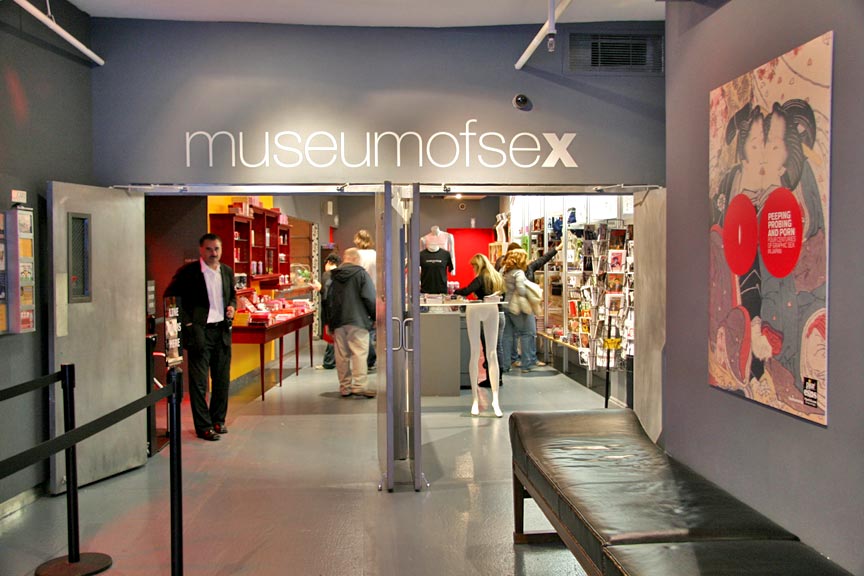
    This is one of the most fascinating stories I’ve read in a long time. MoSex, located at 27th Street and 5th Avenue, occupies two floors of a 5-story building that reputedly was a brothel. Then there was the denial by the Board of Regents to charter it as a cultural nonprofit organization, saying that a “museum of sex” made “a mockery” of the concept of museums. And, of course, the controversy: immediately after opening in 2002, William Donohue of the Catholic League, condemning it as MoSmut, said, “If the museum’s officials were honest, they would include a death chamber that would acknowledge all the wretched diseases that promiscuity has caused.”

    The museum is “wholly dedicated to the exploration of the history, evolution, and cultural significance of human sexuality,” according to the mission statement of founder Daniel Gluck, who has endeavored to give the museum an educational format. Gluck, a suburban family man, is a fine arts graduate of UPenn with a business degree from the Wharton School. The executive curator, Grady Turner, was a former director of exhibits at the New York Historical Society. There are 18 Ph.Ds on the board of advisors. He accepted no funding from anyone in the porn industry. Still, the content is explicit, and visitors must be 18. Exhibits include photos, film, porn, BDSM, lesbian and gay history, erotica, fetishism, and history – like that of Julius Schmid, an impoverished German-Jewish immigrant, who, in the 1880s, turned from sausage making to condoms, (illegal but later widely sold under the Ramses brand name) (read here).

    The museum acquired the collection of Ralph Whittington, a retired curator who worked at the Library of Congress for 36 years and had collected and documented pornography since the 1970s (click here for article). The collection includes more than four hundred 8-mm films, 700 videos, 1,500 magazines, 100 books, and artifacts (such as blow-up dolls and artificial genitalia). And at 57, he lived with his mother…


  • What & Where?

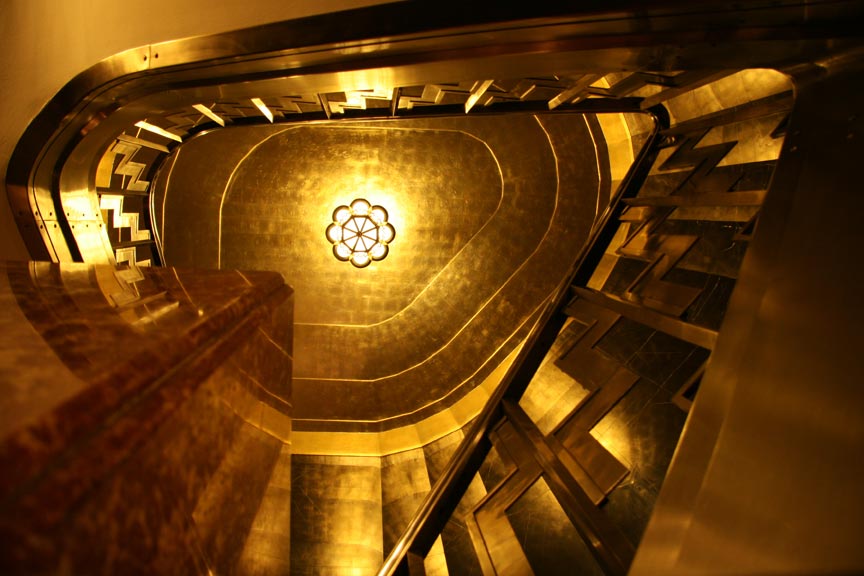
    Today, I thought I would try something different: can you guess the subject and location in Manhattan of this image? This photo is unaltered in any way – straight from the camera, no Photoshop. I imagine some of you NYC aficionados will correctly identify this, so I suggest that you make a guess before reading the comments.

    Let’s see how this goes the first time around. I will respond to comments later tonight and/or tomorrow morning. I have no prizes to offer, but maybe down the road I can come up with something…


  • Astor Hairstylists

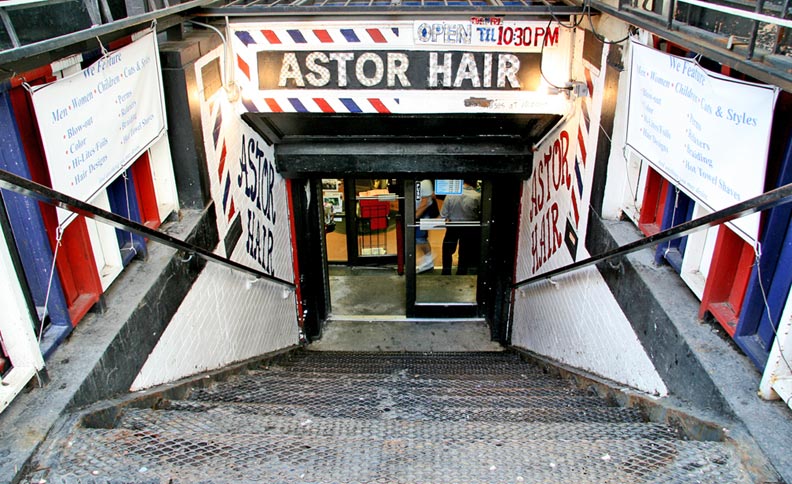
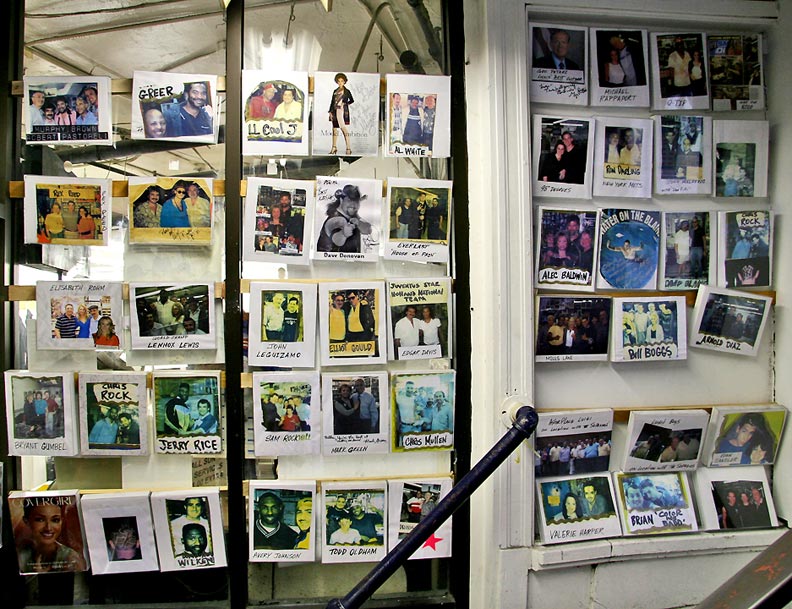
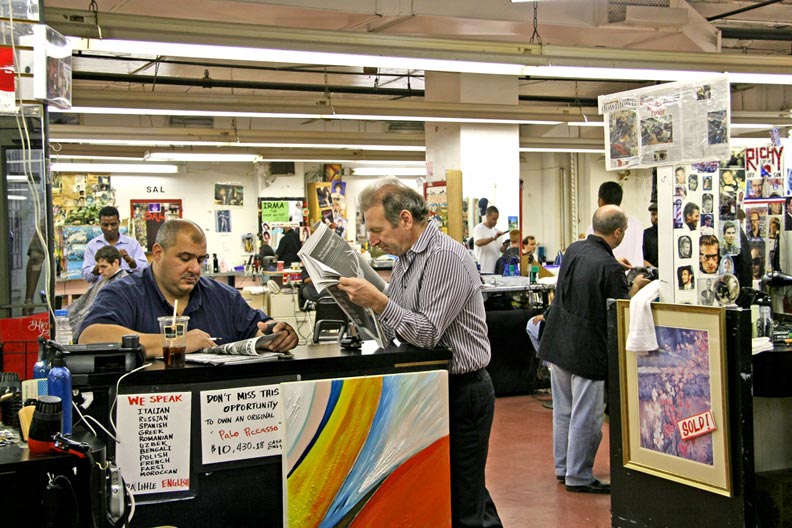
    Astor Hair, Astor Place Hair – everyone knows this place, including many who have heard of it from far away places. A family business, the shop was started in 1945 by Enrico Vezza Sr. In 1965, it was taken over by his son, Enrico Vezza Jr., who now manages it with his son, John. In the 1980s and ’90s, people lined up to get cuts there; haircutters gave live performances on TV and in clubs. They occupied a ground floor retail space, a mezzanine, and a basement space, with over 100 haircutters total. The walls are covered with photos of celebrities who have been there over the years. In 2005, due to a rent increase, they consolidated operations to the basement space with about 30 haircutters.

    The haircuts? Haircutting is very personal – people are often convinced that only their haircutter can do it right. There is also a lot of snobbery in haircutting; many feel that a cut so cheap ($13) just CAN’T be good. To the contrary – many of the cutters here have left high-end operations for the more relaxed, low-stress atmosphere at Astor Hair. Many have found that more expensive cuts elsewhere have not necessarily been better. Of course, like any surgical procedure, there are always less experienced cutters, so I give Astor Place a thumbs-up with a caveat – try to get a recommendation. I use Scotty…


  • Manhattan Island

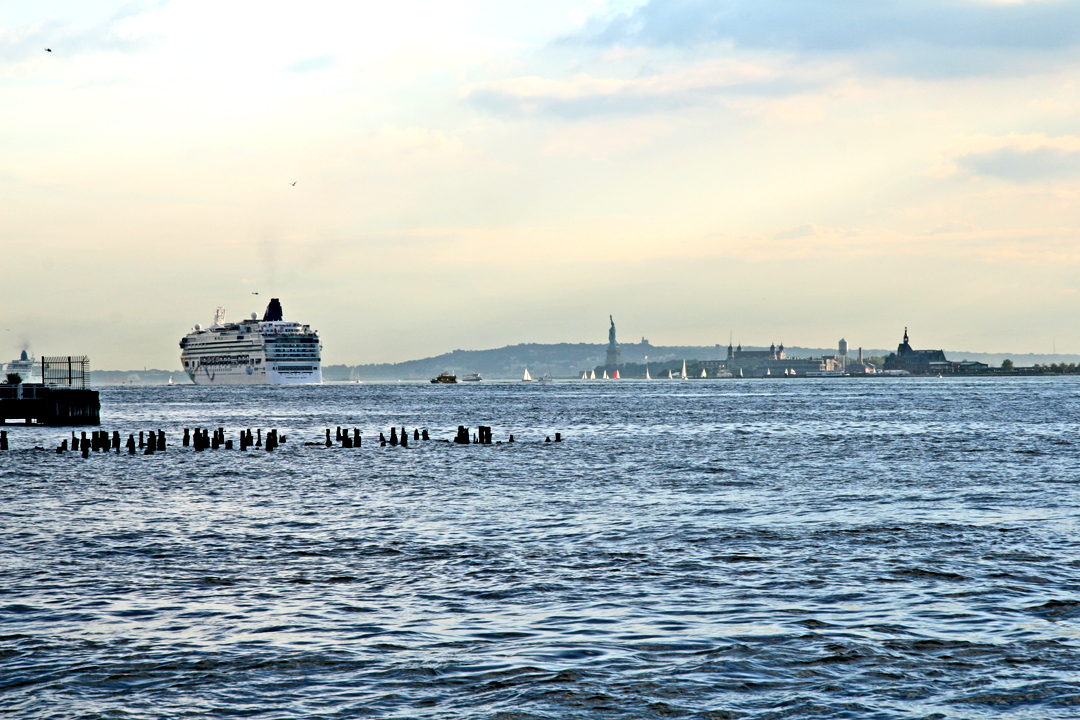
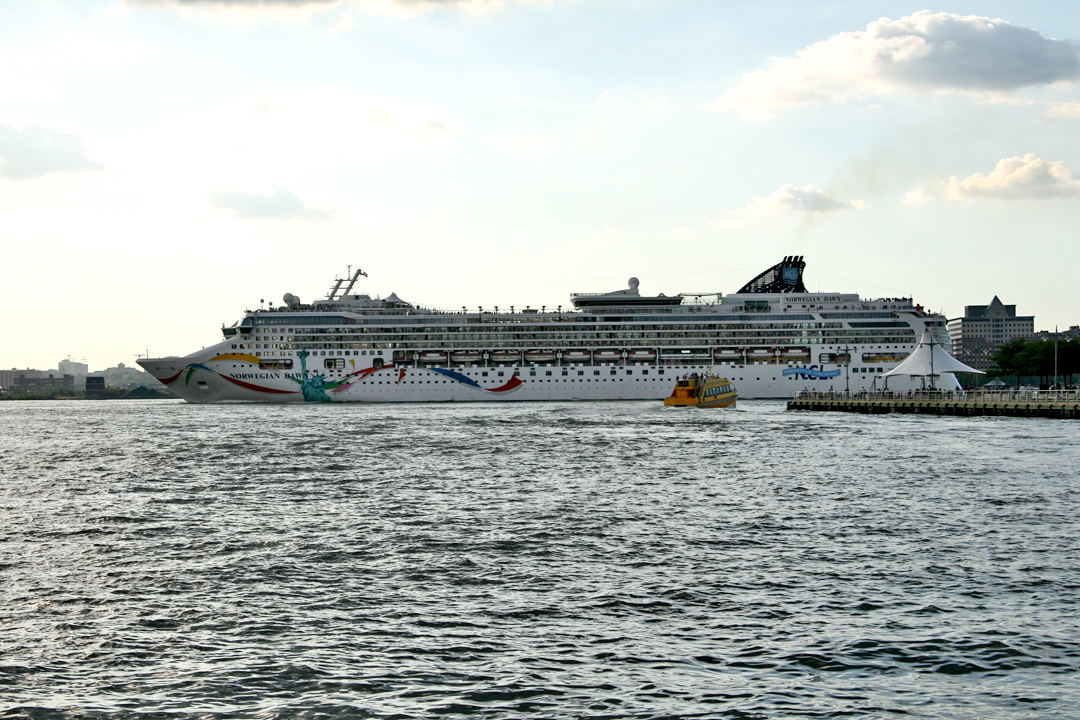
    It is important to note and easy to forget that, first and foremost, Manhattan is an island, and that its role as a harbor is what led it to become the great city that it is. By the early 1800s, after construction of the Erie Canal, NYC was an international port as well as the greatest shipping center between Europe and America (click here for article). Unlike cities such as San Francisco or Portland, Maine, where the maritime presence is very strong, one could easily go weeks, months, or longer in NYC and never see or sense the water. But an island it is, and the urban density is a product of its limited and well-defined space. The five boroughs of New York City have evolved with distinct and unique characters, which, to a large extent, is due to their physical separation by water – all the boroughs are islands or part of islands except for the Bronx. Brooklyn and Queens are both on Long Island (and share a land border).

    This photo was taken from Christopher Street Pier looking southwest down the Hudson River to the bay, Statue of Liberty, Ellis Island, and New Jersey. New York services many cruise lines, ferries, and tour boats. The ship is the Norwegian Dawn (click here for a close up photo). Although words such as isolation and vulnerability come to mind, somehow I find great comfort being on this small island…


  • War … and Peace


  • dinamic_sidebar 4 none

©2026 New York Daily Photo Entries (RSS) and Comments (RSS)  Raindrops Theme