• Category Archives Parks
  • Lockout

    I joke around about my fascination with prison documentaries, typically entitled something like Lockdown, which are presented with great drama. The drama here in the Village is at least as great with a war that has gone on for some time between community activists and the Parks Department and their plan to completely redo Washington Square Park, with activists preferring a rehab versus wholesale reconstruction. All agree that the park is in serious need of repair – the last renovation was done in 1967. The details of this battle (which is a replay of previous ones in this activist community) and its raison d’etre have been told blow by blow from the local papers all the way to the New York Times. My previous posting from May gives an overview of the various issues at hand, with links and more photos. Lawsuits have been brought against the City of New York (the last of which the city won), and on the week of December 10th, workers moved in, fenced off over half of the park, and began construction (which will be done in two phases in an estimated 2-3 years). Phase 1 is larger and includes the fountain area and plaza around it, where most gatherings and activities take place. In the warmer weather, it will be interesting to see how the regulars and visitors adapt to the very limited space.

    I am a regular user of the park and long-time community resident, and I have been involved as a close observer of this process. I understand the viewpoints of both sides in this debate, and I think it is important to remember that although opponents see the new design as radical, it will still remain a public park with a very similar layout. A radical proposition would have been the construction of high-rise condominiums in the Park’s place.

    The battle between opposing sides has appeared large, but I do not think most residents have really studied or weighed in on this situation at all, leaving the decisions to the powers that be. The number of voices on both sides are actually quite small when viewed in the context of a community with an estimated population of 150-200,00 people. There are aspects of the new design which some feel will substantially change the character of the park, such as a 4-foot high perimeter fence (to secure it at night). It will be interesting to see if the character or mood of the park and its activities and users change significantly once the project is completed.

    Architecture alone does not define a place, and New Yorkers are adaptable, resilient, and strong-willed. My prediction in the outcome of this card game is that the character of the neighborhood and will of the users easily trumps the design…
  • Constant

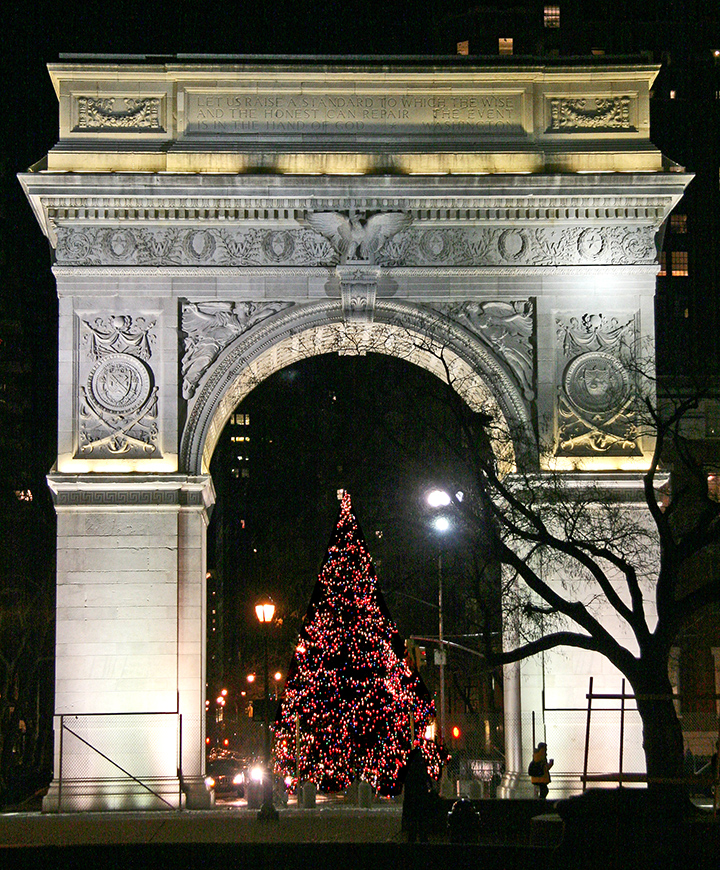
    In today’s assignment, I will briefly answer the question, “What does Washington Square Arch mean to me?” In the 60s – 70s, Greenwich Village had everything a young person wanted – freedom, excitement, diversity, the counterculture, permissiveness, liberalism, protest, and rebellion. Along with Berkeley/San Francisco, it was one of the preeminent areas in the country for the counterculture of the times. The stories read like a fantasy novel: music venues like the Electric Circus and the Fillmore East, Bob Dylan, seeing John Lennon and Yoko Ono at a local bike store, a friend calling Woody Allen from the dorm, Jimi Hendrix rehearsing down the block at Electric Lady Studios. Imagine coming to visit a place like this, never having been away from home or to the big city.

    One of my first memories of NYC (on a preliminary visit to NYU, where I had been accepted) was approaching this arch with musicians beneath it playing bongos and radicals distributing literature like the Berkeley Barb. And yes, there was sex, drugs, and rock and roll. But there were severe casualties for those who overindulged, as I wrote about in Summer of Drugs, a 40th anniversary reunion of the 1967 San Francisco Be-In. So this arch has a lot of meanings for me. I have lived in this neighborhood for nearly 4 decades, and the arch has been a constant in a world of change, symbolizing different things for different people and times. Recently, the arch was completely refurbished, with beautiful lighting installed. So now when I arrive at night, I know it’s home because I see the light has been left on for me…

    Other Postings on Washington Square Arch: Evening Arch, Singing Bowls, Cello, Arch Rebels


  • Anomalies

    Global Warming Controversy has its own article in Wikipedia, with separate articles on Global Warming, Attribution of recent climate change, Politics of global warming, Climate change denial, Scientific opinion on climate change, Adaptation to global warming, Effects of global warming, Mitigation of global warming, Kyoto Protocol, Economics of global warming, Low-carbon economy, Global climate model, Ocean acidification, Global dimming, and Ozone depletion.
    The current article on the controversy is dozens of pages long and has 216 references. The subject is overwhelming – I did not have time to make a career of the subject or distill even a reasonable overview of global warming. I have gleaned that at this point, although there still may be debate on causes and effects, most scientists do agree that there is a warming, surprisingly of only 1.33 degrees F over the last 100 years (of course, it is known that even a small sustained change will cause problems.)

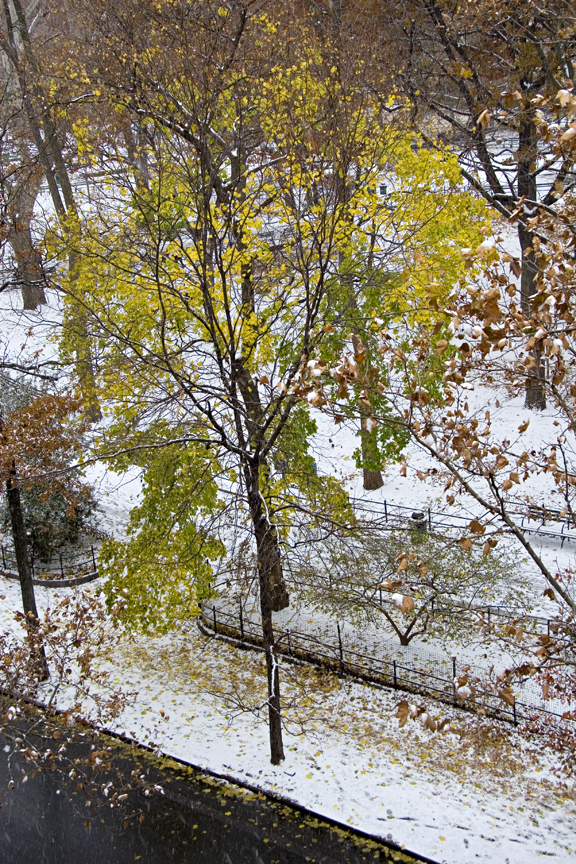
    I recall winters here in the city with cold snaps in the single digits lasting for days, but my sense that there has been a very substantial increase in temperatures must be due to selective memory. I’m assured that one must account for natural variations with anomalies and aberrations. This first snow on Sunday seemed peculiar – everywhere I went, I saw a slurry of green leaves and snow mixed together on the sidewalks. And I thought that this vista of a tree with bright yellow leaves in December with snow falling was also unusual, but maybe it’s usually this way or just an anomaly…


  • Danger and Caution

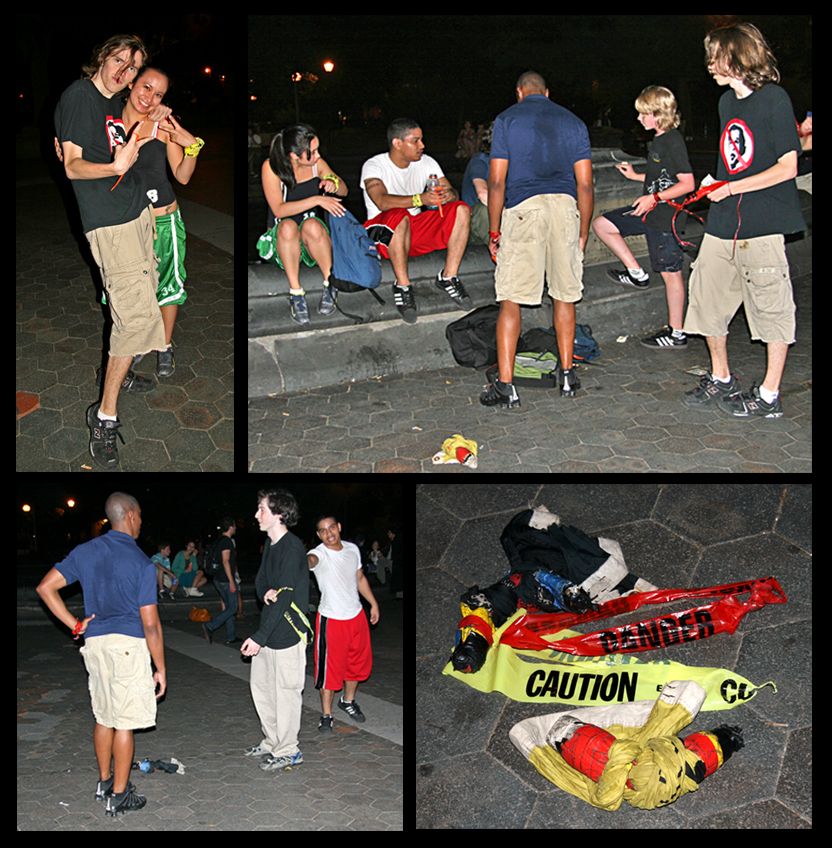
    The rules to Capture the Flag are incredibly simple (in theory): the goal is to capture the opponent’s flag, located at their team’s base, and bring it back to your team’s base. Yet to watch this game played in the city is to witness something bordering an anarchistic mêlée. Some players are running everywhere (nearly crashing into onlookers), and others are standing for no reason I can fathom. Some are chatting with the enemy, sometimes in jail, boundaries seem ill-defined or not at all, and the score is not announced.

    The members of the two teams – Danger and Caution – wear identifying plastic strips around their wrists. The flags are knotted rags, as seen in the photo. Thinking this was a new geek creation unique to the city, I was surprised to learn that this is an old game – I actually found reference to it in a Boy Scout manual from 1947 and that Robert Kennedy Jr. had been known to have 100 person games at his property in Mt. Kisco, NY. There are versions which incorporate areas of neighborhoods in Brooklyn.

    The photos show the game as played by NYU students in the evenings in Washington Square Park. Capture the flag is part of a trend in urban gaming, with others like Pacmanhattan and manhunt. I’ve discussed the game with a professor at NYU (with a PhD in physics) who frequents the park, has observed the game, and also is confused while watching. He agrees that it is only fully understandable by the young and wild spirited 🙂

    Photo Note: The photos are from from August 30, 2007. I intended to coordinate with the group of players and do a more extensive shooting with a flash system, but it never happened.


  • Abingdon Square

    I would not say that Abingdon Square is a “must see,” nor would I recommend going out of one’s way to visit. There is an interesting article from 1885 in the New York Times bemoaning its condition:

    “AN ODD BREATHING SPOT; ABINGDON-SQUARE AS IT WAS AND AS IT NOW APPEARS. ONCE THE CENTRE OF WEALTH AND FASHION, BUT NOW GIVEN OVER TO NEGLECT AND DECAY. Among the old-fashioned winding streets which cross each other at all possible angles in the old Ninth Ward is the queerest little square of which New-York can boast. Abingdon-square is the name of this odd little spot. There is a strange dead yet alive look about Abingdon-square which reminds one of a dying tree which, struggling against its fate, still sends forth at some points green shoots.”

    The rest of the article paints an equally grim view of this square – it has vastly improved since that time. I do find, however that the park/square does not have a particularly strong identity, kind of wallowing in an indistinct obscurity. The park was established in 1831 and was part of Peter Warren’s 300-acre estate. His eldest daughter, Charlotte, married Willoughby Bertie, the Fourth Earl of Abingdon, and a share of the Warren estate was part of her dowry. Her portion included the land that came to be known as Abingdon Square (the name was preserved because the Earl and his wife had sympathized with the American patriots, and he had argued in Parliament against British policy in the colonies).

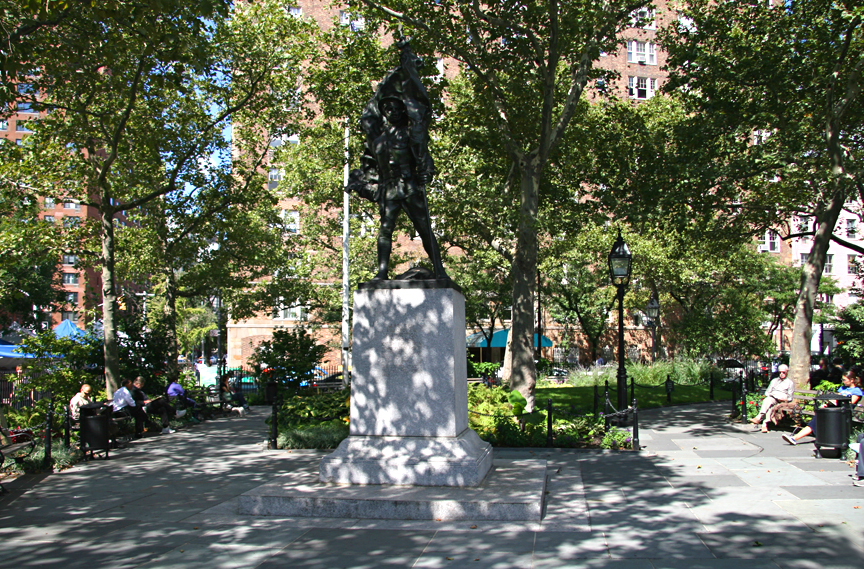
    The bronze sculpture, Abingdon Square Memorial (also known as the Abingdon Doughboy), was dedicated in 1921 in memory of local men who fought in World War I – twenty thousand spectators attended. From 1988 to 1989, the park underwent a restoration. There is also a greenmarket on Saturdays. This small spot of green in the West Village, bounded by several thoroughfares yet set apart, is a perfect spot to relax, read, and people watch…


  • Nap

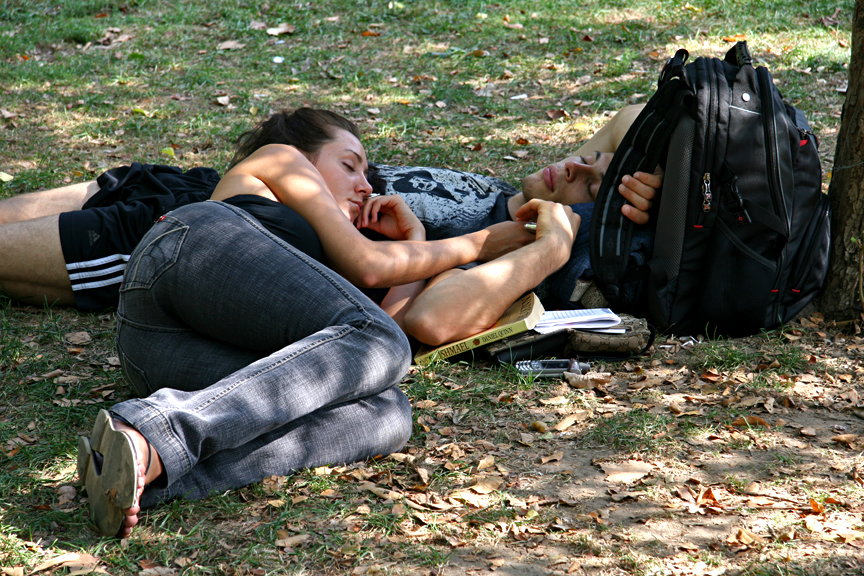
    There was something so incredibly relaxing about this couple. Perhaps it was their ability to sleep outdoors with the trust and self-assurance it requires. Or perhaps the bliss of youth, where the burdens and baggage of life have not yet accumulated. The gentleness of their embrace. Maybe the dappled light on a beautiful afternoon with the gift of an atypically warm day.

    Many people have problems sleeping, and taking a nap in a public place is probably inconceivable to them. The U.S. Department of Health reports that approximately 60 million Americans suffer from insomnia each year. The problem increases as one ages. So, for those of you who have no problem sleeping, celebrate and take a nap outdoors on a sunny day. Be careful, though – there are local ordinances against sleeping in public places (with some controversy) which are sometimes enforced…

    Note about naps: There are individuals who have experimented with polyphasic sleeping, an alternate sleeping pattern where the total number of hours slept in a day is substantially reduced by taking short naps at regular intervals (in lieu of sleeping a typical single session). In a popular variant, the Uberman’s Sleep Schedule, one takes six naps of 20–25 minutes each four hours apart throughout the day. Polyphasic sleep was most extensively studied by Dr. Claudio Stampi.

    Photo Note: The book being read? Ishmael by Daniel Quinn. Plot: A Socratic dialogue between and narrator Alan Lomax and a telepathic gorilla (Ishmael). Sounds interesting.

    RELATED POSTINGS: Dead to the World, The Art of Kissing, PDA, War and Peace, Signs of Summer, Extreme Camping, Caravan of Dreams, Aspiration, Stephanie


  • Risk Not Living

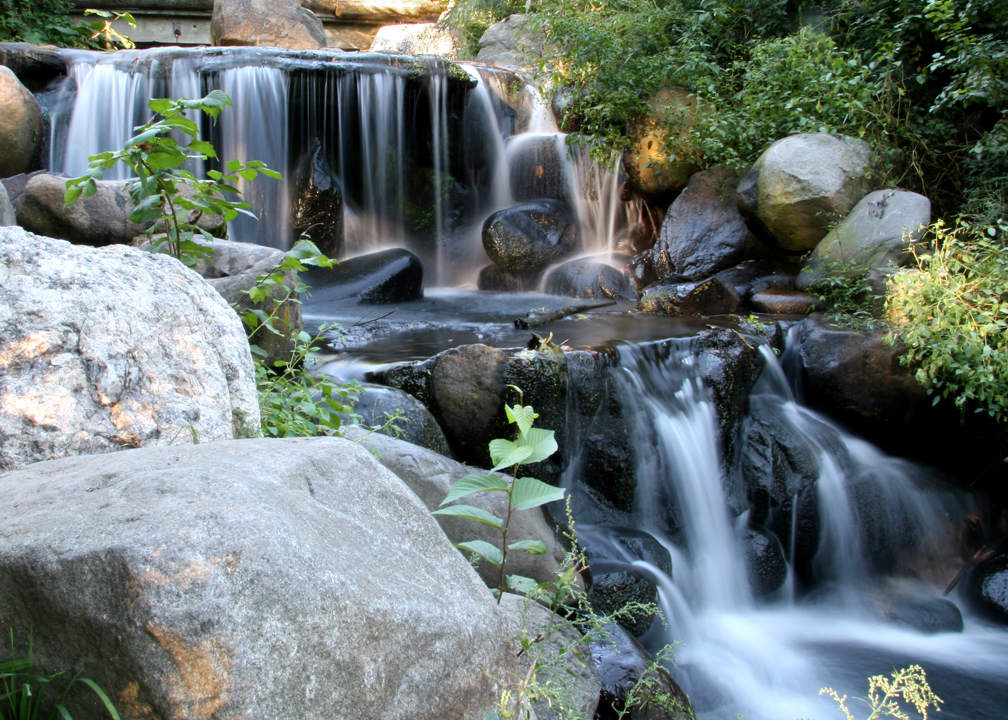
    The danger at these falls is not what you think I mean. Let me explain. I have not been particularly inclined to do nature photography. Perhaps seeing so much mediocre, ordinary, and cliched work (and not wanting to contribute more) or seeing extraordinary work (and not being able to create at that level) has left me on the sidelines.

    Of course, these feelings easily apply to other genres of photography as well, so it all comes down to what type of subjects and work inspires you – where your passion lies. Add to the mix living in a dense urban environment and getting away infrequently. So when I do get to a natural environment, I prefer just experiencing it, not through a camera. For me, this has been the danger of photography: seeing everything as one would through a lens and as a potential photograph. When habituated to this practice, one risks not living…

    Photo note: This photo was taken at Binnen Falls in Prospect Park, Brooklyn, near the Lullwater and Audubon Center. I have seen numerous photographs of waterfalls and streams using a long exposure, which creates a very interesting effect with the moving water. Seeing these falls inspired me to give it a try.


  • Bluegrass Reunion

    We have bluegrass here in NYC, too. In fact, it appears that bluegrass and country are making a comeback in the city with a number of venues featuring it, such as the Baggot Inn, the Parkside Lounge, Barbes, Freddys and Hank’s Saloon in Brooklyn, the Rodeo Bar, Joe’s Pub, The Ear Inn, etc. It may come as a surprise that country and bluegrass would have a following in the city, but frequently, people seek out antidotes to the stresses and complexity of living in such an intense urban environment. Music can be a great release, and complete immersion in a genre like bluegrass, where the lyrics hearken back to a simpler time, can really have a therapeutic effect. Country and bluegrass have had an image stigma , but in many ways, things don’t change that much as far as interpersonal relationships, and perhaps this is why these music genres, with their stories and lyrics, still resonate and find an audience, even among the “sophisticated.”

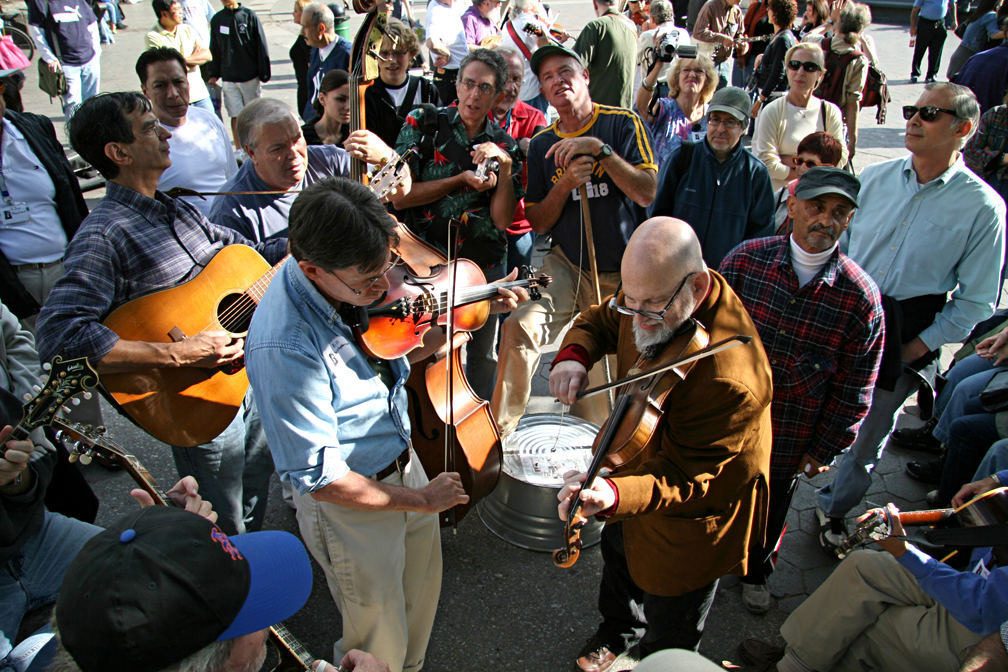
    The event in the photo was the annual Bluegrass Reunion in Washington Square Park, which was organized by Jeannie (see website here) and draws hundreds, some coming from afar. It’s a true reunion, too; some of the participants have not seen each other for years. The music and weather was great, with numerous little jam sessions happening spontaneously. There were music world luminaries such as Izzy Young and Art D’Lugoff. There were guitars, mandolins, fiddles, double basses, banjos, washtub basses, and the amazing Bob Gurland playing mouth trumpet…


  • Audubon Center

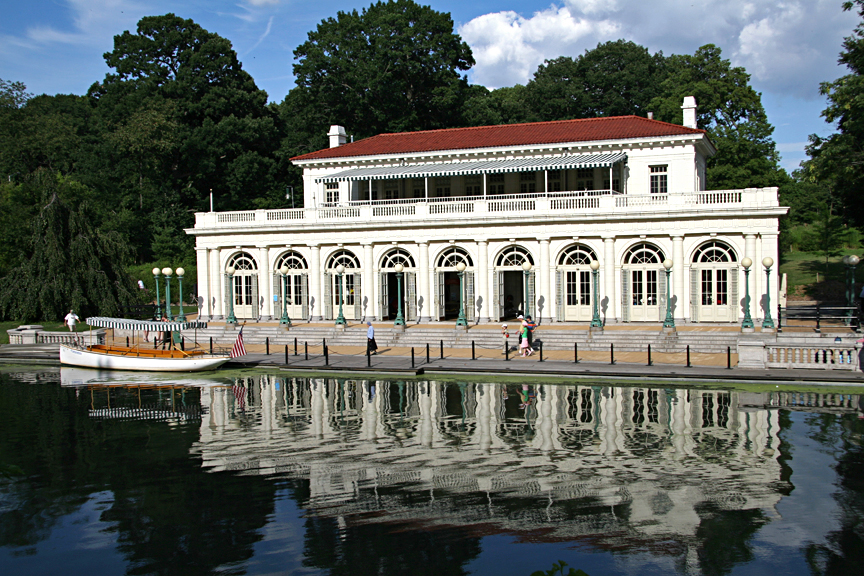
    Famed landscape architects Olmsted and Vaux, who designed Prospect Park in Brooklyn where this building is located, built the original Boathouse in 1876 as a rustic canopied structure on piers straddling the north end of the Lullwater. In 1905, it was replaced with the current Beaux-Arts structure seen in the photo. Its design was inspired by the lower story of Sansovino’s Library of St. Mark, built in 16th-century Venice. The white matte-glazed terra cotta facade is adorned with Tuscan columns capped with a balustrade. The building was relocated to the Lullwater’s eastern edge to provide a vantage point for sunset views over the water.

    Targeted for demolition in the 1960s, the building was saved through community protest. The City of New York granted it landmark status in 1968, and it was added to the National Register of Historic Places in 1972. The building underwent a four-year, five million-dollar renovation and opened as the nation’s first urban Audubon Center on April 26, 2002, the birthdate of both John James Audubon and Frederick Law Olmsted. The center is the first of 1,000 nature education facilities to be built across the country by the year 2020, with a goal of reaching one in four schoolchildren nationwide…


  • Piercing Al Fresco

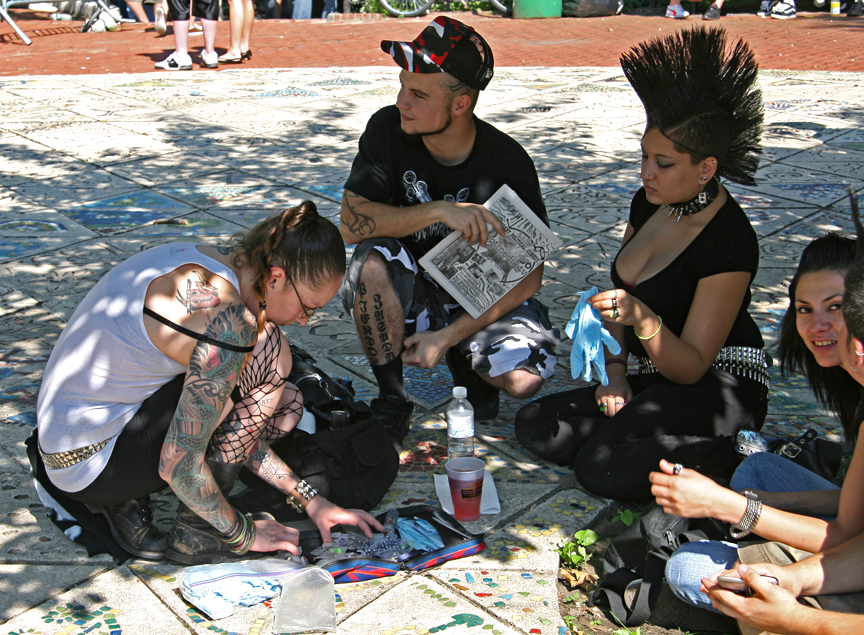
    This photo is a footnote to yesterday’s posting about the Police Riot Concert held in Washington Square Park. Click here for a photo collection. When I told people, young and old, that I had photographed piercings being done outdoors on the ground, everyone had the same reaction: “Outdoors, on the ground?” But I found it in keeping with the defiant spirit of the event. After all, I am not sure that prudence, propriety, and proper procedure apply to attendees of a punk rock concert. At first glance, I was not sure why these people were sitting on the ground looking looking at something, but closer examination revealed the object of interest to be a small zippered case opened to display body piercing jewelry and disposable rubber gloves (and, I imagine, the piercing tools themselves). Actually, it appeared that the piercer was operating as professionally as she could under the circumstances.

    Body piercing, of course, has a long history and large subculture. It’s a world unto itself, with many facets: the jewelry, the procedure and tools (sterilization, autoclaves, needles, cannula, scalpelling, dermal punching), healing and cleaning, allergic reactions, scarring, keloids, infections both bacterial and viral, where to pierce, etc. Click here for a good overview


  • Police Riot Concert

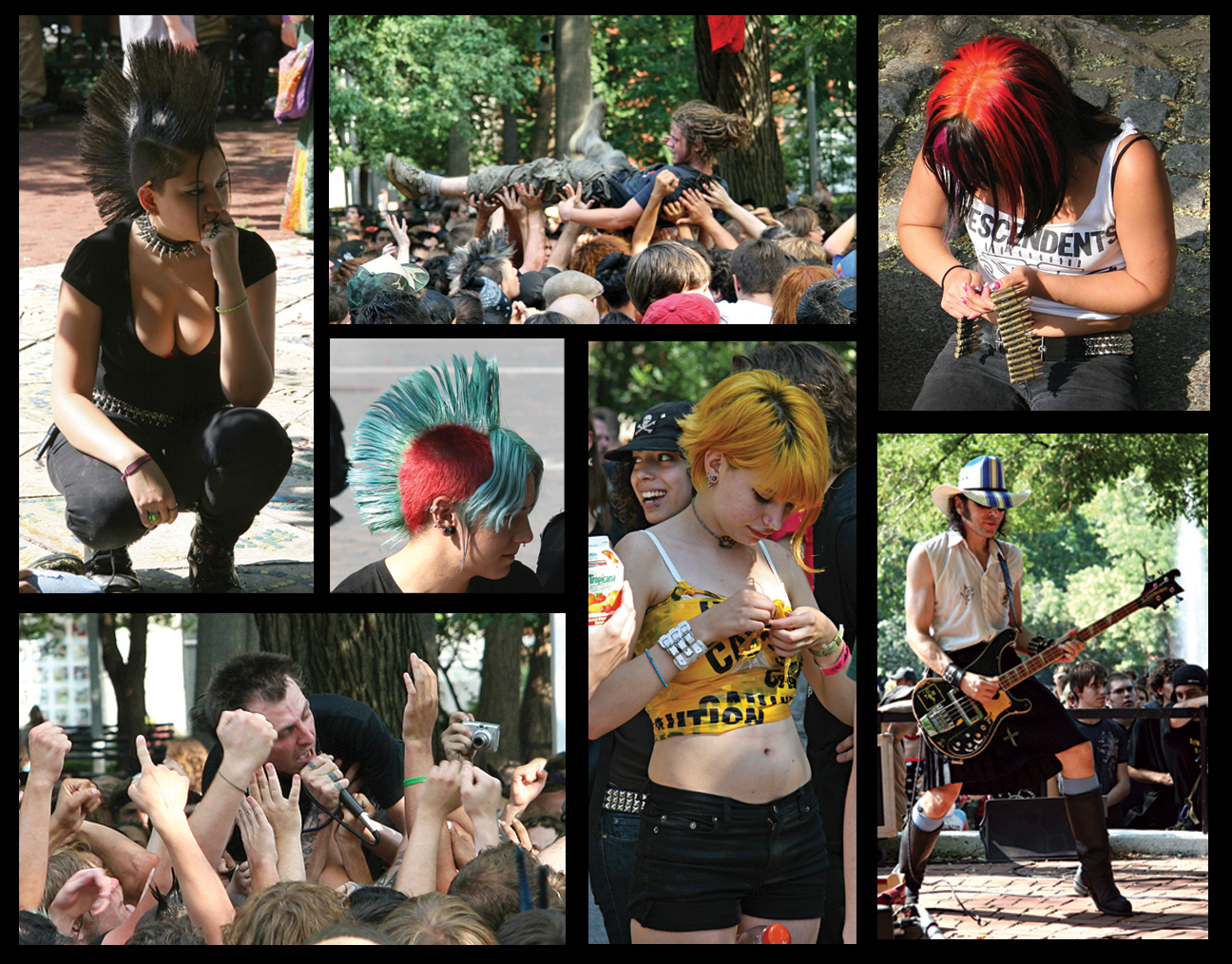
    This was an event that really caught me by surprise. No one I met was aware that it was to be held, apart from the many music fans. The annual Police Riot concert is typically held in Tompkins Square Park in the East Village, but this year, the concert was rescheduled for Washington Square. The concert, which featured Leftöver Crack (a group that has been been banned from several NYC venues), commemorated the 19th anniversary of the police riots of August 6-7, 1988 in Tompkins Square Park.

    The park at that time had essentially been taken over by drug dealers, skinheads, and squatting homeless. The riot, which occurred on the day of a rally, protesting a recently enacted curfew, was seen as largely police-incited as a result of mishandling on their part. Many complaints of police brutality were made, along with public condemnations (such as in the New York Times) against the police department and the commissioner, Benjamin Ward.

    In addition to Leftöver Crack, the groups who performed were False Prophets, World Inferno Friendship Society, Planned Collapse, and Witch Hunt. There were guest speakers, such as Norman Siegel (former ACLU director). Event-appropriate books and magazines were being sold.
    The concert was essentially punk rock, however, more specifically, there were elements of ska, hardcore, crust punk, and metal. The music was LOUD, of course, and spontaneous moshing occurred with stage diving. This event was a superb photo opportunity – the Mohawks, hair colors, clothing, piercings, mosh pits, and stage diving made great subjects in a perfect clear day’s afternoon light.  Click here for a photo set of the concert…


  • Spalding Gray

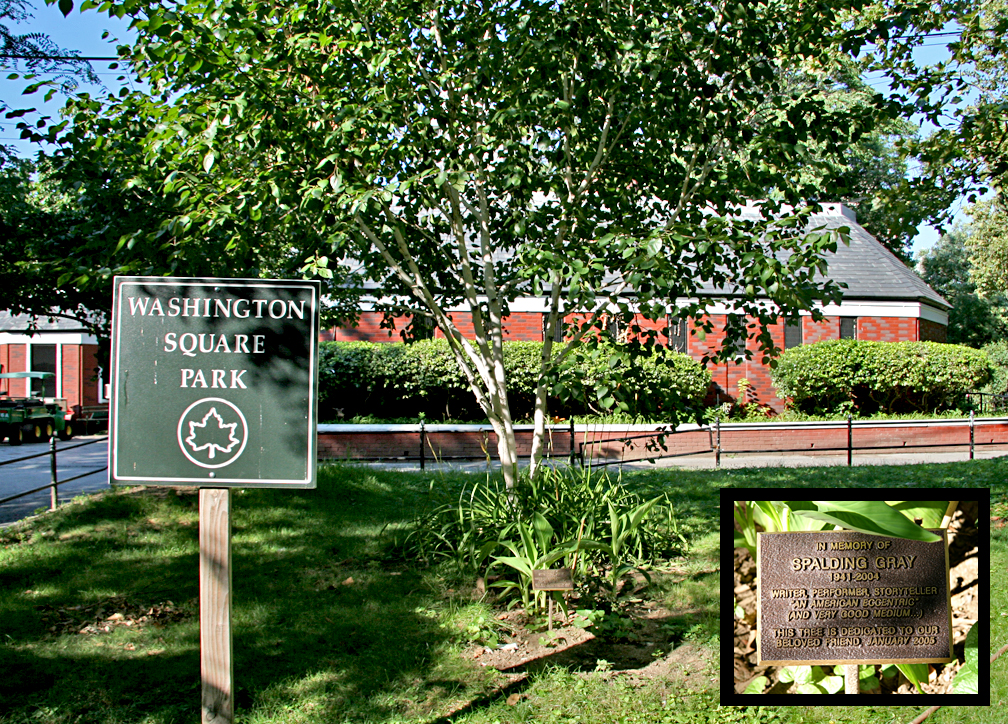
    This tree and plaque in Washington Square Park is a relatively unknown memorial to Spalding Gray (1941-2004). If you are unfamiliar with Spalding and his work, I suggest you go to his website here. Spalding was an award-winning monologist par excellence, although his work and life were certainly controversial. Gray wrote 18 monologues and appeared in many films. He is most well-known for Swimming to Cambodia, the filming of one of his monologues based on his experiences in Southeast Asia while working in a small acting role in the film The Killing Fields. In January 2004, he was reported missing (read the article here). In March 2004, Spalding’s body was found in the East River. It is believed his death was a suicide and that he jumped into the river from the Staten Island Ferry. He had threatened to do this in a note to his wife in 2003 (click here for the entire story). He had previously attempted suicide in 2002, and his mother had also committed suicide. Spalding moved to NYC in 1967 and lived in the Village.

    In 1988, the New York Times ran an article where they asked 12 well-known New Yorkers where they would go to show a visitor the real new York. In it, Gray said:

    “And then there’s Washington Square Park. I go there every day. It’s a little carnival: the fire-breathing guy, the guy sitting on a little stool, giving out free advice. It’s distinctively New York, not a Parisian thing, or a San Francisco thing. What I figured out in L.A. is, they’ve got lots of nature, like birds and trees, but no human nature. Here it’s like a dance, everyone very aware of their own body space. The other night, I saw four people on a specially made bicycle for four. They had a generator that was lighting up four huge spheres, light bulbs on their heads, as they rode up Second Avenue. It takes a lot to catch an eye in New York, but they did, and I said, you know New York always redeems itself.”


  • Red Panda

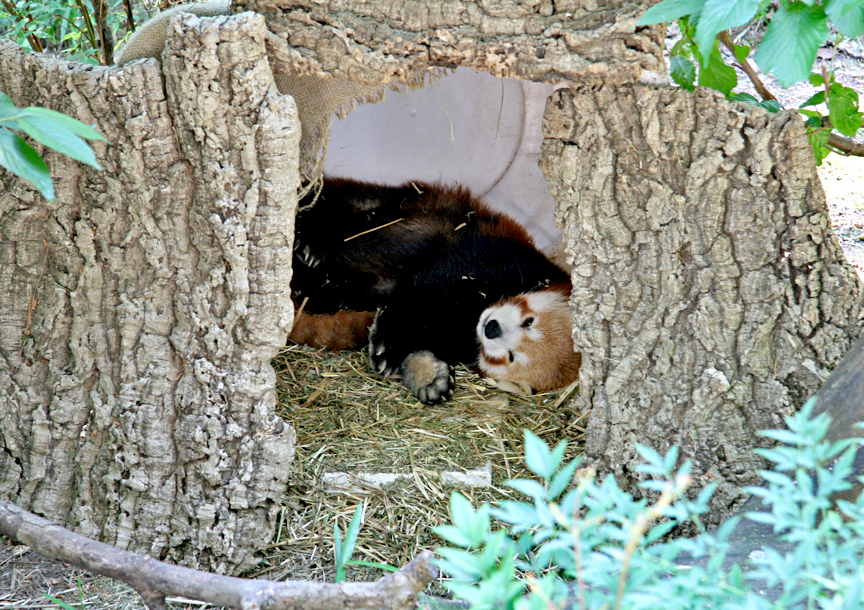
    This word was new to me – crepuscular – pertaining to twilight. In the case of an animal, it means that it is active at twilight (dawn and dusk), as opposed to diurnal or nocturnal. The Red Panda in the photo is from the Central Park Zoo and an example of a mammal that is crepuscular. This perhaps explains not only his relaxed state in the photo but also the reason that these fellows are difficult to spot moving around at the zoo habitat during exhibit hours.

    Red pandas tend to be solitary, and their habitat is the Himalayan foothills of southwestern China, Tibet, northern Myanmar, and Nepal in temperate forests at elevations of 4,900 to 13,000 feet. They are an endangered species and part of the Species Survival Plan – the Central Park Zoo has produced three cubs, a difficult feat in captivity. Their diet is almost entirely bamboo, which is extremely high in indigestible fiber, making it difficult for red pandas to extract the nutrients they need. They need to eat large quantities of bamboo and spend long hours foraging. Their low-energy diet does not lend itself to an active lifestyle, so they spend most of their time eating and sleeping (in tree branches or tree caves) – they may sleep half the day. I think this lifestyle would appeal to many…

    NOTE: A friend informed me that the term crepuscular has also been used to describe works of artists, such as Albert Pinkham Ryder, Arthur Dove, and Winslow Homer, who depicted subjects with the light characteristic at that time of day.


  • Mayberry, NYC

    Posted on by Brian Dubé

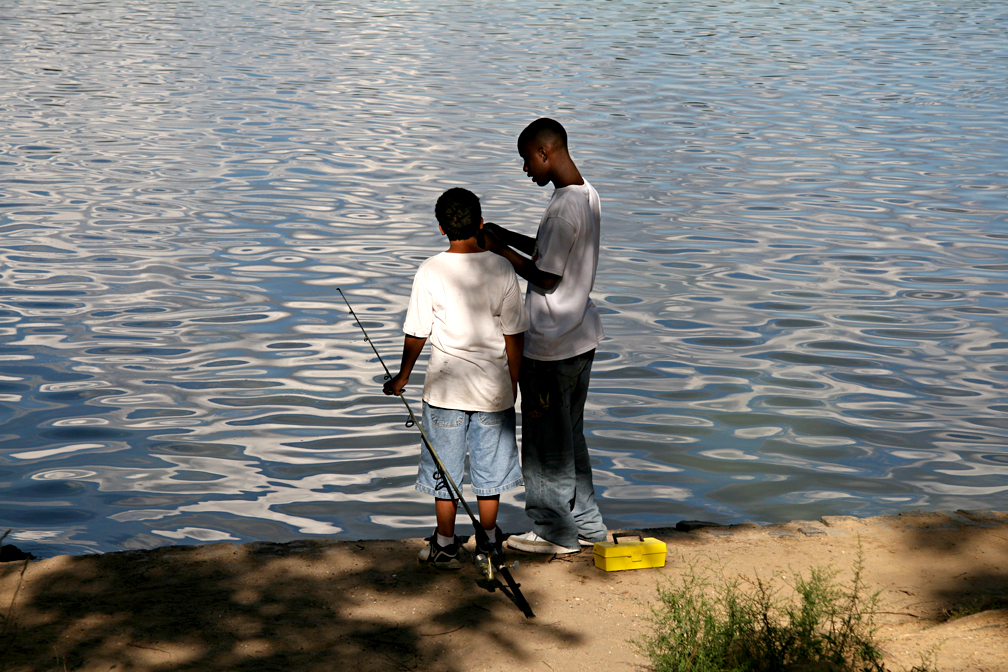
    This was the perfect summer image: two young boys standing lakeside preparing to fish in dappled late afternoon light. The scene made me feel like I was in the archetypal small town – transported to Mayberry. A Saturday or Sunday afternoon in the park is the perfect respite from the hustle and concrete of the big city – the Tuileries gardens of Paris, Hyde Park in London, or Sheep Meadow in Central Park.

    For many, fishing is relaxing and a way to connect with the outdoors. Fishing in New York City is not as uncommon as one might think. As I wrote in a previous posting about the shore of NYC, 4 of the 5 boroughs are islands or part of islands – there are over 500 miles of shoreline along rivers and an ocean. The waterways surrounding New York have become much cleaner, so there is quite a bit of fishing in the various waterways around the boroughs and in the various lakes in the larger parks, such as Central Park and Prospect Park (Brooklyn), where this photo was taken. Yes, some of the fish can be eaten, but there are health advisories regarding recommended species and number eaten on a weekly or monthly basis. And my understanding is that fresh water fishing is catch and release only. Enjoy your Sunday – sorry, no treatises today, I think I’m going to take it easy 🙂

    Posted on by Brian Dubé

  • Rain Forest

    Posted on by Brian Dubé

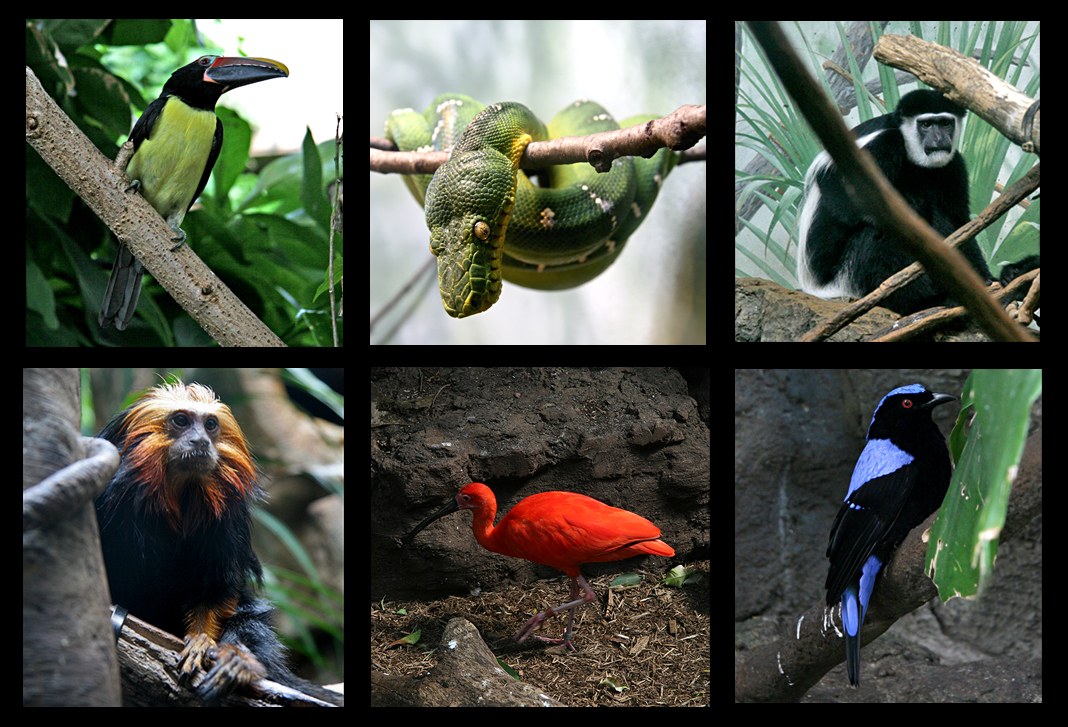
    This is the Tropical Zone at the Central Park Zoo, my second posting on this zoo (click here for the first posting, featuring the penguin habitat) It is located in the heart of Manhattan and sees 4 million visitors annually. As I previously wrote, the trend in zoos (and botanic gardens, such as the Brooklyn Botanic Garden) is towards habitats, and such is also the case with the Central Park Zoo, which underwent a complete rehab in 1988.

    The zoo is divided into three climactic zones: a Polar Zone, a Temperate Territory, and a Tropical Zone (interestingly, the Tropical Zone is referred to as the Rain Forest on their official map). The tropical habitat houses a variety of animals in a jungle environment; there are numerous birds, monkeys, snakes, frogs, lizards, and toads.

    In the photo collage, starting upper right going clockwise, we have a Toucanet, Emerald Tree Boa, Colobus Monkey, Tamarin, Scarlet Ibis, and a Fairy Bluebird. One of the outstanding aspects of the tropics is the fantastic, bright colors of the native birds. The spectacular plumage is a draw for observers, photographers, and, I imagine, for those who purchase these birds as pets…

    Posted on by Brian Dubé


  • dinamic_sidebar 4 none

©2026 New York Daily Photo Entries (RSS) and Comments (RSS)  Raindrops Theme