• Category Archives Stores
  • Being There

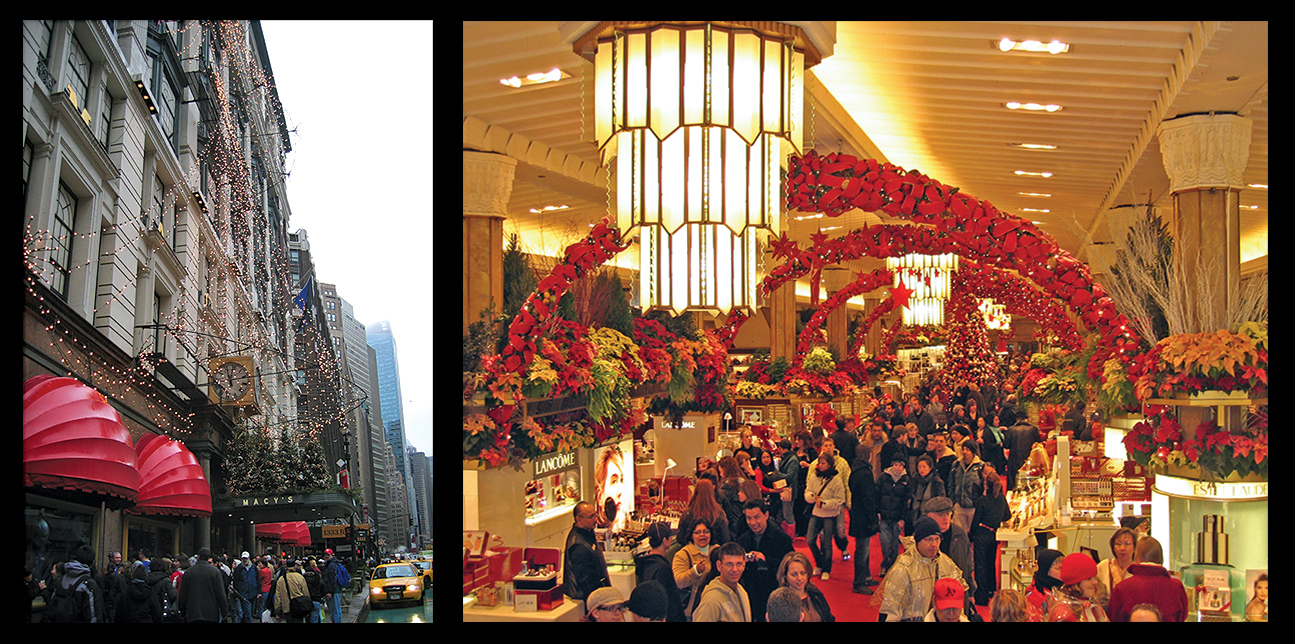
    Can you have too much Macy’s? Perhaps. But regular readers of this website know that I do bemoan the disappearance of so many NYC places and things which have given New York the character it is known for. As I wrote in my recent post Constant, many of the feelings that the best things and times have passed are nostaligic and a complaint of every generation. Championing a merchant may appear to be unnecessary – they do get paid already as a business. And I have complained about excess consumption in this country with an over emphasis on materialism.

    However, we do need merchants, and Macy’s is not an ordinary merchant. To lose them would be sad. Their sponsorship and historic relationship with the Thanksgiving Day Parade (over 80 years) and the July 4th fireworks set them apart. They are part of the physical and psychic fabric of the city. There is a security in knowing they are there, particularly as the world becomes more temporal, fragile, and mutable. We need anchors. It reminds me of a Woody Allen comment about why he needs to live in NYC – that there’s a restaurant in Chinatown where he can get a certain favorite dish at four o’clock in the morning. Not that he every has or will go there at that time. It’s just knowing it’s there. Macy’s is one of those places that whether you go patronize them or not, for a New Yorker, it’s important to know they are there, especially at Christmas…

    Posting Note: This posting will remain for two days (Monday and Tuesday) – I will be away with my family in New England. New postings will resume Wednesday. Happy Holidays.

  • Black Friday 2007

    Today is Black Friday. Everyone knows that the day after Thanksgiving is considered the commencement of the Christmas shopping season and is one of the busiest shopping days of the year. The most common explanation for the origin of the term Black Friday is that it is the start of profitability of many businesses, putting them in the black (an accounting term hearkening back to when accountants used red ink for loss and black for profits). In actuality, many businesses do rely on holiday sales to show a profit for the entire year. An older origin of the term is an implied comparison to stress and chaos of other black days such as Black Tuesday, the day of the 1929 stock market crash.

    It’s remarkable that holiday shopping has taken on such epic proportions – frenetic shoppers fueled by desperate retailers. I once remember hearing a remark that shopping is what Americans do best. So shop ’till you drop 🙂

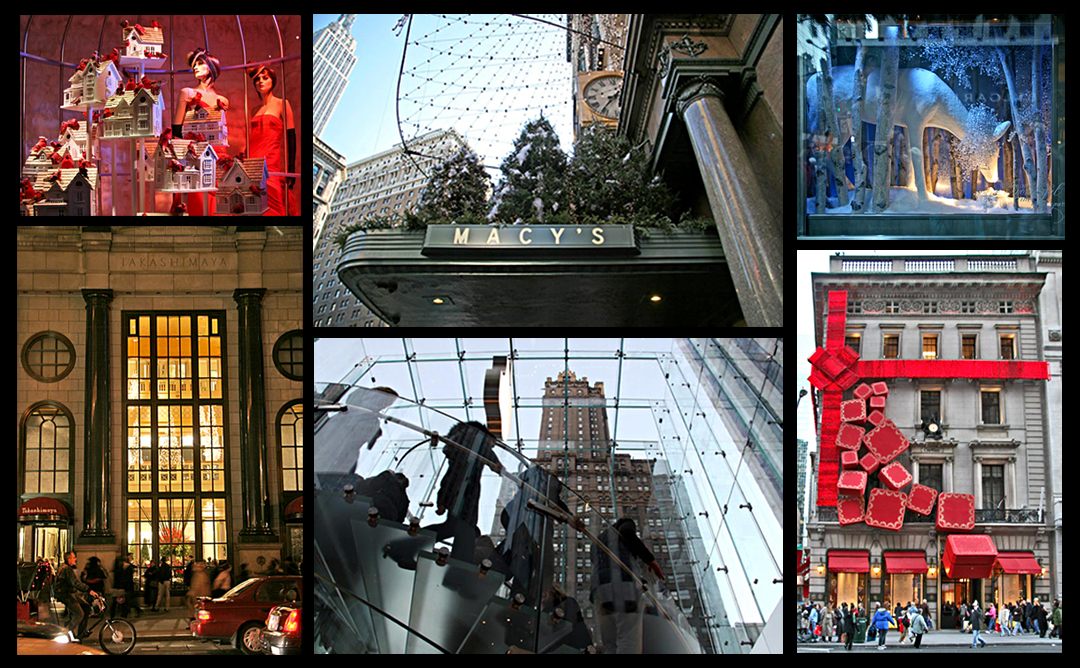
    Photo Note: I have assembled a collage of photos of the major retailers I have featured on this site since its inception (March 2006). The photos are listed clockwise starting at the upper left. (click on any to go to that posting and it photos): Saks, Macys, Tiffany’s, Takashimaya, Apple and Sherry, Cartier


  • Horn of Plenty

    Apart from the traveling, I find Thanksgiving to be a comforting time of year, very comfy as far as eating is concerned. It is a time of year where family, friends, and food come to the foreground and other responsibilities can be pushed aside. Thanksgiving Day is still rather non-commercial, with the emphasis on thanks and giving. This is a nice respite from the over-the-top commercialization that has affected virtually everything. It also is the day where overeating is not only allowed but also encouraged and expected. An old Saturday Night Live skit comes to mind where wives were virtually force-feeding their husbands (who could eat no more) in their plush upholstered chairs on Thanksgiving Day. And then there is the famous scene in Monty Python’s the Meaning of Life where the enormous Mr. Creosote is persuaded to eat one last wafer-thin after-dinner mint, whereupon he literally explodes.

    The photo shows the scene at Dean and DeLuca, the gourmet emporium in SoHo, the evening before Thanksgiving. There was a time when places like this inspired awe and wonder with residents and visitors. This food mecca has been a destination for many. But we are all a little jaded now, given places such as the ubiquitous national chain Whole Foods and exposure to a myriad of goods and services via various media and the Internet. The kind of things which these iconic NYC gourmet shops were renowned for have become much more available outside the city. For most, America has become the horn of plenty…

    Note about the Horn of Plenty or Cornucopia: There are many variations on the telling of this Greek myth. In one telling, Zeus was raised by Amalthea on the milk of a goat. In return, Zeus presented her with the horn of the goat, which had the magical power to be filled with whatever the holder desired. The modern cornucopia is now a wicker basket with the shape of a goat’s horn.


  • Economy Candy

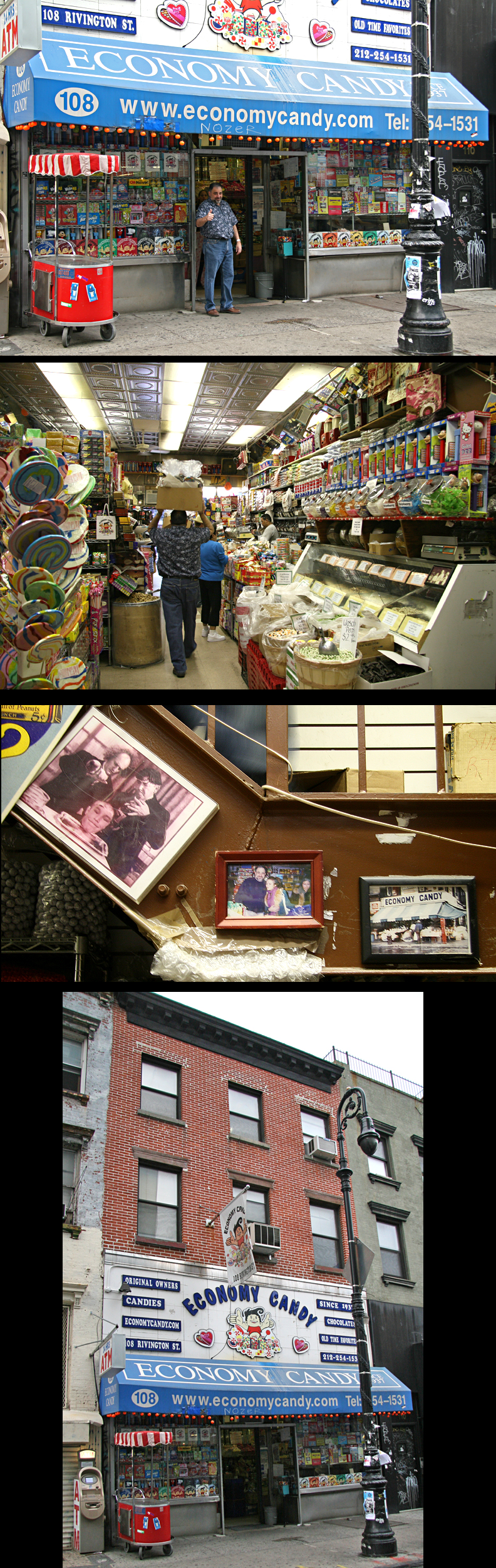
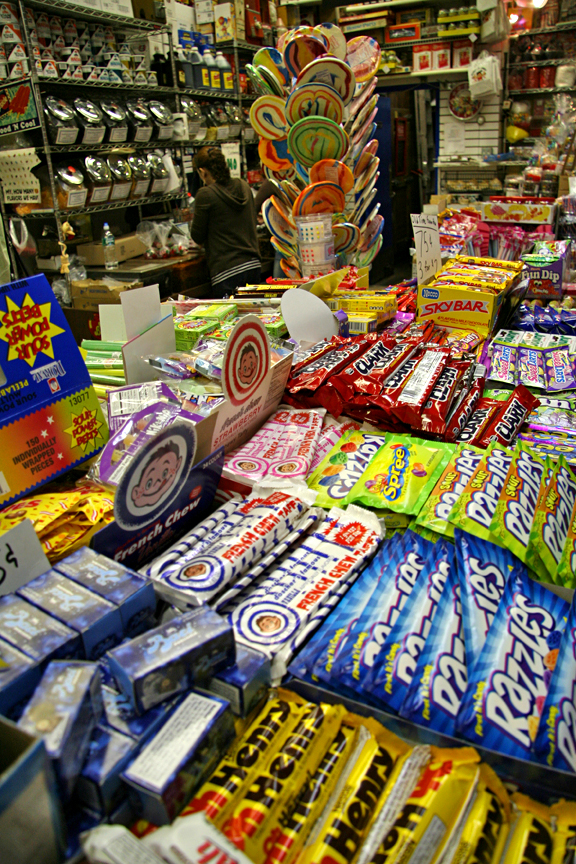
    Feeling a dearth of candy in our office yesterday and being a nice warm autumn day for a walk, two of us decided to make a pilgrimage to Economy Candy at 108 Rivington Street on the Lower East Side. The family-owned business occupies an entire 3-story building (click here for more photos), the ground floor for retail and the upper floors for custom packages and managing their online business.

    Jerry Cohen runs the store with his wife Ilene and son Mitchell. One if Jerry’s smartest moves was buying the building they’re in – good insurance against the rapidly escalating rents in NYC. I had the good fortune of meeting Jerry and his wife – they were extremely friendly and accommodating. The visit was an experience of classic old New York City. From their website:

    “When Jerry Cohen’s father opened Economy Candy in 1937, it was a typical corner candy store of its day. Bulk bins full of colorful hard candies enticed youngsters with their panorama of choices. Guys could buy their dolls a heart-shaped box of chocolates when they had trouble expressing themselves in words. Barrels in the back yielded a geography lesson of nuts from around the world. The hard times of the Depression were easing up, the grim specter of war-to-come wasn’t yet hovering over American shores, and television was a scientific marvel that was unlikely to have any practical commercial application.”

    They have built a reputation on pricing and selection (they have hundreds of kinds of chocolates, candies, nuts, dried fruits, halvah, and sugar-free candy), but what is particularly enticing to me are the nostalgia favorites. Nearly all the candies of my childhood are there, products that are virtually impossible to find anywhere else and certainly not all in one place. Skybars, Squirrel Nut Zippers, candy cigarettes, candy buttons, Nik-L-Nip, Necco Wafers, Chuckles, Charleston Chew, Jolly Ranchers, Good and Plenty, Smores, Jaw Busters, Milk Duds, Bit-O-Honey, Sugar Daddy, Pez, wax lips, and the controversial Chocolate Babies. Hey, do you want to make your own authentic New York Egg Cream? They have Fox’s U-Bet chocolate syrup by the gallon…


  • Myers of Keswick

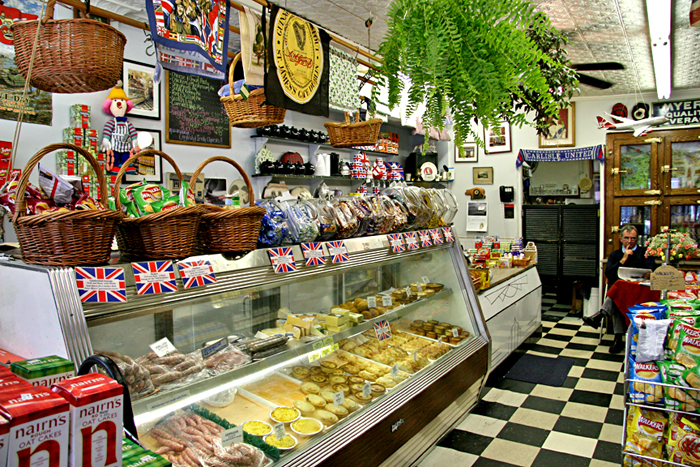
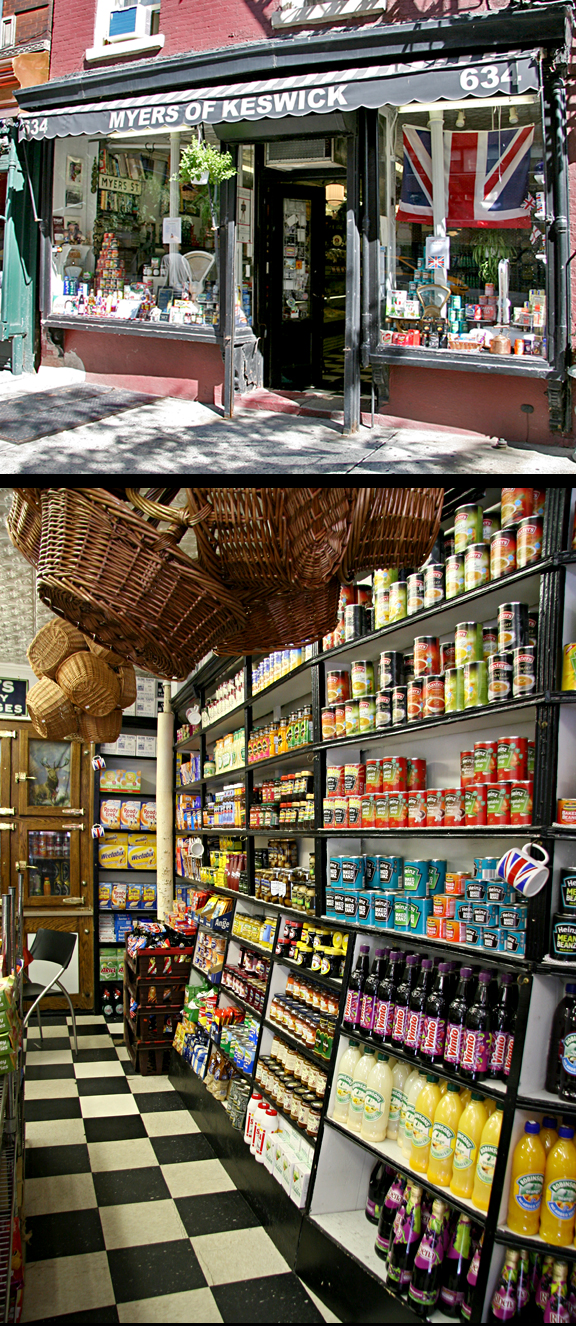
    There are an estimated 100,000 Brits in New York City (and 250,000 in the Tri-state area – New York, New Jersey, and Connecticut). And, like any ethnic or cultural group, someone has to cater to their culinary needs. Peter Myers, of Keswick in the Lake district of England, came to the United States in 1972. On July 4th, 1985, Peter and his wife Irene, opened Myers of Keswick. You can read the entire story here at the shop’s website.

    This small, quaint shop is located at 634 Hudson Street in the West Village – the ambiance is one of a country store. Click here for more photos. British cuisine and foods do not have a large following, so it was not surprising to learn from Peter that nearly all of the store’s clientele is of British ancestry. Many make a pilgrimage, coming from as far away as New Hampshire or Virginia to stock up on goods. Myers offers an array of fresh goods (butter and cheese), including authentic homemade classics such as savory pies and sausages (for which they are well known) – Peter is a third-generation sausage maker. They also stock an array of British staples – packaged items such as beans, crisps, cereals, biscuits, soups, jams & marmalades, drinks, teas, sweets, and the infamous Marmite, that substance deemed to be virtually inedible by all but the Brits.

    I am frequently turned down when asking about taking photos, even of commercial or retail establishments, where they stand to gain more exposure. Peter, on the other hand, in stereotypical British style, was quite accommodating – in fact, a little surprised I even asked. That’s him in the rear of the photo…


  • Pickles

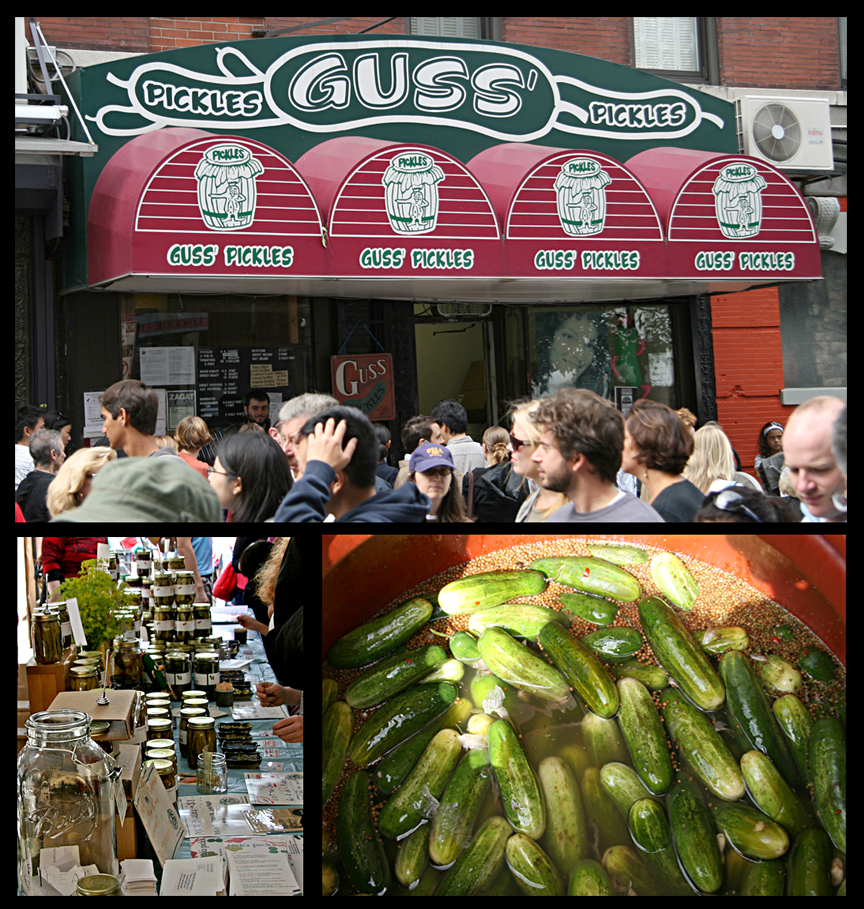
    Sunday was the 7th annual New York City International Pickle Day. I’m not sure we need such a day, but apparently picklers feel that they need equal time, and NYC was pickle country at one time. The festival, co-sponsored by the NY Food Museum and the Lower East Side Business Improvement District (LES BID), was held on Orchard Street between Broome and Grand Streets on the Lower East Side, on the same block as famous pickle vendor Guss’ Pickles (update: In 2010, Guss’ Pickles moved to Borough Park, Brooklyn.). There were pickling demonstrations, children’s activities, tours, exhibits, music, book signings, and, of course, pickles and pickled products for sale and as free samples.

    And Guss’ Pickles? Well, that’s a whole other story and controversy. A hundred years ago, NYC had 200 pickle shops, with half of them in the Lower East Side. Now, virtually all are gone but Guss’ Pickles, founded by Polish immigrant Izzy (Isidor) Guss in 1910. Through a number of twists and turns, there are two companies battling in court over ownership of the name Guss’. Read about the twisted tale here


  • Kiehl’s

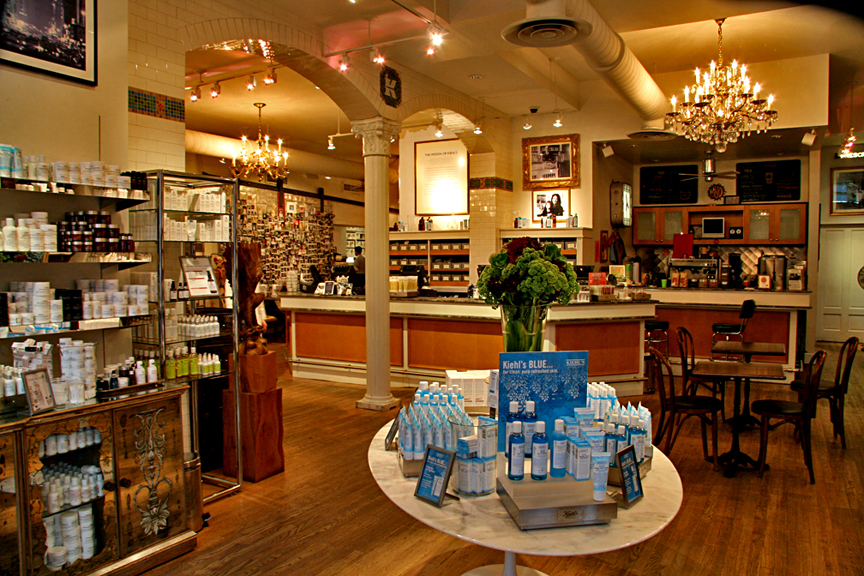
    Kiehl’s Pharmacy is legendary. I will give only a brief synopsis here of this remarkable company, since their history is long with many details; I recommend you click here for an in-depth article about Kiehl’s and try to visit the original shop. This NYC institution was established in 1951 at its current location in the East Village at 109 Third Avenue as an apothecary by John Kiehl, selling a variety of herbal and homeopathic remedies. Irving Morse, the son of a Russian immigrant family, apprenticed to Kiehl and obtained a degree in pharmacology from Columbia University. He purchased the store in 1921. His son, Aaron, also studied pharmacology at Columbia and in the 1950s became active in the business; in the 1960s, he took over the business. In the 1960s, the pharmacy was phased out, and Kiehl’s began developing its own natural care products for which they are famous today. In time, Kiehl’s began selling to upscale stores, beginning with Neiman Marcus in 1975. In 1988, Aaron’s daughter Jami took over with her husband, Olympic skier Klaus Heidegger.

    Kiehl’s has a very distinct character going back to its inception. Historically, the focus has been on high-quality, natural products with a lack of emphasis on packaging and marketing, They have had a virtual cult following of patrons, including many celebrities. In 2000, the company was purchased by L’Oreal. There are now stores worldwide. However, efforts have been made to maintain a commitment to Kiehl’s roots and the imprint made by Aaron Morse and the family…


  • The Funny Store

    Posted on by Brian Dubé

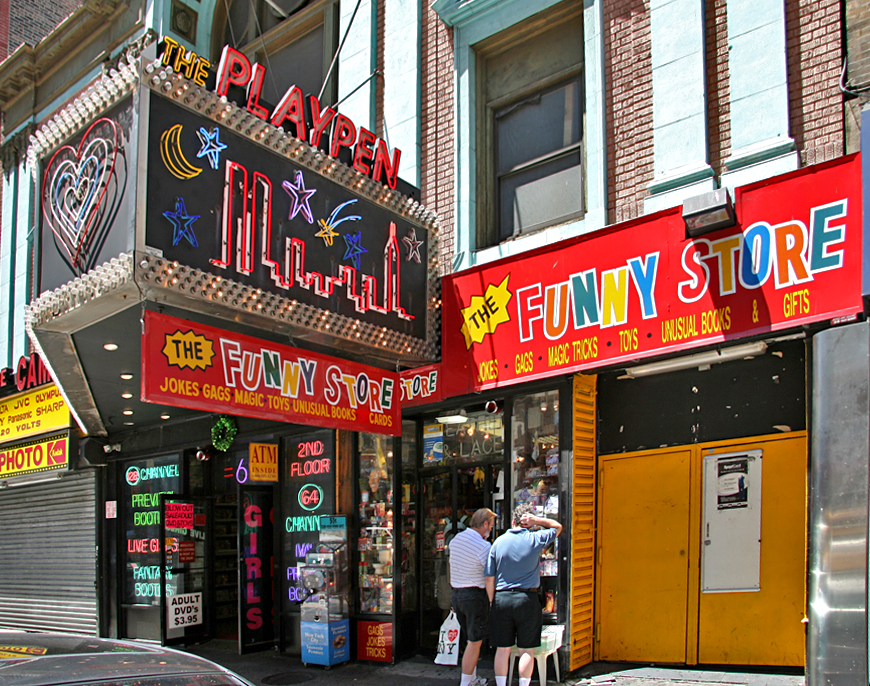
    This is a story recently reported by the New York Times, the Daily News, and other local media. The Funny Store, a novelty shop which has been in business in the Times Square area for 50 years, is closing on July 31, with a new residential development of luxury condominiums going up in its place. The shop was originally opened by brothers Irving, Mike, and Lou Tannen (of Tannen’s Magic fame). The current owner, Arnold Martin, has had the store since 2004. It has been frequented by many celebrities and has been a favorite of the Letterman show. The Funny Store sells gags, jokes, magic tricks, games, and novelties, with all the classics such as hand buzzers, rubber chickens, whoopee cushions, and their most popular item – fake dog excrement.

    Why, you may ask, is the story of a tiny novelty shop important? After all, this is not an essential service, and these products can be had online. It’s not the closing of this particular store but rather that this appears to be a typical scenario of the day and a harbinger of times to come. The changing landscape of NYC is one that many fear, with a future of chain stores and luxury residences and services catering to the well-heeled. The small independent store is becoming an endangered species, along with many niche business operations. Entire districts have disappeared and industries have left the city. What makes NYC the interesting place it is and gives it character are the unique retailers, businesses, restaurants, cultural attractions, and the people that make them up – the things you don’t find outside the city. Catch them while you can…

    Posted on by Brian Dubé

  • Wash and Ry

    Posted on by Brian Dubé

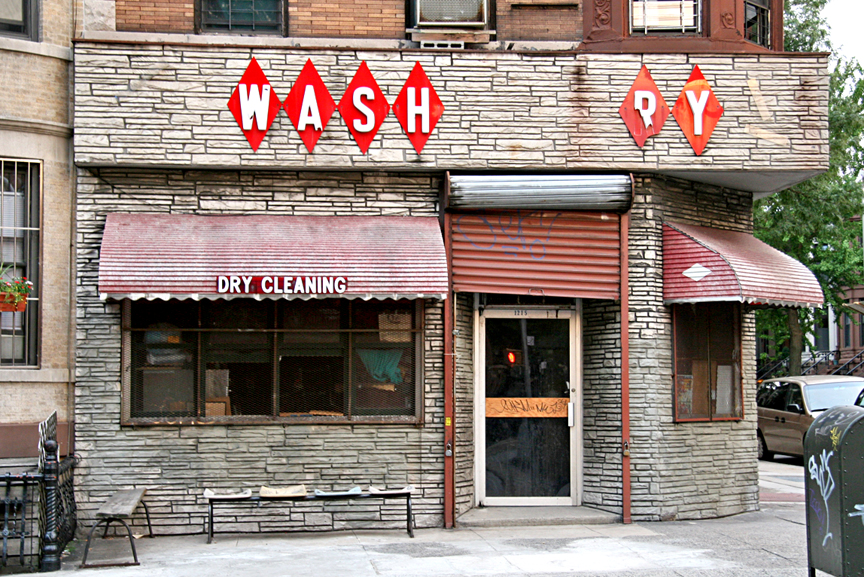
    I’m fascinated by places like this. This laundromat is located in prime Park Slope (13th Street and 8th Avenue) – one of the most expensive neighborhoods in Brooklyn. Yet the place looks third world. All the backs of the chairs outside are broken off, letters from the sign are broken or missing, a slat of plywood covered with graffiti backs the door, and then there’s that hideous faux brick siding. Everything is run down, broken, makeshift, or slightly askew. The inside is not more pleasant – cavernous, dark, and gray. In the suburbs, a place like this would never survive in a good neighborhood. People would drive to a nicer place, and eventually they would go out of business.

    My theory is that in the city, customers patronize essential services which are very local, since most errands are done on foot. These shop owners have a captive audience – customers will put up with a run-down business if it is close to home. Also, most New York City residents are exposed to older buildings and are thus tolerant of the structurally and cosmetically imperfect. Unfortunately, this type of scenario can not always be explained by poor financials – many small business owners view their operations as cash cows, taking out as much as possible without putting anything back in to keep a place in a decent state of repair. I understand from a neighborhood resident that the owner is quite fierce and that her golden retriever has snarled more than once at her own dog…

    Posted on by Brian Dubé

  • Garment District

    Posted on by Brian Dubé

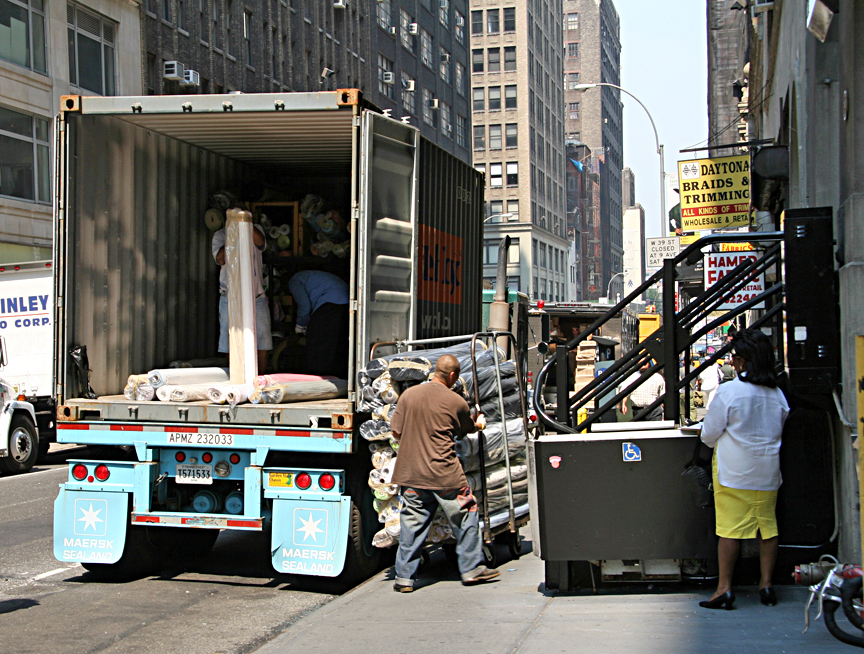
    New York City’s population size and Manhattan’s density has given rise to something unique: business districts. I’ve put together a list: diamond, flower, lighting, restaurant supply, photo, meatpacking, financial, fur, and the garment districts. I am distinguishing these from residential neighborhoods, as they are primarily business to business vendors. Most smaller cities have, perhaps, a downtown business district, but here we have concentrations of suppliers to specific industries occupying substantial geographical areas. The now defunct sewing machine district, e.g., used to occupy the city blocks between 24th and 27th streets between 6th and 7th Avenues – on some blocks, virtually every retail space was occupied by a sewing machine dealer.

    Today’s photo was taken in the Garment District, an area located roughly between 34th and 42nd Streets from 6th and 9th Avenues. The dominance of NYC in this industry goes back to production of clothing for slave owners of Southern plantations. With the invention of the sewing machine in the 1850s, production of clothing became industrialized, with NYC as the center. Although garment manufacturing in Manhattan has declined, there are still many small sewing manufacturers in this district (and Chinatown). The area is now dominated by fabric and notions wholesalers, clothing designers, and showrooms. New York City is the center of fashion in the United States, with names like Donna Karan, Calvin Klein, Liz Claiborne, and Betsy Johnson located here. We are home to trade shows and Fashion Week, a major annual industry event. The area is sometimes referred to as the Fashion District (there is a Fashion District information kiosk at 39th and 7th with a huge sculpture of a needle threading a button).

    Interesting note: Many are puzzled by the fact that competitors will cluster together, as dramatically demonstrated by NYC districts. This counter intuitive phenomenon is explained by Nash Equilibrium and Hotelling’ s Law…

    Posted on by Brian Dubé

  • Alidoro

    Posted on by Brian Dubé

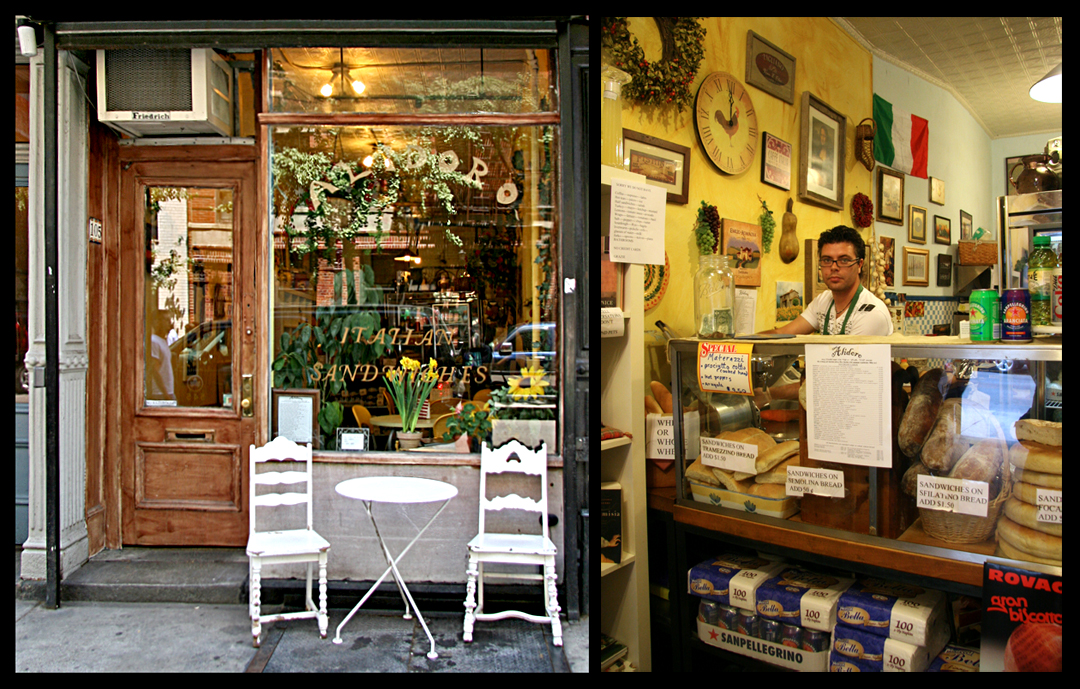
    Do you want to know a real NYC secret? Alidoro. This tiny sandwich shop at 105 Sullivan Street is one of the best in NYC. I was introduced to it in 1991 by an Italian friend and neighborhood resident. There is an area of the South Village and neighboring SoHo which has a number of Italian residents and businesses, such as Rafetto’s, Vesuvio Bakery, Villa Moscioni, Tiro A Segno, Joe’s Dairy, Faicco’s Pork, etc. This sandwich shop was originally opened in 1986 as Melampo Imported Foods by Alessandro Gualandi, a native of Florence, who had a reputation as one of the most difficult shop owners around (some said grouchy, others said temperamental artiste). You wouldn’t dare ask for any changes or modifications – all of his sandwiches were ordered by name (Julie, Pinocchio, Arzibubo, Geppetto, etc.). I was reprimanded for asking for a little mustard – subsequently, I would take my sandwich back to my office and make adjustments there. Click here for a short review about the old shop and its owner.

    In 2001, the business was taken over by Walter Momente, a trained chef from Italy. A few changes have been made, like the addition of small tables, which is great since the only place to sit previously was a playground nearby. And the new owner has a sunny disposition. But the sandwiches and quality are the same. There are 40 sandwiches to choose from (menu here), each on their own fresh Italian loaf (white or whole wheat) with options for sfilatino, tramezzino, focaccia, or semolina bread. All the best ingredients are used: sopressata, prosciutto, salami, olive paste, mozzarella, marinated peppers, arugula, bel paese, sun dried tomatoes, salami, and their signature dressing. The sandwiches are large enough that for many, half is a meal. Another thing hasn’t changed: call ahead or get there before 12:30, otherwise there are lines out into the street…

    Posted on by Brian Dubé

  • Whoopi Too

    Posted on by Brian Dubé

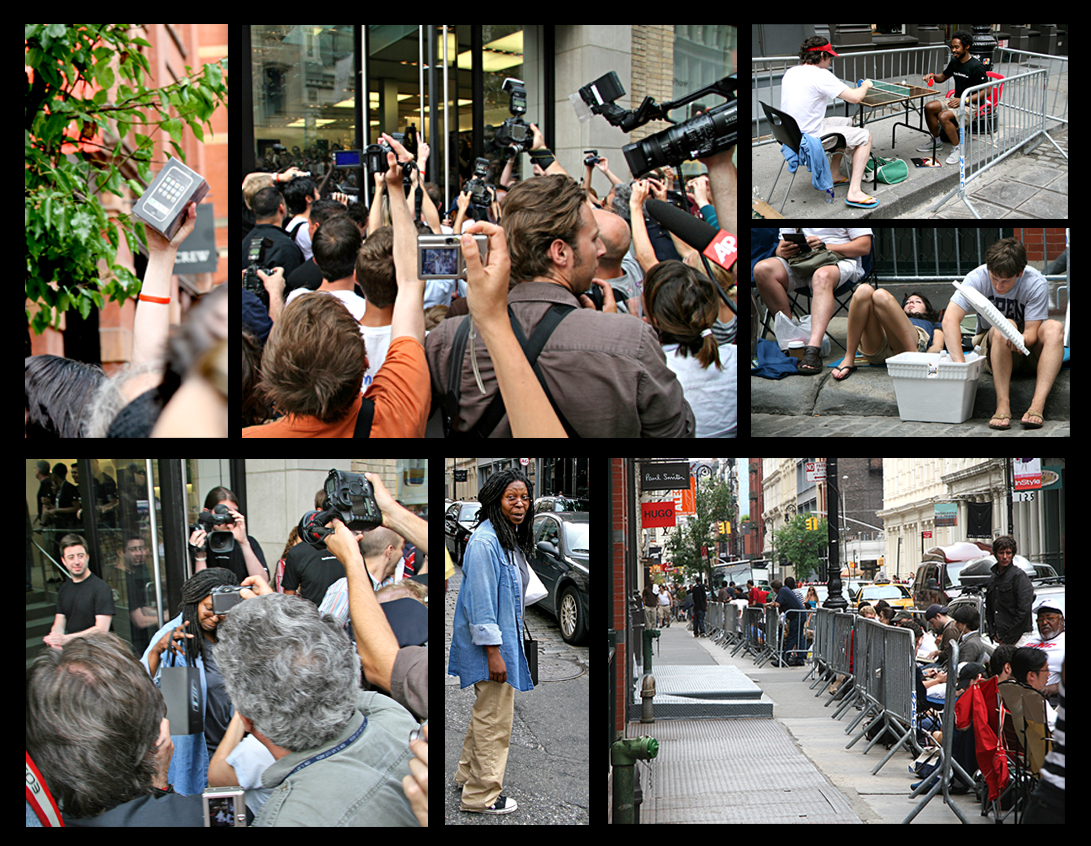
    Yes, that’s Whoopi Goldberg (two photos bottom left) getting her highly coveted iPhone a few minutes after the release of the new, heavily promoted device at the Apple Store in SoHo at 6 PM, Friday, June 29th. People had camped out in line around the block outside the store as early as Tuesday. Some had paid others as much as $150 to wait in line for them. This scenario was played out in Apple stores around the country. Two guys had set up a ping-pong table to pass the time (upper right photo). There was cheering when UPS made their delivery in the morning. All manner of press was there, with reporters doing interviews. The whole scene was sheer lunacy, since iPhones were readily available just hours later with no lines whatsoever. Apple employees assured me that there was adequate inventory; an estimated 2,000 phones were delivered to this location alone. Also, the phones were simultaneously released at AT&T stores, where, I understand, the lines there were negligible.

    Apple’s ability to inspire a cult following and religious zeal among their customers (as documented by Guy Kawasaki in The Macintosh Way) and their ability to create buzz and hype for a product is remarkable. An iPhone search on Google brings 96 million hits. The actual product has received very favorable reviews. David Pogue, in an article from the New York Times, The iPhone Matches Most of Its Hype, refers to the product as “amazing.” He also reports that over 11,000 articles have been written on the iPhone in just the six months. I’ll find out how good this product really is this weekend with some hands-on time – a friend purchased one last night when we visited the Apple Store at 10:30 PM…

    Posted on by Brian Dubé

  • Limbo

    Posted on by Brian Dubé

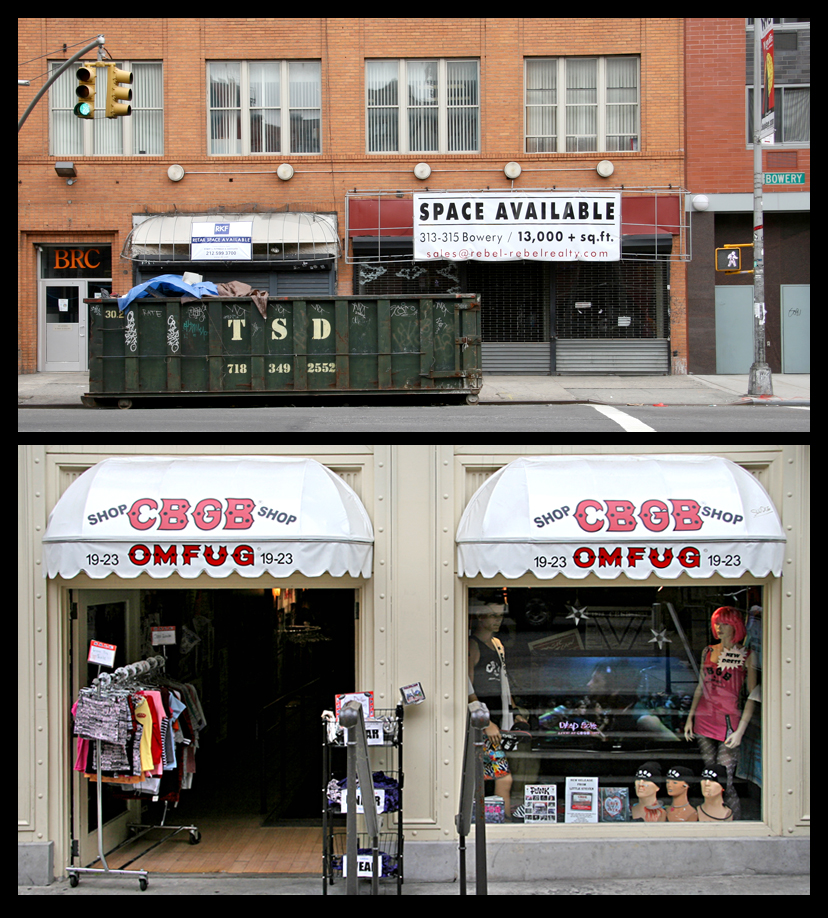
    Last fall, I posted twice regarding CBGB and their closing in October 2006, with numerous shots of the interior (click here and here). Of course, the closing of such a legendary club after 33 years was a big story and was controversial – some felt that the club should have been given landmark designation in order to save it, while others felt that the club had become more of a tourist mecca and no longer lived up to its original reputation. I thought I would take a final opportunity to photograph the club’s original location while vacant, before a new tenant takes over the space.

    The media, in numerous stories and interviews, has reported that Hilly Kristal, the owner, has intentions to move the entire club to Las Vegas and take as much of the original club as he could: “I intend to take everything out of there that represents CBGB. We’re going to take the bars, the toilets, the urinals, even the doors. We want to re-create the essence of the club.” There have also been suggestions of franchises of the club other than Las Vegas. In the interim, a CBGB store has opened at 19-23 St. Marks Place (bottom photo), which also serves as the interim location for their fashion/merchandise line and their wholesale and online operations. I have not found any confirmation yet of their move to Las Vegas…

    Footnote: CBGB & OMFUG stands for “Country Bluegrass Blues and Other Music For Uplifting Gormandizers,” which reflects the owner’s original intention for the type of music to be featured – the club ended up becoming the birthplace of American punk and a venue for rock.

    Posted on by Brian Dubé

  • Physical Graffiti

    Posted on by Brian Dubé

    Physical Graffiti is both the name of a small vintage clothing boutique at 96 St. Marks Place shown in the photo and a Led Zeppelin album which used the very same building and the adjoining building at 98 St. Marks Place for the album’s cover (click here for photo). The building was also used as backdrop for a Rolling Stones music video for Waiting on a Friend. This shop abuts the subject of a previous post, Cappuccino and Tattoo, part of which can be seen on the right. Is this an obsession with St. Marks Place on my part? Not really. New Yorkers know that St. Marks Place has been NYC’s (and one of the country’s) epicenter of a number of counter-cultural movements. Dominated by retail, the concentration of shops on St. Marks Place reflects the current flavor. The street has been home to hippies, yippies, punks, political activists and protest marches, renowned bookstores, music stores and clubs (e.g. Electric Circus), graffiti artists, cafes, clothing shops, restaurants, bars, theaters, gangsters, and St. Marks Church. Physical graffiti well describes the street itself.

    Footnote: Let the (Internet) reader beware. Misinformation has always been a problem, but the ease of copying text using the Internet has caused viral proliferation. In researching this post, I found numerous references (including Wikipedia) that the Anarchist Switchboard was previously located at 96 St. Marks Place – an interesting tidbit for this posting, except that it appears to be incorrect. The New York Times misreported this on Feb. 18, 2007 and printed a correction on March 21. I also found a number of references to the building’s address for the album cover as 97 St. Marks Place instead of 96 & 98 (97 is on the opposite side of the street – on east-west streets in Manhattan, even numbers are on the south side, odd numbers are on the north). Rolling Stone has the addresses as 94 & 96. You will probably find these erroneous pieces of info everywhere in perpetuity now when doing online searches…

    Posted on by Brian Dubé

  • Shona Gallery

    Posted on by Brian Dubé

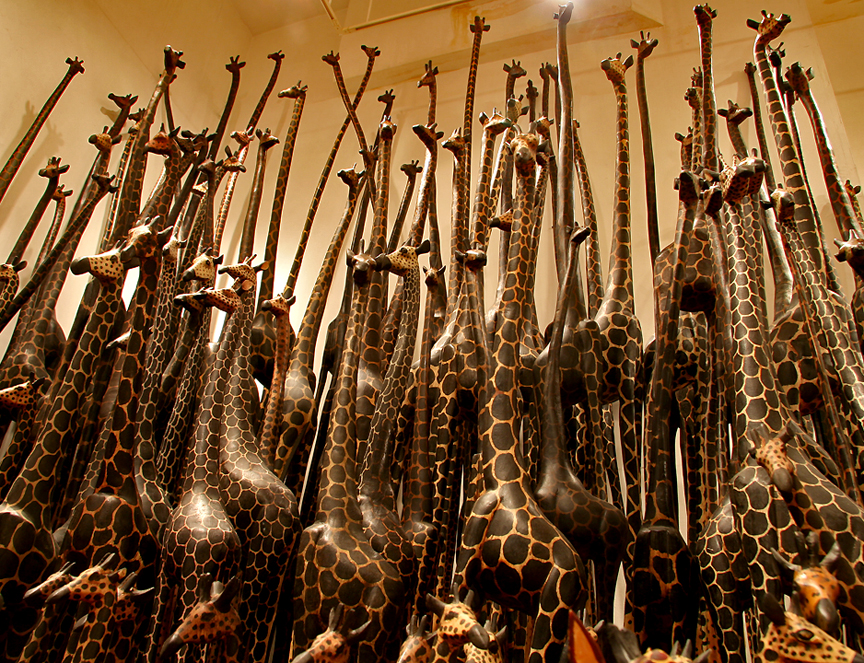
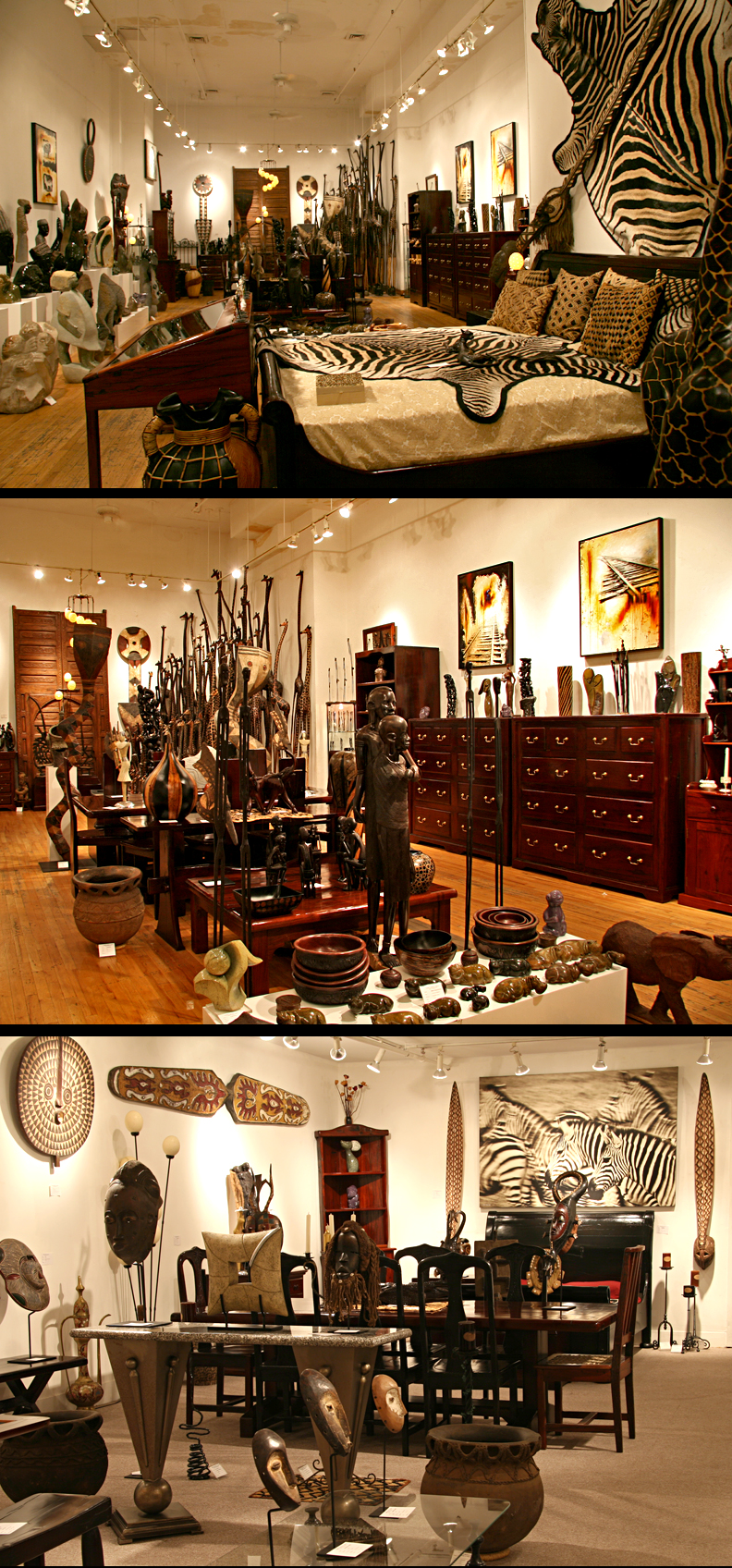
    For years I have passed by York’s Shona Gallery at 99 Spring Street and enjoyed seeing a large group of carved teak giraffe towering in their window – who doesn’t love giraffe? The window display is now different, but the giraffe (from one to 14 feet tall) can now be found in the main gallery, along with other African art objects. Click here for more photos of the gallery. The owner, Michael Ahuja, hails from New Delhi. His has been in this business since 1978 and opened the gallery at its current location in 1985.

    Shona houses an impressive collection of imported African art works from places like Zimbabwe, South Africa, and Kenya: paintings, fabrics, masks, jewelry, instruments, crafts, and iron and wooden sculptures. And an array of furniture carved from recycled African railroad sleeper bunks – these pieces are made from Jarrah, a species of Eucalyptus unique to the southwest of Western Australia. I love the furniture made from this spectacular hardwood known for its remarkable durability, extreme density, and warm, deep mahogany-red color. Once seasoned, Jarrah is very tough (impossible to work with regular tools) and has been used for bridges, wharves, railway cross ties, ship building, and telegraph poles. There are other reclaimed sources for the wood besides African railroad sleepers. Also, a small supply of regrowth Jarrah is logged from a 5 million-acre farm owned by the Australian Government and carefully controlled by the Department of Conservation and Land Management. The volume of timber harvested annually is closely monitored…

    Update: Shona Gallery closed in October of 2010.

    Posted on by Brian Dubé


  • dinamic_sidebar 4 none

©2026 New York Daily Photo Entries (RSS) and Comments (RSS)  Raindrops Theme