• Category Archives Stores
  • Book Country

    Posted on by Brian Dubé

    New York is book country. This is not only an accurate metaphor but also the name of a major street fair which was held annually for several years along Fifth Avenue. New York City is widely perceived as the center of publishing in the United States, home to numerous major publishers of books, newspapers, magazines, and electronic media, with all the service providers – editors, literary agents, graphics, advertising, etc. We also have a huge number of bookstores, with many renowned independents such as the Strand, Gotham Book Mart, Shakespeare & Company, St. Mark’s Bookshop, Three Lives & Company, Labyrinth Books, and Bluestockings (the book superstore chains have had a serious impact, and the number of independents is fast declining. Time will tell whether this trend threatens the American literary future as many predict). Book signings and readings are also a big part of the NYC literary landscape, although signing tours of major authors mean that these events are not so unique to New York itself.

    33 Last night at the Barnes and Noble superstore at 17th Street on Union Square, John Updike was doing a reading from a new book (Terrorist) with signed copies available. The event was well attended. Updike is a renowned novelist, poet, literary critic, and essayist who has won numerous literary awards: PEN/Faulkner Award, National Book Award, National Book Critics Circle Award (twice), and the Pulitzer Prize (twice). His writing credits are many (read about him here)…
    Posted on by Brian Dubé

  • Pearl River Mart

    Posted on by Brian Dubé

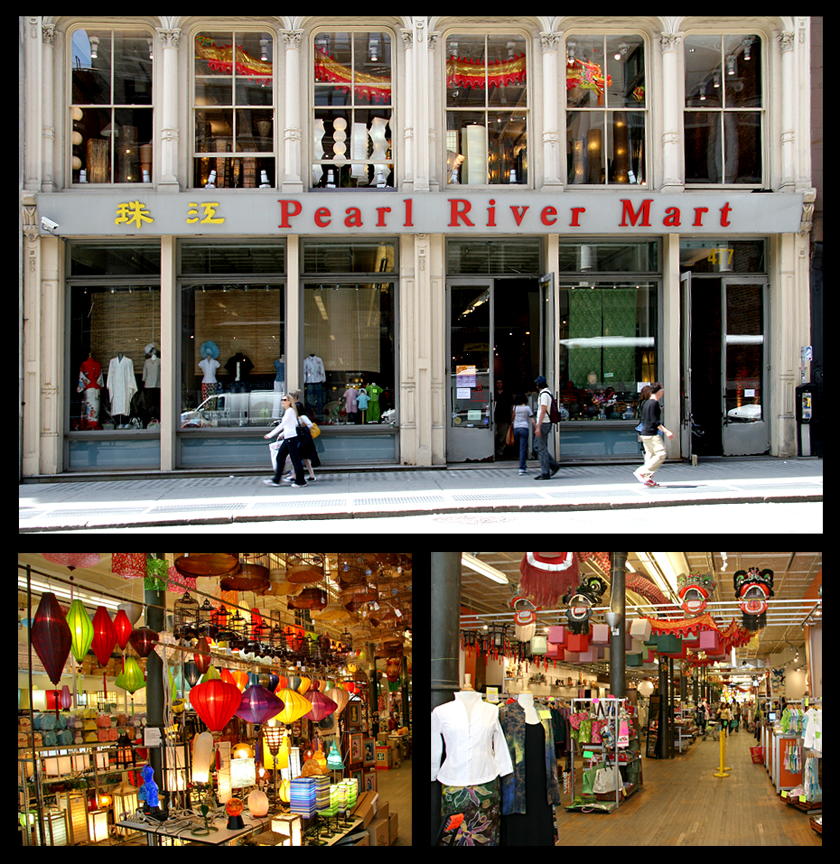
    In 1971, a 20-year-old trade embargo against China was lifted as a result of President Richard Nixon’s normalization of relations with China. One vendor had already imported goods into Manhattan via Hong Kong in anticipation of this. The day after the lifting of the embargo, Ming-Yi Chen, who was born in China, grew up in Taiwan, and came to the United States in 1965, had started selling an entire line of mainland Chinese goods at his shop (then called Chinese Native Products, Ltd.) at 22 Catherine Street. At the time, the sign was only in Chinese, brandishing the characters Shih-Sin, meaning “four virtues.” In 1977, they moved to Elizabeth Street. But its move in 1987 to a 15,000-square-foot loft space on the second and third floors on Canal Street and Broadway (at 277 Broadway) is where Pearl River Mart became known as THE Chinese department store (in a dismal location). Now, Pearl River has a new home: a full floor at 477 Broadway in the trendier SoHo, just north of its previous Chinatown location.

    Pearl has thousands of items, nearly everything imaginable: clothes, satin slippers, birdcages, paper parasols, lamps, cookware, food items, sushi sets, bamboo rice steamers, teapots, kimono-style robes, herbal remedies, live bamboo plants, windowshades, toys, furniture, Buddha statues, and more. This is one of those lesser-known NYC icons – single-location, family-owned, and a unique product line – a true mecca for all things Asian. Pearl is also known for their pricing, and although the hardcore Chinatown aficionados will tell you that they are not the cheapest anymore (it’s a badge of honor in the city to be in the know), I think you should check it out…

    Posted on by Brian Dubé

  • Gourmet Garage

    Posted on by Brian Dubé

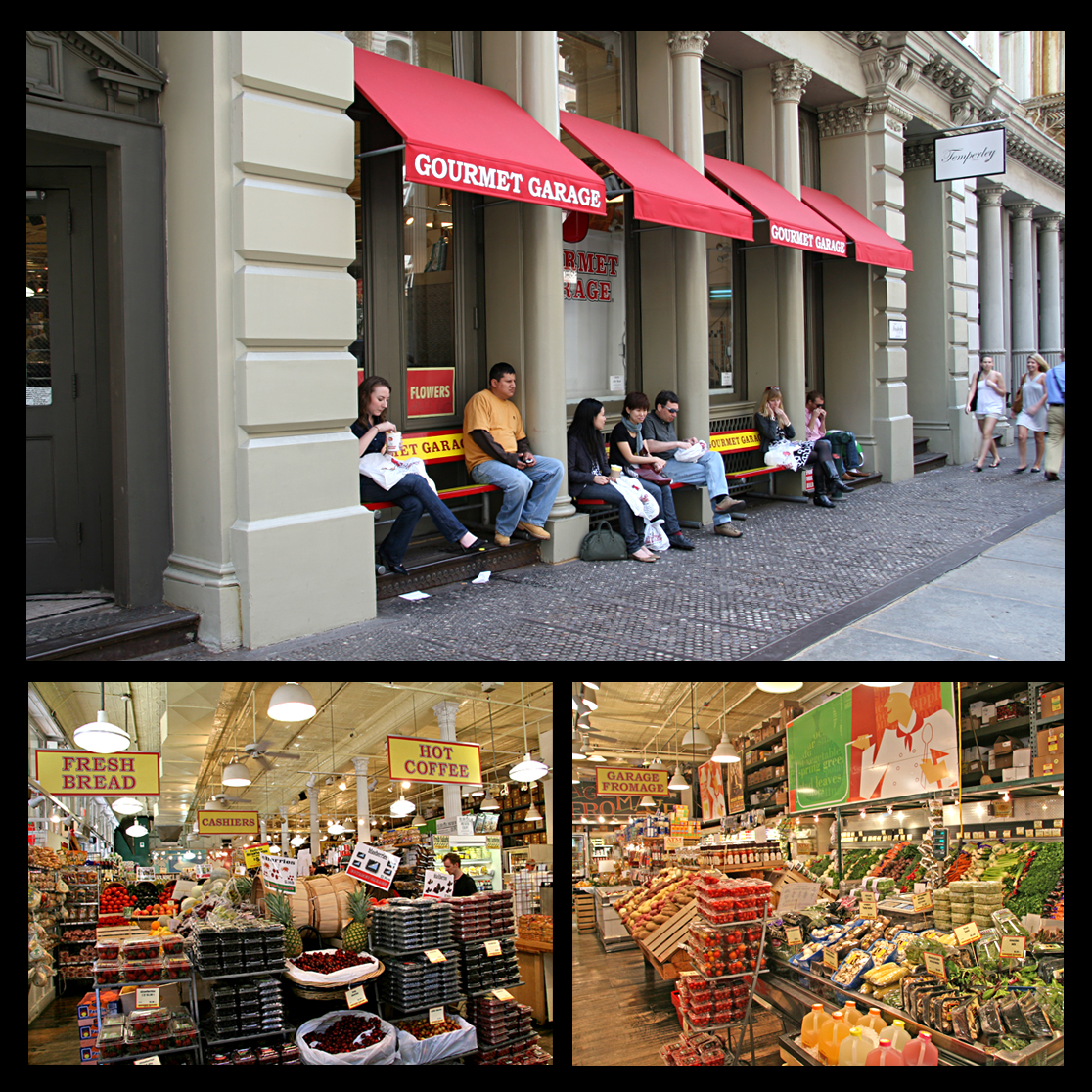
    This is Gourmet Garage at 453 Broome Street, certainly no secret with city residents. When they opened in 1992 at 47 Wooster, the concept was quite radical: gourmet foods in a no-frills SoHo garage environment. In 1981, Andy Arons and his former college roommate, Walter Martin, started Flying Foods, a specialty-foods importing business. It was sold to Kraft foods in 1987 for $8 million. Arons got back into the business in 1992, starting Gourmet Garage with partners John Gottfried and Edwin Visser. Gottfried had owned Metropolitan Agribusiness since 1978, which was a supplier to fine restaurants in the city, and Visser had also been in the food business. The concept was to continue the wholesale business to restaurants in the morning and then sell to the general public at the same prices.

    Goumet Garage positioned themselves perfectly, at a time when SoHo was really starting to get pricey. Gourmet food emporium Dean and DeLuca was well established but felt more like a museum than a real place to food shop. This sentiment was articulated by Gottfried: “The previous approach was to sell this stuff like jewelry. We sell it like produce.” And, “The lesson of the ’90s is that people don’t want to change their life style. They just want to pay less for it.” It was exciting when it first opened – getting gourmet goods in a garage setting with wholesale pricing. Today, of course, the place is decidedly less garage-like (with 5 locations, including one on Park Avenue), but still a very enjoyable place to shop, with a wonderful down-to-earth atmosphere, great food, and good prices…

    Posted on by Brian Dubé

  • Pearl Paint

    Posted on by Brian Dubé

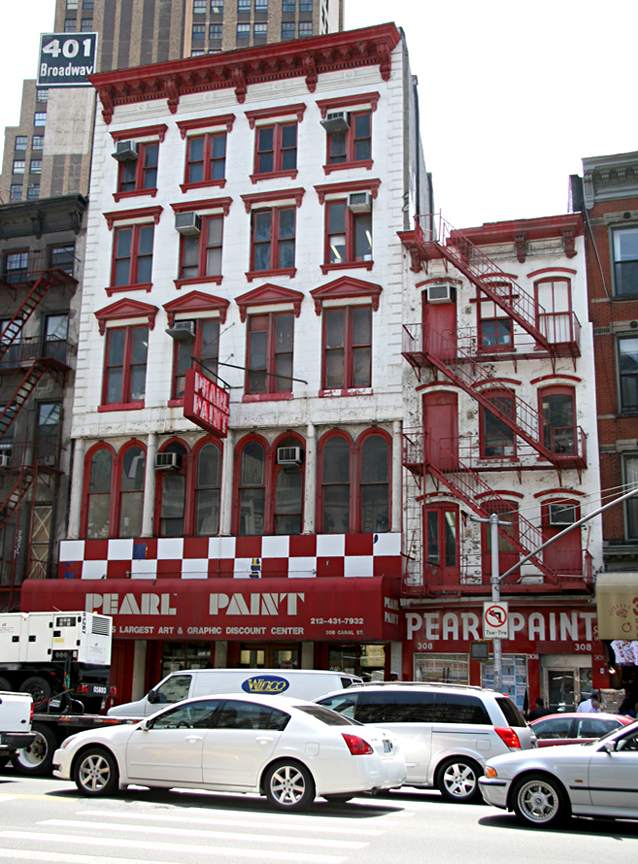
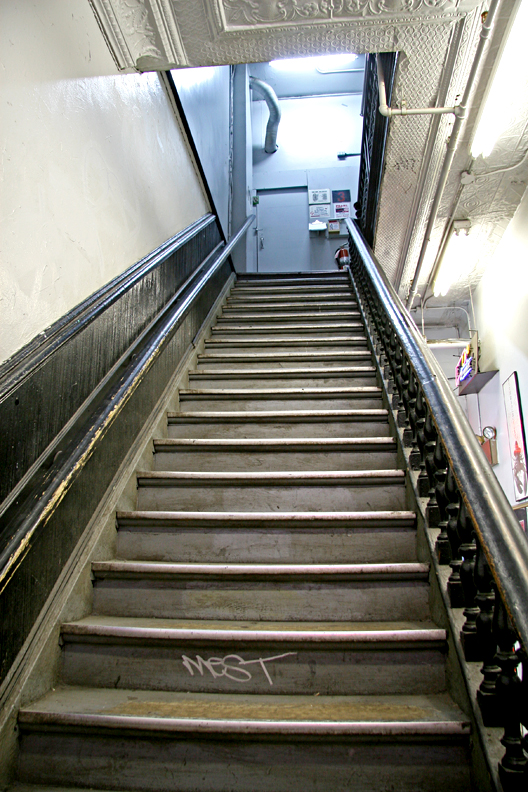
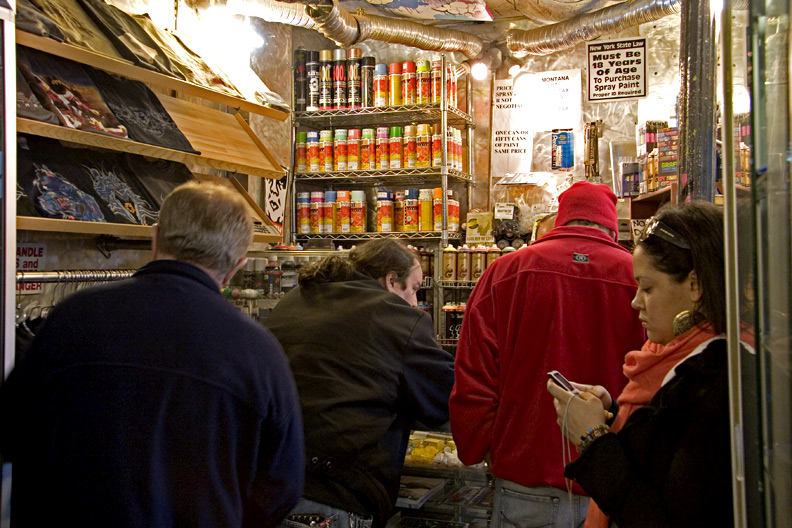
    Does this look chaotic and rather unappealing? Perhaps a less-than-ideal photo subject or setting? It is. This is Pearl Paint on Canal Street. For those of you who are not familiar with Canal Street, let’s just say it’s not for those looking for the bucolic setting of 121 Charles Street, 39 & 41 Commerce Street, or the Boat Pond in Central Park, but it is home to some of NYC’s shopping emporiums, both present and past (mostly past; sadly, fixtures such as Canal Hardware and Industrial Plastics have closed).

    Pearl Paint is NYC’s largest art store – the mecca for art supplies in the city. Their website claims to be the first and largest discount art supply house. Plausible, since they started as a regular paint store on Chambers Street and have been in business since 1933. As SoHo/Tribeca became a haven for artists, Pearl responded by getting into art supplies. They have 5 floors across two adjoining buildings and 3 additional store fronts: The Craft Center, Frame Shop, and Home Decorating Center on Lispenard Street (which can be accessed through the rear exit of the main store).

    Pearl now has over 20 stores in 10 states. Their flagship store at 308 Canal Street is the ultimate in classic New York Style – a little disheveled and a little rough around the edges. Most take the dreary, creaky stairs up and down the five floors – the elevator in the rear is probably unknown to most and painfully slow anyway. No glitz here, just the real deal. These guys have everything…

    Posted on by Brian Dubé

  • Chains

    Posted on by Brian Dubé

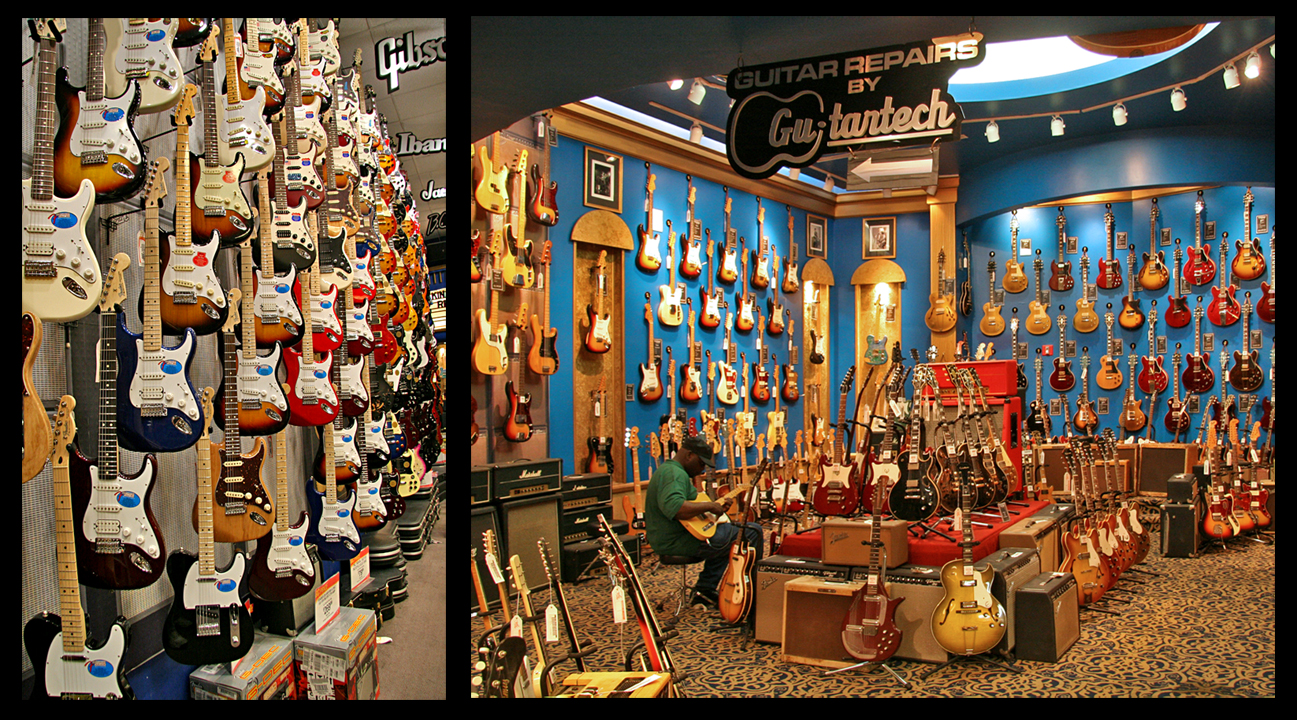
    What is seen in NYC as an encroachment by mass merchandisers and corporate chains is often seen out of the city as an asset. Frequently, the small independent store is not an option, so consumers are more appreciative just to have access to the merchandise. Many of the largest chains (including some of the “big box” operations) are now moving into the city, even in Manhattan, where space is at a premium, e.g. Whole Foods, Best Buy, Home Depot, Starbucks, and Guitar Center (shown in the photo). Many of these large merchandisers were started as small independents by individuals passionate about their field and not with intentions of rolling out nationally. Although they have paid their dues, this does not justify the type of overly aggressive tactics alleged to be used by places such as Walmart and Starbucks, who are seen by some as purveyors of evil.

    The internet has had a substantial impact on most businesses selling a product, but many products are still best seen in person. Musical instruments are a prime example – unless they know exactly what they want, musicians need to do a hands-on evaluation. In the case of Barnes and Noble or Guitar Center, I personally do not see these particular chains with such foreboding as others because 1) reading a book or playing a musical instrument are activities requiring time, patience, and active participation. There are no shortcuts – these merchants can only pander so much to instant gratification. 2) I would much prefer to see a Barnes and Noble or Guitar Center over a fast-food chain.

    The biggest loss is with the knowledge of the staffing, which generally just can’t compete with a long-time employee or owner of a small mom-and-pop operation. Many consumers feel conflicted about these large chains – although we dislike the concept (with “crass commercialism” and the “dumbing down of society” being popular refrains), in reality, they often provide broader selection, lower pricing, and longer hours (not to mention more space for reading or playing instruments), which most consumers now want. After all, if you need to replace an A string on a Sunday night, where else are you going to go?

    Posted on by Brian Dubé

  • Cappuccino & Tattoo

    Posted on by Brian Dubé

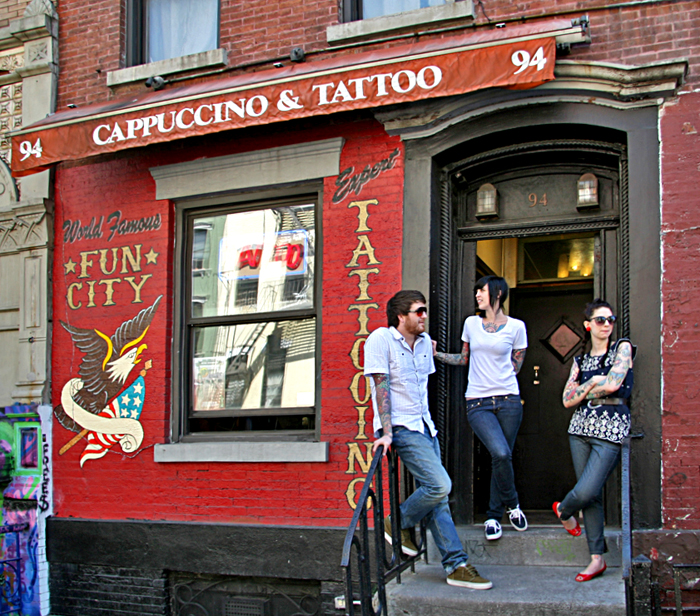
    This is Fun City Cappuccino & Tattoo, a unique fusion of two extremely popular things, both with a long and international history. Tattooing is certainly not new or uniquely New York – it can be traced back thousands of years, and the term itself is Polynesian. Tattooing was banned in the city from 1961 (when an outbreak of hepatitis B was traced to a tattoo parlor) to March 27, 1997, when it was re-legalized. But, ironically, the American-style tattoo was born here in Chatham Square (Chinatown) at the turn of the century. Later, in the 1920s, with the advent of electronic tattooing, the practice moved to the ports of NYC (Coney Island and the Brooklyn Navy Yard), catering to sailors. The period when tattooing was banned here was the time it became the mainstay of hippies and bikers. Tattooing went underground in the city and was eclipsed by other cities, such as San Francisco. Since the re-legalization, NYC has been playing catch-up.

    One of the early practitioners was Jonathan Shaw (whose father was the bandleader Artie Shaw), original owner of Fun City Tattoo, the oldest tattoo parlor in the city dating back to 1976 (as a private studio) (read the history here at their website – click on the “Press” link). The photo is of the business’s public incarnation at 94 St. Marks Place, dating back to 1991. Michelle Myles is the new owner – she also runs Daredevil Tattoo on Ludlow Street.

    Tattoos have certainly shed much of their criminal, outlaw, or bad boy image – it is now popular in the burbs as well as in cities. Estimates are that 16% of the population has a tattoo. No person in the United States is reported to have contracted HIV via a commercially-applied tattooing process. Still not interested? Perhaps a beautiful temporary henna (Mehandi) tattoo. Or perhaps just a cappuccino…

    Posted on by Brian Dubé

  • Taschen

    Posted on by Brian Dubé

    This is Taschen’s NYC flagship store at 107 Greene Street in SoHo. Taschen is an art book publisher started by Benedikt Taschen in 1980 in Cologne, Germany, as Taschen Comics. His esoteric comic book company was saved when Taschen purchased and sold 40,000 remaindered books on Rene Magritte. With the profits, Taschen then ventured into art and photography books, first publishing a book of the photography of Annie Liebowitz. For a fascinating history of the company, click here.

    Now, Taschen publishes works on art, architecture, design, fashion, film, fetishistic imagery, photography, and erotica/sex – what’s unique is to see explicit sex sitting alongside mainstream art books. Their books are unique in many other ways. Helmet Newton’s SUMO is the largest book published in the 20th century. It’s so big, in fact, that it comes with a special table designed by Philippe Starck. And then there is GOAT – Greatest Of All Time (a book about Muhammad Ali) – which sells for $12,500 (collector’s edition). Yet they also pride themselves as a publisher which brings forth quality art books at popular prices; many of their books sell for only $10, befitting the the word “pocket” (translation of the German “taschen“).

    The store, with its concrete floors, was designed by Frenchman Philippe Starck; wall murals were done by the Brazilian artist Beatriz Milhazes. There are floating bookshelves with hi-def video monitors along the top. The rear of the store has a staircase to a lower gallery/event space. From their myspace site: “I have a quiet gallery space with furniture by Tenriero, some sleek Eames chairs, and a buttery leather Arne Jacobson Egg chair.” A must-visit. I look forward to their upcoming book signing with Santiago Calatrava!

    Posted on by Brian Dubé

  • Raffetto’s

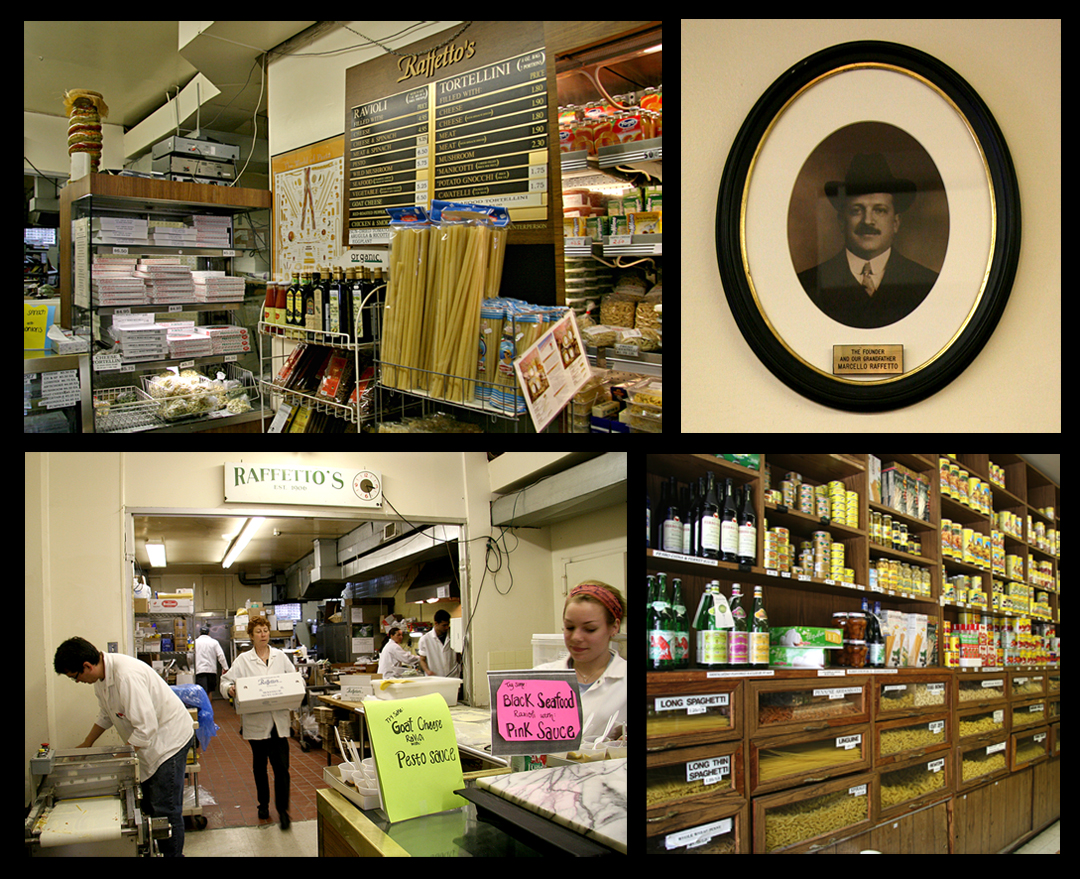
    This shop may be small in size but not in stature – one of those special little NYC “secrets” that everyone wants to find and frequent. Remarkably, Raffetto’s at 144 West Houston Street has been in business since 1906 – 101 years at the same location. The business is a 3rd generation family-owned and -run operation. It was started by Marcello Raffetto and continued by his son Gino (born in the same building as the shop in 1922) and now brothers Andrew and Richard with their mother Romano.

    The focus here is on the products, not glitz – they are low-profile. Some long-time residents of the neighborhood I have spoken to were not even aware of its existence. This place is old-school. They do not have a website, take no credit cards, and are closed Sunday and Monday. Pasta is their raison d’etre, along with prepared foods and a few other essentials, such as homemade sauces, oils, spices, and condiments. They make their pasta right on the premises, with 20 types of ravioli and tortellini plus 15 varieties of plain egg pasta. The bulk of their business is wholesale; they sell to about 300 of the finest restaurants, hotels, and gourmet shops in the city, such as Gotham Bar and Grill, Il Mulino, Fairway, Zabar’s, and Dean and DeLuca.

    The shop’s atmosphere is cozy, social, and friendly. In my short visit there for this post, I met the owner and two professional photographers. Everything is excellent and highly recommended. My favorite is the goat cheese ravioli with pesto…


  • Fantasies

    Sex shops, tattoo parlors, body piercing – these are not the things which first come to mind regarding NYC in 2007, when gentrification and reduced crime have become the hallmarks of the city. But in the Village, there has been a proliferation of these types of shops in the last few years, making the strip along 6th Avenue in the Village (shown in the photo) feel more like the old Times Square, to the displeasure of many residents. Many feel that the extremely permissive, “anything goes” spirit of the neighborhood has largely been responsible, particularly with some tourists who see the Village as a place to party (e.g. weekends have seen motorcycle gangs from out-of-town descend on the neighborhood, or gay youths at Christopher Street Pier).

    There have been many efforts to close these shops and reduce their numbers. In 1998, a “60/40 law” was passed during the Giuliani administration. The law required a minimum of 60 percent non-X-rated merchandise for a store to operate outside adult entertainment zones. Of course, stores find loopholes, displaying racks of non-X-rated videos and other products alongside their porn. Aggressive efforts are made by the city to find health code and fire violations, but store owners are resourceful and tenacious, always finding ways to comply and stay open. Neighborhood residents are tolerant – those who object to these shops do so not so much because of the content but more due to the number of them clustered together, their garish lights, and their explicit window displays. Older shops, such as the Pleasure Chest (with a much more discreet window) and even the Pink Pussycat Boutique, have done well to coexist with residents…


  • Bleecker Bob’s

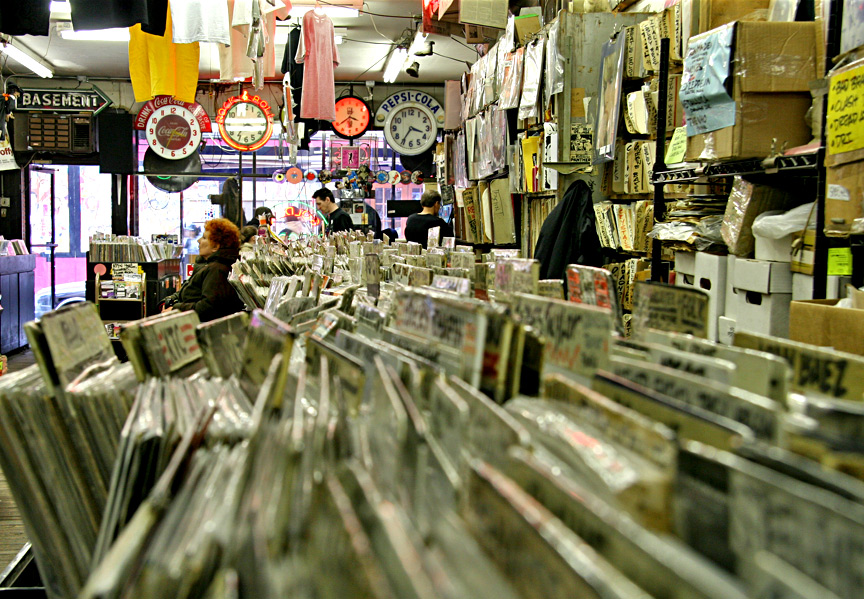
    Bleecker Bob’s Golden Oldies at 118 West 3rd Street in the Village is a destination for buyers and sellers of vinyl LPs. Click here for more photos. It has had several different shop locations in the immediate neighborhood. Bob Plotnik (still the current owner) opened the original store on Bleecker Street in 1967. I have no real opinion of this shop regarding pricing, inventory, or service – I am not a current buyer or seller of vinyl LPs, and my visits there are few. But it is a landmark with its distinctive, homey, funky New York-style decor and ambiance.

    With vinyl experiencing a niche renaissance and the decline of physical CDs due to digital downloads, I believe their chances of survival are much better than stores selling CDs, many of which have closed. While CDs are in decline and catering more and more to a graying market, the market for new vinyl is actually growing. DJs in electronic dance or hip hop music prefer LPs for the direct manipulation of the disc (slip-cueing, beatmatching, and scratching). In the used market, many covet vinyl LPs for their cover art. And there are still some audiophiles who prefer vinyl and claim a sonic superiority over the CD –  a debate which has raged since the beginning of CD production.

    There are also nostalgia and cult factors at work here. In the case of Bleecker Bob’s, I’m sure all of these factors drive customers to them, and I would imagine that many of their customers are looking for music which is not available on CD and perhaps never will be…


  • Glass

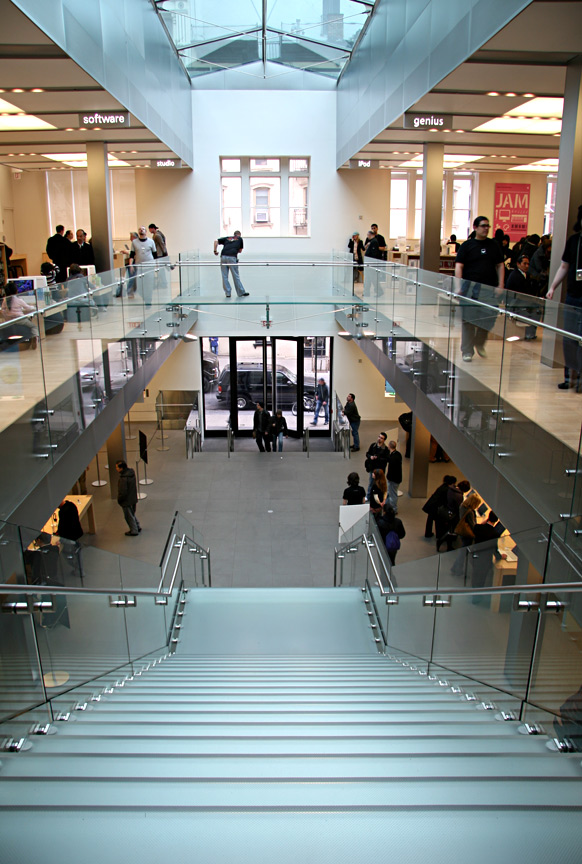
    I’m really quite awed by the design, engineering, material selection, and attention to detail that went into this Apple Store at 103 Prince Street in SoHo. The beautiful two-story neoclassical building was built in the 1920s and occupied by the Post Office until 1999, when Restoration Hardware briefly occupied it until 2001. Apple opened there in July 2002. The importance of design aesthetic to Apple is evident in this store, which received an architectural award in 2003 (as have the design firms involved – Bohlin Cywinski Jackson and Ronnette Riley.)

    The most striking feature of this store (and other Apple Stores) is the use of glass, particularly the 15-foot high glass staircase, with its acid-etched diamond-plate treads. The staircase, which actually received a design patent with Apple CEO Steve Jobs listed (copy of the patent here) was designed by structural engineer James O’Callaghan, now a partner with Brian Eckersley at Eckersley O’Callaghan Structural Design.
    An enormous amount went into the design, with considerations for weight loads, wear, seismic protection, and joinery with titanium hardware. Depp Glass (NY) manufactured the staircase components, the titanium hardware was manufactured by Tripyramid Structures Inc. (Mass.), and the fabrication, installation, and safety tests were performed by Seele GmbH & Co. of Gerthofen, Germany. Click here for a thorough, detailed article. Glass is also used for the stair sidewalls, a bridge (connecting the two sides of the upper floor), and the 70-foot skylight. Lead architect Peter Bohlin explains that glass elements are used not only for structural ingenuity but also because they capture the design of Apple’s products: “From the point of view of the attitude and spirit of the store, it is the pure expression of a quality associated with a company that makes these very beautiful, rather pure products.”

    Glass elements and white Corian fixtures are juxtaposed with wood for warmth – maple is used for benches, tables, counters, shelving, and the backs to the seating in their theater, used for presentations, classes, and events. The unique Pietra Serna stone floor in dark gray is also striking. If you love glass as I do, visit this store along with their Fifth Avenue location, the subject of two previous postings (click here and here)…


  • Scrap Yard

    Until recently, I did not know there was a retail graffiti business. I assumed that the purveyors of the activity availed themselves of the various supplies from art and hardware stores. Like anything else, however, if there is a demand, someone will provide a supply. This small shop, the Scrap Yard at 300 West Broadway in SoHo just north of Canal Street, is owned and operated by Mark Awfe. It carries the requisite materials (paints, spray caps, etc.) and many other items such as T-shirts, hats, DVDs, books, magazines, mixed tapes, fat caps, video graff, collectibles – all related to graffiti. Click here for a peek inside.

    In reading about graffiti, I found a world with its own language/grammar, images, and culture. All of it foreign to me – the conversation on various graffiti sites was essentially unintelligible. There are many famous graffiti artists, like the mysterious Cost and Revs, whose work has appeared citywide. There are websites such as 12ozProphet (originally a magazine from 1993), akanyc, and fourthehardway. Although the term graffito (plural graffiti) means to inscribe or scratch and goes back to Roman times, the term graffiti now generally implies vandalism – art done on a public surface without permission of the owner. I am seeing references in reading to legal graffiti, a strange concept since the essence of graffiti has been its outlaw rebel element. It will be interesting to see if this activity will morph in some way to become benign and more commercial…


  • Cigar Store Indian

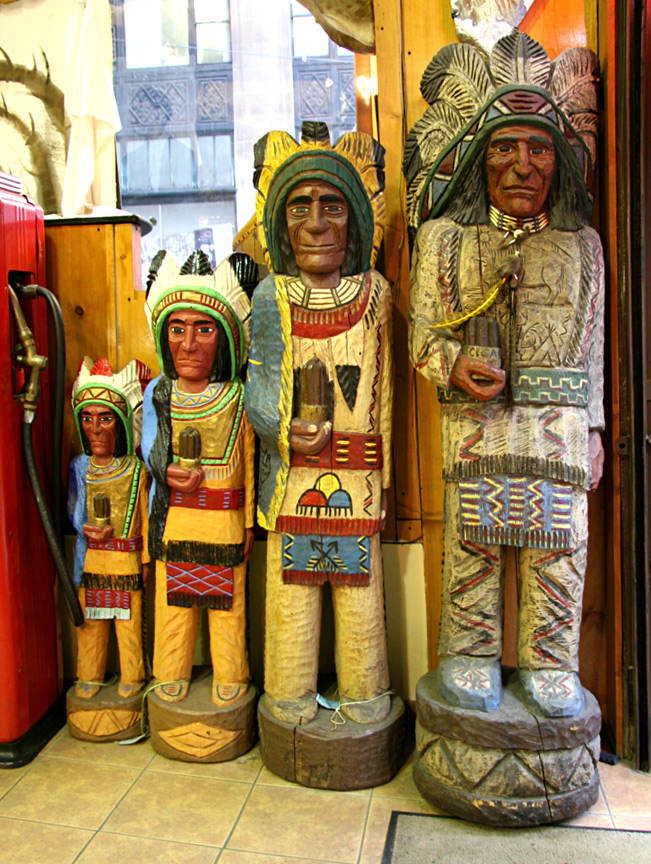
    The wooden cigar store Indian is still found in front of cigar/tobacco shops in NYC. Because Indians had introduced Europeans to the use of tobacco, Indian figures soon came to be used as an emblem of the tobacconist (the first ones appeared in England in the early 1600s and were referred to as Virginie Men).

    Visual emblems for shops were common at the time – e.g. barber poles for barber shops, gold balls for pawn shops, scissors for tailors, and Indians for tobacco shops. Many reasons have been cited for this, among them illiteracy of the populace and immigrants unable to read English. It’s surprising to still see these in the city, since some find this icon racially offensive in nature, similar to the black lawn jockey. I found this group in Western Spirit, a large Western Shop at 395 Broadway. There is an active trade in these in the antique market, with some fetching as much as six figures…


  • Camper

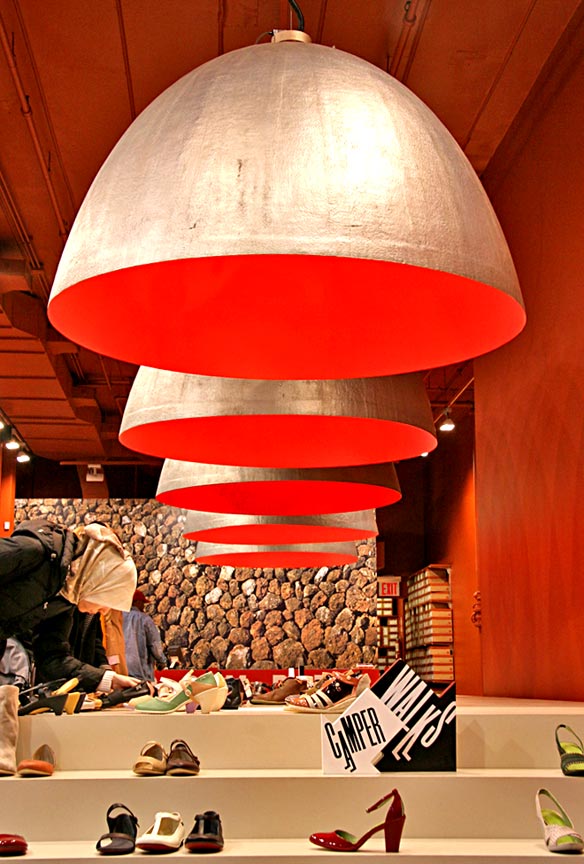
    New Yorkers do love the special, unique, and unusual, as do the celebrities who patronize Camper in SoHo at 125 Prince Street. There are many fascinating talents behind this store, with its 5 gigantic lamps that hang above a footwear runway. Iconoclastic would well describe the shoes, interior designer, and lighting designer.

    Camper is a Spanish shoe manufacturer, with its roots going back to 1877 with shoemaker Antonio Fluxa. The company itself was started in 1975, with the first store in Barcelona in 1981 (read about it here on Camper’s website). Their shoes are extremely distinctive and instantly recognizable – very important in a marketplace crowded with competitors. And apparently they have caught the fancy of the well-heeled and well-known – a formula for success.

    The interior was designed by Marti Guixe, a native of Barcelona, who has a enormous range of design work, including products and retail spaces (and other Camper Stores), with museum exhibitions also to his credit. He has even done a book, Toy Weapons. Check out his website here. The lamps are by Ingo Mauer, a lighting designer from Germany, also with a wide scope of work (check out his website here). Oh, and the quality of the shoes? I have no direct experience, but I suspect they are well-made…


  • Chocolate Bar

    Posted on by Brian Dubé

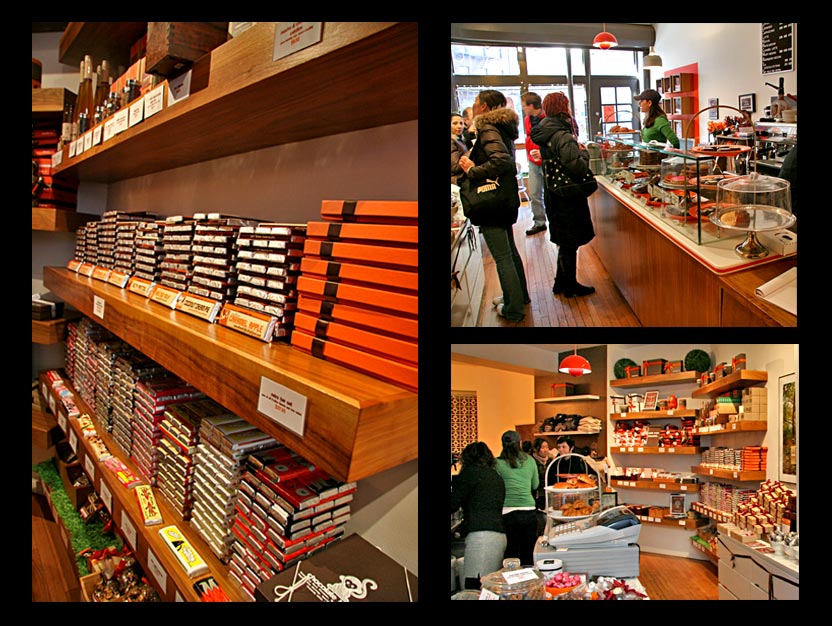
    Love of chocolate is certainly not new, but even popular trends morph and take on a unique character of the time. And the time is right for artisanal, fair trade, organic, and vegan chocolate. Hudson Street/Eighth Avenue is becoming a small chocolate mecca, with Jacque Torres and Li-Lac Chocolates just down the street from Alison Nelson’s Chocolate Bar (seen in the photo).

    Located at 48 Eighth Avenue in the West Village, the shop is a small, pleasant space with an orange and brown decor. Click here for their website. It has been getting accolades from customers and a lot of positive press since its opening in 2002. They work with some of New York’s finest chocolate chefs and offer an extensive range of chocolate delights: there are chocolates, of course (Bon Bons, the Black and White, the Elvis), a signature line of chocolate bars (super dark, orange dark, mint dark, mild chocolate, bittersweet, white lemon), and a retro line (PB&C, Salted Pretzel, Caramel Apple, Key Lime Pie, Coconut Cream Pie, Raspberry Jam). In addition, they offer authentic New York Egg Creams, illy Caffe espresso, coffee drinks, several variations on iced and hot chocolates, fresh cookies, brownies, and morning pastries.

    Chocolate (particularly dark chocolate) is now being promoted as having certain health benefits with its flavonoids and antioxidants. Although studies are far from conclusive and the health risks of chocolate are well-known, the mere suggestion of potential health benefits is more than adequate to please chocoholics and fuel guilt-free consumption…

    Posted on by Brian Dubé


  • dinamic_sidebar 4 none

©2026 New York Daily Photo Entries (RSS) and Comments (RSS)  Raindrops Theme