• Category Archives NYC’s History
  • Bryant Park

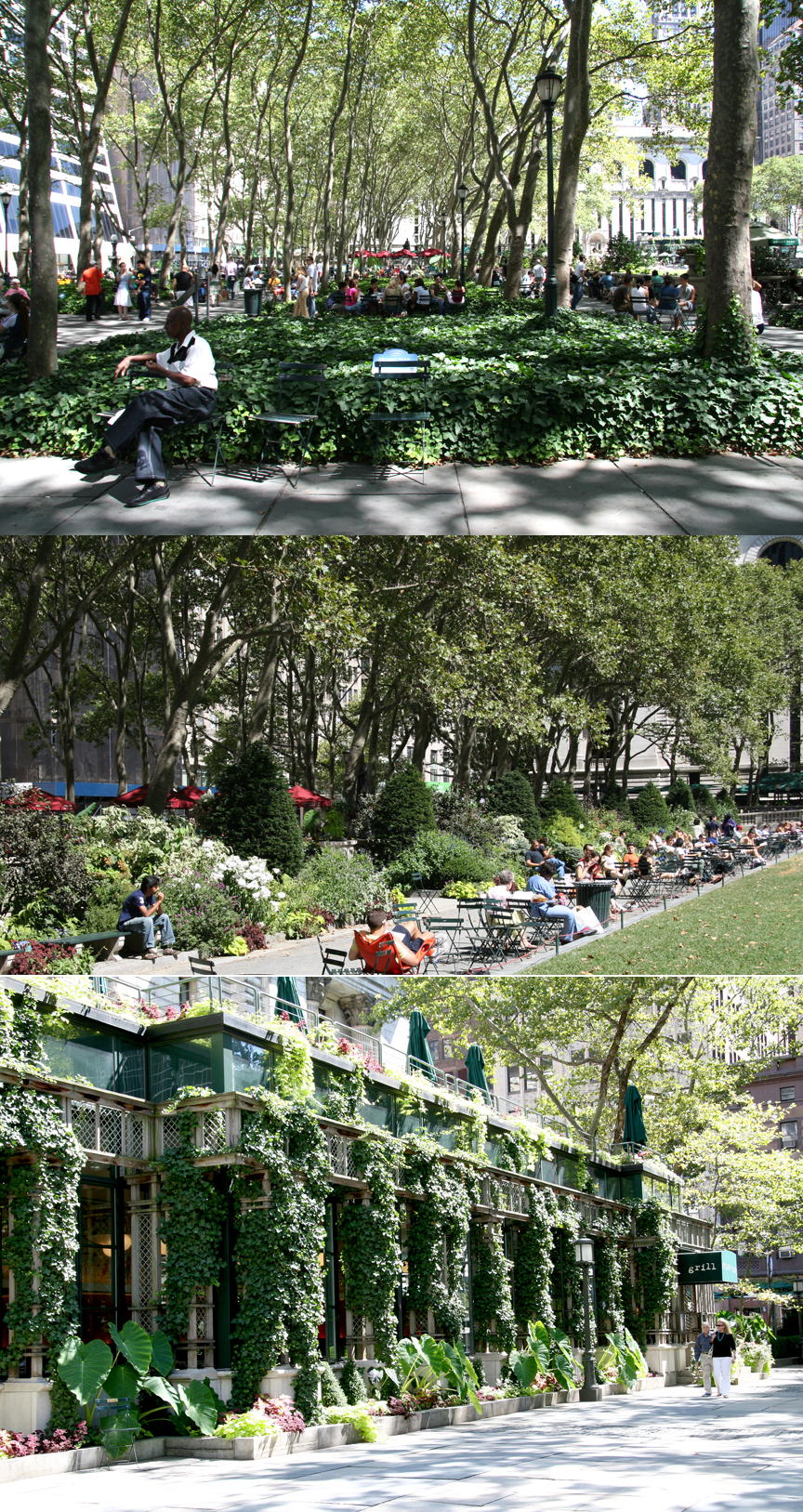
    Bryant Park, named after William Cullen Bryant, has had a long and uneven history – a potter’s field, Reservoir Park (sharing the block with the Croton Reservoir – future home of the NY Public Library), home of Civil War military drills, and the Crystal Palace Exhibition (1853). And it has gone through bleak periods – both in the 1930s and the 1970s, it became one of the worst parks in NYC. In the 1970s, the park was essentially dominated by drug dealers, prostitutes, and the homeless, often referred to as “Needle Park”. Click here for a history.

    In 1992, the park was reopened after a privately funded restoration. With its formal French gardens and crushed stone walkways, it is reminiscent of the Jardin du Luxembourg of Paris. The restoration has been one of the greatest turnaround successes in recent NYC history – the park is frequently cited as an example of how positive transformation can occur even in what appears to be a lost cause. Now the park has restaurants and cafes, kiosks, and free WIFI internet access (click here for more photos). On Mondays in the summer, HBO sponsors outdoor movies. The park also hosts many other programs and events. Check out the Bryant Park official site…
  • The Dakota

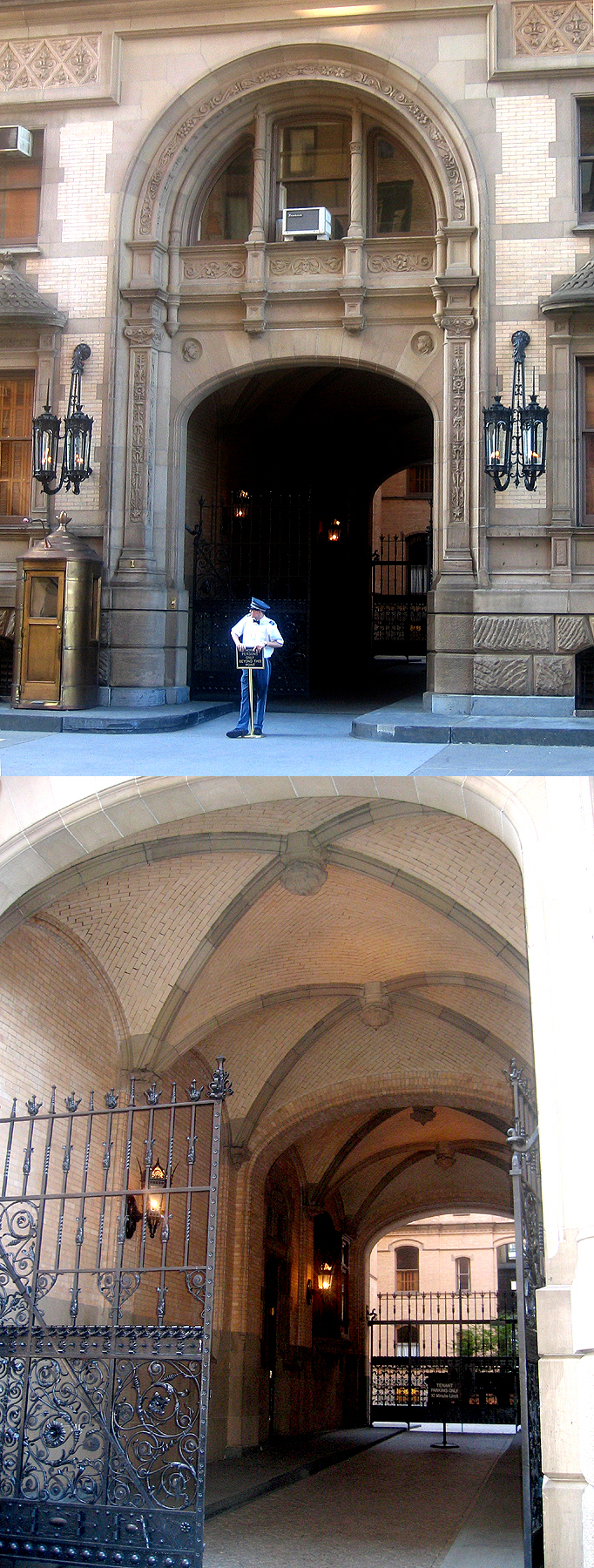
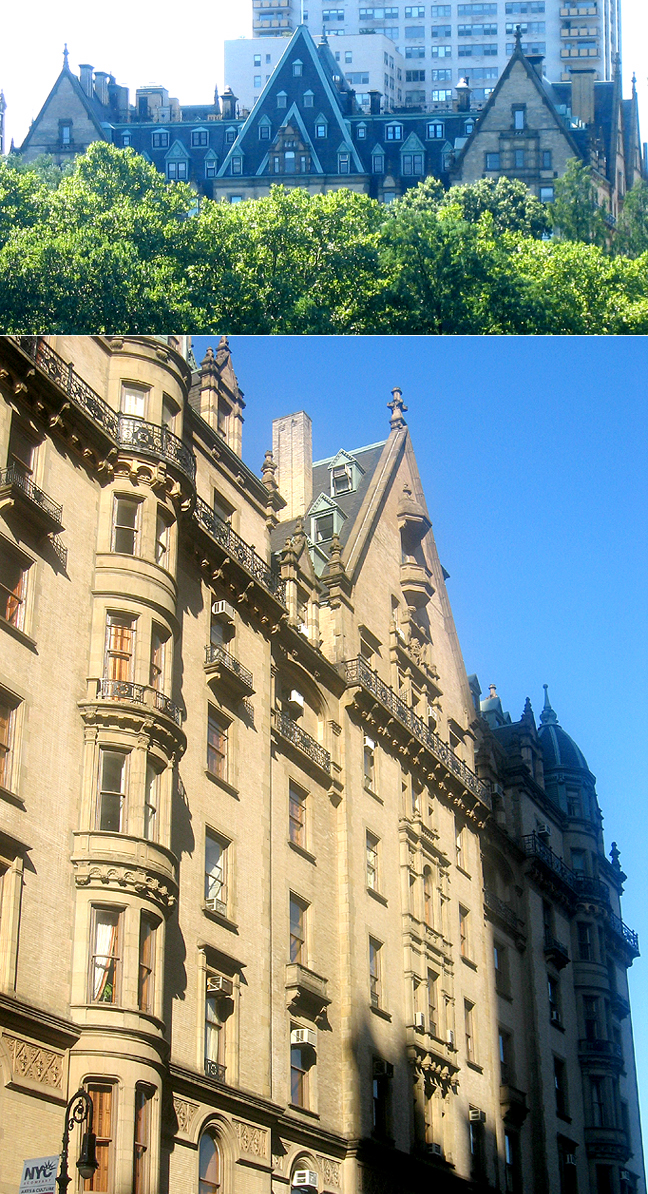
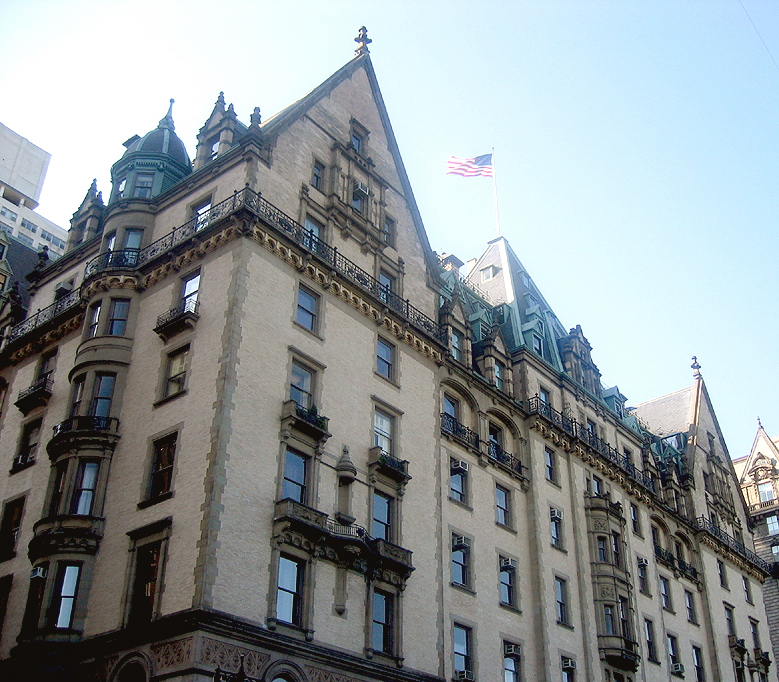
    At 72nd Street and Central Park West stands one New York’s most well known residences: The Dakota. For the few that did not know it, becoming John Lennon’s home and site of his murder in 1980 catapulted it to international status. Even a book has been written about it.

    Completed in 1884, folklore has it that it was named because, at the time, the area was as remote from NYC’s urban core as the Dakota Territory and thus known as Clark’s Folly (it was built for Edwin Clark, head of Singer Sewing Machine company, by architect Hardenbergh, who also designed the Plaza Hotel). It’s a spectacularly distinctive nine-story building with high gables, terracota spandrels and panels, balustrades, balconies, and a steeply pitched decorative slate and copper roof. It is built around a central courtyard with a large guarded entrance, originally designed to accommodate horse-drawn carriages. Based on Parisian models, the Dakota was a new concept in urban dwelling, with many affluent renters in one property with shared amenities. It was an immediate success and remains one of the most sought-after properties in NYC, with many celebrities in its roster. More photos here…


  • Strawberry Fields

    Posted on by Brian Dubé

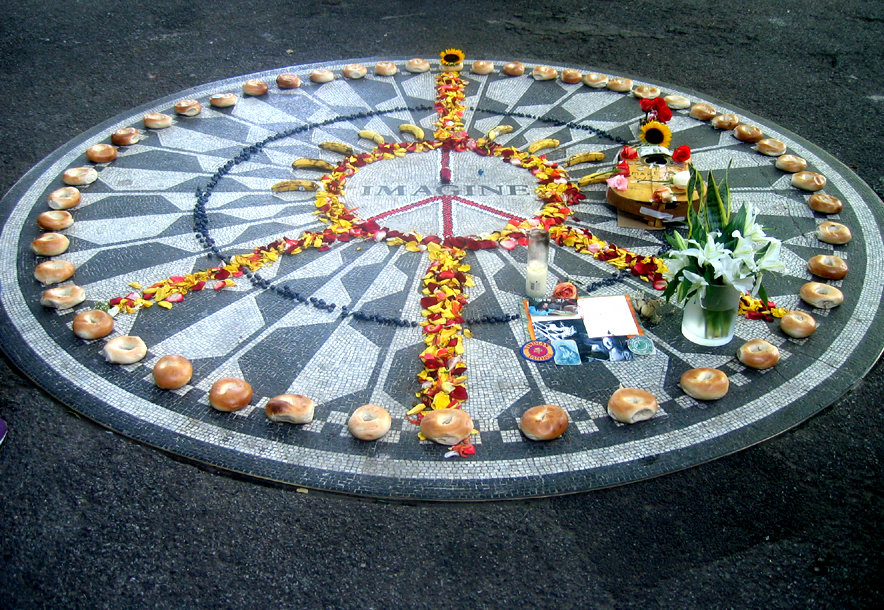
    In Central Park near the entrance at 72nd Street near the Dakota, John Lennon’s former residence, is an beautiful wooded landscape area called Strawberry Fields. It was named after one of John’s songs, Strawberry Fields Forever, in his honor (John was shot nearby outside of his home in 1980). The song’s title, by the way, hearkens back to John’s youth, where he played in the trees behind a Salvation Army orphanage called Strawberry Field.

    In 1985, Yoko Ono donated 2.5 million to relandscape and maintain the area. The focal point is a large mosaic, a reproduction of a work from Pompei, made as a gift by artisans from Naples, Italy. The only change was the center inscription, Imagine, the title of another of John’s songs. It is typical to find the mosaic adorned with flowers, candles, and other items, left by his fans. On the anniversary of his birth (October 9th) and death (December 8th), people typically gather in tribute at the site. There is also a bronze plaque, embedded in a stone outcropping, listing 121 countries endorsing the area as a garden of peace

    Posted on by Brian Dubé

  • The Cyclone

    Posted on by Brian Dubé

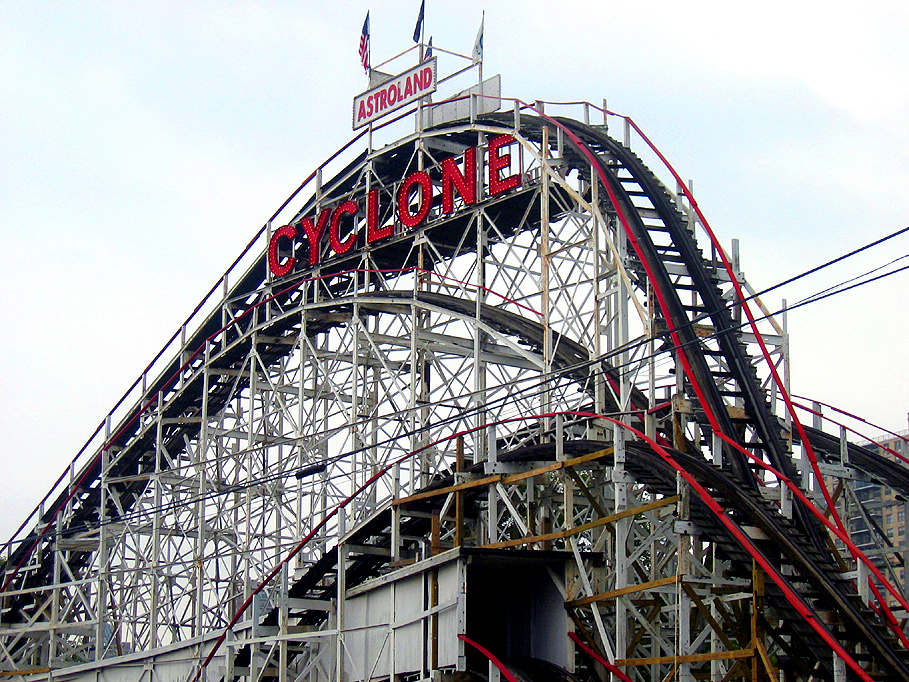
    The Cyclone, built in 1927 in Coney Island, is probably the world’s most famous roller coaster. I’ll leave the history and specifics to this article or the official site. I rode it once many years ago with a friend who grew up in Brooklyn. It really was terrifying, in part due to its really rough ride. It’s an old-style wooden structure, predating the high-tech engineered scream machines of current times – all the jerking and whipping action of this old coaster really intensifies the ride. Newer coasters are much smoother and safer feeling.

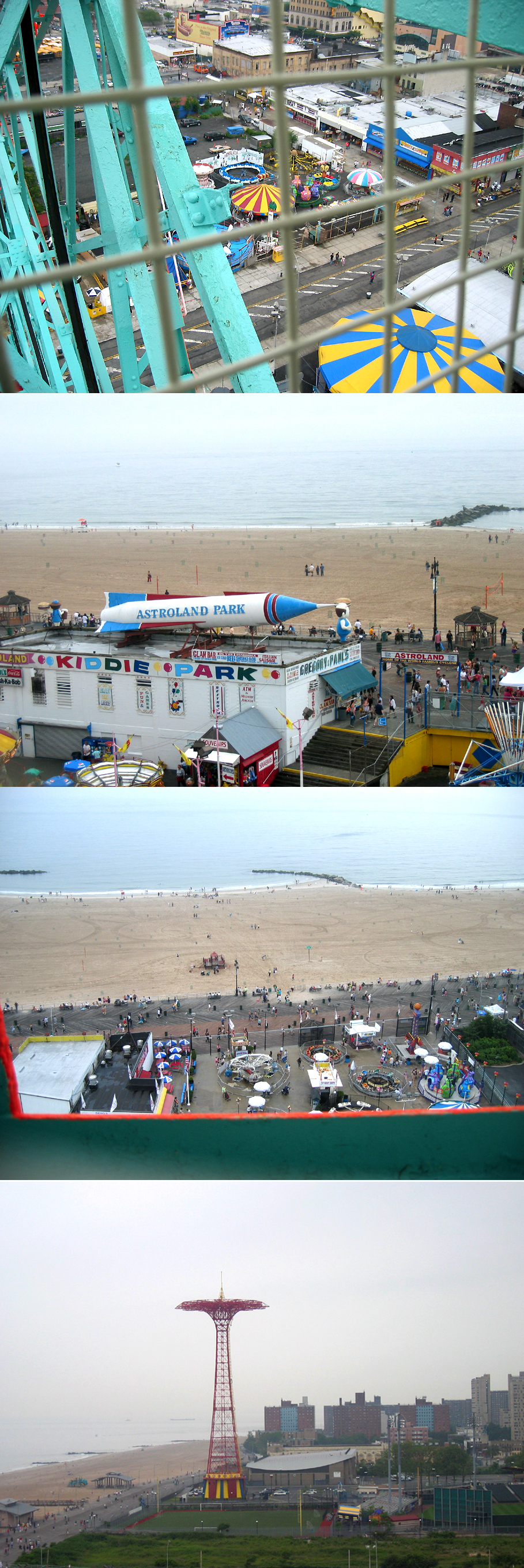
    When we took this photo just recently, the ride was not running – closed for maintenance – but this is controversial according to rumor and articles like this one. Here are more photos, including one great view from the top of the Wonder Wheel.

    Posted on by Brian Dubé

  • Nathan’s

    Posted on by Brian Dubé

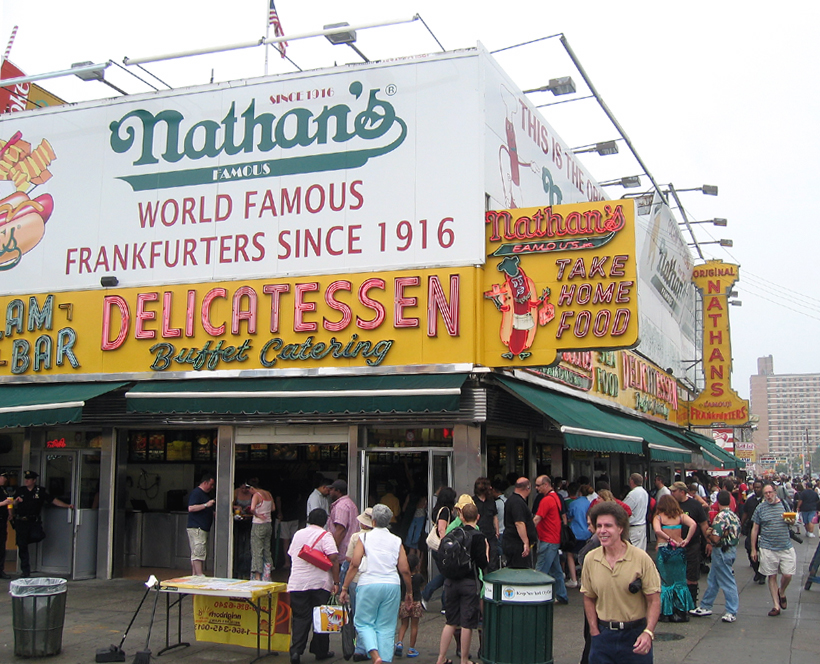
    At 1310 Surf Avenue in Coney Island, Brooklyn, stands one of New York’s most well-known institutions. This is the original home of Nathan’s Famous, started by Nathan Handwerker and probably the most famous fast-food emporium in NYC. Their history is quite interesting, and rather than distill it here, I recommend you check this short article.

    They originally sold through fast-food establishments but are now doing major acquisitions, corporate expansions, merchandise branding, etc. For better or worse, this is the pattern of virtually every company with a history in the U.S. Apart from their classic hot dog, they also sell lemonade, seafood, fries, etc. And they sponsor a traditional yearly hot dog eating contest every July 4th.

    Posted on by Brian Dubé

  • Wonder Wheel

    Posted on by Brian Dubé

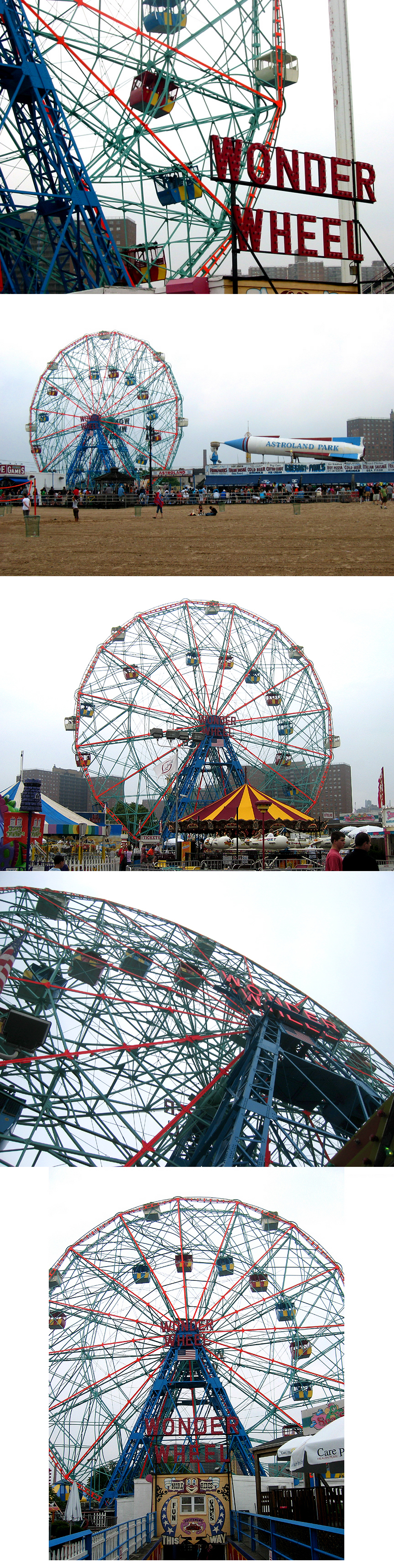
    I love Ferris wheels. Although few of the original rides in Coney Island remain or operate, the Wonder Wheel is one which is still going strong and with a perfect safety record. Built in 1920 from Bethlehem steel forged on site, it stands at 150 feet tall, and it is unique with outer fixed cars and inner cars which swing.

    We took a ride – a first for both of us. The views were wonderful, and I took many photos while aloft here and more photos here. The Wonder Wheel was landmarked by the city in 1989. It’s a beautiful antique when viewed from any angle – the beach, the air…

    Posted on by Brian Dubé

  • Gay Pride Parade

    Posted on by Brian Dubé

    This Sunday was the LGBT Pride March, the 36th annual and still going very strong. It is a great outpouring of support and celebration of the gay community in NYC. It lasts for many hours and goes for miles, from the 50s along Fifth Avenue down to Christopher Street (in the West Village), the street most associated with the gay lifestyle in NYC.

    The march commemorates the Stonewall Riots in 1969, when gay men resisted arrest for being openly gay in the Stonewall Bar on Christopher Street – this incident is considered to be the beginning of the gay rights movement in the U.S. In NYC, the gay community is well integrated. This city is very important to those in the rest of the country who are different in any way, because it is a place which accepts anyone who doesn’t quite fit into the more conformist or conservative standards that may be prevalent elsewhere…

    Posted on by Brian Dubé

  • Cooper Union

    Posted on by Brian Dubé

    Cooper Union is an institution which has been important in American history – Abraham Lincoln spoke and debated here many times, and they often hold political debates and discussions in the Great Hall of the building nowadays too, along with concerts and other cultural services to the city. The beginnings of the labor union movement and women’s right to vote also found their forum here.

    It was founded by a philanthropist during the Civil War era. It is a fixture of the downtown Astor Place area, the students who attend flavoring the surrounding area of the East Village. As a college, it is very unique – it is completely tuition free to all the students; however, they must pass its very rigorous admissions process. There are only three areas of study: art, architecture, and engineering. The brooding dark brown Victorian building exerts an influence all around it, politically, aesthetically, and socially. Read more on Wikipedia…

    Posted on by Brian Dubé

  • Gem Spa

    Posted on by Brian Dubé


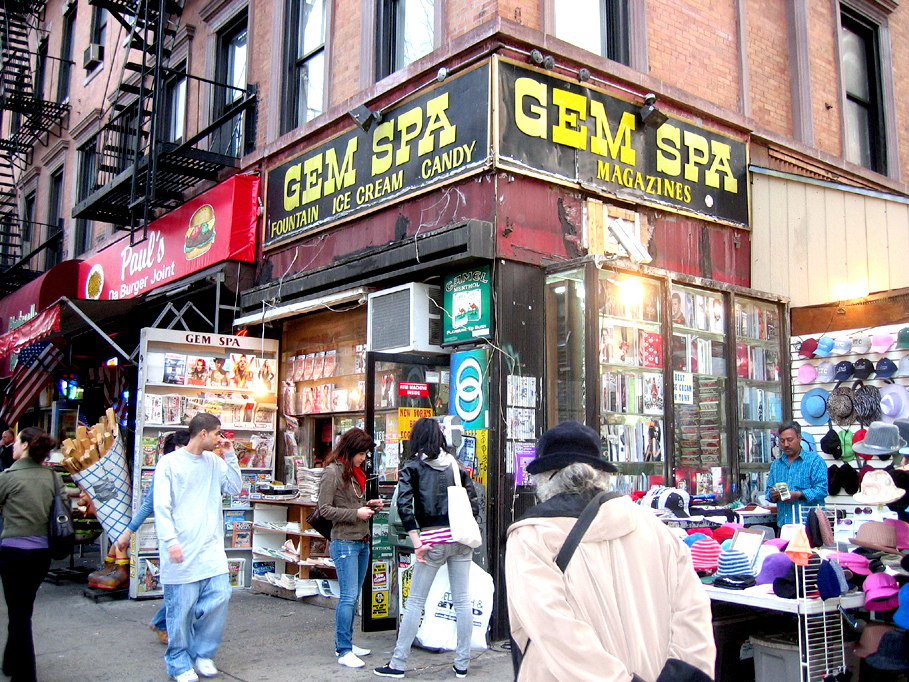
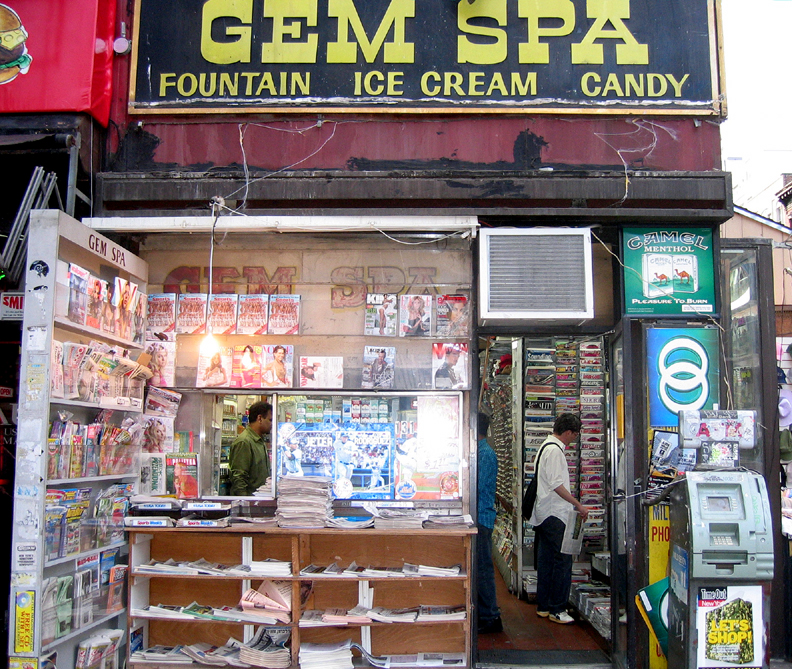
    Gem Spa is one of those real classic New York places. In business for 70 years, located at St. Marks Place and 2nd Avenue in the East Village, this place would certainly not stand out as anything special to the visitor or non-resident (an online search will bring up numerous articles and reviews). It is a newspaper stand/magazine shop/soda fountain, and at one time, before the spate of magazine cafes and super bookstores, its extensive selection was a rarity. And they are renowned as the last place serving an authentic New York egg cream soda, the origins of which are still debated. If you haven’t had one, go there and have an unpolished NYC experience. Here’s a peek inside

    Posted on by Brian Dubé

  • Bigelow

    Posted on by Brian Dubé

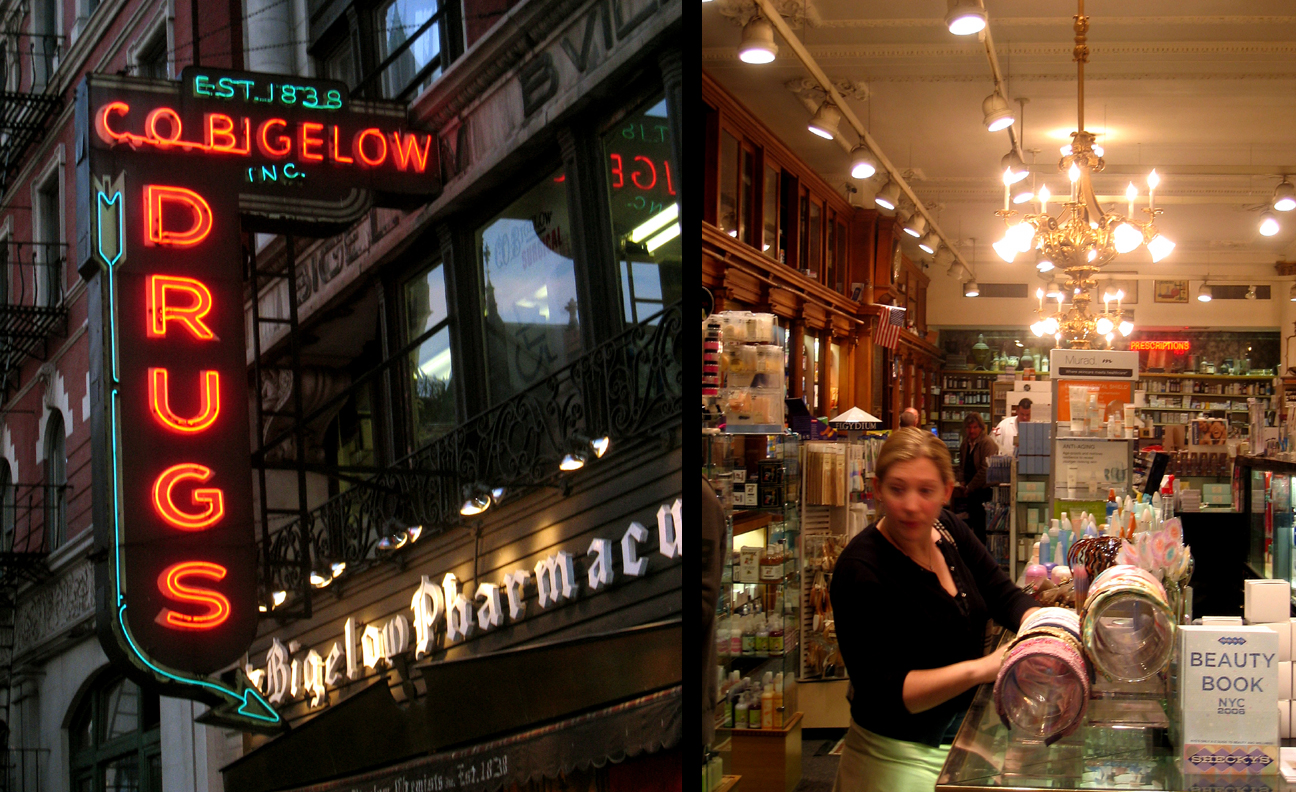
    Bigelow Chemists is the oldest pharmacy in the country, located in the Village on 6th Avenue near 8th Street in a Beaux-Arts building (here’s a link with photos, history, and story). It’s a pleasure to go in – they specialize in very high quality and hard-to-find products for the skin and hair, fragrance for the home, and small luxury items for everyday life. They continue as a true apothecary, making their own line of remedies and filling prescriptions.

    They cultivate relationships with their customers over years, an unusual practice in this type of business nowadays – getting to know the local residents. People come in to browse, take in the atmosphere, and try on the samples. Perhaps this is overly enthusiastic for a simple drugstore, but they have preserved an atmosphere that opens the door to the past and the senses simultaneously.

    Note: Here’s a link to Indieperfumes, which goes into these sorts of topics in depth…

    Posted on by Brian Dubé

  • Shrouded Secrets

    Posted on by Brian Dubé

    It seems that NYC is in constant repair. It’s hard to walk far without seeing scaffolding as buildings repoint, repaint, resurface, rewindow, or re-something. And this scaffolding can be up for years at a time.

    This remarkable building at 565 Broadway, originally 5 stories, is a marble-fronted Palladian palazzo built in 1859-60, unique for the SoHo cast iron district (note the striking buildings surrounding it. More images from an architecture company). Its gray shrouded fabric and wooden water tower were particularly dramatic on this cloudy day. This building has an interesting and varied history (from the NY Times). It was used for the filming of the first season of MTV’s Real World New York. Walls between two apartments were torn down to make a huge 4-bedroom apartment (article and photo).

    Posted on by Brian Dubé

  • Ansonia Hotel

    Posted on by Brian Dubé

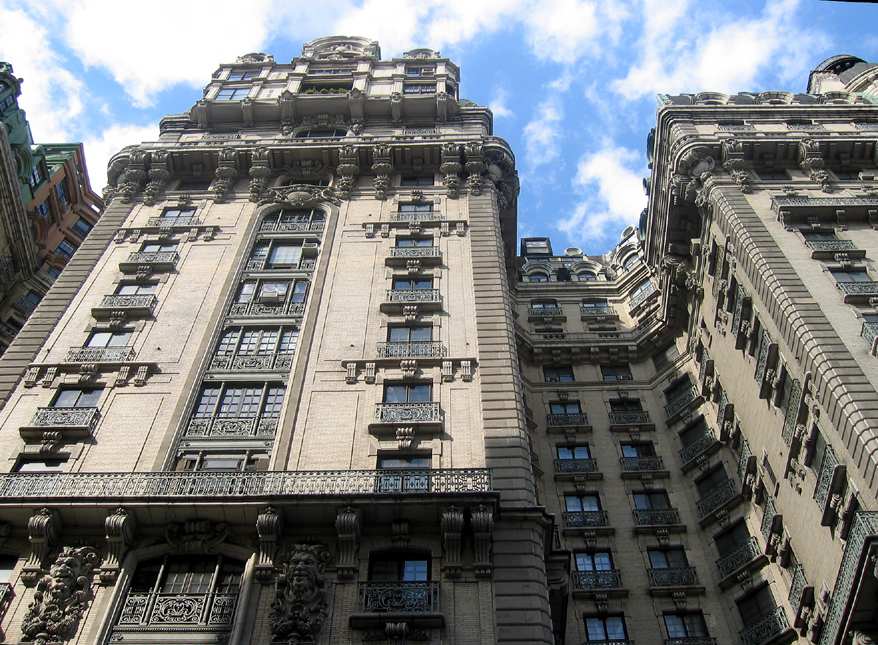
    The Ansonia Hotel is one of the most notable and fascinating buildings in NYC. Located in the Upper West Side on Broadway and 73rd Street, it was built between 1899 and 1904. It is enormous, with 2500 rooms, and is one of the most European-looking buildings, with its striking Beaux-Arts facade and Parisian-styled Mansard roof and corner turrets.

    Babe Ruth, Theodore Dreiser, Igor Stravinsky, Enrico Caruso, Arturo Toscanini, Yehudi Menuhin, and Tony Curtis are just a few of its many prominent guests and residents of the past. There is much wonderful history about this building – it makes great reading (article with more photos). It was converted to condominiums in 1992.

    Posted on by Brian Dubé

  • Love Saves The Day

    Posted on by Brian Dubé

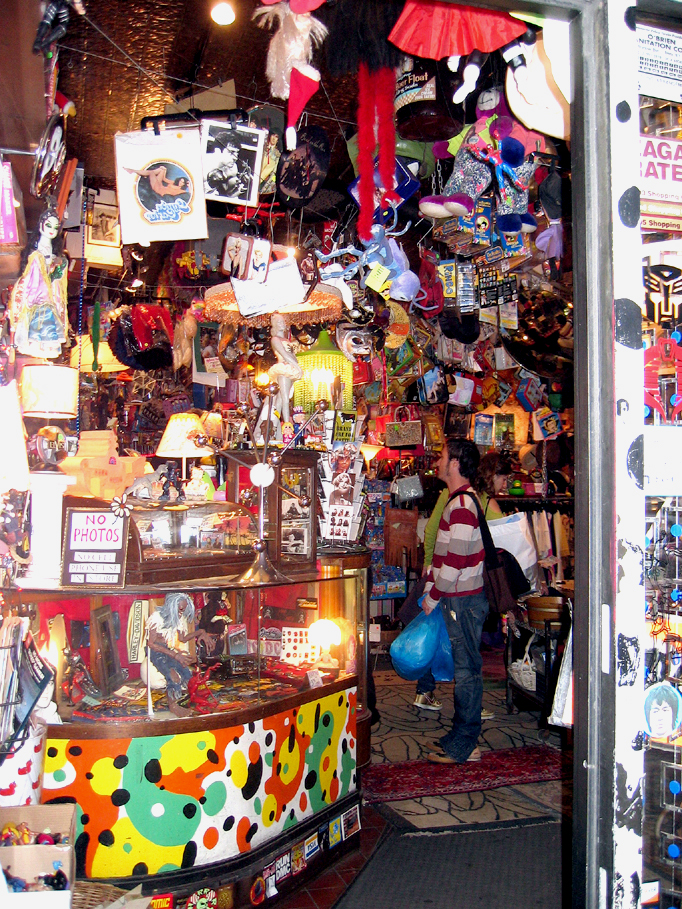
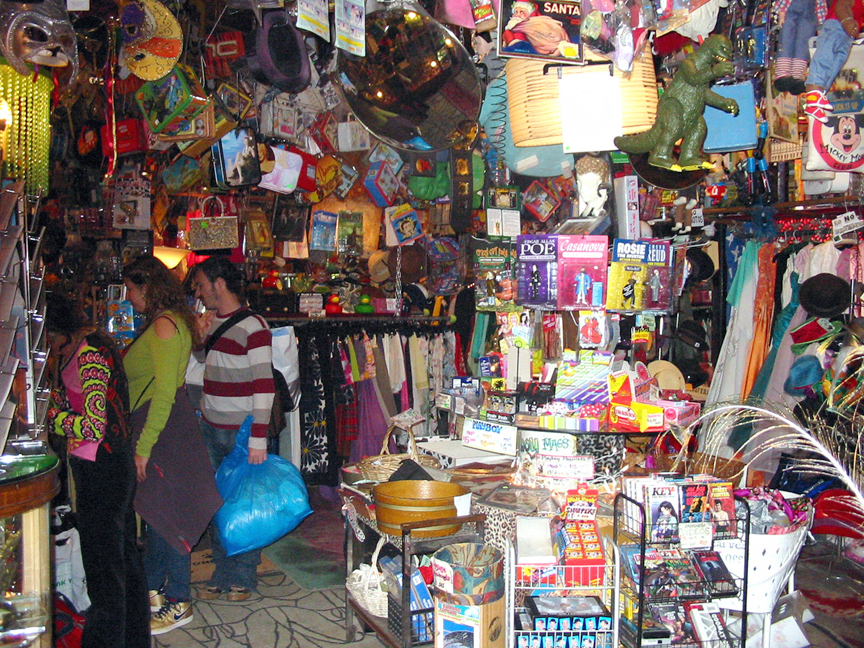
    This place in the East Village on Second Avenue has been around since it first became the fun thing to wear nostalgic clothing ironically. They’ve now expanded their holdings to memorabilia, vintage toys, and accessories, layer upon layer, decade upon decade. They have a rather fierce sign at the door, “unattended children will be sold into slavery,” probably because it would be the perfect place for kids to go wild, play dress up, and pretend, endlessly.

    Every inch is covered with old cocktail and prom dresses, antique toys, and references to and memorabilia of famous rock and roll figures from times gone by (inside photo). Madonna shopped here for the look she wore in her first movie – the tattered lace glove and rosary as jewelry look. Rents have risen astronomically, so they will be moving at the end of this year, around October, to another location somewhere along East Seventh Street. So, if you get the chance to visit before that, you will experience the original LSD in all its overheated and psychedelic glory. Kind of doubt they will be able to reproduce quite the effect they have grown here over decades…
    L

    Update: Love Saves the Day has since closed and moved to Pennsylvania.

    Posted on by Brian Dubé

  • Jane Jacobs

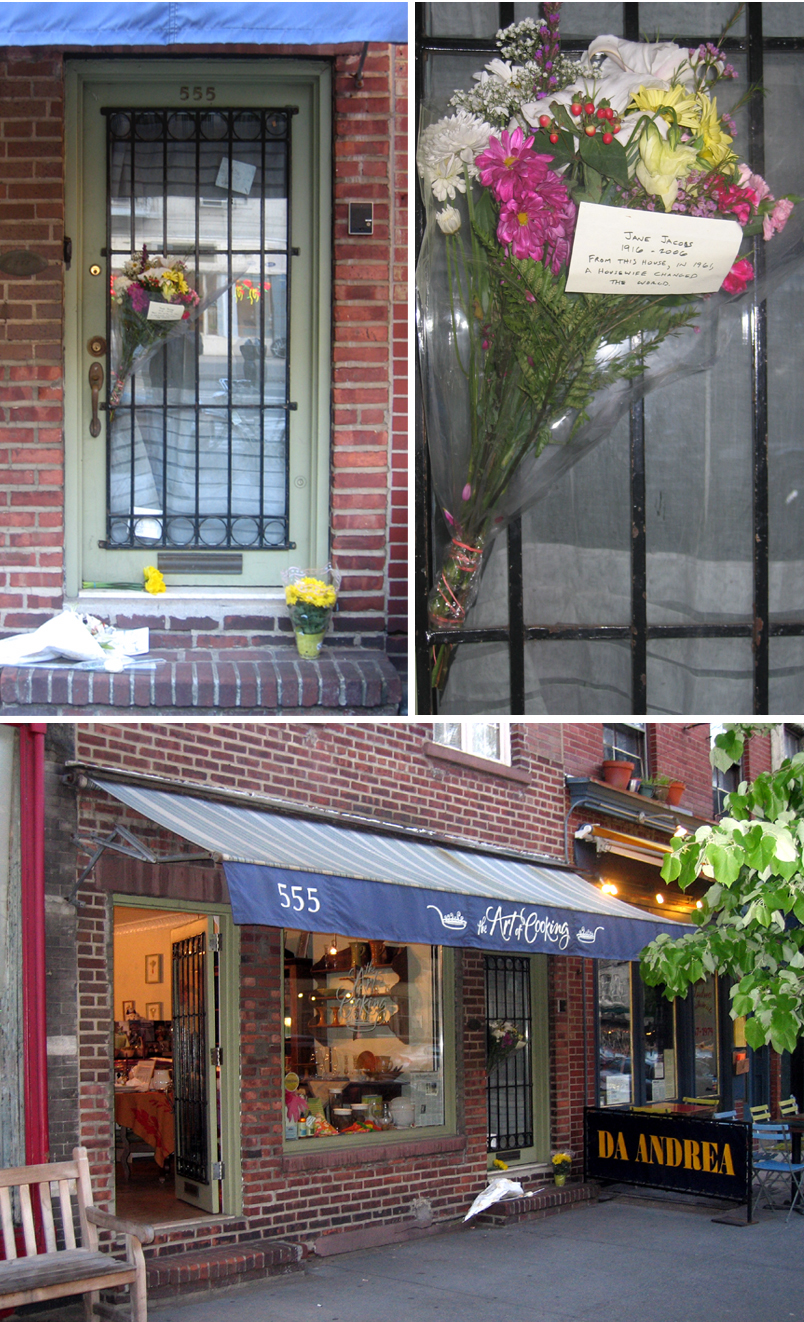
    This is the house where Jane Jacobs, who died yesterday, wrote the Death and Life of Great American Cities. From those windows, she observed the urban life of her West Village neighborhood, which she offered as an alternative to the suburban sprawl and car culture taking over the country. Her work became a major influence on urban planning and the appreciation of city life in the US, convincing many Americans that cities were good. She was instrumental in saving the Village and Soho neighborhoods, which were threatened by urban planners who wanted to build the Lower Manhattan Expressway. She was a self-taught outsider who criticized and triumphed over very entrenched authorities. More photos here.


  • Anniversary


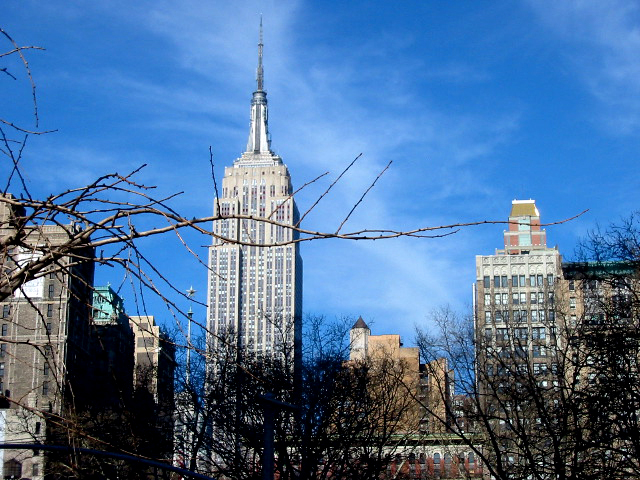
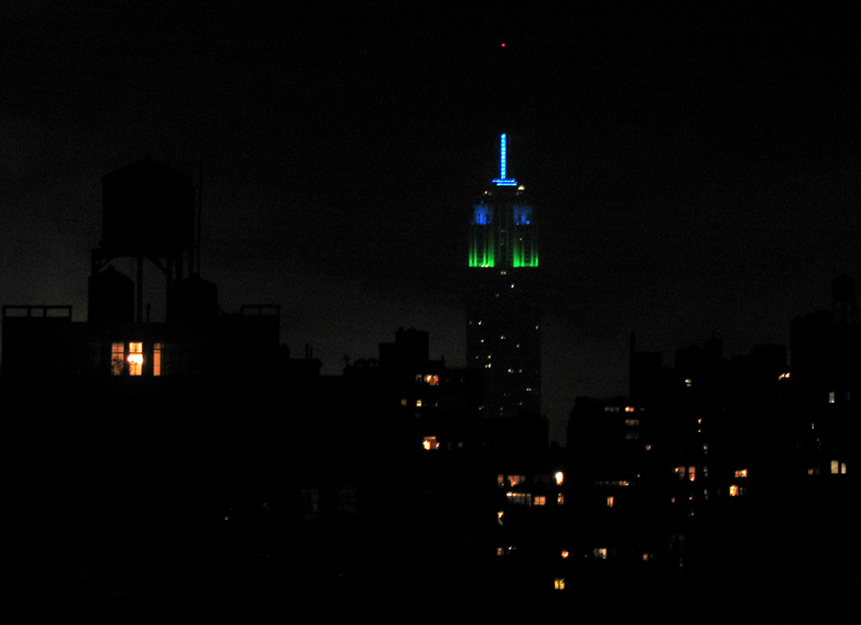
    The Empire State Building is having its 75th anniversary, and we were reminded of that by a wonderful, in-depth treatment in the New York Times – history, photos, video, audio slide show, and the story of Lewis Hines, who took extraordinary photographs of the daredevils who built it, recounting the urban myths and legends that surround the building.

    Since it was for a long time and now is again the tallest building in the city, it has become New York City’s lighthouse. It has an enormous pull to the eye if you are anywhere in the city from which it can be seen, rising above the rest. From street level nearby, it doesn’t look like much, and the neighborhood in which it is set is not terribly remarkable. When you can see it from a distance, particularly at night, the structure reveals itself, and the interior, with a very art deco feel, gives a strong feeling of those brash days when it was built…


  • dinamic_sidebar 4 none

©2026 New York Daily Photo Entries (RSS) and Comments (RSS)  Raindrops Theme