• Category Archives NYC’s History
  • Bohemian Flavor of the Day

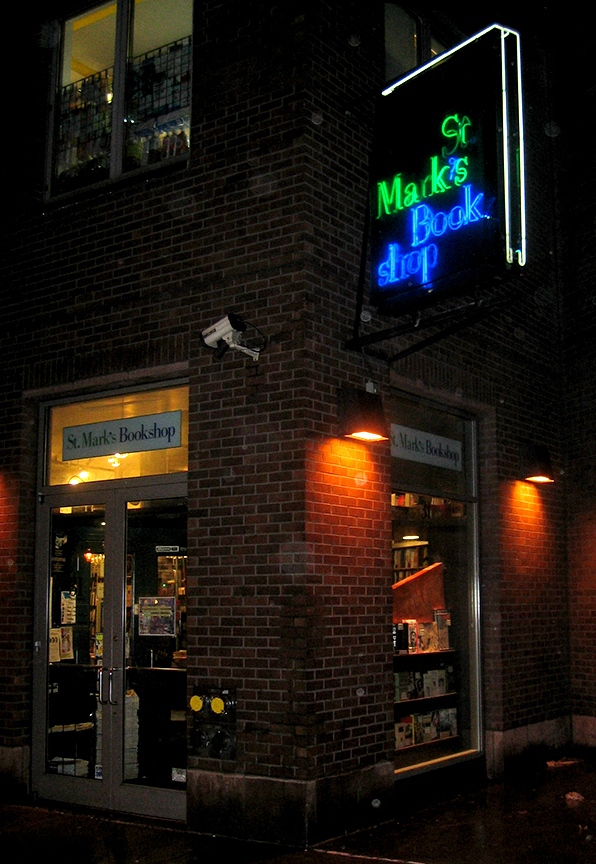
    You could almost create a website just around St. Marks Place. A few short blocks of this street have one of the most dynamic histories in the city. As I wrote in my posting, Physical Graffiti, on June 14, 2007, “The street has been home to hippies, yippies, punks, political activists and protest marches, renowned bookstores, music stores and clubs (e.g. Electric Circus), graffiti artists, cafes, clothing shops, restaurants, bars, theaters, gangsters, and St. Mark’s Church – physical graffiti well describes the street itself.” St. Marks Place reflects the Bohemian flavor of the day.

    When I first moved to New York, the East Village was one of the most exciting places on the planet. Admittedly there were other locales where the violent transformation of the time was evident, but who cared? There was so much here that we could barely keep up.
    The sociopolitical upheaval of the late 1960s and 70s was, like any other, driven by ideologies. And print media, i.e. books, newspapers, and magazines, was the method to record and disseminate the ideas.

    In a pre-internet world, bookstores (and libraries) were the centers of information and had a very special, important role, and their presence said a lot about a neighborhood or community. At one time, on 8th Street in the Village, one could find several bookstores on one block, including the famous Wilentz’s Eighth Street Bookstore. Bookstores were also typically independently owned, so each had a distinct character, and in many cases, a specialty.

    St. Mark’s Bookshop is very unique and is one of the last remaining bookstores from that time. It was established in 1977 at 13 St. Marks; from 1987 to 1993, they moved across the street to 12 St. Marks. Their current location is around the corner at 31 Third Avenue and Stuyvesant Street. They have more than 40,000 volumes specializing in poetry, literature, art, film cultural/political theory, philosophy, and small presses – they carry many things that can not be found elsewhere. They are open every day until midnight. The owners, Terry McCoy and Bob Constant, have been with the bookstore since it opened in 1977…
  • Times Square Ball Drop

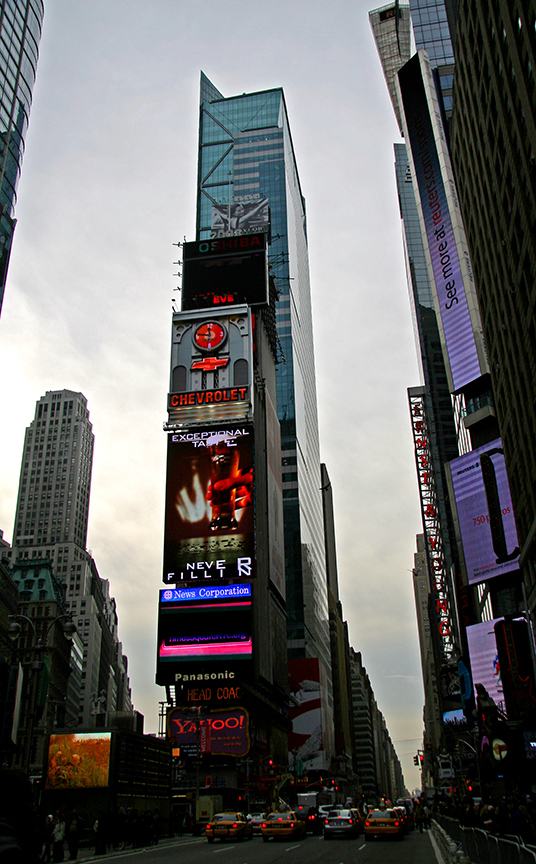
    Dropping the ball in Times Square is the world’s most well-known New Year’s Eve celebration. Nearly one million people attend in person, with millions around the world watching the televised event. The millennium celebration saw two million people – I was one of them. The photo was taken on Sunday afternoon, and preparations were already underway – television crews were setting up. (Note: click on the photo to enlarge it – if you look carefully, you can see the 2008 sign and pole for the ball above it.)

    The ball drop has been an annual event since 1907, making this year the 100th anniversary. The ball itself has gone through numerous incarnations over the last one hundred years. Its earliest construction was of iron and wood with 25-watt bulbs, weighing 700 lbs. In 1920, it was replaced with a ball entirely of iron (400 lbs) and then in 1955 with an aluminum ball weighing only 150 lbs. It remained unchanged until the 1980s, when red light bulbs and a green stem converted the Ball into an apple for the “I Love New York” marketing campaign (from 1981 to 1988). In 1989, the traditional ball with white light bulbs reappeared. In 1995, the Ball got an aluminum skin, rhinestones, strobe lights, and computerized controls. The aluminum ball was lowered for the last time in 1998, when it was replaced by an all-new geodesic design from Waterford Crystal with the latest lighting technology for the millennium celebration – 504 crystal triangles, 696 lights including 96 strobes, and 90 rotating pyramids. Read more about this remarkable, dazzling creation and the event here. This ball has been retired and is the property of the owners of the One Times Square building.

    An entirely new ball has been crafted for this year’s 100th anniversary by Waterford Crystal with 672 double cut crystal triangles. An all-new lighting design was created by Focus Lighting utilizing Philips LED technology (replacing the halogen bulbs of the previous design). With 9,576 Philips Luxeon LEDs, it is more than twice as bright with enhanced color capabilities – 16.7 million to be exact. The ball was unveiled in October and was on display at Macy’s until December 10th – sorry I missed it. Had it not been for researching this article, I would have been completely unaware of the anniversary and new ball. I look forward to watching the televised drop and hope you do the same. Happy New Year!

    Note: Time Balls actually date back to 1829, when the first one was erected in England by its inventor, Robert Wauchope, a Captain in the Royal Navy. These were used for sailors to check their chronometers. They became obsolete with the advent of radio time signals. Over sixty still remain worldwide.


  • Luxury

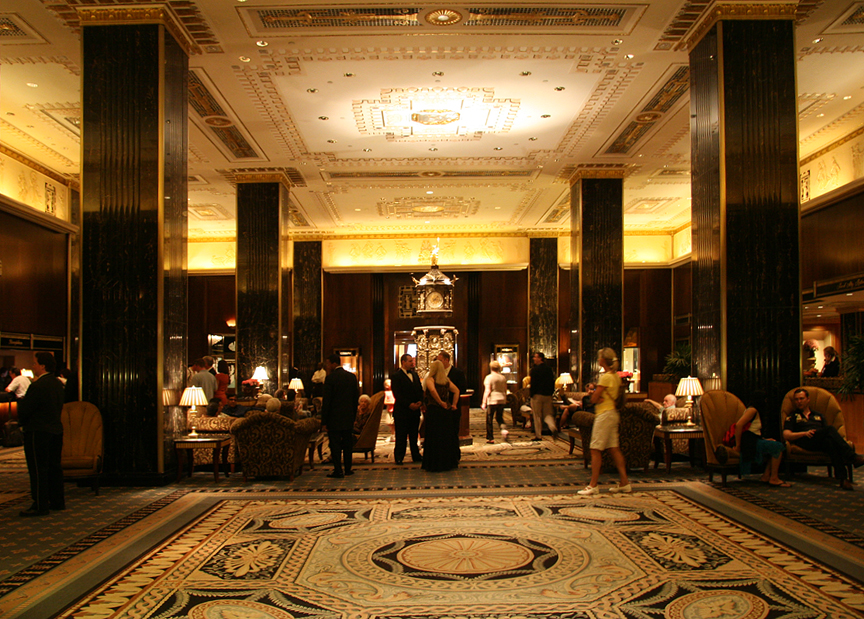
    I have not done a posting on the Waldorf Astoria Hotel per se (I will do a more in-depth piece in the future) but did feature their famed clock earlier this year. The Waldorf epitomizes classic, iconic New York. If you want to see a place that just exudes old world charm and luxury, New York style, this is it: the Palace of New York and art deco masterpiece. Of course, the Plaza (no longer a hotel) and the Pierre give it a run for the money, but if I had to pick one hotel that says “New York,” this would be it. There are so many historical associations, including ringing in the New Year with dance band leader Guy Lombardo. Presidents, Queens, dignitaries, and celebrities of all types – the roster, past and present, reads like a who’s who. The hotel has the largest elegant ballroom in the city – four stories high. This is home to the annual International Debutante Ball.

    The U.S. government maintains a large suite on the 42nd floor as a residence for its United Nations ambassador. The presidential suite has been home to every President of the US when visiting New York since 1931. If, by the way, you have never been (whether resident or visitor), I highly recommend that you visit and wander about. The main lobby is a must-see. Have no concern about visiting as a non-guest – there is too much traffic for anyone to police. Act like you belong, and you will…


  • Titans

    Yesterday afternoon, I was privileged to attend a public program at the Tribute World Trade Center with Guy Tozzoli and Philippe Petit entitled A Conversation About Bold Imagination. The program was held in a small cozy room with 75 or so attending – it had the feeling of an intimate family gathering. I had the sense that everyone there knew more about one or both of these men than would be typical people. The audience was mesmerized – I know I was. I have written before of Philippe in Artiste Extraordinaire.

    Since writing this blog in the last one and a half years, I have become much more attentive to the words of others. Philippe is extraordinary – I have not seen anyone who speaks so poetically in an extemporaneous fashion. He told of his notorious walk between the Twin Towers on August 7, 1974 and how he planned this in secret over the course of 6 years. Philippe is a man of many talents – tight-rope walker, unicyclist, magician, juggler, pantomime artist, pickpocket, street juggler, writer, illustrator, and speaker. At the time of Philippe’s walk, Guy Tozzoli was the director in charge of overseeing the creation and building of the two towers. His stories and anecdotes of the process of becoming director, meeting Philippe, and dealing with his arrest were wonderful. He always comes across as a warm, positive human being. At the time prior to Philippe’s walk, the towers were really seen in as monsters without soul, but Philippe’s act made them human. Guy is President of the World Trade Centers Association, an organization of nearly 300 world trade centers in almost 100 countries.

    Philippe described his walk as an artistic crime – one that did not take from anyone, but was a gift. Many thoughts and feelings came to mind as I listened to these inspiring individuals and thought of the towers, but one word really jumped out and made titling this article so easy: Titans…


  • No Local Color

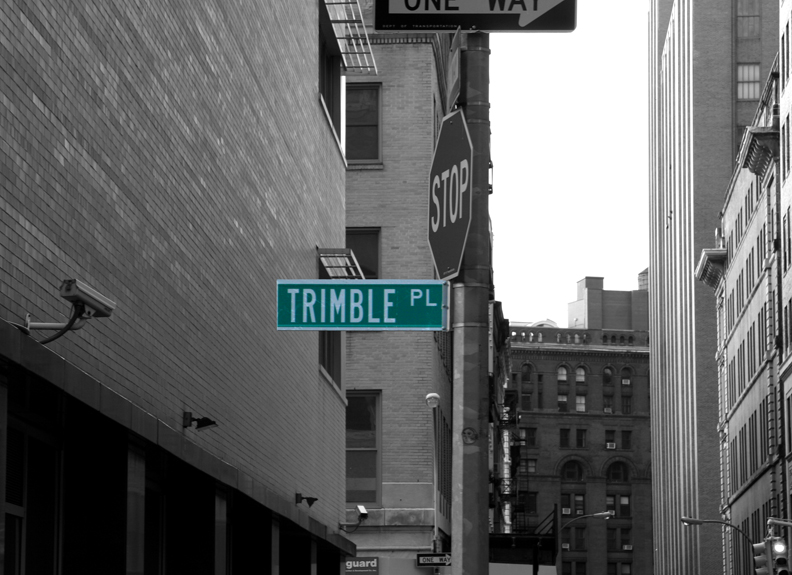
    What can be said about this obscure little private, one-block alley which lies between Duane and Thomas Streets, parallel to Church Street and Broadway in lower Manhattan? Not much at all. Would I recommend visiting it? No, not unless, like myself, you like to visit alleys. Are there any interesting tidbits or stories? None that I could find.

    Trimble Place is very uninteresting and drab, with no outstanding features or businesses and very little history other than it was named in 1874 for George Trimble, a 19th-century merchant, director of New York Hospital and an officer of the Public School Society. The most interesting things about the alley are the buildings that surround it, like the controversial 52-story residential tower next door and the bizarre, 550-foot, monolithic, windowless AT&T Long Lines Building at 33 Thomas Street. There are actually many small alleys like this in lower Manhattan: Mosco Street, Florence Place, Benson Street, Ryders Alley, Mill Lane, Mechanics Alley, and Jersey Street. And in the Village, there are several which are residential and much more bucolic and historic in nature, such as Grove Court, MacDougal Alley, and Washington Mews. Unlike most of Manhattan, the mayhem of small streets and alleys downtown is due their creation prior to the Commissioners’ Plan of 1811, which established an orthogonal grid north of 14th Street.

    I find the very TRULY nondescript interesting just for that reason – it’s not easy being that featureless, like the tract housing of Levittown, NY, or luggage areas at the airport. But there is always hope that Trimble Place may have its day. Look at what happened to Seinfeld, a show reputedly about nothing…


  • It Shines For All

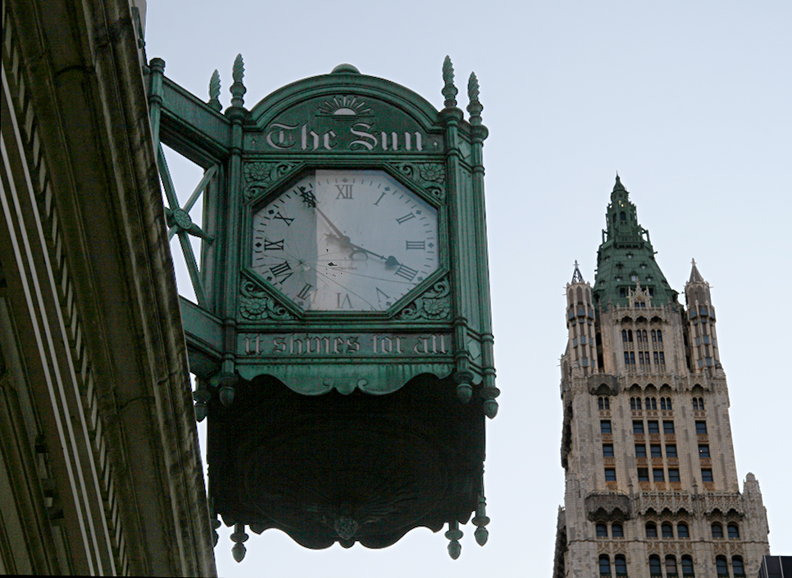
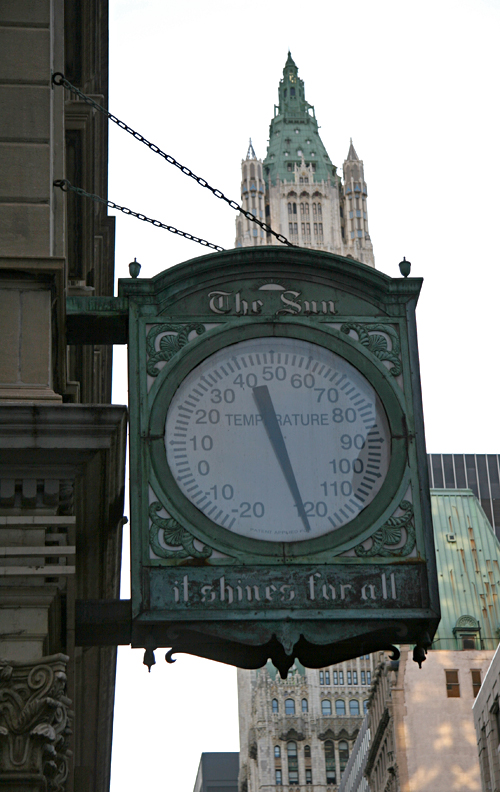
    Who can resist an antique bronze clock and thermometer with the slogan The Sun It shines for All, mounted against a historic landmark white marble building, on Broadway with the Woolworth Building as backdrop? Images of old New York and the romance of days past flood my mind with a vista like this one. Click here for a photo of the thermometer.

    The 7-story building is located at 280 Broadway at Chambers Street near City Hall. The white marble Italian palace was originally erected in 1846 as the A.T. Stewart Dry Goods Store – America’s first department store. This grand palace of commerce was quite dazzling at the time. The structure is of major historic architectural significance – it is one of the first Italianate commercial buildings in the United States. In 1917, it was taken over by the New York Sun. The bronze clock and thermometer were added in 1930. The Sun occupied the building until 1950; in 1970, it was taken over by the City of New York. Sadly, the building remained in shabby condition for many, many years, and the clock itself stopped functioning in 1967, was repaired, stopped working in 1987, and was repaired again. The building was renovated during the Giuliani administration. Now the sun, clock, thermometer, and building shine for all…


  • Kristal Palace

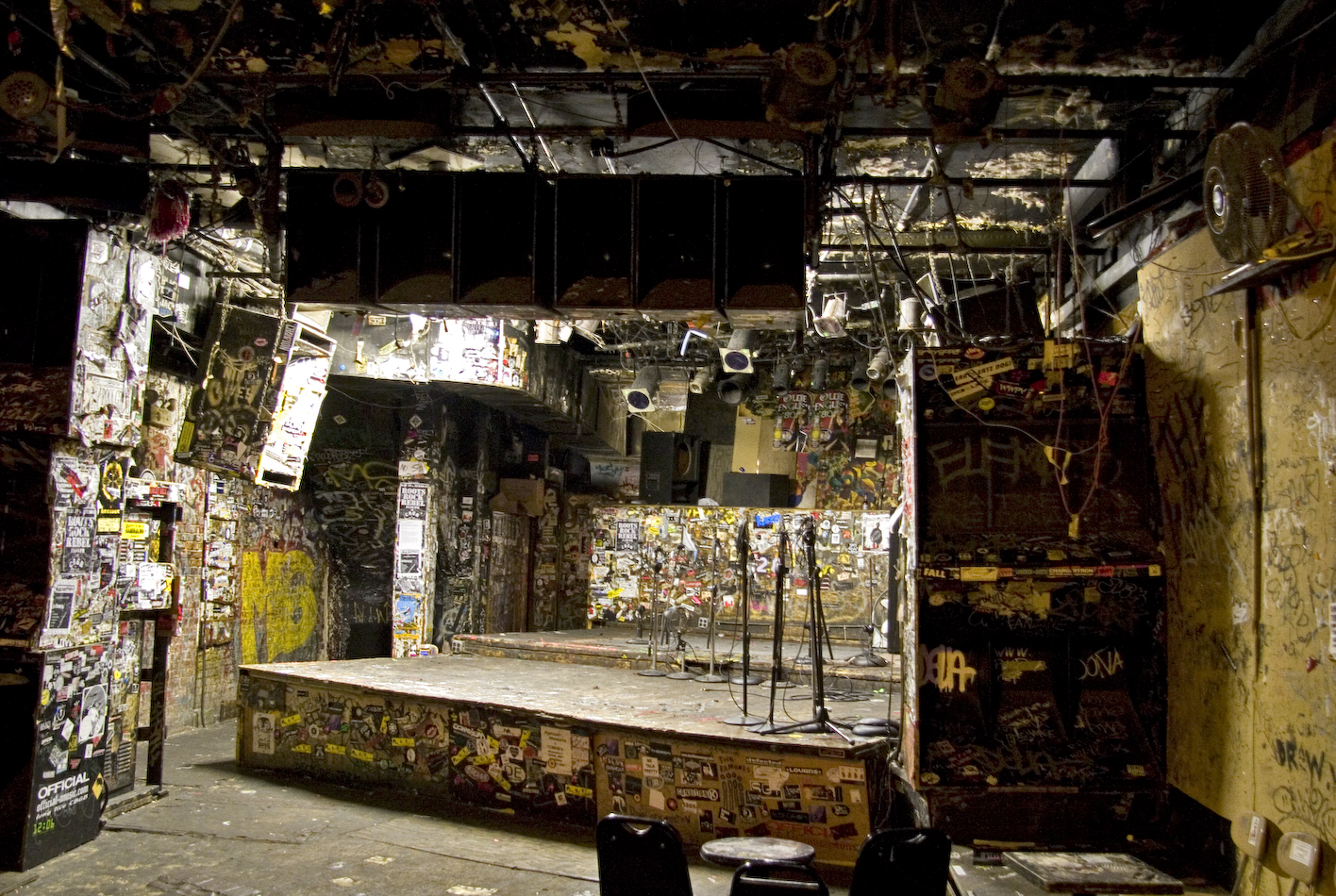
    Last summer, I asked a photographer friend to accompany me on a final pilgrimage to CBGB, knowing it was to close in October of that year. So, on a hot August Sunday afternoon with the city deserted, we headed with our cameras to 315 Bowery and home of the legendary rock club. We were pleasantly surprised with our reception – the person attending welcomed us with open arms, saying that the owner, Hilly Kristal, had always supported and encouraged photographers. So rather than having to whine, beg, or sneak around taking harried photos surreptitiously, we were able to indulge and take our time.

    We toured and photographed the entire place – the bar, the stage, the green rooms, the sound room, and the infamous downstairs bathrooms. I never released all the images, so today I am showing a photo of the main stage. The club was a true dive bar – graffitied with stickers and posters, peeling paint, etc. I have done three other postings on the club – if you are interested, see the list below. The most recent posting of June 16, 2007 was concerning the ongoing state of the club in limbo after its closing, with Kristal saying that he intended to move the entire place to Las Vegas. On August 28th of this year, Kristal died at 75 of lung cancer…

    Previous postings on CBGB: CBGB, Gotta Go?, Limbo


  • Abingdon Square

    I would not say that Abingdon Square is a “must see,” nor would I recommend going out of one’s way to visit. There is an interesting article from 1885 in the New York Times bemoaning its condition:

    “AN ODD BREATHING SPOT; ABINGDON-SQUARE AS IT WAS AND AS IT NOW APPEARS. ONCE THE CENTRE OF WEALTH AND FASHION, BUT NOW GIVEN OVER TO NEGLECT AND DECAY. Among the old-fashioned winding streets which cross each other at all possible angles in the old Ninth Ward is the queerest little square of which New-York can boast. Abingdon-square is the name of this odd little spot. There is a strange dead yet alive look about Abingdon-square which reminds one of a dying tree which, struggling against its fate, still sends forth at some points green shoots.”

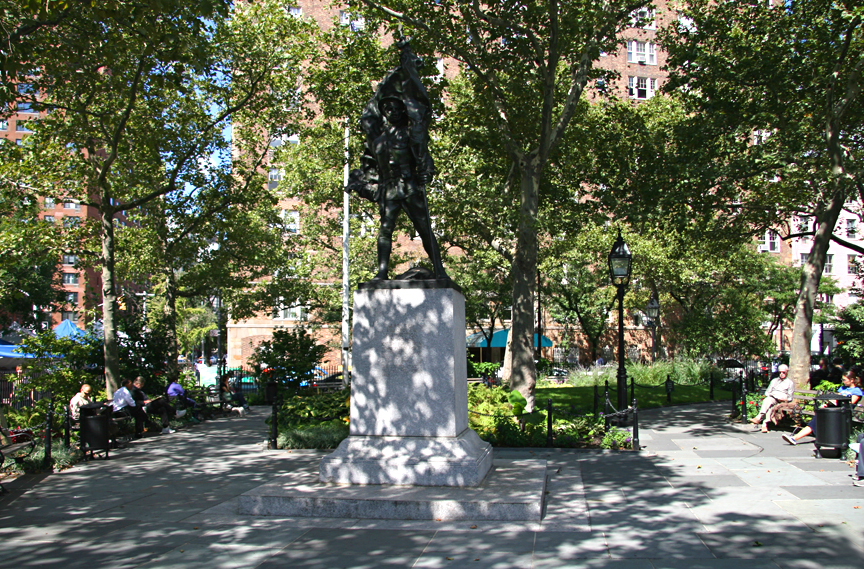
    The rest of the article paints an equally grim view of this square – it has vastly improved since that time. I do find, however that the park/square does not have a particularly strong identity, kind of wallowing in an indistinct obscurity. The park was established in 1831 and was part of Peter Warren’s 300-acre estate. His eldest daughter, Charlotte, married Willoughby Bertie, the Fourth Earl of Abingdon, and a share of the Warren estate was part of her dowry. Her portion included the land that came to be known as Abingdon Square (the name was preserved because the Earl and his wife had sympathized with the American patriots, and he had argued in Parliament against British policy in the colonies).

    The bronze sculpture, Abingdon Square Memorial (also known as the Abingdon Doughboy), was dedicated in 1921 in memory of local men who fought in World War I – twenty thousand spectators attended. From 1988 to 1989, the park underwent a restoration. There is also a greenmarket on Saturdays. This small spot of green in the West Village, bounded by several thoroughfares yet set apart, is a perfect spot to relax, read, and people watch…


  • Economy Candy

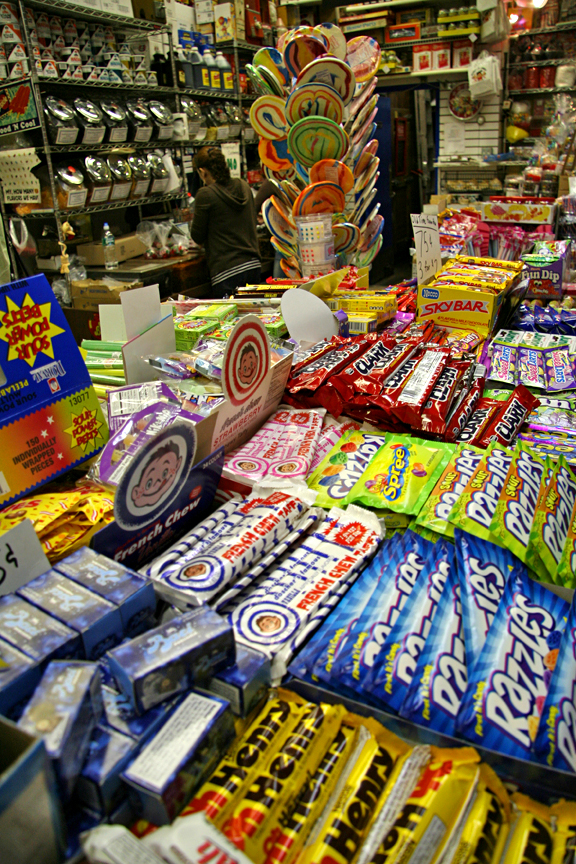
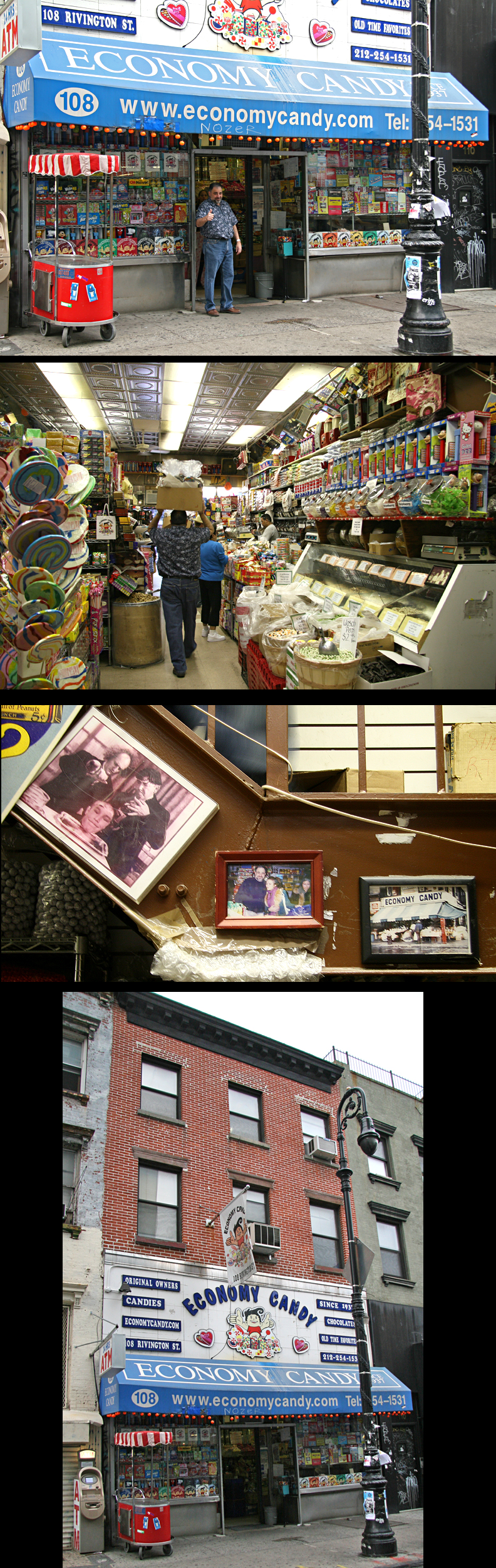
    Feeling a dearth of candy in our office yesterday and being a nice warm autumn day for a walk, two of us decided to make a pilgrimage to Economy Candy at 108 Rivington Street on the Lower East Side. The family-owned business occupies an entire 3-story building (click here for more photos), the ground floor for retail and the upper floors for custom packages and managing their online business.

    Jerry Cohen runs the store with his wife Ilene and son Mitchell. One if Jerry’s smartest moves was buying the building they’re in – good insurance against the rapidly escalating rents in NYC. I had the good fortune of meeting Jerry and his wife – they were extremely friendly and accommodating. The visit was an experience of classic old New York City. From their website:

    “When Jerry Cohen’s father opened Economy Candy in 1937, it was a typical corner candy store of its day. Bulk bins full of colorful hard candies enticed youngsters with their panorama of choices. Guys could buy their dolls a heart-shaped box of chocolates when they had trouble expressing themselves in words. Barrels in the back yielded a geography lesson of nuts from around the world. The hard times of the Depression were easing up, the grim specter of war-to-come wasn’t yet hovering over American shores, and television was a scientific marvel that was unlikely to have any practical commercial application.”

    They have built a reputation on pricing and selection (they have hundreds of kinds of chocolates, candies, nuts, dried fruits, halvah, and sugar-free candy), but what is particularly enticing to me are the nostalgia favorites. Nearly all the candies of my childhood are there, products that are virtually impossible to find anywhere else and certainly not all in one place. Skybars, Squirrel Nut Zippers, candy cigarettes, candy buttons, Nik-L-Nip, Necco Wafers, Chuckles, Charleston Chew, Jolly Ranchers, Good and Plenty, Smores, Jaw Busters, Milk Duds, Bit-O-Honey, Sugar Daddy, Pez, wax lips, and the controversial Chocolate Babies. Hey, do you want to make your own authentic New York Egg Cream? They have Fox’s U-Bet chocolate syrup by the gallon…


  • Cold Stone

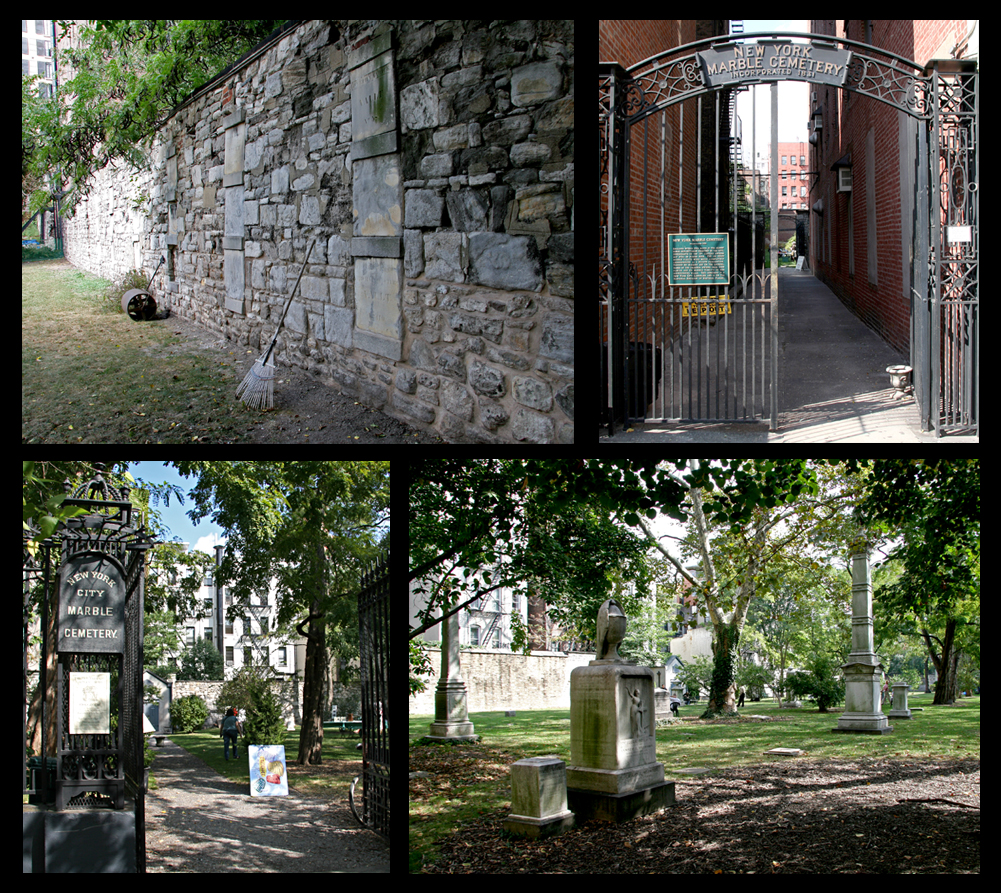
    I’ve walked the East Village for decades but was completely unfamiliar with these cemeteries until recently, when I visited as part of Open House New York. The New York Marble Cemetery (1830) and the New York City Marble Cemetery (1831) are the two oldest non-sectarian burial grounds in NYC. The older of the two, the New York Marble Cemetery, is very easy to miss. The entrance/walkway is a narrow alley between two buildings on 2nd Avenue (at what was once known as 41½ Second Avenue), with two iron gates leading to a unique secret garden cemetery. No gravestones were placed on the ground; instead, marble plaques set into the cemetery’s long north and south walls give the names of the families interred nearby. All burials are in 156 below-ground vaults made of solid white Tuckahoe marble. In response to fears about yellow fever outbreaks, legislation had outlawed earth graves, so marble vaults the size of small rooms were built ten feet underground in the excavated interior of the block bounded by 2nd Ave, 2nd Street, 3rd Street, and the Bowery. Access to the 156 family vaults is by the removal of stone slabs set below the grade of the lawn. Approximately 2,060 people are buried there. Most of the interments took place between 1830 and 1870; the last was in 1937.

    This cemetery was initially so popular that a second, the New York City Marble Cemetery, was opened around the corner on 2nd Street (bottom two photos). There are many similarities between these two independent cemeteries (such as the underground vaults), but this one may be readily seen through a handsome iron fence with gate, extending along its south side on East Second Street between First and Second Avenues. It is surrounded by a high brick wall and by houses and tenements on three sides. Also, there are a few large grave stones. What’s interesting about these cemeteries is that at the time of their establishment, the area was anticipated to develop into a fashionable district. In fact, quite the opposite happened, with the area becoming dominated with tenements and the cemeteries neglected. Eventually they gained landmark status and the neighborhood finally improved. But that’s another story…


  • Bomb Factory

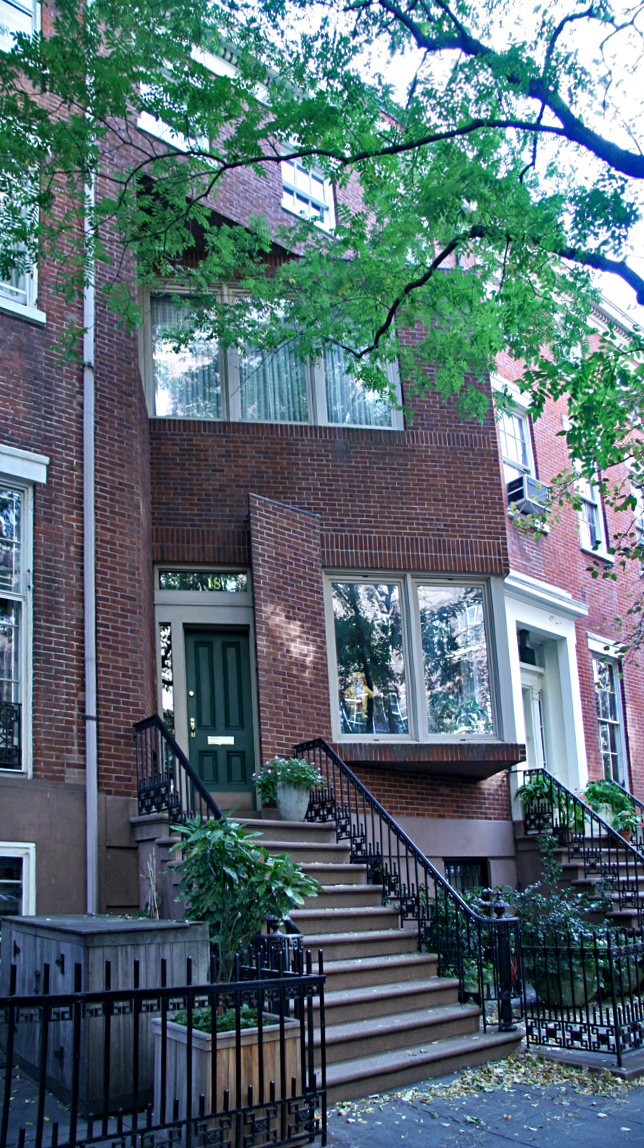
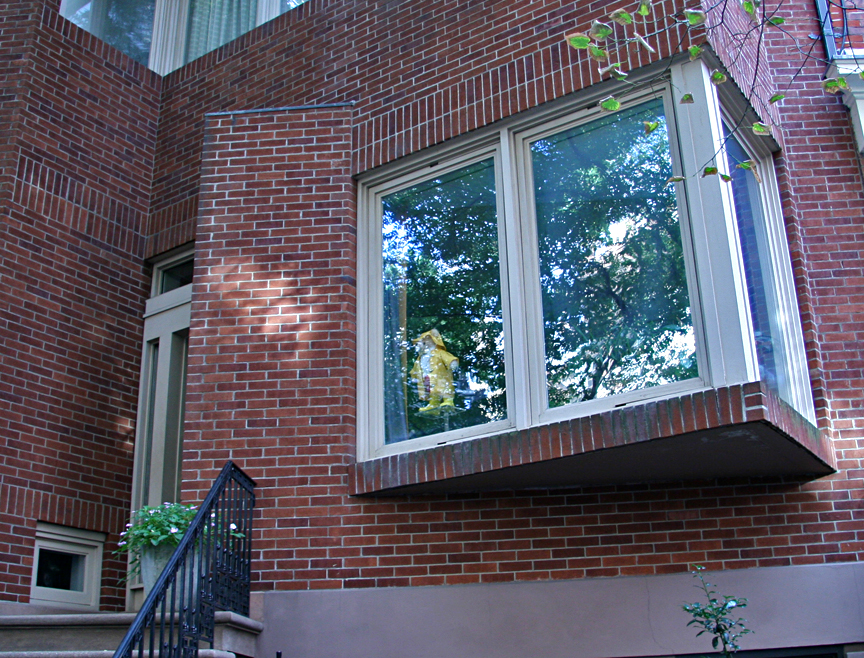
    On March 6, 1970, a townhouse at 18 West 11th Street exploded, leaving the entire building destroyed and damaging the neighboring building at number 16, where Dustin Hoffman was resident. An accidental detonation had occurred in a subbasement bomb factory run by members of the Weathermen. Weatherman (or the Weathermen and later the Weather Underground Organization) was a small group of radicals formerly from the SDS (Students for a Democratic Society).

    This group was very extreme, calling for the revolutionary overthrow of the U.S. Government using violent means. The bombs had been intended to be used at Columbia University. The explosion killed three members and sent Cathy Wilkerson and Kathy Boudin running into the street naked (Wilkerson’s family owned the building and were away on vacation). An F.B.I. report said that ”had all the explosives detonated, the explosion would have leveled everything on both sides of the street.”

    The building, built in the 1840’s by Henry Brevoort Jr., was once owned by Charles Merrill, a founder of Merrill Lynch & Company. His son, the poet James Merrill, was born there. James wrote a poem after the incident entitled 18 West 11th Street. There are too many details in this amazing story to go into here, so I highly recommend this article by Mel Gussow from the New York Times in 2000.  The lot sat vacant for nearly a decade before a replacement house, designed by Hugh Hardy, was built in 1978. As you can see from the photo, the modern design was quite a departure from the 19th-century row houses around it. The new design, with its angular facade jutting out, was controversial and took some effort to finally pass the landmarks commission. Very radical…

    Note: There is a Paddington Bear which the current residents keep in the picture window. His attire is changed according to the weather. Click here for photo.


  • Sardi’s

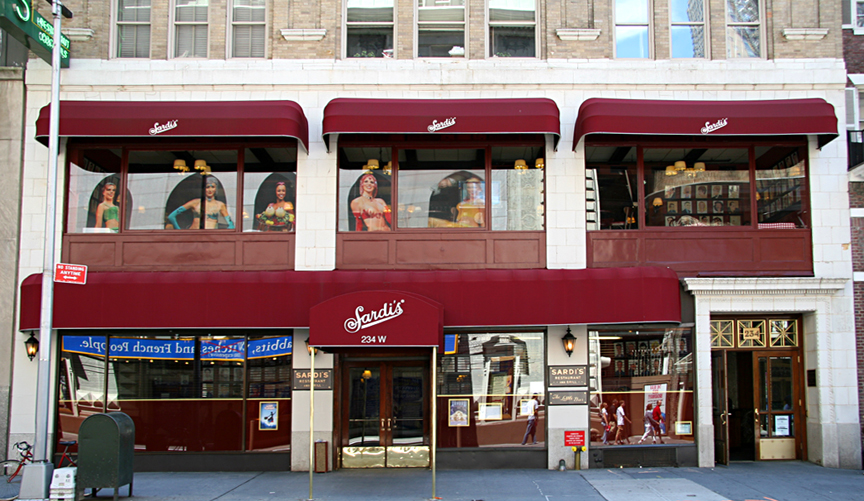
    Unfortunately, the story of Sardi’s, like many others of NYC, is best told in past tense. They have not gone out of business, but that which brought the restaurant its notoriety has gone. What’s left is more of a cliche for tourists. Sardi’s, located at 234 West 44th Street, is in the heart of the theater district and was an integral part of the fabric of that world since Vincent Sardi, Sr. opened the Little Restaurant at 246 W. 44th Street in 1921. Patrons referred to it as Sardi’s, and so the name stuck. In 1927, they moved to the current location. In 1947, management was taken over by Vincent Sardi, Jr. The restaurant is known for the hundreds of caricatures of show-business celebrities on its walls, inspired by Joe Zelli’s, a Parisian restaurant and jazz club. The Sardi’s caricatures were done by Alex Gard, a Russian refugee.

    The stories surrounding Vincent Sardi, Jr. are legendary and speak of old New York. Sardi’s became a Broadway landmark – an institution central to the theater world, with actors, agents, and critics utilizing it as a meeting place. Vincent loved theater and has been referred to as the “Mayor of Broadway.” He was totally supportive of the theater world and was known to carry the tabs of out of work actors. Read his obituary in the New York Times (Sardi died on January 4, 2007).

    Broadway has changed. Stephen Sondheim spoke of a dumbing down of theater and that there is no longer a Broadway community: ”There’s none whatsoever. The writers write one show every two or three years. Who congregates at Sardi’s? What is there to congregate about? Shows just sit in theaters and last.”


  • Ellis Island

    It has been estimated that nearly half of all Americans can trace their family history to at least one person who passed through Ellis Island. This island, at the mouth of the Hudson River in New York Harbor, was the point of entry for over 12 million immigrants entering the United States from January 1, 1892 until November 12, 1954.

    There are many fascinating stories about the island, the immigrants, and the immigration process at Ellis Island: the six-second physical examination, the 29 questions which were asked of newcomers, the long transatlantic journey many had to the US as third-class cargo, the tragic fate of the 2% who were rejected from admission and returned to their countries of origin, and the complex dispute between New York and New Jersey over the island’s jurisdiction. This is an enormous subject on which much has been written – for more information, try any of the following sites: the overview at Wikipedia, Ellis Island National Monument official site, and an Ellis Island web site.

    The building itself underwent a major $160 million renovation starting in 1984. The island was reopened to the public in 1990. To visit Ellis Island is something everyone should try to do…


  • The Frying Pan

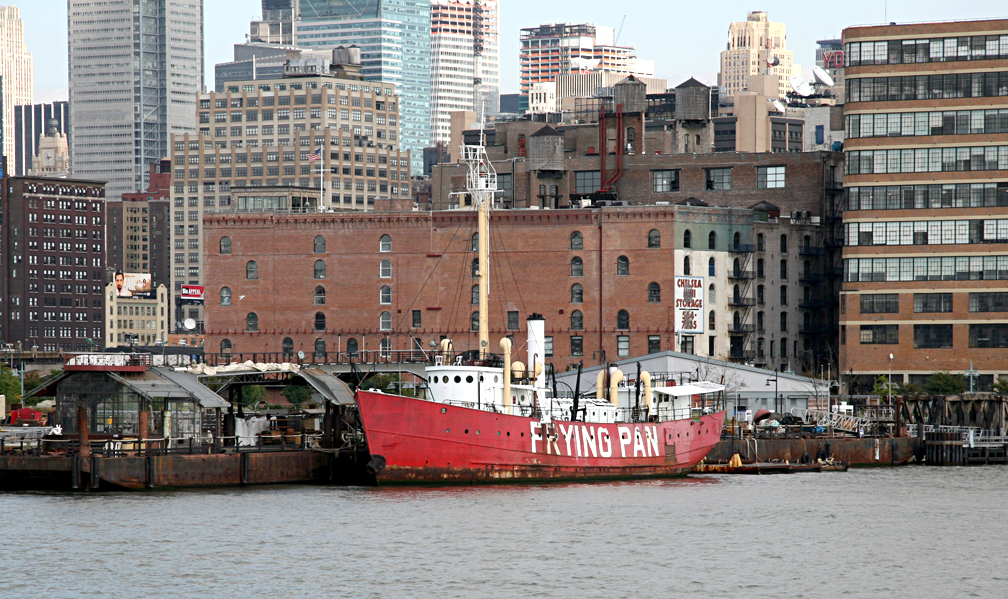
    There appears to be no end to ingenuity and appropriation in this city, particularly when it comes to business. The Frying Pan was unknown to me until Sunday, when I photographed it on a neighborhood boat ride. This historic boat, built in 1929, was used as a lightship at Frying Pan shoals off the coast of Cape Fear in North Carolina, a notoriously hazardous area for ships (lightships or lightvessels are used in place of lighthouses where the water is too deep for a lighthouse). The Frying Pan was finally decommissioned in 1967. It then served a number of uses at various locations until it capsized and sunk in Chesapeake Bay in 1984. The ship remained underwater until 1987, when she was raised, restored, and moved to NYC’s Pier 63 and docked to a Lackawanna railcar barge.

    The pair of ships served a number of maritime functions over the years (Manhattan Kayak Company, New York Outriggers, New York Polo, and the Hudson River Paddler’s Guild). Their lease was lost in 2006, and on April 9, 2007, they relocated a few blocks north at Pier 66 (26th-27th Streets). The barge and the Frying Pan are available for rental for functions, parties, etc. Check out their website and learn more about the boat and its uses.

    Please note: Their website is not up to date. I called this morning to confirm their location at Pier 66, which conflicts with their site…


  • Privy

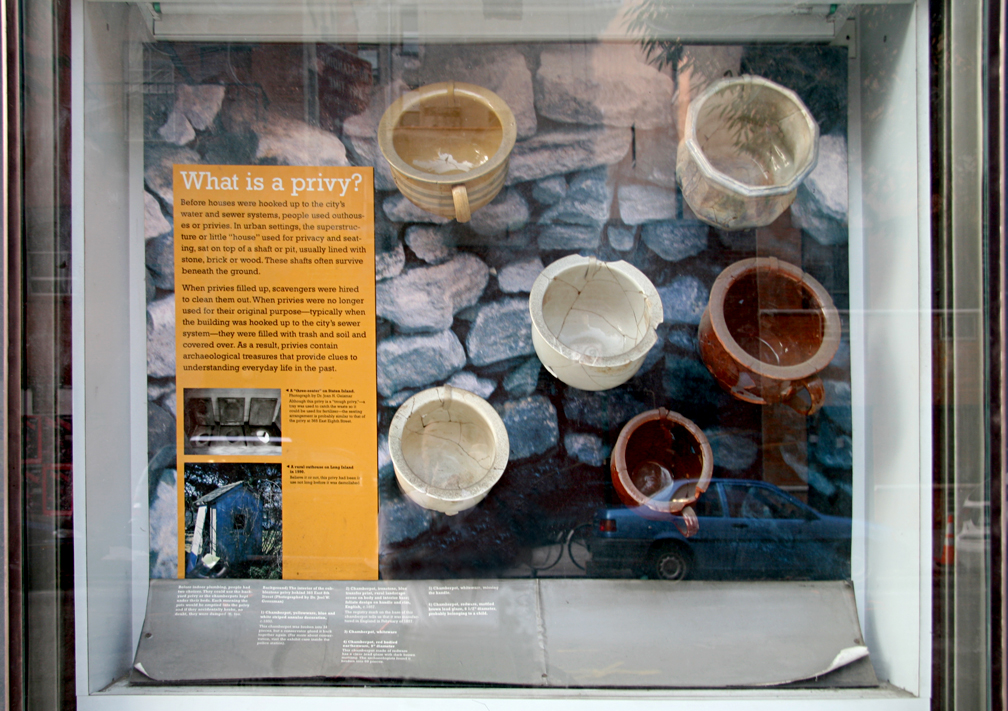
    In the East Village on 8th Street and Avenue C, there is a window display of various archaeological findings divided into several themed sections: The Time to Relax, Setting the Table, What is a Privy?, and The History of Our Block. The artifacts in the displays are circa 1850. Between 1846 and 1850, over 1200 buildings were erected in this area (now known as Alphabet City), which became known as Kleindeutschland or “Little Germany” due to the influx of German immigrants. The photo is of several chamberpots in the display on privies. The caption reads:

    “What is a privy? Before houses were hooked up to the city’s water and sewer systems, people used outhouses or privies. In urban settings, the superstructure or little “house” used for privacy and seating sat on top of a shaft or pit, usually lined with stone, brick or wood. These shafts often survived beneath the ground. When privies filled up, scavengers were hired to clean them out. When privies were no longer used for their original purpose-typically when the building was hooked up to the city’s sewer system-they were filled with trash and soil and covered over. As a result, privies contain archaeological treasures that provide clues to understanding everyday life in the past. Before indoor plumbing, people had two choices. They could use the backyard privy or the chamberpots kept under their beds. Each morning the pots would be emptied into the privy and they accidentally broke, no doubt, they would be dumped in, too.”

    I selected this group of artifacts because people seem fascinated by personal hygiene in other times and places. One of the most asked questions NASA gets involves bathroom use in space. There is even a book: How Do You Go To The Bathroom In Space?, by astronauts William Pogue and John Glenn…


  • dinamic_sidebar 4 none

©2026 New York Daily Photo Entries (RSS) and Comments (RSS)  Raindrops Theme