• Category Archives NYC’s History
  • Izzy and Art

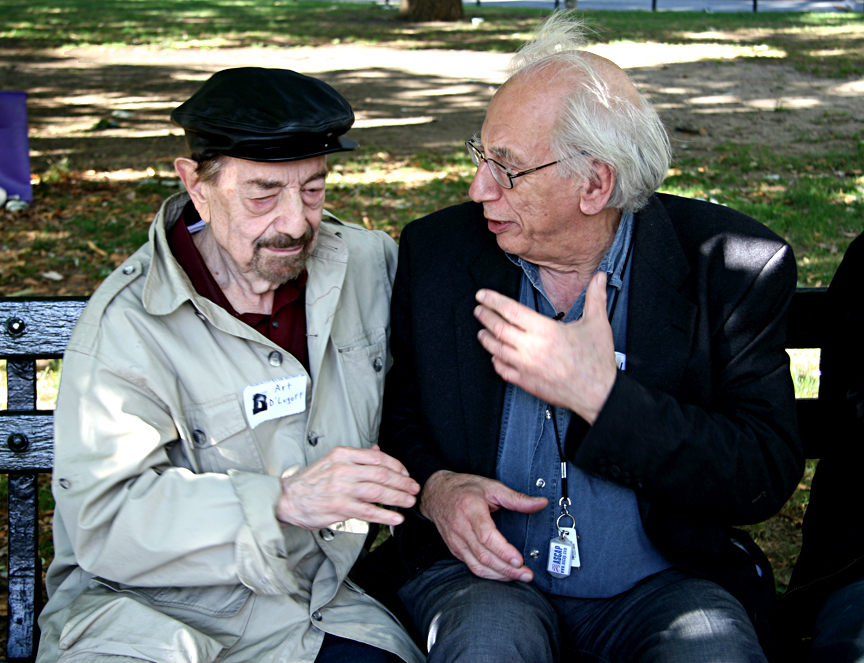
    When I saw these two men being interviewed with a boom mike overhead and a camera rolling at the recent Bluegrass Reunion, I figured that they may be important in the music world. So, I decided to take pictures first and ask questions later. Upon inquiring about their identity, someone very knowledgeable volunteered to educate me. Both were significant figures in the music world. The person on the right is Izzy Young and on the left, Art D’Lugoff.

    Izzy Young, born in NYC in 1928, is noted for his important role in folk music. In 1957, he opened the Folklore Center on MacDougal Street in the Village in NYC, a small walk-up shop, with books and records which became a meeting place, central to everything going on in the local folk scene at the time. Bob Dylan was a frequenter of the shop, listening to music and reading books in the back room. Izzy arranged concerts with folk musicians and songwriters – he produced Dylan’s first concert at Carnegie Chapter Hall in 1961. In 1973, Izzy closed shop here and moved to Stockholm, Sweden, where he opened Folklore Centrum.

    Art D’Lugoff opened the Village Gate in the 1950s. Any New York resident who has been in the city for any time knows of this major nightclub on Bleecker Street. During its 38 years in operation, the Village Gate featured names like John Coltrane, Coleman Hawkins, Billie Holiday, Duke Ellington, Dizzy Gillespie, and even Jimi Hendrix, Jim Morrison, and Allen Ginsberg in a benefit for Timothy Leary. The club closed in 1995, and the space is now occupied by a CVS pharmacy…
  • Pickles

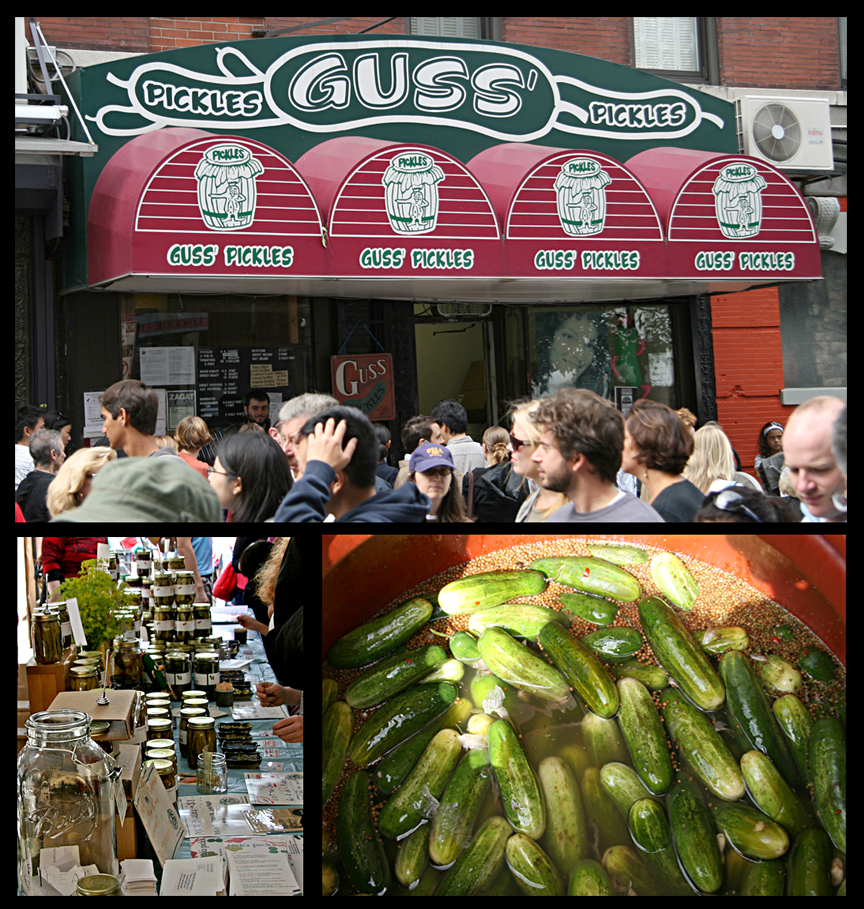
    Sunday was the 7th annual New York City International Pickle Day. I’m not sure we need such a day, but apparently picklers feel that they need equal time, and NYC was pickle country at one time. The festival, co-sponsored by the NY Food Museum and the Lower East Side Business Improvement District (LES BID), was held on Orchard Street between Broome and Grand Streets on the Lower East Side, on the same block as famous pickle vendor Guss’ Pickles (update: In 2010, Guss’ Pickles moved to Borough Park, Brooklyn.). There were pickling demonstrations, children’s activities, tours, exhibits, music, book signings, and, of course, pickles and pickled products for sale and as free samples.

    And Guss’ Pickles? Well, that’s a whole other story and controversy. A hundred years ago, NYC had 200 pickle shops, with half of them in the Lower East Side. Now, virtually all are gone but Guss’ Pickles, founded by Polish immigrant Izzy (Isidor) Guss in 1910. Through a number of twists and turns, there are two companies battling in court over ownership of the name Guss’. Read about the twisted tale here


  • Governors Island

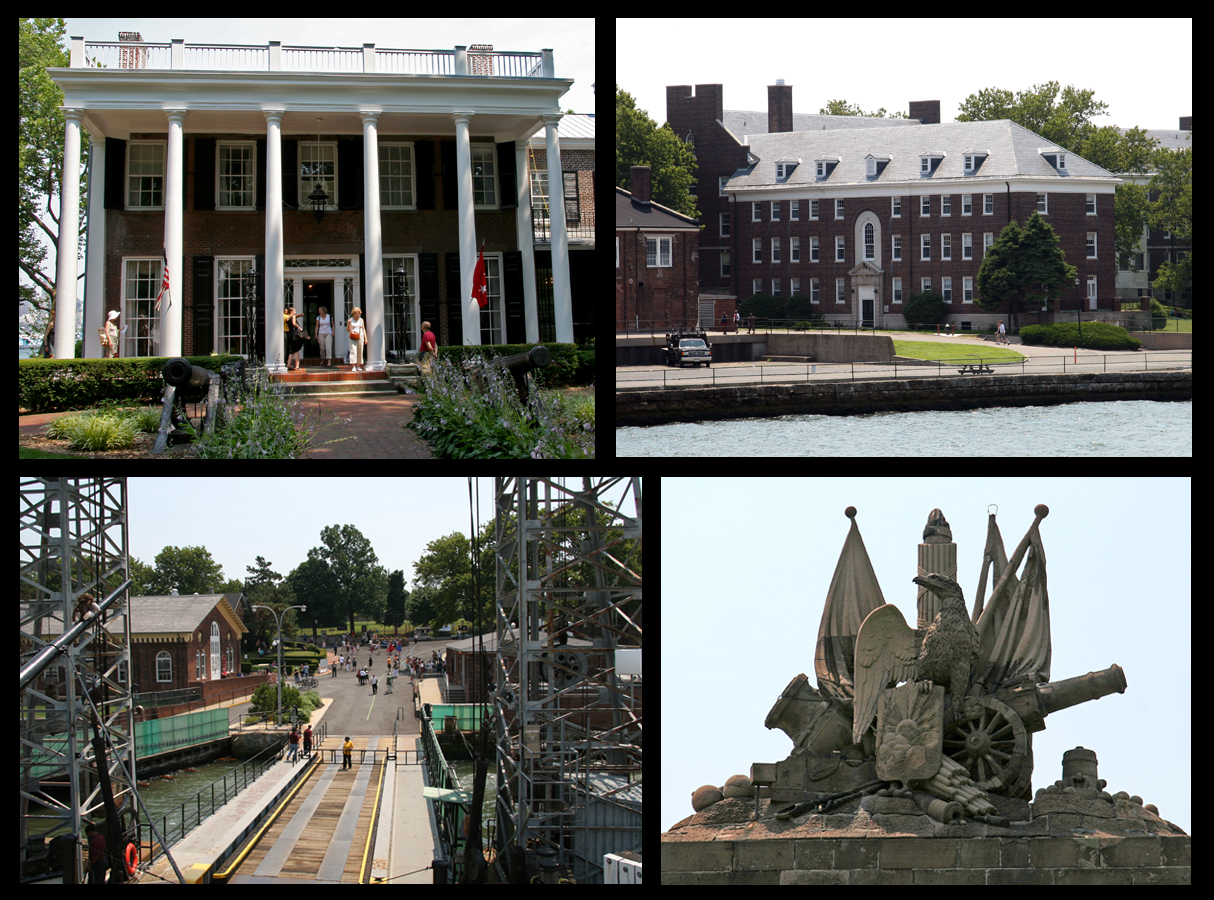
    Shrouded in mystery to most New Yorkers, Governor’s Island has only been opened to the public recently. Since 2003, visitors are permitted during the summer season (by a free ferry). This strategically-placed small island of 172 acres (20% the size of Central Park) in the New York Bay is only 1/2 mile from Manhattan and half that from the Brooklyn waterfront. The island has played a large role in the history of New York; Governor’s Island was the landing place of the first settlers (from the Netherlands) of the tri-state region in 1624 and has been recognized as the birthplace of New York State. First named by the Dutch explorer Adriaen Block, it was called Noten Eylant. In 1664, the English captured New Amsterdam, renaming it New York. The island switched hands between the British and the Dutch over the next 10 years until the British regained exclusive control for the “benefit and accommodation of His Majesty’s Governors,” hence the name. From 1783 to 1966, the island served as a U.S. Army post and from 1966 to 1996 as a major U.S. Coast Guard installation.

    There are over 200 buildings, featuring late 18th- and early 19th-century fortifications, pre-Civil War arsenal buildings, and Victorian and Romanesque Revival housing, as well as early 20th-century neo-classical architecture. Five buildings within the Historic District, including Fort Jay and Castle Williams, are individually listed in the National Register of Historic Places. This plot of prime real estate is a huge asset, with its unique location and spectacular vistas. Yet it lay fallow for years. In January 2001, President Clinton designated 22 acres of the Island, including the two great forts, as the Governors Island National Monument. 92 acres, or about half of the island, is historic district. In 2003, the federal government sold the island to NYC for $1. In 2006, a more proactive position was taken regarding development. Competitive proposals have been made for development, with announcements soon…


  • Lotos Club

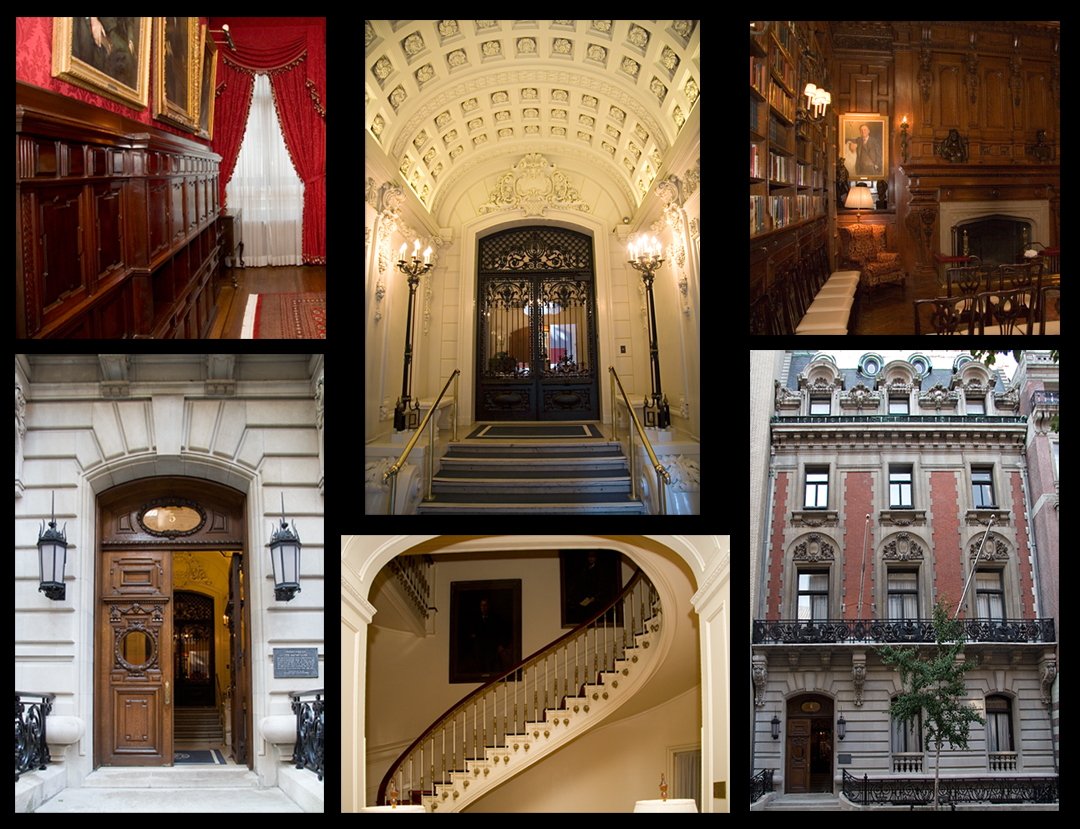
    I was fortunate yesterday to be able to attend a function (the wedding of a friend) at the Lotos Club, one of the oldest literary clubs in the U.S. This private club is located at 5 East 66th Street in a brick and limestone French Renaissance building, designed by Richard Howland Hunt and built in 1900 by the daughter of William H. Vanderbilt.

    The club dates back to 1870 when a group of young New York journalists met in the office of the New York Leader. These men were De Witt Van Buren of the Leader (the first president), Andrew C. Wheeler of the Daily World, George W. Hows of the Evening Express, F. A. Schwab of the Daily Times, W. L. Alden of the Citizen, and J. H. Elliot of the Home Journal. Previous failures at creating a strictly literary organization had demonstrated that this was not viable, so membership to a broader group was decided upon. The stated primary object of the club was “to promote social intercourse among journalists, literary men, artists, and members of the theatrical profession.” The club has a long list of well-known members, such as Mark Twain. It has had a number of locations, from its first home at 2 Irving Place off 14th Street to its current location at 5 East 66th Street.

    NOTE: The selection of the name The Lotos Club was to convey “an idea of rest and harmony.”. The spelling of Lotos comes from Alfred Lord Tennyson’s poem, The Lotos Eaters, two lines of which were selected as the motto of the club:

    In the afternoon they came unto a land
    In which it seemed always afternoon

    The endless afternoon setting provided the ideal atmosphere to indulge in creative and stimulating thought and conversation…


  • Gang Wars

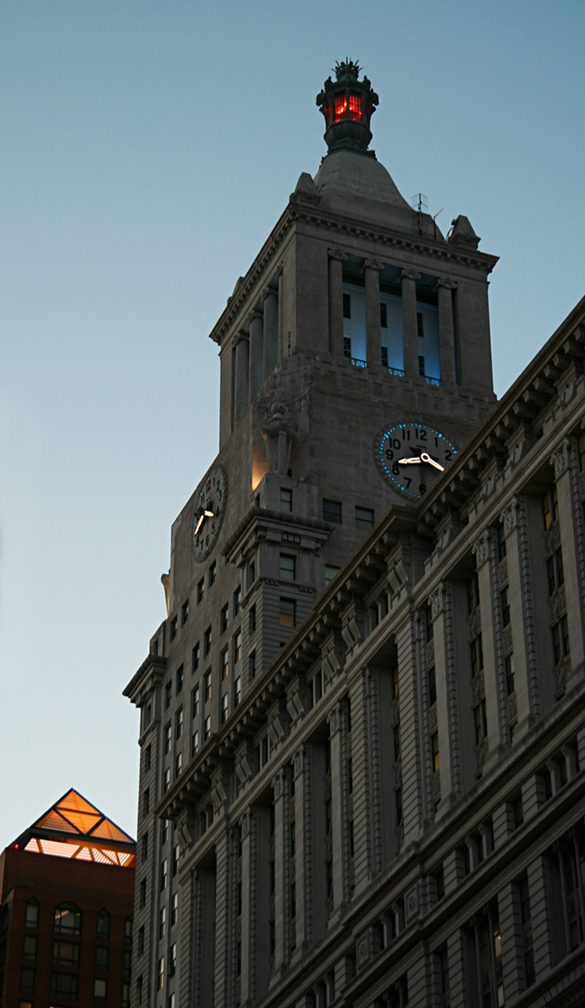
    Between 1823 (with the formation of the New York Gas Light Company), and 1877, there were six competing gas companies in NYC – at times employees literally battling for customers in the streets, leading to the term “gas house gangs.” Add to this brew Edison’s invention of the electric light bulb in 1879 and the creation of Equitable Gas, backed by Rockefeller. The competing gas companies were forced to remarket and promote gas for other purposes. In 1884 came the inevitable merger of the six companies, forming the Consolidated Gas Company of New York. Offices were established at 4 Irving Place (where the current offices and tower are located) at the home of the Manhattan Gas Light Company in an Italianate brownstone. Acquisitions of various electric companies were made, including the New York Edison Company. In 1936, the name was changed to the Consolidated Edison Company.

    ConEd is the product of acquisitions and mergers of more than 170 companies. The office buildings of ConEd are a assemblage of structures built at different times, starting with a 12-story building designed by Henry Hardenbergh in 1910 at 15th and Irving, culminating in the 26-story building (seen in the photo) designed by Warren and Wetmore, known for their Beaux-Arts work such as Grand Central. The limestone clad building is quite prominent in the night skyline of NYC with its numerous illuminated features: a 3-story tower with Doric colonnade, four clock faces, and a 38-foot bronze lantern. This is one of a handful of iconic Manhattan buildings which can be seen from many vantage points, along with the Met Life Tower, the New York Life Tower, the Chrysler Building, the Empire State Building, and the Zeckendorf Towers. Please learn your illuminated buildings – there will be a quiz 🙂


  • Radio City

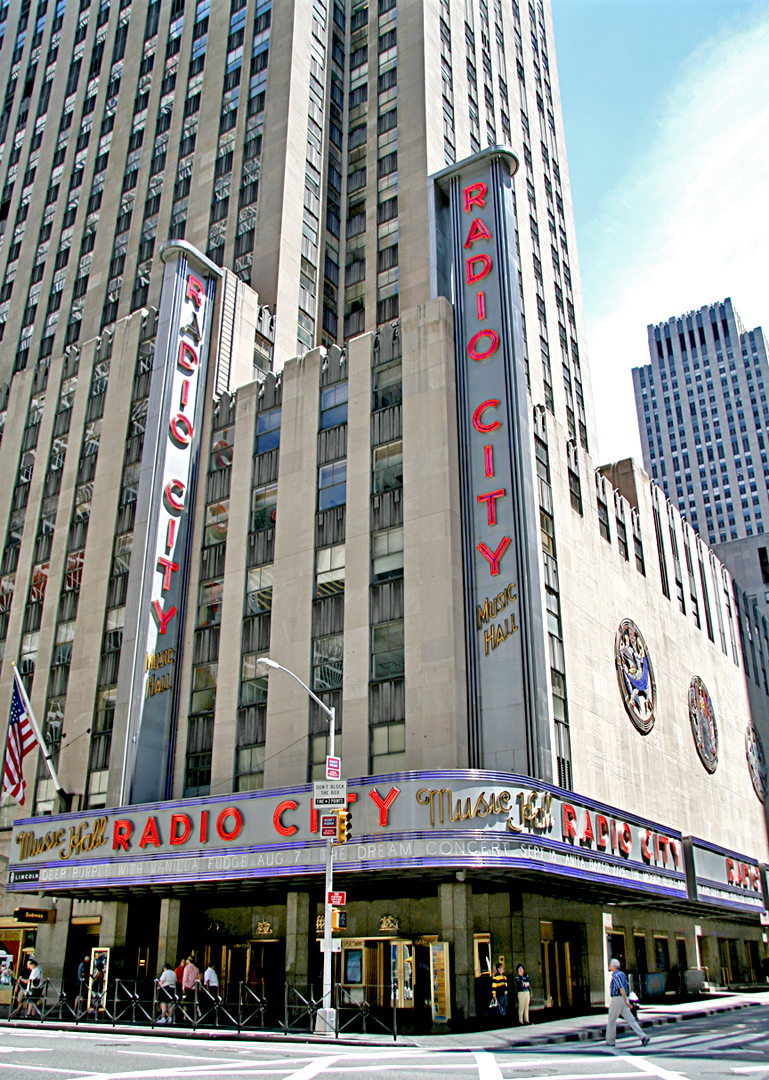
    This is Radio City Music Hall, one of NYC’s best known attractions, top tourist destinations, and part of the Rockefeller Center complex. It has a roster of film debuts and a history of stage shows with luminaries such as Frank Sinatra, Ella Fitzgerald, Linda Ronstadt, Bill Cosby, Liberace, Sammy Davis, Jr., Count Basie, Itzhak Perlman, Ray Charles, B.B. King, et al.

    The music hall was created by John D.Rockefeller, Jr., impresario Samuel “Roxy” Rothafel, and RCA chairman David Sarnoff (the name “Radio City” is from RCA – Radio Corporation of America). Radio City opened in December 1932. The structure was designed by architect Edward Durell Stone, with the spectacular interior by Donald Deskey, winner of the design competition at that time. Deskey was a pioneer in industrial and packaging design with an impressive list of credits, including the Joy detergent bottle (1950), Cheer detergent box (1951), window displays at Saks Fifth Avenue, and exhibits at the New York World’s Fair in 1939.

    The interior, designated as a historic landmark in 1979, is an Art Deco masterpiece with one of the largest stages in the world. Ceilings reach 84 feet. The Great Stage, framed by a huge proscenium arch that measures 60 feet high and 100 feet wide, is an engineering marvel with a system of hydraulic elevators. The Mighty Wurlitzer pipe organ houses its pipes in 11 different rooms. With “The Progress of Man” as Deskey’s general theme, he created a stunning tribute to human achievement in art, science, and industry. He made art an integral part of the design, engaging fine artists to create murals, wall coverings, and sculpture; textile designers to develop draperies and carpets; and craftsmen to make ceramics, wood panels, and chandeliers. All manner of precious materials (including marble and gold foil) and industrial materials were used. In 1999, the facility underwent a massive $70 million dollar restoration. The music hall is home to the renowned Rockettes, a precision dance team, virtually synonymous with the theater itself, along with the annual Radio City Christmas Spectacular, a tradition in NYC since 1933. It’s impossible to give a real sense of this magnificent space in writing – I suggest you visit at least once in your life…


  • The Sherry

    Posted on by Brian Dubé

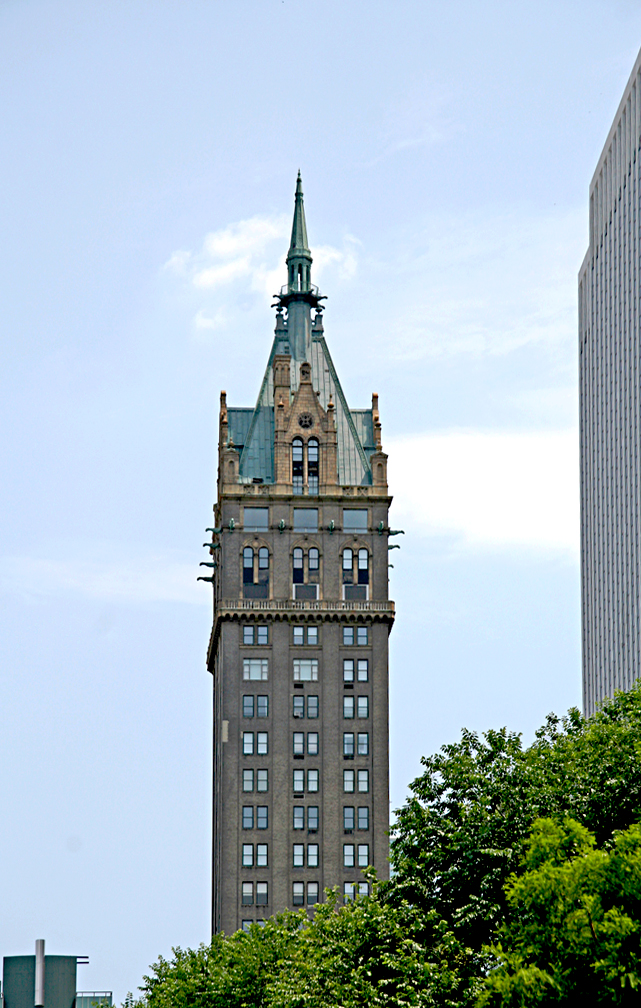
    This is the Sherry Netherland (as seen from Central Park), an absolutely exquisite and remarkable building in the finest location in NYC, at 59th Street and Fifth Avenue with immediate neighbors such as the Metropolitan Club and the Pierre and Plaza Hotels. If you are not familiar with it, this is maybe due to its somewhat understated elegance and small lobby, unlike that of the Waldorf Astoria, e.g. The Sherry does not even have a Wikipedia entry, yet many architects consider it one of the finest skyscrapers in NYC. Built in 1927, it stands at 570 feet/38 stories. The Sherry Netherland is an apartment hotel – there are 53 guest hotel rooms and 97 cooperative apartments ($1.3 – $13.5 million; cash only). Above the 24th floor, there is only one apartment per floor.

    The Sherry was designed by renowned architect Leonard Schultze, along with his partner, S. Fullerton Weaver. Their firm also designed the Pierre, the Waldorf, the Breakers (Palm Beach), and the Biltmore hotels in Atlanta, Coral Gables, and Los Angeles. The Sherry features travertine marble facing on the base and an elaborate Gothic-inspired minaret. Unique touches include the whimsical griffins with hanging lanterns that guard the exterior. Some of the finest retailers grace the street level, such as A La Vieille Russie and Domenico Vacca. The lobby was modeled after the Vatican Library. There are classical friezes rescued from the Cornelius Vanderbilt mansion one block south where Bergdorf Goodman now stands, vaulted ceilings, ornate mirrors, crystal chandeliers, hand-loomed French carpets (removed in the summer, allowing the beautiful marble floors to show), and antique furnishings. Corridors feature vaulted ceilings, as well as faux columns hand-detailed in gold leaf.

    They employ a full-time person to do nothing but reapply gold leaf to the hotel’s many architectural details and hand-paint the exquisite detail on the room numbers and elevators. Attendants are on duty 24 hours a day in the Sherry’s original wood-paneled elevators, embellished with hand-painted Renaissance scenes. Attendants wear full livery and use approximately 140 pairs of white gloves each week. Some of the bathrooms have crystal chandeliers. And then there are the rooms that face Central Park…

    Posted on by Brian Dubé

  • The Good Word

    Posted on by Brian Dubé

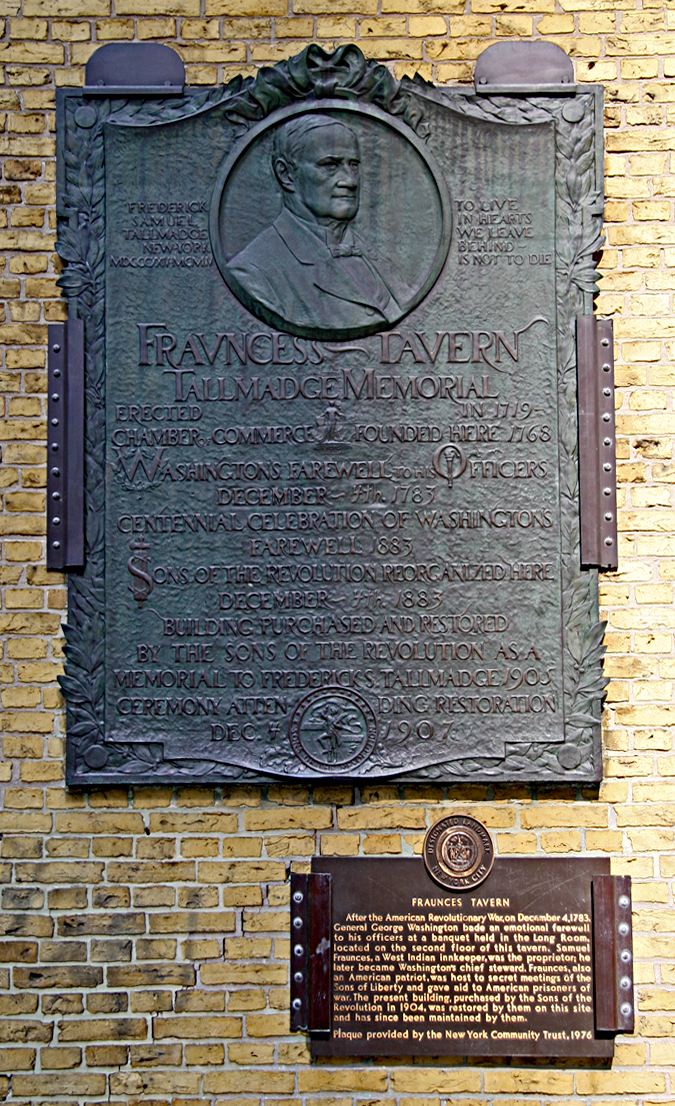
    This is Fraunces Tavern in downtown Manhattan, located at 54 Pearl Street at the corner of Broad Street (click here for a photo of the building plaque). This establishment in the Fraunces Tavern Historic District, both museum and tavern, is a household name to most New Yorkers, being generally considered the oldest building in the city and known as the place where, on December 4, 1783 in the Long Room, General George Washington bid farewell to his officers at the war’s end. However, the age of this building has been the subject of much controversy.

    The present structure is a reconstruction of the original by architect Mersereau in 1907 for the Sons of the Revolution. At the time, critical articles appeared with response from the architect. The original Fraunces Tavern was built as a residence in 1719 by Stephen Delancey. In 1762, it was sold to Samuel Fraunces, who turned it into a tavern. It was used for many pre- and post-revolutionary war purposes. After the war, when NYC served as the nation’s capital, the tavern housed the offices of the Departments of War, Treasury and Foreign Affairs. The building was rebuilt a number of times in the 1800s due to fires – the appearance of the original building is not known with any reasonable certainty. The reconstruction did incorporate remaining portions of the original structure, particularly some interior woodwork. The Fraunces Tavern Museum refers to the 1907 work as a restoration; the AIA guide refers to it as a “highly conjectural construction–not a restoration”; some may perhaps prefer the term reconstruction. What’s the Good Word?

    Posted on by Brian Dubé

  • Arch Rebels

    Posted on by Brian Dubé

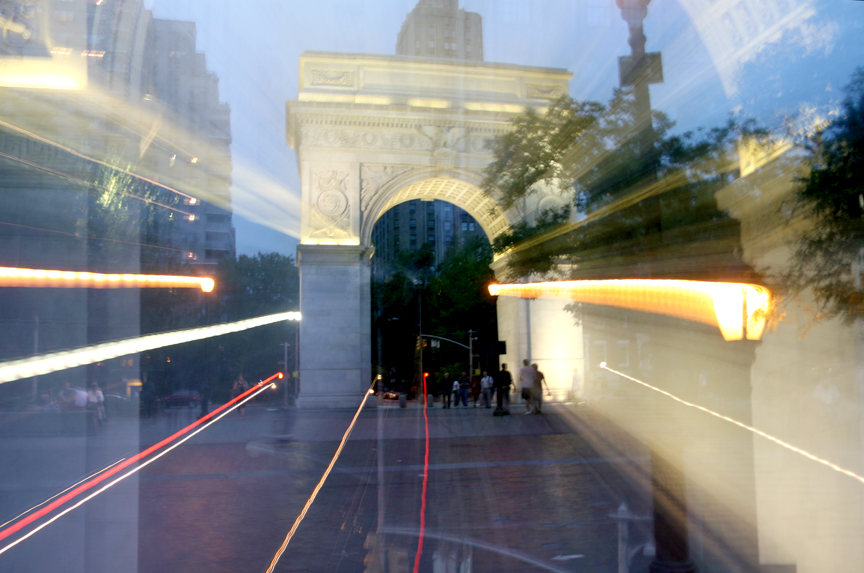
    The Washington Square Arch is one of my favorite subjects, and I have tried not to overuse it. However, I already have done at least 7 postings where all or part of the arch appears in the photo. Apart from the obvious – that it is one of just a handful of monuments in the city – it has gone through a recent restoration and is beautifully illuminated at night. This is is also the neighborhood where I live, so I see it numerous times daily. I have always been obsessed with monuments; as a child, my obsession was the Washington Monument. There is a small doorway in the west pier of the arch. Behind it is an interior stairwell there which ascends to the top, where there is a vacant chamber, and from there a trapdoor to the rooftop.

    One of the most often told stories is that of a snowy night in 1916, when artists Marcel Duchamp and John Sloan, along with 4 others (Gertrude Drick, Forrest Mann, Betty Turner, and Charles Ellis of the Provincetown Playhouse) snuck up to the top of the arch with Chinese lanterns, food, drink, balloons, and cap pistols. There, in a night of revelry, they read a declaration proclaiming the “free and independent republic of Washington Square.” They fired the toy pistols, let the balloons loose, and spent the night eating and drinking while a crowd gathered below. I have not done a posting on the arch per se because someday, somehow, in honor of those rebels, I will get inside and to the top. And when I do, there will be a proper posting and history with plenty of photos – inside, outside, staircase, chambers, rooftop with views – and you will see them here…

    More on the Washington Square Arch: Jeopardy, Nested Embraces, Cello, Singing Bowls, Evening Arch, One Fifth Avenue, Music for 9 Basses and 1 Cello

    Posted on by Brian Dubé

  • Two for One

    Posted on by Brian Dubé

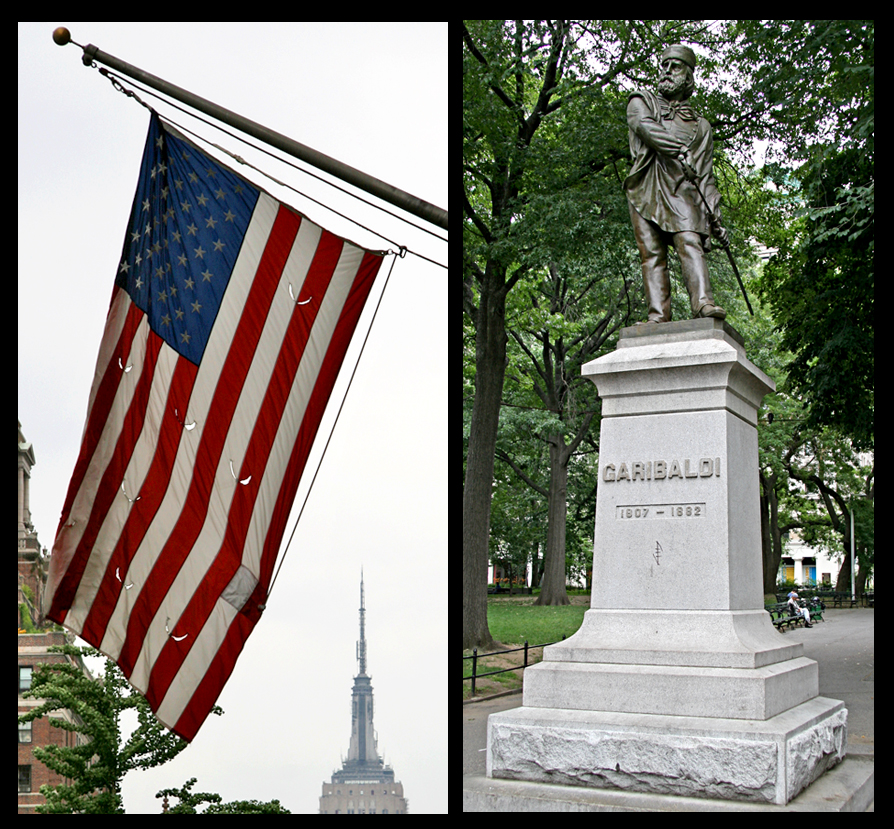
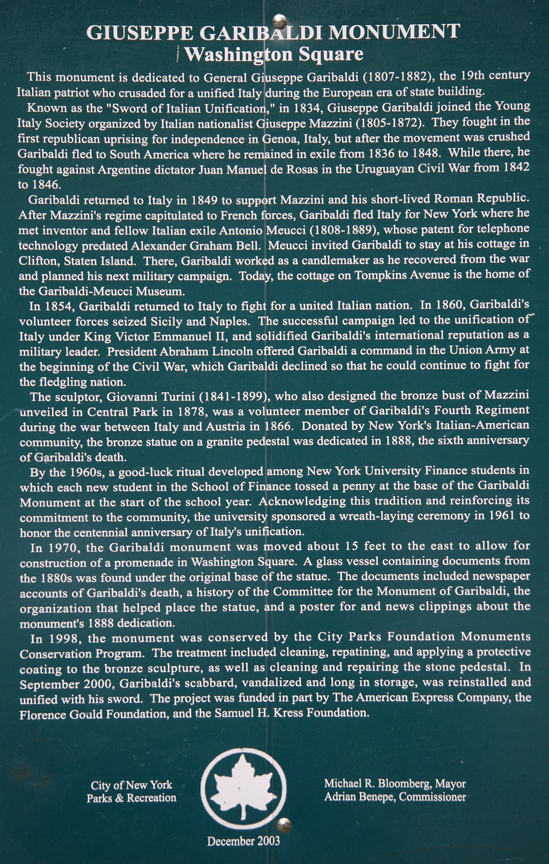
    Today is not only Independence Day but also the 200th birthday of Giuseppe Garibaldi – he was born in Nice (Nizza) on July 4, 1807. The statue shown in the photo sits in Washington Square Park. Last night, there was a celebratory concert, and today there is singing of Italian songs during the day.

    Garibaldi was a military leader who is credited with unifying Italy. He was exiled from Italy a number of times; from 1850 to 1853, he lived in Staten Island, New York. The sculptor of the bronze statue, Giovanni Turini, was a volunteer member of Garibaldi’s Fourth Regiment. It was donated by the Italian-American community in 1888, six years after Garibaldi’s death. Click here for a photo I took of the plaque by the statue; it gives a brief bio of Garibaldi and information regarding the statue itself.

    Tonight, of course, we have the annual fireworks sponsored by Macy’s at 9:20 PM. There are many viewing areas – the prime area is the FDR Drive, which is closed to vehicles from 14th to 42nd Street. Of course, there are many other viewing areas – Roosevelt Island, Long Island City (Queens), Liberty Park, NJ, South Street Seaport, Brooklyn, and the Circle Line. And I understand that tickets are available for viewing from the Empire State Building for 150 people at $175 each…

    Posted on by Brian Dubé

  • Waldorf Astoria Clock

    Posted on by Brian Dubé

    There is nothing that quite epitomizes the luxurious, elegant, classic, and iconic New York like the main lobby of the Waldorf Astoria Hotel. It’s a study in comfort, with soft lighting from table lamps, dark wood, potted palms, and sumptuous seating – I could sit in those beautiful Art Deco chairs for hours watching the ebb and flow of people. Visitors feel like they have sneaked into the world of the privileged, and in a way, they have. Dominating this lobby is the famed, ornately carved, bronze Waldorf Astoria clock, set on an octagonal base made from marble and mahogany and topped with a Statue of Liberty. It is well-known enough to have become a meeting place, much like the clock in Grand Central Station.

    A small plaque below the clock reads:

    “The Waldorf Astoria Clock was executed by the Goldsmith Company of London for exhibition at the Chicago World’s Fair in 1893. It was purchased by the Waldorf Astoria and was the focal point outside the Rose Room of the original hotel at Fifth Avenue and 34th Street. This clock weighs approximately two tons and stands nine feet tall. Around the eight sides of the base are likenesses of Cleveland, Harrison, Washington, Grant, Lincoln, Franklin, Jackson, and Queen Victoria. Under these are bronze plaques depicting various sports and scenes. Westminster chimes ring on the quarter hour.”

    There is a feeling of safety and stability here – the lobby is deep in the center of the city block edifice, and the place just feels like it’s been there forever and will go on unfettered by the changing times…

    Posted on by Brian Dubé

  • Limbo

    Posted on by Brian Dubé

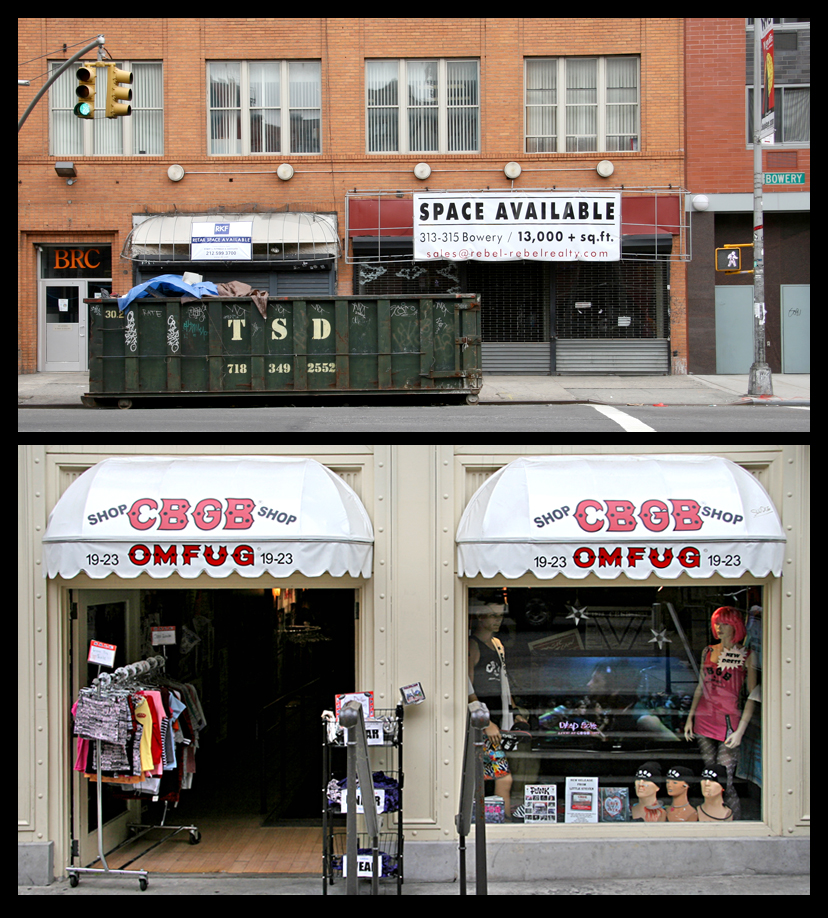
    Last fall, I posted twice regarding CBGB and their closing in October 2006, with numerous shots of the interior (click here and here). Of course, the closing of such a legendary club after 33 years was a big story and was controversial – some felt that the club should have been given landmark designation in order to save it, while others felt that the club had become more of a tourist mecca and no longer lived up to its original reputation. I thought I would take a final opportunity to photograph the club’s original location while vacant, before a new tenant takes over the space.

    The media, in numerous stories and interviews, has reported that Hilly Kristal, the owner, has intentions to move the entire club to Las Vegas and take as much of the original club as he could: “I intend to take everything out of there that represents CBGB. We’re going to take the bars, the toilets, the urinals, even the doors. We want to re-create the essence of the club.” There have also been suggestions of franchises of the club other than Las Vegas. In the interim, a CBGB store has opened at 19-23 St. Marks Place (bottom photo), which also serves as the interim location for their fashion/merchandise line and their wholesale and online operations. I have not found any confirmation yet of their move to Las Vegas…

    Footnote: CBGB & OMFUG stands for “Country Bluegrass Blues and Other Music For Uplifting Gormandizers,” which reflects the owner’s original intention for the type of music to be featured – the club ended up becoming the birthplace of American punk and a venue for rock.

    Posted on by Brian Dubé

  • Physical Graffiti

    Posted on by Brian Dubé

    Physical Graffiti is both the name of a small vintage clothing boutique at 96 St. Marks Place shown in the photo and a Led Zeppelin album which used the very same building and the adjoining building at 98 St. Marks Place for the album’s cover (click here for photo). The building was also used as backdrop for a Rolling Stones music video for Waiting on a Friend. This shop abuts the subject of a previous post, Cappuccino and Tattoo, part of which can be seen on the right. Is this an obsession with St. Marks Place on my part? Not really. New Yorkers know that St. Marks Place has been NYC’s (and one of the country’s) epicenter of a number of counter-cultural movements. Dominated by retail, the concentration of shops on St. Marks Place reflects the current flavor. The street has been home to hippies, yippies, punks, political activists and protest marches, renowned bookstores, music stores and clubs (e.g. Electric Circus), graffiti artists, cafes, clothing shops, restaurants, bars, theaters, gangsters, and St. Marks Church. Physical graffiti well describes the street itself.

    Footnote: Let the (Internet) reader beware. Misinformation has always been a problem, but the ease of copying text using the Internet has caused viral proliferation. In researching this post, I found numerous references (including Wikipedia) that the Anarchist Switchboard was previously located at 96 St. Marks Place – an interesting tidbit for this posting, except that it appears to be incorrect. The New York Times misreported this on Feb. 18, 2007 and printed a correction on March 21. I also found a number of references to the building’s address for the album cover as 97 St. Marks Place instead of 96 & 98 (97 is on the opposite side of the street – on east-west streets in Manhattan, even numbers are on the south side, odd numbers are on the north). Rolling Stone has the addresses as 94 & 96. You will probably find these erroneous pieces of info everywhere in perpetuity now when doing online searches…

    Posted on by Brian Dubé

  • St. Bart’s

    Posted on by Brian Dubé

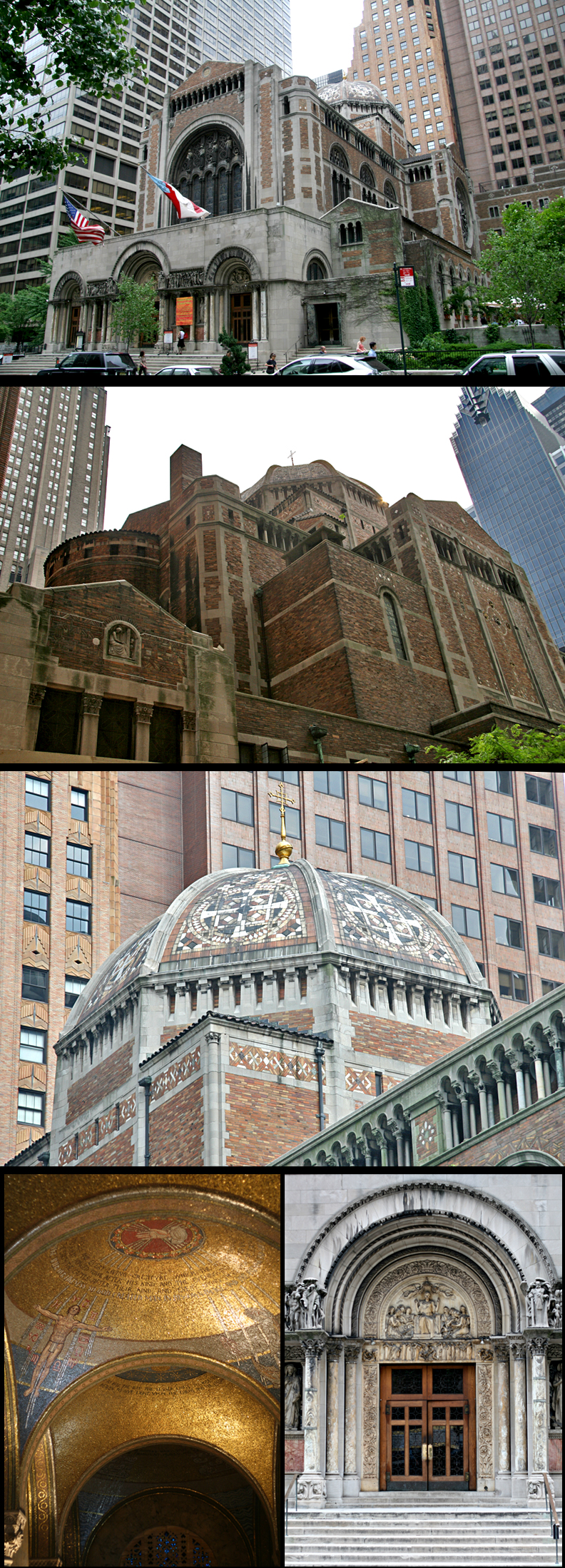
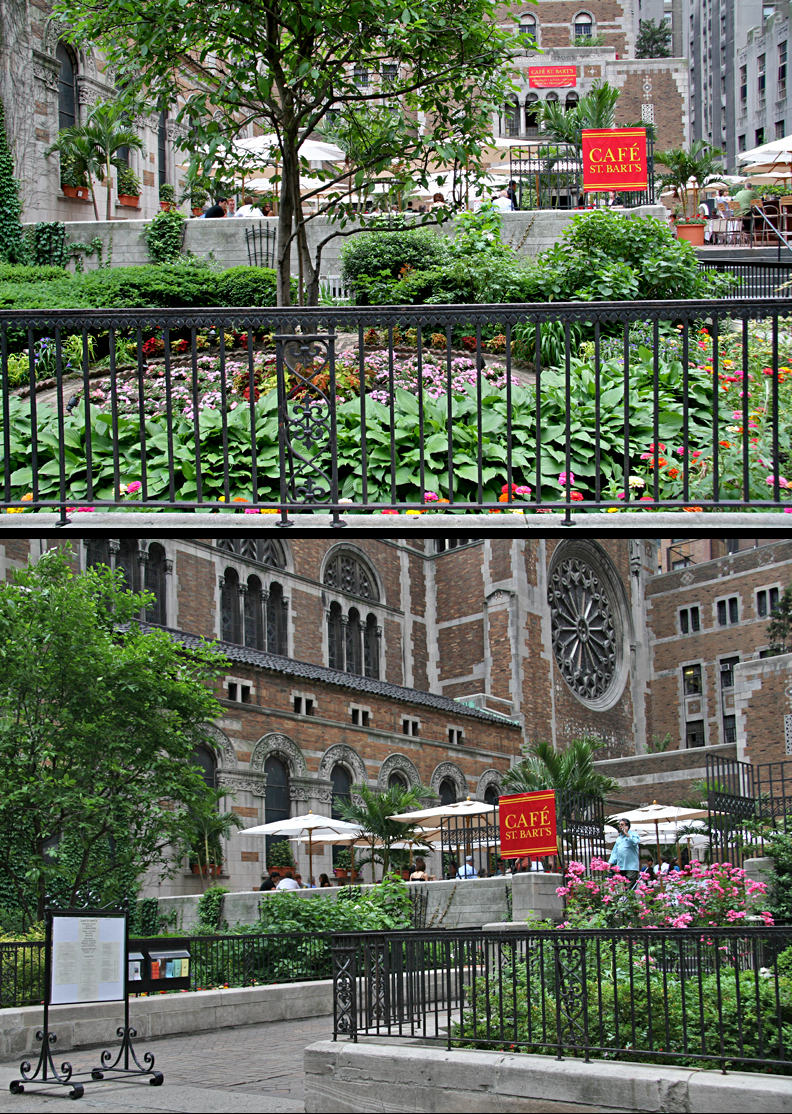
    One of the unique features about St. Bartholomew’s Episcopal Church at 50th Street and Park Avenue, with its signature dome and cross, is the contrast with the surrounding architecture. Click here for more photos. Although this could be said of many churches, urban and rural, the dramatic difference in scale between this landmark limestone and brick structure and the surrounding monolithic buildings on Park Avenue (such as the 570 foot GE/RCA building behind it and the Waldorf Astoria Hotel to its right) draws attention immediately.

    This is actually the third location for the congregation. It started in 1835 in a plain church in the then-fashionable Bowery area; in 1872, their growth and funds permitted them to build a new church at Madison and 44th. Designed by James Renwick, the architect of St. Patrick’s Cathedral, the building was later embellished with a triple portal by Stanford White. In 1918, they moved to their current location at 50th Street and Park Avenue. A new structure was designed by Bertram Goodhue to harmonize with the Romanesque Revival triple portal entrance, which was relocated from the Madison Avenue church. Over time, the interior was decorated in the Byzantine style, with major mosaics in the narthex and over the high altar. In 1981, a real estate developer offered a plan to build an office tower on the site of the adjacent community house, ensuring a financial endowment for the church. Conflict developed within the parish and between the church and the city over air rights and the landmark status of the building; the case went to the Supreme Court. In 1991, the landmark law was upheld.

    The church is renowned for its pipe organ, one of the largest in the world and played by the famous conductor Leopold Stokowski. The popular and successful Café St. Bart’s with its outdoor terrace can be seen here. The church provides many community services, including a public music series and summer festival, a homeless shelter, and a soup kitchen…

    Posted on by Brian Dubé

  • Federal Hall

    Posted on by Brian Dubé

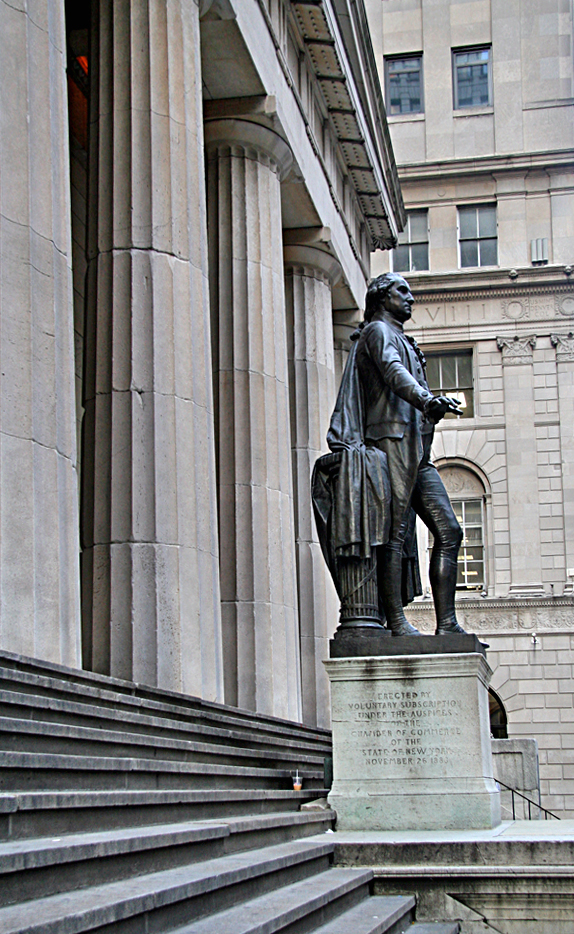
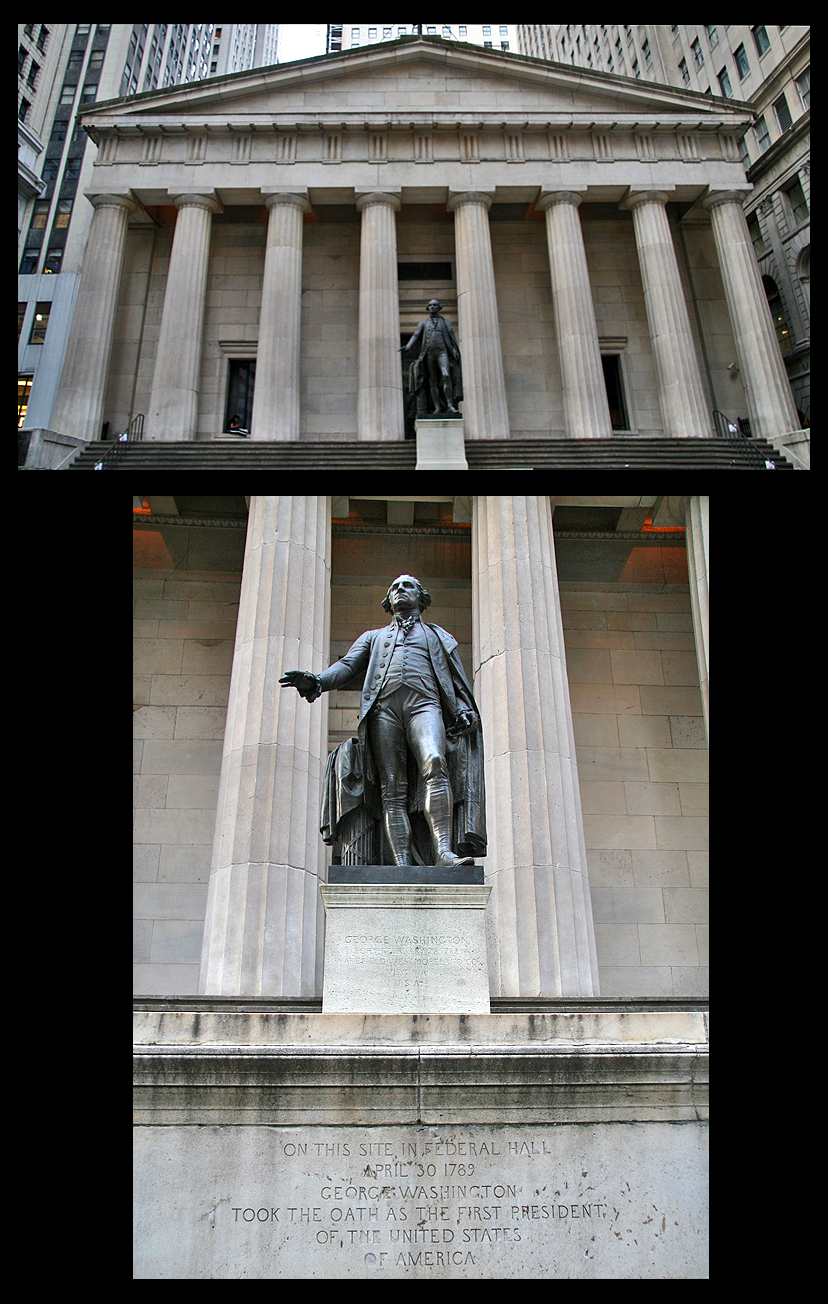
    Overshadowed by the New York Stock Exchange across the street, and with all there is to do and see in NYC, Federal Hall at 26 Wall Street is easily overlooked. This beautiful, Doric-columned Greek revival structure with a simplified Parthenon facade is carved from marble; inside is a rotunda. Click here for more photos.

    National monuments are more often the agenda of Washington D.C. visitors than NYC ones, but this is definitely worth a visit. It actually is one of the most important buildings in U.S. history and just completed a renovation in November 2006 (it had been closed since 2004). The site has played a part in American government for over 300 years. 26 Wall Street was the location of New York’s City Hall, built in 1700. After the American Revolution, the Continental Congress met at City Hall. When the Constitution was ratified in 1788, New York remained the national capital. Pierre L’Enfant was commissioned to remodel City Hall for the new federal government, when it was renamed as Federal Hall.. The First Congress met in the new Federal Hall and wrote the Bill of Rights. George Washington was inaugurated here as President on April 30, 1789. When the capital moved to Philadelphia in 1790, the building again housed city government until 1812, at which time Federal Hall was demolished.

    The building that stands here now was built in 1842 as the country’s first Customs House. It was designed by Alexander Jackson Davis, one of the most important architects of his generation, who worked in the classical style. His was the winning entry in an 1833 competition. In 1862, Customs moved to 55 Wall Street, and the building became the U. S. Sub-Treasury. Millions of dollars of gold and silver were kept in the basement vaults until the Federal Reserve Bank replaced the Sub-Treasury system in 1920. The building is now run by the National Park Service and serves as a museum and memorial to the first President and the beginnings of the United States of America…

    Posted on by Brian Dubé


  • dinamic_sidebar 4 none

©2026 New York Daily Photo Entries (RSS) and Comments (RSS)  Raindrops Theme