• Category Archives Architecture
  • Chiuso and Costruzione

    On my first trip to Italy, I learned two very important words as a visitor: chiuso and costruzione (closed and construction). In fact, it started to become a private joke – everywhere we went, we encountered some variation on the theme of closed and/or under construction. Admittedly, with such a density of ancient architecture and sculpture, the repair and maintenance of places such as Florence, Venice, Rome, etc. will, of necessity, be a perpetual enterprise.

    In America, as a much newer country, this is a novel concept, and repairs taking place repeatedly or over long periods of time are usually viewed as tragic or a sign of incompetence.
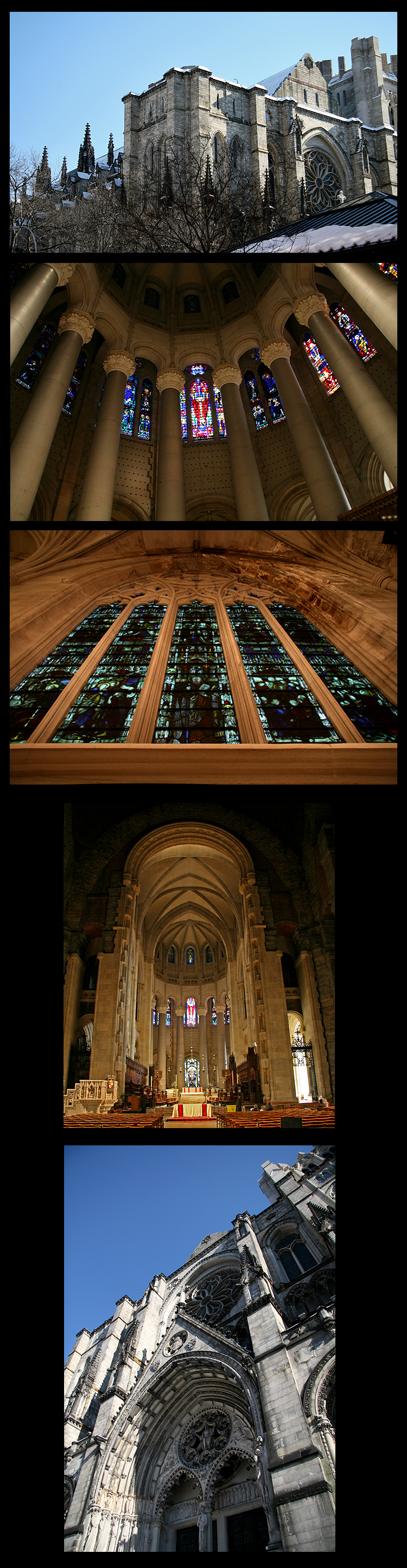
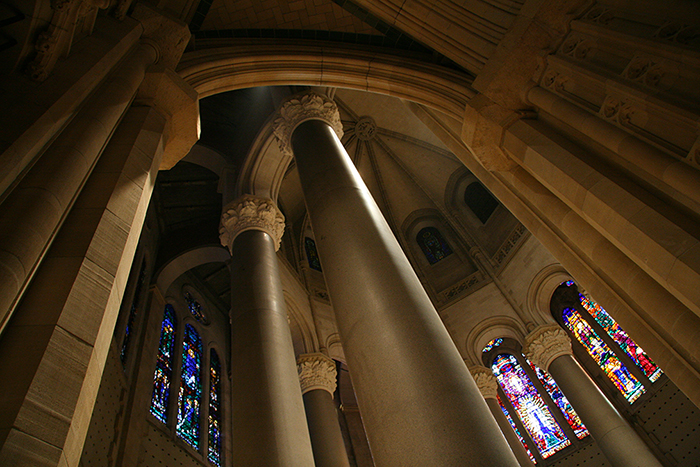
    With the Cathedral Church of Saint John the Divine, we have our own shrine to chiuso and costruzione. A tour around the 11.5-acre property reveals metal sheds, barbed wire fences, and until 2007, scaffolding. See more photos of the interior and exterior here.

    In some rather unfortuitous twists and turns, the construction of this cathedral has been proceeding in fits and starts since its inception in 1892 and, in fact, is still not completed. Bad luck, World War, running out of endowment money, long periods of stagnation. And, to add insult to injury, a fire in 2001. An early change in architects resulted in the mixture of architectural styles we see today – Romanesque and Gothic. This is a long and complex tale (read about it here).

    But there are other things of a more positive nature. This cathedral is enormous – 601 feet long with an interior height of 124 feet. It is one of the largest cathedrals in the world. The Statue of Liberty could fit inside. There is a magnificent pipe organ. The place inspires awe.
    Although most churches are involved in community and charitable work, St John has gone much further than most, with a wide range of performing and visual arts programs, concerts, workshops, educational work, and a plethora of outreach programs.

    Memorial services, celebrations, and speakers by and for people of all walks and faiths have been seen here – St. John’s really stands out in this eclectic, nondenominational way. Philippe Petit has performed there and was an artist in residence. Many notables, such as the Dalai Lama and Desmond Tutu, have spoken at Saint John. There is even a triptych by Keith Haring (The Life of Christ).

    A fervent mission is now at hand to finally complete the work – the Eastern portion, where these photos were taken, has been finished. I was told that full completion of the interior will be done by November 2008 (with celebration and fanfare I am sure), so I would pencil this in on my calendar…
  • Make No Mistake

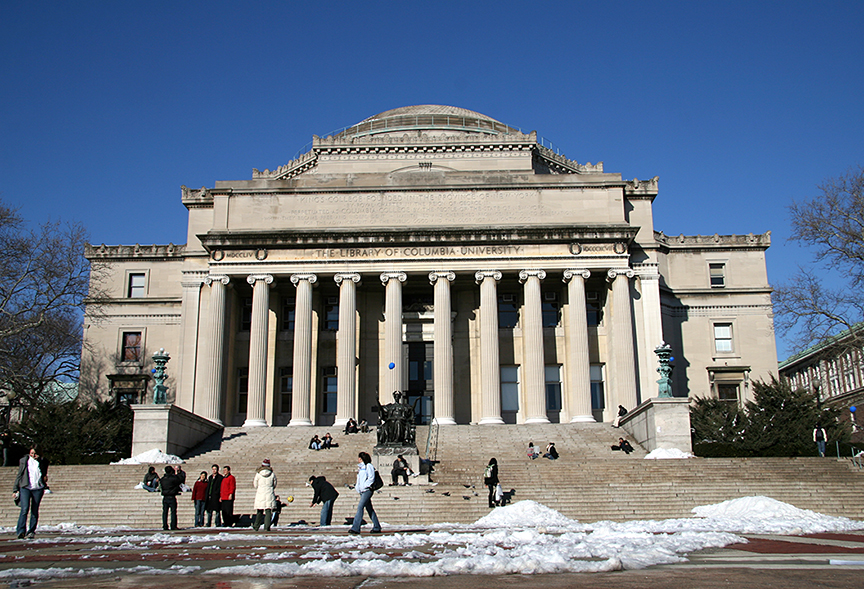
    Rather surprising for Manhattan, isn’t it? Most residents or visitors never get to Columbia University – it’s in its own world, removed from city both geographically (located far uptown in Morningside Heights) and due to its rather unique true campus enclave. Other colleges and schools in the city are typically comprised of a number of buildings acquired over time and located in a helter skelter fashion as close to the main buildings as possible – e.g. SVA, the New School, Cooper Union, Hunter College, and to a lesser extent, NYU. Columbia has a real campus, relatively isolated from the city streets. Rather befitting its status as one of the eight members of the Ivy League.

    Columbia is one of the most prestigious universities in the world, with a long list of firsts and superlatives. Founded in 1754 by the Church of England, this school has 87 Nobel Prize winners affiliated with it. Columbia University is an enormous topic – read more here at their official website.

    The colonnaded structure in the photo, the Low Memorial Library, is the centerpiece of the campus and one of the most universally applauded structures in New York City. Designed by McKim, Mead and White with elements of the Parthenon and Pantheon, it is considered one of their finest works. This was the first building in 1897 at the new uptown campus (it had previous downtown locations). When built, in an area that was cropfields, this grand structure, sitting atop a hill, afforded vistas of Manhattan to the south.

    Unable to get in on Sunday, not only was I disappointed that I would get no interior photos, but I also speculated as to why a university library would be closed midday. Answer: this building has not functioned as a library since 1934 – it now is its administrative center. The interior of the 106-foot-high granite rotunda is spectacular, with solid green Connemara marble columns.

    Make no mistake, there are plenty of books at Columbia, and Low Library would not be large enough to house them all (over 9 million volumes). The main library is Butler Library, located south across the central campus, with sections opened 24/7. I made the same mistake that apparently many newcoming students do. For years, there was a small sign stating, “THIS IS NOT BUTLER LIBRARY.”

    The time to visit is on a warm, sunny day. Stroll the campus ane enjoy the plazas and the green space of the campus, and imagine the privilege of attending this fine university with everything that it has to offer…


  • Every Move They Make

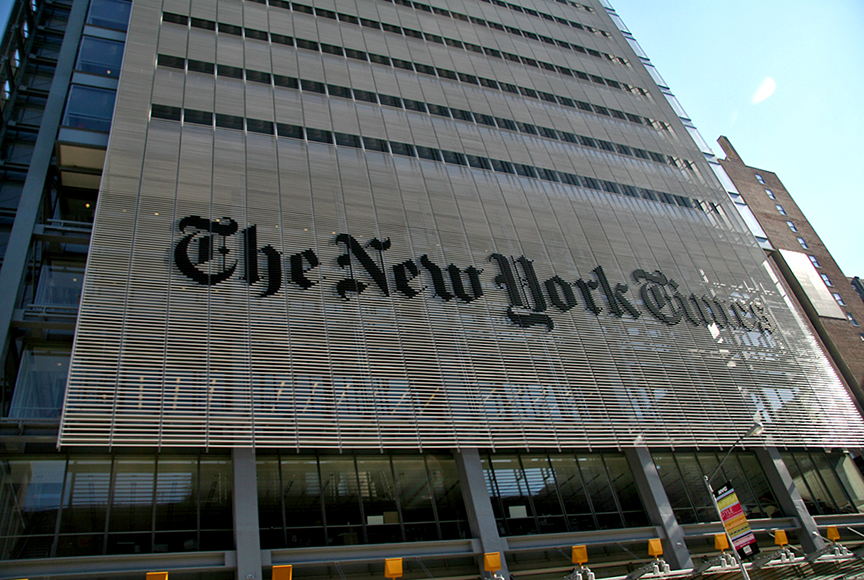
    Major NYC events just slip right by me. Maybe I should try reading the New York Times thoroughly on a regular basis. Then I would be better informed of things like the brand new New York Times Building, which is now tied with the Chrysler Building as 3rd tallest in the city and 7th in the United States (52 stories, 1046 feet).

    Designed by the Renzo Piano Building Workshop, it was completed in November 2007 and is located on Eighth Avenue in the Times Square area, across from Port Authority Bus Terminal. This historically unattractive area of midtown is finally seeing revival.

    The building itself is cutting edge and quite remarkable. It is the first building in the US with a ceramic rod curtain wall sunscreen. It is considered a green building, with features such as a power co-generation plant, low iron glass, mechanized shades, underfloor air distribution, and an interior garden.

    This photo was taken through the open passenger window of my car while I was driving (stopped at a light). Not realizing the significance of this building, I felt that it was too inconvenient to try and park somewhere and get photos of the entire structure. I intended to use this photo as a segue into the controversy about the article written in the Times recently concerning presidential candidate John McCain’s alleged inappropriate or romantic involvement with and favors for lobbyist Vicki Iseman (8 years ago). You can read the article, editorial response, and over 2400 comments here.

    Why is any of this important? Because the New York Times is considered the national newspaper of record – it is relied upon as the authority for news in the United States. Established in 1851, it is the largest paper in the US and has received 95 Pulitzer Prizes. Every move they make is of consequence…


  • Sin of Omission

    I’m always looking for nooks and crannies, but like Italian hill towns, finding hidden gems in a densely populated and/or heavily visited place is extremely difficult. Most often, the hidden or undiscovered in NYC is remote, literally at the ends and edges of the boroughs, far from where any resident or visitor would typically go.

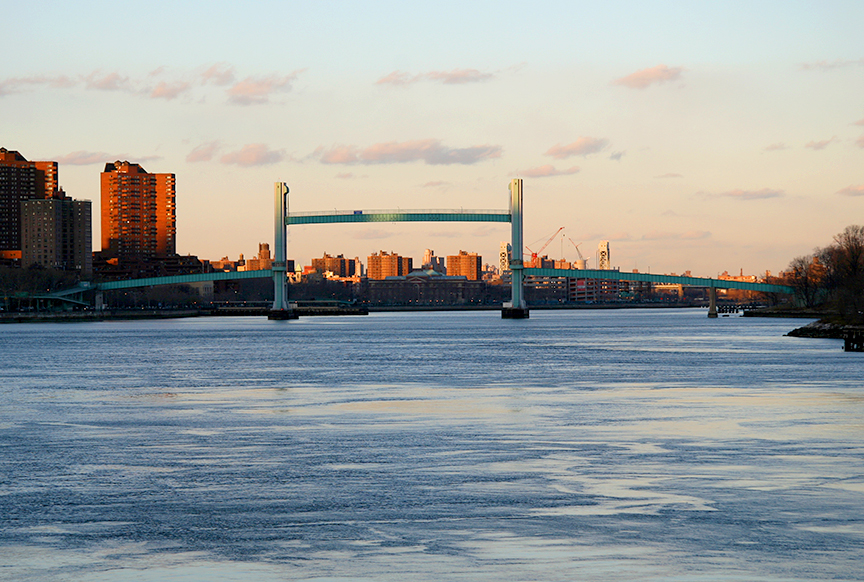
    This is the case with the Ward’s Island Bridge, which spans the Harlem River between East 103rd Street in Manhattan and Ward’s Island, giving access to Ward’s Island Park, with wonderful views, biking paths, and athletic facilities (the island is also home to a psychiatric center, homeless shelter, and a wastewater treatment plant). Read more about the island here.

    The bridge is unique – it is the only bridge in NYC, spanning a major river, which is open to pedestrians only (bicycles are also permitted). Only 12 feet wide, it is a lift bridge – the center section (100m) lifts to accommodate tall ships. A wooden drawbridge spanning the river was built in 1807 by Bartholomew Ward to aid his cotton business on the island. It was destroyed by a storm in 1821. Ward’s Island Bridge was built in 1951 and designed by Othmar Hermann Ammann. The bridge is closed during the winter months (November through March), when it is left in the raised (closed) position.

    I love the colors of this small bridge – a pleasant improvement on the typical gray. In 1976, it was painted brighter colors – blue-violet towers, vermillion trim, and yellow walkways. It was later repainted to its current, more subdued scheme, with a blue span and blue and green towers.

    I admit to a sin of omission; I’ve never been to Ward’s Island or taken the Ward’s Island Footbridge. I plan to redeem myself soon and go there one it opens in the spring…


  • Bad Hair Day

    Imagine a bad hair day when you are not looking so good, but unfortunately, you are on display for all to see in this way in perpetuity. This happens routinely to architects and is why today, you might reconsider being, or having wanted to be (as I have), an architect. You design something which becomes literally etched in stone and await accolades or public humiliation. The stain is hard to wash off, with dirty laundry always out on the clothesline. Want to see what I mean? Here are excerpts from a book written in 1979 by Paul Goldberger (then architecture critic for the New York Times) regarding Lincoln Center:

    “These are for the most part, banal buildings, dreary attempts to be classical that took the form that they did not out of any deep belief in the values of classicism, but out of fear on the part of the architects that their clients, the conservative boards of directors of the center’s constituent organizations, would not accept anything else.”
    “The Juilliard School is probably the best Building at Lincoln Center, but one says that reluctantly, because here, too, architecture is being graded on a curve.”
    “Harrison’s Metropolitan Opera House is merely a pompous and simplistic form, made tolerable by a pair of Chagall murals.”
    “What is wrong with these buildings is not that they are classicizing, it is that they are so bad at it – they are mediocre and slick classicism, with a heavy-handedness of form and vulgarity of detail.”

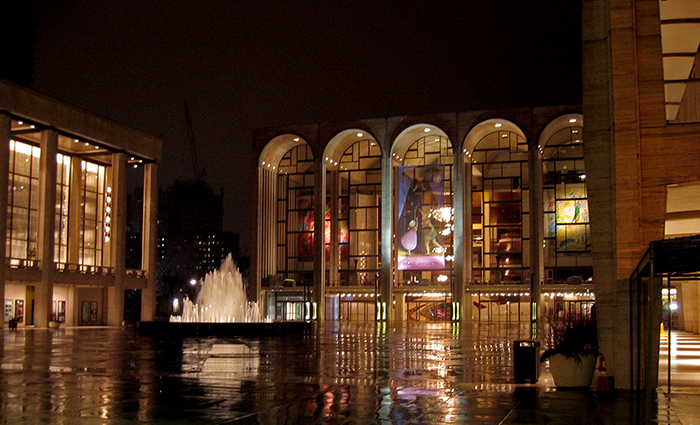
    Are you feeling better now? Fortunately, the quality of performances is top-notch, and the public enjoys the central plaza and its fountain, one of the most notable in the entire city.

    For a glimpse into my writing process, here is what I started to write today and abandoned, when any enthusiasm I had was lost after reading architecture critiques. I also planned to feature the fountain as one of the few major ones in NYC, contrasting that to Paris or Rome. The working title was The Sun Also Rises:

    Somethings loom so large or are so regular that we forget about them. Like the sun or Lincoln Center. This 16-acre complex of 8 buildings with nearly a dozen theaters is the prototype for cultural centers everywhere, and its tenants are like a who’s who of the arts: Juilliard School, The Metropolitan Opera, New York City Ballet, New York City Opera, New York Philharmonic, and the School of American Ballet. The “travertine acropolis of music and theater” was built in the 1960s and is located at one of the most strategic locations in NYC – between 62nd and 66th Streets near Broadway, Columbus Circle, and Central Park. You can read about it here or at the Lincoln Center website

    About the Photo: The New York State Theater is on the left, the Metropolitan Opera house in the center, and Avery Fisher Hall on the right.


  • More or Less

    I’ve always loved tall buildings and big cities. My first experience was Washington, D.C., on a family trip, where I immediately became obsessed with the Washington Monument, memorizing its important facts (like its height, of course). You can easily guess my first stops in Paris (Arc d’Triomphe and the Eiffel Tower). NYC was overwhelming – I knew I had found my home.

    It’s not that I don’t appreciate nuance or subtlety or realize that bigger isn’t necessarily better and that less can be more. But these monuments are architectural assertions of what we can do. As I wrote in Beacon of Hope, a tall building, for me, is an inspiration and a metaphor for our aspirations, dreams, and hopes, frozen in time and space.

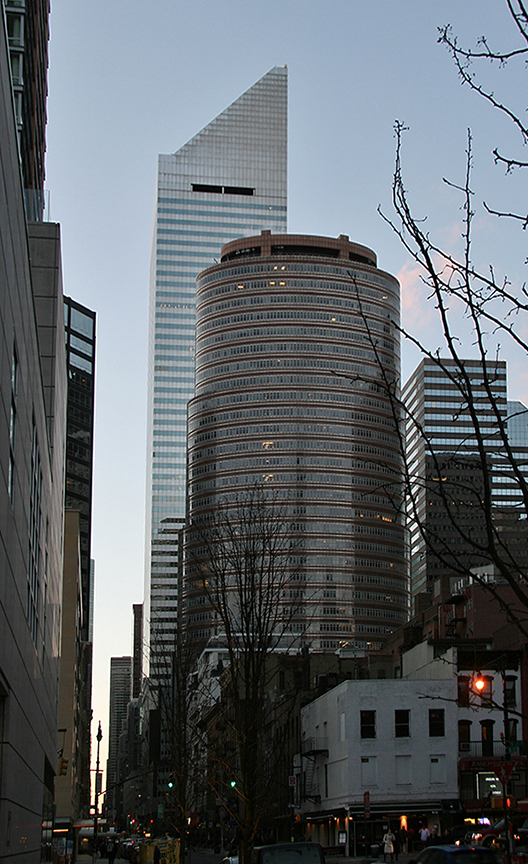
    In this photo, looking west along 53rd Street, we have the Lipstick building in the foreground and the Citicorp building behind. The Lipstick Building (1986), at 885 3rd Ave. was designed by John Burgee Architects with Philip Johnson. The building acquired its epithet Lipstick owing to the elliptical shape and telescoping tiers. The Citicorp Building has a fascinating story.

    Of course, not everyone is enamored with tall buildings, Here is a caustic condemnation I ran across online written by a Londoner:

    “My impression, based on experience of living in New York and Chicago among other things, is that tall buildings generate extra street traffic, create shading problems and downdraughts, increase the nocturnal light levels, create problems of social sustainability, tend to fall foul of planning guidance, are constructed without proper regard for the needs of existing residents, compromise the built heritage and historic fabric of the city (in London’s case, sites like St Paul’s, the Houses of Parliament and Tower Bridge), and are obvious targets for terrorism.

    Moreover, they are often built for reasons of status rather than with much regard for architectural quality and development efficiency. The aesthetic of many tall buildings is corporate and brutalist; today’s aesthetic preference may be tomorrow’s aesthetic nightmare. Expensive tall buildings also have a marked impact on the demographic of an area.”

    Ouch…


  • Roof Gem

    Having tremendous wealth does confer great privileges – an ability to indulge in a lifestyle all but inconceivable to most. NYC is no different except in the types of privileges it confers. Like being able to own an entire building for sole occupancy. This is common for most non-urban dwellers, but in New York, even tremendous money usually means just a much bigger and fancier apartment.

    Of course, once the bar has been raised and you are in rarefied territory, there is still competition for premium properties. You may have the resources to buy anything, however, the type of property you want may not be available. Many superstars have been rejected from coop boards. Even the mega-rich have frustration and disappointment.

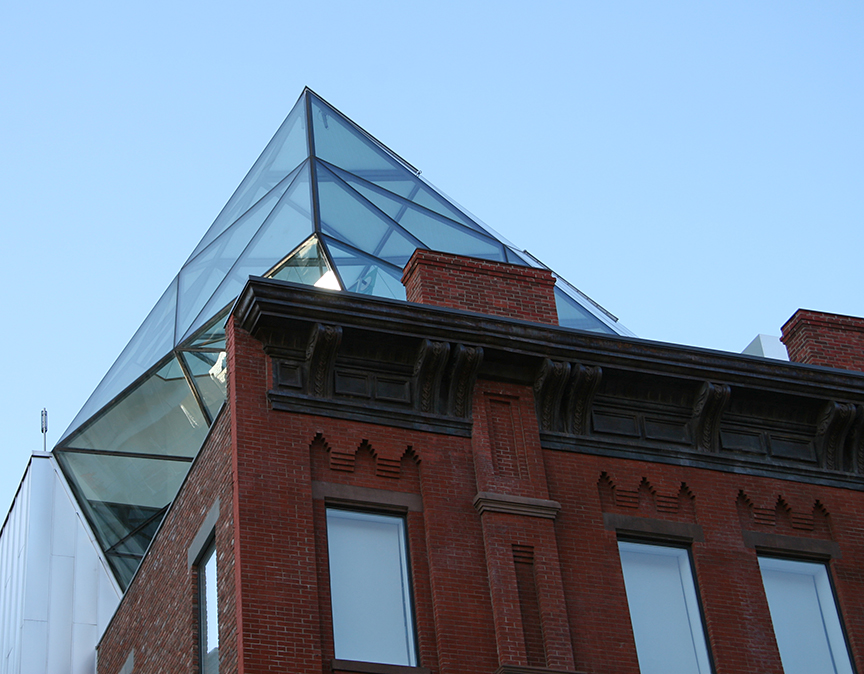
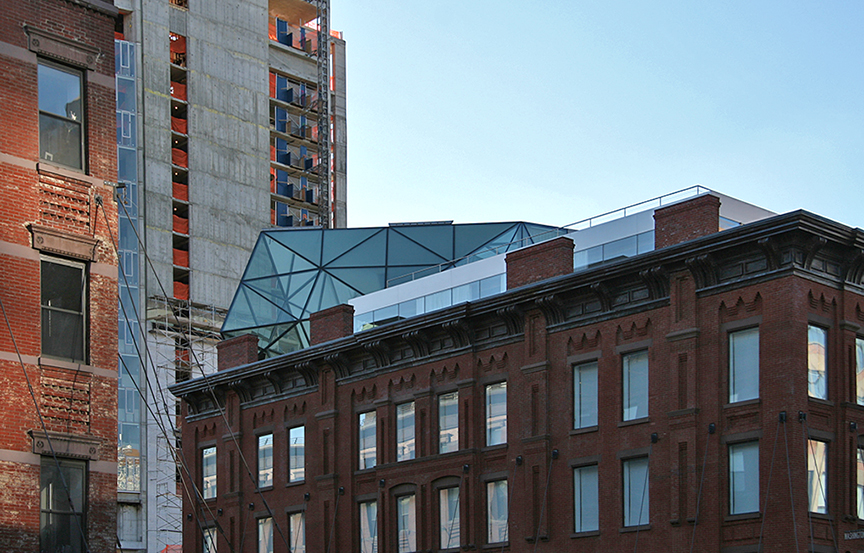
    This brings us to 440 West 14th Street in the meatpacking district. I love the anomalies of the city, so the glass structure atop this building immediately caught my eye. Click here for a photo showing a view of the structure set against its surroundings. A little digging revealed that this 25,000-square-foot historic building was purchased by Diane von Furstenberg in 2004 after sale of her properties in the West Village. According to the Villager:

    “von Furstenberg unloaded her three-story 1850s former stable and blacksmith’s shop at W. 12th St. — which served as her store, studio and pied-a-terre — to a 19-year-old Russian heiress, Anna Anismova, in September. She garnered a reported $20 million in the deal, more than three times what she paid for the property seven years ago.”

    The building was was originally built by the estate of John Jacob Astor in 1887 as workers’ living quarters for the nearby piers. It was occupied for 50 years by the Gachot & Gachot meatpacking company.
    The glass prism-like roof structure provides illumination for von Furstenberg’s penthouse/design studio; the structure is modeled after a piece of jewelry she designed for jeweler H. Stern. The building itself, which she restored to its former 19th-century appearance, will be used for manufacturing and commercial use. It is very atypical these days to see a conversion to non-residential use. Approval of the design was quickly had – most applauded and welcomed the restoration. Some, of course, disliked the prominence of the rooftop prism.

    Perhaps the adage “you can’t always get what you want” does more to comfort those who have less by distracting us from the fact that those with wealth and/or power do often get what they want. It does appear that Diane got what she wanted here…


  • Connections

    Bridges are typically very important structures, always providing that essential connection between here and there, but I can’t imagine any place where they are more critical than in Manhattan, an island in a city of islands ( 4 out of 5 boroughs are islands or on islands – only the Bronx is on the mainland). Our survival is absolutely dependent on bridges and tunnels. Perhaps this is one of the many reasons why bridges are so iconic here: we have many, they are well-known, and they are lifelines. Anything so essential that is simultaneously well-designed takes on an additional beauty – that classic weave of form and function. Add to the equation the vistas and lights at night, and you have a formula for the romantic.

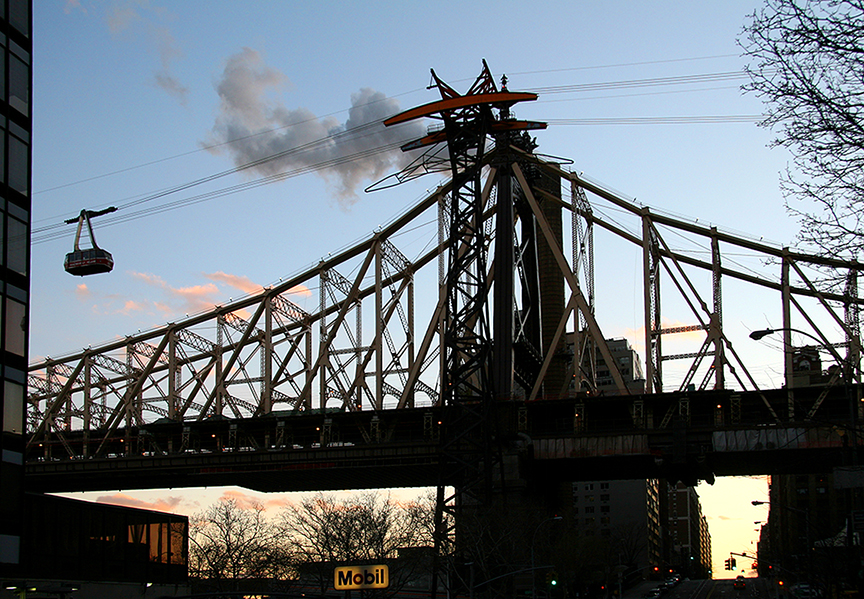
    The intricate steelwork of the cantilevered Queensboro Bridge (formerly the 59th Street Bridge) has an attractive quality. It was designed by Gustav Lindenthal in collaboration with Leffert L. Buck and Henry Hornbostel and completed in 1909. You can read about its history and construction here. It is an NYC icon – one of the most recognizable bridges in the city. Some of my feelings about the bridge, however, are tarnished by my initial experience of it during its decades of neglect (it went through a renovation in 1987). In those early years, I saw it primarily from a utilitarian perspective: to get in and out of Manhattan and to afford vistas of the city and the river. It was more a symbol of what it could provide than a thing of beauty.

    If you want to see a true love affair with new York City, I highly recommend Manhattan by Woody Allen. Its opening montage of city images set to Gershwin’s Rhapsody in Blue is wonderful, culminating with a fireworks display with NYC as backdrop (you can see the intro clip here). There is a scene in the film, used in posters for the film, of Woody and Diane Keaton sitting on a bench with a view of the Queensboro Bridge  click here).
    This image, enmeshed with Gershwin, is one of my strongest connections to the bridge…

    Note about the film: Be forewarned, however. Woody plays a 42-year-old who is dating a 17-year old high school girl. A little disturbing, almost foreshadowing his real life involvement with Soon-Yi Previn. Art predicts life again…

    Note about the photo: This photo was taken on East End Avenue looking south.


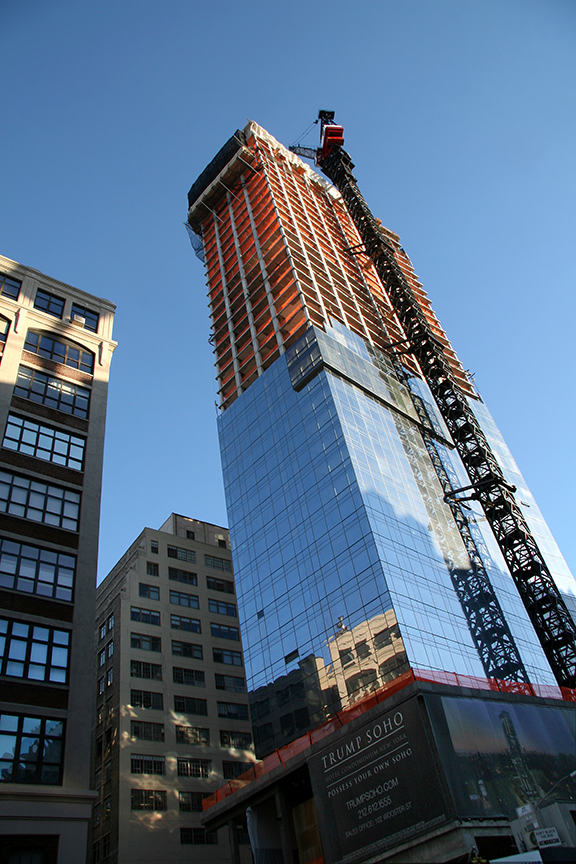
  • Trump SoHo

    Everything Donald Trump does has to be bigger in some way. And, of course, being a real estate developer, this means bigger buildings, and in NYC, that means zoning, neighborhoods, and controversy.
    When I heard that a 42-story condominium hotel was being built in SoHo, I was surprised to hear that such a project passed all the hurdles and community opposition. So, armed with a camera, I decided to see the project and setting for myself – always a good idea, since many stories are spun and important details left out.

    The first thing I discovered was that this building was not located in central SOHO near the historic district with its lowrise cast iron buildings. It was on the corner of Spring and Varick Streets, where we have a strip of rather ungainly, hulking behemoth buildings in the printing district on a transit road to the Holland Tunnel. There are, however, shorter buildings and a school nearby on Spring, and the building does tower above anything in lower Manhattan, apart from the financial district. Many community members consider it an absolutely egregious sin, another one of Donald’s cheap and shiny buildings, foisted on the neighborhood by the devil himself. Personally, I would have preferred it at least somewhat shorter. But if it wasn’t too tall, too shiny, inappropriate, or irritating in some way, we wouldn’t know it was a Trump property, would we?

    Afterthought: I sometimes wonder whether we really dislike Donald; he provides an endless source of entertainment. The King of Glitz is, in some ways, much like some aspects of NYC – shouting its prominence for all to be heard…

    On a more somber note, a building worker was killed in an accident on January 14, 2008. You can read the story in the New York Times here.


  • Hell’s Gate

    If you are driving in New Jersey on the Turnpike through the industrial corridor, passing through towns like Carteret, Rahway, and Elizabeth, you will see (and smell) many oil refineries. To most travelers, these are hideous. But if you are traveling at night, everything about them can become strangely beautiful because it’s so extremely different (I’m reminded of Paul Theroux’s fascination with travel in Northern Ireland because of its extreme nature). You have a really bleak landscape with no sign of humans, networks of lights, tall dark silhouettes of towers, and huge flames shooting into the night sky. It is surreal, like a fairy tale world.

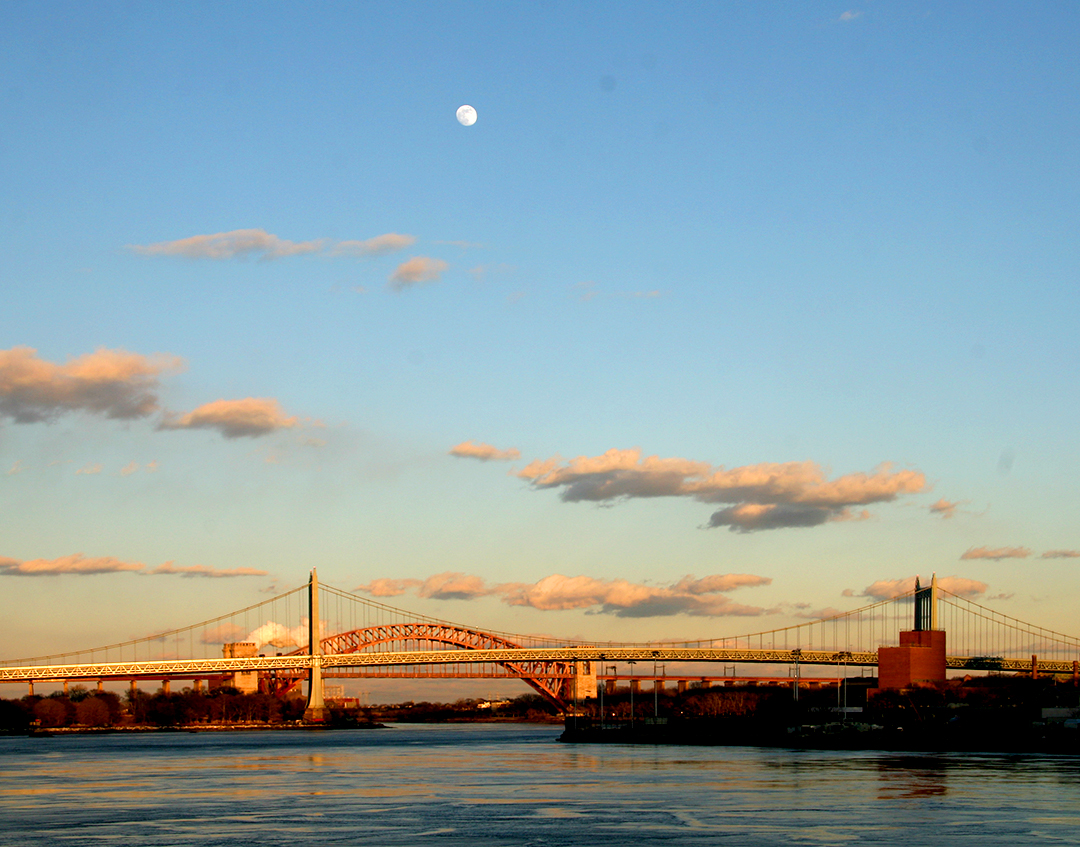
    The subject of today’s photo is certainly more readily likable, but I find it does share some things with the aforementioned landscapes (certainly, elements in this photo are not inherently beautiful, like the smokestacks from Con Edison’s power plant). To really like this vista, one does have to find beauty in the industrial or structural. Like the Eiffel Tower, designed by an engineer, it is loved by some and hated by many.

    The bridge in the foreground is the Triborough, and behind it is the Hell Gate Bridge (formerly the New York Connecting Railroad Bridge), a steel arch railroad bridge spanning Queens and Wards/Randalls Islands. In the foreground, you have the East River looking north (from Manhattan) as it splits around the islands.

    I found the scene beautiful – bridges, the river, golden evening light, clouds, and the moon. It’s about picking your battles and the right vantage point at the right time. For some there is beauty in these vistas; others have abandoned all hope, for they are at Hell’s Gate…


  • Dead Moths

    Regular readers have by now observed my escapist preoccupations. Someone who knew me well once remarked, regarding my urban searches for the bucolic, that what I needed was a place in the country. This may or may not be true; the conversation reminds me of a dialogue between Alvy Singer (Woody Allen) and a friend, Robin (Janet Margolin), in a scene from Annie Hall:

    ROBIN: I’m too tense. I need a Valium. My analyst says I should live in the country and not in New York.
    ALVY: The country makes me nervous. You got crickets and it-it’s quiet…there’s no place to walk after dinner, and…there’s the screens with the dead moths behind them, and…uh, yuh got the – the Manson family possibly…

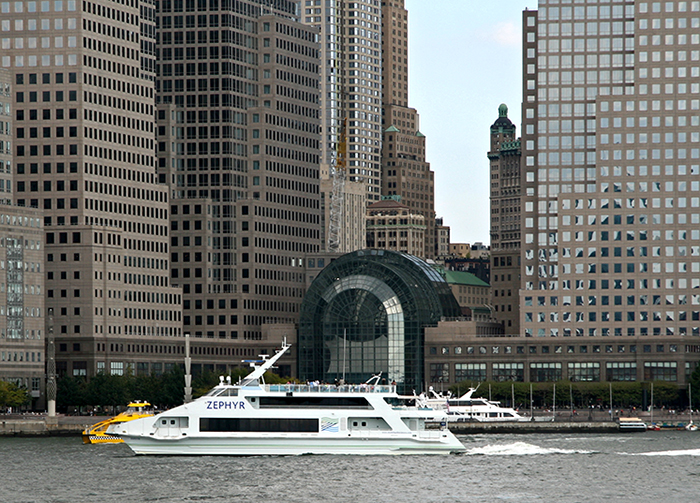
    So, indulge me as I ferret out the natural in NYC without the dead moths. I’m not sure how these urban oases are perceived by a visitor with ready access to nature – a quaint novelty or perhaps a display of horticultural ingenuity. For city dwellers, these spots are well-liked and heavily used.
    The photo, taken in the Autumn of 2007, shows the rear of the Winter Garden Atrium as seen from the Hudson River with the North Cove Yacht harbor. The atrium, wedged between 2 and 3 World Financial Center buildings, is a 10-story glass vaulted structure designed by Cesar Pelli, completed in 1988 and rebuilt in 2002 after 9/11. Read my previous posting about the Winter Garden here. I love palm trees, and the atrium has many, so it’s one of my (semi) tropical oases in the city. But the real deal and my favorite is in Brooklyn


  • Ground Zero

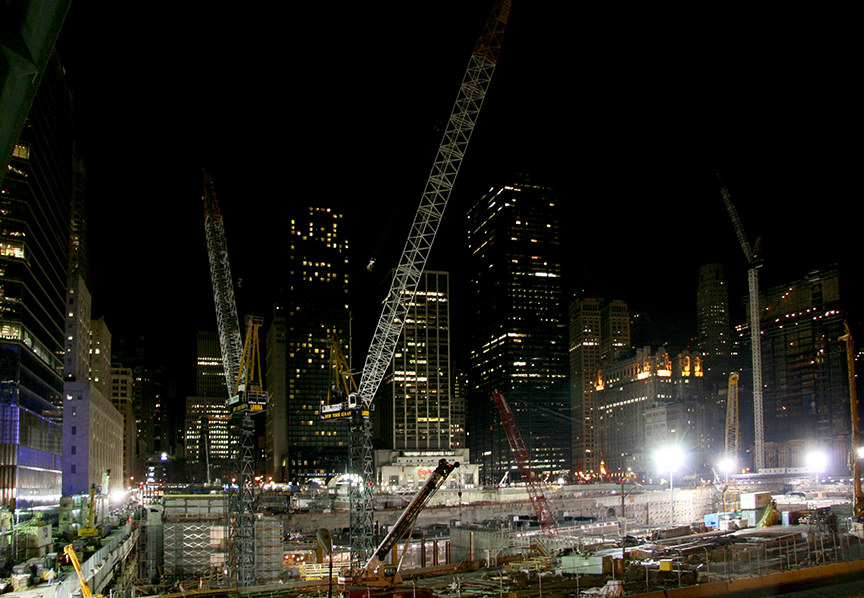
    People always ask me about progress at the site of the former World Trade Center, so here is Ground Zero in its current state. Mired in controversy since day one, the project is finally underway – steel should be rising above street level this year, 2008, seven years after 9/11, with occupancy anticipated in 2011. One tower or two?, Taller than the World Trade center?, How tall?, How much a part should the memorial play?, and Freedom Tower? are among the questions which dragged the process down. Of course, the design itself, won by Daniel Liebskind, has been the largest struggle. I originally saw the design competition presentations at the World Financial Center and went to a number of presentations. There were several extremely innovative designs by some of the top firms – I remember one design which called for floors of interior gardens.

    However, there have been many individuals and organizations with various controlling interests in this process: Port Authority of New York and New Jersey, who own the right to develop the site, the Lower Manhattan Development Corporation, who ran the design competition, Larry Silverstein, who had signed a 99-year lease for the World Trade Center site in July 2001, and architects Daniel Liebskind and David Childs. The original plans by Daniel Liebskind saw many changes, and now, David Childs (one of Silverstein’s favored architects) is in charge of the Freedom Tower’s design.

    In its final incarnation, the tower will rise from a cubic base with tapered chambered edges, forming a tall antiprism with eight isosceles triangles, which form a perfect octagon at its center. It will be capped with an illuminated spire containing an antenna. The total height will be 1776 feet (marking the year of the signing of the American Declaration of Independence).

    The name of the building itself has come into severe criticism. A number of articles have said the design is defined more by fear than by freedom; some have called it the Fear Tower. Understandably, many of the structural design considerations have been built around possible future terrorist attacks. In an article entitled Medieval Modern: Design Strikes a Defensive Posture by Nicolai Ouroussoff, architecture critic for the NY Times, Nicolai says, “The most chilling example of the new medievalism is New York’s Freedom Tower, which was once touted as a symbol of enlightenment. Designed by David Childs of Skidmore, Owings & Merrill, it rests on a 20-story, windowless fortified concrete base decorated in prismatic glass panels in a grotesque attempt to disguise its underlying paranoia.”


  • XYZ

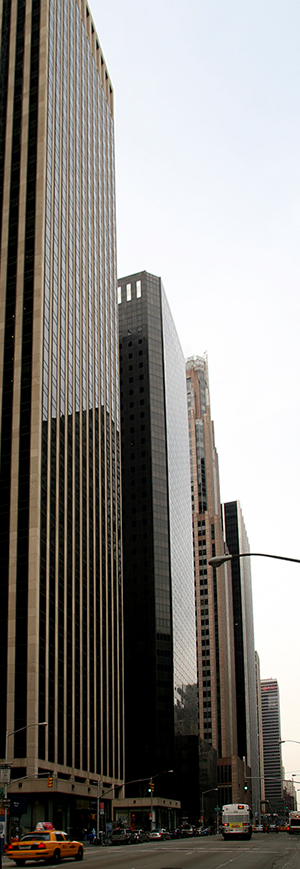
    When I first moved to NYC and was absolutely busting with enthusiasm for the city, this strip along 6th Avenue was a must-stop on my whirlwind auto tour for visitors. I was a one man marketing campaign (at a time where New York was not seen very favorably), and showing off this strip of skyscrapers extending as far as the eye could see really did inspire. For me, it just screamed big, best, and all the other superlatives I associated with the city. I would park somewhere along 6th Avenue in the 40s on the EAST side of the avenue and command my passengers to get out and witness the evidence first hand that NYC was the best.

    Here, we have a long, unified grouping of 40-50 story skyscrapers – some of the tallest in the city, many with eponymous names like McGraw Hill, Exxon, Celanese, Time-Life, the Stevens Tower, Americas Tower, 1155 Avenue of the Americas (the black granite building in the foreground designed by Emery Roth), et. al. Many of these were built in the 1960s and 70s, and the names no longer apply – the original tenants have relocated. Some were annexes to Rockefeller Center, leveraging the cache of that complex. McGraw Hill, Exxon, and Celanese (not clearly visible in this photo which starts at 43rd Street) were known as the XYZ buildings. In 1981, Paul Goldberger wrote: “For a long time, I thought that nothing could be worse than the “XYZ” buildings on the Avenue of the Americas, the massive Exxon, McGraw-Hill and Celanese skyscrapers that comprise the western expansion of Rockefeller Center, so named by their planners because of their nearly identical design. The three boxy towers are banal in the extreme, with huge and generally useless plazas dulling the street life in front and straight tops flattening out the skyline up above.”

    Nostalgia aside, I must agree with most architecture critics that these buildings and their plazas are rather cold, lifeless, and joyless. The AIA Guide to NYC says,  “They are sorry neighbors to their parent buildings.” They perhaps best serve as a lesson illustrating how serious a responsibility architecture really is. Buildings become a semi-permanent legacy – designs should not be based on whim or the fashion trend of the moment…


  • ICP

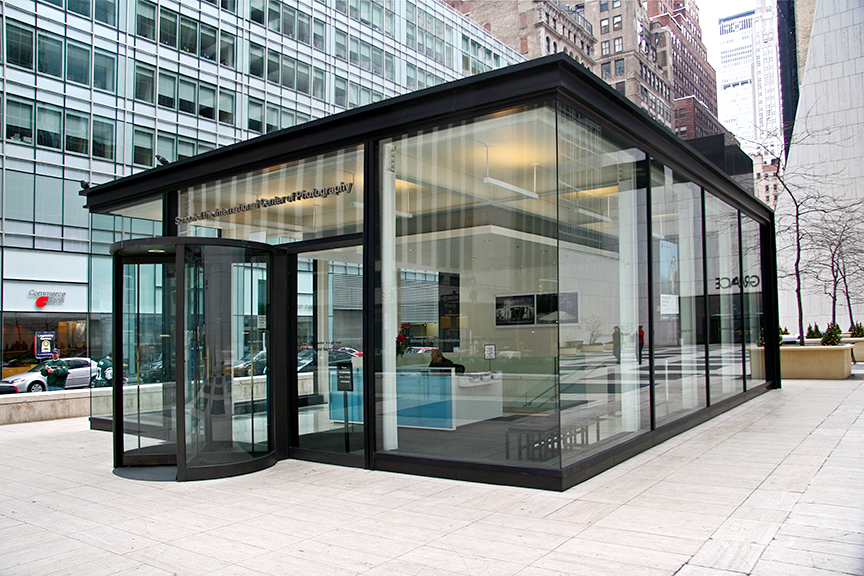
    In yesterday’s post, I featured the controversial W.R. Grace Building. Equally criticized is the rather stark Grace Plaza at the rear of the building with an entrance at 1114 Avenue of the Americas. It is here that in 1974, ICP (International School of Photography) expanded their school, creating a minicampus beneath the plaza. The glass pavilion in the photo (designed by the firm Gensler) serves as the school’s entrance – it houses a small gallery, stairway, and lift to the underground facility.
    The 27,000 square foot space features classrooms, black-and-white and color lab spaces, digital labs with resources for multimedia, digital photography, video editing, and production, a professional shooting studio, a library, student lounge, and exhibition gallery. ICP serves more than 5,000 students each year, offering 400 courses in a curriculum that ranges from darkroom classes to certificate and master’s degree programs. The school has a continuing education program, which is popular for individuals who want to obtain quality instruction in photography without having to matriculate in a full-time university program.

    ICP was founded in 1974 by Cornell Capa (brother of acclaimed war photographer Robert Capa) in the historic Willard Straight House on Fifth Avenue’s Museum Mile. In 1999, the headquarters building at 1130 Fifth Avenue was sold. They moved to 1133 Avenue of the Americas (across from the school) with 17,000 square feet of gallery space (designed by Gwathmey Siegel & Associates Architects), archives of more than 100,000 photos, and a store and cafe. Many feel that the small glass pavilion has done much for the bleak plaza – it certainly provides a much needed focal point…


  • Travesty in Travertine

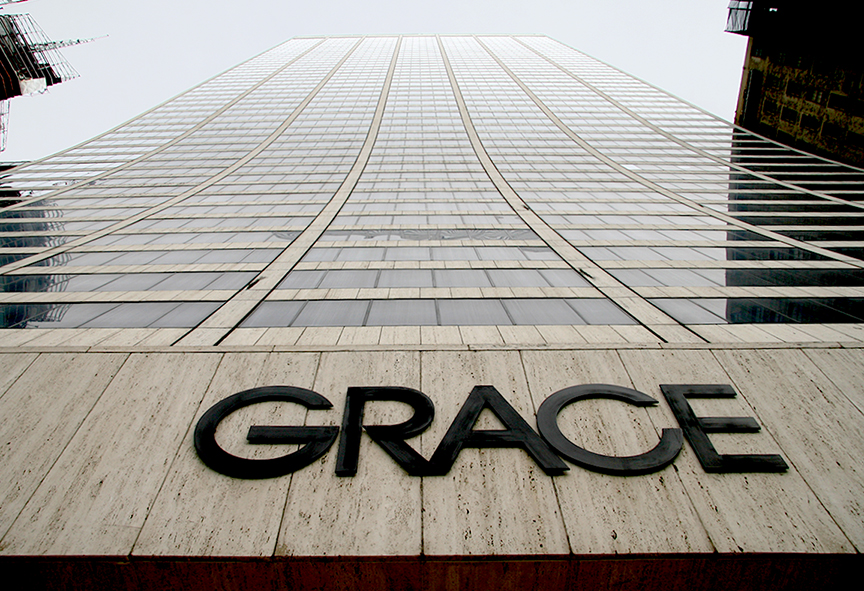
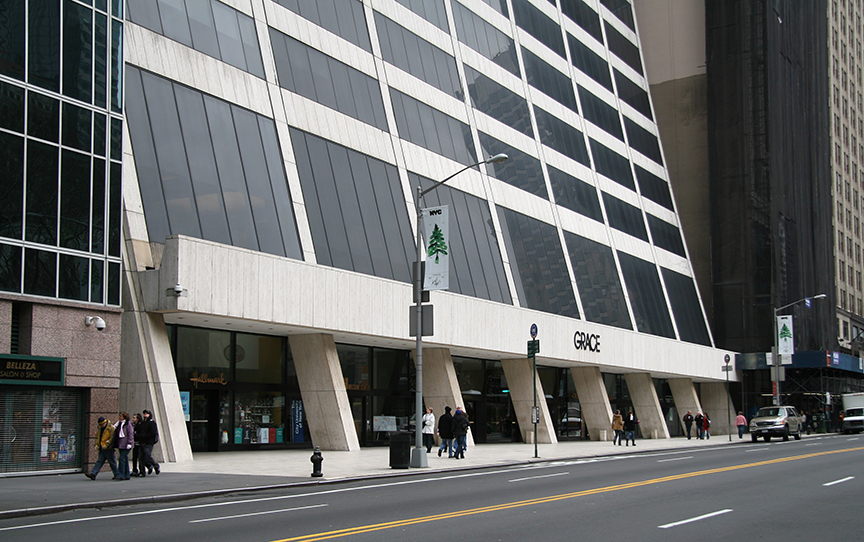
    No Fall from Grace, Thickens and Sickens, and Travesty in Travertine were all competing titles for this story. The W.R. Grace Building at West 42nd Street was commissioned by the W.R. Grace Corporation, designed by Gordon Bunshaft of Skidmore, Owings, and Merrill, and completed in 1971 (the resemblance to the Solow Building at 9 West 57th St. is no coincidence – the initial, rejected design for the facade of that building was used by Bunshaft for the Grace Building). A casual perusal of Internet sources will give relatively neutral to positive reviews of this building. Wikipedia’s entry is perfunctory. 50 stories with signature curved sloping bases (the same on 43rd Street) (click here for photo). Exterior in white travertine.

    But if you dig further, you will find that many architects HATE this building. Architecture critic Paul Goldberger said, “The Grace Building’s front – I call it swooping, others call it a ski-jump – is an arrogant, exhibitionistic form that breaks the line of building-fronts that is important to any New York City Street … Mr. Bunshaft, it would seem, cares nothing about Bryant Park or about anything except the shape of his own building, which from the northwest, at the corner of 43rd Street and Sixth Avenue, looks like nothing so much as an immense piece of furniture squeezed awkwardly into the wrong place. At that corner, as a zoning bonus permitting extra height, is one of the coldest and most unwelcoming plazas any architect has created anywhere.” The AIA Guide to NYC calls it “a disgrace to the street.”

    But the plot thickens and sickens. W.R. Grace and Company was founded by William Russell Grace (1832-1904) in 1854 in Peru – he had left Ireland due to the potato famine. He moved to NYC in 1865. He was also the city’s first Roman Catholic Mayor, serving two terms from 1880-1888. Initially, the company was in fertilizer and machinery. Later, there were acquisitions of chemical companies, and here the problems started.

    It was found that in the 1970s, the W. R. Grace Company had improperly disposed of trichloroethylene, an industrial solvent, which entered the groundwater of Woburn, Mass, causing six deaths from leukemia and numerous illnesses in the town’s families. They were indicted in 1987. However, this is only the start. Grace was also plagued with asbestos injury claims and lawsuits as a result of vermiculite mining in Libby, Montana (the vermiculite was found to contain asbestos). In 2001, they filed for bankruptcy protection. The U.S. Department of Justice determined that Grace had transferred 4-5 billion dollars to spin-off companies it had purchased just before declaring bankruptcy (the bankruptcy court ordered the various companies to return nearly $1 billion to Grace). This story has been the subject of TV, PBS, and NPR specials, and even a film (A Civil Action, starring John Travolta).

    The company, now located in Maryland, no longer has offices in the Grace Building. W.R. Grace is still in business, is traded on the NY Stock Exchange, and has a valuation of $1.5 billion. So far, there’s been grace for Grace…


  • dinamic_sidebar 4 none

©2026 New York Daily Photo Entries (RSS) and Comments (RSS)  Raindrops Theme