• Category Archives Scenic NYC
  • DUMBO

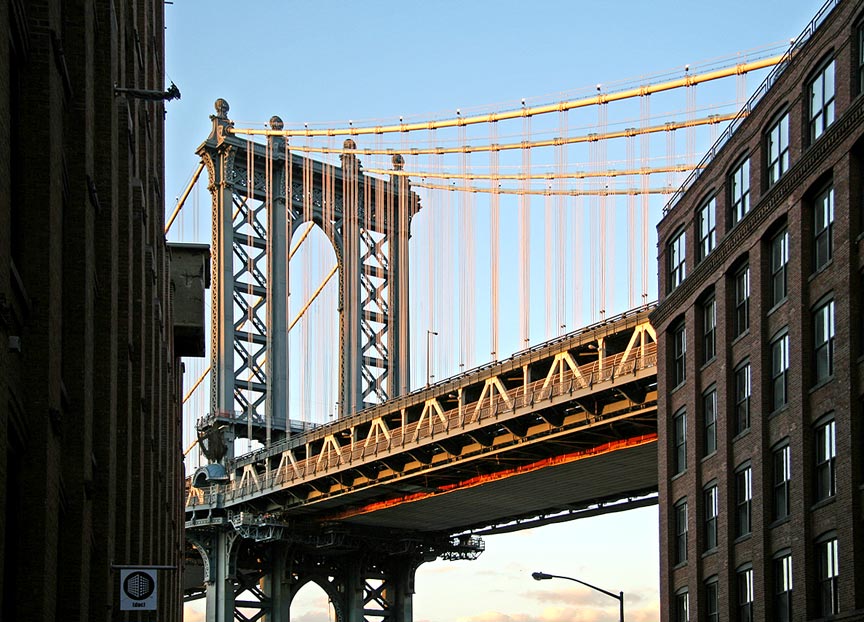
    This is a view looking towards the Manhattan Bridge from Washington Street in DUMBO (Down Under the Manhattan Bridge Overpass). This image gives some sense of the visual drama typical in this Brooklyn neighborhood. There are a number of elements which gives the neighborhood its unique atmosphere – vistas of three bridges with the Brooklyn and Manhattan bridges looming overhead, the omnipresent waterfront, the breathtaking views of Manhattan, the light, the architecture of the large warehouse buildings, and the cavernous feel of the streets. These elements, along with inexpensive rents and proximity to Manhattan, made it a natural choice for the migration of artists who began to inhabit the area in the 1980s. It still has a strong arts community, but gentrification has priced many out, a common scenario with most urban art communities.

    I posted on the annual Dumbo Arts Festival in October 2006 in Sink or Swim, Night in Bloom, Dumbo Arts Fest, and Gallery View. There are a number of businesses in the area worth visiting (many well-known): The Jacques Torres chocolate factory, Bargemusic, Grimaldi’s Pizzeria, the Brooklyn Ice Cream Factory, the River Café, galleries, etc. Click here for the DUMBONYC blog with extensive resource listings…


  • East from East

    This is Midtown East as seen from Roosevelt Island. The glass towers just left of center are One and Two United Nations Plaza, a group of buildings built over a span of several years (1976 and 1983), designed by Kevin Roche John Dinkeloo & Associates. The hotel/apartments/office building was completed in 1976 as a city/state/U.N. project. In 1999, the hotel was purchased by Millennium Hotels to become the Millennium UN Plaza Hotel – it has an indoor swimming pool and the only indoor tennis courts in a NYC hotel.

    To the left of the complex, we find the Empire State Building, and to the right, the Chrysler Building. In the lower left, you can see the United Nations General Assembly building with its domed roof. At the far right, you can see the Met Life Building (formerly the Pan Am Building), the subject of a previous posting


  • Pepsi-Cola in Neon

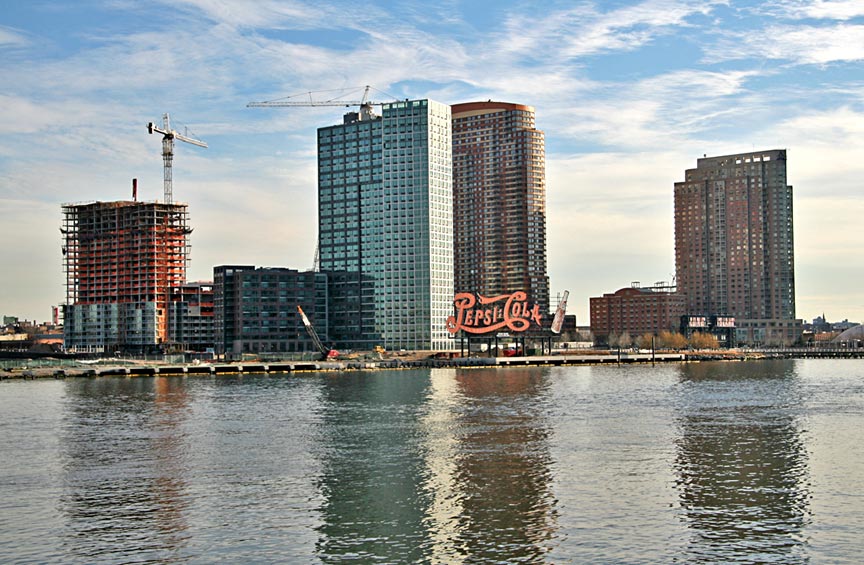
    This red neon Pepsi-Cola sign is a major player in NYC’s landscape and a familiar sight to any who travel the east side of Manhattan, such as on the FDR drive. The sign is located on the Queens waterfront in Hunters Point – the site of PepsiCo’s former bottling plant (which was moved in 1999).

    The multi-tube red sign, visible by day or illuminated at night, has been there for over 70 years. It was built in 1936 and rebuilt in 1994 by Artkraft Signs (now the Artkraft-Strauss Sign Co.), the oldest and last-surviving subsidiary of the original Claude Neon Co., headed by Frenchman George Claude, who held the patent for neon. In 2003, the Rockrose Development Corporation purchased the land for a $1 billion residential and commercial project. Click here for photo. The 120-foot Pepsi Cola sign was preserved – it was dismantled and re-erected 300 feet south to its current permanent location. It is nice to see that the value of a historic icon like this is appreciated and preserved by a real estate development company…


  • Apple and Sherry

    There are many recipes for Apple and Sherry, but this is my favorite:
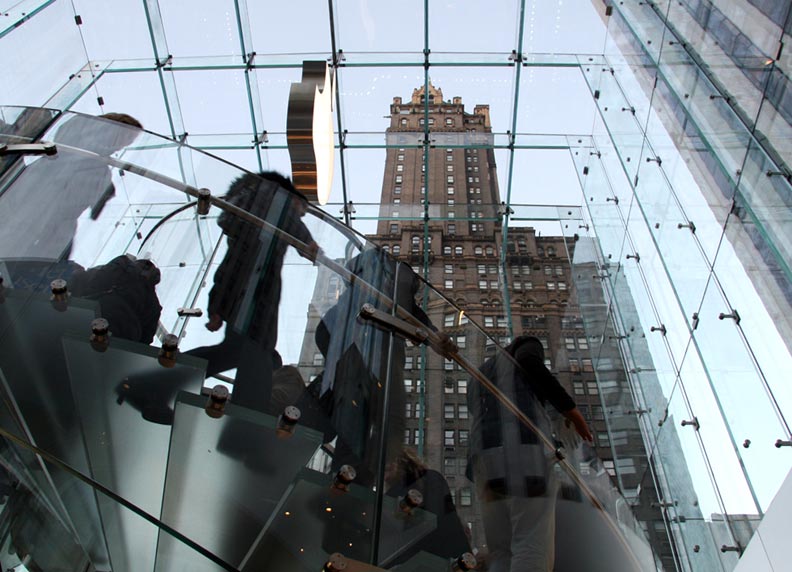
    In this version, we mix the magnificent Sherry Netherland Hotel (built 1927) at 781 Fifth Avenue and 59th Street with the new Apple Store’s spiral staircase (add a pinch of the GM building on the right). This Apple Store, open 24/7, is the subject of a previous post. For more photos, click here.
    Note: Look for ripple in the middle of the photo – that’s the result of stirring…


  • Nested Embraces

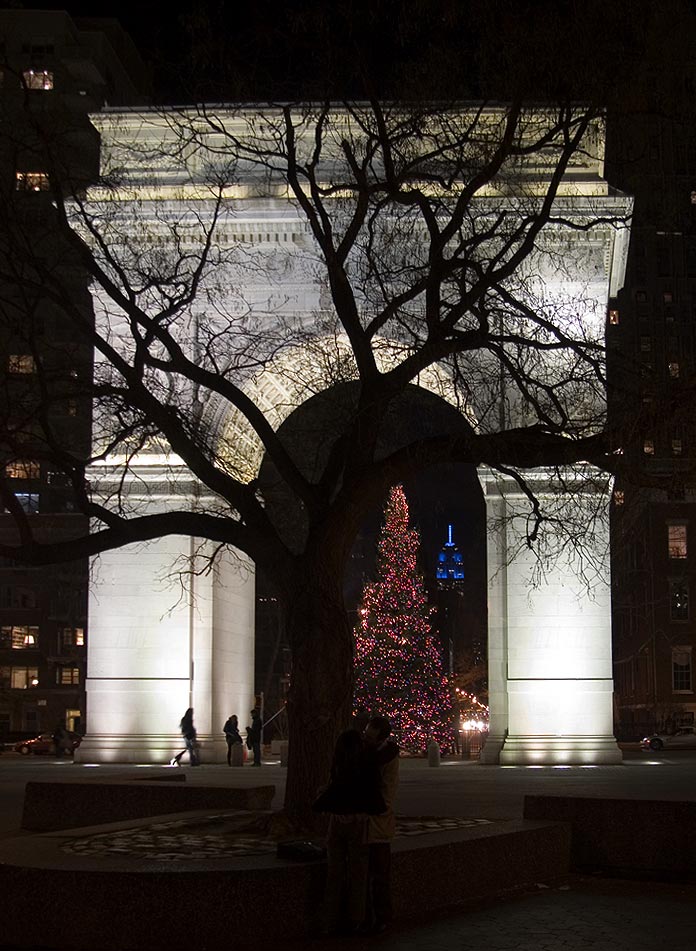
    With the large, spectacular tree in Rockefeller Center, it is easy for other trees to be left out of the limelight. Washington Square Park gets its own large, 45-foot-tall tree this year, delivered from a farm in Canada and installed centered under the arch. Click here for more photos.

    There was an annual tree lighting ceremony on Dec. 5th, led by Keith Borden with the Rob Susman Brass Quartet and sponsored by the Washington Square Music Festival and the Washington Square Association. The carol singing and music is repeated on Christmas Eve.

    If one is fortunate, as I was, you can see the Empire State Building lit in blue (60th anniversary of UNICEF) along with the Christmas tree, framed by the arch, with a silhouetted tree and two lovers kissing as foreground. It was a special moment to see these nested embraces…


  • Vista

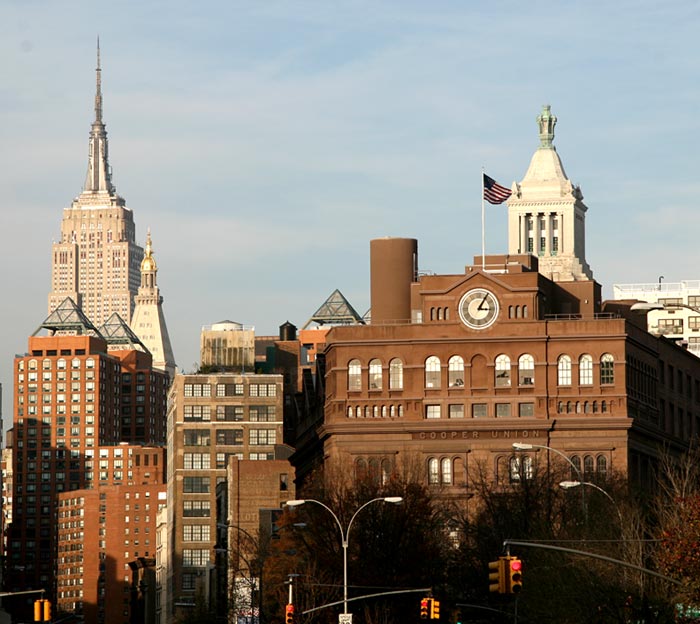
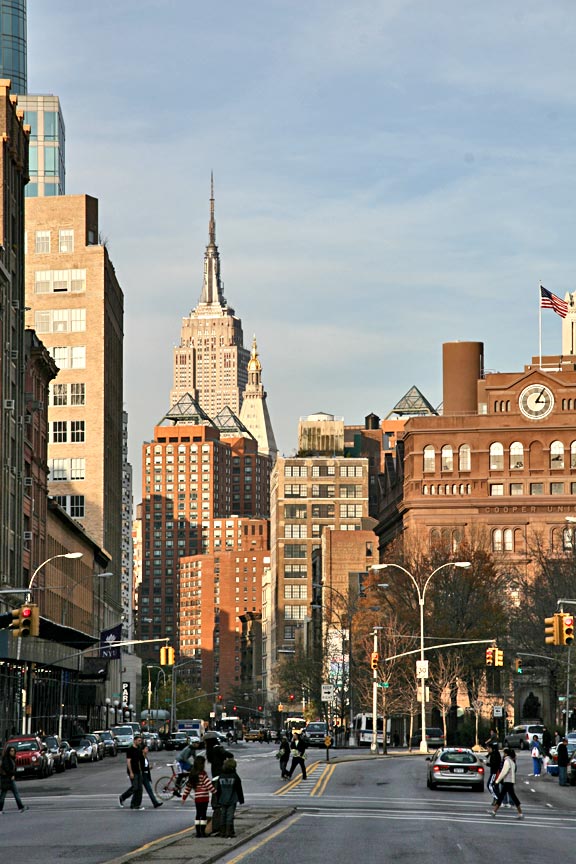
    We New Yorkers are fortunate to have beautiful and inspiring streetscapes at nearly every turn. This vista is looking north along the Bowery from the Village. Click here for second photo. Here, we have a nice grouping of NYC landmarks: the Empire State building, of course, on the upper left; to its immediate right is the Metropolitan Life Tower. The 4 glass pyramids are the tops of the residential Zeckendorf Towers at Union Square. To the right is the Con Ed tower, headquarters of Consolidated Edison, our NYC utilities provider. The building below (with the flag atop it) is brownstone clad Cooper Union, the art, architecture, and engineering college.

    The city is harsh, and most of us do complain. However, sights like these remind us of what we have and remind us not to become too inured or jaded…


  • Southeast

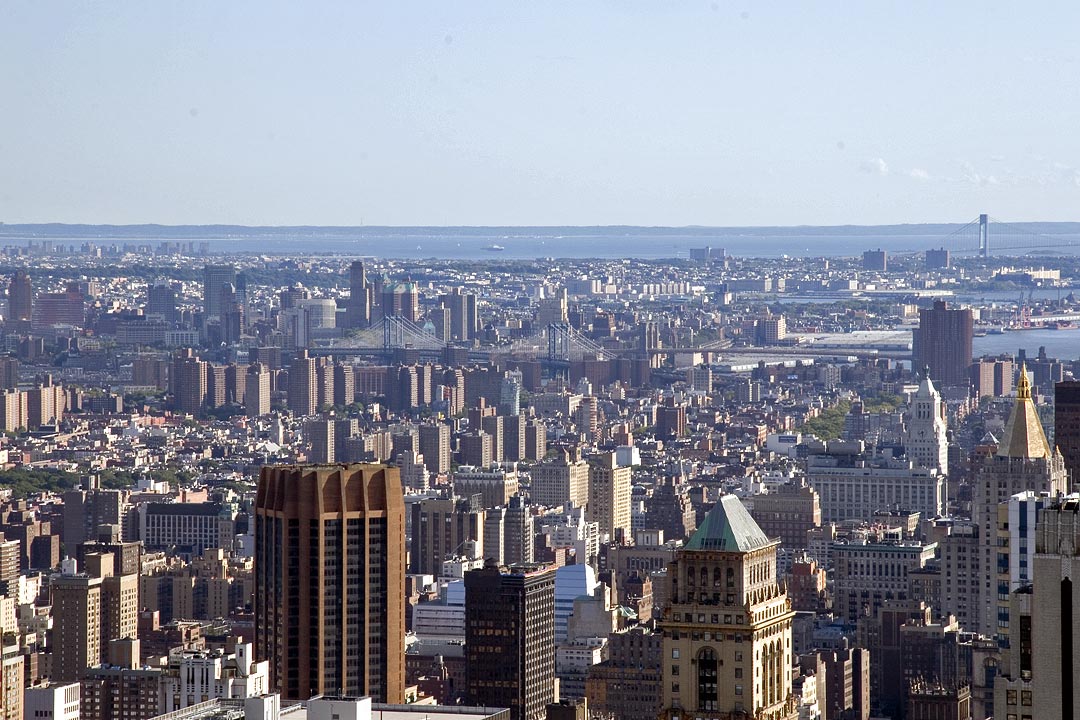
    Here is a vista looking southeast across midtown Manhattan, taken from the Rockefeller Center Observatory (as well as my views in other directions: North, South, East, and Midtown). The most prominent bridge in the center is the Manhattan Bridge, which connects Manhattan (via Canal Street) to Brooklyn (click the photo to get an enlarged view to see all these details). If you look very carefully behind it to the right, you can see part of the Brooklyn Bridge. Behind these bridges is Brooklyn, looking all the way out to Coney Island and Brighton Beach.

    The large patch of green at center left is Prospect Park, a large magnificent park designed by Olmsted & Vaux, who also did Central Park. The bridge at the upper right is the Verrazano-Narrows, which connects Brooklyn (in Bay Ridge) to the eastern end of Staten Island. The large body of water is the Lower New York Bay (with New Jersey behind it), leading out to the Atlantic Ocean…


  • One Front Street

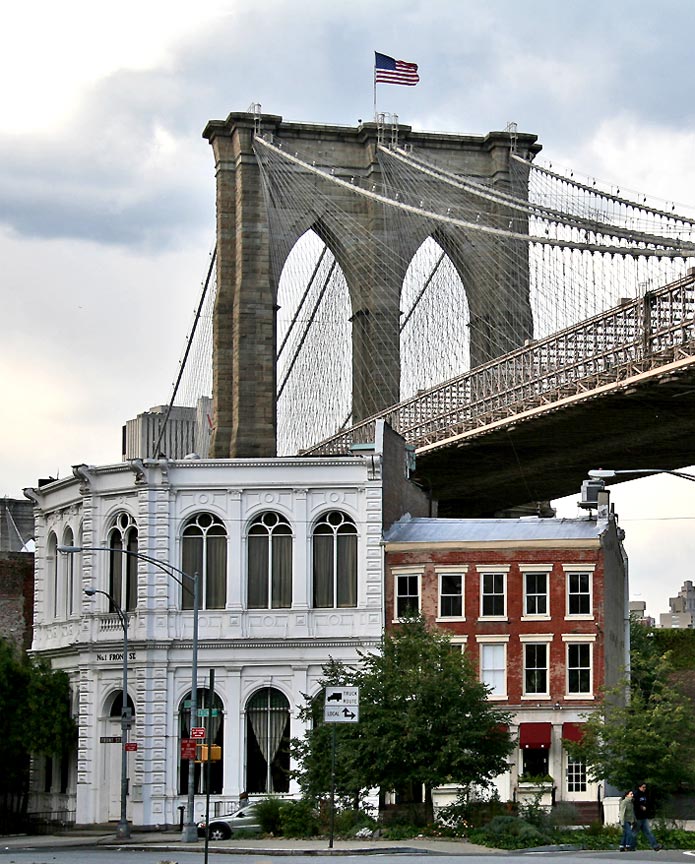
    The building at One Front Street sits at the junction of Front and Old Fulton Street in the Dumbo (Fulton Ferry) historic waterfront district of Brooklyn. This beautiful cast-iron Renaissance palazzo, built in 1869, was originally the Long Island Safe Deposit Company.

    From the American Institute of Architects Guide to New York City: “This monumental bank overshadowed its older neighbors in the prosperous post-Civil War era. The Brooklyn Bridge’s diversion of commuting traffic after 1883 forced the bank to close its doors in 1891.” Like many other structures in the neighborhood, the Brooklyn Bridge frames the architecture and provides an inspiring, quintessential NYC backdrop…


  • The River Cafe

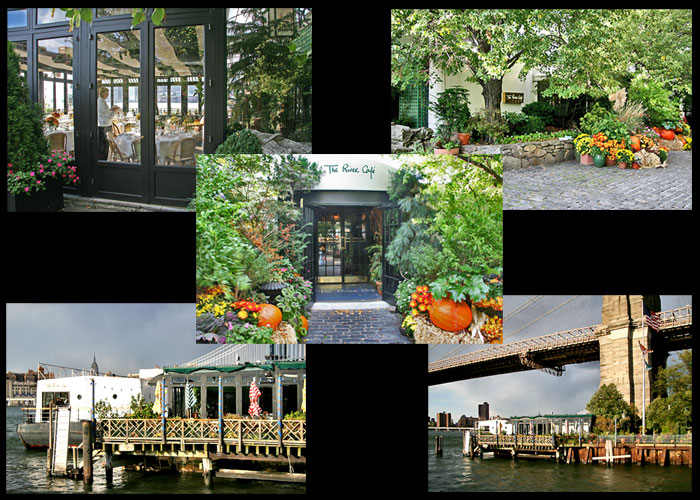
    In 1977, when chef-owner Michael O’Keefe opened the River Cafe on the Brooklyn waterfront , it was definitely a pioneering move, with doubts as to whether they would survive. Destinations off the beaten path do not always fare well in NYC – South Street Seaport is an example.

    New Yorkers and visitors are spoiled. We expect everything to be at hand, and traveling to a restaurant, when there are 17,000 in Manhattan alone, is asking a lot. But the River Cafe has triumphed over these concerns. Their success has been driven by the spectacular views of the Manhattan skyline, New York’s harbor, and the Brooklyn Bridge. There are numerous methods of getting there, including New York Water Taxi, and I understand that the restaurant has its own ferry (although neither of these options are mentioned on the River Cafe’s website).

    Views don’t come cheaply in New York – prix fixe menus only at $85 & $102. For this reason, many recommend lunch as a less costly alternative. Food reviews are mixed – most give it high ratings, including Zagat. I personally have not eaten there. Given that it is pricey, I would suggest doing some research before you go…


  • Bargemusic

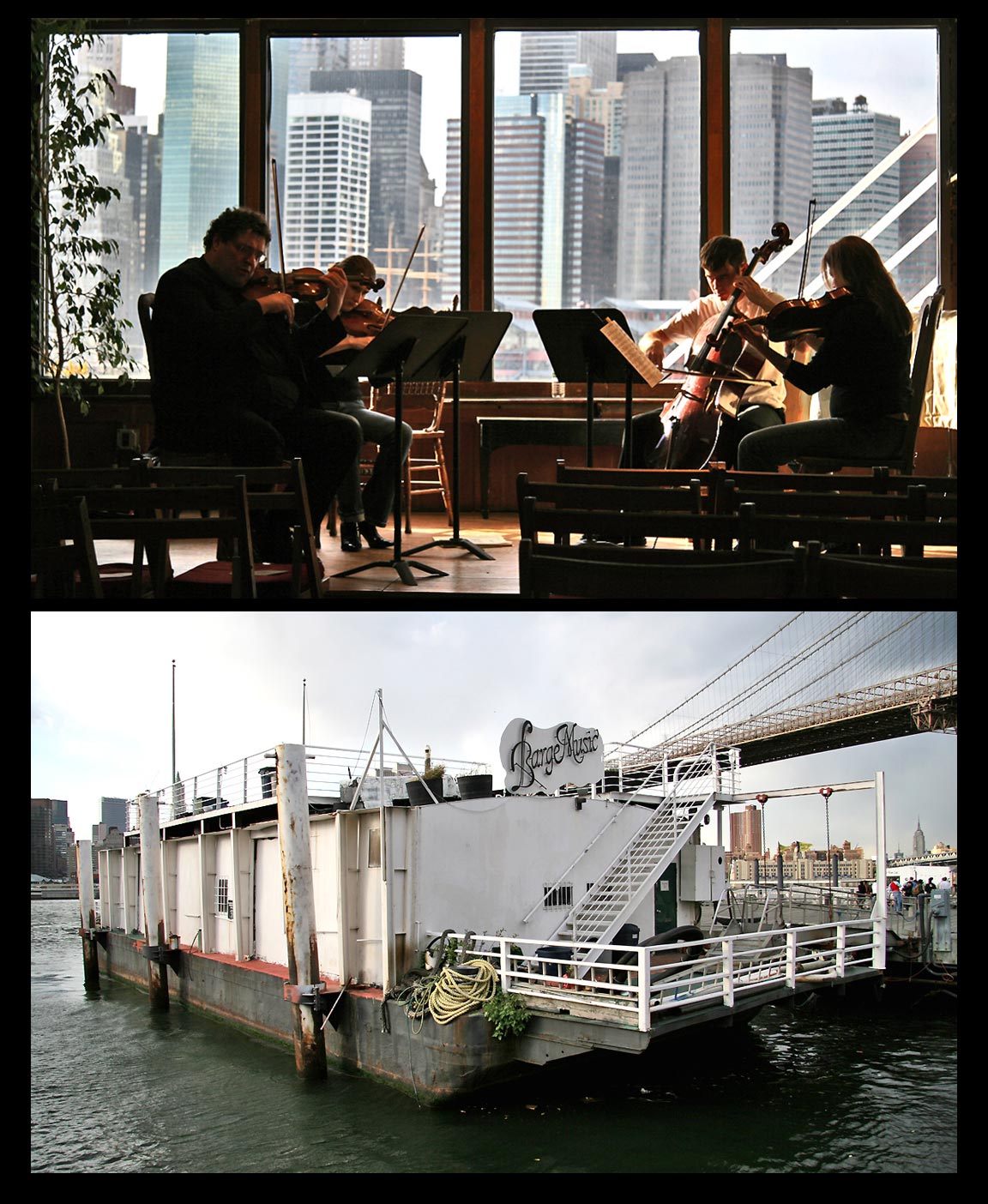
    Bargemusic, a small venue for classical music with its roster of internationally renowned musicians, is one of the true gems of NYC and is still relatively unknown to most New Yorkers. The 102-foot barge is docked in Brooklyn in the East River at the Fulton Ferry Landing. Founded by Olga Bloom (now 87) in 1977 (update: Bloom has passed away as of November 2011), she is still at the helm as its chairman. Bloom, originally from Boston, was a professional violinist, as was her late husband Tobias; she playing under Stokowski, he under Toscanini. After her retirement as violinist, Bloom purchased this 108-year old coffee barge (originally used by the Erie Lackwanna Railroad)for $10,000. The space, with cherry paneling and fireplace, seats 125.

    Perhaps its most distinguishing feature is the magnificent view of the Manhattan skyline through the picture window behind the stage, providing a spectacular backdrop during performances. (Note: The performers in the photo who graciously allowed me to photograph during their rehearsal were: Mark Peskanov, violin, Bracha Malkin, violin, Anat Malkin-Almani, violin, and Clancy Newman, cello). During intermissions, audience members are free to go outdoors and atop the barge itself, enjoying the sea air and views of water, city, and bridges. As so aptly stated on their website, “Our present cargo in this small floating room is sound: potent, ephemeral, and magical.” I don’t know of a space with more ambiance, more intimate, and better suited for chamber music…


  • Gallery View

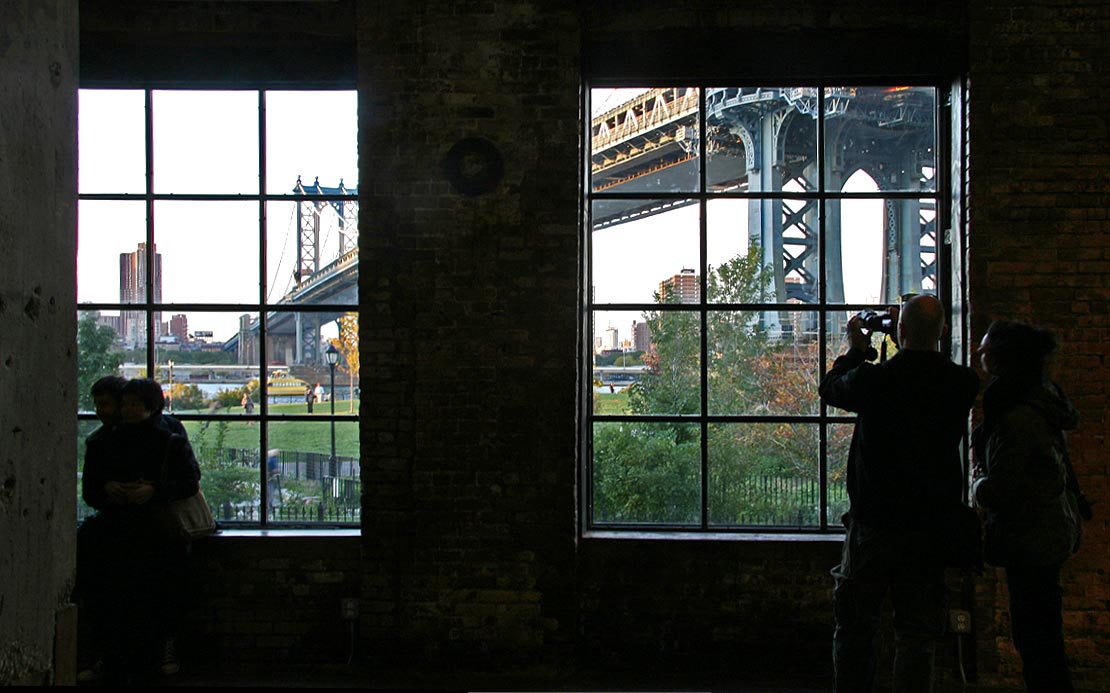
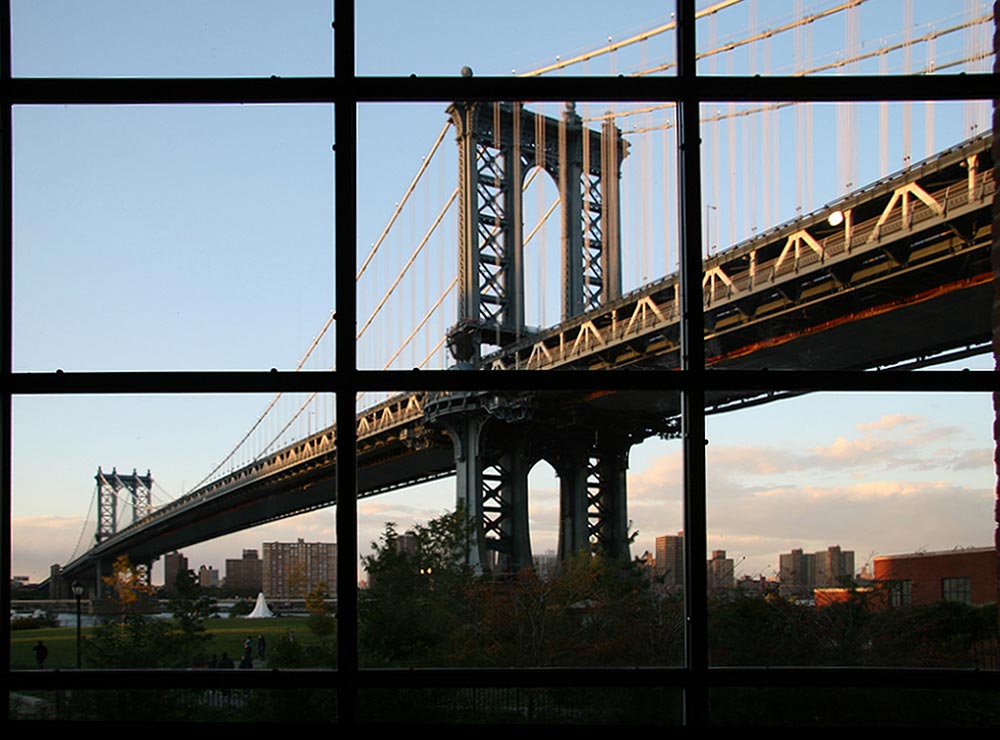
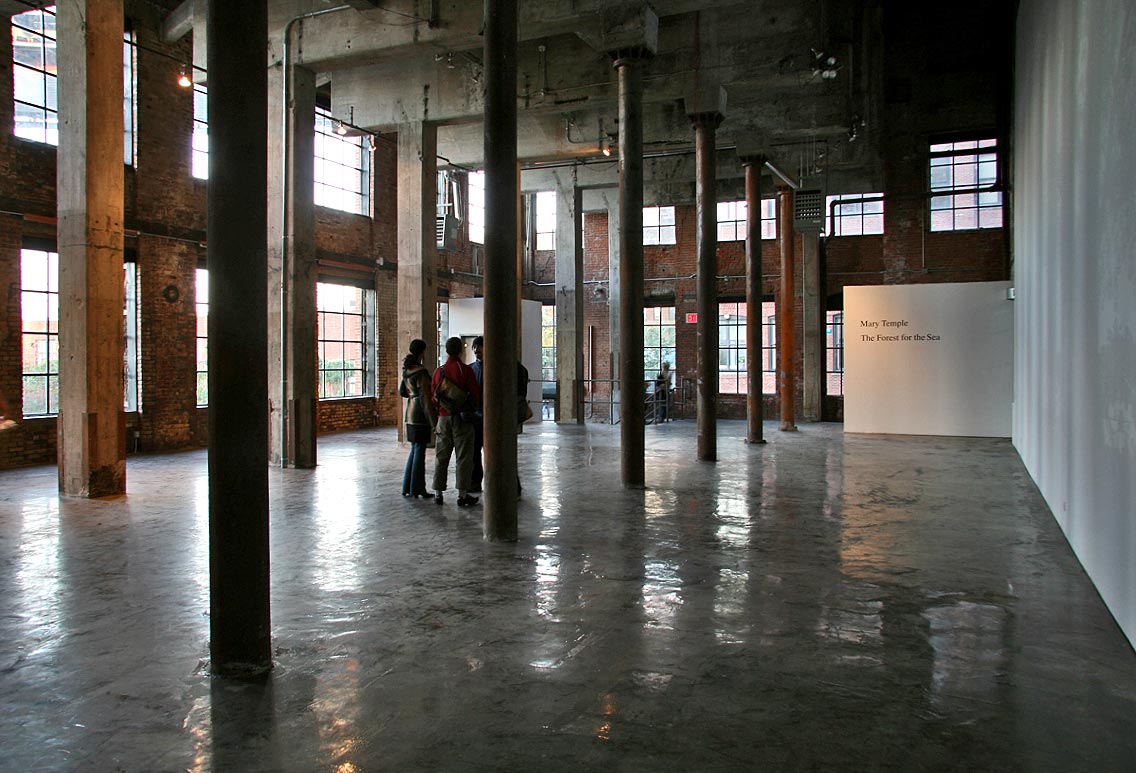
    This is a view of the Manhattan Bridge from Smack Mellon Studios on the waterfront in Dumbo, Brooklyn. The gallery is on Plymouth Street, which abuts Brooklyn Bridge Park, so it gets unobstructed views of the Bridge, the Park, Manhattan, and the East River, which separates Brooklyn from Manhattan. Click here for another photo.

    This fantastic space is newly occupied – it was vacant for decades. There are 25 windows on two levels with 35-foot ceilings. For information regarding the gallery’s mission, type of work, upcoming shows, etc., check their website here.

    Dumbo is one of the most spectacularly beautiful and visually dramatic neighborhoods in the 5 boroughs of NYC. I highly recommend that you visit, regardless of the time or your interests – just walk the streets and, of course, visit the galleries…


  • Secret Rooftop Garden

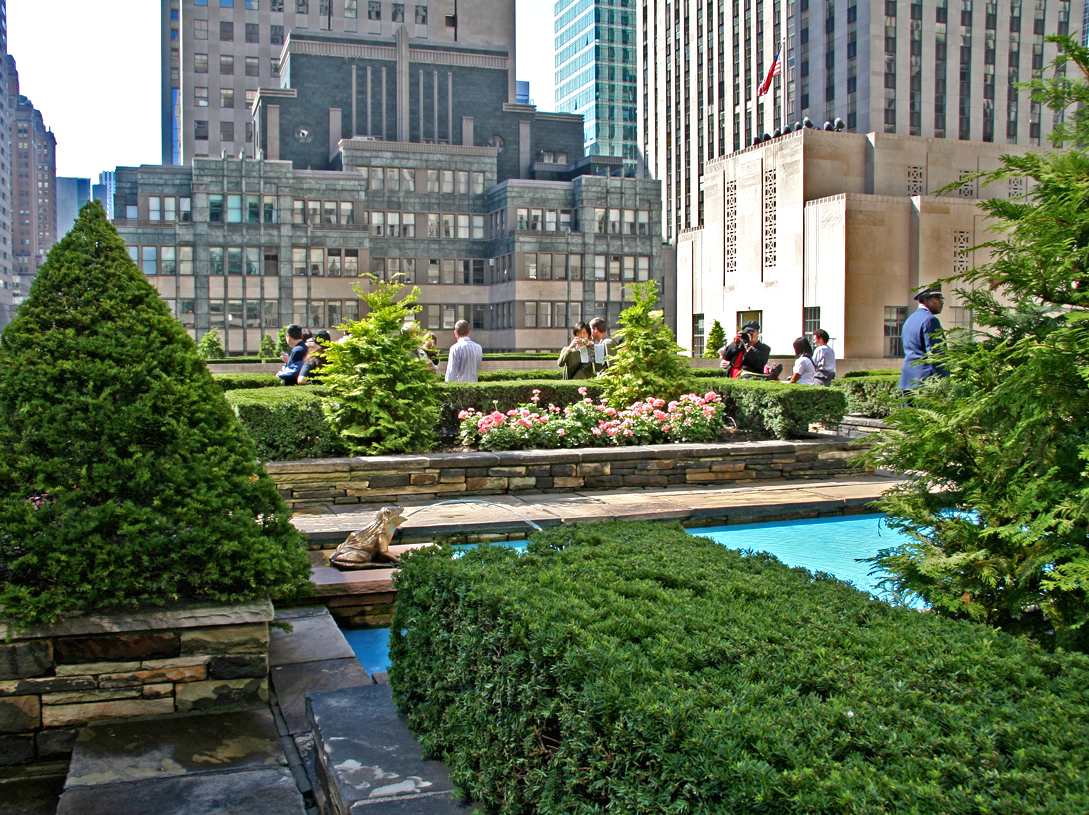
    For just 4 hours, as part of OHNY (Open House New York), the rooftop garden atop the British Empire Building at Rockefeller Center was open to the public. This private garden is rarely accessible, and a detailed online search returns very little information about it. According to the Rockefeller Center website: “Originally, the architects envisioned an even more elaborate network of roof gardens to be connected by aerial pedestrian bridges, which they compared to the hanging gardens of ancient Babylon.”

    At this point in time, the garden primarily functions as eye candy to those in nearby buildings who are fortunate enough to have views of the hedges, wildflowers, fountains, lawns, pools, and beautiful walkways. The rooftop overlooks Fifth Ave., St. Patrick’s Cathedral, Rockefeller Center, so, of course, the views are spectacular. I feel fortunate to have visited, as I am sure all the other visitors were. In a post 9/11 world, seeing special places in NYC is becoming more difficult or, in many cases, just not permitted. My thanks goes to OHNY for coordinating this great weekend and for making these places accessible…


  • Gondola

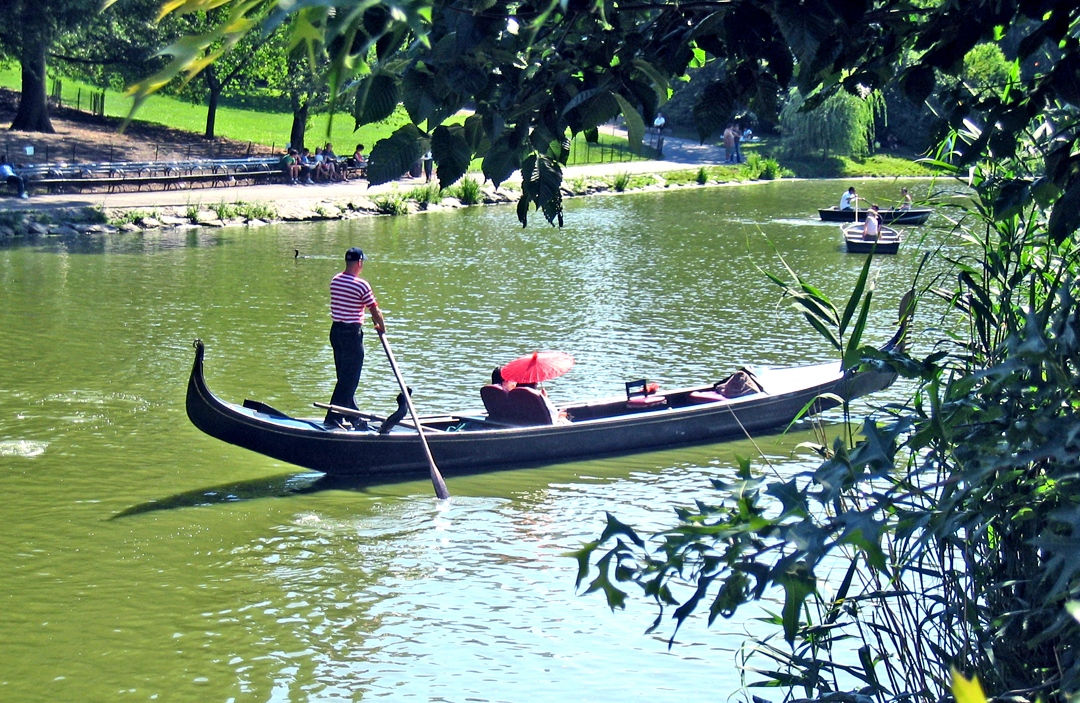
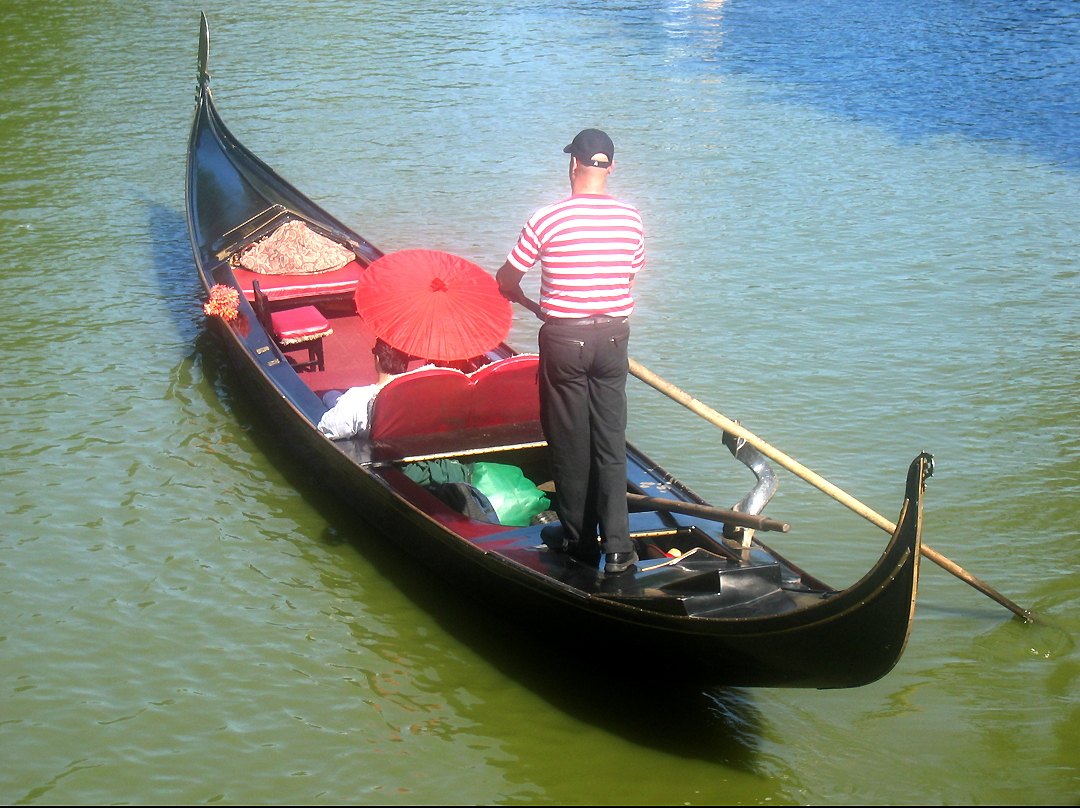
    Central Park has its own authentic handcrafted gondola imported from Venice, called La Fia de Venezia (the daughter of Venice). The 37-foot gondola was donated to the Park Conservancy by NYC philanthropist Lucy Moses. The black craft, oared by gondolier Andreas, was introduced to the waters of the Lake in May 1986 and has been a huge attraction and a source of continued surprise ever since. Click here for another photo. The rides are available during the summer and early autumn from the Loeb Boathouse at the Lake, weather permitting, for $30 per half hour for up to 6 people per boat.

    Rowboats are also available – I was surprised to learn that this activity goes back to the opening of Central Park in the 19th century. And this year, kayaking on the Lake was introduced for the first time. The boating and gondola rides go through October 30, so there’s still time…


  • Christopher Street Pier

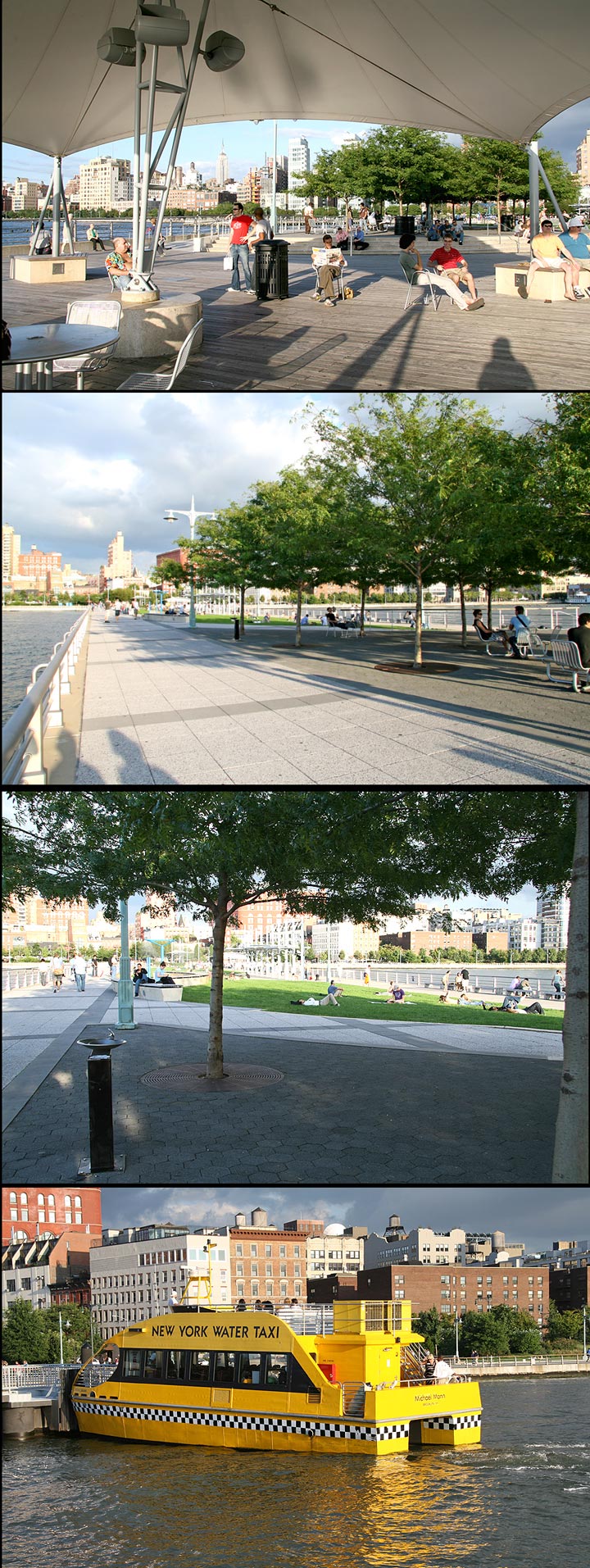
    Christopher Street Pier (officially Pier 45) is part of the Hudson River Park, a 5-mile strip of parks, gardens, and piers interconnected by a pathway for biking/jogging/walking along the west side of Manhattan, the largest park development project since Central Park. By the 1970s, NYC’s role as a commercial port had virtually disappeared, and the waterfront and piers had severely deteriorated. Opened in 2003, Pier 45 was one of the first segments to be reconstructed. The 850-foot long pier includes shade structures, seating, wood decking, grass lawns, and a water taxi stop. The photo was taken from the end of the pier looking towards the city. Click here for more photos.

    The pier and area around Christopher Street, however, have been mired in community problems and battles. The Pier is a mecca for gay youth and creates severe problems for the neighboring community, as individuals spill into the streets after the Pier closes at 1 AM. The articles at the FIERCE site will give you an idea. I do highly recommend a daytime or evening visit – these problems do not manifest until late night – and the views and space are beautiful and relaxing…


  • South

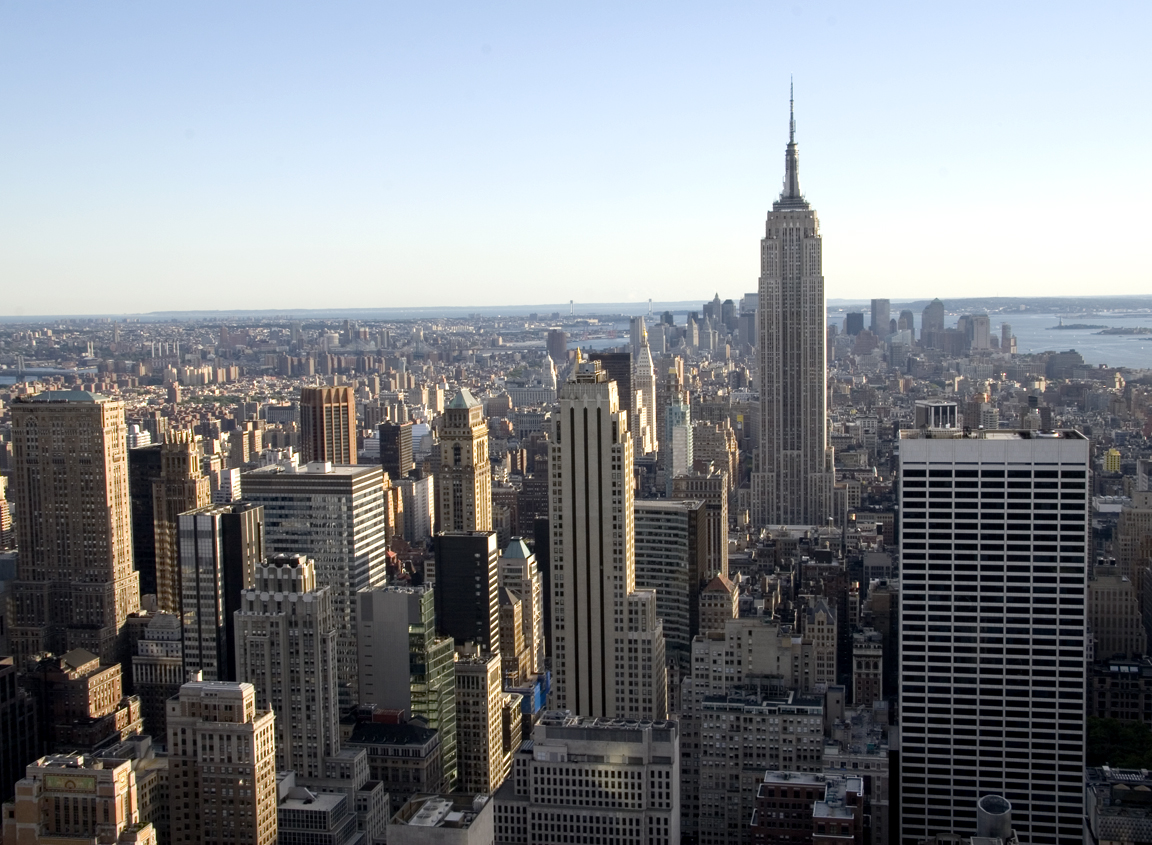
    This photo was taken looking south from the Top of the Rock observatory at Rockefeller Center. This view is of particular interest for a number of reasons. Dominant in the photo is, of course, the Empire State Building, currently NYC’s tallest building, built in 1931 and billed as the Eighth Wonder of the World when it opened. If you look carefully, at center left, you can see the Brooklyn Bridge, and behind it is the Verrazano Bridge; at center right, you can see the Statue of Liberty and Ellis Island. The land masses from left to right are Brooklyn, Staten Island, and New Jersey. The slab skyscraper on lower right is the WR Grace building.

    If you are interested in seeing vistas of the city in other directions, check out East and North. Perhaps when we see the concrete jungle of midtown Manhattan and find it to be a pleasant sight, we are subconsciously agreeing with British zoologist Desmond Morris, who wrote, “The city is not a concrete jungle, it is a human zoo.” After all, most of us love the zoo – at least for a visit 🙂


  • dinamic_sidebar 4 none

©2026 New York Daily Photo Entries (RSS) and Comments (RSS)  Raindrops Theme