• Category Archives Scenic NYC
  • Manhattan Island

    It is important to note and easy to forget that, first and foremost, Manhattan is an island, and that its role as a harbor is what led it to become the great city that it is. By the early 1800s, after construction of the Erie Canal, NYC was an international port as well as the greatest shipping center between Europe and America (click here for article). Unlike cities such as San Francisco or Portland, Maine, where the maritime presence is very strong, one could easily go weeks, months, or longer in NYC and never see or sense the water. But an island it is, and the urban density is a product of its limited and well-defined space. The five boroughs of New York City have evolved with distinct and unique characters, which, to a large extent, is due to their physical separation by water – all the boroughs are islands or part of islands except for the Bronx. Brooklyn and Queens are both on Long Island (and share a land border).

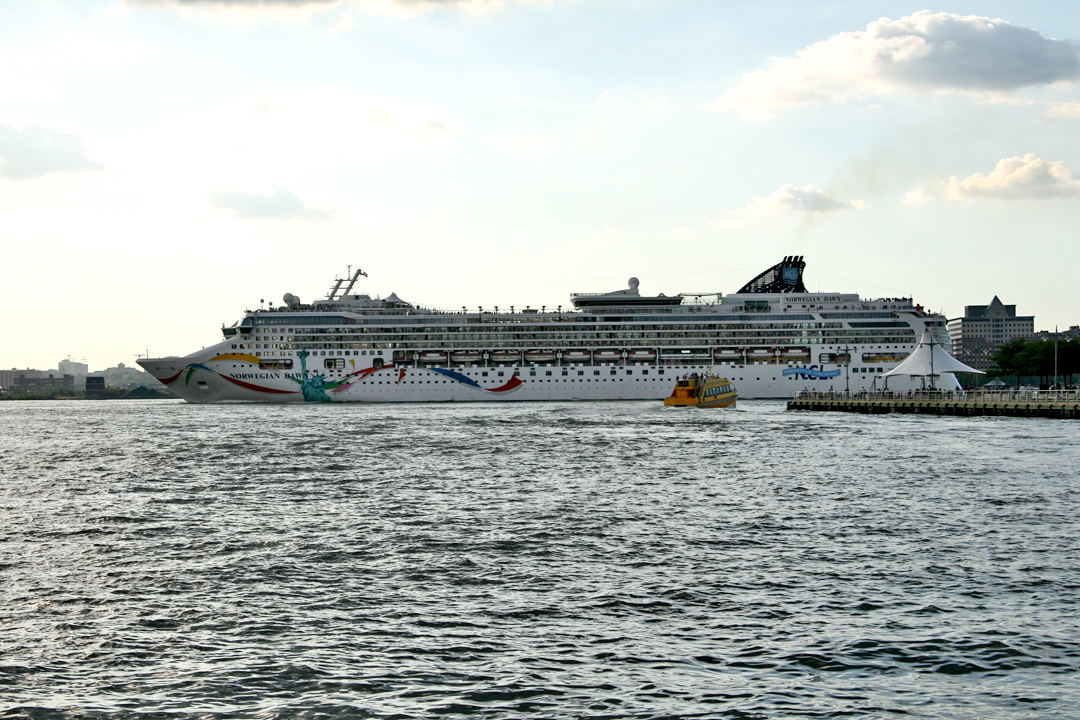
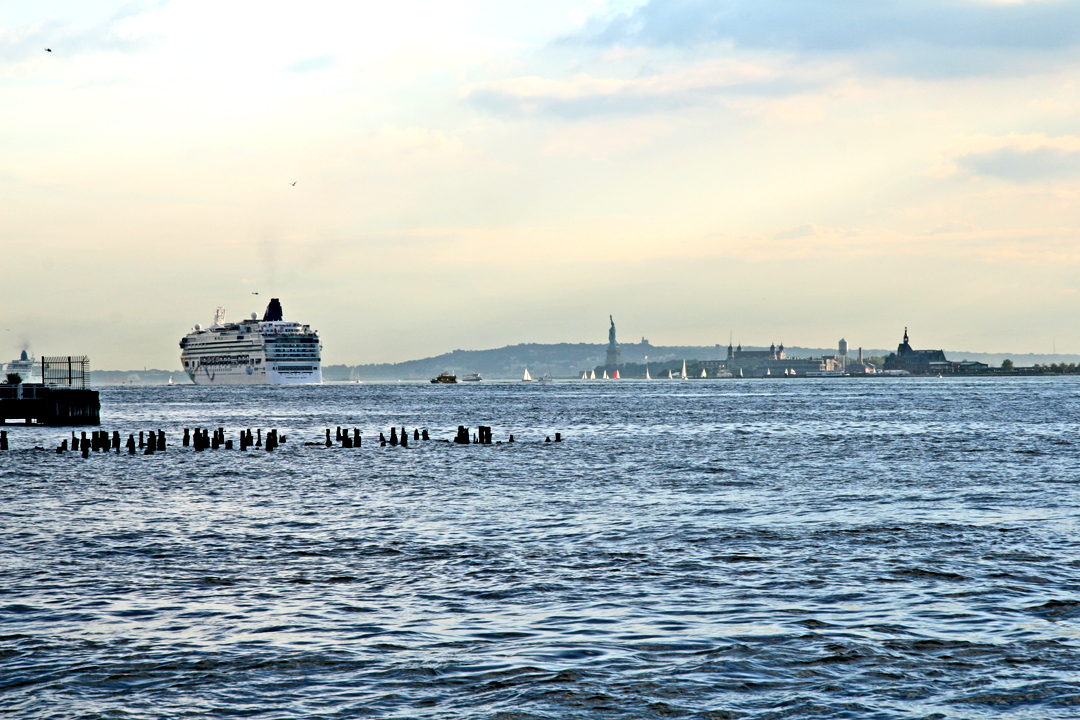
    This photo was taken from Christopher Street Pier looking southwest down the Hudson River to the bay, Statue of Liberty, Ellis Island, and New Jersey. New York services many cruise lines, ferries, and tour boats. The ship is the Norwegian Dawn (click here for a close up photo). Although words such as isolation and vulnerability come to mind, somehow I find great comfort being on this small island…
  • Meier World

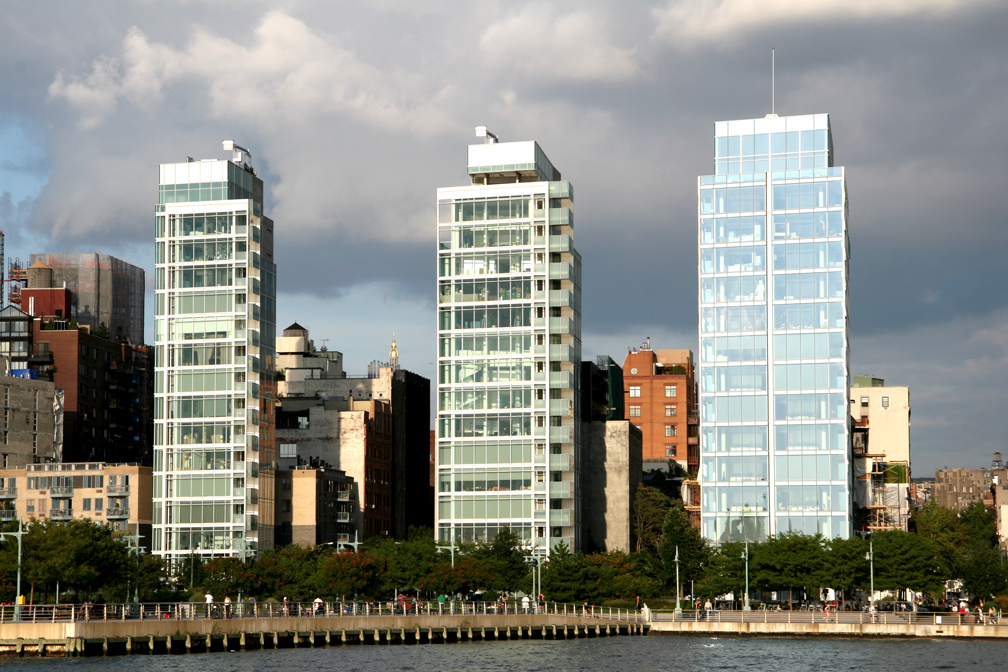
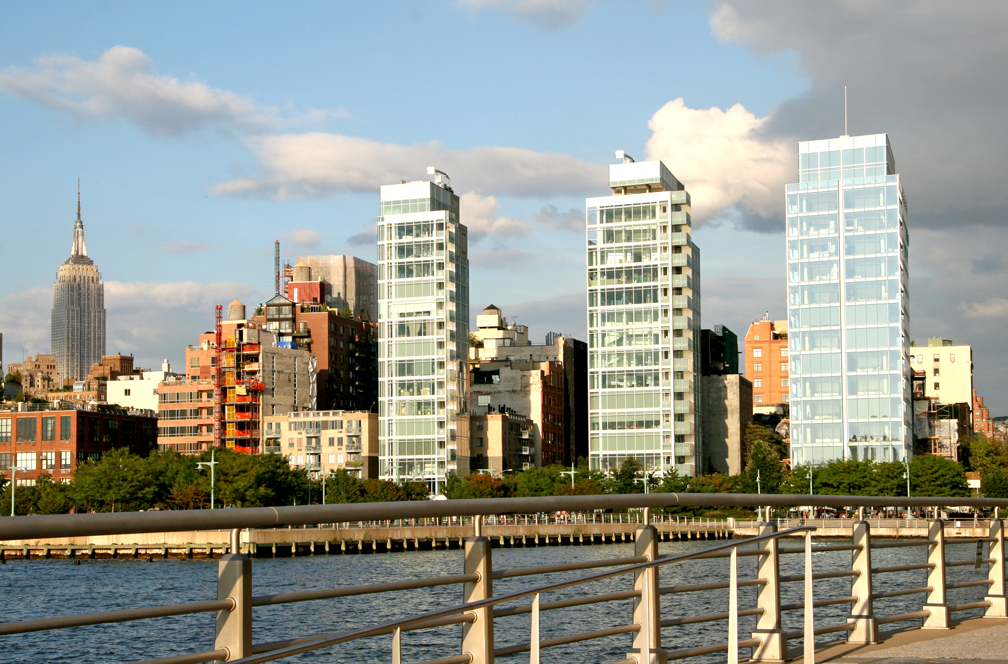
    In the far West Village, flanking the Hudson River and the new, immensely popular Hudson River Park (this photo was taken from the Christopher Street Pier) are three residential 16-story towers all designed by starchitect Richard Meier. The projects all share a crystalline structure, clad in insulating laminated glass. Click here for additional photo.

    The two buildings on the left are 173/176 Perry condominiums (completed 2002), the first Meier construction in NYC. The spaces are open lofts with interior design and furnishings completed by the owners. The building on the right is 165 Charles (completed 2006). The interiors of the units in this property, in contrast to Perry Street, were completely designed and finished by Meier and apparently are spectacular. And the roster of tenants includes celebrities (Martha Stewart, Nicole Kidman, Calvin Klein, et al).

    These projects are a big subject, so I leave it to you to read further online, perhaps starting with the Richard Meier official site. Of course, anything this outspoken in a historical neighborhood will provoke controversy – many nearby streets are cobbled, and the surrounding area has predominately low-rise dwellings. However, new construction is a part of our world, and the appropriate architectural solution for a given context is difficult…


  • Cherry Lane Theatre

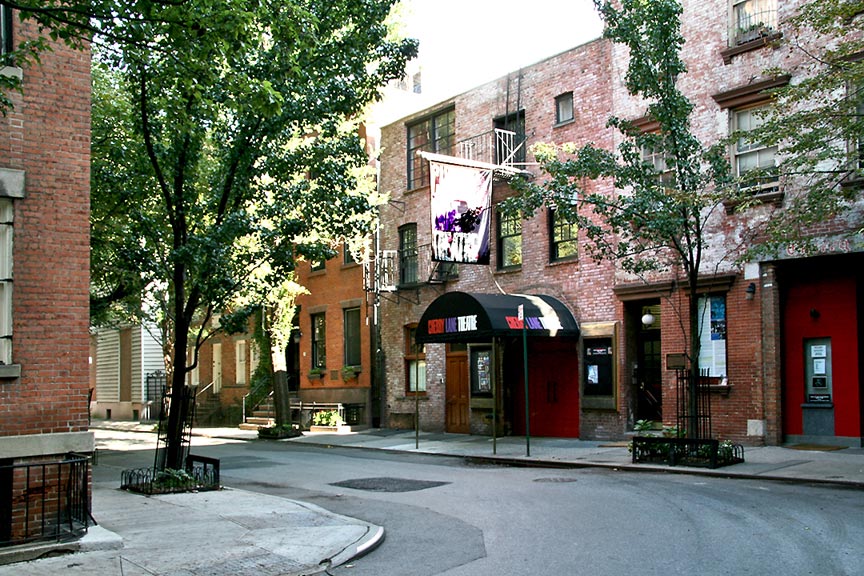
    On one of the most charming and bucolic streets in the city, you will find the Cherry Lane Theatre. This small, quaint theater at 38 Commerce Street in the West Village is, however, not small in reputation or impact. The building site was originally a silo on the Gomez Farm in 1817 – the building that now stands was first built in 1836 as a brewery and was later used as a tobacco warehouse and box factory. Click here for more photos.

    It was founded as the Cherry Lane Playhouse in 1924 by a group of colleagues of Edna St. Vincent Millay. The roster of playwrights and actors that have worked there is truly astonishing and voluminous: O’Neill, Beckett, Albee, Pinter, David Mamet, Sam Shepard, John Malkovich, Gene Hackman, Barbra Streisand, James Earl Jones, Rod Steiger, Dennis Quaid, Kevin Bacon, and Harvey Keitel, to name just a few. If you are not familiar with this theater, I suggest you peruse their extensive website and learn more about it.

    As a laboratory for theater with a groundbreaking heritage, it is quite fitting that New York’s longest running Off-Broadway playhouse is located on a street with a bend and left off the grid of the Commissioners’ Plan of 1811…


  • Tank Worship

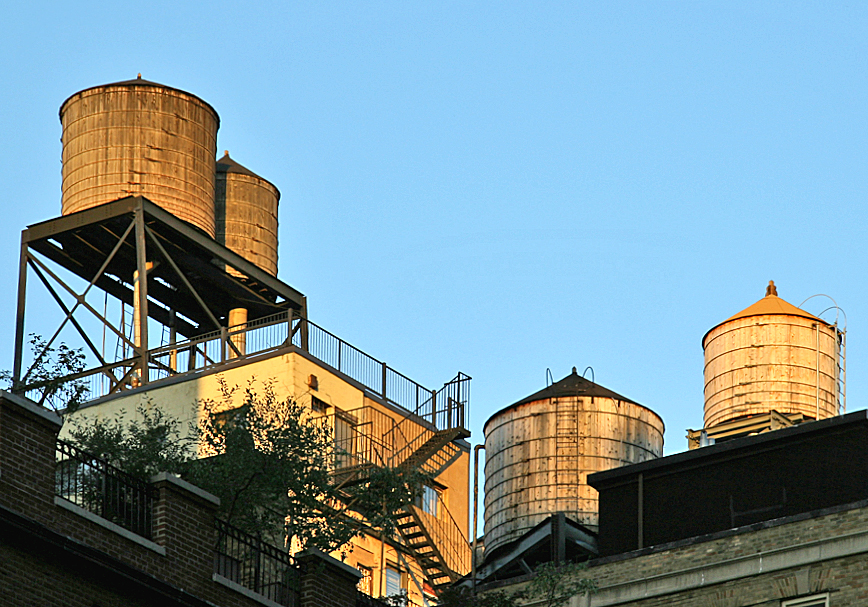
    The NYC skyline is known for its many icons, but water towers are not generally among them. However, one of the most ubiquitous sights in the city, from the street and above, is the water tower. Estimates are that there are over 10,000 in the city, with over 100 being built or replaced each year. And there are only two companies that make them, both dating back to the 19th century: Isseks Brothers and Rosenwach Group.

    The city’s natural gravity-driven system is adequate to supply buildings up to six stories in height. After that, additional pressure is needed. By storing a typical day’s supply in a rooftop tank, adequate water pressure for the entire building is able to be supplied by gravity. At night, the tanks are filled by pump – this eliminates a much more expensive pumping system to supply water at all times and at peak demands. Click here for a more detailed description with links on the operation of water towers.

    These wood tanks were photographed on University Place. Most of the city’s towers are exposed, and some have them covered with elaborate cupolas. Like many things in the city, there has been a romanticization of the water tank – in Tribeca, tanks are considered a decorative element. The ultimate validation of tank worship? In 1998, an art project was funded called Water Tower, now part of the Museum of Modern Art’s permanent collection


  • East

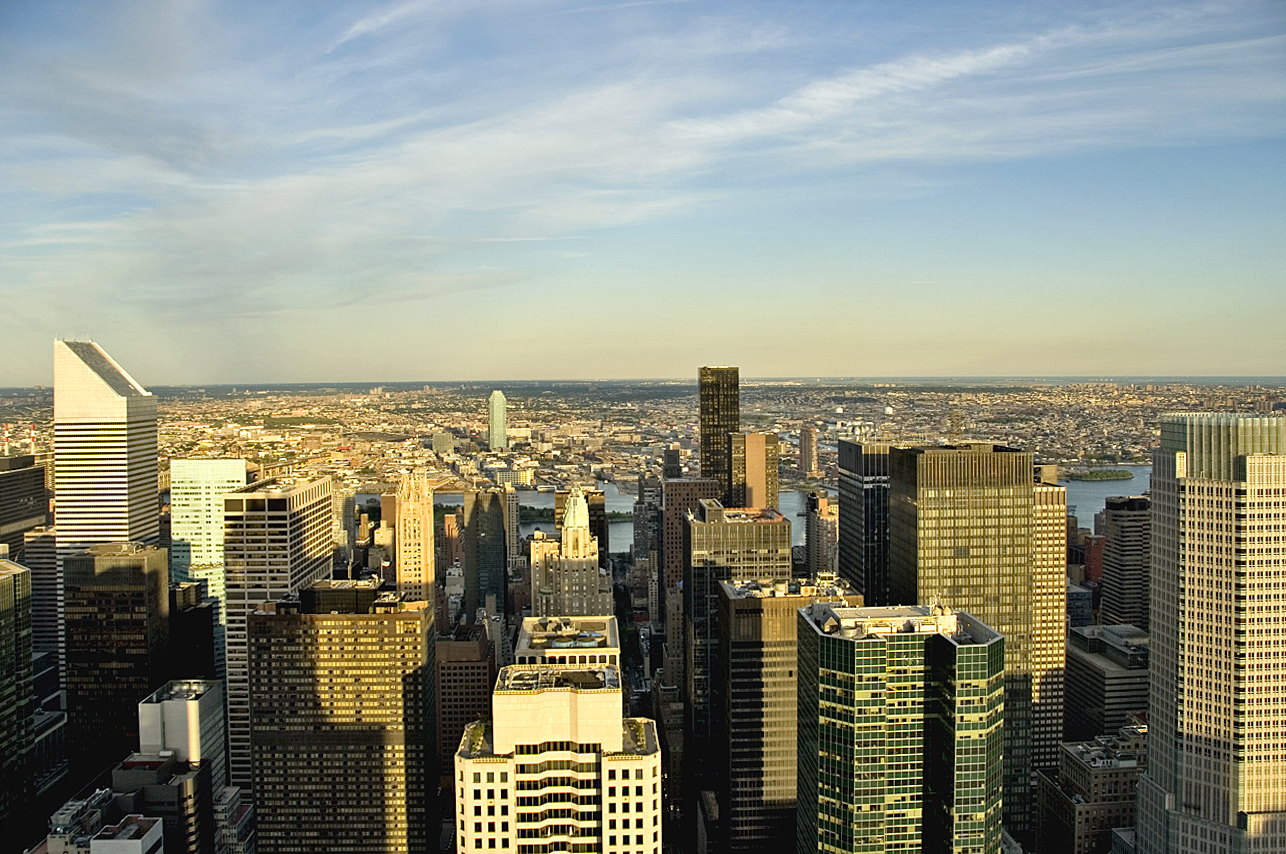
    This is Manhattan facing east towards Queens, shot from the Rockefeller Center observatory just before sunset. The Citicorp building is at the far left; the lone tall building in the distance just left of center is the Citicorp Building in Queens (the tallest building in that borough). The green topped building in the center is the Waldorf Astoria hotel, and to its immediate left is the GE Building at 570 Lexington Ave. The green strip of land in the middle of the East River is Roosevelt Island. I always find aerial views of NYC so inspiring. The density just makes me feel like everything is there and anything is possible – the New York of dreams, song, and film…


  • Columbus Circle

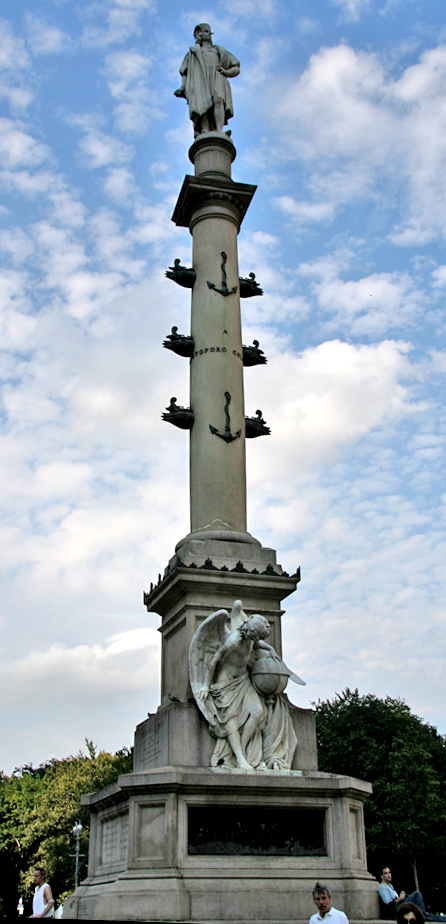
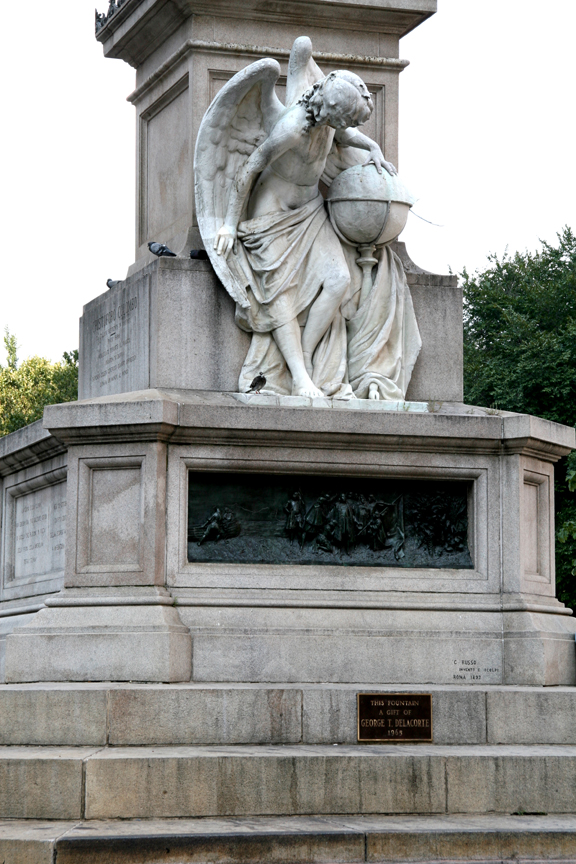
    Columbus Circle is a major nexus in NYC at the southwest corner of Central Park. It is the intersection of Central Park South (59th Street), Eighth Avenue, Central Park West, and Broadway. It is also a major transportation hub for numerous subway and bus lines. A marble monument of Christopher Columbus sits atop a 70-foot granite column – the pedestal has an angel with a globe. The monument was built in 1892 (completed in 1905) as part of NYC’s commemoration of the 400th anniversary of Columbus’ first voyage to the Americas.

    It is difficult to capture the area in a single photo – there are points of interest around the entire circle: the Time Warner Center and shopping complex, Trump International Hotel, Merchant’s Gate to Central Park with the Maine monument, and, of course, the fountain and statue area itself, which underwent a renovation in 2005, winning a landscape architecture award. This traffic circle has always been hectic and difficult to navigate; now with the new wooden benches, fountains, and plantings, it has become an island of calm in the storm of NYC…


  • North

    I love vistas, views, and heights, and Manhattan is a great place for such interests. This photo was taken from the top of Rockefeller Center looking north. The green expanse is, of course, Central Park. The open field on the lower left is Sheep Meadow – a popular and wonderful area for relaxing. The body of water just above it is the Lake (see The Boathouse Restaurant and Bow Bridge). The other large body of water is the Reservoir, which has a walking /jogging trail around it – the open field below it is the Great Lawn, and the complex to the right is the Metropolitan Museum of Art. The buildings flanking the park on the left is Central Park West, and on the right is Fifth Avenue.
    If you want to investigate further, here is a great online site which has two interactive maps of Central Park, one of them an aerial photo.

    I found the large slab building on the lower right blocking the view quite obtrusive – this is the Solow Building at 9 W. 57th Street, apparently one of the most controversial buildings in Midtown – surprising, isn’t it? 🙂


  • Midtown

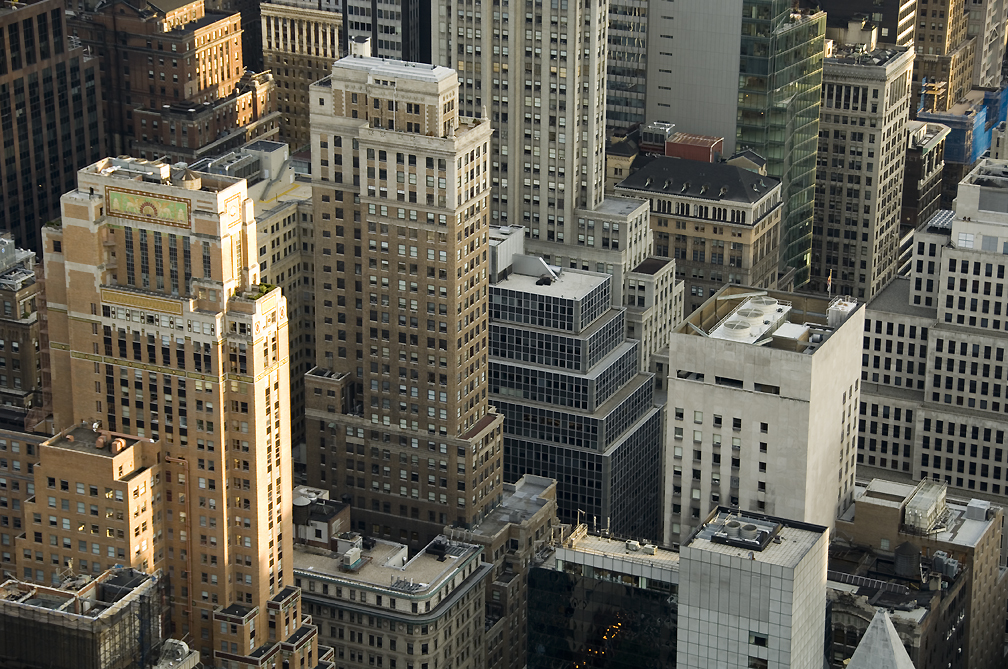
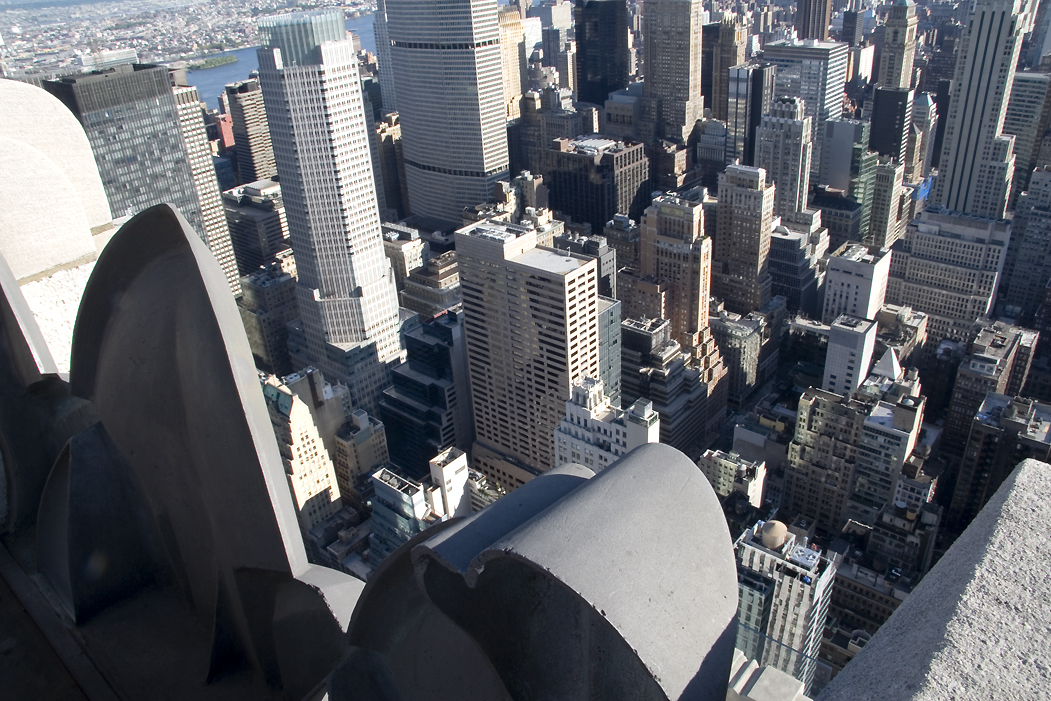
    Midtown Manhattan is the busiest commercial district in the United States. This photo, taken from the Rockefeller Center observatory, is a closeup of a small section along Fifth Avenue in the 40s and gives a good sense of the density of buildings (click here for another view).

    There is no precise, agreed upon definition of Midtown, but at the very least, it covers the area from Central Park to 34th Street and from 3rd Avenue to 9th Avenue. In this area alone, there are numerous districts, squares, stations, buildings, centers, and flagship retail stores – many of the sites known to visitors around the world are found in this small area of only about 2 square miles.

    One reason I chose this photo was that I was intrigued by the attractive slab skyscraper building on the far left with its large friezes at the crown. A little digging and research this morning revealed this to be the Fred F. French building, a deco gem built in 1927 by a real estate tycoon – I think I will cover this building in another post. In doing this photoblog, I am learning about a myriad of beautiful buildings which I never really noticed. I hope that you are enjoying the process of mutual discovery…


  • St. Patricks from the Rock

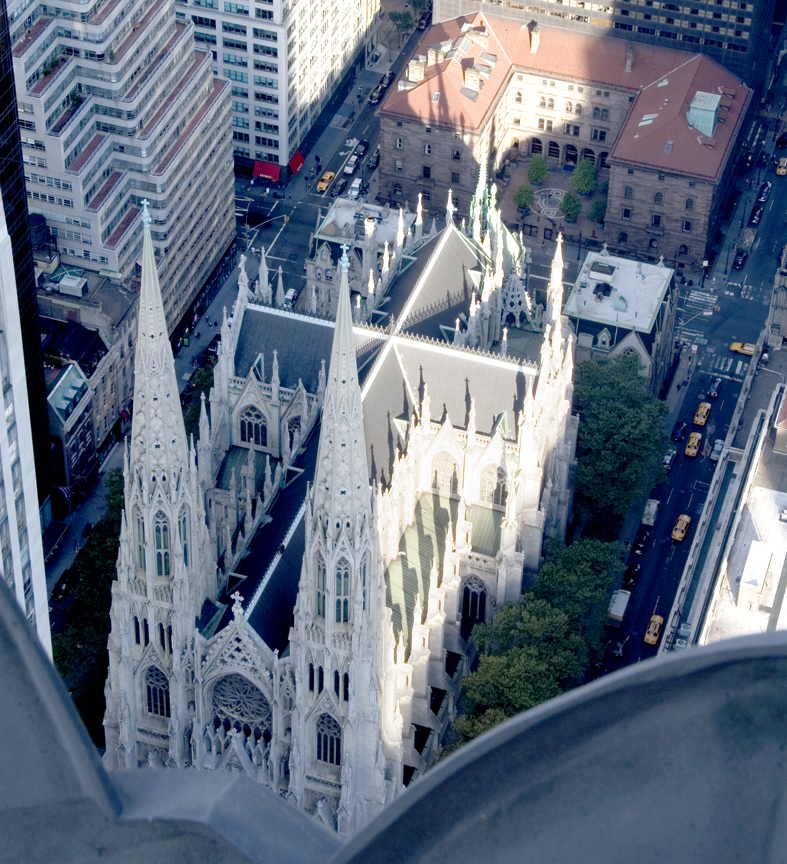
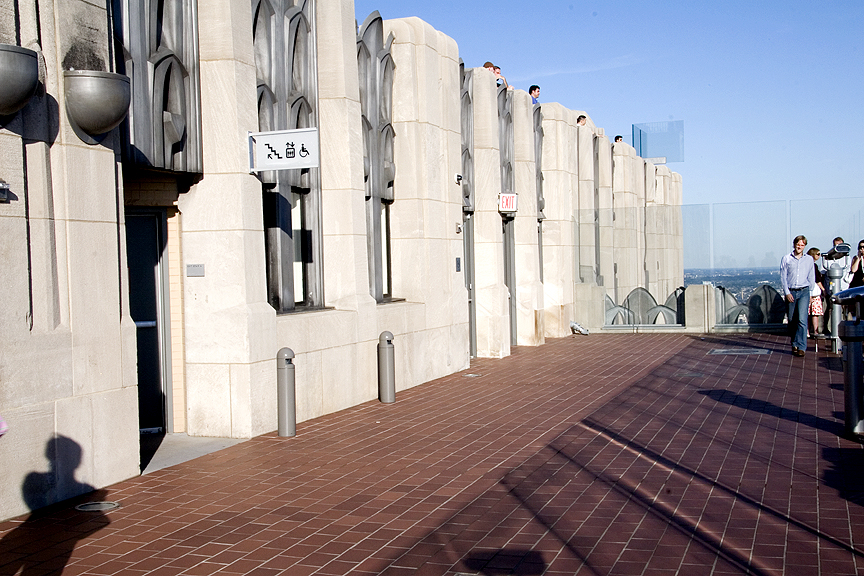
    This photo was taken from the recently reopened observation deck of Rockefeller Center now called Top of the Rock. Photography is challenging at the Rock – there are actually three observation decks. Two are surrounded by thick glass with spaces in between just large enough to squeeze a lens through. The third and uppermost deck (70th floor) is completely open, but set back, thereby preventing extreme downward shots (click here for a photo of the 69th floor deck – note the 70th floor deck on the upper left).

    In the photo facing East towards Fifth Avenue, you can see St. Patrick’s Cathedral (the subject of a future post) and behind it are the Villard Houses, a group of five brownstone mansions built in 1884 and attached to the New York Palace Hotel, built in 1980. I recommend the Rock Center deck – it’s open 365 days a year from 8AM to midnight, offering 360 degree views. Allow some time to enjoy…


  • Bethesda Fountain and Terrace

    Posted on by Brian Dubé

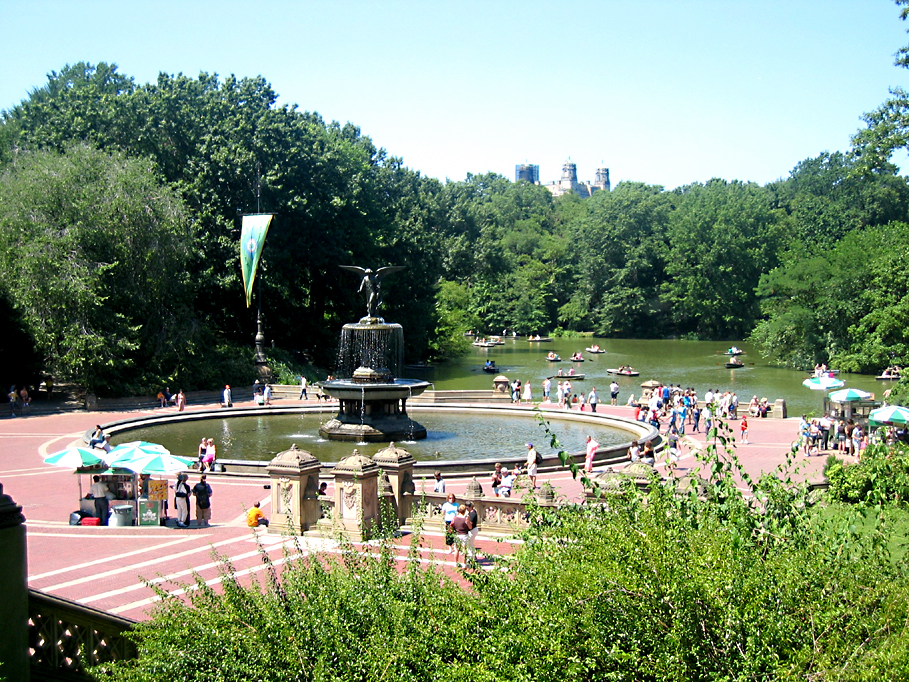
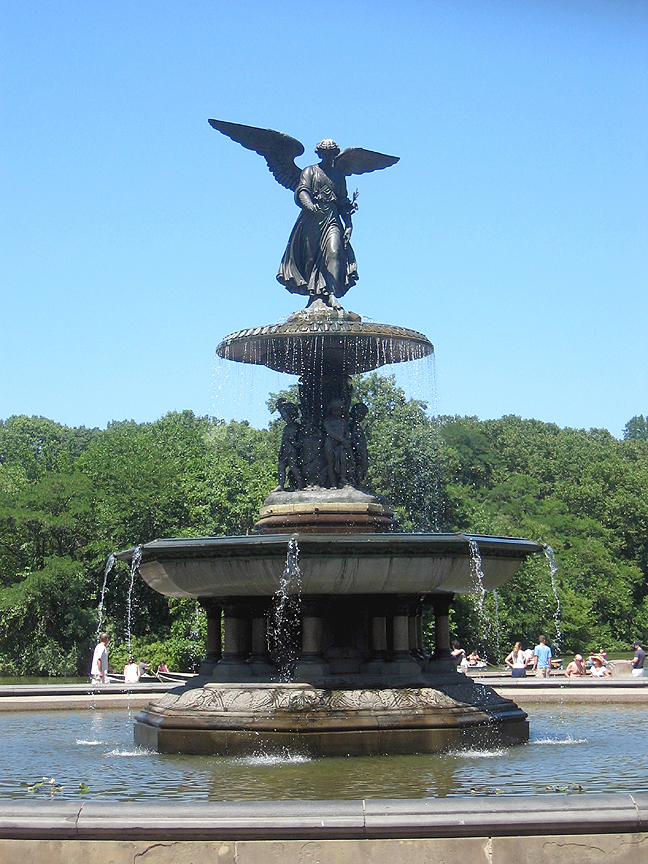
    Here we have one of the most photographed fountains in the world: Bethesda Fountain, which stands at the epicenter of Central Park. Officially known as the Angel of the Waters, it was dedicated in 1873. The artist’s brochure makes a reference to Bethesda (from a biblical verse from St. John), after which the fountain became popularly known. The winged figure symbolizes the bringing in of pure water to NYC after the Croton Aqueduct opened in 1842. The lily in her right hand represents purity; her other outreached hand blesses the water below. Click here for a closeup of the fountain with four cherubs below the angel, representing Peace, Health, Purity, and Temperance. Complete details about the fountain here.

    The fountain and terrace area stands at one end of the mall. In this photo, we are facing the Lake, with the wooded area known as the Ramble behind it. Click here for more on the Terrace itself, with photos and info…

    Posted on by Brian Dubé

  • The Tram

    Posted on by Brian Dubé

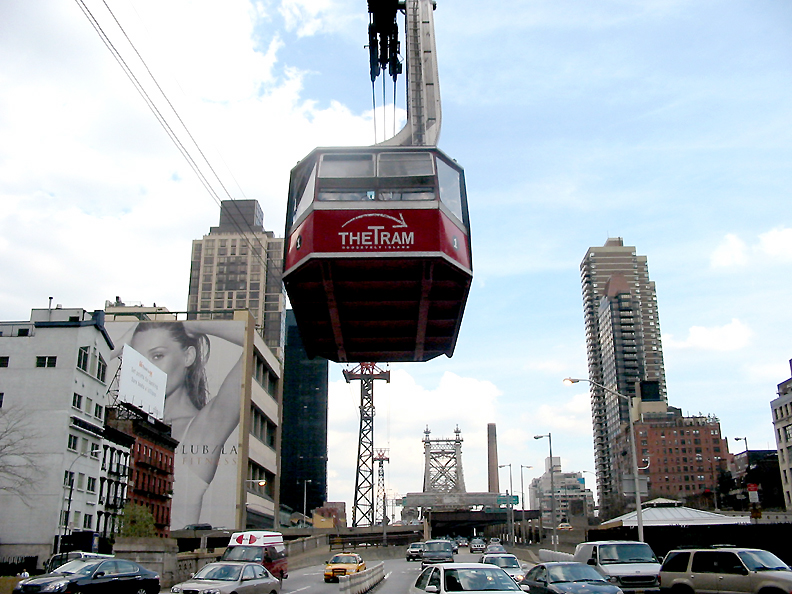
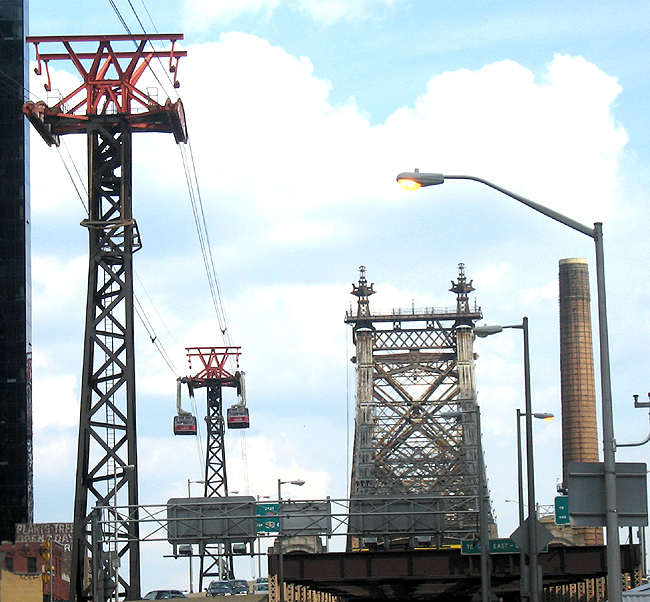
    The Roosevelt Island Tramway provides aerial transportation between Manhattan and Roosevelt Island, with two cable cars crossing simultaneously (see here), running adjacent to the Queensboro Bridge. It is the only commuter cable service in North America. It was put into operation in 1976 to accommodate newly built housing on Roosevelt Island; new subway service was finally inaugurated to the island in 1989. However, the Tram is still extremely popular, providing great views of both islands and the river. I highly recommend it.

    This photo was taken April 15, 2006, just three days before the trams were put out of service – the trams were stuck over the East River for seven hours. Read about the Tramway and the incident here. Service was to be resumed, but so far…(update: Service was resumed in September 2006.)

    Posted on by Brian Dubé

  • Bow Bridge

    Posted on by Brian Dubé

    The Bow Bridge in Central Park is considered one of the world’s most beautiful small bridges. It certainly is one of the most visited and photographed areas. The graceful arc spanning over the Lake with its boaters and surrounding green instills great calm in an intense city such as New York. It is always a pleasant surprise to happen upon such a magnificent structure while strolling through the park. Kudos to the designers!

    The official Central Park website has many images, and three really nice Quicktime panoramas: Spring/Summer, Fall, and Winter (update: no longer available). You can see the bridge and its surroundings in all the seasons. Here are more photos I took going over the bridge itself…

    Posted on by Brian Dubé

  • Red Green

    Posted on by Brian Dubé

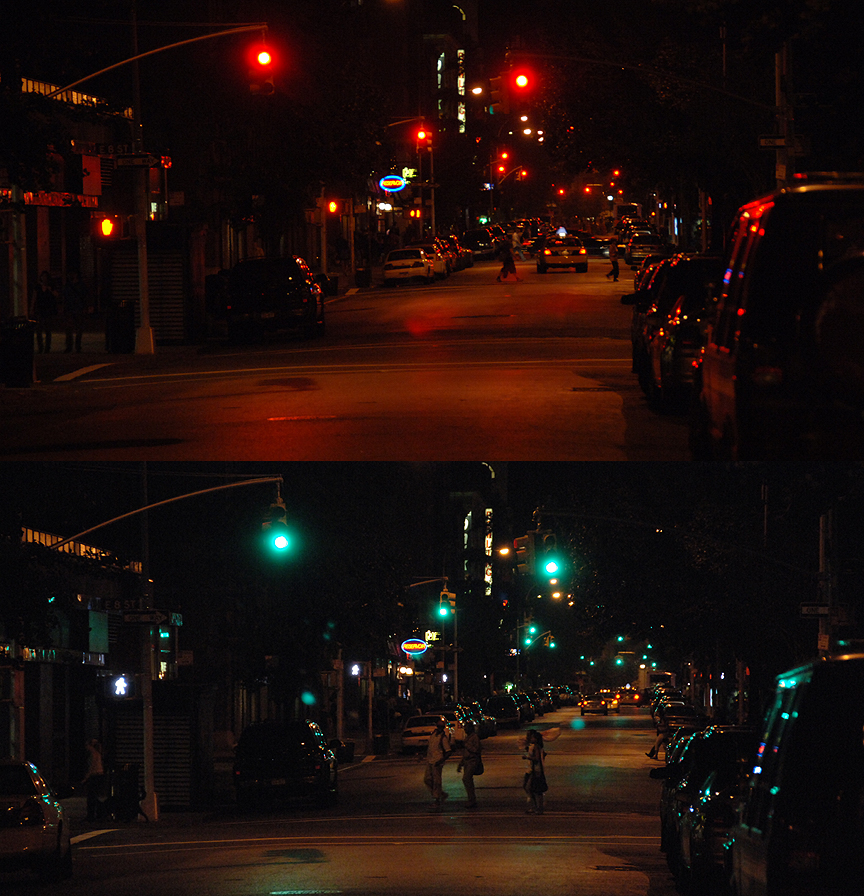
    I love night photography, but my current point and shoot is woefully inadequate for shooting at night without flash. However, last night, I met a recent acquaintance who has a lot of photo equipment and had just gotten a new zoom lens from Nikon (which he had on his D2X, for you equipment geeks). He offered me a trial run, so we swapped Flash cards and off we went.
    I was quite pleased with the low light capability, resolution, and all the other bells and whistles on a high-end camera (like Eric from Paris Daily Photo, I will also be upgrading cameras).

    This was shot on University Place. I was originally going to call this Stop and Go, but the traffic was light, and the most compelling thing about the scene when looking through the viewfinder was the effect of the color change…

    Posted on by Brian Dubé

  • Central Park Mall

    Posted on by Brian Dubé

    If you’ve traveled this far into Central Park, you will have noticed a number of things. It’s an amazing park – a triumph in urban landscaping. It’s quite large. It’s remarkably varied, and there are spots like this one where you can’t see any urban structures at all – very bucolic. And you could use a rest. So I recommend sitting on one of the benches here in the central spine of the park: this beautiful wide esplanade known as The Mall and Literary Walk, flanked with quadruple rows of tremendous old growth American elm trees, forming an enormous tunnel of green. Stately.

    Posted on by Brian Dubé

  • Evening Arch

    Posted on by Brian Dubé

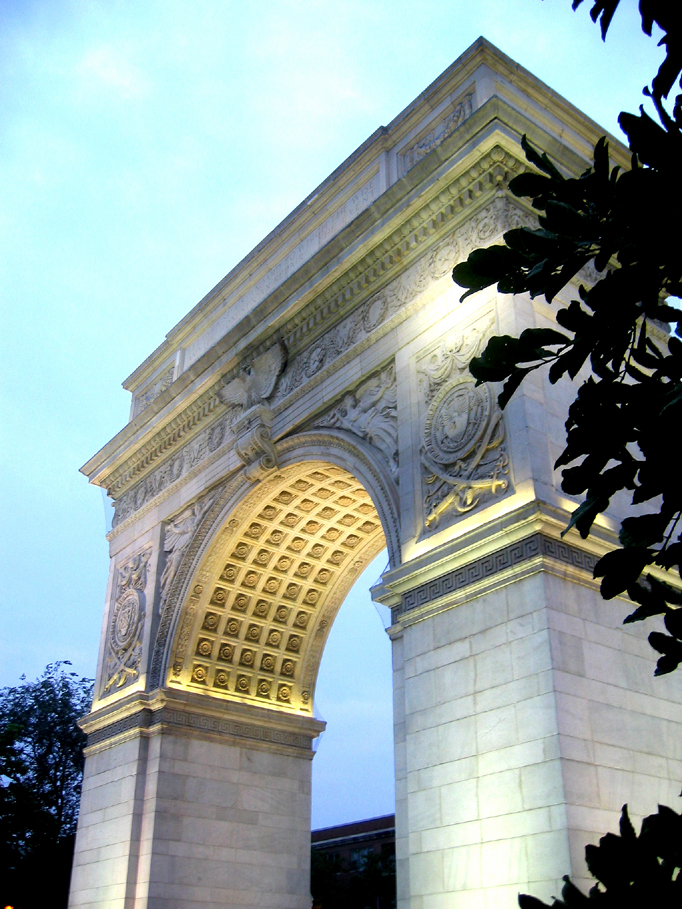
    The Washington Square Arch is one of my favorite NYC icons. It stands at the foot of Fifth Avenue on the north side of Washington Square Park. It always reminds me of the Arc de Triomphe in Paris, after which is was modeled.
    The arch recently got a much-needed renovation – it was in serious disrepair. It is now quite beautiful – completely cleaned and restored with banks of high-power lights from below and the sides.

    This was shot in the late evening. At night it really glows – it is one of the nicest illuminated monuments in NYC. Unlike Paris, New York has few fountains or monuments, and a well-lit one like this is even rarer. I would highly recommend seeing it at night if you get the chance.

    Posted on by Brian Dubé


  • dinamic_sidebar 4 none

©2026 New York Daily Photo Entries (RSS) and Comments (RSS)  Raindrops Theme