• Category Archives Art and Sculpture
  • Nativity

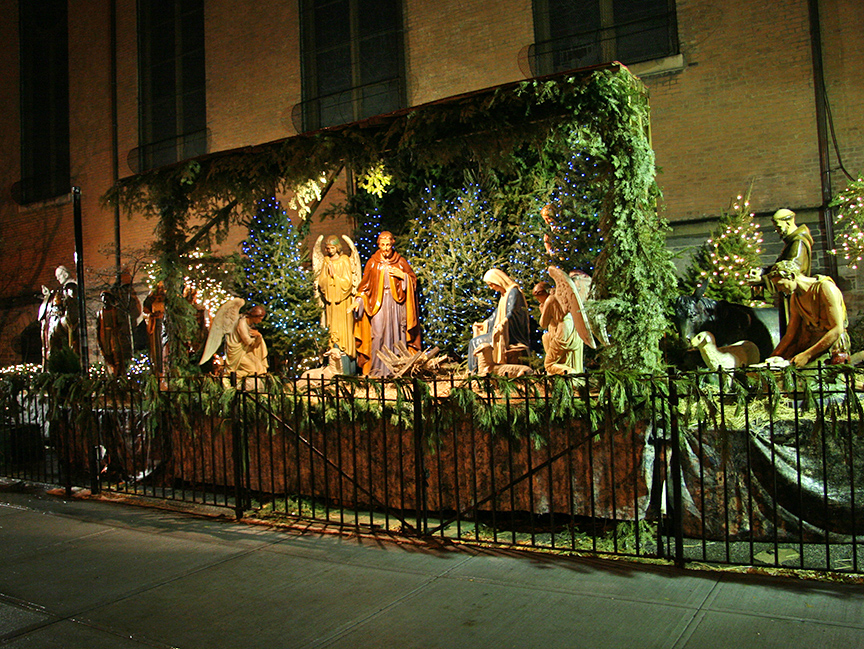
    It is amazing how inured we can become of things with constant exposure, like a beautiful vista seen daily. If someone had asked the existence or whereabouts of a nativity scene in NYC, I’m not sure if I would remembered this one, although it is essentially a city block long on one of the busiest streets in Manhattan: Houston Street, a veritable crosstown highway, the dividing line between the Village and SoHo. It is not a street typically used by pedestrians for strolling; although there are retailers (like Rafetto’s), the street does not have the ambiance of the surrounding smaller streets. Not to mention I cross this street daily and have done eight postings on subjects found on it.

    The photo shows the life-size nativity which is erected annually by St. Anthony’s Church, officially the Church of St. Anthony of Padua at 154 Sullivan Street. The Roman Catholic Shrine church was built in 1866. It is staffed by the Franciscan Friars and is the oldest existing parish founded for ministry to Italian immigrants in the United States. In the 1930s, Houston Street was widened for the construction of the subway. Tenement buildings on abutting the north side of the church were demolished, leaving a narrow space between the church’s north wall and Houston Street, where the nativity scene is installed.

    Interesting note: Convicted Mafia mobster, Vincent “The Chin” Gigante, was a habitue of Greenwich Village. He died December 19, 2005; his funeral was held at St. Anthony’s Church.
  • Stay Lean Stay Hungry

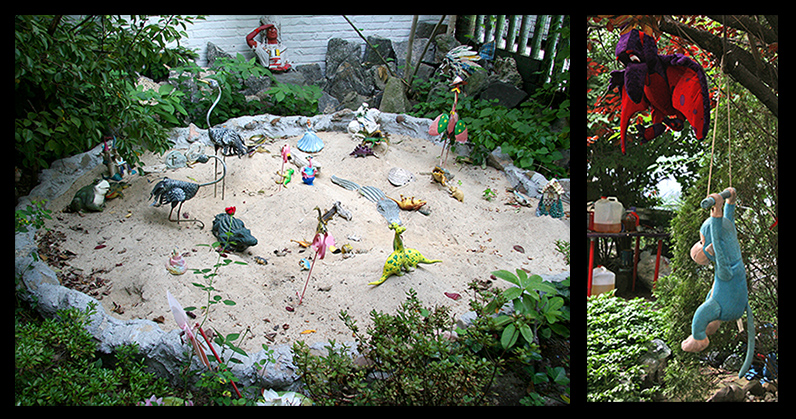
    These photos were taken in October, when I was actively touring the East Village community gardens. I ran a number of garden postings, so this modest one was left to the archives. The Earth People Garden is one of those places which slips under the radar – it certainly is not in any guides or must-see lists. Yet its charms were such that I thought it merited a posting. It is located on 8th Street between Avenues B and C in the heart of Losaida territory – the community members were primarily Hispanic. We were greeted cordially and invited to enjoy. We were also encouraged to come back for Halloween (which I did not do), when apparently they did a major redecoration for the holiday. I found the place extremely inspiring; their efforts and use of simple toys were a testament to resourcefulness and provided a breath of fresh air in an over-the-top world of excess.

    I feel that whatever creative talents I have are the product of a relatively spartan upbringing. Generally I made my own toys and fun. There was a popular phrase I heard a lot at one time – “Stay lean, stay hungry” – a warning not to get too fat and lazy. This was not to be taken literally (sports and exercise fans sometimes now use it that way); the message was that doing with less will do more to drive an individual. Although I am not an advocate of eschewing all modernity and good tools, there is some merit to the concept of seeing what can be done by leveraging one’s mind and personal skills rather than relying on outside resources. These are the thoughts that ran through my mind as I wandered about the garden, with its quaint displays and proud people…


  • Marilyn

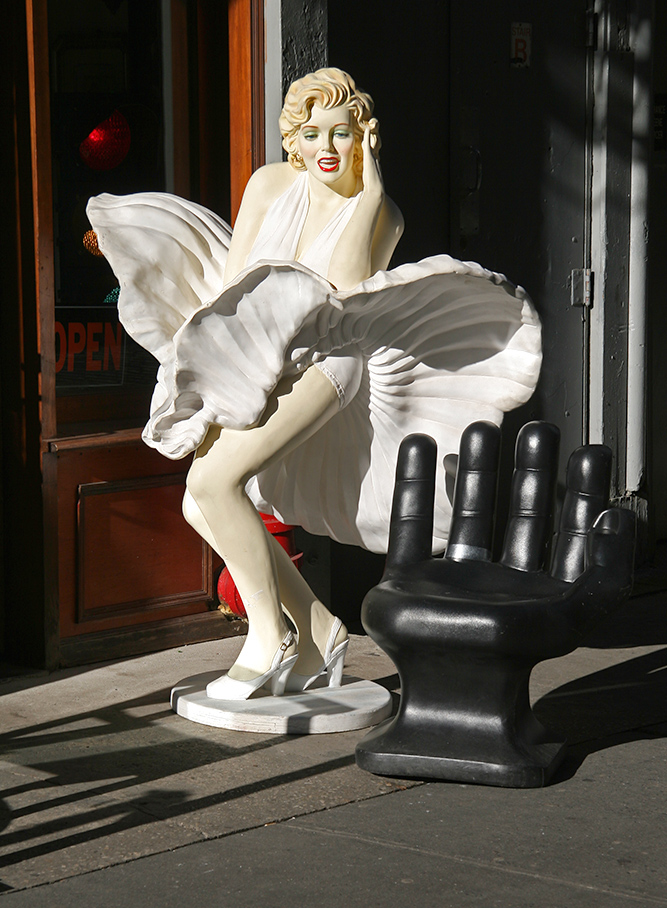
    I can’t imagine anyone not familiar with this iconic image of one the most influential figures in popular culture of the 20th century. This is, of course, Marilyn Monroe with her dress being blown up over a NYC subway grate at the SW corner of Lexington Avenue and 52nd Street in the film The Seven Year Itch. As she feels the cool air wafting upwards, she says, “Isn’t it delicious?”

    There was much controversy over this scene and the dialogue – some original material was cut. In the original footage, Marilyn’s dress was blown up over her waist; this is the image which we are all familiar with and was used in print ads (or in sculptures like the one in the photo). For the film, however, the scene was reshot on a sound stage. The new footage was much tamer, with her dress barely above her knees. The original footage (shot on location) was also deemed unusable due to the enormous background noise by the crowd during filming. The scene even precipitated an argument between Marilyn and her husband at the time, Joe DiMaggio (who was on the set during filming), which reportedly led to their separation and divorce.

    When I grew up, Marilyn Monroe was synonymous with the ultimate in beauty and sexiness. It was also a time where durability was a much larger component of quality and fame. Momentum could build, creating enormous larger than life icons like Elvis, Marilyn, or the Beatles. Many feel that we will never again see this type of thing again. Today, everything feels so temporal and transient. In fact, in many ways, this fleeting from here to the next best thing is something looked on positively. Warhol’s fifteen minutes of fame is starting to look like a long, successful career…

    Photo Note: The photo was taken outside SoHo Treasures at 123 Mercer Street.


  • Fuerzas Irresistibles

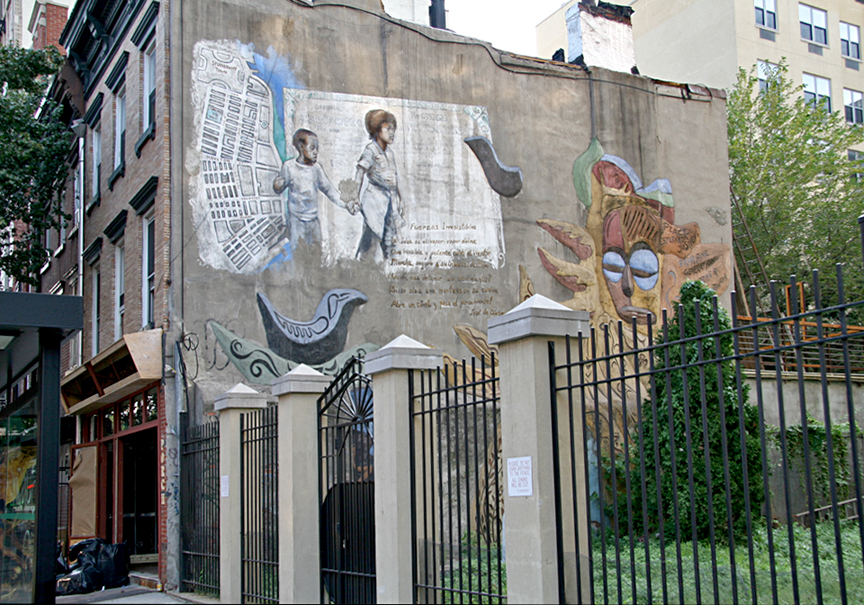
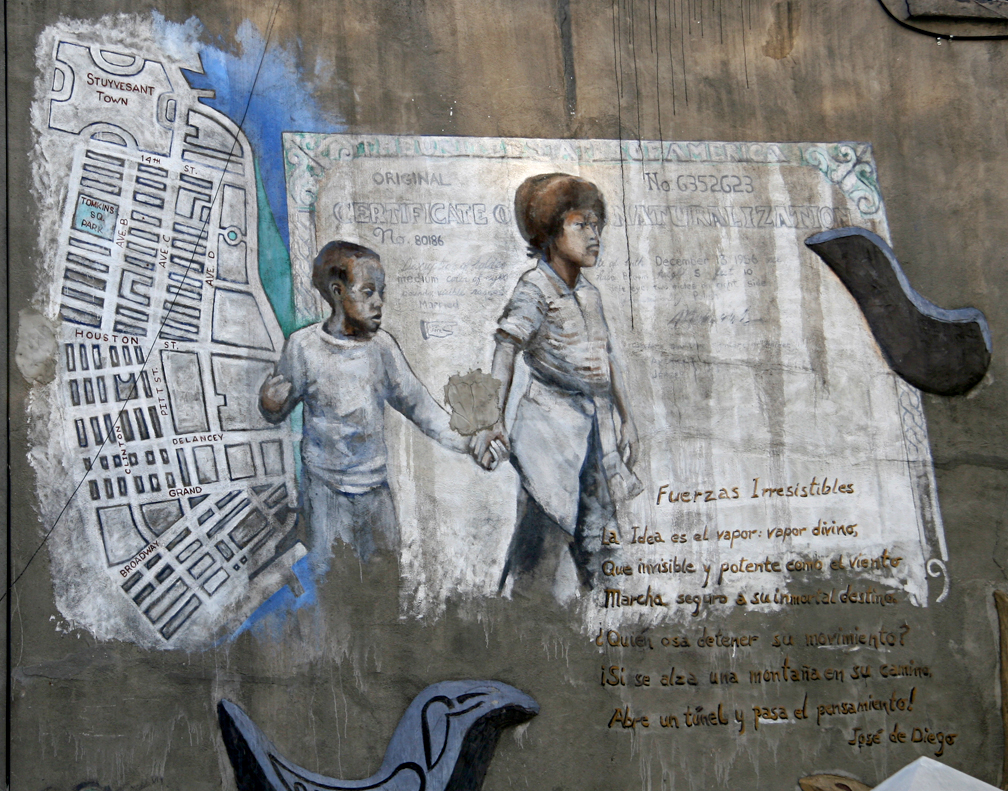
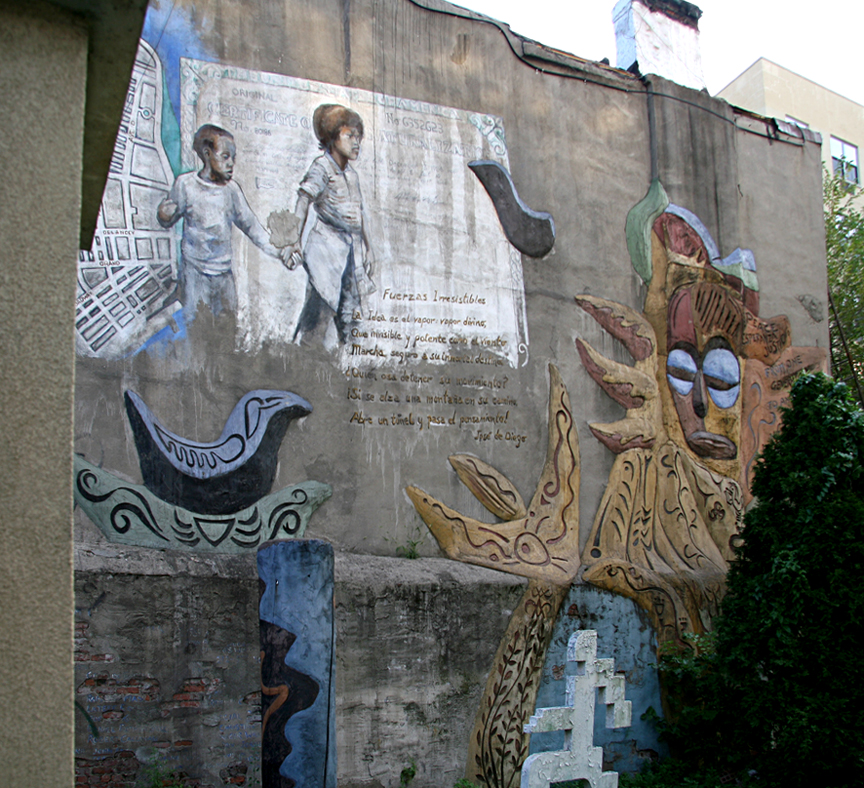
    Today I became acquainted with José de Diego (April 16, 1866 – July 16, 1918), statesman, lawyer, journalist, and poet. Born in Aguadilla, Puerto Rico, Diego spent time between Spain and Puerto Rico and was an advocate and leader of the movement for Puerto Rico’s independence from Spain. An important figure in Puerto Rico’s history, many things have been named in his honor – roadways, schools, and his birth date as an official holiday. He was also known as father of the modern Puerto Rican poetry movement. The last six lines of his poem, Fuerzas Irresistibiles, are on the wall of the public community garden:

    La idea es el vapor: vapor divino,
    que invisible y potente, como el viento,
    marcha seguro a su inmortal destino.

    ¿Quién osa detener su movimiento?
    Si se alza una montaña en su camino,
    abre un túnel y pasa el pensamiento!

    The poem and bas relief speak to community solidarity in this neighborhood, which has a large Hispanic community and Puerto Rican heritage. The community garden, Bello Amanecer Borincano, was started in 1984 by Carmen Pabon (it was later partially bulldozed). Click here for photo. The location is at 119 Avenue C (in Alphabet City), which has the official alternate name Loisaida Avenue (Loisaida is Spanglish for Lower East Side). The term was originally coined by poet and activist Bittman “Bimbo” Rivas (1939-1992) in his 1974 poem “Loisaida.” The renaming of Avenue C was a token of appreciation for his contributions to the Lower East Side, his home, and for his people…

    Photo note: I only noticed on close examination that the illustration’s background is a replica of a Certificate of Naturalization of the United States of America. Click here for close-up.


  • Advertising Gone Wild

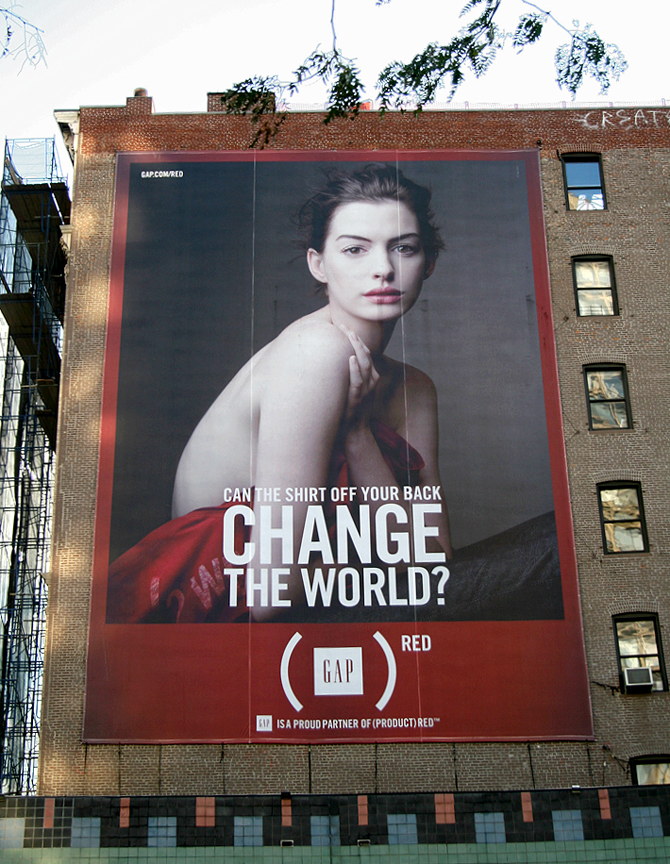
    New York City has always been a place where commerce and advertising have been prominent in the landscape; Times Square is a good example. However, the combination of digital technology (with the ability to print enormous signs on vinyl) and the lure of advertising revenue has taken it to new heights with building walls in the city being blanketed by ad murals, not to mention advertising in a myriad of other variations – newsboxes, ads projected on streets, etc.

    What the smug New Yorker always saw as a blighted feature of the suburbs, and believing that the sophisticated culture of NYC provided immunity from the same, has now become a prominent feature of the city. Commercial interests are relentless and tenacious, however, and keeping them in check requires, if I may borrow from the ACLU motto, eternal vigilance. Commerce usually wins – even in France, Apple Computer managed to hang Think Different banners, featuring Gustave Eiffel and Pablo Picasso, on the facade of the Louvre. The Gap ad in this photo hangs on Houston Street, a few blocks from The Wall.

    Houston Street is ideal for this type of ad – the street is heavily trafficked and has many large building facades. What surprises me most is that in many cases, these murals are placed over apartment windows, obstructing views and light (in some cases, you see cutouts for the windows). But alas, the issue of billboards is not new. I ran across this article in the New York Times which I thought was recent: BILLBOARD COMMISSION ADVISES DRASTIC REFORMS; Fire Hazard Is Increased, Real Estate Values Depreciated, and the Beauty of the City Marred, It Reports, by Many of the Big Signs and Their Structures.
    Date of article: 1914

    Related Postings: Big and Beautiful?, Manhattan Mural


  • The Wall

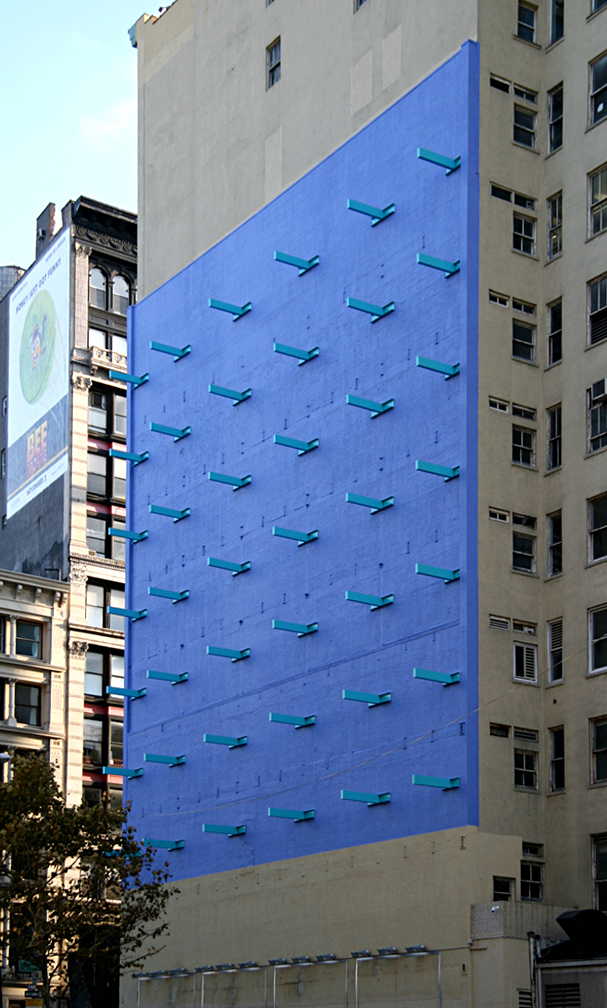
    The Wall in SoHo is one of the most well-known pieces of installation art in NYC. Its size, brilliant colors (turquoise aluminum beams on a lavender wall), and location at the intersection of two of the busiest major thoroughfares, Broadway and Houston Street, all give this piece enormous visibility.

    In reading for this article, I have found egregious errors, heinous omissions, misinterpretations, and conflicting facts, typical in online sources. And in the case of long and complex sagas, like the story of this wall, the situation worsens as people pick up a fact or two and fill in the blanks, extrapolating as they see fit. To add insult to injury, the misinformation is then copied.

    All that being said, it appears that The Wall was installed in 1973 by Forrest “Frosty” Myers. According to the New York Times:

    “The building at 599 Broadway was constructed in 1917. The building next door, No. 603, was razed in 1944 as Houston Street was widened. That building’s abutting wall was anchored to 599 Broadway with 42 steel tie rods ending in 42 exposed channel braces.

    This architectural scar endured until 1972, when Mr. Myers was commissioned to undertake ”The Wall” by Doris C. Freedman of City Walls, an organization that placed large-scale artworks on the blank facades of buildings. The project was welcomed by Charles J. Tanenbaum, who then owned 599 Broadway. Mr. Myers devised four-foot aluminum extrusions affixed with stainless-steel bolts to the channel braces, forming T-shaped projections from the wall plane. The background was painted blue-gray and the metal elements were green.”

    In 1984, the building was converted to commercial condominiums. The artist has been battling the condominium since 1997.
    In 2002, the work was taken down for repairs to the building – damage was being done by water penetrating through the artwork. The condo also wanted to generate income via billboard advertising, estimated to be $600,000 per year, and was not interested in reinstalling the art. The work sat in storage for 5 years until a compromise agreement was finally reached in 2007. You can read about it here. The newly reinstalled wall will now also be illuminated at night…


  • Garden in Transit

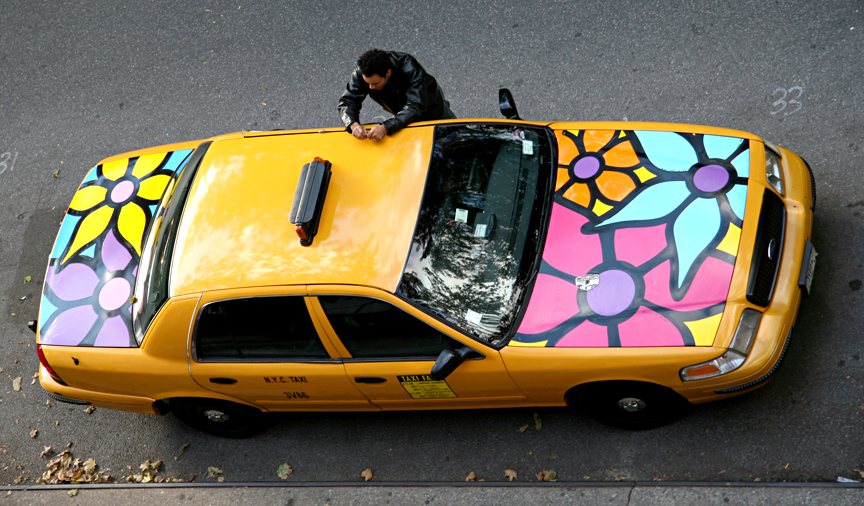
    When I first started seeing cabs with these floral patterns, I assumed that it was some sort of trend that drivers and the public would soon regret, with the art deteriorating over time and the subsequent shabby looks and bad repainting jobs. I was relieved to find out that the decorations are stickers and can be easily removed.

    Apparently taxi drivers as well as the public share confusion as to the meaning of the flowers – many (incorrect) rumors have been circulating. Garden in Transit is a privately financed $5 million art, education, and creative therapy project as part of TAXI 07, a celebration of the 100th anniversary of the first metered taxicab in NYC. 23,000 children in schools and hospitals – in addition to many adult volunteers – have painted 80,000 flowers on 750,000 square feet of adhesive panels. The project is sponsored by the community art organization Portraits of Hope, founded by Bernard and Ed Massey. It was 7 years in the making (first conceived and proposed to the city in 2000) and approved by the Taxi and Limousine Commission in 2006 – the Mayor’s press release and formal announcement was made July 18, 2006.

    Garden of Transit workers approach cab drivers at night at their various haunts – diners, Kennedy Airport, etc. – and persuade them to participate. The decals are installed on the spot for free. The moving exhibition is for four months – September through December 31, 2007. After that, it is up to drivers/owners to remove the decals when and if they choose…

    Technical Note: The material used was MACtac IMAGin® B-Free vinyl with a patent-pending bubble-free air egress adhesive. This sophisticated material is frequently used for vehicle wraps and other surfaces with complex curves.


  • Tower of Toys

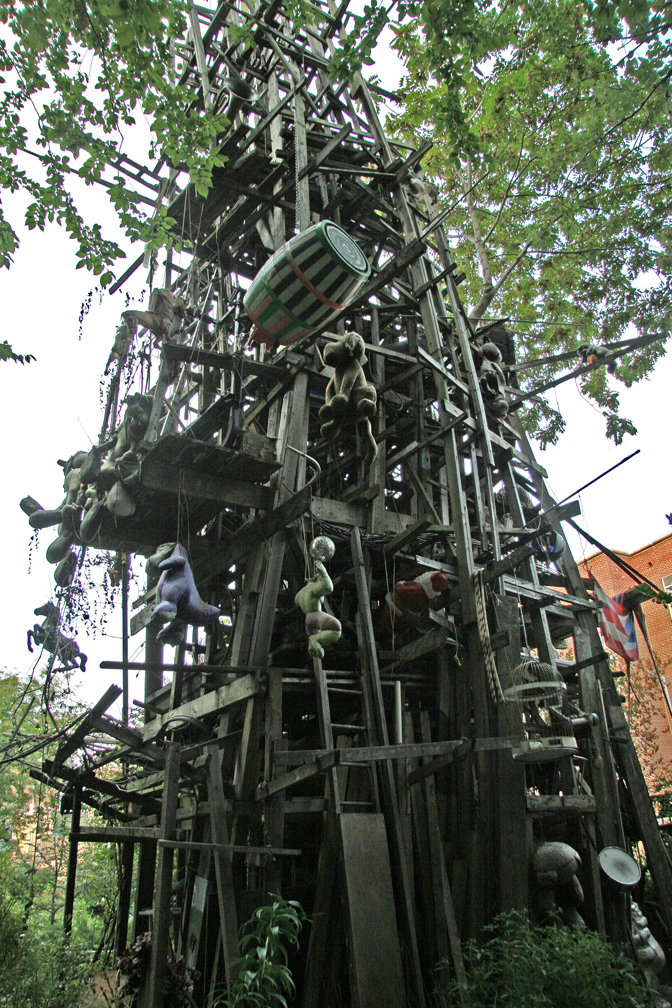
    The Tower of Toys has been well-known to habitues of the East Village and even to some from outside this country – buses of Japanese tourists would occasionally visit. Click here for more photos. This structure is the creation of Eddie Boros, an extraordinarily eccentric character who lived his entire life on 5th Street, around the corner from where this tower is located in the Sixth Street & Avenue B Garden. He was the son of Hungarian immigrants, a house painter and a seamstress. Boros served in the Army during the Korean War, but he was such an adamant pacifist that he was put on a detail planting trees.

    In 1985, Boros began carving large wood sculptures in the middle of this garden, but this was met with opposition from other garden members. He was told to confine his work to one 4′ x 8′ plot, but eventually, this expanded to several plots. Boros, with a passion for reuse of discarded things, decorated his 65-foot tower (which he named My Baby) with items scavenged from the neighborhood. Boros was known for climbing to the top of the tower and beating a drum or blowing a horn. The tower appeared for a time in the opening shots for the television show NYPD Blue. A 1/2 scale version also appeared in the musical RENT. His structure was always controversial and a bone of contention with other members of the garden. It will be interesting to see what the future has in store now that Boros has passed away…

    NOTE: Boros died April 27,2007 at the age of 74 while recuperating after having both legs amputated above the knee.


  • Steve McCurry

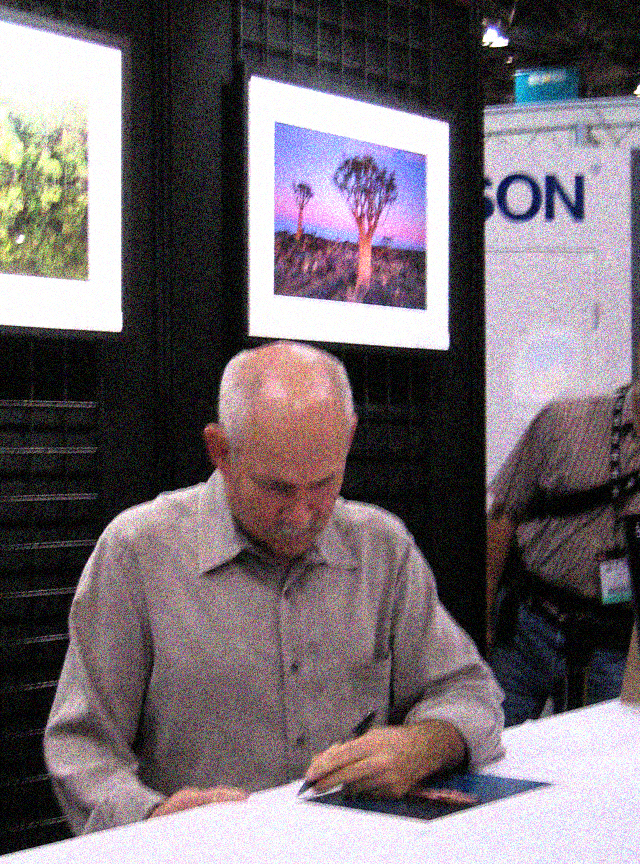
    Yesterday I attended the Photoplus International Conference & Expo – the big annual 3-day photo show held at the Jacob Javits Center. There are hundreds of booths with vendors of all types – photography equipment, printers, computers, software, services, books, etc. Of course new camera equipment is the big draw for most attendees, and Nikon and Canon were prominently positioned, showing new, exciting products, typically unveiled at trade shows. This is also a good place for one’s education, with numerous seminars running simultaneously on all days.

    One really inspiring aspect of the show was a gallery set up by Epson, featuring some of the world’s finest photographers with their work printed on the latest high-end color printers. The photographers themselves were on hand, signing free copies of a selected photo. The signings were scheduled at appointed times throughout the day. The lines were quite manageable, so I decided to wait to meet Steve McCurry and get my own signed photo. McCurry is an award-winning photojournalist most well-known for his photograph Afghan Girl, which originally appeared on the cover of the June 1985 edition of National Geographic magazine – named as “the most recognized photograph” in the history of the magazine.

    I have been a fan of Steve’s ever since I saw the documentary on his search to find this girl, an Afghan refugee, whom he had previously photographed. Her identity remained unknown for over 15 years until Steve and a National Geographic team located her in 2002 – Sharbat Gula. If you are unfamiliar with Steve’s exquisite work, I highly recommend you check out his website. Sharbat is photo number 17 in his Afghanistan gallery…


  • Performance Z-A

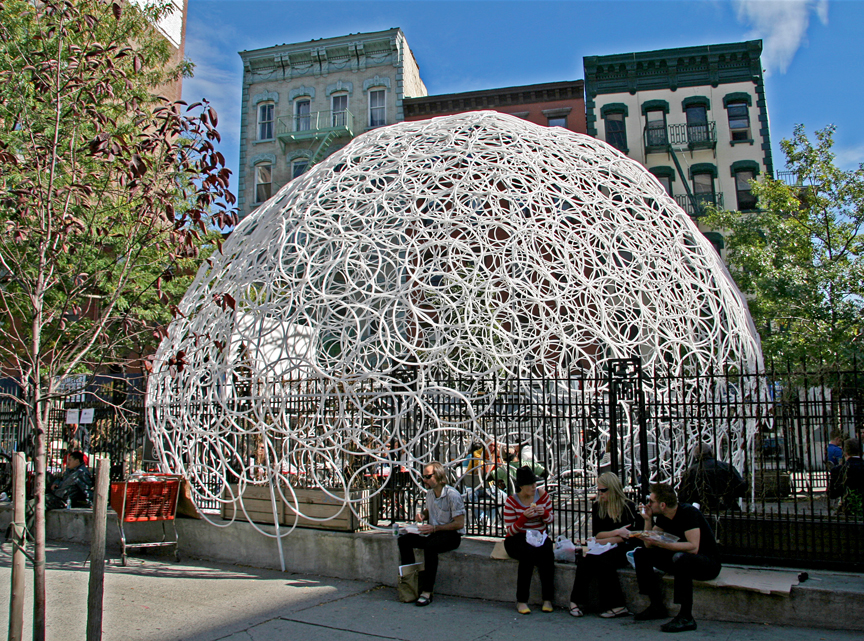
    I assumed the Ring Dome Pavilion installed at Lieutenant Petrosino Square was just a whimsical piece of public art. Not so. This structure provided a setting for Performance Z-A: a Pavilion and 26 Days of Events at Storefront (Update: 1/19/12: Link no longer works), a series of 26 evening events, performances, concerts, and screenings to celebrate the Storefront’s 25th anniversary. The Storefront for Art and Architecture is located in a unique triangular ground-level micro space at 97 Kenmare Street in the Little Italy/SOHO area. Click here to learn about them.

    The pavilion itself was designed by Korean architect Minsuk Cho of Mass Studies in Seoul and is made of 1,000 off-the-shelf plastic hoops attached with plastic ties, supported by a thin steel structure. The hoops were fitted with electroluminescent wire. Here is a video of the installation at Youtube. Although the month-long event itself has passed, I would recommend a visit anytime to the Storefront. It’s an amazing little space you won’t forget…

    Note: Lieutenant Petrosino Square is a tiny, triangular “pocket” park located between Cleveland Place, Kenmare Street, and Lafayette Street. It adjoins the renowned Eileen’s Cheesecake.


  • Building Gone Wild

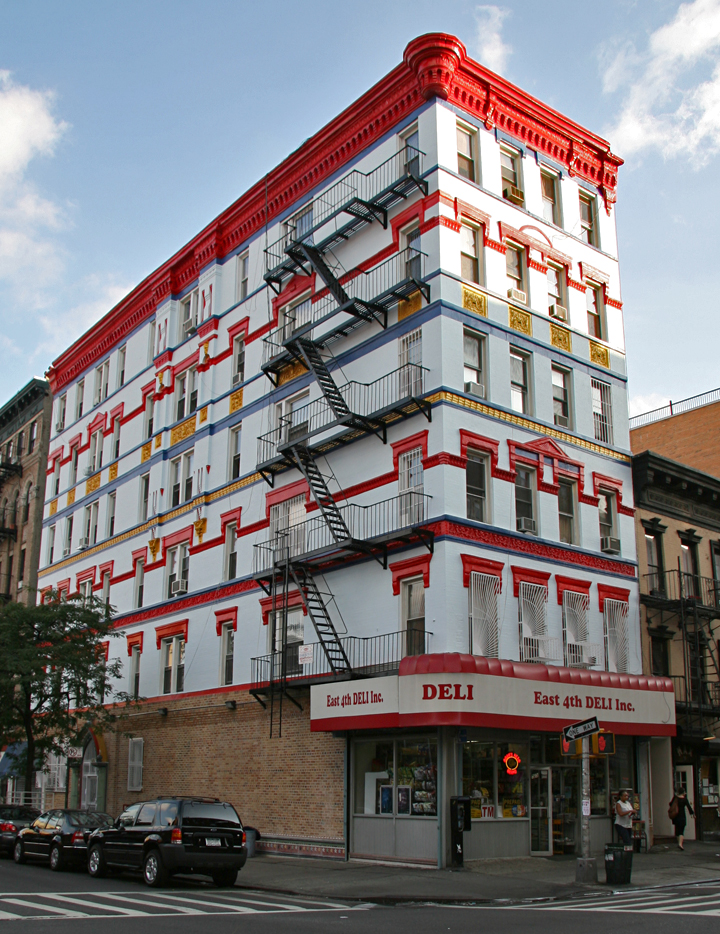
    The building in this photo, located at 246 East 4th Street at Avenue B in the East Village, is a mystery. The raison d’etre for the super bright colors, the history, the architecture with its friezes and exterior sculptures, etc. are unknown to me. The red, blue, gold, and white painted structure stands out dramatically from anything around it and screams for attention. There are virtually no references to it online. I did find two residents in a phone directory who are doing business from the building.

    I also found a reference to “Otnoob,” which appears to have a retail canopy (all I could find about the word “Otnoob” is a World of Warcraft character – a human, rogue). If you are interested in finding this place, the East 4th Deli at 53 Avenue B is located in the same building, but I don’t think you will miss it 🙂


  • Sfera Con Sfera

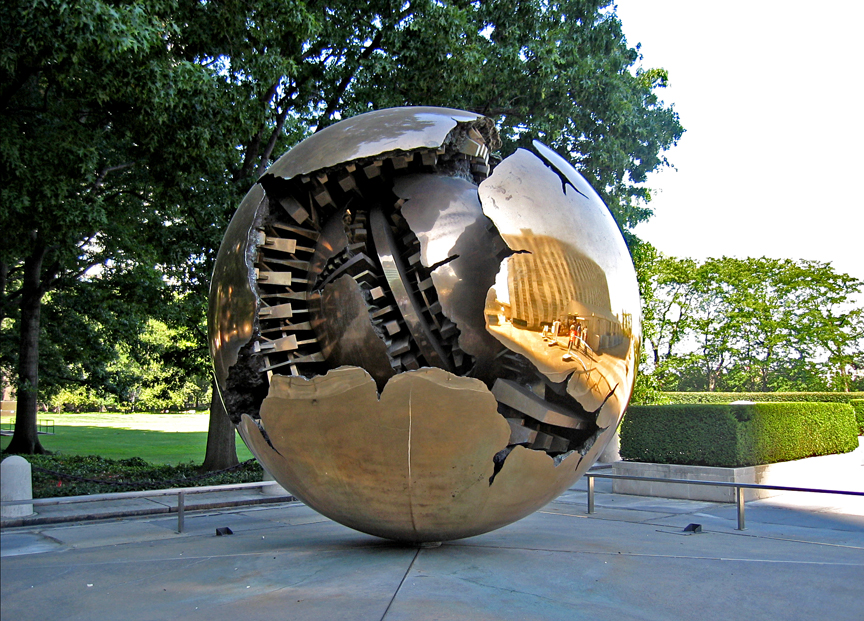
    As I have written in my post on the Knotted Gun, the United Nations is not at the top of the list for residents or independent visitors. On a recent visit, I discovered this beautiful sculpture, Sphere Within a Sphere (Sfera Con Sfera), created by Italian sculptor Arnaldo Pomodoro. He has a long and varied list of achievements and work (click here). This metallic sphere is one of a series of six located throughout the world – at the Vatican, Pesaro (Italy), Dublin, Berkeley (California), Washington, D.C., and this one at the United Nations, donated by the Italian government in 1991.

    I have read a number of interpretations of this work, such as “the fractured outer surface of the sphere reveals a complex inner sphere that represents the harsh difficulties of the modern world at the end of the second millennium.” Or from Lamberto Dini, Minister of Foreign Affairs of Italy: “a sphere growing inside another sphere, as if a world torn asunder by the horrors of war and suffering could still give birth to another world: a more prosperous and just world, within an international frame of peace and progress for generations to come. What better image for illustrating the primary role the United Nations are called upon to play: a global quest to build a new world wherein all peoples can co-exist peacefully and develop in freedom.”


  • La Plaza Cultural Garden

    I have become enamored of community gardens since the start of this website. I was always somewhat aware of them, but like many, I just had a passing interest. Years of living in the city combined with getting away too infrequently can make one yearn for some green space and really appreciate the parks and community gardens that NYC has to offer. And for those of lesser means, these can be the only nature they may have to enjoy. I have featured a number of gardens previously: Albert’s Garden, LaGuardia, FishBridge, and the West Side Community Garden. The East Village/Lower East Side has over 70 of these community gardens – here’s a map.

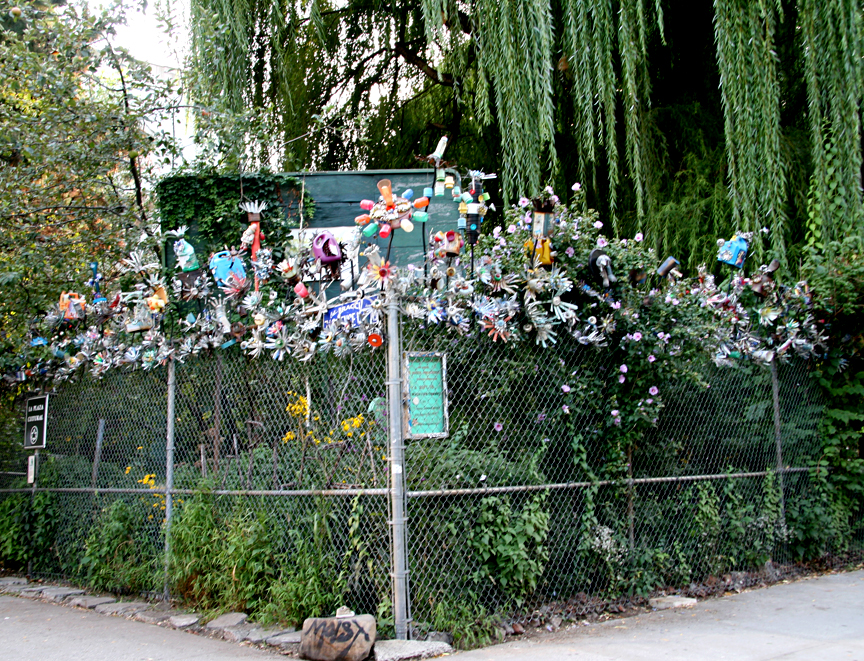
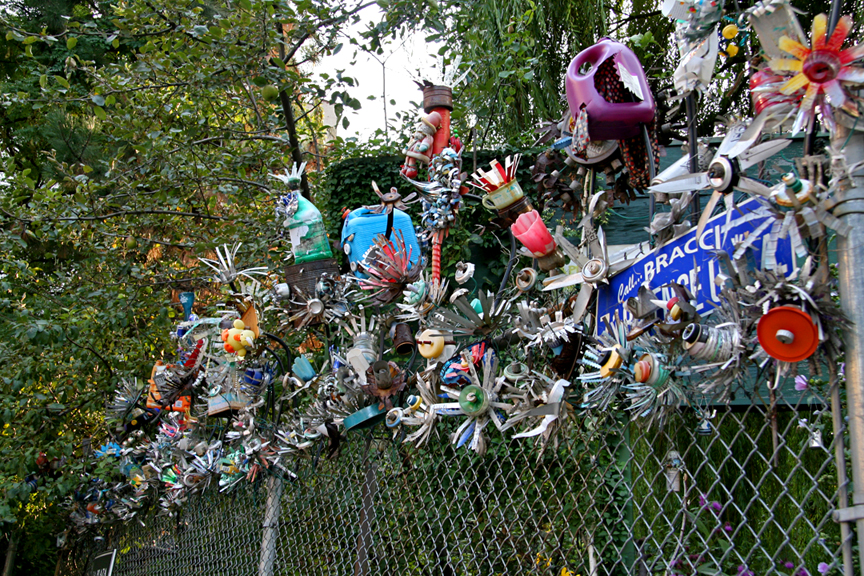
    La Plaza Cultural Garden is located at 9th Street and Avenue C. I have read that the flowers along the fence, created from tin cans, detergent bottles, beer caps, and other junk, were done by a local resident known as the “Flower Man.” It also appears that some or the creations are birdhouses (click here for closeup photo). This garden, established in 1976, has a very complex and extremely fascinating history. Read more here and see their website here. There are many events held here, and the garden functions as a performance space and cultural center.

    La Plaza is a registered Backyard Wildlife Habitat, with huge willow trees which provide shade and shelter to humans and wildlife. La Plaza has been home to artists, including Tito Puente, Gordon Matta Clark, Keith Haring, Robert Wise, and Buckminster Fuller (at one time, there was a geodesic dome built with help). A short film entitled Rock Soup profiled the Garden in its infancy with a dirty, haunting look at the homeless in La Plaza Cultural in the late 80’s. Click here to view it


  • Mr. Moon

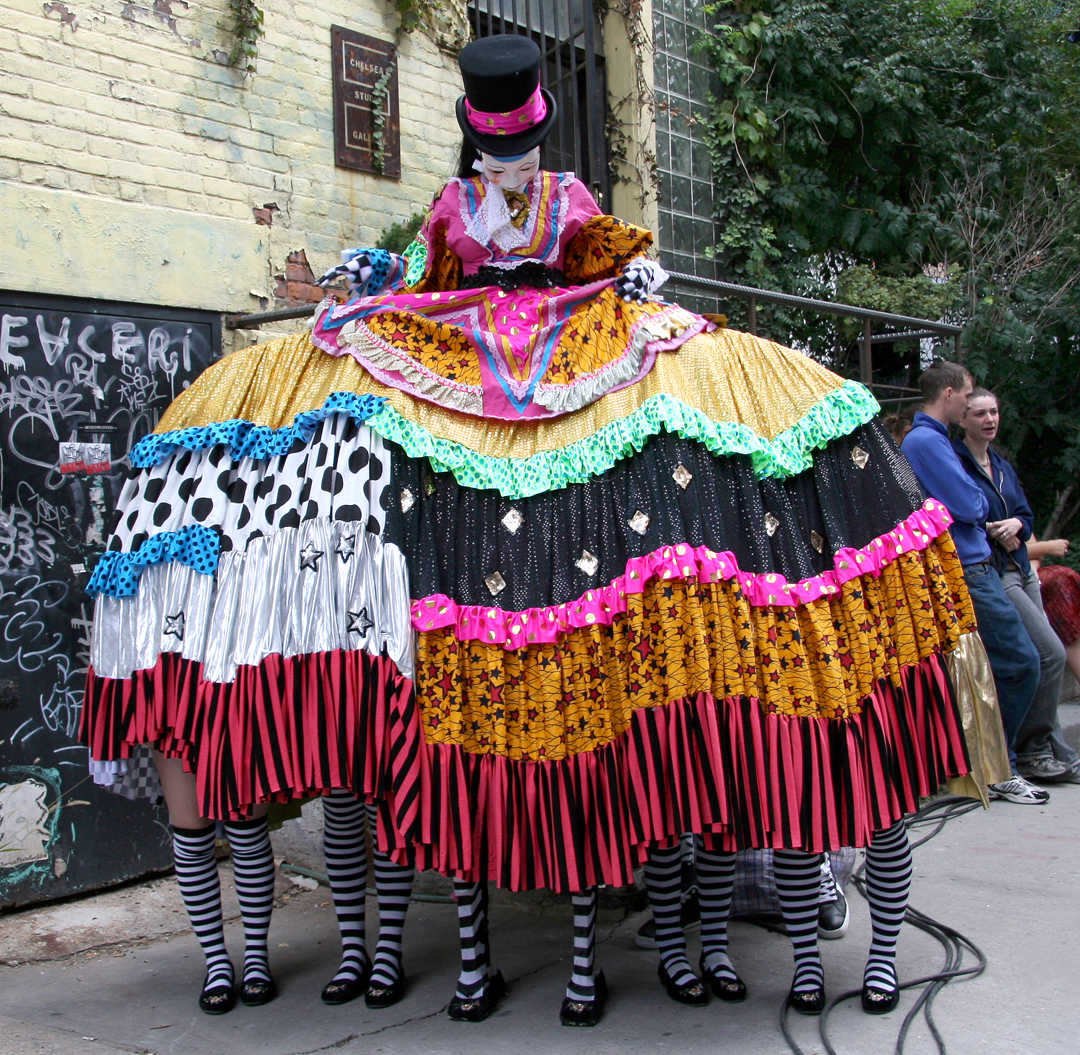
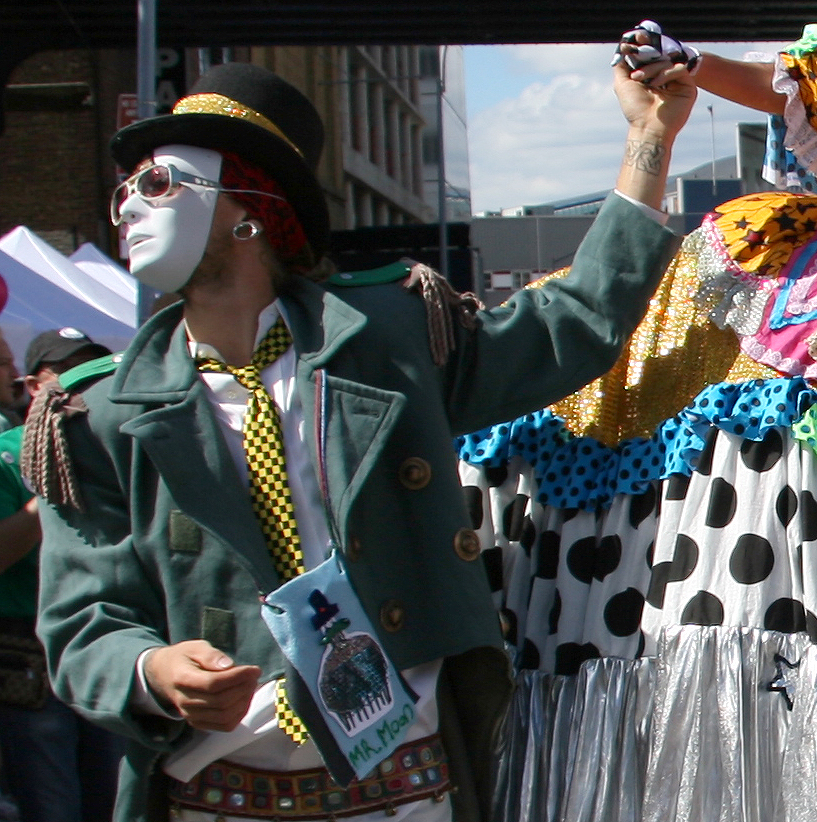
    I had no idea what the inspiration for this was. Unfortunately, I did not get the opportunity to ask; the character and guide were quite busy adjusting the wardrobe and negotiating a slow, careful, coordinated promenade down the block and through the crowd at the recent Kitchen Highline Block Party. Click here for more photos. This was the visual tour de force of the day, with oohs and ahs and cameras snapping. I tried to ascertain whether this beauty is a character of literature, myth, fable, children’s story, opera, ballet, traditional ethnic figure, or is he/she just an original creation? Note that the person who is visible walks on stilts.

    Then, on close examination of the photos I took, I noticed a paper-cutout drawing hanging around the neck of the companion. Enlarging the photo shows what appears to be a multi-limbed character, with the title “Mr. Moon” clearly labeled below it. Click here for the evidence. But is Mr. Moon the main character or guide? An online search reveals a number of characters named Mr. Moon (including a children’s book called Pink Magic). But I don’t find a mention of a multi-legged character. Any suggestions?


  • Howl!

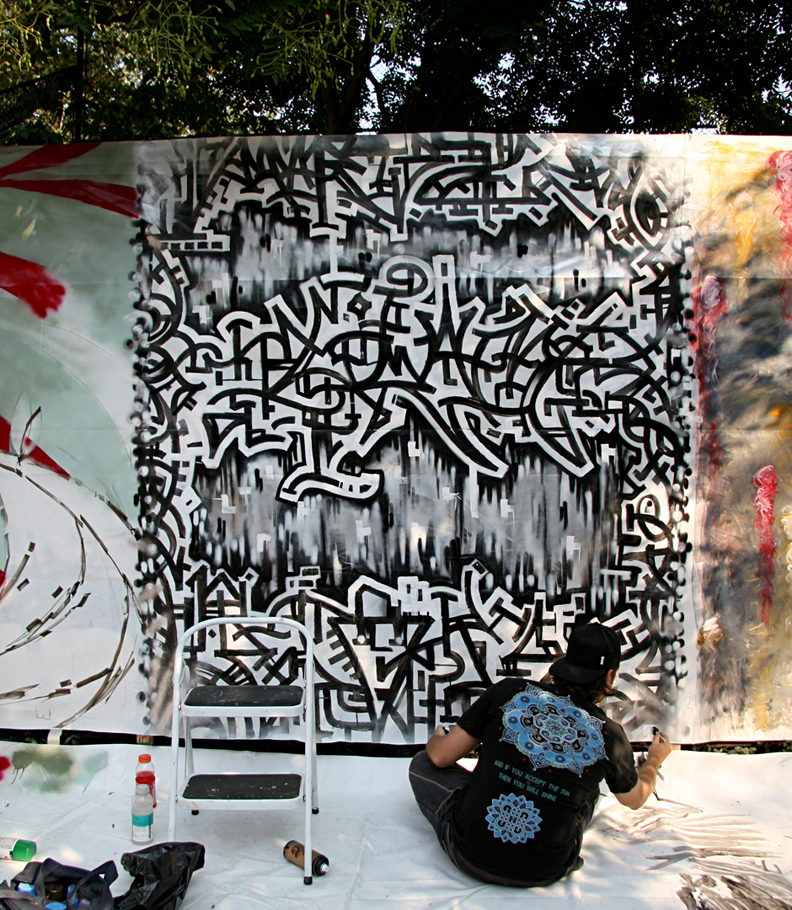
    Howl! is a five-day event which takes place in the East Village (click here for more photos). The name Howl is taken from a poem by Allen Ginsberg, written in 1955 in Berkeley and considered one of the seminal works of the Beat generation. In its fifth year (it was not held in 2006), this art festival is the signature event sponsored by FEVA, the Federation of East Village Artists. For three years, Howl! hosted the legendary dragfest Wigstock.

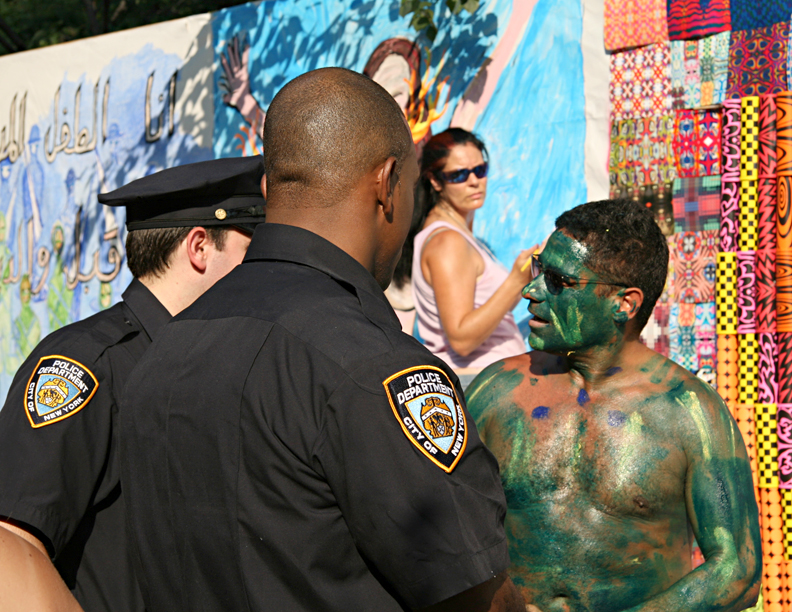
    Howl! is comprised of numerous events in a variety of venues in Tompkins Square Park and in the surrounding neighborhood, with the major activities on Saturday and Sunday in the park. There is a poetry festival (with a reading of Howl, of course), a book expo, musical performances on two stages (Moby was one of the performers), and Art Around the Park (shown in the photo): “ART AROUND THE PARK is a live-action event featuring over 140 artists from the East Village and beyond transforming an eight foot high, 900 feet long canvas into a riotous explosion of color and creativity.”

    A myriad of neighborhood establishments participate: bars, cafes, clubs (such as ABC No Rio and the Bowery Poetry Club), galleries, community gardens, theaters, a museum (Fusion Arts), and places difficult to categorize, such as Bluestockings. The day was calm, however, there was a little altercation with a guy reported to have splattered people with paint (click here)…


  • dinamic_sidebar 4 none

©2026 New York Daily Photo Entries (RSS) and Comments (RSS)  Raindrops Theme