• Category Archives Food and Restaurants
  • Bon Appetit

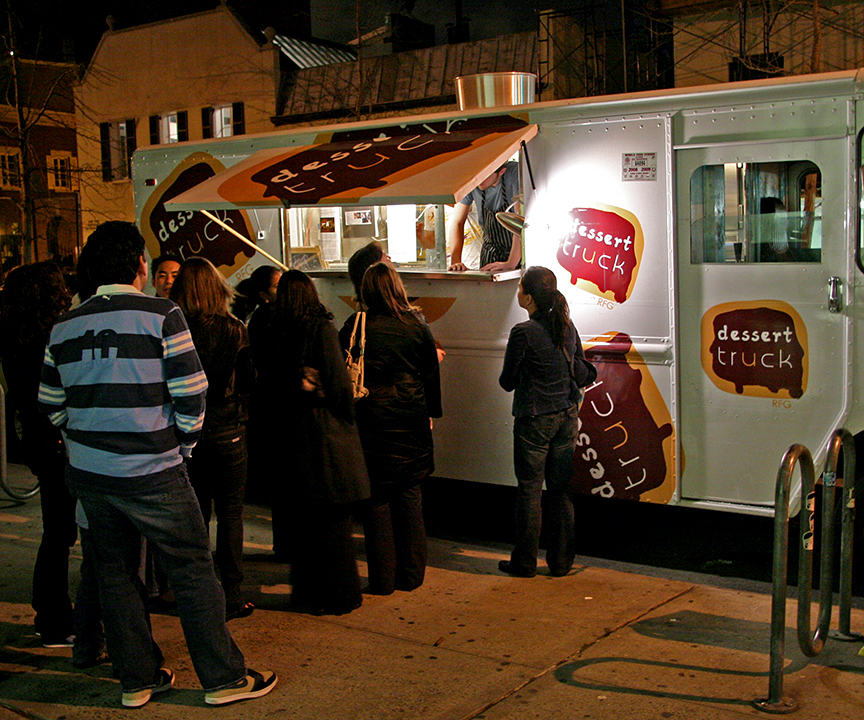
    THIS is New York at its best. I have often felt that NYC is a place where the extraordinary is common and the ordinary is uncommon. And, of course, the extraordinary is what makes it great to live here and why visitors love it. Sometimes it feels like there’s something extraordinary to be discovered around every corner. Like the Dessert Truck on the street selling gourmet pastries – for $5 each. No need to go into an expensive restaurant and sit down. What could be better? I was completely unaware of this until a few days ago, when two friends introduced me to it. Amazingly, it is only a few blocks from my home, yet I never really noticed it. They are located at 8th Street and University Place and are open 6 nights per week.

    The desserts are awesome – they are made by Jerome Chang, a former pastry chef at Le Cirque and grad of the French Culinary Institute. He is partnered with Chris Chen, a Columbia business school grad. “One night, we randomly made the caramelized banana sandwich with sea salt — no recipe,” Mr. Chen said. “It turned out to be amazing, and both of us thought that this was something we could sell on the street.” You can find things like molten chocolate cake with liquid ganache center and sea salt, roasted pistachios, and “a hint of olive oil”; apples and cinnamon with cranberries in a crisp, puff pastry with streusel and whipped cream, chocolate bread pudding; and crème brûlée made with Madagascar vanilla beans and freshly burned sugar.

    You can read all about them here at their website – there are photos of the desserts, press articles, menu, hours, etc. Bon appetit…

    Relate Posting: Street Cuisine

  • The Grey Dog

    Posted on by Brian Dubé

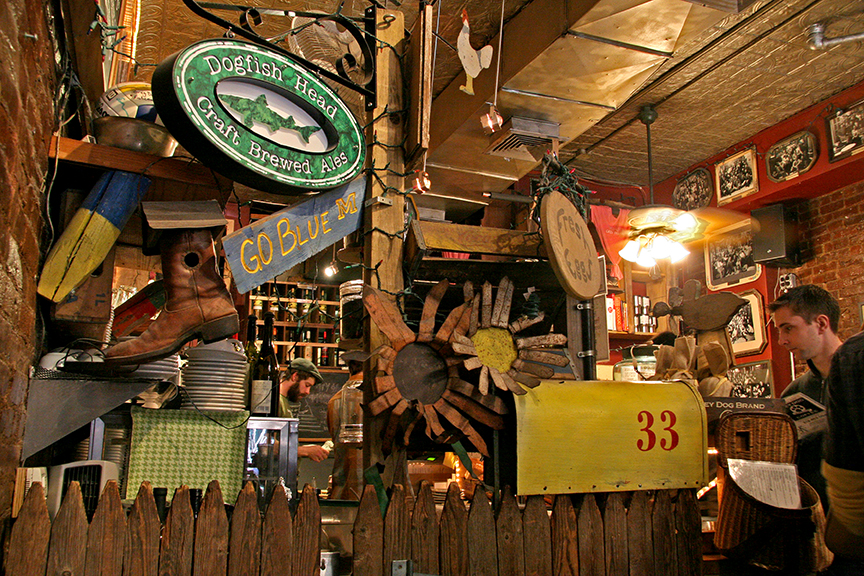
    When you step inside The Grey Dog, your first reaction may be to step out. This place will most likely be teeming with people, have a line for for placing orders, few (if any) tables available, and loud. Why should you stay and why would I recommend it? Because the food is very good. And once you’ve settled in, the mayhem recedes as you focus on your meal. You start thinking this place is not that bad once you staked out your territory. What was annoying starts feeling like exuberant festiveness. Everyone seems happy and life is good.

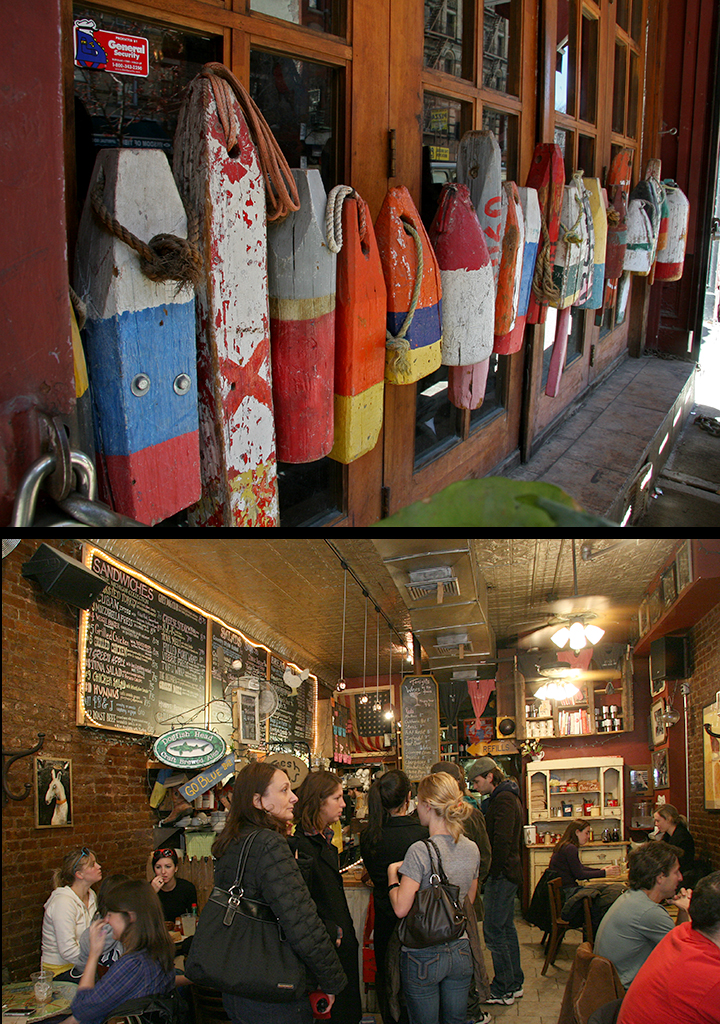
    Finding casual places to eat with no table service and good food is not easy anywhere. The Grey Dog is technically a coffeehouse, and they are known for their coffee. However, the food menu is quite extensive – ideal for breakfast, brunch, or lunch, but I have had dinner here as well. The prices may appear a tad high for the type of place, but the portions are large, typically with sides, and made with high-quality ingredients. The atmosphere is cozy, woodsy, New England with nautical accents – oars above the windows and a row of buoys outdoors below the front window. More photos here. When the weather is warm, the front windows are open, and a table there is quite pleasant. A wooden bench outdoors provides a place for customers as well as passersby to rest or eat, as well as a good spot for dog spotting.

    Don’t be daunted by the lines – they move more quickly than expected. Place your order at the counter, grab a table, and when your order is ready, someone will come out, call your name, and deliver your food. And through some miracle, you always seem to get a seat…

    NOTE: The Grey Dog was created in 1996. It was named after Moose and Goose, the owners’ two labrador retrievers – one white, the other black. The location in the photo is the original at 33 Carmine Street in the Village (Update 1/17/12: Now closed). A second location recently opened at 90 University Place.

    Posted on by Brian Dubé

  • Rhyme and Reason

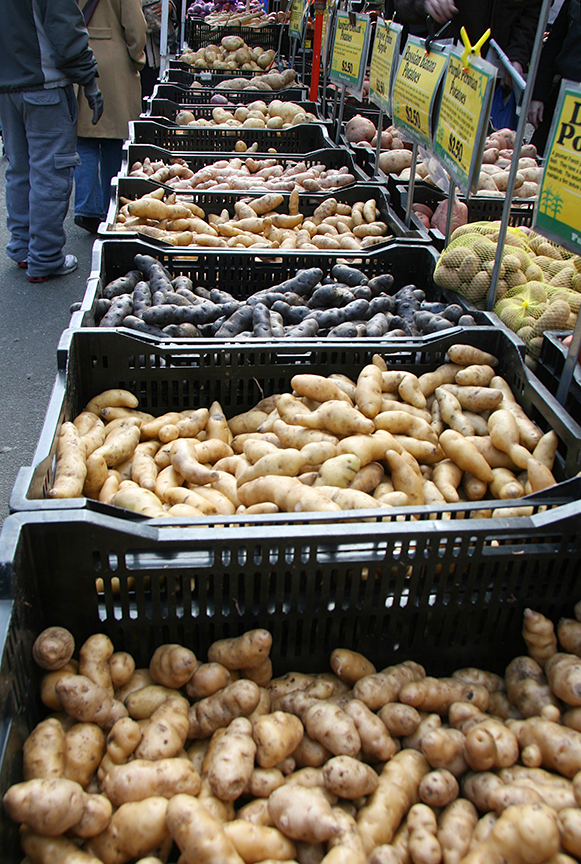
    Here we have the need for differentiation rearing its head again. Heirloom vegetables have been around for eons, but there has been no real need to promote them until the marketplace became very crowded with competing products. I wrote about the consumer and vendor sides of this in Where’s the Special and Claims and Hooks.

    Last year, I was introduced for the first time to heirloom tomatoes and was impressed (see here). On a recent trip to the Union Square Greenmarket, I ran across this array of heirloom potatoes. I had never really considered a world of heirloom vegetables beyond tomatoes, but there are many: beans, corn, cucumbers, lettuce, spinach, radish, melons, potatoes, okra, peppers, peas, squash, pumpkins, squash, tomatoes, and watermelons.

    As with any heirloom vegetable, there are many cultivars. A number of them can be seen in the photo with names like Purple Peruvian, Russian Banana, Rose Finn, LaRatte, etc.
    I have not tried any of these, but I plan to. With the plethora of food and product options out there, I think it only makes sense to judge on merit and on a case-by-case basis – some trends are great, while others are just a marketing spin.

    Regarding the title of this posting: It once occurred to me that there was something quite curious about potatoes and tomatoes; they only had each other as good word rhymes and they were also both members of the nightshade family (plant family Solanaceae which includes potato, tomato, peppers, eggplant, and tobacco. It also includes some poisonous plants). At one time, many years ago, a friend who was into Macrobiotics told me that the reason they avoid nightshades is because they are extremely yin. Many years later, a friend told me that the reason her mother, who had arthritis, avoided nightshades was because the alkaloids (primarily solanine) aggravate the condition. However, I’m still intrigued about the connections via rhyme and reason…


  • Gotta Get Out

    Many things are different about NYC – some obvious, some not so obvious. One of them is LIFESTYLE, like eating and entertaining. There is an entire population here who eats out every meal, virtually every meal, or most meals. The 17,000 plus restaurants in Manhattan alone make this easy.

    Another huge difference is entertaining. City dwellers typically have substantially less space than suburbanites. Even those with assets are frequently “trapped” by good deals – under market, rent-stabilized apartments. The stratospheric costs of real estate creates an environment of much less mobility; it’s not uncommon for people to stay in places for decades, some only to move if they leave the city entirely.

    So with small places and no outdoor space, soon we have cabin fever and we gotta get OUT – just OUT, anywhere. Plus, what if someone were to call on a nice afternoon and find you IN. Or perhaps ask you tomorrow, what did you do yesterday?

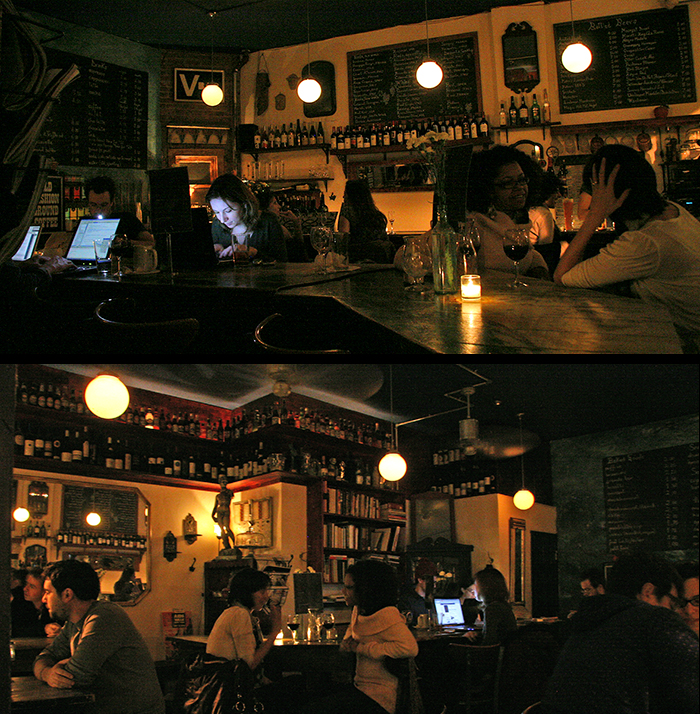
    But where to go? How about a bar, once a den of alcohol and cigarettes with people crying in their beer. Things have changed. With smoking gone, healthier habits (a person can now enter a bar and with no guilt, actually with pride, request a soy chai latte), a new generation, laptops, and WI-FI, many bars are no longer the same. They have become living rooms for many.

    VBar & Cafe, opened in 2000, typifies the new era and is one of the nicest neighborhood bars I have been in. Located at 225 Sullivan Street in the Village, it’s atmospheric, dark, woodsy, and has a nice library, music, free WI-FI, light food, and nice people (however, it can get crowded and noisy at busy times). It is also pleasant by day – nice for a light lunch, some work, socializing, or a place to take a break. Virtually every customer review I have read extols its virtues, with “hidden gem” as the constant refrain. So if you want a great bar/cafe, or perhaps if you just gotta get out, try this hidden gem…


  • Where’s the Special

    I’ve been worried that special is over. I don’t mean special like a sale, I mean special – something unique, different, and unusual. Special is what many people look for in people, places, and things. That’s why you come to this site. This is the reason people often line up. There is frequently an element of the creative in the special, and there is typically a shortage of creative to go around. Of course, there are also many, perhaps most, who find great comfort in the ordinary, regular, or usual. Creatures of habit and lovers of routine. There’s a piece of this in most of us. But this story is about the special.

    At one time, Zabar’s, along with Balducci’s and Dean & Deluca’s downtown, were truly special, very unique places. The quintessential gourmet food emporiums and meccas for residents and visitors. But now, many of these products can be found in national chains such as Whole Foods, with enormous selections of specialty items.
    Zabar’s, located on the Upper West Side, was started in 1934 by Louis and Lillian Zabar, who were renting an Appetizing Counter in a Daitch Market. Over the years, they took over the Daitch Market. Louis died in 1950. Saul and Stanley Zabar took over running the business. Today, the store is over 20,000 square feet – almost a city block long – at 80th and Broadway, serving over 35,000 customers per week. It is still a family-owned and -operated business.

    Perhaps it’s not that special is exactly over. It’s that it is fleeting – appropriated and co-opted at lightning speed or hidden in the nooks and crannies. There are things in and things about Zabar’s, as well as their ilk, that is still special. So, if you want the special, act quickly and/or look in the corners and edges. I’ll see you there…

    Footnote. Perhaps there is nothing so great about special anymore and that I am just romanticizing the past. I see a new generation that appears to be happy with the ubiquitous. Luxuries and specialties have become very common – do we need the special?


  • Kalustyan’s

    Posted on by Brian Dubé

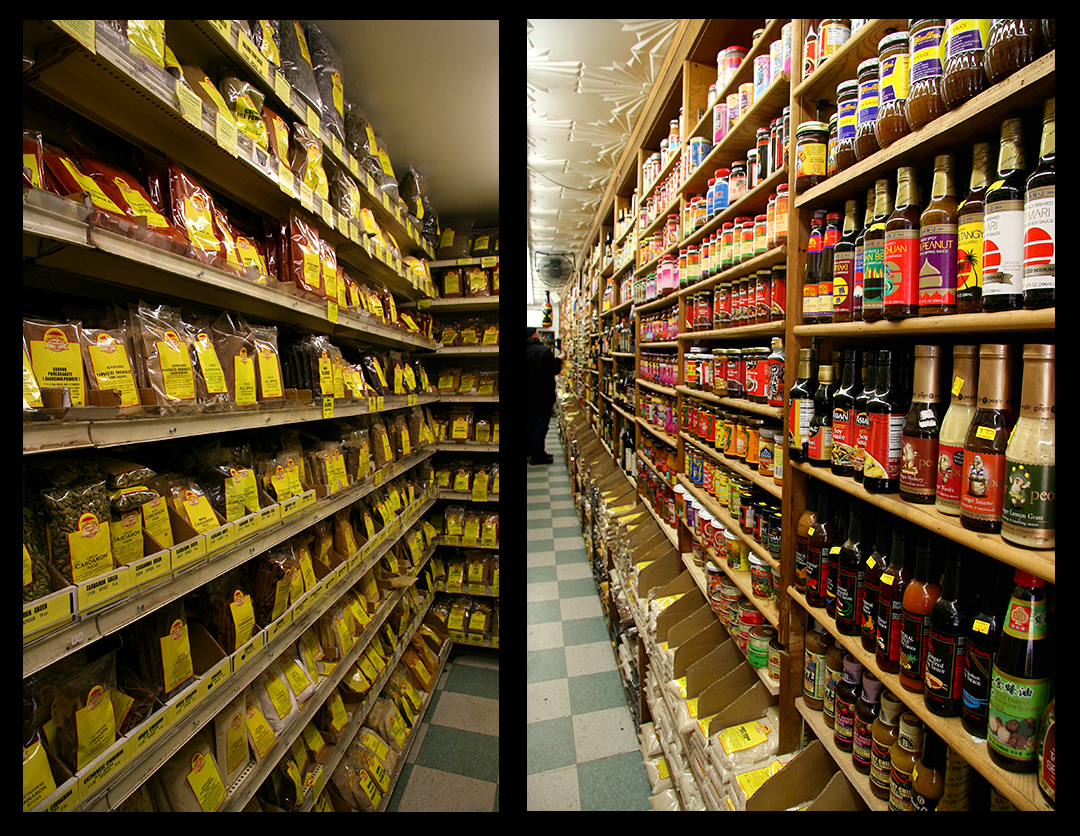
    Kalustyan’s website has 45 pages of spices – 1,322 items. Perhaps you are interested in choosing from a selection of 41 varieties of coconut or over 100 types of lentils or dal. If you want this breadth and depth of selection, you had better have a large number of patrons – your casual visitor or curiosity seeker is probably not interested in tamarind paste or an extensive selection of ghee. NYC delivers the patrons.

    It is unlikely that you will find a selection like this anywhere else. Kalustyan’s, at 123 Lexington Avenue, was established in 1944 by K. Kalustyan and is now owned by Sayedul Alam and Aziz Osmani, who have expanded the selection to create an international specialty food market, with a concentration of Middle Eastern and Indian food. They have thousands of varieties of food items – herbs, spices, teas, coffees, pastries, baking products, oils, nuts, seeds, breads, beans, chutneys, etc. Upstairs, there are cook wares and a small deli with prepared foods and a couple of tables.

    Another nice thing about visiting Kalustyan’s is that it is in the heart of an Indian district (one of two in Manhattan). This is the destination if you are interested in having dosas – try any number of places specializing in them, such as the Dosa Hut. Also, you can visit Foods of India next door.
    Kalustyan’s is my favorite ethnic market. It’s pleasant to shop in and is truly exotic, with a selection that is wide and deep…

    Related notes and postings:
    If you are interested in ethnic neighborhoods and food, I would highly recommend a trip to Jackson Heights, Queens. I made a pilgrimage there last year and did 4 postings on various merchants and aspects: Indian Gold, Jackson Heights, The Patel Brothers, The Jackson Diner

    If you like Middle Eastern food, you really need to try an authentic Ouzi and Ful Mudammas. I recommend First Oasis in Brooklyn for either dish (or Moustache in the Village for Ouzi).

    Posted on by Brian Dubé

  • Claims and Hooks

    Posted on by Brian Dubé

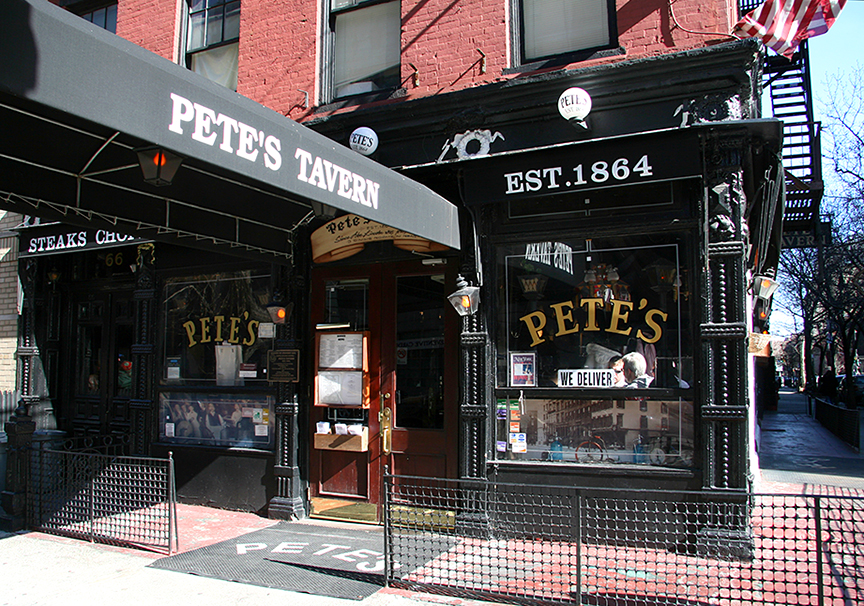
    In a competitive and crowded marketplace, many a business, product, TV program, or even political candidate needs a hook to distinguish itself. An idea, a claim, or an exclusive feature. In the case of bars, oldest is nice to be, and in NYC (like other places), the claim is sometimes made by more than one. After all, the prize of being first or oldest can be leveraged, so the battle of claims and counterclaims can be fierce. Adding a qualifier is a clever twist. This way, more than one establishment can take title to the same prize, a variation like oldest in continuous operation. For marketing, the qualifier can be dropped.

    Ray’s Pizzas are probably the most infamous in the city, with numerous pizza shops all using Ray in the name and some superlative or combination of superlatives – Original, Famous, Famous Original, etc. – and claiming to be first. The Ray’s Pizza name has actually involved lawsuits. We also had a rather serious war over Guss’ Pickles.

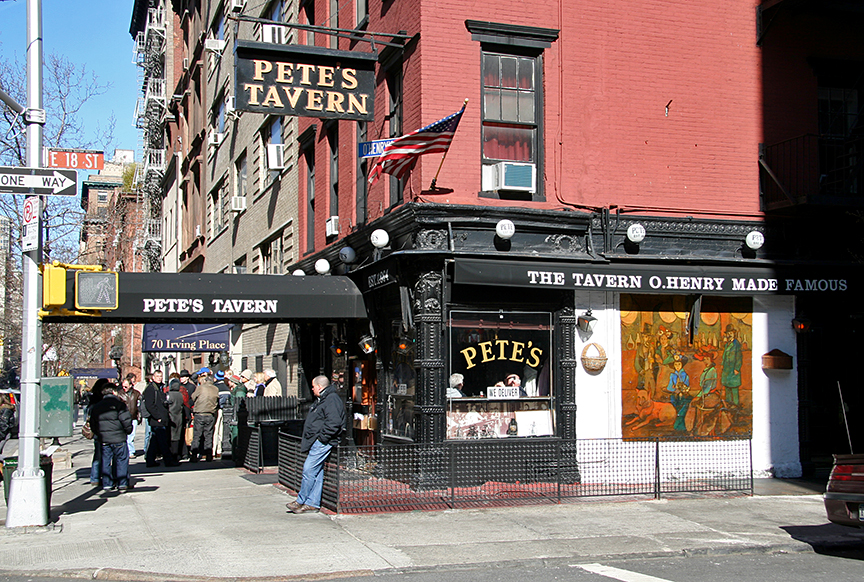
    In the world of oldest bars in NYC, we have several contenders, including Pete’s Tavern, the Bridge Cafe, and McSorley’s Ale House. Pete’s Tavern, located at 66 Irving Place at 18th Street, claims to be the longest continuously operating bar and restaurant in New York City (see 2nd photo here). They also say that “its most celebrated regular, O. Henry, wrote the classic Gift of the Magi here at his favorite booth by the front doors, in 1904.” Richard McDermott, a historian who has done a lot of digging, has cast doubts on all of these claims, including the O. Henry one. He has found that the Bridge Cafe is the oldest.

    But the facts, particularly a newly revised history, typically don’t stick in people’s minds. Once something has been accepted as “fact”, it is frequently repeated and believed forever.
    I find that when so much emphasis is placed on claims, sight of what’s important gets lost – the content and quality of the product or place. And, ironically, many of the places fighting over these things are not the best; they are frequently touristy spots hanging on to crumbs of questionable history to lure in customers. In the case of Pete’s Tavern, I can’t speak to the quality of the food or ambience – I have not spent time inside.

    We are all barraged and saturated with messages. Unfortunately, to get our attention, businesses must frequently resort to pulling out all the stops and relentlessly hammering a simple claim with hope that it hooks…

    Posted on by Brian Dubé

  • Durian

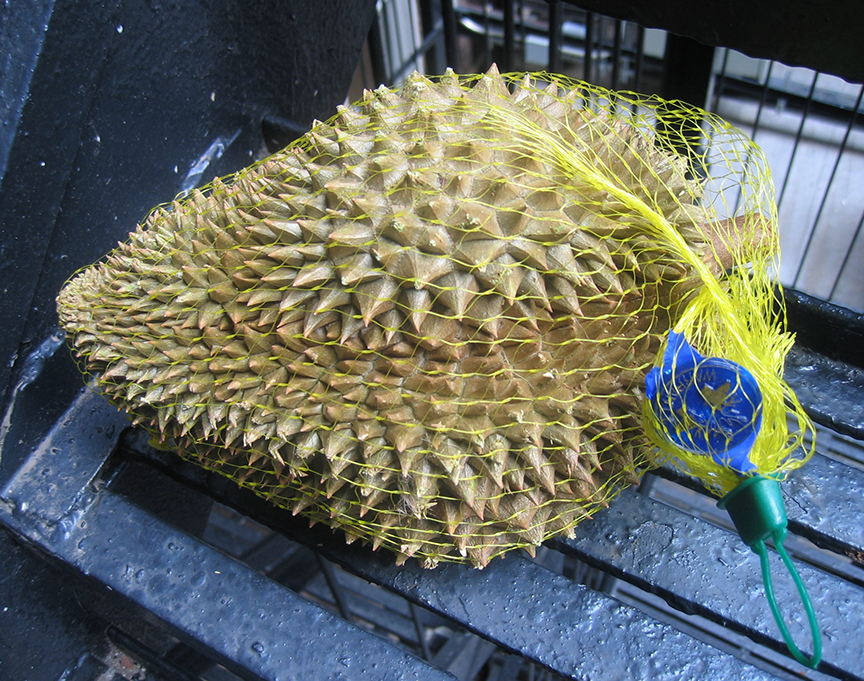
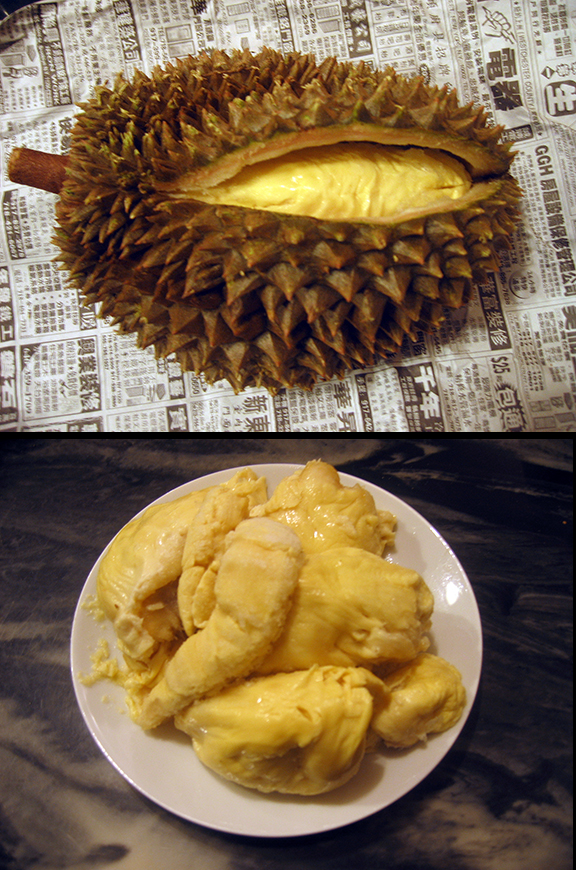
    No, I’m not lying – the smell of durian has been described as that of turpentine and onions, gym socks, civet, sewage, stale vomit, skunk spray, used surgical swabs, garbage, moldy cheese, rotting fish, and dead cats. Even where the fruit is popular in Southeast Asia, it is actually banned from some establishments such as hotels, subways, and airports. The scent is so strong that it can be picked up by animals half a mile away. The husk is incredibly spiky and dangerous to handle – mine was wrapped in newspaper before bagging. And I am not particularly enamored with the look of the flesh, which has been described by some as custardy in consistency – that’s being generous. Click here for photos of the fruit cut open and its flesh.

    The fruit is still relatively unknown in America, where it is found primarily in Asian markets. I purchased mine in Chinatown for $7 – it is not inexpensive. Durian is strictly tropical, originating from Indonesia and Malaysia, with Thailand now the primary exporter. In Asia, where it is hailed as the King of Fruits, the smell is prized – the smellier the better. Many eat it every day. Durian goes back to prehistoric times and is the subject of legend and myth. There is a virtual world surrounding this fruit (click here for an in-depth article).

    I’ve planned on writing about this fruit for sometime. Yesterday I finally purchased one and brought it back to the office for all to share. I can still see and taste this thing this morning, but I’m really giving it a second and third chance, hoping it grows on me. The first time I tried to eat durian, I was absolutely revolted, so this time I was better prepared. For those not used to it, Durian is truly an acquired taste. I’m going to try some again today. Wish me luck…

    Footnote: In an interesting twist, a no-stink variant was developed in 2007 in Thailand by scientist Dr. Songpol Somsri. After working for decades and crossing 90 varieties of durian, he has created Chantaburi No. 1. It reputedly has an odor as mild as a banana.


  • Time Machine

    If you have read the Time Machine by H.G. Wells or seen the movie adaptation, you may recall a recurring part of the story: George watching the change of women’s fashion on a mannequin in the window of a dress shop across the street as he travels through time. He finds the whimsy of change and cycles of fashion amusing.

    Living in NYC is just like this. In the 1980s, we had numerous small indoor roller skating rinks during the height of disco. There was a gelati craze for a brief time, with the opening of numerous gelateria. Many of these were beautifully designed, and the products in the places I visited were excellent. Yet they have all closed. We also saw Steve’s ice cream, known for their customized mix-ins – customers enjoyed the theater of the mixing. One of the best ice creams I have had was Custard Beach, with locations in the Village and World Financial Center, now closed.

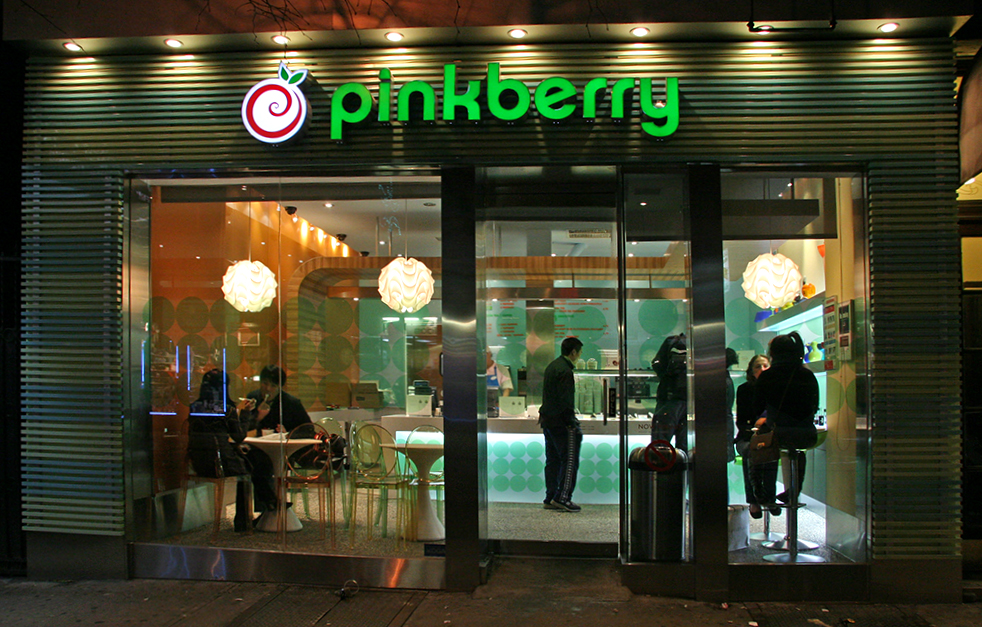
    Now we have a frozen yogurt/desert revival, with Pinkberry and Red Mango across the street from each other on Bleecker Street and Yolato around the corner (update: Pinkberry on Bleecker Street has since closed.).
    Pinkberry, based in Los Angeles, was started in 2005 by South Koreans Hyekyung (Shelly) Hwang and partner Young Lee. It is already a roaring success  with a cult following and tales of parking congestion at the original West Hollywood store (read the story here). The product is an upscale, healthy frozen desert in just two flavors (original and green tea). It is low-cal, low-sugar, and nonfat, with a distinct tang. Fresh cut fruit toppings are available.

    Pinkberry’s interior appears to be part of a trend towards an Asian-styled, clinical, futuristic store design. Partner Young Lee has appointed the stores with Philippe Starck furniture and Le Klint plastic hanging lamps from Design Within Reach. I expect to see Teletubbies in the line. There is controversy surrounding Pinkberry and how it closely resembles Red Mango, a Korean frozen yogurt chain with 150 stores. And, of course, the phenomenon has spawned competitors: BerryLine, Yo Berry, Kiwiberri, Snowberry, Roseberry, Berri Good, Limelite, etc. Only a time machine will tell the future of this craze…


  • Slow and Steady

    There are neighborhood restaurants that seem to have been around forever and yet are rarely mentioned and infrequently reviewed. They exist quietly, like the Tiro A Segno New York Rifle Club that fascinated me for decades. Or the missionary union in Manhattan that has not had one article written about it yet – when I catch a friar on camera entering or leaving, you’ll be the first to see it.

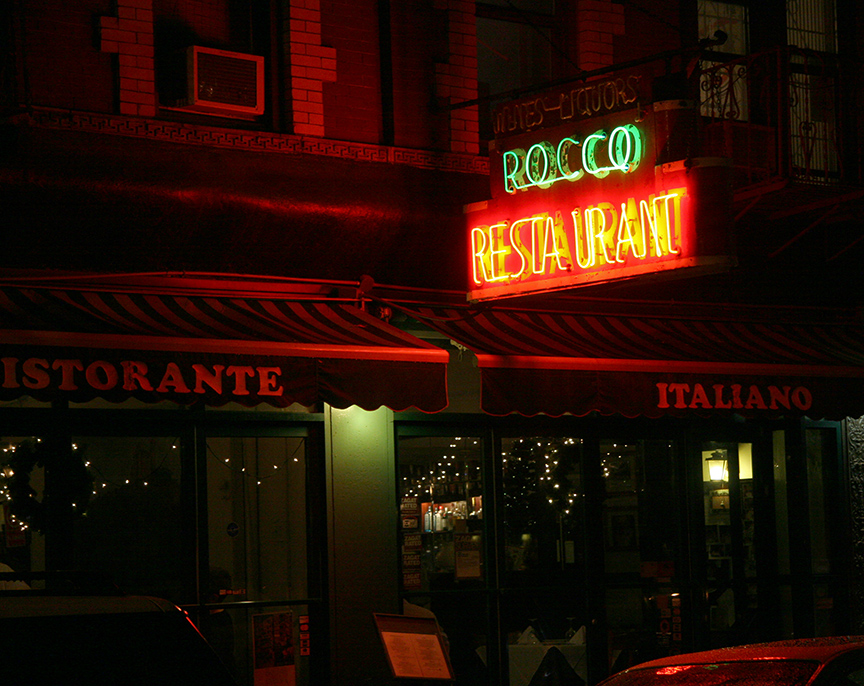
    Rocco Ristorante at 181 Thompson Street is a vintage home-style Italian restaurant founded by Rocco Stanziano in 1922 – 85 years must mean something. I have not eaten there yet, but the reviews are quite favorable, even from newer online sites such as yelp.com. It’s just not glamorous, trendy, or chic. Old, historic business establishments go down different roads. Some maintain quality but raise prices substantially as they become real legacy businesses. Others just sell out and become money machines without any regard for quality (frequently cutting costs by outsourcing); sometimes entire towns become tourist traps with businesses like this, such as Boothbay Harbor, Maine. Some catch a trend and reinvent themselves, like Astor Place Haircutters. And then there are those places that are sleepy backwaters, just doing things the same way, patronized by customers who like it exactly the way it is. Slow and steady wins the race…


  • Soup Kiosk

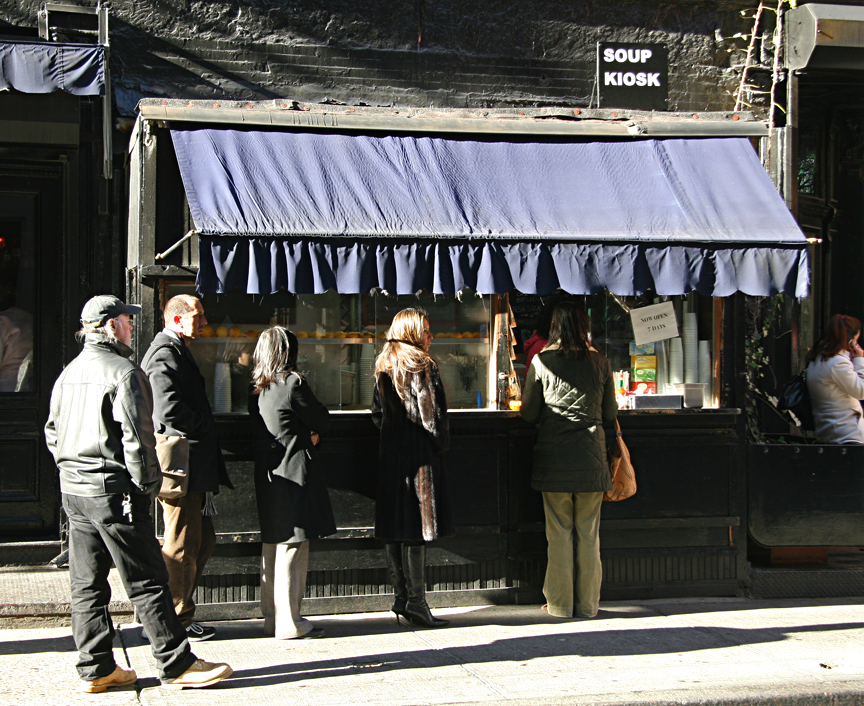
    What’s better than soup on a cold winter’s day? Not much, as you can see by the line at the Soup Kiosk, which adjoins and is associated with the historic Fanelli Cafe at 94 Prince Street in SoHo. As we tire of the same choices for lunch, street food becomes a good choice – fast, inexpensive (relatively), and often fresh, home-cooked, and delicious. My first thoughts when I became acquainted with this place were of the classic Seinfeld skit “The Soup Nazi.” This notion was quickly quelled after sampling the food and pleasant manner of Eunique, who works the kiosk (see here). The kiosk offers a range of several soups, chili (including vegetarian), and beverages.

    Having soup as a meal brings back memories of the Campbell Soup Company slogans “Never Underestimate the Power of Soup” and “Mmmm mmm good.” The power of soup was apparent when even Andy Warhol could not limit the fame of his art piece, Campbell’s Soup Cans, to 15 minutes. When Campbell’s was inducted into the Marketing Hall of Fame in 1994, the judges said, “Campbell’s has transcended the soup category to become a symbol of American hearth, home and values.” I think these associations are a credit to soup itself as much as it is to Campbell’s, although they are to be applauded for promoting a healthy meal concept.

    Apparently in the early years of the company’s history, soup was not popular here in the USA as it was in Europe. I know it’s heretical to drag in Campbell’s canned, condensed soups in a piece about the merits of fresh, homemade soup. But just thinking about soup conjures up a whole world of memories – comfort food nonpareil, a wholesome and for many, a simpler life…

    See these related postings: Speedy Gonzalez, NY Dosas


  • First Oasis Restaurant

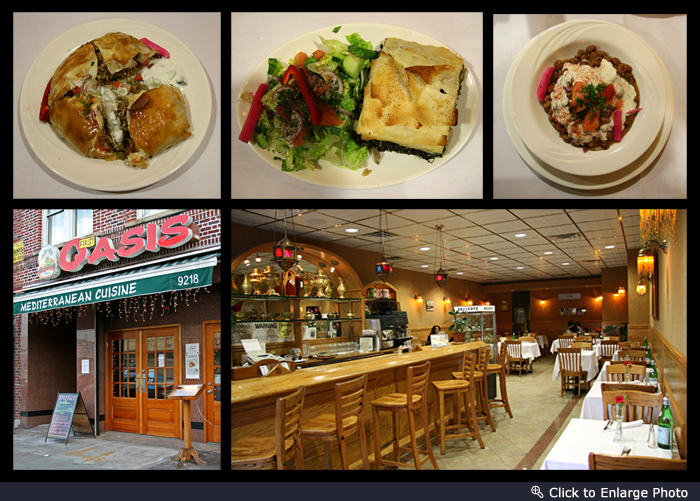
    On February 19, 2007, I posted on one of my favorite dishes – Ful Mudammas – made by First Oasis Restaurant at 9218 Fourth Avenue in Bay Ridge, Brooklyn, where I travel to get it. The owner/chef, Said Albahari from Syria, previously owned Magic Carpet Restaurant on Carmine Street in Manhattan for over 20 years, where I was a regular customer from its early days. At the time, I was a strict vegetarian. Middle Eastern and Indian cuisine quickly became favorites; both have some extremely good vegetable dishes. I have generally found vegetarian fare from an ethnic restaurant to be much tastier than meals from vegetarian restaurants, where the food is driven more by the dietary restrictions. Ethnic restaurants, on the other hand, have a real culinary tradition behind them, with a creative use of spices, condiments, and unique preparations.

    However, even in NYC, authentic Middle Eastern food is not that common. The cuisine is perhaps a little too exotic for the average American palate. A perusal of Middle Eastern restaurant listings shows mostly falafel/shawarma type places. Many of the better places are found in the outer boroughs, where there are neighborhoods with concentrations of various ethnic groups and their attendant restaurants. One of my favorite meals is Ouzi, shown in the photo upper left. This is absolutely delicious, with raisins, nuts, vegetables, and rice in a phylo pastry dough, served with a yogurt sauce (meat and vegetarian versions are available). Moustache in Manhattan also serves ouzi.

    First Oasis is very authentic, with an extensive menu of Middle Eastern specialties such as kebabs, mussaka, kebbeh, labneh, hummus, baba ghanuj, stuffed grape leaves, tabuleh, seafood, traditional desserts (halavah, baloza, baklawa, ladyfinger), and beverages (tamarind). The owner takes his cooking seriously – dishes are made from scratch. The food is excellent and inexpensive. Highly recommended…

    Interesting Note: I discussed the dearth of Ouzi and Ful with the chef from Olive Tree Cafe. His feeling was that customers were too unfamiliar with these dishes and would not order them. In the case of Ful, the cooks made in regularly for themselves in the kitchen.

    Interesting Anecdote: During one of my last meals I had in Magic Carpet in the Village before it closed, I was accompanied by Sarah Jessica Parker (of Sex in the City fame) at a nearby table. According to the staff, she was a regular, getting deliveries frequently (she lived around the corner). One of her last comments during the meal was enthusiastic: “This food is delicious.”

    Photo Note: At the top from left to right: Vegetable Ouzi, Spinach Pie, Ful Mudammas.


  • Horn of Plenty

    Apart from the traveling, I find Thanksgiving to be a comforting time of year, very comfy as far as eating is concerned. It is a time of year where family, friends, and food come to the foreground and other responsibilities can be pushed aside. Thanksgiving Day is still rather non-commercial, with the emphasis on thanks and giving. This is a nice respite from the over-the-top commercialization that has affected virtually everything. It also is the day where overeating is not only allowed but also encouraged and expected. An old Saturday Night Live skit comes to mind where wives were virtually force-feeding their husbands (who could eat no more) in their plush upholstered chairs on Thanksgiving Day. And then there is the famous scene in Monty Python’s the Meaning of Life where the enormous Mr. Creosote is persuaded to eat one last wafer-thin after-dinner mint, whereupon he literally explodes.

    The photo shows the scene at Dean and DeLuca, the gourmet emporium in SoHo, the evening before Thanksgiving. There was a time when places like this inspired awe and wonder with residents and visitors. This food mecca has been a destination for many. But we are all a little jaded now, given places such as the ubiquitous national chain Whole Foods and exposure to a myriad of goods and services via various media and the Internet. The kind of things which these iconic NYC gourmet shops were renowned for have become much more available outside the city. For most, America has become the horn of plenty…

    Note about the Horn of Plenty or Cornucopia: There are many variations on the telling of this Greek myth. In one telling, Zeus was raised by Amalthea on the milk of a goat. In return, Zeus presented her with the horn of the goat, which had the magical power to be filled with whatever the holder desired. The modern cornucopia is now a wicker basket with the shape of a goat’s horn.


  • Boyd Thai

    Boyd is a tiny Thai restaurant at 210 Thompson Street in the center Village. After my meal there last night with a friend, I spoke to the owner, who was most cordial, and gave him my NYDP card. Owner/chef Boyd has had previous restaurant experience; he owned a restaurant in Thailand prior to coming to the US and has worked in Thai restaurants in NYC, including the well-known, stylish Planet Thailand in Williamsburg, Brooklyn. In the last year I have been eating there, I have found the food consistently excellent and the staff to be attentive and friendly. Reviews in publications such as MenuPages, Timeout New York, Yelp, and New York Magazine are overwhelmingly positive.

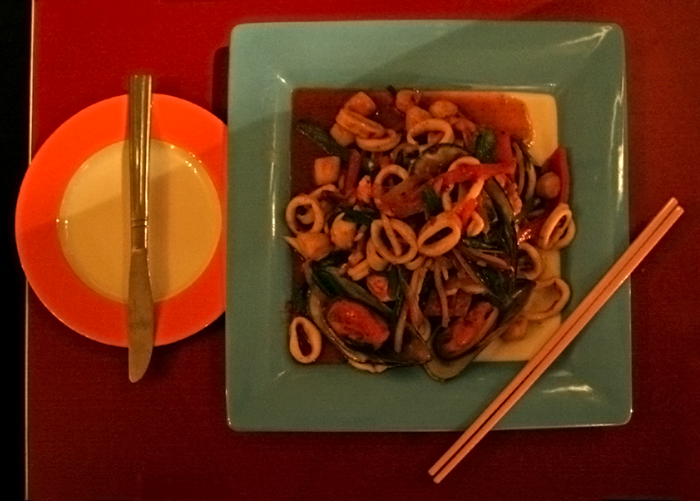
    One thing that stands out about this place is the creative flair they bring to the menu offerings, going beyond the standard Thai fare with dishes like Chile Crusted Tuna with Grape Asparagus Curry, Tuna and Mango Salad, and Roasted Duck with Avocado Orange Salad. I love the exotic spices and use of tropical fruits such as papaya, mango, tamarind, lime, coconut, avocado, orange, pineapple, and lychee. The cuisine is seafood oriented, but there are plenty of Thai standards (like Pad Thai), curries, and vegetarian entrees. There are also many nice small touches (like the dinnerware) all too uncommon in places in this price range – most inexpensive restaurants tend to treat dining in a very utilitarian manner. There are Early Bird specials before 7 PM – a full dinner with appetizers for only $9.95/$10.95. A real find…


  • teany

    It’s always a pleasant surprise to do research for an article not knowing what to expect and to find that there is a really interesting story behind something that, on first glance, appeared to be relatively ordinary. You could argue that one can find something of interest in everything and that a great writer can make perspiration riveting, but I think ordinary mortals would agree that some things are just inherently more interesting than others. Like teany.

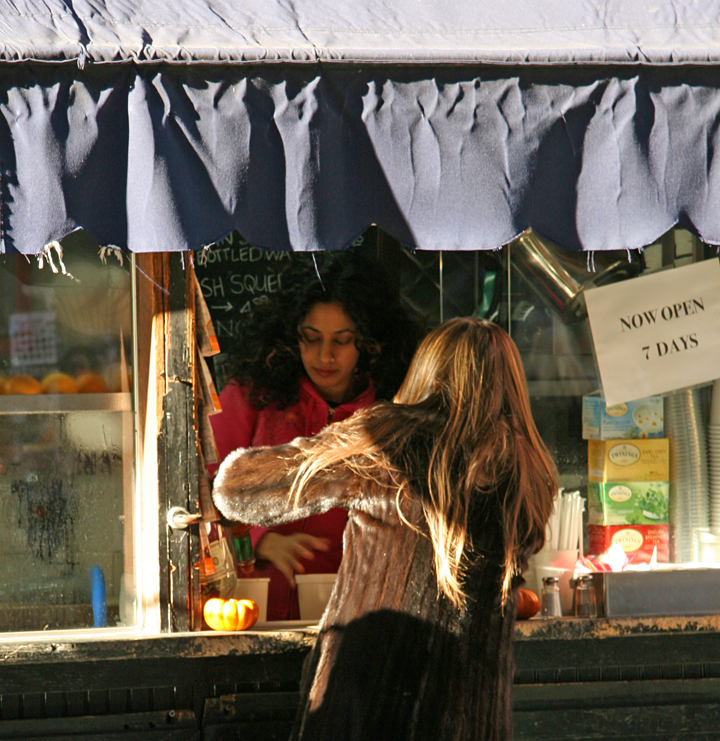
    Teany is a beverage company – many who live in the NYC area are probably familiar with their tea/juice products, as they are widely distributed in the New York and New Jersey area. Teany is also a small tea house and restaurant, shown in the photo, at 90 Rivington Street on the Lower East Side. The company was started in 2002 by Kelly Tisdale and musician Moby (they were boyfriend/girlfriend at the time). The shop offers 98 varieties of loose tea and vegan food (Kelly is vegetarian, Moby is vegan). Moby, who started his recording career as a techno artist, has a certain mystique and cultish following. It reminds me of the aura around David Bowie, who, coincidentally, lived across the street from Moby in Little Italy for a decade.

    Moby (Richard Melville Hall) was born in Harlem and brought up in Darien, CT – a startling contrast, with Darien and the neighboring communities of Connecticut being some of the wealthiest in the country. Never surprising when a life of privilege leads to rebellion – Moby was in a hardcore punk band in the early 1980s called the Vatican Commandos. Read Moby’s bio on his website here. His name, by the way, was a nickname given to him by his parents, referencing the novel Moby Dick, written by Herman Melville, his great-great-great-great uncle. Rumors of the closing of the tea shop in 2006 turned out to be untrue. There was, however, a business change with a focus more on teas and less on food and Kelly taking full ownership of the company…

    Note about the company name: The company proclaims that “you can pronounce it however you like. tea-knee. tee-nee. tea-enn-why,” and that Moby and Kelly themselves pronounce it “teenie,” because they are “small,” both in stature and in status.


  • dinamic_sidebar 4 none

©2026 New York Daily Photo Entries (RSS) and Comments (RSS)  Raindrops Theme