• Category Archives Food and Restaurants
  • Jack Be Little


    ‘Tis that time of year. Halloween, apple pickin’, school’s started, sun sets early, days are getting shorter, crisp air, holidays are coming, and everyone is moving a little more quickly. There are more things to do, less time to do them, and it’s getting a little too chilly to relax a la summer anyway. Tonight is the the annual Village Halloween Parade – one of the biggest parades in the country, with 1 million attending. I will be photographing the event and putting up the images on this site for the next couple of days. And don’t forget to change your clocks this weekend – set them back one hour on Sunday morning (November 4th this year) at 2 AM…

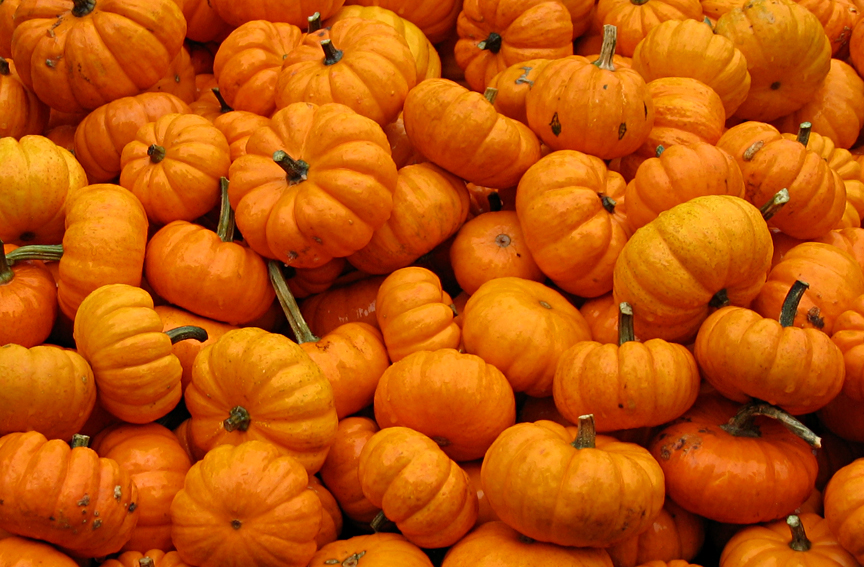
    Regarding the photo (taken in Union Square): I learned today that the small squash-like fruit in the photo is not a gourd (as I had thought) but a miniature pumpkin – a variety known as Jack Be Little. They can be used for decoration or eating. They are perfect for stuffing and I understand quite delicious. The skin is edible if boiled for 5 minutes before baking.

    Postings related to Union Square: Heirloom Tomatoes, Union Square Greenmarket, Republic, Vintage Mural, One-Man Band, Luna Park Cafe, Gentleman Peeler, Flora, Zeckendorf, Reverend Billy, W Hotel, Towers, Metronome

  • Esperanto

    Geography matters. If one looks at a map of Manhattan, you will see that from 125th Street down to 23rd Street, it is essentially a rectangle, with First Avenue being the easternmost North-South Avenue. South of 14th Street, the island bulges on the east side. Here you have the Lower East Side and Alphabet City – Avenues A, B, C, & D.
    This area is one that is furthest from subway lines in the city. It is nearly a mile from Avenue C and the nearest station at Astor Place or 2nd Avenue. I believe that this frontier land location has been one factor in its later gentrification. The area has a rich ethnic history, occupied by the German, Polish, and most recently the Latin community (Avenue C has been given the name Losaida, meaning Lower East Side in Spanish).

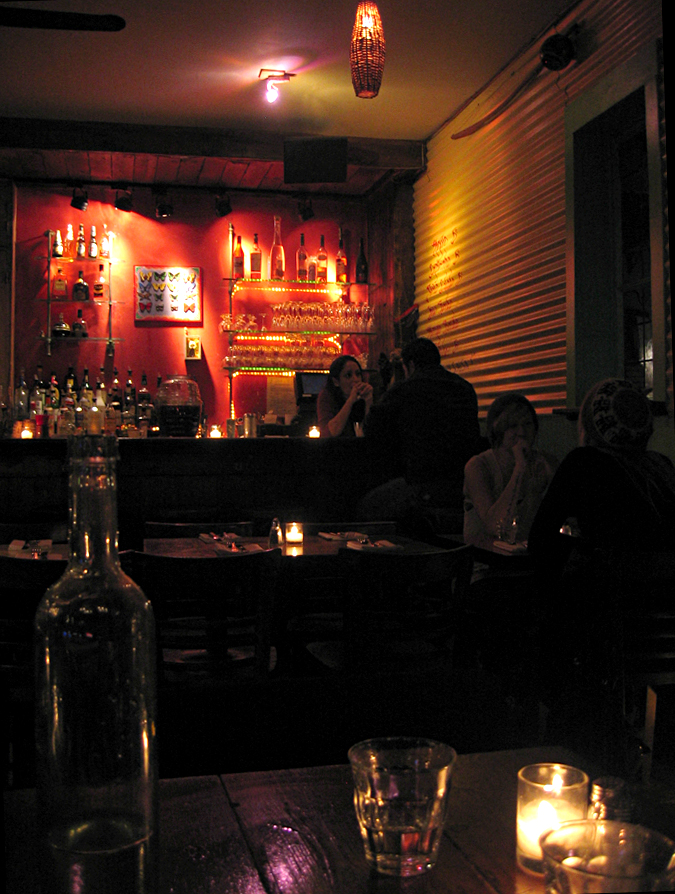
    In my recent explorations of the community gardens in the area, I discovered a real gem of a restaurant at 145 Avenue C and 9th Street: Esperanto. In warm weather, their French-style doors are open, and there is al fresco sidewalk dining – beautiful, since a large community garden faces each exposure. The food is pan-Latin, with Brazilian and Cuban drinks. There are two rooms with a warm, dark atmosphere. The main room (in the photo) has burnt-orange walls, tiled floors, and a bar. The other room is painted in turquoise. The food is excellent and very well priced. There are prix fixe dinners and brunches. Some have complained about the wait staff being inattentive, but I found it acceptable. Highly recommended…

    Related Postings (click any link): Shangri-La, La Plaza Cultural Garden, Albert’s Garden, Devil’s Playground, Howl!, Vegan Chic, Bluestockings


  • Bridge Cafe

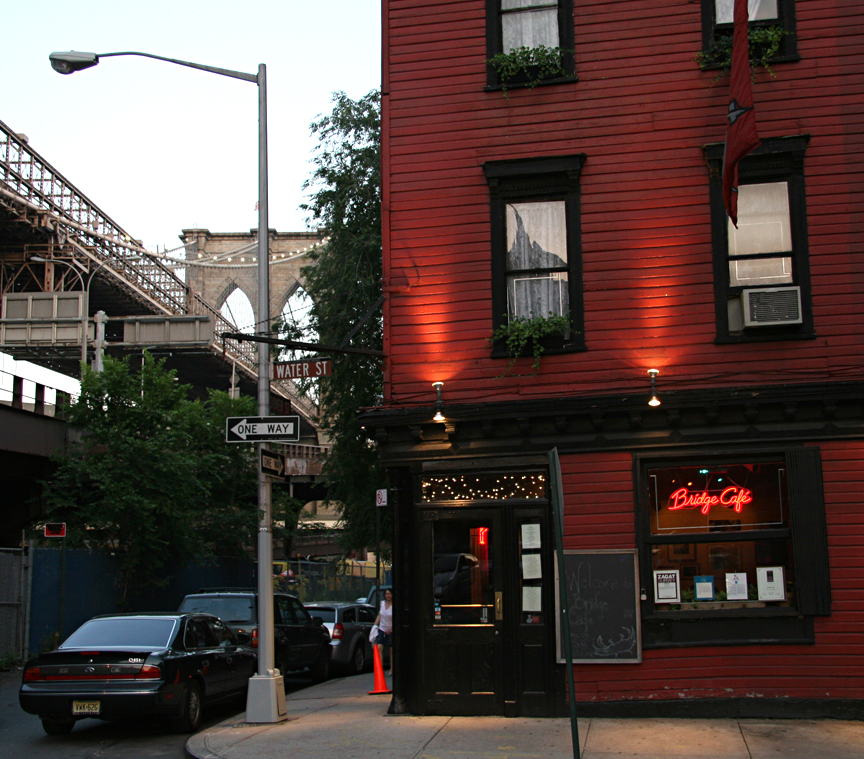
    Many New Yorkers avoid the South Street Seaport area (barring an occasional visit for a performance like that of Spiegelworld), seeing the area as too touristy. This is a legitimate complaint, but there are also good reasons to visit this neighborhood. Once one gets away from the beaten path of Fulton Street, you quickly start to appreciate the charms of this area, the oldest area of the city. The buildings are beautifully restored, streets are cobbled, and there are a number of establishments worth patronizing, such as museums, restaurants, bookstores, and galleries.

    The Bridge Cafe, at 279 Water Street, is one of those places. The restaurant, at the end of Water Street and the corner of Dover Street, is virtually under the Brooklyn Bridge, housed in a wood-frame building erected in 1794 (click here for photo). This historic gem is believed to be the oldest business in NYC and the oldest drinking establishment. In 1847, Henry Williams opened a porter house in this section of Water Street, known for its saloons and brothels. The cuisine is eclectic New American. I have not eaten there, but reviews appear to be consistently good – I intend to to soon…

    Notes: At the time the place was built, before land-fill projects expanded the area of Lower Manhattan, the East River actually came right up to the building.
    When Ed Koch was mayor, he met here twice weekly at a private table.

    Related Postings. Click on any link: Belle de Jour, South Street Seaport, Dead to the World, Fishbridge Garden, Jet Ski


  • Purple

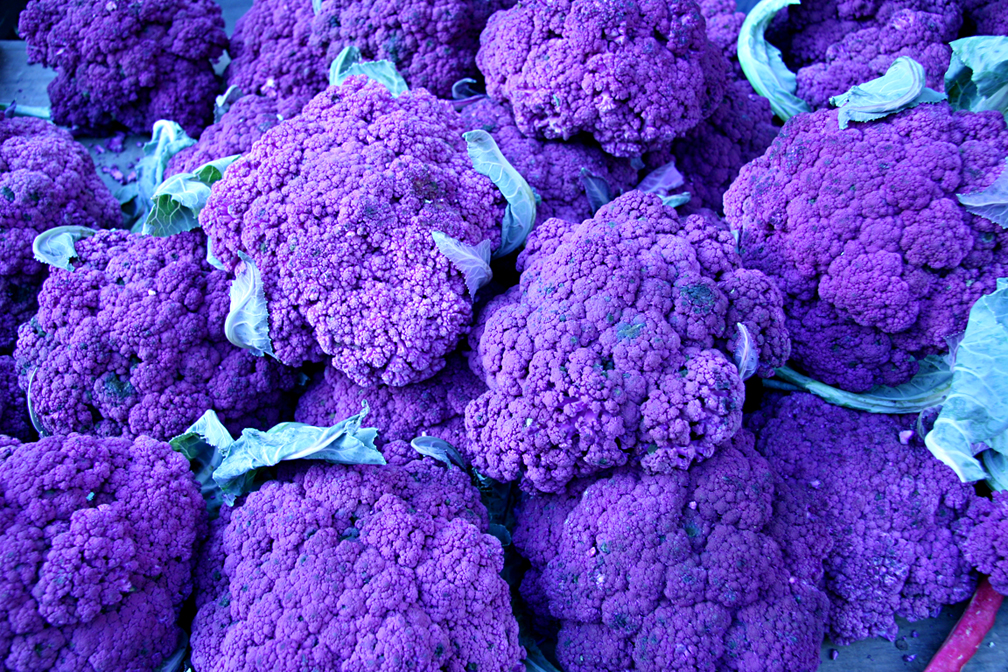
    Here we go again. It’s Sunday morning, so I thought I’d do a nice “easy” posting with a compelling photo. In fact, I was worried – how much can you say (or should you say) about purple cauliflower without being boring? But this blog has a history of being didactic, so leaving this photo to speak for itself was out of the question. Hence, I thought a little bit of research would be appropriate. However, as frequently is the case, I found a world – the world of purple foods and cauliflower in particular, with lots of articles and sites (purplecauliflower.com is registered). I learned that cabbage, brussel sprouts, kale, broccoli, and collard greens are actually all the same species, Brassica Oleracea, but are of different cultivar groups.

    The whole concept of cultivars is fascinating and relatively new to me. If you want to delve into this, click here. I am astounded to have found a site which lists 100 varieties of cauliflower! The purple color, by the way, is not dye but rather due to anthocyanins, the largest group of water-soluble pigments in the plant kingdom, and are responsible for the blue, red, and purple color of many fruits, vegetables, grains, flowers, and leaves. In recent years, studies have suggested that anthocyanins serve as valuable diet antioxidants. However, because they are water soluble, I have read of problems cooking and losing the color.

    About the photo: I discovered this table of purple cauliflower while strolling through the Union Square Greenmarket with a friend. I had no intention of doing any photography, since I have posted numerous times regarding Union Square: the park itself, the Greenmarket, the Gandhi sculpture, restaurants, and the architecture/buildings in the immediate area. But when we happened upon this display, we were so awed by the color that I felt compelled to shoot and share…

    Postings related to Union Square: Heirloom Tomatoes, Republic, Vintage Mural, One-Man Band, Luna Park Cafe, Gentleman Peeler, Flora, Zeckendorf, Reverend Billy, W Hotel, Towers, Metronome, Union Square


  • Sardi’s

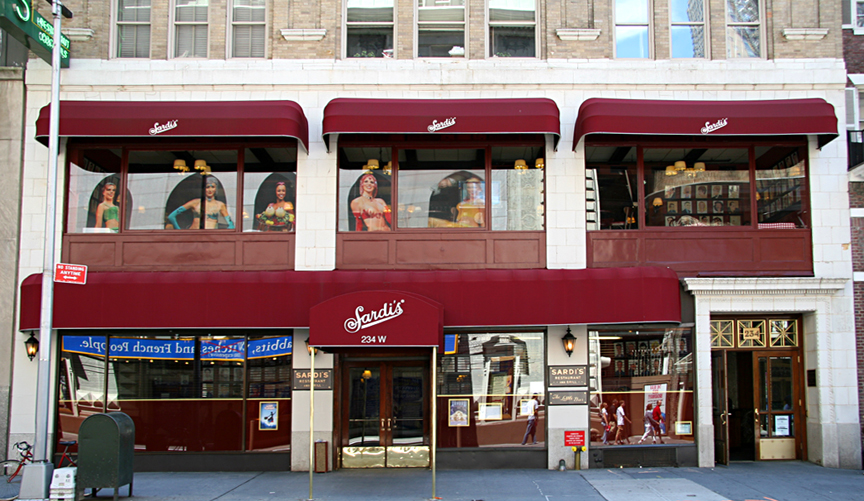
    Unfortunately, the story of Sardi’s, like many others of NYC, is best told in past tense. They have not gone out of business, but that which brought the restaurant its notoriety has gone. What’s left is more of a cliche for tourists. Sardi’s, located at 234 West 44th Street, is in the heart of the theater district and was an integral part of the fabric of that world since Vincent Sardi, Sr. opened the Little Restaurant at 246 W. 44th Street in 1921. Patrons referred to it as Sardi’s, and so the name stuck. In 1927, they moved to the current location. In 1947, management was taken over by Vincent Sardi, Jr. The restaurant is known for the hundreds of caricatures of show-business celebrities on its walls, inspired by Joe Zelli’s, a Parisian restaurant and jazz club. The Sardi’s caricatures were done by Alex Gard, a Russian refugee.

    The stories surrounding Vincent Sardi, Jr. are legendary and speak of old New York. Sardi’s became a Broadway landmark – an institution central to the theater world, with actors, agents, and critics utilizing it as a meeting place. Vincent loved theater and has been referred to as the “Mayor of Broadway.” He was totally supportive of the theater world and was known to carry the tabs of out of work actors. Read his obituary in the New York Times (Sardi died on January 4, 2007).

    Broadway has changed. Stephen Sondheim spoke of a dumbing down of theater and that there is no longer a Broadway community: ”There’s none whatsoever. The writers write one show every two or three years. Who congregates at Sardi’s? What is there to congregate about? Shows just sit in theaters and last.”


  • Myers of Keswick

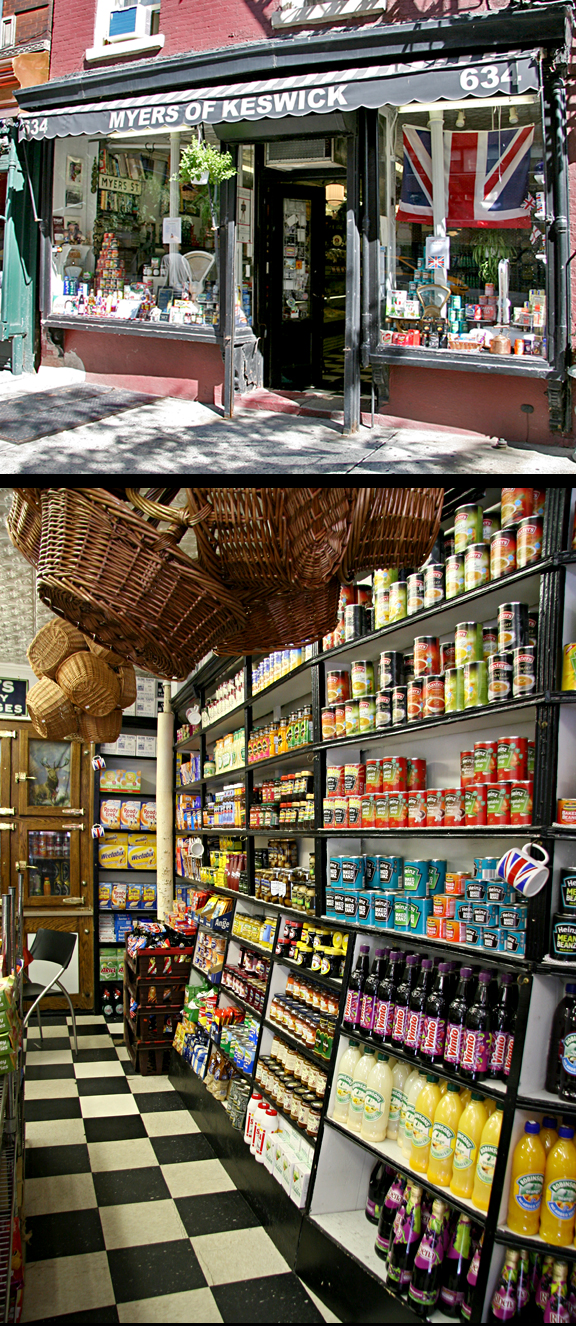
    There are an estimated 100,000 Brits in New York City (and 250,000 in the Tri-state area – New York, New Jersey, and Connecticut). And, like any ethnic or cultural group, someone has to cater to their culinary needs. Peter Myers, of Keswick in the Lake district of England, came to the United States in 1972. On July 4th, 1985, Peter and his wife Irene, opened Myers of Keswick. You can read the entire story here at the shop’s website.

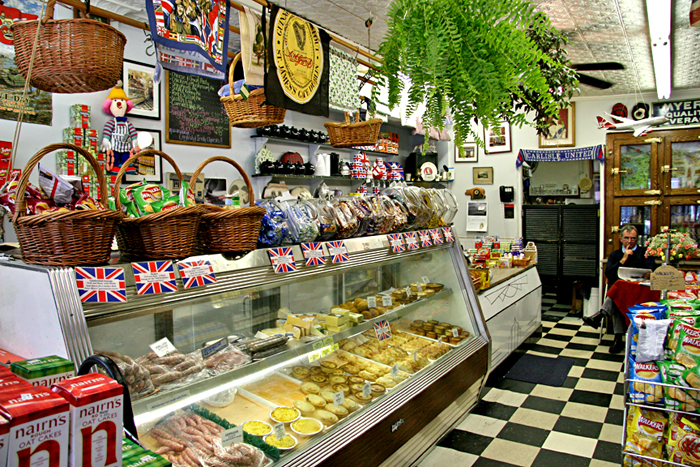
    This small, quaint shop is located at 634 Hudson Street in the West Village – the ambiance is one of a country store. Click here for more photos. British cuisine and foods do not have a large following, so it was not surprising to learn from Peter that nearly all of the store’s clientele is of British ancestry. Many make a pilgrimage, coming from as far away as New Hampshire or Virginia to stock up on goods. Myers offers an array of fresh goods (butter and cheese), including authentic homemade classics such as savory pies and sausages (for which they are well known) – Peter is a third-generation sausage maker. They also stock an array of British staples – packaged items such as beans, crisps, cereals, biscuits, soups, jams & marmalades, drinks, teas, sweets, and the infamous Marmite, that substance deemed to be virtually inedible by all but the Brits.

    I am frequently turned down when asking about taking photos, even of commercial or retail establishments, where they stand to gain more exposure. Peter, on the other hand, in stereotypical British style, was quite accommodating – in fact, a little surprised I even asked. That’s him in the rear of the photo…


  • Pickles

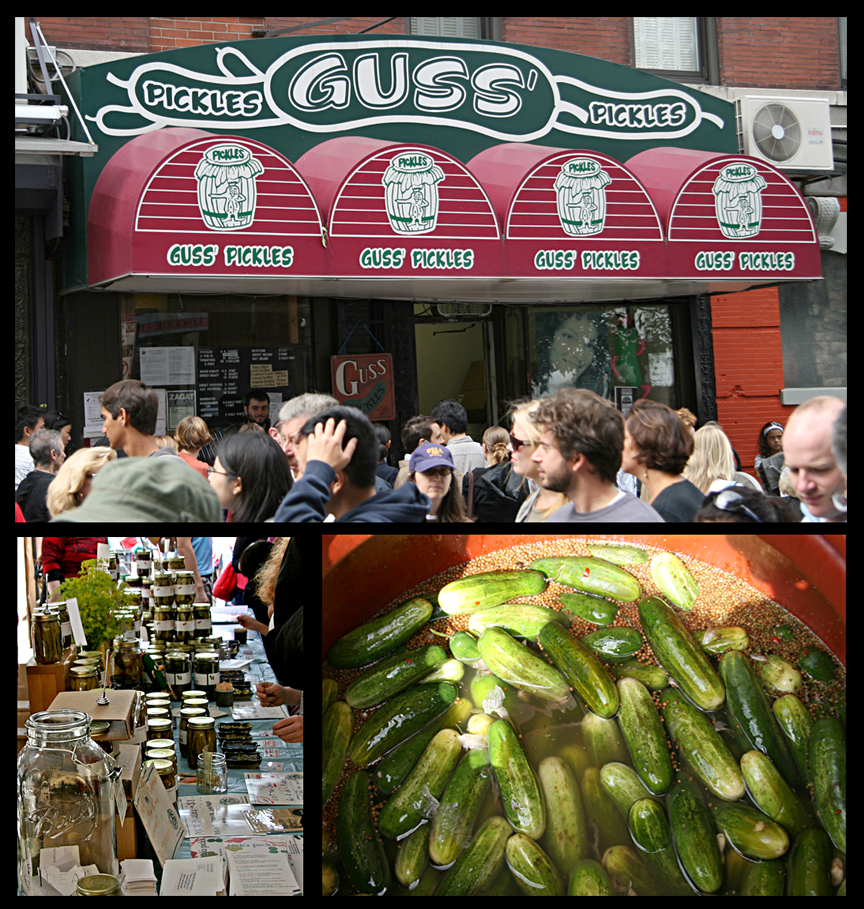
    Sunday was the 7th annual New York City International Pickle Day. I’m not sure we need such a day, but apparently picklers feel that they need equal time, and NYC was pickle country at one time. The festival, co-sponsored by the NY Food Museum and the Lower East Side Business Improvement District (LES BID), was held on Orchard Street between Broome and Grand Streets on the Lower East Side, on the same block as famous pickle vendor Guss’ Pickles (update: In 2010, Guss’ Pickles moved to Borough Park, Brooklyn.). There were pickling demonstrations, children’s activities, tours, exhibits, music, book signings, and, of course, pickles and pickled products for sale and as free samples.

    And Guss’ Pickles? Well, that’s a whole other story and controversy. A hundred years ago, NYC had 200 pickle shops, with half of them in the Lower East Side. Now, virtually all are gone but Guss’ Pickles, founded by Polish immigrant Izzy (Isidor) Guss in 1910. Through a number of twists and turns, there are two companies battling in court over ownership of the name Guss’. Read about the twisted tale here


  • The Water Club

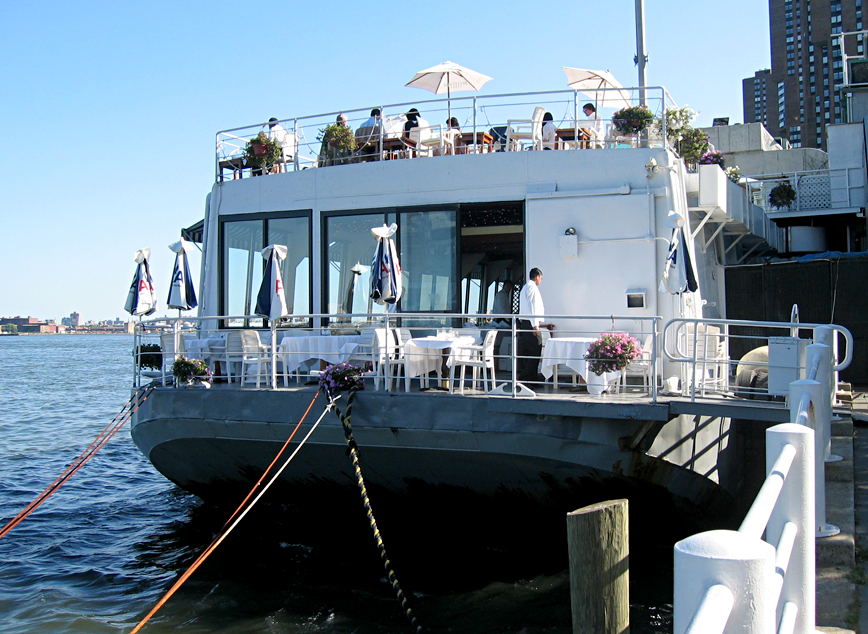
    Manhattan is an island, yet it’s only recently that the waterfront is really beginning to be developed and utilized. It is surprising, given that space is at such a premium, that this huge asset has languished for so long. Now we have things such as the immensely popular Hudson River Park. There have been some earlier forays into waterfront usage: Bargemusic, South Street Seaport, the Intrepid Museum, the 79th Street Boat Basin, Christopher Street Pier, the New York Kayak Club, Battery Park City & promenade, and Chelsea Piers. Restaurants have also entered the fray, with places like the River Cafe, Hudson River Cafe, Harbour Lights, World Yacht, and the Water Club, shown in today’s photo.

    The Water Club is located at East 30th Street in the East River on a moored, renovated barge. In addition to their nautically themed dining room, there is seasonal outdoor dining at the Crow’s Nest, located on the upper deck. Obviously the big draw here are the spectacular vistas from its East River location, with river views from every table. I have not eaten there, however, my understanding is that the food is good, with Kevin Reilly as executive chef. Kevin Reilly (formerly of Union Square Cafe and Zoe) has designed menus for other eating establishments, such as Bamn (click here for a post about this new automat). For more information about menus, etc., click here for their website


  • Heirloom Tomatoes

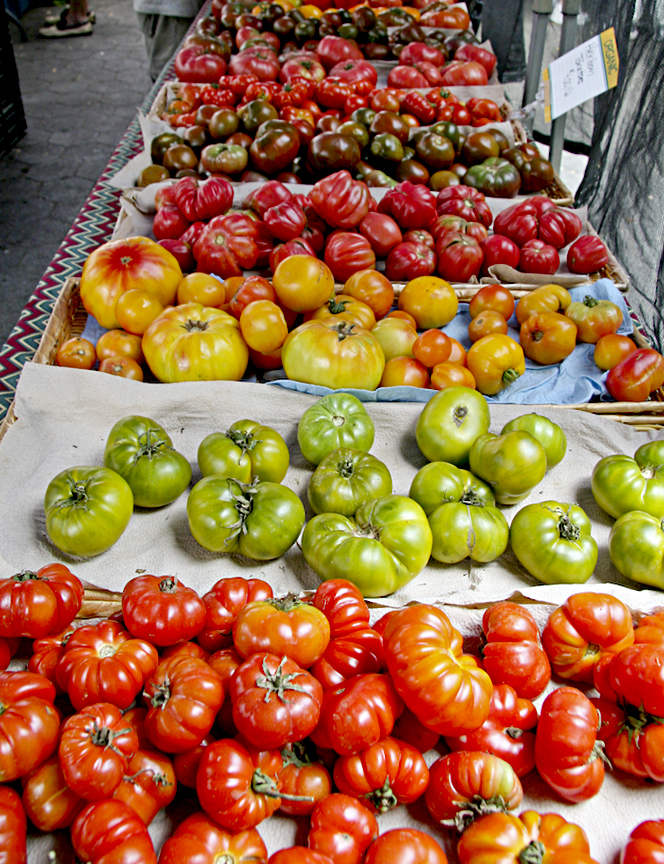
    A photographer friend, Bill, and I routinely visit the farmers market at Union Square (see Union Square, Flora, Union Square Greenmarket, Luna Park Cafe, Metronome, and the fascinating story of Joe Ades – Genteleman Peeler). Bill has done a tremendous amount of fine work photographing fruit (click here). He has spoken of heirloom tomatoes often, yet I only first tried them recently at the Union Square Cafe, where they make an amazing Heirloom salad appetizer.

    Subsequently, on a visit to the farmer’s market at Tompkins Square, I finally purchased my first heirloom tomato and ate it. Heirloom tomatoes are hugely popular in the city right now, and this trend is for good reason. You only have to taste one to see how much flavor we have lost to the products of agribusiness and modern commercial farming.

    The definition of heirloom tomatoes varies somewhat. Some use age of seed strain (50 to 100 years or older), while others may use pre-World War II as a demarcation point. But in the most literal sense, heirloom tomatoes are ones where the cultivar has been nurtured and handed down from generation to generation. It is also generally agreed that they are open-pollinated and with no genetically modified organisms used. There are hundreds of varieties, with names like Mortgage Lifter, Green Grape, Cherokee Purple, Green Zebra, Black Krim, Brandywine, White Wonder, Amish Paste, Stupice, etc. (click here for a sample list).

    If you have not had an heirloom tomato before, I highly recommend that you get yourself to a good farmer’s market as soon as possible and buy at least one. No need to prepare it, just eat it like any fruit, with reckless abandon – watch the juice running down your arm…

    Note about the photo: This was taken yesterday at the farmer’s market (Norwich Meadows Farms stand) at Tompkins Square Park while attending the Howl festival, the subject of another posting this week.


  • Belle de Jour

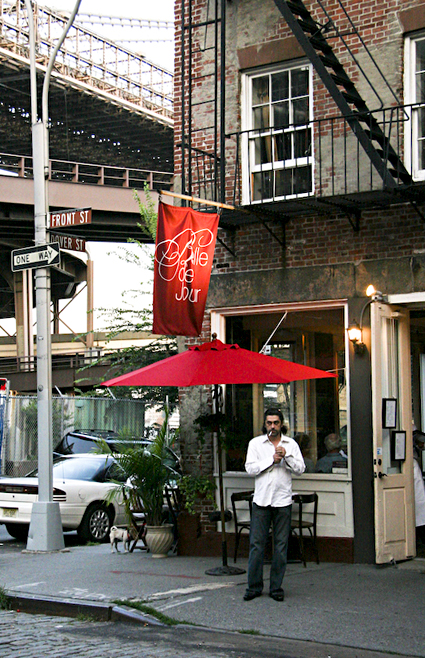
    When I stumbled on this place with a friend, we loved the the whole image – a quaint French restaurant in an obscure location under the Brooklyn Bridge and with what we romanticized to be the defiant, cigarette-smoking Frenchman with attitude out in front. We did not eat here, but my reading of reviews and their website this morning tells me that this place could be a real find.

    The chef, Ovidiu Pastae, previously owned Au Coin du Feu (by the fireplace) in Vence, France and a SoHo sibling by the same name at 222 Lafayette (now closed). His newest restaurant, Belle de Jour Bistro (Update 1/19/12: Website down), opened in April of 2007. It is named after the 1967 French classic film “Belle de Jour,” directed by Luis Bruneul and starring Catherine Deneuve.

    The bistro’s building, located at 259 Front Street in the South Street Seaport area, was a flour mill built in 1809 and designed by Robert Mills, one of the first professional architects in the United States. Working primarily in the Baltimore-Washington area in the neoclassical style, Mills is most well-known for designing the Washington Monument (along with the Department of Treasury and other federal buildings). After locating an article with a photo of Ovidiu (Update 1/19/12: Link no longer works), I am now thinking that the man I caught in my photo may be Ovidiu himself…


  • La Esquina

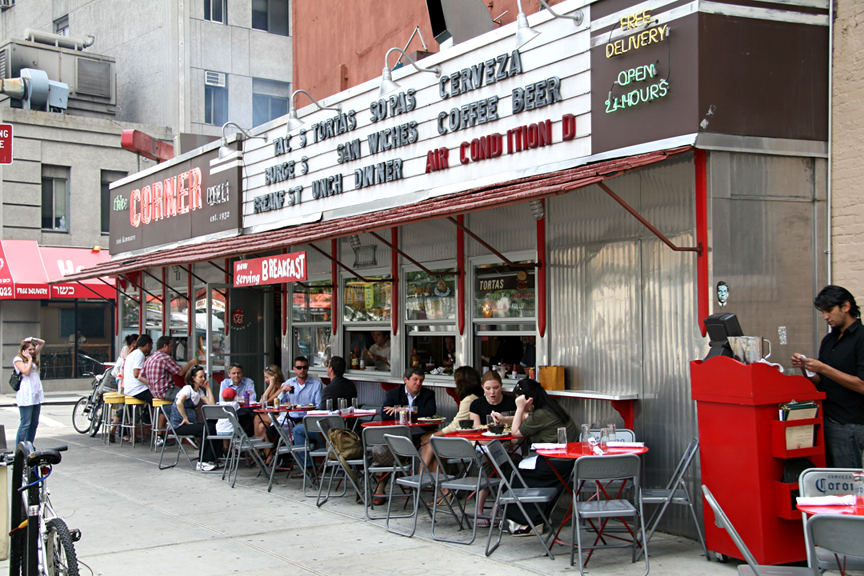
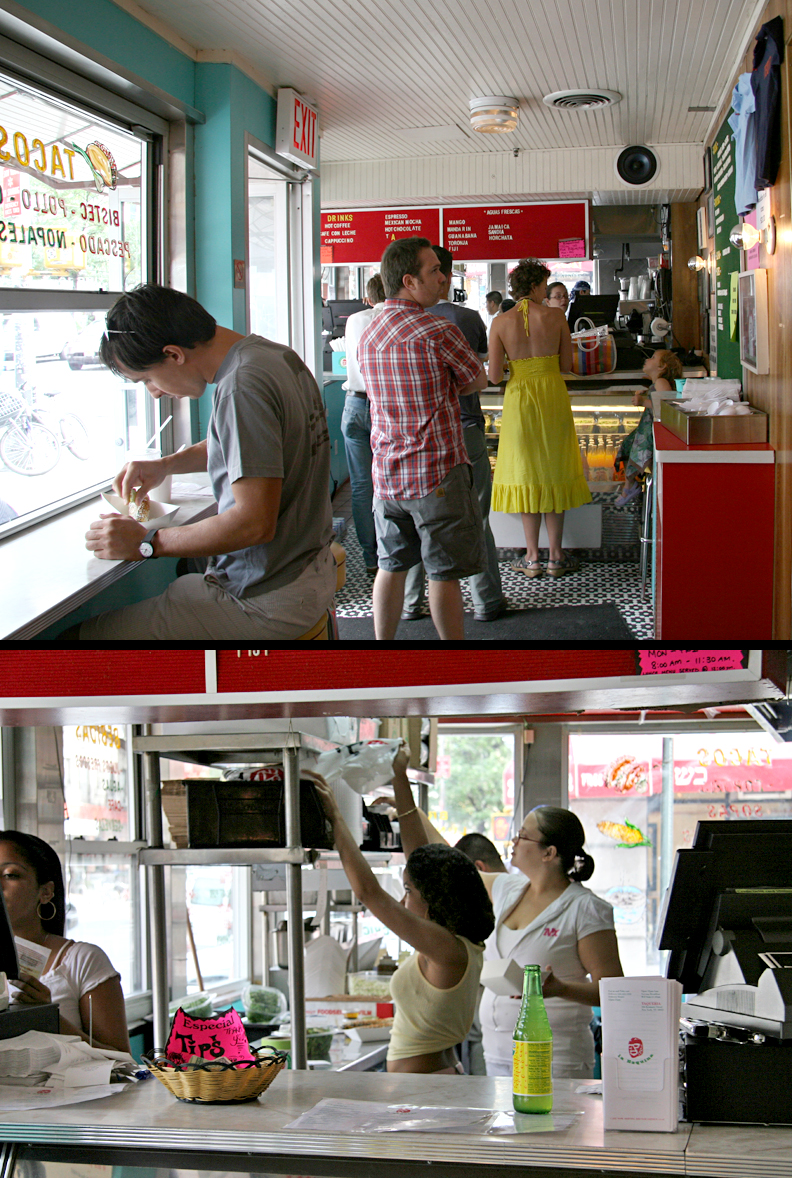
    Here’s a place steeped in buzz, controversy, stories, and articles. 106 Kenmare was the home of the Corner Deli, a mom-and-pop operation since 1932, set up in a tiny, wedge-shaped diner in a neighborhood now known as NoLita. Click here for a look inside. The place was purchased by partners Serge Becker (Lure Fishbar, Area, B Bar, Joe’s Pub), architect Derek Sanders, Cordell Lochin, and restaurateur James Gersten. It is now home to La Esquina, both a street-level Tacqueria (with a menu developed by Café Habana founder Richard Ampudia) and a restaurant located underground. The restaurant downstairs is where the controversy lies, some even calling the Tacqueria a front for the restaurant. The entrance is a door marked “Employees Only” leading via a convoluted route past a kitchen downstairs to a subterranean dining room with a unique decor (I have not been there).

    Bouncers, lists – the scene is reminiscent of the nightclub days of the 1980s with their “exclusive” admittance policies (Studio 54, Mudd Club, et al.). But I am intrigued and will investigate getting into the restaurant. When I first visited the Tacqueria soon after it opened in 2005, the place was insanely packed. Lines and chaos prevailed. Since then, things have calmed down, and getting a meal there is now a much more civilized affair. Our office gets lunch there regularly, and it has become a favorite. You can take out or eat outdoors at the small tables…


  • Old Homestead

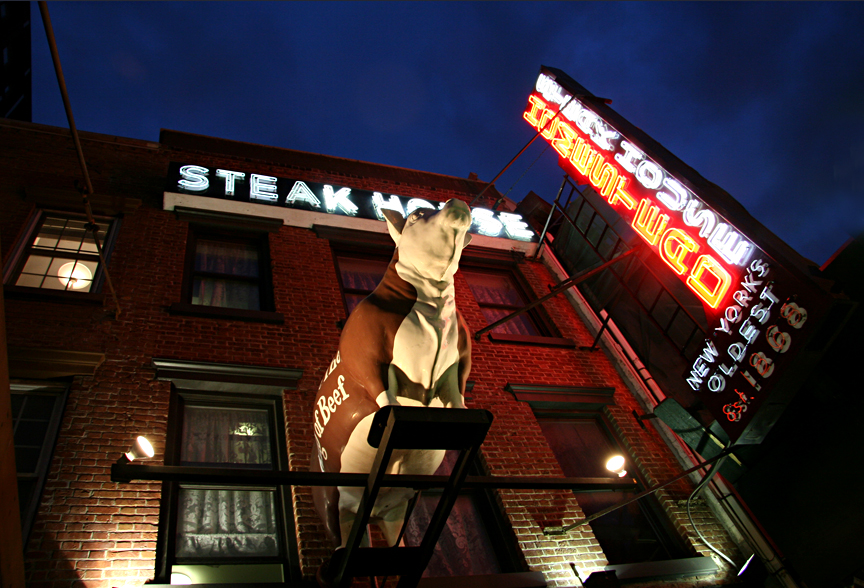
    The neon signs and large cow mounted prominently over the entrance to the Old Homestead Steakhouse have been an NYC icon for ages. Located at 56 9th Avenue in the meat packing district on a major thoroughfare, most New Yorkers have seen this landmark many times traveling downtown (click here for photo). It is the city’s oldest steakhouse and one of the oldest restaurants, dating back to 1868, with humbler origins as a popular place to eat for workers in the neighboring wholesale meat market.

    As you can see from their website and pricing, this is no longer the place for the common worker. The specialty here is Kobe steak, or, more properly, Kobe-style beef. Kobe beef was traditionally raised in the Kobe region of Japan from the Wagyu breed of cattle and is renowned for tenderness and flavor. It has a high degree of fat marbling, enhanced by the traditional secret methods of raising Kobe beef, including beer in the diet and massage. However, nearly all Kobe beef in the United States, known as Kobe-style beef or American Kobe beef, is raised domestically by ranchers who have crossbred Wagyu cattle with Angus cattle. To my understanding, any claims of beer in the diet or massaging cattle in this country is a myth, one that that restaurants do not necessarily try to dispel. In 2003, Old Homestead introduced the first Kobe burgers, which will set you back $41.

    Most reports regarding the food seem to be still favorable, always a difficult feat to maintain when a place becomes a legend. Of course, there are naysayers, and the debate goes on regarding NYC’s best steakhouse, with many contenders: Peter Luger, Sparks, Palm, Smith and Wollensky, Keens…


  • Lunch Limbo

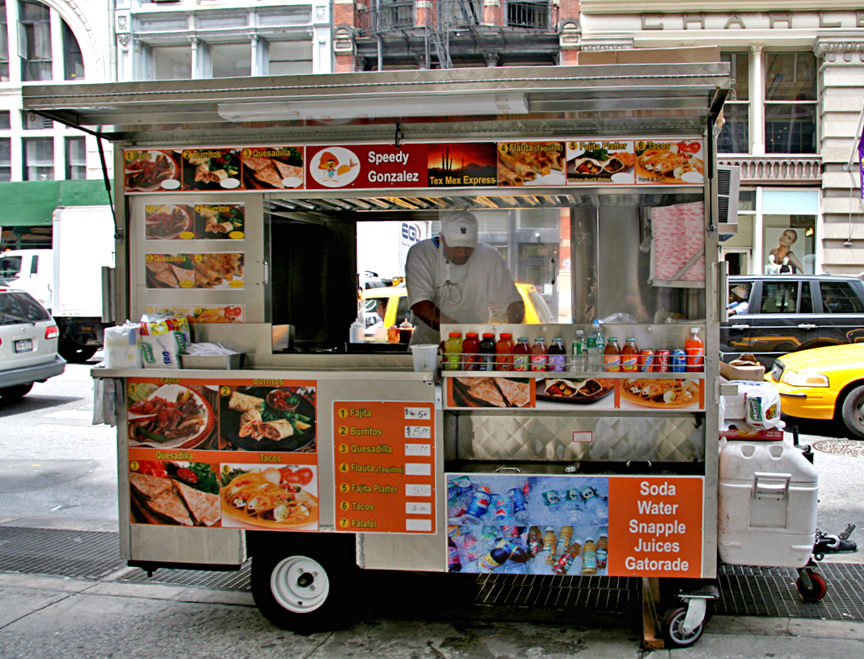
    This is a trend for which I have been waiting a long time: better street food vendors. Hot dog and pretzel carts don’t do the job anymore, certainly not for lunch. Most people I know of buy most of their lunches out. The plethora of options and convenience of delis and other takeout venues in NYC wears down one’s resistance, and soon the idea of bringing lunch to work becomes a charming notion and dim memory. But we get spoiled here, and soon even the absolutely incredible selection of foods in a deli or green grocer is not enough – we still feel that there is “nothing to eat,” and one graduates to small takeout restaurants. But the best of these become quite expensive on a regular basis (sandwiches at $8-$10), and one is left in lunch limbo – what to eat. What we really want is a prepared, cooked MEAL that is excellent and inexpensive. Enter the high-quality street food vendor, where $5 will go a long way. I wrote of this already in my story about NY Dosas, a Vendy Award-winning Sri Lankan food cart on Washington Square South.

    But now we have a new problem: lines (I understand that NY Dosas gets as many as 60 people waiting in line). New Yorkers are suckers for “the best,” and there are always many willing to wait in line to get that special thing, best thing, get something first (iPhone, Harry Potter book), blah blah blah. We tried Calexico yesterday, a Vendy Award finalist. We had been trying for some time, but unless you phone them in advance by 11:45 AM (they have a cellphone) or get there by noon, you’re looking at huge lines. The food was good, but I’m not sure it was worth strategic planning in our office for a week to score a meal without waiting for an hour…

    NOTE: The cart in the photo is Speedy Gonzalez, specializing in TexMex and is located on Broadway in SoHo – good food, no lines (the last time I was there).


  • Lahore

    Posted on by Brian Dubé

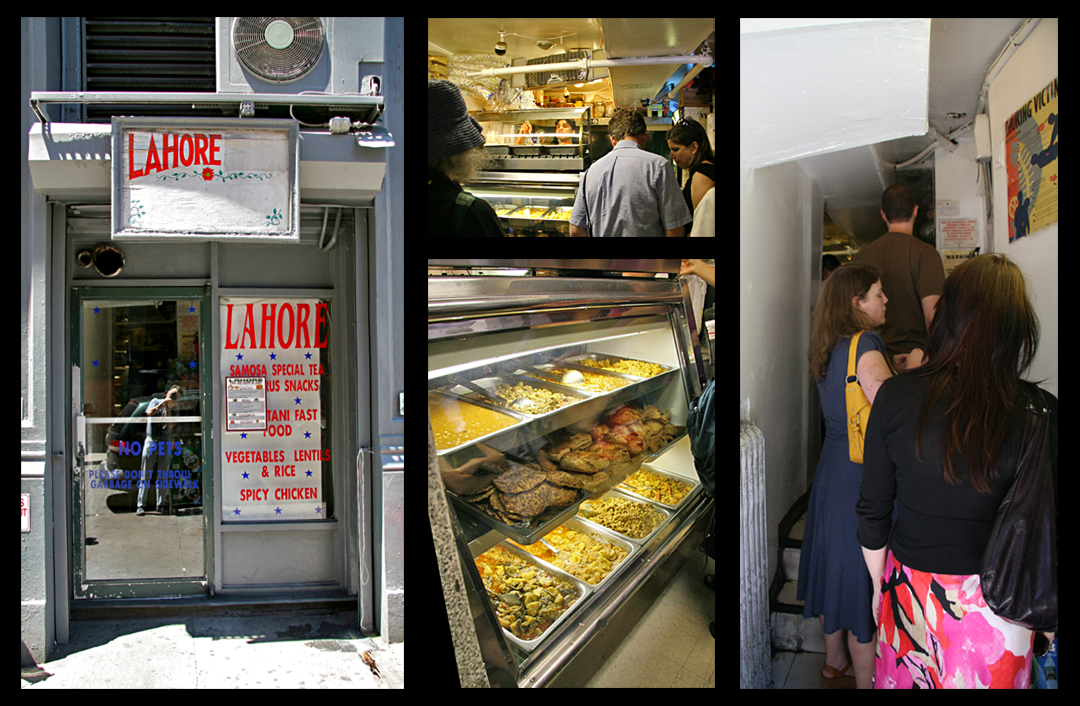
    There is a category of food you really won’t find outside a big city like NYC: that which might be referred to as Pakistani taxi cab cuisine (by and for Pakistanis). Cab drivers have a short list of requirements for their choice of on-the-job food: cheap, fast, and available all hours. In the case of Lahore, which meets these basic requirements, one could add authentic and quite good. For authentic ethnic food, it is safe to place your bets with taxi drivers; they know the entire city, have a vehicle which will take them anywhere at no cost, and are well-networked with other members of their community.

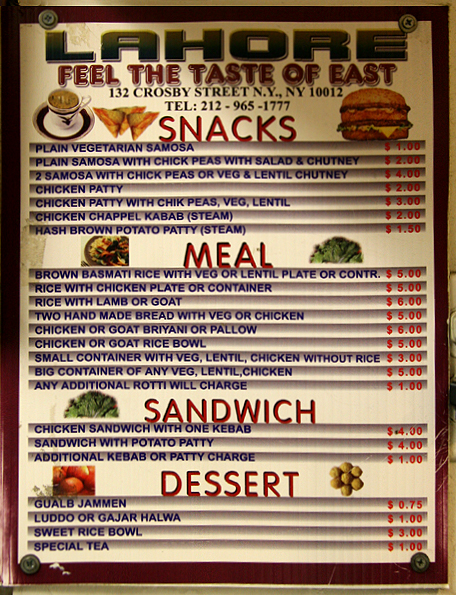
    Many New Yorkers have gone by 132 Crosby Street hundreds of times and not even noticed the place. Lahore is literally a hole-in-the-wall – narrow, cavernous, dark, funky – yet they come (and line up). As far as the atmosphere, for many, the word “scary” would come to mind, but I found the charm of the servers to quite quickly overshadow any misgivings about the roughness. This is primarily a take-out place, although there are a few stools and a tiny counter to sit at. Click here for a photo I took of their menu. Cash only, of course. I can’t say Lahore is a total secret – an online search will turn up a number of reviews (all positive), including one from the New York Times in 2000.

    BTW, I learned today that Lahore is the capital of the Pakistan’s province of Punjab (click here). With its beautiful preserved colonial architecture, gardens, and rich culture, it is sometimes known as the Paris of the East…

    Posted on by Brian Dubé

  • Paris in New York

    Posted on by Brian Dubé

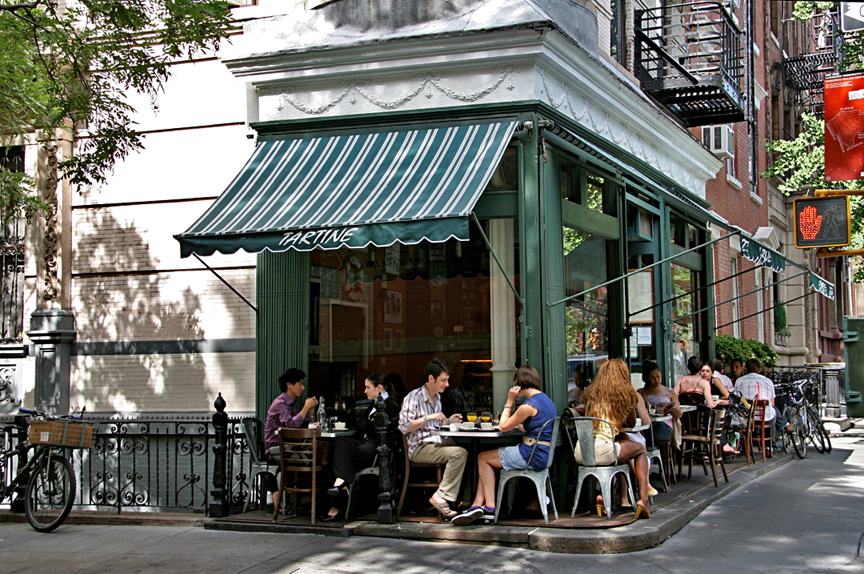
    One customer review complained of 1) a long wait, 2) a grossly small restaurant with people bumping into your chair every time they pass, 3) a rude and poorly trained staff with major attitude, and 4) a bus boy who thinks it’s okay to sweep and stack tables right beside you while you’re still eating. They take no credit cards, no reservations, have no liquor license (BYO), and yet they wait in line. Why? Many just love this place. NYC is a city of extremes, and this includes restaurant experiences and opinions. Tartine was started by Thierry Rorchard and Jean-Francois Bernard, two chefs who had worked several decades in large French restaurants.

    This wonderful small French bistro at 253 West 11th Street on the corner of 4th Street is probably in the most bucolic area of town – the West Village between 7th and 8th Avenues. I have written before of this neighborhood in 39 & 41 Commerce, Cherry Lane Theater, 17 Grove Street, and 121 Charles Street. Here, you will find the charm of being in the Latin Quarter of Paris. The stretch of West 4th Street from 7th to 8th has a number of restaurants discreetly hidden; these blocks are decidedly non-commercial, in part due to the Landmarks Preservation Commission, which has strict guidelines. I love al fresco dining, but I find most streets in Manhattan much too busy. Tree-lined West 4th street is the perfect place for a summer brunch. Be prepared to wait in line…

    Posted on by Brian Dubé


  • dinamic_sidebar 4 none

©2026 New York Daily Photo Entries (RSS) and Comments (RSS)  Raindrops Theme