• Category Archives Parks
  • Arch Rebels

    Posted on by Brian Dubé

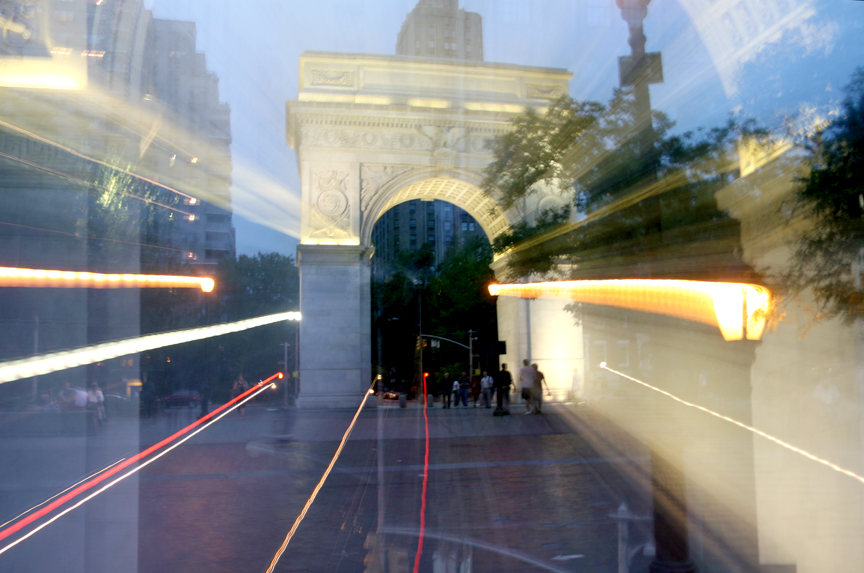
    The Washington Square Arch is one of my favorite subjects, and I have tried not to overuse it. However, I already have done at least 7 postings where all or part of the arch appears in the photo. Apart from the obvious – that it is one of just a handful of monuments in the city – it has gone through a recent restoration and is beautifully illuminated at night. This is is also the neighborhood where I live, so I see it numerous times daily. I have always been obsessed with monuments; as a child, my obsession was the Washington Monument. There is a small doorway in the west pier of the arch. Behind it is an interior stairwell there which ascends to the top, where there is a vacant chamber, and from there a trapdoor to the rooftop.

    One of the most often told stories is that of a snowy night in 1916, when artists Marcel Duchamp and John Sloan, along with 4 others (Gertrude Drick, Forrest Mann, Betty Turner, and Charles Ellis of the Provincetown Playhouse) snuck up to the top of the arch with Chinese lanterns, food, drink, balloons, and cap pistols. There, in a night of revelry, they read a declaration proclaiming the “free and independent republic of Washington Square.” They fired the toy pistols, let the balloons loose, and spent the night eating and drinking while a crowd gathered below. I have not done a posting on the arch per se because someday, somehow, in honor of those rebels, I will get inside and to the top. And when I do, there will be a proper posting and history with plenty of photos – inside, outside, staircase, chambers, rooftop with views – and you will see them here…

    More on the Washington Square Arch: Jeopardy, Nested Embraces, Cello, Singing Bowls, Evening Arch, One Fifth Avenue, Music for 9 Basses and 1 Cello
    Posted on by Brian Dubé

  • Two for One

    Posted on by Brian Dubé

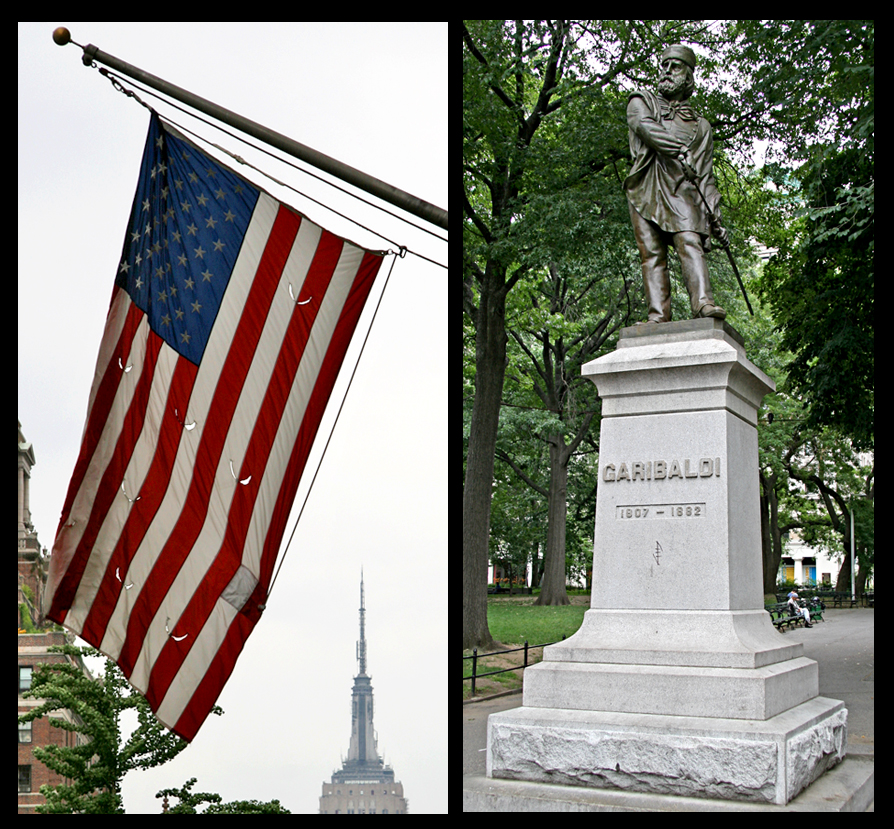
    Today is not only Independence Day but also the 200th birthday of Giuseppe Garibaldi – he was born in Nice (Nizza) on July 4, 1807. The statue shown in the photo sits in Washington Square Park. Last night, there was a celebratory concert, and today there is singing of Italian songs during the day.

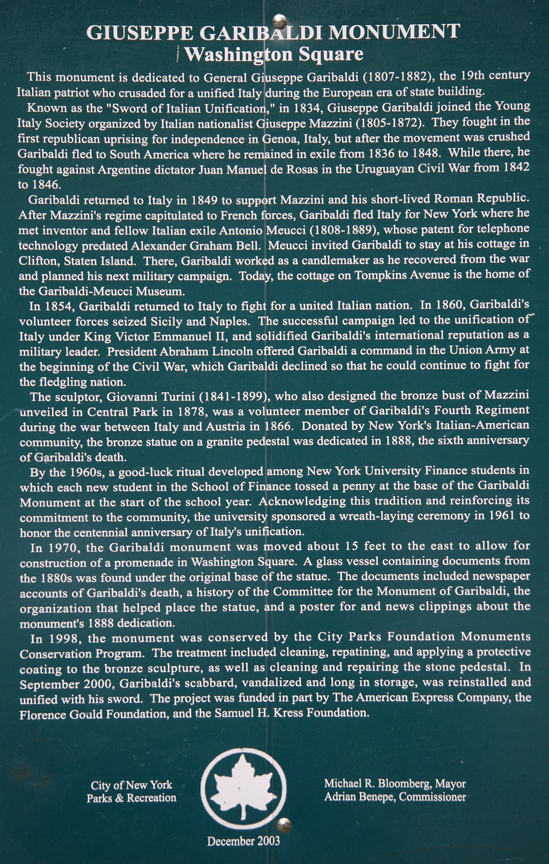
    Garibaldi was a military leader who is credited with unifying Italy. He was exiled from Italy a number of times; from 1850 to 1853, he lived in Staten Island, New York. The sculptor of the bronze statue, Giovanni Turini, was a volunteer member of Garibaldi’s Fourth Regiment. It was donated by the Italian-American community in 1888, six years after Garibaldi’s death. Click here for a photo I took of the plaque by the statue; it gives a brief bio of Garibaldi and information regarding the statue itself.

    Tonight, of course, we have the annual fireworks sponsored by Macy’s at 9:20 PM. There are many viewing areas – the prime area is the FDR Drive, which is closed to vehicles from 14th to 42nd Street. Of course, there are many other viewing areas – Roosevelt Island, Long Island City (Queens), Liberty Park, NJ, South Street Seaport, Brooklyn, and the Circle Line. And I understand that tickets are available for viewing from the Empire State Building for 150 people at $175 each…

    Posted on by Brian Dubé

  • Father Demo Square

    Posted on by Brian Dubé

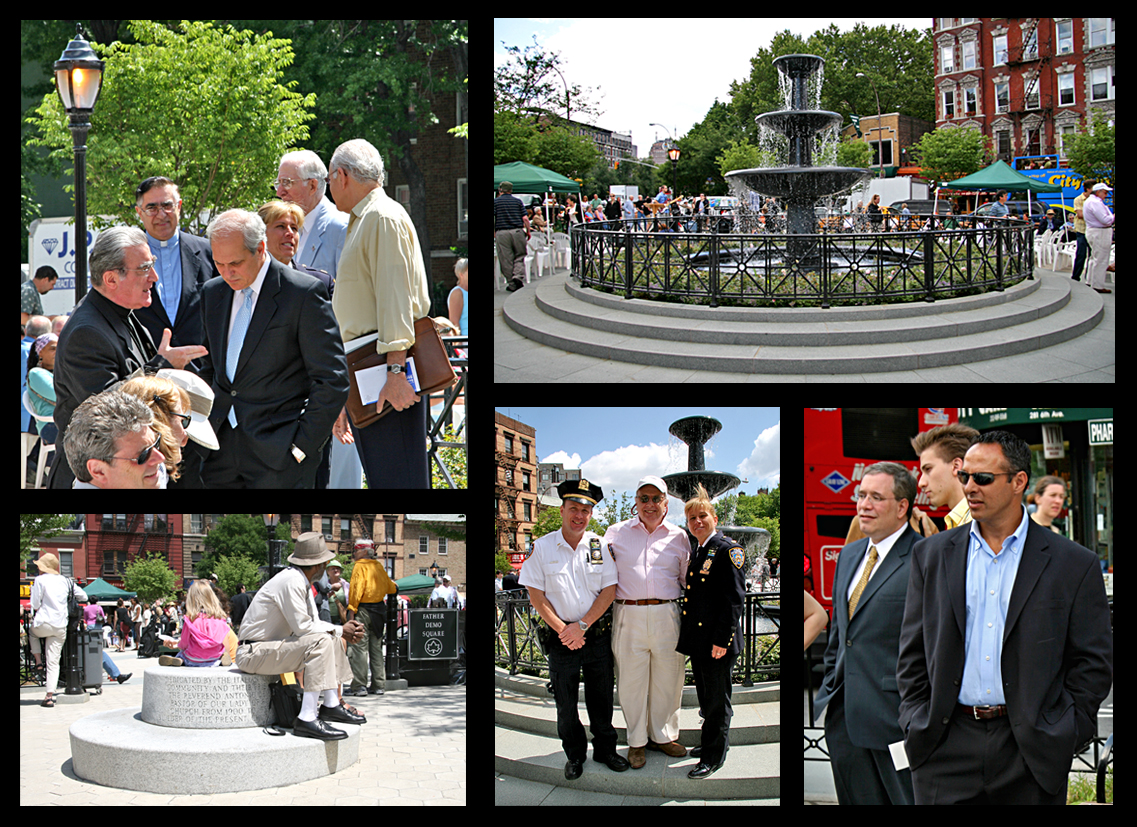
    This was the ceremony for the eagerly awaited reopening of the newly renovated “vest pocket” park at Father Demo Square. Although this park space may appear small and inconsequential, park spaces, large or small, are very important to the fabric of the city – these urban oases provide the only outdoor space most New Yorkers ever see. The park is also at a very strategic location – one of the busiest intersections in the Village. The triangular park is bounded by 6th Avenue (Avenue of the Americas), Bleecker Street, and Carmine Street. The square is named after Father Antonio Demo (1870-1936), who was pastor of the neighboring Our Lady of Pompeii Church in 1935.

    Residential buildings also flank the park. Many visitors forget that there are residents who live amidst all this, so apart from the physical deterioration and much-needed repair, one of the concerns was crowd control. Historically, people were in this park all hours; the homeless started setting up home, performers attracted enormous audiences, and noise, revelry, and fights were common. Hence the decision to include a 3-foot-high perimeter fence to the design. The renovations were overseen by the Parks Department (with George Vellonakis as the landscape architect) and David Gruber, local resident, real estate developer, and president of the Carmine Street Block Association. The renovation included decorative tiles, a new fountain, trees, and flower beds. The $1.3 million dollar project took somewhat longer than anticipated – there were additional issues involved since the park was located over the 6th Avenue subway lines.

    The ceremony, which included live music, was presided over by David Gruber. Attending were Borough Park president Scott Stringer, the pastor of neighboring Our Lady of Pompeii Church, NYPD sixth precinct commander Theresa Shortell (the sole female police precinct commander in New York), and the general contractor for the project. I also recognized a number of local community activists. For reasons unknown, the Parks Commission decided to cancel their attendance at the last minute. Word has it that they are planning an official ribbon cutting in a couple of months…

    Posted on by Brian Dubé

  • Signs of Summer

    Posted on by Brian Dubé

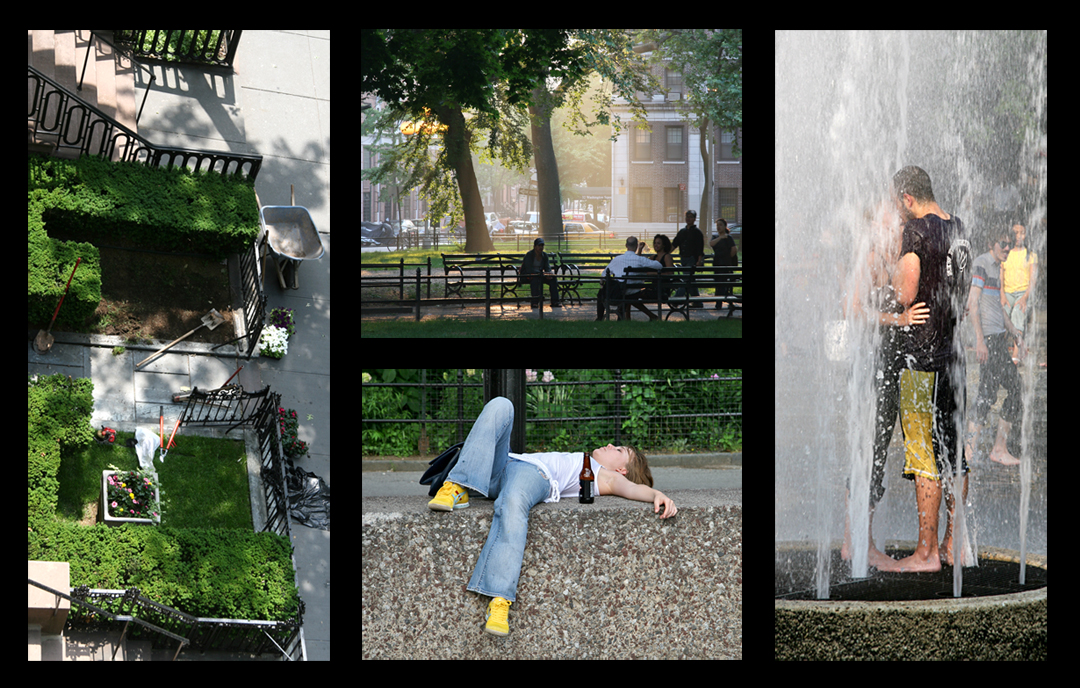
    These are signs that summer was coming, which I have witnessed over the last 2 weeks. Starting with the photo on the left, we have gardening on Washington Square North. It is surprising how much gardening goes on in NYC, much of it out of view behind buildings. In the top photo, we have a day that was a real steam bath. The humidity was so heavy, you could easily see it as this afternoon haze – it looked like the deep South. At the far right, we have two lovebirds in a PDA, but this time in the fountain (click here for last summer’s frolic in the fountain). Kind of fun if you don’t mind getting your clothes soaking wet. At the bottom, we have a young woman sleeping – she was out cold. But not inebriated (the beverage was soda, not beer).

    Today is the solstice and first day of summer in the Northern Hemisphere (and the first day of winter in the Southern Hemisphere). This is the day where the sun is furthest north, or at highest point in the sky, and takes the most time to cross the sky. This means it’s the longest day of the year. The days actually start getting shorter from here, so please enjoy your summer…

    Posted on by Brian Dubé

  • Feeding at the Zoo

    Posted on by Brian Dubé

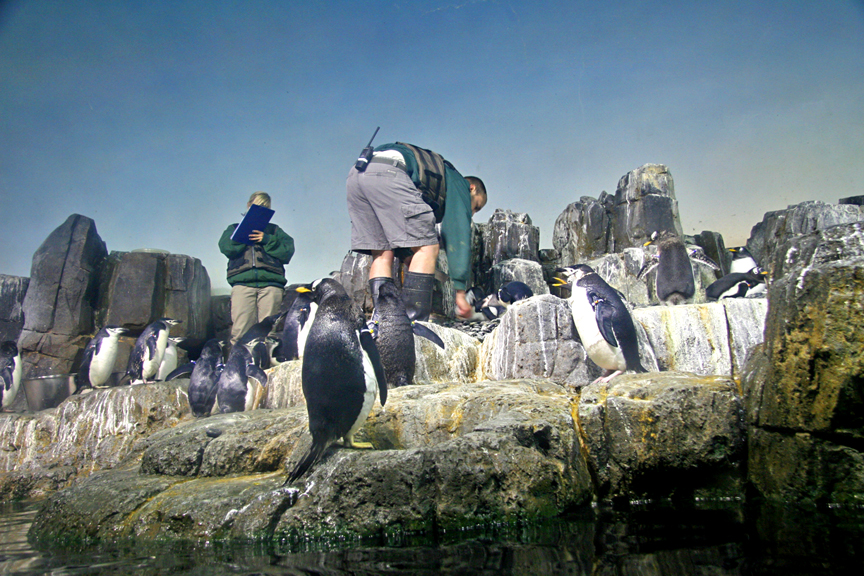
    This is feeding time for the penguins at the Central Park Zoo. The public seems to be endlessly fascinated with penguins – their upright walk, lack of fear of humans, and tuxedo-like plumage has endeared them to the public worldwide. They have become a virtual mascot of cuteness. Wikipedia even has a separate entry, “Penguins in popular culture.”

    The penguin and puffin house is one of a handful of habitats in the Central Park Zoo, one of the oldest in the United States, which originated in 1864 as the Central Park Menagerie. In more recent times, the trend has been to move away from the older menagerie style of zoo, where animals are caged for collection, exhibition, and entertainment purposes. By the 1980s, the Central Park Zoo was in very poor shape; a 1981 New York Times opinion called for closing of the zoo (Let’s Do Away with Central Park Zoo by Alice Herrington). In 1983, the zoo closed for complete renovation and reopened in 1988.

    The new design, which was applauded, featured more natural habitats – the trend in North American and European zoos. The focus is now more on conservation of endangered species, research, and education, and secondarily for entertainment of visitors. Of course, these natural habitats are still quite limited in size; the Central Park Zoo is small and does not permit the type of environments seen in places like the Bronx, Philadelphia, or San Diego zoos. But it is a dramatic improvement – I had the unfortunate privilege to see the zoo in its former incarnation. Fortunately, my memories of it are quite indistinct…

    Posted on by Brian Dubé

  • Aspiration

    Posted on by Brian Dubé

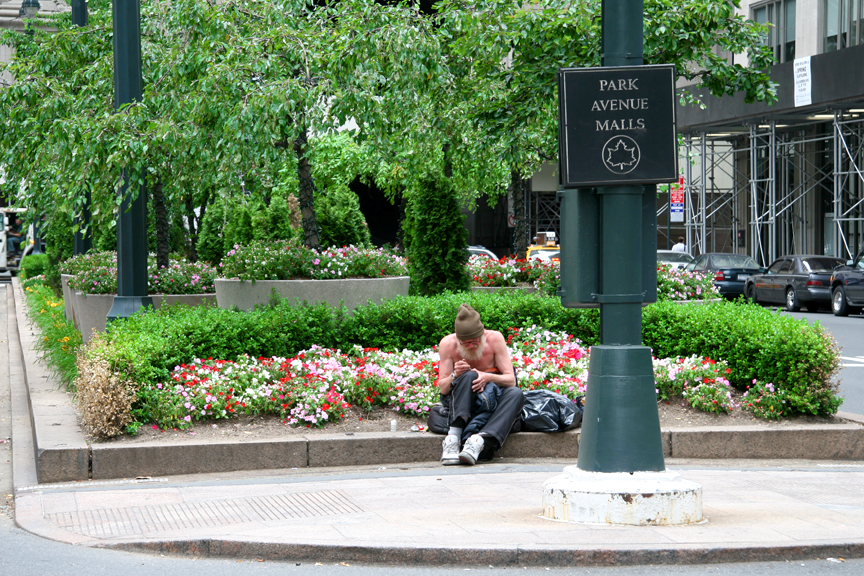
    Here, we have the Park Avenue Malls, a central 2.5 mile-long median (broken by cross streets) extending from 46th Street (at the Helmsley Building, 230 Park Avenue) to 96th Street, where the Metro-North railroad tracks surface to run above ground (they run under Park Avenue from Grand Central to 96th Street). The Fund for Park Avenue, a private organization, is responsible for the plantings and maintenance of the Park Avenue Malls. In the spring, tulips are planted – these flower along with the cherry trees. In the summer, when the tulips have faded, wax begonias are planted. According to Margaret Ternes, chairman of the Fund for Park Avenue, wax begonias are chosen for their hardiness. Their waxy leaves retard pollution, and begonias can stand the hot sun – they do not require the type of watering many flowers do, such as impatiens (there is no automatic watering system for the Malls).

    I was surprised to see a homeless person on the Mall, a rather uncommon and unexpected occurrence. More surprising was to see him cleaning his nails. Many aspire to live on the highly coveted Park Avenue. Some find unconventional ways of getting there, like Joe Ades, gentleman peeler. But there are necessary conditions for living here, such as wealth and many personal habits which would be highly recommended if one were to associate with high society. I would guess that good grooming is one of them…

    Posted on by Brian Dubé

  • Sheridan

    Posted on by Brian Dubé

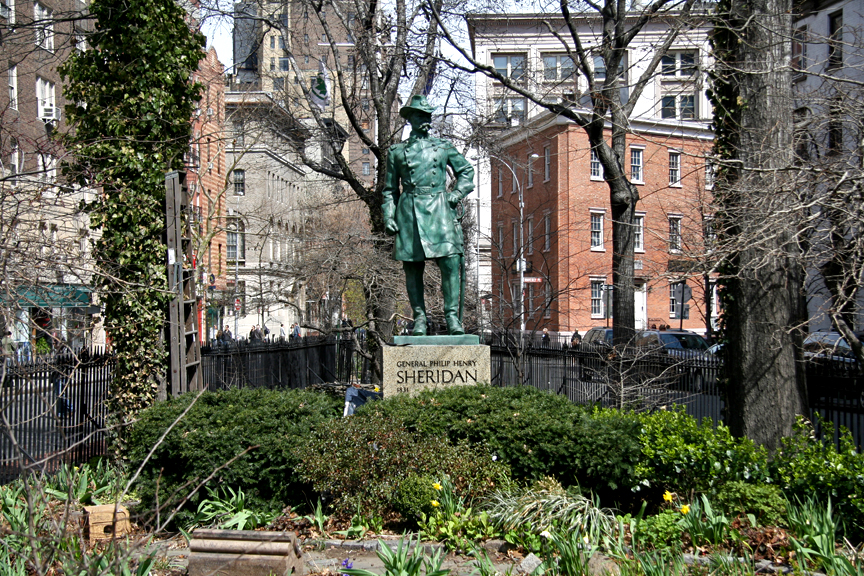
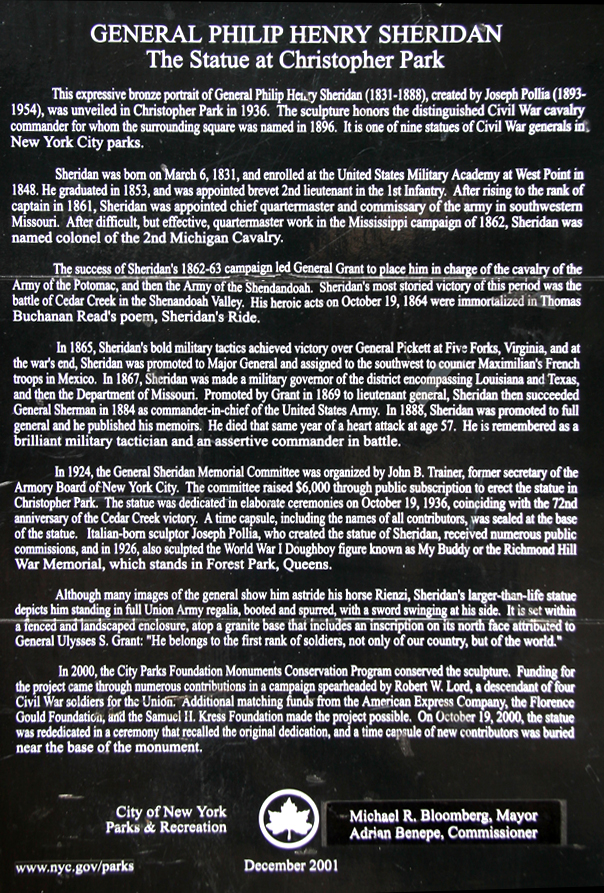
    I am not a Civil War or military buff, but I have been going by this statue of General Philip Henry Sheridan (1831-1888) and the park it is in for decades, and I should really know more about him. This man, who rose from near obscurity to the highest rank in the military (Major General) very quickly, is a controversial figure, especially when viewed from our own time. A Civil War cavalry commander, Sheridan graduated from West Point and went on to a myriad of military achievements – Cedar Creek in Shenandoah, Appomattox, etc.

    In my readings for this post this morning, I found it very interesting to compare writings about him with information on the plaque in the park (click here). A quote from General Ulysses S. Grant appears on the pedestal: “He belongs to the first rank of soldiers, not only of our country, but of the world.” Grant ranked him with Napoleon and Frederick the Great. The plaque describes him as a “brilliant military tactician.”

    However, he has also been described as a brutal, violent, and very prejudiced man. After the Civil War, Sheridan became commander of the Army of the West and led the campaign against the Indians of the Great Plains, seen by some as near-genocidal and thereby tainting Sheridan’s reputation. The pejorative “The only good Indian is a dead Indian” is a common variant on a quote attributed to Sheridan during his encounter with Comanche Chief Tosawi during the Indian Wars in 1869. “Me Toch-a-way, me good Indian.” Sheridan reportedly smirked and replied, “The only good Indians I ever saw were dead.” The bronze statue was created by Italian Sculptor Joseph Pollia in 1936.

    Note: This statue is actually in Christopher Park, often mistaken for Sheridan Square, which is around the corner, previously a traffic island which was converted into a beautiful viewing garden in 1982. It is interesting to note that Sheridan was only 5 feet 5 inches tall. Abraham Lincoln once described him as “a brown, chunky little chap, with a long body, short legs, not enough neck to hang him, and such long arms that if his ankles itch he can scratch them without stooping.”

    Posted on by Brian Dubé

  • West Side Community Garden

    Posted on by Brian Dubé

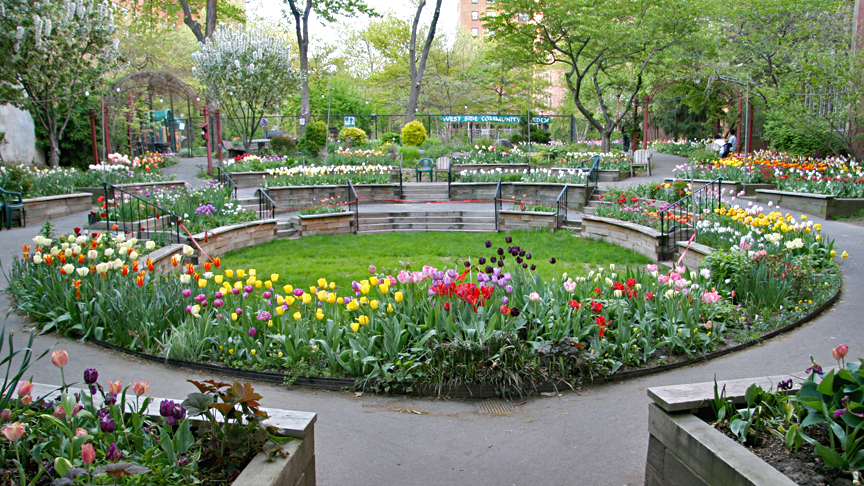
    This is the West Side Community Garden, which spans between 89th and 90th Streets between Amsterdam and Columbus Avenues on the Upper West Side of Manhattan and is one of the largest public gardens in the city. Click here for more photos. These blocks are home to an array of institutions: Ballet Hispanico, Stephen Gaynor School, Claremont Riding Stables (recently closed), and St. Gregory the Great School.

    During the 1970s, half the block facing Columbus Avenue was razed for new buildings. Inadequate funds led to an abandoned plot. By the time real estate developers were ready to build, the space had been transformed into a garden by local residents (many community gardens in the city have started this way). The community was aided in saving this space by Community Board 7, the Trust for Public Land, private fundraising, and developer Jerome Kretchmer, who included the garden in his development plan. “How could a green open space not be a good amenity?” Kretchmer asks. “I get my money’s worth a hundred times a year.”

    The garden officially opened to the public in 1988. There is a vegetable garden area with over 100 individual, private plots where vegetables can be grown and harvested. As would be expected for such a privilege in the city, there is a waiting list for vacant plots. Of course, the primary focus is flowers; each spring, the garden is home to over 300 varieties of tulips, daffodils, hyacinths, and roses. Students of St. Gregory the Great School are responsible for the planting and maintaining of two plots. Gardens and parks are not only beautiful in their own rights but also in juxtaposition to urban structures, providing necessary respite and sanctuary…

    Posted on by Brian Dubé

  • Jeopardy

    Posted on by Brian Dubé

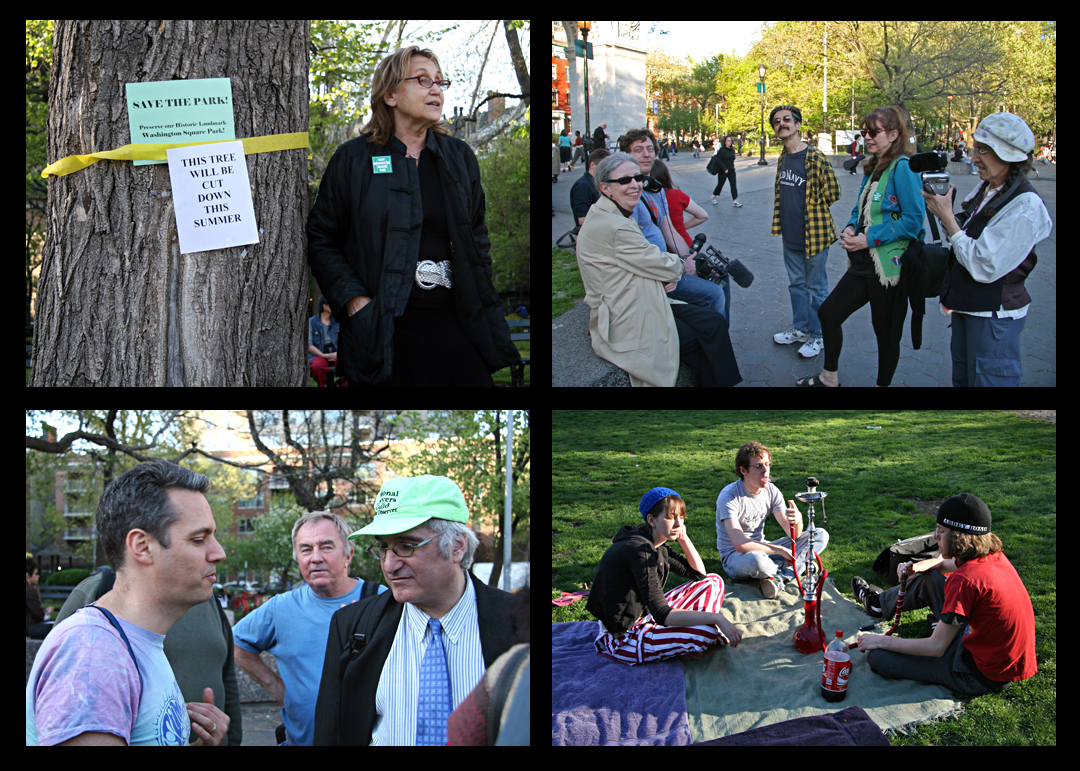
    One of the biggest local disputes is over redesign versus renovation plans for Washington Square Park. Everyone agrees on one thing: that the park is in serious disrepair and this process has delayed much-needed work. Organizations have been formed, such as OpenWSP and Preserve Washington Square Park (now closed). Lawsuits have been mounted (Kupferman, Greenberg, Harris) in opposition to a plan for what is alleged to be a fairly major wholesale redesign (by landscape architect George Vellonakis) which calls for a perimeter fence, some tree cutting, a realignment of the fountain, and a reduction and leveling of the plaza area. There are those, however, who favor the redesign, seeing the current design as not being of historical significance or necessarily optimal. Of course, the Village has been a magnet and breeding ground for political activism for eons, with battles such as Jane Jacobs vs. Robert Moses, so this debacle should come as no surprise. Space does not permit fair coverage here of the issues involved. Here’s one thread of postings which will give you a flavor of the debate.

    The whole affair has become very politicized and has started to take on a life of its own. One factor in the equation is the fear of change and the unknown. Many regulars love the park, with its planned and unplanned activities, social networking, and overall culture – one can find chess, music, scrabble, street performers, petanque, concerts, debates, artists, political demonstrations, festivals, filming, dog runs, and relaxing all in 9.75 acres. The photos are from yesterday’s “Be-In” organized by Jonathan Greenberg. My biggest fear is the timetable for whatever is decided. Two years have been projected, but the memorial arch in the park saw a chain link fence around it for 14 years (due to lack of funds) before restoration was completed. A similar fate for the park would leave visitors and locals without use of one of the world’s premier playgrounds…

    Posted on by Brian Dubé

  • Sakura

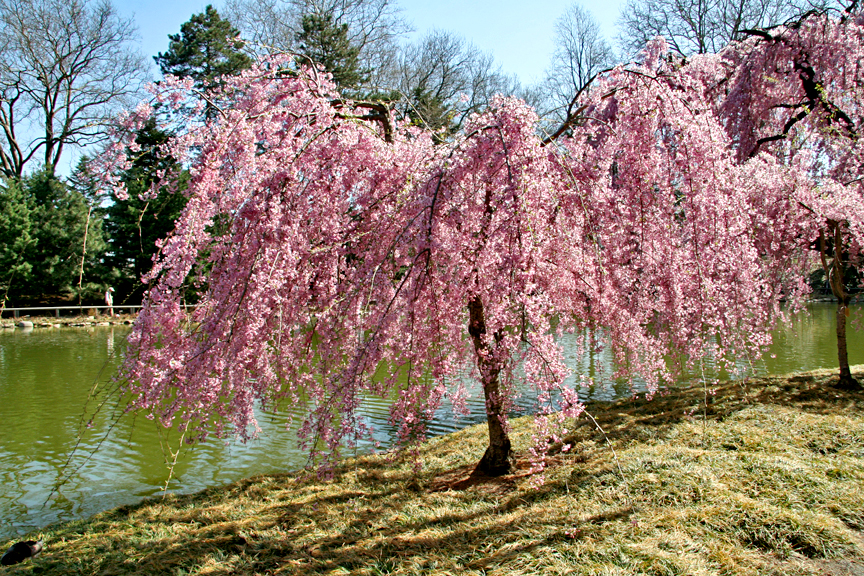
    One of the most beautiful phenomena in nature is the flowering of cherry trees in the spring. I remember one of my first family trips to Washington, D.C. to see the Cherry Blossom Festival and the display around the tidal basin. However, one does not have to travel that far – the Brooklyn Botanic Garden has their own display and festival (considered one of the world’s finest displays outside of Japan). Trees can be found at the Cherry Walk and Esplanade and in the Japanese Hill and Pond Garden.

    There are two cherry tree events going on: Hanami and Sakura Matsuri. Hanami (April 7 – May 6) is “the Japanese cultural tradition of viewing and cherishing each moment of the cherry blossom season—from the first buds to the brilliant blossoms to the petals falling like pink snow.” Sakura Matsuri is the Cherry Blossom Festival, which will be held this coming weekend (Saturday, April 28, and Sunday, April 29, 10 a.m.–6 p.m). There are over 200 trees in bloom with over 60 Japanese cultural events and performances over the entire weekend: pop concerts (happyfunsmile, ZAN, & hip-hop artist Akim Funk Buddha), a taiko drum concert, history of geisha, traditional music and dance, ice sculpture, ikebana, origami, kirigami, samari sword, bonsai, Go, tea ceremonies, craft demonstrations, and workshops. I highly recommend it – I think I may go again for the Festival…


  • Nor’easter

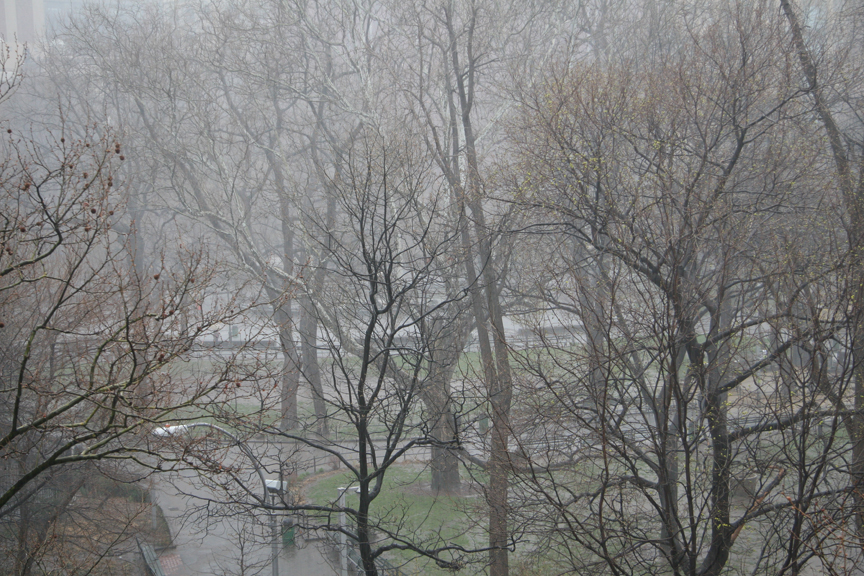
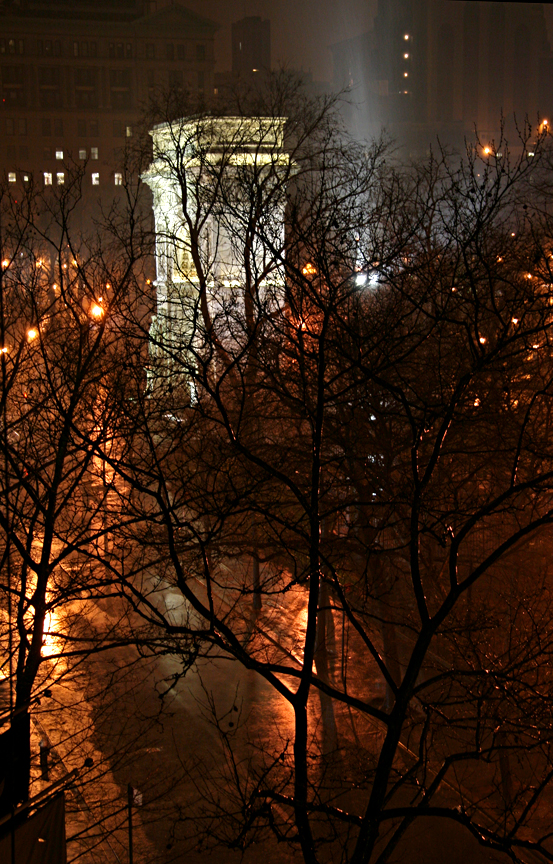
    Until recently, we have had a very sunny early spring, albeit colder than usual. However, this is the northeast, and in its typically unpredictable way, spring has now brought us rain in the form of a nor’easter, with brisk winds, flooding, transportation delays, power outages, leaking roofs, snapping trees, and other havoc. Some areas in upstate NY and northern New England with colder climates are experiencing snow storms. The photo was taken of Washington Square Park (click here for night shot).

    A nor’easter (contraction for northeaster) gets its name from its strong north east winds blowing in from the ocean, causing high seas and coastal damage. The coast of Massachusetts along with Cape Cod and Nantucket have historically been particularly brutalized by nor’easters. Tragically, today is the Boston Marathon, and apparently they are still running…


  • The Copper Cowboy

    Posted on by Brian Dubé

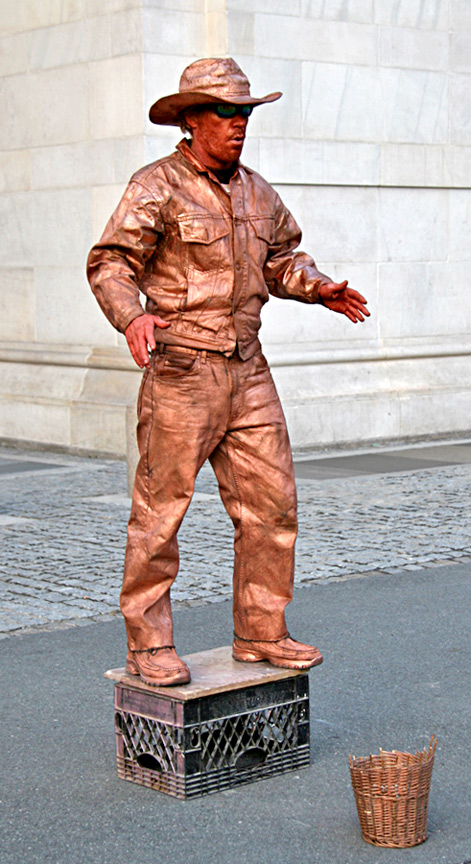
    The copper cowboy is one of the many living statue performers who can be seen around NYC. Actually, living statues are now a worldwide phenomenon, with annual competitions in Arnhem (Netherlands), Laguna Beach, CA, and Portugal. I have generally seen this as an exercise in stamina and masochism (with all that body paint and hot summer days) but not particularly creative or interesting – most performers get attention primarily from the novelty factor to the uninitiated. However, after looking at various sites online, there are some ambitious attempts.

    Like many of the living statues, the copper cowboy concept has been done by more than one individual – online searches for “copper cowboy” leads most often to Jon Mitchell of Hawaii. I imagine the concept was inspired by the copper/cowboy connection of the old West. There was a lot of memorabilia created using copper – cowboy hats, boots, etc. Most of the living statue performers remain motionless for hours at a time, with a container placed in front for donations. Some become animated from time to time, with mime routines. The copper cowboy in the photo made occasional sounds using a concealed mouth whistle accompanied by various short body movements…

    Posted on by Brian Dubé

  • Union Square

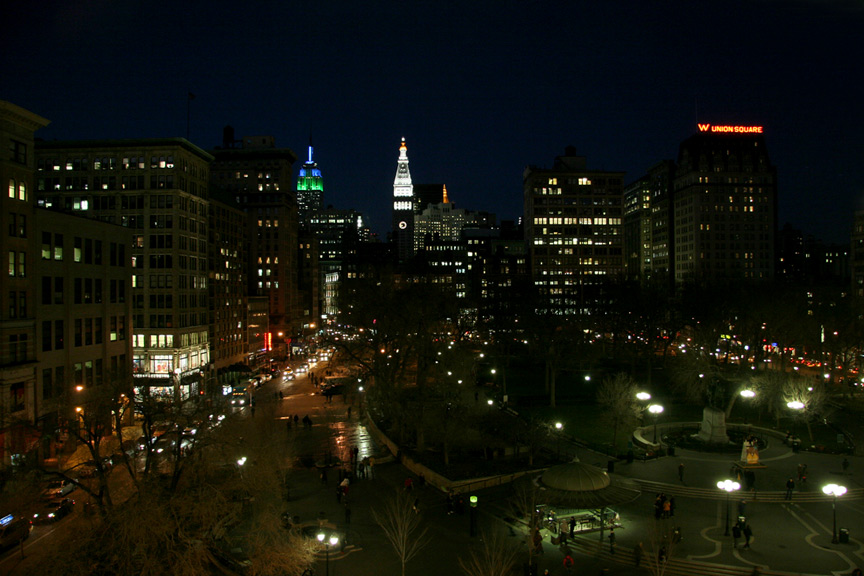
    This is Union Square at night from 14th Street looking north. Union Square is the nexus of Broadway, Park Avenue South, 4th Avenue, 14th & 17th Streets, University Place, and Union Square East and West, with Union Square Park as its centerpiece. It is a major subway station with 8 train lines (note the pagoda entrance bottom center).

    Union Square is its own neighborhood/district, with a breadth and depth of services that are hard to match. On the photo left, we have Union Square West, where you find various retailers and several notable restaurants such as Republic, the Coffee Shop, Blue Water Grill, and the Union Square Cafe (16th Street). The open area also on the left is the home of the famed Union Square Greenmarket, which operates three days a week.
    On the north side (photo top), there is the city’s largest Barnes and Noble superstore (occupying the entire 6-story, restored, former Century Building) and the W Hotel at Union Square. In the Park itself, we have the restaurant Luna Park, the Gandhi statue, dog runs, and playgrounds Just out of the frame on the far right is the first big development on the Square – Zeckendorf Towers.
    On the south side, from where the photo was taken, there is the Virgin Atlantic Megastore, Filene’s, a new behemoth Whole Foods market, and the public artpiece Metronome.

    A myriad of other retailers, services, and street vendors (such as Joe Ades) dot the perimeter of the park and the sidestreets. Check out the links throughout this posting to several of my posts on Union Square…


  • Winter Prospect

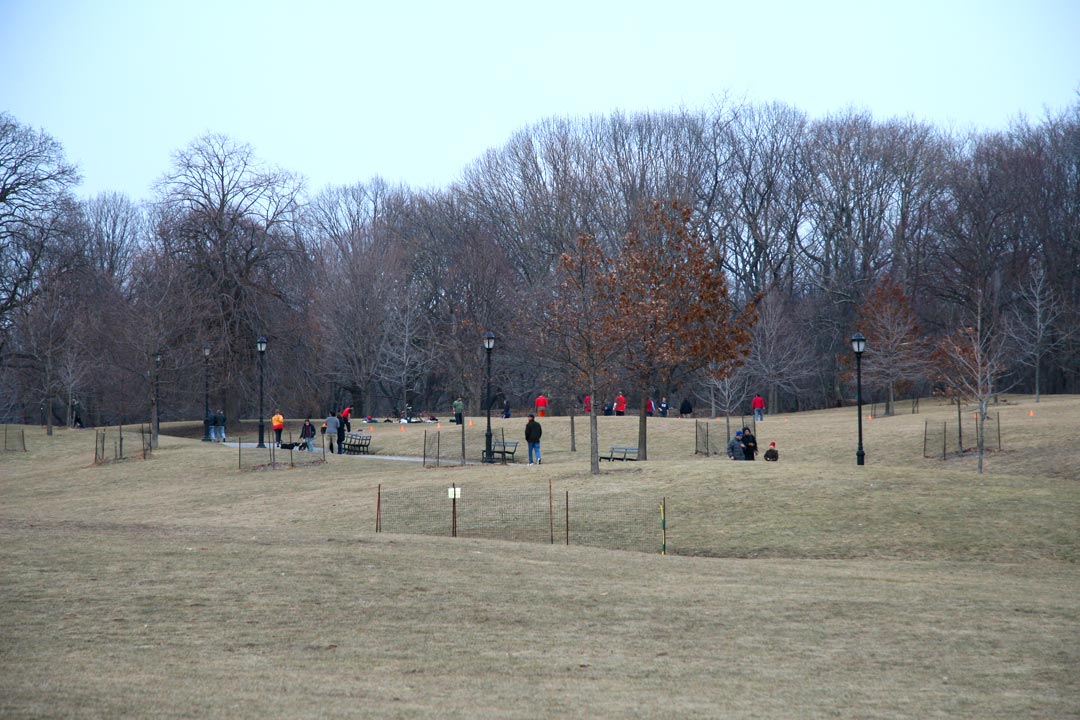
    This is a view of Sullivan Hill from the Long Meadow in Prospect Park (click here for second photo of Lower Pool). The park, a 526-acre urban oasis located in the heart of Brooklyn, was designed by famed landscape architects Frederick Law Olmsted and Calvert Vaux, who also designed Central Park. This park and its Central Park kin are much more than just green oases – they have innumerable specialized environments and activities.

    Prospect Park features the 90-acre Long Meadow, the 60-acre Lake, the Nethermead, an Audubon Center, the Prospect Park Zoo, playgrounds, Children’s Corner, the Carousel, Lefferts Historic House, Concert Grove, the bandshell (home of Celebrate Brooklyn! Performing Arts Festival), Dog Beach, and ponds. Areas have been dedicated for baseball and other ball sports, tennis, ice skating, fishing, boating, horseback riding, and barbecuing. One can bike, run, or skate on its drives, which are closed to vehicles (except during rush hours).

    Here we have Brooklyn’s only forest, with walking trails, streams, waterfalls, and the Ravine. It also hosts many activities and events (click here for the official website and for a free download of a color map). Prospect Park is a world unto itself, heavily used yet large enough to easily absorb all its visitors on a busy day. For NYC residents, parks are very important – they function as essentially the only real green outdoor spaces apart from leaving the city itself. The streets and parks are our backyards…


  • First Snow

    It’s true – today we get our first snow for the winter in NYC. Click here for more photos of Washington Square with this morning’s new fallen snow. For quite some time, we have been deluded into believing we would never see winter again – that El Nino, along with global warming as a contributing factor, was turning New York into a subtropical zone. After all, two weeks ago, we were sitting in parks with T-shirts in 72-degree weather.

    2006 has been the warmest year ever recorded in USA history. And NYC broke a 129-year record for the latest date for the first snowfall. Places outside the US, such as Sweden and Russia, have not yet seen snow. But as I write this in the early morning, the snow has already stopped and the sun is shining – spring is just around the corner…


  • dinamic_sidebar 4 none

©2026 New York Daily Photo Entries (RSS) and Comments (RSS)  Raindrops Theme