• Category Archives Stores
  • Shrine to Beef

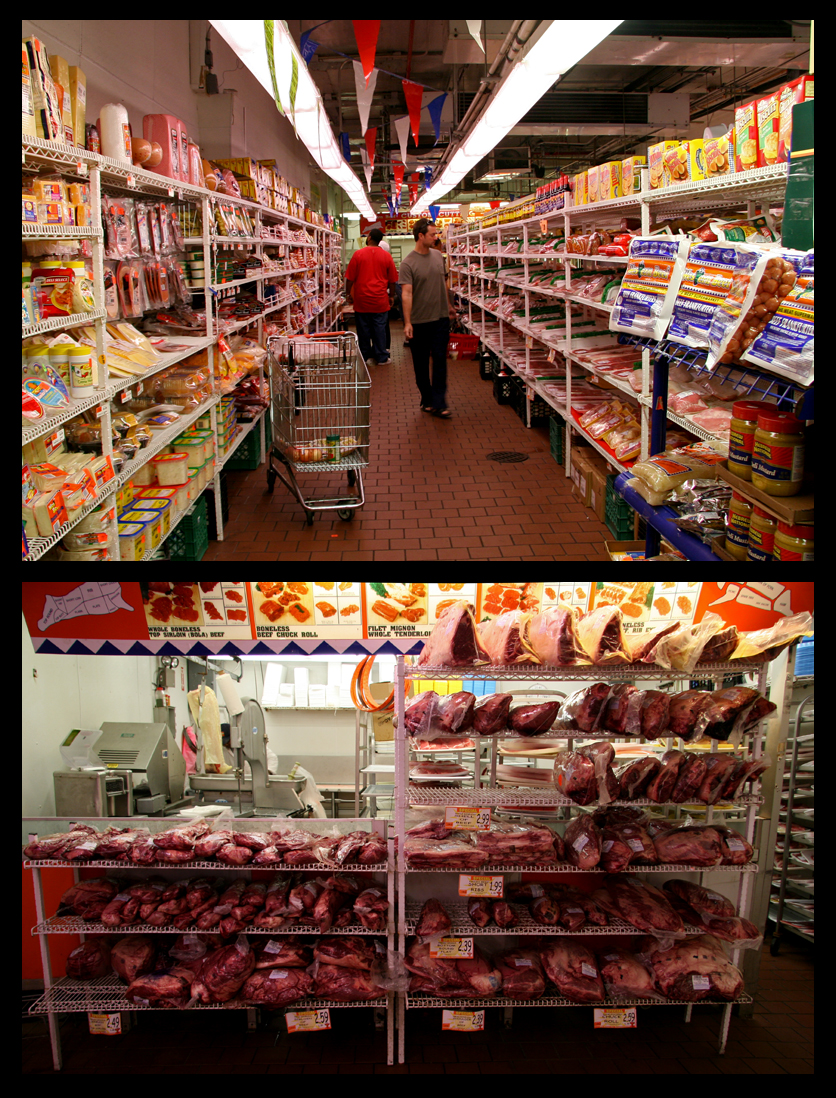
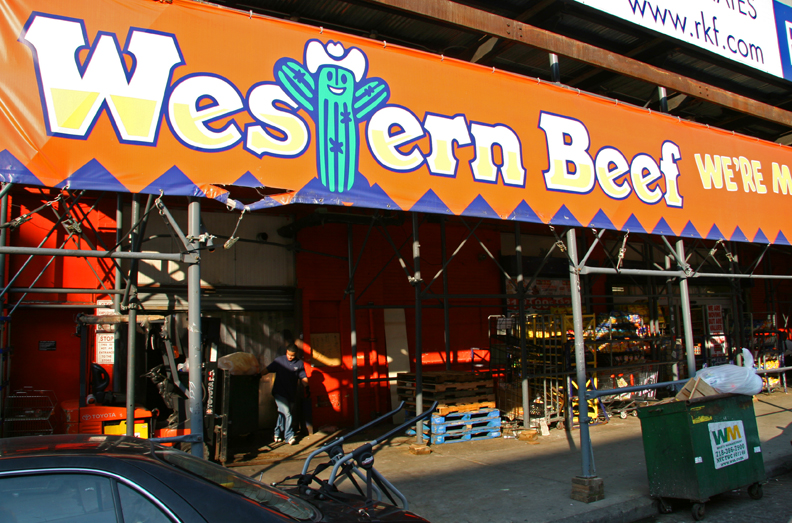
    In reviewing my photo archives, I came across a series of images that astounds me now as much as the day I took them. Why astounded? Because in Manhattan, the last thing I ever imagined was a place that, for all intents and purposes, looks like a shrine to beef (see photos inside here). Even the outdoor signage and name seemed like it belonged in Texas or Michigan. I never posted the photos because at the time I found them too rough and was looking to a future opportunity to photograph the store in a more flattering light. In retrospect, a silly consideration – after all, this is the reality of the place and its environment. It would be difficult to photograph this place in a way that exudes bucolic charm or is more polished.

    Perhaps I have lived too insular an existence, but New York City, particularly Manhattan, always seemed to be a city of fruits, vegetables, whole grains, and fish. Of course I know that meat is eaten here – virtually every menu in the city has meat. But a store like this seems so out of place. We do have a gun shop and shooting ranges like that in the private club Tiro A Segno, but this is not the place where many mingle with members of the National Rifle Association.

    Western Beef has 21 stores in the five boroughs. This place sells all types of meat along with many other grocery items. Since the time this photo was taken (2006), the store has moved from 403a West 14th Street in the meat packing district, shown in the photo, to 16th Street. According to their website, “Western Beef, Inc. establishes supermarkets primarily in inner-city neighborhoods abandoned by many other supermarket chains.” This was certainly true of the area at one time – on a stroll through the meatpacking district, one would see trucks, sides of beef hanging from hooks, entrails being packed into drums, and prostitutes at night. The area was defined by beef at every business level – wholesalers, distributors, retailers, and restaurants such as Old Homestead.

    However, now the area is très chic, with fashion boutiques, hotels, the Diane von Furstenberg complex, and a new Apple Store. As the meat packing district becomes completely gentrified, we should consider opening a museum to preserve the history of the area, perhaps calling it Shrine to Beef 🙂

    Related Posts: Meatup, Old Homestead, Pastis

  • Hunt’s Point

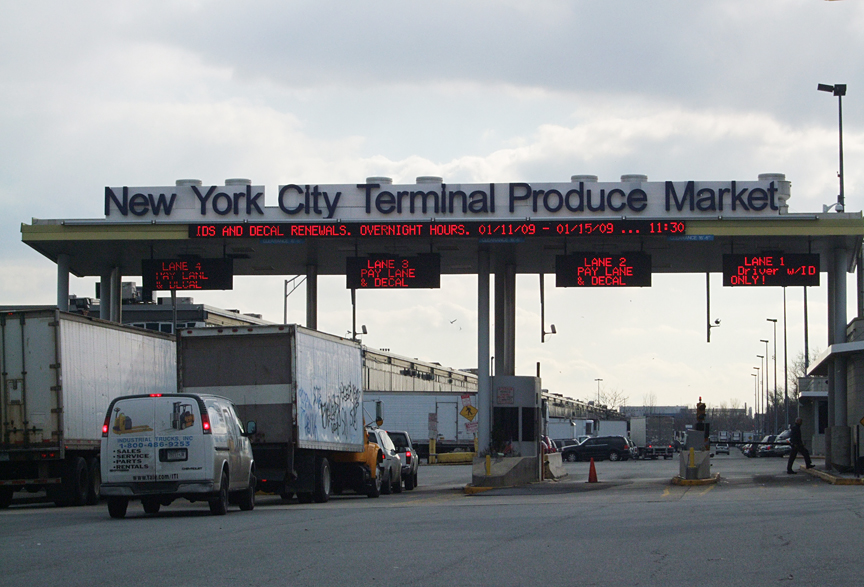
    Do you want to see food distribution on a gargantuan scale? I had no idea that the Hunt’s Point markets in the Bronx were that big. What I envisioned was a large building with open stalls. What I saw was something the size of a small town.

    Hunt’s Point is the largest food distribution center in the world. It occupies 329 acres and is broken up into three primary large distribution centers, each handling different commodities: New York City Terminal Market (fruits and vegetables), Hunts Point Cooperative Market (meat and poultry), and the New Fulton Fish Market.

    I expected to visit an open produce market brimming with fruits, vegetables, and merchants frenetically shopping and trading. Instead, I was greeted with an entrance like that of the Holland Tunnel. No fruits or vegetables were to be seen. I saw chain link fences and many grim and amazing sights – I will feature a few of these in the coming days.

    I was a little naive, perhaps – after all, this is BIG business, not a place to expect the charm and ambiance of a farmers market. For that, you go to Union Square

    A Note about Hunt’s Point: These markets and other smaller ones occupy a large portion of a peninsula in the Bronx neighborhood known as Hunt’s Point. There are over 800 businesses employing 25,000 workers. Hunt’s Point is also a residential area with over 40,000 residents. However, it is a low-income area where over half live below the poverty line – this is one of the poorest districts in the United States. Crime is rampant, with drugs and prostitution. Although crime rates have fallen, Hunt’s Point reports the highest violent crime rate in New York City.

    Related Post: Union Square


  • Mania

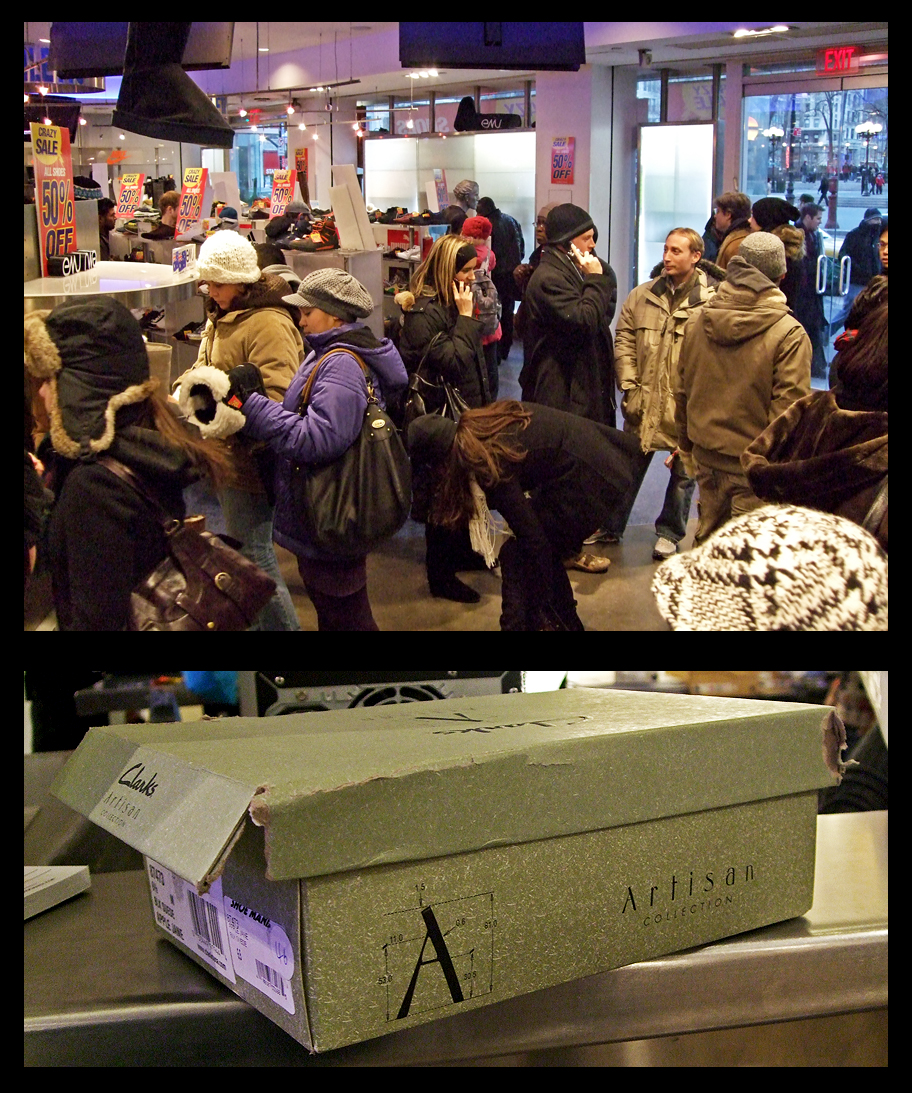
    Perhaps you’ve wondered what it feels like to actually shoot yourself in the foot. Would you like to find out without undergoing any actual physical injury? Then take a trip to Shoemania. Better yet, go on New Year’s Day, when half of America is at home sleeping or watching TV and the other half is desperate for something to do. And what do most desperate Americans do? Go shopping – shop ’til you drop and other colloquialisms summarize the recreational desires of many.

    Shoemania is on 14th street / Union Square, one of the busiest areas in the entire city. They were open on New Year’s Day with a 50% off everything sale. I don’t know if there was any monkey business with pricing prior to the sale or whether these were all discontinued models, but brands that never go on sale were at 50% off: Bruno Magli, Arche, Mephisto, Merrell, Clark’s, et al.

    So now you have the formula for true mania: 14th Street/Union Square, a workday off for most, people getting cabin fever, too cold to do anything outdoors, nothing much open except retail stores (and most of them closed), a prominent location at 14th Street and Broadway with frontage and entrances on both streets, and a post-holiday 50% sale with an inventory of most major shoe brands.
    Shoemania is the type of store that is quintessential New York style and delivers on all the negative stereotypes people have of New York and more. I found brusk service, overcrowdedness, sample shoes strewn everywhere in complete disarray, inadequate seating to try shoes, salesmen barking requests to the back room in their wireless headsets, and, after a selection is brought out from the stock room, customers and salesmen trying to find each other like lovers separated after a world war.

    The cashier is truly an ice princess and must be a finalist on Make Me Laugh. She truly had no sense of humor and was unflinching with any attempts to melt her. A customer before me who had a problem was dealt with the unfeeling efficiency of a seasoned executioner.
    On the positive side, they do have a broad selection, good pricing, and little sales pressure – it is just too chaotic to effectively wage a war of sales terror.

    And the pièce de résistance? Our selection was brought to us in a box with a cover that was destroyed and literally over 1 inch longer than the box itself. The salesman did apologize and say that it was the best he could do. But amidst all the mania, we did procure a nice pair of black suede women’s pumps made by Clarks for $49. Not bad at all…


  • Christmas 2008

    Today’s photo is a collage of some of the Christmas postings I have done since 2006. There are many; the links are provided below if you would like to see the original postings.

    Merry Christmas and Happy Holidays to all! Thanks for your support 🙂

    Christmas Postings: Tiffany’s Windows, Saks Windows, Christmas Spirit, Winter Wonderland, Dyker Lights, National Tree, Nested Embraces, Comfort and Joy. Surly Santas, Santa, Just Like Everyone Else


  • McNulty’s

    People love to complain, and a popular object is the demise of single-location businesses and the domination of retail chain stores. Americans, however, love a deal, and few can resist the lure of a huge selection and deep discounts. Even those most adamantly opposed to the retailing giants will, at times, find themselves at places like Home Depot for AA batteries or perhaps KMart for beach accouterments.

    The weaknesses in these places are staff knowledge and quality of goods. To enter a mom-and-pop, family-run specialty shop usually means cutting to the chase – learning what’s available, qualitative differences in products, and every other nuance. And in the case of smaller operations, all of this can be done quickly. I frequent many of these stores, smaller and larger, and have blogged several: Space Surplus Metals (now gone), Joe’s Dairy, Myers of Keswick, Murray’s Cheese, Raffetto’s, Pearl Paint, Faerman Cash Register, Eileen’s Cheesecake, Economy Candy, Canal Rubber, B & H Photo Video, Kate’s Paperie, Bleecker Bob’s, Strand Bookstore, Met Lumber, and Matt Umanov Guitars. Many other places, veritable NYC institutions, have closed, like Industrial Plastics on Canal Street.

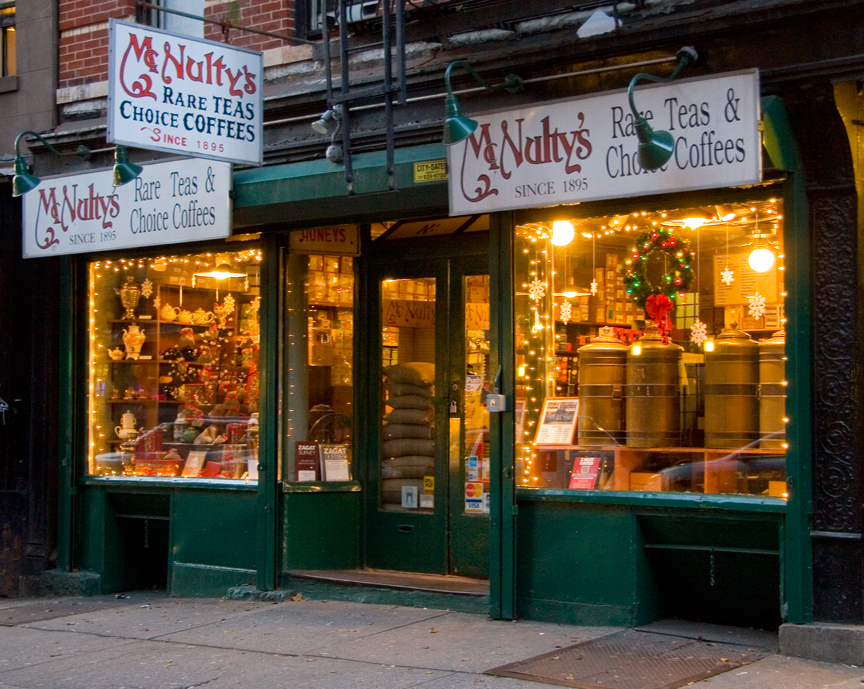
    Most chains whose primary strength is price create an illusion of good service and competency with buzz words which, I am sure, come down from the corporate headquarters. Phrases like “Did I give you excellent service today?” which is really more of an irritant, adding insult to injury. Why tell them the truth when they don’t really have the capability of giving you excellent service? How can young workers compete with people who have owned businesses for decades or even half a century? There are upscale retail chains like Starbuck’s and Whole Foods, but the size of their operations still makes it impossible to have the type of staffing you find in a smaller independent retailer, like McNulty’s Tea and Coffee. In fact, I just called with a coffee question while writing this – the owner answered and gave me an immediate, detailed, informed answer.

    I am not a coffee drinker, so my knowledge of McNulty’s is from browsing and buying for others. This place has that stamp of authenticity – you can feel it when you walk in – a place for serious coffee buyers managed by serious coffee merchants. McNulty’s, established in 1895, is located at 109 Christopher Street in the West Village and is run buy David Wong, the 7th owner of the shop. There are over 100 teas and 75 kinds of coffee from around the world, as well as, of course, many things you won’t find elsewhere – that’s why we live here and why others visit. Let’s hope for survival of the independents and coexistence with the chain stores…


  • Fifth Avenue

    Some things are so monumental and important that they live in a world of assumption. I have written of many things located on Fifth Avenue, but never specifically on the street itself.

    Fifth Avenue is the literal and visceral center of the city. To say Fifth Avenue, whether to someone in New York or not, is to connote all things luxurious – the quintessential urban thoroughfare and, by many accounts, the most expensive real estate in the world.

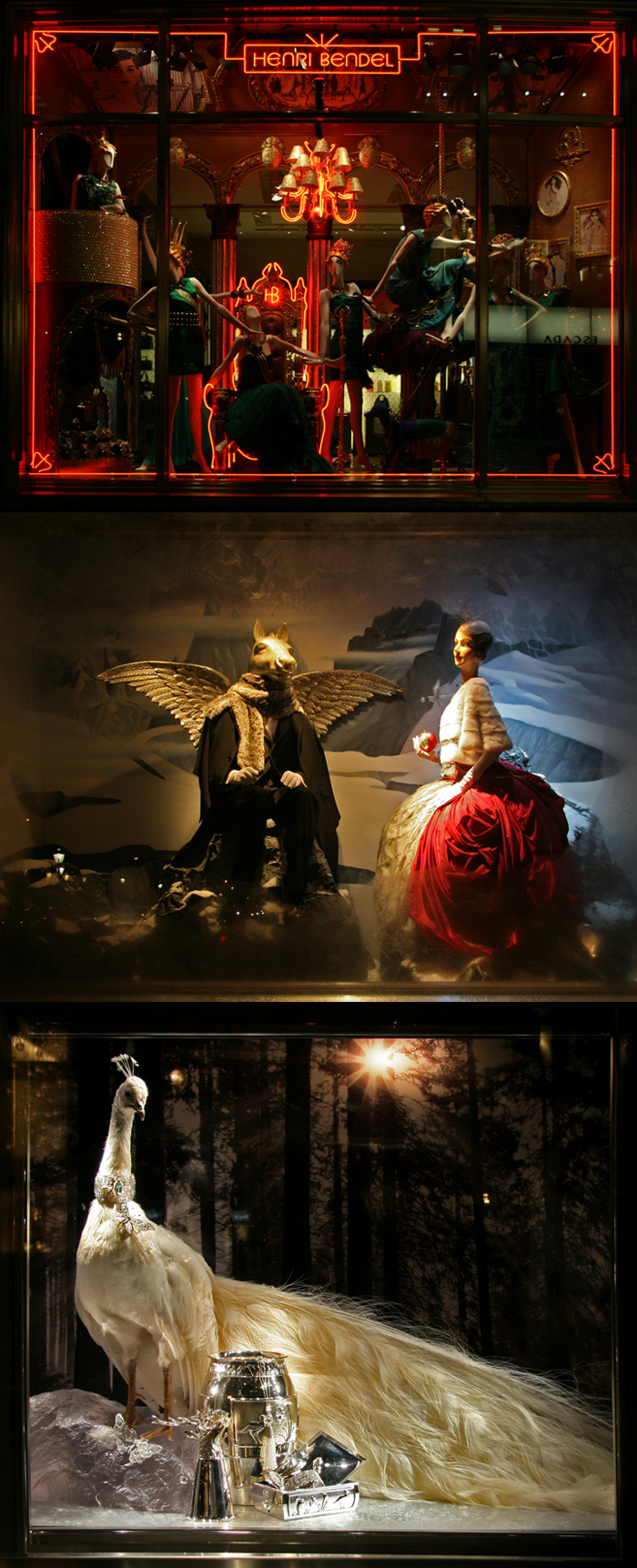
    Of course, an important part of the street’s image is due to the presence of its high-end retailers, virtually all of them iconic, even legendary. These are flagship stores, many of which remain as the company’s only location. Others have a small number of other national/international locations.

    At Christmas, Fifth Avenue is transformed into a holiday extravaganza. People come from all corners of the earth to see the store window displays and Rockefeller Center with its tree and skating rink, as well as just to experience being there. Everything conspires to squeeze joy and holiday spirit out of even the most hardened and least sentimental. The density of these establishments makes a Fifth Avenue stroll a continuous, jam-packed adventure.

    In today’s photos, I show the windows of Henri Bendel, Bergdorf, and Tiffany’s.
    I obviously cannot do Fifth Avenue justice here on a single blog posting – the subject could easily fill many books, which it has. But no need to read if you have neither the time nor inclination, because when it comes to Fifth Avenue, a leisurely walk in any season will tell all – this street can speak for itself…


  • Winter Wonderland

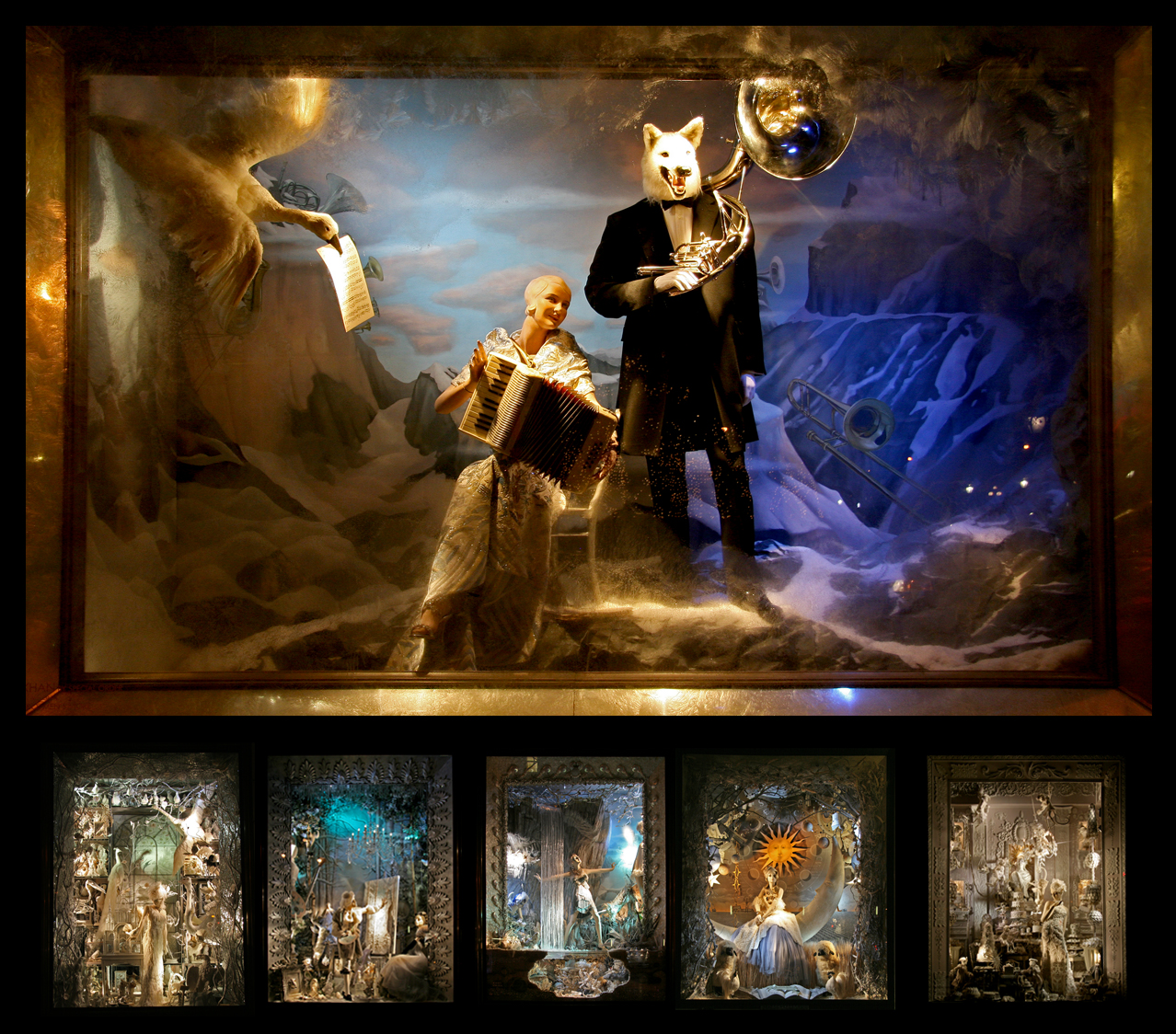
    In previous years, I have featured the windows at Saks Fifth Avenue. I certainly love their windows and interiors, and in no way do I want to demerit any window displays, but the real holiday pièce de résistance is Bergdorf Goodman. In doing background research for this article, I was surprised to find that every major New York City news publication as well as many blogs have done a story on this. And with good reason – the windows are spectacular and imaginative and are a must-see.

    A large degree of the fascination with Bergdorf’s windows this year owes to their eerie, surreal character. Many retailers hire outside firms to to their windows, but Bergdorf does theirs with their own window design team, headed by David Hoey, Senior Director of Visual Presentation. The painstaking work is done outside the city in a Queens warehouse – preparations start as early as October.

    This year’s theme is a white winter wonderland, “Calendar Girls.” From the Bergdorf website:

    “Winter Spring, Summer, Autumn and Holiday are all beautifully celebrated in this holiday season’s windows. Artful scenes that invite you to go on a year-round journey with Bergdorf Goodman. Utilizing a range of imagery all done in an ethereal, white on white scheme, each window draws inspiration from Natural History Museum Dioramas to created a blend of natural wonders and opulent big splendor.”

    The windows wrap around the building with three exposures to the street: 57th Street, Fifth Avenue, and 58th Street. Bergdorf’s location is one of the most prime in the entire city, with unobstructed views of Central Park, the Plaza Hotel, Fifth Avenue, and 57th Street. The perfect spot in New York City to enjoy a white-on-white winter wonderland…


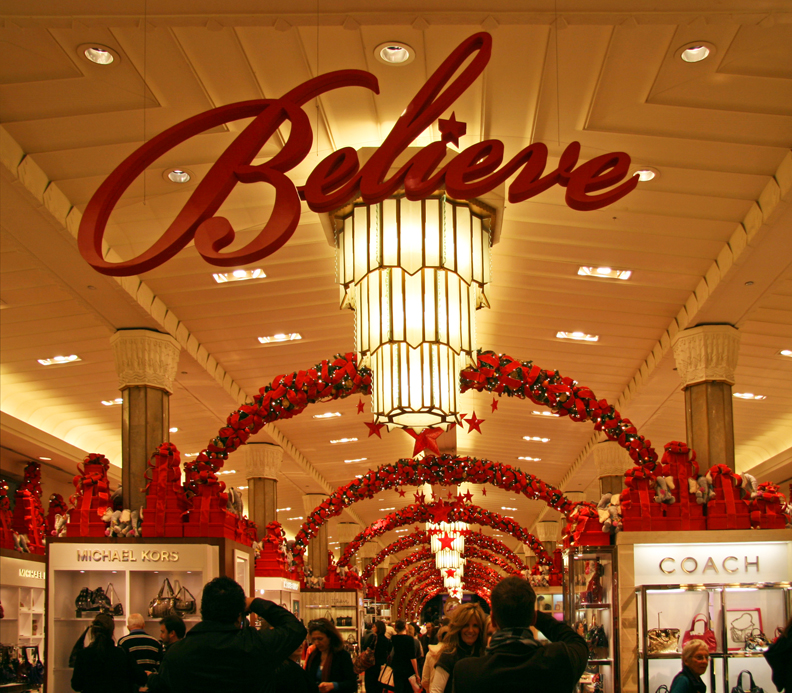
  • Believe

    Today is Black Friday, and although the phrase has positive business connotations, this year there is an economic malaise in this country, where the more common meaning of the word black may better apply.

    I think most have to agree that the election of Barack Obama is being seen as a ray of hope in a very dark room. Turning a new leaf in a book that everyone has tired of reading. A young president with fresh ideas to take us into into a rapidly changing world.

    When I first saw this Christmas display at Macy’s with the message Believe, I interpreted it to mean that the word believe was being used in a way one would expect during the holiday season – believe in Santa, believe in Christmas, etc.

    I don’t know the precise original intention of the store display designer or even whether there was a specific intended meaning, but in light of the international mood, allow me to interpret and suggest that we all make an effort to believe in better days to come …


  • Swimming Against the Tide

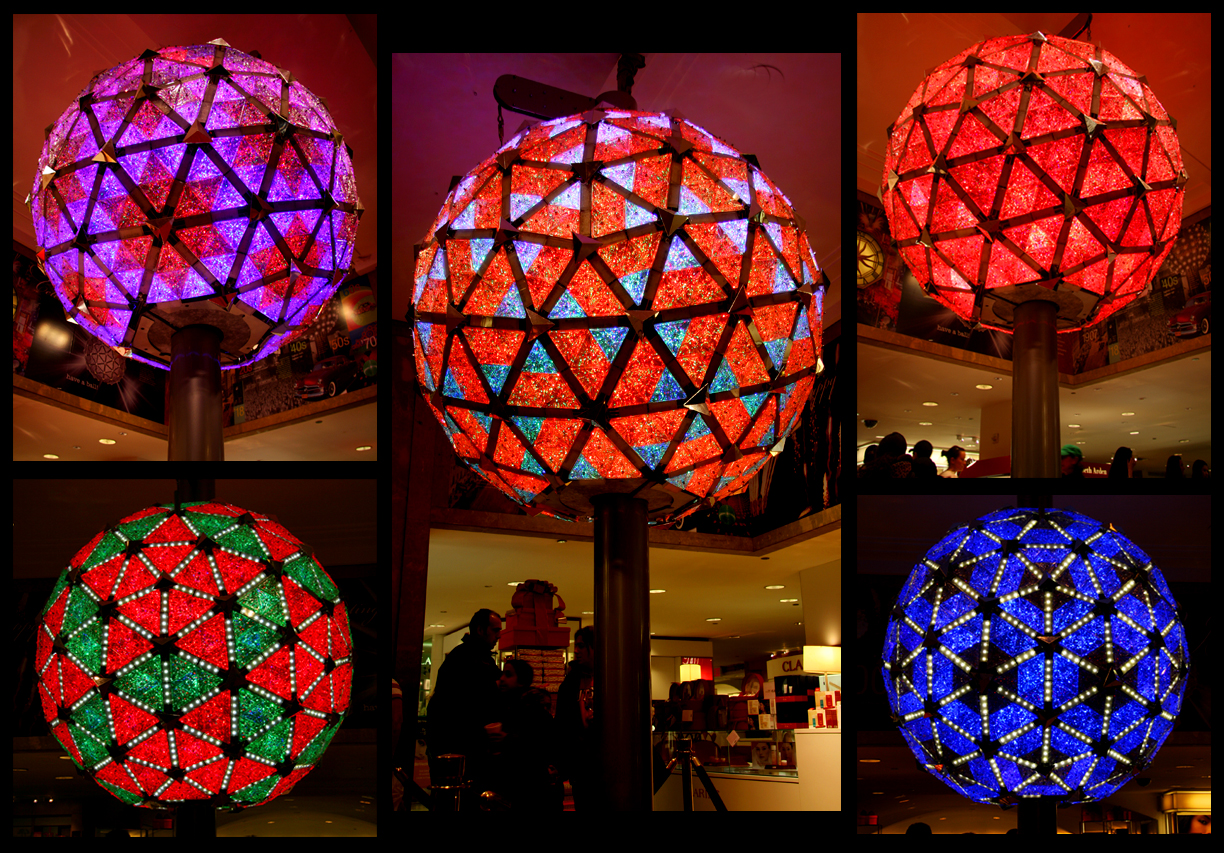
    On New Year’s Eve in 2007, I wrote of the ball drop in Times Square. At the time, I was disappointed to learn that prior to the drop, the ball was displayed at Macy’s, and I did not get a chance to see it closeup. On a recent visit, I was pleasantly surprised to see that the ball was already installed on the main floor and that I had completely forgotten about this recent tradition.

    It feels like Christmas promotions and retail store decorations come earlier every year as the push to maximize holiday business accelerates. At one time, Black Friday was the demarcation point for the start of the Christmas countdown, and even at that time, it seemed rather early to begin preparations over one month in advance. But any retailer has little choice in order to keep up with the competition. It is difficult to swim against the tide – barring some supreme effort, most will be swept by the current.
    This very posting is driven by the same pre-holiday frenzy – the ball is on display early. To write about it later would look like I missed the boat. Even though I do not see this blog as competing per se with conventional journalism, I still feel an obligation to “do” certain stories in a timely manner.

    Additionally, everything moves so much more quickly – in the electronic world, almost immediately. We no longer have the luxury of doing things at our pace. The speed of everything around us often dictates when we must do things. Of course, there are many ways and situations where one can buck the trend. To appreciate things on one’s own terms is a laudable goal and can provide respite from the pressures of living in a technological world.

    But for me, at Christmas time, readers here do not want a rebel, an iconoclast, or a man who swims against the tide. They want to see all the trappings of the holiday season – the windows at Saks or Tiffany’s, the tree at Rockefeller Center, and Santa at Macy’s. And perhaps I do too, for sometimes I tire of swimming against the tide…


  • In My Book

    I remember hearing someone once say that there is an illusion that everything in the past was better, with the quality of antiques cited as evidence, and that this perception is because we only save the best and discard the rest. There was plenty of junk made.

    Occasionally, we even champion the junk, to be sold and seen as charming kitsch, somehow better than today’s kitsch. I have heard the same type of thing said about books from those who have a good historical knowledge of the world of publishing – that plenty of crap has been written and published, but only the classics remain.

    Certainly, looking at the landscape that is New York City, I would be hard pressed to romanticize the 1970s. I am not a fan of over-gentrification or the encroachment of chain and big box stores, but I also have no fond memories of graffiti-covered trains, Bowery squeegee men insistent on washing car windshields, “no radio” signs in cars adorned with broken glass, or running for your life in the East Village. I had a friend who was actually mugged three times in one week in the vestibule of his East Village flat.

    There were good things too, of course, especially the affordability which allowed virtually anyone with desire and intestinal fortitude to get a foothold in this city and stake out his/her claim. Apartments could be had cheaply (in relative dollars). You could work yourself through a private university and support yourself in your own place.

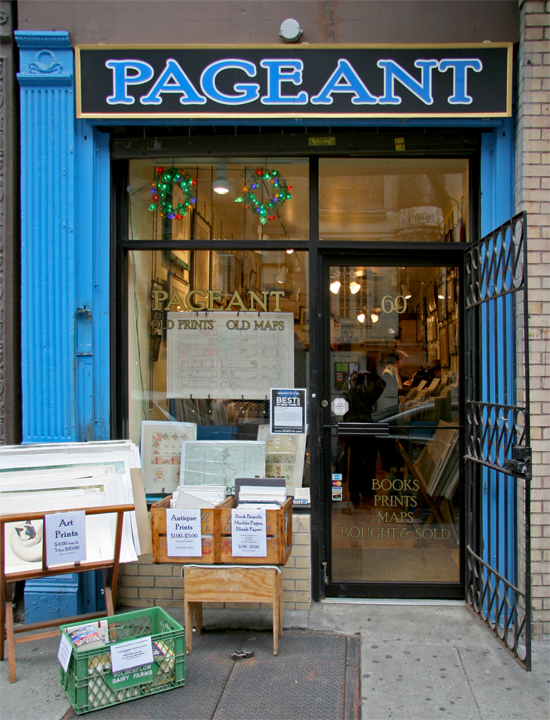
    This environment really allowed all manner of things to survive and flourish. One of those things were the booksellers along 4th Avenue, a row of 30 used book dealers in the space of 6 blocks from Astor Place to Union Square, known as “the book row of America.” I love books, and perusing the wares of those dealers on a Sunday afternoon was one of my pleasures and pastimes. The Strand, still operating today on Broadway, had its roots there. The other survivor is Pageant Book Shop, founded in 1946 by Sidney B. Solomon and Henry “Chip” Chafetz as a used and rare book shop in New York City. Sidney’s daughters Shirley and Rebecca Solomon now run the shop. Pageant had its home in several locations along Fourth Avenue for 35 years before moving around the corner to East 9th Street. In the 1990s, it moved to West Houston Street. Recently, it moved to its current location at 69 East 4th Street.

    The current shop is much smaller than previous incarnations and, unlike its predecessors, sells primarily antiques prints and maps with a smaller selections of books. I can’t say that this place exudes that rustic charm with musty smells of the early 4th Avenue booksellers. But no matter, because it is a book store, and in my book, that is always welcome…

    Film buffs: The shop and its books have appeared in numerous movies filmed in New York City, including Neil Simon’s “Chapter Two” with James Caan and Marsha Mason and Woody Allen’s “Hannah and Her Sisters,” where Michael Caine and Barbara Hershey went browsing for a copy of e.e. cumming’s poems.

    Related Post: Better When


  • New York Moment

    Sometimes, everything just clicks.
    My best friend from college called me earlier this week to let me know that he would be in NYC at 5:30 AM, today, Friday. I cleared my day for him – he is fun incarnate and is usually up for doing just about anything. This man is one of those people who is immediately likable.
    He was my first friend and college roommate in New York City – a Jew from Brooklyn. He taught me the ins and outs of this town and how to bankface my money. I learned what bagels, delis, egg creams, and greasy spoons were.

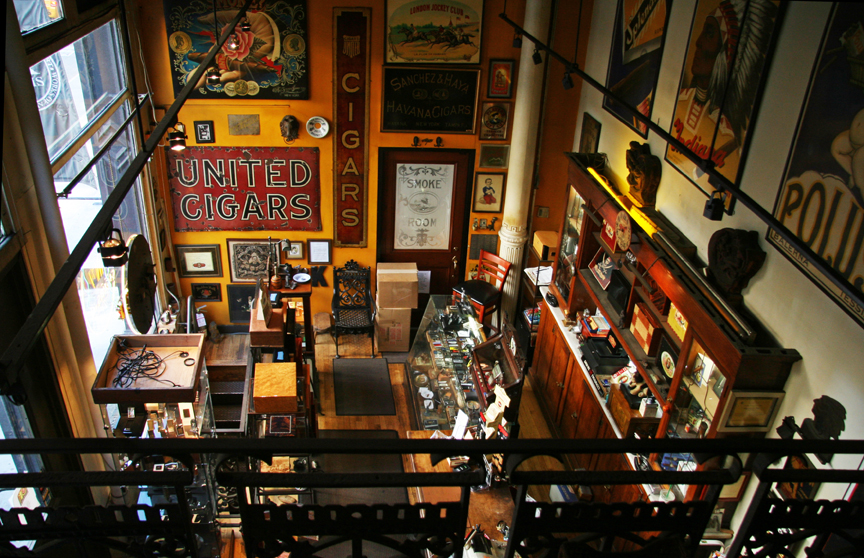
    With no specific agenda, we started with breakfast at a diner – Joe Jrs. He said he wanted to visit OK Cigars at 383 West Broadway in SoHo. Perfect, because he has a rental car, we are both ex-taxicab drivers, and we love an adventure. I don’t smoke, but a cigar store sounds like an interesting visit. The weather is absolutely perfect.

    But we arrive 30 minutes before this shop opens. As we ponder what to do, the owner, Len Brunson, arrives early and welcomes us in. Our luck just seems to be getting better. I ask about his policy regarding photography, and he just loves the idea, which is not the case with every store. We both agree how puzzling it is to have such restrictions and how antithetical it is to a business venture.

    There is a loft in this small, wonderful shop. Am I allowed to go up the treacherous ladder to take photos from the small loft area? A resounding yes. I find some great vantage points for shooting from above while my friend makes a purchase of $288. It certainly was worthwhile for the owner to open early.

    Ok Cigars, opened in 1997, is a high-end cigar retailer. They also have an extensive selection of one-of-a-kind antique smoking accessories. The shop has a tremendous woodsy, antique ambiance and is worth a visit, even if you are not a smoker. You can take a virtual tour of the store at their website. Len Benson is one of the nicest, most congenial, and accommodating stores owners I have met.

    The whole experience was a New York moment, and at 11 AM, the day is just starting. We are going out to Brooklyn and will investigate Coney Island in its current state. Stay tuned for a recap next week of this outing 🙂


  • Love Affair

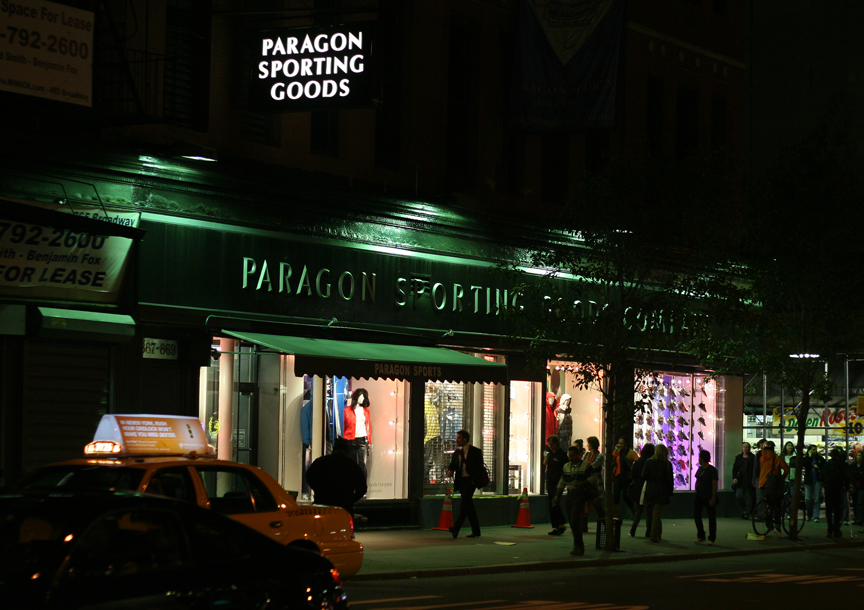
    Why would anyone have a love affair with a sporting goods store? It’s simple. Let’s say you just moved to NYC to go to college and it’s 1969. And let’s say you never left home before in your life – everything is new, exciting, and scary all at the same time. Winter is coming, and you need a warm coat. You have virtually no money, but fortunately, your mother gave you money to buy one. Where do you go and what do you buy?
    Those who know things say to go to Tents and Trails or Paragon.

    Tents and Trails was on Park Place, virtually no man’s land at the time. It was a real destination retailer with a virtual cult status and a quality reputation – I have purchased many things there. But it wasn’t that big. I needed a place that felt overwhelming, like the city itself. Paragon just felt like the right place. At the time, Northface was the brand of choice. So that is my first memorable NYC shopping experience: Northface at Paragon. That coat lasted for years, and I saw it and Paragon as responsible for providing protection from harsh conditions.

    There’s a wave of comfort that comes over you when you enter a place like this – a feeling of confidence that you need to look no further. After all, this is the leading sporting goods store in NYC, the preeminent city in the country. This is a no-nonsense New York place. All the quality brands with a experienced sales staff that can be brutally honest.

    Paragon Sports, 867 Broadway at 18th Street, has been in business since 1908. Many consider it to be the finest worldwide. It has an enormous product line (50,000 products), cutting-edge equipment, and clothing. Many products are unique, carried exclusively at this store. It has only one location, much like a handful of other unique, iconic, legendary NYC stores such as B&H Photo and J&R Music World. There’s an intensity about these stalwart, single-location shops – no dilution of expertise or product. Everyone and everything is under one roof.

    Be forewarned – if you visit, you may fall in love too 🙂

    Suggestion: If you visit, make sure to see all three floors and all the rooms on the ground floor. While in the area, visit ABC Carpet and Home and nearby Union Square. If you work up a hunger, grab a meal at Republic.


  • Shrine to Paper

    In recent years, as New York City rents have skyrocketed, independently owned retail stores have found it increasingly more difficult to survive, leaving the large national chains to encroach the city and begin to dominate the urban landscape. Places too large to conceivably find adequate space and afford operations have done just that; Home Depot on 23rd Street is a good example, along with Filene’s Basement and Kmart at Astor Place.

    On the side streets where the foot traffic is light and the shop spaces are too small to develop, small operations continue to exist – places such as Joe’s Dairy, Alidoro, and Vision of Tibet. Some who had the foresight to buy their space now have the luxury of remaining there as long as they like or selling their property for a windfall profit.

    There are some independents, however, who have grown and/or expanded just on the merit of their product lines and by reinventing themselves and keeping pace with the times – e.g. B&H Photo and Astor Hair. There are a few where astute business management and other factors have given them the ability to dodge the slings and arrows of outrageous misfortune, such as Pearl Paint, J&R Music World, Canal Rubber, and Dean & Delucca.

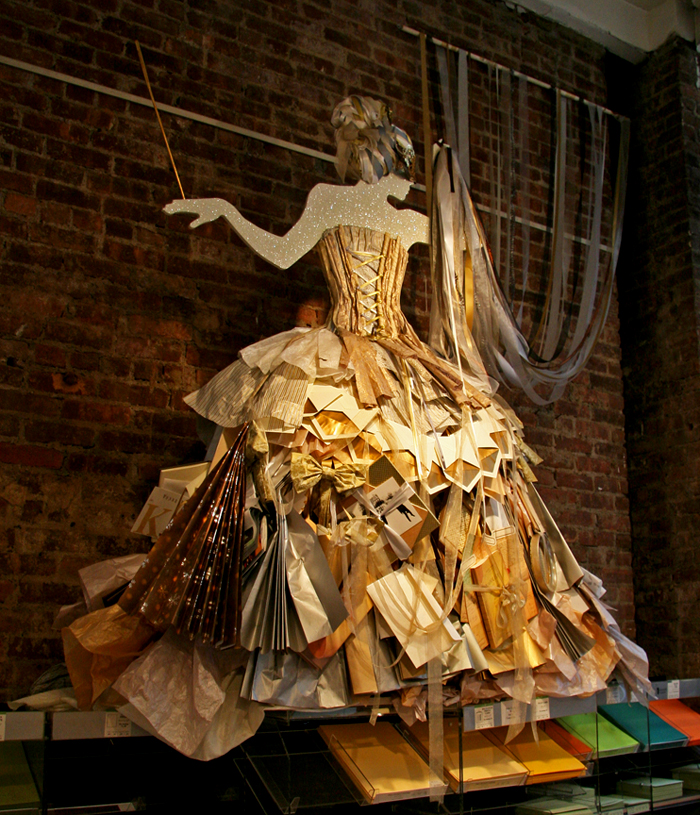
    Kate’s Paperie is one of these. The product line is such that virtually any shopper can find something of use or interest. And the nature of many of their products to be gift-oriented makes this place a perennial favorite. Kate’s Paperie was founded in 1988 by Joe Barriero and Leonard Flax – the shop was named after Flax’s wife. Leonard Flax is also the founder of Sam Flax, Inc., a leading art supply retail chain. Kate’s first location was at 8 West 13th Street near Parsons School of Design. They now have 4 Manhattan locations, as well as one in Greenwich, Connecticut. Kate’s carries thousands of papers from 40 countries and offers a vast collection of more than 1,500 couture-quality ribbons from around the world. See their website here. This is one of those places that you cannot find elsewhere – a true New York City landmark, known to any seasoned city dweller.

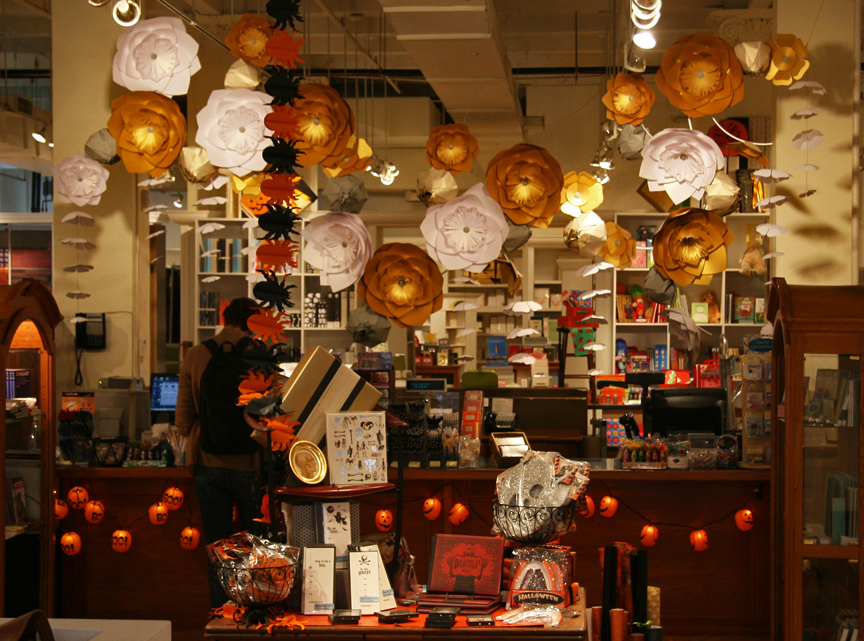
    The whole unique feel of the place is what really sets it apart. They are known for their beautiful, creative store displays, like the woman made from paper in today’s photo taken at their 72 Spring Street store. See another interior photo with their current store display here. If you have not been to the shop, I recommend a visit to Kate’s. It’s a shrine to paper…


  • Stamp of Approval

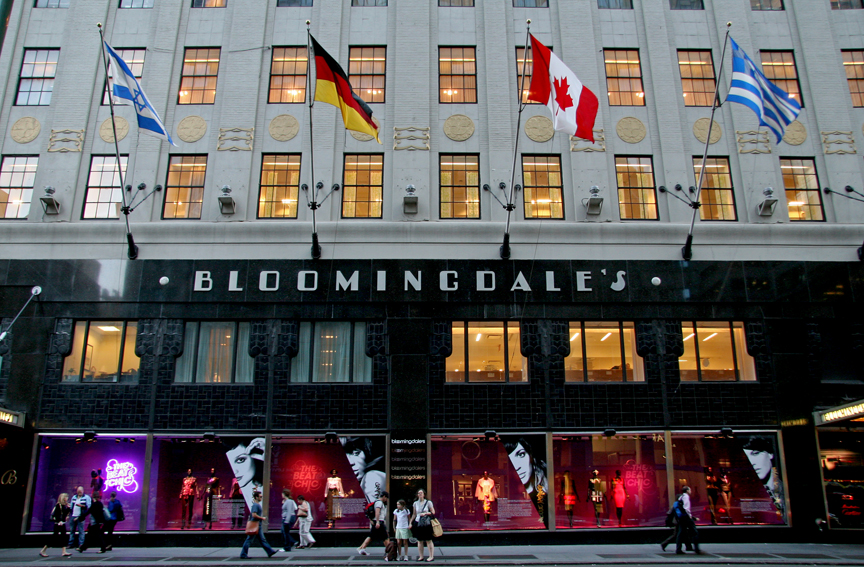
    When I moved to New York City, there were certain icons that absolutely defined the city for me, and one of those was Bloomingdale’s. This has always been the sine qua non of Manhattan for me and always will be. NYC symbolized many things, but the primary reason for moving here was for a University education and to get ahead. And part of getting ahead was having money. To shop at Bloomingdale’s meant you had money and that you had made it.

    There were other stores, of course, that had the ring of money – Saks, Bergdorf, Tiffany, Cartier, Altman, and Gucci, and I saw them all. But Bloomingdale’s was also big – like Macy’s, it occupied an entire city block. And for a young man looking for American symbols of success, BIG was better. I had my own visualization of Manhattan – like Saul Steinberg’s View of the World from 9th Avenue, my vision of view New York City had its own iconography, with Macy’s and Bloomingdale’s as Westside and Eastside anchors.

    How obsessed was I with this place? Well, for one, when establishing my business in the 1970s, I wanted my company logo to be in the very same typeface that Bloomingdale’s used. My best friend, who was a graphic artist, did some close examination and determined that the font Horatio Light appeared to be an identical match. Go here to see their logo. Now go here to see mine. See the resemblance? I remember when my logo was completed – I had a business in New York City and a French name in the same typeface as Bloomingdale’s. I certainly must have made it, and my announcement was plain for all to see.

    I recall persuading my sister on one of her first visits here to get underwear with “bloomies” printed across the back. Now my sister also had the stamp of approval…

    About Bloomingdale’s: Ironically, with all this fascination with Bloomingdale’s, I never read their history until this morning. The business was established in 1860 by brothers Joseph and Lyman G. Bloomingdale selling hoop skirts. The move to their current location at 59th Street and Lexington Avenue came in 1886. Marketing acumen catapulted the store to international fame, with visitors such as Queen Elizabeth. Cutting-edge fashion of designers like Ralph Lauren, Perry Ellis, and Norma Kamali got their first truly big opportunities at Bloomingdale’s. Read the history here at their website or here.


  • Joe’s Dairy

    When I was a child, blue laws did not permit most retailers to open on Sunday. But business has changed dramatically and is so competitive that for most retailers, being closed on Sunday would be suicide. Some find the laws antiquated and draconian. Others find these old blue laws to be a blessing to laborers, insuring at least a day off.

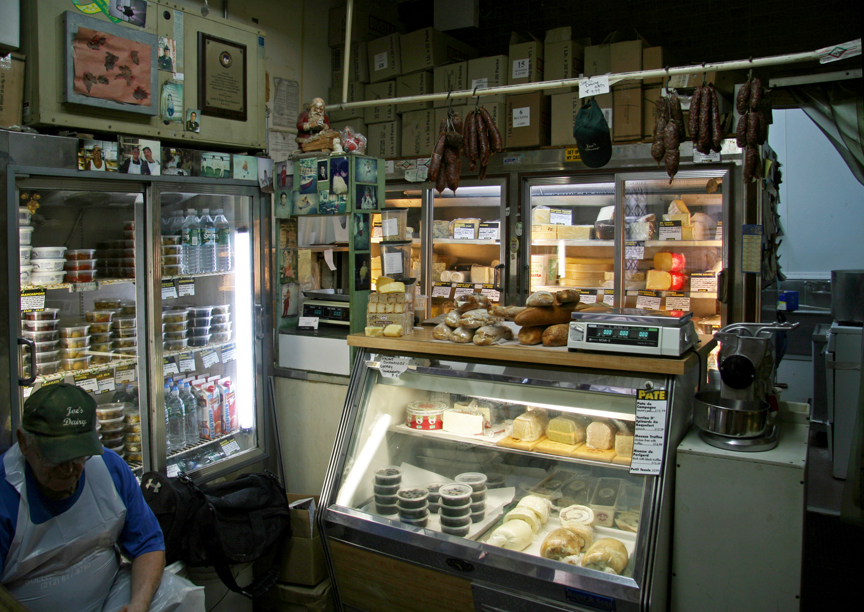
    When you run across a business that does any retail and is closed on Sunday, you know that they have a very niche business, an off-the-beaten-path location, or are very old school. The latter is the case with Joe’s Dairy at 156 Sullivan Street in an Italian area of SoHo/South Village, nearby to Raffetto’s, another wonderful Italian food store.

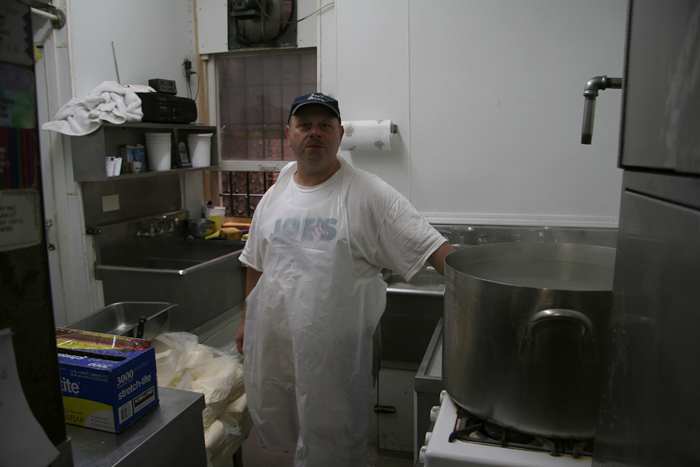
    I have been waiting to do a story on Joe’s for some time. The right opportunity presented itself recently, and I strolled in to find a congenial and accommodating staff. I was extremely pleased to learn that the owner, Anthony Campanelli, was on premises making his renowned mozzarella.

    A few paces into the tiny back room, and I found Anthony surrounded by huge cauldrons of boiling water, working his magic for customers citywide. He stopped to speak to me, taking the brief meeting quite seriously. With no objections, he allowed himself and the kitchen to be photographed. See photo here.
    He buys his curds in bundles from a supplier in Buffalo, New York, receiving deliveries three times a week.

    Each bundle weighs 45 pounds, and Anthony runs through 25-40 bundles a day – nearly a ton of cheese. Most consider this to be the finest mozzarella in New York City, and it comes in a number of flavors. The shop also sells a variety of Italian food products – imported cheeses and other goods.

    Afternote: In writing about Buffalo, NY, the word “buffalo” spurred me to make a follow-up phone call to Anthony and enquire whether he made buffalo milk mozzarella. He does not, assuring me that buffalo milk curd is not available in the United States (all his mozzarella is from cow’s milk). Mozzarella di Bufala Campana is imported from Italy. Many consider it to be the finest tasting – it is featured on many restaurant menus.


  • dinamic_sidebar 4 none

©2026 New York Daily Photo Entries (RSS) and Comments (RSS)  Raindrops Theme