• Category Archives Stores
  • Parfumerie

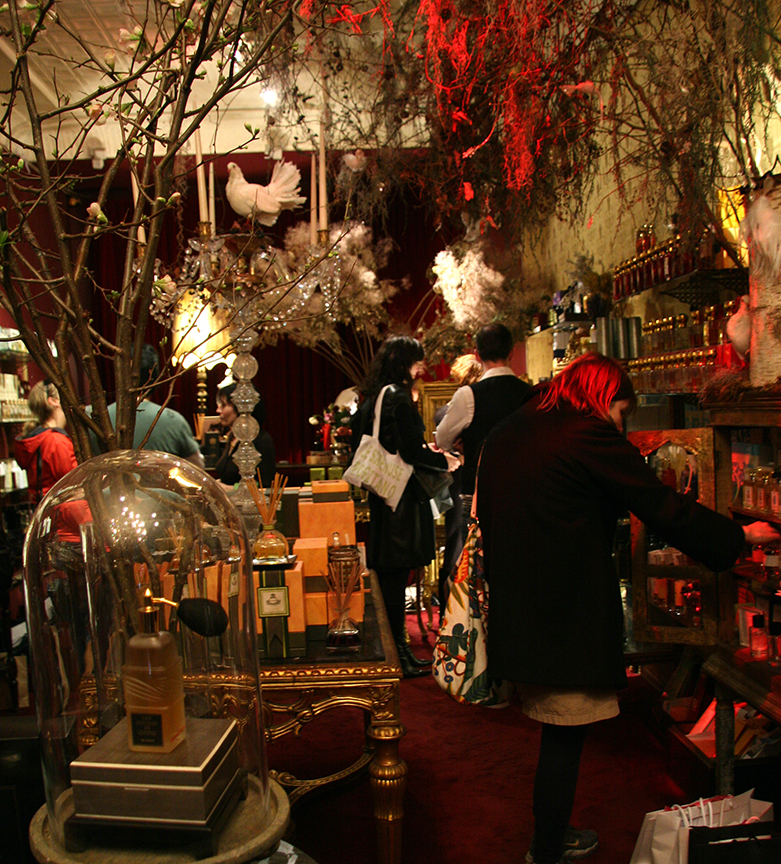
    Do you want to travel to a 19th-century Parisian boudoir? Then make a trip to Aedes de Venustas at 9 Christopher Street in the West Village. This parfumerie is the brainchild of Karl Bradl and Robert Gerstner, two Germans previously in the international freight business. Perfume was just a hobby for them – the business was an outgrowth of that (you can read the story here).

    I will not mince words – this is one of the most beautifully appointed shops I have been to in New York, with violet walls, gilded furniture, huge arrangements of fresh flowers, velvet chairs, and birds fabricated from feathers. Everything works together. To step inside is to be transported in time and space and leave the city behind. The atmosphere is incredibly calming.

    But let us not forget that, first and foremost, this is a specialty fragrance boutique. The owners have introduced various lines and have some of the finest perfumes in the city. The world of fragrance covers a wide spectrum, from the large commercial lines and household names to the smaller. There are a large number of independent perfume makers now, and many of the finer ones are represented at this shop. There are also blogs which specialize in the field.

    I had been to Aedes a couple of times before, but on Sunday, I went with a friend to Sniffapalooza, a NYC event with perfume passionatas from around the world. The event spans several days at a number of locations with manufacturers as well as others in the industry attending. Although I have no real connections with the fragrance world and was a privileged guest, it was just nice to be in an environment where quality and doing things well defined everything…


  • Ephemera

    I remember reading a review of the TV comedy series Seinfeld which criticized it for focusing on the insignificant and inconsequential, the characters indulging and obsessing over things of no import. I think the reviewer missed the point and apparently didn’t see the self-referential classic episode explaining the raison d’etre, where characters Jerry and George propose a new show about nothing. With more disposable income and free time, it’s not surprising to see indulgences at many levels. The obsession by many with minutiae and ephemera is quite real and preoccupies much of our daily lives.

    Retailers abound in new York City that cater to every whim, fancy, and serious interest imaginable. The native population and tourist traffic is large enough to support specialty merchants, of which I have featured many on this site: Barbie in Furs, The Evolution Store, Scrap Yard, Economy Candy, Agent Provocateur, You’re Not in Kansas, Ten Ren Tea, Eileen’s Cheesecake, Myers of Keswick, Zoomies, Murray’s Cheese, John Jovino Gun Shop, Pink Pussy Cat Boutique, Canal Rubber, Botanica, Kiehl’s, Pearl Paint, Pearl River Mart, Taschen, Matt Umanov, Bleecker Bobs, Peanut Butter & Co., Patel Brothers, The Strand, Seize sur Vingt, ABC, Mooshoes, Vilebrequin, and Girl Props.

    The photo was taken in Fish’s Eddy (named after a small town upstate New York) on lower Fifth Avenue. The display of porcelain hand molds was very striking – I’ve never seen this many together. These molds are used for rubber glove manufacture – they are dipped in a liquid latex and removed. Once dried, the latex is stripped off, and voila – a latex glove. I read that these molds are quite common in antique shops and are used around the home as a decorative item. With a little imagination, I’m sure many uses can be found – the sign below them assures us that they are “handy for just about anything.” Or perhaps this is a display which sells things for nothing 🙂


  • Where’s the Special

    I’ve been worried that special is over. I don’t mean special like a sale, I mean special – something unique, different, and unusual. Special is what many people look for in people, places, and things. That’s why you come to this site. This is the reason people often line up. There is frequently an element of the creative in the special, and there is typically a shortage of creative to go around. Of course, there are also many, perhaps most, who find great comfort in the ordinary, regular, or usual. Creatures of habit and lovers of routine. There’s a piece of this in most of us. But this story is about the special.

    At one time, Zabar’s, along with Balducci’s and Dean & Deluca’s downtown, were truly special, very unique places. The quintessential gourmet food emporiums and meccas for residents and visitors. But now, many of these products can be found in national chains such as Whole Foods, with enormous selections of specialty items.
    Zabar’s, located on the Upper West Side, was started in 1934 by Louis and Lillian Zabar, who were renting an Appetizing Counter in a Daitch Market. Over the years, they took over the Daitch Market. Louis died in 1950. Saul and Stanley Zabar took over running the business. Today, the store is over 20,000 square feet – almost a city block long – at 80th and Broadway, serving over 35,000 customers per week. It is still a family-owned and -operated business.

    Perhaps it’s not that special is exactly over. It’s that it is fleeting – appropriated and co-opted at lightning speed or hidden in the nooks and crannies. There are things in and things about Zabar’s, as well as their ilk, that is still special. So, if you want the special, act quickly and/or look in the corners and edges. I’ll see you there…

    Footnote. Perhaps there is nothing so great about special anymore and that I am just romanticizing the past. I see a new generation that appears to be happy with the ubiquitous. Luxuries and specialties have become very common – do we need the special?


  • Kalustyan’s

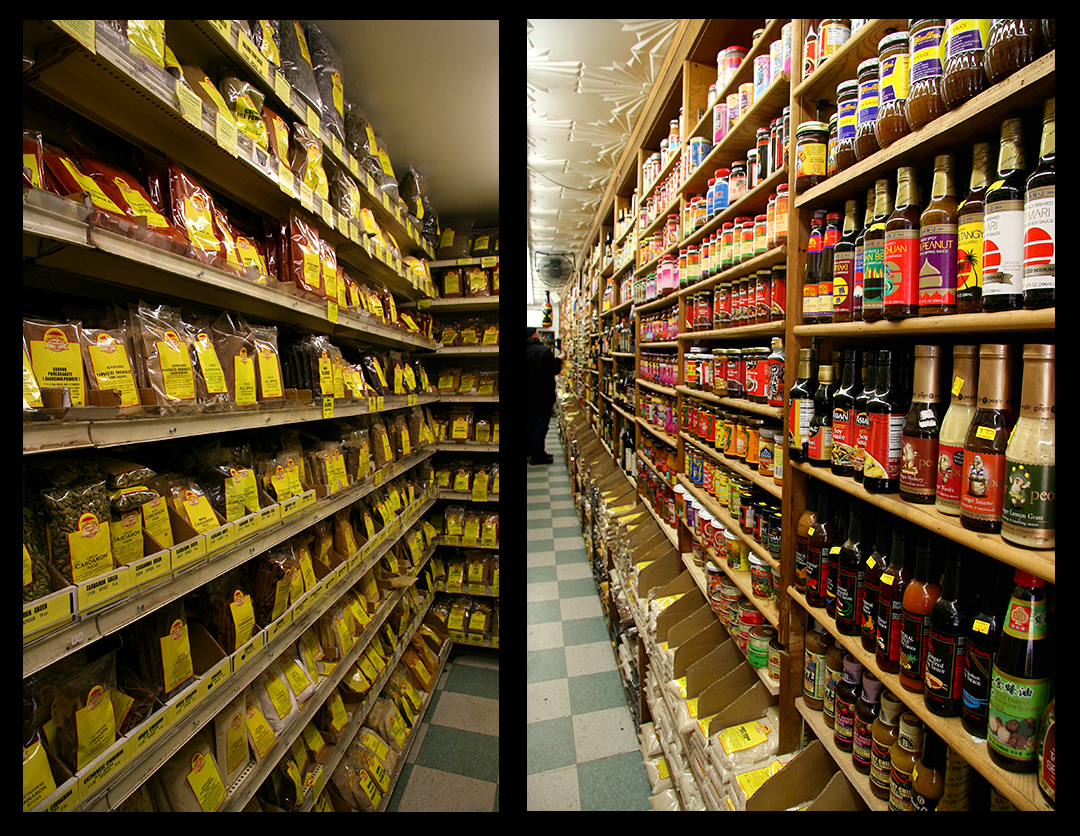
    Kalustyan’s website has 45 pages of spices – 1,322 items. Perhaps you are interested in choosing from a selection of 41 varieties of coconut or over 100 types of lentils or dal. If you want this breadth and depth of selection, you had better have a large number of patrons – your casual visitor or curiosity seeker is probably not interested in tamarind paste or an extensive selection of ghee. NYC delivers the patrons.

    It is unlikely that you will find a selection like this anywhere else. Kalustyan’s, at 123 Lexington Avenue, was established in 1944 by K. Kalustyan and is now owned by Sayedul Alam and Aziz Osmani, who have expanded the selection to create an international specialty food market, with a concentration of Middle Eastern and Indian food. They have thousands of varieties of food items – herbs, spices, teas, coffees, pastries, baking products, oils, nuts, seeds, breads, beans, chutneys, etc. Upstairs, there are cook wares and a small deli with prepared foods and a couple of tables.

    Another nice thing about visiting Kalustyan’s is that it is in the heart of an Indian district (one of two in Manhattan). This is the destination if you are interested in having dosas – try any number of places specializing in them, such as the Dosa Hut. Also, you can visit Foods of India next door.
    Kalustyan’s is my favorite ethnic market. It’s pleasant to shop in and is truly exotic, with a selection that is wide and deep…

    Related notes and postings:
    If you are interested in ethnic neighborhoods and food, I would highly recommend a trip to Jackson Heights, Queens. I made a pilgrimage there last year and did 4 postings on various merchants and aspects: Indian Gold, Jackson Heights, The Patel Brothers, The Jackson Diner

    If you like Middle Eastern food, you really need to try an authentic Ouzi and Ful Mudammas. I recommend First Oasis in Brooklyn for either dish (or Moustache in the Village for Ouzi).


  • Holdout and Holdup

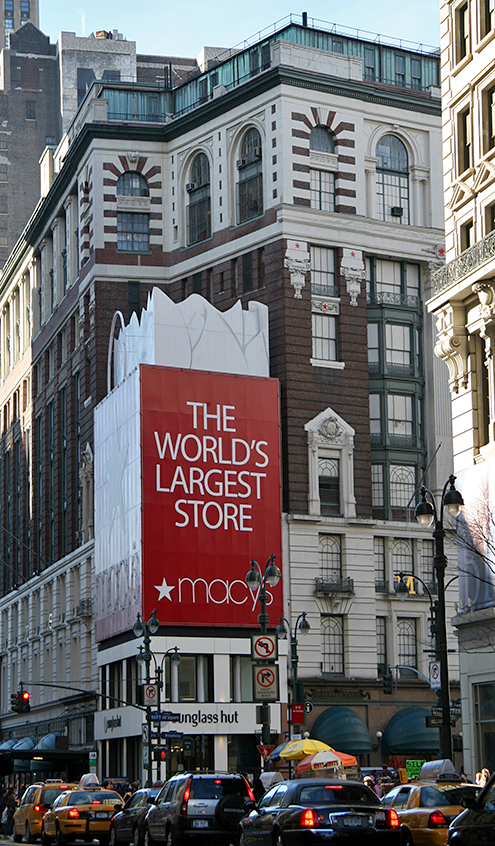
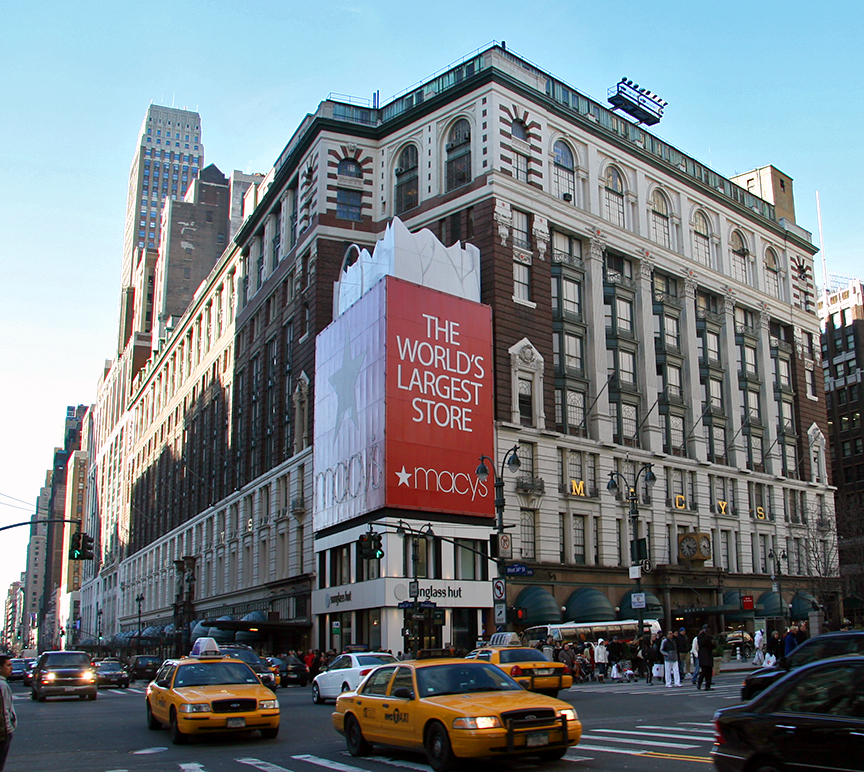
    The story of the notch in Macy’s has been told before, but to find it, you need to know that there is a story to be told. Most pass by this intersection at Herald Square, one of the busiest in the city, never suspecting that the enormous sign proclaiming Macy’s to be the World’s Largest Store is the subject of a small drama. See a photo of the entire block here.

    The strange tale is about the quintessential Holdout – in real estate parlance, someone unwilling to sell a key property standing in the way of development. ‘Tis the dream of many that through pure happenstance and good fortune, one has an apartment or property which is crucial to a large project and holds out for an enormous sum of money, securing one’s financial status ever after.

    In the late 1890s, Macy’s decided to expand from its 14th Street location to 34th Street. It secretly began buying property there, but word leaked out. Robert Smith snatched the property for $375,000. Escalating from holdout to holdup, the hope was to use this property to negotiate with Macy’s and get occupancy of their 14th Street location (and some of the Macy’s original customers).

    However, Macy’s did not take the bait. It built around the building and continued to hold the 14th Street property vacant until the end of the lease.

    They opened at Herald Square in 1902. The following year, the corner building was torn down and replaced with a new 5-story structure – the one you see here today (it was first leased to the United Cigar Store Company for $40,000 a year).

    Much later, after 1945, Macy’s started to rent advertising space, covering the entire building. Although there have been opportunities to buy the property, to this date, Macy’s has not. They continue to rent advertising space for the 70-foot sign. Sadly, many of the retailers at this corner building have been tacky, unattractive establishments. Currently there is a Sunglass Hut – a step up in appearance.

    So if you dream of holdouts and holdups, keep in mind, they may only be pipe dreams…


  • You’re Not in Kansas

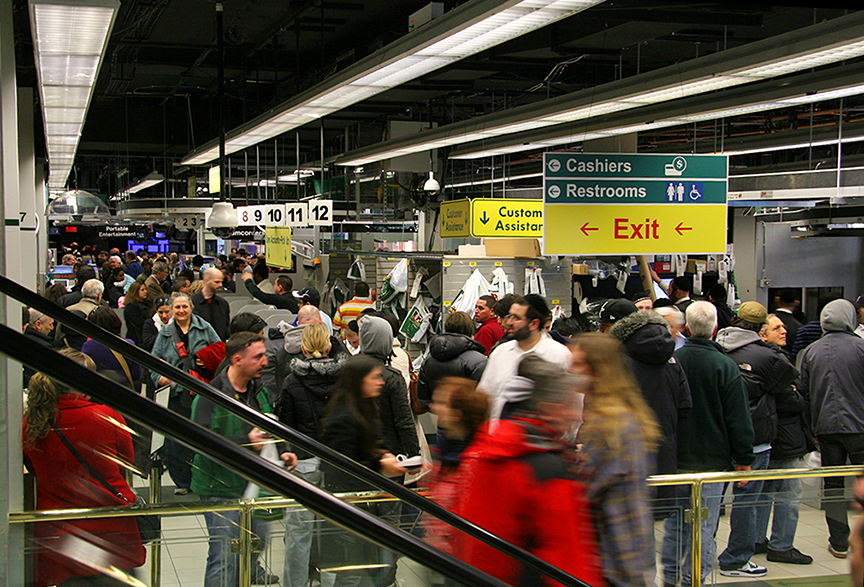
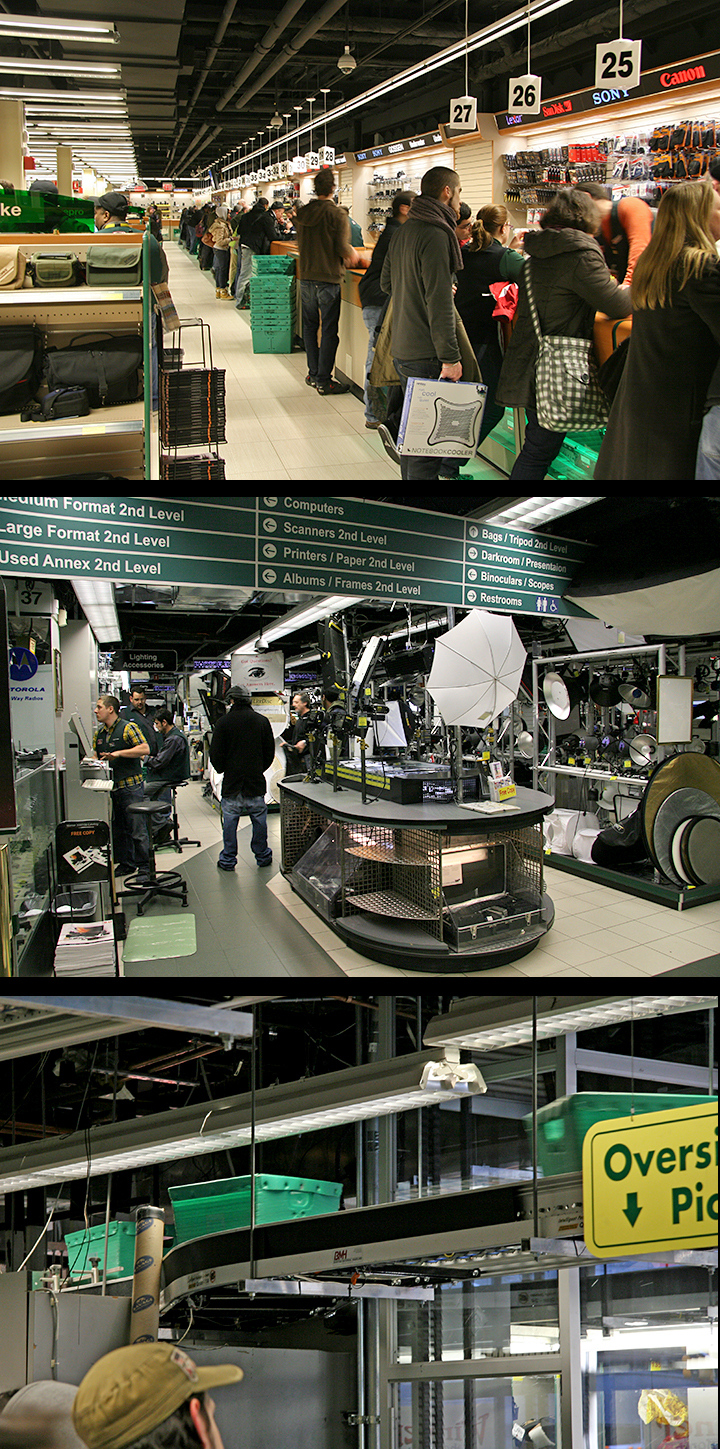
    I love this place – if you want the feeling of commerce with beehive activity, this is the place to go. Hustle and bustle, from busy to packed, B&H Photo Video sees over 10,000 customers per day. This is the country’s largest photo supplier – they have everything. But whether you are a photographer or not, it is a must-visit.

    The store was founded by Herman Schreiber and his wife Blimie (hence B and H) on the Lower East Side in 1973. It relocated to 17th Street in the photo district, where it remained until 1997, when it expanded and moved to its current space at 34th Street and 9th Avenue. They occupy 70,000 square feet, not counting corporate offices nearby and a large Brooklyn warehouse.

    Everything is a study in organization and good business management. After a purchase is made, goods are sent from a basement stockroom to the pickup area via overhead conveyers with green bins (see photo #3 here). The huge checkout area moves quickly, with dozens of clerks taking payment. Take a few final steps to product pickup, and voila, your items are already awaiting you!

    Many retailers in NYC have become international icons, such as the Fifth Avenue gold coast retailers – Cartier, Tiffany, Saks, Bergdorf, and others, such as Macy’s. These stores all have a rich history, with many being founded in the mid-1800s. Their mythic proportions are made more indelible by the historic properties they inhabit in prime locations.

    B&H Photo shares none of these attributes but has achieved iconic status in its own unique, New York way. Although large, the single location provides for the focus and expertise not typically found in a chain store. And B&H is no stranger to competitive pricing; they built their reputation on supplying professionals with equipment at rock-bottom prices. So the Internet has not thrown them – they aggressively market and sell online. There is ZERO pressure to buy – none of the salesman are on commission. The return policy is very generous.

    Visiting here is also a cultural experience. B&H is staffed predominantly by orthodox Jews – bearded men with white shirts, black pants, many with payot (sidelock hair curls), and tzitzis (white cords hanging from the waist). For many visitors, the site of this entire spectacle serves as a good reminder that You’re Not in Kansas Anymore 🙂


  • Hurry

    I have done business with places like this for decades. They were always just places. Get in, get out. Get your business done. Maybe a friendly chat. Nothing much to admire. Could really use a little sprucing up, actually.
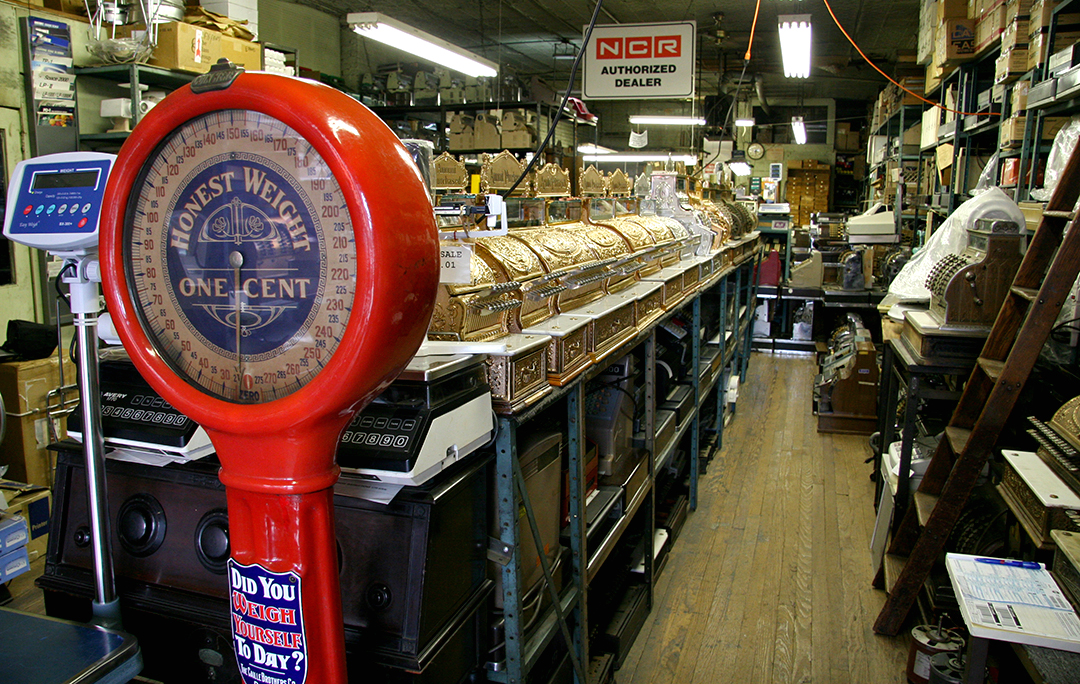
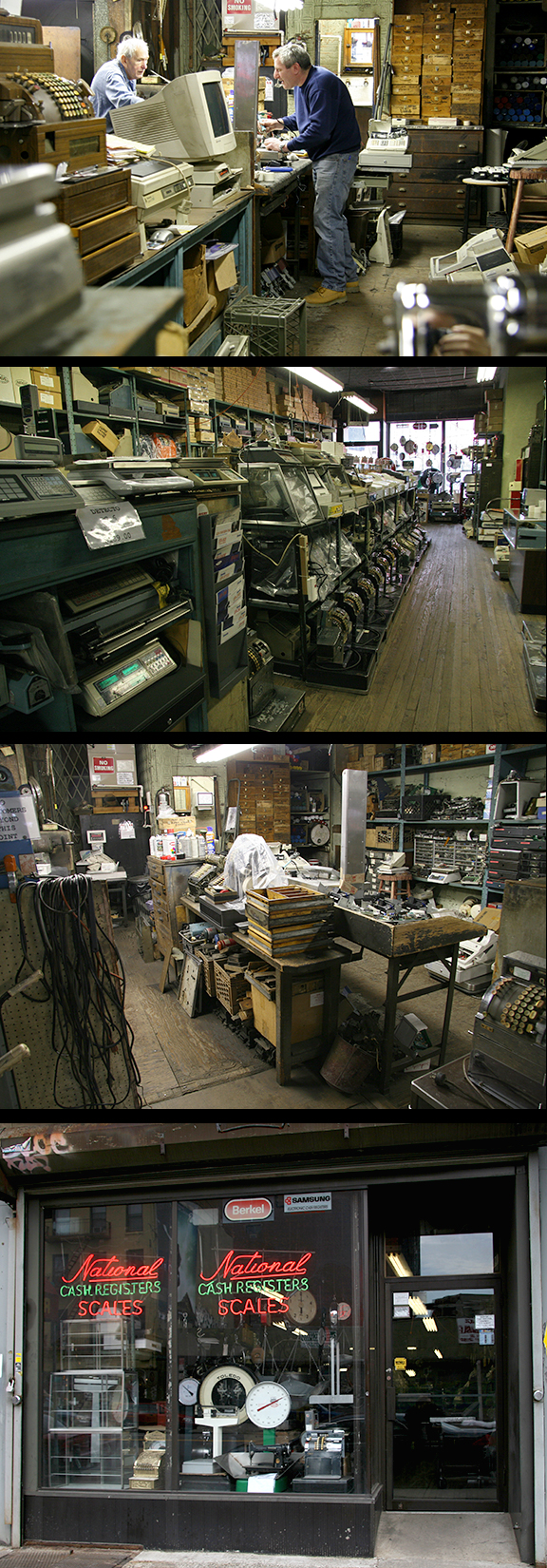
    Times have changed. Now I realize that this really is the end of an era – right here at 159 Bowery. Real, living history. You don’t have to read about it or travel to Europe. You can walk in now and meet Brian and his father tinkering in the back. Two generations of a three-generation business started in 1910 by Brian’s grandfather. More photos here.

    Faerman’s offers good, knowledgeable service, New York Style. What does that mean? Well, it means we’re busy, perhaps a little harried (we’re not overstaffed with incompetents), and we need to get to the point quickly. Like a surgeon in ER. Competent, quick. Cut to the chase. No graduates from charm school here. No frills or slick corporate beatitudes like “How may I serve you today?” which, unfortunately, is typically code for “I can only recite this line and not really do much to help you.”

    When you go to a place like Faerman Cash Register, you are dealing with the quintessential New York family-run business. People who know what the hell they are doing and talking about. The same people answer the phone. No layers between you and tech. A place that’s real. And I love the humanity of it all – I miss that.
    Of course, you can get all manner of scales and cash registers, both new, used, and antique at Faerman. But I imagine you’re not reading this for scale- and cash register-buying recommendations 🙂

    Am I over romanticizing? Not at all. Go see for yourself. Tell Brian I sent you. Don’t overstay your visit – they’ve got work to do. And hurry, because I can really feel history slipping right between my fingers and it’s a little sad…

    Footnote: In the time I have started this website, I have already seen some disappearing acts. CBGB was just down the street from Faerman and is now closed. Space Surplus Metals is out of business.
    Related: See my stories on Economy Candy and Eileen’s Cheesecake.


  • Sleepy Backwaters

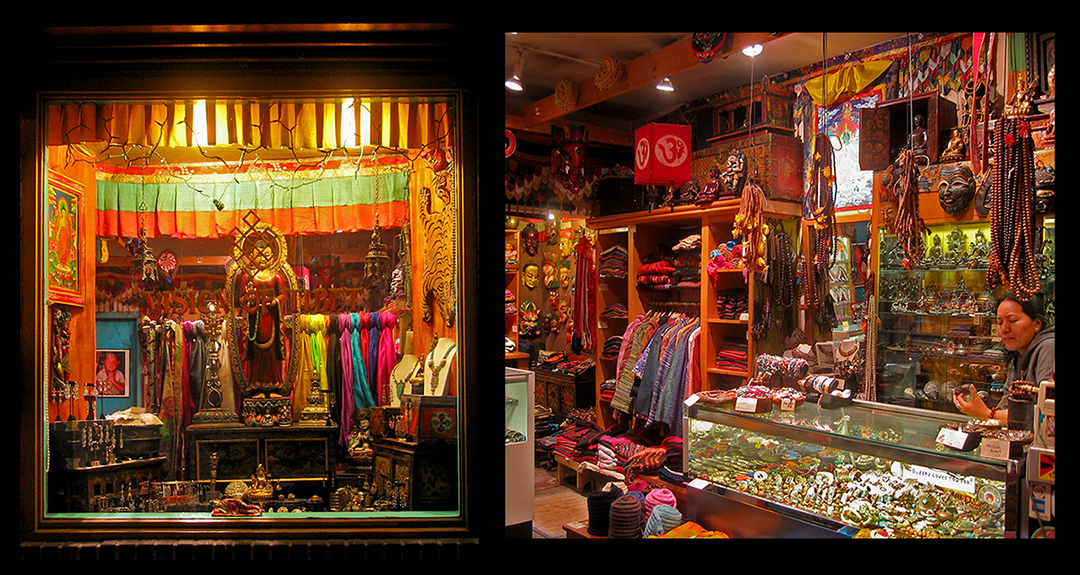
    It felt a little lonely, perhaps appropriate for a Tibetan store. A cold February weeknight and I was the only one in the tiny shop. Not far away in tres chic SoHo, we have places just bursting with customers like the Apple store, which sees thousands of customers per day and where it’s hard to get the attention of a sales person for more than a few minutes. The streets are now dotted with the likes of Louis Vuitton, Prada, Armani, Bulgari, and the less stratospheric places like Crate and Barrel, Pottery Barn, Victoria’s Secret, etc.

    But further west along Thompson, Sullivan, and MacDougal Streets, near Houston Street, there are small neighborhood stores – restaurants, boutiques, food specialty shops, and some virtual institutions. Places like Joe’s Dairy, Raffetto’s, Rocco, Tiro A Segno New York Rifle Club, and Alidoro. Along MacDougal, south of Houston, there are a handful of French restaurants and cafes – Bastille Day is celebrated here annually with a closing of the block. Along Thompson, you have two chess shops on one block – miraculous occurrences allowing for the retail and rental climate of the day. The very small retail spaces, occupying the tenement-style buildings of the area, are a factor in preventing major development by the large high-end retailers seen in the cast-iron district of central SoHo.

    Vision of Tibet typifies many of the small mom-and-pop businesses found in this immediate area. Started in 1987, it is the oldest Tibetan shop in the city, selling handicrafts from Tibet, Nepal, and India, whenever possible made by Tibetan artisans and almost always from family-run businesses. Not surprisingly, they carry no items made in China. The owner, Sonam Zoksang (who is also a photographer), was born in Tibet. His sister, Tenzin Chodon, manages the shop.

    If you want to experience an unadulterated NYC, take a stroll here. This area is truly a sleepy backwater – for now…


  • Tea Time

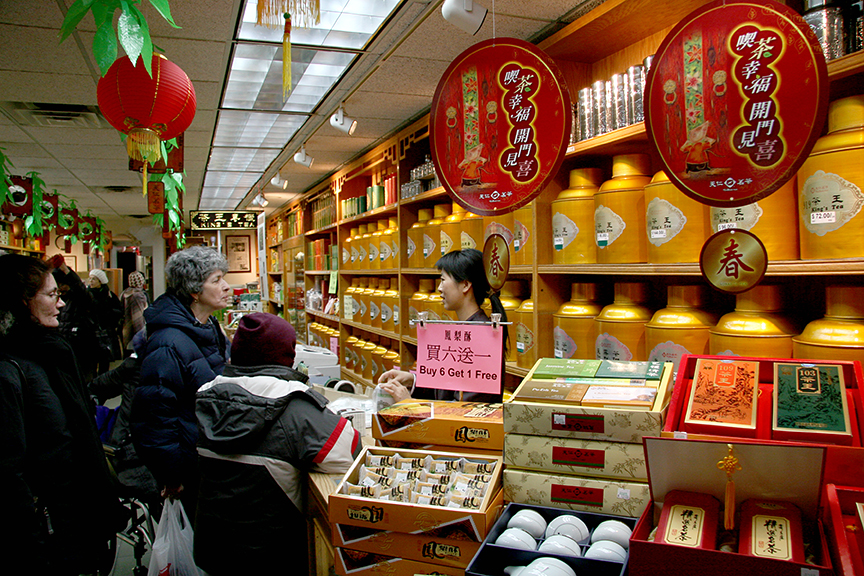
    I suppose it was naive to think than Ten Ren Tea and Ginseng Co. was my own little discovery. After all, it is on Mott Street in the heart of Chinatown. But I had no idea how large this company was. It has not just one store but over 100 worldwide, with 20 in the USA. And the company is 55 years old, founded in Taiwan in 1953. They are now one of the largest tea importers in the world. A photo on their website shows a former president and other notables having tea in their various stores. So they are far from the undiscovered secret I was hoping to bring you. Ten Ren is the largest Chinese tea emporium in the city; the New York stores are run by Ellen and Mark Lii.

    The health benefits of green tea, both validated and not, have been well-circulated in the various media, with much attributed to their antioxidant properties of catechins present. Claims have been made that it reduces blood pressure, decreases the risk for heart attacks, stroke, and cancer, reduces cholesterol, enhances digestion and the immune system, increases fat oxidation, reduces cavities and gingivitis (green tea contains fluroide), and aids rheumatoid arthritis, Alzheimer’s, Parkinson’s, and multiple sclerosis.

    However, none of this means that you should not put Ten Ren on your must-visit list. The calming, pleasant atmosphere is a nice antidote to the melee that is Chinatown. The walls are lined with an array of urns holding over 100 varieties of loose tea from a few dollars to over $100 per pound. Tea is also available in bags and gift boxes. Free tea samples are offered…


  • Bohemian Flavor of the Day

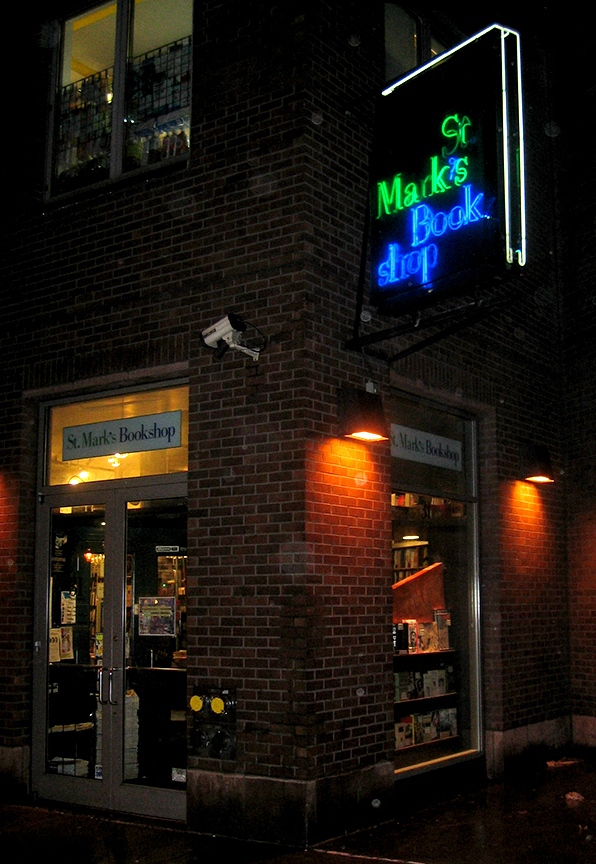
    You could almost create a website just around St. Marks Place. A few short blocks of this street have one of the most dynamic histories in the city. As I wrote in my posting, Physical Graffiti, on June 14, 2007, “The street has been home to hippies, yippies, punks, political activists and protest marches, renowned bookstores, music stores and clubs (e.g. Electric Circus), graffiti artists, cafes, clothing shops, restaurants, bars, theaters, gangsters, and St. Mark’s Church – physical graffiti well describes the street itself.” St. Marks Place reflects the Bohemian flavor of the day.

    When I first moved to New York, the East Village was one of the most exciting places on the planet. Admittedly there were other locales where the violent transformation of the time was evident, but who cared? There was so much here that we could barely keep up.
    The sociopolitical upheaval of the late 1960s and 70s was, like any other, driven by ideologies. And print media, i.e. books, newspapers, and magazines, was the method to record and disseminate the ideas.

    In a pre-internet world, bookstores (and libraries) were the centers of information and had a very special, important role, and their presence said a lot about a neighborhood or community. At one time, on 8th Street in the Village, one could find several bookstores on one block, including the famous Wilentz’s Eighth Street Bookstore. Bookstores were also typically independently owned, so each had a distinct character, and in many cases, a specialty.

    St. Mark’s Bookshop is very unique and is one of the last remaining bookstores from that time. It was established in 1977 at 13 St. Marks; from 1987 to 1993, they moved across the street to 12 St. Marks. Their current location is around the corner at 31 Third Avenue and Stuyvesant Street. They have more than 40,000 volumes specializing in poetry, literature, art, film cultural/political theory, philosophy, and small presses – they carry many things that can not be found elsewhere. They are open every day until midnight. The owners, Terry McCoy and Bob Constant, have been with the bookstore since it opened in 1977…


  • Other Worlds

    One of the great things about New York is its cultural diversity. I don’t mean just seeing an occasional person or persons who hail from another land. I’m talking about enclaves, neighborhoods, or business establishments where one is fully immersed in another culture’s world. If you want to, you can find places in this city that cater to their own and where there is not even one iota of pandering to outsiders at all. This can happen here because there are many ethnic groups (and neighborhoods) so large in the city that one can have a viable business just servicing his or her own community. I encourage you to to peruse my four postings on Jackson Heights, an absolutely fascinating neighborhood in Queens with one of the most diverse communities in the world: Indian Gold, Jackson Heights, The Patel Brothers, The Jackson Diner

    Of course, there is a spectrum, and there are other places which are equally authentic but whose products appeal to a broader clientele. Sunrise is a Japanese supermarket in the East Village where one can find serious Japanese shoppers along with others who also enjoy authentic Japanese goods. Myers of Keswick caters nearly exclusively to people of British ancestry.

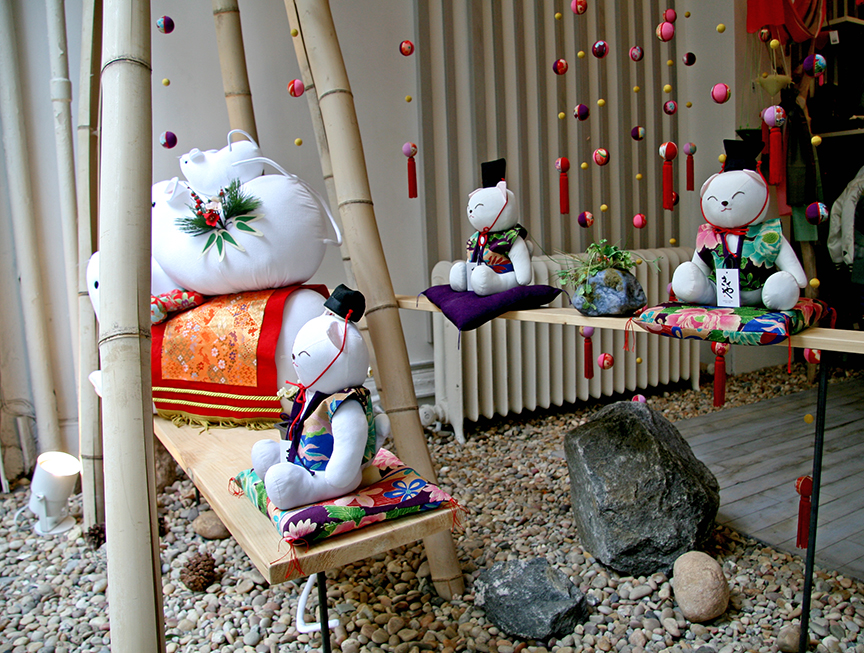
    When I went by Kiteya in SoHo with a friend, we were immediately drawn in by the window display. The shop appeared to be a doorway to anther world. Once inside, our first impressions were proven correct. Everything was slightly alien – usually a good sign of authenticity. The store, displays, and products were all done with a classic Japanese sensibility. The staff also was very authentic, as evidenced by their heavy accents. They were brimming with enthusiasm, particularly once I told them I might do a small article on the shop. The manager started reading my business card aloud and was extremely animated.
    Kiteya, which means “come visit us” in Japanese, was created by a mother & daughter team, Keiko and Yumi Iida. Their products are created by five Kyoto-based artisans.

    I’ve always admired Japanese artisanship and arts. Everything seems to be done with such attention to detail, whether it’s cuisine, clothing, martial arts, writing, or the arts. Things like Ikebana, Bonsai, Origami, Shoji, Futon, Tatami, Kimono, Zen, Sushi, Sake, Anime, Haiku, etc. So highly evolved and refined over millenia, it’s no surprise how much of their culture has found its way into ours…


  • The Honest Boy

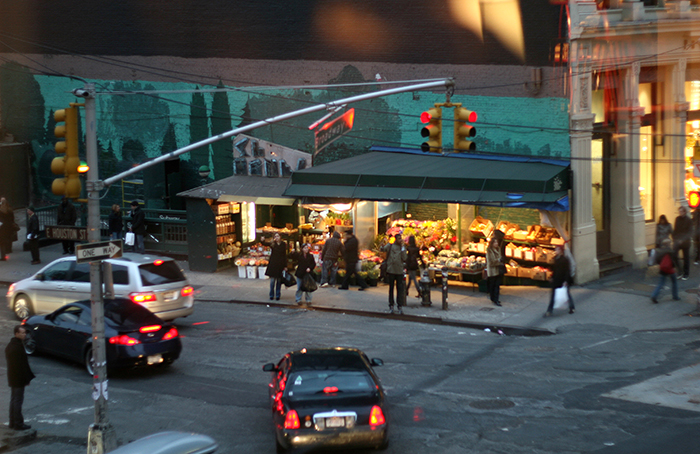
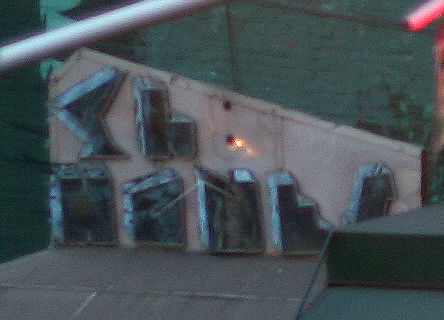
    I really wanted to get a photo of this place with the full original sign, THE HONEST BOY, before a canopy went up and blocked BOY (unfortunately, this blog was started after that). The sign, which originally wrapped around two sides, has the most unusual block lettering – virtually unreadable. Most people whom I have pointed it out to don’t even realize it is a series of letters. You can still read some of it (TH_ HONES) (click here for a closeup).

    Most people look for stability in a world of change, and the older they get, the more they dislike change. We want things we can count on, such as relationships, jobs, product quality, and landmarks. A lot of nostalgia is driven by this. In New York City, you have tremendous dynamics at hand – rapid change along with the classic, iconic, and durable. Many will fight to preserve and save any vestiges of the past; others welcome the bulldozers and see renewal as progress. And, of course, all of this leads to controversy, battles, and conflicted feelings.

    All those elements are here in this little fruit and vegetable stand at Broadway and Houston Street, which has been a fixture for decades. It occupies a triangular wedge of land (of about 1000 square feet) abutting a subway station entrance. It is owned by the MTA (Metropolitan Transit Authority). In 1980, it was taken over by Louis and Carmen Arenas. In 1992, the MTA had plans to erect an electrical substation but abandoned them due to community protests.

    Since 1990, I have been a frequent customer of The Honest Boy. Until recently, they had tremendous buys – bags of good quality fruits and vegetables for $1. The Arenas ran it until 2005, when Louis Arena (due to poor health) transferred it to Pan Gi Lee. Since then, the goods have become pricier. No more bags of peppers, tomatoes, lemons, and potatoes…

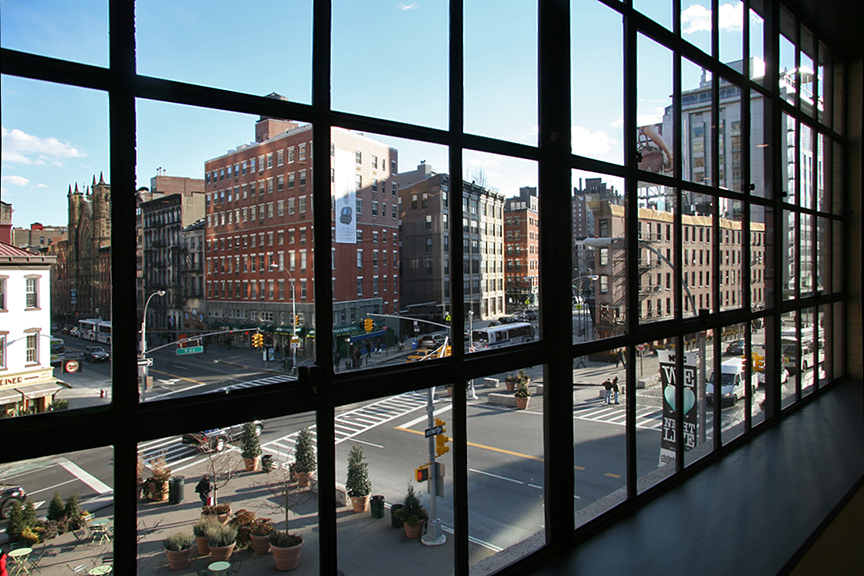
    I have read several articles today, and a long thread of comments regarding new plans by the MTA to build a two-story glass, steel, and aluminum building would incorporate one of the entrances to the Broadway and Lafayette subway station. It’s interesting that on one website, all were in favor of the demolition and considered it a pathetic shack or shanty. They complained of rats, the homeless, the stench of urine, and an impossibly crowded corner to shop. Perhaps I have been in New York too long – what was the problem again? 🙂

    Photo Note: A good vantage point with poor conditions. This photo was taken across the intersection from the second floor of Crate and Barrel at an angle through a glass window.


  • Botánica

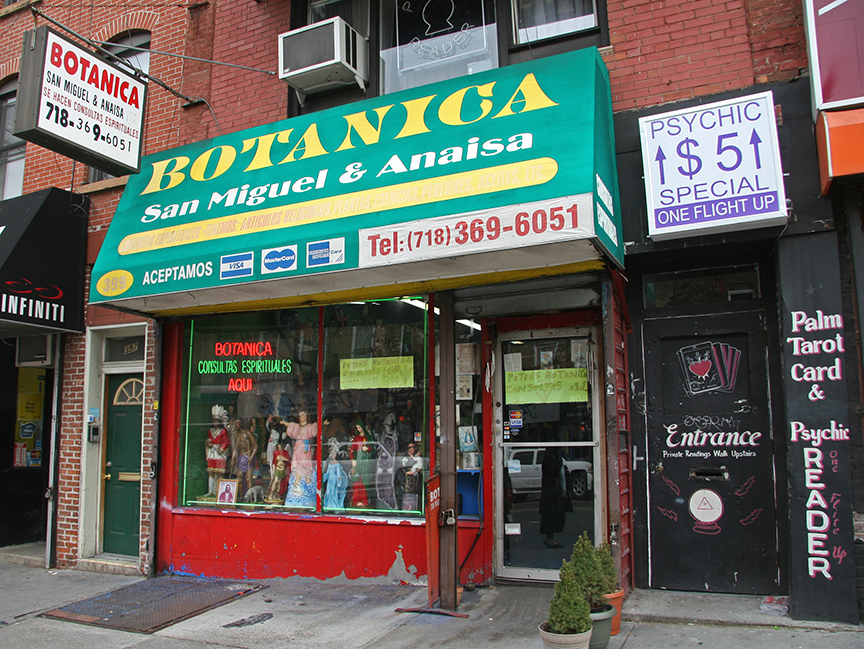
    I have been seeing Botánica shops as long as I have been in NYC but had never given them any serious attention or gone inside one. Many of them have closed due to the escalating rents, so I took the opportunity to actually enter one for the first time – Botanica San Miguel & Anaisa at 399 5th Avenue in Park Slope, Brooklyn – and speak to the owner, who was from the Dominican Republic.

    There was a cloud of smoke in the shop and distinct odors emanating from the myriad of natural aromatic items. The place was an amalgam of products and literature of numerous disparate spiritual and folk practices – they also provide spiritual consultation and readings. These shops are typically found in Hispanic countries and neighborhoods and can be found throughout New York City. The word botánica means botany in Spanish – the stores are well-supplied with medicinal herbs as well as oils, incense, perfumes, scented sprays, and elixirs.

    I was told by the owner that the core beliefs are Roman Catholic and that implements of the religion could be found, such as rosary beads, holy water, and statuary and images of saints (such as the popular Virgin of Guadalupe). However, many Botánica go far beyond Catholicism, as this shop did, and have products for a variety of spiritual practices such as candomblĂ©, curanderismo, espiritismo, macumba, and santeria. There are also supplies and books for alternative folk medicine and magical articles such as amulets. Candles dominated the shop, with shelf upon shelf in a variety of colors and purposes. There were things for nearly every need – healing remedies for various conditions or products for love, money, or warding off bad weather (such as hurricanes). I even saw Buddhist and Hindu candles…


  • Meatup

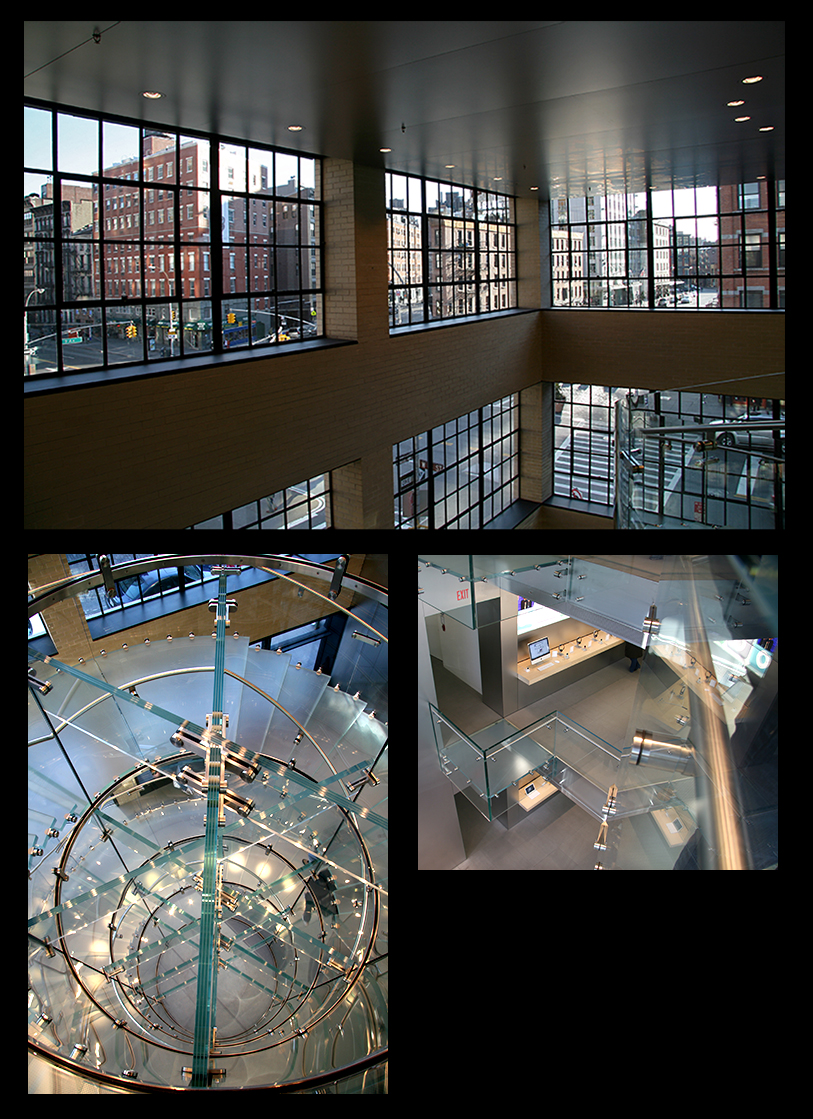
    In the two years I have done this blog, I have yet to do a posting on the Meatpacking District per se (I will in the future). I brushed the area with my posting on the Old Homestead Steakhouse. Today’s photo is taken from the new Apple Store on 14th Street and 9th Avenue in the heart of the meatpacking district, a surprising choice for a retail store of this type. Click here for more photos. The area has been gentrified but is primarily restaurants and clothing boutiques.

    Intrigued after hearing that this new store is their 2nd largest (after one in Chicago), a friend and I decided to make the pilgrimage in the frigid cold. The 4-story store was a buzz of activity, as are all the NYC Apple stores. If you want to witness the cult that is Apple, visit one of their stores. One of their keys to success has been the evangelism on the part of the users – a phenomenon described in the Macintosh Way by Guy Kawasaki, one of the original Apple employees responsible for marketing of the Macintosh in 1984.

    Today’s title is more than an obvious play on the phrase “meet up.” It seems that everything nowadays needs to be branded or organized to have legitimacy, whether it’s storytelling, beekeeping, or walking. So why not organize groups under one umbrella? In 2002, Meetup.com (Meetup) was formed by Scott Heiferman, Matt Meeker, and Peter Kamali.

    The primary inspiration was the book Bowling Alone, by Harvard sociologist Robert Putnam, about the decline of community in America. The founders knew that people were spending more and more time in front of their computers, DVD players, and TVs and losing personal connections. So the organization was formed to get people to reconnect in their own communities. There are millions of members worldwide, thousands of topics, and hundreds of thousands of local groups. Although there is an online site – meetup.com – the primary function is to facilitate the offline meetings.

    In high school, I used to belong to numerous clubs. The same fundamental elements were operative – people meeting in the flesh to share a common interest or activity…


  • Ăśber Peek

    Honesty can be a good policy, and honestly, after a stressful holiday weekend with all the preparations and travel, I did not have the energy this morning to do a posting. So I perused my photos with disappointment and tried to figure out how to spin straw into gold, or at least silver.

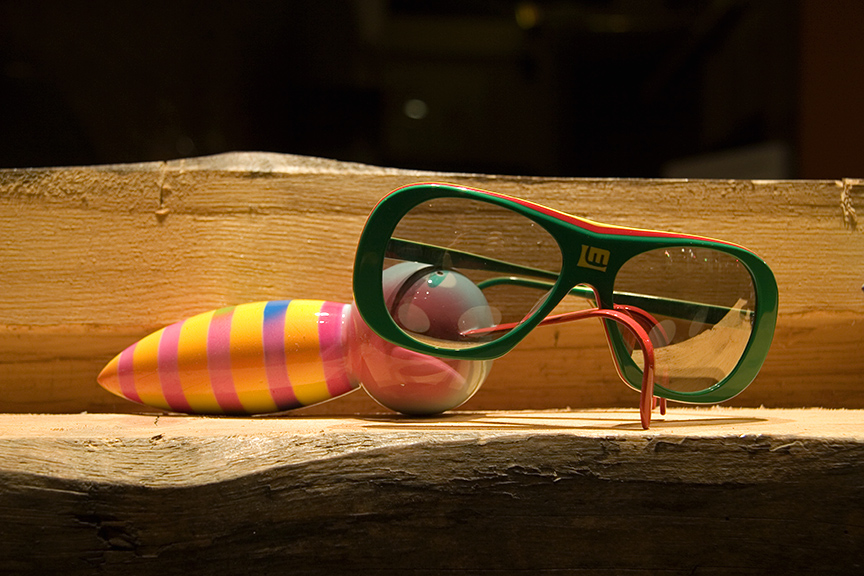
    The photos of the window display of Disrespectacles Eyewear at 82 Christopher Street was always interesting to me but had been previously nixed as not worthy. But in doing an online search for this store, interesting things popped up. Using the singular Disrespectacle returned only 5 items from Google, while the plural returned 2450 – quite unusual. Typically, the singular brings back more than the plural (?). I also found a website on lovewords that defined Disrespectacle as “To be publicly disrespected.” Finally, I arrived at the store’s website. I found descriptions of their product line such as funky, trend-setting, hip, ĂĽber-sleek, industrial-sleek, high fashion, hard-to-find, and ultra high-end boutique, with features and reviews from all the top fashion publications.

    Retailing is very competitive – merchants must be increasingly creative to stay alive in a crowded marketplace. And they are protective of their efforts. I am more and more frequently told that I can not take photographs in stores. In some cases (like restaurants), this is to protect the privacy of patrons, but often it is due to paranoia – i.e. that others will steal their ideas for displays and decor. All the newer, trendy establishments which are hyper-designed are like this. Pinkberry (a new frozen dessert place) is a good example – they have a no photography icon on their windows. In shooting from the street through the windows at the French restaurant Balthazar in SoHo, I had a waiter inside waving his arms at me to signal that no photos are to be taken. So, from time to time, when I can manage to take a photo surreptitiously, I will offer you ĂĽber-peeks of the verboten…


  • dinamic_sidebar 4 none

©2026 New York Daily Photo Entries (RSS) and Comments (RSS)  Raindrops Theme