• Category Archives Tourist Attractions
  • Black Friday 2007

    Today is Black Friday. Everyone knows that the day after Thanksgiving is considered the commencement of the Christmas shopping season and is one of the busiest shopping days of the year. The most common explanation for the origin of the term Black Friday is that it is the start of profitability of many businesses, putting them in the black (an accounting term hearkening back to when accountants used red ink for loss and black for profits). In actuality, many businesses do rely on holiday sales to show a profit for the entire year. An older origin of the term is an implied comparison to stress and chaos of other black days such as Black Tuesday, the day of the 1929 stock market crash.

    It’s remarkable that holiday shopping has taken on such epic proportions – frenetic shoppers fueled by desperate retailers. I once remember hearing a remark that shopping is what Americans do best. So shop ’till you drop 🙂

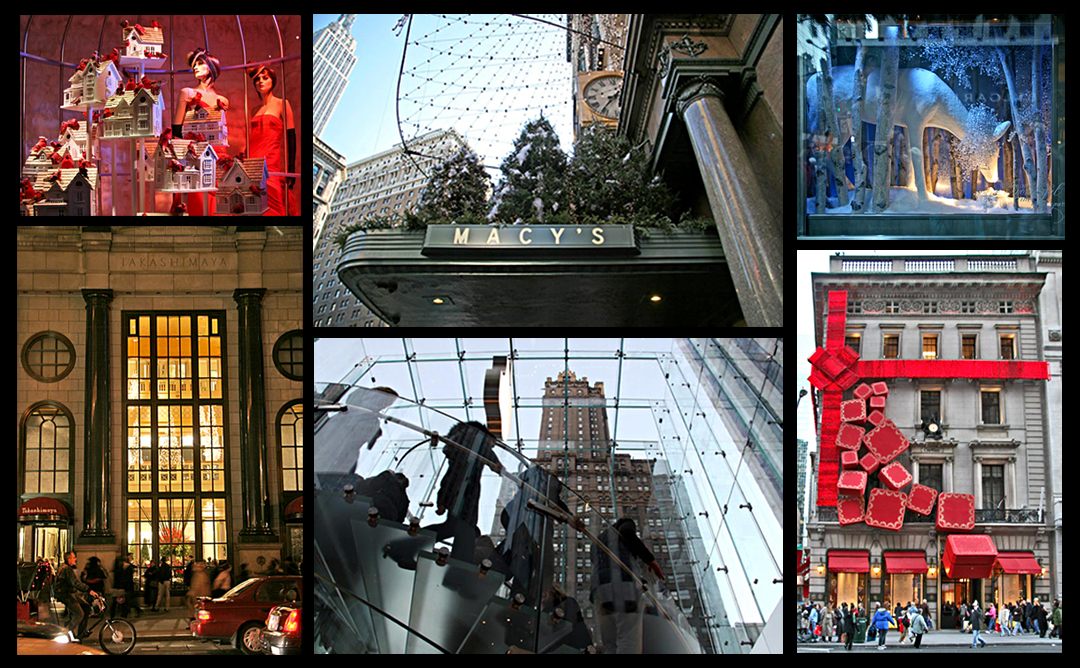
    Photo Note: I have assembled a collage of photos of the major retailers I have featured on this site since its inception (March 2006). The photos are listed clockwise starting at the upper left. (click on any to go to that posting and it photos): Saks, Macys, Tiffany’s, Takashimaya, Apple and Sherry, Cartier
  • Luxury

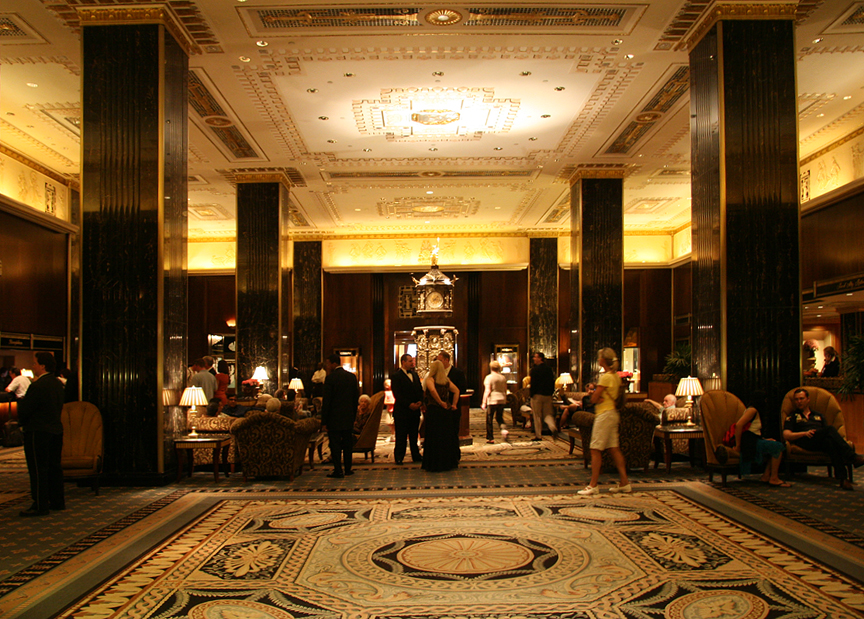
    I have not done a posting on the Waldorf Astoria Hotel per se (I will do a more in-depth piece in the future) but did feature their famed clock earlier this year. The Waldorf epitomizes classic, iconic New York. If you want to see a place that just exudes old world charm and luxury, New York style, this is it: the Palace of New York and art deco masterpiece. Of course, the Plaza (no longer a hotel) and the Pierre give it a run for the money, but if I had to pick one hotel that says “New York,” this would be it. There are so many historical associations, including ringing in the New Year with dance band leader Guy Lombardo. Presidents, Queens, dignitaries, and celebrities of all types – the roster, past and present, reads like a who’s who. The hotel has the largest elegant ballroom in the city – four stories high. This is home to the annual International Debutante Ball.

    The U.S. government maintains a large suite on the 42nd floor as a residence for its United Nations ambassador. The presidential suite has been home to every President of the US when visiting New York since 1931. If, by the way, you have never been (whether resident or visitor), I highly recommend that you visit and wander about. The main lobby is a must-see. Have no concern about visiting as a non-guest – there is too much traffic for anyone to police. Act like you belong, and you will…


  • Village Halloween Parade 2007 # 2


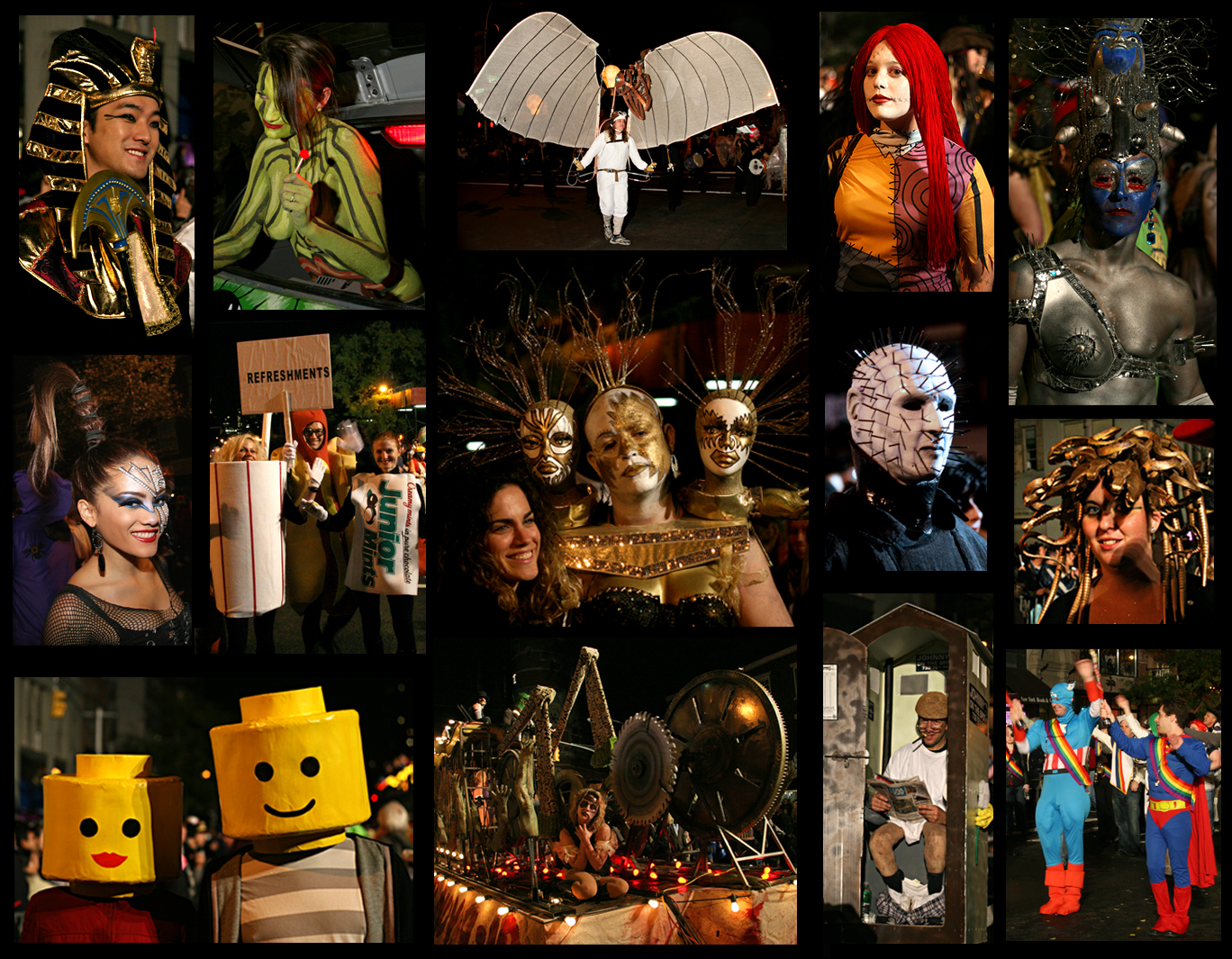
    Make sure to click on the photo to enlarge!


  • Village Halloween Parade 2007

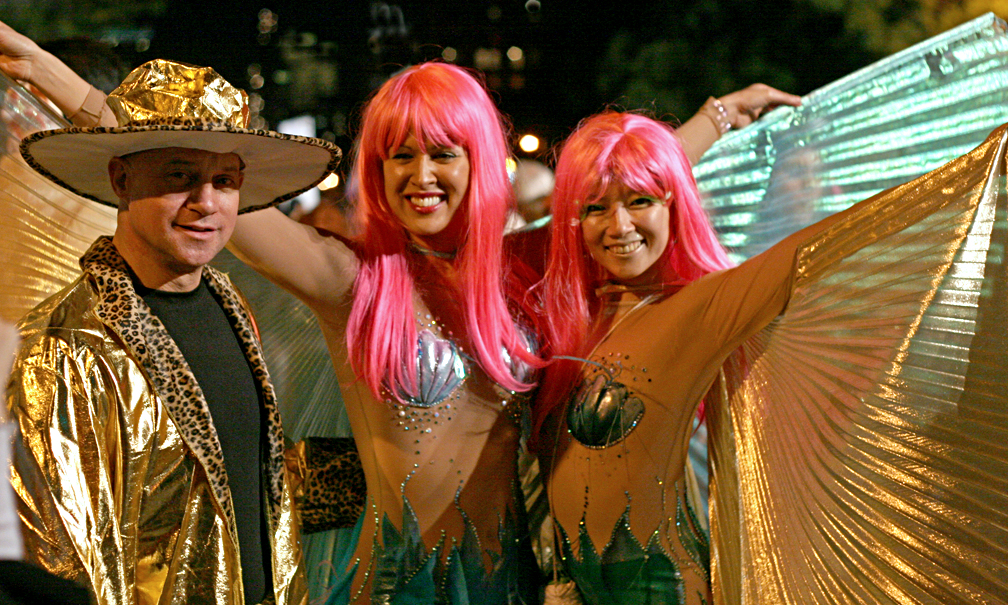
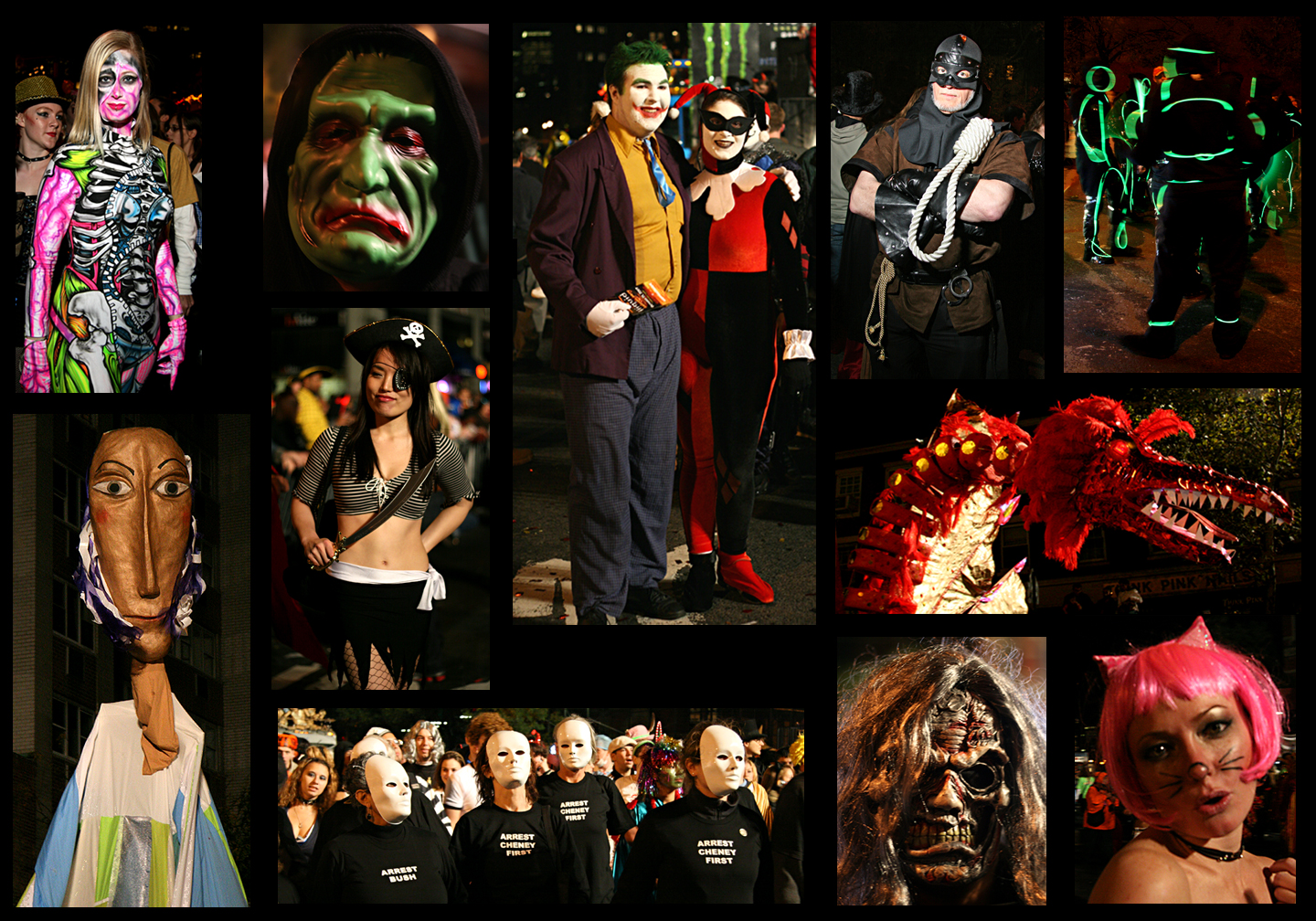
    I’ve chosen a small, somewhat representative collection of photos from the Village Halloween Parade (click on the photo to enlarge). The whole experience was overwhelming, with an estimated 2 million people attending! I will be putting up a gallery of over 200 photos from the parade in the next few days. Check back on this posting, and I will update with a link to the gallery. Many of the parade details, history, attendance, etc. were covered in detail in last year’s posting with a photo gallery. Click here for that posting and click here for the gallery of photos


  • Village Parade 2007 Preview

    Last night, I attended the annual Village Halloween Parade. The weather was perfect and the turnout was phenomenal. The number of attendees (1 million) and congestion is unimaginable, and going in as a photographer with a press pass (as I did) or as a marcher is the only way I would consider it at this point. I have spectated from the barricades many years before – streets are blocked off and pedestrians are directed, restricted, and hoarded, with the spectators piled many persons deep. It’s hard to get decent viewing without getting there 1.5 hours in advance for a front row position against the barricades. In the next couple of days, I will post again on the parade, featuring photos and posting a collection of the best on a supplementary site as I did last year. But first, I have to sift through the 540 photos I took…


  • Cruising

    Depending on where one lives and where and how one travels and commutes, one can experience Manhattan as a maritime community or simply as one of the most exciting and culturally rich cities in the world. In a city like San Francisco or Portland, Maine, with hills and vistas, one is constantly reminded of the sea. In Manhattan, it is easy to become immersed in all that is here without a hint of its island nature. In recent years, the city’s waterfront has become progressively more and more reconstructed and utilized in ways that are sometimes very surprising, even to residents.

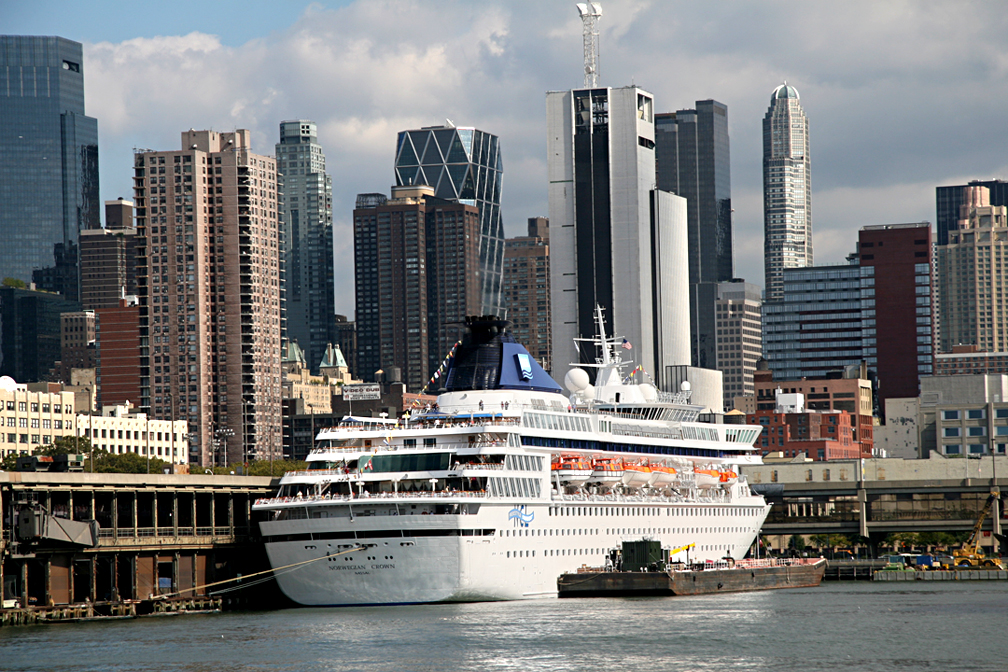
    I have posted on a number waterfront establishments, residences, and activities: Manhattan Island, kayaking in the Hudson River, the Water Club, the River Cafe (Brooklyn), Bargemusic (Brooklyn), the Frying Pan, the 79th Street Boat Basin, Christopher Street Pier, Battery Park City & promenade, art fest in DUMBO, Meier World, Coney Island and The Shore (with the Iceberg Athletic Club and the Coney Island Polar Bear Club), and the wonderful Mermaid Parade (also here). NYC also has a very active cruise ship business at the New York Passenger Ship Terminal (on the Hudson River at Piers 88, 90, 92, and 94 at 46-54th street). The city sees 1,000,000 passengers yearly. The cruise ship terminal is currently undergoing a $150 million renovation. In 2006, the Brooklyn Cruise Terminal opened at Pier 12 in the Red Hook area in Brooklyn.

    Notes about the photo: The glass building at the far left is the Time Warner Center. The articulated building in the center with triangular windows is the Hearst Tower.


  • Sardi’s

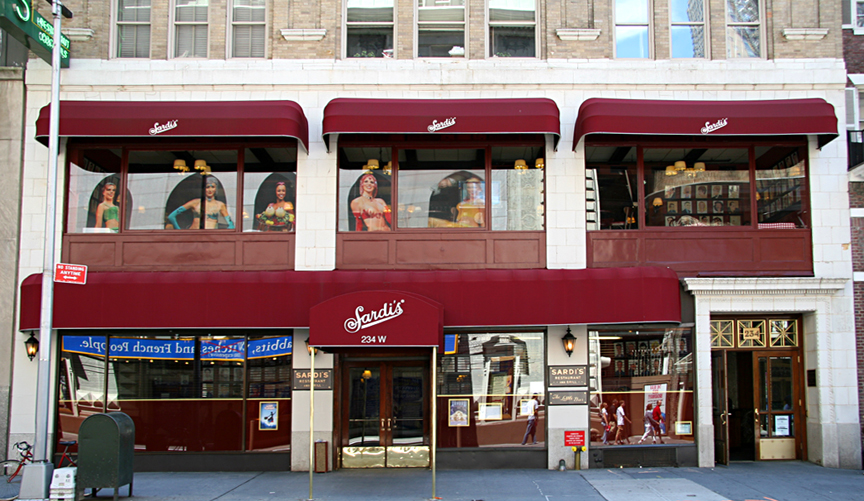
    Unfortunately, the story of Sardi’s, like many others of NYC, is best told in past tense. They have not gone out of business, but that which brought the restaurant its notoriety has gone. What’s left is more of a cliche for tourists. Sardi’s, located at 234 West 44th Street, is in the heart of the theater district and was an integral part of the fabric of that world since Vincent Sardi, Sr. opened the Little Restaurant at 246 W. 44th Street in 1921. Patrons referred to it as Sardi’s, and so the name stuck. In 1927, they moved to the current location. In 1947, management was taken over by Vincent Sardi, Jr. The restaurant is known for the hundreds of caricatures of show-business celebrities on its walls, inspired by Joe Zelli’s, a Parisian restaurant and jazz club. The Sardi’s caricatures were done by Alex Gard, a Russian refugee.

    The stories surrounding Vincent Sardi, Jr. are legendary and speak of old New York. Sardi’s became a Broadway landmark – an institution central to the theater world, with actors, agents, and critics utilizing it as a meeting place. Vincent loved theater and has been referred to as the “Mayor of Broadway.” He was totally supportive of the theater world and was known to carry the tabs of out of work actors. Read his obituary in the New York Times (Sardi died on January 4, 2007).

    Broadway has changed. Stephen Sondheim spoke of a dumbing down of theater and that there is no longer a Broadway community: ”There’s none whatsoever. The writers write one show every two or three years. Who congregates at Sardi’s? What is there to congregate about? Shows just sit in theaters and last.”


  • Ellis Island

    It has been estimated that nearly half of all Americans can trace their family history to at least one person who passed through Ellis Island. This island, at the mouth of the Hudson River in New York Harbor, was the point of entry for over 12 million immigrants entering the United States from January 1, 1892 until November 12, 1954.

    There are many fascinating stories about the island, the immigrants, and the immigration process at Ellis Island: the six-second physical examination, the 29 questions which were asked of newcomers, the long transatlantic journey many had to the US as third-class cargo, the tragic fate of the 2% who were rejected from admission and returned to their countries of origin, and the complex dispute between New York and New Jersey over the island’s jurisdiction. This is an enormous subject on which much has been written – for more information, try any of the following sites: the overview at Wikipedia, Ellis Island National Monument official site, and an Ellis Island web site.

    The building itself underwent a major $160 million renovation starting in 1984. The island was reopened to the public in 1990. To visit Ellis Island is something everyone should try to do…


  • South Street Seaport

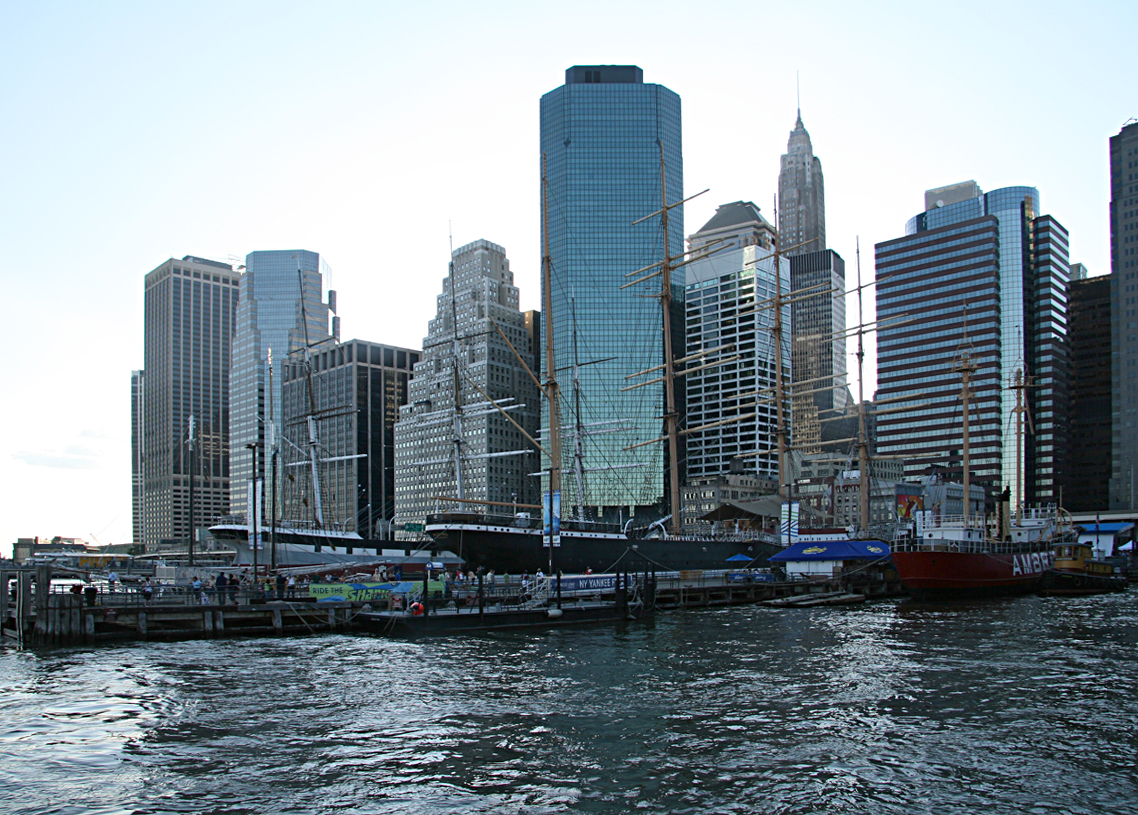
    The South Street Seaport historic district in lower Manhattan is NYC’s offering as a real tourist area, resembling other marketplaces such as the Harborplace of Baltimore, Faneuil Hall Marketplace in Boston, Market East in Philadelphia, Pennsylvania, 6th Street Marketplace in Richmond, Virginia, Portside Festival Marketplace in Toledo, Ohio, and Bayside Marketplace in Miami, Florida. The cloned look of the aforementioned is not a coincidence. They were all done by the Rouse Company, a pioneer in the development of shopping malls and marketplaces since 1956. Although substantial efforts have been made to restore South Street to its original condition and feeling of its past, Pier 17, adjoining Fulton Street and the Fulton Market Building, really defines the area as a tourist-oriented shopping district. Pier 17 itself was converted into a 3-story enclosed mall with shops and a food court.

    However, for those willing to eschew the commercial, it is easy to find much to enjoy in this area. To start with, the vistas alone are reason enough to visit, as one can see in the photo, taken from one of the wraparound outdoor decks at Pier 17. Also, the maritime past really can be felt just strolling through the area. The area has streets of restored buildings, most notably Schermerhorn Row and numerous galleries and moored ships. At Pier 16, seen in the photo, one can find a number of ships, some permanently moored and available for boarding: the Peking (1911), Wavertree (1885), and Ambrose (1908). The Peking and Wavertree are two of the largest masted ships in existence. The training vessels the Pioneer (1885), Lettie G. Howard (1893), and W.O. Decker (1930) offer sail training, public sails, and charter opportunities. The South Street Seaport Museum (207 Front Street) was established in 1967. Start on Front Street: 207 (Visitors’ Center), 209 (Museum Charts and Book Store), 211 (Print Shop), and 213-215 (the Seaport Gallery)…


  • Radio City

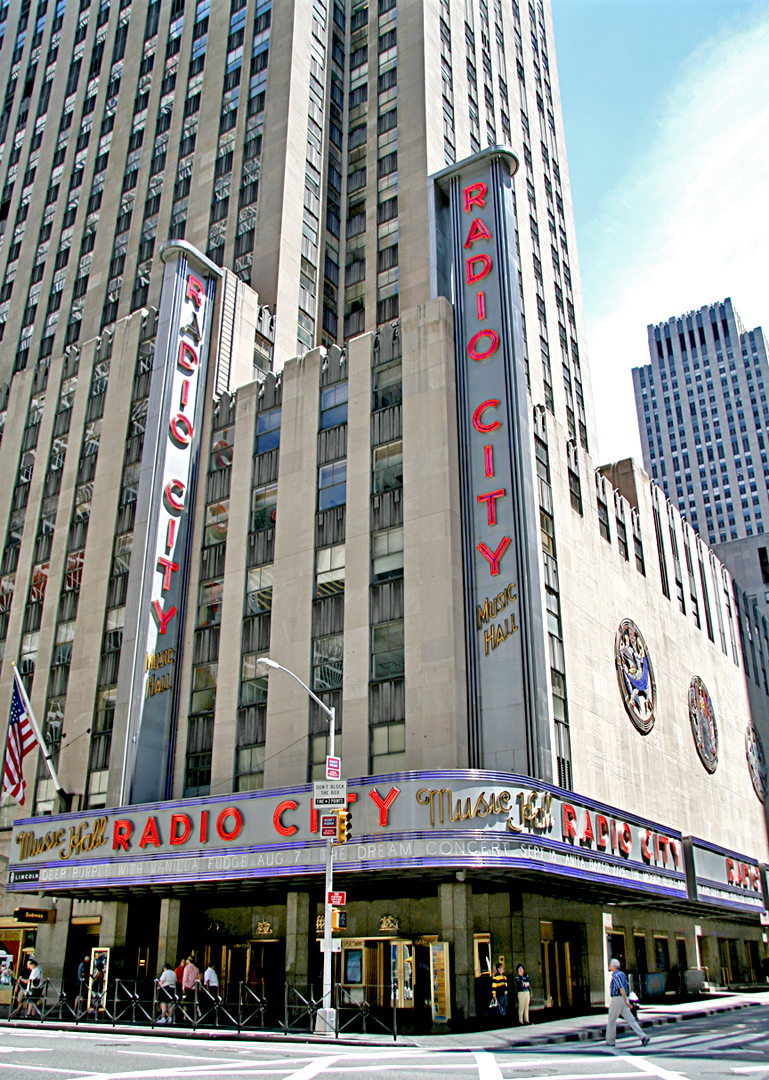
    This is Radio City Music Hall, one of NYC’s best known attractions, top tourist destinations, and part of the Rockefeller Center complex. It has a roster of film debuts and a history of stage shows with luminaries such as Frank Sinatra, Ella Fitzgerald, Linda Ronstadt, Bill Cosby, Liberace, Sammy Davis, Jr., Count Basie, Itzhak Perlman, Ray Charles, B.B. King, et al.

    The music hall was created by John D.Rockefeller, Jr., impresario Samuel “Roxy” Rothafel, and RCA chairman David Sarnoff (the name “Radio City” is from RCA – Radio Corporation of America). Radio City opened in December 1932. The structure was designed by architect Edward Durell Stone, with the spectacular interior by Donald Deskey, winner of the design competition at that time. Deskey was a pioneer in industrial and packaging design with an impressive list of credits, including the Joy detergent bottle (1950), Cheer detergent box (1951), window displays at Saks Fifth Avenue, and exhibits at the New York World’s Fair in 1939.

    The interior, designated as a historic landmark in 1979, is an Art Deco masterpiece with one of the largest stages in the world. Ceilings reach 84 feet. The Great Stage, framed by a huge proscenium arch that measures 60 feet high and 100 feet wide, is an engineering marvel with a system of hydraulic elevators. The Mighty Wurlitzer pipe organ houses its pipes in 11 different rooms. With “The Progress of Man” as Deskey’s general theme, he created a stunning tribute to human achievement in art, science, and industry. He made art an integral part of the design, engaging fine artists to create murals, wall coverings, and sculpture; textile designers to develop draperies and carpets; and craftsmen to make ceramics, wood panels, and chandeliers. All manner of precious materials (including marble and gold foil) and industrial materials were used. In 1999, the facility underwent a massive $70 million dollar restoration. The music hall is home to the renowned Rockettes, a precision dance team, virtually synonymous with the theater itself, along with the annual Radio City Christmas Spectacular, a tradition in NYC since 1933. It’s impossible to give a real sense of this magnificent space in writing – I suggest you visit at least once in your life…


  • Density and Intensity

    Posted on by Brian Dubé

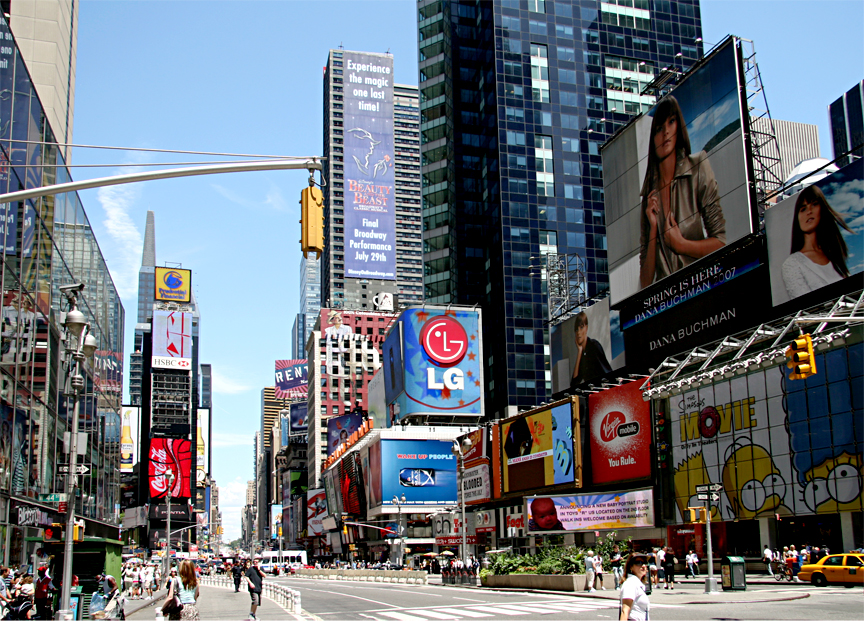
    This is Times Square, where 7th Avenue intersects Broadway. No area better symbolizes urban density and intensity in NYC and this country – it is an international icon. The Times Square neighborhood is generally defined as the area in the 40s, north of 42nd Street, between 6th and 8th Avenues. The area was named Times Square in 1904 after the New York Times erected a building and established operations there (this building is now known as One Times Square and is where the ball is dropped on New Year’s Eve). The area is also known as the theater district, home of Broadway theaters and hotels – a constant that has kept the area alive.

    Seasoned New Yorkers know, however, that for most of its recent history, Times Square was quite a seedy and dangerous neighborhood in decline, known for its sex shops, porn theaters, crime, drug dealers, and disreputable retailers. Efforts at major rehabilitation began in the 1990s. Most agree that the area has improved, although many feel that it has been too “Disneyfied.” Animated and illuminated signs/ads, neon, and lights have always been a mainstay here, and today this has further intensified with the addition of more sophisticated and brighter LED signage – the area now rivals Las Vegas as far as visual impact. In the future, I plan to do some photography at night – the best time to see the area. Until then, I recommend visiting. Make special notice of the spectacular seven-story illuminated NASDAQ sign at 43rd Street – don’t worry, you can’t miss it 🙂

    Posted on by Brian Dubé

  • Rain Forest

    Posted on by Brian Dubé

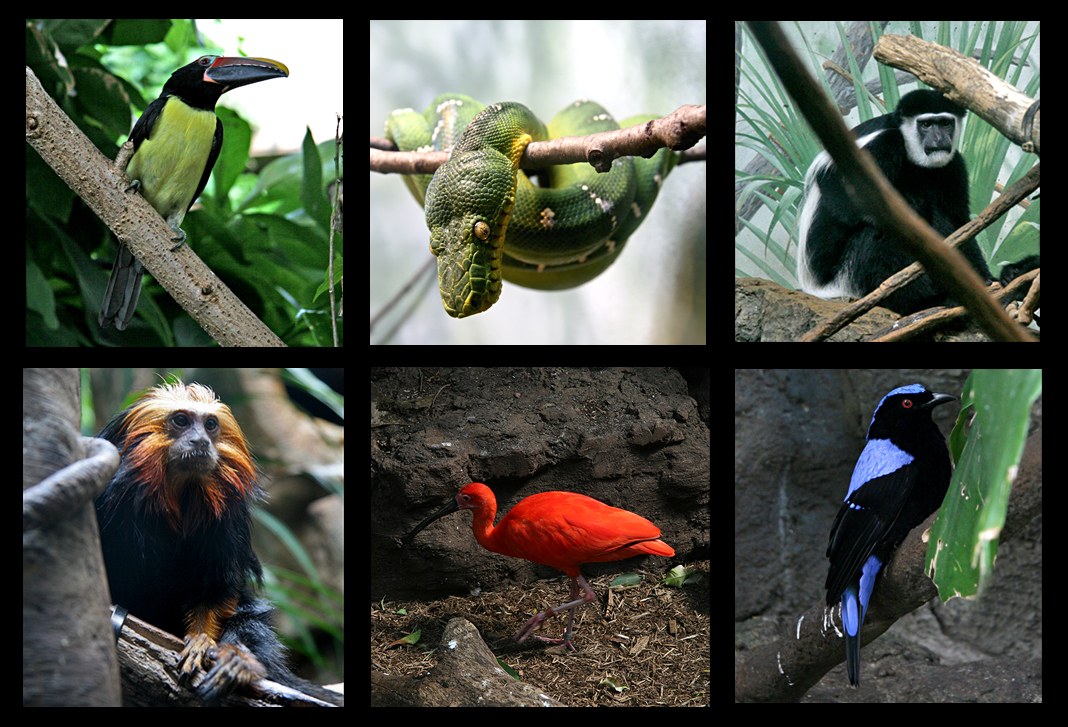
    This is the Tropical Zone at the Central Park Zoo, my second posting on this zoo (click here for the first posting, featuring the penguin habitat) It is located in the heart of Manhattan and sees 4 million visitors annually. As I previously wrote, the trend in zoos (and botanic gardens, such as the Brooklyn Botanic Garden) is towards habitats, and such is also the case with the Central Park Zoo, which underwent a complete rehab in 1988.

    The zoo is divided into three climactic zones: a Polar Zone, a Temperate Territory, and a Tropical Zone (interestingly, the Tropical Zone is referred to as the Rain Forest on their official map). The tropical habitat houses a variety of animals in a jungle environment; there are numerous birds, monkeys, snakes, frogs, lizards, and toads.

    In the photo collage, starting upper right going clockwise, we have a Toucanet, Emerald Tree Boa, Colobus Monkey, Tamarin, Scarlet Ibis, and a Fairy Bluebird. One of the outstanding aspects of the tropics is the fantastic, bright colors of the native birds. The spectacular plumage is a draw for observers, photographers, and, I imagine, for those who purchase these birds as pets…

    Posted on by Brian Dubé

  • Feeding at the Zoo

    Posted on by Brian Dubé

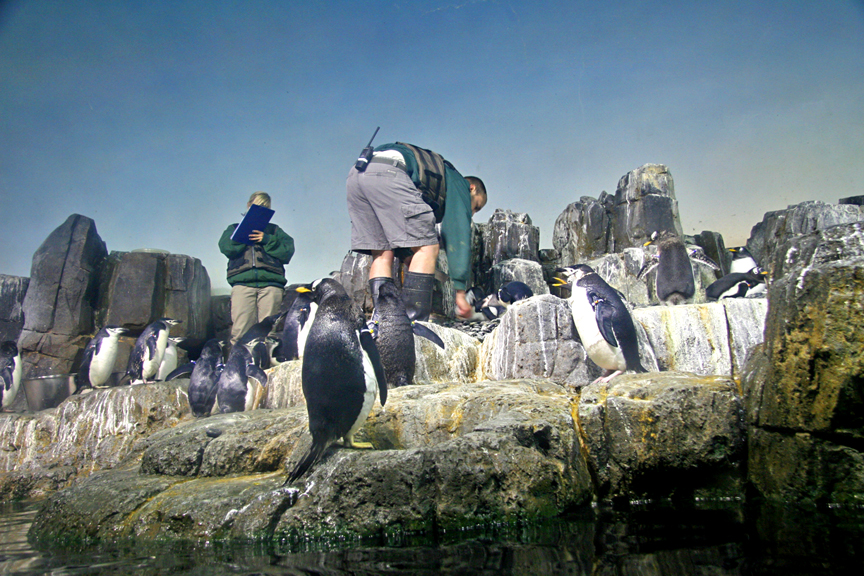
    This is feeding time for the penguins at the Central Park Zoo. The public seems to be endlessly fascinated with penguins – their upright walk, lack of fear of humans, and tuxedo-like plumage has endeared them to the public worldwide. They have become a virtual mascot of cuteness. Wikipedia even has a separate entry, “Penguins in popular culture.”

    The penguin and puffin house is one of a handful of habitats in the Central Park Zoo, one of the oldest in the United States, which originated in 1864 as the Central Park Menagerie. In more recent times, the trend has been to move away from the older menagerie style of zoo, where animals are caged for collection, exhibition, and entertainment purposes. By the 1980s, the Central Park Zoo was in very poor shape; a 1981 New York Times opinion called for closing of the zoo (Let’s Do Away with Central Park Zoo by Alice Herrington). In 1983, the zoo closed for complete renovation and reopened in 1988.

    The new design, which was applauded, featured more natural habitats – the trend in North American and European zoos. The focus is now more on conservation of endangered species, research, and education, and secondarily for entertainment of visitors. Of course, these natural habitats are still quite limited in size; the Central Park Zoo is small and does not permit the type of environments seen in places like the Bronx, Philadelphia, or San Diego zoos. But it is a dramatic improvement – I had the unfortunate privilege to see the zoo in its former incarnation. Fortunately, my memories of it are quite indistinct…

    Posted on by Brian Dubé

  • Blue Man Group

    Posted on by Brian Dubé

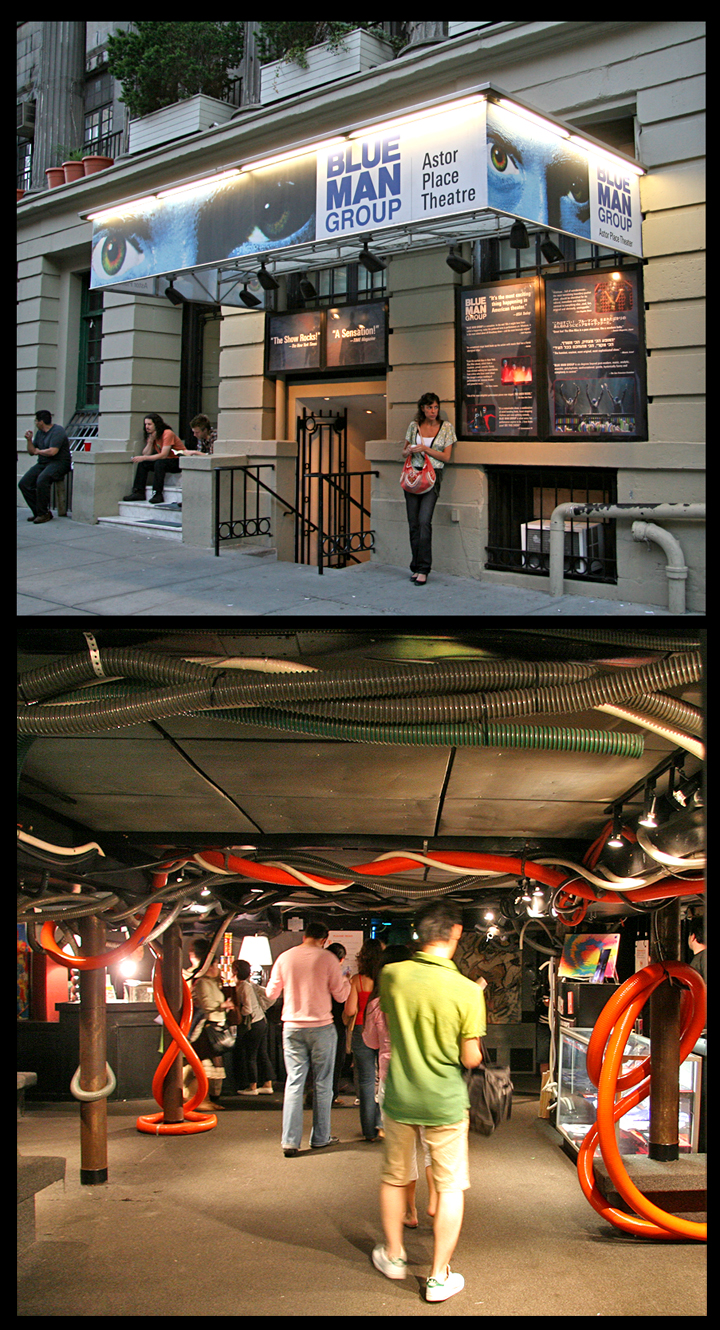
    I have not done any theater on this site; photography during a theater performance is taboo, and exteriors of most theaters themselves are not the most visually compelling. Plus, the shows themselves are quite well-marketed and reviewed by those better qualified than myself. However, Blue Man Group has become more than a show (click here for their website). They are an institution and an industry, with performances in New York, Boston, Chicago, Las Vegas, Berlin, London, Amsterdam, Oberhausen, and Orlando. They have several CDs, DVDs, an online store with a plethora of merchandise, and two musical toys developed for children. They have done film and TV scoring, commercials, television programs (like Scrubs and Arrested Development), and a children’s museum exhibit, Making Waves, which is currently touring the country. Their appearance in the Intel commercial campaign in 2000 brought them international visibility.

    The group itself was formed in 1988 by Matt Goldman, Phil Stanton, and Chris Wink, motivated by an interest in creating a show which involved audience collaboration. Their first theater performances were at La MaMa in the East Village; in 1991, they moved to the Astor Place Theater (seen in the photo). The characters are three mute Blue Men (played by rotating cast members), their faces in blue grease paint and wearing nondescript black clothing. The extraordinarily unique performance art show, called Tubes, is heavily music-oriented – numerous unique instruments were created by the group, such as the tubulum, drumbone, and airpoles. Comedy, satire, social commentary, irony, painting, percussion, clowning, and sophisticated lighting effects are all there, along with numerous substances (including food and paint) thrown and ejected, some of which may hit audience members – the first few rows are provided with plastic ponchos…

    Posted on by Brian Dubé

  • Just Passing Through

    Posted on by Brian Dubé

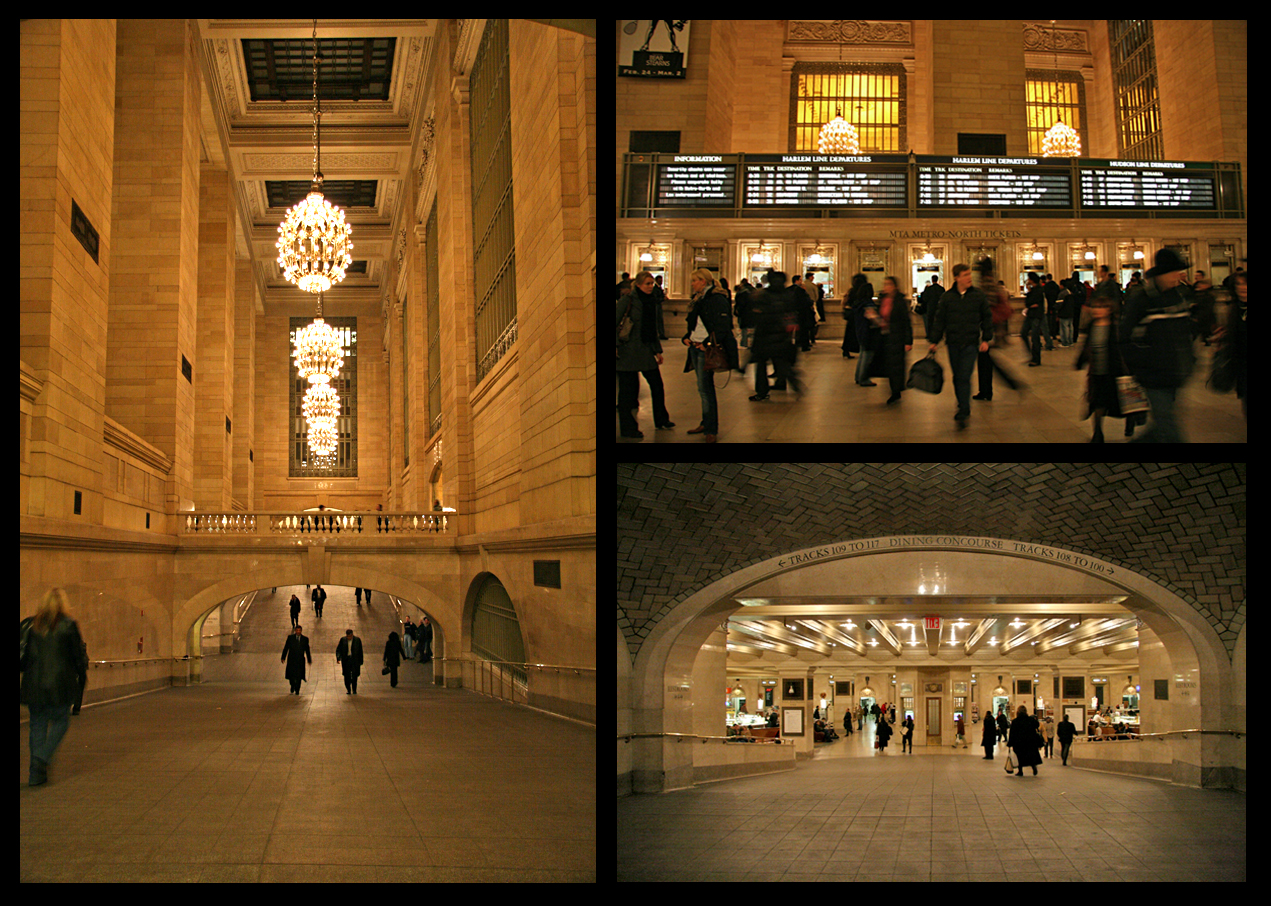
    I have done 3 previous posts on Grand Central specifically: the main concourse, the exterior rooftop sculpture, and the famous clock, along with a post on the Oyster Bar. This posting shows other areas of the station. On the left is one of the passageways – magnificent and Grand, isn’t it? – befitting of its name. The upper right shows the main concourse facing the timetables. And on the lower right is a photo in the subterranean depths leading to the train tracks themselves.

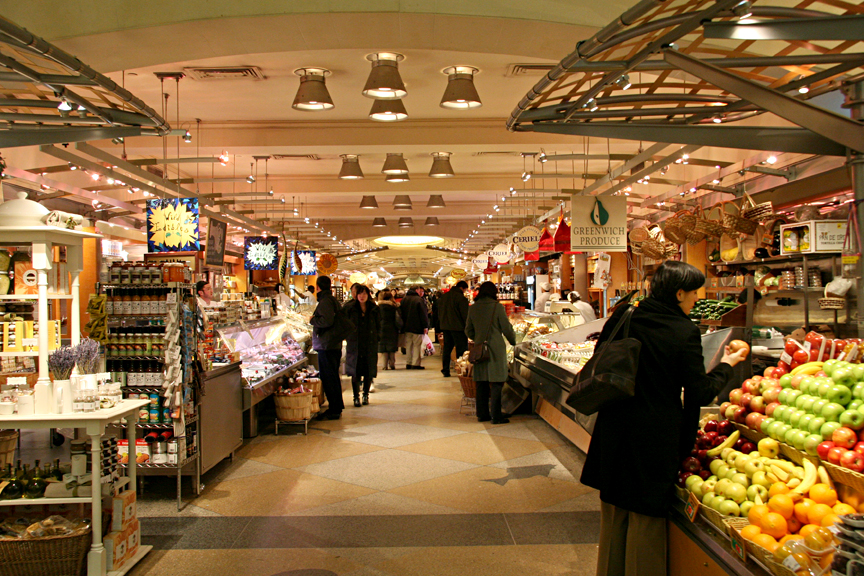
    At the east end of the terminal, there is also a wonderful food market, which I only recently discovered: The Grand Central Market, a gourmet European-style food hall. Several of the city’s premier food shops are vendors here (such as Murray’s Cheese) (see here). All told, Grand Central is a world unto itself, with restaurants, shops, and a myriad of environments. I love this place, an edifice in stone, iconic NYC – a constant in a world of change. In a way, this station is a metaphor for life itself – we’re just passing through…

    Posted on by Brian Dubé


  • dinamic_sidebar 4 none

©2026 New York Daily Photo Entries (RSS) and Comments (RSS)  Raindrops Theme