• Category Archives Tourist Attractions
  • The Brooklyn Museum

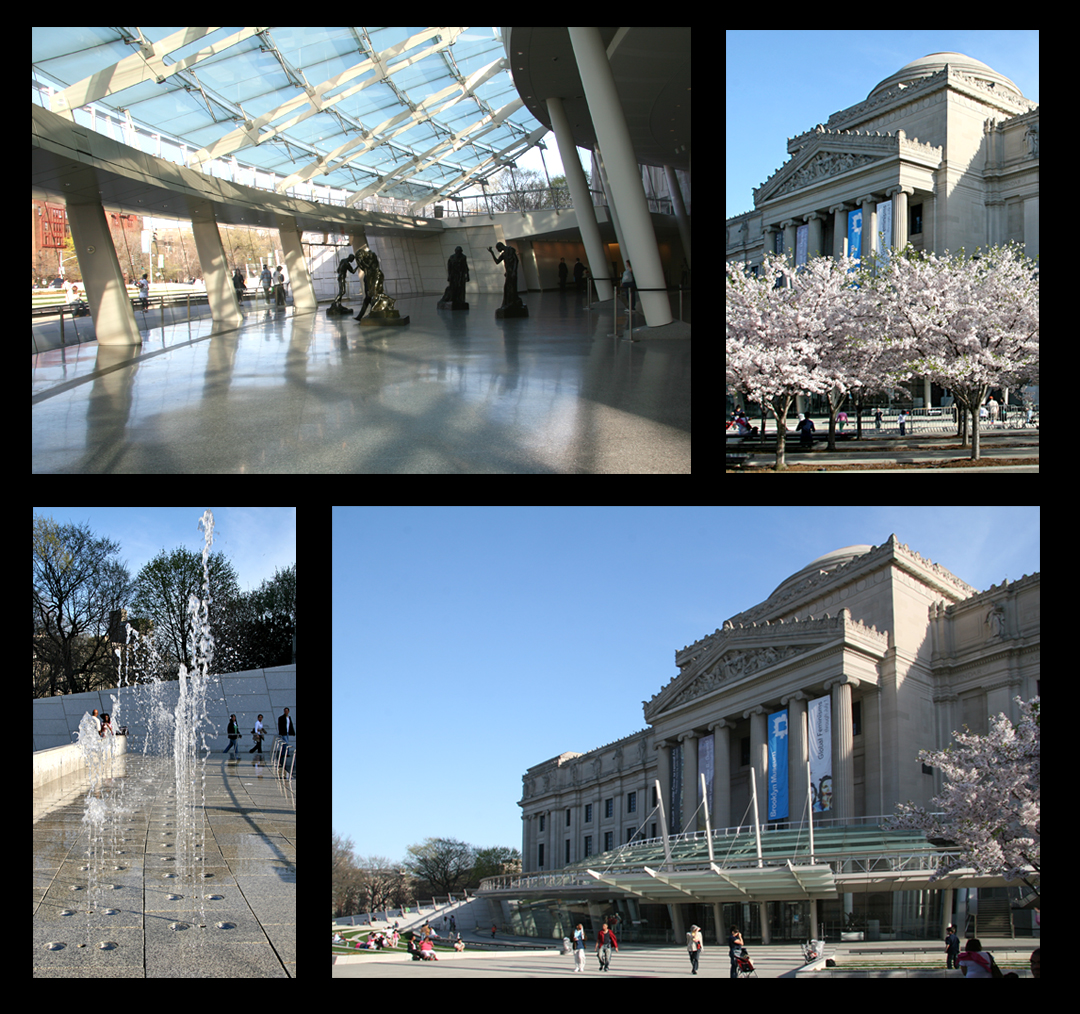
    For most visitors and many residents, New York City is Manhattan. And with all there is in Manhattan, Brooklyn can be easily overlooked. But this borough, the largest of the 5 that make up the city, is a world unto itself, with many treasures, both large and small. The Brooklyn Museum is one of the largest and most comprehensive art museums in the country. With permanent collections of more than a million objects, its holdings include objects ranging from ancient Egyptian masterpieces to contemporary art and represent almost every culture.

    The Museum is housed in a 560,000-square-foot landmark Beaux-Arts building designed by McKim, Mead & White. It is located in central Brooklyn, a half-hour from midtown Manhattan, with its own subway stop. The Brooklyn Museum is set on Eastern Parkway, one block from Grand Army Plaza, in a complex of parks and gardens conceived in the 19th century, that is also home to Prospect Park, the Brooklyn Botanic Garden (with which the Museum shares a parking lot), the Prospect Park Zoo, and the central branch of the Brooklyn Public Library. In 2004, a $63 million dollar renovation was completed. The museum also has very diverse exhibits atypical for an art museum, which I believe makes it more accessible to a broader audience. Even if you are not an art museum goer, I highly recommend a visit…
  • Bazaar

    Posted on by Brian Dubé

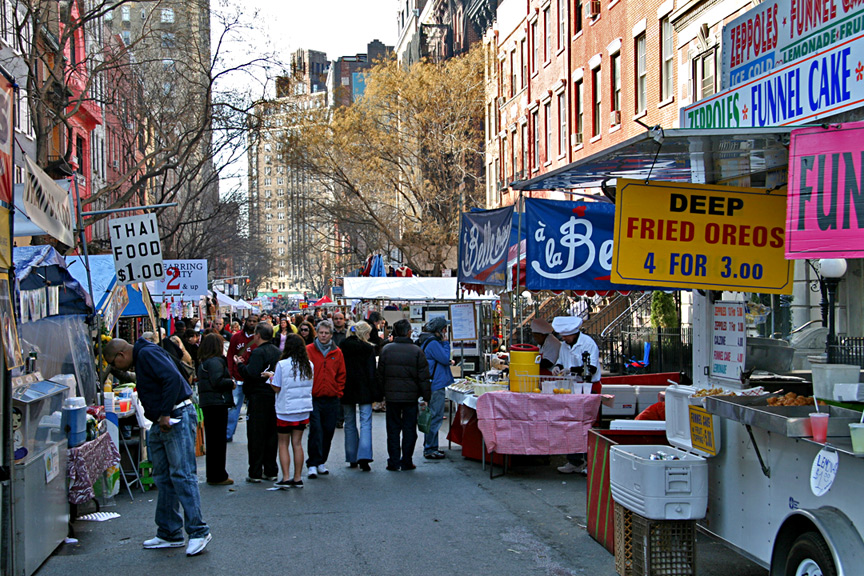
    This is the typical NYC street fair. To the uninitiated, it looks like fun. However, after doing a few of them, they are very boring. The problem is that you see the same vendors at virtually every fair, most of them of little interest – socks, gyros, small tools, bedding, Peruvian sweaters, imported crafts, CDs, smoothies, T-shirts, etc. The residents I know mostly ignore them, perhaps getting an occasional snack. A recent research group put it perfectly: “The fairs had lost all sense of novelty, catered too heavily to out-of-town vendors and failed to showcase the work of entrepreneurs and artists based in the five boroughs…The worst part is that they are uniformly bland.”

    There were 367 permits issued in 2006. Over half the fairs are organized by a few companies, with many of the vendors from out of town. 20 vendors held 46% of the food permits. So, unfortunately, the fairs do not draw vendors from the enormous pool of creative, interesting, and varied local businesses and talent – a real shame, because these fairs could be awesome. I must say, however, that street fairs like this, with their bazaar-like atmosphere, are relatively uncommon in this country, so in principle, I think the concept is welcome. Street life is one of the most fascinating aspects of New York and what distinguishes it from other places. If you are willing to ply, wade, and dig, some useful items can be found. Efforts are being made to changes rules, which would encourage more local participation…

    Posted on by Brian Dubé

  • Union Square

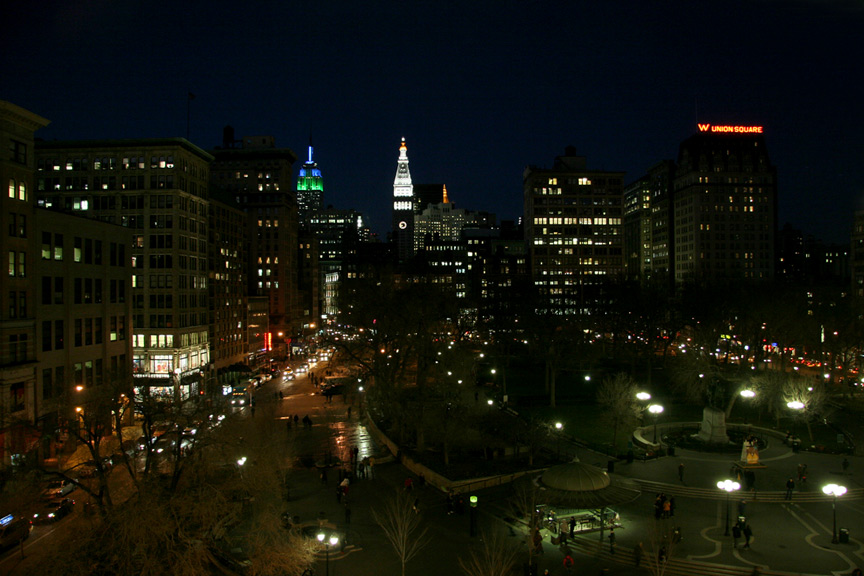
    This is Union Square at night from 14th Street looking north. Union Square is the nexus of Broadway, Park Avenue South, 4th Avenue, 14th & 17th Streets, University Place, and Union Square East and West, with Union Square Park as its centerpiece. It is a major subway station with 8 train lines (note the pagoda entrance bottom center).

    Union Square is its own neighborhood/district, with a breadth and depth of services that are hard to match. On the photo left, we have Union Square West, where you find various retailers and several notable restaurants such as Republic, the Coffee Shop, Blue Water Grill, and the Union Square Cafe (16th Street). The open area also on the left is the home of the famed Union Square Greenmarket, which operates three days a week.
    On the north side (photo top), there is the city’s largest Barnes and Noble superstore (occupying the entire 6-story, restored, former Century Building) and the W Hotel at Union Square. In the Park itself, we have the restaurant Luna Park, the Gandhi statue, dog runs, and playgrounds Just out of the frame on the far right is the first big development on the Square – Zeckendorf Towers.
    On the south side, from where the photo was taken, there is the Virgin Atlantic Megastore, Filene’s, a new behemoth Whole Foods market, and the public artpiece Metronome.

    A myriad of other retailers, services, and street vendors (such as Joe Ades) dot the perimeter of the park and the sidestreets. Check out the links throughout this posting to several of my posts on Union Square…


  • Grand Central

    Posted on by Brian Dubé

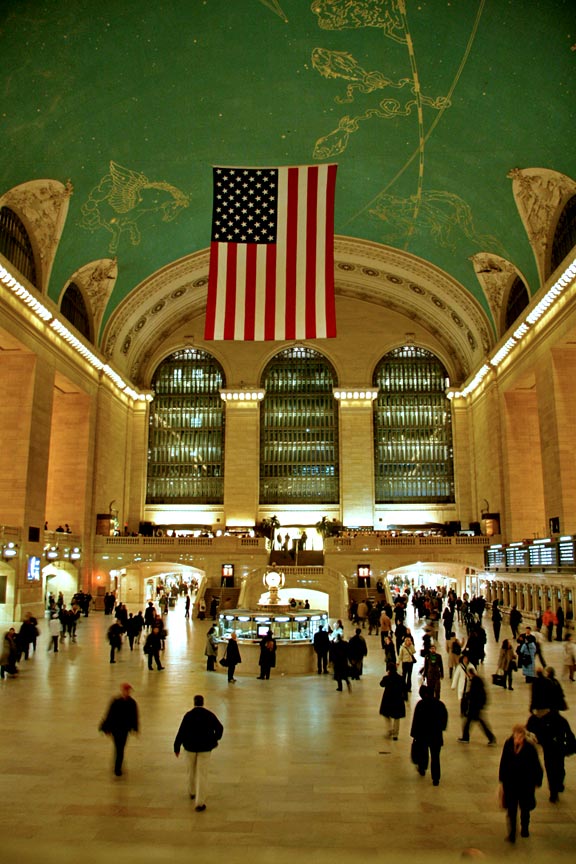
    This is the place whose very name is synonymous with busyness and crowdedness – I grew up outside of the city yet always heard that popular refrain about a place being like “Grand Central Station.” Not an inappropriate reference, since Grand Central is the world’s largest train station.

    Officially Grand Central Terminal, the site has seen three different incarnations of the station, going back to Grand Central Depot in 1871. Amazingly, Grand Central was actually under real threat of various demolition proposals by Penn Central – a decade-long legal fight, with efforts of many including Jacqueline Kennedy Onassis and a United States Supreme Court ruling, succeeded in preservation. In 1976, Grand Central was designated as a National Historic Landmark. In 1998, the terminal completed a restoration, including the renowned ceiling mural with its constellations and beautiful cerulean sky, originally painted by Frenchman Paul Helleu. The large American flag was hung after 9/11. These are in the main concourse as seen in the photo.

    This is much too large a topic to do any justice to in a daily photo blog, so I would recommend various sites for more reading. Click here for the official site, which gives not only a complete history but also provides links for food (restaurants and menus), shops, tours, and events. Here are three previous posts I have done on the terminal: the exterior sculpture, the iconic clock, and the Oyster Bar

    Posted on by Brian Dubé

  • Passing Time

    Posted on by Brian Dubé

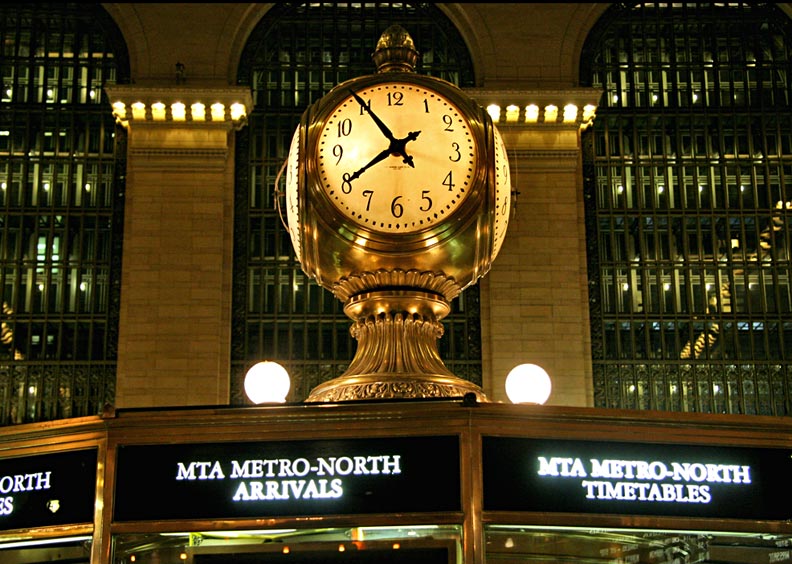
    This is probably the most well-known clock in the U.S. – the ball clock above the information booth at Grand Central Station. Many have used it not only to tell time – its most important function – but it has also served as a meeting place for travelers for nearly a century. The four faces of the brass ball clock are solid opal – Sotheby’s and Christie’s have valued it at between $10-$20 million. It was built in 1913 by the Self Winding Clock Company, a firm started by Charles Pratt (oil tycoon and founder of Pratt Institute) and engineer Henry Chester Pond in a Pratt-owned building at 205 Willoughby Street in Brooklyn, New York (later moved to Varick Street in Manhattan).

    From 1886 to 1957, the company built 50,000 clocks. These clocks were self-powered by dry cell batteries and automatic spring winding and synchronization. When properly maintained, they were highly accurate. Their clocks were used everywhere around the world: the Metropolitan Tower clock, the House of Representatives, battleships, NYC and London subways, railroads, airlines, the Strategic Air Command, stock exchanges, hospitals, schools, hotels, universities, department stores, and broadcasting systems. Over time, however, maintaining accuracy of all these historic clocks was a problem, so recently, all of the more than 55 clocks have been synchronized to a continuous satellite signal sent from an atomic clock at the U.S. Naval Observatory. The clocks are now accurate to within two microseconds. Everything is controlled by the terminal’s master clock, located behind locked doors near Track 117 on the lower level…

    Posted on by Brian Dubé

  • The Oyster Bar

    Posted on by Brian Dubé

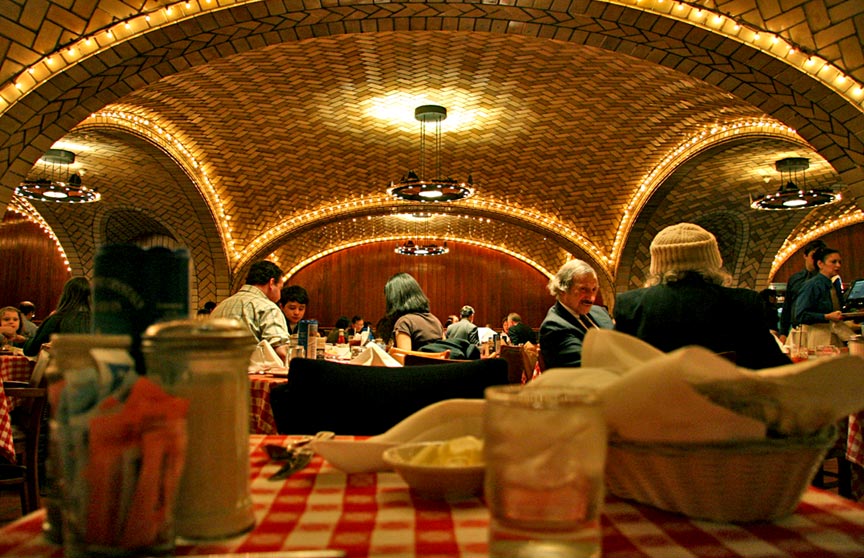
    Legends, institutions, and icons are frequently marketed to death and become tourist traps. It is a real pleasure to find a place that goes back nearly a century and has maintained integrity and standards for that which it became known. This is the Grand Central Oyster Bar and Restaurant, renowned for its oysters (and its doorway and Whispering Gallery). It opened when Grand Central itself did in 1913. All the reviews I have read advise against eating in the main dining room and sticking with the oysters at the oyster bar/counter itself.

    I am not an aficionado of fish, but given all the warnings and my negative predispositions towards the place, I enjoyed my first visit to the Oyster Bar much more than I expected. Their menu of seafood is huge. The main dining room seen in the photo, with its vaulted Guastavino-tiled ceilings, is enormous, roomy, and very comfortable. Although the service was not the warmest, I write off much of this as brusk New York Style. After all, this place is IN Grand Central Station, a place synonymous with congestion and crowds. Finding such a place in Grand Central really brought back feelings of old, classic, quintessential NYC and that some good things endure – and this is one of them…

    Posted on by Brian Dubé

  • Eileen’s Cheesecake

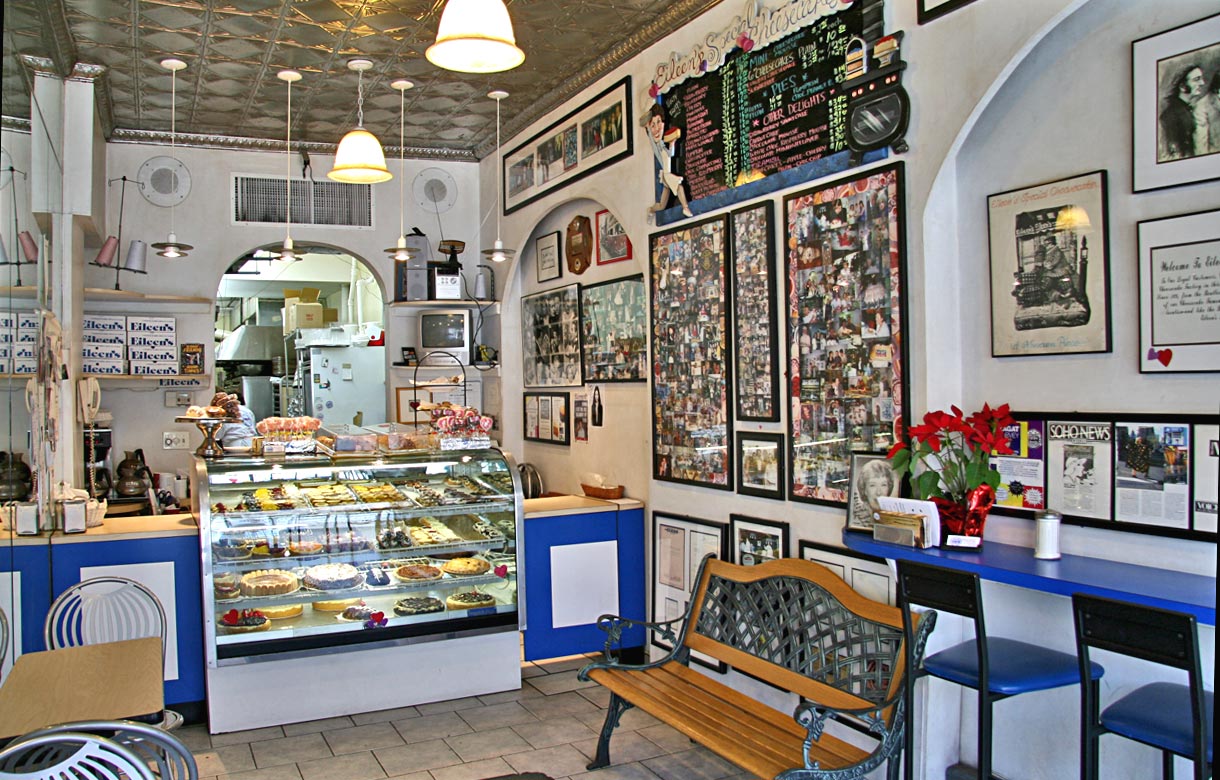
    There probably is no dessert that is more New York than cheesecake. Many articles have been written, quests made, surveys taken, and cheesecakes rated. Eileen’s Special Cheesecake at 17 Cleveland Place in SoHo is the type of place many hope to find and patronize – owner on premises, single location, food made on site in a slightly off-the-beaten path location. We love those New York secrets – you know how it goes: “there’s this little place…” In a way, its location on Cleveland Place is perfect – a one-block street that even many who frequent the neighborhood are unfamiliar with. It makes it all the more elusive and special. Click here for more photos.

    Eileen Avezzano opened in 1974 and has been at this location since 1976, a virtual ghost town at that time. The shop is very cute, and the walls are adorned with photos of celebrity customers, articles, and art. She has received many accolades and awards – many have rated it #1 in NYC, an achievement in a city with so many contenders. Click here for article. Her cheesecake is a cream cheese-based New York Style (as opposed to Italian-style, which uses ricotta). But, unlike the traditional New York style, it is light and fluffy, owing to her own special recipe. Many (including myself) prefer the result. They have over 20 flavors and additional baked items. What’s really nice is that they offer several sizes, including mini-cheesecakes that are available for $2.75 – a great way to indulge without having to get a whole pie. There is seating if you want to eat there…


  • The Bitter End

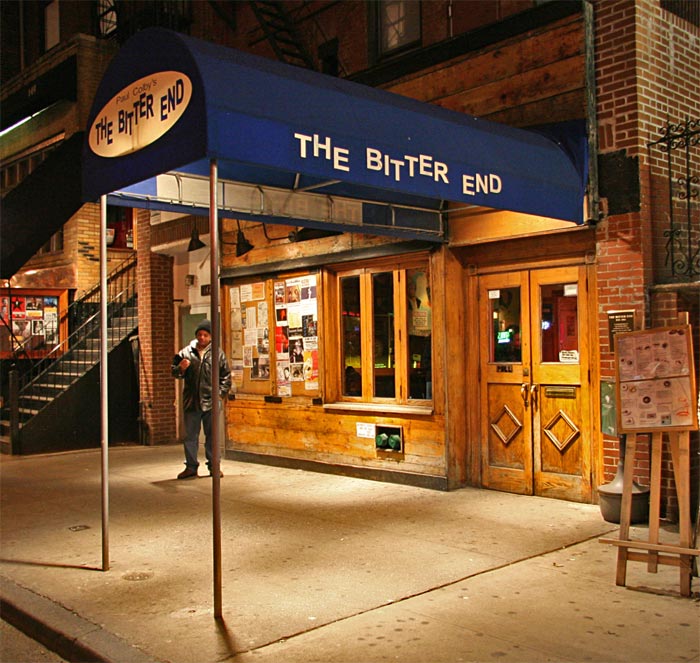
    This is the Bitter End at 147 Bleecker Street, one of the classic heavyweights in NYC music clubs. With the demise of many legendary clubs (CBGB, The Bottom Line, Village Gate), only a handful of older clubs remain, and this is one of them. It is now the oldest rock club in New York, established in 1961 by Fred Weintraub. The current owner, Paul Colby, has been involved with the club since 1968.

    The club is located on a strip of Bleecker Street with a number of music clubs: The Back Fence, Kenny’s Castaways, Terra Blues, and The Red Lion. At the Bitter End’s website, you can see a partial list of the roster of people who have played there (e.g. Bob Dylan, Billy Joel, Neil Young, The Indigo Girls, Joan Baez, Van Morrison, Joni Mitchell, Odetta, Bill Cosby, Woody Allen, George Carlin) – click here for a history. Typically several groups perform each night – last night I caught Girls Don’t Cry.

    Small clubs which showcase new talent are absolutely critical for the music world, so for patrons and musicians alike, the closing of clubs is often seen as a benchmark of the negative impact of over-gentrification, and the survival of older (and newer) clubs is fiercely defended…


  • Macy’s

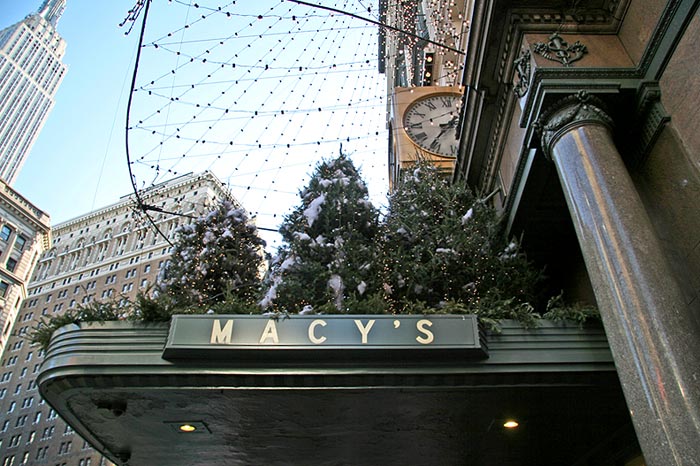
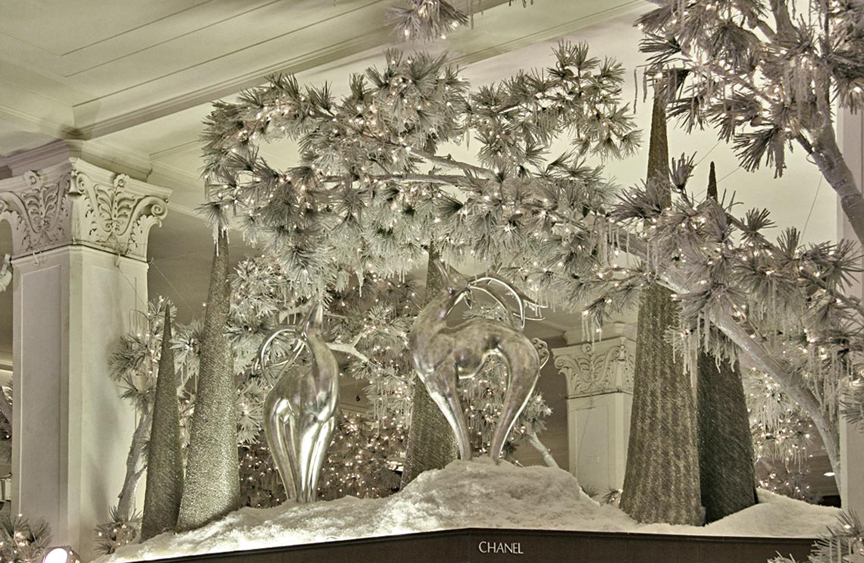
    There is probably no store more commonly associated with NYC than Macy’s. Present in film (Miracle on 34th Street) and other media and sponsor of the annual Thanksgiving Day parade and the annual fireworks display (since 1976), Macy’s has been around for nearly 150 years. It was established as a dry goods store in 1858 on 14th Street and 6th Avenue, then moved to 18th Street and Broadway (on the Ladies’ Mile) for 40 years and came to rest in 1902 at its current location at Herald Square (34th Street and Broadway). Click here for more photos.

    The company went public in 1922 and subsequently expanded to locations across the country (it now has over 800 stores). It was the first store to use escalators – the original wood escalators are still in use. Macy’s is part of the fabric of New York City – like Central Park, Times Square, Grand Central Station, and the Empire State Building, it is nearly impossible to conceive of the city without it. Although it is a place a business, I think it has a different meaning in the hearts and minds of most New Yorkers than that of any other store.
    In 1992, Macy’s actually filed for bankruptcy. Icon or not, any seasoned citizen knew that nothing is guaranteed, and Macy’s survival was in real jeopardy. They survived and merged with Federated Department Stores. Many internationally known businesses that may at one time been considered invulnerable have gone under, such as Pan Am…


  • Saks Fifth Avenue

    Previously, I featured the Christmas window displays at Saks Fifth Avenue. This is the season’s store interior (click here for more photos) – isn’t it magnificent? I complimented the staff on the design and execution; they were so friendly, with no issues whatsoever taking photos (this is not always the case – I was reprimanded at Sephora at the Scribner location). In fact, they were very excited, took my card, and promised to check out the photoblog.

    I was informed that Saks has its own in-house visual design staff. I am not a shopper at all, but this is the type of decor that inspires one to explore the high-end retailers. Click here for an exterior photo showing their snowflake lighting. If you are at all interested in NYC, visiting stores and its neighbors along Fifth Avenue is a must at least once in your life. A nice walk would be to start at 59th Street (Central Park, Plaza Hotel, Apple Store, FAO Schwarz) and stroll down 5th Avenue, ending at 42nd Street at the main branch of the New York Public Library…


  • Santa


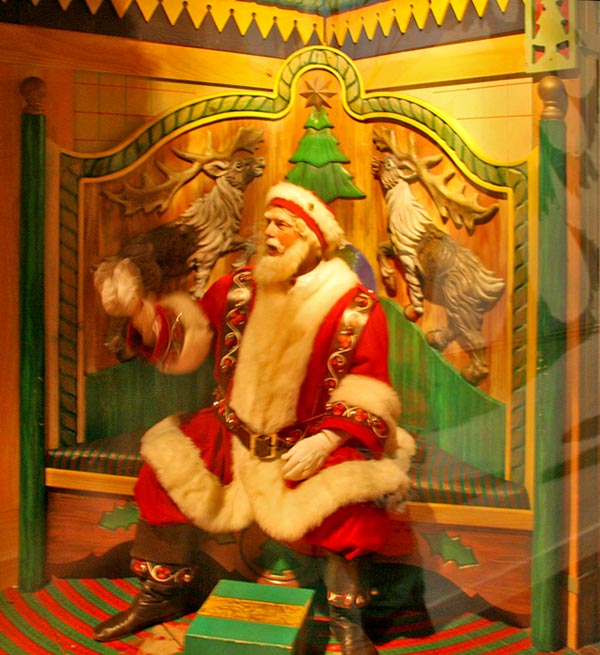
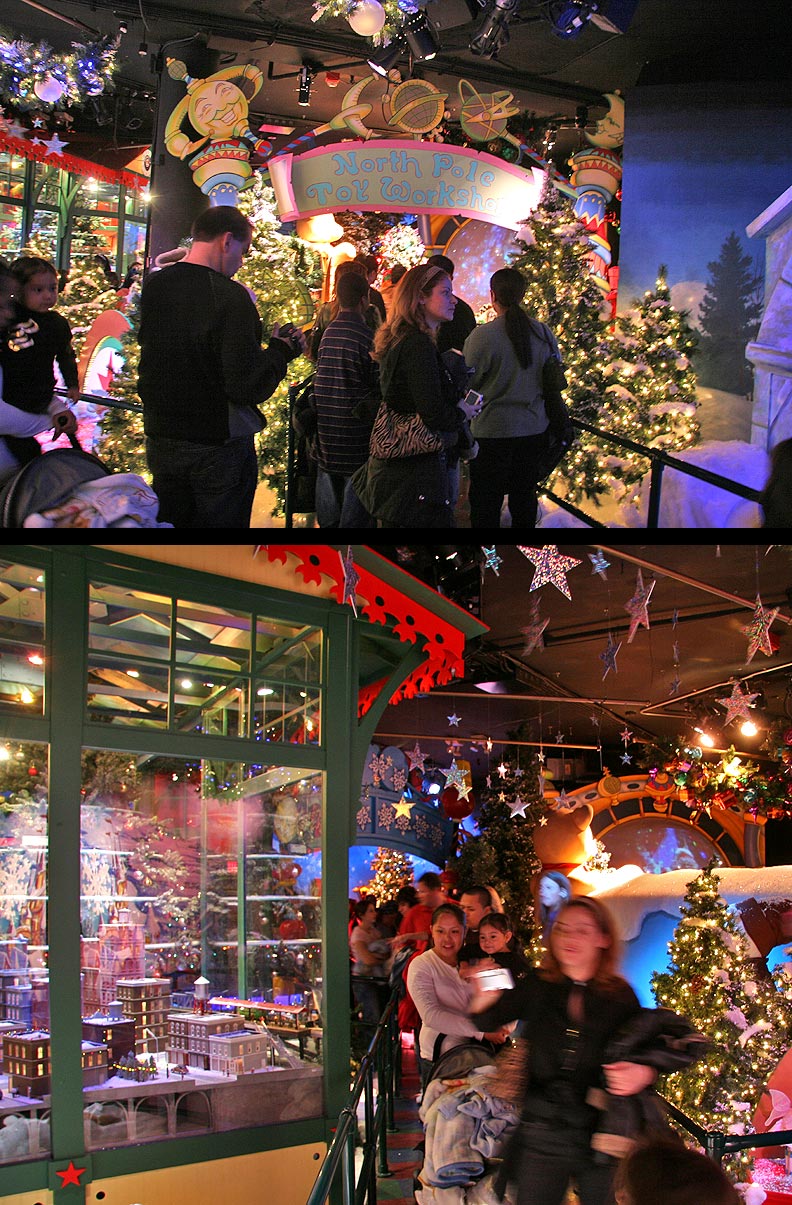
    Everyone knows there are lots of Santa’s helpers around the world. But we also know that there is only one real Santa. And where is he? 34th Street and Broadway, of course, at Macy’s – on the 8th floor in Santaland (a mere glance at the quality of Santa’s wardrobe should alleviate any doubts). Click here for photos of Santaland. The lines were long, and I thought it was a good idea to leave sitting on Santa’s lap and gift-wishing to the younger ones. So I opted to go to the line where one could get a peek at Santa – he was behind glass, hence the reflections.


  • Saks Windows

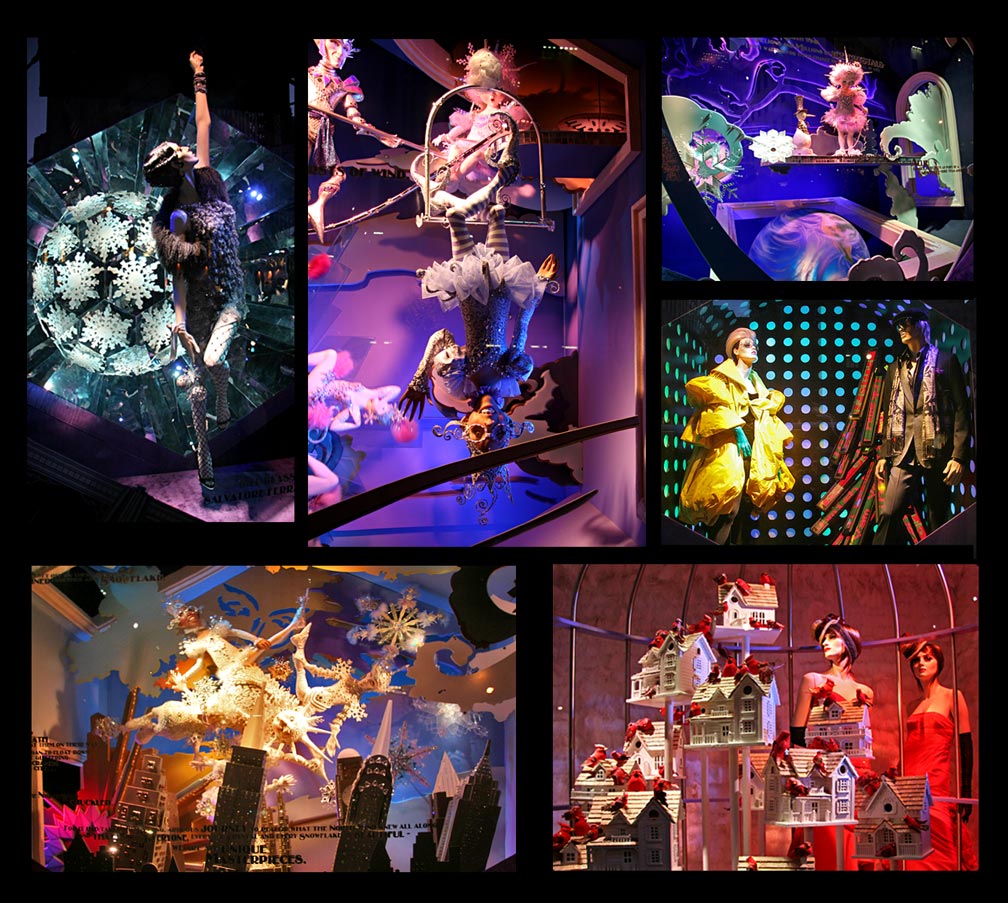
    These are the window displays at Saks. I created a collage – it was too difficult to pick one photo. To see the entire window display set, click here. These are the windows I always associate with Christmas in New York – beautifully done, themed, on Fifth Avenue near all the flagship stores and St. Patricks, and facing Rock Center and the big tree. You wait in line to see the windows, but no one seems to complain. Moving slowly is welcome and gives more time to enjoy them.

    The in-house visual creative staff creates these windows – the primary group has a storyline about outsider crystals finally joining together to become a unified snowflake. Christmas has become an extremely commercial holiday. But, no matter how jaded, frustrated with the crowds and traffic, or disappointed one gets with the commercialism of Christmas, one should try not to become a bitter malcontent. Leave a place for sentiment, giving, nostalgia, and joy…


  • National Tree

    There are millions of Christmas trees in the U.S., but arguably the one at Rockefeller Center is the Unofficial National Tree. Click here for more photos. In a tradition that goes back to 1933, a near perfect tree is selected – nearly always a Norway Spruce, a non-native ornamental tree with a typical lifespan of 80-100 years. Growers who hope theirs will be selected submit photos; the top selections are surveyed and inspected by helicopter. The preferred tree is 75 to 90 feet tall and typically over 50 years old.

    This year’s Norway Spruce is from the property of Rob Kinnaird in Ridgefield, Connecticut, who watched it growing up – their driveway was moved 4 times over the years to accommodate its growth. This year’s tree is 88 feet tall, 45 feet in diameter, and weighs 9 tons. It was trucked to the city on a custom, telescoping trailer, decorated with 30,000 lights, and crowned with a custom-made, 9-foot, 550-pound Austrian Swarovski crystal top! The tree lighting ceremony on November 29 was nationally televised and included Christina Aguilera, Bette Midler, Lionel Richie, Sarah McLachlan, and Sting as guests. It will be up until January 9th…


  • St. Patrick’s Cathedral

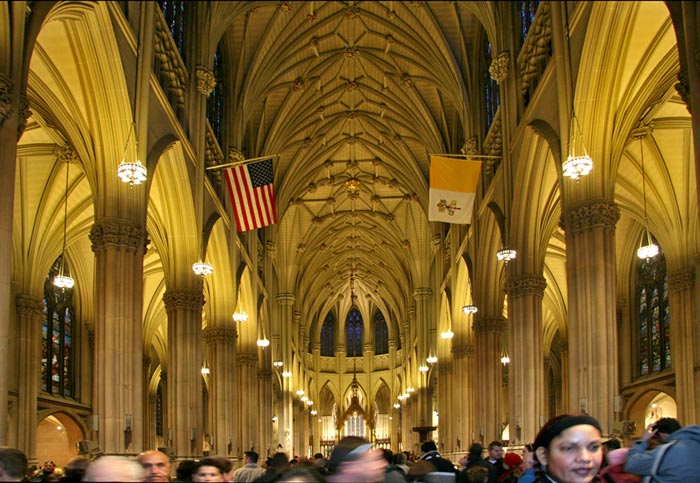
    St. Patrick’s is the largest Gothic Catholic cathedral in the United States. It was designed by James Renwick based on the French Gothic style and built over a substantial period of time, from 1858-1879, with the towers added in 1888. The cathedral and its ancillary buildings occupy an entire city block, spanning from 50th to 51st Street and from 5th Avenue to Madison Avenue.

    Interestingly, at the time of its construction under the stewardship of Archbishop John Hughes, the proposed site was ridiculed as “Hughes’ Folly” because the area was near wilderness, with slaughter houses and cattle yards. Hughes persisted, believing that this site would one day be “in the heart of the city.” A detailed history can be found on the Cathedral’s site.

    The Cathedral is obviously a huge subject with many famed features – its pieta, burial crypt, organs, stained glass, altars, and architectural details. So if you are interested in learning more, I leave it to you to explore online and, of course, to visit in person…


  • Tongues and Flames

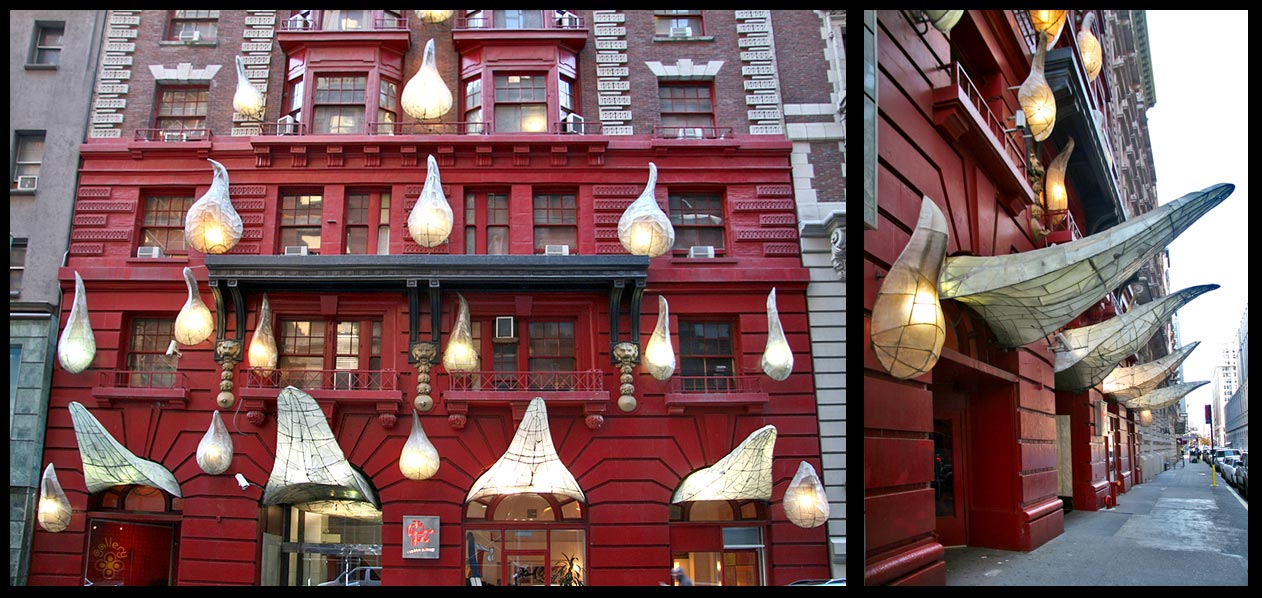
    When a friend and I on a photography shoot ran across this place, our reactions were the same: “WHAT?” Not only is the exterior unusual, but the business concept is also atypical. The Gershwin, at 7 East 27th Street in the historic Flatiron district, is a hybrid hotel and hostel, providing everything from 8-bedded rooms to more standard accommodations, even maintaining two separate websites (gershwinhotel.com and gershwinhostel.com – these now link to the same website as of 2012).

    The fiberglass sconces on the facade were created by Finnish artist Stefan Lindfors, who was asked to create something to distinguish the 1905 building. ”This hotel is always on fire,” said Lindfor, whose piece is called Tongues and Flames. The entire hotel has created has created an atmosphere to cater to the young, chic, arty, and European with the requisite amenities: Internet access, The Living Room featuring jazz and comedy, an onsite gallery, and a pop art-adorned lobby with a signed Andy Warhol soup can…


  • dinamic_sidebar 4 none

©2026 New York Daily Photo Entries (RSS) and Comments (RSS)  Raindrops Theme