• Category Archives Natural NYC
  • The Shore

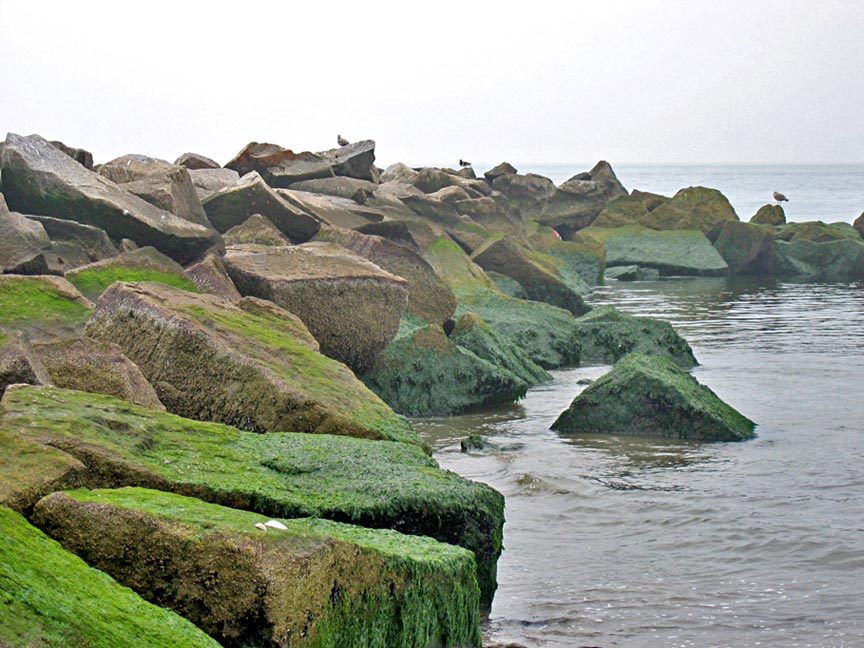
    Not only is NYC surrounded by water, but 4 of the 5 boroughs are islands or part of islands – we’re an island nation. Only the Bronx is attached to the mainland. And, as Brooklyn and Queens residents know, we have some very nice shoreline on the Atlantic Ocean with white sand beaches: Brighton Beach, Manhattan Beach, Coney Island, Riis Park, and Rockaway.

    This photo is of a rock outcropping on a sand beach at Coney Island – click here for an aerial view I took last summer from the Wonder Wheel. These beaches get quite crowded in the summer, with over a million people on a hot summer day. This is also the home of the Iceberg Athletic Club and the Coney Island Polar Bear Club, the oldest winter bathing organization in the United States. Click here for their website. In what may come as a surprise to outsiders, I have met numerous residents of the Brooklyn beach communities who cite the ocean as their primary reason for living there and wouldn’t dream of living anywhere else…
  • Defiant Hydrant

    Posted on by Brian Dubé

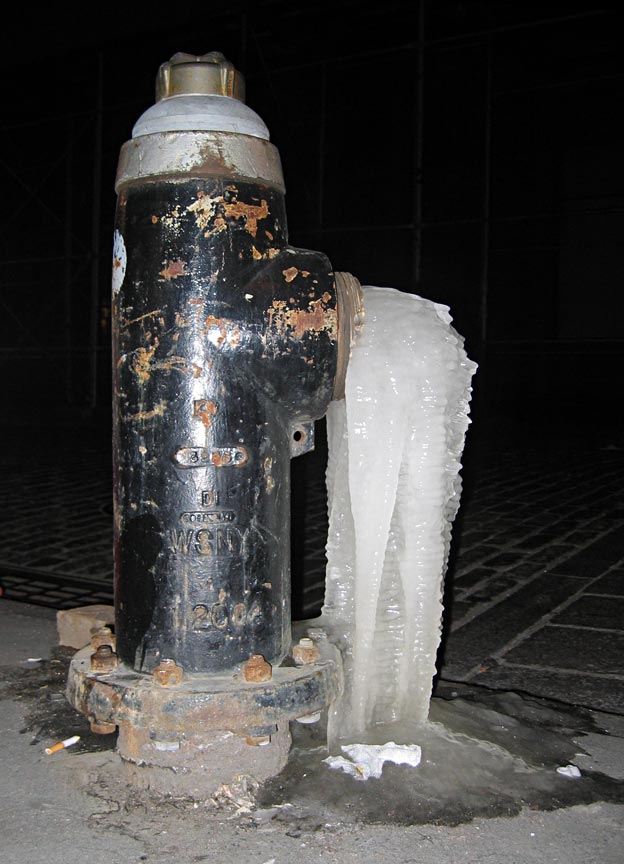
    Last night, a photographer friend alerted me to a slow leak in SoHo that he thought might be blog-worthy. (By the way, after conversations last year regarding the curious and ubiquitous standpipe, this friend got on a hydrant/standpipe kick and shot quite a number of excellent photos. Click here to see his gallery.)

    We have been in a cold-snap in NYC the last few days. and at 16 degrees F, water moves quite slowly, hence the photo. In July, of course, we see a different scenario. I suppose a question that comes to mind is why fire hydrants don’t normally freeze in the winter. The answer is that there is no water in the hydrant and the valve is below the frost line. Water is supplied to the hydrant via a riser which is controlled by a valve rod, which in turn is controlled with that special pentagonal nut (using a large wrench and matching socket). Hydrants are also equipped with an anti-siphon valve, so that any water remaining in the hydrant drains back into the ground. This is the theory. In practice, we find defiant hydrants, such as that in the photo…

    Posted on by Brian Dubé

  • Gull

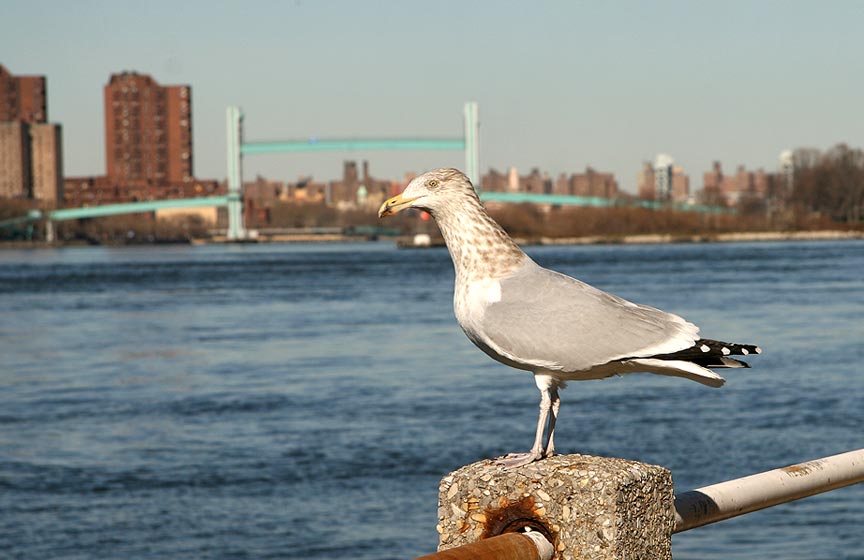
    We do have some wildlife in New York City other than rats. Even in Manhattan. Especially birds, where we have over 400 resident and migrating species with the greatest variety (NYC is located along a major north-south migration path called the Atlantic Flyway). Being a seaport, seagulls are more common in the city than many would expect, particularly in the outer boroughs near water. This photo of a Herring Gull was taken at Lighthouse Park on the northern end of Roosevelt Island. The blue-green bridge in the distance is the Ward’s Island footbridge, itself a fascinating part of the city and possible subject of a future post.

    I think gulls are much like squirrels – animals that are liked and disliked depending on where you live and your relationship with them. Although they are seen as a nuisance to many who own property where they abound, as a city dweller, I see a charming side to them (unlike pigeons). The official flag of Staten Island even depicts two seagulls. They are scavengers, yet I am always pleased to see gulls at close range, perhaps due to their relative novelty in the city. I find seagulls have a certain confident, self-assured attitude when at rest – perfect new York Style…


  • First Snow

    It’s true – today we get our first snow for the winter in NYC. Click here for more photos of Washington Square with this morning’s new fallen snow. For quite some time, we have been deluded into believing we would never see winter again – that El Nino, along with global warming as a contributing factor, was turning New York into a subtropical zone. After all, two weeks ago, we were sitting in parks with T-shirts in 72-degree weather.

    2006 has been the warmest year ever recorded in USA history. And NYC broke a 129-year record for the latest date for the first snowfall. Places outside the US, such as Sweden and Russia, have not yet seen snow. But as I write this in the early morning, the snow has already stopped and the sun is shining – spring is just around the corner…


  • Urban Oasis

    In the heart of one of the busiest areas in Manhattan, surrounded by buildings, traffic, and commerce, lies the exquisite Jefferson Market Garden. This is literally an urban oasis, bounded on 4 sides by 10th Street, Avenue of the Americas (6th Ave.), Greenwich Avenue, and Christopher Street. The .36 acre plot of land abuts the Jefferson Market Library and was the former site of a prison (Women’s House of Detention), demolished in 1974. In 1975, the plot was transformed into a garden, designed by landscape architect Pamela Berdan in the spirit of Frederick Law Olmstead (co-designer of Central and Prospect Parks).

    A community garden, it is sustained by volunteer efforts and the support of residents and visitors. Originally only a viewing garden, it is now open to the public.There is a brick pathway circling the garden, with a variety of plantings around the perimeter and a green expanse with trees in the center. There are annuals, perennials. seasonal flowering plants, an area with ferns, a rose garden, a woodland garden, a greenhouse, and a pond with koi and goldfish. Various events, activities, educational programs for children, and concerts are held in the garden. Weddings are also hosted there. For more on all aspects of the garden, click here to go to their website


  • Secret Rooftop Garden

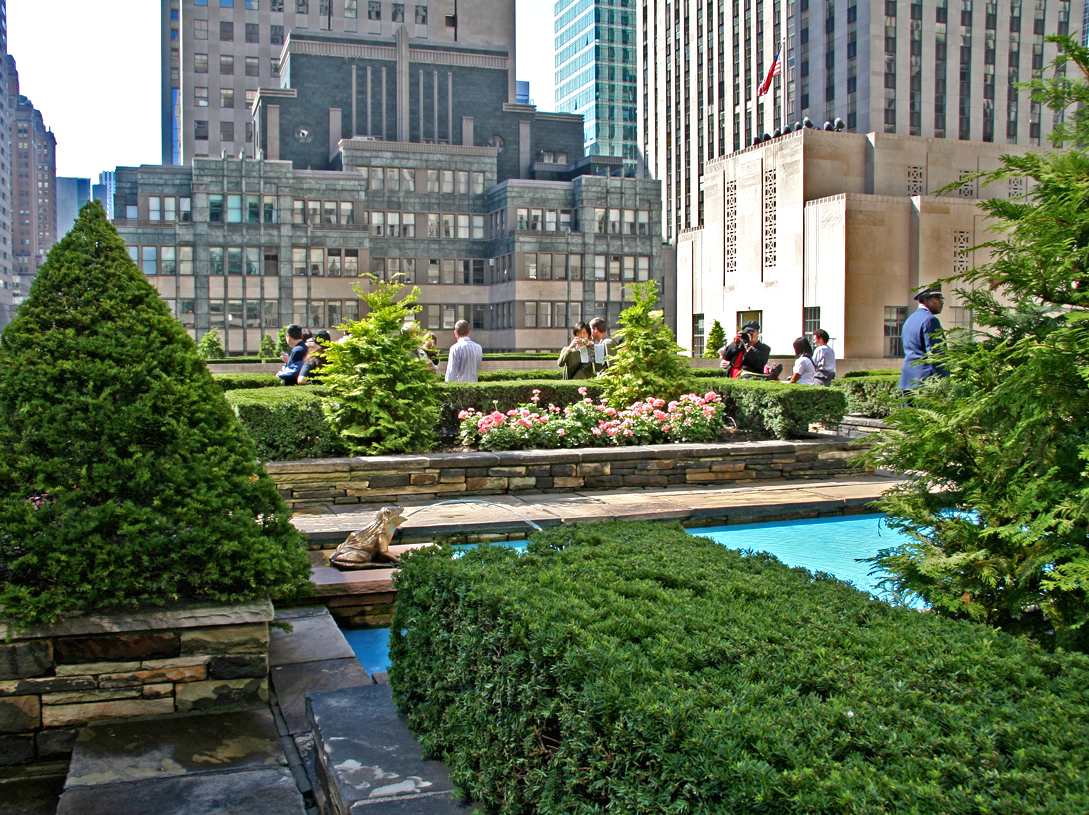
    For just 4 hours, as part of OHNY (Open House New York), the rooftop garden atop the British Empire Building at Rockefeller Center was open to the public. This private garden is rarely accessible, and a detailed online search returns very little information about it. According to the Rockefeller Center website: “Originally, the architects envisioned an even more elaborate network of roof gardens to be connected by aerial pedestrian bridges, which they compared to the hanging gardens of ancient Babylon.”

    At this point in time, the garden primarily functions as eye candy to those in nearby buildings who are fortunate enough to have views of the hedges, wildflowers, fountains, lawns, pools, and beautiful walkways. The rooftop overlooks Fifth Ave., St. Patrick’s Cathedral, Rockefeller Center, so, of course, the views are spectacular. I feel fortunate to have visited, as I am sure all the other visitors were. In a post 9/11 world, seeing special places in NYC is becoming more difficult or, in many cases, just not permitted. My thanks goes to OHNY for coordinating this great weekend and for making these places accessible…


  • Gondola

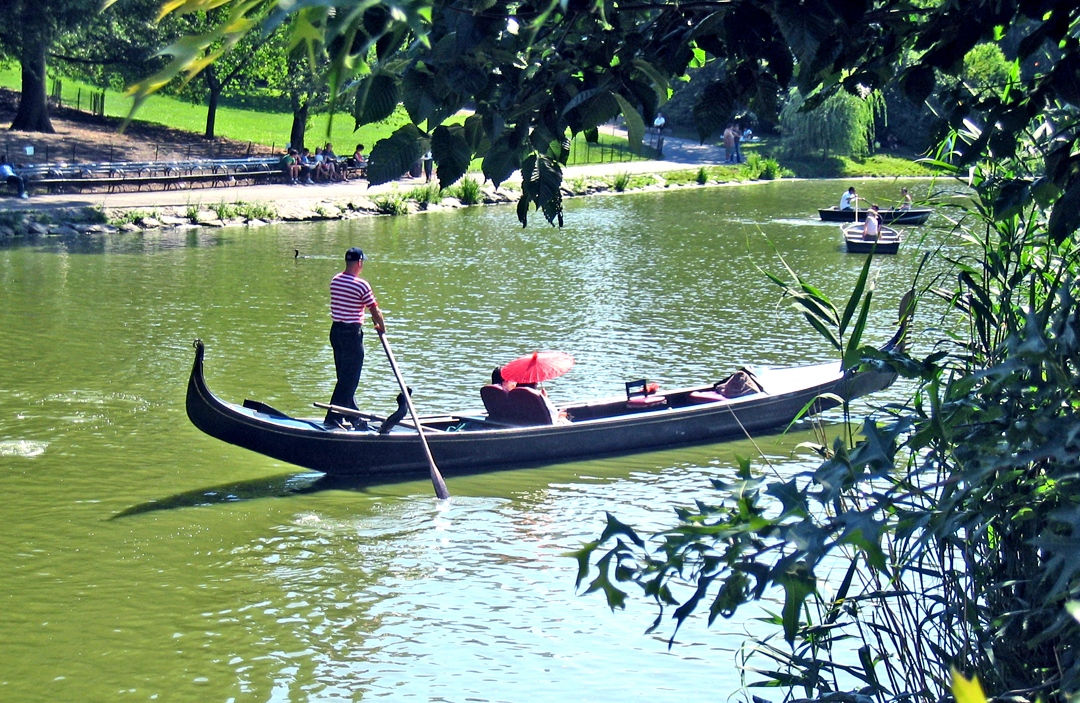
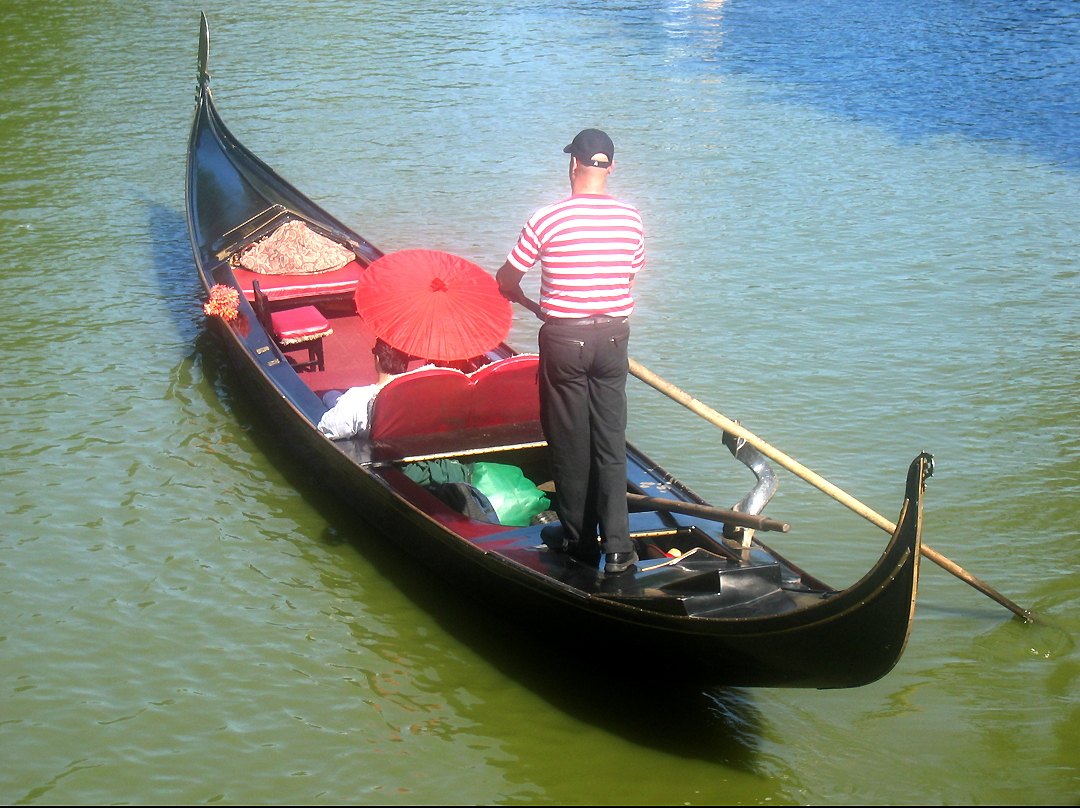
    Central Park has its own authentic handcrafted gondola imported from Venice, called La Fia de Venezia (the daughter of Venice). The 37-foot gondola was donated to the Park Conservancy by NYC philanthropist Lucy Moses. The black craft, oared by gondolier Andreas, was introduced to the waters of the Lake in May 1986 and has been a huge attraction and a source of continued surprise ever since. Click here for another photo. The rides are available during the summer and early autumn from the Loeb Boathouse at the Lake, weather permitting, for $30 per half hour for up to 6 people per boat.

    Rowboats are also available – I was surprised to learn that this activity goes back to the opening of Central Park in the 19th century. And this year, kayaking on the Lake was introduced for the first time. The boating and gondola rides go through October 30, so there’s still time…


  • The Garden at Saint Lukes

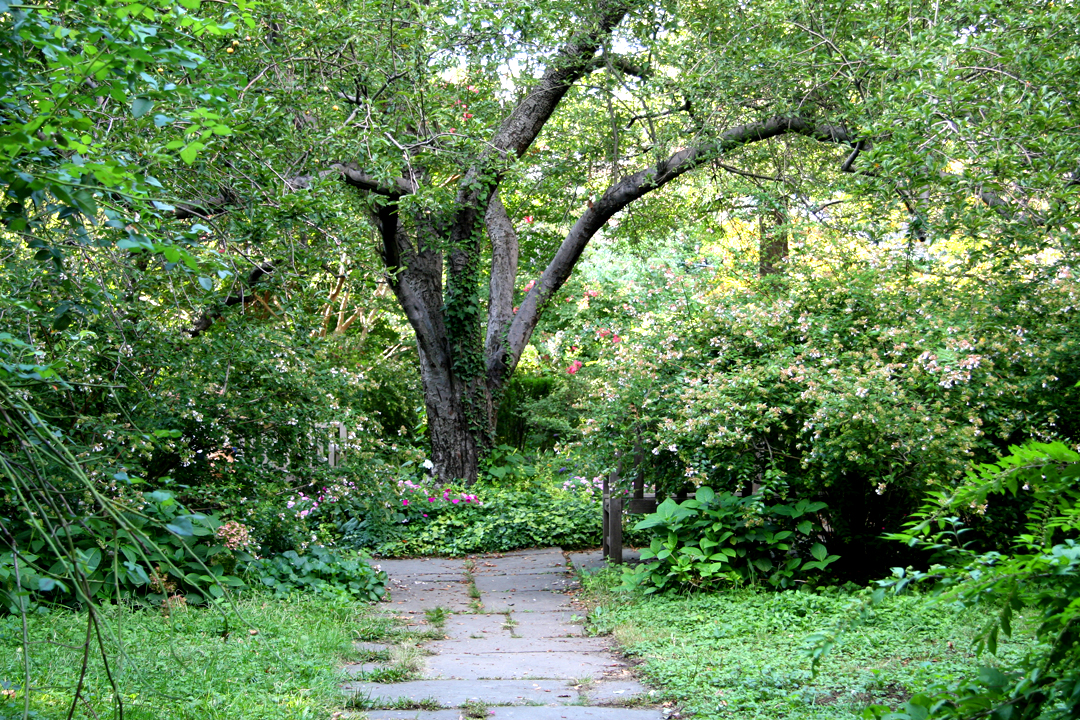
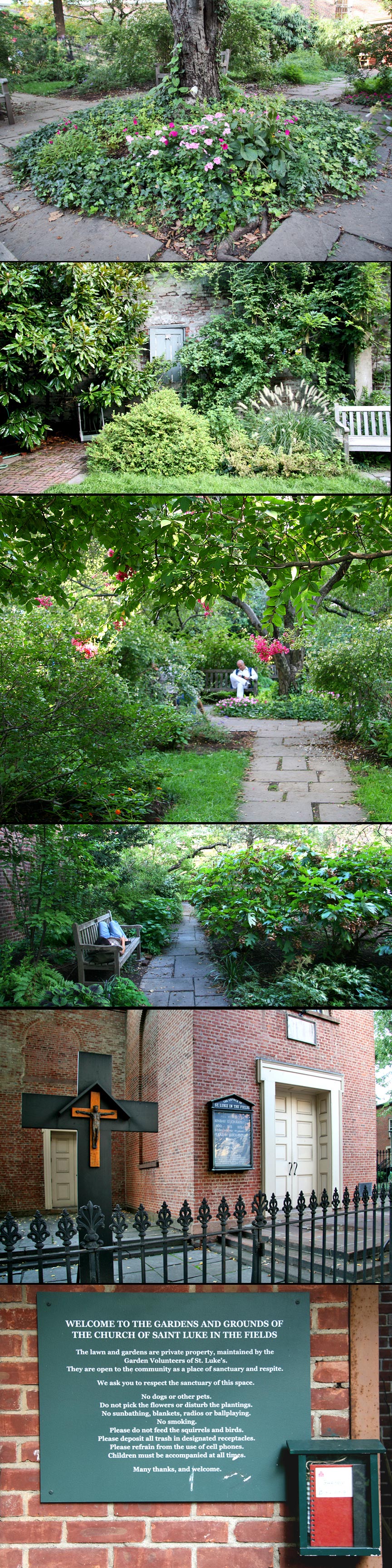
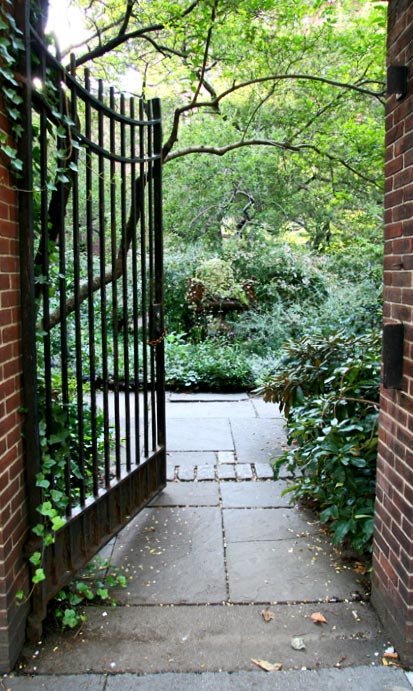
    This small, exquisite sanctuary in the West Village is virtually unbeknownst to outsiders. In fact, in doing this post, I found almost no information online – the official site for the church does not describe it, nor does the Wikipedia article. It was difficult to choose a photo, so please click here to see the entire series.

    Officially known as The Garden of the Church of St.-Lukes-in-the-Fields, the two acres of garden grounds surround the church, which was built in 1821, and are open to the public. Barbara Leighton created the Barrow Street Garden (the core of the garden complex) in 1950. It was expanded from 1985 to 1993. Because of its naturally protected setting and orientation, the garden area has become a microclimate with plants (flowers and fruit) rarely seen this far north. It also lies on the migration route of birds and butterflies.

    The Episcopalian church itself is actually quite unique and progressive, with a choir comprised of an impressive roster of professional singers. Behind the gate lies a real special oasis in the Big Apple…


  • Albert’s Garden

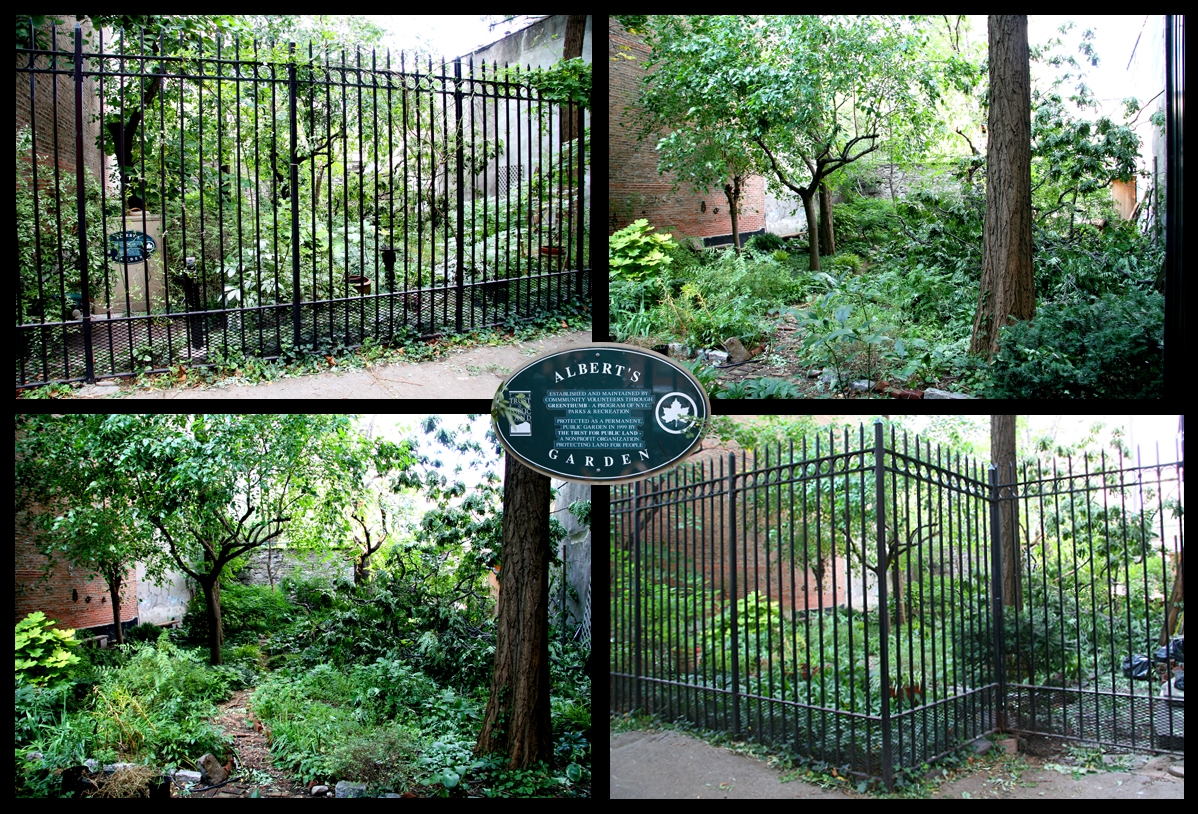
    Scattered throughout the Lower East Side, there are over 40 community gardens (and 400 in the entire city). These come as a surprise, even to residents – they are certainly not on the tourist radar and quietly offer a visual respite from the concrete jungle. For a list and map of these gardens, go to the Earth Celebrations site and click on the Garden Preservation link.

    Albert’s Garden, on 2nd Street between 2nd and 3rd Avenues, is typical of these community gardens. As you can imagine, tremendous effort goes into this effort. Keeping developers at bay is no small task – I applaud the efforts. One such effort is Bette Midler’s Restoration Project, started in 1999, which rescued 114 of these gardens and established a trust. Perhaps in time I will feature another one of these gardens if I come across one in my travels…


  • Bryant Park

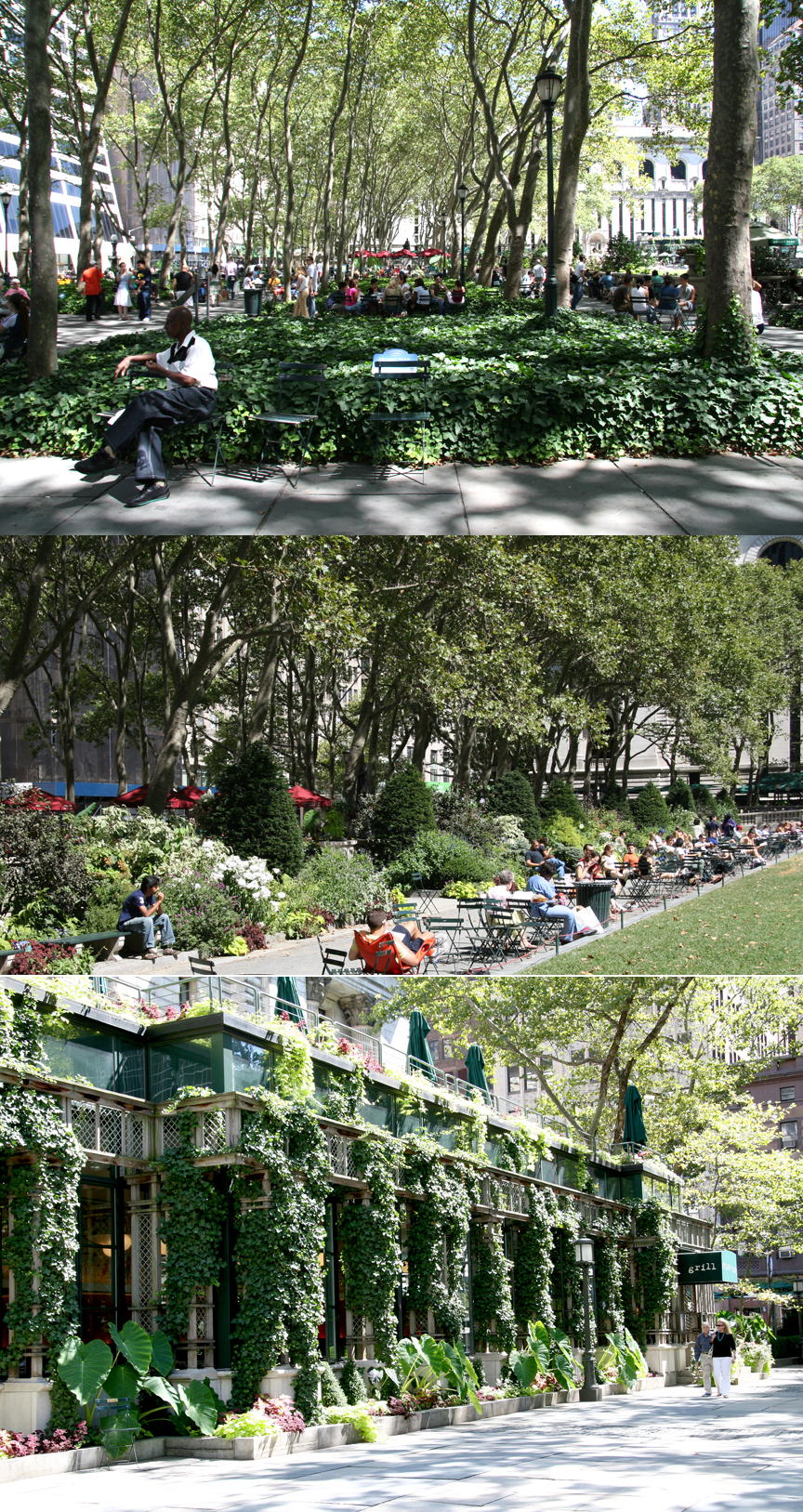
    Bryant Park, named after William Cullen Bryant, has had a long and uneven history – a potter’s field, Reservoir Park (sharing the block with the Croton Reservoir – future home of the NY Public Library), home of Civil War military drills, and the Crystal Palace Exhibition (1853). And it has gone through bleak periods – both in the 1930s and the 1970s, it became one of the worst parks in NYC. In the 1970s, the park was essentially dominated by drug dealers, prostitutes, and the homeless, often referred to as “Needle Park”. Click here for a history.

    In 1992, the park was reopened after a privately funded restoration. With its formal French gardens and crushed stone walkways, it is reminiscent of the Jardin du Luxembourg of Paris. The restoration has been one of the greatest turnaround successes in recent NYC history – the park is frequently cited as an example of how positive transformation can occur even in what appears to be a lost cause. Now the park has restaurants and cafes, kiosks, and free WIFI internet access (click here for more photos). On Mondays in the summer, HBO sponsors outdoor movies. The park also hosts many other programs and events. Check out the Bryant Park official site…


  • Central Park Mall

    Posted on by Brian Dubé

    If you’ve traveled this far into Central Park, you will have noticed a number of things. It’s an amazing park – a triumph in urban landscaping. It’s quite large. It’s remarkably varied, and there are spots like this one where you can’t see any urban structures at all – very bucolic. And you could use a rest. So I recommend sitting on one of the benches here in the central spine of the park: this beautiful wide esplanade known as The Mall and Literary Walk, flanked with quadruple rows of tremendous old growth American elm trees, forming an enormous tunnel of green. Stately.

    Posted on by Brian Dubé

  • Cloud Appreciation

    Posted on by Brian Dubé

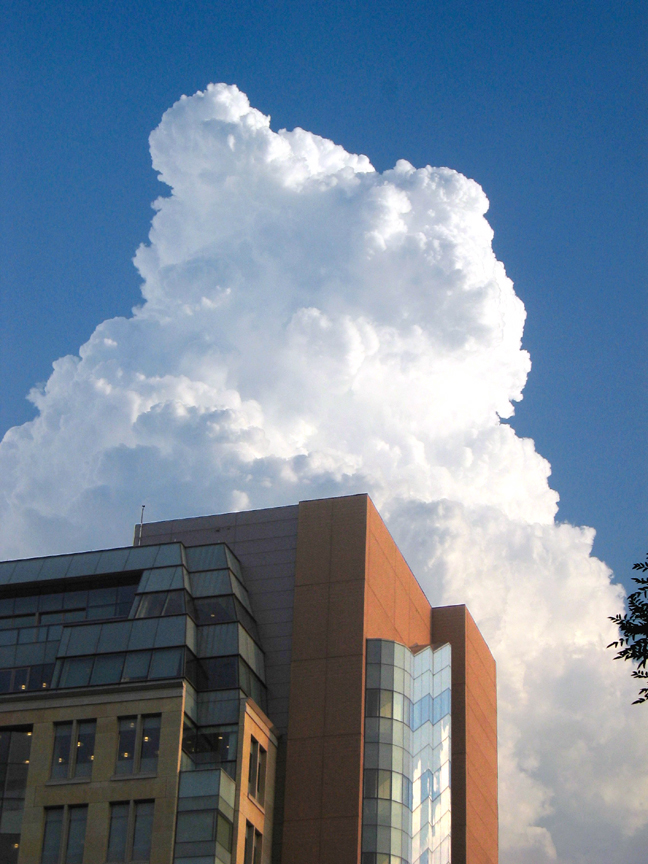
    In NYC, we often find that large and interesting clouds suddenly form – they frame and temporarily become part of the architecture and filter the light in interesting ways (this one was above the new NYU student center facing Washington Square Park). Certain painters who lived in NYC for many years, such as Willem de Kooning, would mention the quality of the light, created by the interaction of the weather and air, as being important to their work. If you are very high up in a skyscraper, or at the edges of Manhattan facing one of the rivers, the light is sometimes reflected strongly into the glass of the buildings, adding to the intensity of the atmosphere.

    Here is a link to an organization, the Cloud Appreciation Society, based in Great Britain. The organization celebrates the best clouds seen in various locations around the country and has members worldwide. Great Britain having an island/maritime temperate climate not so dissimilar to New York made me realize that perhaps we should participate more in cloud appreciation ourselves…

    Posted on by Brian Dubé

  • Conservatory Water

    Posted on by Brian Dubé

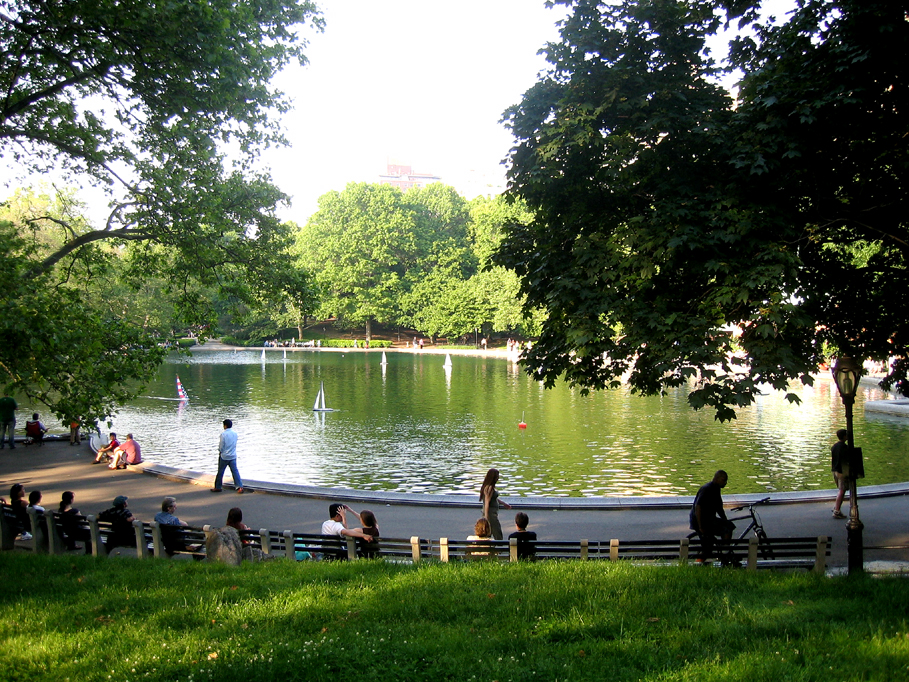
    In the original plans for Central Park, a large conservatory was planned for this area. However, budget cuts forced the planners to redesign it, and they used the model boat ponds of Paris as a model. For this reason, it is commonly referred to as the Model Boat Pond (boating activities will be featured in tomorrow’s posting).

    The area is surrounded by some of the most special trees in the park, a large stand of Lebanon Cedars, and a concentration of Japanese cherry trees which bloom intensely in the spring. It is a romantic spot and is featured in many stories and films placed in NYC, as well as in many personal stories of the inhabitants. It is also a place that attracts a number of unusual and interesting birds. There is a large boreal owl in residence in the woods next to the pond — the area around the pond is a favorite for many bird watchers. Surprising that so much wildlife exists in the midst of a large city. This pond truly deserves a visit – on a nice day, it is so relaxing and bucolic. It’s always reminded me of Seurat’s Sunday Afternoon on the Island of La Grande Jatte…

    Posted on by Brian Dubé

  • Time Landscape – A Taste of Nature

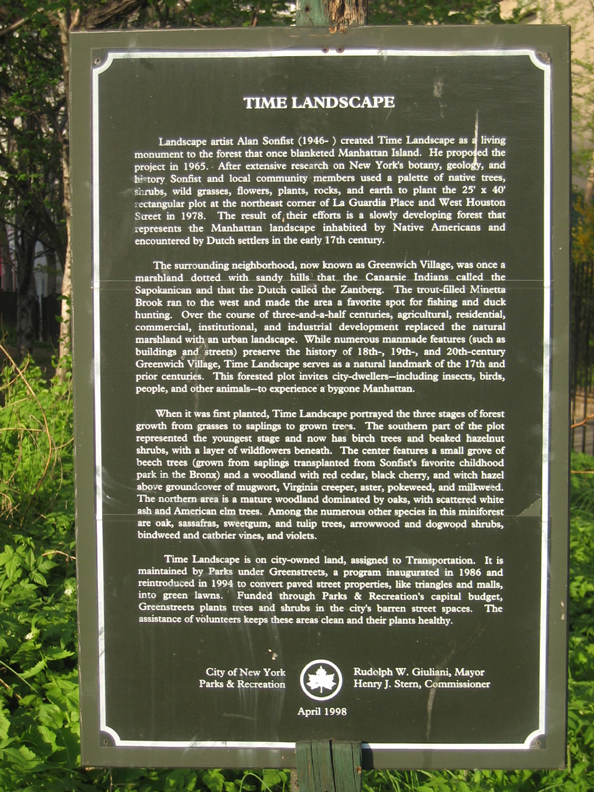
    In 1965 Alan Sonfist, an artist associated with the Earth Art or Land Art movement, conceived of this living work of art which recreates New York City’s forest growth of the 17th century (see a synopsis on the sign here). Finally realized in 1978, it has been landmarked. The 8000-square foot plot stands at LaGuardia Place and Houston Street, a busy intersection in the Village/Soho area.

    One wonders how many actually notice this plot. More likely, it is overlooked like so much in life and particularly in a city which provides sensory overload. In the autumn, I can actually grab an apple from the branch of an overhanging tree. One morning, I greeted a man eating berries, which I had noticed before but never knew were edible. These are remarkable experiences given the completely urbanized locale. And to get a taste of nature in Manhattan is so uplifting…


  • While It Lasts

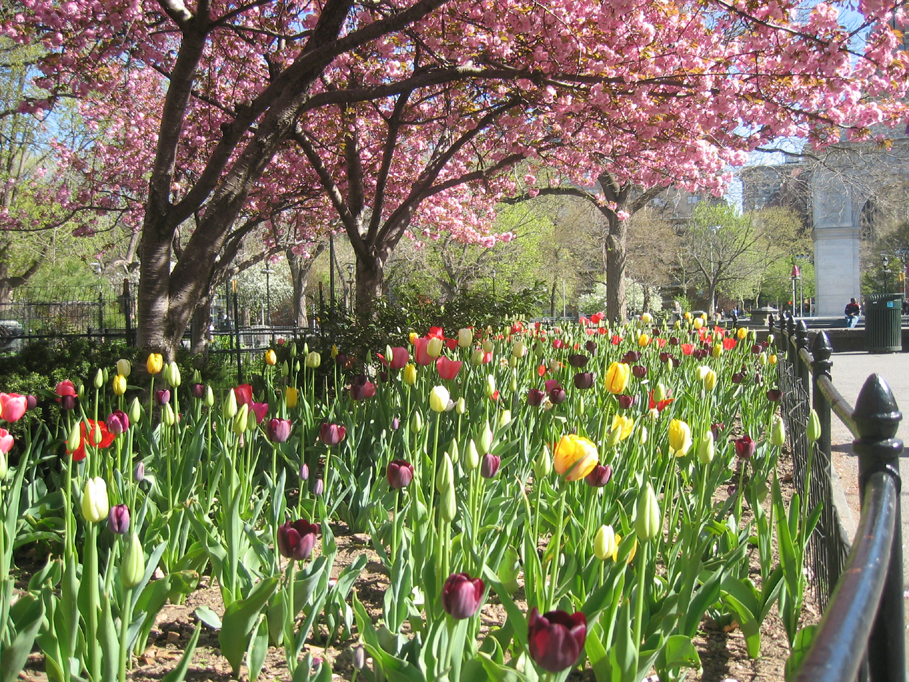
    The first flowering of spring is on the wane, and the earliest flowering plants – magnolias, tulips, and cherry blossoms – were very bright in the sun this morning but are on their way to losing their petals and subsiding into green leaves. The next wave should be hitting us very soon – the lilacs, wisterias, azaleas, and lindens.

    This is a section of Washington Square Park along one of the main entrances, planted for maximum impact on the pedestrians passing by. Spring in NYC is short, and the summers are hot and long, so it’s good to enjoy the best of this weather by getting outside, while it lasts.


  • dinamic_sidebar 4 none

©2026 New York Daily Photo Entries (RSS) and Comments (RSS)  Raindrops Theme