• Category Archives Natural NYC
  • The Rockaways

    Just a subway ride away on the A train, you will find not a bay, inlet, or river, but rather, the Atlantic Ocean. This is the Rockaways, a peninsula, most of which lies within the borough of Queens, New York.

    The beach has an active surfing community – there are three surf shops in the area. The approach of hurricane Bill was seen by most as worrisome, but surfers heralded the storm as a joyful rare opportunity to surf the big waves. So, this seemed the perfect time to take a trip out to the Rockaways to catch some waves with a camera. Beaches were closed to bathers but open to surfers. See more photos here.

    The 6.2 mile boardwalk is a huge feature of the area, extending from Beach 9th Street to Beach 126th Steet. The central area of Rockaway Beach is fronted with large, hulking public housing projects, many of which became riddled with crime. There are new apartment condominiums newly built and in the works. Strings of closed stores line 116th Street, the main shopping district.

    Driving from one end of Rockaways to the other through the varied communities – Belle Harbor, Far Rockaway, Arverne, Neponsit, Rockaway Beach, Rockaway Park, Breezy Point, and Edgemere – is one of the most shockingly diverse demographic ranges of humankind I have seen, from lower to upper middle class. Driving amongst the virtual mansions in Belle Harbor, the ramshackle nature of central Rockaway seemed a flawed memory.

    I missed many of the interesting areas, such as the historic bungalows off the boardwalk at Beach 108th St. that have become summer rentals and the scenic area at the end of the boardwalk from 121st to 126th Streets. I intend to return and explore more of the area on foot.

    This is truly the land of the haves and have-nots, but the ocean and the boardwalk looms large and mitigates much of the area’s depressed pockets. The ocean is a curative for the human soul, and I believe all feel fortunate to have such a fine strip of ocean, sand, and boardwalk…

    NOTE: The Rockaways have a rich history: from 1902 to 1985, there was a large amusement park called Rockaways’ Playland. See a photo history here.

  • Plum Beach

    Posted on by Brian Dubé

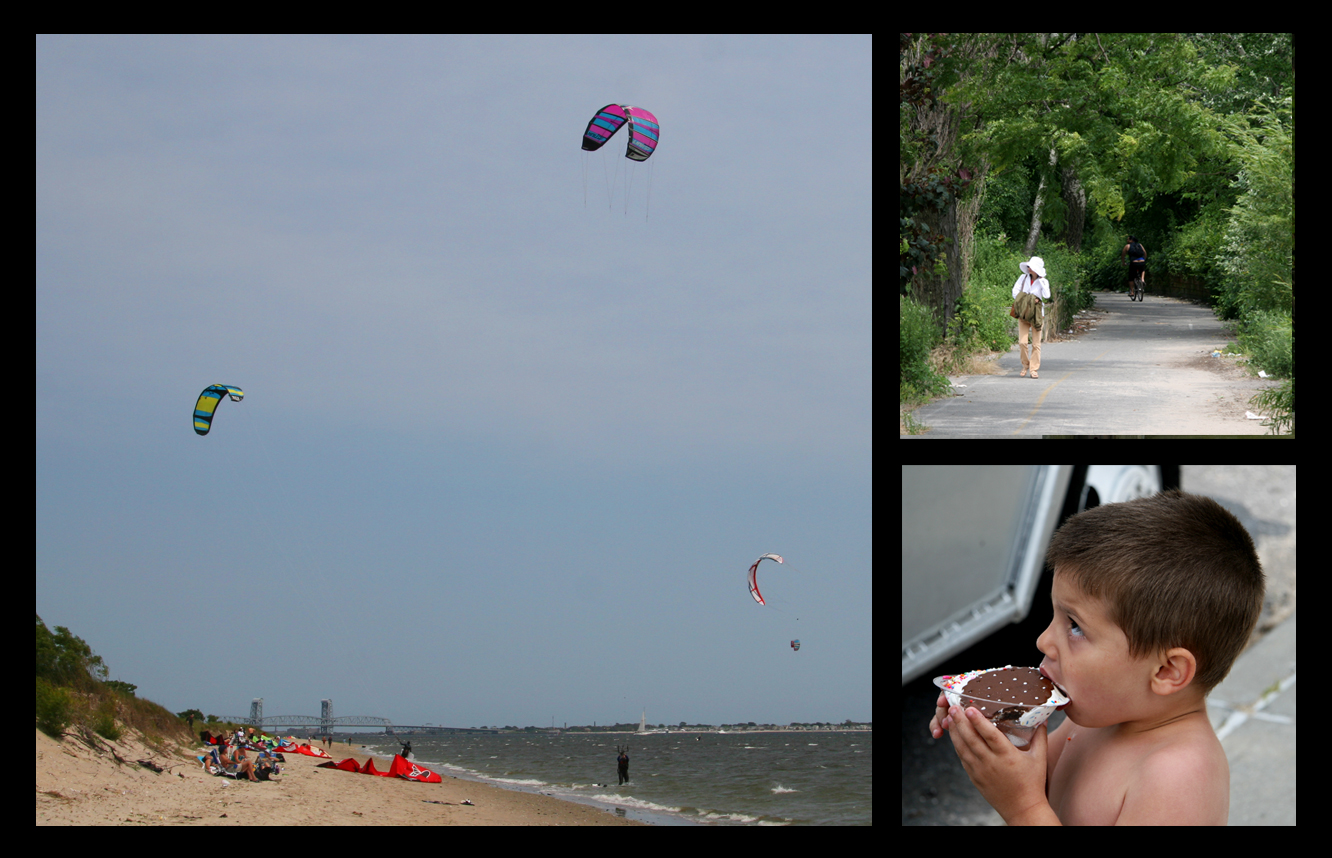
    The sight of kite surfers and the convenient access to Plum Beach from the Belt Parkway prompted a quick detour from my recent excursion to Floyd Bennett Field. Unfortunately, this convenience in a major metropolitan area, combined with relative isolation, has given Plum Beach a rather unsavory and spotted past.

    Older residents reminisce about days when Plum Beach was a lover’s lane. Since that time, it has become known as a gay spot. From a New York Times article from 2006, Deadly Days at a Lovers’ Lane:

    Decades ago, the beach’s parking lot was notorious as a lovers’ lane for the neighborhood’s besotted boys and girls. In recent years, the area has become better known as a gay trysting spot. The police say that the four men accused in the death of 29-year-old Michael Sandy of Williamsburg this month were aware of the area’s reputation when they lured him there.

    The incident refers to an attack by four men who lured the gay victim to Plum Beach using an Internet website. A planned robbery scheme derailed when the victim ran from his assailants onto the Belt Parkway, where he was struck by a car. Those familiar with the area also warn of drug use and needles on the beach. An article from Citynoise on Plum Beach in 2005 opens:

    Plum Beach is a grimy spit of sand that is just past Sheepshead Bay and part of Gateway National Park. It’s beautiful and filthy and therefore gloriously neglected, unkempt and various.

    The article goes on to discuss the various activities. Reading the comments, which span four years from 2005 to 2009, provides an informative history based on personal experiences.

    When I stopped at Plum Beach, I was not aware of any of this history or reputation. I also visited after a cleanup effort in April of 2009 by the American Littoral Society, so my visit was untainted by garbage, which apparently used to be a huge problem.

    The beach, named after the beach plums that grow there, is part of the Jamaica Bay Unit of the Gateway National Recreation Area, which includes the Jamaica Bay Wildlife Refuge (see here and here). There are many great beaches, along with great spots for nature and wildlife lovers in this area of Brooklyn and Queens. At Plum Beach, you will find kiteboarding and windsurfing – rare sights in New York City, and not what the average visitor is looking for. But, hey, we got the little stuff too* 🙂

    *This is my first use of a personal inside joke.

    Posted on by Brian Dubé

  • Bronx Zoo

    Posted on by Brian Dubé

    Zoos have gone through numerous incarnations, a mirror of society’s relationships with and views of animals. From the early menageries in Europe, we have moved away from cages and entertainment to habitats and education. There was no hiding from the populace that the conditions in most zoos at one time was deplorable. Eventually, the cages themselves became more difficult to justify. The emphasis today is the conservation message – the graphic for the Wildlife Conservation Society gets equal time with the Bronx Zoo on all of the literature, merchandise, and entrance gates.

    The Bronx Zoo was founded in 1899 as the New York Zoological Park, with 843 animals in 22 exhibits. A group of beautiful Beaux-Arts buildings designed by Heins & LaFarge surround a sea lion pool (seen in the photo) at the main entrance, which also features beautiful gardens. This is the largest zoo in the United States, covering 265 acres with more than 4,000 animals, many of them endangered species.

    The transformation can be seen at locations such as the Lion House, one of the original Beaux-Arts buildings, which no longer houses the big cats. All have been moved to larger areas. Some exhibits, such as the World of Darkness, have closed due to budget cuts.

    Efforts have been made to place animals in as natural an environment as possible. Ultimately, however, the overriding feeling I have in any zoo is still one of exhibits of animals in confined spaces. Some argue that if conservation is the motive, money would be better spent in open wildlife sanctuaries and contributions made towards the animals’ native environments in their home countries.

    At one time, when the Bronx Zoo made the transition to habitats, everything seemed to be so dramatically large and the animals so free. As I have visited the zoos since that time, the habitats feel smaller. I can’t help but compare these environments to the areas which the same animals must inhabit in the wild.

    Many of the inhabitants of the zoo are rescued animals whose fate would likely have been grim had not the zoo adopted them. Endangered species are protected, bred, and some even reintroduced to the wild. And I am sure that the place is staffed with dedicated animal lovers who cannot be expected to argue for their own demise. But when I peer into the eyes of those gorillas, I always wonder how happy they are and what they are thinking…

    Related Posts: Feeding at the Zoo, Rain Forest, Red Panda

    Posted on by Brian Dubé

  • The Reservoir

    Posted on by Brian Dubé

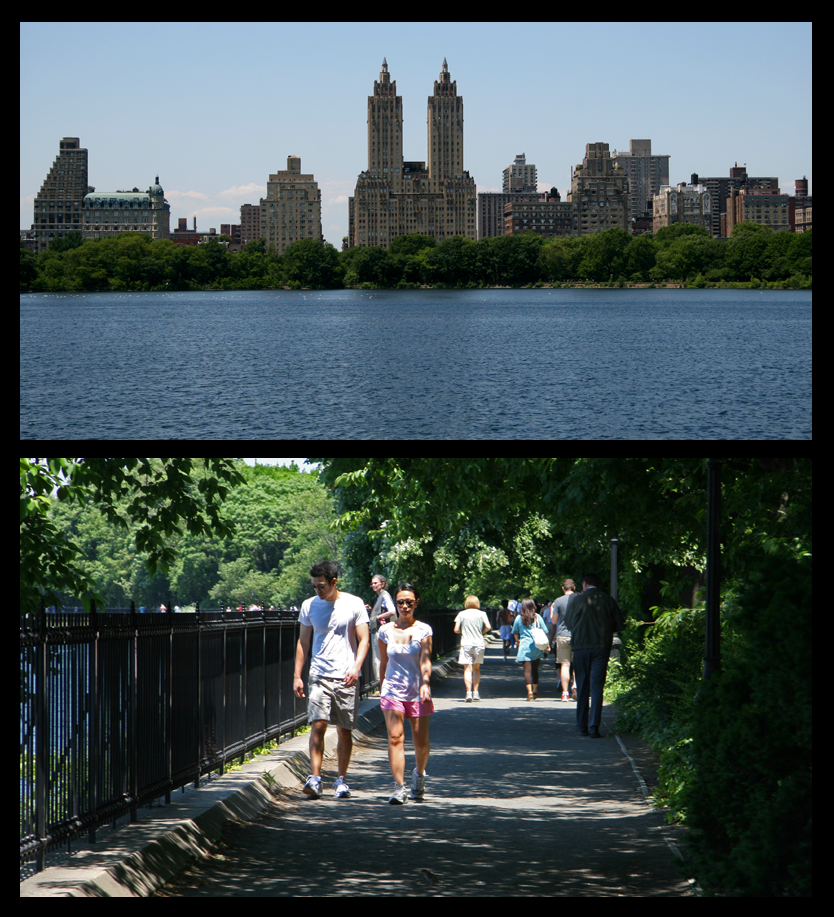
    Seeing the Central Park Reservoir for the first time is quite stunning. In the congested, densely packed borough of Manhattan, the last thing one expects to discover is such a enormous body of water. The reservoir covers 106 acres and holds over one billion gallons of water.

    This was built to the Olmstead and Vaux original plan for Central Park between 1858 and 1862, designed to receive water from the Croton Aqueduct and distribute it to Manhattan. It ceased functioning as a reservoir in 1993 when it was considered obsolete because of a new water main connecting to the New York City Water Tunnel No. 3.
    Anything this large and prominent in Manhattan is going to take on a life of its own, its use maximized. There is a 1.58 mile running track that completely circles it, on which there are weekly races sponsored by the New York Road Runners Club.

    Take a walk around all or part of the reservoir, and you will find many things – ornamental cherry trees, over 20 species of aquatic birds which have been sighted, three ornamental stone gatehouses designed by Calvert Vaux, three pedestrian cast-iron bridges that span the bridle path, ( one of which is the Gothic Bridge, one of the park’s most beautiful and distinctive), and, of course, vistas of the skyline surrounding the park.

    The photo was taken at the Engineers Gate entrance with the Purroy Mithcell Monnument. Looking across the Reservoir, you see Central Park West. The tall building in the center is the El Dorado, one of four twin-towered luxury apartment buildings designed by Emery Roth along Central Park West between 1928 and 1932: the El Dorado, the Beresford, the San Remo, and the Ardsley. Read Christopher Gray’s New York Times Streetscapes article about the El Dorado here.

    Note: The Central Park Reservoir is now officially known as the Jacqueline Kennedy Onassis Reservoir. The 1994 naming commemorated her contributions to New York City. Jacqueline, who had a Fifth Avenue residence, enjoyed jogging in the area.

    Posted on by Brian Dubé

  • Cello Class

    Posted on by Brian Dubé

    Some years ago, I fancied to learn the cello. New York City has some of the finest music schools in the country, and they all offer alumni lists of musicians ready, willing, and able to teach (at very reasonable prices). So, it was with this in mind that I found a great teacher/professional cellist, walking distance from my home, to teach me. This woman was both a Juilliard School and Manhattan School of Music graduate and had extensive performing and teaching experience, both privately and in a well-respected school for children.

    I was, however, somewhat remiss in my studies, barely getting through the lesson material each week. Learning a classical stringed instrument as an adult is a daunting task – practicing as I did at night after a day’s work. On one particular lesson, my instructor was getting rather frustrated with me. She asked what a particular note was as she placed a finger on one of her strings. I said that I did not know. She then asked, if one knew a note on one string (she gave an example), what was the note on a neighboring string? I did not know. Backtracking further, she then asked what was the interval between the strings on a cello? Embarrassed and panicked, I just said I did not know that, either (answer: one fifth apart).
    At this point, she said, “If you were one of my student children, I would insist that you learn this material. However, being that you are an adult, I strongly recommend that you learn it, unless you would rather pay me $25 per hour to learn in class what you should be doing at home.”

    This story came to mind on Sunday afternoon, as I strolled down the tree-canopied sidewalk on Fifth Avenue, flanked on one side by some of the finest residential buildings in the world and abutting Central Park on the other side. A walk here is one of the most extraordinarily beautiful, bucolic, and genteel experiences you will ever have in this city. The extra-wide pathway is shaded by mature trees, arching overhead to form a tunnel of green. Dappled light falls on the cobblestone and hexagonal pavers.

    If you were one of my children, I would insist that on the next warm, sunny day, you accompany me as we promenade down Fifth Avenue. But since you are not one of my children and rather an adult, I strongly recommend that you do this, unless you just want to read about this now, when you should be doing your life lessons outside of class 🙂

    Photo Note: The photo was taken between 94th and 95th Street. The stretch between 96th and 89th Streets is one of the quietest on Fifth Avenue. Parades do not go north of 86th Street. It becomes much busier starting at 89th Street (location of the Guggenheim Museum), followed by the Metropolitan Museum of Art at 82nd Street.

    Related Postings: Free Lunch, Cello, Bargemusic

    Posted on by Brian Dubé

  • Conflicted

    Posted on by Brian Dubé


    In my tagline for this blog, I promised you a “place of diversity.” Lest I be accused of hollow words and just using a catchy phrase to sell this city and website, today I bring you a park full of flowers after Friday’s meat hanging on hooks. And I did not travel to all ends of the city to find these contrasts. The park in the photo is only a short walk from the meat packing district. This is the fascinating thing about the city – it’s not only the magnitude of contrasts but also the rapid change you can find from one environment to another. Sometimes the change is even within eyeshot, particularly with a neighborhood still in transition.
    Many would argue that the meat packing district has arrived and is completely gentrified. For those who believe that, I suggest that you stroll along West Street at 7AM on a weekday, and you will see many hard at work loading and unloading trucks full of meat parts.

    But that was last week’s story. Today we have flowers. Spring in New York City is a beautiful time of year (when not raining). However, like any city, spring here is not a full immersion experience. There are elements of spring, but these are tempered by the manmade world that dominates the city’s landscape. This is particularly evident when one leaves the city mid-season and is impacted with the sensations, almost overpowering by comparison. One can get close in New York – the wooded areas of the bigger parks go a long way towards capturing that country feeling and communing with nature.

    The park in today’s photo is Abingdon Square in the West Village. While there, a friend who is also new to this city exclaimed that this must certainly be one of the most beautiful parks in all of New York. To which I replied, do not be overly swayed by the display which is primarily tulips. Their life is quite short, and soon this spectacular display will be much more subdued. That said, Abingdon Square is a beautiful pocket park, many of which can be found throughout the city.

    You can see in my posting from October 27, 2007, that my enthusiasm for Abingdon Square was a bit bridled. If my impressions and assessments of aspects, places, people, and things sometimes appear conflicted and contradictory, they are – just like New York City itself…

    Posted on by Brian Dubé

  • More of Us

    As I wrote in Weather Means Whether, I usually feel that there comes a day which undeniably heralds the start of spring. Winter coats are put away for good, even if there are a few times where they would be appropriate.
    This year, however, I’m not feeling it. We have had a roller coaster ride as far as temperatures go with a preponderance of colder days than normal.

    Flowers are blooming and trees are budding, but they feel like an empty victory over winter. A battle not really quite won, and certainly not a trouncing. The problem for a place like New York City, with an ill-defined spring, is that when the warm weather finally and clearly arrives for good, the pent-up desires released will manifest like a siege. Masses rain down on the streets and parks like starving animals, irrationally driven to just be outside at any cost.

    Visitors arrive in hordes almost as reminders of the unpleasant hot, humid, and crowded days of summer to come. It’s not that I dislike spring or summer – it’s that they often come too abruptly after teasing in fits and starts.

    The other consideration with seasonal changes in the city is the lack of a full immersion experience. In many areas, there are virtually no indications of season other than temperature. I have the good fortune of overlooking a park – my views are filled with trees and birds. But even so, the contrast of the seasonal experience in Manhattan with the countryside is extraordinary. The overwhelming smell of earth in the spring is one sensation missed here. A ride in the country will quickly dispel any illusions that you are having a full Spring experience.

    The flowers and new green growth are wonderful, of course, but they often appear to be window dressing in a man-made world of concrete, asphalt, glass, and steel that always appears as foreground or background. Perhaps the real problem with nature’s bounty in the city is that there are more of us then them…


  • Snow Temples

    Snow mounds in New York City are like shag carpeting in a cheap motel – better not look too deep inside, because the contents are not pleasant at all. And no need to, because soon, when melted, all will be revealed.

    To some, mounds of snow appear to be a good place to discard all manner of trash and for their dogs to do any business. As if somehow the refuse will take on the properties of snow and melt along with it or, perhaps, seeing dirty piles of snow as sanctioned trash receptacles, permit them to add to it incrementally.

    Whatever the case, when snow accumulates in this city (and it does from time to time) and is shoveled and plowed, remaining piles can become temporary embalming sites.
    For a time, dirty mountains of snow become temples for garbage. Trash pickups are reduced by the city and street sweeping delayed until snow is gone. Bags of garbage accumulate to adorn the mountains of dirty snow.

    Just as autumn leaves require certain conditions for optimal fall foliage color, ideal conditions for large captures within snow temples also exist – amount of snow, length of time on the street, and temperatures during various periods with adequate time where the snow is soft enough to swallow and entomb any trash deposited on it. A nice freeze gives the whole thing the aura of secret treasure until the days of melting. I’m reminded of the 50 cent secret prize of childhood that you could order, guaranteed to be of greater value than 50 cents. That prize, unlike the treasures entombed in the gray snow temples of New York City, was worth waiting for 🙂


  • Flash of Light

    New York Daily Photo started originally as a photoblog, a publishing format where postings are driven by photos rather than text. In time, however, with an interest in research, small descriptions grew to longer articles. With an interest in giving subjects a less clinical and more personal view, I have drawn from anecdotes in my life, and the writing in many postings may be better described as stories and are more about the story than the photo. Now there is an expectation, both on your part and subsequently on mine, of writing.

    I have come to really enjoy the writing of this blog, and recently, in reading about writing short works, I came across an entire genre of fiction which I was completely unaware of: flash fiction, aka sudden fiction, microfiction, nanofiction, micro-story, postcard fiction, or short short story. There are even types of fiction which use exact word counts: 55 Fiction (55 words), the Drabble (100 words), the Drouble (double Drabble or 200 words), and the 69er (as the name suggests). There is no better time for flash fiction with the growth of visual media, competition for everyone’s time, sound bites, and the decline of book reading.

    The bane of nearly every student of English in high school was the dreaded writing assignment where there was a word length requirement. For me, being somewhat verbose, these assignments were not quite as painful, but there still was always the concern that I would not have enough truly meaningful things to say. Certainly there is value in exposition and learning articulation skills, but there also is much to be said for using one’s words sparingly and not padding the writing. I am sure that flash fiction would have been heartily welcomed in my English classes.

    Flash fiction is, of course, not without its critics. In the same way that assignments with minimum word lengths may encourage verbosity, some feel that flash fiction with maximum or exact word lengths is no better, artificially paring a story down where perhaps a few more words may have improved the story. I think there is value, at the very least, to use flash fiction as a writing exercise.

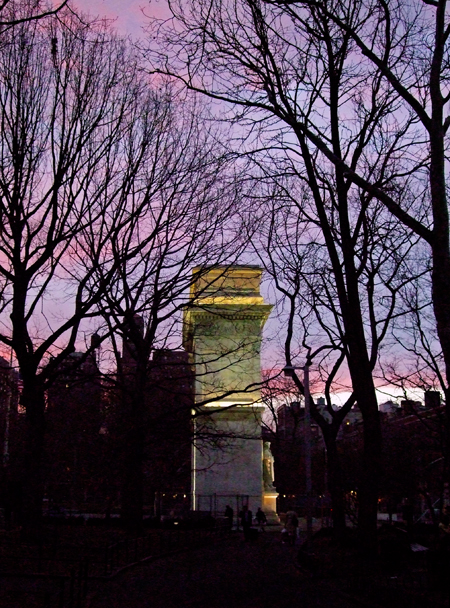
    I hope you enjoyed today’s unnecessary digression because, after all, not only is brevity the soul of wit, but this picture should also be able to speak for itself and be worth at least four hundred and one words 🙂

    PHOTO NOTE: I witnessed this dramatic pink and blue sky framing the Washington Square Park arch on Wednesday evening, March 11, 2009, at 6 PM.


  • Cabin Fever


    In cities like New York and Paris, where living spaces are smaller and street life is so vibrant, cabin fever and the craving for spring reach a level where people become irrational in their desire for warm weather activities and wardrobe. A hint of spring, and some are dressing for August – at 60 plus degrees, I am seeing flip-flop sandals, shorts, and T-Shirts. And beach goers. You get a feeling that their summer wear is waiting by their doors, lest they risk spending even a second outdoors in clothing even a bit too heavy for the day’s warmest moment.

    I am seeing tables dotting the sidewalks and people with coats on eating al fresco with temperatures in the 50s. The snowstorm of only one week ago is already forgotten.
    Preferences for climate and season are as varied as people themselves, but who is it that is not pleased by a coming spring? And what place is not improved by the onset of spring, a time synonymous with renewal?

    The photo was taken on the rocky beach in Dumbo at the foot of the Manhattan Bridge looking northwest towards Manhattan – you can read about it here with more photos. This area is one of the most scenic in New York City – both the neighborhood itself with buildings, cobblestone streets, the East River waterfront, our trinity of bridges (Brooklyn, Manhattan, Williamsburg), and vistas of the Manhattan skyline. That’s a lot of punch for your dollar, and these people were delighted to spend it 🙂

    Related Postings: Sink or Swim, Night in Bloom, Dumbo Arts Fest, Gallery View, One Front Street, Eagle Warehouse, The Watchtower, Loaded, Cuts One Way


  • In Like a Lion

    Posted on by Brian Dubé

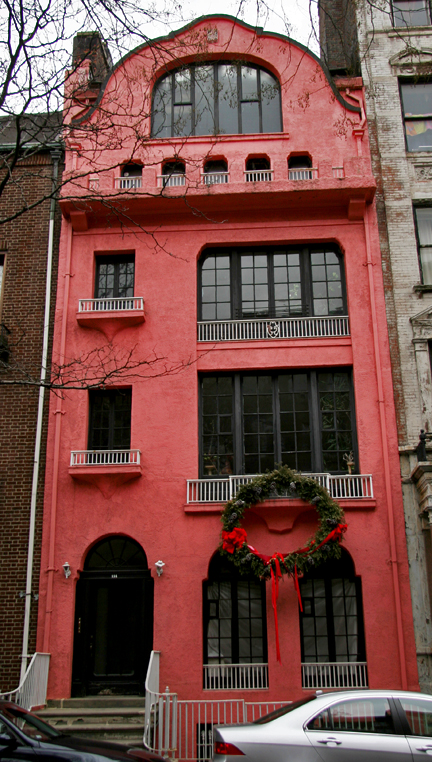
    How ironic. Just two days ago (March 1st), I took a photo of a very unique pink stucco building at 114 Waverly Place which was still sporting a Christmas wreath (see photo here). My intention was to illustrate how people can be so out of step with the time. It seemed particularly strange since temperatures had risen to 61 degrees on Friday, and many were strolling the streets in shirt sleeves and shorts. Yet one day later, feeling as we did that the worst was over, NYC was hit with a snowstorm of several inches (and a low today of 12 degrees F). The neighborhood was blanketed in white, and yesterday I found icicles over 12″ long hanging outside my window. So much for early spring fever.
    But this is old news for people in northern USA, who are prone to irregularity in climate. I wrote of an old friend’s view of contrasts between west coast and east coast weather in Weather Means Whether.

    But New Yorkers adapt very quickly – as easily as summer sandals and shorts are brought out in February, coats and scarves are ready for March’s last blast. So this year, it looks like the old adage will apply: “If March comes in like a lion, it will go out like a lamb.”

    Note: the expression has its origins with the constellations Leo, the Lion, and Aries, the ram or lamb, and their relative positions in the sky at the beginning and end of the month. On March 1 the constellation Leo, the lion, is rising in the eastern evening sky (“in like a lion.”) On March 31, the constellation Aries, the ram or lamb, sets in the western evening sky (out like a lamb).

    Posted on by Brian Dubé

  • Duffy

    I appeared hungry for knowledge and some good conversation, which is why, many years ago, a business associate recommended that I contact a man named Duffy. I was told that this man, who owned a large manufacturing business in New Jersey, was a wealth of knowledge, had valuable insights, and was always willing to share his ideas.

    So, with great enthusiasm, I contacted him. He was everything I had been told, and in fact, I made a short journey to visit him and his factory in New Jersey. I had a great tour of his facility and some inspiring conversation which went way beyond business mentoring. At the time, I was working 6 days a week, taking no time off. In one phone conversation, I complained of this to Duffy. I mentioned how I was frequently squandering my time and that even though I was at my office in the evenings and weekends, I found myself becoming less productive and often using that time for personal phone calls and other non-business related activities.

    Duffy compared me to an uncle of his who was a workaholic but was very inefficient. He made a comment I will never forget – that if you don’t take a vacation, your mind will. He told me of how he made it a priority to take regular time off to recharge his batteries. I recounted to him a summer where, for a month, I took 3-day weekends and by Monday morning, I could barely remember my agenda but was fresh and ready to go. Duffy pointed out that this was a clear sign of recharging. It all rang quite true, and although I have not taken his advice to heart, when I really immerse myself in a different environment or physical activity, I do notice the mental health benefits.
    It is very easy to get caught in the work mechanism in New York City. Costs are high, so it is easy to justify work. And physical activities or communing with nature require more effort and travel. There are a plethora of services in walking distance of most New Yorkers’ residences. All good reasons why is not uncommon to find people who rarely travel out of their neighborhoods.

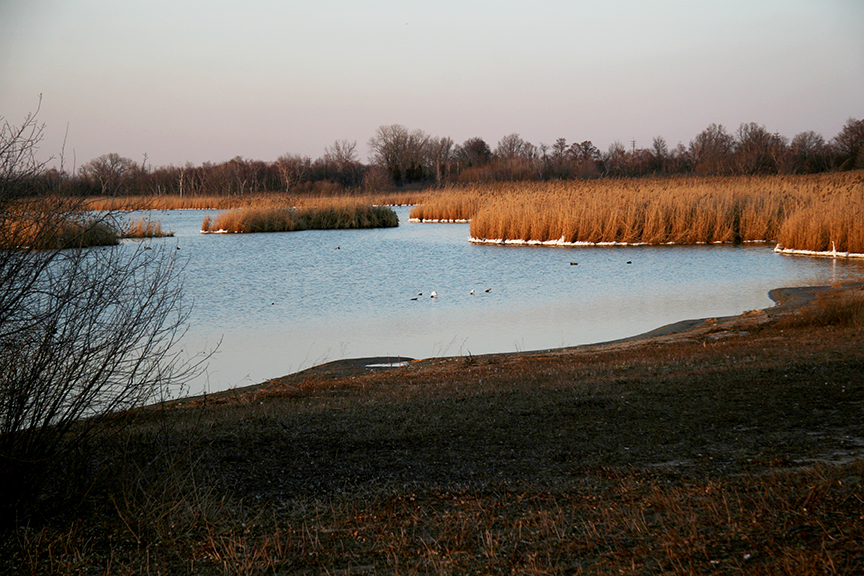
    These things passed through my mind on my recent (and first) trip to the Jamaica Bay Wildlife Refuge. This 9155-acre tract of land is part of Gateway National Recreation Area and is the only wildlife refuge in the national park system. This is one of the most important bird sanctuaries in the USA, and over 330 bird species have been sighted here – nearly half the species in the Northeast. It is one of the best places in New York City to observe migrating birds. There is also an array of native reptiles, amphibians, small mammals, over 60 species of butterflies, and one of the largest populations of horseshoe crabs in the northeast.

    There are beautiful walking trails and vistas of the bay, Manhattan, and Broad Channel. On my visit, I saw a number of aquatic birds, including what I believe to be an egret. The entire environment was pristine and quiet, yet remarkably, this refuge is accessible by subway.

    So if you want to recharge your batteries in New York City, this is the perfect place to do so. And I am sure Duffy would heartily approve 🙂


  • Who’s Getting Technical?

    The first time I went to the West Coast was by car, and it occurred to me at the time that one of the special new experiences to come was to see the sun set over the Pacific Ocean – the first time I would see a sunset over water. However, the assumptions regarding East Coast sunrises and West Coast sunsets over water are mistaken.
    Although it is not the rule, there are many places where it is possible to see sunsets over water on the East Coast (and sunrises over water in the West Coast). These do occur in special situations, such as bays and peninsulas. In these places, sunrises over water are also typically visible by making a short trip across the peninsula or island.

    In most cases, however, land is visible between the water and horizon, but there are locations where no land is visible at all and the sun sets entirely over water. The bay side of Cape Cod is one good example. Technically these sunsets are not over the open ocean, but when there is no land in sight, the experience is virtually the same.

    I thought I was the only one who gave serious consideration to the phenomenon of East Coast sunsets over water. But, surprisingly, there are others who share my interest, and I even found a blog on the subject it with locations, criteria, and discussions about horizons.

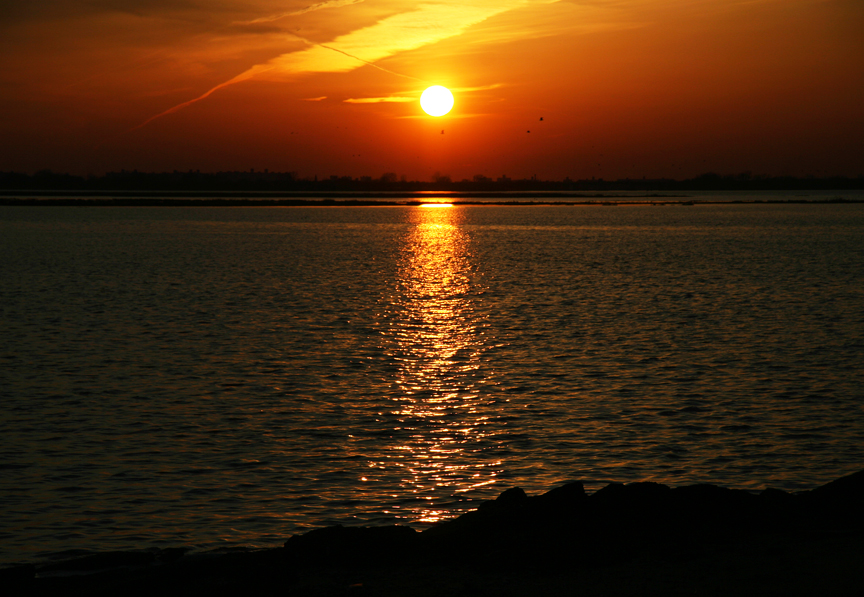
    I haven’t met a person that doesn’t enjoy a beautiful sunset, and on my recent excursion to Broad Channel, I was told that sunsets were some of the most spectacular. So it became an immediate agenda item for the afternoon. Being in the center of Jamaica Bay, surrounded by water, sunrises and sunsets over water can be enjoyed with a short stroll across town.

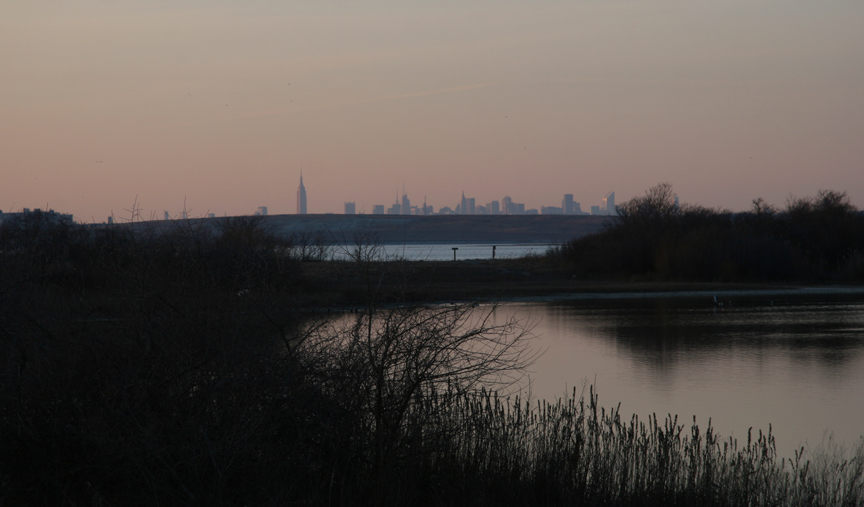
    When the sun sets at Broad Channel or at the Jamaica Wildlife Refuge, one can see land at the horizon, so for the sunset-over-water purists, Broad Channel does not strictly make the grade. But I doubt anyone really cares, because when it comes to sunsets like this, who’s getting technical?

    Note about the photo: Today’s photo was shot from the Jamaica Bay Wildlife Refuge and not in the town of Broad Channel itself.


  • Venice, New York

    I do try to limit my use of superlatives, lest I diminish their effectiveness through overuse or I run out of words to properly characterize the next greater thing. However, I am quite happy to take a few words from my superlatives bank account and spend them on Broad Channel, Queens. Because this is the most extraordinary neighborhood I have visited to date.

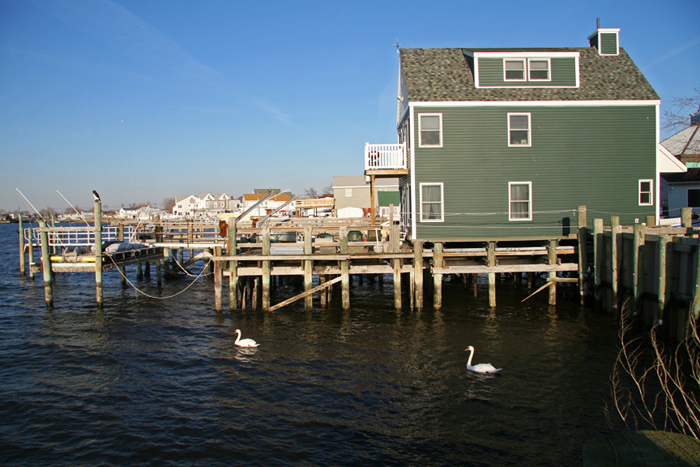
    A tour through this tiny enclave is truly a vacation to another time and place. As can be easily seen from today’s photo, Broad Channel is a maritime community. It is located on the only inhabited island in Jamaica Bay.
    The island was initially settled by the Lenape Indians. In the 1600s, a community was established by the Dutch. It was part of the Town of Jamaica and, in 1898, became part of New York City. In 1915, the city leased the island to the Broad Channel Corporation, which in turn leased properties to residents. It filed bankruptcy in 1939. Between that time and 1982, the city of New York took over. In 1982, properties were made available for sale to residents by the city for the first time.

    I made a visit to the local grocery store and immediately made the acquaintance of two residents, one being Art McCarthy of over 50 years. I learned that the town is only 20 blocks long and 4 wide, cut in half by Cross Bay Boulevard, which is connected to land by two bridges: the Cross Bay Veterans Memorial Bridge to mainland Queens to the north and the Joseph P. Addabbo Memorial Bridge to the Rockaway Peninsula, with the Atlantic Ocean to the south. The population numbers approximately 3,000 with 1000 homes. I was told that the island was about 60% Irish. A quick glance at the newsstand confirmed this: three Irish newspapers were prominently displayed.

    Often referred to as the Venice of New York, dead end streets are separated by canals, and many residents have boats moored at their houses. Fishing, clamming, and other aquatic activities are the draw here. The weather was rather cold and windy, so my explorations were made by car with an occasional foray out for photos. The vistas were beautiful and reminiscent of my times in Cape Cod. The view west from town provides distant vistas of Manhattan, framed by the wildlife refuge and other islands of the Gateway Recreational Area and Jamaica Bay.

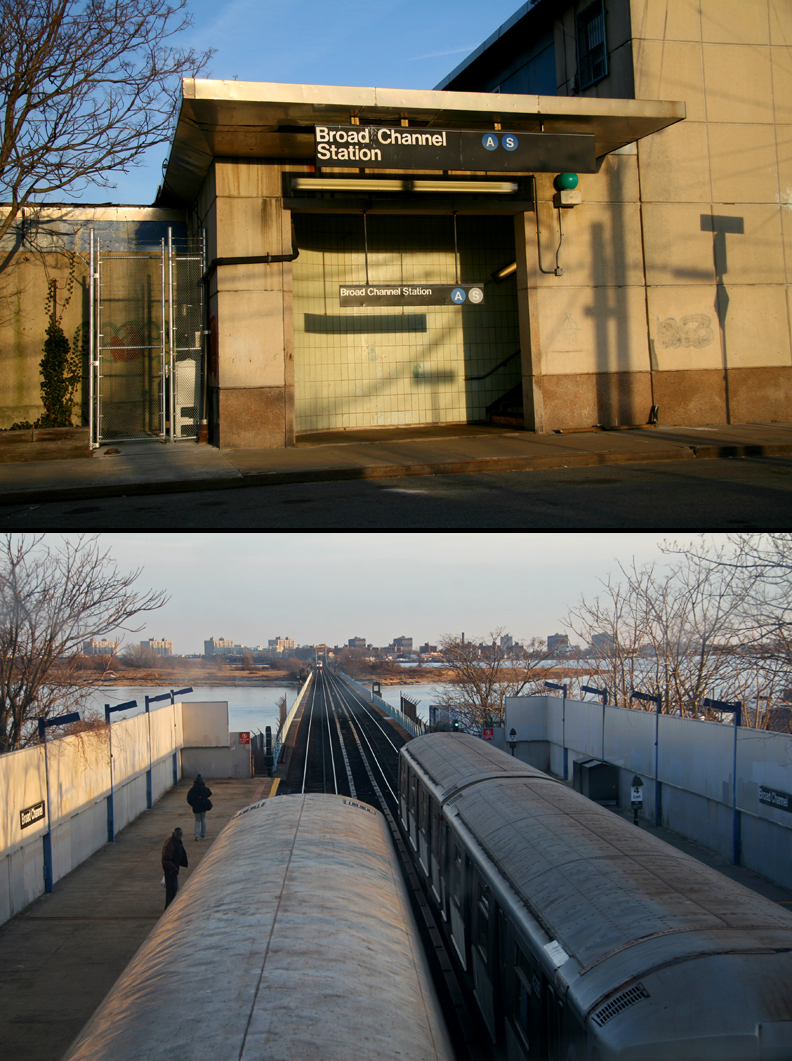
    A surprising feature of this community is its accessibility. It is an hour from Manhattan, and it can be reached by subway – the A train, which travels across the bay to Rockaway, makes a stop right in Broad Channel (see photos here).

    Broad Channel is certainly no secret among seekers of the the lesser known places of New York City. You will find it listed online and in books featuring hidden New York, forgotten New York, other islands of New York, nooks and crannies of New York, etc. The New York Times has run a number of articles on the enclave. Broad Channel is a natural target – the type of place people and media love to discover and talk or write about.

    Perhaps the most extraordinary thing is that the community is located within National Park land: the Jamaica Bay Wildlife Refuge, which can be accessed by foot from the town. But that’s another story…


  • Light and Lights

    One of the best locations to enjoy vistas of Manhattan and the surrounding waterways is from the promenade in Brooklyn Heights. Here you will find postcard views of lower Manhattan, South Street Seaport, the Brooklyn Bridge, the East River, and many of New York City’s iconic landmarks – the American International Building, the Empire State building, the Chrysler Building, the New York Life Insurance Building, and the Met Life Tower.

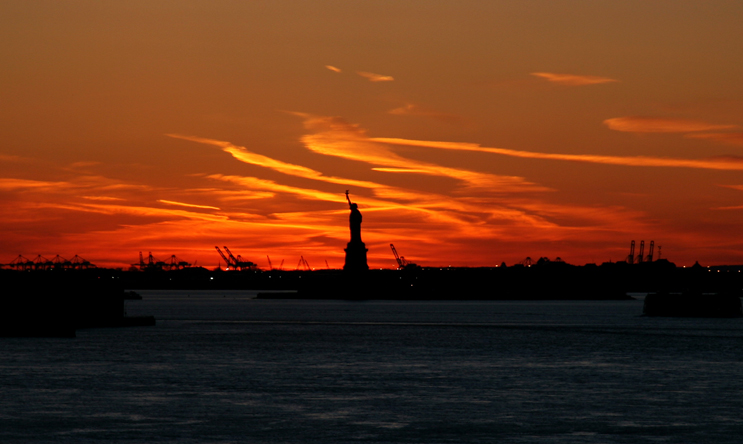
    An added bonus is that the promenade faces west, and that means sunsets. This is the time I would recommend visiting; during the evening, you have the best light and the gradual darkness coming over the city with a menagerie of lights. If you are fortunate, you will be rewarded with a sunset like this one – brilliant orange-red with streaks of yellow, all back lighting our Lady of Liberty. But I sell you no longer – I think the image speaks for itself…

    Note: If you look closely at this panorama, you will notice the silhouettes of container cranes, eerie and surreal. I have written before of the attractiveness that can be found in industrial landscapes in Hell’s Gate.


  • dinamic_sidebar 4 none

©2026 New York Daily Photo Entries (RSS) and Comments (RSS)  Raindrops Theme