• Category Archives Sports Games and Hobbies
  • Light Anyone?

    Posted on by Brian Dubé

    There are people who are afraid of light. Those with heliophobia have fear of sunlight. Some have a condition known as photophobia, an extreme sensitivity to light. But apart from these relatively atypical, draculean individuals, most people love light and shun the darkness. How often we experience down spirits on a dark and cloudy day or see children afraid of the dark.

    On the other side of the coin, we have an endless capacity to enjoy light in every variation, produced from sources both natural and man-made. The sun, the moon, LEDs, neon, southern exposures, fire, fireflies, illuminated toys, or Times Square. It’s built into our vocabulary – light up your life…

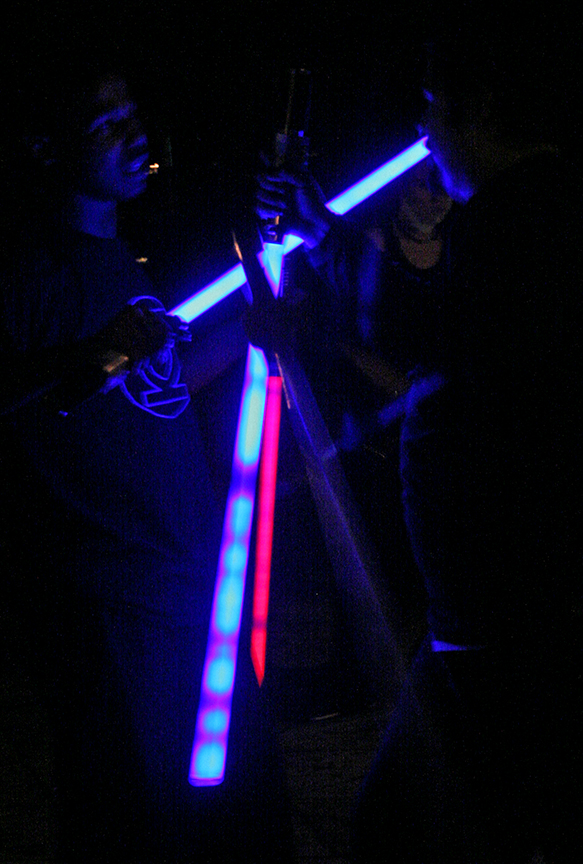
    Here in this photo, we have the latest incarnation of fascination with light and a recreation based on its manipulation: Jedi light saber play with NY Jedi, a group that is now 2.5 years old. Judging from their website, this appears to be a growing phenomenon many of us might have missed. And yes, there is now equipment, forums, meetings, events, teams, costumes, classes, films, videos, and a vocabulary, all specific to the activity. Some of the Light Sabers can run up to hundreds of dollars. If you want to know more about activities, meetings, or equipment, check their website here.

    The concept of light is virtually synonymous with things good and positive – we have acknowledgement in Genesis:

    And the earth was without form, and void; and darkness was upon the face of the deep. And the Spirit of God moved upon the face of the waters. And God said, Let there be light: and there was light. And God saw the light, that it was good: and God divided the light from the darkness.

    Light anyone?…

    Related Postings: Spinning, Signature, Let’s Have a Parade
    Posted on by Brian Dubé

  • Good Fortune

    Posted on by Brian Dubé

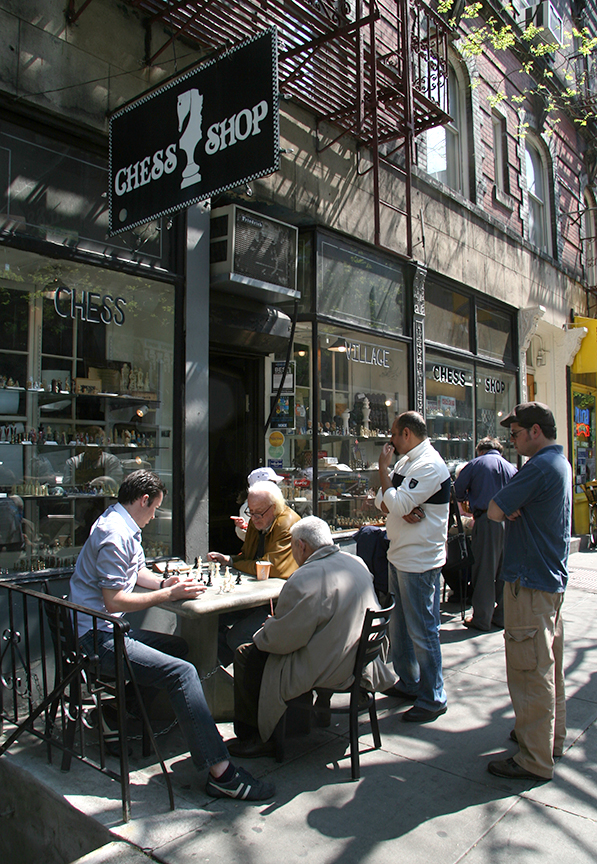
    What a fortuitous occasion. I have waited 2 years for the right day for shooting this chess shop. Chess is special to me – I played on a chess team in high school and spent many Sundays over the years watching masters and grandmasters playing in Washington Square Park – chess legend Bobby Fisher himself was a habitue at one time. I have posted previously on the Marshall Chess Club.

    When I took this photo, I had no idea that one of the players was the original owner, George Frohlinde (the white-haired player in the photo). When I went inside to discuss my intentions for this blog, I coincidentally met and spoke with the new owner, Lawrence Nash, Frohlinde’s nephew.
    We spoke of real estate and the precarious position a place like this is in. And, he confided, this place may not be around much longer.

    I have done many stories which I consider part of a an “end of an era” series. Unfortunately, the Village Chess Shop may be added to the fatality list some time in the not-so-distant future. I found Lawrence extremely likable and sensible. We both agreed that the problem is market forces as a result of the tremendous improvement and desirability of NYC, not, as is frequently alleged, any overt conspiracy by landlords. Most landlords do ask for market rents which do force many tenants out, but some landlords, as is the case in the Chess Shop, do give preferential rents to long-term tenants. But it is still very challenging for a small niche business like this to survive, even with undermarket rent.

    The Chess Shop was opened in 1972 by George Frohlinde. In the 1960s, he ran a shop owned by International Grandmaster Nicholas Rossolimo. At the time, there were a number of chess shops in this area. Sometimes referred to as the “Chess District”, only two shops remain: the Chess Shop at 230 Thompson Street and a new competitor across the street, the Chess Forum, opened in 1995 by one of Frohlinde’s employees, Imad Khachchan. The Chess Shop is opened 365 days from 11AM to midnight and provides a place for playing at a nominal hourly fee. They also are known for their selection of a myriad of unique-themed chess sets, many of which can be seen in their windows – eyestoppers for most passersby. See them and learn more about the shop at their website. I suggest you visit soon…

    Posted on by Brian Dubé

  • Big Deal

    Everything is a big deal in New York – big things and little things. Whether it’s the tree at Rock Center or doing laundry. But with the enormous, virtually unimaginable plethora of services, isn’t everything supposed to be more convenient? Well, yes and no. Only if you have the stomach for it. Because to live well and for your life to run smoothly here, everything requires navigation, negotiation, inside knowledge, strategy, stamina, persistence, attitude, contacts, resourcefulness, and a slightly masochistic streak (and yes, money doesn’t hurt). Plus, you have to want all that the city has to offer – it has to be worth it. Things we consider easy are only easy by New York standards. And if something truly easy actually occurs, then call CNN, because this is a Really Big Deal and merits celebration, conversation, and is newsworthy. Like a parking spot right in front of your apartment building when you need it.

    What does all of this have to do with ice skating? I think you know by now. There are only a few places in Manhattan where you can ice skate, and, of course, they are all a big deal – Rockefeller Center, Central Park, and this seasonal ice skating pond in Bryant Park (nice website here). When I arrived, the ice cleaning machine was just finishing up, and the kids were chomping on the bit to get on that ice. The New York City skyline and Bryant Park itself make a beautiful backdrop for the urban ice skating experience.

    NYC is a revolving door, and those who can’t keep up just get spit back out. I remember a woman who was a very aggressive, successful salesperson in the printing business from the south who relocated to the big city. She moved to my neighborhood, so I was looking forward to her becoming an addition to my (shrinking) circle of friends. After only a few months and before I could even visit her once, she was gone. In a phone conversation, I asked her what had happened. She said she didn’t understand why people would live here. Things were just too HARD. Not that she couldn’t handle it, but why would anyone want to? I was going to say it’s really no big deal, but then I realized that’s not exactly true. New Yorkers are a different breed, and we feed on big deals…


  • Chelsea Piers

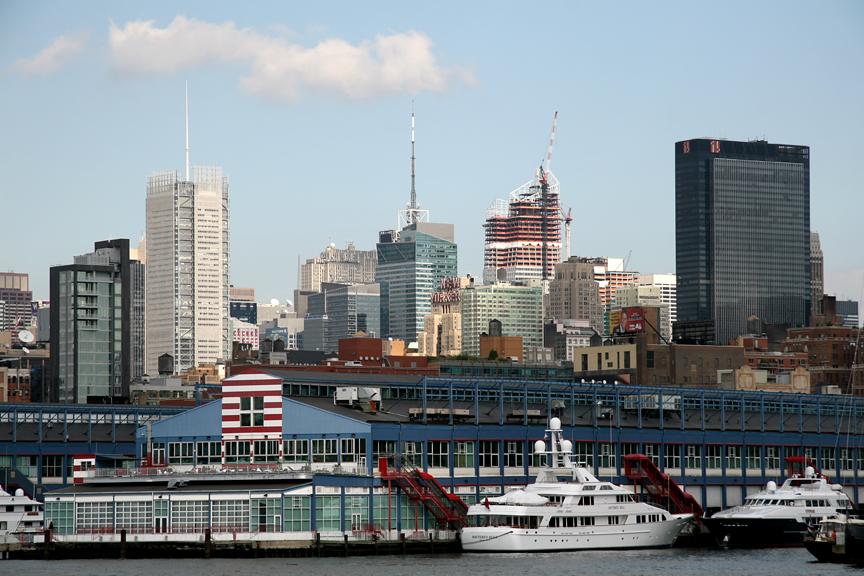
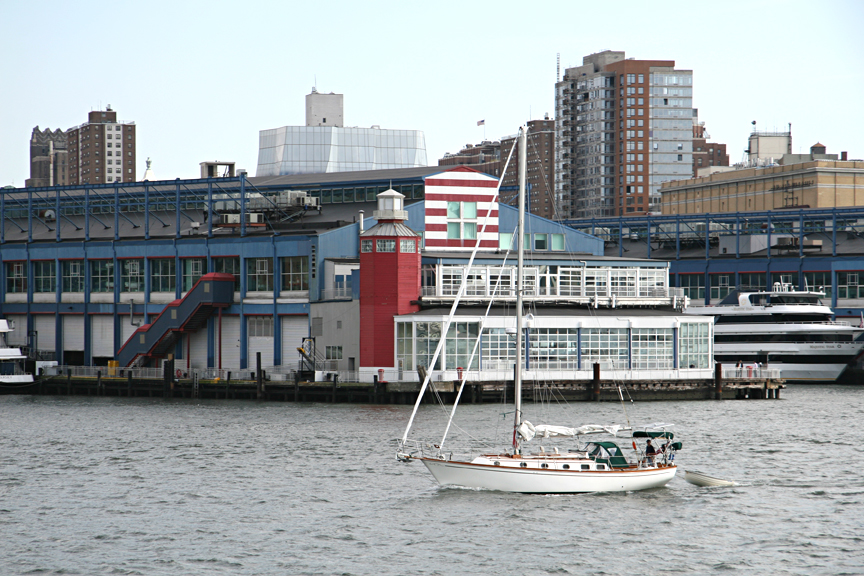
    The Chelsea Piers have a long history with many twists and turns, much of it paralleling the other NYC waterfront piers which saw their heyday, a sordid decline, and then an unexpected and greatly welcomed renaissance. In the early 20th century, the Chelsea Piers saw all of the trans-Atlantic luxury cruise liners, including the Titanic and Lusitania. In 1935, the luxury liner piers moved north and the Chelsea Piers became a cargo terminal. In the 1980s, there were plans for a new West Side Highway (Westway), which called for demolition of the piers. The Westway project never went through, and the piers survived. The new piers, designed by Warren and Wetmore (which also designed Grand Central Terminal), began construction in 1994.

    The huge, 28-acre complex of 4 piers between 17th and 23rd Streets in Manhattan are a sports-oriented facility with several venues: The Field House – soccer, basketball, gymnastics, baseball, dance and rock climbing; Golf Club – a four-tiered, year-round outdoor driving range; Sky Rink – twin indoor ice-skating rinks with hockey, general & figure skating, school; Sports Center Health Club; The Spa; a Bowling center; and the BlueStreak Sports Training facility. Click here for the Chelsea Piers website. There is onsite parking and restaurants. A nice plus is that the center is located along the Hudson River Greenway…

    Photo Note: the photo shows the vista looking towards midtown. Click here for a second photo with a view of Gehry’s IAC building.


  • Signature

    Apart from this photoblog, I also do a moderate amount of photography for my business, shooting all of the various products we manufacture and sell. We were very pleased with the dramatic variety of effects we got recently with a shoot, so I thought I would share five of the photos (out of 35). I revealed the unique nature of my business in a previous post (click here and note the 4th comment). This is also how I have the privilege of knowing high-wire artist and juggler Philippe Petit, who has been featured twice (see other related postings below).

    LEDs have become cheaper and brighter over the years, which has resulted in the proliferation of all types of illuminated items in a myriad of product categories, including toys, shoes, clothing, ornaments, etc. Juggling is no different, and the performance aspect is really driving the interest in illuminated products. Companies like mine are endeavoring to offer everything possible in an illuminated version. People just love illuminated props, and the simplest routines elicit oohs and aahs from an audience – jugglers get a lot of mileage from their skill set when using illuminated juggling equipment.

    The photos are of me juggling three clubs in the dark with our color changing model. In this LED variant, the hue slowly cycles through the color spectrum. So, in a figurative and literal sense, this really is my signature…

    Related Postings: Artiste Extraordinaire, Spinning, Fire and Drums, Spiegelworld, Titans


  • Danger and Caution

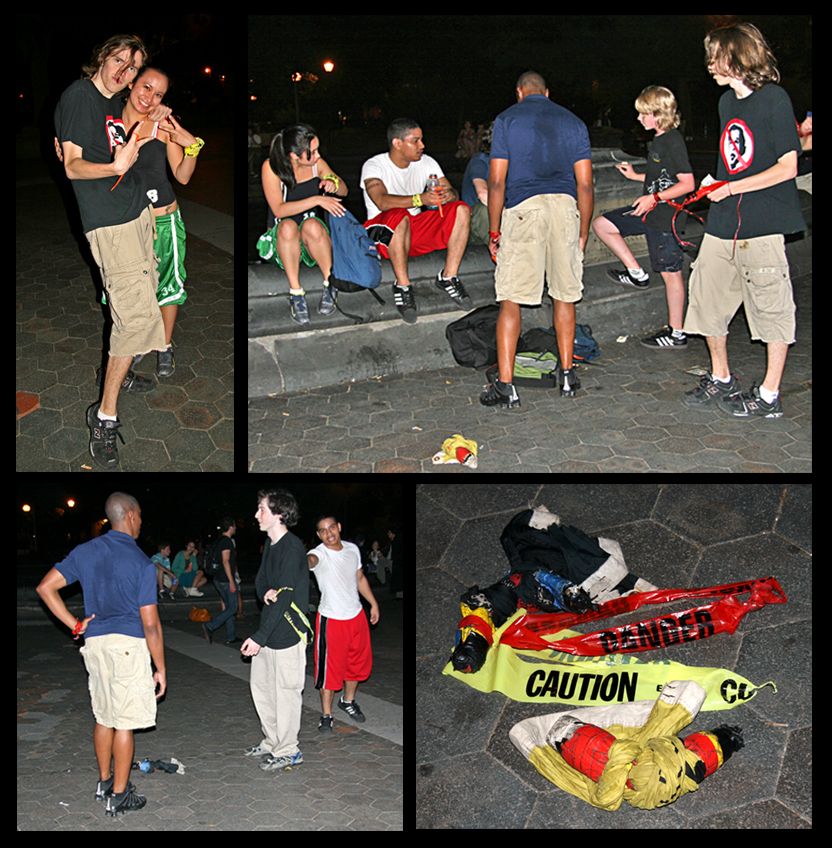
    The rules to Capture the Flag are incredibly simple (in theory): the goal is to capture the opponent’s flag, located at their team’s base, and bring it back to your team’s base. Yet to watch this game played in the city is to witness something bordering an anarchistic mêlée. Some players are running everywhere (nearly crashing into onlookers), and others are standing for no reason I can fathom. Some are chatting with the enemy, sometimes in jail, boundaries seem ill-defined or not at all, and the score is not announced.

    The members of the two teams – Danger and Caution – wear identifying plastic strips around their wrists. The flags are knotted rags, as seen in the photo. Thinking this was a new geek creation unique to the city, I was surprised to learn that this is an old game – I actually found reference to it in a Boy Scout manual from 1947 and that Robert Kennedy Jr. had been known to have 100 person games at his property in Mt. Kisco, NY. There are versions which incorporate areas of neighborhoods in Brooklyn.

    The photos show the game as played by NYU students in the evenings in Washington Square Park. Capture the flag is part of a trend in urban gaming, with others like Pacmanhattan and manhunt. I’ve discussed the game with a professor at NYU (with a PhD in physics) who frequents the park, has observed the game, and also is confused while watching. He agrees that it is only fully understandable by the young and wild spirited 🙂

    Photo Note: The photos are from from August 30, 2007. I intended to coordinate with the group of players and do a more extensive shooting with a flash system, but it never happened.


  • Landlubber

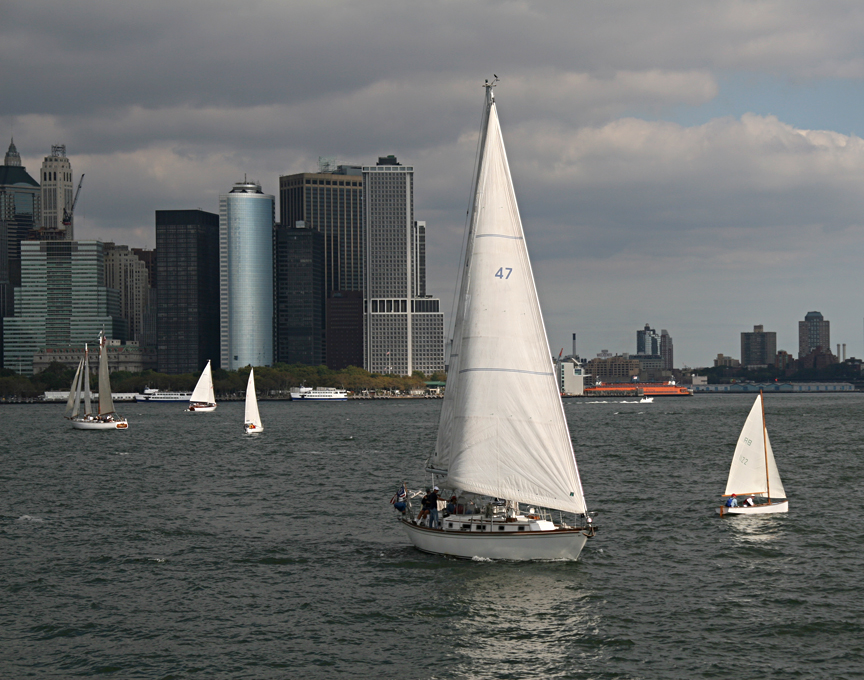
    Three rough rides on the sea let me know that I was a landlubber. At one time, I had thought that sailing as a hobby would be something I might pursue. The romance of the sea, as conveyed via books, photos, films, smells, the beach, vistas of and from the ocean – everything about the sea – is compelling to me, except the experience of actually being on the water. I was going to qualify that by adding “especially when it’s rough,” but at this point, apprehension of seasickness and its extremely unpleasant queasiness gives me cause to approach every nautical trip with trepidation. Of course, the world abounds with suggestions for prevention and cure, but once you have motion sickness, suggestions of the well-intended around you just add insult to injury. I have been OK, however, on ferry and riverboat rides around the city. Distraction can be helpful, and the vistas around the island of Manhattan are spectacular enough to keep one’s mind off any pitch, roll, or yaw.

    This photo was taken of lower Manhattan from a river boat. The highly reflective, rounded building just left of center in the photo is 17 State Street, about which I have previously posted. I love the quote from a story by Isaac Asimov. In it, there is an anecdote about a seasick passenger whom a steward assures, “Nobody ever dies from seasickness.” The passenger responds, “For Heaven’s sake, don’t say that. It’s only the hope of dying that’s keeping me alive.'”

    A note about the word landlubber: I misunderstood the derivation of this word, thinking the word lubber to be a play on lover. Lubber dates back to the 1300s and means a clumsy person. Landlubber dates back to 1690 and refers to an unseasoned sailor or someone unfamiliar with the sea and is a sailor’s term of contempt for a landsman. I’m OK with the insult 🙂


  • Marathon

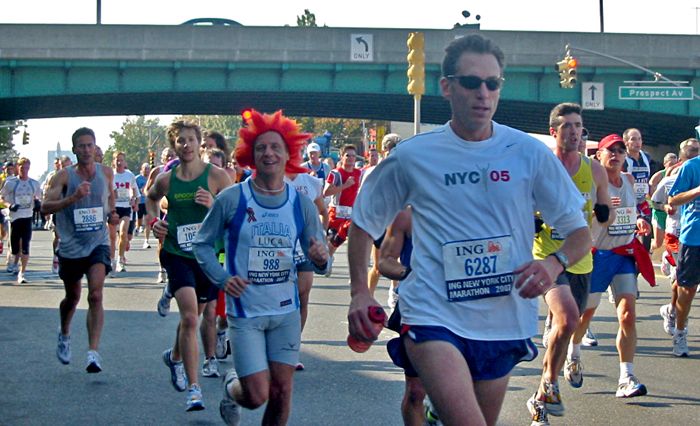
    Today is the New York City Marathon, a race which has become the largest in the world, with 38,000 running, and one of the most prestigious. It’s amazing to see such an event in NYC – the race takes place in all five boroughs with major arteries closed off for the runners and 2 million spectators. The race starts in Staten Island at the base of the Verrazano Bridge, continues over the bridge, through Brooklyn into Queens, over the Queensboro Bridge into Manhattan, up First Avenue, entering the Bronx briefly, then back into Manhattan down Fifth Avenue, finishing in Central Park.

    I am watching the finish of the men’s and women’s divisions as I write this. Paula Radlciffe of Britain won the woman’s – she has never lost a marathon. The men’s has been won by Martin Lel of Kenya…

    Photo note: This photo is courtesy of Lucy, who originally started the blog with me in March 2006. She ventured out this morning to 4th Avenue in Brooklyn.


  • Machine

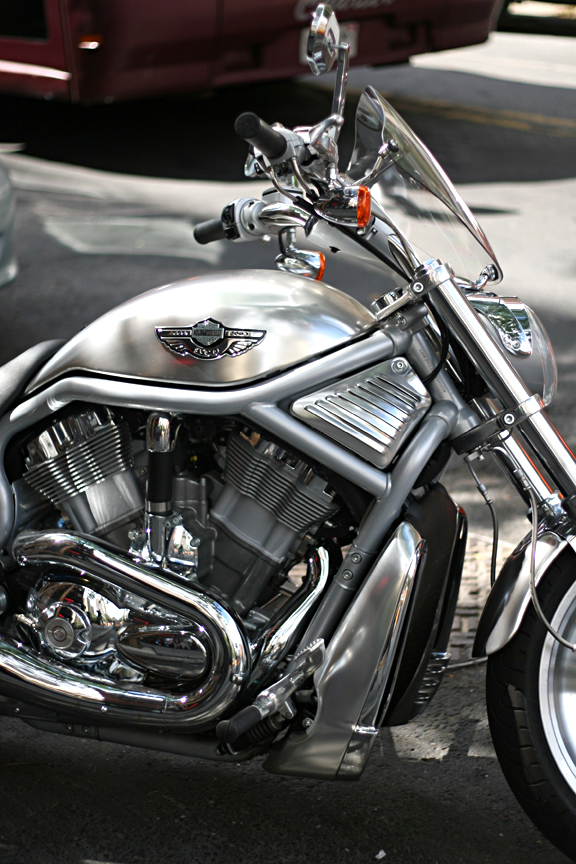
    I am not a biker or part of the biker culture. And I do not enjoy the deafening roar of bikes with straight pipes – a sore point with many city residents. However, I do appreciate a well-engineered and pleasant-looking machine. And this Harley, with its gleam and striking satin finish parked on the Lower East Side, is partly that. Partly, because there are aspects of the engine and bike engineering that are archaic and could be improved (actually, some changes are being made with newer models), but due to the strong cult phenomenon which has grown around Harley, many aspects of the early design have been kept.

    Harley-Davidson as a company is a fascinating story. Founded in 1903, the company was nearly bankrupt by 1969 – the image of the outlaw biker was partly to blame, along with deteriorating quality and proliferation of Japanese motorcycles which were less expensive, better-made, and had superior performance. In the 1980s, the company was resold and, under new management, began its ascent. Rather than attempting to compete with the Japanese, the company marketed Harley’s retro factor. There are many things associated with Harleys: chopper customizations, the unique “potato-potato” sound of the engine, hardtails, etc.

    The marketing of the historic aspect of a product brand is a smart move seen with many legacy businesses such as Levis, Coca Cola, Disney, Lego, etc. It also readily lends itself to product line extension and licensing (Harley sells accessories and apparel). In the late 1990s, there were waiting lists as long as a year for some models. The bike has become an American icon with a certain symbolic iconoclasm. The median age of Harley buyers is now nearly 50, with many affluent, well-known, or powerful individuals as owners: Jay Leno, investor Jim Rogers, etc….


  • Urban Bike Polo

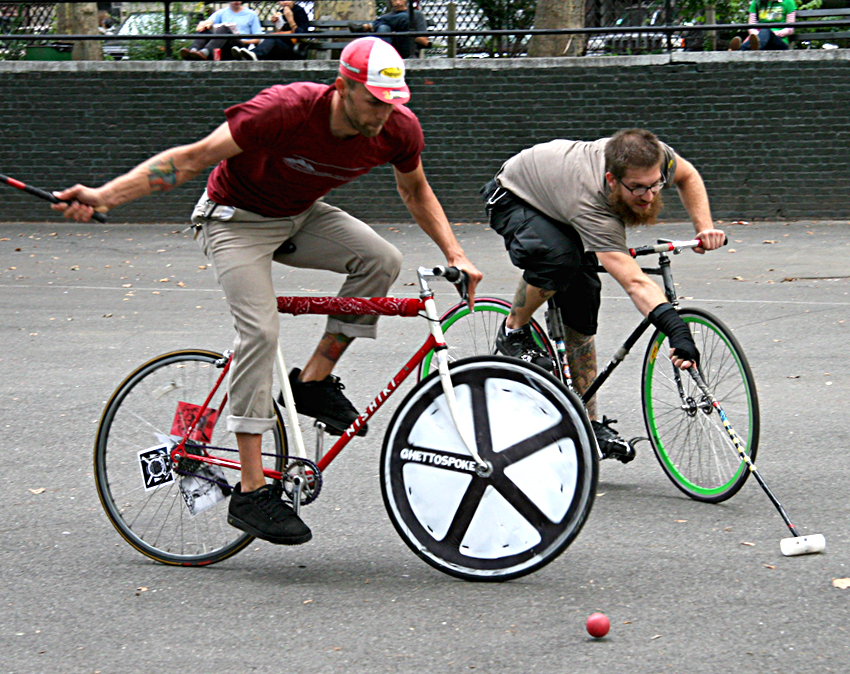
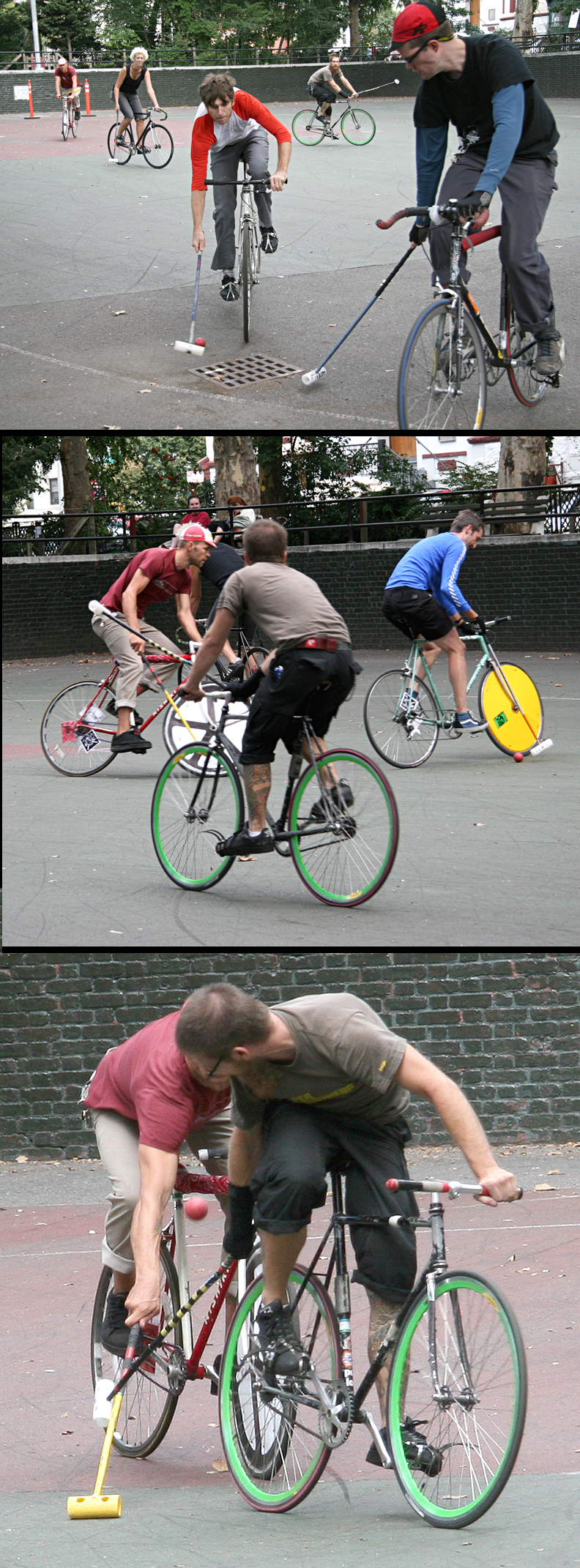
    I really thought I was witnessing something relatively new, probably developed in NYC. An urban-styled twist on a classic sport. But as it turns out, Bike Polo, Cycle Polo, or Bicycle Polo has been around since the late 1800s. It was invented in Ireland in 1891 by Richard J. Mecredy and was played as early as 1900 by the British army and the Indian Maharajas. It is a relatively formalized sport, played on a court (typically grass) with various rules and regulations governing play and equipment. This is the sober, suburban version (click here for the American Bicycle Polo Association). The game I ran across (shown in the photo) was in the Sara D. Roosevelt Park in the Lower East Side (click here for more photos).

    What we are seeing here is Urban Bike Polo, a much rougher variation with fewer rules and equipment which has evolved for the urban environment, with traffic cones for goal posts, street hockey balls, plastic mallets, and most often track bikes (fixed gear). It’s bike messenger-style meets polo. And as I read further, I found, of course, that there is a world associated with this activity – websites, newspaper and magazine articles, equipment vendors, teams, clubs, championships, and hundreds of videos on YouTube, including one taken with a malletcam (video camera installed in a mallet) (update 1/19/12: Video is private). One NYC team is appropriately named the Ratkillers. Makes me feel like where have I been and why was I the last to know?


  • Jet Ski

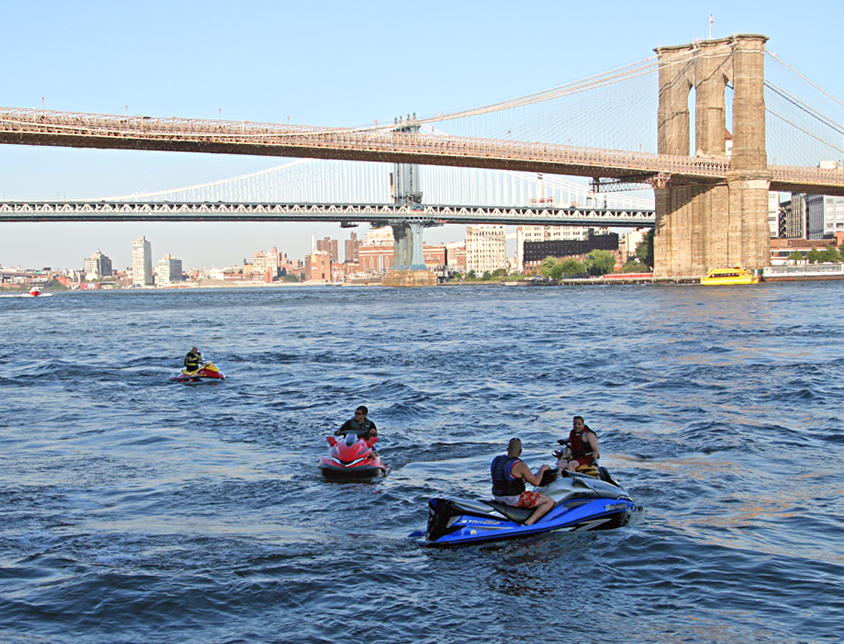
    It may come as a surprise to see these watercraft in the waters on NYC, but along with canoeing and kayaking, the city is seeing more water-related activites in the rivers as they become cleaner. Jet Skis, Waverunners, Sea Doos, water scooters, personal watercraft, “thrill craft” – whatever the name, these vehicles are controversial. Many communities and locales have bans, and the watercraft industry lobbies to keep them legal. They have been banned in National Parks. The issues are obvious to anyone who has observed them in action – noise pollution, water pollution, and danger. These vehicles can travel at 70 miles per hour.

    Canoers and Kayakers generally dislike any powered craft, not just because of the noise but also the wake they create, making capsizing a risk. Accidental deaths have occurred with personal watercraft, and in 2006, a teen killed another teen in Brooklyn and was charged with manslaughter – a first for an NYC boating accident (click here for article). The industry, however, has made efforts to design cleaner, quieter, and safer craft. Of course, I imagine that from the point of view of the jet skiers, being out on the East River on a beautiful summer afternoon, one might see things differently – the exhilaration, the vistas, the water…

    Note: the photograph was taken at South Street Seaport, Pier 17, on the East River. The vista is looking Northeast towards the Brooklyn Bridge with the Manhattan Bridge behind it.


  • Mayberry, NYC

    Posted on by Brian Dubé

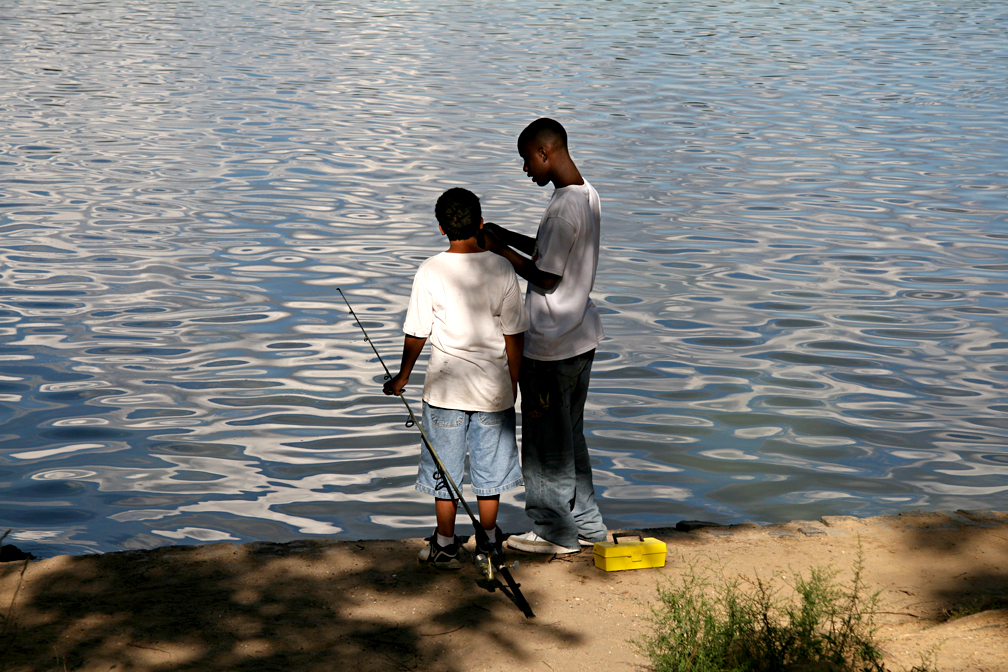
    This was the perfect summer image: two young boys standing lakeside preparing to fish in dappled late afternoon light. The scene made me feel like I was in the archetypal small town – transported to Mayberry. A Saturday or Sunday afternoon in the park is the perfect respite from the hustle and concrete of the big city – the Tuileries gardens of Paris, Hyde Park in London, or Sheep Meadow in Central Park.

    For many, fishing is relaxing and a way to connect with the outdoors. Fishing in New York City is not as uncommon as one might think. As I wrote in a previous posting about the shore of NYC, 4 of the 5 boroughs are islands or part of islands – there are over 500 miles of shoreline along rivers and an ocean. The waterways surrounding New York have become much cleaner, so there is quite a bit of fishing in the various waterways around the boroughs and in the various lakes in the larger parks, such as Central Park and Prospect Park (Brooklyn), where this photo was taken. Yes, some of the fish can be eaten, but there are health advisories regarding recommended species and number eaten on a weekly or monthly basis. And my understanding is that fresh water fishing is catch and release only. Enjoy your Sunday – sorry, no treatises today, I think I’m going to take it easy 🙂

    Posted on by Brian Dubé

  • Bikes

    Posted on by Brian Dubé

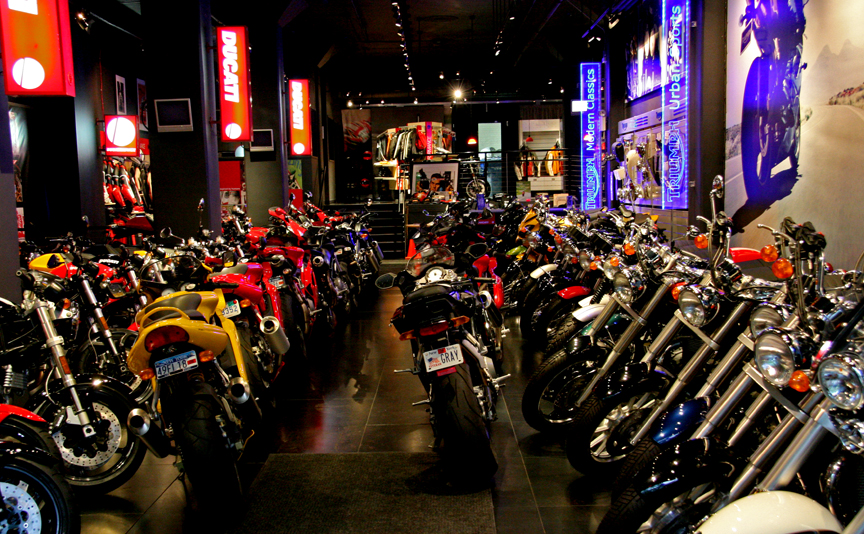
    I am not a motorcycle enthusiast and have never owned one, but I was always impressed by this Ducati/Triumph showroom display visible from street level in SoHo. It is quite interesting that as I write this and look at their website, I see that they have won national showroom awards. And as is typical with many fine European products, design aesthetic and attention to detail stand out in this display.

    It has always appeared to me as an outsider that the design of motorcycles was much more important to the owner than automobiles. Although there are many finely engineered and designed autos, the percentage of very uninteresting and utilitarian products (many of which are strictly price-driven, like the Yugo) seems to be much greater than that in the motorcycle world. This makes sense, since a motorcycle is not as practical as an automobile as far as transportation – the motorcyclist chooses this vehicle for many reasons other than transportation. The experience of being on a bike is one of integration with one’s environment, as opposed to the experience of being in a car, which can be likened to watching TV in comparison. And then there is the issue of power, speed, and exhilaration, again intensified by lack of separation with the environment.

    However, many types of subcultures have developed around biking, and the image of the outlaw biker is strong in people’s minds. There is more risk in riding a motorcycle – the accident rate is nearly 5 to 1 over cars. And in NYC (and elsewhere), the reputation of motorcycles has been further tarnished by those that ride with straight pipes – illegal exhaust systems where noise reducing baffles have been removed and create noise of deafening proportions…

    Posted on by Brian Dubé

  • Spinning

    Posted on by Brian Dubé

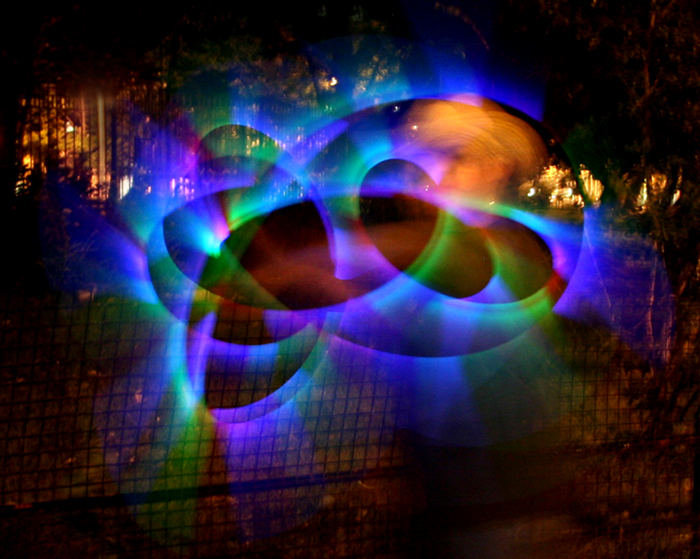
    The spinning of fire and light is everywhere. Of course, there is Burning Man, where twirling of light and fire have been done on a large scale for years. Recently in NYC, there was One Night of Fire, where revelers met on the Brooklyn Bridge to go on a roving street fest – spontaneously moving throughout the city by foot and subway to end up on the beach in Coney Island. This event was organized by the Danger (I did not go because it was the same night as the Sheriff Session).

    The fellow in the photo is Sage (I revealed last year in a comment to a posting my business involvement with the juggling community). The photo is a long exposure of him spinning color changing lighted poi, where the balls slowly change through the color spectrum. Poi, which traces its way back to the Maori of New Zealand, consists of a set of balls each tethered to a cord and finger strap. One is held in each hand, and the pair of objects is swung in various patterns. The balls themselves can be be made in any number of materials/designs, including illuminated or fire versions. Swinging and twirling of poi and other objects (fans, flags, juggling clubs, torches, meteors, glowsticks, ribbons, staff) can be seen in parks, rave parties, juggling festivals, and various planned and unplanned gatherings and events (such as Figment). Entire small businesses have been created which specialize in this type of equipment. The new big thing in the last couple of years: hula hoops – plain, brightly colored, lighted, or fire…

    Posted on by Brian Dubé

  • The Cage

    Posted on by Brian Dubé

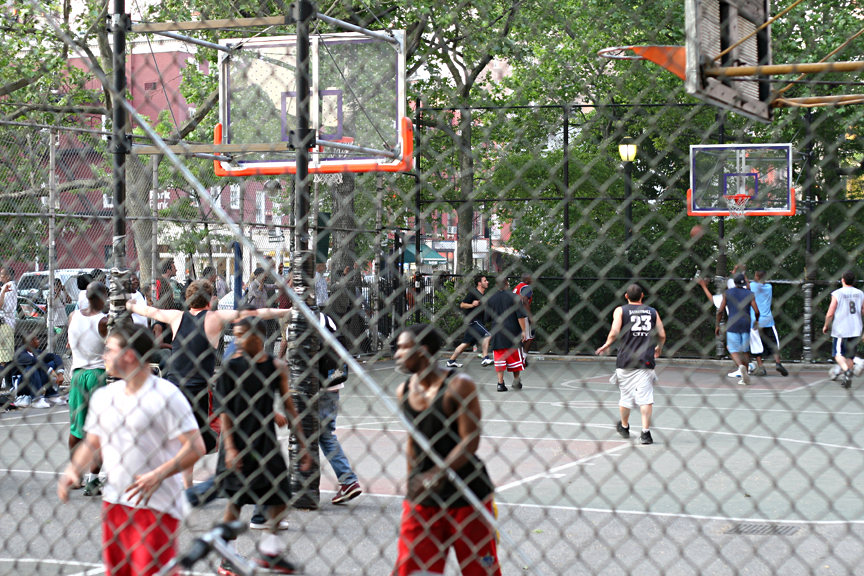
    This may not look like much, but this ramshackle affair is one of the world’s most well-known streetball courts, with some of the finest players in the country. Officially the West 4th Street Courts, it is commonly known as the Cage. It is sandwiched between the entrance to the West 4th Street subway station (one of the city’s largest), Avenue of the Americas a.k.a. 6th Ave. (one of the city’s busiest streets), West 3rd and 4th Streets, playgrounds, and handball courts. There is no seating for spectators – onlookers press up against the fence, dodging pedestrian traffic and jockeying for good viewing. The court is smaller than regulation size, so the the action is faster, with lots of tough, physical play (“banging”), sometimes resembling urban wrestling more than basketball. The entire court is surrounded by a 20-foot-high chain-link fence – hence the term cage (cage configurations are not unusual in many large cities). Many professional players have cut their teeth here; scouts are frequently on site prospecting for talent.

    The West 4th Street League that plays there was founded in 1977 by Kenny Graham, a limousine driver. There is a summer tournament, drawing 100,000 visitors from around the world. Prior to 1935, the area was vacant land; from 1935 to 1953 it was a small city park with swings, slides, and a bocce court. In 1953, it was taken over by the parks department, and in the 1950s, it was paved and basketball hoops were added.

    I am not a sports or basketball fan, but the fast games with constant action are quintessential NYC. And the banter between players is some of the best sarcasm and comedy I have heard. The Cage has been featured in films and TV commercials. A book was written: Inside the Cage: A Season at West 4th Street’s Legendary Tournament. Do you want a slice of real, classic NYC – gritty, harsh, fast, in-your-face? Visit the the Cage, watch a game, and listen

    Posted on by Brian Dubé


  • dinamic_sidebar 4 none

©2026 New York Daily Photo Entries (RSS) and Comments (RSS)  Raindrops Theme