• Hawk Fest

    The saga of the red-tailed hawk Pale Male and his family is well-known to most New Yorkers and birders. Red-tailed hawks are seen in urban areas and NYC, however, Pale Male (named by birdwatcher and author Marie Winn) was the first known to nest on a building in the city. In 1993, Pale Male set up home at 927 Fifth Ave (at 74th Street). In true obsessive New York style, birders set up camp at the boat pond in Central Park for years and documented the life of Pale Male, his mate Lola, and their offspring with telescopes, cameras, and video equipment. A book was written, and a nature documentary was made in 2003. In 2004, the story became international news when the coop building residents decided to remove the nest and the anti-pigeon spikes used to support it. International outcry resulted in reestablishment of a nest support (read the whole story here). Recently, Washington Square Park in the Village has acquired its own red-tailed resident. I saw him in action a few weeks ago. He has been the subject of recent controversy.

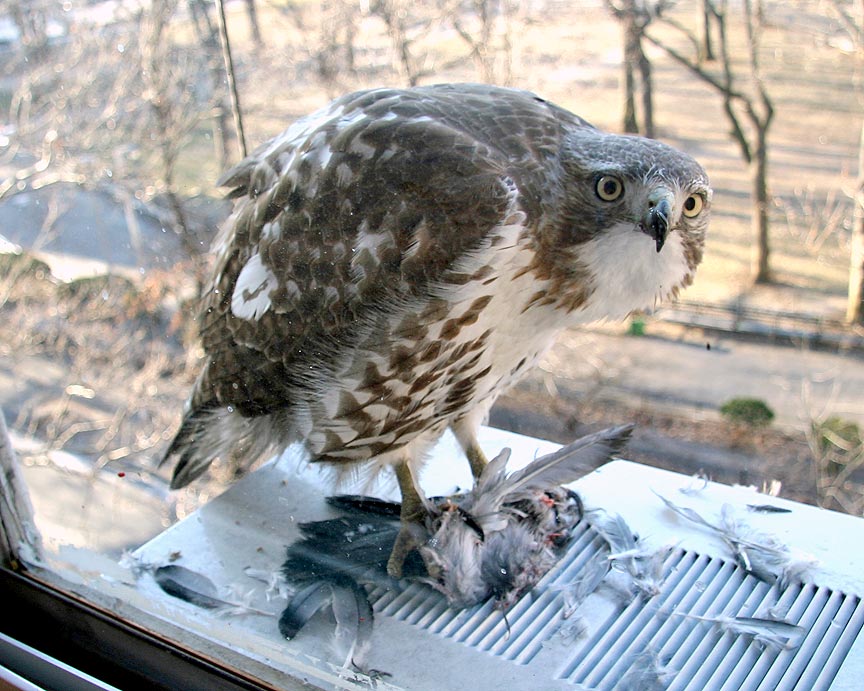
    Yesterday morning, while in my living room, I heard louder than usual activity on my bedroom air conditioner (birds cavorting on air conditioners in the city is common). When I went in to investigate, I was stunned to see this huge hawk. I grabbed my camera, and at 8:28 AM, I was able to get this photo (from just inches away) of the hawk finishing his pigeon breakfast, with Washington Square Park as backdrop…

  • Silvercup Studios

    Film/televsion has become the fastest growing industry in NYC. The city aggressively courts the business; contrary to what one might expect, the city does not charge for filming permits, parking, or police – it’s all free. The jobs and business bring substantial revenue. In 1983, brothers Stuart and Alan Suna converted the former Silvercup Bakery building (circa 1920) into Silvercup Studios, a film and television production facility. The first studio opened in the former “flour silo room.” They preserved the neon sign seen in the photo, adding the word Studios. Silvercup is now the largest independent full-service film and television studio facility in the northeastern United States. Many major films and television have been produced there (The Sopranos, Sex in the City, The Gangs of New York, etc.)

    In 2006, Silvercup announced Silvercup West, a $1 billion expansion – a complex with eight soundstages, production and studio support space, offices, stores, 1,000 apartments in high-rise towers, a catering hall, a cultural institution, and waterfront esplanade and plazas. The project, which will also incorporate environmentally sustainable “green building” features, has been described as a “vertical Hollywood.” The architect is Lord Richard Rogers, who designed the Pompidou Center in Paris and the Millennium Dome in London. It is to be built at the edge of the East River in Queens and will be the largest production house on the East Coast. Of course, there is competition – Kaufman-Astoria Studios and the new Steiner Studios in the Brooklyn Navy Yard…


  • Eileen’s Cheesecake

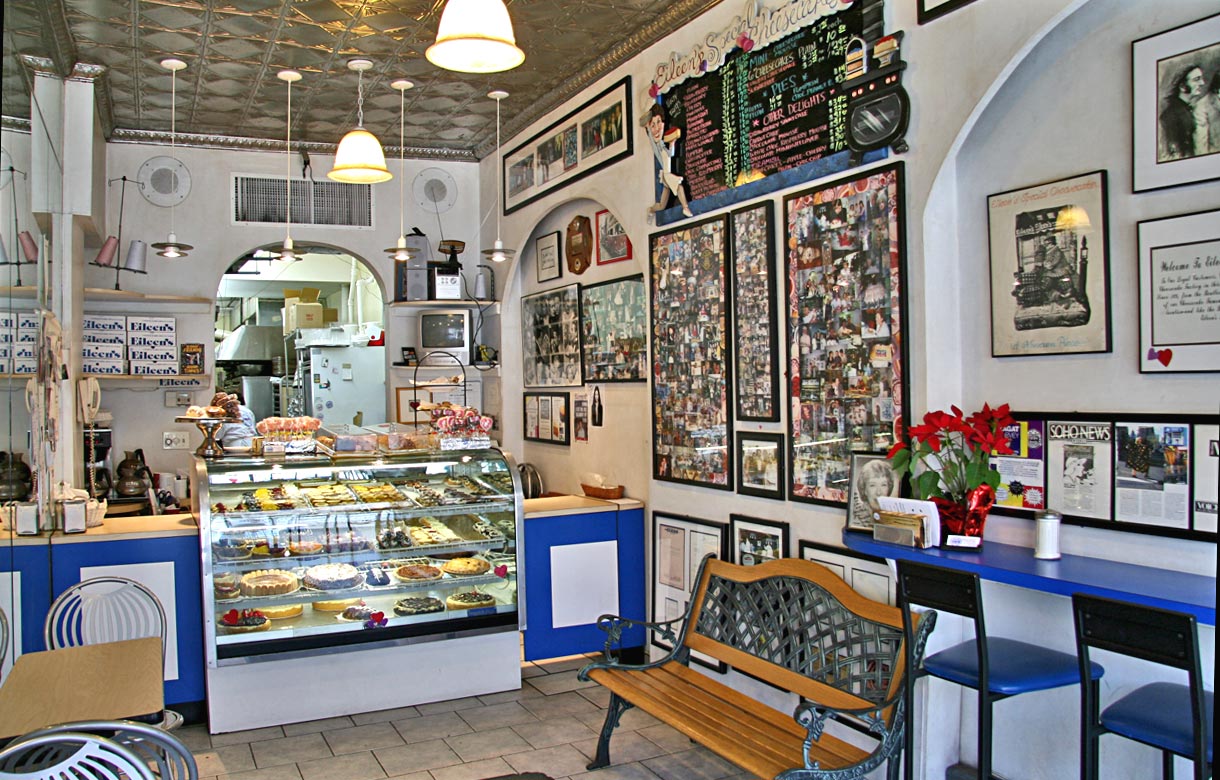
    There probably is no dessert that is more New York than cheesecake. Many articles have been written, quests made, surveys taken, and cheesecakes rated. Eileen’s Special Cheesecake at 17 Cleveland Place in SoHo is the type of place many hope to find and patronize – owner on premises, single location, food made on site in a slightly off-the-beaten path location. We love those New York secrets – you know how it goes: “there’s this little place…” In a way, its location on Cleveland Place is perfect – a one-block street that even many who frequent the neighborhood are unfamiliar with. It makes it all the more elusive and special. Click here for more photos.

    Eileen Avezzano opened in 1974 and has been at this location since 1976, a virtual ghost town at that time. The shop is very cute, and the walls are adorned with photos of celebrity customers, articles, and art. She has received many accolades and awards – many have rated it #1 in NYC, an achievement in a city with so many contenders. Click here for article. Her cheesecake is a cream cheese-based New York Style (as opposed to Italian-style, which uses ricotta). But, unlike the traditional New York style, it is light and fluffy, owing to her own special recipe. Many (including myself) prefer the result. They have over 20 flavors and additional baked items. What’s really nice is that they offer several sizes, including mini-cheesecakes that are available for $2.75 – a great way to indulge without having to get a whole pie. There is seating if you want to eat there…


  • Going Up

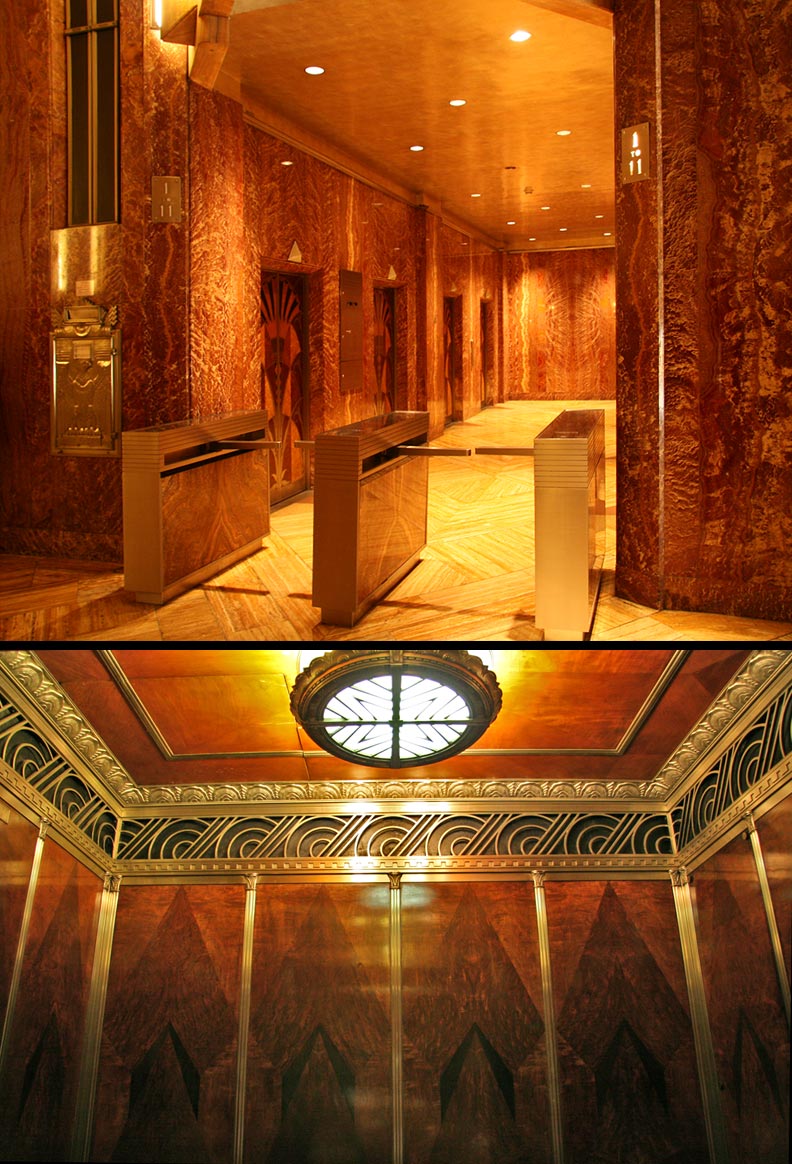
    This is an elevator door from the Chrysler Building, set against red African marble walls and travertine floors. There are 32 elevators, and each door is finished in a pattern of exotic, rare wood marquetry using different varieties of wood from all over the world. The doors are fantastic Art Deco designs and reflect the influence of ancient Egyptian motifs.

    Of course, elevators were key in the existence of tall skyscrapers, and the Chrysler Building benefited from the latest elevator technology. From Scientific American: “Otis electric gearless, machine type, with full automatic signal control and automatic leveling. This type is practically self-operating.” They could travel up to speeds of 1200 feet a minute but were curbed to 700 feet per minute by existing laws in NYC. Click here for more photos showing a bank of lobby elevators and a sneak peek at the interior of one of the elevator cabs – it’s as far as they will let you go without business in the building…


  • Vegan Chic

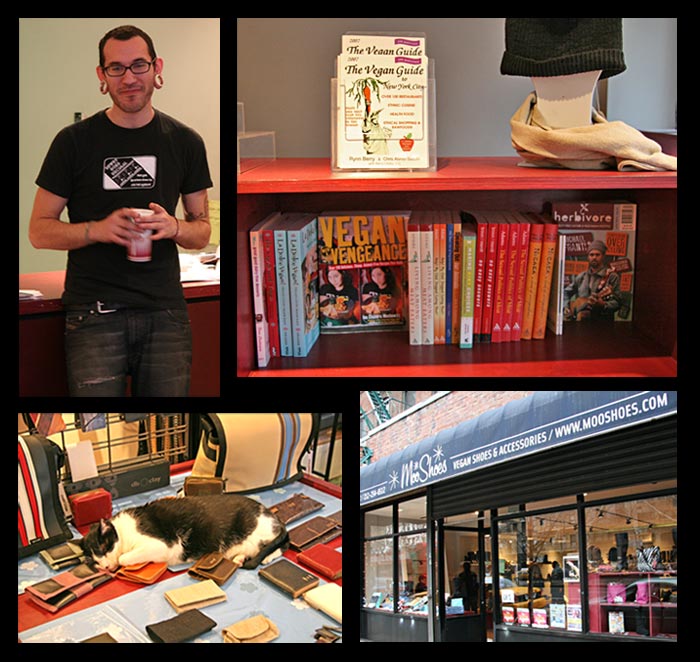
    There has been a spate of articles recently covering the growing vegan movement and its fashionability. The New York Times alone has run two articles in just the last few weeks (one on vegan chef Isa Moskowitz). There are several stores in Manhattan catering to the movement, such as Organic Avenue, Mooshoes, Kaight, and NY Artificial.

    Vegans have been around for a long time – the Vegan Society (and the word itself) originated in 1944. The philosophy involves dispensing with all products derived wholly or partly from animals. This includes more than the obvious – purists eschew animal products, including meat, poultry, seafood, eggs, dairy products, fur, leather, wool, pearls, and mother of pearl, by-products, such as gelatin, lanolin, rennet, and whey, and items derived from insects, such as silk, honey, beeswax, shellac, and cochineal. Some even avoid items which use animal products in the manufacture even though none is in the product itself (cane sugar that has been filtered with bone char; beer or wine clarified with albumen, animal blood, or isinglass).

    What’s new in all of this is the new chic ethic surrounding the whole movement. It’s being embraced by a number of groups – the fringes (punks, goths, etc.), college students, and an upscale market with celebs such as Natalie Portman, Alicia Silverstone, Woody Harrelson, Joaquin Phoenix, and Stella McCartney.

    The collage of photos was taken at Mooshoes, a new shop on the Lower East Side featuring vegan shoes, clothing, cosmetics, books, and videos/DVDs. In a way, I am not surprised at all, since everything seems to be about pushing the envelope, thinking out of the box, and living on the edge. Things are just getting more and more extreme. But there is still a little ways to go – I actually have a few older books on fruitarianism and breatharianism


  • Subway Art

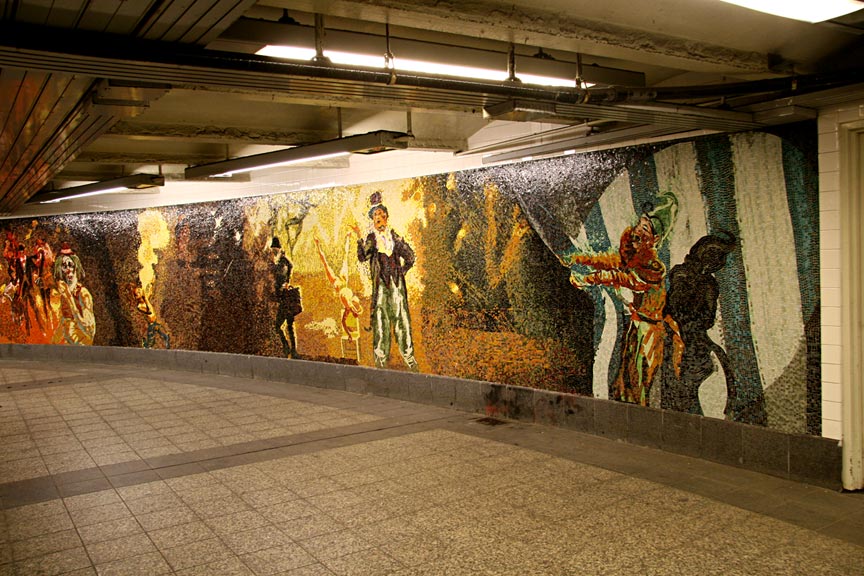
    Although the NYC transit system is far from beautiful, efforts have been made to beautify it. One such project is the MTA Arts for Transit, founded in 1985 in an effort to make the system inviting and attractive. A variety of media is displayed – ceramics, sculpture, posters, and illuminated photographs.

    From the official MTA website: “Both well-established and emerging artists add to a growing collection of works created in the materials of the system — mosaic, ceramic, tile, bronze, steel, and faceted glass. The art can be seen in the miles of walls within the system and in the gates, windscreens, plazas, and architecture… Artists are chosen through a competitive process that uses selection panels, comprised of visual arts professionals and community representatives, which review and select artists.”

    Many well-known artists are featured, such as Roy Lichtenstein, Jacob Lawrence, Eric Fischl, Elizabeth Murray, Tom Otterness, Nancy Spero, and Vito Acconci. The photograph is a piece at 34th Street/Penn Station titled Garden of Circus Delights done in 2001 by Eric Fischl. “A series of murals takes commuters from the familiar to the bizarre circus world. The murals portray fire-breathers, acrobats, and animals; gradually one realizes that a commuter has left home and been pulled into the circus, where he meets incredible circus characters and then, on the other side of the tent, he emerges in the white light and harmony, a commuter again, but transported and transformed.”


  • The Scholastic Building

    This is the Scholastic Building at 557 Broadway in SoHo’s cast iron district. The project was designed by celebrated Italian architect Aldo Rossi, described as a “poet who happens to be an architect.” He died in an auto accident before construction began.

    Scholastic, established in 1920, is the world’s largest publisher of children’s books. They have a large presence in this area, occupying a number of buildings. This was Rossi’s first and only project in NYC. The structure was built from scratch on a site which was home to a parking lot and a one-story building (Broadway Lumber), taking six years to complete. The design, with its white half-columns, spandrels, and rust-red I-Beams, is quite striking; “the building’s columnar Broadway facade, in steel, terra-cotta, and stone, echoes the scale and the formal, Classical character of its commercial neighbors.”

    The property extends one city block through to Mercer Street, where the building sports its own similar but more industrial facade. Most critics love the design, while some, of course, do not. The building expands Scholastic’s previous headquarters next door at the Rouss Building (circa 1889) at 555 Broadway (photo left) – the floors are contiguous between the two buildings. The land itself is leased from the Blechman family, with an option to buy it in 2013. Read the story here. The new building serves as the primary entrance to Scholastic; the ground floor and mezzanine is a retail store with their line of books, videos, games, puzzles, and toys. Do visit…


  • DUMBO

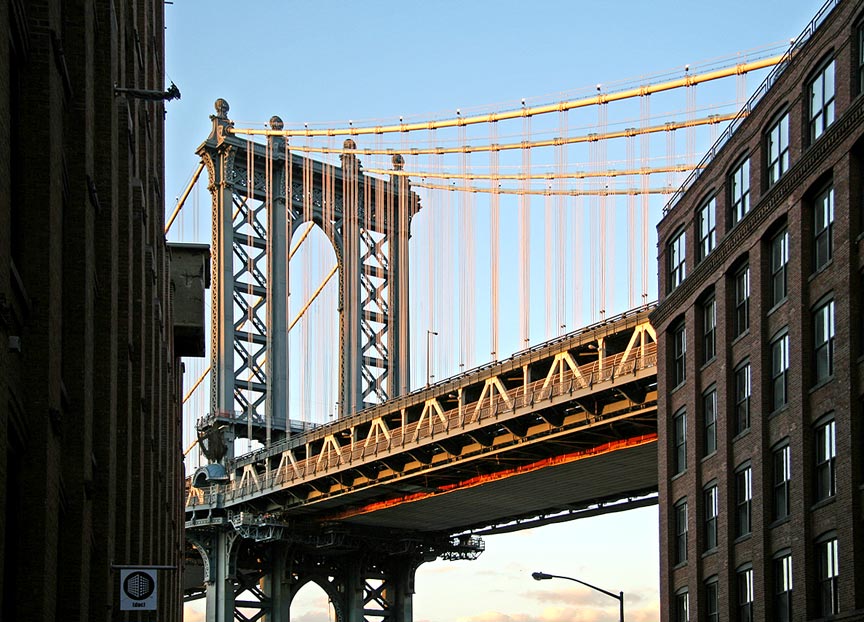
    This is a view looking towards the Manhattan Bridge from Washington Street in DUMBO (Down Under the Manhattan Bridge Overpass). This image gives some sense of the visual drama typical in this Brooklyn neighborhood. There are a number of elements which gives the neighborhood its unique atmosphere – vistas of three bridges with the Brooklyn and Manhattan bridges looming overhead, the omnipresent waterfront, the breathtaking views of Manhattan, the light, the architecture of the large warehouse buildings, and the cavernous feel of the streets. These elements, along with inexpensive rents and proximity to Manhattan, made it a natural choice for the migration of artists who began to inhabit the area in the 1980s. It still has a strong arts community, but gentrification has priced many out, a common scenario with most urban art communities.

    I posted on the annual Dumbo Arts Festival in October 2006 in Sink or Swim, Night in Bloom, Dumbo Arts Fest, and Gallery View. There are a number of businesses in the area worth visiting (many well-known): The Jacques Torres chocolate factory, Bargemusic, Grimaldi’s Pizzeria, the Brooklyn Ice Cream Factory, the River Café, galleries, etc. Click here for the DUMBONYC blog with extensive resource listings…


  • Back in Time

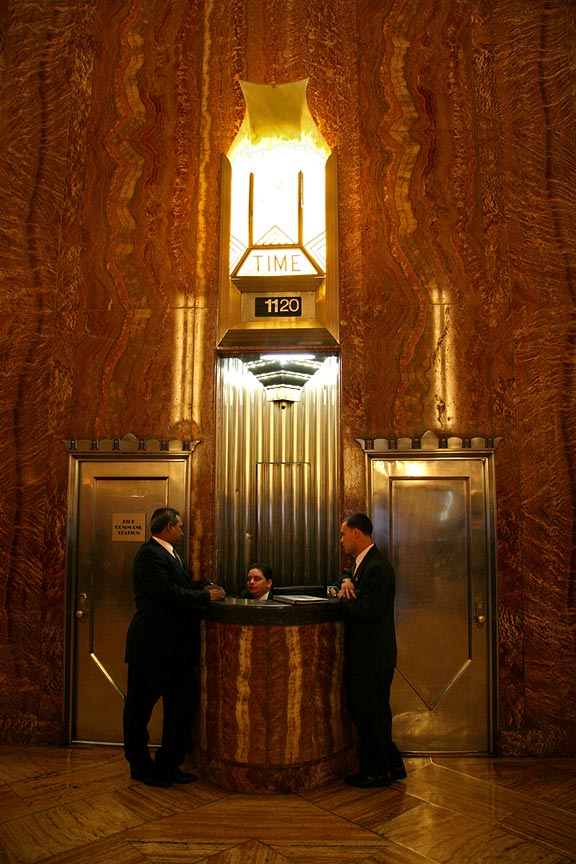
    This is the reception desk with its illuminated clock in the lobby of the Chrysler Building. The 77-story Art Deco masterpiece at 405 Lexington Avenue was designed by William Van Alen and built in 1929. In the dark, warm retro lobby, we find red Moroccan marble walls, yellow Siena marble floors, amber onyx, blue marble trim, and chrome steel.

    I have done several other posts on the Chrysler Building featuring different aspects of the building: the exterior with its gargoyles, the magnificent Lexington Avenue entryway, the stairwells (see here and here), and the adjoining Trylon Towers. Also of note are its renowned elevators and the ceiling murals, which I will cover in the future…


  • Bluestockings

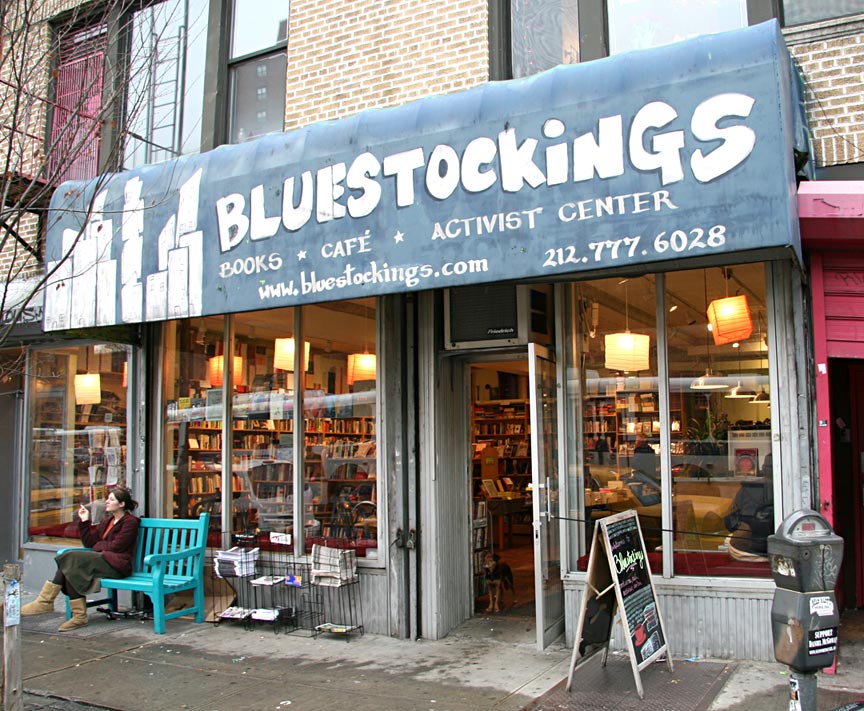
    One has to look harder these days to find places like this. The edges of the city have found the few remaining nooks and crannies in areas with quasi-affordable rents. This strip of Allen Street on the Lower East Side has a handful of countercultural and vegan establishments, including Bluestockings, which was opened in 1999 by Kathryn Welsh as a bookstore by and for women.

    Their website and my visit there does appear to indicate that the original concept has been expanded, with a broader range of subjects and activities (including readings): “Bluestockings is a radical bookstore, fair trade cafe, and activist center in the Lower East Side of Manhattan.” Click here for their mission statement and website. The term bluestocking itself is fascinating, hearkening back to the 18th century British bluestockings, a women’s literary movement which found its origins in the French literary salon movement. The term became used in a pejorative way to describe a literary or intellectual woman…


  • Gift Show

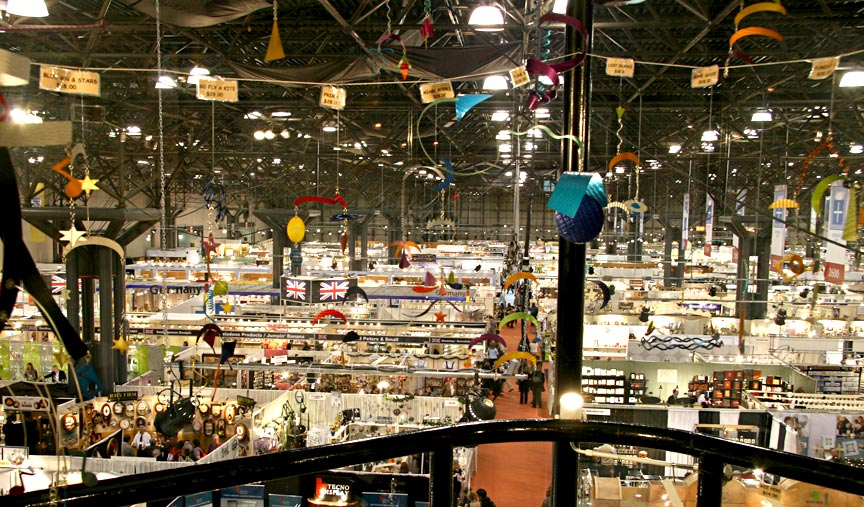
    This was my first year attending the New York International Gift Show. Not knowing what to expect, I was pleasantly surprised. I went with a friend who, like myself, had an interest in quality handmade goods. The show is enormous, occupying several levels at the Jacob Javits Center, two ship terminals, and the Metropolitan Pavilion, a total of 660,000 square feet.

    There are over 2,800 vendors drawing 43,000 visitors from around the world. To do a thorough job of perusing the entire show would take several days. The breadth and quality of merchandise was amazing – there are several divisions: Tabletop & Housewares, Floral & Garden, Just Kidstuff, and Handmade. We were particularly impressed with the Handmade division, which itself occupied several areas. Vendors in this division are juried to get in, and we were told that there is now a 3-year waiting list. The levels of craftsmanship and creativity were amazing, surprising given that this is a commercial gift show and not a high-end arts and crafts show (which I usually find disappointing).

    The photo was taken from the Galleria section, where a vendor was nice enough to give me permission to shoot from his booth. This show is to the trade only – consumers are not allowed in…


  • End of an Era

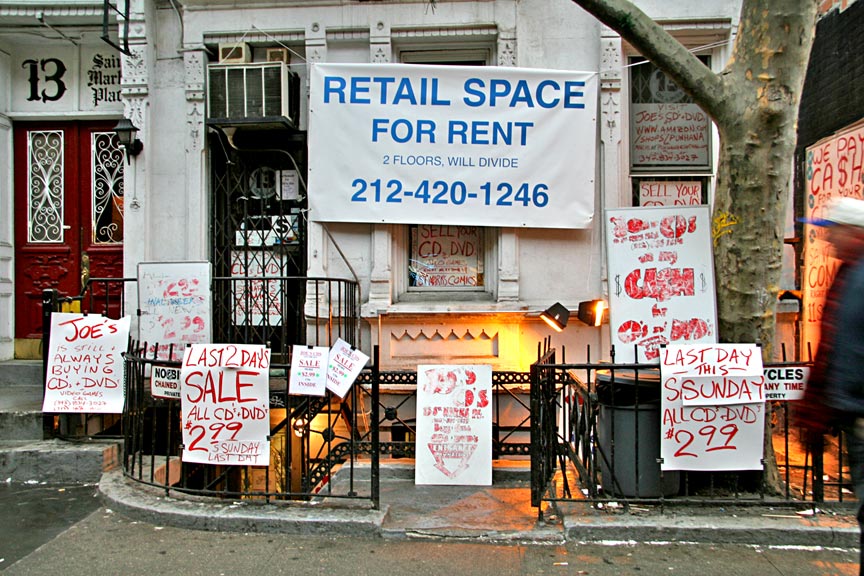
    From time to time, technology makes major, sweeping changes to our lives. The Internet is certainly one of the largest transforming technologies in recent history, with fallout, of course, like the CD/record business, which is being eliminated.
    Just recently, Tower Records closed – when it opened in the 1980s, it was the largest retailer of records in New York. Its impact was huge, with many stores affected in a large radius. CDs were a significant new technology – I remember when CDs started being introduced in a small section at Tower. The transition from vinyl records to 100% CDs was remarkably rapid. And now, with digital audio files such as mp3s, the iPod etc., the era of physical media for audio and video is coming to a close – at least seeing large retailers dedicated to these media. The demise of DVDs appears to also be on the way. Netflix has just announced the start of movie downloads – Instant Viewing – by June of this year.

    The photo was taken on St. Marks Place in the East Village. Although businesses go out for many reasons, I imagine that declining sales of CDs was a major factor in this place’s demise…


  • Lighthouse Legends

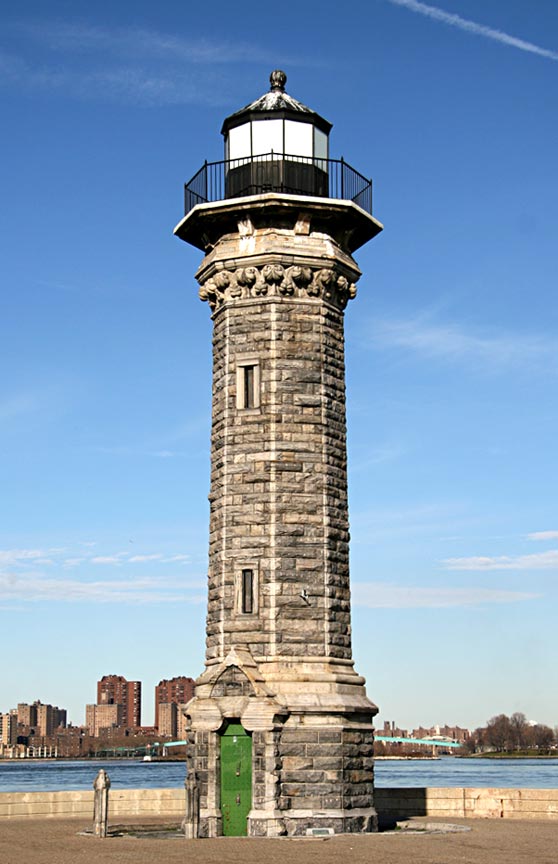
    The Lighthouse on Roosevelt Island is one of the island’s best known landmarks – it is readily visible from Manhattan and Queens. This 50-foot-tall structure built of gray gneiss was designed in 1872 by James Renwick Jr., one of the most successful architects of his time – he designed the Smallpox Hospital on the island as well as many major New York City buildings, such as St. Patrick’s Cathedral and the New York Public Library.

    The Lighthouse, which is not an official Coast Guard lighthouse, is steeped in legend. Lore has it that the lighthouse (likely built by inmates from the neighboring prison) replaced a small clay fort made by a patient from the lunatic asylum who feared a British invasion. The legends and mysteries involve the names John McCarthy and Thomas Maxey (a plaque crediting McCarthy for the building of the lighthouse disappeared in the 1960s.) Read the story here from the Roosevelt Island Historical Society website.

    The Lighthouse sits in Lighthouse Park, a serene spot to perhaps picnic or just enjoy the NYC vistas…


  • The Police Building

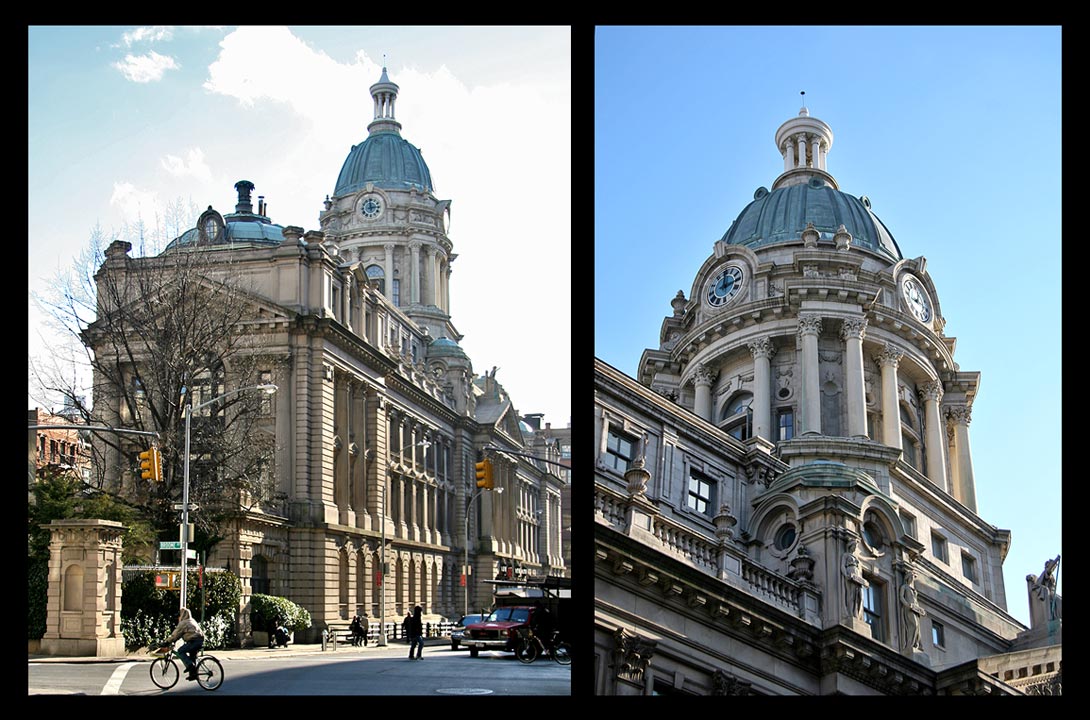
    The Police Building at 240 Centre Street: a “five-story Beaux-Arts palace, designed by the firm of Hoppin & Koen, is a dramatic heap of Baroque- and Renaissance-inspired domes, cupolas, colonnades, pilasters, and pediments, caked with carved ornament and wedged into the narrow block once occupied by the butcher stalls of Centre Market.” That’s a mouthful, but pretty accurate. This place is reminiscent of a Parisian Hotel de Ville, although I think the comment I saw during the sales of units there that it’s something like “finding the Invalides in the middle of the Marais” is a bit of a stretch – this area of Little Italy/upper Chinatown is nothing like the Marais.

    The way this palatial building is tightly integrated into the streets does make it rather startling. The 1909 building was vacated by the police department in 1973. In 1987, it was converted to 56 luxury condominiums. The spaces were newly created – the original interior layout was not suited to residential conversion. Four apartments occupy the central dome (the former radio room, commissioner’s office, and a gymnasium), including a triplex. Steffi Graf owned a tower apartment, which was sold to Calvin Klein in 1998. This is one of the grandest residences in the city, on par with the Dakota. A very unique living experience, I am sure…


  • Rice and Riches

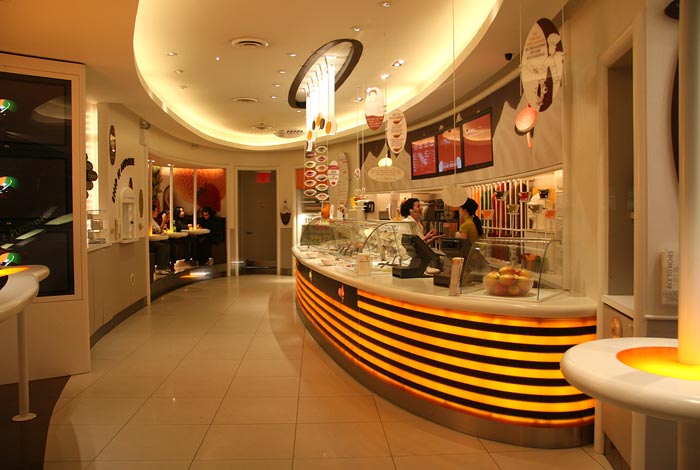
    This is Rice to Riches at 37 Spring Street. Click here for more photos. This is a story which will surprise you in many ways. First, there’s that “only in New York” aspect – where could you expect to run a successful business selling exclusively gourmet rice pudding? In fact, the owner, Peter Moceo Jr., had difficulty renting – ”landlords refused to rent to me, because they didn’t see how I could pay the rent selling rice pudding.”

    This shop was started in 2003 by Moceo, who grew up in Bensonhurst, Brooklyn. Inspired by the gelaterias on a trip to Italy, he has created a place with an immaculate decor and meticulous attention to detail: a large window shaped like a grain of rice, several flat screen monitors playing pudding animations, curved walls, illuminated plastic orange and white tables, custom reusable containers (including their own spoons) and a beautiful pudding display & serving counter.

    And then, of course, there is the rice pudding itself – superb and highly rated. Jemal Edwards, once a pastry chef at Montrachet and Nobu, has created 18 flavors of the pudding in the custom basement kitchen, a place that Moceo spent a year putting together. The biggest surprise? The owner, a resident of Trump Tower, was arrested in 2005 for running a $21 million sports gambling ring, one of the country’s largest. Only in New York…


  • dinamic_sidebar 4 none

©2026 New York Daily Photo Entries (RSS) and Comments (RSS)  Raindrops Theme