• The Public Theater

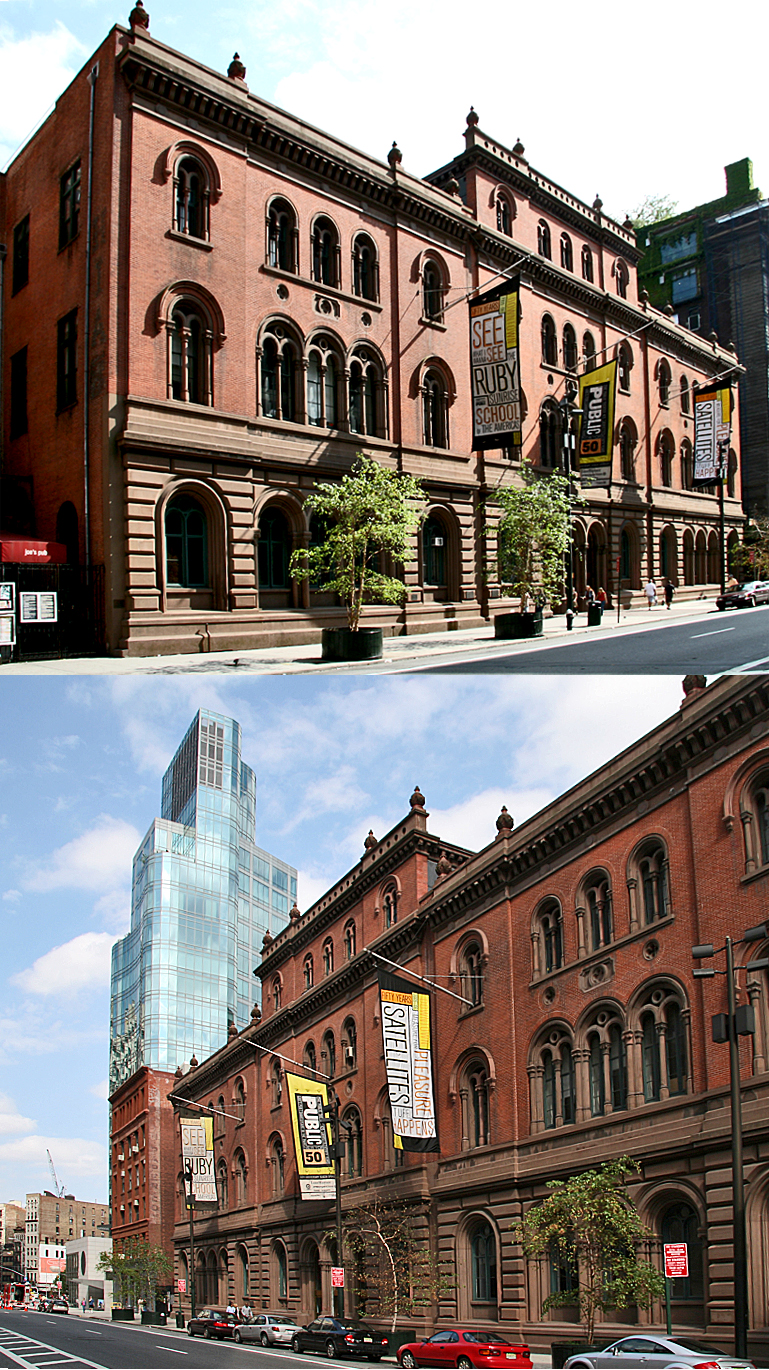
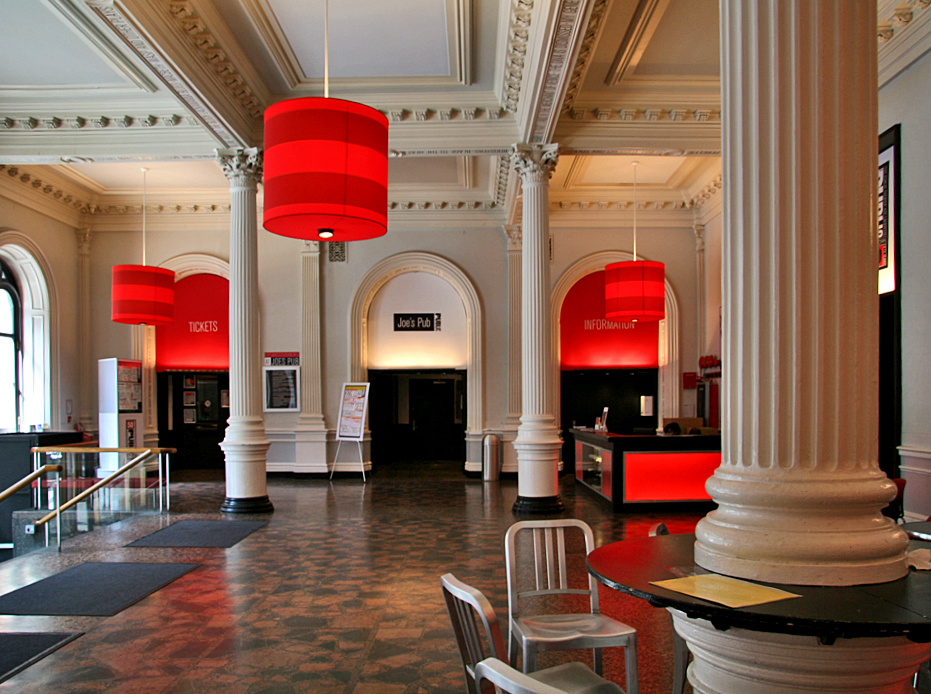
    Just south of Astor Place on Lafayette Street lies the Public Theater (both the organization and building name). The photo is of the interior lobby (click here for exterior photos of the building – the glass high-rise is the Gwathmey). The performing arts organization was founded in 1954 by Joseph Papp as the Shakespeare Workshop. It found a permanent home in the former Astor Library in 1967, when it premiered Hair. The 1854 building, considered by many to be the finest example of Rundbogenstil – a German variant of Romanesque Revival – was actually slated for demolition before being rescued by Papp. Click here for an excellent NY Times article on the building.

    The Public Theater has won over 200 awards (Obie, Tony, Drama Desk, Pulitzer); 49 shows originating here moved to Broadway. They produce new plays, musicals, Shakespeare – many of their productions tend to be more avante-garde. They also operate the free Shakespeare in Central Park, a summer actor training intensive (the Shakespeare Lab), and Joe’s Pub, a venue for musicians and other performers. Every time I walk by, I admire the building and also remind myself that I should make an effort to attend their performances…
  • Cello

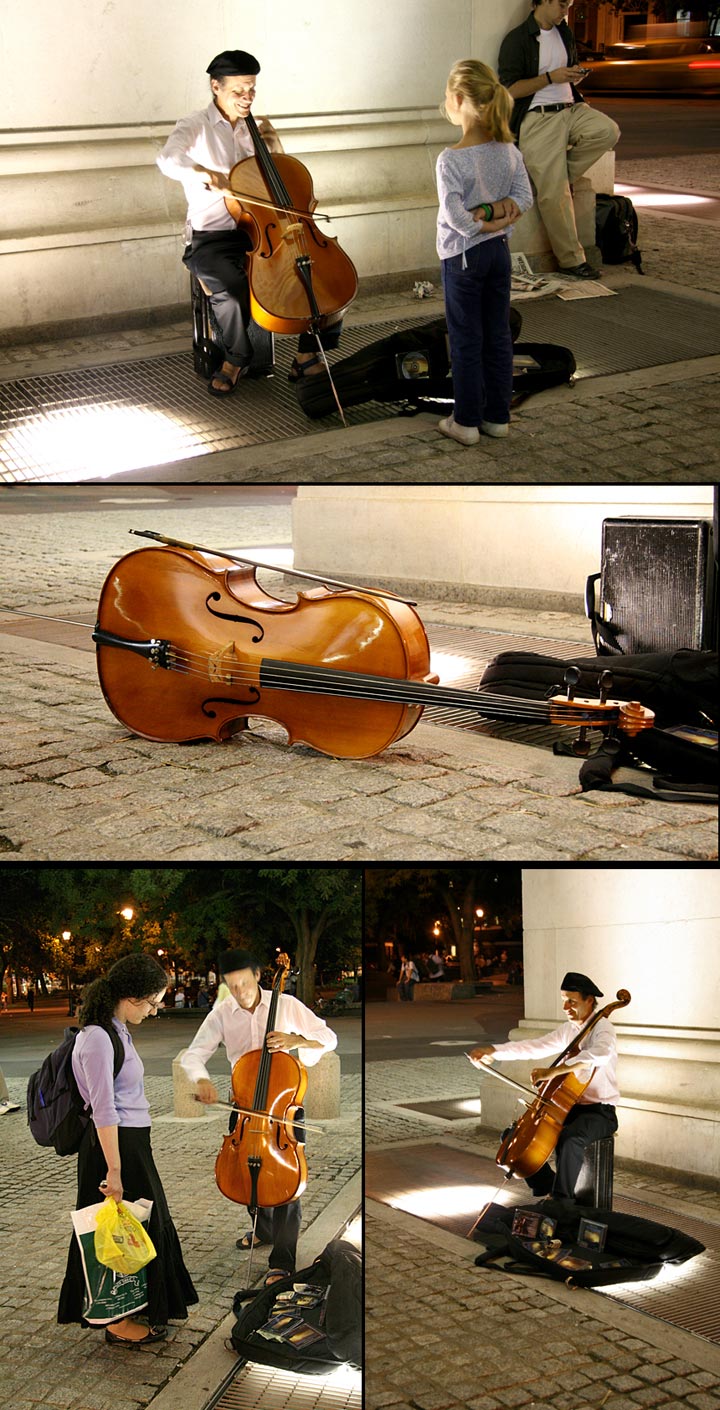
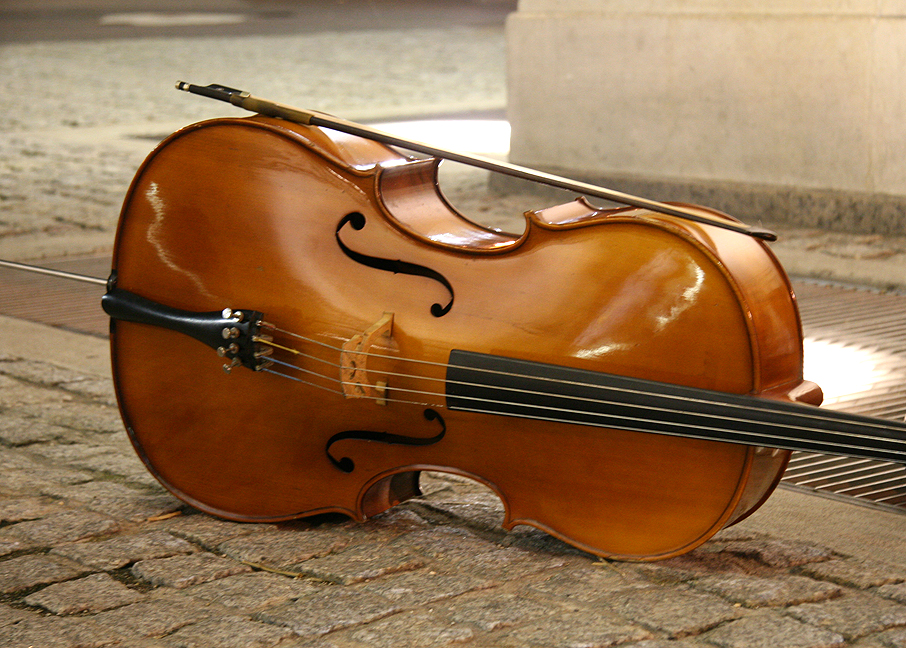
    The cello is a beautiful instrument, not only in the sound it produces but also in its graceful design. I have some bias here – I do own one and did study for a very short time. But just mentioning the instrument always seems to elicit the cliched response, “Oh, I just love the cello.”

    Peter Lewy plays the streets regularly in New York, and these photos of his cello and his playing are the result of my chance encounter with him again in the evening under the Washington Square arch. If you are interested in learning about the instrument, click here for an in-depth article. Peter is an accomplished professional – check out his website here. The cello is very close in range to the human voice – perhaps this is part of its appeal…


  • Washington Mews

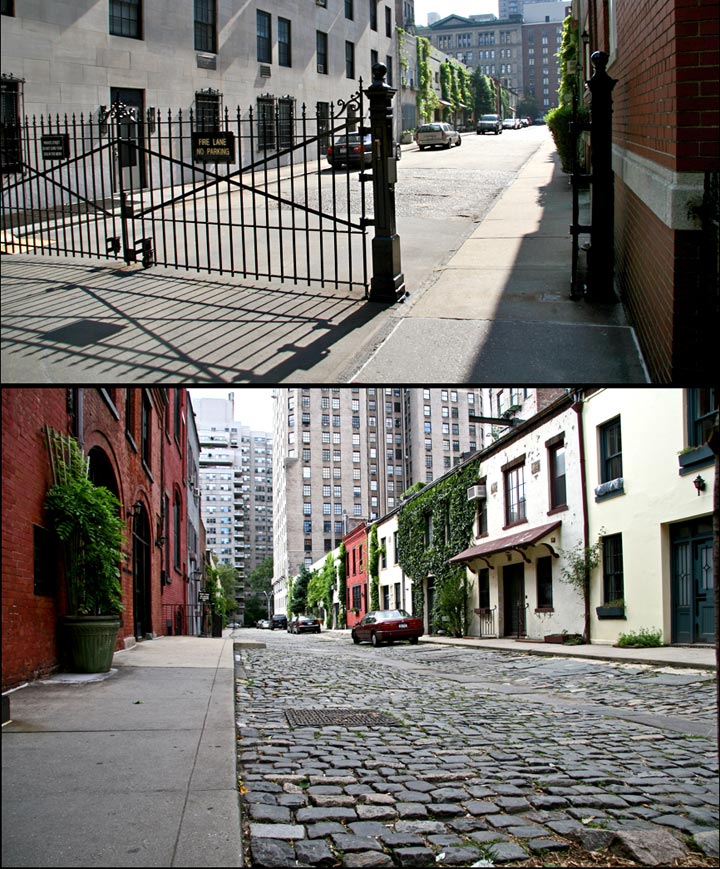
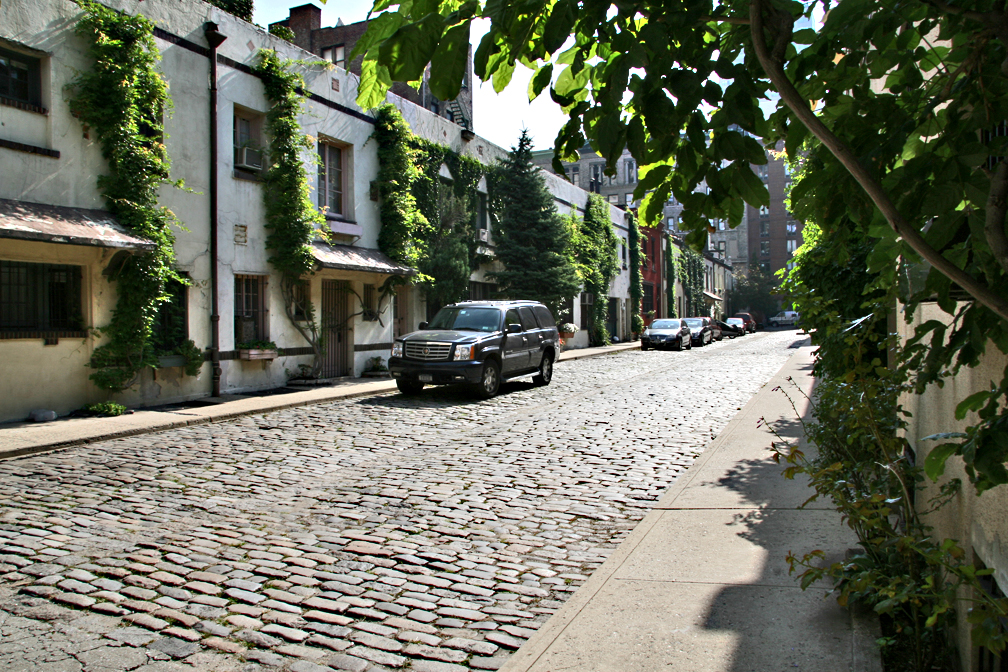
    Washington Mews is one of my favorite NYC alleys. It runs between 5th Avenue and University Place, one block north of Washington Square North. The majority of these small, charming, two-story buildings are converted stables, built in the 1830s for the brownstones on Washington Square and 8th Street. A few on the south side were built in 1939. The street retains its original Belgian block paving, a major factor in its historic feel. Click here for more photos.

    As the area became popular as a bohemian enclave, artists did begin to occupy these buildings as studios. Today, these buildings are primarily used as residences by NYU faculty or offices. Click here for an article from the NY Times. Although the street is private and signed as such, pedestrians are not really discouraged. Private alleys like this are extremely rare in NYC. A walk down it is a step back in time – it never fails for me…


  • Cuba

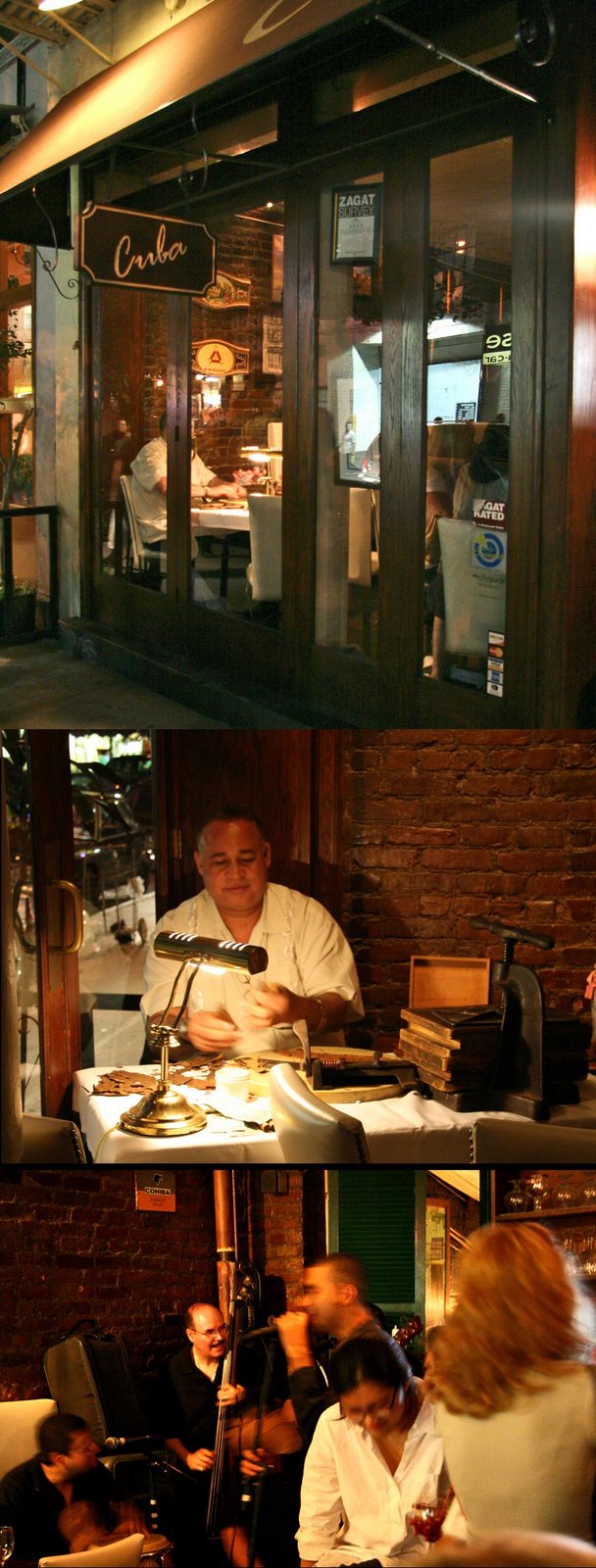
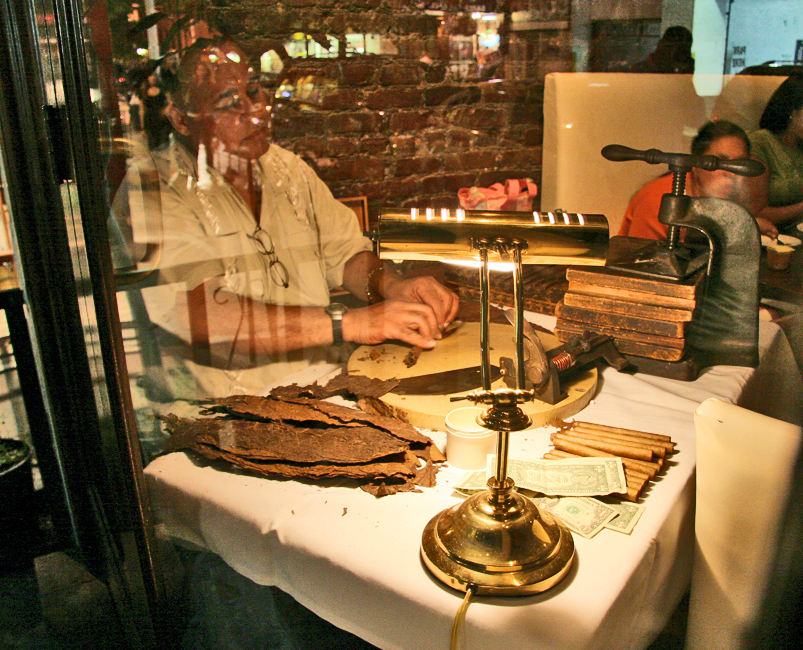
    This small Cuban restaurant at 222 Thompson Street in the Village has one of the liveliest, most festive atmospheres I’ve seen. Many find that this cozy, charming place transports them to Havana. They have live music 6 nights per week, and the place is generally brimming with customers, frequently spilling into the street. The food is authentic, traditional Cuban.

    This photo was taken through the front window showing Jose Martinez, an on-site expert hand roller of cigars – complimentary for all customers. See their website for Jose’s bio, menus, music info, etc. They have 3 rooms for private parties and a bar. Click here for more photos inside, inside and out. I can’t vouch for the food – I haven’t eaten there yet but plan to soon. The reviews appear to be generally good. But be forewarned – this is a fun place and can be somewhat noisy…


  • The Amato Opera

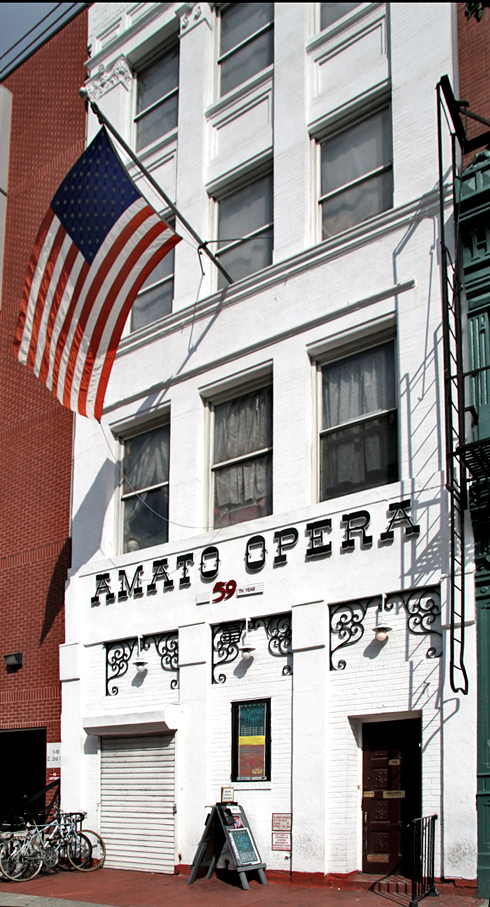
    It’s hard to imagine a small opera house surviving in NYC 1) for 59 years, 2) as a self sustaining operation, and 3) on the Bowery! And keep in mind that, although the Bowery is somewhat gentrified now, for much of the 20th century (and Amato’s history), it was considered quite a poverty-stricken, crime-ridden area, home of the infamous Bowery bums. This small gem is one of those NYC “secrets”; it certainly is not on the tourist radar and currently does not even have a listing at Wikipedia.

    The Amato Opera has been permanently located at the small white building at 319 Bowery since 1964 – prior to that, it had a number of venues and a prior permanent home on Bleecker Street (click here for a complete history). The opera company, started and run as a husband and wife operation by Tony and Sally Amato, has been a training ground for thousands of young performers, many of whom have gone on to perform at leading houses. They perform well known and lesser-known operas by major composers and also do Operas-in-Brief, an educational program. Ticket prices are far less than at major opera houses.

    Characteristic of NYC’s style as a study in contrasts, Amato Opera is next door to the rock club CBGB. If you are at all favorable to opera, I would recommend it as a refreshing alternative to the larger opera houses…


  • Joe Ades – Gentleman Peeler

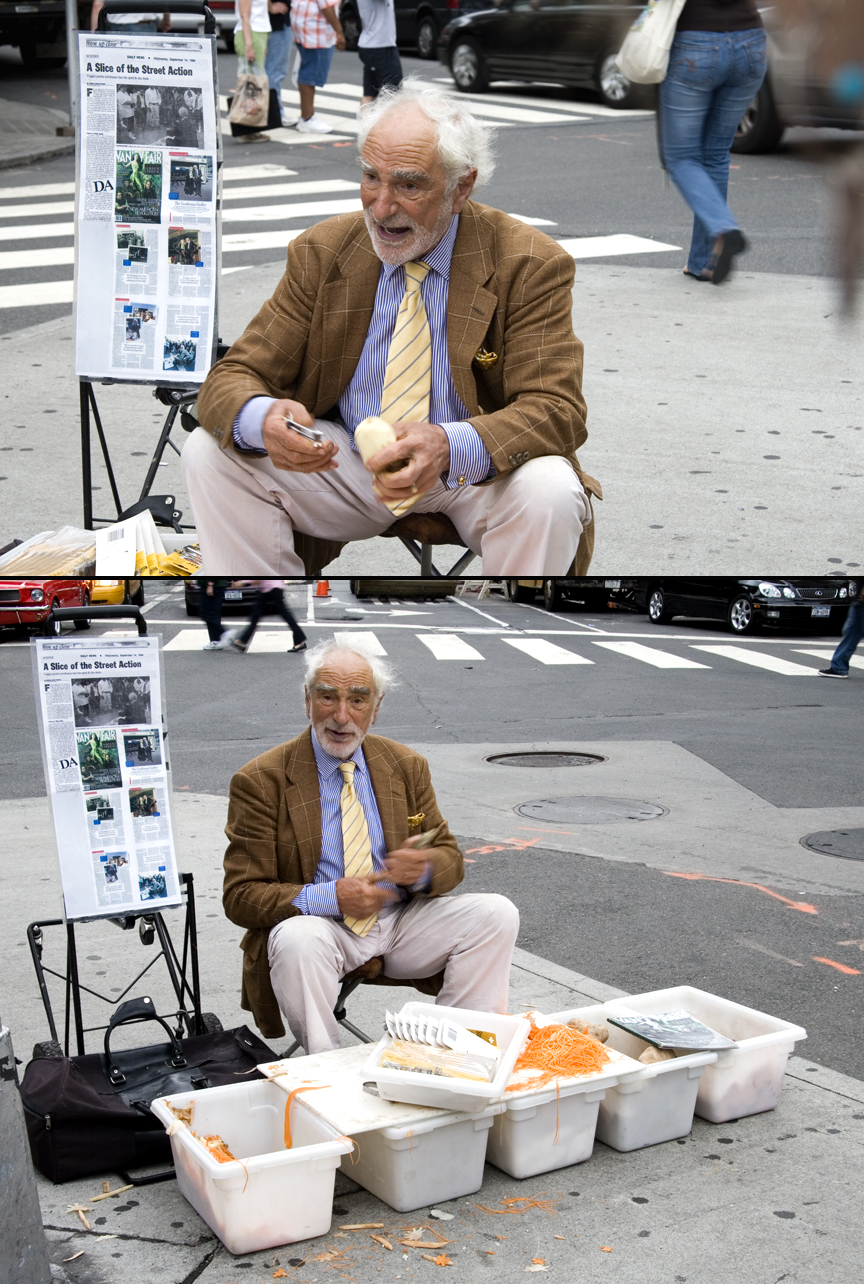
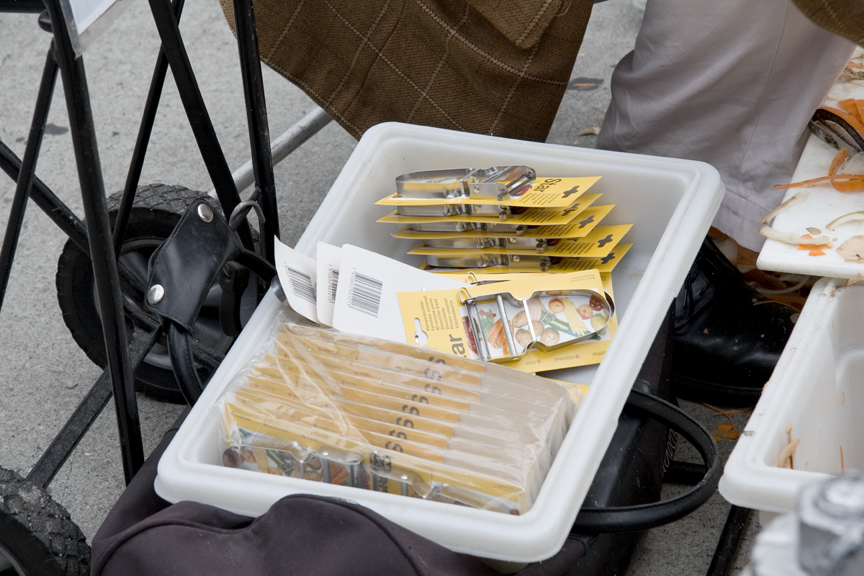
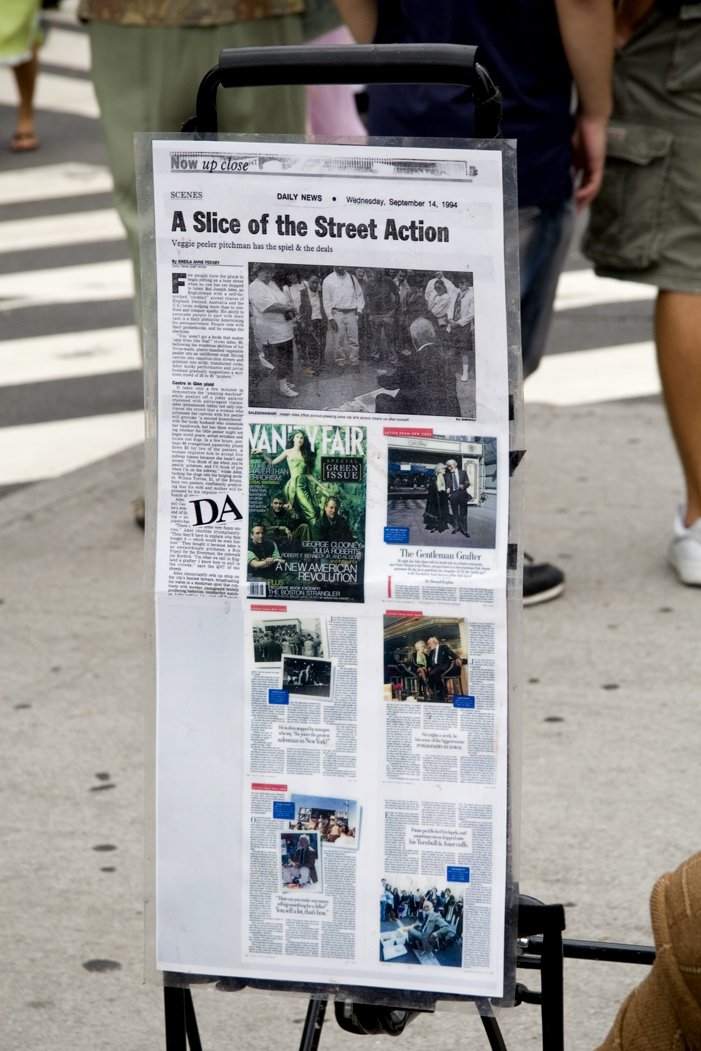
    I have observed this vegetable peeler salesman for years at Union Square – he is nearly always surrounded by a crowd (see more photos here). Joe Ades, 72, is a remarkable pitchman; people watch just to see his impassioned sales style, selling his peelers at $5 a clip (which he claims are from Switzerland and unavailable elsewhere – see here). A terrific in-depth article was done by Vanity Fair in the May 2006 issue titled The Gentleman Grafter. You can read the story here.

    I learned that Joe, impeccably dressed, dines in fine restaurants with his fourth wife, drinks Veuve Clicquot at Cafe Pierre, and retires to a three bedroom apartment on Park Avenue. However, it was not clear how much of his posh lifestyle is a product of his own accumulated money versus his wife’s. In this photo, you see Joe displaying a 1994 newspaper article and an image from the Vanity Fair cover. Although the magazine exposé uncovers tidbits which I’m sure Joe would rather not make public, he knows what good promoters know – all news is good news. His notoriety will just bring more people to watch the artist at his work…

    Note: Joe Ades died on Sunday, February 1, 2009.


  • Outdoor Art Exhibit

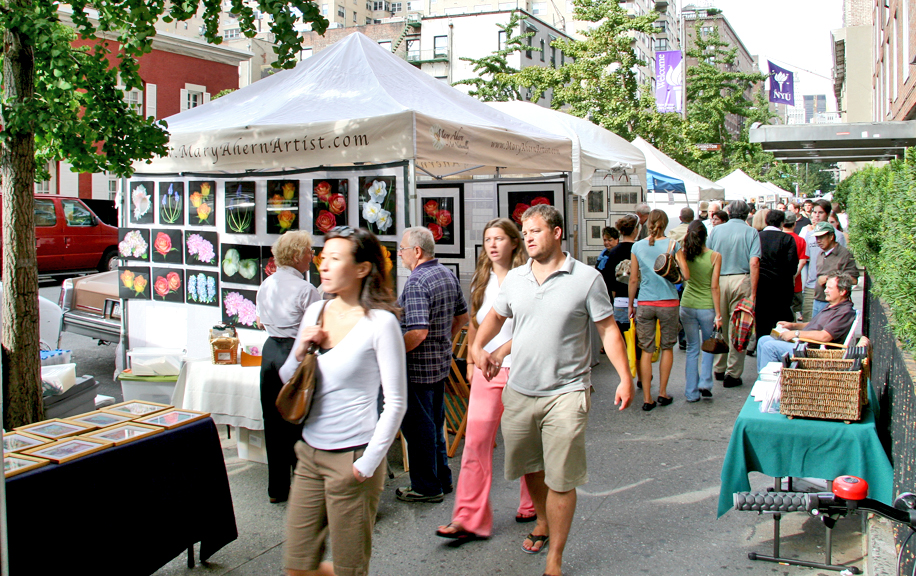
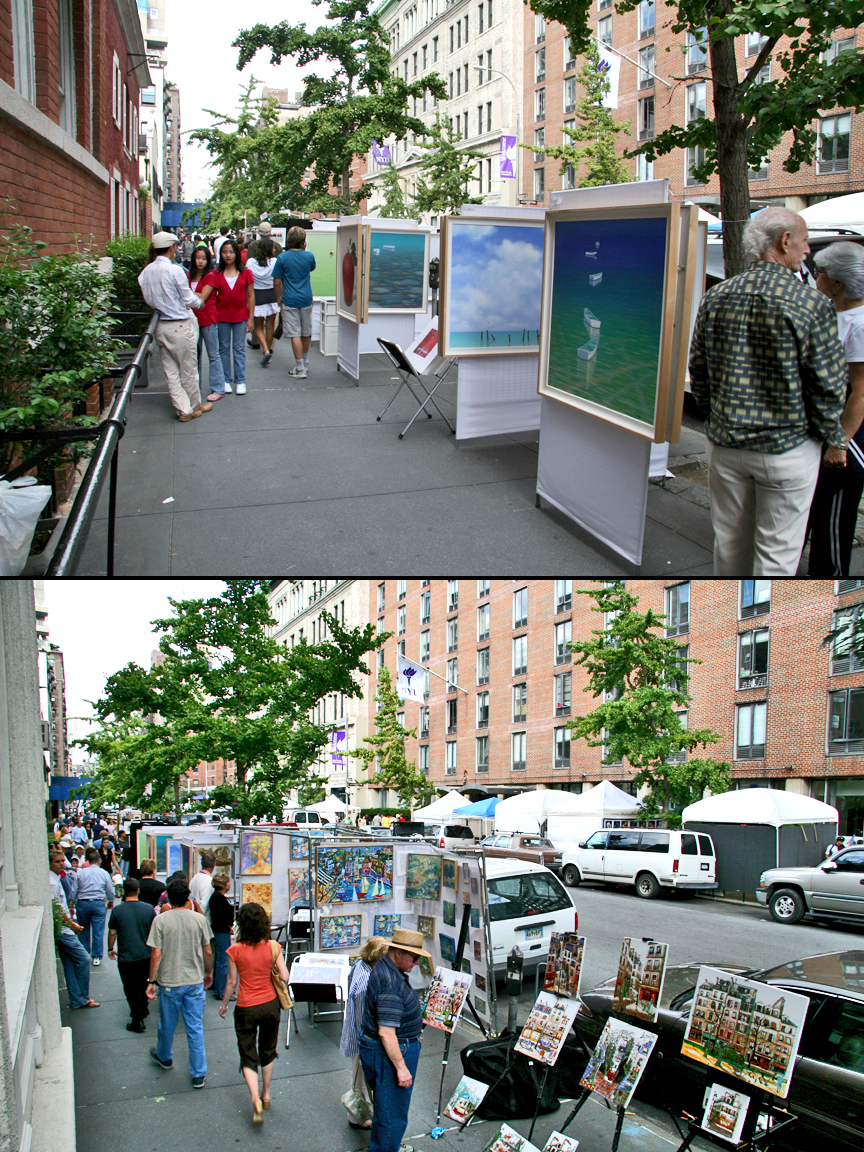
    Twice a year for 75 years, Greenwich Village has been home to the Washington Square Outdoor Art Exhibit on Memorial Day weekend and Labor Day weekend (and the weekend following). It was started in 1931 by Jackson Pollock and William DeKooning, when both Village residents, both desperate for cash, took their paintings to the street. Their efforts were noticed by Gertrude Vanderbilt Whitney, founder of the Whitney Museum of Art, and Alfred H. Barr, Jr., Director of the Museum of Modern Art, who organized the annual event. It is now attended by over 200 artists and 200,000 visitors. The entrants are juried by fellow artists based on slides submitted. Prizes, donated by individuals and organizations, are awarded by artist-judges in various categories: Fine Arts (Graphics, Mixed Media, Oils & Acrylic, Watercolor), Photography, Sculpture and Crafts (Jewelry, Metal Work, Ceramics, Glass, Mixed Media, Fiber, Wood).

    The artists I know no longer take this show seriously, considering it too commercial. But this is a common criticism of virtually everything these days, and given that art and snobbery are virtually synonymous, perhaps you should be the judge. There is one weekend left (September 9 & 10). The show currently runs primarily along University Place (where the photo was taken – click here for more photos). There is a map showing the exact location at the WSOAE site


  • Albert’s Garden

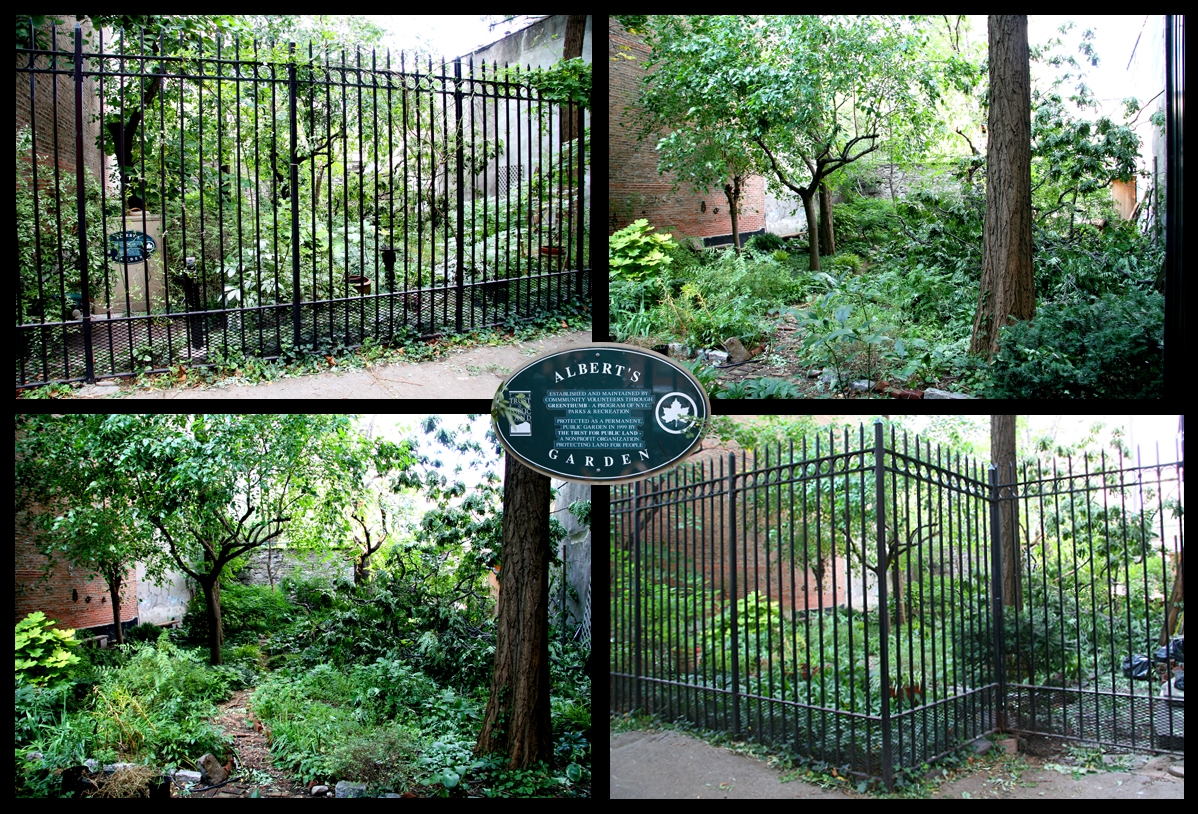
    Scattered throughout the Lower East Side, there are over 40 community gardens (and 400 in the entire city). These come as a surprise, even to residents – they are certainly not on the tourist radar and quietly offer a visual respite from the concrete jungle. For a list and map of these gardens, go to the Earth Celebrations site and click on the Garden Preservation link.

    Albert’s Garden, on 2nd Street between 2nd and 3rd Avenues, is typical of these community gardens. As you can imagine, tremendous effort goes into this effort. Keeping developers at bay is no small task – I applaud the efforts. One such effort is Bette Midler’s Restoration Project, started in 1999, which rescued 114 of these gardens and established a trust. Perhaps in time I will feature another one of these gardens if I come across one in my travels…


  • North

    I love vistas, views, and heights, and Manhattan is a great place for such interests. This photo was taken from the top of Rockefeller Center looking north. The green expanse is, of course, Central Park. The open field on the lower left is Sheep Meadow – a popular and wonderful area for relaxing. The body of water just above it is the Lake (see The Boathouse Restaurant and Bow Bridge). The other large body of water is the Reservoir, which has a walking /jogging trail around it – the open field below it is the Great Lawn, and the complex to the right is the Metropolitan Museum of Art. The buildings flanking the park on the left is Central Park West, and on the right is Fifth Avenue.
    If you want to investigate further, here is a great online site which has two interactive maps of Central Park, one of them an aerial photo.

    I found the large slab building on the lower right blocking the view quite obtrusive – this is the Solow Building at 9 W. 57th Street, apparently one of the most controversial buildings in Midtown – surprising, isn’t it? 🙂


  • Fiorello LaGuardia

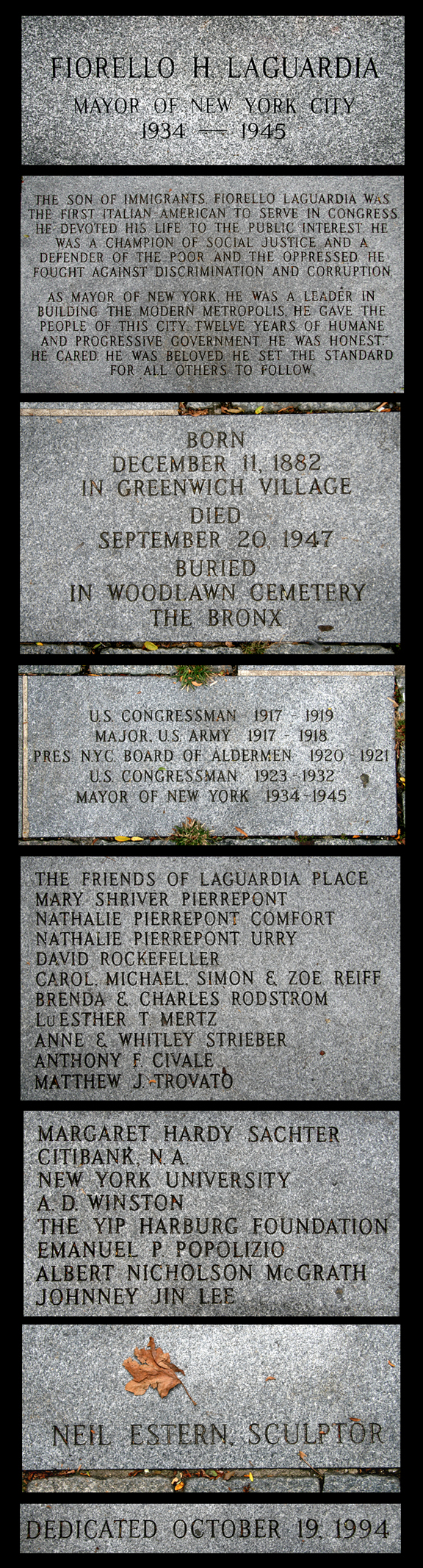
    This bronze statue is located on LaGuardia Place in Greenwich Village – I have passed it nearly everyday for years but knew little of the man, who was born in NYC in 1882 and served as mayor of NYC from 1934-45. The most striking thing is his small physical stature – it turns out that he was just over 5 feet tall. However, he was no small man as far as achievements: Congressman (representing Greenwich Village), translator (he spoke several languages), lawyer (NYU law school grad), Attorney General, major in the U.S. Army, and NYC mayor for 3 terms.
    He was responsible for leading the city through the Depression and for many public works programs, including roads, bridges, tunnels (including the West Side Highway, East River Drive, Triborough Bridge, and Brooklyn Battery Tunnel), and public parks.

    A lover of music and conducting, LaGuardia felt that his greatest achievement was the creation of the Fiorello H. LaGuardia High School of Music & Art and Performing Arts. I recommend reading his bio.

    Click here for a series of photos of the plaques at the statue site.


  • No Standing

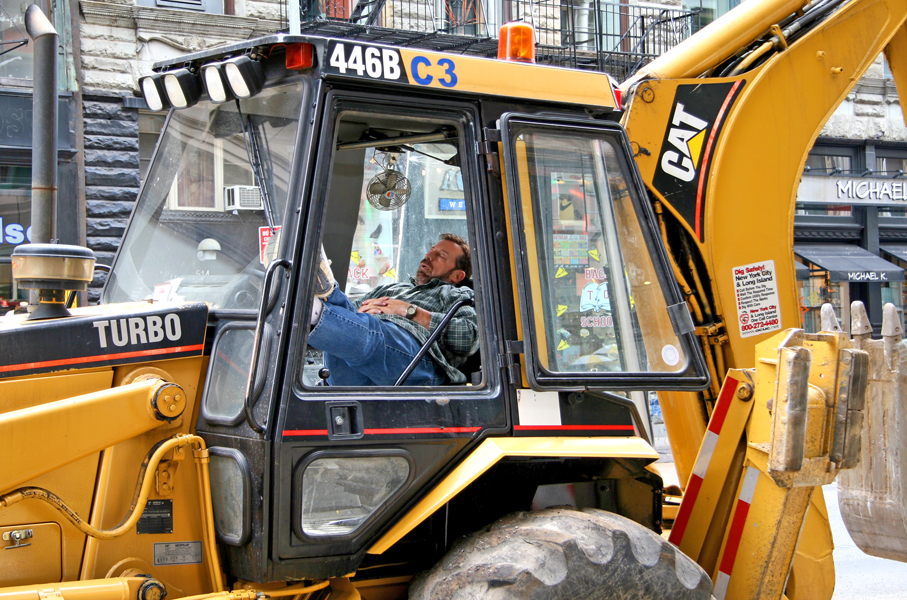
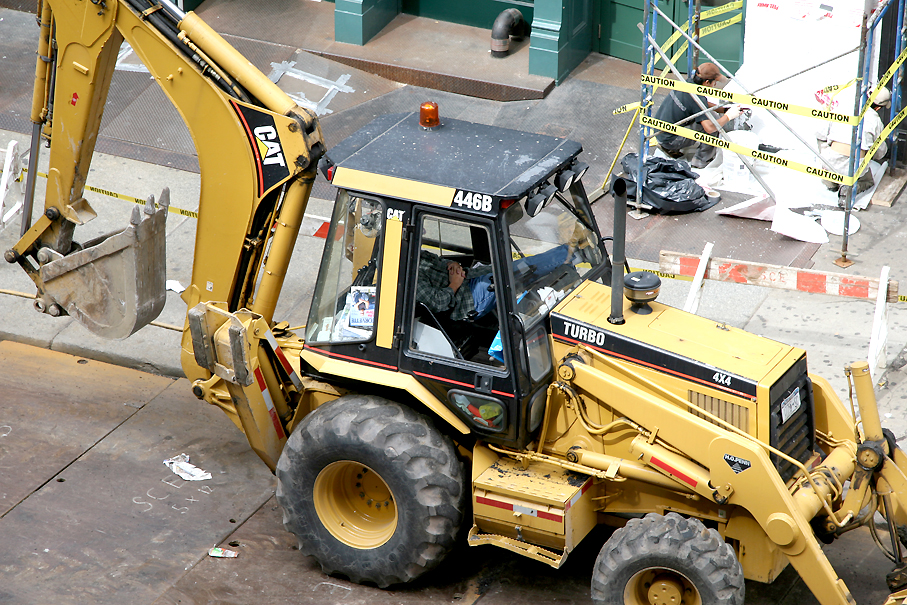
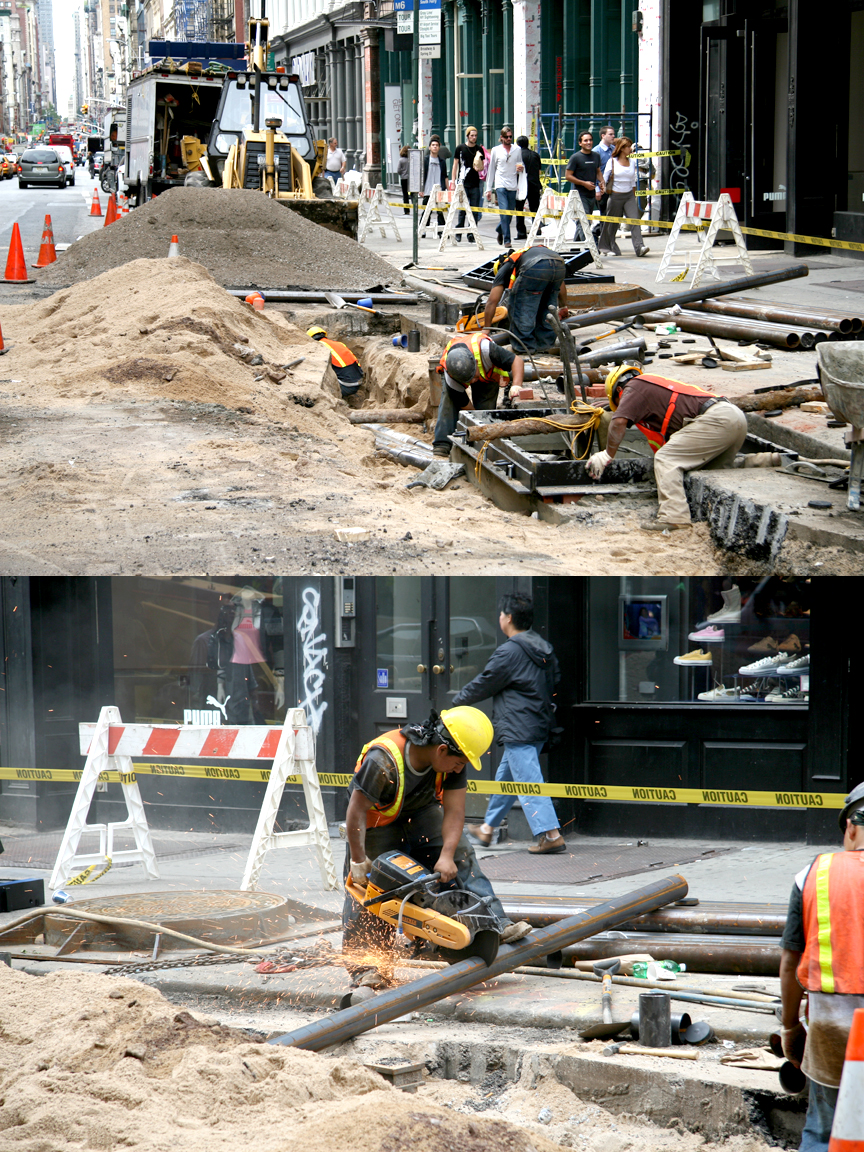
    There was so much noise coming from the street (not an unusual situation on lower Broadway) that we decided to close our office windows. In doing so, we observed a typical construction site but noticed a not-so-typical work scenario: the backhoe operator was stretched out, snoozing away in plain view of passersby and traffic – here’s the perspective from the window. I couldn’t resist a quick photo break and went down to the street for more photos.

    His compadres were busy doing hard labor – digging by hand with shovels, cutting pipe, etc. We noticed his (in)activity went out until noon, when he awoke and started reading the newspaper (lunch break?). I learned from this that being a heavy machinery operator might have some privileges and that Caterpillar must make some very efficient equipment.

    In fairness, I did notice a number of No Standing signs in the area – perhaps he was just following the rules to the letter 🙂


  • Park Night

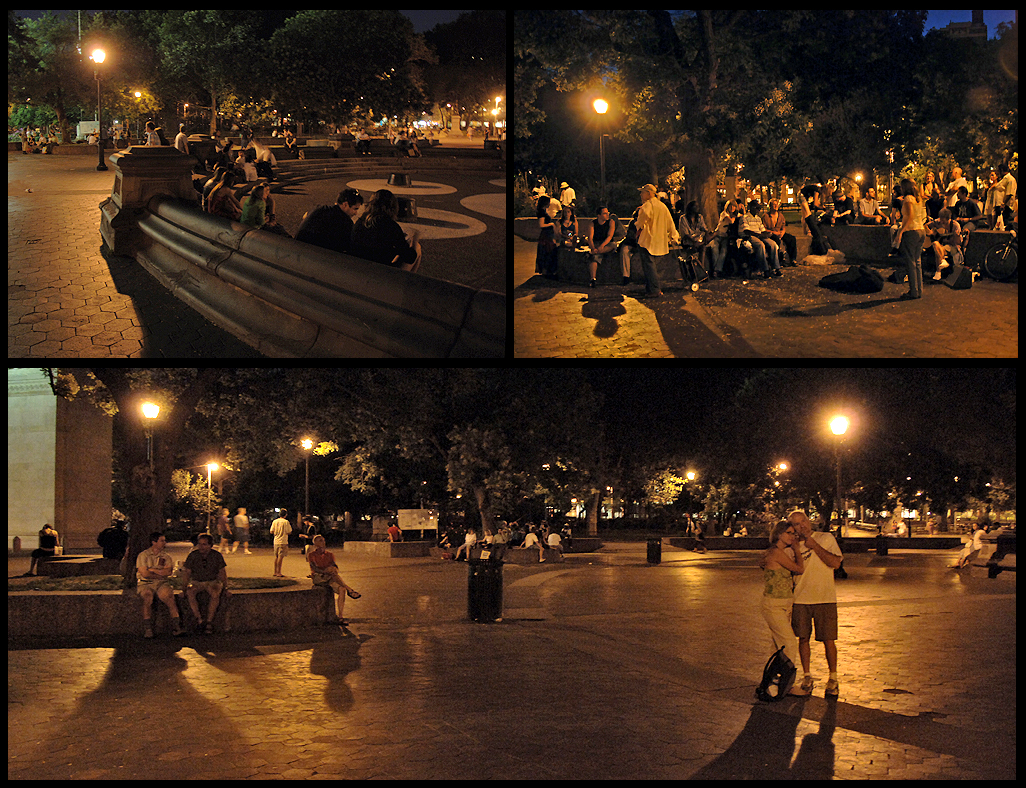
    This is a typical weekday night in Washington Square Park, where hundreds of people gather to enjoy the evening and local culture. On the upper left photo, we have the fountain area, with its stepped seating – this also forms a mini amphitheater for performers. On the upper right photo, we have a classic music scene with park regulars, many of whom have become virtual fixtures. The design of the park has eight islands in a center circle, forming coves where musicians play and audiences gather.

    The music styles and instruments (both acoustic and electric) vary considerably: guitar, keyboard, banjo, sax, drums, bass, violin, mandolin, harmonica, singers, etc. The experience is intimate and participatory more than that of street performance. Audience members frequently participate in the singing. It is not unusual on a good night to have several music groups going on at the same time. We make the rounds and sample the various groups.

    If you are in NYC, I recommend checking it out, particularly on weekend afternoons or evenings – if the weather is good, the crowds are large and the energy is high. On the bottom photo, we see about one-quarter of the circle. The couple on the right was watching music – apparently it was having a positive effect…


  • Parachute Jump

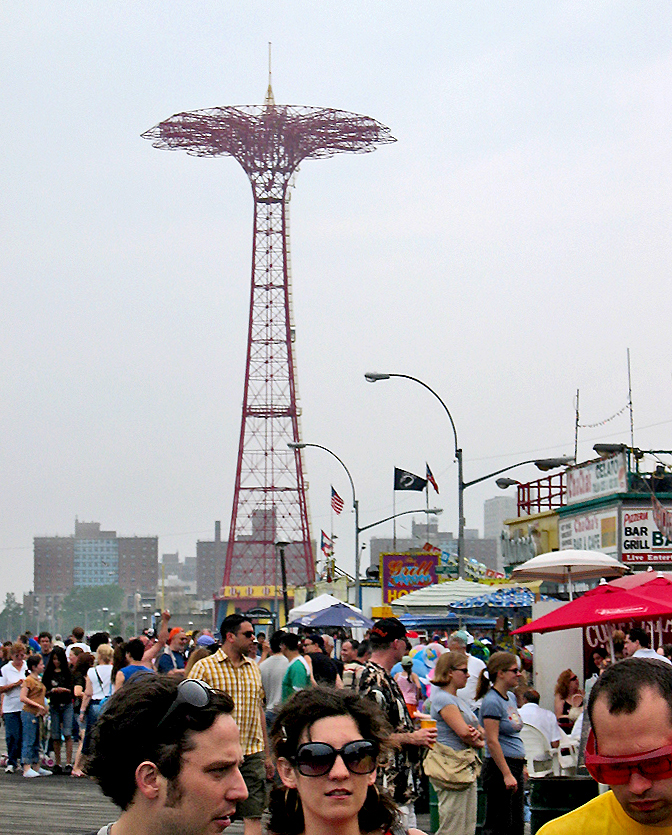
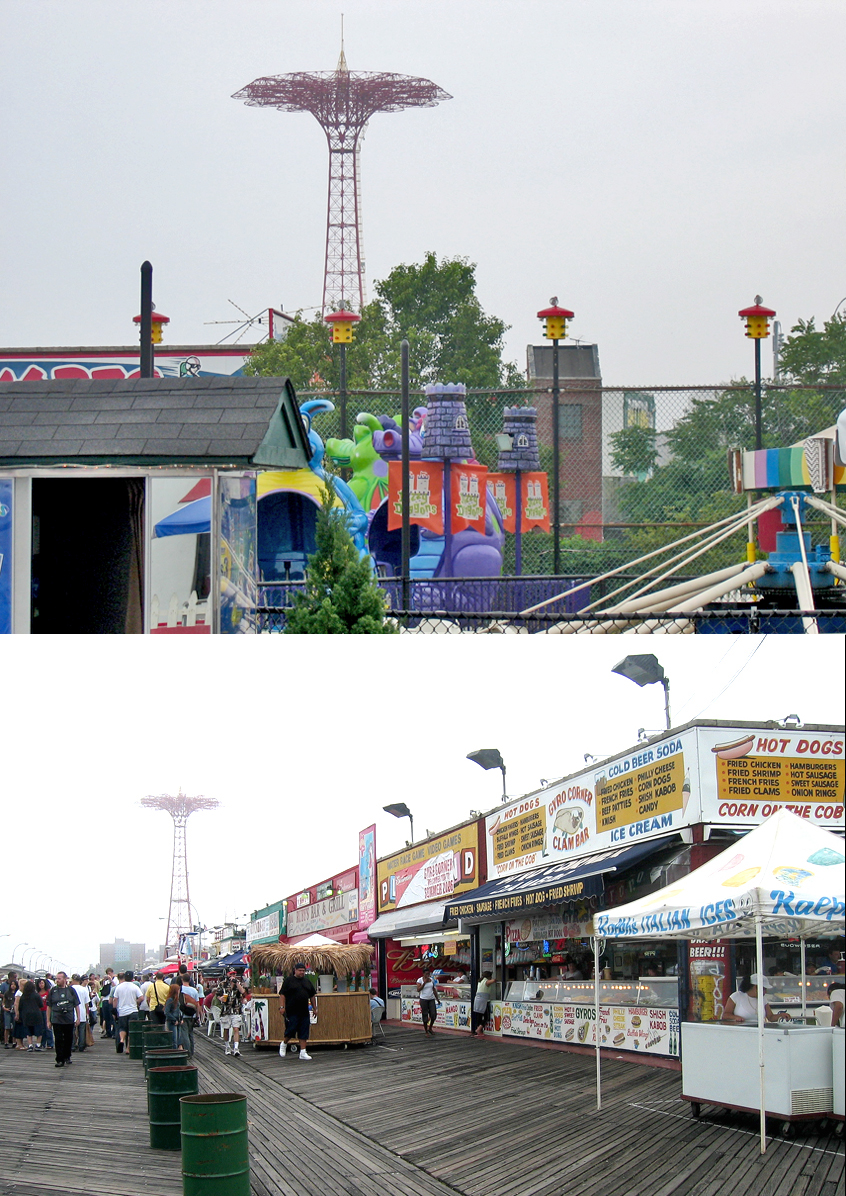
    The Parachute Jump in Coney Island is a Brooklyn icon. At 262 feet tall, the metal structure is reminiscent of the Eiffel tower, visible throughout the neighboring area. It was originally built for the 1939 World’s Fair in Queens, NY, then disassembled and moved to Steeplechase Park in Coney Island in 1941.

    The ride featured real working parachutes – riders were placed in harnesses, and the parachutes were guided down by cables. The design was based on Russian military parachute training towers. After various threats of demolition, it is now recognized as a city landmark and in 1989 was placed on the National Register of Historic Places. Currently, a rehabilitation is underway. This photo certainly does not make the area very appealing, but for me, it captures my image of Coney Island as a gray, dreary place in continuous decline. Click here for more photos.

    The Mermaid Parade was one of the few really nice visual experiences I have had there. I always try to love Coney Island, but it is hard not to see it in its glorious past (see the original Luna Park at night). There is always talk of development and renaissance. Let’s hope soon…


  • Midtown

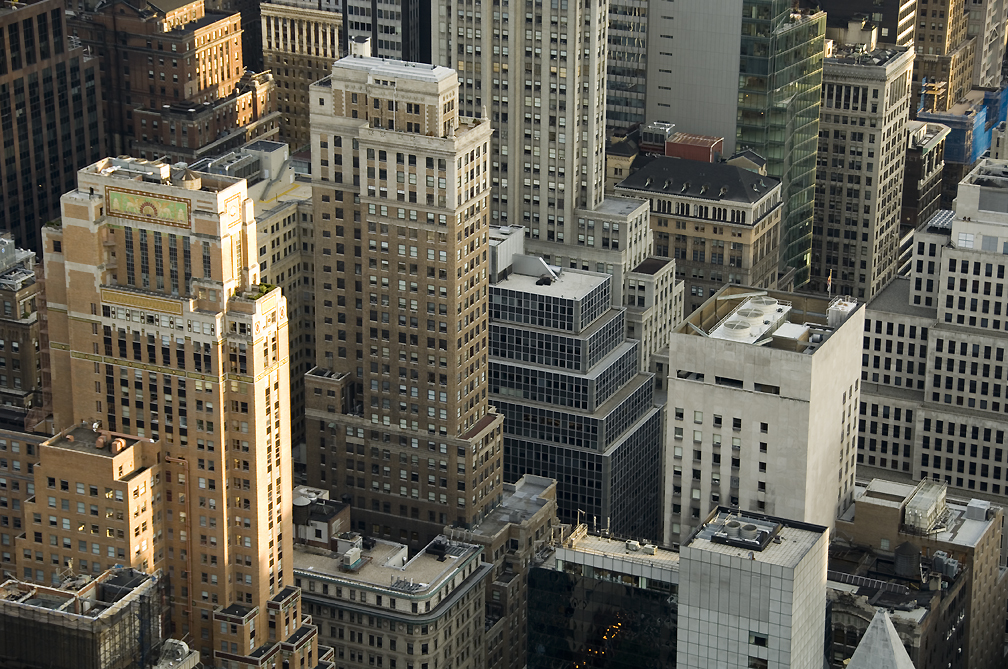
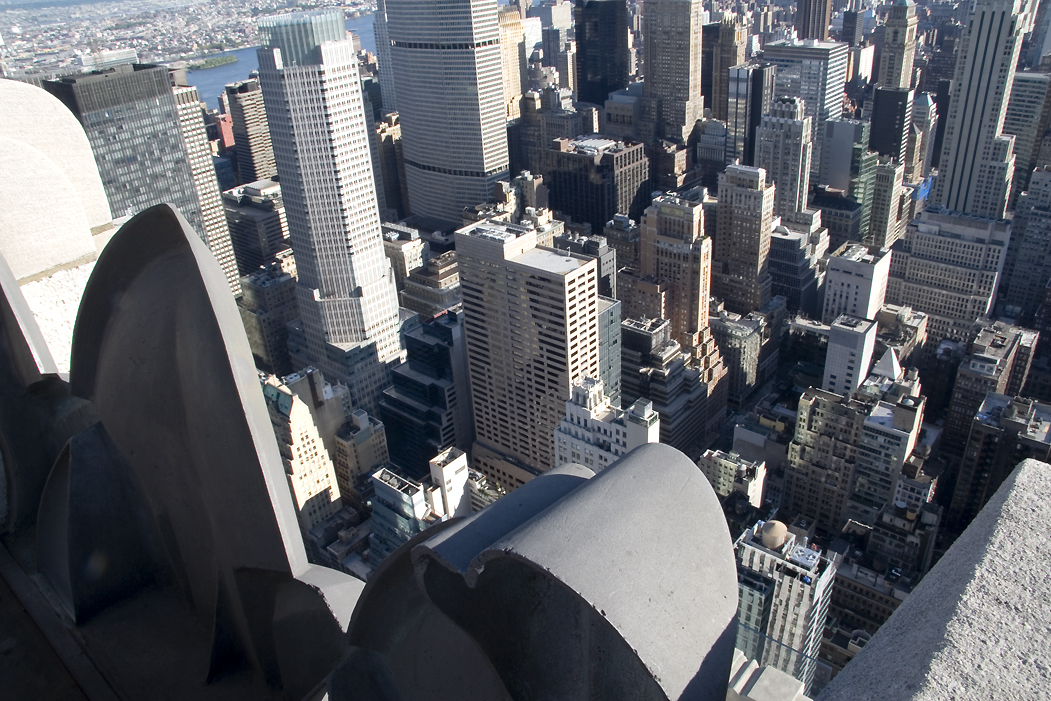
    Midtown Manhattan is the busiest commercial district in the United States. This photo, taken from the Rockefeller Center observatory, is a closeup of a small section along Fifth Avenue in the 40s and gives a good sense of the density of buildings (click here for another view).

    There is no precise, agreed upon definition of Midtown, but at the very least, it covers the area from Central Park to 34th Street and from 3rd Avenue to 9th Avenue. In this area alone, there are numerous districts, squares, stations, buildings, centers, and flagship retail stores – many of the sites known to visitors around the world are found in this small area of only about 2 square miles.

    One reason I chose this photo was that I was intrigued by the attractive slab skyscraper building on the far left with its large friezes at the crown. A little digging and research this morning revealed this to be the Fred F. French building, a deco gem built in 1927 by a real estate tycoon – I think I will cover this building in another post. In doing this photoblog, I am learning about a myriad of beautiful buildings which I never really noticed. I hope that you are enjoying the process of mutual discovery…


  • Superheroes

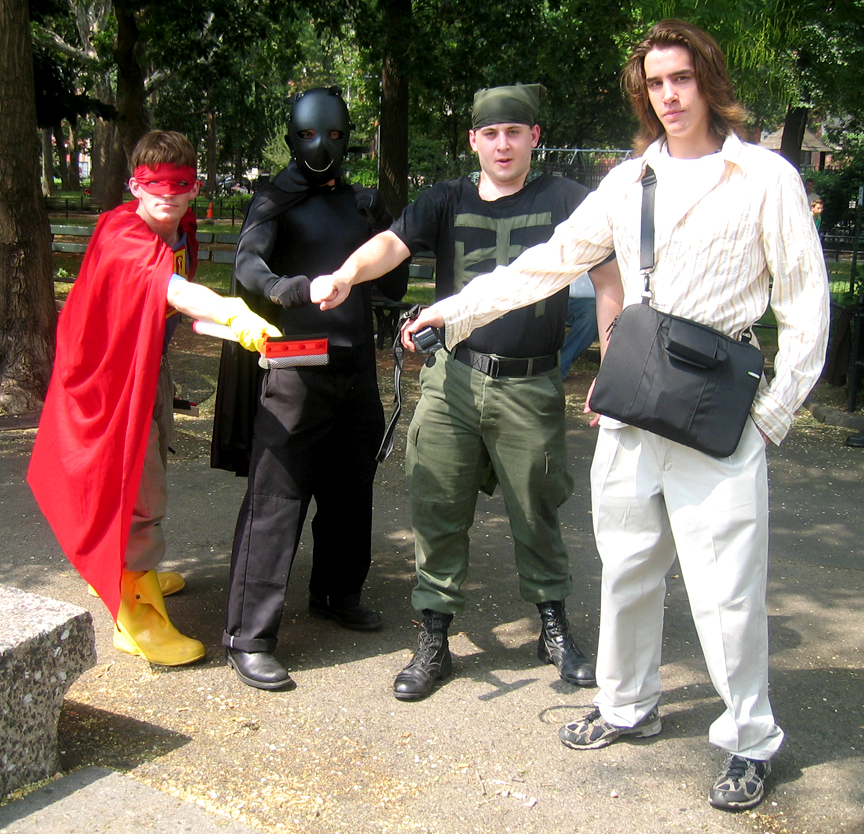
    When I took these photos, Squeegeeman was meeting a couple of his superhero friends (and a videographer). I met them, spoke to them, and I’m still not sure what they really do. You can go to their myspace sites: Squeegeeman, Dark Guardian and Tothian – perhaps you can figure it out. Here is a short video I took of the encounter:

    Let’s just say that, in spite of all the NYC resident cliches – high-powered, workaholic, fast-moving, driven, busy etc. – apparently there are still people who have a little too much time on their hands? According to their websites, these guys are real superheroes – they say that they go out several times a week on patrol and are driven to make the world a better place. Finally we know why NYC has progressively become a better place to live…


  • dinamic_sidebar 4 none

©2026 New York Daily Photo Entries (RSS) and Comments (RSS)  Raindrops Theme