• The Outer Limits


    Wandering and meandering without a clear destination is a noble activity. When I am exploring in a small or local area, I do this regularly – setting out with no agenda. Traveling further, however or by vehicle, the risk of disappointment becomes an issue as well as time used.

    So I turn to maps. I do love maps and always use them wherever I travel to get a lay of the land and a sense of breadth and compass. Even in New York City where I have lived for 40 years, when traveling by car, a five borough street map is always at my side. GPS is great, however, if you want a large and detailed overview of an area, only a full size map will do the job.

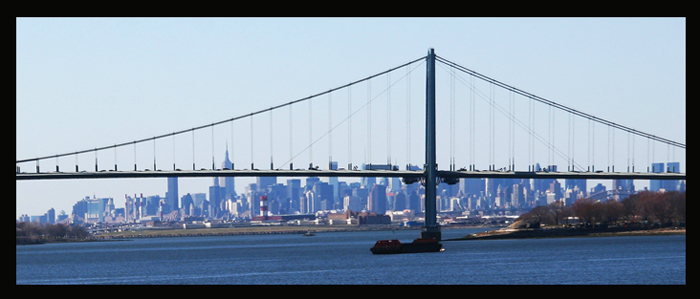
    I have been amiss in exploring the Bronx and have very few stories in this website. So, it was time to look at a map and see what might have potential. I love the tips and edges, i.e. the outer limits, where often one finds exceptional features, views and unique villages. Looking at the Bronx section of my street map of New York City, my eye was drawn to a peninsula with an area marked “Silver Beach,” situated between the Throgs Neck and Bronx-Whitestone Bridges. A little reading looked like this would be just the place to satisfy my wanderlust.

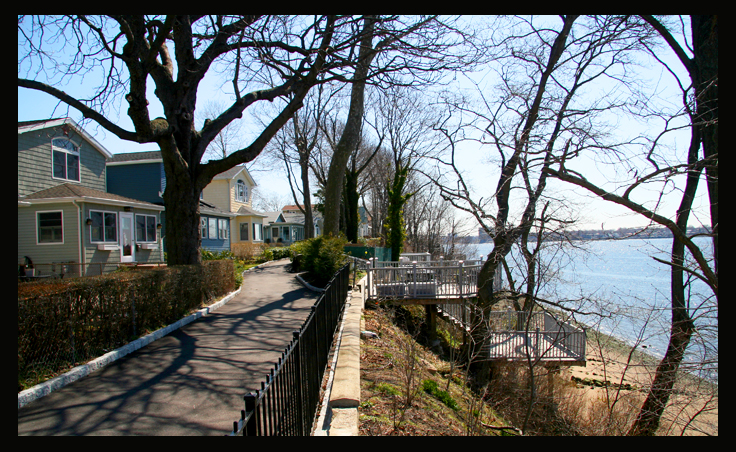
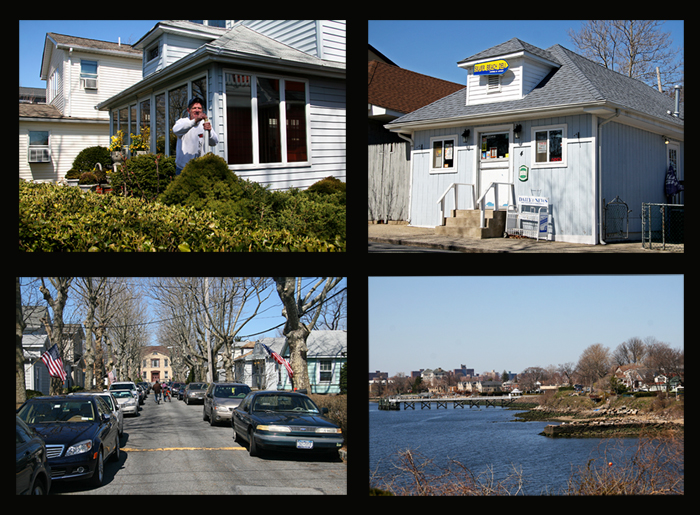
    What started out as a whimsical choice of a travel destination ended up being one of the most remarkable residential enclaves I have seen in the five boroughs. Sitting on a bluff, 50-60 feet above the river, Silver Beach Gardens is a network of small lanes and 451 homes, established as cooperatives – residents own their homes and lease the land from owners’ collective. To buy, applicants must have three letters of recommendation from current residents. In the early 1900s, the neighborhood developed from summer waterfront bungalow colonies on large estate to the neighborhood it is today. See my photo gallery here.

    The highlight of the day was my walk on Indian Trail, a narrow footpath flanking the edge of the bluff with beautiful vistas of the beach below, the river and the skyline of Manhattan framed by the Bronx-Whitestone Bridge. The homes had decks perched on the cliffs, with the beach is accessible by stairways.
    It was here that I met Paul and his wife, busy with springtime yard work. He was extremely friendly, having greeted me first. When I told him that I would be doing a story, he told me how the community was displeased over an article in the New York Times which reported a lawsuit based on racial discrimination in real estate sales.

    Properties for sale in Silver Beach Gardens come very infrequently and typically sell by word of mouth. A small community like this with privately owned single family homes, extremely low turnover, remotely located, little known to outsiders and with strong ethnic history will be slow to change and see the diversity found in a much larger community with rentals and large multi-unit apartment buildings. Silver Beach Gardens is predominantly Irish, German, and Italian. I was reminded of Broad Channel, another extraordinary residential enclave situated on an island in Jamaica Bay. See my story and photo gallery here.

    So, for a little change and some pleasant surprises in your exploring, pull out a map and whether city or state, look for those Outer Limits 🙂

  • Random Acts of Consideration

    A Mild-Mannered Man of Manners

    (Note: this is Part 2. For Part 1, see here.)
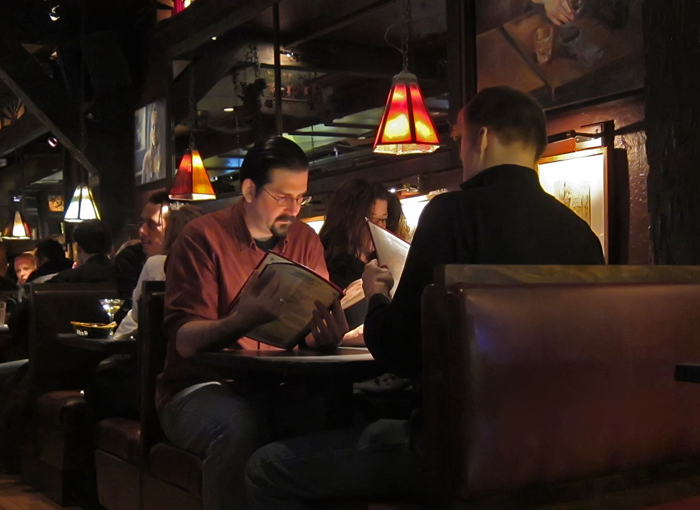
    We sat in the jet stream – a literal wind tunnel as cold wintry air blasted in from the curtained entry only a few feet from our table. Customers entering the restaurant would push the curtain aside, invariably leaving it open. Occasionally, a staff member, if in our neighborhood, would draw it closed, only to be opened seconds or minutes later by new arrivals.

    I had been observing this situation for quite some time and a very large number of people had entered. NO ONE, not one, had considered pulling this curtain closed. Even those who were waiting to be seated and stood for some time just inches away from us. Of course it was not the responsibility of customers to tend to the failed windscreen, so I cannot really accuse these passersby of any rudeness, only a surprising lack of consideration on the part of all who entered in not pulling the curtain back behind them. However, this is a restaurant, it was incredibly busy and chaotic, and hunger called out for those arriving, not Emily Post, Ann Landers, or Randy Cohen*.

    I passed the time with a friend, an NYU student, writing on our chalk table while she told me of her high school classmates’ use of the word Guam to describe the remote, as I told her of the term Siberia which I had seen used in a New York Magazine article to refer to poorly located restaurant tables (see Timbuktu, Guam and Siberia here). Surprisingly, she had never heard of Timbuktu used in this manner, perhaps more common at the time I grew up. Every generation has its own potpourri of slang, influenced by societal and cultural elements of the time. Words and phrases like Queen of Sheba, shindig, floozy, and skinny balink are not popular in today’s lexicon. The rise of the Internet, gaming, electronic media, and personal computers has given rise to a new world of language and idioms, both written and spoken – acronyms, initialisms, leetspeak, and others.

    A group of three entered the restaurant, where a blond haired gentlemen of the group immediately turned and closed the curtain – so quickly as to appear to be an automatic reflex action. This, I thought, is a man cut from a different cloth. An interloper. A stranger in a strange land, or at least a man with roots other than New York City. As he was heading to a table to be seated, I asked, “Are you from the Midwest?” To which he replied, “Yes I am.”
    I was elated, not so much at his considerate act, but in feeling and looking brilliant at my accurate identification of this mild-mannered man of manners. I went to his table, introduced myself, and learned that his name was Jerry. He was as unimpressed with my feat as he was with his standout behavior – perhaps not surprising from a man who was likely brought up to see this as expected behavior, not an act so unusual as to beg a story to be written.

    The evening had been tantamount to a crude, informal study on human behavior. And although the results were rather dismal for mankind as a whole, in the final act or our small drama, Jerry illuminated the darkness of the room with his Random Act of Consideration 🙂

    *Randy Cohen writes an informative and provocative column, The Ethicist, for the New York Times.


  • Timbuktu, Guam and Siberia

    If you are going to dine in New York City restaurants, it is best that you are tolerant and flexible. New York City is edgy, and, like all edges, some are sharp and others, like New York’s, are rough and uneven. Even if you pick your battles carefully, there are too many elements beyond a person’s control in a big city, buffeted about by whim, chance, and circumstance. Like the service you get in a restaurant or the location of your table.

    There are numerous metaphors for the remote. As a child growing up, the household refrain was forever Timbuktu. I did love the sound of it. It was so befitting – its very sound was exotic and remote, somewhere in darkest, mysterious Africa. It only occurred to me recently that I had no idea of where Timbuktu was or why it was such a well used metaphor for the faraway place.

    In 1988, New York Magazine ran an article entitled: Table Envy. The Best Seats in Town, Who Gets Them – And How To Avoid Siberia. Siberia – another apt metaphor for the poorly located and very undesirable. The article even contained floor plans of some of the city’s more exclusive restaurants, showing the placement of tables with a description of those deemed to be in Siberia (as opposed to the “Golden Coast.”)
    I am told by a friend, who attended Elwood/John Glenn High School on Long Island, that Guam was the universal label for all things remote and that the word was used liberally. Thus, we have a trinity of metaphors, showing a nice geographical distribution, perfect for every occasion to cover the various conditions where remoteness needs to be underlined.

    I have sat many times at the table at the top of the short staircase at the entrance to Olive Tree, a Middle Eastern restaurant on MacDougal Street in Greenwich Village. I do love the ambiance of this place, but although not remote, this table for two can at times qualify as a variant on Siberia, particularly with continuing severe drafts from the doorway in the winter. Last night’s affair was like dining in the jet stream. A woefully inadequate curtain was forever billowing, acting as a poor windscreen and was left open from each customer that had last arrived. We shall see in tomorrow’s story (see Part 2 here), however, that there can be pleasant surprises and warming trends, in Timbuktu, Guam, and even in Siberia…

    *Timbuktu is located in the West African nation of Mali, located on the Niger River at the edge of the Sahara desert. At its peak in the 16th century, Timbuktu was a thriving center of commerce and intellectual activity which drew Islamic scholars from around the world. It has been a popular metaphor for a remote or mysterious place and used this way in film, literature, and conversation for over a century.


  • Front Window

    One of the worst living scenarios in New York City is an apartment on a ground floor. I lived for a couple years like this in Chelsea on 23rd Street – there was zero privacy unless you kept your shades drawn. It was like living on stage in the spotlight. I had instances where passersby would try to talk to me. On one occasion, I was propositioned by someone sexually.

    I can understand the impulse to peer into the windows of others. It is very difficult to avoid at least a casual glance into an apartment where people and contents are visible from the street. At night, strolling residential streets with illuminated interiors is akin to walking the corridors of a museum, except here, the displays are not of things from times past, but of real people and real lives – a living laboratory.

    On April 29, 2009, I wrote a story, Rear Window, inspired by the Hitchcock classic film of the same name. However, I don’t have a rear window in my home. I have front windows to the street and I am blessed with park views. I have featured vistas from these windows in various seasons – see White By Design 2, Wood Glass Brass and Trees, Signs of Summer, and Enchanted April. But these windows rarely provide me with photo opportunities other than nature shots. Observing the people and places in the city that are worthy of reading and writing about requires walking the streets, riding the trains, visiting structures, attending festivals and spending time in the parks.

    I keep a camera with me at all times with no exceptions. Although a point-and-shoot camera does not always provide the ability to photograph subjects with the best quality under all conditions, I am finding more and more that many of the most interesting captures, particularly with people, are pure happenstance. Serendipity is the operative here, and better to have shot and lost quality than not to have shot at all. I still talk of my regret over some terrific lost opportunities – some because I had no camera, and others because I was not decisive enough, considering whether something was worthy, or waiting for better conditions.

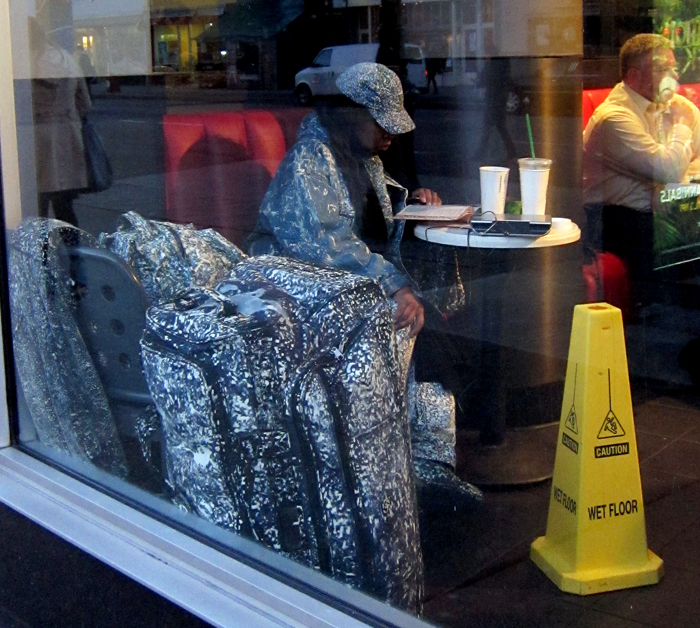
    Regarding today’s photo, this was a real shocker to me. I caught this woman sitting behind the window in Starbucks while I was walking on 6th Avenue in the Village. I am at a loss as to the reason for a display of extreme matching: luggage, pants, shoes, jacket and hat. I was not motivated to go in as I might normally be and learn the story behind the wardrobe. This would require that I make her acquaintance, chit chat, and get the facts in a diplomatic way without any intended insult. So for today, it’s just a look through a Front Window 🙂


  • Random Acts of Rudeness

    A Door Drama

    I have shared many stories of the good and remarkable I have found in the people of this city. I have recounted very few tales of rude or hostile behavior, not in an effort to distort the city’s image, but in order not to focus on negativity. The media does a more than adequate job of covering hostile or criminal acts in New York City. In fairness, however, if we really had to do a study, I am sure that the rudeness quotient would be much higher in New York City than in a rural or suburban environment. A small incident yesterday serves as an apt example.

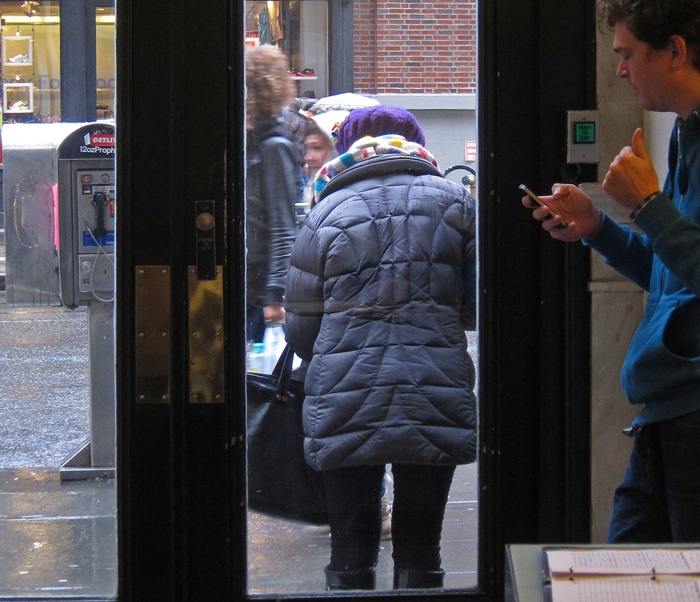
    Upon arriving at my office building midday, I was met with a woman engrossed in something in front of the door. The entrance way has two doors, only one of which is available for access in and out. Let us even grant that she did not know this. She was standing only inches in front of the doorway where I had to enter. You can see this in today’s photo. She made no effort to move at all. It was raining, but she could have easily just moved a couple feet in front of the adjoining door. I did not excuse myself, expecting that as I opened the door against her back, she would become aware of the situation and certainly move. Perhaps even offer the obligatory and insincere “I’m sorry.” But no.

    I opened the door no more than 12 inches and SQUEEZED through the opening. Apparently desensitized to humanity and anything around her, she did not move at all – it was a case of rudeness to the point of obliviousness. I turned to look at her from the back as I waited for the elevator. She was in the same position, unaware of the incident and that she was still blocking the entrance to an office building.

    In the business environment, particularly business to business sales, New York City can be hostile, even with well-articulated policies of apparent rudeness, such as a sign posted on a door stating: “NO STUDENTS AFTER 1 PM” – see the story here. Admittedly, with the hordes of people in such a large city, brusque behavior towards others can easily develop. However, it is not a fait accompli, and many businesses with the same streetside exposure to masses of shoppers do not become hostile to their customers. New York City just demands a little more effort to stay on the polite side of the line.

    Typically, I would become quite irritated by an experience such as this door drama. However, I now view any extreme acts, whether kindness or rudeness, as an opportunity for my writing. Using this website as a forum, the negative incidents can be defused through public ventilation and discourse. At the same time, on occasion, it provides an opportunity to illuminate New York’s more extreme behaviors and, Rather than Respond with Road Rage, to just Report these Random Acts of Rudeness…


  • The Hungry Huddled Masses Yearning to Eat Cheesecake

    I am not one to rule out well known establishments a priori – I am quite willing to try household names, and if a place lives up to its reputation, I am more than pleased. Although I am as interested as anyone else in finding that secret place that lies off the beaten path, I am not obsessed with that quest. My mission is not to prove that those small, special secret places are better than the well known restaurants. There is nothing wrong with tradition and an enduring legacy.

    After hearing about Grimaldi’s Pizzeria in Brooklyn for decades, I recently visited, knowing full well that it is heavily touristed, typically mobbed with long queues to get in. The pizza was excellent, and the overall experience was a lot of fun. My friend and I also met a number of extremely interesting people. See story here.

    Junior’s, located at 386 Flatbush Avenue EXT in Brooklyn, is a diner styled restaurant, founded in 1950 by Harry Rosen. It is a full-service restaurant with an extensive menu, however their claim to fame is the cheesecake, based on a family recipe developed by Rosen with head baker Eigel Peterson. I was only in Junior’s once, eons ago so I cannot speak to their quality. Reviews span the spectrum as would be expected, from those who adore to those who abhor. My hat goes off to Eileen’s Cheesecake, a tiny cheesecake mecca at 17 Cleveland Place in Manhattan. Eileen Avezzano is one of the nicest business owners I have met, and her New York-style cheesecake is uniquely light and fluffy, owing to her own special recipe. See my story here.

    Generally speaking, however, by the time a restaurant has achieved mythic, iconic status in New York City and it starts serving hordes of people, most likely the quality of food and/or service is likely to suffer. These places often become money machines with marketing, branding and even the opening of a small chain of shops.

    In New York’s harbor, Lady Liberty welcomed all, however, Ellis Island and now immigration services have controlled the influx of those with a ravenous appetite for America. At places like Junior’s, however, no barriers to entry exist other than a few dollars for a slice of cheesecake. But to serve the volume, it has to step up production – how else to serve the hungry huddled masses yearning to eat cheesecake?


  • Please Rub Off on Me, Just Like Steve Mills

    In the mid-1970s, Steve Mills, a young juggler from New Jersey, was creating quite a stir nationwide in the juggling community with his amazing skill set, even eclipsing seasoned long-time professionals. People were waiting for him in California at his first appearance at a national juggling convention.

    I met Steve in 1975 at a free juggling workshop in the financial district of Manhattan. When I began to manufacture equipment for juggling, Steve became one of my very first customers, and his use of my products and introduction to working professionals was instrumental in my early success. He came to the city to street perform as well as for the weekly workshop. I got to know him personally and, as a Village resident, helped familiarize him with good spots for street performing, such as Father Demo Square and Washington Square Park.

    One day, about that time, I received a letter that really stood out and which I still remember and often quote. It was a hand written order from a young boy in San Diego, California. He described the juggling clubs he wanted made with the size, weight, color and decoration scheme. But his real desire was made quite clear in one short sentence: “I want clubs just like Steve Mills.” Anyone familiar with idol worship can make the correct translation – “I want to be like Steve Mills.” Or, perhaps more correctly, “I want to be Steve Mills.”

    I saw the same phenomenon close at hand in the 1980s, when an employee of mine began to frequent all the hottest clubs in the city. She was a social butterfly with a serious case of celebrity worship syndrome. Because of her extensive networking, I was able to get into these clubs, all notorious for their difficult admission practices. It was through her that I also met Keith Haring, with whom we licensed his imaging for a new product line.

    There are many analyses of the psychological mechanisms operating in the fascination and obsession with celebrities. We chase them, examine them, dissect them. We do it for inspiration, to fill a void or for entertainment. Medical research has found that the desire to follow the leader and become like them is programmed into our DNA. In some however, this can become an unhealthy obsession. One aspect I saw with my friend, was a belief that somehow, merely associating with celebrities would have their greatness or achievements rub off on them.

    Of course this is illusion and delusion, because no amount of contact with super celebrities will bring you closer to their world or give you what they have. Skills, achievements and fame cannot be transferred like electronic data, transfused like fluids via IV or absorbed through osmosis. I think I need to print a T-shirt (and wear it myself) that says: Please Rub Off On Me, Just Like Steve Mills 🙂

    Photo Note: This is a capture at Spring and Crosby streets of celebrity chef Mario Batali with his signature red hair and orange Crocs (see Very Resilient here). He is the owner of Babbo (see here and here), involved in other restaurants and food establishments such as Eataly, and has had TV shows on cooking and food. Within seconds of my sighting, another photographer with a pro camera and massive lens asked to take a closeup, to which he happily obliged. A perfect set for Mario, bathed in a sea of oranges 🙂


  • In Your Hand


    The first ethnic cuisine I had in New York City was Chinese, for a number of reasons, not the least of which was affordability as a student. It was no time at all before Chinatown became the restaurant destination of choice. I did not dabble long in the cuisine either. I soon found a few dishes that I liked, and in no time at all, experimentation gave way to the familiar – beansprouts with black bean sauce or chow mei fun noodle dishes.

    As students, we indulged our new found freedom away from home, most of us for the first time. Yet ironically, the values and even the idea itself of routine and ritual that we rejected from our parent’s generation were soon to be substituted with our own rituals, routines, and values. We deceived ourselves to believe that we were completely free spirits – i.e. free of any structure or tradition. However, we had, in fact, established a new, well-defined culture, with its codes of behavior, dress, relationships, foods, recreational drugs, hair styles, slang, activities, work ethic, music, and sex. One tradition just replace another. Over time, we learned that many of the values, mores, and traditions of previous generations were not as bad as we once imagined, like a good work ethic or relationship fidelity.

    When it comes to food, no generation needs to be convinced of the merits of tradition in cuisine. This was and still is one of the greatest things about New York City – the plethora of restaurants and their ethnic diversity. However, when it comes time to eat and I am very hungry, I am not very inclined to experiment. I don’t want any unpleasant surprises. This is the time where nature’s call is best answered with a familiar voice.

    New Yorkers are no different than anyone else. We look for the comfort in the familiar rituals – morning coffee, reading email, eating at a local favorite restaurant with friends, and, if you are inclined towards Chinese food, the look of a flat-bottomed soup spoon and the feel of a warm ceramic tea cup in your hand 🙂


  • A Bottle of Schweppes


    Generally speaking, finer things cost more money, with surcharges for cachet, panache, name, and convenience. Some will say that these are not premiums but rather part of what makes them finer. However, these views are often held by those who find the greatest comfort in the greatest price and believe that quality is always measured in dollars. For those that feel this way, any world-class city will be a good choice to divest of some cash. New York City comes highly recommended.

    In most of the world, outside of large cities, if you have enormous wealth, you will find it difficult to spend enormous amounts of money on ordinary goods and services. So if you would like to spend $8 for an eight ounce bottle of Schweppes Ginger Ale or five dollars for a small bag of potato chips in a hotel room where rates range from $975 to $16,000 per night, I suggest a visit to the Peninsula Hotel.
    These minibar prices seem a little high. But ultimately, this is only a New York City hotel renting rooms for the night, and there is only so much luxury that one can offer. So, in a place where everything needs to be special, perhaps everything has to be priced this way, even a bottle of Schweppes.

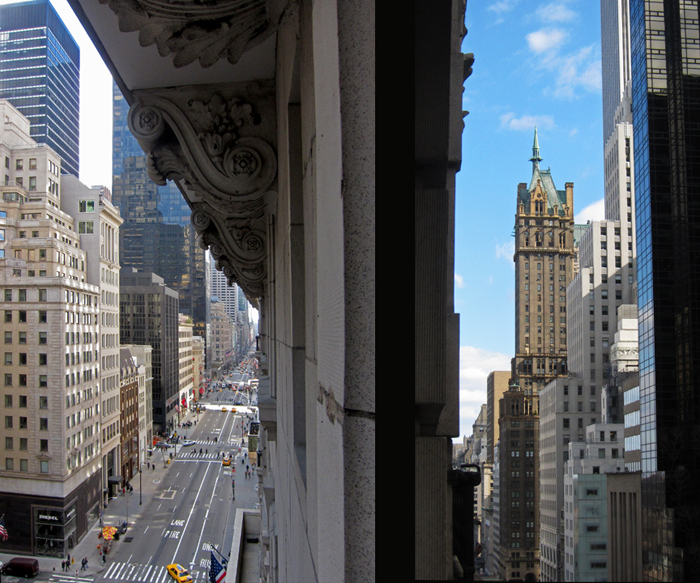
    Admitttedly, the location of the Peninsula New York at 700 Fifth Avenue at 55th Street cannot be beat. The location on Fifth Avenue, often heralded as the world’s most expensive street, is neighbor to many of the most recognized flagship stores, including Cartier, Tiffany’s, De Beers, Fendi, Armani, Prada, Saks, Bergdorf, and Abercrombie & Fitch. The Peninsula is also located near many well known attractions such as Rockefeller Center, St. Patrick’s Cathedral, Radio City Music Hall, and Central Park. The hotel has a 3-floor spa, outdoor terraces, and a glass-enclosed swimming pool.

    I was privy to see a room facing Fifth and able to free a window, open it wide, stick my head out, and get some spectacular views, up and down Fifth Avenue. As I turned back towards the elegantly appointed room, I glanced at the minibar, where on top lay an unfinished ginger ale. No matter how I tried to justify it, there’s still a thrifty New Englander inside, and it bothered me to see that bottle of Schweppes…


  • Meal of Myth-Information

    I have an uncle who is the quintessential cynic, skeptic, pessimist, elitist, and oh, did I mention that he is also quite negative? He is extremely well read, so it puzzled me that with this bundle of character traits, he was not argumentative. We discussed this once, and his response, although a bit caustic, befit his character: “Brian, I never argue because you will find that most people don’t know much about anything.”
    Wow. But that’s my uncle.

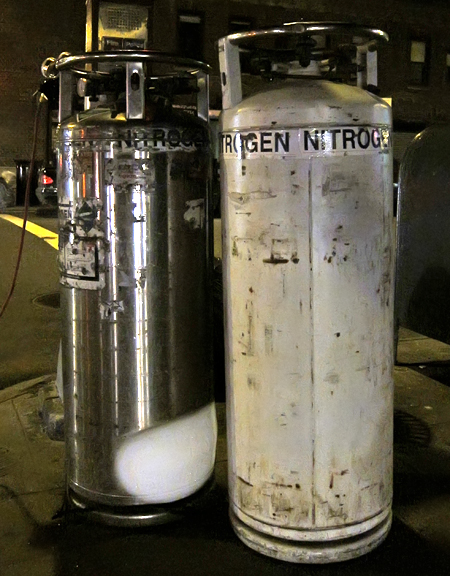
    I must say, however, that there is an extraordinary amount of misinformation – bits of facts are blended with plenty of fiction and fabrication. In reading various online websites and forums, much of the speculation and conjecture as to the raison d’etre for tanks of nitrogen on the streets of New York City is hilarious and hysterical. It took quite a bit of digging to get nearer to the bottom, but the process of reading was fun.

    Areas of science such as chemistry and physics are particularly mired in myth-information. Ionizing and non-ionizing radiation are conflated, as are chemicals with common elements but completely different chemistry and properties. Extrapolation goes wild too. For example, in reading about the street side nitrogen tanks, many were concerned that there was a warning against suffocation. However, this is not due to any toxicity but would only occur if someone were in an enclosed area and the nitrogen were to displace the air and, hence, the oxygen. Many were alarmed at the prospect of nitrogen being released, but ambient air is already 78% nitrogen.

    All the confusion, speculation, and misinformation is compounded with the monumental mistrust of governmental agencies or corporations, so reading statements from Verizon does little to pacify. A source of information on matters of trivia, urban legends, and myths is the Straight Dope, a syndicated question and answer column by Cecil Adams, published in The Chicago Reader since 1973. Collections were published in book form and are also archived on the Straight Dope website. Adams has a history of digging deep to research questions. I did some reading there, but did not get a completely satisfactory answer.

    Because moisture can damage cables, Verizon uses nitrogen to dry out its voice and data cables. Nitrogen is delivered via a small rubber cable fed through a manhole cover. But even many of the technical explanations appear incomplete. Most say that nitrogen is used to keep the cables dry. So why are these tanks only used temporarily, and what happens when they are removed? I found a more complete explanation from a former Verizon technician:

    Verizon pressurizes the cables to keep moisture out and air flows through them constantly. What happens is this; as the air flows through a section of cable that is being heated by a steam leak, it rapidly heats. When the heated air passes by the heated section it rapidly cools, which in turn creates condensation INSIDE of the cable. Condensation inside of a cable with paper or pulp insulated wires will cause service outages. Verizon calls this a “steam section” or a “steamer”. The tanks are filled with liquid nitrogen, but Verizon uses the nitrogen in the form of gas because it is almost perfectly dry. This dry nitrogen is forced into the cable and through the section that is in trouble thereby absorbing the condensation in the process. At the next accessible point of the cable, beyond the steam section, a “bleeder” is placed to allow the moistened nitrogen to escape and not travel through the remaining length of the cable.

    We are overwhelmed with an onslaught of information and resources. The online world of cut and paste research along with the viral proliferation of data has added to the confusion as well as clarification. Digging through it and sorting it out is challenging and exhausting. Why work harder than the rest? Just select the items you prefer from the a la carte menu of facts and fiction, and offer your own meal of myth-information 🙂


  • I Know

    There are a number of life scenarios where someone expresses the sentiment that he/she just knows. I have often heard this regarding house hunting – something like, “As soon as we walked in, we knew.” Some feel this way about their belief in God. That it is not the result of any cognitive process – they just know that God exists.

    And many, of course, feel this way about their significant other, even on first meeting – it was love at first sight – they just knew. Of course, there is always the possibility of over exuberance or self-delusion. Nonetheless, valid or not, the conviction of a strong, knowing feeling does give a person direction and focus and not squander energy on hapless searching. The middle way can be no way. Take it from someone who, in many ways, has been a perennial fence sitter.

    I cannot say that I have often had a strong feeling that I just knew something was right, except when I arrived in New York City for the first time. I will admit, of course, that at that age, in tandem with being starved for culture and stimulation, perhaps I would have had that feeling about any city. That I cannot know.

    There is an episode of the Andy Griffith Show where the lead character, Andy, a sheriff in a small town in North Carolina, tries to reconnect with an old high school girlfriend at a class reunion. She, however, has moved to the big city, Chicago, and the episode revolves around their bittersweet attempt at reconnection. It becomes clear why their relationship never was successful – they are just fundamentally different people.
    There is a scene in the episode which is particularly poignant to me and really captures the essence of people attracted and repelled by cities. Andy’s friend is frustrated by his apparent lack of need to go to the big city to broaden one’s horizons and explore beyond the bounds of his small rural hometown. She cannot fathom how he can really and truly be happy with what he has if he has never been to the big city to see what he does not have. To this, he responds that he just knows.

    To me, that is an extraordinarily profound statement of the utmost self-confidence and awareness. Some may say it is extraordinarily naive. However, I have met many intelligent, educated, sophisticated, and worldly people who are content to live their lives in a rural environment, even in the small town they grew up in.
    The urbanite often sneers at the country bumpkin, seeing him or her as unsophisticated. But perhaps the differences between people has more to do with different styles. I wrote of this in my story, Quite Refreshing, Really:

    I am reminded of the film The Way We Were where the ability of two very different people (Robert Redford and Barbra Streisand) to get along is painfully tested and results in a parting of ways. In the end, Redford explains that his decision to separate is due to their different styles.

    I have questioned the value of living in New York City and bearing its hardships, one of the dilemmas most New Yorkers face (see Dwanna). I have toyed with leaving many, many times in the four decades I have lived here. I have entertained the country, other cities, and other countries. However, although it has taken some time, I can, at last, peer into my soul and see what lies inside. And lest I need any reminder, I can look up at a vista, like that at 42nd Street and Park Avenue, and I know.


  • Titillation of the Day

    Recently, one of my employees had her wallet stolen by a pickpocket in the subway system (she concluded it was not lost by the various details concerning her bag). She called and had to rendezvous with me to borrow money to return home. She is now in the process of canceling and replacing her credit cards, drivers license, and other critically important documents and cards.
    To lose things of importance is a tremendous inconvenience, not to mention replacement cost. Anyone who has lost a wallet can attest to this. And unfortunately, the prospect of return is grim – where is one to look?

    I don’t trust others to handle finding the owner of a lost article in a timely fashion. By timely, I mean with a sense of real urgency. After all, the person losing an article, particularly ID and credit cards, needs to know the status as soon as possible. Otherwise, unnecessary efforts will be made. Nearly all will make the assumption that anything lost, is lost forever. This is why, on a number of occasions, I have turned the return of a lost item into a minor obsession – you can read my story about a lost, found, and returned driver’s license and the owner, Nicole Dubuc. See Area Code 714, Part 1 here and Area Code 714, Part 2 here.

    On December 26, 2008, in a story called Lost and Found, I told of my experience in Paris, where lost articles were often repositioned prominently in near where it was found, in hopes the original owner will return via that route and find it. Since that time, I have noticed this practice on the streets of New York City. It may come as somewhat surprising, but the more aware you are of this practice, the more likely you will notice it.

    I wish there was a better way to handle lost and found articles – a definitive, universally known and utilized place and system. There are a number of New York City lost and found websites and also labeling systems, which, of course, require advance preventive action. However, unless the whole endeavor is centralized and reaches critical mass, most will never use any lost and found.

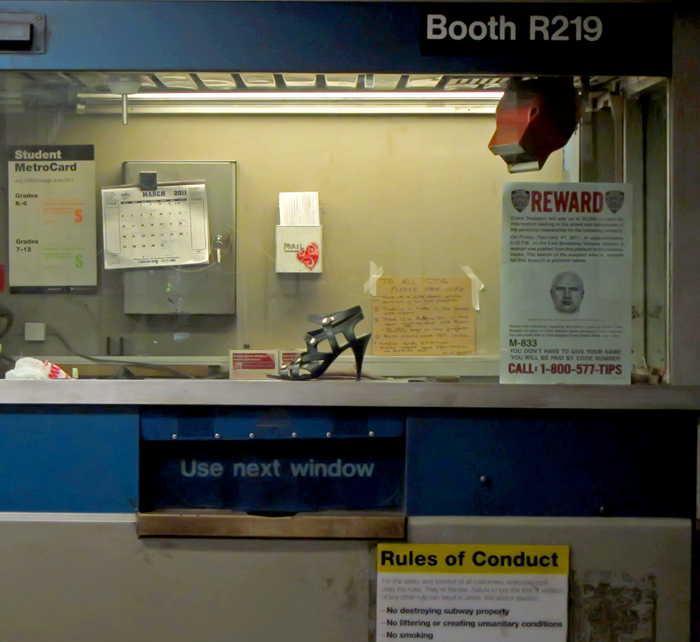
    On Monday, March 14th, at the Astor Place train station, I was very surprised and pleased to see one high heel shoe prominently placed in the window of the token booth. I assumed this was a lost shoe being displayed for its owner and not the New York City Transit Authority’s foray into a new program – Titillation of the Day 🙂


  • Sidewalk University


    Many years ago, a number of us were on the street in the East Village talking to a bookseller. In one of many spontaneous outdoor forums on the streets of New York, the conversation was nothing less than extraordinary. When I volunteered how impressed I was with the evening’s classroom, the bookseller showed little surprise. He pointed out that this was not just any place, it was in fact the streets of New York City, aka Sidewalk University.

    Not a substitute for the institutions of higher learning, but, for those unable to attend or perhaps as post grad work, nothing beats the streets of New York City as a place to learn. Not to suggest that every person or conversation will be one of erudition, but with some discrimination, a person can ferret out some worthy engagements.

    Saturday, my family was en route for a weekend stay in the city and was, however, delayed due to traffic. Learning of this when I was already outdoors on my way uptown to their hotel, I now had some free time – why not spend it in Union Square before jumping on the train? The farmer’s market is always a pleasurable stroll and opportunity to grab a healthy snack and/or beverage.

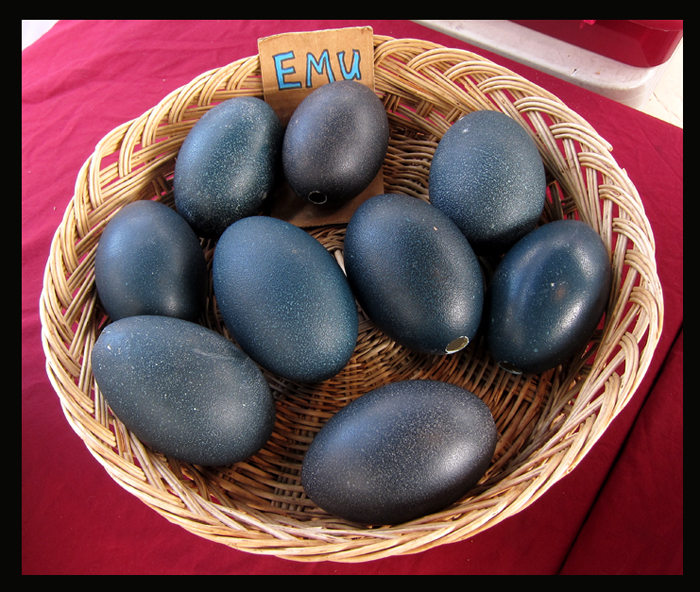
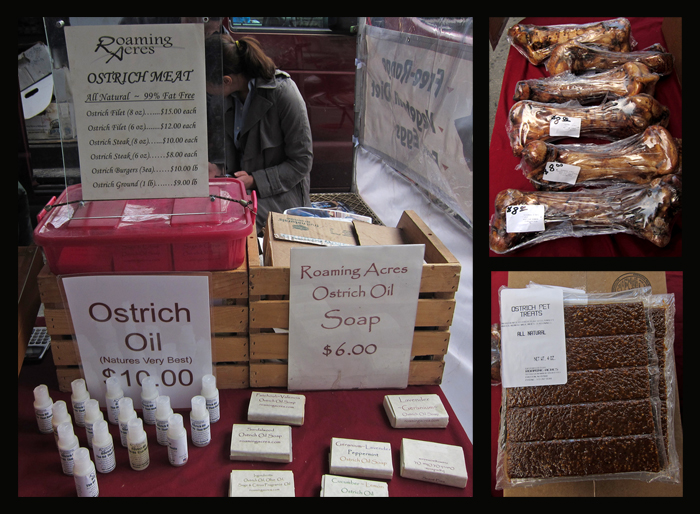
    On this excursion, I was particularly drawn to a table of enormous eggs – some filled, some empty to be used decoratively. The stand was run by Roaming Acres, an ostrich farm in Andover, New Jersey. Todd Applebaum pointed out to me that the farm made use of nearly 100% of the ostrich – its eggs, meat, bones, skin (as wallets).

    However, the eggs whose color and size drew my attention were that of the emu, an Australian relative. Todd gave me a short lesson on the emu – my appetite was so whetted that, like any good student, I followed up the lecture with reading. I learned that the emu was a remarkable bird, with some of the best design features I have seen in any animal. They can go a day or two without water, weeks without food, sprint at over 30 mph if necessary. A nail on their toes serves as a knife to kick away predators and other emus. They thermoregulate and can tolerate a wide range of temperatures. Their legs are among the strongest of any animals and can tear down wire fences. Their eyes, as would be expected, are equipped with a translucent secondary eyelid. Read more here.The eggs are highly prized – the emu only produces one every few days.

    When I asked Todd why I saw no emu meat or products, he smiled and said that you don’t kill the goose that lays the golden egg. We joked and I suggested that perhaps the emu knew its coveted status and was rather a diva. And so it was, on Saturday, March 12, 2011, that I was privileged to another tuition-free seminar on the streets at New York’s Sidewalk University 🙂


  • Queen of Sheba


    Who do you think you are? The Queen of Sheba? This was a popular accusation during my childhood, when my mother wanted to reprimand a sister who was acting spoiled or lazy – a mortal sin in our New England household and one of such magnitude that a Yemenite notable had to be brought in to make the point. Along with Timbuktu, apparently a place to far to go, these places were the extent of my working knowledge of the Middle East and Africa.

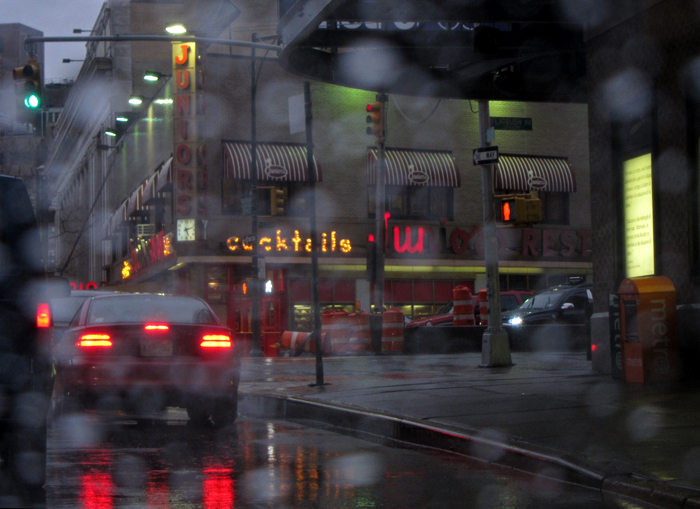
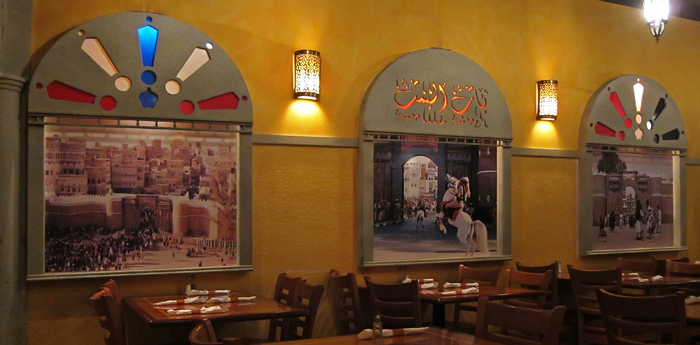
    I had heard that there was an Yemeni restaurant in Bay Ridge. An online search quickly revealed the only candidate, Bab al Yemen. So, on a rainy night, I ventured out to Brooklyn with a friend to see what Yemeni food was all about.

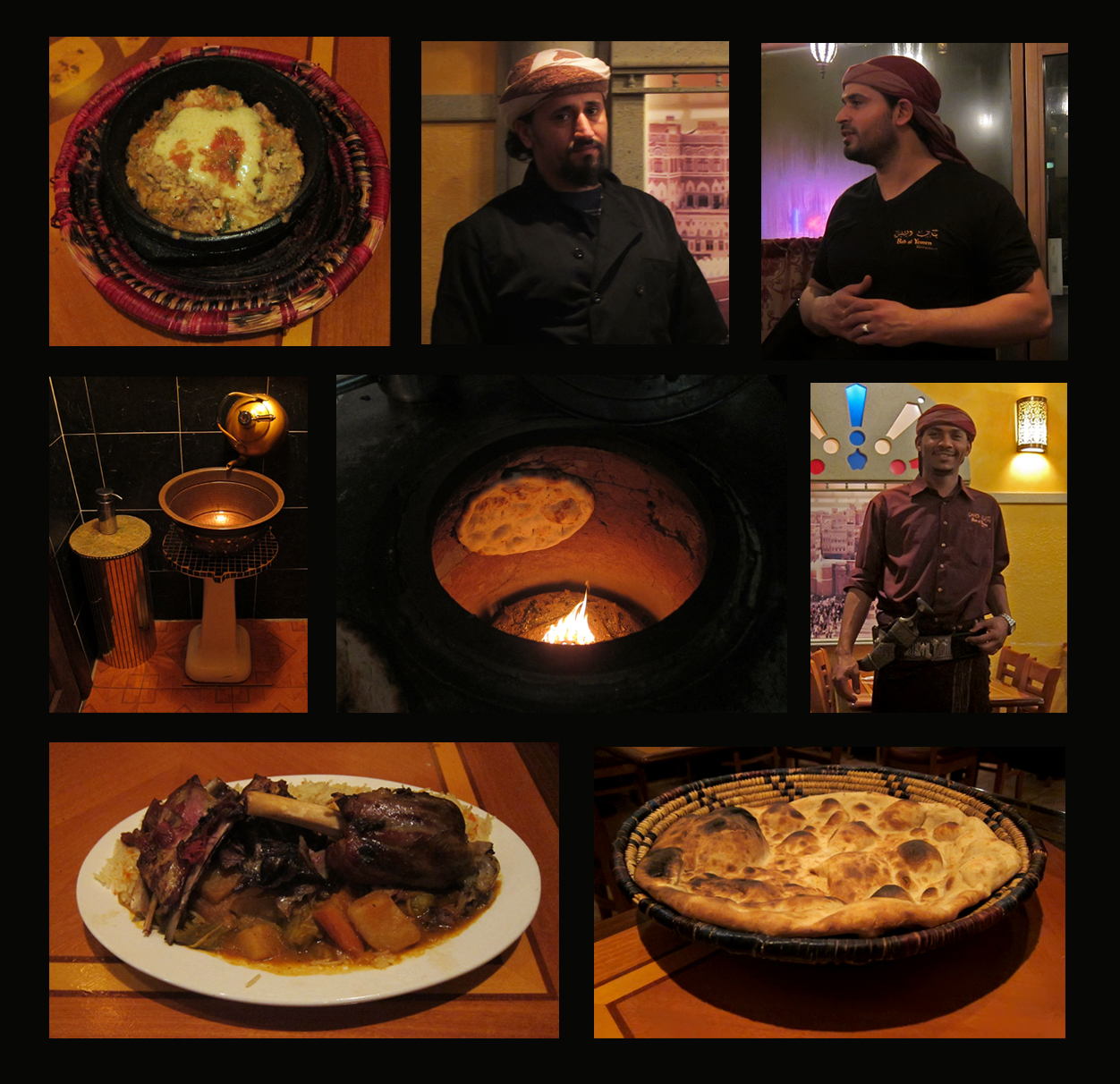
    Slipping in for a menu for review before commitment, I was immediately greeted and asked if I wanted to experience Yemeni food. Only seconds had passed and I saw the tip of the hospitality iceberg we would experience. Our waiter, Waleed al Jahmi (upper right photo), who turned out to be part owner with his brother and chef Abdulghani (top center photo), gave us a complete explanation of every food category in a little primer that he called Yemeni Food 101.

    I’m not going to tell you that a trip to Bab al Yemen is to transport you to another time and place. For that, I suggest you book a flight to Yemen. Speaking to Waleed*, a business school graduate who was so articulate and city savvy, will let you know that you are in New York City, not at Bab al Yemen (the gates of Yemen).
    However, I will tell you that if you are looking for authentic food and service that rivals the most cordial and hospitable you may ever have in the five boroughs, then I would make a journey to 413 Bay Ridge Avenue in Brooklyn. I have learned that Yemen is known for its hospitality, so I am not surprised that Yemen was at one time referred to as Arabia Felix, Latin for Happy Arabia.

    We strove for authenticity in all our food choices, which was easy with Waleed as guide. My companion had Haneeth, I had Fahsah. Every meal comes with khobz, the traditional Yemeni flatbread, cooked on premises in their clay oven. We also had my favorite Middle Eastern dish, Fool Mudamas. The Yemeni variant was delicious yet quite different from the Egyptian style I am most familiar with (see here).

    One of the real highlights for me was the extraordinary conviviality we experienced with Waleed and the staff. Every imaginable question was answered – and I had plenty of questions, knowing virtually nothing about Yemen or the culture. We spent quite some time discussing Sana’a, the capital of Yemen, the photos of which graced the walls. I was so intrigued with the architecture, climate and lifestyle. The entire staff was Yemeni, so we got our education from people who truly know the country and culture. Bab al Yemen is authentic in every way. Booths are available, even with a separate entrance for the privacy of women. At one juncture, Waleed asked Mohamed (photo middle right) to change into traditional dress for us. When I asked about the chef, I was assured he would make a visit after we finished our meal, which he did. My request for photos was welcomed including a trip to the kitchen.

    It is easy to understand how serving diners night after night can easily lead to attitudes that range from perfunctory to snippy or rude – not unusual in New York City. So, I always find it remarkable when a restaurant server or owner can maintain such a fresh, cheerful and helpful demeanor. Waleed and his coworkers broke the mold on this one.

    I think I need to let my sister know, that although she was led to believe that being served in a royal manner was quite sinful, I have learned it is not and that I found a place in Bay Ridge where she can go and be treated like the Queen of Sheba 🙂

    *This is my second encounter with a man named Waleed – see one of my favorite adventures with Walid Soroor here.

    Note: You can read the New York Times review here, the Village Voice review here and the New Yorker article here.


  • Crashing Through Knowledge

    I don’t remember his name, but he was a senior and the best player in the chess team. However, he had just been beaten by my best friend, a freshman, which had garnered my friend considerable respect. So our upper classman was confiding in us, telling his tale of woe. He had just been rejected from Harvard University and was so frustrated. He wanted to know what more they wanted from him, because as far as he could see, he had delivered it all. He was first in his class. He had perfect SAT scores (1600). He had won everything winnable. But we were extraordinarily naive and none of us were prepared. We were bumbling, fumbling, and stumbling. If you read my story Jungle Lovers, you will get a sense of the poor preparation and guidance we really had.

    In my junior English class, I could not find the word bourgeois when our teacher asked us to go that place in our text because I had never heard the word before and did not know how it was spelled or pronounced. A friend and I were researching schools. I called out the Worcester Polytechnic Institute – he could not find it in a guide because I mispronounced Worcester. It’s hard to find or get into a school if you can’t pronounce its name, and you are not going to benefit from a prep school if you don’t know they exist. That is correct. I did not know what a prep school was or of their existence until well after university admission.

    In mathematics and computer programming, we speak of elegance in a proof or in computer code, as contrasted with brute force, such as the approach computers take to chess, where all possibilities are considered. Those of us made it to college were lucky and appreciative – this was done not through any elegant or efficient process, but strictly by brute force. We were crashing through knowledge recklessly like a runaway train. We loved learning, reading, and academics but had no real guides.

    The prep school is certainly a more elegant solution to preparation for college. The emphasis is on a more well-rounded individual. Classes are smaller and instructors much better qualified with advanced degrees. And I am sure there is much better preparation and guidance, not just a bunch of kids bumbling, fumbling, stumbling, wishing, hoping, and just crashing through knowledge…

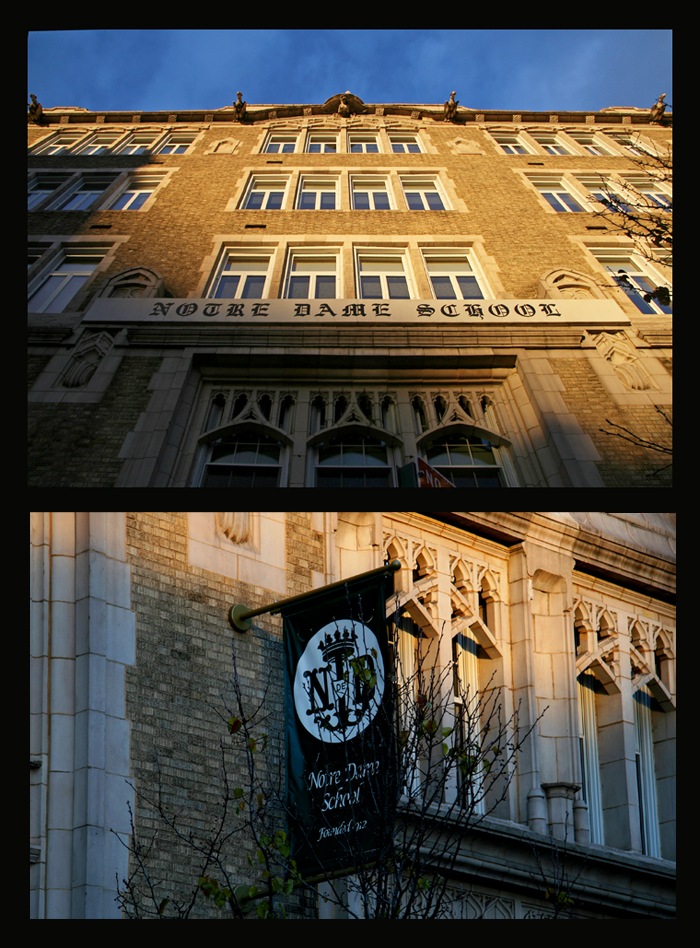
    Photo Note: This is Notre Dame, an all-girl preparatory Roman Catholic high school, founded in 1912 and currently located at 327 West 13th Street in the West Village. There are 300 students with a student-faculty ratio of 13:1. You can read more about it here or at their official website here.


  • dinamic_sidebar 4 none

©2026 New York Daily Photo Entries (RSS) and Comments (RSS)  Raindrops Theme