• Toys "R" Us

    Everyone has their comfort zones, and for most, familiarity breeds contentment, not contempt. But I really have a difficult time with visitors who travel all the way to New York City and seek out the same shops and restaurants they have at home. Like eating at McDonalds after shopping at national chain retailers.

    I am quite guilty myself of frequenting a small group of restaurants in a city with tens of thousands. When my stomach calls for refueling, this is typically not the time I want to become a risk taker. I want the tried and true – to eat the things I know are guaranteed to bring satisfaction. But there are limits to living in the comfort zone.

    When I guide visitors brimming with enthusiasm for those things unique to the city, I am galvanized; when I find myself with someone looking for the places that are familiar to them, I begin to short circuit and lose voltage. On one occasion, I had in my custody a woman who rejected every cuisine I offered. She commented, “At this point, McDonalds is starting to look good.” When we finally agreed on Italian, she rejected every entree. The only pasta she would eat was not on the menu.

    The most frustrating outing was one occasion when visited by my nephews when young. Knowing full well what I was dealing with, I put quite a bit of thought into what kids would want and geared the day towards the big and impressive – things like the Brooklyn Bridge and the new planetarium at the Museum of Natural History. What was requested, however, was a visit to the large Toys “R” Us at Times Square. I’ve been in a bad mood ever since.

    If you are a shopper, you could be visiting places like the Morrison Hotel Gallery. There are two locations – the older at 124 Prince Street in SoHo and the newer (seen in the photos) at 313 Bowery, appropriately, the former location of the CBGB Gallery. In my recent visit, I spent some time chatting with Rick Edwards and Vicki Albanese, sharing stories of music venues and encounters with music legends in the past.

    The gallery represents a bevy of renowned photographers, such as the legendary Jim Marshall, who recently passed away. The Morrison Hotel Gallery was founded in 2001 by former record company executive and producer Peter Blachley, former independent record store owner Rich Horowitz, and music photographer Henry Diltz. In 2008, a deal was made with Sony to sell photos from the archives of Columbia Records.

    The Morrison Hotel Gallery has some of the largest collections in the world of historic rock photos. If you are downtown, I recommend you drop in to browse. If you prefer, I also know of another little known place to visit for a unique New York City experience, located in an off-the-beaten-path location. It’s in an area called Times Square, and the place is called Toys “R” Us 🙂


  • She’s Too Tough To Care

    Have you heard of the award winning film, Varicose Veins? I would imagine not, but documentary film maker Sy Wexler, born Simon Wexler in Manhattan in 1916, worked as a producer, director, screenwriter, and cameraman in over 800 16mm black-and-white educational films in science, health, sex education, government, and medicine, with catchy titles like Teeth are For Life, High Blood Pressure, and Squeak the Squirrel.
    Parents and school administrations have forever grappled for ways to control the rebellious nature of youth. Since the 1940s, there have been a number of films which, through highly graphic imagery, attempted to shock, awe, and otherwise persuade the youth of America into proper behavior and to shun the evils of driving, sex, and cigarette smoking.

    In the 1950s-70s, there was a very disturbing series of controversial driver’s education scare films produced by the Highway Safety Foundation that featured gruesome footage taken live at the scene of fatal automobile accidents in the Mansfield, Ohio, area. Titles like Wheels of Tragedy, Highways of Agony, and one which I personally had to sit through in a high school public assembly, Mechanized Death. The positive effect of these is debatable. In my school, I saw fellow students screaming and leaving the assembly hall, girls vomiting while some boys feigned being unaffected and laughing. Although these films have cult status now and many are available in their entirety or in montages, I don’t think America is missing much without them.

    Sy Wexler’s film, He’s Too Tough Too Care, did not share this macabre, grisly approach, but instead was instilled with humor. In it, individuals were seen in various scenarios where they met with fatal outcomes due to smoking, like a worker smoking on a scaffold while his cigarette unknowingly burns a support rope. Another memorable scene involves a lab scientist working for a tobacco company expressing dismay to an executive. When asked how the tests are going, he responds not good, producing a stiff, dead rat from his lab coat pocket. All of these scenes were done with a blend of humor. Throughout the short film, the catchy jingle was sung – He’s Too Tough to Care.

    Cigarette smoking today transcends the defiance of yesteryear. There is virtually no cachet – even among the young, the habit appears foolish and over priced. Smokers are virtual pariahs, restricted and banned everywhere. The women in the photo are archetypes for today’s smokers, relegated to the sidewalks of New York City. These women demonstrated the ultimate in defiance, smoking while standing outdoors in a frigid 10 degrees.

    Our coworker Brittany Bartley, however, puts a positive spin on going against social norms. She bikes daily from Manhattan to Brooklyn, over the Manhattan Bridge, in a trip that takes about 35 minutes. Undaunted by yesterday’s cold snap, Brittany still made the journey by bike, even on a morning with temperatures in the single digits. With no complaints. When I discussed my photos of the women smokers with our company graphic artist, she commented that she was infinitely more impressed with Brittany’s braving the extreme cold on a bicycle. I agreed.

    Sy Wexler passed away in 2005, but I see room for a sequel in the spirit of his original He’s Too Tough to Care. Perhaps this is a project for our friend Ferris Butler (see here). For casting, we have two women who smoke in down jackets on the streets of New York City in January and Brittany on her bike to Brooklyn in single digits. I can see the theater marquis now – “She’s Too Tough To Care” 🙂

    Go here for a sequel to “She’s Too Tough to Care.”


  • Meetings with Annoying Men

    Poor Winnie – Part 2 (see Part 1 here)
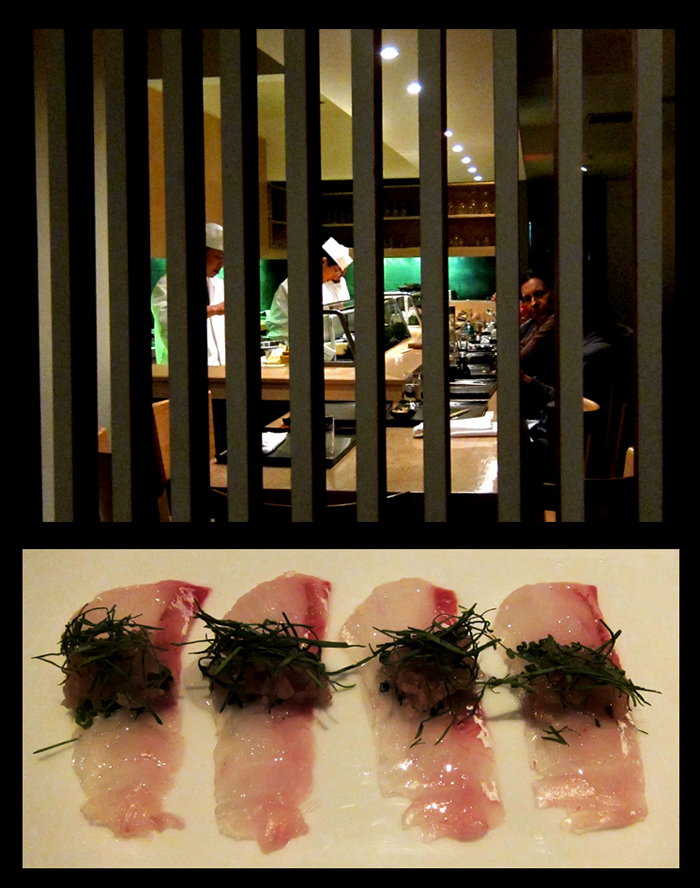
    I had been passing the nondescript storefront (near my home) at 357 6th Avenue for some years. Previously, Ony was located here, a Japanese restaurant I frequented, featuring delicious noodle soups. Now, there is neither signage nor a menu posted. Peeking in through the cutouts, I was able to see that it was also a Japanese restaurant. See photo in Part 1 here.

    I was intrigued, however, a number of friends and I are regulars at Marumi. We all love the food there and have been eating there for so long, it feels like a second home. There was no compelling reason to investigate another Japanese restaurant, particularly with no menu posted.
    One does tire of the same routine, though, so on Tuesday, a friend and I stopped by and asked to see a menu. The restaurant’s name was Soto. Surprisingly, the prices seemed reasonable. We decided to try it the following night. When we arrived, we were asked if we had a reservation, which on the surface seemed rather silly, since the place was virtually empty.

    After ordering, we were informed by the waitress that what we had selected were actually very small appetizers. She recommended following with something from the next page of the menu. Now we were beginning to see the full picture. We asked the waitress to give us a few moments to regroup. My dining companion offered to leave if I felt we were getting in too deep for a casual dining decision. I suggested we stay – the pricing would still not break the bank.

    We shared an extraordinary parade of dishes as they came out, one by one. I will not describe each dish here but suffice it to say that the food was truly sublime and exotic – nothing like anything I have seen before. It was easily the finest Japanese food I have ever had. My companion, who has had much more experience eating in upscale restaurants, agreed.

    A man arrived alone and sat at the table immediately next to us. This gentleman (and I use the term loosely), however, did not appear pleased with anything he ordered. He complained about and returned every single item brought to him without exception. Some items were returned twice. He complained that the soy sauce was too salty, the Sake was not to his liking, and he did not want wasabi in his sushi. Every bite he took appeared to be an exercise in scrutiny – this was not dining, it was a forensic autopsy. It was excruciating to watch, but the waitress did an admirable job trying to please him. The customer also made trouble regarding the bill, which totaled $142 for one person (our check was $133 for two).

    My friend and I both felt compelled to speak to the waitress and offer our condolences. After he left, we pulled her aside. Winnie, a young girl who hailed from Indonesia, appeared very eager and pleased to talk. We apologized for her customer and assured her that this man was completely unreasonable. I told her that not only was the food amazing, but this was a man who could not be pleased and perhaps someone who needs to show off his “sophisticated” palate for all to see. She had maintained composure throughout this entire affair, but now put her hand on her stomach and politely told us how stressed and tense this experience had made her. We concurred.

    That night at home, I did a little research on Soto. I learned that it is owned by celebrity chef Sotohiro Kosugi. It is considered one of the two finest Japanese restaurants in New York City and one of only 10 restaurants in the city to hold the coveted Michelin two star rating (much harder to earn than a one star rating). Only four restaurants hold the highest rating of three stars. Soto is also one of a tiny group of restaurants to get a Zagat survey food rating of 28 – the highest possible.

    The stakes are high for all in a restaurant of this caliber. Diners are quite experienced and often much more critical and demanding, voicing their complaints about things that, to most, might appear to be extremely picky. In spite of the fact that I believe our diner was unreasonable, this type of person and his behavior is to be expected in a restaurant of this caliber.

    Some may argue that the owner and staff are well compensated for incidents of this nature and that it comes with the territory. However, regardless of any expectations or diner’s rights, the behavior we observed was excessive and, in my opinion, mean. I don’t believe that customer was so much displeased as he was trying to inflate his ego – at other people’s expense. Poor Winnie 🙁


  • Meetings with Annoying Men

    Poor Winnie – Part 1

    He was one of the most annoying people I have ever met – the mold for the New Yorker everyone loves to hate. Every human descriptive with “self” as a preface could easily apply. I was introduced by a friend and learned that He was a translator for the United Nations – a perfect job for someone who wants professional tools to cut others with precision. A person like this will, however, need a constant audience to fan his ego and will likely run through unsuspecting victims rather quickly. I was one of them.

    He believed everything had a price and that it could be quantified. One only needed to ascertain whether the value of a thing or proposition was worth the price to any given person. His favorite question to me was always, “How much is it worth to you?”

    He lived on the Upper East Side. I visited His apartment once. On a tour of His home, every furnishing was pointed out and named, always prefaced by the brand or designer. I was to know that the ordinary or inexpensive did not belong here.

    He had an outdoor garden (of course). It was here that I saw a moment of merit when He got into an argument over grammar with His close friend, also a translator for the UN. At one point, His friend, furious, declared that you absolutely could not use words in a particular way. He grabbed a paper napkin and began diagramming the sentence, something I had not seen since grade school. I don’t remember the outcome, but it did not involve the brand or cost of the napkin or pen – the weaponry of the argument.

    At that time in New York City, nothing to me conferred status more than gaining admittance to the various hot clubs, places such as the Mudd Club, Xenon, and the most well-known, Studio 54. These places had arbitrary admission policies, and potential admitees were chosen from the throngs outside the door, completely at the whim of the bouncer and his criteria.

    On one occasion, I became extremely excited to learn that He was a regular at Studio 54. When I asked about the prospect of getting in, He asked what it was worth to me. $10? $20? He also surveyed my appearance, knowing full well that I would be a challenge.

    A large number of us made an excursion to Studio 54 with Him. I recall very little except carrying a crumpled bill in my sweaty hand and following Him in a line with the others like victims of river blindness. At one point He looked back and told me to run my fingers through my hair and “look rich.” I think He sensed the futility of getting our motley crew in before the bouncer rejected us, telling Him there were just too many to admit to the club. It did appear, however, that He did have rapport and clout with the bouncer. We failed, nonetheless.

    In my few brief encounters, I did take away one thing of value, and that is about restaurants – dining is a business transaction. He had no tolerance for those restaurants that had menus without prices (such places do exist) or the common practice of waiters reciting specials without prices. You have the right to know the prices and asking is not improper. The management has already priced the offerings, so why hide it from the customer? I now never hesitate to ask a waiter the price of any special(s) I am interested in.

    But as annoying as He was, I was to meet much worse in what is one of the finest (and most mysterious) restaurants in New York City and the waitress that had to serve him. My dining companion and I felt so badly for her. See why in Part 2 that we felt and said Poor Winnie 🙂


  • Brawling Over Brands

    I hate brawling over brands. In the 1980s, I was shopping for an industrial sewing machine. Juki seemed to be the brand I saw in nearly every factory, so this is what I asked for. “Does it have to be a Juki?” the salesman asked. “No,” I responded, “it does not have to be a Juki, but that is what I want.” Lest some may think this was a salesman just being helpful, it is not. His question is business code for I don’t have what you want, so let me sell you what I have. or I’d rather sell you something else. I bought the Juki.

    Recently, we were still prototyping bags (see story here), and I was now in need of zippers. I only know one thing about zippers – YKK. A coworker called out, “What’s the deal with YKK? Is that a brand or something?” Yes it is. The brand used on virtually every quality sewn product. Samples or not, that’s what I want. Why ask for trouble?

    I called a favorite notions supply shop in the garment district, Steinlauf and Stoller. They did have zippers, but not heavy duty. It occurred to me we had fabric vendors near my office in the Lower East Side. A call to Zarin Fabrics referred me to Oshman tailor supplies. Oshman’s website had small display ads for top brands including Gütermann (thread) and YKK. This looked like a no-nonsense operation. Armed with samples and a camera, I was off to Oshman Brothers, not only to get the sewing supplies I needed, but also perhaps to get photos and a story as well.

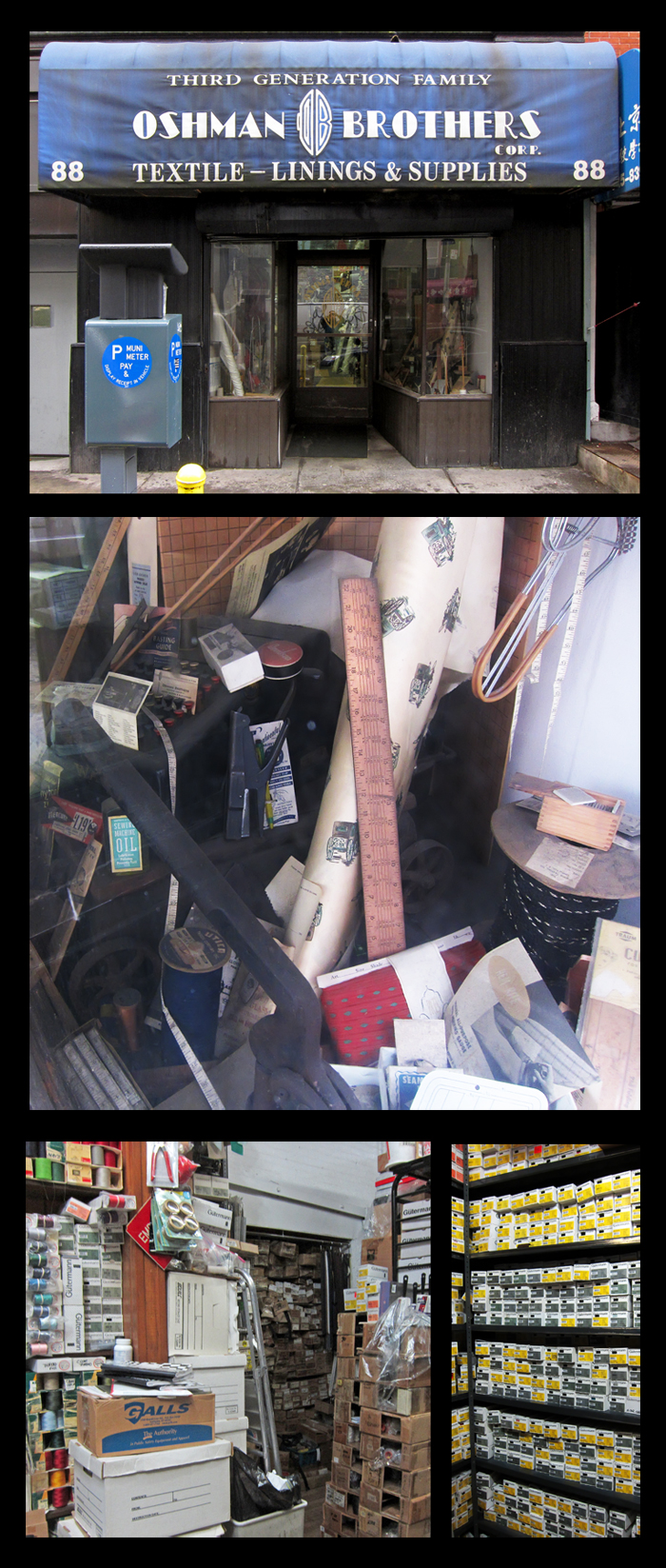
    Arriving at 88 Eldridge, I knew this was the type of place I had hoped for – the awning stated “Third Generation Family.” The window displays looked like they had not been touched in three generations, but this was a good omen.

    I have no idea how this type of place is perceived by someone who has not frequented the business or industrial supplier in New York City. It is not a necessary condition for authenticity that a place have this dreary, drab look and feel. A place selling top quality industrial supplies has a customer base whose only concern is getting those goods. Sales, marketing, displays, and imaging has little or no effect on the savvy commercial buyer.

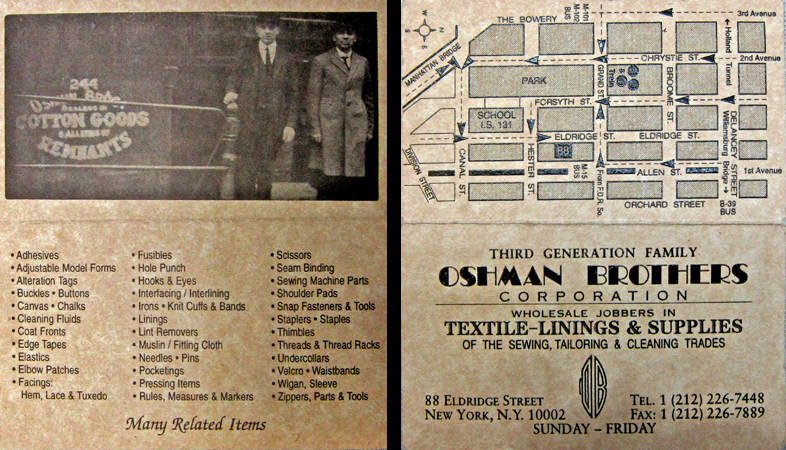
    I was helped by the lone salesperson, Elaine Leong, who I learned was the wife of the owner, Oshman, whose grandfather and grand uncle started the business in 1936. When I showed approval of their thread choice, Elaine proudly showed me their inventory and told me that they stocked all 600 colors of the Gütermann line. She also asked if I had worked with continuous length zippers before, and when I said I had not, she brought out scissors and hardware and gave me a live tutorial.

    Elaine’s style is not that typical for a New York City industrial supplier. There was no upsell or hard sell. She only sold me what I needed – a total of $12.35 for zippers, zipper hardware, bobbins, and needles – and spent more than the time necessary to attend my needs. She was quite pleased when I told her I would be doing this story – she fished out her only remaining antique business card (see photo here).

    Oshman Brothers is the type of unique, specialized business supplier that reflects New York City’s greatness. Many business owners travel here for places like this. They know they will find a broad range of quality supplies, often unavailable elsewhere. There’s business to be done, everyone is on the same page, and there’s no brawling over brands 🙂

    Note: Thanks to Elaine for being such a wonderful mensch.


  • Horticulture

    Sometime in the 1980s, a good customer and I were chatting in my office. In the course of conversation, he mentioned his excursion to visit Lillian Openheimer in Union Square at her Origami center. Lillian is largely credited with introducing origami to the United States.

    My customer was pleased to learn that we shared a mutual interest in origami – I had discovered the Japanese art of paper folding in high school and had made a myriad of creatures, always looking for an opportunity to make a flapping crane.

    At one juncture in the conversation, he showed me paper he had acquired from Lillian’s studio. My first instinct was to take a ruler from my desk and measure it. He was furious, incensed by my act of measuring. Apparently, quantifying or measuring the media was NOT a valid response or way to appreciate the artform. Storming out of my office, my manager at the time managed to calm him down some, explaining that I meant no insult and I was not incapable of appreciating Origami, but rather I had an analytical side.

    You can’t dictate how someone will interpret art or what aspect they will take interest in, often to the chagrin and frustration of artists, whose explanatory and dictatory diatribes fall on deaf ears. A friend who introduced me to Boaz Vaadia, told me of an incident where he was once at the studio of the sculptor who became frustrated that my friend was taking a greater interest in the mechanisms of construction and moving heavy stone than of the art itself  see his work here).

    I was told by a regular reader of this blog about an often photographed crocheted bicycle on the street in the Lower East Side at Elizabeth and Broome Streets ((lower left photo) near the Christopher Henry Gallery. Not realizing there was a connection between the gallery and the bike, I strolled inside to discover an exhibition of the work of Polish artist Agata Oleksiak on the second floor. An entire room and every object in it was crocheted in a riot of colors.

    Olek makes a point (evidenced in the exhibit title – Knitting is for Pus****) to differentiate between knitting and crocheting. From her website:

    A loop after a loop. Hour after hour my madness becomes crochet. Life and art are inseparable. The movies I watch while crocheting influence my work, and my work dictates the films I select. I crochet everything that enters my space. Sometimes it’s a text message, a medical report, found objects. There is the unraveling, the ephemeral part of my work that never lets me forget about the limited life of the art object and art concept. What do I intend to reveal? You have to pull the end of the yarn and unravel the story behind the crochet.

    This may be a valid and crucial distinction in her art, however, I am afraid that the vast majority of observers will make a cursory examination of her work and come to their own conclusions.

    On August 29, 2008, I wrote a piece called Nuance. I think the very essence of many works of art hinges on subtlety and nuance and to miss a fine point or distinction can mean to really miss everything. Often it is not so much the incapacity of the viewer to understand but rather the unwillingness to take the time to see and learn. So much to do and so little time.

    I ran through Olek’s exhibit quickly. It is only through writing this story and reading about her work, her bio, and watching interviews did I become aware of her mission. Perhaps the epigram, attributed to Dorothy Parker, best summarizes: “You can lead a horticulture but you can’t make her think” 🙂

    Note: This epigram is a play on the American proverb: You can lead a horse to water, but you can’t make him drink, dating back to the 12th century: “A man maie well bring a horse to the water, But he can not make him drinke without he will.”


  • got math?

    When I arrived at NYU, a few classes at the Courant Institute cut me down to size rather quickly. This was no longer home for the small town boy, universally applauded for basement experiments ala Mr. Wizard or Bill Nye the Science Guy. No, this was the real world of mathematical minds – the best of breed. My childhood dreams and ambitions of being a mathematician evaporated quickly, and within one year I had switched academic gears.

    Always a lingering and nagging disappointment, I was only comforted decades later by two conversations. One was with a coworker who attended Princeton University and Oxford. When I asked what Princeton was like, he told me there was a lot of drinking and depression. Surprised, I asked why. He informed me that it soon became clear to most students that in every class there was that person that eclipsed the others, and you were not that person. These are the people that would go on to the rarefied heights that all the others had always assumed would be theirs.

    I had a similar conversation with a leading French-American theoretical physicist and Senior Vice Provost at NYU, who received his bachelor’s, master’s, and doctorate from Harvard University. In spite of his obvious brilliance and stellar achievements, the professor told me that when he arrived at Harvard, it was a rude awakening for him also to brush up against others of equal or even greater minds.
    We all learned that we were not in Kansas anymore.

    Mathematics itself is fascinating – the feelings most people seem to have about it range anywhere from just a sense of incompetency to fear, panic, or outright terror. Much has been written about our world of innumeracy and why these things are true.
    Another coworker, a gifted NYU student, could not fathom why I or anyone else would major in mathematics and subject themselves to such a fate voluntarily. Stating that I actually loved mathematics did not help clarify things at all, but only made the whole thing even more perplexing to her. At best, even though some people may have a facility for math, it is typically seen as a tool, certainly not an end in itself.

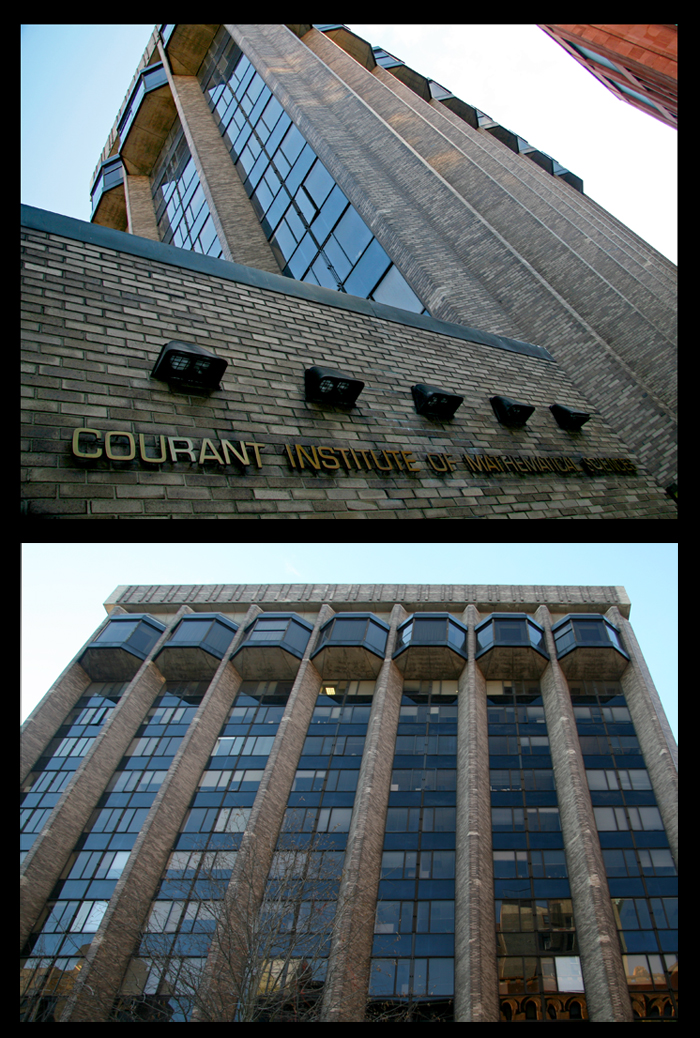
    One of the reasons I selected NYU was its strength in mathematics. Unfortunately, I did not realize how strong. The Courant Institute of Mathematical Sciences (shown in the photo) at NYU is considered one of the most prestigious and leading mathematics schools and research centers in the world. You can read more about it here and at NYU’s site here.

    I walk by Courant Institute daily, its tower somewhere between torment and a tease for me. It is another one of New York City’s many sirens. This one, however, lures only a few who can hear its call – “got math?” 🙂

    About the Photo: The Courant Institute of Mathematical Sciences is housed in Warren Weaver Hall, a 14-story high-rise at 251 Mercer Street.


  • It’s the Humidity

    A bit of banter is not a bad thing. Small talk, much maligned, is often useful as a lubricant to get the wheels of social machinery turning. But there is a limit and there are things that are often repeated ad nauseum that are just too infuriatingly obvious. Like heat and humidity.

    I recall one specific instance when a UPS driver entered my business premises on an extremely hot and humid summer day. I tried to show some compassion and in an offhanded way commented that is was really HOT out there. Being that this was just meant as sympathetic chit chat, I did not feel that I needed to expound on this with meteorological completeness. However, with tremendous gravitas and as if I was being told something I did not know for the first time he said, “It’s not the heat, it’s the humidity.”
    The absurdly obvious statement was further compounded by the fact that my family, unbeknownst to him, has a morbid obsession with humidity (along with making sure shoes are not too big – see One Size Too Small here).

    There are other refrains that are equally annoying, like any variant about thin crust pizza (along with brick oven). “Is their pizza thin crust?”, “I love thin crust,” or “Their pizza has a thin crust,” typically followed by an explanation of what and why for all of us who have not heard about thin crust. Much like the No Honking horn law, perhaps New York City could pass a local ordinance: “It will be assumed all pizza is ‘thin crust’ unless otherwise specified. Any unnecessary use of the phrase ‘thin crust’ within the five boroughs will be subject to a fine.”
    On the other hand, we don’t hear much about the desirability of thick crust. At one time I used to enjoy Sicilian styled pizza and Chicago deep pan pizza (a la Pizzeria Uno), both with thick crusts.

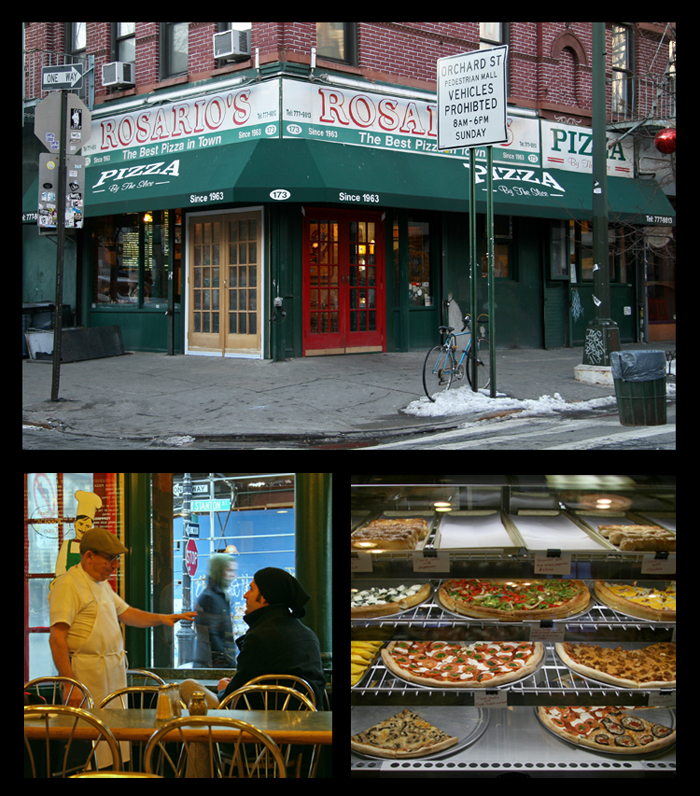
    Sunday, after reading about Rosario’s Pizzeria on the Lower East Side, I decided to make a short trip and sample the goods. Located at 173 Orchard Street and Stanton, the awning proclaims “The Best Pizza in Town” and “Since 1963.” So, they get points for authenticity and longevity. However, I was not particularly pleased with their style. The crust was thick and somewhat cakey. Have you ever had thin crust pizza?

    The reviews I have read range the gamut, with 5 star reviews just as impassioned as the 1 star. The highlight of my excursion was an animated conversation in Italian between the shopkeeper and a customer about I don’t know what. Perhaps the patron was informing the shopkeeper about thin crust pizza and the shopkeeper was explaining that the problem in the summer is that it’s not the heat, it’s the humidity 🙂


  • Meetings with Unusual Men

    The Story of Ferris Butler, Part 2 (see Part 1 here)
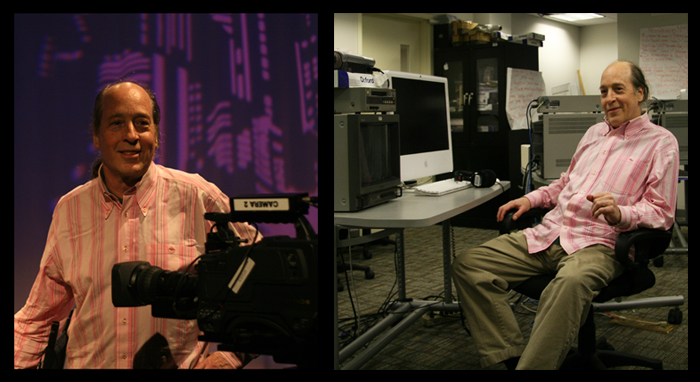
    I have just begun to review four huge emails with numerous attachments sent to me last night from Ferris Butler, including chapters of his upcoming memoir, biographical notes, outlines of his comedy writing, and stories of just the most extraordinary melange of life encounters I have ever read. Perhaps you are thinking, if he is that interesting, why haven’t they written a book or made a movie about him?

    Oh, did they forget to tell you? They already did. Kind of. But no one knows for sure. Are you familiar with the film Ferris Bueller’s Day Off? Then meet Ferris Butler, who is believed to have inspired the film character and the name and someone much more interesting than Ferris Bueller. Most of what I am about to tell you is as much a surprise to me as it will be to you. Ferris was extremely generous to give me the entire texts of chapters he has worked on for future publication in his memoirs.

    In the interview I conducted with Ferris in the corridors of MNN, my nagging question was that of the relationship between Ferris Bueller and Ferris Butler. I was told by Ferris that he knew comedy legend Del Close, who not only found Ferris intriguing, but also once remarked to him that he would like to do a screenplay based on the character of Ferris Butler. Later, Del was not only in association with John Hughes, writer and director of the film, but appeared in the film as an actor. Paramount Pictures denies any such connection of course, saying the film was a creative work of fiction. Both Hughes and Close have passed away, so each of us will have to solve our own equation on this one. Personally, I believe Bueller = Butler.

    When I met Ferris in 1970, he was an NYU senior in the film school and a frequent visitor to our dorm room. In the event we were eating anything, we were ALWAYS greeted with, “What are you guys eating?” Regardless of our response, he would invariably reply, “mm mm, my favorite.” Because FREE was really his favorite food and mooching his favorite currency, to be expected from a man who was always broke.

    Sifting through the enormous amount of data Ferris supplied me with today reminded me of an occasion when he entered our dorm room and said he loved the Led Zeppelin song we were listening to – Dazed and Confused. So appropriate. After graduation from NYU, Ferris worked at Vita Herring in the consumer complaint department. Proud of his position of power, he told us how we could frame a letter to him at his new post and obtain free herring. What college student gets excited about free herring?

    Welcome to the world of Ferris Butler. A man who is not easily forgotten and is still remembered by Martin Scorsese, one of his teachers at NYU film school and where Billy Crystal was also a classmate.
    Ferris’ greatest solo creative endeavor was Waste Meat News, a half-hour satiric revue series, featured on local access cable TV from 1976-1980, which he wrote, directed, and produced. The inspiration came from his part-time office position at Channel 7’s Eyewitness News, where he came to the conclusion that “TV news is nothing but throwaway scraps, like sausages or hot dogs. Very little protein, like waste meat.” One of his signature pieces was the Leather Weather, later to be used by Saturday Night Live. Waste Meat News rose to the number one spot on cable at that time.

    Some of his material, like the Trough Restaurant, appears to have been appropriated by others, such as Saturday Night Live. After failed attempts, Ferris was hired in 1980 as a comedy writer by Saturday Night Live (where he rewrote his classic Leather Weather skit) in its historic sixth season. A major moment in the life of any comedy writer.

    But Ferris Butler, unlike the film character, has had more of a Life Off than a Day Off. Born in New York City in 1949, his life includes an extraordinary cast of characters, travels, residences, women, sexcapades, experiences, and jobs – taxi driver, office boy at ABC, work at the Metropolitan Opera, photographer, PR man for a chain of discos, press release writer/coordinator for Columbia Artists Management in 1986, comedy writer for SNL and the Playboy Channel, and his own TV cable series. He has lived in a number of cities – Las Vegas, New Mexico, London, San Francisco, and New York. In skimming over his accounts, I am honestly overwhelmed with his tales, like that of his meeting a woman named Roach (whom he introduced us to in college), who was living in the East Village with Jerry Garcia of the Grateful Dead, whom Ferris also met.

    In 1974, Ferris married Beverly Ross, a “voluptuous, intense brilliant artist, one of rock’s founding females.” Best known for her big hit song from the 1950s, “Lollipop,” Beverly has been a prolific songwriter and stage writer (they were later divorced and are now living together again in Manhattan).

    In 1987, Ferris received a family inheritance of $500,000. A life of indulgence and gambling quickly disposed of this booty, leaving Ferris in a position he knew best – penniless and on the brink of disaster. Ferris would file for personal bankruptcy more than once.

    Since December 2003, the Ferris Butler Program has been running on Manhattan Time Warner Cable Television, Channel 57 at 11:30 PM on Sundays. This program originally consisted of Ferris doing monologue comedy and satire on various news and cultural subjects, and several songs of a Sinatra style. It now has a cast that consists of Ferris, co-host, standup comedian Mike Fine, and a variety of other guest characters.

    In interviewing Ferris, I was astounded at the people he has met, known, or worked with. A veritable who’s who in entertainment, comedy, and public life – Bella Abzug, Philip Roth, Larry David, Jerry Stiller, Jackie Mason, David Frost, Milton Berle, James Earl Jones, Matthew Broderick (who played Ferris Bueller), John Lennon, Rosie O’Donnell, Howard Stern, Quentin Tarantino, Gloria Steinem, Truman Capote, Andy Warhol, Gov. Elliot Spitzer, the Pointer Sisters, Gloria Gaynor, and Jerry Garcia, to name a few.

    This story could just as easily fallen under the umbrella of my story series “Abandon All Preconceived Notions Ye Who Enter Here” or “Meetings with Remarkable Men” (see Part 1 here) – as long as multiple bankruptcy or near hits and misses do not preclude remarkableness. You are not going to find Ferris under any single umbrella, and he is not going to fit in any box very well. This story has only been a rough sketch, an outline. I’m waiting for the book and the movie, Ferris Butler’s Life Off. You saw the trailer here. I’ll meet you in line 🙂

    Related Abandon All Preconceived Notions stories: Gaby Lampkey, Jenn Kabacinski Part 2, Jenn Kabacinski Part 1, Driss Aqil


  • Meetings with Unusual Men

    The Story of FJB, Part 1

    Have you ever met someone so unusual that their ability to sustain themselves is itself one of the biggest mysteries in your life? Someone whose life seems like it is defined by confusion and always careening towards disaster? And yet, somehow, these individuals survive without any apparent livelihood and with sources of income as mysterious as the riddle of the universe.

    Often, quirkiness is merely an affectation or a fashion statement. Or perhaps it is an expression of a strain of individualism, but deep down lies a serious, responsible adult with a career. Our friend Jenn (see Part 1 and Part 2) is a good example. But other times, the quirkiness runs all way the way through and no matter how deep you dig, the inside is just as offbeat as the outside, perhaps even more so. I know such a person.

    During my years as student at NYU and resident of the Brittany dormitory, our room became a nexus of sorts with all manner of people coming and going, a virtual real life TV sitcom such as Friends, where apparently no one has a lonely moment and a social life comes with no effort.

    Visitors included both students and outsiders. Often, we had no idea how or where these people came from, but for a newcomer to the Jungle, it was a dream come true. Every day was filled with adventure and bristled with excitement. One day we met a college senior, FJB, whom we befriended past his graduation. He was truly quirky.
    I had lost contact with him, and about a year ago he called at my office, saying he had followed my business career. He also told me that he had a TV program that airs weekly on MNN.* I watched the show a number of times, seeing his odd character sneaking out of his weekly shtick.

    I met with FJB this summer for the first time in nearly 40 years. I recently proposed the idea to do a story on him, and he readily agreed. I met and interviewed him, appropriately in a corridor at MNN.
    People love to throw around words like quirky, maverick, iconoclast, oddball, or offbeat. Trust me, however, that in this case, FJB truly fits the word quirky. How much so? Enough that seminal comedy legend Del Close once commented to him that he would love to do a film involving FJB’s unusual character.

    Tomorrow you will meet this man (see Part 2 here), someone virtually unknown but whose comedy writing credits include Saturday Night Live. You will read a story that has never been told anywhere, about a man who has good reason to believe that his character was used in a major motion picture with a title eerily close to his own name. He is a native New Yorker, born and bred. I do so love that, because there’s no character like the offbeat New Yorker, where everything is just slightly askew or off kilter, right down to his missing big toe 🙂

    *Manhattan Neighborhood Network (MNN) is a non-profit organization that broadcasts programming on four public access stations in New York City, located at 537 W. 59th Street. It facilities and equipment free for individuals and groups to produce shows for its network.


  • We’ve Got Skiing Too

    Most New Yorkers have limited exposure to elements of the natural world. It is possible, particularly in Manhattan, to live and work and never see a tree or blade of grass. There are times, however, when Mother Nature shows her hand and makes her power and presence known, and no urban environment stands in her way in times of blizzards, rain, blistering heat, intolerable humidity, frigid cold, astronomical events, and dramatic lightning (see Back To Our Main Feature here).

    There are many physical activities that depend on certain natural environments that make all but impossible to partake of in New York City. However, for the willing, extremes of winter weather occasionally provide a tiny window of opportunity to indulge in snow play. But only if one is willing to seize that opportunity immediately when available.

    Today, there were ideal conditions for cross-country skiing in Manhattan. Much snow-related fun can be seen in the parks of this city – building snowmen, snowball fights, sledding – but I have witnessed some extraordinary activities in new fallen snow on the streets, immediately following a blizzard, before vehicles, plows or people have had any opportunity to disturb the white powder. The two most memorable are the making of snow angels in the middle of 7th Avenue South and a man in business attire skiing down lower Broadway to what I assumed was his office.

    This morning, shortly after sunrise, while gazing out my window, I observed a man circumnavigating a large lawn in Washington Square Park on cross-country skis. He had the entire area to himself, and the snow was a pristine white, undisturbed except for his lone circular track.

    The phrase moving meditation is an overused cliche, but at times, it is valid. I found myself mesmerized while watching the skier make his rounds. The soothing quality of the white blanket of new fallen snow was enhanced by the circular repetitive movement of this lone skier at dawn. There are many great things about New York City, and sometimes you may find, if you are poised, that we’ve got skiing too 🙂


  • Think Big

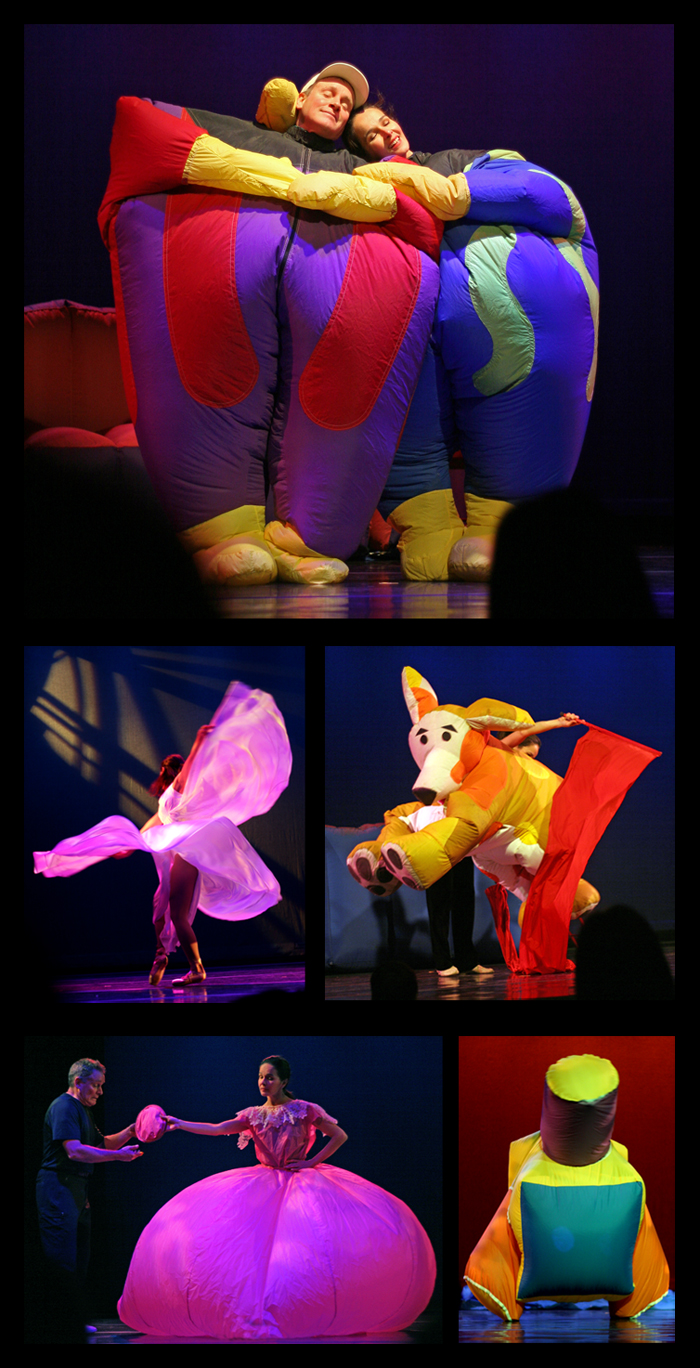
    In 1979, Think Big opened in SoHo. This shop was started by Phyllis Prinz and Robert Malkin, who created a product line of oversized replicas of a variety of products – tennis rackets, Crayola crayons, paper clips, pencils, postage stamps, toothbrushes, etc. I frequented the shop often and was once gifted an oversize Bayer aspirin. The shop was a roaring success, closing in 1994 (and later rejuvenated as an online shop by Jeff Bruette as Great Big Stuff). There was a man, however, where the concept of the oversize had also been brewing for a much different reason: Fred Garver (aka Fred Garbo) of South Paris, Maine.

    I have known Fred Garbo for 35 years – he is, in fact, one of my oldest customers and quite a unique individual. His credits, like his talents, are myriad. I do not say this lightly. In 1980, Fred auditioned for the Broadway show Barnum. The part called for acting, dancing, singing, acrobatics, playing an instrument, and juggling – Fred was chosen over 500 auditioners.

    Since our very first interactions, I became aware how Fred has always been very focused on the VISUAL impact of any stage prop and its SIZE. This became a virtual obsession, explaining the evolution of his show of 18 years and his invention and utilization of large inflated props/characters. His character, Led Zeplin, and his inflated suit have been the envy of many a performer and have also spawned a few imitators.

    His partner in his show is Daielma Santos, who was born in Sao Paulo, Brazil, and is a graduate of the Royal Academy of Dance in London. She has worked as a professional ballet dancer and teacher. Having met while Fred was touring, Daielma became fasicnated with his inflatable suit. A partnership soon followed. A number of pieces in their act showcase Daielma’s dance talents. Her grace, fluidity, and charm are arresting both on stage and off.

    Last week I was called by a friend who informed me that the Fred Garbo Inflatable Theater Company was performing on Saturday, January 8th, at Symphony Space in New York City. She invited me to accompany her, her husband, and their 3-year old child to the show.

    Fred is a resident of Maine, where he originally moved to study and train with his mentor, the late Tony Montanaro of Celebration Mime Theater. He railed against the stereotypical and overdone illusions of mimes at that time and developed his own unique brand of physical theater, incorporating his skills and training in juggling, mime, acrobatics, and clowning.

    The Inflatable Theater show involves juggling, dance, and a large variety of inflated objects and characters moved through the acrobatics of Fred and Daielma inside. The show is highly polished and very successful, a great pleaser of children and adults worldwide.

    During the time that Fred worked in Barnum, Fred lived in New York City. We formed a closer relationship at that time – in addition to his performing, Fred became a teacher of juggling in my studio. A lover of nature and Maine, I was astonished at how quickly Fred adapted to New York, navigating its shoals undaunted and learning about it so quickly. In 1983, Fred, along with Bob Berky and Michael Moschen, created Foolsfire, an Obie Award winning 3-man show, which I had the privilege of seeing. He was also the man inside Sesame Street’s Barkley the Dog. I have always considered him to be an honorary New Yorker. It’s seems so appropriate for a man who adapted to city life so readily and whose life’s philosophy has always been to Think Big 🙂


  • Just Don’t Stick

    There’s nothing like a good dream to pique the interest of a therapist, analyst, or anyone psychoanalytically inclined. And there’s no dream like a nightmare – this is where they love to dig in. And when it comes to bad dreams, the top ten list must include being chased by something (known or unknown), Sleep Paralysis, or being naked or nearly naked in public.

    Although I have no particular fear of being scantily clad in public, I have, like many, had my share of dreams where for some inexplicable reason, I find myself in public only in my underwear and have to find my way home.
    It’s that feeling of vulnerability with nowhere to hide which is so particularly horrible and also for me a huge frustration – how did I end up in this predicament and why didn’t I just grab a pair of pants before leaving? Then there is the wishful thinking that, somehow, you can navigate home and no one will notice.

    Last night, conveniently, I had a very bad dream involving this ever popular theme of exposure and vulnerability. I was driving in my car with a customer whom I have known for years and who can be particularly rude, thoughtless, and inclined to engaging in cruel fun. I was traveling with a brand new electric guitar on the passenger’s seat while he was in rear. I had a momentary lapse of consciousness which allowed him to hang the guitar from the exterior of the car while traveling. To my horror, upon examination, the guitar was terribly scratched and gouged, rendering it essentially worthless. His defense was some feeble excuse, attempting to mask his brand of fun.

    Sunday, January 8th, 2011, was the 10th annual The No Pants Subway Ride, a prank event organized by New York City’s Improv Everywhere, who call it a celebration of silliness. This event is not to be confused with the variant No Pants Day, also an annual event, occurring on the first Friday in May. Both are now international events with participants in cities worldwide. In New York’s subway event, participants enter the subway at a number of different points, acting like they do not know each other and traveling in the same casual manner as any other rider. If asked why they are not wearing pants, they typically respond that they forgot. The members convened at Union Square where these photos were taken. Subsequently, some went shopping at Filene’s (see photos on escalator).

    Arrests have been made in the past, with charges thrown out. Although public nudity is illegal (indecent exposure), being pantless in underwear is not a crime (see the Naked Cowboy here), and at least with these people, you will find that charges of disorderly conduct, like their pants, just don’t stick 🙂

    Afterthought: Perhaps if everyone participated, we could inure ourselves to pantlessness and rid ourselves of at least one genre of bad dream. On the other hand, I am sure the subconscious mind would just find some new flavor of vulnerable activity.


  • Surfaces and Surfing

    One of the things I don’t like about websites is the lack of transparency. It is virtually impossible to get a sense of the depth and breadth of the content. With New York Daily Photo, for example, each visitor comes into one single page. I have, however, done over 1,400 stories. How many will be read? Who will take the time to explore the archives or search on keywords? Many of my best stories and photos are buried.

    Of course, there are ways of redesigning a site to optimize and encourage exploration of previous content, and I intend to do that. With print media, however, with just a cursory examination, you immediately get a lay of the land. If someone hands you a 3,000 page catalog, you only need to rifle through it briefly to get a good sense of its offerings and areas of specialty. But a website may have 100 products or one million, and only lots of digging will reveal that. Superior graphics may give the illusion that one company has more to offer than it really does.

    Walking the streets of New York observing people is much like surfing the web, seeing only their first page. To get a sense of a person’s content, you’re going to have to stop, meet, and dig deeper.
    I have been doing that for nearly five years now, and as readers of this site can attest, the depth, breadth, eccentricity, and brilliance of many unassuming people that inhabit the streets of New York City is extraordinary. Of course, not every person possesses even one of these superlative attributes, and even fewer could be fairly said to have all, but there are enough to make contacts with people in New York City an unending journey into the world of surprises.

    This city is a magnet for those driven for success in many arenas, as well as an important brewery for artists of all persuasions. Although electronic media and communication have decentralized the arts somewhat, only a very large city is going to provide ample opportunities for many – painters, musicians, dancers, and other performers, etc. who really need to interact and interrelate in person. Despite the online world, there is still a dynamism and synergy when people are physically together.

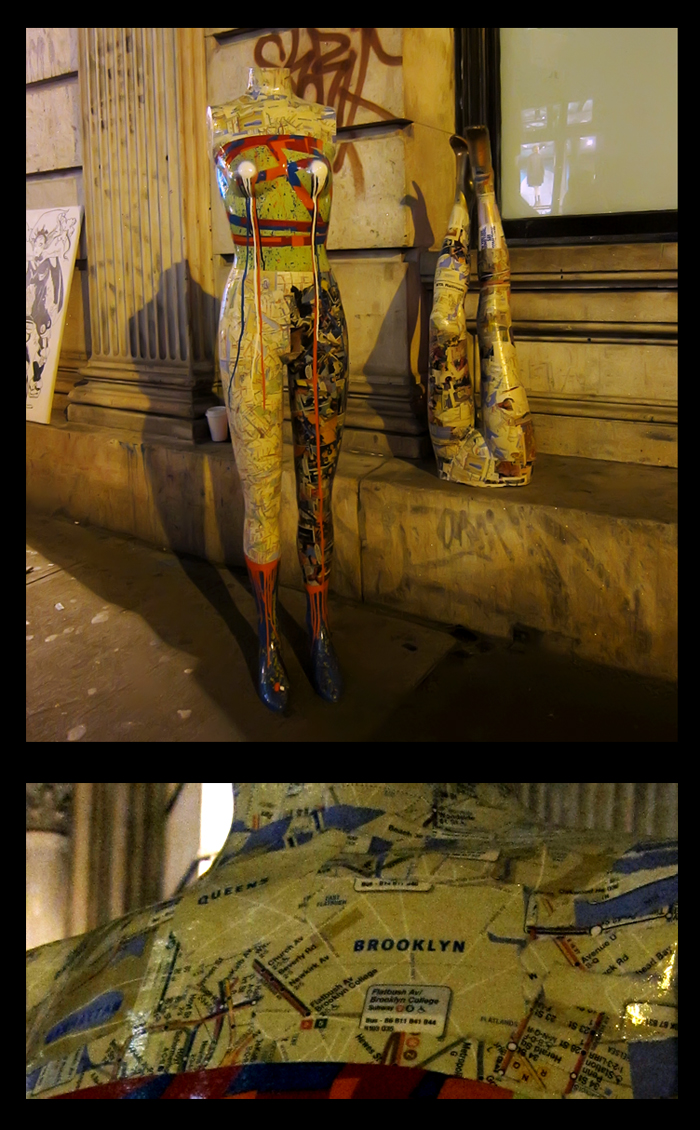
    I have often seen the sculptures of Sidi Abdul near my office at Spring Street and Broadway. I stopped to talk to him briefly last night as he was packing up. We exchanged contact information. I asked Sidi about the nature of his work, and he informed me that buyers purchased his work and displayed them as art pieces in homes, etc.

    When I receive his biographical information, I will update this posting. For now, enjoy what you see. I love the elegance of his work. There is more on his Flickr site here. Notice the use of New York City subway maps in the construction of these sculptures. I have often been critical on this website of examples where appearance reigned over substance. However, there are many things where genuine beauty lies on the surface. Surfaces and surfing are not always a bad thing 🙂


  • Pickup Day

    There are few visible things that shout what is wrong about a city more than its visible trash. The 1970 film The Out of Towners, starring Jack Lemmon, is set in New York City. Lemmon, who is visiting the city from Ohio for a job interview in Manhattan, confronts every imaginable problem and setback in an unrelenting assault in New York City meets man and wife. One of the elements portrayed in the basket of city ills is a garbage strike in mid-summer, a common stereotypical theme particularly embraced by outsiders that are not city lovers. What better icons to represent all that is disgusting in an urban environment that rats or garbage?

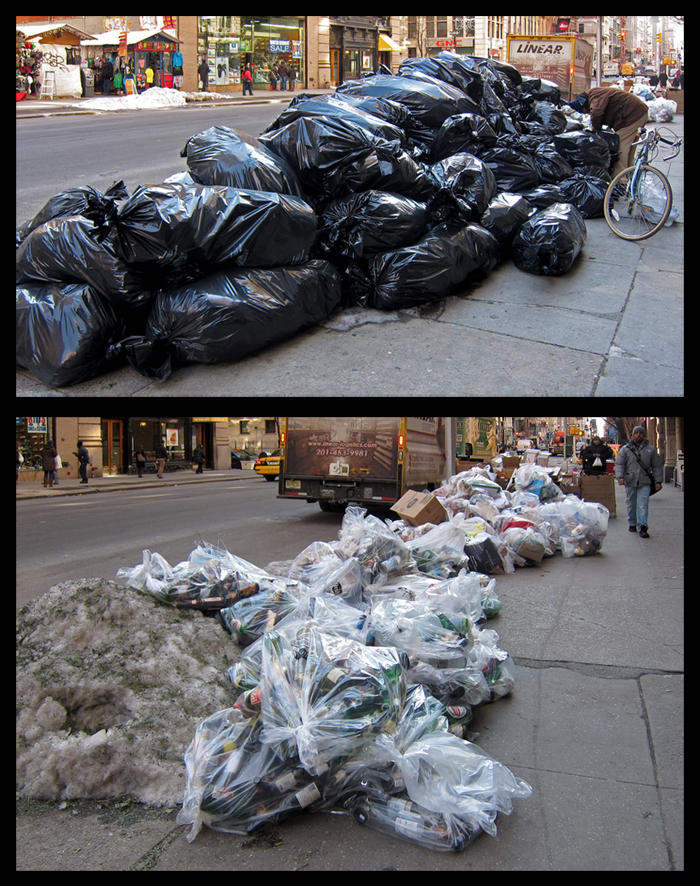
    Technological progress moves on, yet the methods and means of trash pickup have fundamentally not changed. Pickups are typically made by the sanitation department in early morning, hence, trash is put out curbside the night before, adorning the city sidewalks even in the finest of neighborhoods.
    Many buildings have dedicated areas indoors so that garbage does not have to sit on the street. However, many do not, and it is not always possible to retrofit a small building with facilities. In neighborhoods with tenement-style buildings, there often is a small area in front where garbage cans are kept for use by tenants.

    None of these solutions are particularly attractive and, in all cases, passersby add their personal refuse, taking an unsightly situation and making it worse. There are also garbage pickers and the homeless, who often tear open bags of trash to examine the contents, leaving the sidewalk strewn with garbage. Snow mounds themselves are often used as trash receptacles, only to reveal its contents after melting (see Snow Temples here).

    The recent blizzard has left the city with mountains of curbside snow, making trash collection in many areas all but impossible, with the usual finger pointing and name calling as the garbage festers. In celebration of the scenario, I have rewritten the holiday classic song Silver Bells:

    City sidewalks, dirty sidewalks
    Dressed in post-snowstorm style
    In the air there’s a feeling
    Of Litter
    Children laughing, people gasping
    Meeting pile after pile
    And on every street corner you’ll see
    Bags of trash
    Bags of trash
    It’s Pickup time in the city
    One by one,
    Hear trucks come
    Soon it will be Pickup Day

    Related Posts: Rats Gone Wild, Trash and Treasure, Garbage a la Mode, Wildlife Control, Rats R Us, The Dark Ages


  • dinamic_sidebar 4 none

©2026 New York Daily Photo Entries (RSS) and Comments (RSS)  Raindrops Theme