• Lemonade Maker

    This story was going to be called Switchin’, but on reflection, I realized that this would do a disservice to our subject. Let me explain.

    One day, in the 1980s, I found myself with a California real estate broker in his luxury automobile. He was showing off his hands-free cell phone mounted to the interior of his car – a big deal at the time. He received a call from his office regarding a particularly difficult situation with a client. Not to worry, he said, because he was adept at turning lemons into lemonade.

    It was the first time I had heard this old saying, and I loved it. The broker could be perhaps better characterized as someone who could sell refrigerators to Eskimos, but nonetheless, turning lemons to lemonade became a popular code phrase in my office when help was needed in dealing with a particularly difficult customer situation. When these calls were forwarded to me, I liked the challenge of making lemonade.

    Subway service disruption is one of the most frustrating things that NYC commuters face on weekends. You can read about the reasons for this here. On Saturday evening, a friend and I decided to travel to Bay Ridge, Brooklyn, by subway (rather than drive) to eat at First Oasis Restaurant, which is conveniently located on a subway line. Weekend travel on the train can actually be relaxing. However, no sooner had we started our journey that the service disruption monster raised its head, with a litany of arcane and sometimes unintelligible instructions barked from a poor speaker system over the ambient din.

    Our fellow rider seen in the photo (who we learned on parting was Reverend Branch) immediately volunteered a translation and interpretation. He was going our way, and soon we were taken under his wing. He was a warm, avuncular human being and we took to him immediately. He parsed all the subway speak and disruption details and informed us of every train change and switching option. Switching trains (local to express and vice versa, etc.) from one track to another across station platforms is a common strategy used by experienced riders to save travel time.

    At one point, the Reverend proposed running across the platform to catch another train that was pulling in, and we happily followed. Soon we were criss-crossing platforms, with the Reverend explaining every possible scenario and station detail. Where many would groan about disruption, the Reverend was turning lemons into lemonade, and we were drinking as fast as we could. This was actually fun.

    Never believe what you hear about New Yorkers. Reach out when the opportunity presents itself, and I will guarantee that most often you will find warm humans and, if you are lucky, a Lemonade Maker 🙂

    About Reverend Branch: The Reverend is Community Liaison for the High School of Sports Management Celebrity/Charity Softball Game.

    Note: I certainly do not want appear insensitive to those commuters who have to put up with subway service disruption on a regular basis. I know that our journey was not fraught with the anxiety of getting to work or another destination in a timely manner.


  • 17 to 1


    I had a close friend who really had the nerves and blood of a gambler, truly cut from a different cloth. If we both went to the racetrack with $20, I was inclined to place $2 bets on favored horses over 10 races; my friend was completely comfortable putting his entire stake on a 17 to 1 long shot in one race to win. Not even a place (2nd) or show (3rd) bet, just the whole thing on one horse to win.

    It is not that I didn’t like the thrill of winning at such long odds. It is that I hate losing, especially my entire stake in one bet. In finance, terms like risk averse, risk tolerance and the risk/reward ratio are frequently used. Brokers of investment products are forever promising above average returns at what is represented to be little risk. Investor’s folly.

    To some extent, risk/reward applies to entertainment and services. People who can afford it will spend more for a greater likelihood of better entertainment – a $100 ticket at the Metropolitan Opera will usually buy an evening of superb talent.
    But often, established theater becomes too risk averse and, in order to not disappoint, becomes more formulaic, relying on standard repertoire or remakes of older successful shows. Enter the world of Off-Off Broadway, experimental theatre, improv and open mikes. Here, however, one must often suffer the slings and arrows of the outrageously bad performance. Nearly every successful performer started somewhere, but not everyone that starts somewhere goes anywhere – a fact one is likely to reflect on while passing time watching painful acts.

    However, rules don’t always apply, and one of the great things about New York City is that there are plenty of great values and even free lunches. But, as the costs for everything rise, the edgy and offbeat become more difficult to find.

    At 94 St. Marks Place in the East Village, you will find a small underground theater, literally and figuratively. UNDER St. Marks is run by Horse Trade, a self-sustaining theater development group that also runs Kraine Theatre, The Red Room, and Frigid New York. It was founded in 1998 by Russell Dobular, Kimo DeSean, and Erez Ziv, three former Central Park horse-drawn carriage drivers. UNDER St. Marks has been an experimental theatre space since the 1970’s.
    The theater is home to a variety of performances – Tuesday nights feature Penny’s Open Mic where anyone gets a 7-minute shot at stardom. See their website here.

    UNDER St. Marks is one of New York City’s last stands in independent theater. Take a chance down those steps at 94 ST. Mark’s, and for a small $3 wager I am sure you will find the odds of a good time much better than 17 to 1 🙂

    Note: The term “Broadway theater” refers to a group of 39 theaters defined both by size (minimum of 500 seats) and location in the theater district. Off-Broadway and Off-Off Broadway theaters are defined by size, not location: Off-Broadway has between 100 and 500 seats and Off-Off-Broadway fewer than 100 seats.

  • Le Petit Chambord

    You are not going to see many sites like this in America. Every borough and many neighborhoods abound with interesting buildings and homes – architecture is of the best things that New York City has to offer.

    There are many magnificent architectural structures in this city – Grand Central Station, the Metropolitan Museum of Art, the New York Public Library, the Chrysler Building, St. Patrick’s Cathedral, St. John the Divine, the Dakota, the San Remo, the Beresford, Sherry Netherland Hotel, Waldorf Astoria, and countless others that I have photographed and written about for this website.

    Keeping a lower profile, neighborhoods such as Greenwich Village, Park Slope, Brooklyn Heights, Harlem, Chelsea, Fort Greene, et. al., have thousands of homes from 100 to nearly 200 years old. I am writing this from a period townhouse dating 1837.

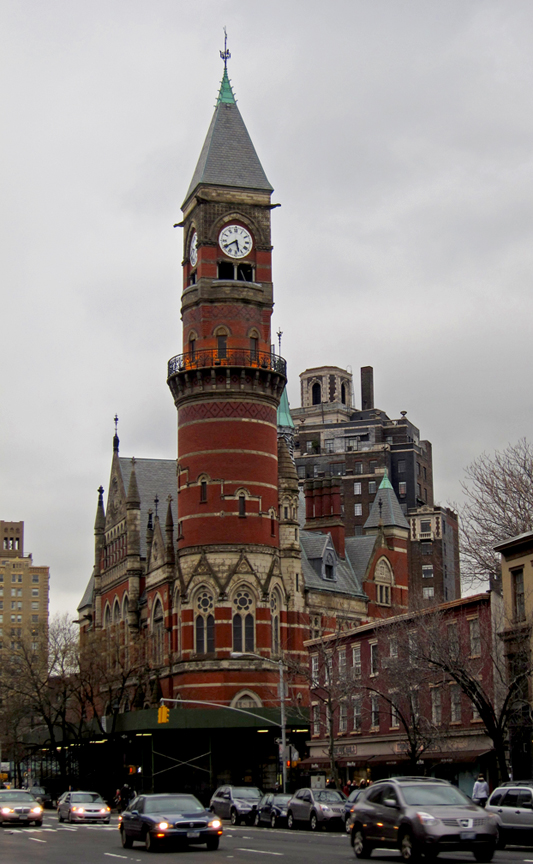
    The vista in today’s photo was pointed out to me by friend and photographer Bill Shatto as we were strolling down Avenue of the Americas in Greenwich Village. This is a familiar site to both of us, but the time of day, clouds, lighting, and vantage point all conspired in a dramatic tour de force. The Jefferson Market Library was backed by the prewar building at One Christopher Street and framed by period rowhouses along 6th Avenue. Extending upwards is a clock tower atop the library building (cropped out in this photo) – to see the entire structure, click here.

    One often misunderstood area in photography is the nature of outdoor lighting conditions. Although intuition would suggest that a bright sunny day would be ideal shooting conditions, in fact, it typically provides some of the worst conditions, producing photos with harsh shadows and overexposed highlights. Although there are many techniques to deal with these problems, in many cases, professional photographers and film makers avoid this time of day completely. A cloudy day, on the other hand, can provide some of the richest colors and most beautiful soft lighting conditions.

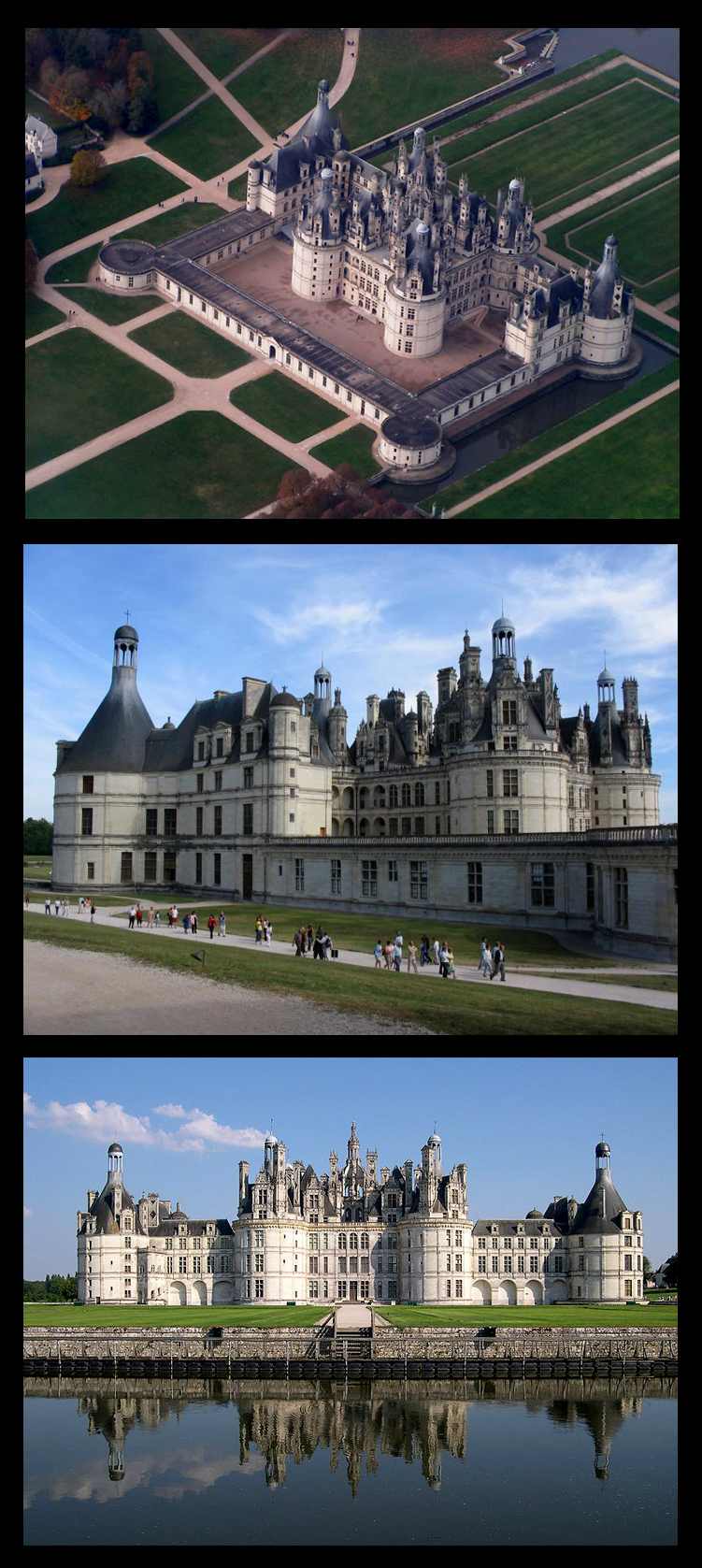
    The medley of rooftops reminded me of the Château de Chambord in France. If you are not familiar with this extraordinary French chateau, see here.

    Chambord was an indulgence, built by Francois I as a hunting lodge over a period of 20 years. It was never completed. The Jefferson Market Library building seems like it is in a perpetual state of repair – scaffolding has been around the base for seven years. Only another 13 years of renovation and we can rename it Le Petit Chambord 🙂

    About Chambord: Building was begun by Francis I in 1519 and completed in 1547 (with one hiatus). 1,800 men worked on its construction. It contains 440 rooms, 365 fireplaces, 84 staircases, and stables to accommodate 1,200 horses. The chateau stands in a 13,000 acre wooded park surrounded by a wall 20 miles in circumference.


  • No Red Faces

    When I first heard about homosexuals as a young boy, I wanted to know what they looked like. How could you tell if someone was gay, and where could you find them? And most importantly, how could they possibly identify one another in order to be together?

    These things were cloaked in mystery. One of the few things I was told was that they had secret signals, such as wearing an article of clothing in a particular color, like a red necktie.* I never saw any men with red neckties, nor did I encounter any men who were openly gay. For that, I would have to wait until I moved to New York City.

    Of course, at that time, things were very muddled, and misinformation ruled. Homosexuals, pedophiles, and perverts were all lumped together in a convenient basket of societal miscreants, a mess that took me years to untangle and sort out.

    One of my high school math teachers was a very accomplished artistic figure roller skater. He was married. One day a comment was made aloud, directed towards him, implying something of an effeminate or gay quality. Our teacher turned bright red. Nothing else was said. Was he a married gay in the closet or just embarrassed by a false accusation? I will never know.

    After my first visit to New York City in the 1960s, it was immediately clear that this was the locus for all things offbeat, unconventional, and counter-cultural – a place where those who were different could be themselves and accepted. This was the place I had been looking for, and New York City, particularly Greenwich Village, called out to me like a siren. It never occurred to me before moving here that the tolerance this neighborhood was known for would include gays.

    When I was a freshman at New York University (located in the heart of the Village), we were told there was a bar nearby where gay men openly congregated – Julius’ at Waverly and 10th Streets. This we had to see. A number of us went, nervously observing the patrons coming and going and even peering through the window, not knowing what to expect. However, they all just looked like everyone else. And I saw no red ties and no red faces…

    Note about the bar: Julius’ is the oldest continuously operating gay bar in New York City. The building dates to 1824, and it has operated as a bar since 1840. It has been frequented by many members of the gay community since the 1950s, including many well-known such as Tennessee Williams, Truman Capote, and Rudolf Nureyev (see NY Times article here). Although not technically illegal, gays were not served alcohol prior to 1966. The State Liquor Authority had a regulation against serving homosexuals in bars, by considering them “disorderly.” In 1966, the Mattachine Society staged a Sip-In at Julius’, challenging the SLA and getting the courts to rule that gays had the right to assemble and be served. This paved the way for the Stonewall Riots.

    *Colored triangles were used to identify gays (as well as others) in the Nazi concentration camps during WWII. See a chart here and article here.


  • Shows Me Here

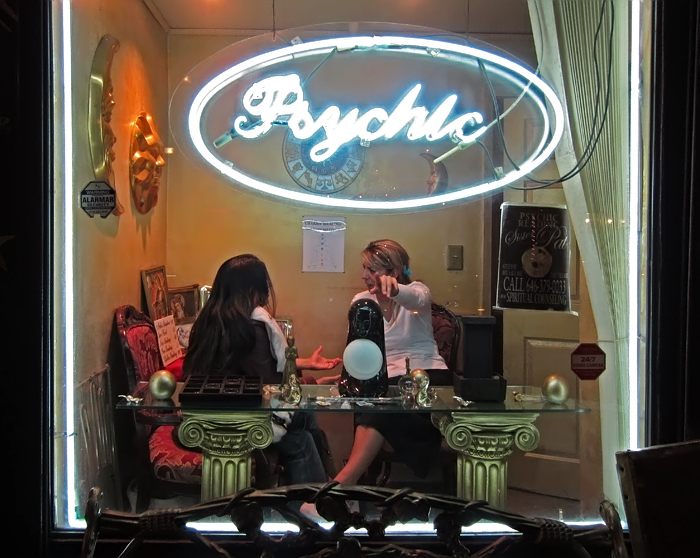
    Although saddled with a less than stellar reputation, storefront psychics, like most other fields of endeavor, span a range of expertise (or perhaps more accurately, familiarity) with the arts of fortune telling.

    In the 1970s, the niece of a friend was rather determined to get a psychic reading, so we obliged. After all, what was the harm of few dollars spent for her satisfaction and our amusement? And, to be honest, I had always been curious myself. So, off we went to find a Gypsy/Roma fortuneteller. This was a simple task – several hundred psychic shops dot the boroughs of New York City, and we knew of one just around the corner.

    What we hoped would at least be an entertaining small indulgence turned out to be a disappointment. Our companion chose palm reading as the road map to her future. The psychic held her hand, palm up, and began to go through a list of questions. Each question/answer/prediction was embarrassingly simplistic and formulaic. “Do you want to be married?” Our companion answered, “Yes.” The psychic pointed to a very general area in the center of her palm and said, “Shows me here you are going to be married.”

    “Do you want to have children?” “Yes.” “Shows me here you are going to have children.” Every one of the psychic’s predictions was prefaced with “shows me here” while pointing to the same vague area in the center of our subject’s hand. No effort at all was made to even remotely use the elements of palmistry. No life, head, heart, sun, mercury, or fate lines.

    Clearly we had not found our way to the top of the profession, but, like many disappointing experiences, a sense of humor can turn these incidents into comic material for years to come. “Shows me here” became a private catchphrase, and when popped unexpectedly at an opportune place in a conversation, it never failed to elicit laughs from our coterie of insiders.

    I was always puzzled as to how psychics working alone could possibly even afford storefront rents, much less make a living. I was surprised to learn that, according to a 1999 New York Times article, fortune tellers at the time made an average of $200,000 per year. How? By reigning in clients, telling them that their problems require special treatment to remove curses or other negative influences. That costs money. Some victims have paid as much as several hundred thousand dollars over a period of time.
    Actually, this activity, practiced this way, is illegal, and the police department has stepped up enforcement. From the Times article:

    Fortunetelling is legal for entertainment — like hiring someone to read tarot cards at a party. But the penal code calls it a misdemeanor when a person ”holds himself out as being able, by claimed or pretended use of occult powers, to answer questions or give advice on personal matters or to exorcise, influence or affect evil spirits or curses.” Those who extract large sums are often charged with larceny, a more serious crime.

    We all like the comfort of any easy repair of life’s problems. However, I am sad to report that it “shows me here” that the local fortuneteller is probably not going to be the fix 🙂

    Other Related Postings: Comin Up, Fit-ty Fi


  • Sieve of Darwin

    Have you ever seen a film about New York City that really plays up the artistic world of old? Where it seems that everyone is a writer, dancer, musician, or painter? Perhaps the sound of typewriter comes wafting out onto the street as an actor strolls down some charming Village lane. Or frenetic singers bump into each other in a hallway somewhere in the theater district on the way to an audition. And someone is banging on their ceiling with a broom because a neighbor is hammering away at their piano at some god awful hour.

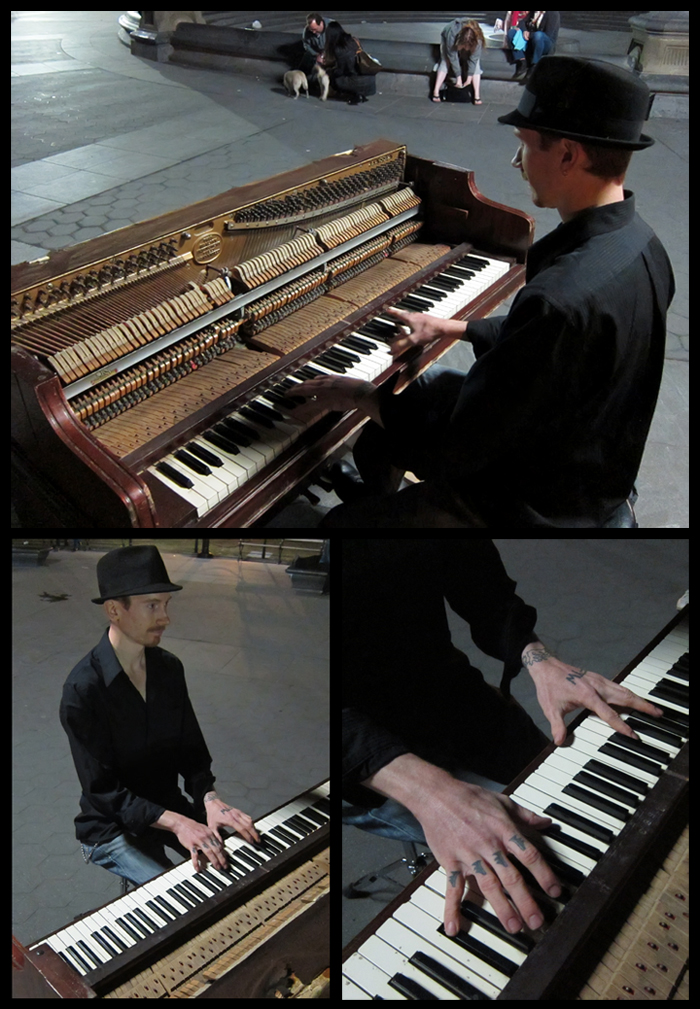
    Romantic folly and Hollywood nonsense? Not completely. Because as I was reading for this story last night after 10 PM, I could actually hear Colin Huggins in my apartment through my open window (see here and here), playing his piano in Washington Square Park.

    I can’t imagine anywhere else where I could enjoy this privilege – my hair stood on end. Some days the city really feels like the promised land – everything I had hoped for when I moved here. A place where I could find a man like Colin Huggins, dragging one of his many pianos onto the street using dollies.

    Colin is a classically trained pianist, has worked as a dance accompanist, and is music director for the Joffrey Ballet. He keeps his pianos at various storage facilities in Manhattan near his performance spots. I have seen him in Washington Square Park and Father Demo Square. He also can be found in the subway system. Huggins believes he is the only person to bring a piano to the subterranean depths – no small accomplishment (he uses a subway elevator – there are a handful of them in the city). In 2007, feeling he was getting a bit too much into a work grind, Huggins tried bringing a real piano into Washington Square Park. From Colin’s website:

    I’ve been a dance accompanist for five years in New York now. And even though I enjoy it, it started to make me feel like the old man behind the piano. When I began to lose sleep every night and found myself irritable everyday, I knew without a doubt, it was time to figure out how to feel like a rock star instead.

    So last summer (2007), for fun, I tried bringing a real piano into Washington Square Park, and honestly, I’d never felt so good about an activity in my entire life. I made money, played songs that I really enjoyed, and made a lot of other people happy too. No matter what age or cultural background the listeners were, I could figure out something to play that would make them smile. It’s a challenge I’m really excited about. So although it may seem like I’m going down on the totem pole of career choices and stability, I feel so much better about myself and so much more connected to the community here and the arts in general.

    When I asked Huggins for his contact information, he handed me his card, which said:
    Colin Huggins / Pianist Rock Star / World’s Happiest Man / www.thecrazypianoguy.com

    You will still find thousands of working artists in New York City. Although I do fear for their survival, as many are squeezed into the most inhospitable neighborhoods in the outer boroughs, I am hopeful that those with resourcefulness and tenacity (and perhaps day jobs) will survive the sieve of Darwin 🙂

    An inspiring note: As I write this, I am listening to the Chopin Nocturnes and Waltzes played by Artur Rubinstein, considered one of the greatest pianists of the 20th century. I am absolutely astonished reading about Rubenstein. A prodigy at age 4, Artur was fluent in 8 languages, had perfect pitch and a photographic memory, keeping most of his repertoire in his head. From Time Magazine:

    In 1903 he caused a sensation in Warsaw by performing Paderewski’s Sonata in E Flat Minor the day after it was published; he learned Cesar Franck’s complex Symphonic Variations on the train en route to a concert hall in Madrid. He can commit a sonata to memory in one hour, and he can play as many as 250 lieder. His friends used to play a kind of “Stump Artur” game in which they would call out titles—excerpts from symphonies, operas, Cole Porter scores—to see if he could play them. “Stumped Friends” would have been a better name for it. “Rubinstein,” says Conductor Edouard van Remoortel, “is the only pianist you could wake up at midnight and ask to play any of the 38 major piano concertos.”

    “When I play, I turn the pages in my mind,” he explains, “and I know that in the bottom right-hand corner of this page is a little coffee stain, and on that page I have written molto vivace.”

    But Rubenstein was not just a brilliant technician. He was the consummate artist:

    On stage, I will take a chance. There has to be an element of daring in great music-making. These younger ones, they are too cautious. They take the music out of their pockets instead of their hearts.


  • Respect

    Posted on by Brian Dubé

    If you have never been to a New York City comedy club, you owe it to yourself. The city abounds in comedy clubs in many neighborhoods. New and established talent can be seen on a nightly basis. Cable TV and the Internet have made available an enormous amount of comedy – live and recorded. However, there is nothing like the infectious effect of live comedy on an audience.

    I have frequented a number of New York City’s comedy clubs over the years. Comics will often used the word “killed” to describe a successful show – e.g. he really “killed.” This is nearly literal – I have been to many shows where people look like they are going to die with uncontrollable laughter, tears running down their faces, and where smiles sometimes even turn to grimaces of pain. I have woken up after a previous night’s comedy show with actual muscle aches from laughing. But it is very therapeutic.

    New York city has been a birthplace, mecca and an incubator for comedic talent – standup comedians, comic film actors and writers. Particularly the Jewish American comedian – take a look at this short list:
    Larry David, Woody Allen, Jerry Seinfeld, Jackie Mason, Zero Mostel, Joan Rivers, Groucho Marx and family (UES/Carnegie Hill), Mel Brooks, Andy Kaufman, Alan King, Sid Caesar, Carl Reiner, Neil Simon. Milton Berle, George Burns and the newer crop like Todd Barry, Whoopi Goldberg, Al Franken, Jon Stewart, and Bill Maher.

    Rodney Dangerfield, (born Jacob Cohen, just outside New York City in Babylon, Long Island) was an influential comedian well known for his standup work and film. His signature catchphrases, “I don’t get no respect” and “I get no respect” are legendary, as are his comedy routines built on his unique style of self-deprecating humor.
    Dangerfield shot to stardom after an appearance on the Ed Sullivan Show.* On September 29, 1969, Rodney opened Dangerfield’s, the longest running comedy club in the world. It is located at 1118 First Avenue at 61st Street in Manhattan’s Upper East Side. Dangerfield’s club was a broadcast venue for a comedy showcase series with HBO.

    It has often been asked: “Why so many brilliant Jewish comics?” Suffering and persecution are common themes in the answers:

    “Look at Jewish history. Unrelieved lamenting would be intolerable. So, for every ten Jews beating their breasts, God designated one to be crazy and amuse the breast beaters. By the time I was five I knew I was that one.” – Mel Brooks

    “The truth of the matter is, persecuted people have two things they can do to win their point.” “They can punch back, or they can defuse it with laughter.” – Carl Reiner

    Rodney Dangerfield, like all the other great New York City Jewish comedic talent, easily gets my respect…

    *Ed Sullivan (1901-1974) hosted one of the longest-running variety shows in U.S. television history, from 1948 to 1971. Sullivan was also born in New York City. Broadcast from CBS Studio 50, it was renamed The Ed Sullivan Theater in 1967 and is currently the home of The Late Show with David Letterman.

    Posted on by Brian Dubé

  • When Your Name is Mud

    Posted on by Brian Dubé


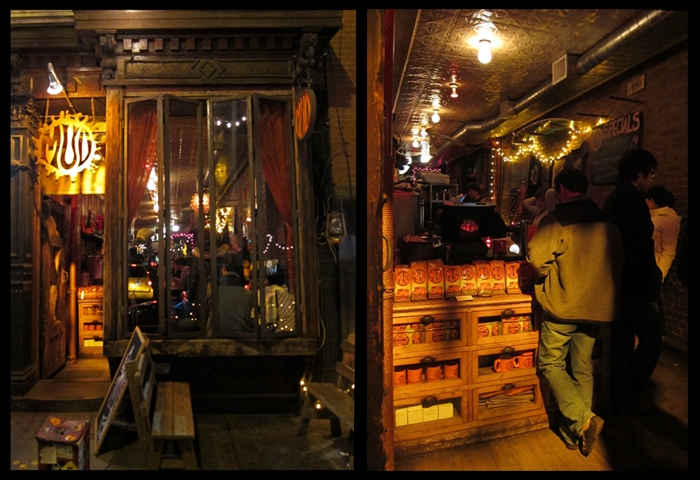
    As much as I dislike chasing the latest trends or frequenting the latest scenes, I also don’t want to be the last on the block to know about a place that is genuinely a great find. All of my friends had recently discussed the coffee and ambiance of Mud, and on a recent visit to Doma, I overheard someone tell his companion that Mud in the East Village was also a cool place, inhabited by writers. So it was on the must-visit list.

    And so I was quite pleased that on a friend’s birthday celebration on Saturday night, a decision was made at dinner to go somewhere else for dessert. This is a common phenomenon in New York City, because a specialist in desserts and (and coffee) is usually just around a corner or a short stroll away, particularly in downtown Manhattan. This dessert somewhere else, akin to bar hopping or a pub crawl, is motivated by any number of reasons – change of scenery, better desserts, or better value.

    At Mud, the desserts are quite pricey, so I would not encourage value shoppers to seek this place out. However, being in the cafe business is tough these days. It is not only competitive, but with the rain (or reign of laptops), these places have become second living rooms. Some customers may buy one drink and spend the afternoon. At this point in time, in small cafés like this, pricing reflects more a space rental fee than the value of food or beverage.

    But the ambiance is tres cool, there is a garden in the back (glass topped in winter), the desserts are excellent, and the coffee – well, Mud gets raves, but I leave you to decide. I am not a coffee drinker, and even at that, coffee must be up at the top of the list of most contentious topics in New York City, along with pizza and Japanese restaurants.

    Mud was launched as Mudtruck in 2001 by husband and wife Nina Kay Berott and Greg Northrop. Mudtruck was immediately compared to the green giant of coffee – Starbucks. The pricing from the Mudtruck was significantly less than the Starbucks surrounding it. Add a quality brew, and the place quickly became a regular stop for many.

    The orange vehicle, a converted Con Ed truck, can be found at Astor Place (and now a second location on Greenwich Avenue). At the Café, they sell their own custom blend of coffee beans, along with mugs and Mud branded apparel. There’s a mini industry here with the Mudspot, Mudtruck, Mudshop, and Mudmusic. It gives a new meaning to your name is Mud 🙂

    Photo Note: Orange is a dominant color theme at Mud. Appropriately, our birthday boy also loves orange – that’s his T-shirt in the upper right corner of the lower photo 🙂

    Posted on by Brian Dubé

  • For Whom the Knell Tolled

    Posted on by Brian Dubé

    Please listen to the audio while you read this …


    I recall being in a tiny village one morning in France and seeing the most extraordinary thing – an old man hanging a huge basket of flowers in the town center. Nothing about the deliberate act seemed practical at all. It looked like a lot of work, the kind of beautification effort rarely seen in New York City.

    In other medieval villages, there were old men playing boule and chatting. There were markets. And if I was lucky, there were church bells. There is nothing more evocative than being in a small town and hearing the peal of church bells. I am happy that I am not a devout atheist – it would be much more difficult to appreciate the great churches and temples of the world.

    I met author Terry Miller once, at a signing for the release of his book Greenwich Village And How It Got That Way. In speaking to him, I made a remark regarding the over-commercialization of many areas of Greenwich Village. He was quite quick to retort, “Where else are you going to live – Europe?”

    I have reflected on this for years. I don’t dislike the United States – as I have met people from other countries over the years, I have gotten to appreciate this country more. But I do love Europe. And I do believe that Greenwich Village has the closest thing in the United States to the ambiance of the older neighborhoods of cities and towns of Europe – the food, arts, culture, street life and architecture, with its hundreds of 19th century row houses.

    As I walked through the South Village along Thompson Street recently, I heard the ringing of church bells coming from St. Anthony’s Church (officially the Church of St. Anthony of Padua), which runs from Sullivan to Thompson Street along Houston Street. I ran hurriedly to record it, expecting only to get a few final rings for the 11th hour. The ringing, however, continued for quite some time. I discovered that there was a funeral being held, explaining the long ringing. I can not tell you for whom the death knell tolled, but it called to me and I went…

    Photo Note: The tall slim tower in the left photo is the bell tower.

    Posted on by Brian Dubé

  • Viva ViVa

    Posted on by Brian Dubé

    There are barometers for New York City. Things that can tell you about a neighborhood, that it is on the move and has a new identity. Perhaps a catchy acronym that real estate brokers and their customers can wield as a balm to soothe any fears of investment or as a location to actually live in.

    A Fairway market is also a good barometer. This store is well loved in the city. It is a large operation, and it is doubtful that they are going to make an investment in a neighborhood with no promise of growth and development for residential use. And I would go as far to say that they are a contributing factor in the livability of an area, particularly a neighborhood transitioning from commercial/industrial use to residential, such as Red Hook in Brooklyn – places that are somewhat remote and have a dearth of services.

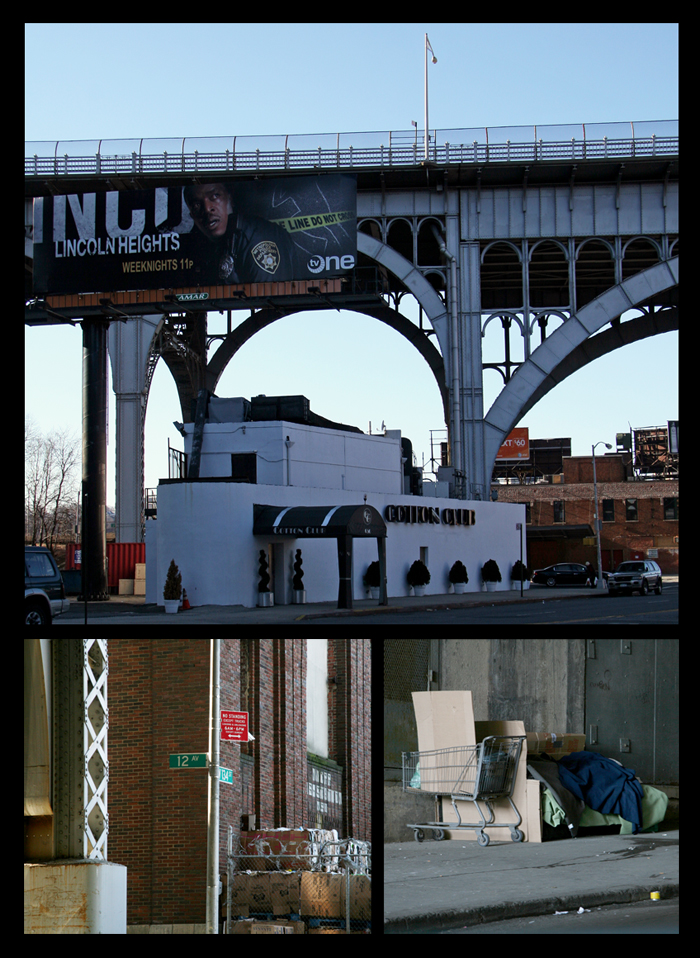
    Manhattanville, an area of West Harlem stretching from 125th to 135th Streets was an independent village in the 1800s. The area furthest west against the Hudson River along 12th Avenue is called ViVa, for Viaduct Valley. The tiny neighborhood sits under the Riverside Drive viaduct, built in 1901. The area includes West Harlem Piers Waterfront park (from 125th to 132nd Streets), which was opened in 2008 and includes a fishing pier, a kayak launch, and water taxi landings.

    ViVa, at one time a meat packing district and more recently a manufacturing and warehouse district, has taken some time to gain momentum – Fairway has been in the neighborhood since 1995. Restaurants have led the renaissance, and 12th Avenue has become a restaurant row – see article here.

    Columbia University is the big player here, with a major expansion planned; property has been acquired for their new 18-acre campus – see map here.

    Of course, not everyone has the assets of real estate developers, new residents or Columbia University. Depending on who or where you are, I imagine many, but not all, are cheering, Viva ViVa

    Note: The Cotton Club shown in the photo has no historical connection to the original club, which was located in Harlem.

    Posted on by Brian Dubé

  • With All Due Respect

    Posted on by Brian Dubé

    On my last visit to Harlem on a Sunday, I witnessed huge numbers of people in fancy clothes getting in and out of vehicles. There were traffic jams in front of churches as vans and cars unloaded church congregation members.

    On January 4th, 2010, I wrote We Got Religion, but in Harlem, they really got religion. For years I have been threatening to see a gospel performance in a Harlem club. But gospel does not have its roots in night clubs. It is Christian-based music sung to express a spiritual belief and finds its home in churches. And in New York City, we find the most well-known in Harlem.

    There is a tourist industry built around visiting the various churches, with buses and groups visiting on Sunday mornings. Harlem is one of the top tourist destinations in New York City. Few New York City residents, however, venture there. Distance from Midtown, downtown, and other boroughs is somewhat a factor – for most residents, Harlem is a destination.
    As pointed out in a New York Times article, this whole phenomenon is controversial:

    A hint of annoyance is sometimes evident as church members complain that they are on display. One Harlem minister admitted to mixed feelings about visitors who tend to behave like members of an audience rather than as worshipers. Few bow their heads in prayer. Fewer still join in as the congregations sing from their hymnals. But, he conceded, language may be a barrier to participation.
    Others point to the reality of contributions from tour companies and individuals that help finance church-based community programs. And there’s some expression of begrudging respect for people who appreciate good music and are willing to venture uptown to find it.

    We have the classic dual-edged sword of tourism – welcomed income and unwelcomed impact that crowds of tourists have on a visited place.

    On my recent excursion to Harlem, I photographed the very striking Mount Neboh Baptist Church. Unbeknownst to me, this is one of the premier church venues in Harlem for gospel music. Others include the Abyssinian Baptist Church, the Canaan Baptist Church, and the Greater Refuge Temple. See article here.

    My understanding is that the church services are extraordinarily spirited and electrifying. I plan on going, with all due respect…

    Posted on by Brian Dubé

  • Miracles In Our Midst, Part 2

    Posted on by Brian Dubé

    (see Part 1 here)

    At one time, Greenwich Village and SoHo had a large number of independent natural food stores, virtually all of which have closed. Whole Foods (no relation to the existing national chain Whole Foods Market), at 117 Prince Street, stood for 3 decades, from 1970 to 2000. This and a second Upper West Side location were owned by Charles Rosenblum. The Prince Street location was the largest natural foods store in New York City in dollar sales and became a mini mecca of sorts. My own business was located only a few short blocks away and my walk to work took me by the shop daily, so I frequented it often over many years.

    It was here in the early 1990s that I met David Miller, a man who worked the vitamin department. He was extraordinarily and curiously knowledgeable – the reason became immediately apparent once I learned that his intention was to enter medical school. At a later point, while in medical school, the demand for his expertise became even greater for David in vitamins at Whole Foods.

    David appeared to have a West Indian accent, so I inquired as to his background. I was stunned when he told me he was from Dominica. If you have read Part 1 of this story, you know of someone rather obsessed with this island nation. The tiny population of the island made it unlikely that I would ever meet a native by chance in New York City, so this discovery was a major event. Of course, I told him of my romance with the island, but words are cheap, and it is easy to imagine that I might be perhaps trying to ingratiate myself with him.

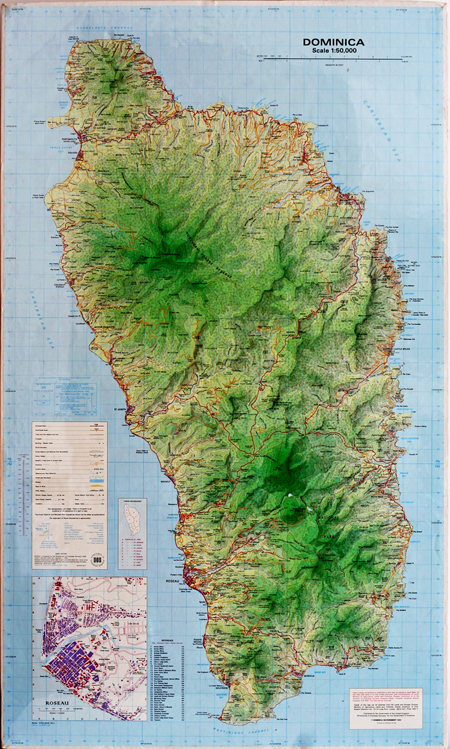
    How was I to demonstrate the sincerity of my special interest in Dominica? Quite simple – exhibit A from Part 1 of this story should do rather nicely, so I announced to David that I would return the following day with something special that I assured him he would never see in New York City.

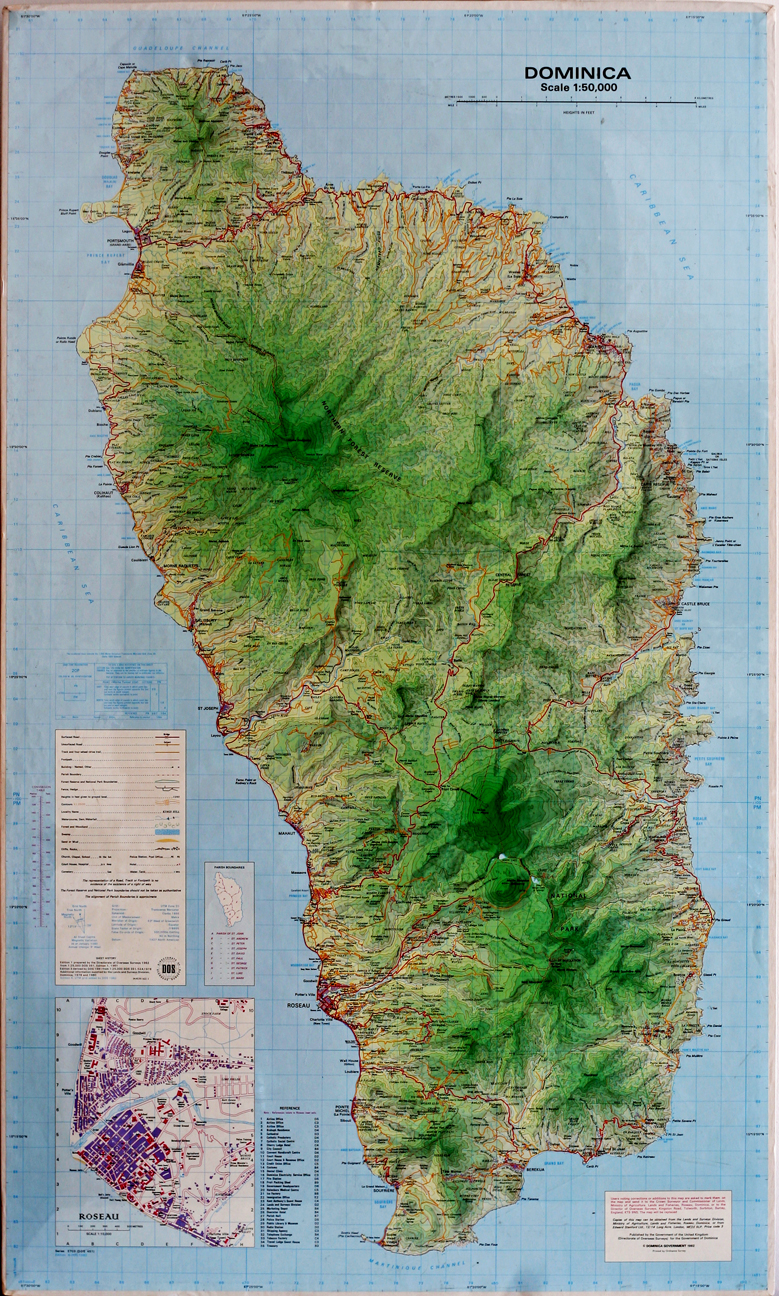
    The next day, I strolled buoyantly down Prince Street with my 24″ x 41″ British Ordinance Survey map of Dominica and showed it to David. He was astounded and said he had not seen a map like that outside of the classroom when growing up on the island. That day cemented our unique connection.

    Recently, after 10 years of losing contact, I ran across David in a white lab coat with his stethoscope at Lifethyme, a natural foods shop in the Village. I was pleased to learn that he is now Dr. David I. F. Miller, M.D., a graduate of Ross School of Medicine in Dominica, and is currently looking for a residency. David works at the shop several days per week, helping hundreds of individuals who query him on every imaginable ailment.

    In the time I was in the shop to take photos of him, I spoke with a long time devotee who championed David as no less than a miracle worker, having helped him through ailments. He detailed to me his medical treatment at Memorial Sloan-Kettering and the improvements he saw with David’s recommendations. He knew of many others who had similar experiences.

    In an amazing twist, David told me of a recent discovery in Dominica. There are 22 centenarians out of the island’s almost 70,000 population – three times the average incidence in developed countries. The reasons for this phenomenon are the subject of current research at the Ross University School of Medicine.

    Perhaps this was the island Eden I was searching for. But with a doctor from Dominica dispensing free advice, why look so far from home when we have miracles in our midst? 🙂

    Note about David: Dr. David I. F. Miller, M.D. was born in Roseau, Dominica in 1966. After the devastating Hurricane David of 1979, David lived for a time in Montserrat, West Indies. He moved to the US in 1987 and returned to Dominica, where he attended Ross School of Medicine from 2004-2008. He currently is married and living in Brooklyn, New York.

    Posted on by Brian Dubé

  • Miracles In Our Midst, Part 1

    Posted on by Brian Dubé

    Part 2 of the story is here.

    In the 1970s, New York City was not particularly hospitable to the vegetarian or natural foods devotee. Granted, it was better than the suburbs, where anyone with such a dietary regime was regularly cross examined as to the reasons why. Vegetarianism did not have the cache it does today, where Hollywood stars adopt it as the latest fashion, like a pair of Birkenstocks or Buddhism.

    Natural food stores and a handful of vegetarian restaurants existed, but outside of these outposts, natural foods did not permeate the fabric of the American culture the way is does today. Soy milk, tofu, brown rice, whole grain cereals, bottled smoothies – these items are common today in virtually every grocery shop and deli in New York City, but at that time, they were hard to come by and had to be ferreted out, tantamount to panning for gold.

    There were books such as Survival Into the 21st Century (over 1 million copies sold) by Viktoras Kulvinskas and Man’s Higher Consciousness by Hilton Hotema, which became nearly biblical with the vegetarian community and members of the health food movement. The authors espoused various dietary philosophies such as fruitarianism, mucusless diets, liquidarianism, sproutarianism, raw foodism, veganism, and even breatharianism. On occasion, one of these gurus might visit the city for a presentation of sorts. There were health expos at the convention centers.

    This environment, along with the idealism of youth and a desire for an idyllic Eden, led to my long obsession with tropical islands, where I dreamed a person might live on the fruits of nature. Stories of dietary extremists such as Johnny Lovewisdom and his attempt at recreating a paradisaical life in the Andes of South America were the inspiration for many.

    Cold, dreary New York City winters seemed antithetical to visions of tropical paradise, and soon I needed to claim my own Eden, even if for only 10 days at a time. However, my flavor of Eden included hot showers, air conditioning (or at least fans), and flush toilets. So, I opted for tropics close to home with some modcons – the West Indies. I visited many of these islands over several years, but none had the impact of Dominica (not to be confused with the Dominican Republic). This lush island was home to rain forests, rare birds, waterfalls, daily rainbows, and mountains – Morne Diablotins rises to 4,747 feet – quite dramatic for an island of only 291 square miles.

    It was the botanic garden I had been searching for, and I made three visits. I had the island virtually to myself – the scarcity of beaches is one of the primary reasons that the island is little known and the least visited of the Caribbean islands (around nearly the entire island, green covered mountains plunge to the sea). You can read more about this remarkable little island gem here.

    Is there a stronger connection between Dominica and New York City than my ruminations and obsession? Yes, there certainly is, but for that, you have to meet David Miller. We will do that tomorrow in Part 2 🙂

    Photo Note: This is a British Ordinance survey map of the island, dated 1982. I purchased this large map (24 in. x 41 in.) on one of my visits to the island and, on my return, had it mounted on foam core.

    Posted on by Brian Dubé

  • Fuggedaboutit

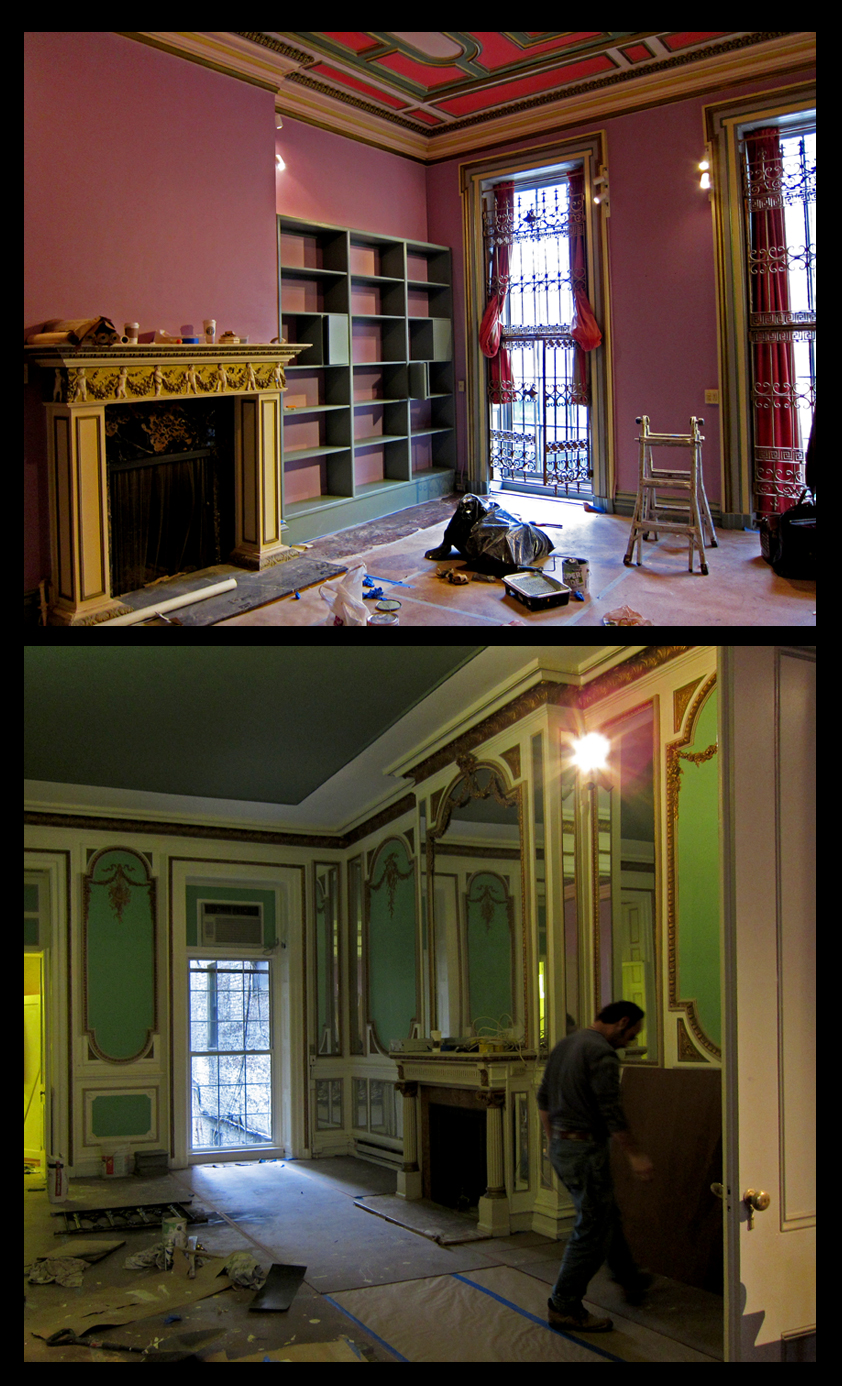
    I have just finished reading through a litany of quotes on patience, thinking that perhaps it would be a good theme for a story about what it takes to get an apartment like the one in today’s photos. Specifically, a duplex that has a full parlor floor and a small bedroom on the lower floor with a small garden space. An apartment located in a historic 1837 landmark townhouse on Washington Square North with windows facing Washington Square Park. There are only three privately owned residential townhouses on the entire park – the rest are occupied by New York University and utilized as offices or residences for university faculty or personnel.

    In reading over lists of quotes on patience and pondering what might be the best suited as appropriate for this real estate dilemma, it slowly dawned on me that, although patience is a virtue, it would really be disingenuous to tell you that the secret to getting a place like this is to have the patience of a saint. Why? Because you might die waiting. Literally.

    This apartment has been occupied by the same tenant for the last 35 years. Super-long tenancy is the same case for two of the three remaining apartments, both over 30 years. Unless you have a secret as to how to stack the odds in your favor for games such as lotto, then it would be best to discount luck also, because being at the right place at the right time to acquire occupancy in a property like this somehow seems to require more than luck. For those who are religiously inclined, perhaps the grace of God would be more apt.

    And for those who believe that money can buy most things and that lots of money can buy almost anything, think again. Because this is the kind of thing that money can’t buy. This apartment is a rental and is not available for sale. Buy the building? No, tenants have approached the owner over past years. The landlord has dozens of mortgage-free properties, does not need the money, and is just not interested in selling. Period.

    So what’s the secret? There is none. Just forget that places like this exist. Or as they say in Brooklynese, fuggedaboutit 🙂

    Note: For another rare glimpse at a spectacular garden space in this building, see Affront to Dignity here.


  • Get a Room

    Having my family from New England, as well as others, visit me in New York City over the last few decades has provided me with perspective. I learned how much outsiders often see the city as a place where anything goes. The Wild West.

    The city is extremely permissive, and outrageous things do occur regularly. But New York is not lawless. I have seen young guys from out of town drinking alcohol in Washington Square Park and being quite surprised when police ask them to pour their beverages out onto the ground and then write them a citation.

    I have a friend from outside this country who, coming from a much more conservative culture, is frequently shocked by various public behaviors, particularly PDAs (Public Displays of Affection). Her frequent comments made me aware at how often people here indulge themselves in public. I defused the occurrences somewhat by introducing some humor and acquainting her with the American phrase “Get a Room”. This, along with the subway announcements “Watch the Closing Doors, Please” and “The Next Stop Is,” became our private jokes and her favorite mantras as she improved her command of American slang and often used phrases, especially ones particular to New York City. It is reminiscent of my Spanish vocabulary, learned from the bilingual signage of the city. See No Salga Afuera here.

    Lest anyone think that we were overly critical concerning what looks like relatively benign behavior (from a city perspective) in today’s photo, please realize that before this photo was taken, the girl had gone through a variety of antics, including pressing her chest up against her boyfriend’s face. The whole scene was over the top – only actual nudity would have upped the ante.

    The couple was definitely getting some serious looks from fellow subway riders, but in the true style of the tolerant New Yorker, nothing was said by anyone. They watched the cavorting in silence. Although the man in the light blue shirt seen behind the couple was doing his best to maintain focus on his writing, being there in person, it was clear that he was disturbed over the entire incident.

    On this occasion, I happened to be traveling with my aforementioned companion, and I asked her opinion. To which she replied, “Get a room?” Apparently, she was learning very quickly. “Yes,” I said, and perhaps “The Next Stop Is” a place for them to “Get a Room” 🙂

    Note: For those unfamiliar with the phrase “Get a Room” – from the Urban Dictionary: Derisive or humorous comment said to couples engaged in heavy-duty PDA that means your wanton lust is making me uncomfortable (or jealous). The implication is you should get a motel room because you’re practically doing it [sex] here.


  • dinamic_sidebar 4 none

©2026 New York Daily Photo Entries (RSS) and Comments (RSS)  Raindrops Theme