• Category Archives Animals
  • Kitty

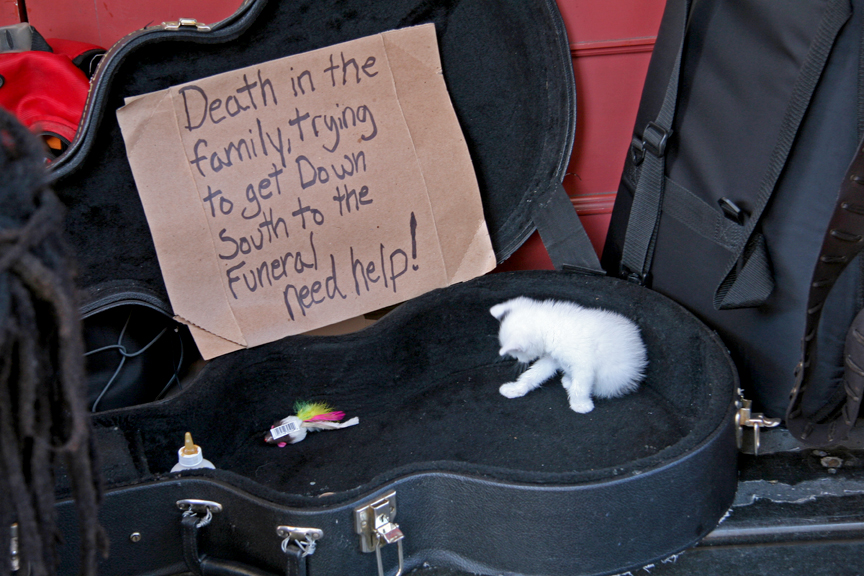
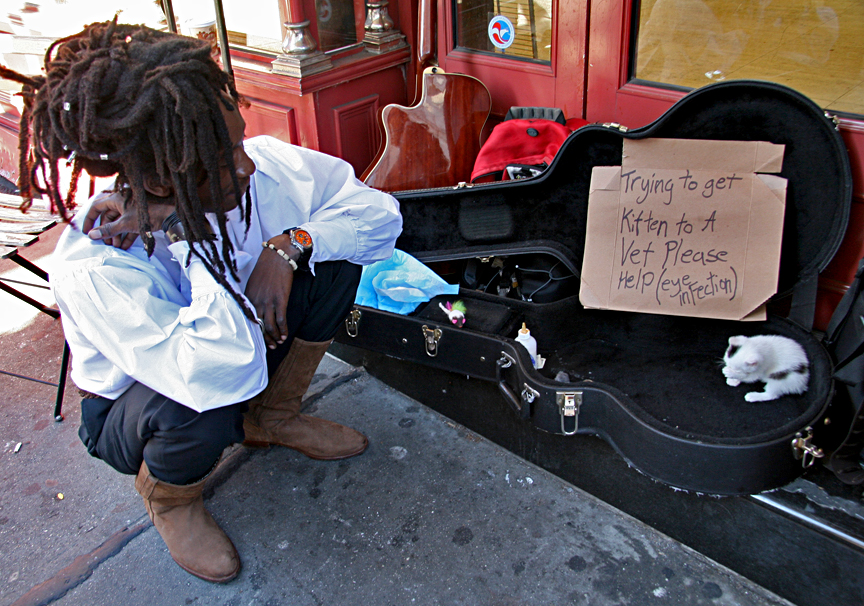
    Jamal is a regular in the neighborhood; I met him last summer when he was working as Pedicab driver. So I was surprised to meet him on Bleecker Street in the West Village with a 4-week old kitten in a guitar case. The kitty, which he had rescued from a subway platform, also had an eye infection. Animals in need will certainly get people to rise to the occasion, even from New Yorkers, who are frequently stereotyped as unsympathetic.

    New Yorkers can be cynical, skeptical, and leery of scams (which are common), but when a legitimate need is perceived, people here, like anywhere else, will respond. Jamal collected $325 in just a few hours the day before, most of which, he said, he used on a visit to the vet and medications for the cat. At one point, Jamal asked me to help, so I held the cat while Jamal administered the eye drops. It was not difficult at all with such a young cat; he offered little resistance compared to an adult cat, where such a procedure can be a real undertaking – cats are notoriously uncooperative taking meds.

    By the way, the sign in the photo had a different message on each side. The message shown is from the previous day used to collect for the vet (he turned the sign over before I shot this to show me the original message used to raise money for the vet. Click here for a photo with the message I saw when I arrived.)
  • Parrots

    Tropical birds and other exotic animals are occasionally sighted in NYC, and with such a large, varied population, one will even catch some outrageous scenes, like the guy who has a large snake, macaw, and small alligator (click here) or a huge spectacular Albino Burmese Python slithering on the ground in Central Park (click here). I also saw two magnificent macaws on Earth Day earlier this year.

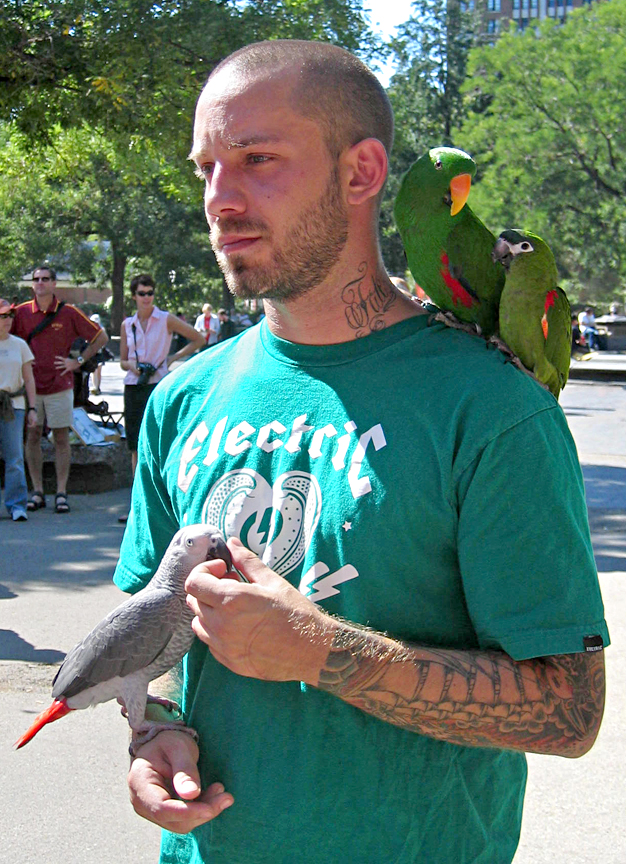
    The person in today’s photo was an audience member (as was I) attending a free performance by Circus Amok (see previous posting here). The birds were extremely charming and got their share of attention – no surprise in light of their cute antics and the brightly colored plumage of tropical birds. The gray bird is a Congo African Grey Parrot. The larger of the two on the owner’s shoulder is a an Eclectus Parrot; the smaller is a Hans Mini Macaw (owned by his girlfriend).

    As enticing as these birds are, the point here is not to promote the ownership of exotic animals. The entire subject is controversial, not only with issues of birds being taken from the wild but also with domestically raised birds – some individuals have concerns with keeping birds in cages or other confined environments. Also, of course, comes the responsibility and commitment – birds can form bonds with their owners, and they can be destructive and need training. And then there is a very different kind of bird


  • Rats Gone Wild

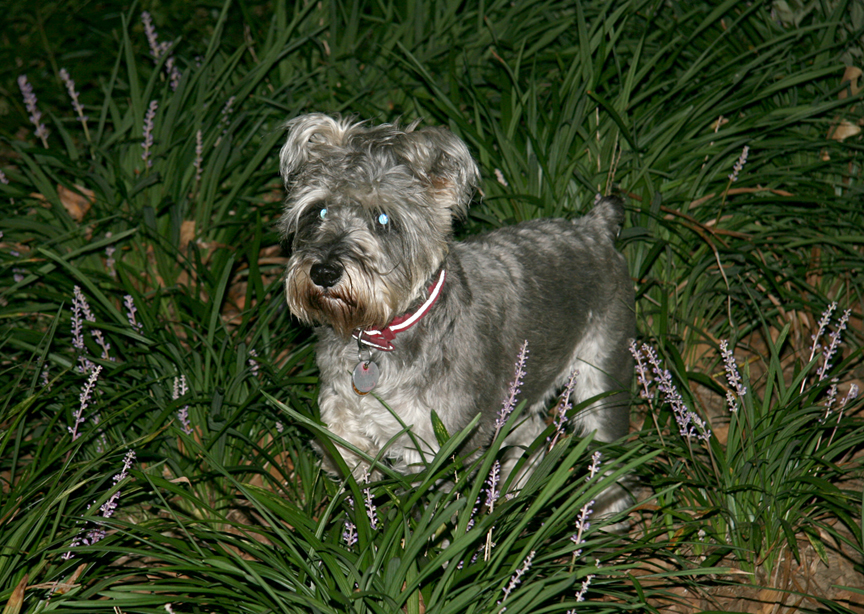
    Meet Oscar at work. Oscar is a Miniature Schnauzer who lives in the Village. Unfortunately, we have a quite visible rat population in Washington Square Park, particularly at night. They are frequently seen even out in the open, near people, away from bushes, skittering about. The numbers of rats fluctuates, largely depending on the Parks Department’s efforts at baiting and picking up trash, which is a big attraction to rats. Trash pickup is never adequate, as I wrote in Garbage a la Mode. Oscar goes crazy when set loose in the shrubbery of the park – he has caught and killed as many as 10-20 rats in one evening. He will chase them, dig for them, track them around trash cans – he is relentless, tireless, and tenacious in ferreting them out. However, rats are quite astute and can hear him coming. His owner, Andrea, has at times experimented by removing his tags. He then becomes a formidable stealth ratter and his success rate soars.

    Schnauzers were originally bred in Germany in the 1800s as “ratters” to keep down the vermin around farms. Miniature Schnauzers are the result of crossbreeding of the Standard Schnauzer to produce a smaller version that could live more easily as a house pet but still hunt vermin. This breed is the 10th most popular in the United States and is well-suited to city apartment living.

    Imagine Oscar at the Karni Mata temple in Deshnoke, Rajasthan, India, where rats are worshipped and 20,000 or so run loose. The temple pays tribute to the rat goddess, Karni Mata. Click here for an extensive article. I don’t really recommend it, but if you have the stomach for it, see a video here


  • Red Panda

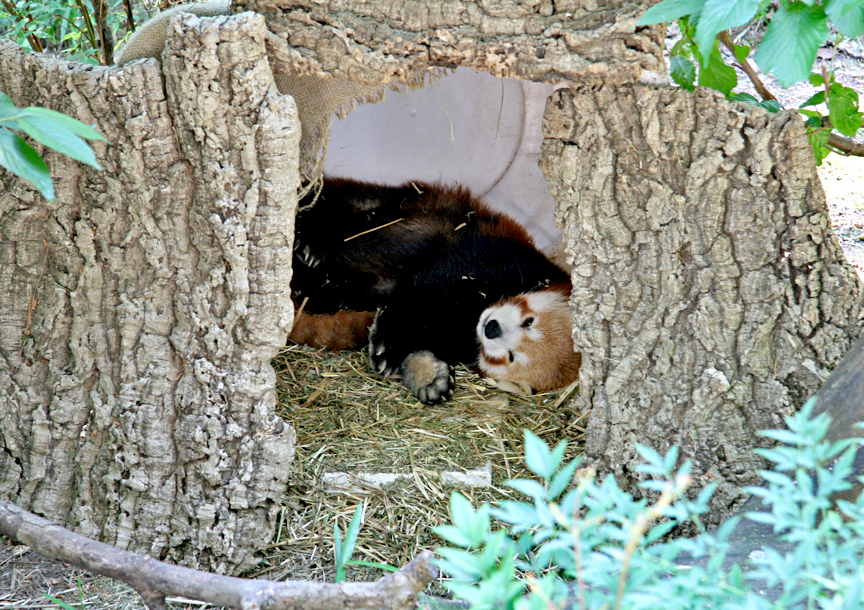
    This word was new to me – crepuscular – pertaining to twilight. In the case of an animal, it means that it is active at twilight (dawn and dusk), as opposed to diurnal or nocturnal. The Red Panda in the photo is from the Central Park Zoo and an example of a mammal that is crepuscular. This perhaps explains not only his relaxed state in the photo but also the reason that these fellows are difficult to spot moving around at the zoo habitat during exhibit hours.

    Red pandas tend to be solitary, and their habitat is the Himalayan foothills of southwestern China, Tibet, northern Myanmar, and Nepal in temperate forests at elevations of 4,900 to 13,000 feet. They are an endangered species and part of the Species Survival Plan – the Central Park Zoo has produced three cubs, a difficult feat in captivity. Their diet is almost entirely bamboo, which is extremely high in indigestible fiber, making it difficult for red pandas to extract the nutrients they need. They need to eat large quantities of bamboo and spend long hours foraging. Their low-energy diet does not lend itself to an active lifestyle, so they spend most of their time eating and sleeping (in tree branches or tree caves) – they may sleep half the day. I think this lifestyle would appeal to many…

    NOTE: A friend informed me that the term crepuscular has also been used to describe works of artists, such as Albert Pinkham Ryder, Arthur Dove, and Winslow Homer, who depicted subjects with the light characteristic at that time of day.


  • Eeylop Owl Emporium

    Posted on by Brian Dubé

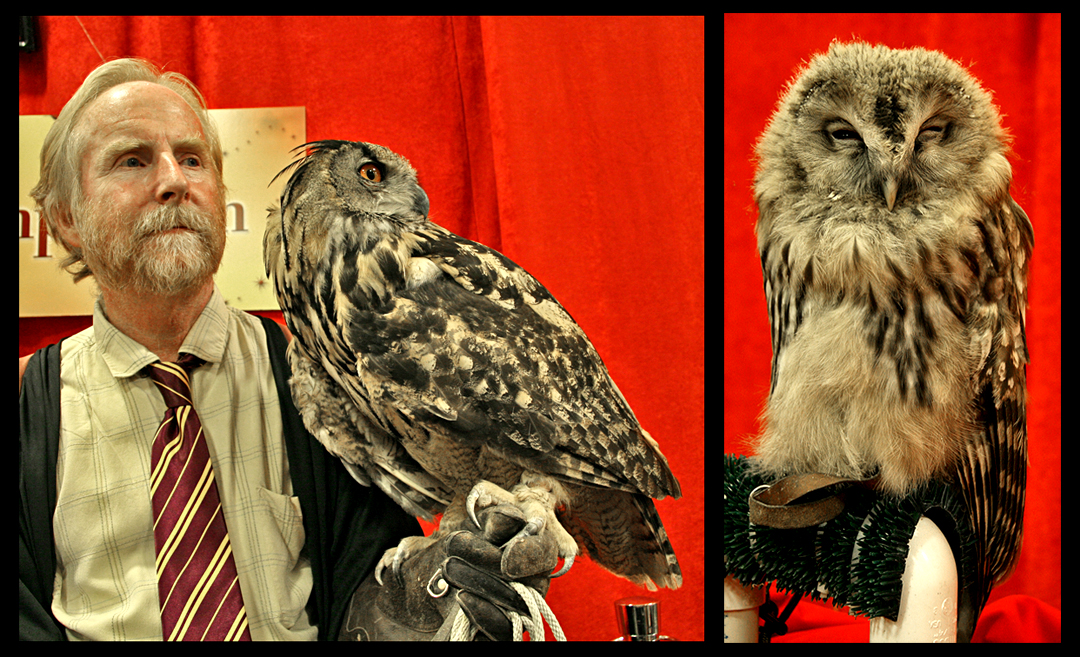
    I hate to contribute any further to the Harry Potter mania, but I thought these rarely seen, remarkable birds deserved a posting – after all, it’s not their fault they were part of a promotion. After strolling through Scholastic’s Harry Potter Place in SoHo on Friday night (see yesterday’s posting), I later passed through Union Square with a friend when we noticed that the Barnes and Noble superstore there was having its own big fest, with special activities on every floor. The place was absolutely mobbed, and at one point wristbands were being distributed to gain access. We decided to make a quick pass through the store and were absolutely shocked when on the ground floor, we saw a huge live owl perched on this man’s arm and a baby companion nearby.

    This was obviously part of the Potter theme. A sign proclaiming this area as “Eeylop Owl Emporium” was prominently displayed, and as fans know, owls play a big part in the Potter series as characters. People were gawking in astonishment to see these two owls in the middle of one of the city’s largest bookstores in Manhattan. I spoke briefly to the owner/handler about this unusual sight – he did acknowledge that owls are not typically domesticated and that he had raised them from birth.

    It is not until afterwards in reading for this article that I learned it is illegal to keep owls without a special permit in most countries and that the United States does not allow private individuals to keep native owls as pets – they may only be possessed by trained, licensed individuals while being rehabilitated or under a number of other special situations (click here). This store is one of my favorites, occupying the entire 6-story, restored, former Century Building at 33 East 17th Street – their windows offer great unobstructed views of Union Square Park…

    Posted on by Brian Dubé

  • Rain Forest

    Posted on by Brian Dubé

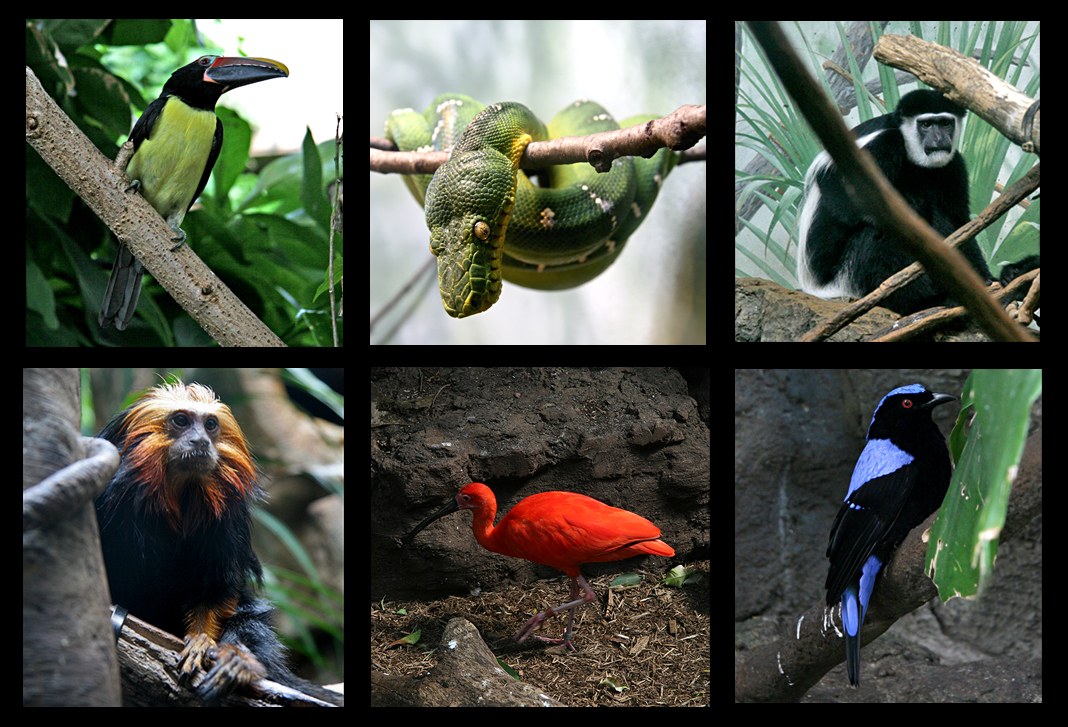
    This is the Tropical Zone at the Central Park Zoo, my second posting on this zoo (click here for the first posting, featuring the penguin habitat) It is located in the heart of Manhattan and sees 4 million visitors annually. As I previously wrote, the trend in zoos (and botanic gardens, such as the Brooklyn Botanic Garden) is towards habitats, and such is also the case with the Central Park Zoo, which underwent a complete rehab in 1988.

    The zoo is divided into three climactic zones: a Polar Zone, a Temperate Territory, and a Tropical Zone (interestingly, the Tropical Zone is referred to as the Rain Forest on their official map). The tropical habitat houses a variety of animals in a jungle environment; there are numerous birds, monkeys, snakes, frogs, lizards, and toads.

    In the photo collage, starting upper right going clockwise, we have a Toucanet, Emerald Tree Boa, Colobus Monkey, Tamarin, Scarlet Ibis, and a Fairy Bluebird. One of the outstanding aspects of the tropics is the fantastic, bright colors of the native birds. The spectacular plumage is a draw for observers, photographers, and, I imagine, for those who purchase these birds as pets…

    Posted on by Brian Dubé

  • Feeding at the Zoo

    Posted on by Brian Dubé

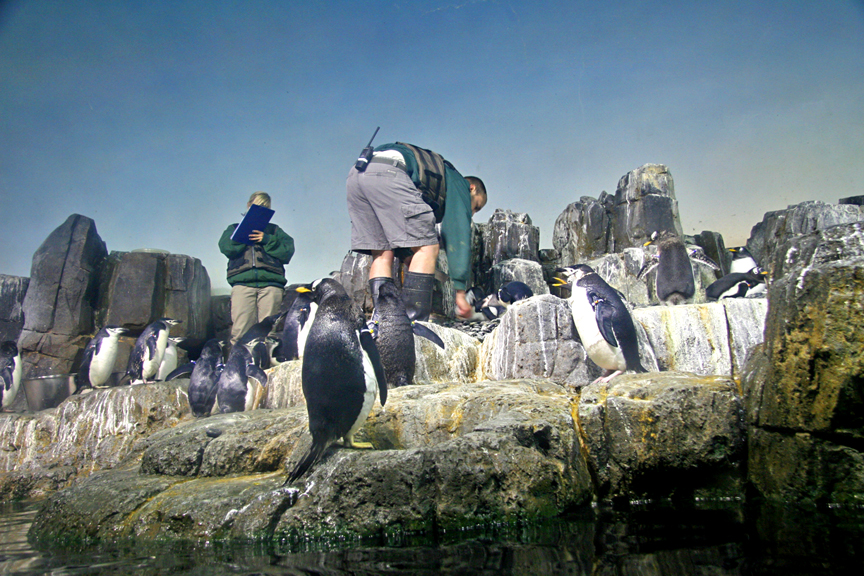
    This is feeding time for the penguins at the Central Park Zoo. The public seems to be endlessly fascinated with penguins – their upright walk, lack of fear of humans, and tuxedo-like plumage has endeared them to the public worldwide. They have become a virtual mascot of cuteness. Wikipedia even has a separate entry, “Penguins in popular culture.”

    The penguin and puffin house is one of a handful of habitats in the Central Park Zoo, one of the oldest in the United States, which originated in 1864 as the Central Park Menagerie. In more recent times, the trend has been to move away from the older menagerie style of zoo, where animals are caged for collection, exhibition, and entertainment purposes. By the 1980s, the Central Park Zoo was in very poor shape; a 1981 New York Times opinion called for closing of the zoo (Let’s Do Away with Central Park Zoo by Alice Herrington). In 1983, the zoo closed for complete renovation and reopened in 1988.

    The new design, which was applauded, featured more natural habitats – the trend in North American and European zoos. The focus is now more on conservation of endangered species, research, and education, and secondarily for entertainment of visitors. Of course, these natural habitats are still quite limited in size; the Central Park Zoo is small and does not permit the type of environments seen in places like the Bronx, Philadelphia, or San Diego zoos. But it is a dramatic improvement – I had the unfortunate privilege to see the zoo in its former incarnation. Fortunately, my memories of it are quite indistinct…

    Posted on by Brian Dubé

  • Parasol

    Posted on by Brian Dubé

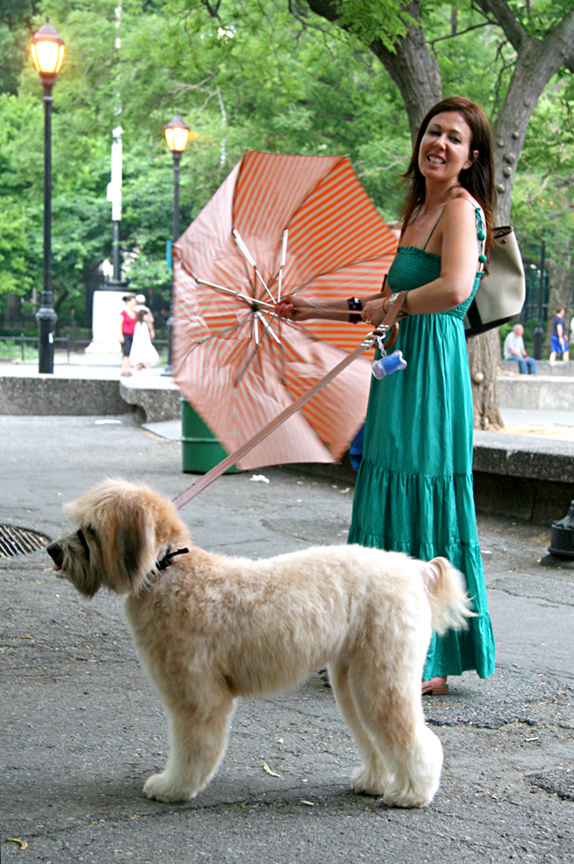
    In order to make this photo and story work, I wanted to make a case for the resurgence of the parasol. Perhaps a little spin on the facts. Certainly the use of parasols makes the utmost sense, since avoidance of the sun is now of paramount importance with ozone depletion, skin cancer, sunburn, and freckling. Plus, hats don’t shield enough and can lead to the dreaded hat hair. And then there is the sun-shunning goth crowd. So in a way, I’m surprised that parasols aren’t HUGE, since they can also be a fashion statement. I did uncover an article in 2005 from the Village Voice that proclaimed the parasol’s emergence from the 1920s, citing two shops in the city that are seeing a renewed interest: Rain or Shine and Brella Bar (Update 1/30/12: Now closed).

    The collapsible umbrella/parasol is of Chinese origin, dating back nearly 2000 years. They are still produced in large numbers with a variety of colors, patterns, and materials, so Asian product stores such as Pearl River are great places to go for selection and pricing. I do occasionally see more women with parasols on sunny, hot, or hazy days. (BTW, the dog in the photo is a Wheaten Terrier). In 2001, there was a photo that rocked the world: personal assistant Fonzworth Bentley holding an umbrella over P. Diddy’s head in Saint Tropez. Perhaps the male parasol is not too far away…

    Posted on by Brian Dubé

  • Claremont

    Posted on by Brian Dubé

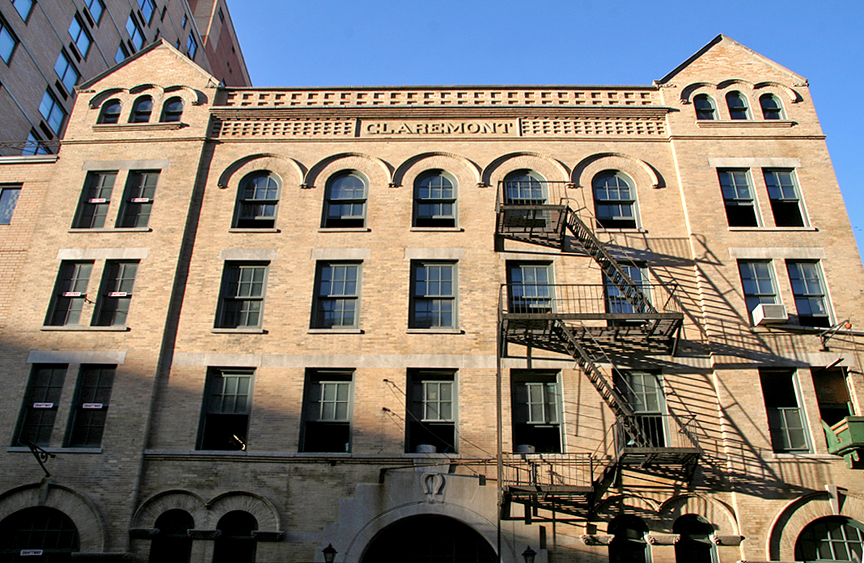
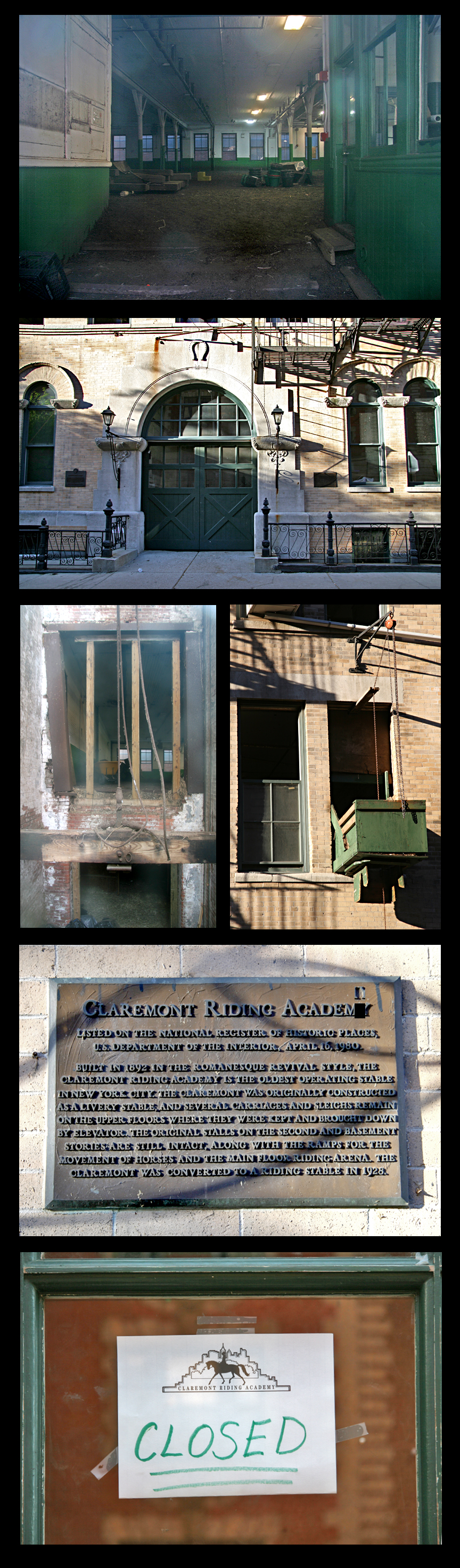
    I wanted to call this the End of an Era, but I don’t want to overuse the phrase. Everywhere you go, look, or read, there’s the last of something or a NYC icon closing – CBGB, Grand Machinery Exchange, etc. Claremont Riding Academy, located at 175 W. 89th Street and less than two blocks from Central Park and its bridle path, was a real riding school and working horse stable, the oldest in NYC and the country. It was amazing to walk down this quiet residential block on the Upper West Side and see an urban barn with hay, horses, a wooden ramp, and a riding ring. Click here for more photos, including a peek inside.

    The five-story Romanesque revival building (on the National Historic Register) was designed by Frank Rooke and built by Edward Bedell in 1892. Bedell had built a number of stables in the neighborhood – Cedarhurst Stable at 147 W. 83rd, and three on this block at 167-171 W. 89th. Ownership passed to Charles Havemeyer, Emil Wellner (who in 1928 changed the name from Claremont Stables to Claremont Riding Academy), Irwin Novagrad in 1943, and finally to his son Paul, who closed the operation on April 30, 2007. Paul Novograd cited a number of reasons for the closing: financial difficulties and declining ridership in part due to increased crowding of the Central Park Bridle path with joggers, cyclists, dogwalkers, etc. Encountering the occasional horses with their riders going to and from Central Park and the stables down city streets was truly an experience. The fate of Claremont is mourned by many, and sadly, horseback riding will no longer be available in Manhattan…

    Posted on by Brian Dubé

  • Baby And Merlin

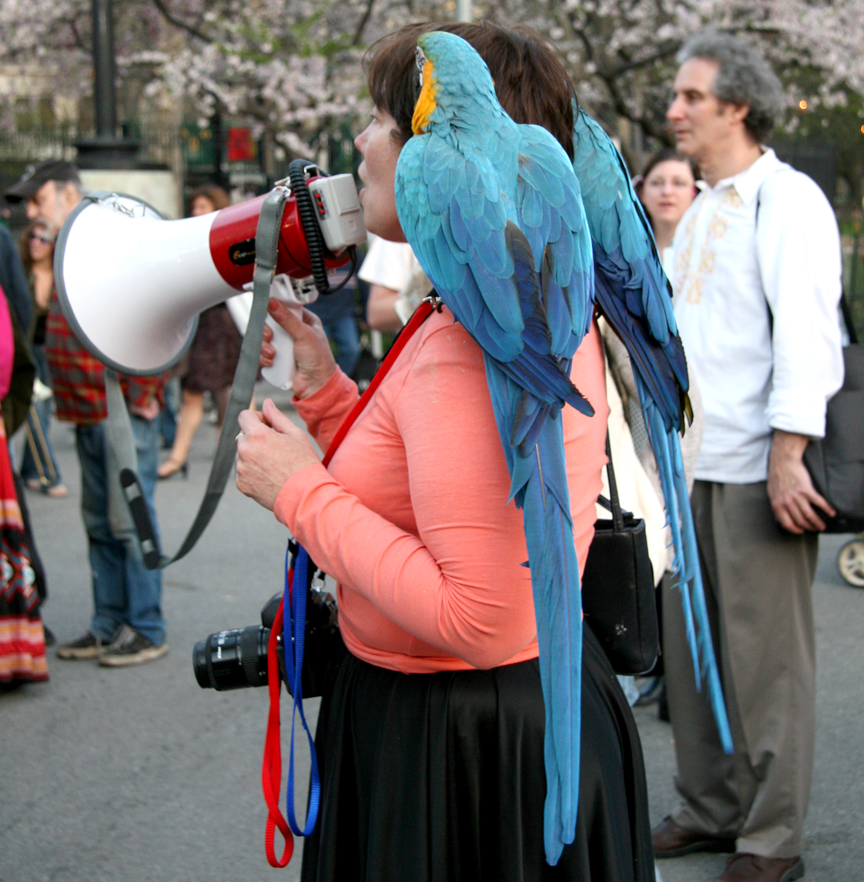
    These are Baby and Merlin , blue and gold macaws with their owner, Gloria Waslyn (more photos here), who describes them as “Peace Parrots, Rainforest Ambassadors and NYC’s Spokes Avians for the Mayor’s Alliance of Animals promoting rescue and shelter animal adoption. … BABY, the outgoing male, and MERLIN, his pretty mate are so well behaved that anyone can hold them. They are quiet, so they do not upstage anyone, are comfortable with anything, and have been on a float in a high-profile and crowded Halloween parade in Greenwich Village of NYC. They have been held by celebrities (Sean Lennon and Yoko Ono), scientists (Nobel DNA prize winner James Watson and co-mapper of the human genome, Frances Collins) and thousands of New Yorkers and people from around the world who visit the city sidewalks of NY.”

    Gloria says that the two 9-year-olds “never bite, play with earrings or hair, and are quite the ‘hams’ without any diva attitude.” The trio were part of one of many NYC Earth Day celebrations yesterday – the birds stole the show at this one with their brilliant blue plumage, huge size, and friendly antics…


  • Horsing Around

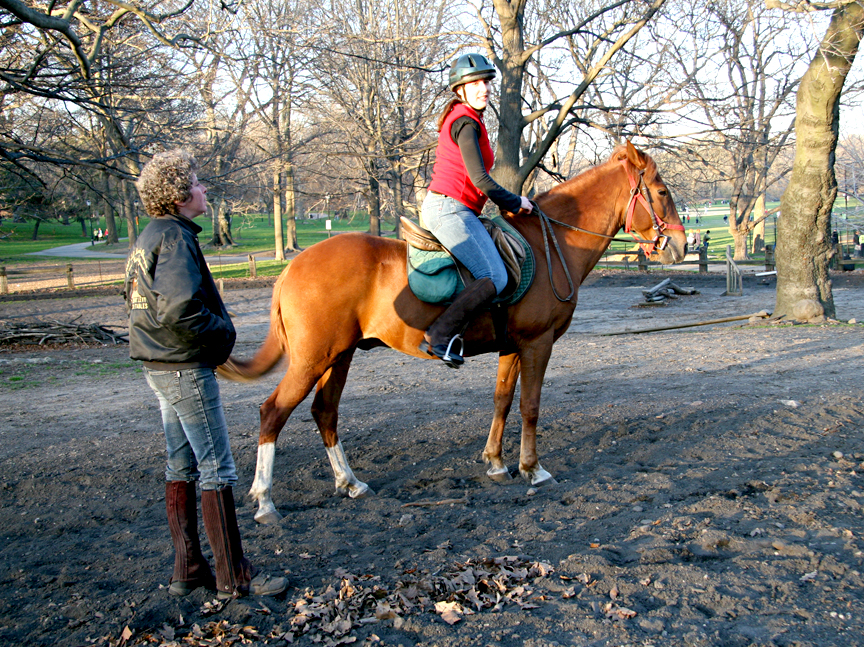
    Many visitors see NYC as a concrete jungle with no respite from a continuous bombardment of stimuli – noise, traffic, and crowding. A nice place to visit, but how could you live here? But that is primarily because visitors generally do not frequent those places (with some exceptions, such as Central Park) or engage in those activities which residents look to for relaxation and recreation. There is a large gamut of activities in NYC which residents partake in that may come as a surprise such as kayaking, tennis, birdwatching, biking, swimming, baseball, volleyball, pétanque, sailing, surfing, sledding, ice skating, gardening, and horseback riding – the photo shows a lesson in a riding ring in Prospect Park, Brooklyn. There are riding trails in every borough, including Manhattan (Central Park).

    One of the biggest surprises is Claremont Riding Academy, the only stable in Manhattan (other than the mounted police). They occupy an entire building in the center of the Upper West Side – a multi-story barn with riding ring. Over 100 horses are stabled there. Seeing horses in the city is always a welcome surprise – horses are large, magnificent animals, and many of us can’t resist the urge to indulge the relatively rare encounter – watching and, if we’re lucky enough, making contact…


  • Spring Madness

    Posted on by Brian Dubé

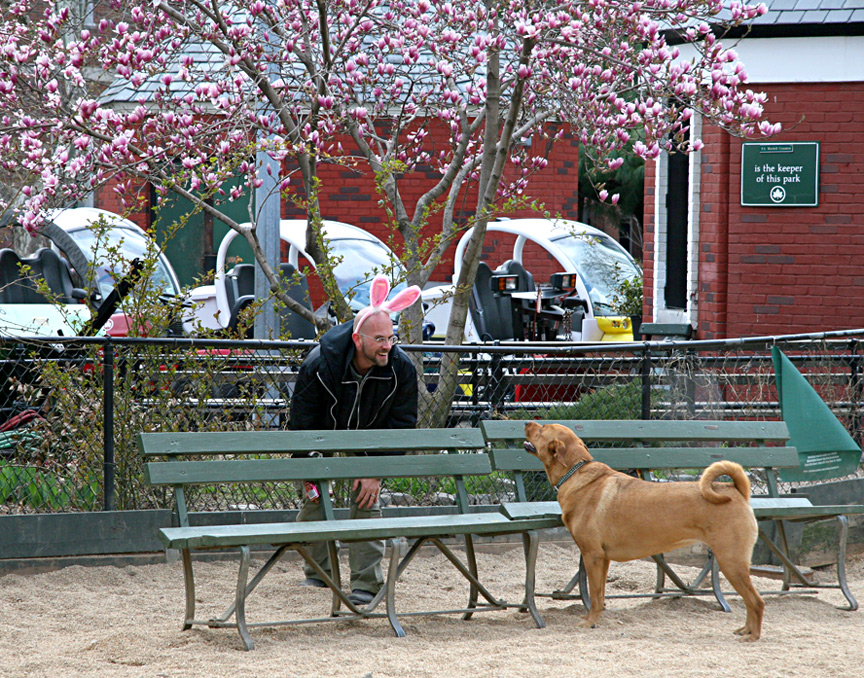
    As I have pointed out in previous posts, this city certainly tolerates and embraces eccentric behavior. This guy in the photo was definitely garnering a lot of attention – onlookers looked puzzled trying to understand a grown man with pink bunny ears in the dog run in Washington Square Park, especially when his playful game went on a little too long. And it was not clear that the dog in the photo (or any other) was his – we became more concerned when he started to leave the enclosure with the ears still on and no dog in tow.

    The weather has been extremely cold for this time of year, so spring fever this is not. Plus, I have already done a Spring Fever posting when we had a nice run of warm days in mid-March. In naming this post Spring Madness, it occurred to me that apart from the man in bunny ears, the only madness I have encountered lately is the frustration that people are having with the weather and how long it is taking for springtime to arrive. We have had 31-degree nights and mid-40s by day with a chance of snow flurries today! Happy Easter…

    Posted on by Brian Dubé

  • à la Chien

    The health department in NYC does not allow dogs in restaurants except in very special conditions. Federal Law under the American with Disabilities Act (ADA) requires that restaurants allow service and guide dogs at indoor and outdoor dining areas. Beyond that, they make recommendations only – states govern restaurant health laws (there recently has been some abuse of new rulings regarding pets needed for “emotional support”). Sidewalk cafes where no cooking is being done have been the only spaces where patrons can dine with their dogs.

    In France, where dogs abound, there are no such restrictions, and even the finest of restaurants allow them and even welcome them. Small dogs frequently sit aside their owners or in their laps. Waiters will play with dogs and their toys. Many new visitors to France are actually quite shocked when first exposed to these customary practices.

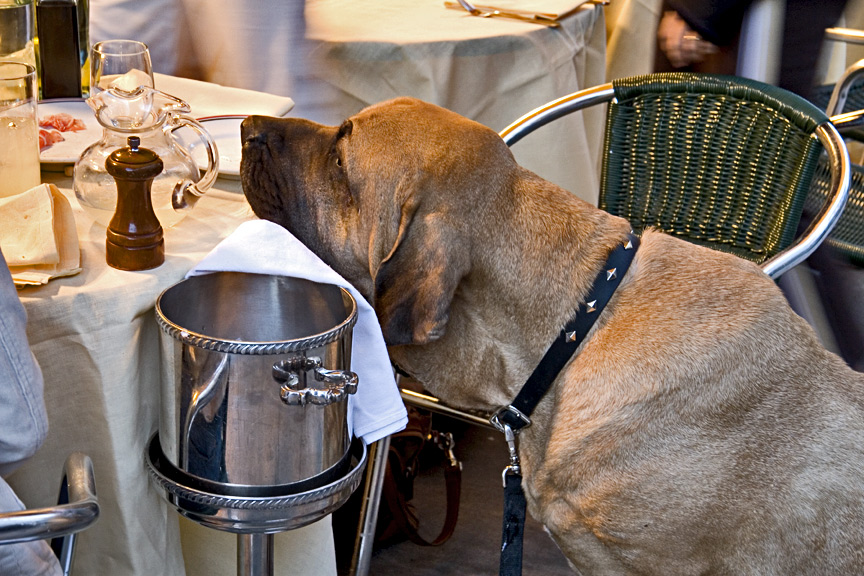
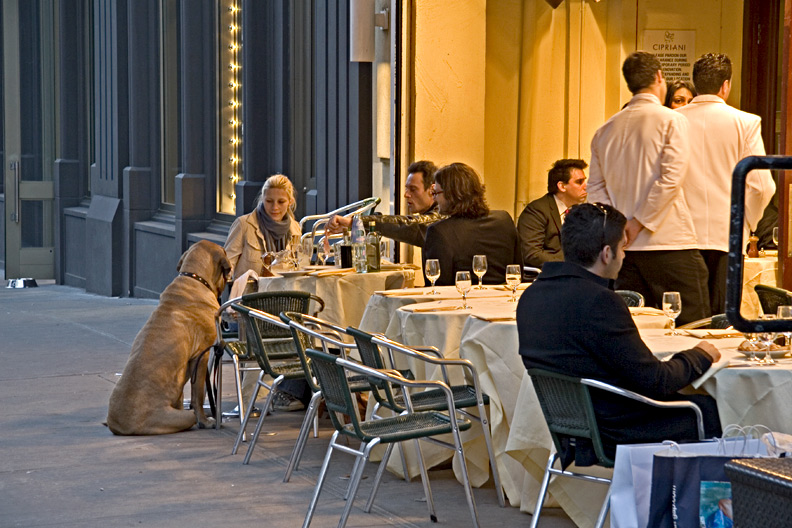
    There are a few new dog-friendly restaurants, such as Fido Cafe, where the special conditions of separation of dining and cooking areas have been created. There are several hundred thousand dogs in Manhattan, so any accommodations for dogs will be well met by the myriad of owners in the city. The large dog in the photo was observing the fine dining of his owners at Cipriani in SoHo – he (or she) seemed to be quite well behaved while doing his poor, hungry dog routine. Click here to see him being rewarded for his patience


  • Rats R Us


    Everyone knows rats are living among us – in the parks, the subway system, buildings, and restaurants. But we don’t expect to see hordes of them scurrying in plain view in a restaurant, as recently witnessed at the Taco Bell/KFC in Greenwich Village. This was a major news item for all the local networks and papers on February 23, 2007. Click here for the Gothamist coverage – they had numerous articles spanning several days. And if you have the stomach for it, here’s a video clip of the rats in action.

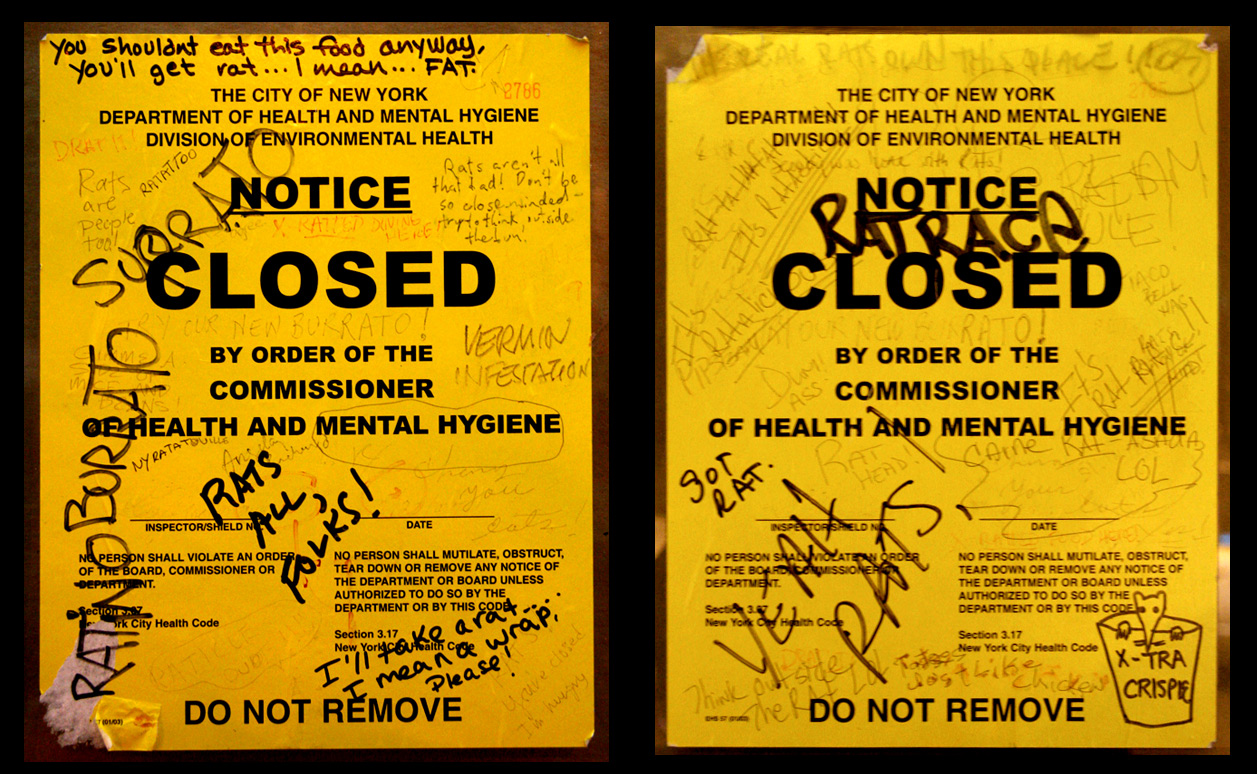
    Since this episode, there have been many similar stories regarding other restaurants. I decided to stroll by the location last night and see the status. The place was completely closed, of course. The only things of interest were the two Department of Health notices on the windows, with an accumulation of comments written on them (click on the photo or this link to view a larger image for better reading). New Yorkers are extremely tolerant and adaptable. Very little really shocks us or for very long – even then, we bounce back rather quickly. And we have a good sense of humor, as evidenced by the comments on the notices. However, many doubt that Taco Bell will reopen at this location – how many would want to eat here? Tolerant or not, even New Yorkers can draw the line…


  • Wildlife Control

    One of the hot topics of conversation right now in NYC is how restaurant wildlife is out of control. Everyone knows rats (and other vermin) are something we have to live with and that most restaurants probably have some sort of wildlife. However, we just don’t want to SEE them cavorting in plain view. The recent incident at Taco Bell-KFC in Greenwich Village was a national story with a video of rats scampering about – it really was Rats Gone Wild. See the story here and a video here.

    In Park Slope, Brooklyn, squirrels and raccoons are a problem, and someone known as Trapper John has repurposed an ambulance and setup shop to deal with it. I visit a friend who lives on the block, where this fellow frequently parks. When I first saw these outrageous-looking vehicles (he also owns the pickup truck in front of the ambulance) with their signage, I was astounded, as every first-timer is; neighbors, of course, are somewhat inured. In any case, I felt that I had to take a photo of this and post it. According to a Brooklyn blog, the owner/operator of the vehicles and business is a Mr. Hoffman who is a 7th grade math teacher at MS 51. Only in New York…


  • dinamic_sidebar 4 none

©2026 New York Daily Photo Entries (RSS) and Comments (RSS)  Raindrops Theme