• Category Archives Architecture
  • St. Bart’s

    Posted on by Brian Dubé

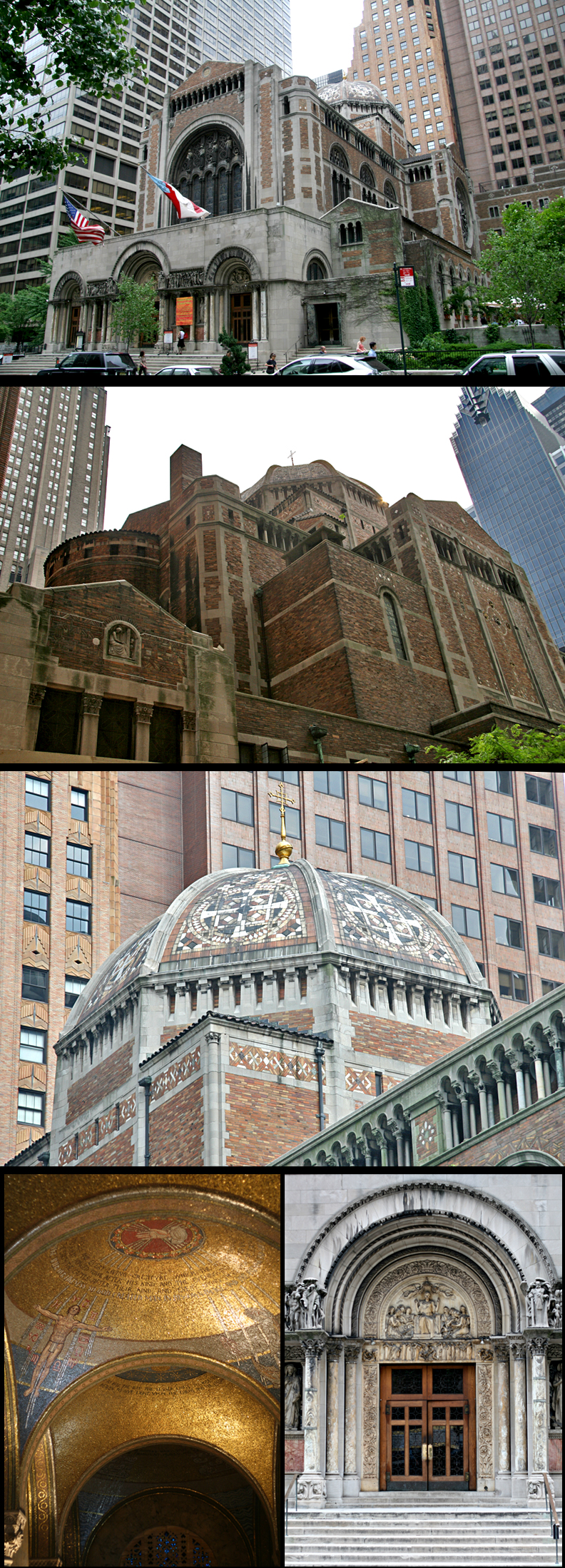
    One of the unique features about St. Bartholomew’s Episcopal Church at 50th Street and Park Avenue, with its signature dome and cross, is the contrast with the surrounding architecture. Click here for more photos. Although this could be said of many churches, urban and rural, the dramatic difference in scale between this landmark limestone and brick structure and the surrounding monolithic buildings on Park Avenue (such as the 570 foot GE/RCA building behind it and the Waldorf Astoria Hotel to its right) draws attention immediately.

    This is actually the third location for the congregation. It started in 1835 in a plain church in the then-fashionable Bowery area; in 1872, their growth and funds permitted them to build a new church at Madison and 44th. Designed by James Renwick, the architect of St. Patrick’s Cathedral, the building was later embellished with a triple portal by Stanford White. In 1918, they moved to their current location at 50th Street and Park Avenue. A new structure was designed by Bertram Goodhue to harmonize with the Romanesque Revival triple portal entrance, which was relocated from the Madison Avenue church. Over time, the interior was decorated in the Byzantine style, with major mosaics in the narthex and over the high altar. In 1981, a real estate developer offered a plan to build an office tower on the site of the adjacent community house, ensuring a financial endowment for the church. Conflict developed within the parish and between the church and the city over air rights and the landmark status of the building; the case went to the Supreme Court. In 1991, the landmark law was upheld.

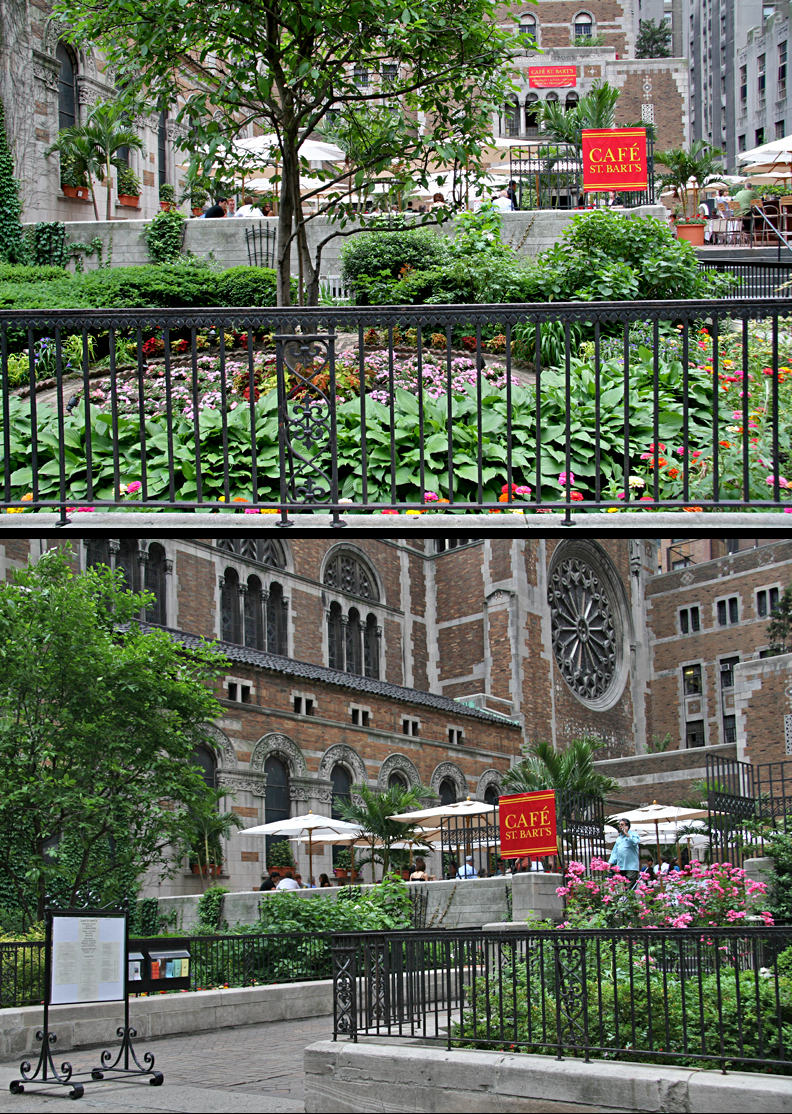
    The church is renowned for its pipe organ, one of the largest in the world and played by the famous conductor Leopold Stokowski. The popular and successful Café St. Bart’s with its outdoor terrace can be seen here. The church provides many community services, including a public music series and summer festival, a homeless shelter, and a soup kitchen…
    Posted on by Brian Dubé

  • Etched in Stone

    Posted on by Brian Dubé

    One of the great things in the city is to happen upon a juxtaposition of architecturally and/or historically important structures. It is surprising that we can still be awed and not jaded, even when exposed daily to vistas and landmarks. I think most New Yorkers still really do appreciate the things they see daily, such as crossing a bridge by car or subway. I always enjoy being in a part of town I do not frequent; it gives me that sense of newness one has as a visitor.

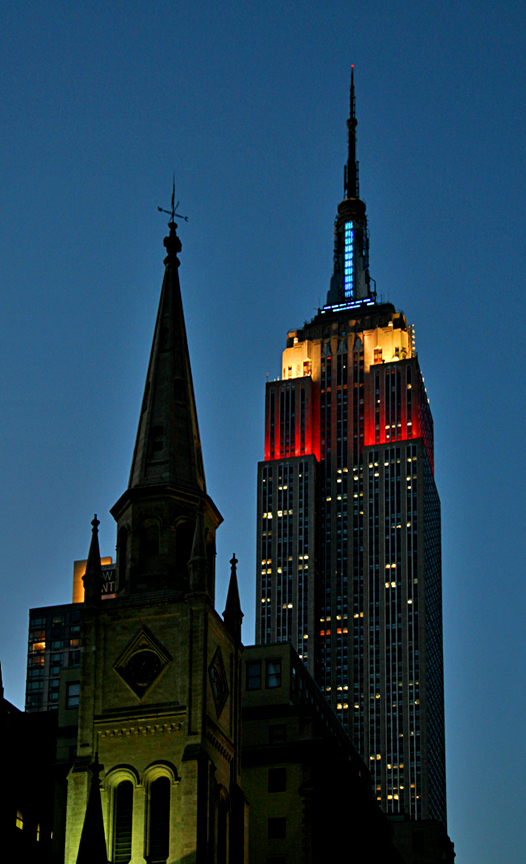
    This photo was taken on Fifth Avenue. In the background, we have, of course, the Empire State Building, clad in Indiana limestone and granite. In the foreground, at 29th Street and Fifth, you have the Marble Collegiate Church, a Romanesque/Gothic building constructed from white marble, a contemporary of Grace and Trinity churches (the term collegiate refers to the practice of churches sharing ministers as colleagues). Apart from having such a prime address with photo op potential, this church has a very interesting history. Marble Collegiate Church is the oldest Protestant organization in North America. The congregation was founded as the Collegiate Reformed Protestant Dutch Church in 1628; the building dates to 1854. Read about it here. The church is perhaps best known for pastor of 52 years, Norman Vincent Peale, the highly influential author of 46 books, including the bestseller The Power of Positive Thinking. Granite, limestone, marble – I love stone. And some things are just etched in it…

    Posted on by Brian Dubé

  • Federal Hall

    Posted on by Brian Dubé

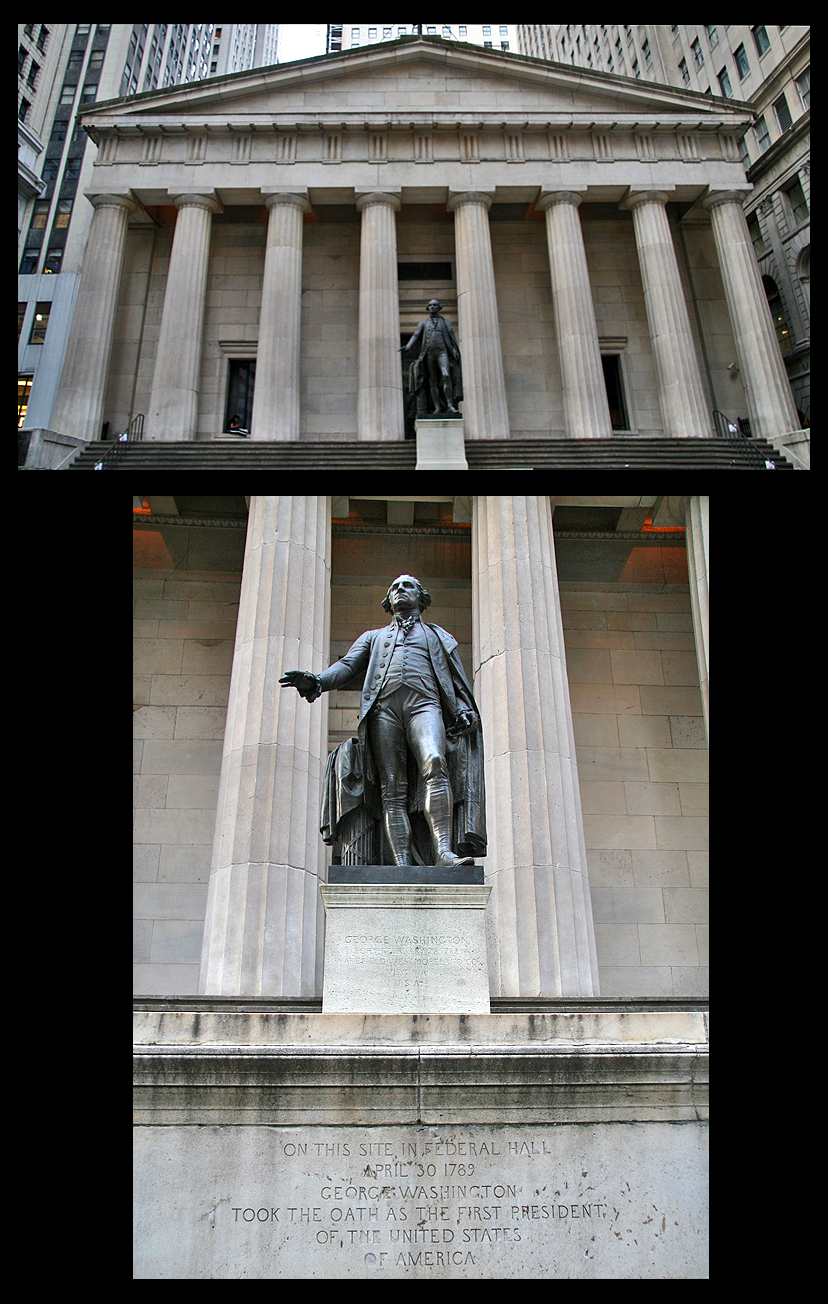
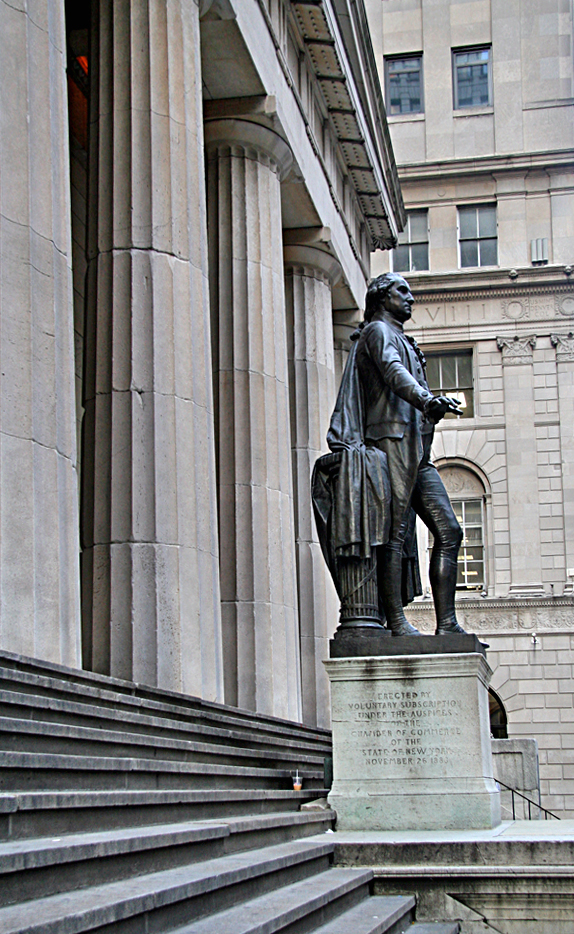
    Overshadowed by the New York Stock Exchange across the street, and with all there is to do and see in NYC, Federal Hall at 26 Wall Street is easily overlooked. This beautiful, Doric-columned Greek revival structure with a simplified Parthenon facade is carved from marble; inside is a rotunda. Click here for more photos.

    National monuments are more often the agenda of Washington D.C. visitors than NYC ones, but this is definitely worth a visit. It actually is one of the most important buildings in U.S. history and just completed a renovation in November 2006 (it had been closed since 2004). The site has played a part in American government for over 300 years. 26 Wall Street was the location of New York’s City Hall, built in 1700. After the American Revolution, the Continental Congress met at City Hall. When the Constitution was ratified in 1788, New York remained the national capital. Pierre L’Enfant was commissioned to remodel City Hall for the new federal government, when it was renamed as Federal Hall.. The First Congress met in the new Federal Hall and wrote the Bill of Rights. George Washington was inaugurated here as President on April 30, 1789. When the capital moved to Philadelphia in 1790, the building again housed city government until 1812, at which time Federal Hall was demolished.

    The building that stands here now was built in 1842 as the country’s first Customs House. It was designed by Alexander Jackson Davis, one of the most important architects of his generation, who worked in the classical style. His was the winning entry in an 1833 competition. In 1862, Customs moved to 55 Wall Street, and the building became the U. S. Sub-Treasury. Millions of dollars of gold and silver were kept in the basement vaults until the Federal Reserve Bank replaced the Sub-Treasury system in 1920. The building is now run by the National Park Service and serves as a museum and memorial to the first President and the beginnings of the United States of America…

    Posted on by Brian Dubé

  • Municipal Building

    Posted on by Brian Dubé

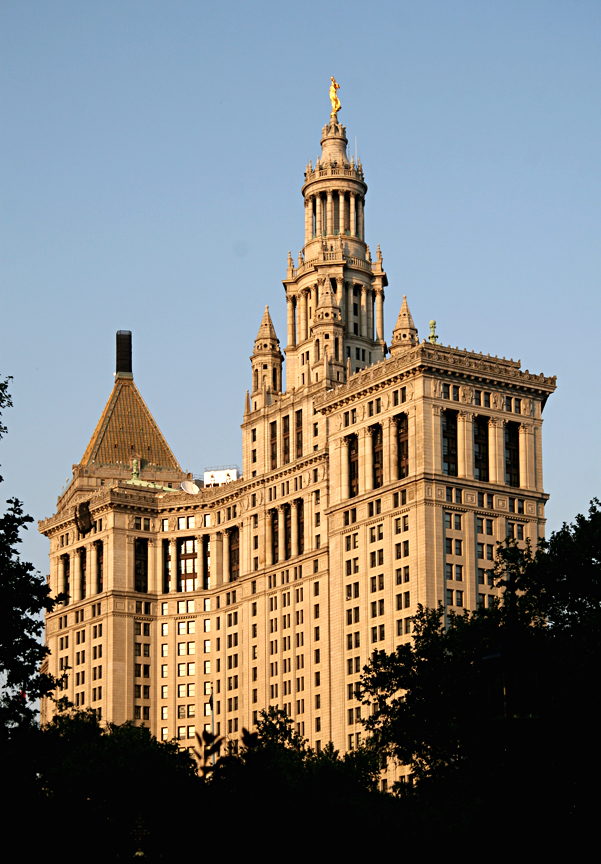
    This almost looks a little like Italy bathed in this afternoon light, doesn’t it? Not a total fantasy – architecturally, the Municipal Building’s design uses Imperial Roman, Italian Renaissance, and Classical styles.

    By 1884, New York City had surpassed the limited physical space in City Hall; many of its agencies were scattered throughout the city in various rented offices. Plans were made for a large civic building to accommodate the various city agencies, with four design competitions between 1888 and 1907. Twelve architectural firms submitted plans for the new building in the final competition, and the winning submission was from the firm of McKim, Mead and White, internationally renowned and the largest architectural firm in the world at the time. Construction started in 1909 (when NYC already included five boroughs and a population of 4.5 million) and was finished in 1914-15. It stands at 40 stories, 580 feet (177m).

    This building is of major architectural significance in NYC and was highly influential – Moscow University’s main building and other buildings in the Soviet Union were styled after it. The statue over the central tower is the heroic figure “Civic Fame” by Adolph Weinman in copper, 20 feet high, poised on a large copper ball (it’s the second largest statue in the city after the Statue of Liberty). A crown with five crenelations represents the five boroughs of the city, as do the five cupolas of the building. The Manhattan Municipal Building houses thirteen agencies – more than 28,000 New Yorkers get married here each year. It’s also where you can file for divorce – so convenient 🙂

    Posted on by Brian Dubé

  • Just Passing Through

    Posted on by Brian Dubé

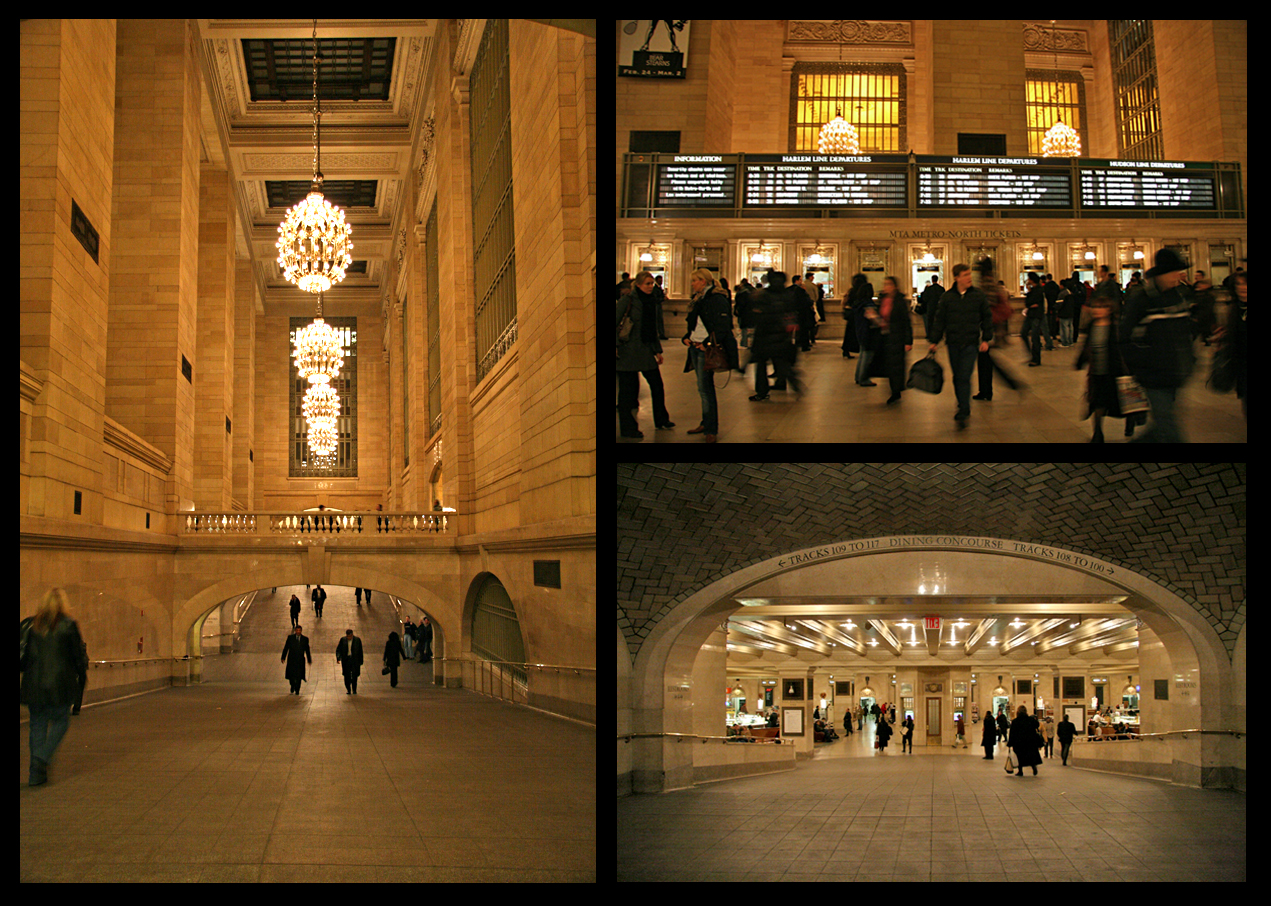
    I have done 3 previous posts on Grand Central specifically: the main concourse, the exterior rooftop sculpture, and the famous clock, along with a post on the Oyster Bar. This posting shows other areas of the station. On the left is one of the passageways – magnificent and Grand, isn’t it? – befitting of its name. The upper right shows the main concourse facing the timetables. And on the lower right is a photo in the subterranean depths leading to the train tracks themselves.

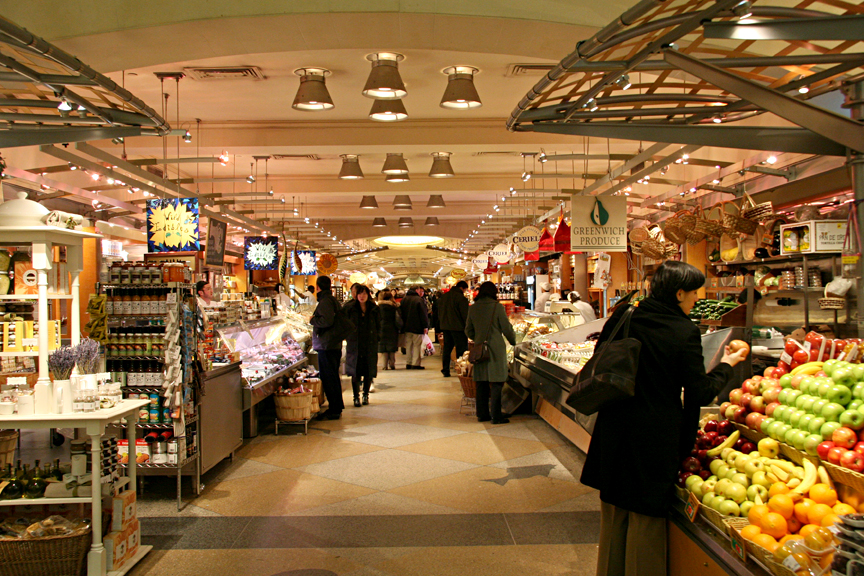
    At the east end of the terminal, there is also a wonderful food market, which I only recently discovered: The Grand Central Market, a gourmet European-style food hall. Several of the city’s premier food shops are vendors here (such as Murray’s Cheese) (see here). All told, Grand Central is a world unto itself, with restaurants, shops, and a myriad of environments. I love this place, an edifice in stone, iconic NYC – a constant in a world of change. In a way, this station is a metaphor for life itself – we’re just passing through…

    Posted on by Brian Dubé

  • Claremont

    Posted on by Brian Dubé

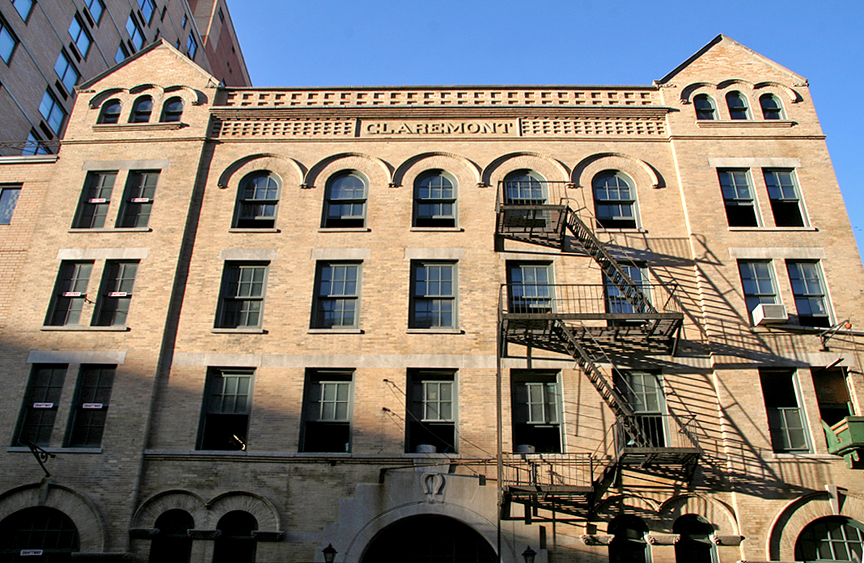
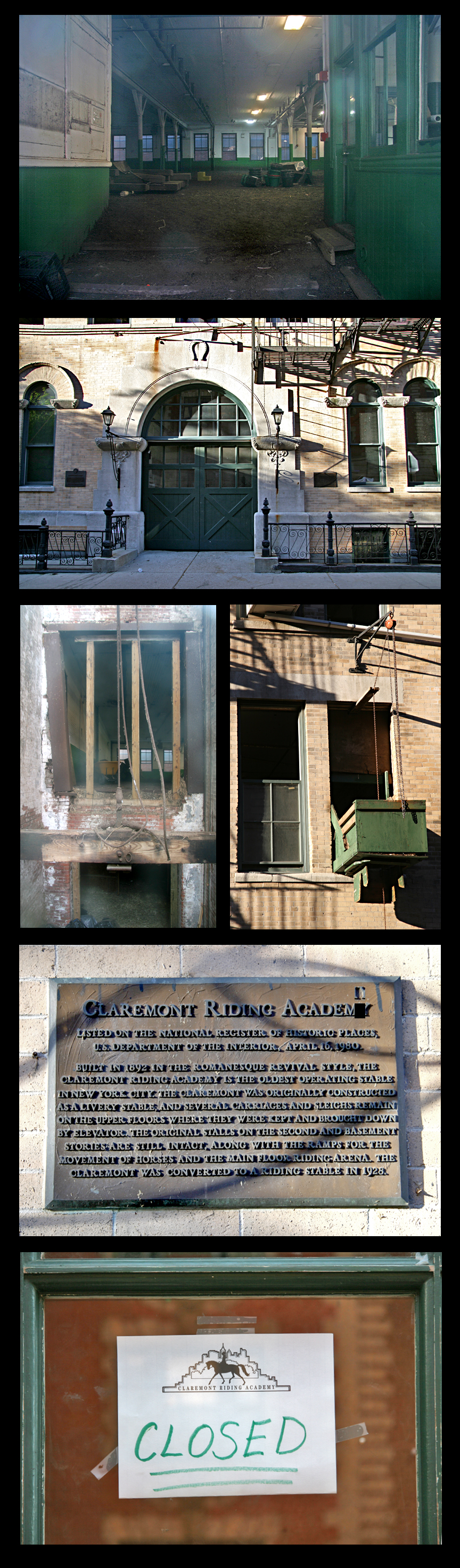
    I wanted to call this the End of an Era, but I don’t want to overuse the phrase. Everywhere you go, look, or read, there’s the last of something or a NYC icon closing – CBGB, Grand Machinery Exchange, etc. Claremont Riding Academy, located at 175 W. 89th Street and less than two blocks from Central Park and its bridle path, was a real riding school and working horse stable, the oldest in NYC and the country. It was amazing to walk down this quiet residential block on the Upper West Side and see an urban barn with hay, horses, a wooden ramp, and a riding ring. Click here for more photos, including a peek inside.

    The five-story Romanesque revival building (on the National Historic Register) was designed by Frank Rooke and built by Edward Bedell in 1892. Bedell had built a number of stables in the neighborhood – Cedarhurst Stable at 147 W. 83rd, and three on this block at 167-171 W. 89th. Ownership passed to Charles Havemeyer, Emil Wellner (who in 1928 changed the name from Claremont Stables to Claremont Riding Academy), Irwin Novagrad in 1943, and finally to his son Paul, who closed the operation on April 30, 2007. Paul Novograd cited a number of reasons for the closing: financial difficulties and declining ridership in part due to increased crowding of the Central Park Bridle path with joggers, cyclists, dogwalkers, etc. Encountering the occasional horses with their riders going to and from Central Park and the stables down city streets was truly an experience. The fate of Claremont is mourned by many, and sadly, horseback riding will no longer be available in Manhattan…

    Posted on by Brian Dubé

  • Twist and Shout

    Posted on by Brian Dubé

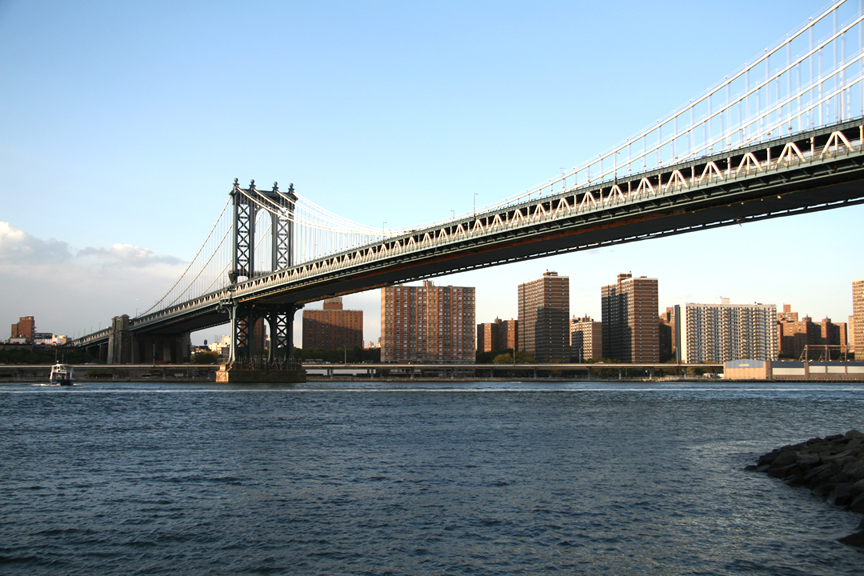
    The Manhattan Bridge was the last of the three great suspension bridges built across the East River (the other two are the Brooklyn and the Williamsburg). The bridge connects lower Manhattan (Canal Street) with Brooklyn (Flatbush Avenue). The photo is from the Brooklyn side in DUMBO. The bridge, completed in 1909, carries tremendous traffic: two roadways, upper and lower, with 6 lanes of vehicular traffic, subway tracks, a walkway, and a bikeway. It has, however, been plagued with problems from its inception, which were neglected until recently.

    The bridge designer, Leon Moisseiff, located the subway tracks on the outer sides of the roadway rather than in the center. The design flaw was discovered soon after construction: the bridge twisted whenever a train passed. The problem got worse; movement in the roadway (as much as several feet up and down) caused cracking. Crying out for repairs, the bridge was neglected with the NYC fiscal crisis in the 1970s. A major reconstruction finally began in 1982 and will only see completion in 2013 at a cost of $829 million.

    It is interesting that Moisseiff, known for his work on deflection theory allowing for lighter and more graceful structures, was engineer for the Benjamin Franklin Bridge, consultant for the Golden Gate Bridge, one of the designers for the San Francisco-Oakland Bridge, and primary designer for the Tacoma Narrows Bridge, which Moisseiff called the “most beautiful bridge in the world.” However, the bridge collapsed in a windstorm only four months after opening, leaving a damaged legacy…

    Posted on by Brian Dubé

  • The Brooklyn Museum

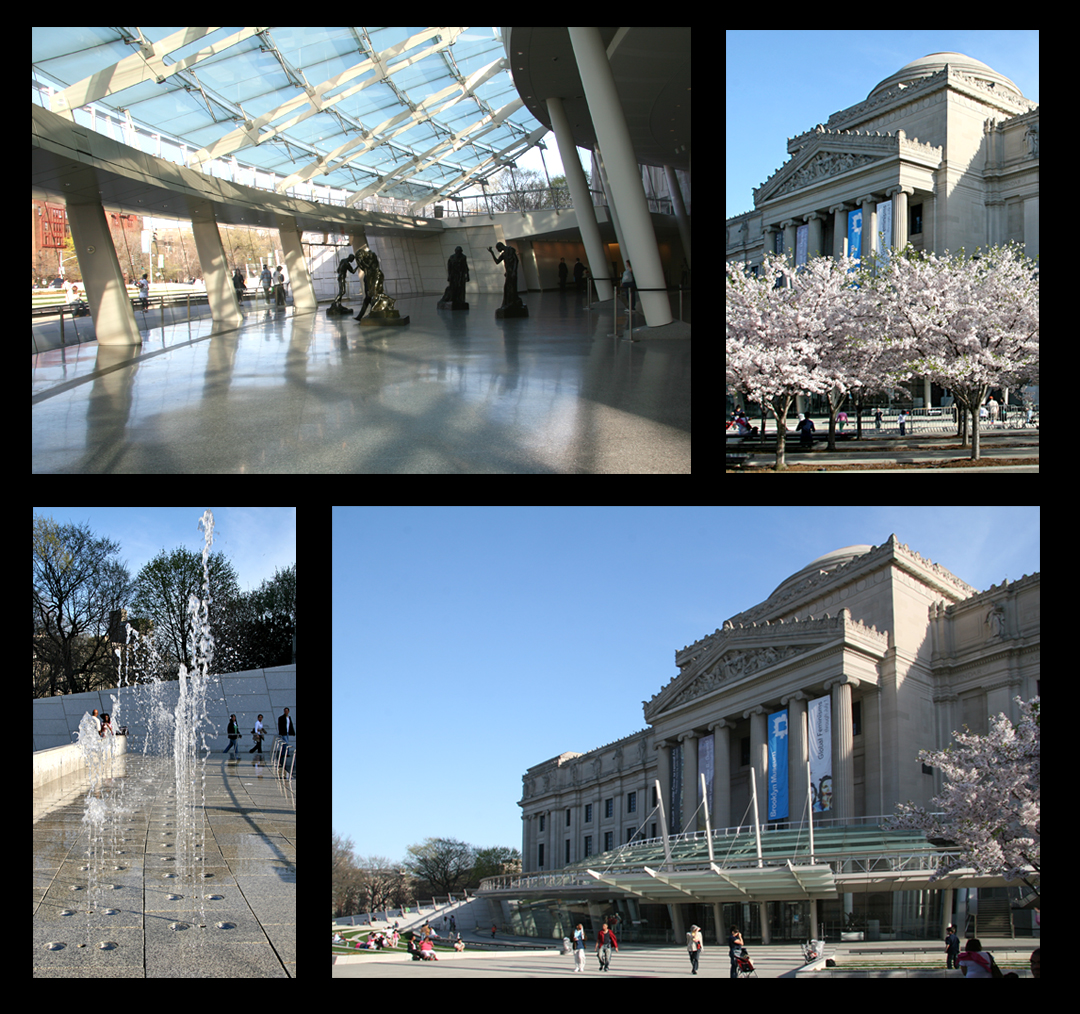
    For most visitors and many residents, New York City is Manhattan. And with all there is in Manhattan, Brooklyn can be easily overlooked. But this borough, the largest of the 5 that make up the city, is a world unto itself, with many treasures, both large and small. The Brooklyn Museum is one of the largest and most comprehensive art museums in the country. With permanent collections of more than a million objects, its holdings include objects ranging from ancient Egyptian masterpieces to contemporary art and represent almost every culture.

    The Museum is housed in a 560,000-square-foot landmark Beaux-Arts building designed by McKim, Mead & White. It is located in central Brooklyn, a half-hour from midtown Manhattan, with its own subway stop. The Brooklyn Museum is set on Eastern Parkway, one block from Grand Army Plaza, in a complex of parks and gardens conceived in the 19th century, that is also home to Prospect Park, the Brooklyn Botanic Garden (with which the Museum shares a parking lot), the Prospect Park Zoo, and the central branch of the Brooklyn Public Library. In 2004, a $63 million dollar renovation was completed. The museum also has very diverse exhibits atypical for an art museum, which I believe makes it more accessible to a broader audience. Even if you are not an art museum goer, I highly recommend a visit…


  • Glass

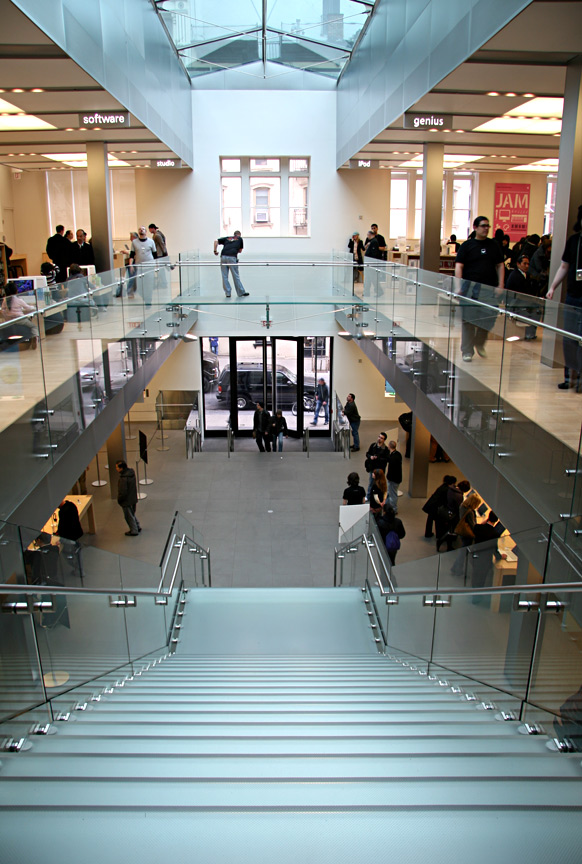
    I’m really quite awed by the design, engineering, material selection, and attention to detail that went into this Apple Store at 103 Prince Street in SoHo. The beautiful two-story neoclassical building was built in the 1920s and occupied by the Post Office until 1999, when Restoration Hardware briefly occupied it until 2001. Apple opened there in July 2002. The importance of design aesthetic to Apple is evident in this store, which received an architectural award in 2003 (as have the design firms involved – Bohlin Cywinski Jackson and Ronnette Riley.)

    The most striking feature of this store (and other Apple Stores) is the use of glass, particularly the 15-foot high glass staircase, with its acid-etched diamond-plate treads. The staircase, which actually received a design patent with Apple CEO Steve Jobs listed (copy of the patent here) was designed by structural engineer James O’Callaghan, now a partner with Brian Eckersley at Eckersley O’Callaghan Structural Design.
    An enormous amount went into the design, with considerations for weight loads, wear, seismic protection, and joinery with titanium hardware. Depp Glass (NY) manufactured the staircase components, the titanium hardware was manufactured by Tripyramid Structures Inc. (Mass.), and the fabrication, installation, and safety tests were performed by Seele GmbH & Co. of Gerthofen, Germany. Click here for a thorough, detailed article. Glass is also used for the stair sidewalls, a bridge (connecting the two sides of the upper floor), and the 70-foot skylight. Lead architect Peter Bohlin explains that glass elements are used not only for structural ingenuity but also because they capture the design of Apple’s products: “From the point of view of the attitude and spirit of the store, it is the pure expression of a quality associated with a company that makes these very beautiful, rather pure products.”

    Glass elements and white Corian fixtures are juxtaposed with wood for warmth – maple is used for benches, tables, counters, shelving, and the backs to the seating in their theater, used for presentations, classes, and events. The unique Pietra Serna stone floor in dark gray is also striking. If you love glass as I do, visit this store along with their Fifth Avenue location, the subject of two previous postings (click here and here)…


  • Towers

    Posted on by Brian Dubé

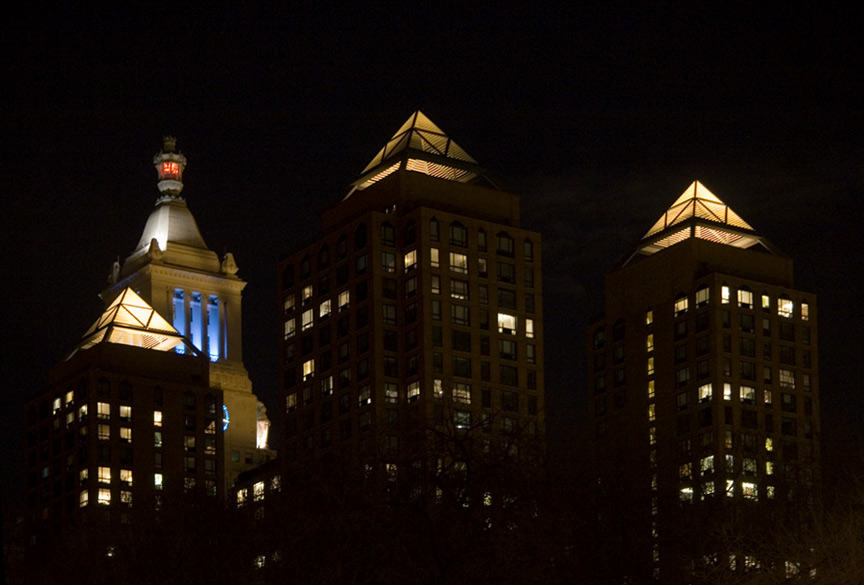
    This is a vista of Zeckendorf Towers and the Con Ed tower, seen from Union Square. Although this area is historically significant as a gathering space for labor and political events (once known as New York’s Speakers’ Corner), by the 1970s, it had seriously deteriorated and was home to drug dealers and considered extremely unsafe (click here for history). From 1983 to 1986, the park underwent an extensive renovation. New retailers moved in, such as Barnes and Noble, Virgin Records, and Circuit City. In 1987, the Zeckendorf Towers at 1 Irving Place, an enormous project encompassing a city block with 670 condominium apartments, was completed. To make way for this project, a small group of 19th-century buildings were leveled, including the Union Square Hotel and S. Klein’s on the Square, the renowned (and tacky) original discount department store. Many credit the Zeckendorf development as being one of the primary forces in the revitalization of the this area.

    There are four towers (only three can be seen in the photo), each with its signature floating pyramidal top. Along with the Con Ed tower, this is one of the most distinctive and identifiable illuminated group of buildings in the nighttime NYC skyline. Like Times Square, this area has had tremendous inertial resistance to improvement. In addition to Klein’s, it has been home to a parade of discount stores, both small and large (e.g. Mays and then Bradlees), particularly on 14th Street – the most resistant to improvement. With the recent opening of Whole Foods Market and a new residential condo at 14th and University Place, the transformation finally looks complete…

    Posted on by Brian Dubé

  • Gothic Night

    Posted on by Brian Dubé

    I find monuments so exquisite when illuminated at night – this is one of the great things about cities like Paris. New York City has its small share of night time beauties, and Grace Church at night is one of them. This night was the perfect Gothic experience, with a near full moon over the starkly lit contrast of the church spire. The illuminated world of New York at night gives residents and visitors a whole other window of opportunity for activities normally relegated to the daytime – sightseeing, strolling, biking, even socializing and sitting in parks. A city that never sleeps must keep its lights on…

    Posted on by Brian Dubé

  • W Hotel Union Square

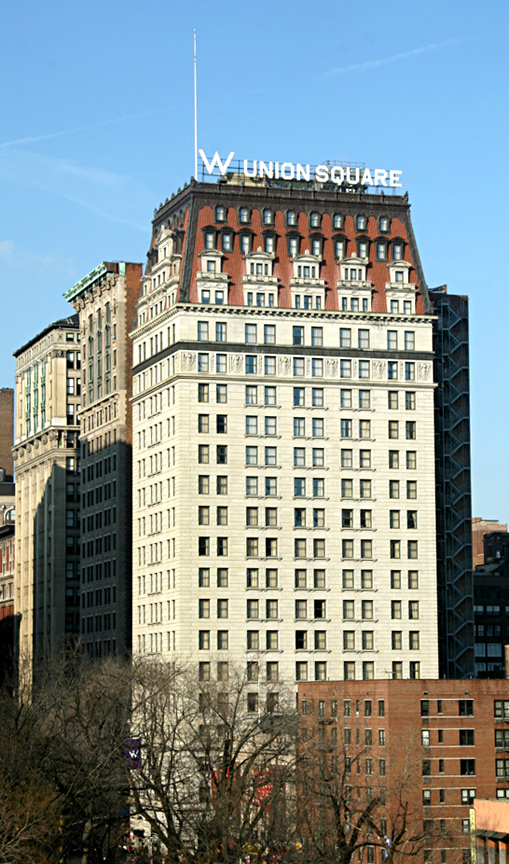
    This is the W Hotel Union Square at 201 Park Ave South and 17th Street. This Beaux Arts marvel is probably the most architecturally notable building in the Union Square area, with its granite and limestone exterior and mansarded roof. The structure was built in 1911 to the designs of D’Oench & Yost for the Germania Insurance Company. The company name was changed during World War I to Guardian Life. In 2000, it completed its transformation as the W Hotel Union Square.

    The W Hotel chain was launched by Starwood Hotels in 1999 as a “fun, hip” place – the “W” stands for their slogan, “Whatever, Whenever.” The hotel renovations were designed by the firm of starchitect David Rockwell. The coffered ceilings, mosaic floors, and vaulted marble hallways were restored – the rooms themselves have been modernized. There is a grand mahogany and limestone staircase in the lobby, a Rockwell signature. Greenery has been added in the way of large topiaries and wheatgrass planters in the lobby. There is a streetside living room for hanging out…


  • Going Up

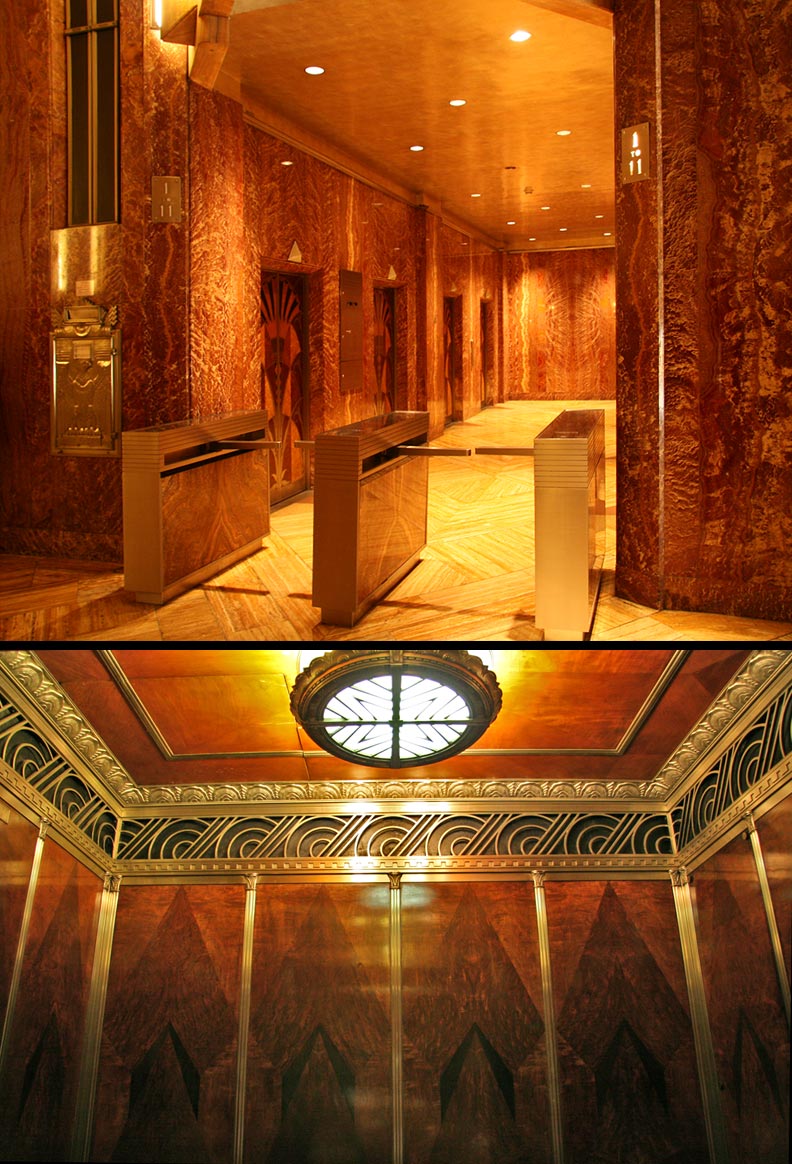
    This is an elevator door from the Chrysler Building, set against red African marble walls and travertine floors. There are 32 elevators, and each door is finished in a pattern of exotic, rare wood marquetry using different varieties of wood from all over the world. The doors are fantastic Art Deco designs and reflect the influence of ancient Egyptian motifs.

    Of course, elevators were key in the existence of tall skyscrapers, and the Chrysler Building benefited from the latest elevator technology. From Scientific American: “Otis electric gearless, machine type, with full automatic signal control and automatic leveling. This type is practically self-operating.” They could travel up to speeds of 1200 feet a minute but were curbed to 700 feet per minute by existing laws in NYC. Click here for more photos showing a bank of lobby elevators and a sneak peek at the interior of one of the elevator cabs – it’s as far as they will let you go without business in the building…


  • The Scholastic Building

    This is the Scholastic Building at 557 Broadway in SoHo’s cast iron district. The project was designed by celebrated Italian architect Aldo Rossi, described as a “poet who happens to be an architect.” He died in an auto accident before construction began.

    Scholastic, established in 1920, is the world’s largest publisher of children’s books. They have a large presence in this area, occupying a number of buildings. This was Rossi’s first and only project in NYC. The structure was built from scratch on a site which was home to a parking lot and a one-story building (Broadway Lumber), taking six years to complete. The design, with its white half-columns, spandrels, and rust-red I-Beams, is quite striking; “the building’s columnar Broadway facade, in steel, terra-cotta, and stone, echoes the scale and the formal, Classical character of its commercial neighbors.”

    The property extends one city block through to Mercer Street, where the building sports its own similar but more industrial facade. Most critics love the design, while some, of course, do not. The building expands Scholastic’s previous headquarters next door at the Rouss Building (circa 1889) at 555 Broadway (photo left) – the floors are contiguous between the two buildings. The land itself is leased from the Blechman family, with an option to buy it in 2013. Read the story here. The new building serves as the primary entrance to Scholastic; the ground floor and mezzanine is a retail store with their line of books, videos, games, puzzles, and toys. Do visit…


  • DUMBO

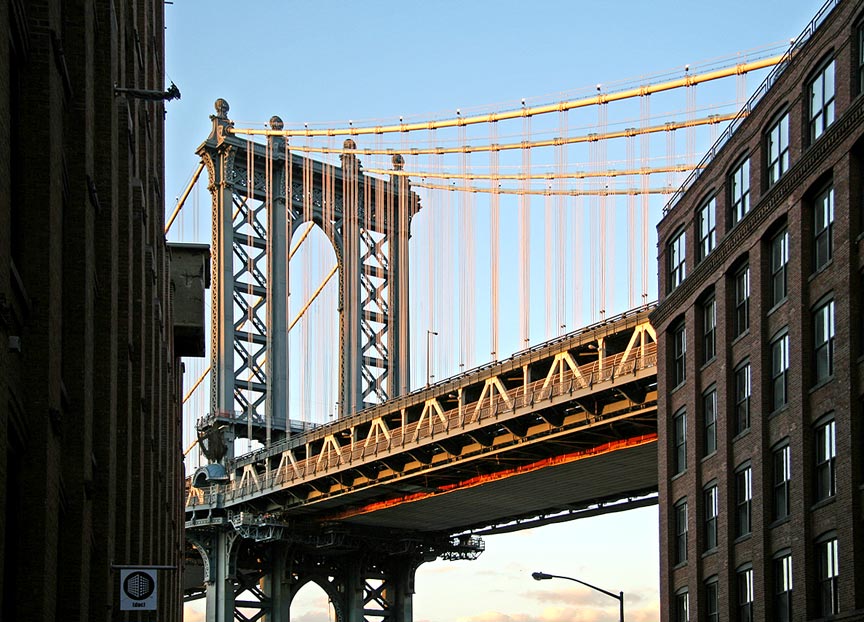
    This is a view looking towards the Manhattan Bridge from Washington Street in DUMBO (Down Under the Manhattan Bridge Overpass). This image gives some sense of the visual drama typical in this Brooklyn neighborhood. There are a number of elements which gives the neighborhood its unique atmosphere – vistas of three bridges with the Brooklyn and Manhattan bridges looming overhead, the omnipresent waterfront, the breathtaking views of Manhattan, the light, the architecture of the large warehouse buildings, and the cavernous feel of the streets. These elements, along with inexpensive rents and proximity to Manhattan, made it a natural choice for the migration of artists who began to inhabit the area in the 1980s. It still has a strong arts community, but gentrification has priced many out, a common scenario with most urban art communities.

    I posted on the annual Dumbo Arts Festival in October 2006 in Sink or Swim, Night in Bloom, Dumbo Arts Fest, and Gallery View. There are a number of businesses in the area worth visiting (many well-known): The Jacques Torres chocolate factory, Bargemusic, Grimaldi’s Pizzeria, the Brooklyn Ice Cream Factory, the River Café, galleries, etc. Click here for the DUMBONYC blog with extensive resource listings…


  • dinamic_sidebar 4 none

©2026 New York Daily Photo Entries (RSS) and Comments (RSS)  Raindrops Theme