• Category Archives Architecture
  • Carlton Hotel

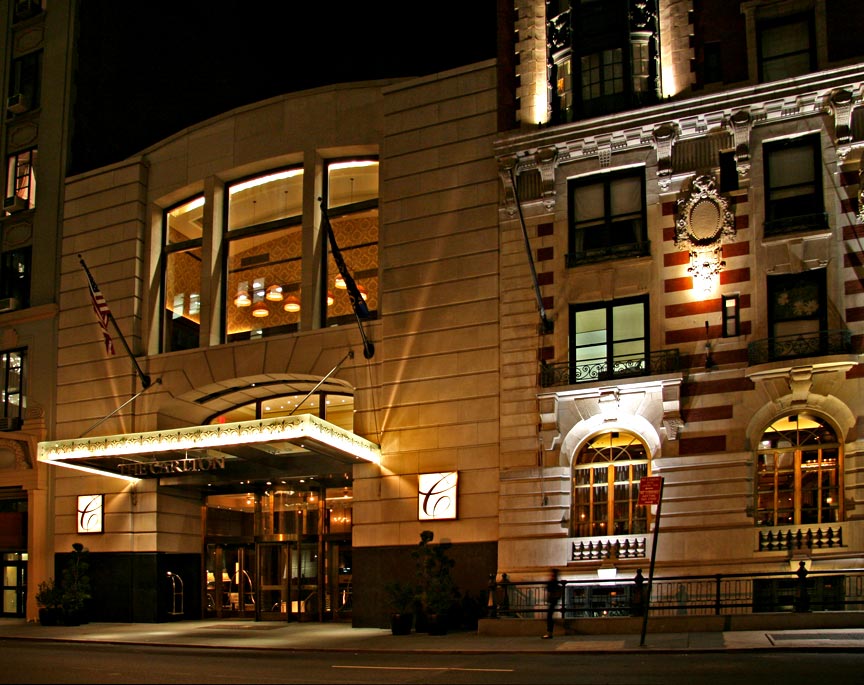
    This is the Carlton Hotel at 88 Madison Avenue at 29th Street. I had no plans to photograph this building, had never seen it before, and knew nothing about it. But walking by it at night, I found the lighting on this Beaux-Arts building quite spectacular.

    My research, both on and offline returned very little, so I really had to dig. I learned the most from the recent press – click here for the hotel’s website with these articles. Built as the Seville Hotel in 1904, it was in steady decline until it recently underwent a 5-year, $60 million renovation led by starchitect David Rockwell.
    One of the high points of the renovation was the discovery of a stained glass skylight dome (believed to have Tiffany glass) hidden above a dropped ceiling above an old barroom and severely blackened. This dome was restored and installed over the new restaurant Country, with chef Geoffrey Zakarian – a lot of positive buzz on this place. A new 3-story annex serves as entrance (click here for photo), with a limestone balcony, a turn-of-the-century curved staircase, and a waterfall. One of these days, I need to get in there and see that dome…

  • Met Life Tower

    This is the Metropolitan Life Insurance Company Tower at One Madison Avenue and 23rd Street. Click here for closeup. Designed by Napoleon LeBrun & Sons and completed in 1909, it reigned as the world’s tallest building (700 feet) until 1913, when the Woolworth Building surpassed it (792 feet). The building was modeled after the St. Mark’s Campanile in Venice, Italy, and is a National Historic Landmark. The tower itself was an add-on to the 1893 building, which encompasses a full city block. Click here for article.

    The tower lit at night is one of NYC’s most prominent and recognizable sights, along with the Empire State Building, the New York Life Insurance Building, and a handful of others. It can be seen from around the city and outer boroughs; one of the most spectacular views is coming into Manhattan from Brooklyn via one of the bridges. As part of a 3-year restoration completed in 2002, a computerized colored lighting system was installed – the system allows them to achieve any colors in the spectrum. The color schemes can be changed for holidays or special events…


  • Stairwell

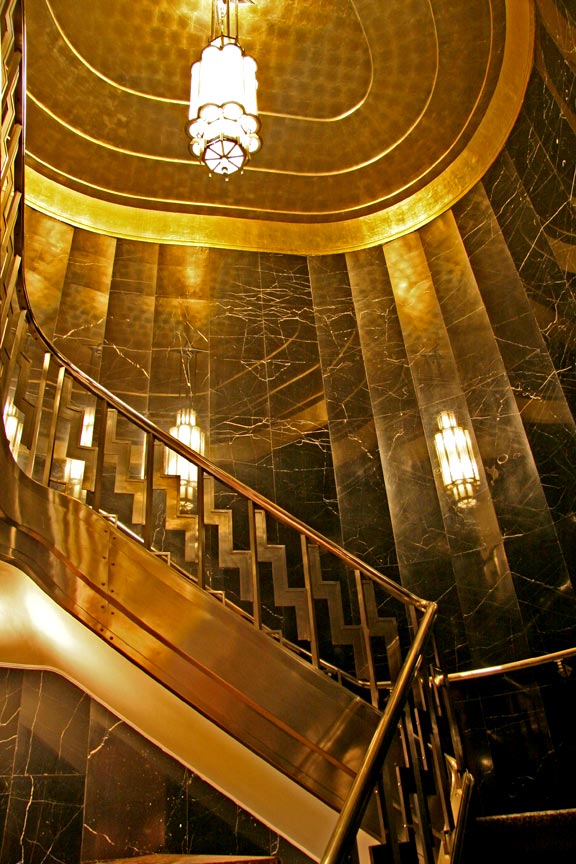
    This is a photo of one of the stairwells in the Chrysler Building. The same red Moroccan marble and chrome steel used in the lobby has been used in the stairwell. This photo was also taken as part of the Open House New York weekend. Click the links for my 3 other posts on the Chrysler Building: What & Where?, Trylon Towers, and Crown Jewel.

    Access to the Chrysler Building has always been somewhat difficult – it has no observatory or other public space. The Chrysler Building is an office building, so access is really only allowed if someone has business with a tenant.
    Since 9/11, things have gotten much more difficult, especially with any known landmarks. There is excess paranoia, and photography is being limited in many instances in NYC. I was told on one occasion that I was not allowed to take photos of the elevators (used to carry tourists up to the the observation deck) in the Empire State Building. So I was happy to get access to the lobby, stairwells, and elevators. And, of course, the exterior is free for everyone to enjoy. But that’s another post…


  • Eagle Warehouse

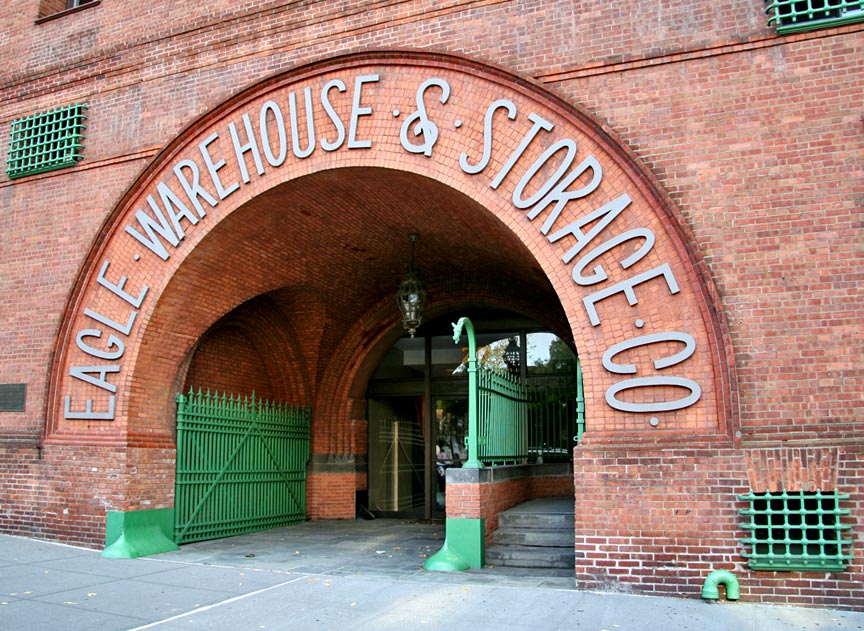
    The Eagle Warehouse stands at 28 Old Fulton Street in the Fulton Ferry Landing area of Brooklyn (between Brooklyn Heights and DUMBO). The photo shows the Romanesque Revival arched entrance.

    This massive medieval structure was built in 1893 (as the Eagle Warehouse and Storage Company) by architect Frank Freeman on the site of the old Brooklyn Eagle building (in its construction, the old three-story Brooklyn Eagle press room building was kept). The Brooklyn Eagle was a daily newspaper published in Brooklyn for 114 years (1841 to 1955). At one point, it was the most popular afternoon paper in the United States. Walt Whitman was its editor for two years; however, he was forced to leave when his antislavery views clashed with the paper’s management.

    The Eagle Warehouse was converted to condominium lofts in 1980. There is a large clock at the top of the building – its glass face is the window of one of the lofts. The Eagle Warehouse is a prominent landmark – check it out if you are in DUMBO…


  • Crown Jewel

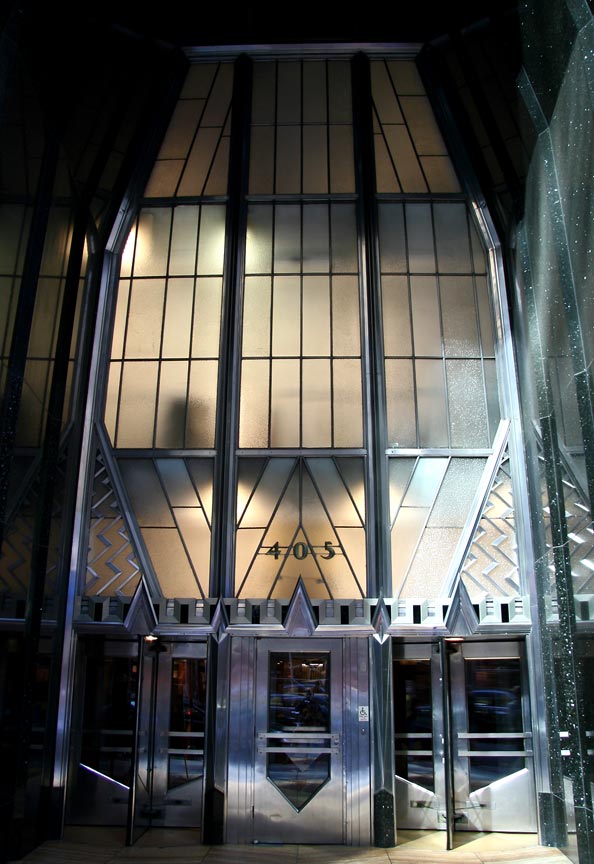
    This is the doorway to the Chrysler Building at 405 Lexington Avenue. The faceted steel, angular cut glass, the shadows, and the highlights all remind me of a cut jewel. The Chrysler Building is an Art Deco masterpiece and has continued to be a favorite of architects, historians, scholars, critics, New Yorkers, and the public.

    The doorway is frequently not shown in photo collections – the magnificent lobby, elevators, stairwells, and exterior with its distinctive decorative elements are generally favored. But the doorway’s design elements are consistent with the building in style and quality, and, being the entrance, are noteworthy.

    Please indulge me – I will feature different aspects of the building over a few different posts. There really is too much to do an adequate job in one post. And after all, isn’t it worthy of more than 15 minutes of fame?


  • Jefferson Market Library

    The Jefferson Market Library on 6th Avenue and 10th Street is one of the city’s most remarkable buildings. It’s an assemblage resembling Bavaria’s Neuschwanstein castle – stained glass windows, steeply sloping roofs, gables, turrets, Venetian Gothic embellishments, and an intricate tower and clock.

    Built 1874-77 (Vaux and Withers, architects), it served as a courthouse with an adjoining prison and market until 1945. A wood fire lookout tower (later replaced with the existing clock tower) was the first building on the site, built in 1833. It was located in the center of the merchants’ sheds of the Jefferson Market. The jail and market were torn down in 1927 and replaced with the high-rise Women’s House of Detention, which remained until 1974.

    Vacant from 1958, local residents saved and restored the structure and persuaded the city to use it as a branch of the New York Public Library, which opened in 1967. Read the entire story here. The exterior of the Library is currently undergoing renovation. I had hoped to photograph the building afterwards. However, with all the political squabble, funding issues, and resultant delays, I chose to shoot the library as best I could (avoiding scaffolding) rather than wait until the project is completed…


  • Squad 18 Firehouse

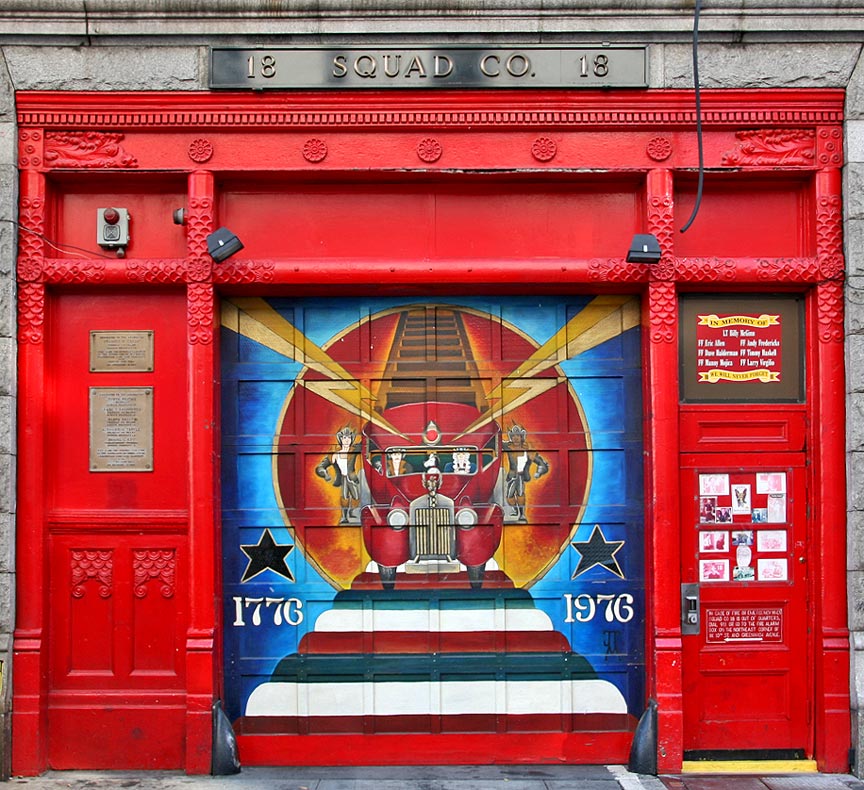
    The firehouse at 132 W. 10th Street is the home of Squad 18 of the New York Fire Department. This historic building, built in 1892, is admired (and photographed) by passersby for its most notable feature: the baydoor, which was painted in 1976 for the American bicentennial. The vibrant, detailed painting depicts responding firemen. NYC has funds set aside specifically for the restoration and preservation of this landmark. Click here for more photos.

    The building was recently renovated. During this period, their operations were temporarily relocated to SoHo. Click here for Squad 18’s website with more info about their operations, equipment, members, and a gallery of photos and calendar of “runs.” The Fire Department has always been held in high esteem for providing an absolutely critical emergency service. And, of course, in NYC, after 9/11, with all the firefighters who gave their lives, their work and sacrifice was highlighted and brought to the attention of everyone worldwide…


  • One Front Street

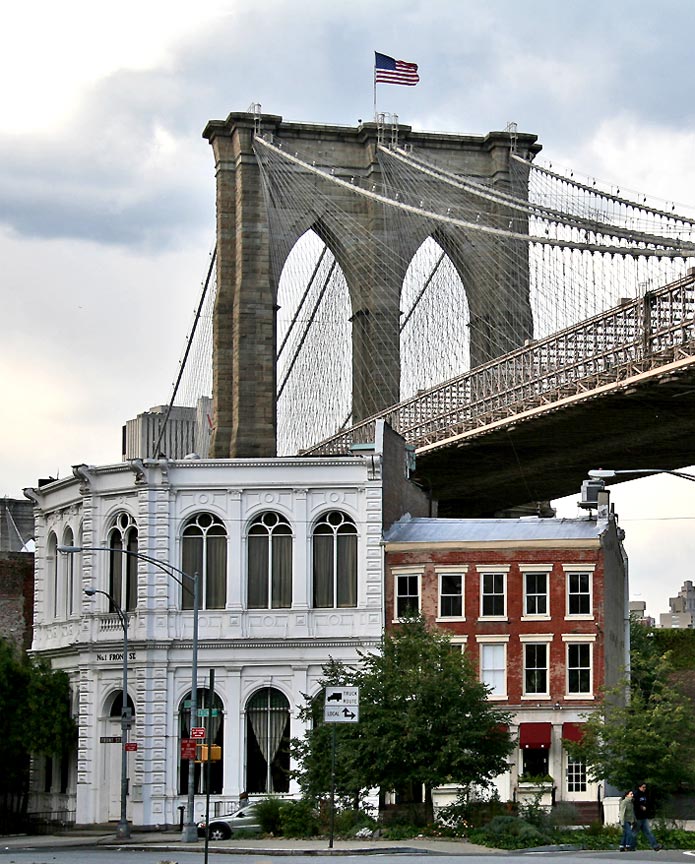
    The building at One Front Street sits at the junction of Front and Old Fulton Street in the Dumbo (Fulton Ferry) historic waterfront district of Brooklyn. This beautiful cast-iron Renaissance palazzo, built in 1869, was originally the Long Island Safe Deposit Company.

    From the American Institute of Architects Guide to New York City: “This monumental bank overshadowed its older neighbors in the prosperous post-Civil War era. The Brooklyn Bridge’s diversion of commuting traffic after 1883 forced the bank to close its doors in 1891.” Like many other structures in the neighborhood, the Brooklyn Bridge frames the architecture and provides an inspiring, quintessential NYC backdrop…


  • Javits Convention Center

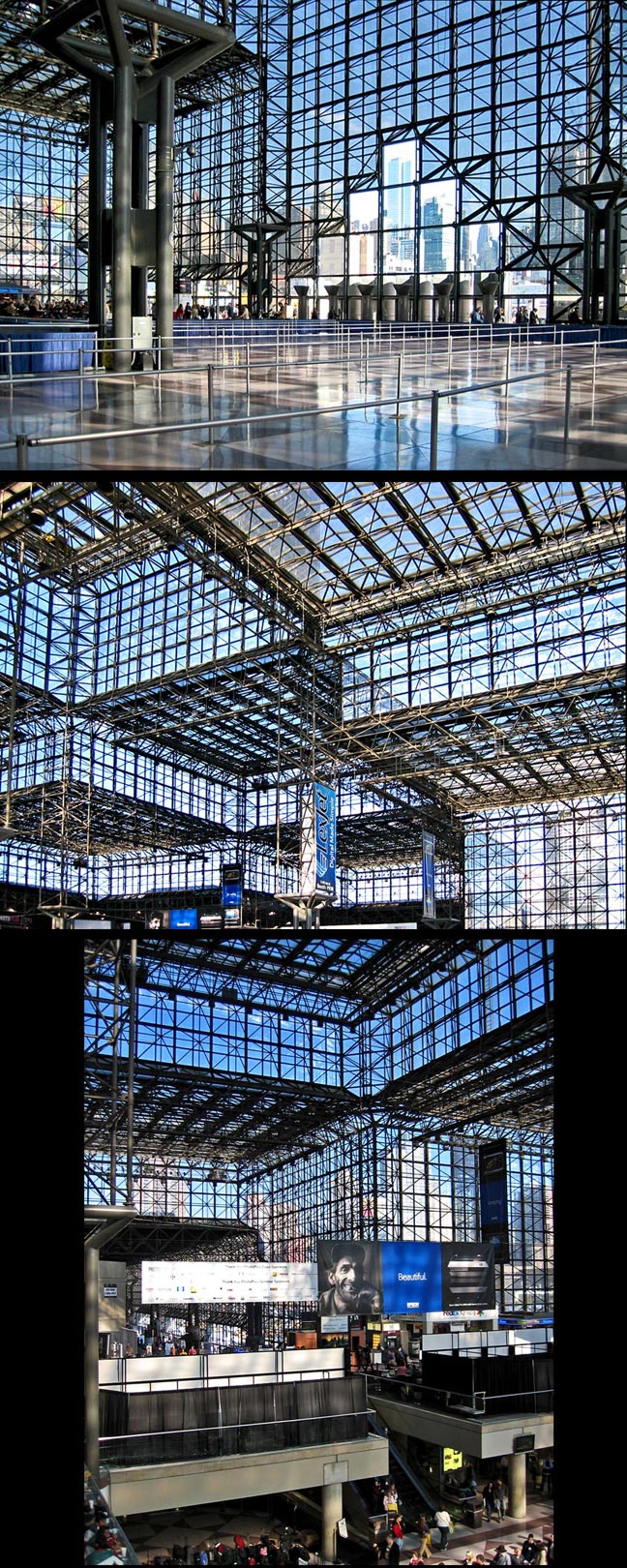
    The Jacob K. Javits Convention Center is a 5-block long structure on the west side of Manhattan. Click here for more photos.

    NYC was in need of a larger convention center. The Coliseum at Columbus Circle, dating back to 1950, had been outgrown; it was also considered very unattractive and disliked by many New Yorkers. The new center was designed by I.M. Pei & Partners and completed in 1986. It was named for Jacob K. Javits, a New York senator who died the year of the center’s completion.

    The building aspires to be the Crystal Palace of our time. The building is a long assemblage of clear glass rectilinear forms held together with a steel space-frame system. The feel is light and airy, unlike the windowless treatment of many convention centers.

    The center hosts nearly 100 shows per year. Yesterday, I attended the annual PhotoPlus Expo (click here for photos). In spite of its mammoth size, the actual exhibition space is considered inadequate for larger trade shows. A new expansion is currently being planned – an increase of 45%, along with a hotel, completion due in 2010…


  • Trylon Towers

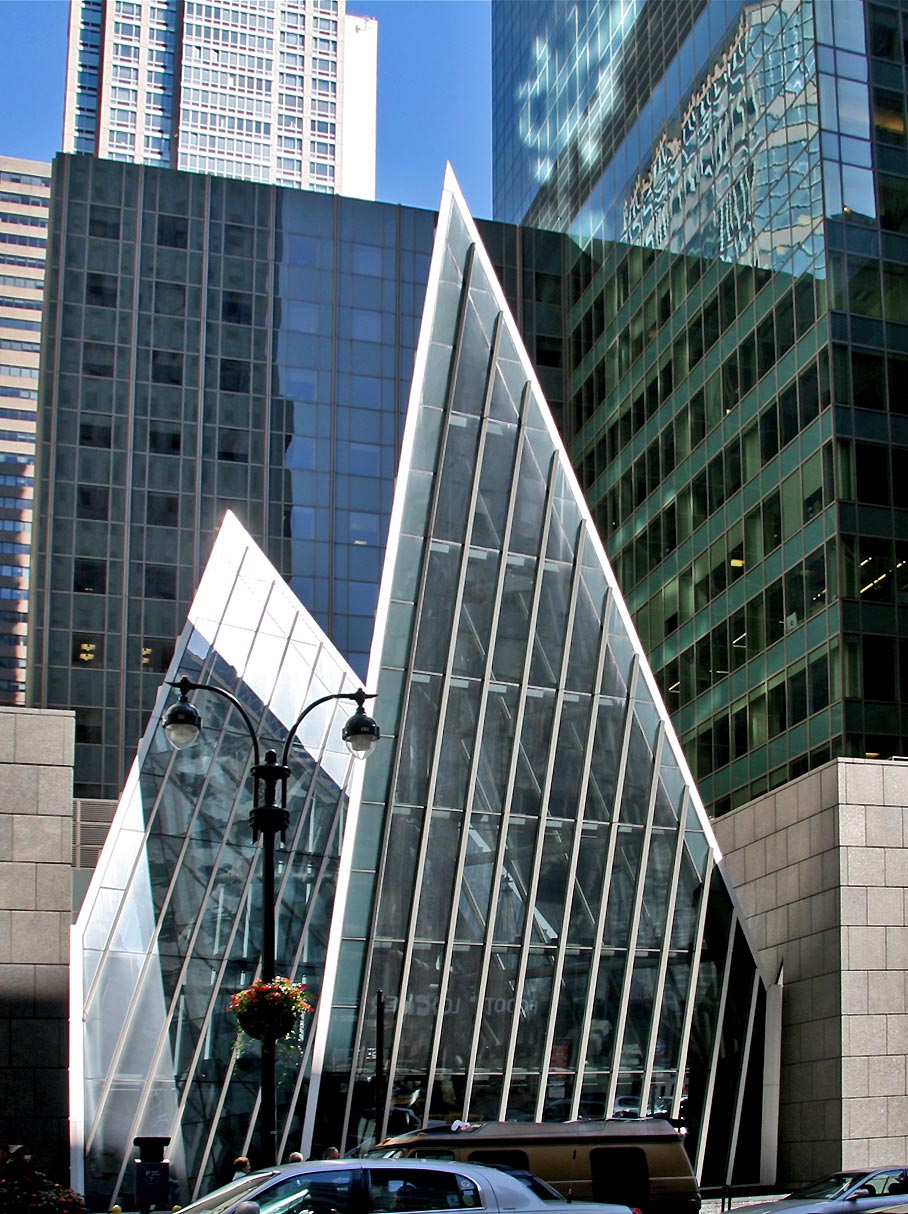
    The Trylon Towers are a unique structural addition to the Chrysler Building. Three pyramid-like trilon forms in glass and tubular steel rise 57, 68, and 73 feet tall. Designed by renowned architects Philip Johnson and Alan Ritchie (there are a few photos on their website), their placement here at 155 East 42nd Street provide a beautiful and startling contrast to the towers around them.

    The property was leased to Capital Grille in 2004, a leading steakhouse chain of 22 restaurants (see second photo here). Four separate dining environments for over 200 people have been created from over 12,000 square feet of interior space: The Chrysler Room, The Trylons, The Wine Vault, and The Chef’s Table. They have a reputation as one of the best steakhouses in NYC, with beef that is dry aged on premises. The wine vault has over 400 varieties with over 5000 bottles. Click here for more info about the restaurant. Take a look at the building if you’re in the neighborhood…


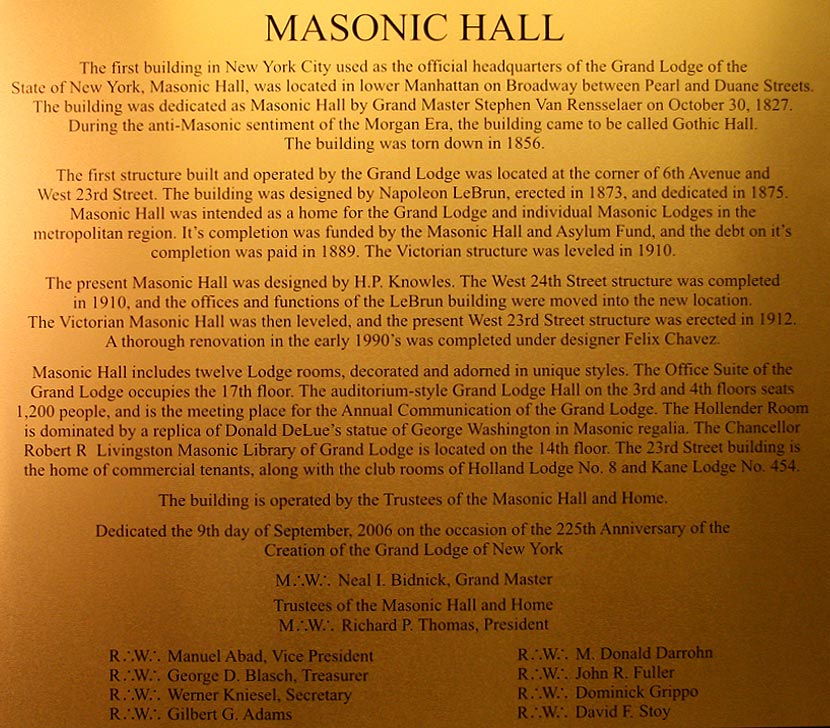
  • Masonic Lodge

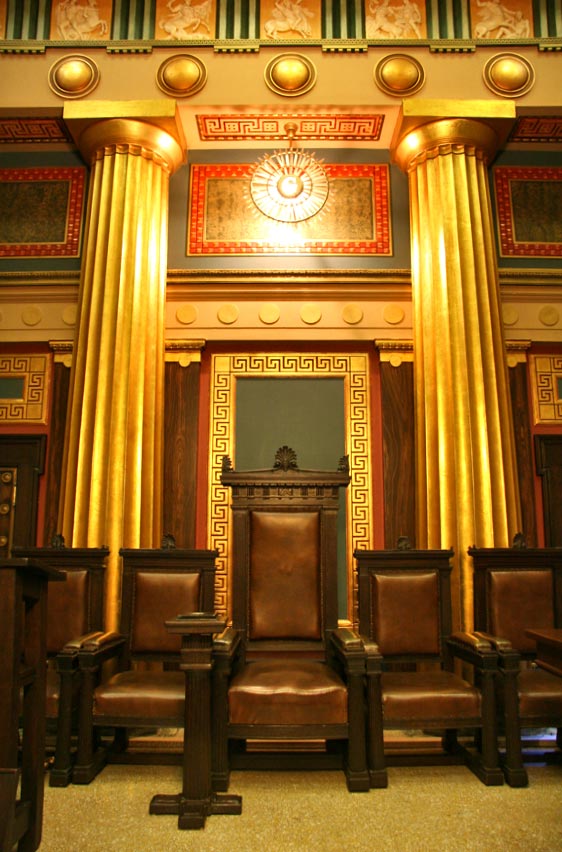
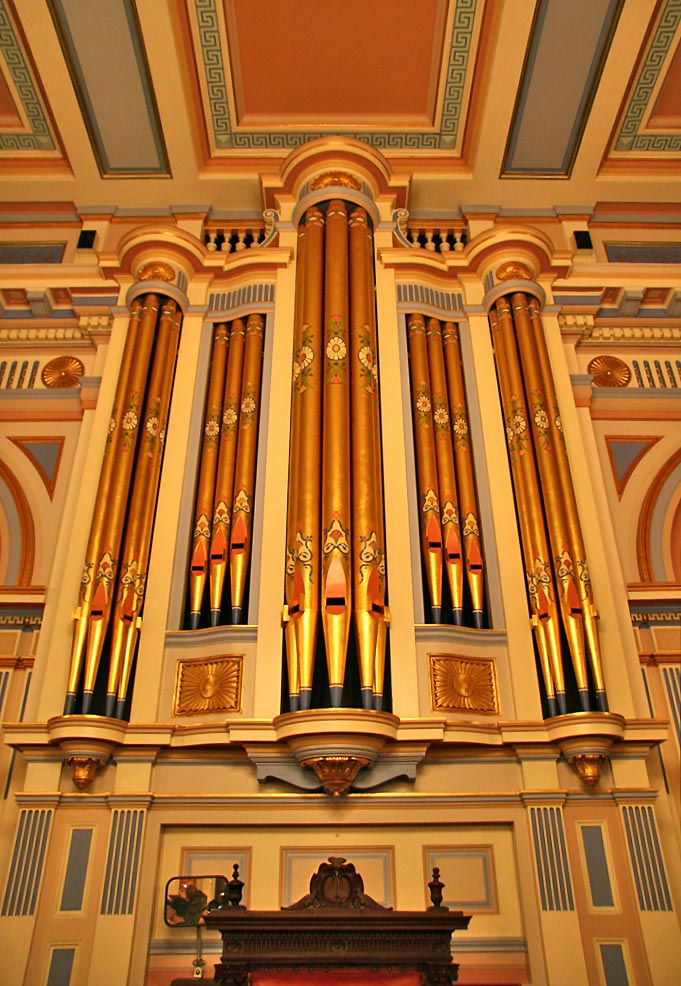
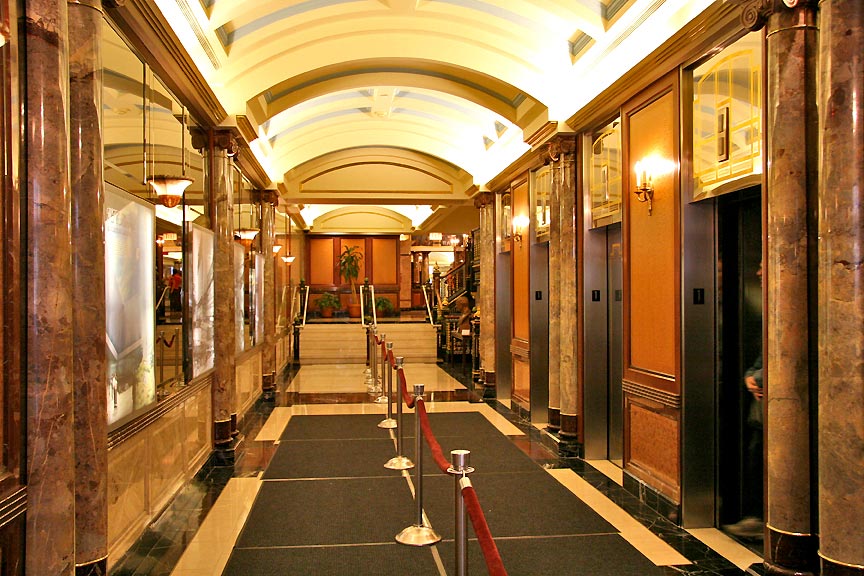
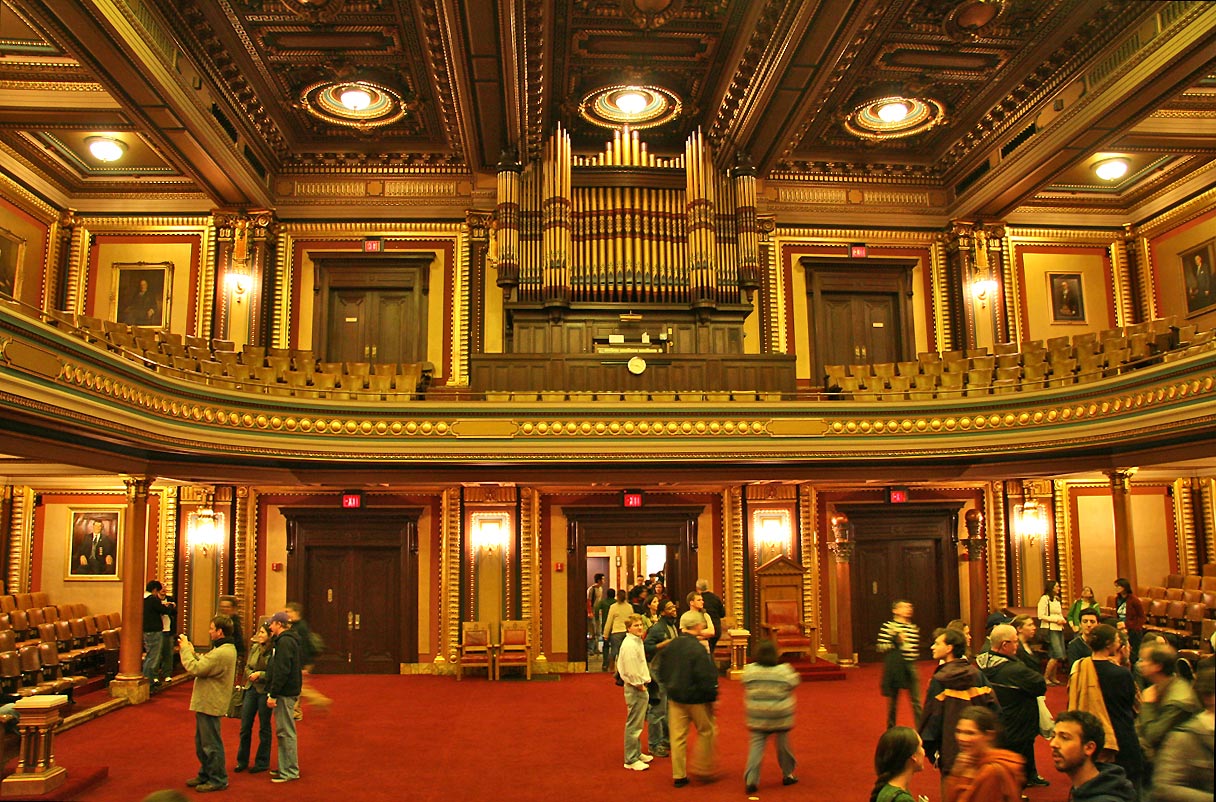
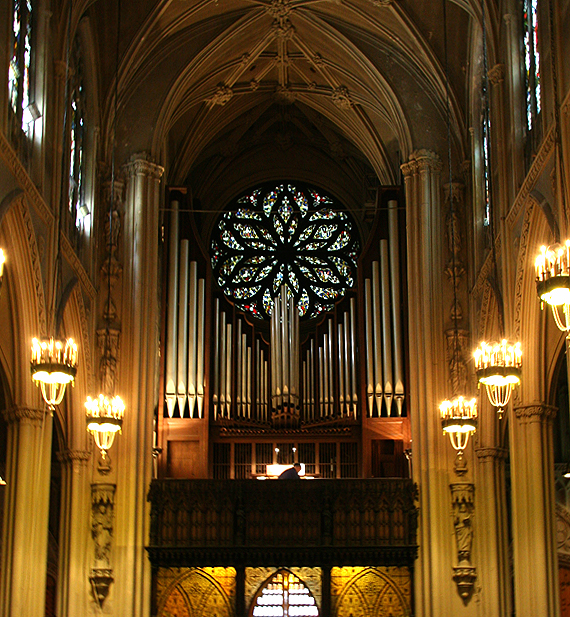
    I had a difficult time selecting an image to represent this site, so please take a moment and click here for a series of 8 photos on one of the most remarkably unexpected spaces in the city. After all, isn’t the very concept of a Lodge something which we associate with the suburbs?

    I was completely amazed to find a place like this in Manhattan at 71 W. 23rd Street. This building is the New York Grand Lodge Headquarters for the Freemasons – over 60 lodges meet here in 12 stately rooms with pipe organs in every room. The Masons actually own two buildings here (see building history here). The one facing 23rd is an office building, and rental income helps support the actual Lodge building, which faces 24th Street. A long portico provides access from 23rd Street. They have a two-story, auditorium-style Grand Lodge room which seats 1200 people.

    This two-century-old secret society has seen a slow decline in membership, so it has become a little more interested in attracting new members. They have a history of doing philanthropic work, including underwriting medical research. Their members include many famous individuals: 14 presidents (among them George Washington), Ben Franklin, Beethoven and Mozart, Clark Gable, Houdini, and Count Basie. Tours are available Monday through Friday, so go there and check it out…

    About this photo: This was taken during the weekend of Open House New York. For more information, see their website here.


  • Grace Church

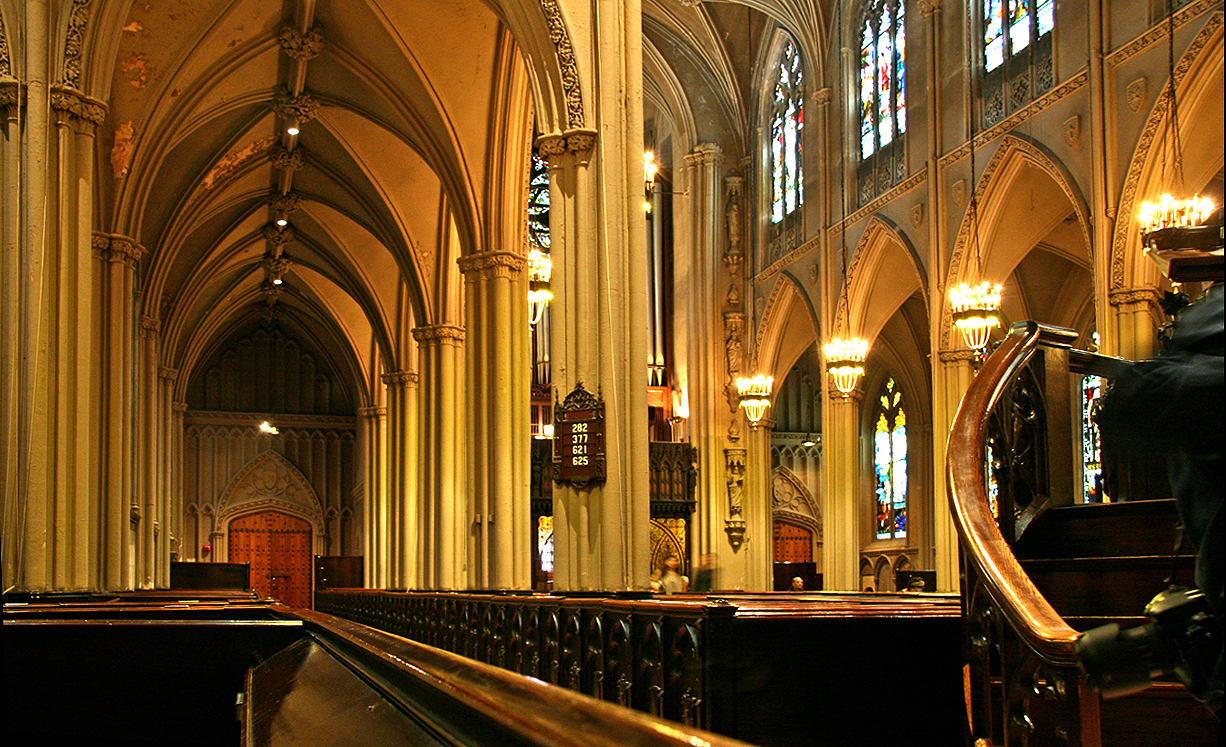
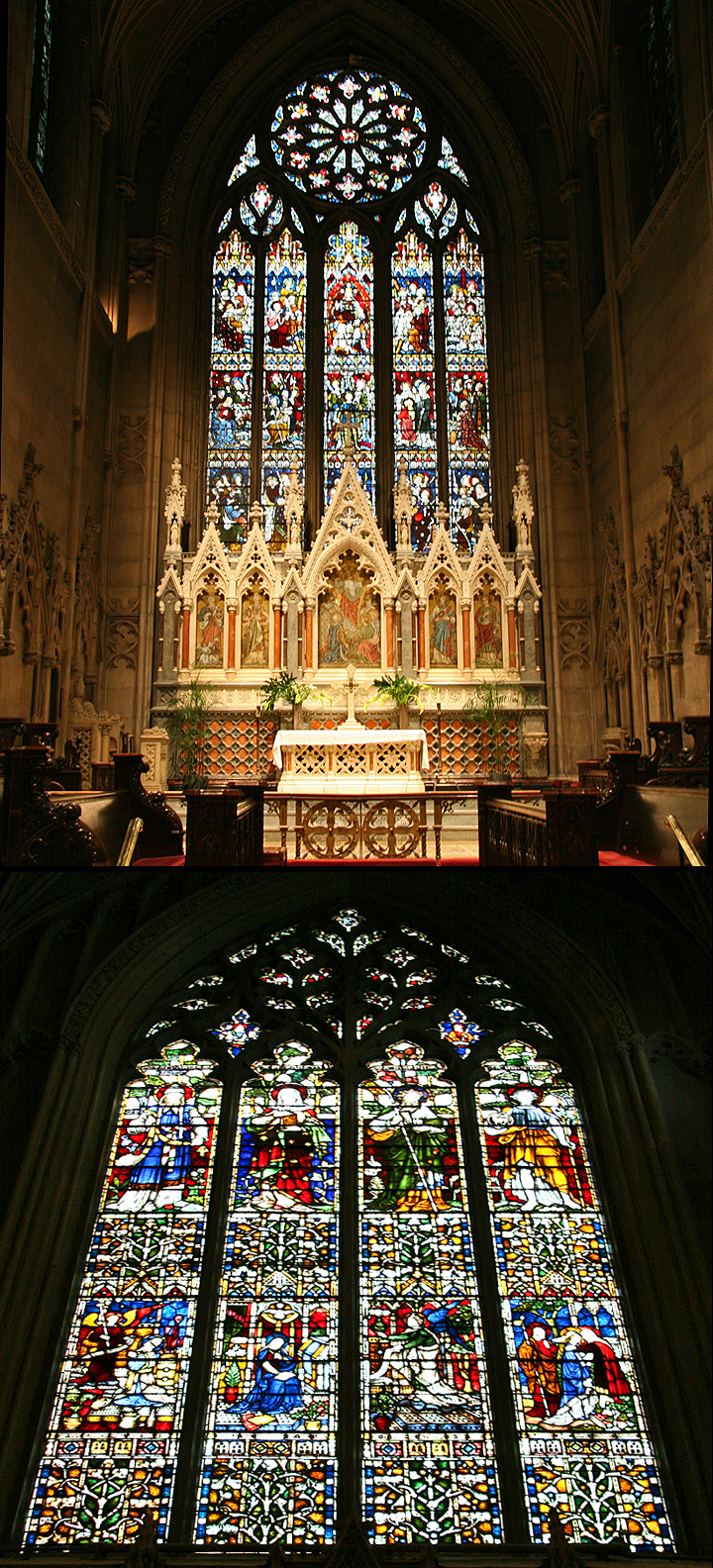
    Grace Church is a Gothic revival masterpiece and one of the “hidden” gems of NYC – off the tourist radar and little known to outsiders. It sits at the last bend in Broadway at 10th Street and dominates the view from the south. Click here for more photos.

    Built in 1843-1846 on land acquired from Henry Brevoort, the Church was designed by 23-year-old architect James Renwick (his first commission), who later went on to design St. Patrick’s Cathedral. Renwick studied the works of the Pugins – great English revivalists. Vestry minutes list as an expense the workers from Sing Sing state prison who cut the stone.

    The church is undergoing exterior renovation work, so I took no photos of the outside. These projects can take some time, however, so I did not want to wait for completion before showing you this structure. For photos of the exterior, I direct you to the Grace Church site with an online tour. The church has extensive music programs: choir recitals, Bach at noon, and Saturday and Sunday organ recitals  click here for info and schedule). Grace has a beautiful organ – click here for a photo and click here for a history. Catching one of their organ recitals would be a great time to visit this historic landmark…


  • Maritime Building

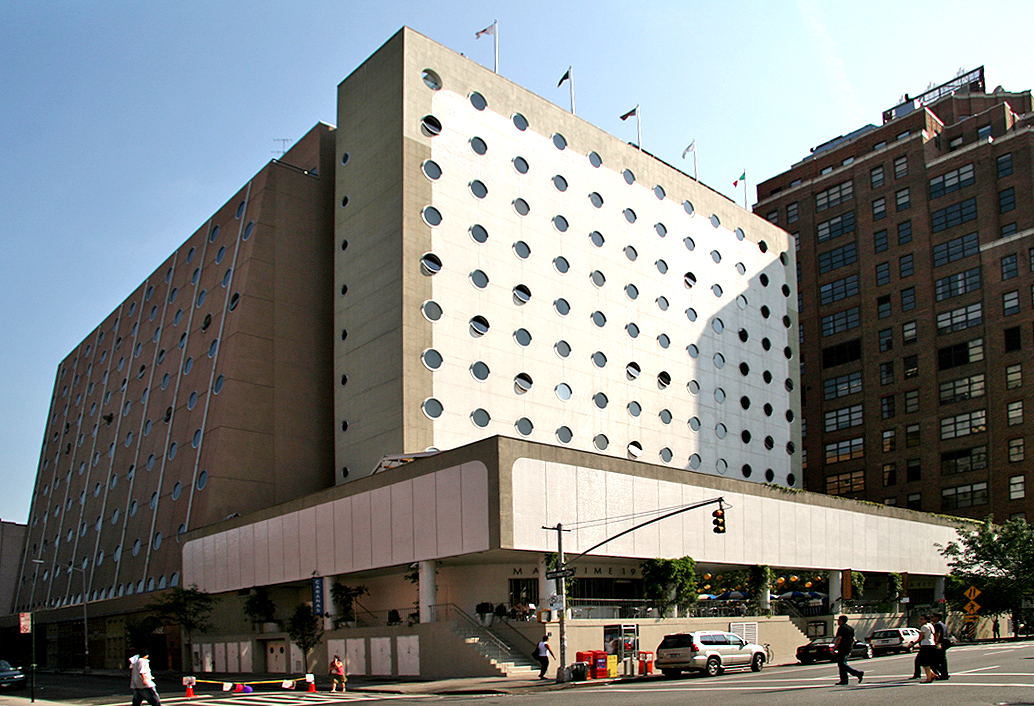
    This stark white, tile faced building with 5-foot portholed windows was originally built in 1966 for the National Maritime Union by Albert C. Ledner, a New Orleans architect. The 8.5 degree front sloping wall was the architect’s solution to a 1961 zoning requirement (20-foot setback above 85 feet). The building included living quarters and instructional, medical, and recreation space for sailors. In 1987, it was acquired by Covenant House, a shelter for runaways started by Franciscan priest Bruce Ritter (who, in a sad scandal, resigned both from Covenant House and the priesthood in 1990). In 1996, the building was sold to the New York Service Center for Chinese Study Fellows, which provided housing and education for Chinese students, artists, and business people.

    In its most recent incarnation, it has been converted to the Maritime Hotel, purchased in 2001 for $19 million by Sean K. MacPherson and Eric Goode, who partnered with developers Richard Born and Ira Drukier (who also did the Perry Street Condos by Richard Meier). The hotel has an elevated plaza, a garden with pond and lily pads, two restaurants, patio, roof bar, and beautiful teak furnished rooms with white ceilings (each with a porthole window), evoking a ship’s staterooms…


  • Meier World

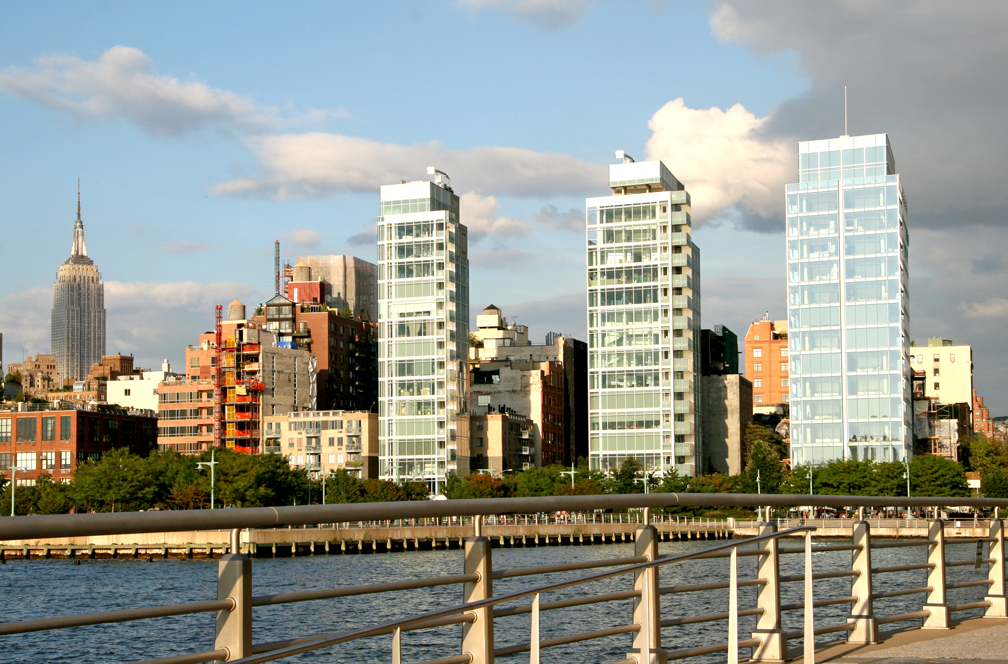
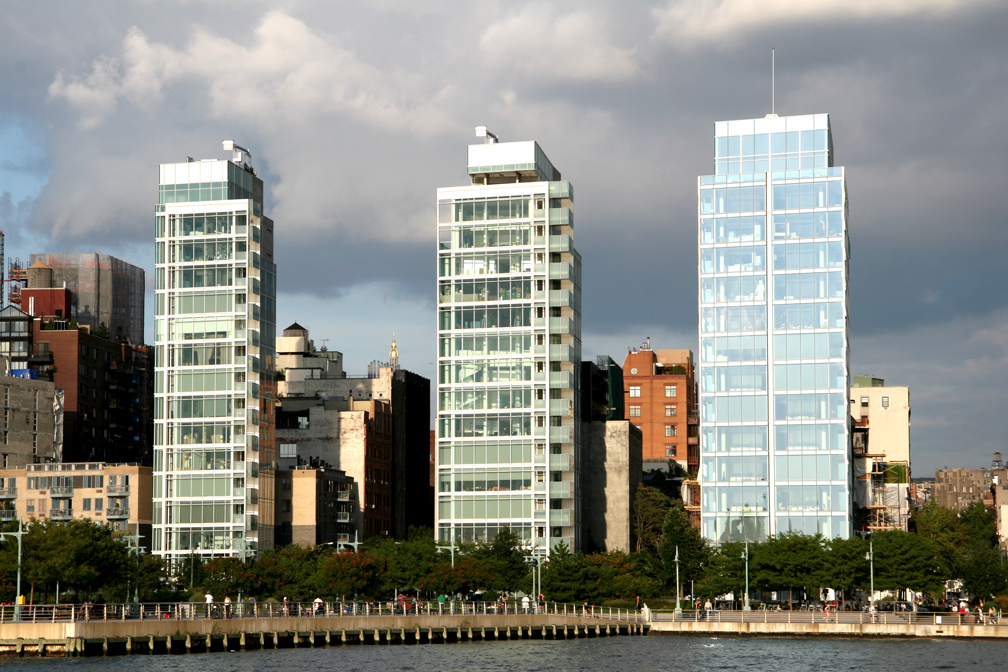
    In the far West Village, flanking the Hudson River and the new, immensely popular Hudson River Park (this photo was taken from the Christopher Street Pier) are three residential 16-story towers all designed by starchitect Richard Meier. The projects all share a crystalline structure, clad in insulating laminated glass. Click here for additional photo.

    The two buildings on the left are 173/176 Perry condominiums (completed 2002), the first Meier construction in NYC. The spaces are open lofts with interior design and furnishings completed by the owners. The building on the right is 165 Charles (completed 2006). The interiors of the units in this property, in contrast to Perry Street, were completely designed and finished by Meier and apparently are spectacular. And the roster of tenants includes celebrities (Martha Stewart, Nicole Kidman, Calvin Klein, et al).

    These projects are a big subject, so I leave it to you to read further online, perhaps starting with the Richard Meier official site. Of course, anything this outspoken in a historical neighborhood will provoke controversy – many nearby streets are cobbled, and the surrounding area has predominately low-rise dwellings. However, new construction is a part of our world, and the appropriate architectural solution for a given context is difficult…


  • Pan Am Building

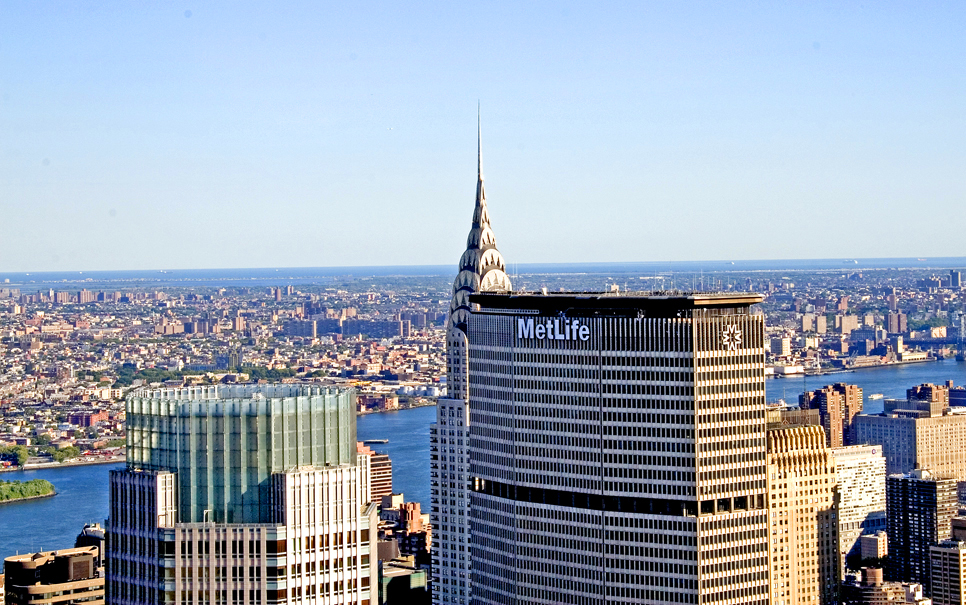
    I think of this as the Pan Am building – its name during my first years in NYC. Designed by Emery Roth, Walter Gropius, and Pietro Belluschi, it was the world’s largest commercial office building when it opened in 1963. The Pan Am building is located at 200 Park Avenue above Grand Central’s north shed. A controversial building – many have found it to be very unappealing, dominating the skyline from many nearby vantage points and occluding views such as that of the New York Central Building (now the Helmsley Building at 230 Park Ave.)

    It is perhaps best known for its helicopter service (it has a rooftop helipad). There was much excitement about their 7-minute ($7) flight to JFK airport, offered between 1965 and 1968 and reopened in 1977. However, service was closed after an accident that killed five people – broken landing gear caused a helicopter to tip over, killing four people waiting to board and a fifth person on the street with part of a rotor blade which had flown loose. Click here for a link showing early photos of the building with its iconic logo, including the helicopter service. And check out these photos showing stewardesses in uniforms from the glory days of aviation, when flying was a luxury and planes were not seen as a bus with wings, as they are today. More photos and an interesting article here.

    In 1981, the building was sold to Met Life. When Pan Am ceased operations in 1991, the Pan Am logo was removed and replaced with that of Met Life. Of course, revisionism rears its head after a loss (see this article from the NY Times). Apparently many now are less negative regarding the building now that time has passed…


  • dinamic_sidebar 4 none

©2026 New York Daily Photo Entries (RSS) and Comments (RSS)  Raindrops Theme