• Category Archives Art and Sculpture
  • Going Up

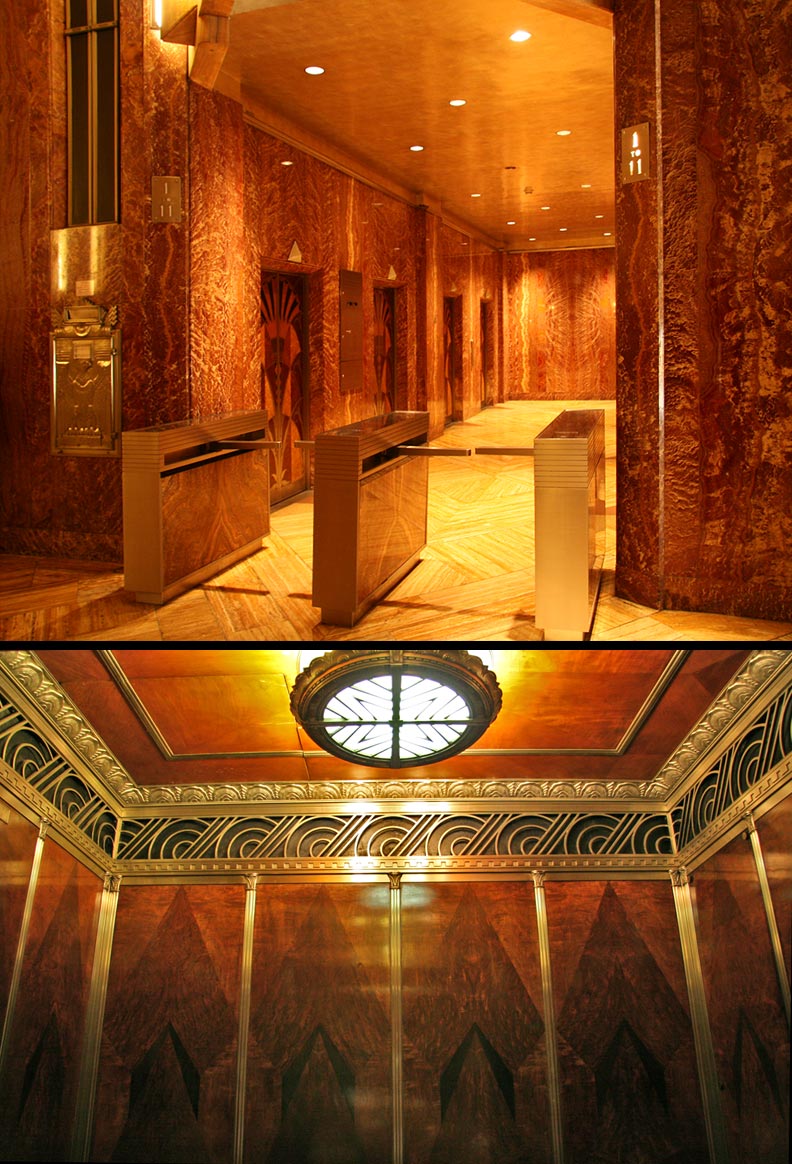
    This is an elevator door from the Chrysler Building, set against red African marble walls and travertine floors. There are 32 elevators, and each door is finished in a pattern of exotic, rare wood marquetry using different varieties of wood from all over the world. The doors are fantastic Art Deco designs and reflect the influence of ancient Egyptian motifs.

    Of course, elevators were key in the existence of tall skyscrapers, and the Chrysler Building benefited from the latest elevator technology. From Scientific American: “Otis electric gearless, machine type, with full automatic signal control and automatic leveling. This type is practically self-operating.” They could travel up to speeds of 1200 feet a minute but were curbed to 700 feet per minute by existing laws in NYC. Click here for more photos showing a bank of lobby elevators and a sneak peek at the interior of one of the elevator cabs – it’s as far as they will let you go without business in the building…
  • Subway Art

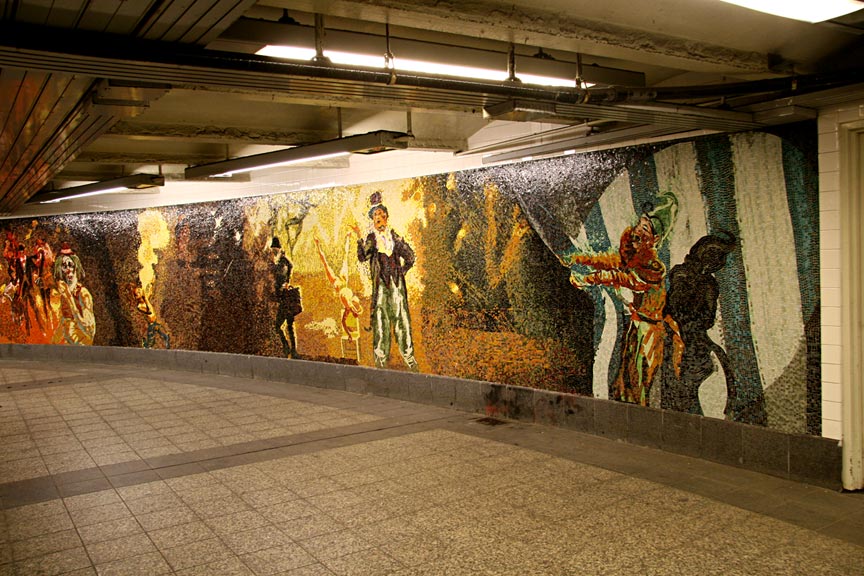
    Although the NYC transit system is far from beautiful, efforts have been made to beautify it. One such project is the MTA Arts for Transit, founded in 1985 in an effort to make the system inviting and attractive. A variety of media is displayed – ceramics, sculpture, posters, and illuminated photographs.

    From the official MTA website: “Both well-established and emerging artists add to a growing collection of works created in the materials of the system — mosaic, ceramic, tile, bronze, steel, and faceted glass. The art can be seen in the miles of walls within the system and in the gates, windscreens, plazas, and architecture… Artists are chosen through a competitive process that uses selection panels, comprised of visual arts professionals and community representatives, which review and select artists.”

    Many well-known artists are featured, such as Roy Lichtenstein, Jacob Lawrence, Eric Fischl, Elizabeth Murray, Tom Otterness, Nancy Spero, and Vito Acconci. The photograph is a piece at 34th Street/Penn Station titled Garden of Circus Delights done in 2001 by Eric Fischl. “A series of murals takes commuters from the familiar to the bizarre circus world. The murals portray fire-breathers, acrobats, and animals; gradually one realizes that a commuter has left home and been pulled into the circus, where he meets incredible circus characters and then, on the other side of the tent, he emerges in the white light and harmony, a commuter again, but transported and transformed.”


  • Back in Time

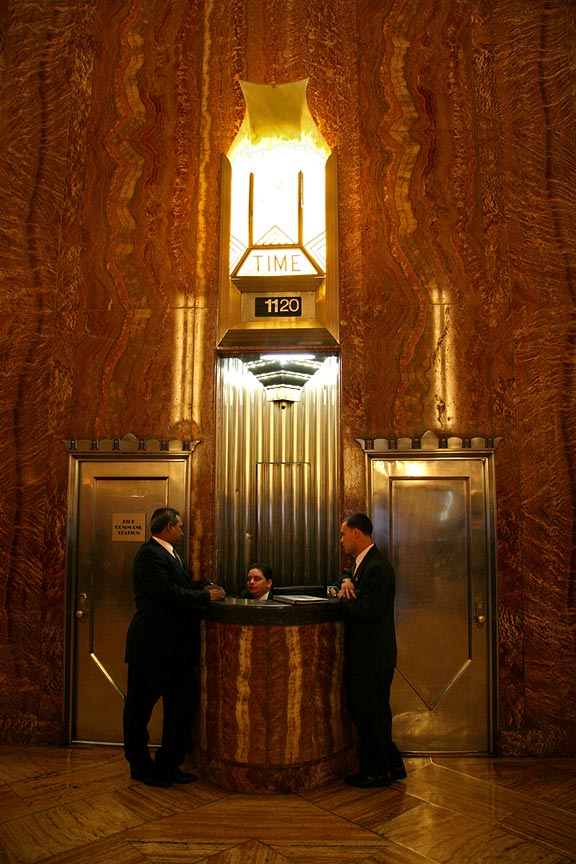
    This is the reception desk with its illuminated clock in the lobby of the Chrysler Building. The 77-story Art Deco masterpiece at 405 Lexington Avenue was designed by William Van Alen and built in 1929. In the dark, warm retro lobby, we find red Moroccan marble walls, yellow Siena marble floors, amber onyx, blue marble trim, and chrome steel.

    I have done several other posts on the Chrysler Building featuring different aspects of the building: the exterior with its gargoyles, the magnificent Lexington Avenue entryway, the stairwells (see here and here), and the adjoining Trylon Towers. Also of note are its renowned elevators and the ceiling murals, which I will cover in the future…


  • Colossal Missbehavior

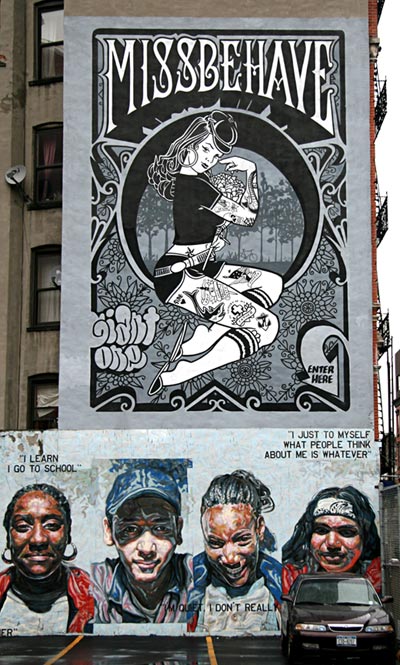
    The hand-painted mural has all but died. In the last two years, Colossal Media has revived the art, with dozens of their signs appearing around the city. According to the NY Times, Colossal Media is “a two-year-old Williamsburg company that is trying to revive the labor-intensive, near-obsolete craft of hand-painted signs.” Cofounders Adrian Moeller and Paul Lindahl had their hands in graffiti before starting Colossal, along with graphics and sign painting experience.

    The company has long-term leases on a number of building walls in the city. It takes a few days for the art to go up, with painters working 12-14 hour days. The mural in the photo was for a boutique on the Lower East Side called Missbehave at 231 Eldridge Street, which was opened by Samantha Moeller, who now is publishing Missbehave Magazine and managing her multimedia website (now closed). 


  • Pepsi-Cola in Neon

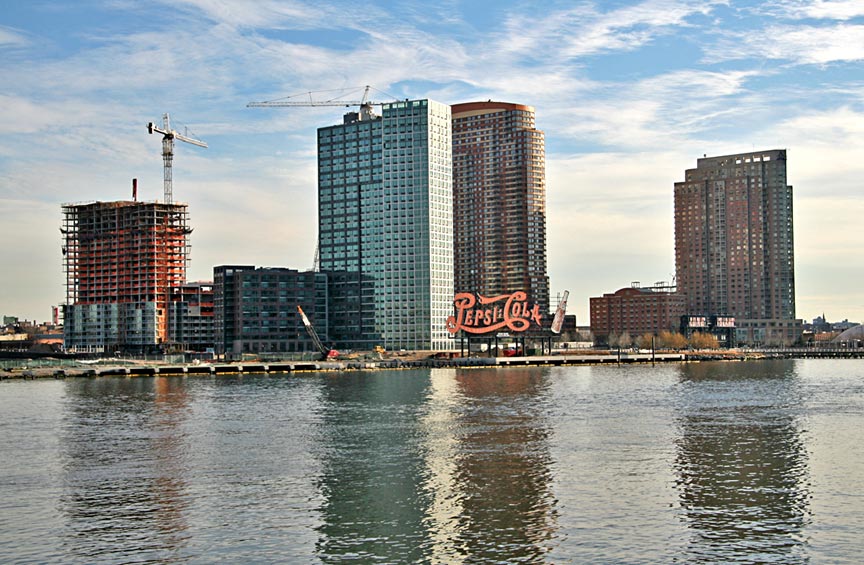
    This red neon Pepsi-Cola sign is a major player in NYC’s landscape and a familiar sight to any who travel the east side of Manhattan, such as on the FDR drive. The sign is located on the Queens waterfront in Hunters Point – the site of PepsiCo’s former bottling plant (which was moved in 1999).

    The multi-tube red sign, visible by day or illuminated at night, has been there for over 70 years. It was built in 1936 and rebuilt in 1994 by Artkraft Signs (now the Artkraft-Strauss Sign Co.), the oldest and last-surviving subsidiary of the original Claude Neon Co., headed by Frenchman George Claude, who held the patent for neon. In 2003, the Rockrose Development Corporation purchased the land for a $1 billion residential and commercial project. Click here for photo. The 120-foot Pepsi Cola sign was preserved – it was dismantled and re-erected 300 feet south to its current permanent location. It is nice to see that the value of a historic icon like this is appreciated and preserved by a real estate development company…


  • FusionArts Museum

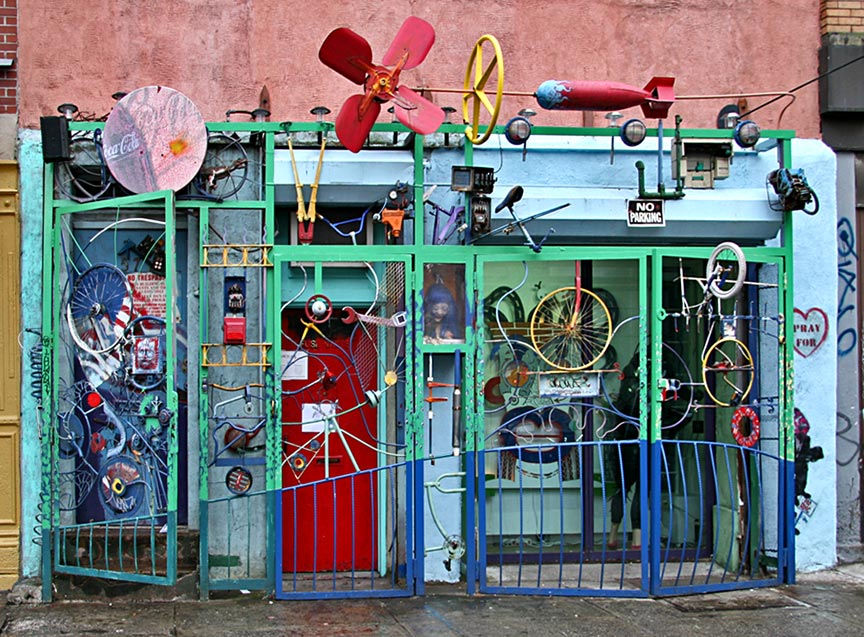
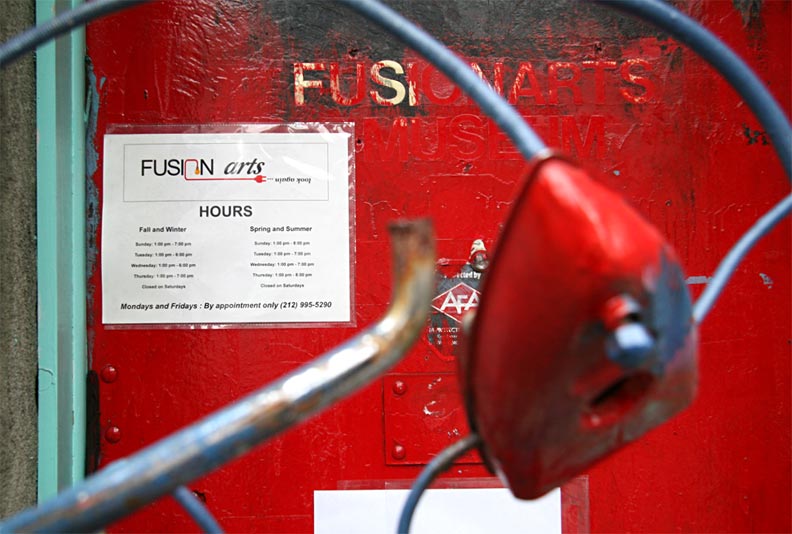
    Strolling through the Lower East Side with a friend, we came upon this unusual storefront at 57 Stanton Street (click here for 2nd photo). Unfamiliar to me and my friend (who is an artist), we learned that this was the FusionArts Museum: “FusionArts Museum is the only contemporary art space in New York City that is exclusively dedicated to the exhibition and archiving of fusion art – art that goes beyond the terms assemblage, mixed media, and multimedia.” Unfortunately, it was closed, but their website shows their works in the various galleries.

    Judging from the location and frontage, one would assume an iconoclastic, edgy art scene, so their manifesto did not come as a surprise. Many sources credit Bob Orsillo from the 1960s for starting the Fusion Arts Movement in the U.S.A. (I did not see him referenced on the FusionArts Museum site). Orsillo himself traces it back to the 14th century. I am not an art critic or historian, so I will leave it to you to sort this out…


  • Vintage Mural

    What started as a whimsical photo suggested by a friend as we were walking yesterday in Union Square turned out today to be a fascinating trip into the Crown Coat Front Company and the world of fading vintage murals. Most New Yorkers have noticed these signs all their lives here and find them to be remarkable surviving antiques providing a window into New York City’s rich history. Rampant construction covers some and uncovers others. And as I investigated this company (expecting nothing), I was surprised to find a few tidbits.

    Crown Coat was located at 105 E. 16 St. from 1947 to 1958. I also learned that a coat front is a “trade term for a built-up stiffening or shape-retaining interlining for the fronts of coats, made of stitched layers of haircloth, felt, and canvas.” (George E. Linton (The Modern Textile and Apparel Dictionary – 1973). A search on the company will return quite a few court documents – Crown Coat was involved in a 1967 Supreme Court case involving canteen covers supplied to the government in 1956. The most superb find of the day is Frank H. Jump’s website on his Fading Ad Campaign – a photographic project documenting vintage mural ads on building brickfaces in New York City spanning nearly a century. Click here to read his personal story and the background on the artist and this project


  • Rubin Museum of Art

    The Rubin Museum of Art opened on October 4, 2004 and is the first museum in the Western World dedicated to the art of the Himalayas and surrounding regions. Their collection consists of paintings, sculptures, and textiles with books, paintings, photographs, and artifacts. Computer terminals accessing the Museum’s website and affiliated sites offer other examples of Himalayan and related art. Although works of art range in date over two millennia, most reflect major periods and schools of Himalayan art from the 12th century onward.

    The Museum occupies what was formerly a portion of the Barneys department store in Chelsea. Read about it here at their website. It was redesigned and renovated with a team headed by the architectural firm of Beyer Blinder Belle and included Atelier Imrey Culbert, associate museum designers, and Milton Glaser Incorporated graphics. Many important details within the building have been retained, most notably Andree Putman’s steel and marble staircase that spirals dramatically through the seven-story gallery tower.

    The galleries are spacious, and the museum is extremely pleasant and very manageable. They run 6 different exhibitions, one on each floor. The museum includes space for contemporary and historical photography, a classroom, a state-of-the-art theater for multi-media events and performances, and a cafe and shop. Recommended…


  • Elizabeth Street Gallery

    This gallery was a phenomenal find. It is one of the most striking, atmospheric spaces I have seen. The gallery, co-owned by partners Allan Reiver and Avi Kendi, is on the ground floor of a beautiful small building in Little Italy at 209 Elizabeth Street, a former bakery and firehouse. The floors are 17th century stone from France (in fact, Allan Reiver travels to France to acquire the like for clients). A huge working fireplace is centerpiece, with sofas and reading material. Magnificent windows frame the Elizabeth Street Gardens with its statues, which can be accessed from the gallery. The place is filled with fabulous architectural, sculptural, and antique artifacts.

    Interesting note: By complete coincidence, one partner, Avi Kendi, is married to a friend whom I have known for over 20 years. I was only allowed to take these photos after speaking to him. Many spaces in the city, particularly ones which have a creative decor or very unique displays/products, are understandably sensitive to photos – idea theft is rampant – no need to make it easier. My thanks to them for the opportunity to take photos of this unique space (click here for more images). I suggest you visit while it is still under the radar…


  • Saks Windows

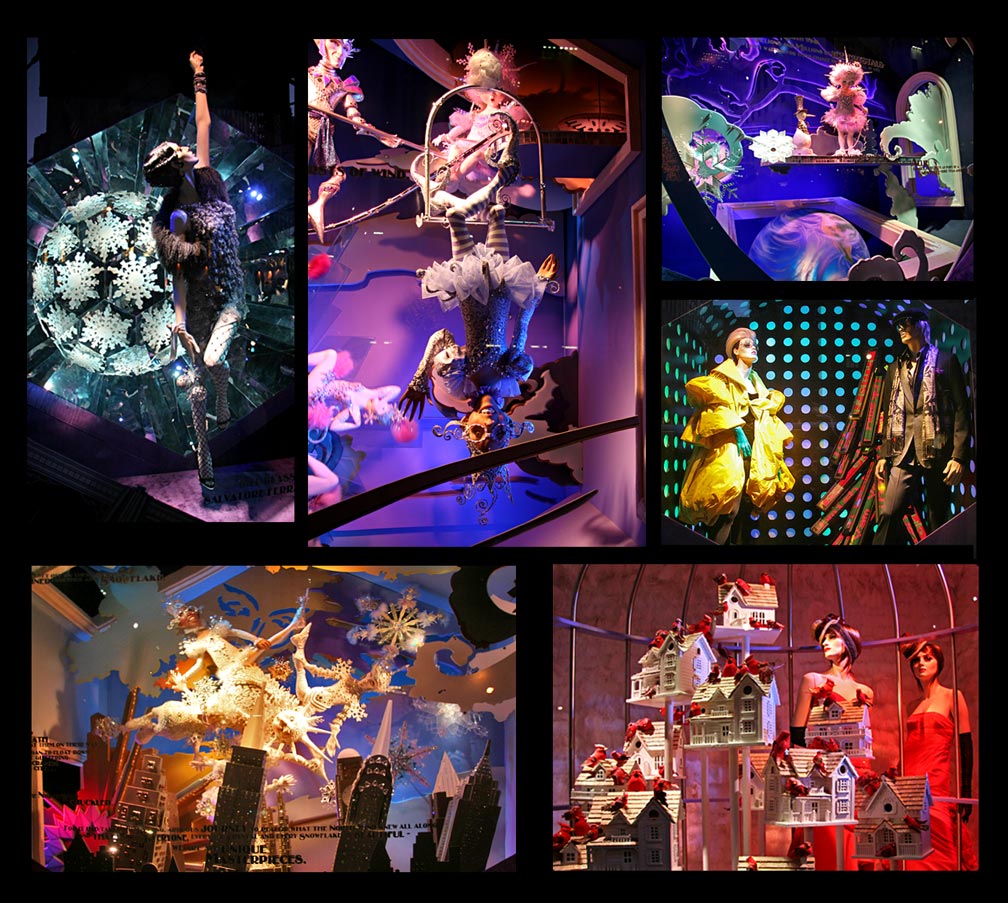
    These are the window displays at Saks. I created a collage – it was too difficult to pick one photo. To see the entire window display set, click here. These are the windows I always associate with Christmas in New York – beautifully done, themed, on Fifth Avenue near all the flagship stores and St. Patricks, and facing Rock Center and the big tree. You wait in line to see the windows, but no one seems to complain. Moving slowly is welcome and gives more time to enjoy them.

    The in-house visual creative staff creates these windows – the primary group has a storyline about outsider crystals finally joining together to become a unified snowflake. Christmas has become an extremely commercial holiday. But, no matter how jaded, frustrated with the crowds and traffic, or disappointed one gets with the commercialism of Christmas, one should try not to become a bitter malcontent. Leave a place for sentiment, giving, nostalgia, and joy…


  • 11 Spring Street

    The mysterious former carriage and horse stable at 11 Spring Street has been (virtually) unoccupied for decades. Click here for more photos. Built in 1888, its most famous owner was John Simpson, who purchased the building in the 1970s. An eccentric inventor, Simpson lived in the massive 5-story building alone with his bizarre mechanical gadgets. In 2003, the building was sold to Lachlan Murdoch, son of media mogul Rupert Murdoch, with the intention of converting it into a spectacular single-family residence. Left to languish again, the building was again sold, this time to developers Caroline Cummings and Bob Elias – it will be converted to luxury condominiums.

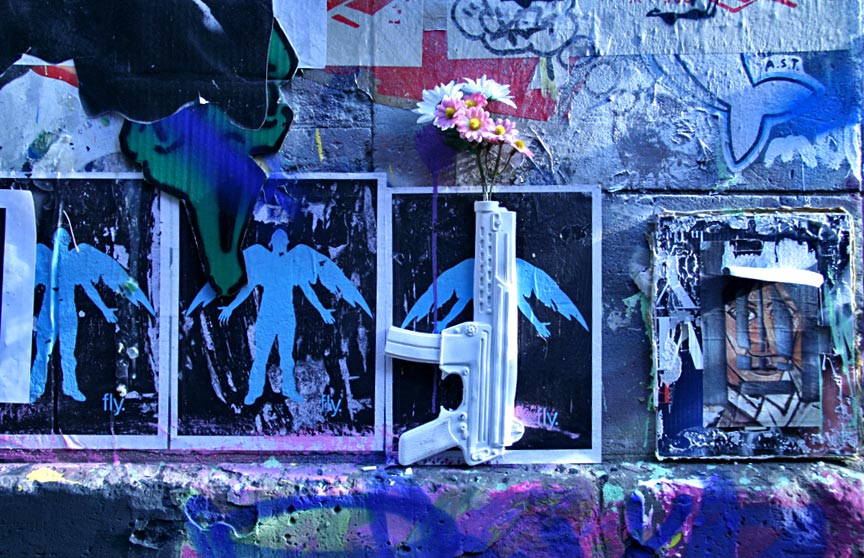
    During all this time, graffiti accumulated on the exterior walls. The place became “known worldwide as a mecca for street artists, some of whom have covered its sooty facade with a pastiche of graffiti and poster art.” The new owners wanted to pay tribute to the street art, so they arranged a gala “grand closing” with the Wooster Collective, called Wooster on Spring. Forty-five of the world’s best street artists were invited to cover the walls of all five floors with artwork. After two months, the show was opened to the public for three days – December 15, 16, and 17, after which all the art was to be destroyed. It was an unbelievable mob scene – lines to get in going around a full city block with a 3-4 hour wait. Gothamist did an extensive job of covering this story, and I recommend this link (and the various links there) to see photos of the interior art


  • Left Bank New York

    From 1900-1950, there was a community of some 200 artists who lived and worked in the two blocks north of Washington Square. The artists’ spaces, converted stables and townhouses, evoked the atmosphere of the Left Bank of Paris. Among the noted artists were Paul Manship, Gertrude Vanderbilt Whitney, Gaston Lachaise, Isamu Noguchi, and Edward Hopper.

    Virginia Budny has curated a new show (at NYU’s La Maison Francaise) and authored a book on this subject: New York’s Left Bank: Art and Artists off Washington Square North, 1900-1950.
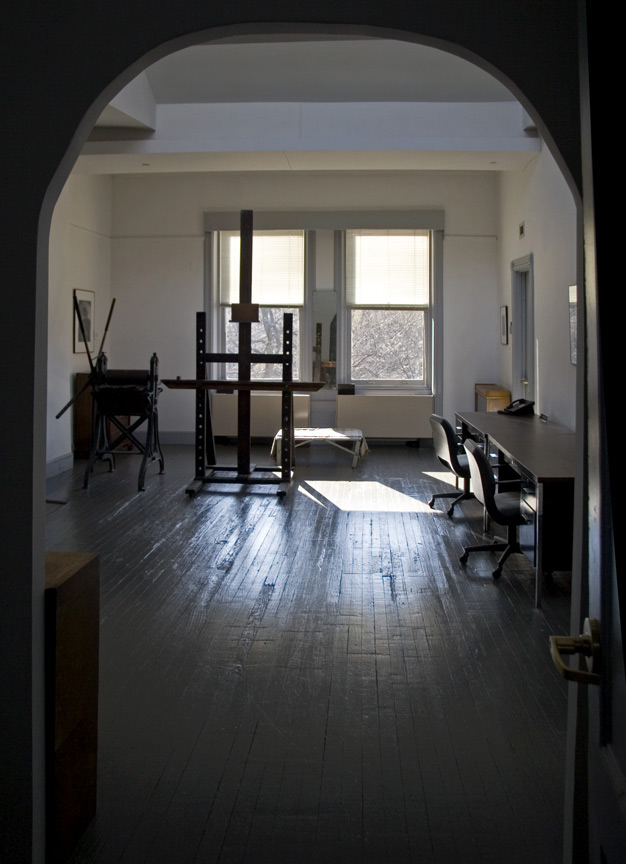
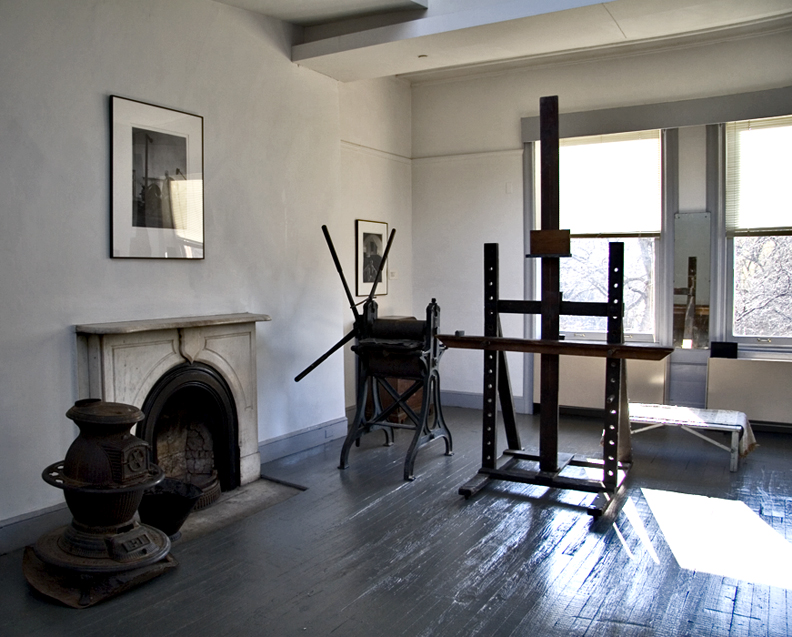
    I was privileged, along with a handful of others, to get a tour with Virginia as guide of Hopper’s studio and the areas featured in the book and show: Washington Square North, Washington Mews, MacDougal Alley, and 8th Street. The photo shows Hopper’s studio with an easel, a printing press, and framed photos of Hopper (click here for second photo). The windows look out to Washington Square Park…


  • Fred F. French Building

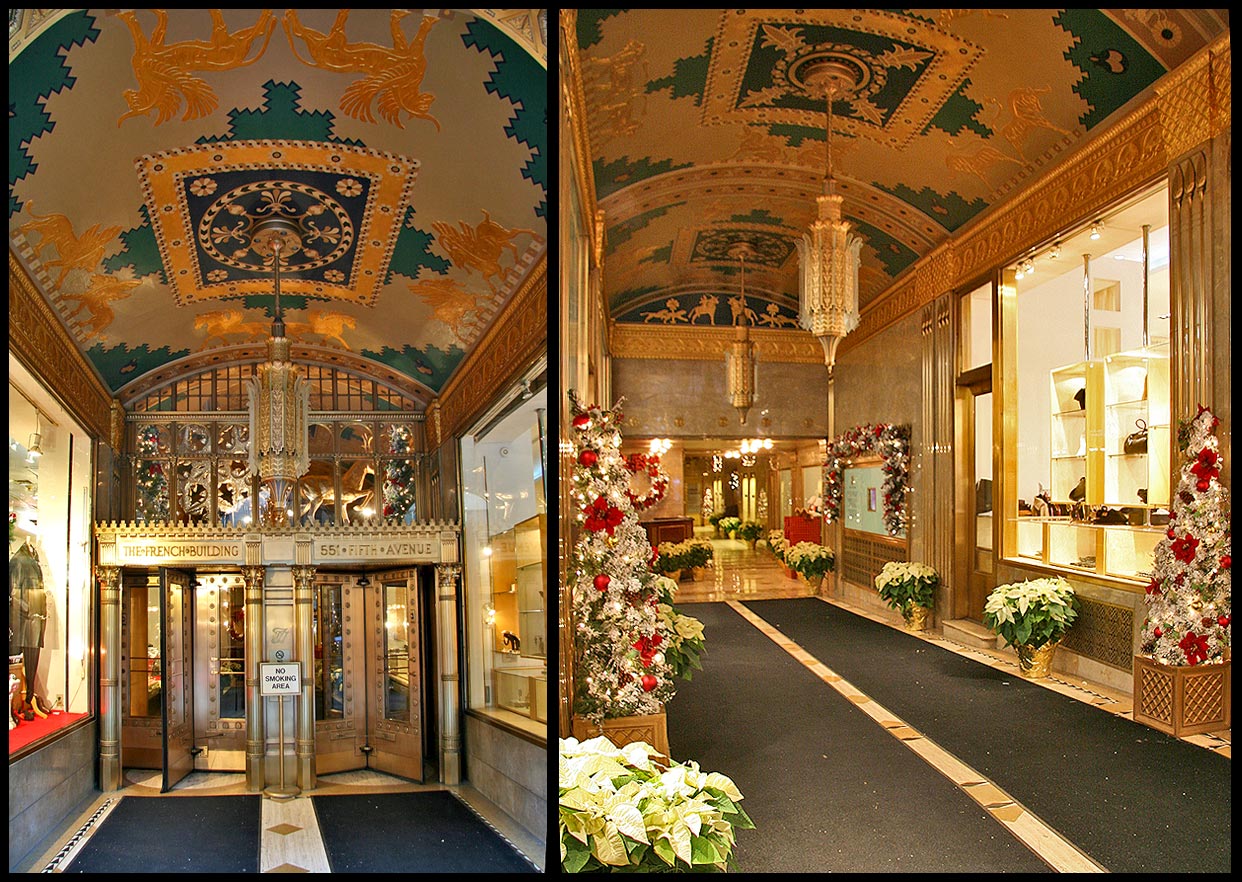
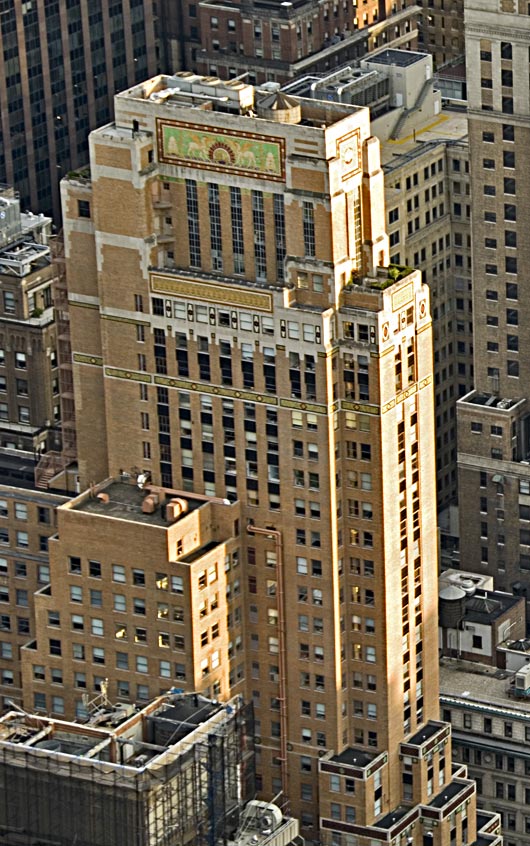
    This is the vestibule and lobby of the Fred F. French building at 551 Fifth Avenue at 45th Street. They have been designated as an interior landmark. On the exterior, the 38-story Art Deco building uses a variety of materials – a limestone base, orange brickwork, terra cotta decor on the setbacks, and themed rectangular panels. Click here for photo.

    The structure was built in 1927 as business headquarters for real estate tycoon Fred F. French. French was a self-made man – read his rags-to-riches story here. He was also responsible for Tudor City and Knickerbocker Village. Tudor City was funded by selling investor shares under the “French Plan.” Knickerbocker Village, a low-income publicly subsidized urban-redevelopment housing project, on the other hand, became a problem with disputes between French and his tenants – this eventually led to creation of NYC’s rent-control laws.

    A Babylonian influence runs through the French Building and can be seen in the lobby. From New York 1930 Architecture and Urbanism Between the Two World Wars, published by Rizzoli in 1987: “Inspired by the Ishtar Gate, the decorative program was a most literal evocation of Manhattan as the New Babylon, of the skyscraper as Nebuchadnezzar’s hanging garden in the desert.”


  • Gargoyles

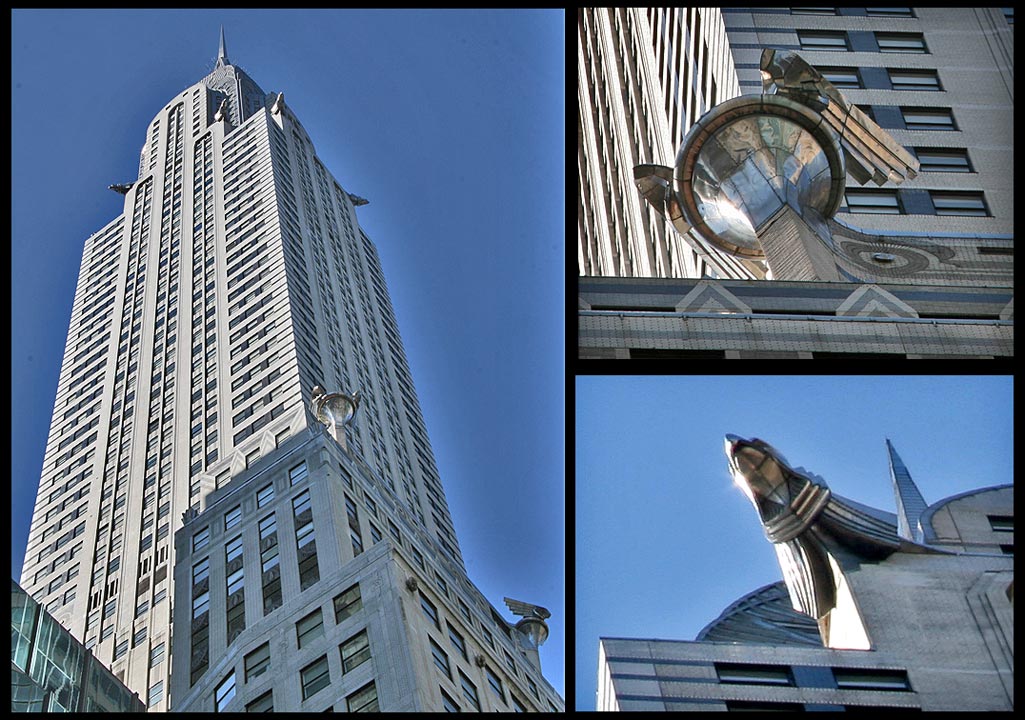
    The most distinctive features of the Chrysler Building’s exterior are the stainless steel-spired crown and the gargoyles based on Chrysler automobile ornaments, built from Krupp Enduro KA-2 Nirosta stainless steel. The gargoyles at the 61st Street floor setback depict American eagle hood ornaments. On the 31st floor setback, there are replicas of the radiator caps used in the late 1920s, modeled after the winged helmet of mercury (see here).

    One of the most striking photographs is of Margaret Bourke-White atop one of the eagle gargoyles. Bourke-White was one of America’s most distinguished photojournalists. There is a tremendous amount of material about her both on and offline – I leave it to you to peruse. The extensive use of metal on the exterior of the building, along with the ornamental references to the automobile, makes the Chrysler Building one of the enduring icons of the machine age…


  • Atlas

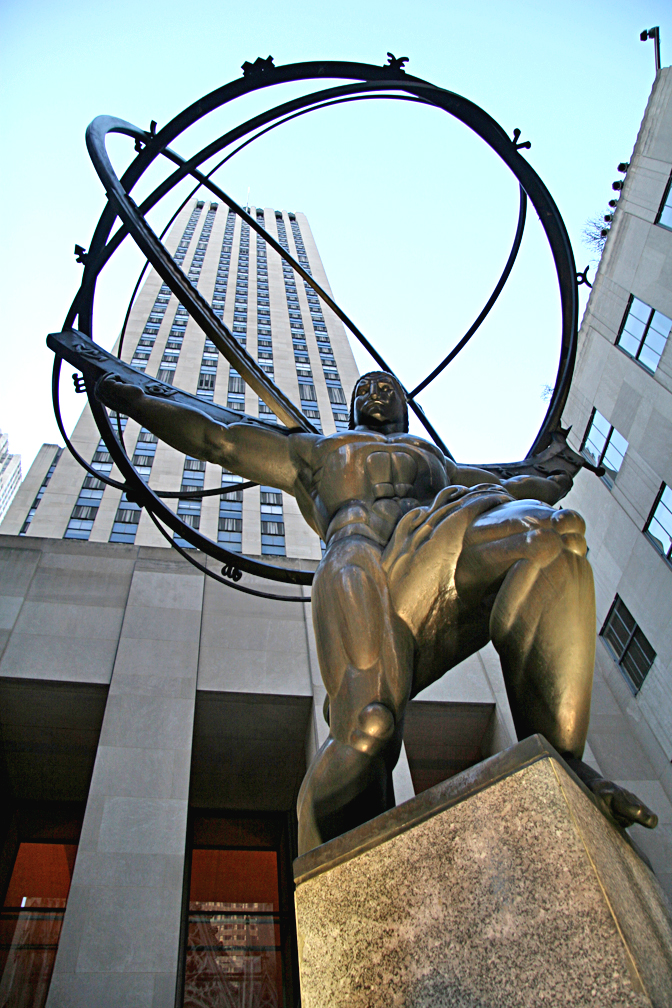
    Nearly everyone is familiar with this Art Deco bronze sculpture at the Rockefeller Center complex, with Atlas shown holding up the heavens, his punishment by Zeus after his loss in the Battle of the Titans. It was created by Lee Lawrie in 1936 – he has 14 pieces attributed to him at Rockefeller Center. Lawrie (1877-1963) was born in Germany and moved to Chicago in 1882. At age 14, he began working for many sculptors in Chicago; he later moved east, where his work with Ralph Adams Cram and Bertram Goodhue brought him into the art world limelight.

    The sculpture sits in the small entrance courtyard to the International Building; this is a great viewing area for St. Patrick’s Cathedral (click here for more photos). It is interesting to note that there is a frieze on the curved beam on Atlas’s shoulders which shows symbols for the planets, the moon, and the 12 constellations of the zodiac. However, Pluto, discovered in 1930, is absent from the planetary group – a glaring omission, given that this was created in 1936. Ironically, Pluto’s status as a planet is now being called into question. Another example of art predicting life?


  • dinamic_sidebar 4 none

©2026 New York Daily Photo Entries (RSS) and Comments (RSS)  Raindrops Theme