• Category Archives Food and Restaurants
  • The Hungry Huddled Masses Yearning to Eat Cheesecake

    I am not one to rule out well known establishments a priori – I am quite willing to try household names, and if a place lives up to its reputation, I am more than pleased. Although I am as interested as anyone else in finding that secret place that lies off the beaten path, I am not obsessed with that quest. My mission is not to prove that those small, special secret places are better than the well known restaurants. There is nothing wrong with tradition and an enduring legacy.

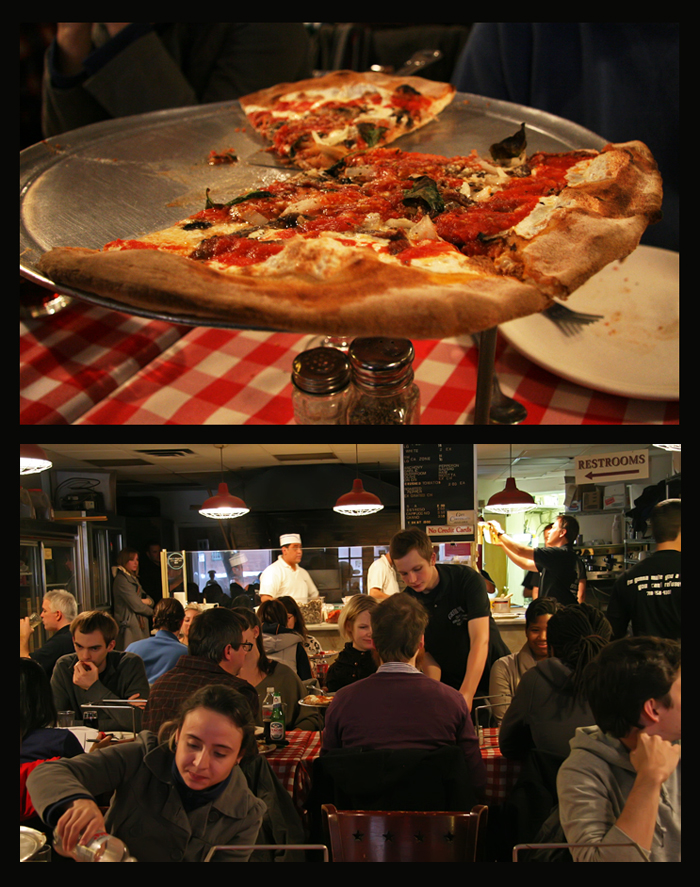
    After hearing about Grimaldi’s Pizzeria in Brooklyn for decades, I recently visited, knowing full well that it is heavily touristed, typically mobbed with long queues to get in. The pizza was excellent, and the overall experience was a lot of fun. My friend and I also met a number of extremely interesting people. See story here.

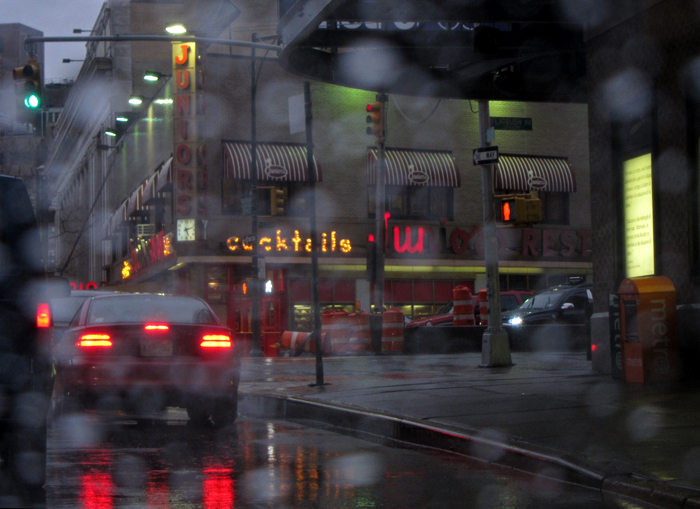
    Junior’s, located at 386 Flatbush Avenue EXT in Brooklyn, is a diner styled restaurant, founded in 1950 by Harry Rosen. It is a full-service restaurant with an extensive menu, however their claim to fame is the cheesecake, based on a family recipe developed by Rosen with head baker Eigel Peterson. I was only in Junior’s once, eons ago so I cannot speak to their quality. Reviews span the spectrum as would be expected, from those who adore to those who abhor. My hat goes off to Eileen’s Cheesecake, a tiny cheesecake mecca at 17 Cleveland Place in Manhattan. Eileen Avezzano is one of the nicest business owners I have met, and her New York-style cheesecake is uniquely light and fluffy, owing to her own special recipe. See my story here.

    Generally speaking, however, by the time a restaurant has achieved mythic, iconic status in New York City and it starts serving hordes of people, most likely the quality of food and/or service is likely to suffer. These places often become money machines with marketing, branding and even the opening of a small chain of shops.

    In New York’s harbor, Lady Liberty welcomed all, however, Ellis Island and now immigration services have controlled the influx of those with a ravenous appetite for America. At places like Junior’s, however, no barriers to entry exist other than a few dollars for a slice of cheesecake. But to serve the volume, it has to step up production – how else to serve the hungry huddled masses yearning to eat cheesecake?
  • In Your Hand


    The first ethnic cuisine I had in New York City was Chinese, for a number of reasons, not the least of which was affordability as a student. It was no time at all before Chinatown became the restaurant destination of choice. I did not dabble long in the cuisine either. I soon found a few dishes that I liked, and in no time at all, experimentation gave way to the familiar – beansprouts with black bean sauce or chow mei fun noodle dishes.

    As students, we indulged our new found freedom away from home, most of us for the first time. Yet ironically, the values and even the idea itself of routine and ritual that we rejected from our parent’s generation were soon to be substituted with our own rituals, routines, and values. We deceived ourselves to believe that we were completely free spirits – i.e. free of any structure or tradition. However, we had, in fact, established a new, well-defined culture, with its codes of behavior, dress, relationships, foods, recreational drugs, hair styles, slang, activities, work ethic, music, and sex. One tradition just replace another. Over time, we learned that many of the values, mores, and traditions of previous generations were not as bad as we once imagined, like a good work ethic or relationship fidelity.

    When it comes to food, no generation needs to be convinced of the merits of tradition in cuisine. This was and still is one of the greatest things about New York City – the plethora of restaurants and their ethnic diversity. However, when it comes time to eat and I am very hungry, I am not very inclined to experiment. I don’t want any unpleasant surprises. This is the time where nature’s call is best answered with a familiar voice.

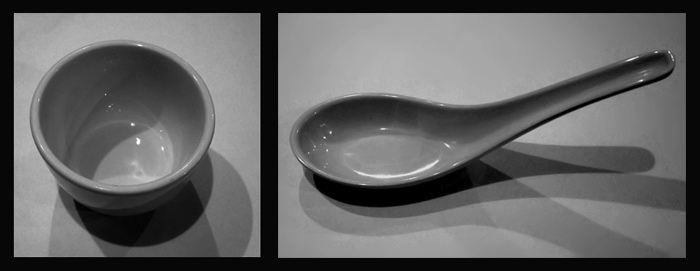
    New Yorkers are no different than anyone else. We look for the comfort in the familiar rituals – morning coffee, reading email, eating at a local favorite restaurant with friends, and, if you are inclined towards Chinese food, the look of a flat-bottomed soup spoon and the feel of a warm ceramic tea cup in your hand 🙂


  • Queen of Sheba


    Who do you think you are? The Queen of Sheba? This was a popular accusation during my childhood, when my mother wanted to reprimand a sister who was acting spoiled or lazy – a mortal sin in our New England household and one of such magnitude that a Yemenite notable had to be brought in to make the point. Along with Timbuktu, apparently a place to far to go, these places were the extent of my working knowledge of the Middle East and Africa.

    I had heard that there was an Yemeni restaurant in Bay Ridge. An online search quickly revealed the only candidate, Bab al Yemen. So, on a rainy night, I ventured out to Brooklyn with a friend to see what Yemeni food was all about.

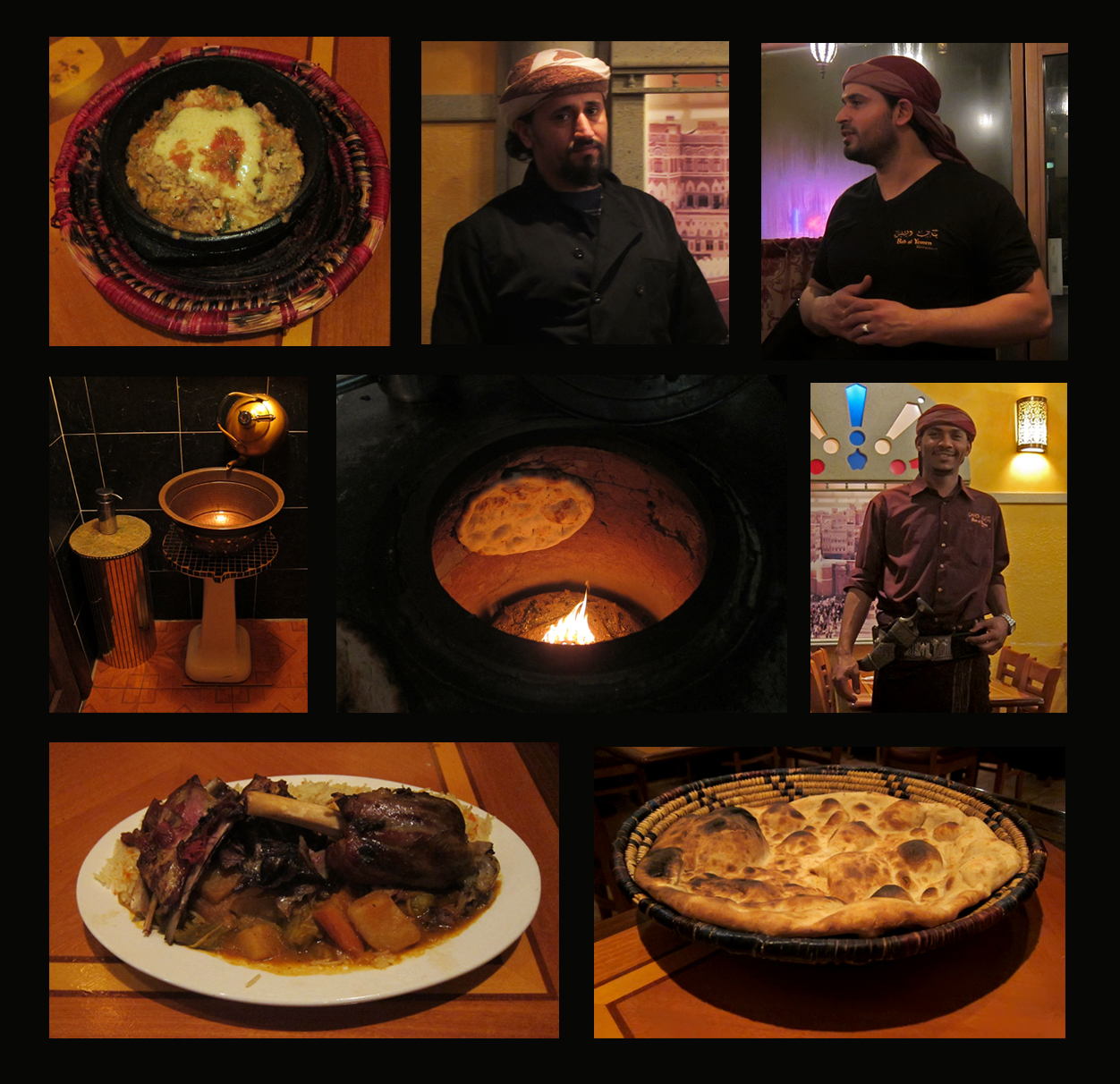
    Slipping in for a menu for review before commitment, I was immediately greeted and asked if I wanted to experience Yemeni food. Only seconds had passed and I saw the tip of the hospitality iceberg we would experience. Our waiter, Waleed al Jahmi (upper right photo), who turned out to be part owner with his brother and chef Abdulghani (top center photo), gave us a complete explanation of every food category in a little primer that he called Yemeni Food 101.

    I’m not going to tell you that a trip to Bab al Yemen is to transport you to another time and place. For that, I suggest you book a flight to Yemen. Speaking to Waleed*, a business school graduate who was so articulate and city savvy, will let you know that you are in New York City, not at Bab al Yemen (the gates of Yemen).
    However, I will tell you that if you are looking for authentic food and service that rivals the most cordial and hospitable you may ever have in the five boroughs, then I would make a journey to 413 Bay Ridge Avenue in Brooklyn. I have learned that Yemen is known for its hospitality, so I am not surprised that Yemen was at one time referred to as Arabia Felix, Latin for Happy Arabia.

    We strove for authenticity in all our food choices, which was easy with Waleed as guide. My companion had Haneeth, I had Fahsah. Every meal comes with khobz, the traditional Yemeni flatbread, cooked on premises in their clay oven. We also had my favorite Middle Eastern dish, Fool Mudamas. The Yemeni variant was delicious yet quite different from the Egyptian style I am most familiar with (see here).

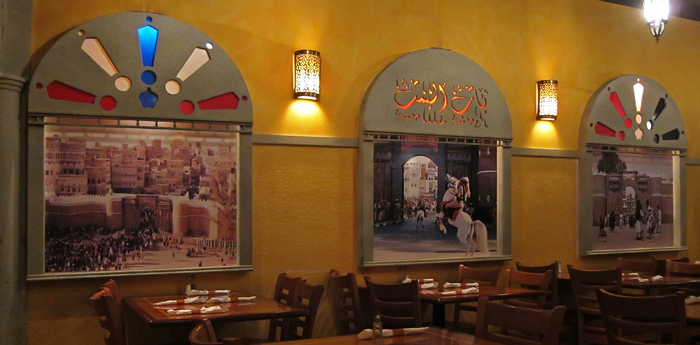
    One of the real highlights for me was the extraordinary conviviality we experienced with Waleed and the staff. Every imaginable question was answered – and I had plenty of questions, knowing virtually nothing about Yemen or the culture. We spent quite some time discussing Sana’a, the capital of Yemen, the photos of which graced the walls. I was so intrigued with the architecture, climate and lifestyle. The entire staff was Yemeni, so we got our education from people who truly know the country and culture. Bab al Yemen is authentic in every way. Booths are available, even with a separate entrance for the privacy of women. At one juncture, Waleed asked Mohamed (photo middle right) to change into traditional dress for us. When I asked about the chef, I was assured he would make a visit after we finished our meal, which he did. My request for photos was welcomed including a trip to the kitchen.

    It is easy to understand how serving diners night after night can easily lead to attitudes that range from perfunctory to snippy or rude – not unusual in New York City. So, I always find it remarkable when a restaurant server or owner can maintain such a fresh, cheerful and helpful demeanor. Waleed and his coworkers broke the mold on this one.

    I think I need to let my sister know, that although she was led to believe that being served in a royal manner was quite sinful, I have learned it is not and that I found a place in Bay Ridge where she can go and be treated like the Queen of Sheba 🙂

    *This is my second encounter with a man named Waleed – see one of my favorite adventures with Walid Soroor here.

    Note: You can read the New York Times review here, the Village Voice review here and the New Yorker article here.


  • No Negativity

    In 2006-7, a friend and I were regulars at Think Coffee (see here). Looking to vary our cafe experience, one evening I suggested that we try Cafe Dante. He readily agreed. We knew that unlike Think Coffee, Dante was not self-service, the atmosphere would not be quite as casual, and certainly there would be some time limit on how long one could park without continuing to buy food or drinks.
    We were not, however, prepared for the sign in the window: NO LAPTOPS. This was not a problem for us, since we did not have laptops, but nonetheless, it certainly did emit a rather negative vibe for a Village cafe.

    Thoughts and conversation turned to the new realities of laptops in cafes and restaurants and how their use can lead to hours spent at a table, with the financial impact and new policy considerations for owners and management. Some cafes now impose limits or ban the use of laptops during certain hours. Think Coffee, on the other hand, was extraordinarily liberal, and I pondered what their official policy was regarding time versus money spent to occupy a table or seat.

    On my next visit to Think Coffee, I told the counter person of our Dante experience. I asked if there was any policy at all regarding purchases necessary to spend time in the cafe. For example, since Think offers free water, could I pour myself a cup and spend the day without making any purchase? Her response surprised us and became an inside joke and an oft repeated catchphrase: “Let’s just say the management has a policy of No Negativity.” Wow. So essentially the policy is anything goes.

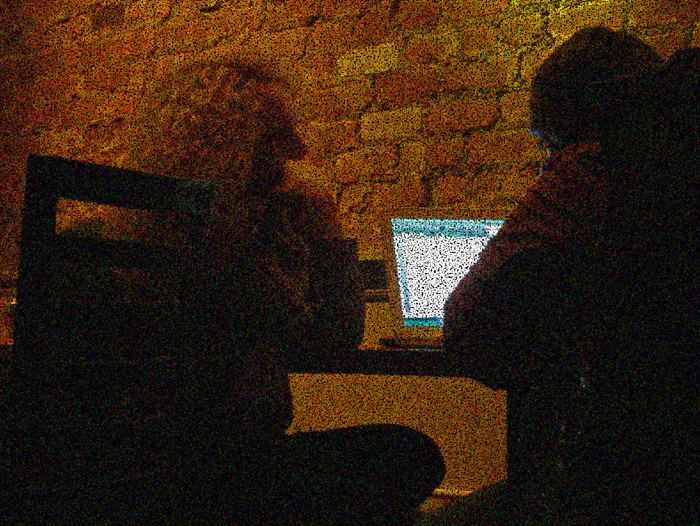
    Last night in a Village restaurant, I witnessed what to me was a rather egregious act. Two women were sitting at a table. One pulled out a laptop. The other moved her chair into the aisle to share the screen. She then folded her knees, bringing them up towards her chin, and put both of her feet on the seat of the chair. I am not talking about crossing legs – she had the soles of both shoes squarely planted on the surface of the chair seat which was covered in fabric. This seemed so inappropriate, I countered by pulling out my camera and taking a photo. However, she moved her legs, so I did not catch the offending act specifically.

    But it is no matter. We are in a different world now. Business is very competitive and must extend very liberal policies to keep customers. There is no need to buy anything in a cafe, and perhaps you can even put your feet up on the table in a restaurant. We have one new policy now – No Negativity 🙂

    Note: Since this photo was taken in a restaurant, I have processed it to protect the privacy of the individuals.


  • Zero Minutes!


    Nothing can live up to years of expectation. I avoided going to Grimaldi’s Pizzeria for eons, knowing that LINES were what it was best known for. Hours in line.

    Recently, however, I had a plan to explore Vinegar Hill, Brooklyn, and schedule things around what I hoped would be the deadest time of day – the “lull” between lunch and dinner – 3:30 to 4 PM felt just about right. And better on a winter day, i.e., not a warm day (particularly not on a weekend in the summer). This formula worked well for my visit to Totonno’s and Di Fara, two other legendary pizza emporiums in Brooklyn. I have been told that both have tremendous lines in warmer weather, as does John’s in Manhattan (see Roots of Pizza here). Grimaldi’s is one of New York City’s few coal-fired brick-oven pizza parlors (John’s on Bleecker Street is also.

    When you have this kind of following in New York City, like it or not, they set the terms and conditions. The signs on the door clearly proclaim the no nonsense attitude: “TAKE OUT IS THE SAME LINE” and “NO SLICES” “CASH ONLY.” This type of scenario was well parodied on the TV series Seinfeld in an episode called the Soup Nazi. Perhaps signs and policies like this may seem a bit harsh, but in New York City, mayhem would ensue were strict ground rules not enacted.

    The pizza was excellent – much better than I expected from a place that was so highly trafficked, touristed, and written about. Legacy businesses like this can easily thrive on name alone with deterioration of product or food quality. There are naysayers, of course, many of them just wanting to show their New York City culinary expertise. But do not be deterred. Along worth so many awards and accolades, the Zagat restaurant survey rates Grimaldi’s as one of the top pizzerias in New York City. If you can avoid enormous lines, it is worth the visit. The location is quite scenic – at 19 Fulton Street, under the Brooklyn Bridge, steps from the East River and Fulton Ferry landing.

    A New Yorker is often as or more elated with tales of successful navigation or mitigation of typical, known obstacles. I’m not sure what was better – the pizza or my timing coup: Date: January 30, 2011. Day of Week: Sunday. Time of Day: 3:37 PM. Wait in line: Zero Minutes!


  • Pure Chocolate

    My family members are savers – the classic, thrifty New Englanders who waste nothing, where the third R of the waste management triangle, Recycle, was virtually unknown because the first two (Reduce, Reuse) were maximized as much as humanly possible. We wear shoes too small or keep them in the closet in perpetuity (see One Size Too Small here.)
    My father grew up picking potatoes and cutting wood in Maine, often in subzero temperatures. Even to this day, everything he does is defined by an extreme sense of survival. I have seen him scrape burnt toast and clean and fold aluminum foil for reuse.

    In our home, for chocolate milk, we had Nestle’s Quik, not Bosco or Nutella. I have a suspicion that this choice was driven both by compulsive neatness, another hallmark of many a spartan, Shaker-like New England household and the idea that it is easier to extract every last gram of powder from a can than syrup from a bottle. My father would watch our Nestle’s Quik mixing ritual with a very keen eye. Regardless of how vigorously we stirred, there would always be some residue at the bottom of the glass. He would shake his head and in the most disapproving tone would say, “Look at that. Pure chocolate.”

    To this day, on the occasions that I may have some dessert or beverage with chocolate sauce, memories of Nestle’s Quik give me some agita, even in New York City where there is enormous waste. If every citizen practiced the most careful, frugal lifestyle, the sheer size of this metropolis still turns everything into a big thing, be it snow removal, traffic, or the volume of trash. New York City produces an extraordinary 12,000 tons of garbage daily.

    Seeing all the goods in this city, along with all the trash, does give the sense that to be in New York is to live in the horn of plenty. Even the underprivileged or homeless will do better here than in a less populated environment. There are outreach programs, soup kitchens, shelters, and just lots for the picking in the streets of the city. When offered food, I have seen many homeless ask what it is before accepting. On Wednesday nights in Washington Square Park, a Christian group brings free food. But I have seen many homeless turn down food offers from them, saying that they were either full or did not appear interested in the selection. I am not extolling the benefits of the homeless life nor diminishing its hardships. But opportunity is much greater in New York to get by.

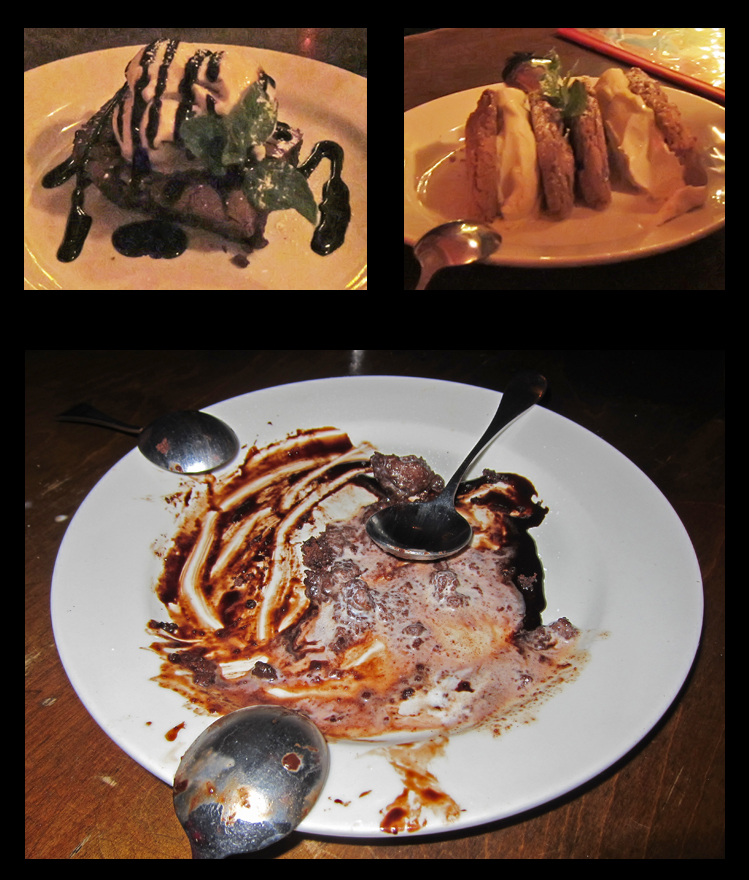
    Recently, I celebrated a friend’s birthday at Mud. The desserts are a little pricey but excellent. Three of us shared two desserts with chocolate sauce. As you can see from the photographic evidence, we did a respectable job of finishing what was served. However, looking at the finished plate with a scrutinizing eye, one can hear a haunting voice that says, “Look at that. Pure Chocolate” 🙂


  • Anywhere You Go

    Perhaps my sister should have understood that getting in a car with me means that you had better have your body function requirements taken care of, or be met with a very disagreeable man when requests to stop are made. Actually, it would have been better had she not stepped into a car with me at all. But alas, that was not the case, and in 1998, five family members found ourselves crammed together in a small car for a 10-day road trip to France. On November 12, 2009, I wrote about this family trip in Montmartre and Peillon.

    One day while driving, I heard the usual cry from the bathroom admiration society. However, this was France, not the USA. I was on a divided highway. I saw a petrol station some distance ahead on the opposite side of the road with no apparent way to get there. Or let us fairly say that there was no great motivation to get there. I pulled over and contemplated the logistics of crossing this roadway and the unpleasant prospect of making an unnecessary detour and stop.

    While evaluating the situation curbside in our idling vehicle, a woman in a nearby private residence came out of her home and asked if we needed help. In the best French we could muster, we told her thanks, but we needed a bathroom and wanted to know if the petrol station had public bathrooms and how to get there. Unbelievably, this woman offered her home and escorted my mother and two sisters in.

    We were stunned, and to this day, I retell this tale often. Where were the rude, impolite French we had heard about? Answer: The same place they are anywhere – lying inside reasonable people, only to surface when provoked by someone rude who does not understand their culture and etiquette. Americans often behave quite badly, expecting everything to be like home, as I wrote in So Where’s David?
    This was not an isolated event. Even in Paris, I had people battling to give me the right directions. Everywhere I went, when approaching others with respect, I was treated respectfully.

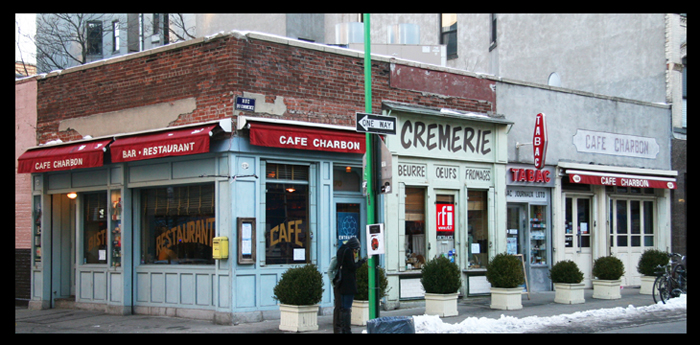
    When I saw Cafe Charbon-Epicerie at 170 Orchard Street in the Lower East Side of New York City, I was immediately charmed by the recreated Parisian street scene with faux storefronts, including a Cremerie and Tabac. This French bistro’s reviews, however, are as mixed as the travel experience to France. I skimmed hundreds of patron and food critic reviews which range the extremes of the spectrum. There were some extraordinarily negative experiences – many said that it was the worst service they have had in a New York City restaurant.

    After nearly a decade, Cafe Charbon is closing, a place where perhaps rudeness came naturally or fuses were short. Some people are just more polite or have a higher tolerance for abuse, like our friend Winnie (see here and here). But rather than seek out places or people where rude service comes naturally, like our friend in So Where’s David?, sharpen your skills provoking people, and you can find rude service anywhere you go 🙂


  • Meetings with Annoying Men

    Poor Winnie – Part 2 (see Part 1 here)
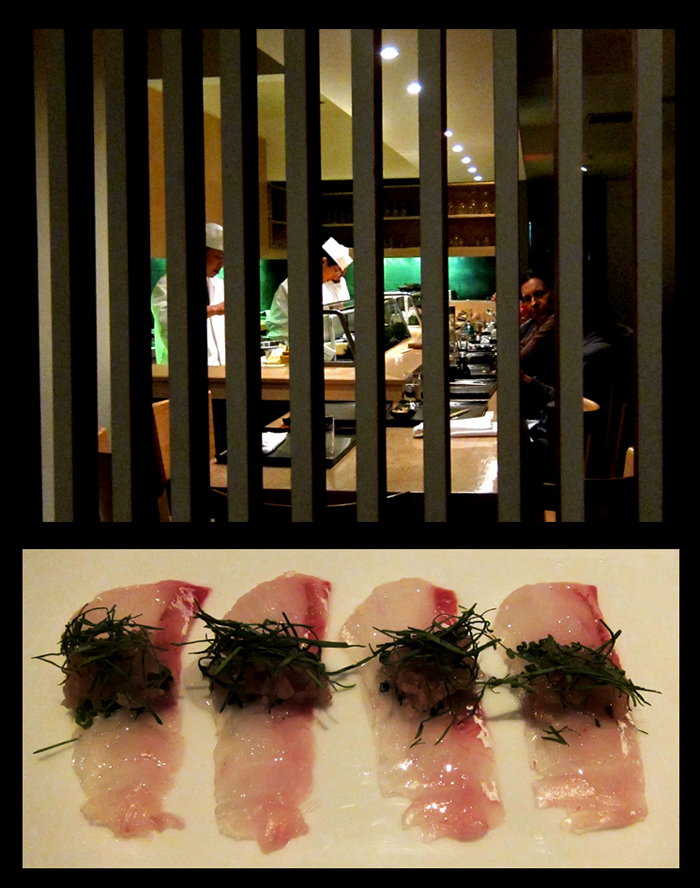
    I had been passing the nondescript storefront (near my home) at 357 6th Avenue for some years. Previously, Ony was located here, a Japanese restaurant I frequented, featuring delicious noodle soups. Now, there is neither signage nor a menu posted. Peeking in through the cutouts, I was able to see that it was also a Japanese restaurant. See photo in Part 1 here.

    I was intrigued, however, a number of friends and I are regulars at Marumi. We all love the food there and have been eating there for so long, it feels like a second home. There was no compelling reason to investigate another Japanese restaurant, particularly with no menu posted.
    One does tire of the same routine, though, so on Tuesday, a friend and I stopped by and asked to see a menu. The restaurant’s name was Soto. Surprisingly, the prices seemed reasonable. We decided to try it the following night. When we arrived, we were asked if we had a reservation, which on the surface seemed rather silly, since the place was virtually empty.

    After ordering, we were informed by the waitress that what we had selected were actually very small appetizers. She recommended following with something from the next page of the menu. Now we were beginning to see the full picture. We asked the waitress to give us a few moments to regroup. My dining companion offered to leave if I felt we were getting in too deep for a casual dining decision. I suggested we stay – the pricing would still not break the bank.

    We shared an extraordinary parade of dishes as they came out, one by one. I will not describe each dish here but suffice it to say that the food was truly sublime and exotic – nothing like anything I have seen before. It was easily the finest Japanese food I have ever had. My companion, who has had much more experience eating in upscale restaurants, agreed.

    A man arrived alone and sat at the table immediately next to us. This gentleman (and I use the term loosely), however, did not appear pleased with anything he ordered. He complained about and returned every single item brought to him without exception. Some items were returned twice. He complained that the soy sauce was too salty, the Sake was not to his liking, and he did not want wasabi in his sushi. Every bite he took appeared to be an exercise in scrutiny – this was not dining, it was a forensic autopsy. It was excruciating to watch, but the waitress did an admirable job trying to please him. The customer also made trouble regarding the bill, which totaled $142 for one person (our check was $133 for two).

    My friend and I both felt compelled to speak to the waitress and offer our condolences. After he left, we pulled her aside. Winnie, a young girl who hailed from Indonesia, appeared very eager and pleased to talk. We apologized for her customer and assured her that this man was completely unreasonable. I told her that not only was the food amazing, but this was a man who could not be pleased and perhaps someone who needs to show off his “sophisticated” palate for all to see. She had maintained composure throughout this entire affair, but now put her hand on her stomach and politely told us how stressed and tense this experience had made her. We concurred.

    That night at home, I did a little research on Soto. I learned that it is owned by celebrity chef Sotohiro Kosugi. It is considered one of the two finest Japanese restaurants in New York City and one of only 10 restaurants in the city to hold the coveted Michelin two star rating (much harder to earn than a one star rating). Only four restaurants hold the highest rating of three stars. Soto is also one of a tiny group of restaurants to get a Zagat survey food rating of 28 – the highest possible.

    The stakes are high for all in a restaurant of this caliber. Diners are quite experienced and often much more critical and demanding, voicing their complaints about things that, to most, might appear to be extremely picky. In spite of the fact that I believe our diner was unreasonable, this type of person and his behavior is to be expected in a restaurant of this caliber.

    Some may argue that the owner and staff are well compensated for incidents of this nature and that it comes with the territory. However, regardless of any expectations or diner’s rights, the behavior we observed was excessive and, in my opinion, mean. I don’t believe that customer was so much displeased as he was trying to inflate his ego – at other people’s expense. Poor Winnie 🙁


  • It’s the Humidity

    A bit of banter is not a bad thing. Small talk, much maligned, is often useful as a lubricant to get the wheels of social machinery turning. But there is a limit and there are things that are often repeated ad nauseum that are just too infuriatingly obvious. Like heat and humidity.

    I recall one specific instance when a UPS driver entered my business premises on an extremely hot and humid summer day. I tried to show some compassion and in an offhanded way commented that is was really HOT out there. Being that this was just meant as sympathetic chit chat, I did not feel that I needed to expound on this with meteorological completeness. However, with tremendous gravitas and as if I was being told something I did not know for the first time he said, “It’s not the heat, it’s the humidity.”
    The absurdly obvious statement was further compounded by the fact that my family, unbeknownst to him, has a morbid obsession with humidity (along with making sure shoes are not too big – see One Size Too Small here).

    There are other refrains that are equally annoying, like any variant about thin crust pizza (along with brick oven). “Is their pizza thin crust?”, “I love thin crust,” or “Their pizza has a thin crust,” typically followed by an explanation of what and why for all of us who have not heard about thin crust. Much like the No Honking horn law, perhaps New York City could pass a local ordinance: “It will be assumed all pizza is ‘thin crust’ unless otherwise specified. Any unnecessary use of the phrase ‘thin crust’ within the five boroughs will be subject to a fine.”
    On the other hand, we don’t hear much about the desirability of thick crust. At one time I used to enjoy Sicilian styled pizza and Chicago deep pan pizza (a la Pizzeria Uno), both with thick crusts.

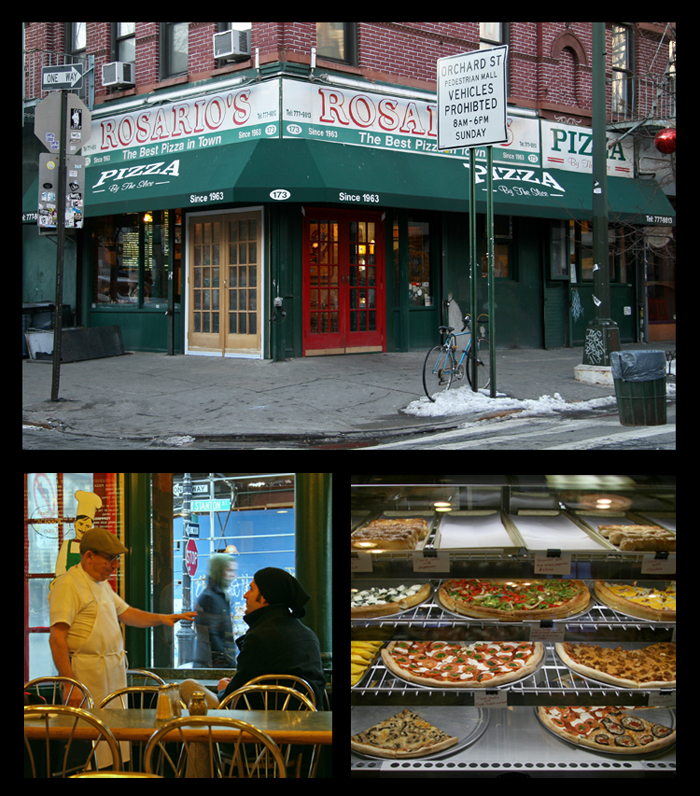
    Sunday, after reading about Rosario’s Pizzeria on the Lower East Side, I decided to make a short trip and sample the goods. Located at 173 Orchard Street and Stanton, the awning proclaims “The Best Pizza in Town” and “Since 1963.” So, they get points for authenticity and longevity. However, I was not particularly pleased with their style. The crust was thick and somewhat cakey. Have you ever had thin crust pizza?

    The reviews I have read range the gamut, with 5 star reviews just as impassioned as the 1 star. The highlight of my excursion was an animated conversation in Italian between the shopkeeper and a customer about I don’t know what. Perhaps the patron was informing the shopkeeper about thin crust pizza and the shopkeeper was explaining that the problem in the summer is that it’s not the heat, it’s the humidity 🙂


  • Heard It Through the Grapevine


    Many New Yorkers, like many Americans, have a love of things French, and in New York City, as elsewhere, we have imported as much of the culture as we can – the food, wine, language, art, film, fashion, style, and architecture. Our biggest import of all sits in New York’s harbor – the Statue of Liberty.

    In many contexts, the very word “French” is virtually synonymous with class or sophistication. Of course, the French are also a people that many Americans love to hate, a people who can be trying or difficult. When it comes to food, most are happy to put differences aside. French restaurants and pastry shops abound in New York. Casual French styled bistros or cafĂ©s, such as French Roast, however, are not as easy to find.

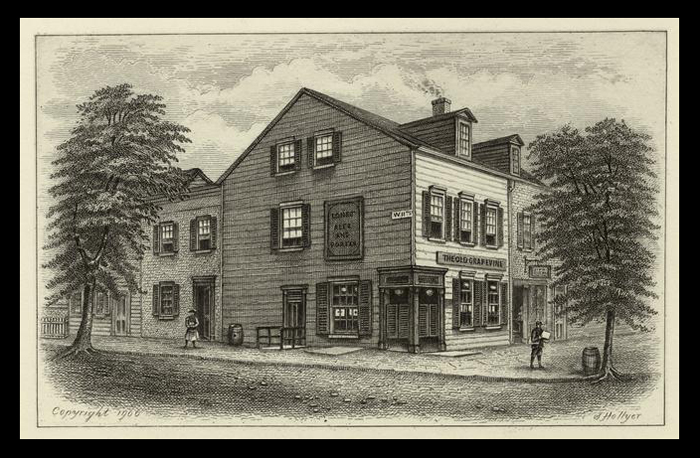
    French Roast has two locations, one located on the Upper West Side, the other, seen in the photo, is in the Village at 78 W. 11th Street. They are open 24/7. One of the most interesting things about French Roast is that it is located on the site of The Old Grapevine Tavern (bottom photo). From the New York Public Library website:

    The three story clapboard roadhouse was built in the 18th century and was located on the southeast corner of 11th Street and 6th Avenue. Originally a private home, it eventually became a saloon known as The Hawthorne. The 11th Street side of the building was covered in a gnarled old grapevine and by the early 1800s the establishment was simply known as the Old Grapevine. It quickly became a favorite destination for those wanting to get out of the hustle and bustle of the city (lower Manhattan) and head north towards into the open country (11th Street).

    During the Civil War it was a popular hangout of Union officers and Confederate spies. Later, when the Jefferson Market Courthouse was built the local lawyers and politicians would gather there to talk business. Artists and actors also met there. It was the ideal place to get news and information, or in the case of spies and politicians, the ideal place to spread rumors and gossip, leading to the popular phrase “heard it through the grapevine”.

    The vine died in 1883 and was cut down. The Old Grapevine Tavern was demolished in July, 1915 to make way for a six story apartment building.

    It was missed after its demise. The New York Times ran an article: “Passing Of the Old Grapevine. Quaint Landmark Known to Artists, Actors and Good Fellows Generally is Torn Down.

    Reviews of French Roast run the gamut. Whether it is food, decor, or service, like France and the French, some love the very things that others hate. I find it a pleasant alternative to the standard diner for breakfast or brunch. From the New York Times:

    These two restaurants are both open 24 hours a day, which means you can get bad food and surly service around the clock. Basically, they are diners masquerading as French cafes.

    Some question the etymology of the grapevine phrase. Some don’t like the French. Others don’t like French Roast. I heard it through the grapevine 🙂


  • Grab a Bite to Eat

    Everyone has their pet peeves, and for me, it is taking too much time to eat when there are “better” things to do. And in New York City, there are always “better” things to do. This may sound very contradictory for a man who extols French culture, quality of life, and the slow food movement. It is. But as a college professor once responded to me, when I detected some dissonance in one of his statements, “People are full of contradictions.”

    My frustration rises to crisis management when I am with people whose priority is eating over all other things and where no experience, no matter how exciting or exhilarating, will distract them from seeking food. I am in deep trouble when I am with these types of individuals in New York City, which is a literal smorgasbord of eateries. And typically, for these comfort seekers, eating on the run is not their preferred modus operandi – sitting and indulging is.

    I had a relative who used to come to the city often and stay weekends. A refrain, which I can hear in my head to this day, was, “Let’s grab a bite to eat.” I became so irritated, because this was typically mid day, long before dinner, and we had an agenda of things to do and places to see. The “grab a bite to eat” always ended up becoming a production of an hour or more. Waiting, ordering, eating, coffee, getting a check, paying, etc.

    When very young, I had limited restaurant experience and thought “a la carte” meant that food was offered on a cart, needing to be snatched quickly while passing by. The reduced service and quality of selections accounted for the lower pricing. This would seem a great option for New York, but there are no carts to snatch from in restaurants (dim sum is close), so there is no way to really “grab a bite to eat.” For the traveler or resident who does have the need to expedite a meal, there are places tailored to a quick bite, the most common being the New York pizza parlor for a slice on the run. There are other places, somewhat less noticeable, tucked into the nooks and crannies of the city’s side streets.

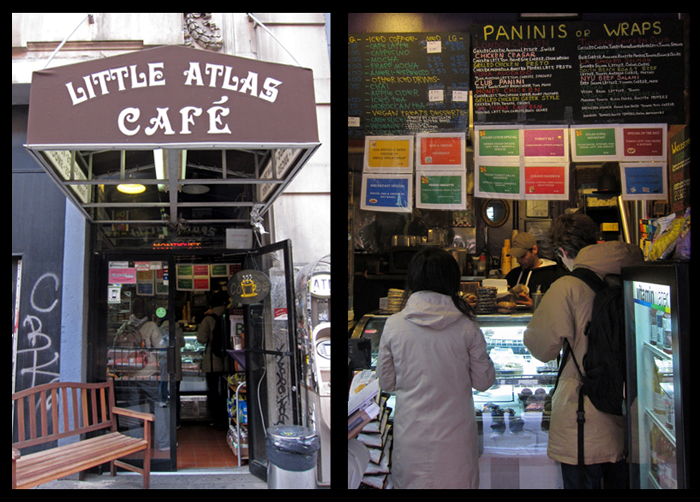
    In the Village, in the heart of NYU country at 6 West 4th Street, there is the Little Atlas Cafe. The place truly befits its diminutive name and is strictly takeout and delivery. There is just barely enough room for a few customers and the staff. The menu is quite extensive. Reviews vary. The place has a large range of vegan offerings, and many of the criticisms are from those who have specific issues with the vegan products. I enjoy their food, and for those on the run, who have no access to a fast moving cart, the Little Atlas Cafe is the perfect place to Grab a Bite to Eat 🙂


  • Walk Like Di Fara

    I first learned of Totonno’s while visiting the hobby shop Precision RC in Bath Beach, Brooklyn. A number of regulars were socializing and I told of a recent visit to Di Fara Pizza in Brooklyn. They were familiar with the place and queried me about the current pricing of slices. When I reported $5 each, the room was abuzz with incredulousness as one repeated my findings to another. I was advised to visit Totonno in Coney Island where, according to them, I would find better value and pizza. So the name was filed away for a future excursion.

    On Sunday, I made the journey out to 1524 Neptune Avenue on Coney Island. Timing, hunger, and circumstance found me there early evening between shifts, so my first experience was an unusually quiet one. They are often mobbed with lines. I was privileged to have nearly the entire place alone.

    Totonno’s began in 1905 when Anthony “Totonno” Pero distinguished himself as one of N.Y.’s first Master Pizziolas. In 1924, he opened his own pizzeria in Coney Island. The establishment is currently run by three individuals who operate it from Wednesday to Sunday. Michael, Maddie, and Totonno’s niece, Louise Ciminieri. Learn more here.

    The service was a bit cool, but I knew that this was likely just a little armor that comes from working for decades in a retail environment in New York City. I surmised a little lubrication would release the humanity.
    I began taking photos – it was clear from the walls of articles, awards, and photos, that Totonno’s was a mecca and photography was standard fare. See my entire photo gallery here. I began to tell the story of my visit to Di Fara, my subsequent visit to the hobby shop, and the recommendation I was given to seek out Totonno’s. I also told of the crowds and lines at Di Fara and how at $5 per slice, that little old man must have accumulated some serious money by now.

    Louise was unimpressed – she quickly retorted that Di Fara insists on doing everything himself, accounting for much of the slowness in service. Apparently a demonstration was needed, and Louise cajoled Michael: “Come on, walk like Di Fara,” Michael obliged, as seen in the photo.
    The elixir of humor was flowing now, and Michael and Maddie took a seat in a booth next to us. I asked Michael what he did outside of Totonno’s, to which he replied he did standup in Rockaway two nights per week. He laughed, and I realized I had been taken.

    A new customer walked in and ordered a small pie. Louise asked how many were left, to which Michael answered, “two.” I asked the meaning of this. Did they make dough DAILY and sold until they ran out? Louise said yes, and I asked, “Do others do this?”
    “No one does what we do.” She followed with a discussion of ingredients and the pains they go through to get them and maintain the same quality pizza made in 1924. They still use a coal oven pizza, with coal deliveries made every two weeks. Louise also told me how Totonno was now a destination and how travelers from around the world visit the Neptune Avenue pizzeria.

    I told them of this website and that I would be featuring the pizzeria. I left in a great mood, so fortunate to have had a New York City moment in an iconic restaurant. It all served as a good review in basic science, that a little warmth melts any ice and a little oil unhinges any armor. Out comes humanity, and if you’re lucky, a little free theater entitled “Walk like Di Fara.” 🙂


  • Levis, Film and Corn


    Some years ago I was gifted the Encyclopedia of Bad Taste – A Celebration of American Pop Culture at Its Most Joyfully Outrageous. Many of the entries were hilarious, and the book provided many hours of entertainment. It’s very easy to find things to complain about regarding America in a land of excess and absurdity, with examples in virtually every facet of life – supersized meals, morbid obesity, SUVs, shopping malls, monster trucks, Elvisiana, fuzzy dice, lava lamps, aerosol cheese, etc.

    The subject of the shortcomings of the USA was also a frequent topic of conversation with a former coworker. On one occasion, rather discouraged, I quipped, “What does the USA have of quality anyway apart from Levis and Film?” To which he replied, “Corn.” That’s true. So I included corn as a 3rd element in the list of quality American products. The trinity became a favorite private joke, included in conversations as we saw fit.

    More and more, however, we find that many of the quality products we have in the USA are legacy products, whether they are Levi jeans, Corvettes, Broadway shows, and theme restaurants – such as diners. Many of these legacy products, however, are dusted off, remanufactured and repackaged in a shoddy way, riding on reputation, only to become another manifestation of the “triumph of image over substance” (see Zeckendorf here). Nostalgia is such a strong force and we are drawn to these things.
    Diners. I want to love them all. But reality is that many have poor food. And beyond this, the standards for healthy food have risen, and much diner food is really out of step with what many want to eat. This is one element that perhaps accounts for such a staggering range of reviews for places like the Jackson Hole Diner in Bayside, Queens.

    I recently made a visit, after only seeing the exterior on an excursion to Bayside (see All the Way here) in 2009. My companion and I were extremely excited – everything was so retro and perfectly agleam with chrome, steel, glass, neon, polished floors, and shiny vinyl seating. The root beer ice cream float was encouraging. The rest of the meal was basic. As I have written before, at least as far as my New York City experience goes, if going to a diner, best to pick your battles and order accordingly. See my stories Diner Beware of the Diner and Greasy Spoon.

    I hate to break up a trinity – they are so strong structurally, whether branches of government, tripods, or the Catholic Triune God. So for now, the trinity of America’s best stands – Levis, film, and corn 🙂


  • Quantum Leap


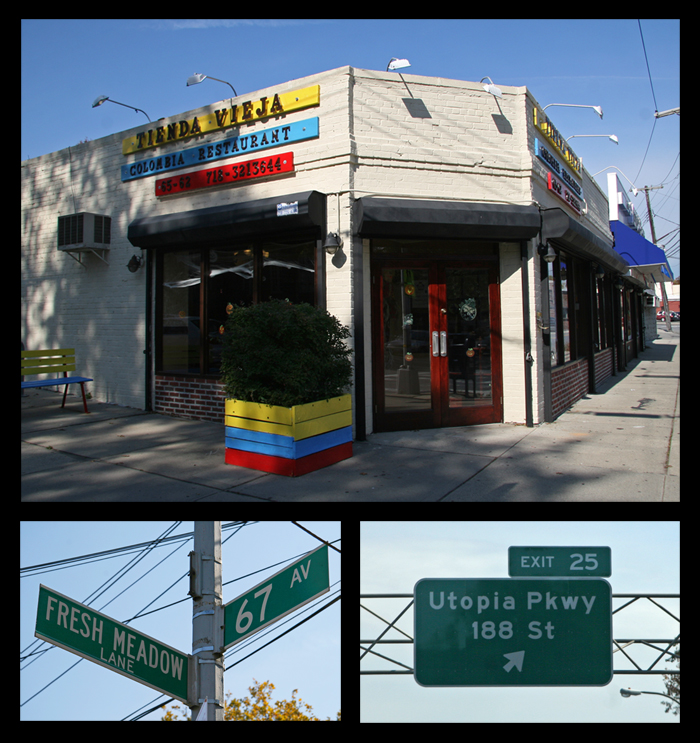
    Absolutely everything conspired to fulfill our fantasy of Shangri-la. The Long Island Expressway exit was Utopia Parkway. The neighborhood was Fresh Meadows. The address was Fresh Meadow Lane. The restaurant was called Quantum Leap.

    The menu had a small mission statement with an explanation of the reason for the restaurant’s name. It said that the secret of life was in the orbital quantum leaps of subatomic particles made in photosynthesis. That was just magical enough to add to the image and scientific enough to enable retelling.

    There was no subway service there, but we had access to a car. With a number of us packed inside a Honda Civic, we must not have looked too dissimilar to the cover of R. Crumb’s Carload O’Comics. Our visits to Quantum Leap were spirited pilgrimages with empty stomachs and tremendous anticipation for the food, which was to us at the time like nectar from the gods.

    We knew what we wanted before we arrived. Rituals are important, and we had ours. A salad called the Big Wood (which I still miss) was a meal in itself – one or more was shared. At the time, we eschewed cooked food as much as possible. If budgets allowed, raw carrot juice (a rarity at the time) was ordered by the more affluent. The kitchen was well regarded for its desserts, and an excursion to Quantum Leap was never complete without their Banana Creme Crumb. Our desire to limit our dairy intake was thrown aside for these events.

    The space included a natural foods store – browsing the wares was part of every trip, as was meeting and greeting the manager, someone who became a dear friend and the subject of my story All The Way. I bought one of their T-shirts at the time – it was too small then and still too small – another episode of my life’s backstory of things too small and tight.

    On a recent trip to Queens, I decided to revisit the restaurant. When arriving at the address 6564 Fresh Meadow Lane, however, Quantum Leap was nowhere to be found, with Tienda Vieja in its place. After a brief visual survey of the area, it appeared to be the same neighborhood I remembered. A brief visit inside Tienda Vieja confirmed that this was the former home of Quantum Leap – a current staff member told me that they had closed at this location in the beginning of the year.

    In the 1980s, the owner opened the first Manhattan location near my home – I was ecstatic. I still eat there on occasion, likely their oldest customer. When I tell the owner that he should bring back the Big Wood, he laughs. Silly boy, I bet you believe in Santa Claus, the Easter Bunny, the Tooth Fairy, and that the secret of life is in a Quantum Leap 🙂


  • Caught in the Riptide


    Have you ever been caught in a flow of traffic so strong that you feel you cannot exit? And to do so would not only be dangerous, but you also fear the ire of those who may be inconvenienced and slowed down by your exit, even for a nanosecond? Or perhaps you have avoided swimming at a beach where dangerous riptides exist.

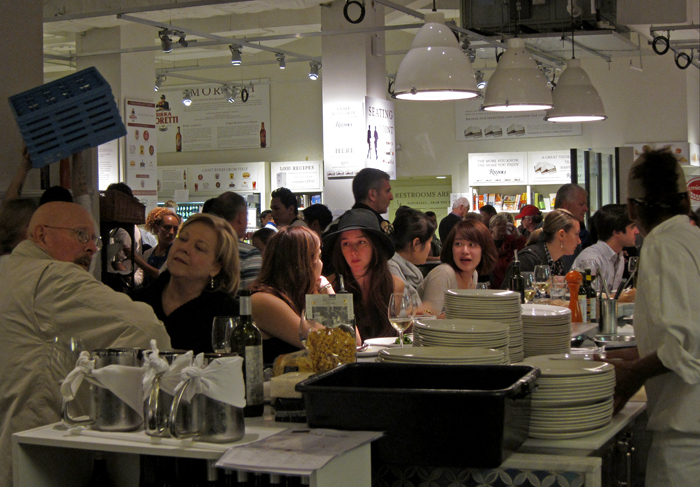
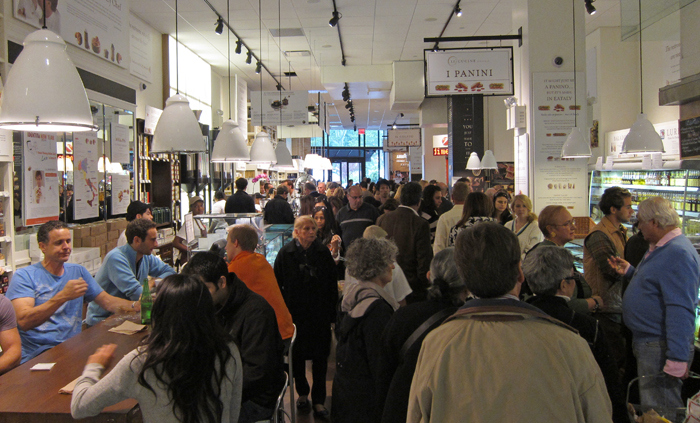
    Unfortunately, I am very narrow-minded when it comes to mob scenes. And there are plenty of mob scenes in New York City, driven by the buzz of the powerfully connected. It is a deal breaker for me. So, regardless of how wonderful and amazing Eataly may be, I can not tolerate being in a place that is like being on a freeway with no exits. I am not afraid of traffic – I have driven in New York City for my entire life here and was a taxi driver for nearly 2 years when I first moved to the city. But I try to avoid crowds and find a little respite when it comes to food shopping. This is why I also tend to visit Whole Foods Market in the city infrequently.

    Eataly is the brainchild of restaurateurs Mario Batali, Joe Bastianich, Lidia Matticchio Bastianich, and Eataly founder Oscar Farinetti, who created the Eataly food emporium in Torino, Italy, opened in 2007. You can read more about them here at their website.
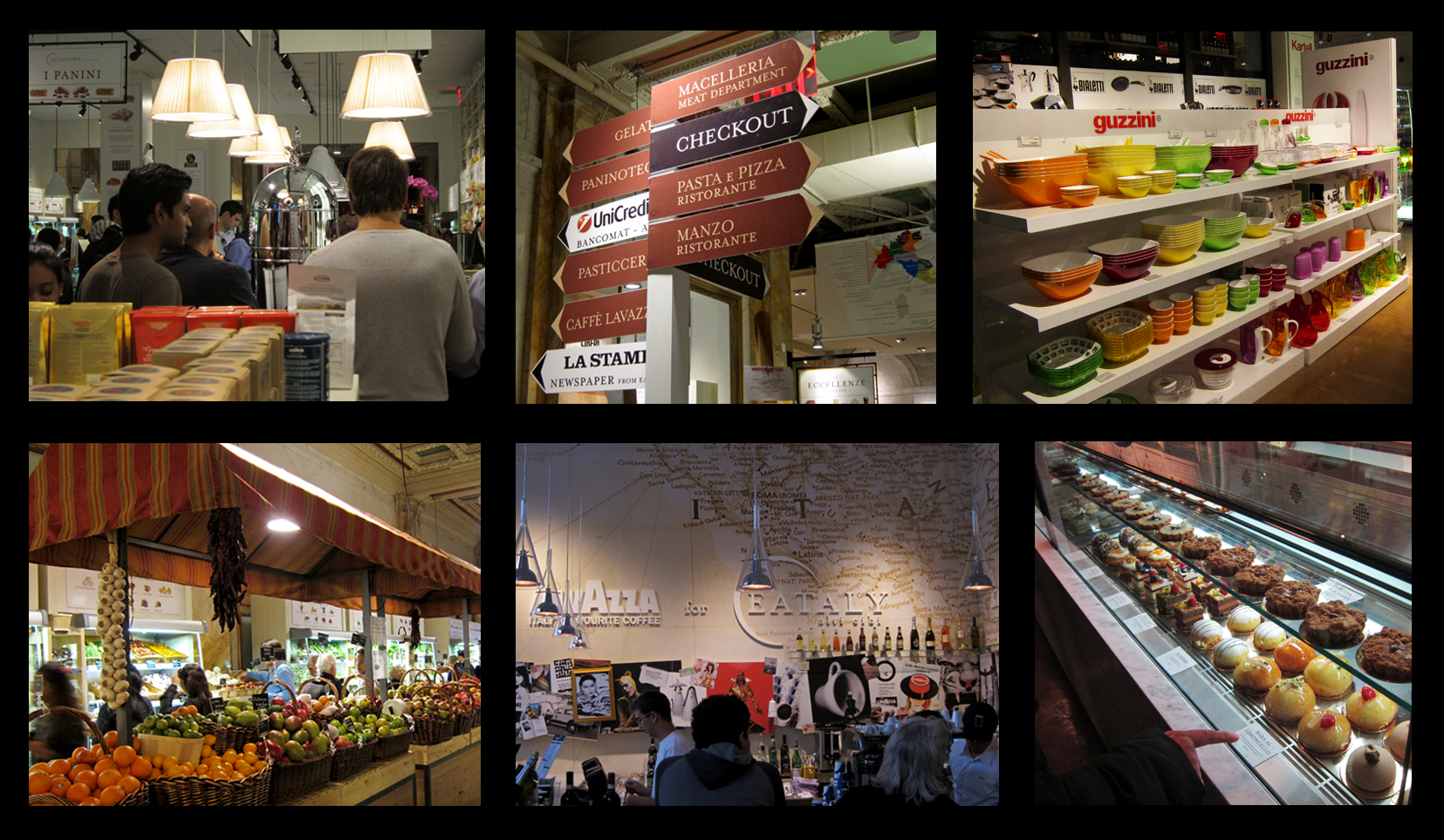
    Eataly in New York City occupies 52,000 square feet on the ground floor in the toy center at 200 Fifth Avenue at 23rd Street. It features multiple restaurants, a Neapolitan pizzeria, and retail shops featuring every imaginable food item from Italy, along with Italian housewares and a cooking school. There is a year-round rooftop beer garden and microbrewery.

    Mario Batali is no poser. He knows his food, and his tremendous success is not smoke and mirrors. I did not examine any of the goods, but I am confident that everything is as represented as far as foodstuffs for sale. The philosophy here is not only to bring in the finest goods direct from Italy, but also to embrace the Slow Foods concept on which the original Eataly is based and which I heartily support.

    Restaurants are, of course, another story entirely. Good service is not a given, particularly in a place overwhelmed with patrons. There are so many negative online restaurant reviews regarding the places in Eataly that I would have to assume, at best, that the experiences here will be uneven.

    However, I do plan on going back to look a little more closely, brave the crowds, and give the place a chance. See you there, caught in the riptide 🙂


  • dinamic_sidebar 4 none

©2026 New York Daily Photo Entries (RSS) and Comments (RSS)  Raindrops Theme