• Category Archives Food and Restaurants
  • $7.95 a Pound

    “There’s a place called Space Market. Their food is ridiculously cheap. Salad is only $7.95 a pound. A pound is a lot of salad.” -said by an upperclassman to a group of incoming freshmen, class of 2014 (this is the week that students are settling in for the fall semester)

    I overheard this at a restaurant last night and was rather stunned. I’ve gone to Space Market for years (it is in the heart of the NYU campus). The food is not ridiculously cheap. Actually, many complain that it is very expensive. They charge $.75 for a glass of ice (even when you purchase a beverage). In fairness, there are some occasional values, the food quality is very good, and their pricing is typical of New York City delis or greengrocers, probably about as expensive as food gets in the United States. And by the way, Mr. Upperclassman of Experience, a pound is not a lot of salad, unless you eat only greens.

    A few years ago, I saw Think Coffee introduce a wine and cheese bar. Think is on NYU’s campus and is dominated by students. I discussed with a friend how wine and cheese seemed a foolish addition to a student hangout and was sure to fail. Shortly after, on a subsequent visit, I saw an employee serve a nice bottle of wine to a group of students and a platter of gourmet cheeses. The offerings have been a success.

    Times have changed. With yearly expenses at $50,000, NYU is no longer a world dominated by starving students. It is common at Think Coffee, Space Market, or elsewhere to see students swipe charge cards for a $5 purchase or less. At the time I went to NYU, it was actually possible to work your way through college and leave with little or no loans. But at this juncture in time, work will have very little impact on the finances and debt load of the NYU student. Some do work part-time, but I surmise the majority just use a credit card supplied by their parents and add only a little more to their college debt. After all, food is ridiculously cheap – salad is only $7.95 a pound 🙂
  • The Last to Know

    There are many kinds of surprises, and one type is that which is caused by Tunnel Vision, a common ailment with New Yorkers. The perennial joke that Village residents never go north of 14th Street is not an exaggeration, only a New York City variant – people who don’t even look past their neighborhoods.

    We typically see ourselves as inventors, or at least very early adopters, but certainly not the last to know. There are a few exceptions – the things we don’t want or the things we just can’t have due to space limitations. Big box stores such as Home Depot were very late comers here, and there is no Wal-Mart in New York City. Large behemoth retailers have had to scale down their operations, shoehorning and tailor-fitting them to the biggest spaces they could find.

    A California resident told me about the opening of Trader Joe’s first store in New York City, on 14th Street in Manhattan, on March 17, 2006. I was informed that the place had a cult following and was known for their sharp pricing, good quality, and a fan base for their house brand (80% of Trader Joe’s product line is their own brand). The product line is very green conscious, with health oriented foods, including gourmet foods, organic foods, vegetarian items, and an extensive line of frozen and imported foods.

    I assumed that this new opening was a case where New York City was privileged to get a specialty shop that had a location or two elsewhere on the West coast. However, I learned today of the mammoth scale of this retailing operation, with 344 stores nationwide.
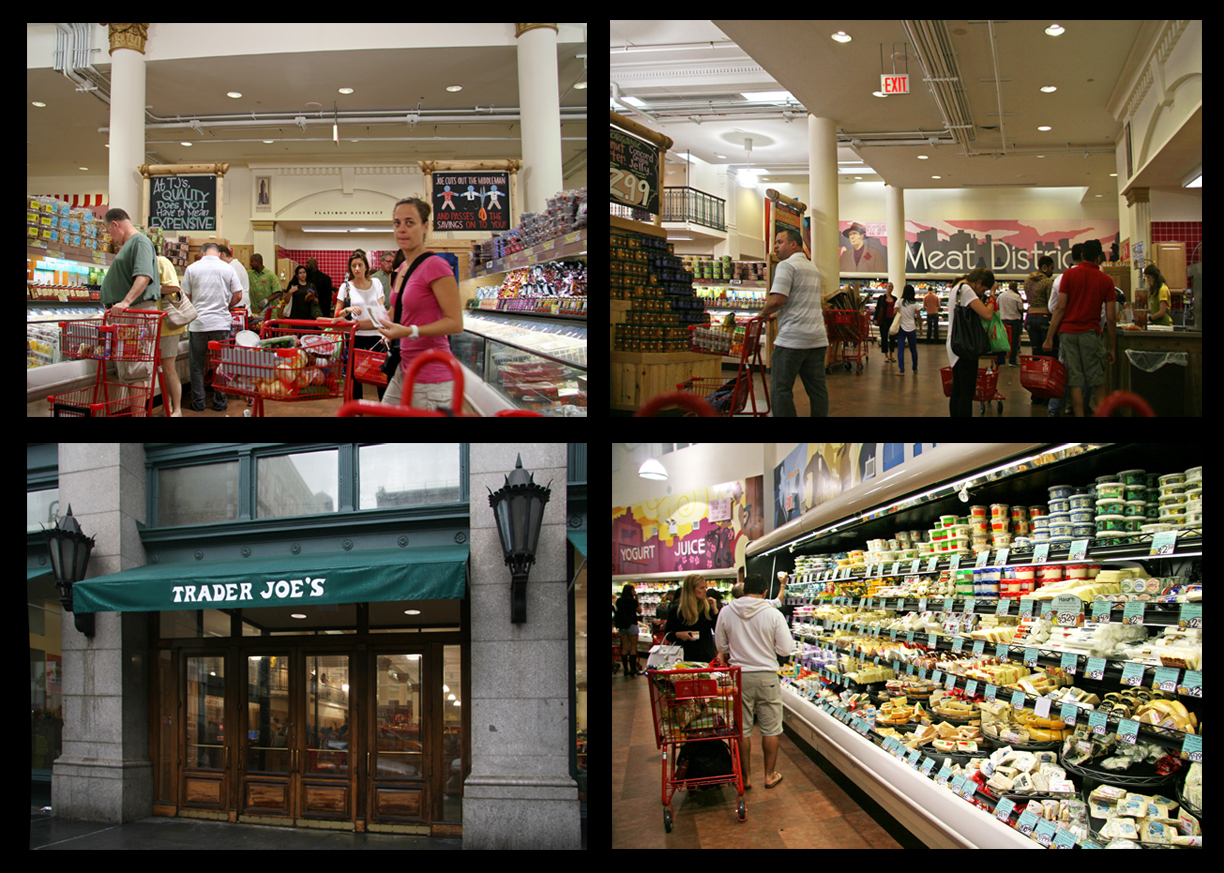
    New York City’s first location at 142 East 14th Street opened to much fanfare, with long lines to enter. Recently, however, a new location opened at 20th Street and 6th Avenue (seen in the photos), with a much roomier feel and large aisles. Shopping here is an adventure, particularly for Manhattanites, for whom food shopping in a large space is such an anomaly. Customers push shopping carts around like their suburban brethren.

    So, if a New Yorker brags to you about the wonderment that is Trader Joe’s, as if it were a city creation, humor them and let them believe it. Why spoil the fun and tell us the truth – that actually we are the last to know? 🙂

    About the Company: Trader Joe’s was started in 1958 by Joe Coulombe as the Pronto Market chain in the Los Angeles area. The South Seas motif was inspired while Joe was vacationing in the Caribbean, and the first shop with the Trader Joe’s name opened in 1967 in Pasadena, California. The company expanded, and in 1979, it was purchased by the late Theo Albrecht, one of two brothers behind the German supermarket chain, Aldi. The Aldi chain is comprised of two separate businesses, Aldi Nord (owned by Karl Albrecht) and Aldi Sud (owned by Theo Albrecht). Aldi Nord has stores worldwide, including 1000 locations in the USA. However, Trader Joe’s is owned by Aldi Sud, so there is no business connection between the Aldi stores in the US and Trader Joe’s.


  • A Terrible Mistake

    Posted on by Brian Dubé

    I have a customer whom I have known since the 1980s, when he was a teenager and a student at Stuyvesant High School. He was very bright, astute, and street smart. On one occasion, I was telling him about my dealings with a customer who was particularly upset. In his characteristic, lighthearted style, his prescriptive was simple and direct: “Brian, just tell them ‘I’m sorry, there’s been a terrible mistake.’ ” Funny and simplistic, yet his palliative contained customer service core principles – apologize, take responsibility, and don’t make the customer wrong.

    On April 27, 2009, I wrote a story called Pick Two, which highlighted the project triangle – good, fast, and cheap, and how you can only get two out three. My search for a restaurant where you could find the impossible three out of three led me to L’Annam.

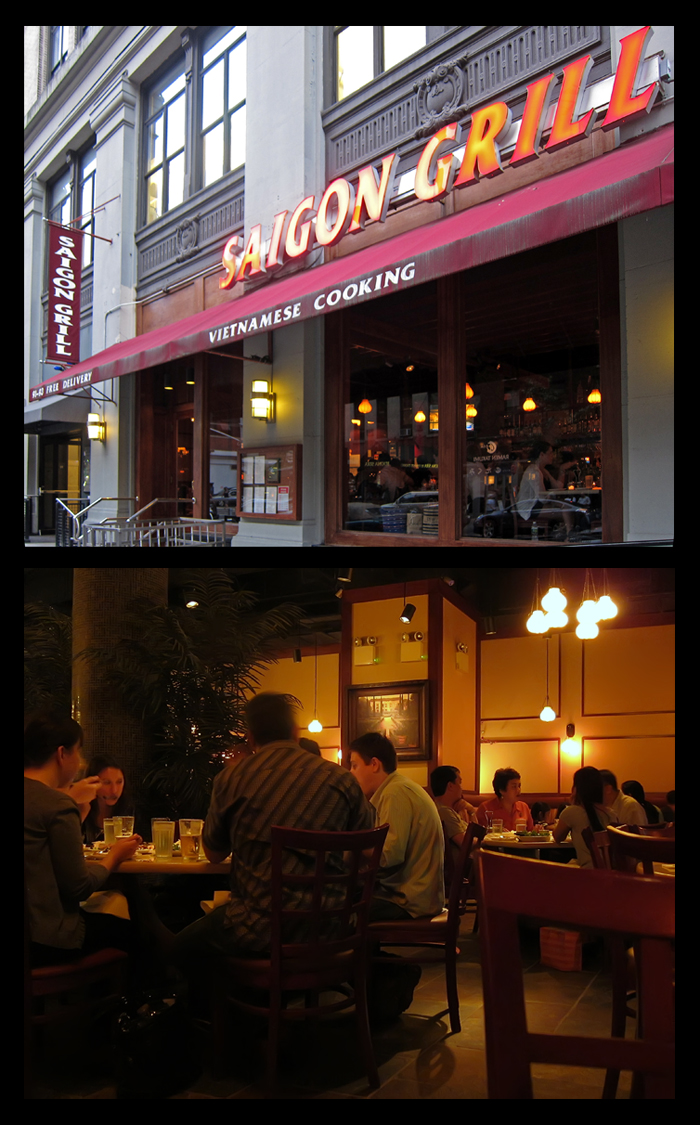
    Since that time, I have been frequenting another Vietnamese restaurant, just down the block on University Place – Saigon Grill. This place is rather remarkable. Its elegant decor bespeaks of a place which should be much more expensive. It is always clean, and the speed of food delivery is the fastest I have ever seen, other than at a fast-food takeout restaurant. The place is enormous, yet always busy. The food quality is very good.

    This place appeared to be another candidate for the rarified club of businesses who deliver three out of three. A little investigation, however, reveals one way in which owners can do the seemingly impossible.

    Saigon Grill has been embroiled in one of the biggest controversies I have ever seen in the New York City restaurant business. A battle between deliverymen and owners Simon and Michelle Nget raged for over two years with allegations by employees. During that period, there was picketing outside, blogs and articles calling for boycotts, and media spotlights.
    From the New York Times:

    The owners of the two Saigon Grill restaurants in Manhattan were arrested Wednesday on more than 400 criminal charges, including violating minimum-wage laws, falsifying business records and defrauding the state’s unemployment insurance system.

    Several deliverymen asserted that they usually worked more than 65 hours a week but were often paid only $520 a month, or less than $2 an hour, far less than the federal and state minimum wage.

    The deliverymen asserted — and a federal judge agreed in his October ruling — that the restaurants had illegally deducted from $20 to $200 of the workers’ pay when they committed infractions like letting the restaurant door slam on their way out.

    In the final decree, a federal judge awarded the deliverymen $4.6 million in back pay and damages. In the case of egregious criminal activity, my friend’s advice is no avail. Apparently, no federal judge or jury is going to believe “I’m sorry, there’s been a terrible mistake.

    Posted on by Brian Dubé

  • Old Can Be Good Too

    Posted on by Brian Dubé

    I used to have a client who would call regularly and ask excitedly, “What’s new? What’s hot?” It was irritating – what’s wrong with the same old thing if it is good? I certainly produce new products, but as a manufacturer, just maintaining the quality of a product line is a full-time job. Often I am dealing with the one last supplier in the United States of a part or raw material – when they are gone, my hand will be forced to buy an import, often of inferior quality. Admittedly, with the rate of technological change, it is questionable whether one even wants a product which will last.

    Imagine guiding friends or family through New York City and nothing is familiar. Every retailer or restaurant is new, soon to be replaced by something newer. When asked about one of these merchants, you have to respond that you are not actually sure who they are and you have never been inside. But no worry, because they will be replaced soon by something newer.

    I am not a luddite at all – I love new technology and am certainly not averse to the new and improved. However, by and large, humans are creatures of habit, and the man or woman is rare who does not at least find some comfort from time to time in the old and reliable.

    Certainly not every merchant of high quality and integrity is a legacy business. Many of the businesses I have sought out and featured in my writings are newer – places such as Cones or the Doughnut Plant come to mind. I have also found a handful of older mainstays, part of New York City’s disappearing act. We are in a climate where many legendary brands have degraded over time and are selling on name alone. New or old is never a guarantee of quality, in New York City or elsewhere.

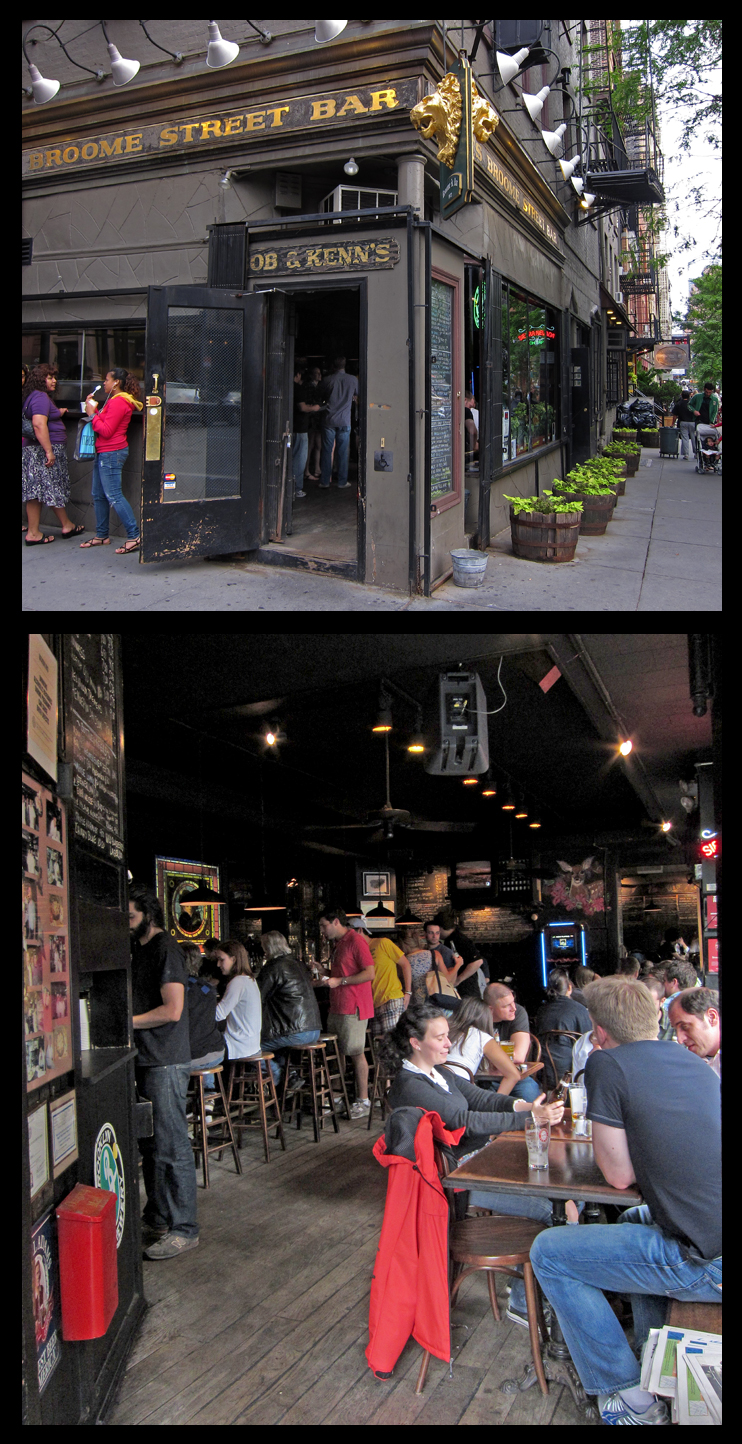
    Everything said, I cannot promise that a visit to the Broome Street Bar will be everything you want – much of your experience depends on your expectations. But, when you are lucky enough to find a legacy business that still has a decent reputation and pleasant ambiance, it is comforting to know that sometimes, old can be good too 🙂

    About the bar: Bob & Kenn’s Broome Street Bar has been a SoHo fixture since 1972, when opened by brothers Bob and Kenn Reisdorff. The bar/restaurant is located in the heart of SoHo at the corner of Broome Street and West Broadway in a historic 1825 building. See more photos here.
    The space has a checkered past – a house of prostitution in the 1940s, and a previous owner who murdered a customer having an affair with his girlfriend and, in turn, was murdered by the victim’s brother. Read about the bar’s history here.

    Posted on by Brian Dubé

  • No Problema

    Posted on by Brian Dubé

    I was in the south of France at the Nice airport at the car rental booth. The agent, knowing our travel plans (to northern Italy and back), asked with a concerned look if we wanted contents insurance (for theft of auto contents). When I asked why, he said, “You’re going to Italy, you know.” Aha – I see. We had not even left the airport, and national rivalry was in full swing.

    Years later, on a subsequent trip with my family, we stopped to have lunch at an amazing spot right on the beach in Menton, southeastern France, near the Italian border. Many of our waiters were Italian.

    Regular readers know I love France, however, I readily admit that the French can be a little particular – one must know how to act and how to handle them. This is why, when we asked to move two tables together, we asked rather timidly. We were surprised to hear the response No Problema.

    I also noticed this phrase emblazoned across the front of a road map of Italy – apparently this was a virtual national motto. I am convinced that this was Italian national pride, with the added twist of posturing against the tourist experience with the persnickety French, where, for some visitors, everything seems to be a problem. I heard the refrain No Problema many times on that trip to Italy.

    Last night, three of us decided to go for some quick pizza. However, our choice of where to go was constrained by one of our group, who had two dogs. So it was decided to give Ben’s Pizza a try – this place, much like Nathan’s of Coney Island, has a look and feel of a Klein bottle, with no identifiable inside or outside. Perfect for a motley crew with dogs in tow.

    Now I had never eaten at Ben’s at this location – the place always frightened me. Let’s just say that cleanliness is not one of its hallmarks, and I always found the place extraordinarily unattractive and unappealing.
    Our order for slices was a mess. One of our party was unfamiliar with the choices, many changes were made, misunderstandings clarified, etc. The situation was trying for anyone in retail, particularly in New York City, where customer volume is heavy and patience can wear thin.

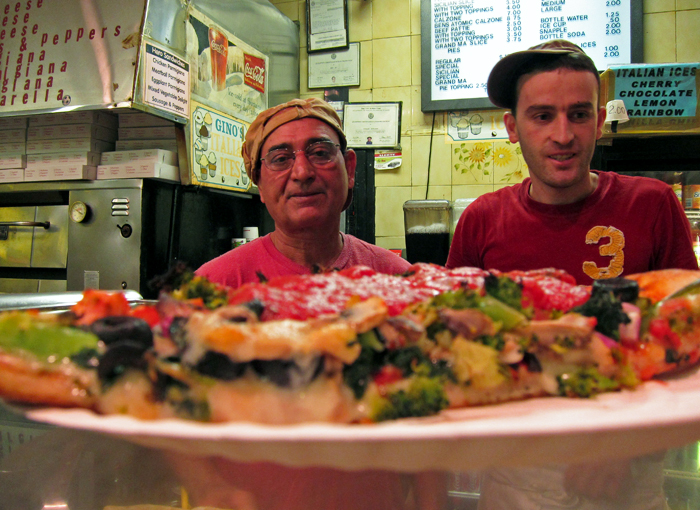
    However, this man (photo center) was unflustered by any of it and seemed to have the patience of a saint. Remarkable for a place in a touristy location like this. And at every juncture, whenever I apologized, I imagine you have guessed his response already: No problema!

    Ben’s Pizza is located at 123 MacDougal Street on the corner of West 3rd Street and has been in business since 1966. There is a second location in SoHo at 177 Spring Street. The pizza itself? The reviews differ wildly. Our slices were better than expected.

    Posted on by Brian Dubé

  • Philanderers with Fruiterers

    Posted on by Brian Dubé

    There was a fruit vendor on the corner near my office. The fruit and pricing was good and the location very convenient, so my coworkers and I soon developed a relationship as regulars.

    Relationships have certain key elements. Mutual trust, respect, and love. Fulfilling mutual needs. Responsibilities and obligations. A fruit vendor relationship is no different. Often, however, there is a price to pay for the conveniences found in New York City.

    Our vendor was a small and frail man from Pakistan, and we soon referred to him as “the little man.” He was very poor and spent long days in the hot summer sun. We all liked supporting him. Our fondness for him grew. However, like many relationships, there were problems, and the relationship became strained.

    Things were pleasant as long as we purchased the quantity he wanted us to buy. If we wanted a half pound of cherries, too bad – he refused to sell less than a pound. When we asked for a pound, one and a quarter was put on the scale, and it was suggested that we take two. This was four times what we really wanted. And did we want some nice bananas or peaches to go with the cherries? His recommendations were in his hand and being added to our bag, only to be stopped by virulent protest.

    We soon wearied of the daily battles defending our fruit needs and consumption. We could no longer trust him, he had no respect for us, and our love for him had faded. No need for counseling. We were looking for divorce, or at least a trial separation.
    Separation, however, was not so easy. Walk by the fruit man and expect to be greeted, or should I say apprehended. Why didn’t we want any fruit today?

    We were in the worst breakup scenario where, due to circumstances, both parties are forced to continue to make daily contact. Like coworkers or neighbors who have had an affair.
    We found ourselves crossing the streets to avoid him and hiding food purchases from him as best we could. But he was crafty and observant, often hailing us from afar and offering our favorite fruit. But we were steadfast in our avoidance. We had no desire to become like victims of battered spouse syndrome who become trapped in abusive relationships.

    He became angry. Were we seeing someone else? Yes, we were. No use hiding it any longer. He knew our dirty secret. And although the relationship was over for us, in his mind, we were nothing but philanderers with fruiterers 🙁

    About the photo: A real instance of philandering with fruiterers. I patronized this second man for years, however, I now typically shop for fruit with other needs at larger nearby markets. I still buy from him on occasion. I am sure that he knows I am cheating, but he is always pleasant. Some tolerate philandering better than others 🙂

    Posted on by Brian Dubé

  • Kick in the Shins

    Posted on by Brian Dubé

    Just shortly after enrolling at New York University in the early 1970s, I received an extremely unusual request. A high school history teacher contacted me from my hometown in Connecticut and wanted to make a visit to the city to experience the Village in its turbulent times. I was quite taken aback, but I agreed.
    One of the few incidents I recall was a visit to Mamie’s Ice Cream Parlor, located at 35 West 8th Street. Apparently we were quite a motley crew of hair lengths and generations – the waiter, taking our order, asked, “Can I help you, gentlemen?” adding, “and I use the term loosely.” To which our older companion responded, without hesitation, “Don’t use the term too loosely or I’ll kick you in the shins.”

    How cool to have not only an adult but also a figure of authority on your side. History teachers were never the most popular figures in school, and most students felt at odds with them, groaning and resisting the requisite memorization of facts. Here, at last, a school teacher and students were both on the same team. He appeared to be a bit of a rebel, and what better time and place to exercise his rebellion?

    Ice cream and gelati shops have gone through waves of popularity in New York City. There are always new incarnations with a different spin, but authentic ice cream parlors have slowly died out and are now quite scarce. So I made a visit to Forest Hills with a friend to seek out Eddie’s Sweet Shop at 105-29 Metropolitan Avenue. Eddie’s is one of the last remaining classic ice cream parlors in New York City. The century-old shop has been in continuous operation since 1909, when it opened as Witt’s Ice Cream Parlor. In the 1960s, it became Eddie’s.

    We arrived late in the afternoon – the place looked like it had seen a tidal wave of business. The counter staff definitely appeared to be overworked – an early heat wave had everyone out, with ice cream on the agenda for many.
    Most go to Eddie’s for the ambiance and a menu of all the classics – banana splits, malteds, floats, egg creams, frosteds, and sundaes. And everywhere you look, in one form or another, there’s cream. See the menu and more photos here.

    I’m happy to report that in spite of an overworked help and regardless of a customer’s politics or appearance, no rude remarks were made and there was no need to threaten a kick in the shins 🙂

    Posted on by Brian Dubé

  • The Yellow Kind, I Guess

    Many of my generation became very interested in the back-to-the-land movement, natural living, and healthy food. However, I learned a painful lesson that rural does not necessarily mean healthy, often quite the contrary.

    Regular readers know that my family comes from northern Maine – Aroostook County, which abuts the Canadian border. This area is quite poor, and the cuisine reflects it. There are a few good home-cooked specialties that can be had, but it is not the place for restaurant dining.

    On one trip there as an adult, having not visited in decades, I was quite enthused about exploring my roots and this remote, isolated area. One evening, my companion and I decided to eat out. My mother had warned me that no good places existed and that it was a waste of time.
    “Not to worry,” I said, “because I am a resourceful New Yorker, and I am quite capable of eating simply.” Certainly I would ferret out that small casual eatery with tasty local dishes.
    Or so I thought.

    Finding any place at all was a challenge, and we finally settled on one of the only candidates – a restaurant in an inn for hunters. The whole place did not look very promising. My companion ordered a cheeseburger and politely asked what kind of cheese they had. The waitress answered, “The yellow kind, I guess.”

    This was not sarcasm. We knew we were in trouble. I also felt it was inexcusable for a waiter to not know what type of cheese was available, even if only American. Even in the smallest towns in this region, stores did carry more than one type of cheese and they were labeled. Our food arrived, and it was truly dreadful. The cheeseburger was inedible.

    As to be expected, we were quizzed about our dining experience as soon as we returned to my family, and after giving an honest report, my mother launched a barrage of I-told-you-sos. She won that round handily.

    High quality food is never really a simple affair, and watching the numerous videos of the farms which supply Blue Hill Restaurant is an education as to the levels that farming and animal husbandry can reach. Artisanal techniques and the best possible conditions for livestock and produce are all used. Blue Hill Restaurant, at 75 Washington Place in Greenwich Village, is renowned for its use of farm-fresh, local, seasonal, organic, and sustainable ingredients in its cuisine.

    The restaurant was opened in 2000 and is owned by brothers Dan and David Barber and David’s wife Laureen. The accolades for Blue Hill are many. The Zagat survey gives the food a 27 (out of a possible 28) rating. Serious Eats ran an article: “Blue Hill at Stone Barns: The Most Important Restaurant in America.” In May 2009, it was visited by President Obama and his wife. See more at the Blue Hill website here and a menu here.

    I imagine, when inquiring about the type of cheese used in one of Blue Hill’s offerings, that they could do a little better than “the yellow kind, I guess” 🙂

    Note: Blue Hill also has a location at Stone Barns Center for Food and Agriculture in Pocantico Hills, New York. It operates as farm, kitchen, classroom – an exhibit, a laboratory, and campus. The farm is one of several suppliers to the restaurant. See more at their website here.


  • Kokadjo

    Posted on by Brian Dubé

    I had finished my meal and had exactly one piece of Tandoori roti left, untouched. I really wanted to offer this to the couple sitting next to me, but I needed to remember, this was not my home nor Kokadjo.

    On a summer vacation some years ago, my folks decided to book a room on Moosehead Lake, Maine’s largest and a well-known attraction for centuries. Their quest led them to a lodge on the lake. I had decided to accompany them, however, the lodge’s room rate at the time was quite pricey and did not seem to be a great value. Some research was quite fortuitous. A beautiful hillside estate home in Greenville, Maine, with a verandah and lake views, was just nearby and, as I learned at check-in, had only just been converted to an inn. I was the first and only guest at Blair Hill Inn and was given the royal treatment.

    The innkeepers were a young couple from Chicago and were quite enthusiastic. Asking about restaurant options, they recommended Kokadjo. Although not fancy, they assured me that it was a lot of fun. Perfect. It was just what we wanted.

    On picking up my folks at the lodge, however, I encountered their innkeeper. When I told him where we were going and asked his opinion, he retorted, “It’s fine if you don’t mind cigarette ashes in your food.”

    As soon as we entered Kokadjo, we knew our innkeepers were right, and cigarette ashes in our food became a distant memory. Home videos of moose were playing on the TV, and the place was just alive. We would become regulars here.

    My sister had ordered a lobster, and we noticed a man some distance away, appearing quite agitated. He finally blurted out that he was a lobsterman, that my sister’s poor skills were driving him crazy, and did she mind if he came and helped her do this right? Which he did. Another man eating pizza alone made a general announcement that he had a few slices left, told what type of pizza he had, and did anyone want them? There were takers.

    Food waste is a terrible thing, and although many will take restaurant leftovers home, there are a myriad of reasons why many do not, even those who are not inclined to be wasteful. Perhaps the amount left is too small, is not suitable for reheating, or after-dinner plans would just make it too inconvenient to drag around a doggie bag. Some are just too embarrassed to ask.

    Many New Yorkers eat all or most of their meals out. There is an enormous number and range of restaurants in New York City at every price level. For those who want to eat inexpensively, there are many excellent choices, often no more costly than a typical fast-food establishment.

    Eating in restaurants, however, is just not an efficient activity – untouched bread, unfinished drinks, or condiments are discarded. Entire meals are returned uneaten because the customer did not like it. Portions are often too large. Waste is endemic – waiters will sometimes take food away without asking if the customer wants to take it home.

    It is estimated that 40% of food served in New York City restaurants is thrown away. That’s a lot of food. Of course, offering food to strangers or accepting and eating others’ victuals obviously has a lot of problems. But when I see uneaten food on my plate or yours, I just can’t help thinking of a less wasteful world and Kokadjo 🙂

    Note: Statistics range widely, but it is estimated that 15% of food in the US is thrown away untouched or unopened. A Department of Agriculture study in 1997 found that more than 96 out of 356 billion pounds of edible food was lost to waste by retailers, restaurants, and consumers yearly. Surprisingly, the large amount that ends up in landfills is now the largest contributor to methane gases released into the environment. An interesting blog about food waste (WastedFood.com) is run by Jonathan Bloom, a journalist from Durham.

    Posted on by Brian Dubé

  • White Sauce

    Posted on by Brian Dubé

    One of the extraordinarily fascinating facets of New York City life is the ethnic concentration that you often find in various businesses and enterprises. And one of those enjoyed by all is the cuisine. This is what makes New York a literal smorgasbord of delectable food from all corners of the globe and one of the biggest allures of the city to visitors.

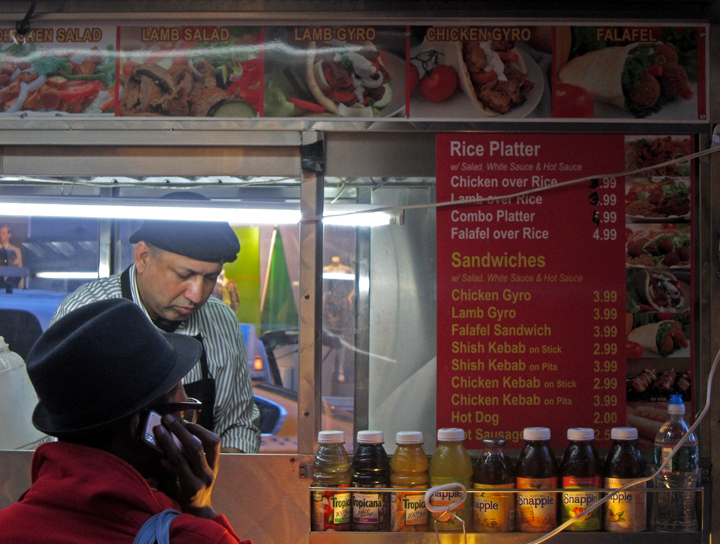
    Halal food carts are to be found everywhere in the city. I was perplexed at the large number featuring a cuisine governed by Islamic dietary stricture- Halal is a term meaning lawful or permissible according to Islamic law, and, as applied to food, is analogous to kosher dietary laws. The number of Halal carts would seem to be disproportionate to the number of potential patrons, but, like many things in this city, the explanation is as much, if not more, about the nature of the vendors than it is by customer demand.

    New immigrant groups come to New York City in waves. One barometer is taxi and car service drivers who, in recent years, have been predominantly Bangladeshi (see Lahore here). These drivers account, in large part, for the initial success of the Halal carts. An article from The New York Times explains the evolution:

    Sidewalk wisdom holds that Muslims took over the street-cart business in the 1990s from Greeks, who had themselves inherited it from Italians and Germans. Census data broadly supports this chronology. In an analysis of data from 1990, the Queens College sociology department found that 306 first-generation German and Italian New Yorkers identified themselves as members of an occupational category that included the job “street vendor”; by 2005, that figure had dropped to zero. During that period, the number of Greeks in the field rose to 200 from 120, while the number of Egyptians, Bangladeshis and Afghans surged to 563 from 69.

    Of course, hungry New Yorkers and visitors are happy to adapt to any new well-prepared cuisine. The Halal cart at 53rd and 6th Avenue is now legendary, with lines as long as 2 hours. They have been finalists in the annual Vendy awards. Initially patronized by those of Middle Eastern and South Asian descent, this cart, like others, is now frequented by many others.
    What’s particularly nice about Halal food carts is that they offer complete meals, such as chicken and rice, not just a snack item such as the ubiquitous hot dog from small pushcarts. See a Halal menu here.

    And then there is the mysterious, semi-secret white sauce, which has spawned discussions and articles – see here. New Yorkers love this kind of thing – what’s better than a secret, mysterious, ethnic, delicious white sauce?

    Posted on by Brian Dubé

  • Shake Shack

    Years ago, on a family vacation in a lakeside cottage rental, I had a hankering for a grilled cheese sandwich, which I rarely eat. A friend on the trip who loved cooking indulged me. It was extraordinary, and soon, my family members, jealous of my ravings, all clamored for their own. The secret? Just using better ingredients than what you typically find in the standard fare. Good bread, decent cheese, and tomatoes. Voila. Gourmet American comfort food.

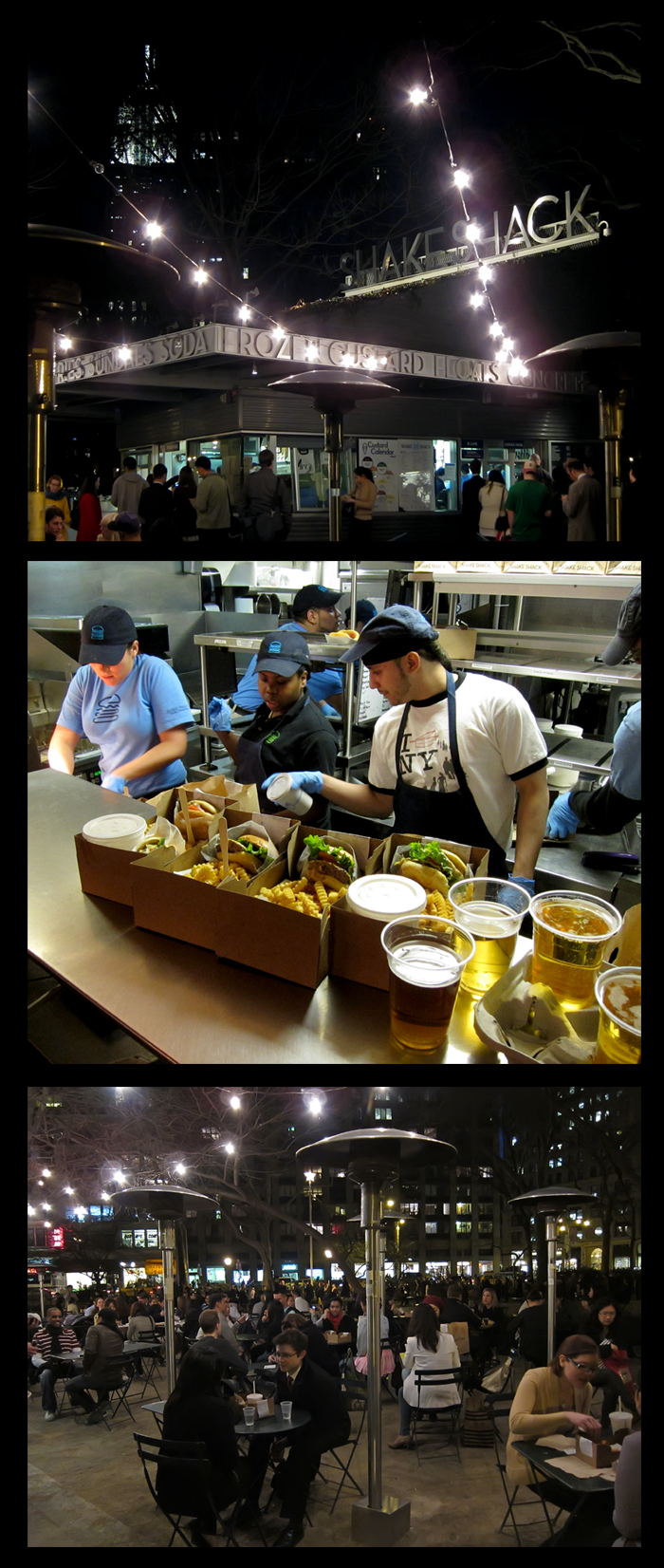
    This is the formula for the Shake Shack, located at Madison Square Park. Take American fast food favorites – burgers, fries, shakes, and frozen custard – and let a gourmet restaurant owner take it to the next level. The New York Times describes the burgers as made from “whole-muscle, no-trimmings, fresh-ground, antibiotic-and-hormone-free, source-verified-to-ranch-of-birth, choice-or-higher-grade Black Angus beef.”

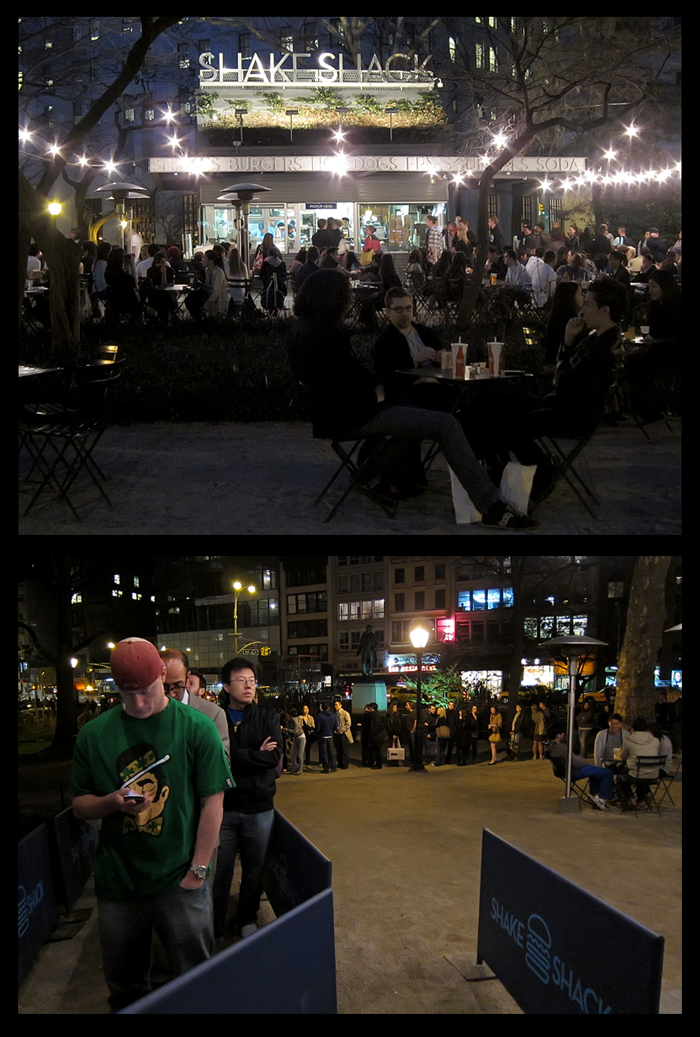
    I don’t like waiting in lines in New York City for food, and lines at the Shake Shack can run over one hour. But if I ate burgers, I’d wait. (Shake Shack even has a live Shack Cam on their website to monitor the line.) Everyone I have spoken to that has eaten here raves about the food. At the online review site, Yelp.com, there are currently over 1,000 reviews, with an average of 4 out of 5 stars. See more photos here.

    Shake Shack is the brainchild of Danny Meyer, no stranger to the food business. Meyer’s company, Union Square Hospitality Group, owns 11 restaurants, including the Union Square Cafe, Blue Smoke, Eleven Madison Park, Gramercy Tavern, Tabla, and The Modern – a fine dining restaurant located in the Museum of Modern Art.

    Meyer spent parts of his childhood studying food and hospitality in France and Italy. His first foray into business as a restaurateur was in 1985, at age 27, when he opened the acclaimed Union Square Cafe. This restaurant has repeatedly topped the Zagat Survey as the number one most popular restaurant in New York City.

    Starting in 2001, Meyer’s group ran a cart in Madison Square Park selling Chicago-style hot dogs. In 2004, the Shake Shack was born as a permanent seasonal kiosk. The distinctive structure, with its English ivy-covered shed roof, was designed by the award winning architectural firm SITE (Sculpture in the Environment).

    There is outdoor seating at the Shake Shack. On a warm evening, sitting amidst the trees in the beautifully landscaped Madison Park with views of the Flatiron and Empire State buildings is about as good as it gets. I’ll get a shake or frozen custard. See you at the Shake Shack 🙂

    Note: Shake Shack now has three locations in New York City, with more planned to come nationwide. They have made an effort to go green – wind energy, on-site composting, low voltage LED lights, and construction of their Upper West Side shop using sustainable materials. See their website here.

    Related Posts: Life at Night, 23 Skidoo, Morphic Resonance, Equinox, ESB Straight Up


  • When Your Name is Mud

    Posted on by Brian Dubé


    As much as I dislike chasing the latest trends or frequenting the latest scenes, I also don’t want to be the last on the block to know about a place that is genuinely a great find. All of my friends had recently discussed the coffee and ambiance of Mud, and on a recent visit to Doma, I overheard someone tell his companion that Mud in the East Village was also a cool place, inhabited by writers. So it was on the must-visit list.

    And so I was quite pleased that on a friend’s birthday celebration on Saturday night, a decision was made at dinner to go somewhere else for dessert. This is a common phenomenon in New York City, because a specialist in desserts and (and coffee) is usually just around a corner or a short stroll away, particularly in downtown Manhattan. This dessert somewhere else, akin to bar hopping or a pub crawl, is motivated by any number of reasons – change of scenery, better desserts, or better value.

    At Mud, the desserts are quite pricey, so I would not encourage value shoppers to seek this place out. However, being in the cafe business is tough these days. It is not only competitive, but with the rain (or reign of laptops), these places have become second living rooms. Some customers may buy one drink and spend the afternoon. At this point in time, in small cafés like this, pricing reflects more a space rental fee than the value of food or beverage.

    But the ambiance is tres cool, there is a garden in the back (glass topped in winter), the desserts are excellent, and the coffee – well, Mud gets raves, but I leave you to decide. I am not a coffee drinker, and even at that, coffee must be up at the top of the list of most contentious topics in New York City, along with pizza and Japanese restaurants.

    Mud was launched as Mudtruck in 2001 by husband and wife Nina Kay Berott and Greg Northrop. Mudtruck was immediately compared to the green giant of coffee – Starbucks. The pricing from the Mudtruck was significantly less than the Starbucks surrounding it. Add a quality brew, and the place quickly became a regular stop for many.

    The orange vehicle, a converted Con Ed truck, can be found at Astor Place (and now a second location on Greenwich Avenue). At the Café, they sell their own custom blend of coffee beans, along with mugs and Mud branded apparel. There’s a mini industry here with the Mudspot, Mudtruck, Mudshop, and Mudmusic. It gives a new meaning to your name is Mud 🙂

    Photo Note: Orange is a dominant color theme at Mud. Appropriately, our birthday boy also loves orange – that’s his T-shirt in the upper right corner of the lower photo 🙂

    Posted on by Brian Dubé

  • Tanoreen

    While my friend and I waited for our meals, we spoke about home cooking. There are often food dishes common to a region or group at home which do not find their way to restaurants. The region of northern Maine where I grew up has a number of food dishes which we absolutely loved, yet I have never seen any of them on a menu anywhere. And there are twists on traditional dishes unique to a particular kitchen. There are places, however, where the restaurant style is true home cooking, and that’s the secret to Tanoreen.

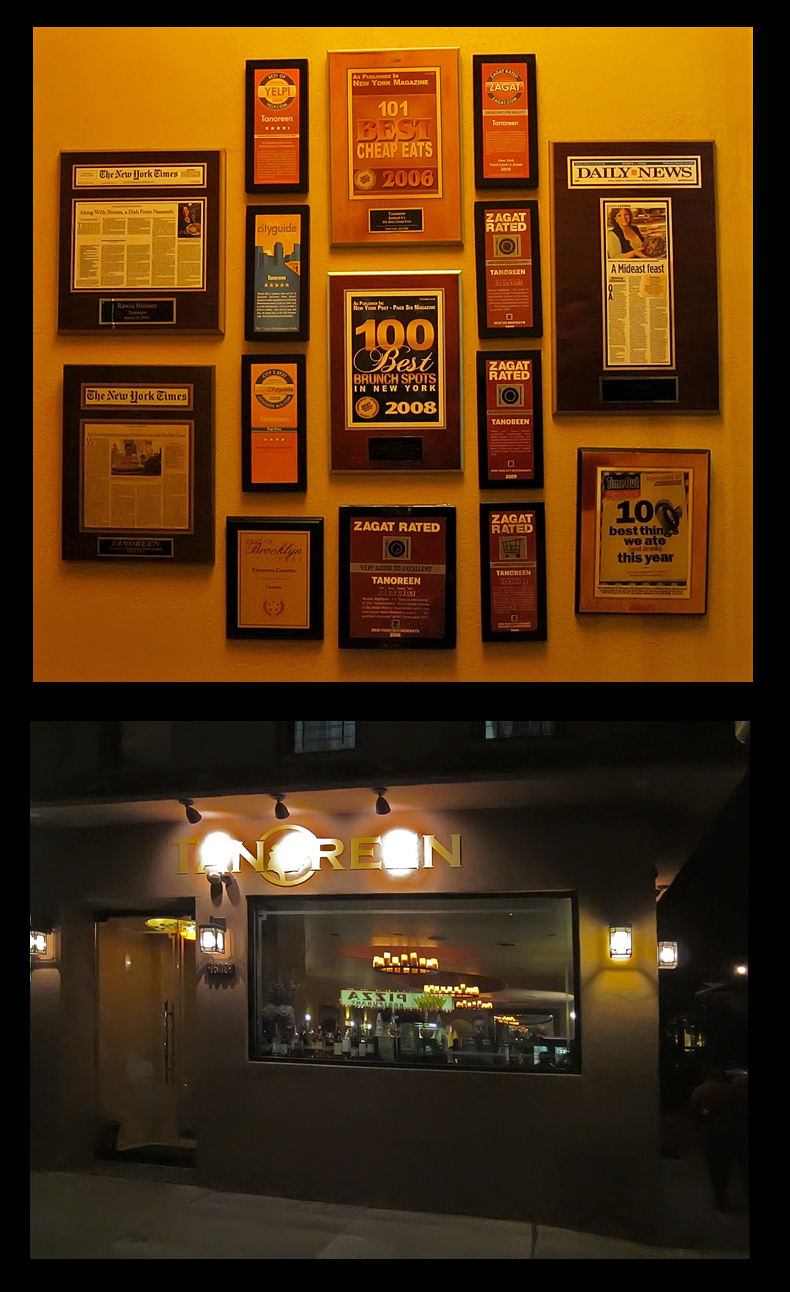
    However, we were prepared for a letdown. How could any place live up to all the buzz and an entry vestibule covered in awards? Plus, this was my third visit. The first two, I was turned away – there were no tables available at all. I was told that reservations were best for any night. But for a Middle Eastern restaurant in Bay Ridge, Brooklyn? Clearly it made sense to lower one’s expectations and abandon all hope for those who enter here.

    Talking to diners next to us and glancing around the room confirmed that this place is a destination – we were not the only patrons who had traveled to come here.
    The food selection was truly exotic – I have been eating Middle Eastern food for decades, but most of the menu was completely foreign to me. I decided to go for the fisherman’s special made with red snapper.

    In a rare preemptive strike, our waiter assured my friend that if he did not like his dish (new to him), it would be replaced with something else. That shows some extraordinary confidence, and we were beginning to raise our expectations.

    We had heard much about the owner/chef, Rawia Bishar, who hails from Bethlehem and whose Palestinian home cooking was inspired by her mother. I hoped to get a glimpse of her, but I had already ruled out the possibility of meeting her – the place was packed. But, in an unexpected coup de grâce, Rawia not only entered the dining room but also made table rounds. I had an opportunity to compliment her on the superb cuisine and chat. I gave names of other owners of Middle Eastern restaurants where I had eaten over the years, past and present. She knew them all.

    Most Middle Eastern restaurants serve up the standard fare – hummus, falafel, baba ghannuj, etc. Some, such as First Oasis Restaurant or Moustache, go much further. Tanoreen was a real dining experience and exceeded my expectations and met my hopes 🙂

    Note about Tanoreen: The restaurant is located at 7523 3rd Avenue in Bay Ridge, Brooklyn. The name is from a song, Tanoreen, by Lebanese singer Fayrouz. See the Tanoreen website here.


  • Tangerine Dream

    It was rumored that there was a little underground coffee house in the basement of a church. Inconceivable. Where high school students could actually go and “hang out” without supervision. Inconceivable. My best friend told me about it and even gave me its name – Tangerine Dream Coffee House – so perhaps it could be true.

    I had to knock on a hatchway door – he opened it. Down I went, and sure enough, there was a place I never imagined could exist in a blue-collar factory town. There were no Starbucks at that time and certainly nothing resembling a cafe. The only place to take a girlfriend was a parent’s home or the parking lot of a fast food restaurant.

    The coffee house was atmospheric and darkly lit. Teenagers were everywhere on comfy couches and chairs. A few were even kissing. Appropriately, the Moody Blues were playing.
    This was my introduction to cafe society. Even if only for a brief moment, the romance of it all was so overpowering and so absolutely cool. However, it would be some time before I would live in a world where there were as many cafes as any man or woman could desire.
    New York City.

    Ironically, I never spent much time in cafes once I got here. Initially, as a younger person, there was the money. Romantic as it might be, many of us could not justify paying to sit in a cafe. And the city had so many free things to offer and still does. Also, cafes were less relaxed regarding long use and small expenditures. There were no self-service cafes, so waiters had to be contended with. Starbucks and the Internet changed the landscape. Like it or not, it is difficult to compete in the cafe business today without being extremely lax regarding a patron’s usage. Some have rules about power usage, hours for laptops etc. to limit excessive parking.

    I have, more recently, embraced the cafe and savor the ambiance I once felt that night in the church basement. I encourage you as well to enjoy a special part of New York City. And you can enjoy them any night at all in hundreds of places. I am very glad to have them, because that basement coffee house is long gone and I need more than a Tangerine Dream …

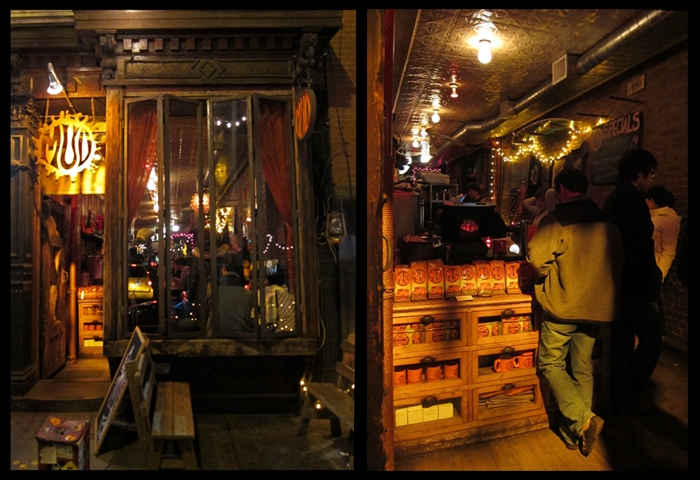
    Note: The shop in the photo is Doma Cafe at 17 Perry Street in the West Village. Doma means “at home” in Czech. The atmosphere is casual if a bit busy, crowded, and understaffed. But there are lots of books and reading. They have a food and beverage menu.


  • Diner Be Aware of the Diner

    My first apartment in New York City was in Chelsea, on 22nd Street between 9th and 10th Avenues. When my roommate read the ad, standing on the street at a pay phone with the Village Voice in hand, we had no idea what or where Chelsea was, and even less what “renov brnstn with fplc” meant.
    At $299 per month for a renovated brownstone with a fireplace, 14-foot ceilings, and a skylit living room, what it really meant was that we were very lucky and had no idea of what we had. This was a beautiful, tree-lined street, lined with rowhouses and walkable to New York University.

    The Empire Diner was around the corner, but I did not fancy diner food at the time, and it was not until last week that I actually stepped inside this diner and sat down for a meal.

    The history of the “rail car” diner is a bit muddled. The origins of diners was rooted in the lunch wagon, but there were also railroad dining cars which were deactivated from rail service, parked along train stations, and used as diners. In time, diners were styled along the railcar lines, many using stainless steel and Art Deco elements.

    One of the number of companies who manufactured these railcar diners was the Fodero Dining Car Company (1933-1981) of Newark, New Jersey, which built the Empire Diner. This diner is legendary, with its striking exterior, roof-mounted Empire State Building, its gleaming interior, and beautiful Deco clock. It has been used in numerous films, referenced in song, and frequented by a long list of celebrities: FDR, Charles Lindberg, Barbra Streisand, Al Pacino, Madonna, Will Smith, David Bowie, Steven Spielberg, Bruce Springsteen, et. al.

    This place has been tres chic for decades and is typically packed, inside and out (it has sidewalk seating in warm weather).
    Food and service reviews are all across the spectrum, and a reading of comments on a site such as Yelp.com will show very impassioned reviews with one- to five-star ratings. A friend and I visited on a weekday, mid-morning, and the place was virtually empty. I cannot speak of a typical experience here – they were overstaffed for two of us. The food is very pricey, and the breakfast food we ordered was basic. But the Empire Diner is worth a look at if you are in the area.

    However, like any place whose reputation is larger than life, and particularly in the case of a place that bills itself as the “Hippest Diner on Earth,” let the diner be aware of the diner 🙂

    Update: The Empire Diner has since closed.


  • dinamic_sidebar 4 none

©2026 New York Daily Photo Entries (RSS) and Comments (RSS)  Raindrops Theme