• Category Archives Tourist Attractions
  • Park Night

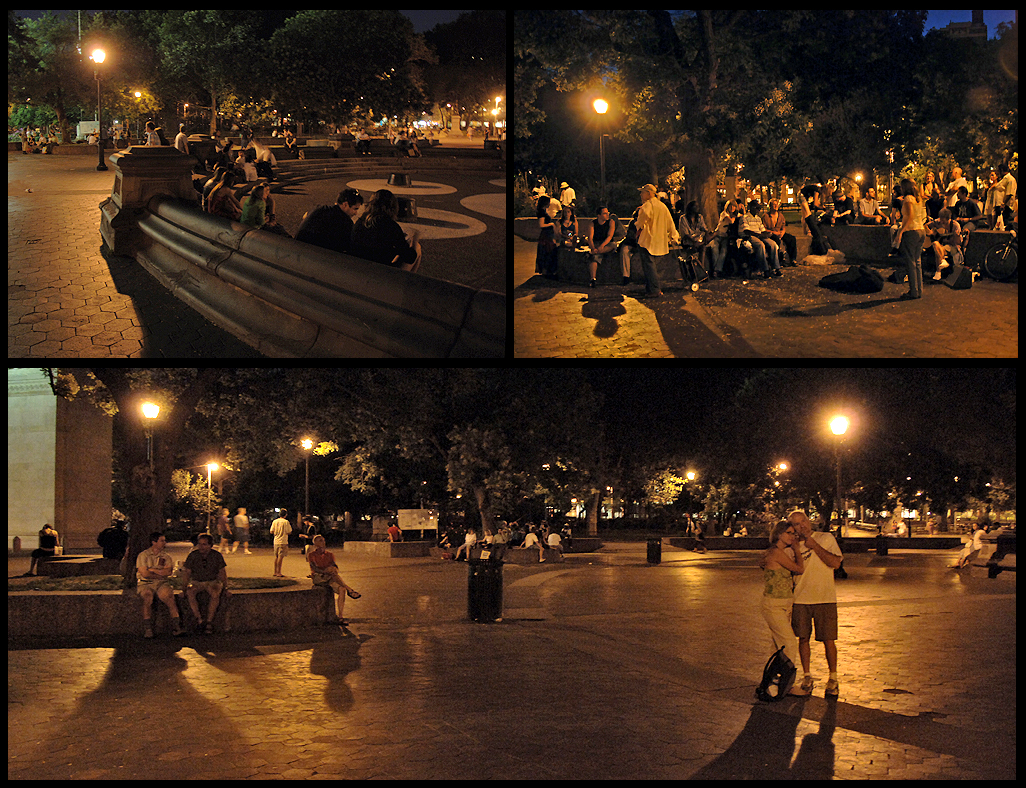
    This is a typical weekday night in Washington Square Park, where hundreds of people gather to enjoy the evening and local culture. On the upper left photo, we have the fountain area, with its stepped seating – this also forms a mini amphitheater for performers. On the upper right photo, we have a classic music scene with park regulars, many of whom have become virtual fixtures. The design of the park has eight islands in a center circle, forming coves where musicians play and audiences gather.

    The music styles and instruments (both acoustic and electric) vary considerably: guitar, keyboard, banjo, sax, drums, bass, violin, mandolin, harmonica, singers, etc. The experience is intimate and participatory more than that of street performance. Audience members frequently participate in the singing. It is not unusual on a good night to have several music groups going on at the same time. We make the rounds and sample the various groups.

    If you are in NYC, I recommend checking it out, particularly on weekend afternoons or evenings – if the weather is good, the crowds are large and the energy is high. On the bottom photo, we see about one-quarter of the circle. The couple on the right was watching music – apparently it was having a positive effect…
  • Parachute Jump

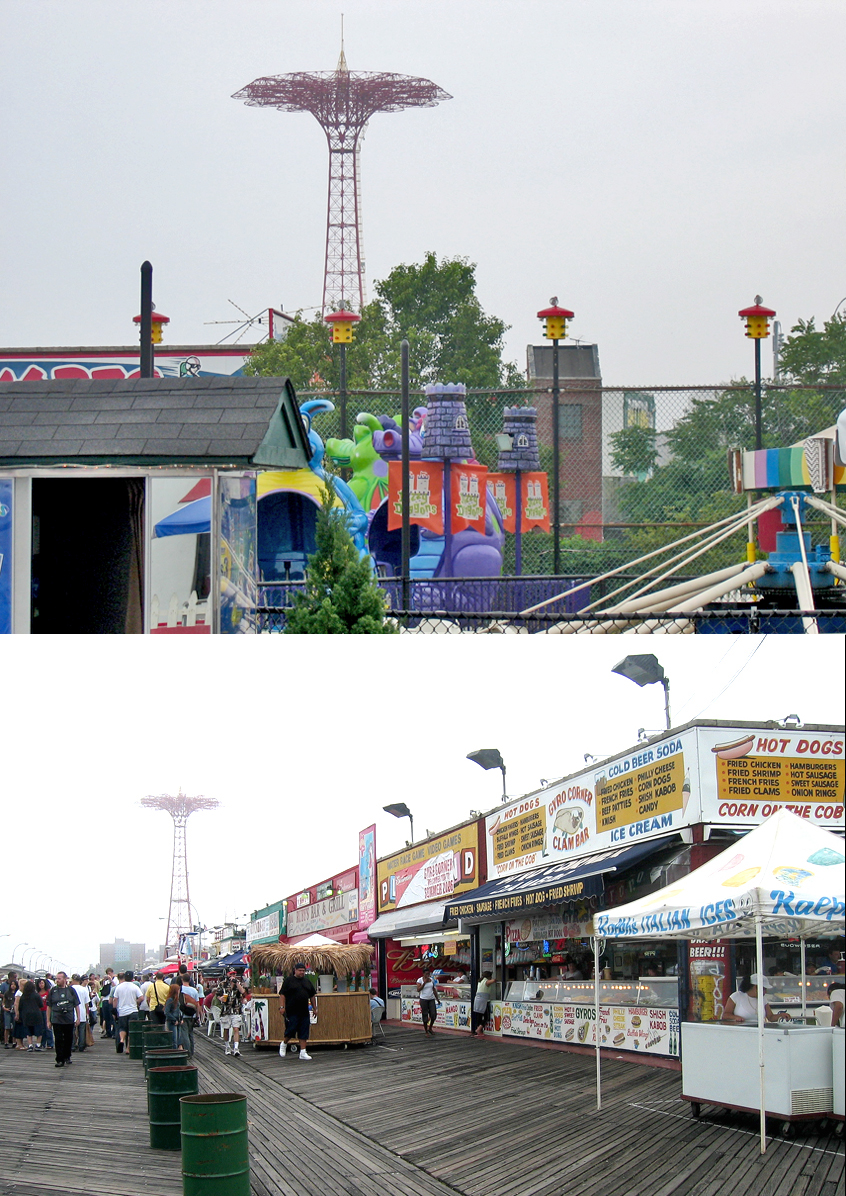
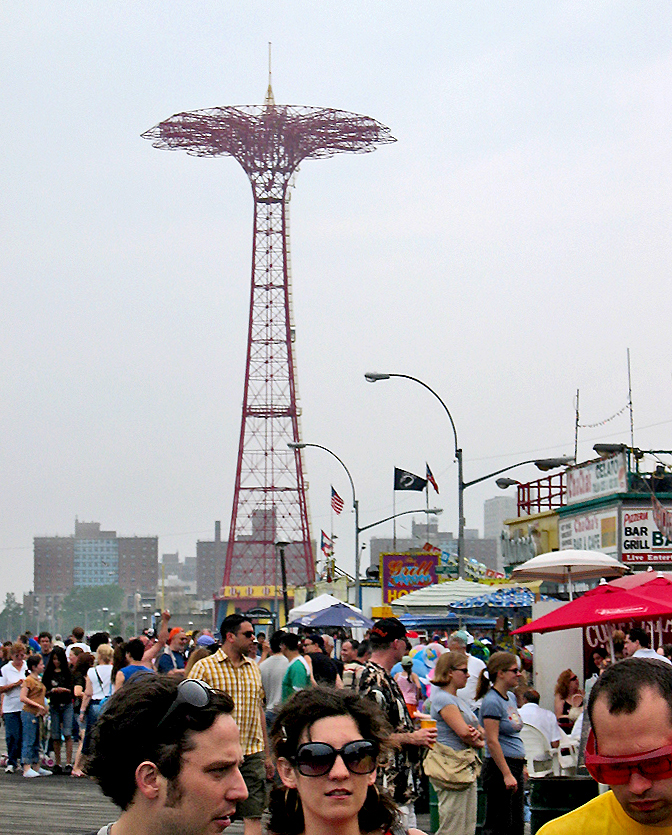
    The Parachute Jump in Coney Island is a Brooklyn icon. At 262 feet tall, the metal structure is reminiscent of the Eiffel tower, visible throughout the neighboring area. It was originally built for the 1939 World’s Fair in Queens, NY, then disassembled and moved to Steeplechase Park in Coney Island in 1941.

    The ride featured real working parachutes – riders were placed in harnesses, and the parachutes were guided down by cables. The design was based on Russian military parachute training towers. After various threats of demolition, it is now recognized as a city landmark and in 1989 was placed on the National Register of Historic Places. Currently, a rehabilitation is underway. This photo certainly does not make the area very appealing, but for me, it captures my image of Coney Island as a gray, dreary place in continuous decline. Click here for more photos.

    The Mermaid Parade was one of the few really nice visual experiences I have had there. I always try to love Coney Island, but it is hard not to see it in its glorious past (see the original Luna Park at night). There is always talk of development and renaissance. Let’s hope soon…


  • Midtown

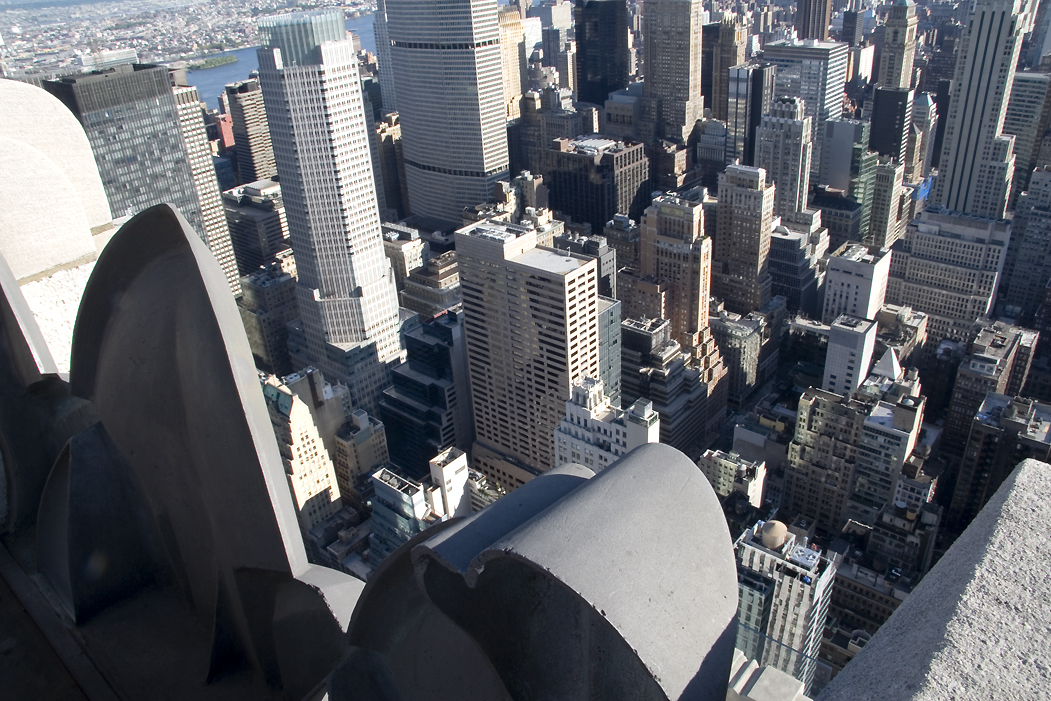
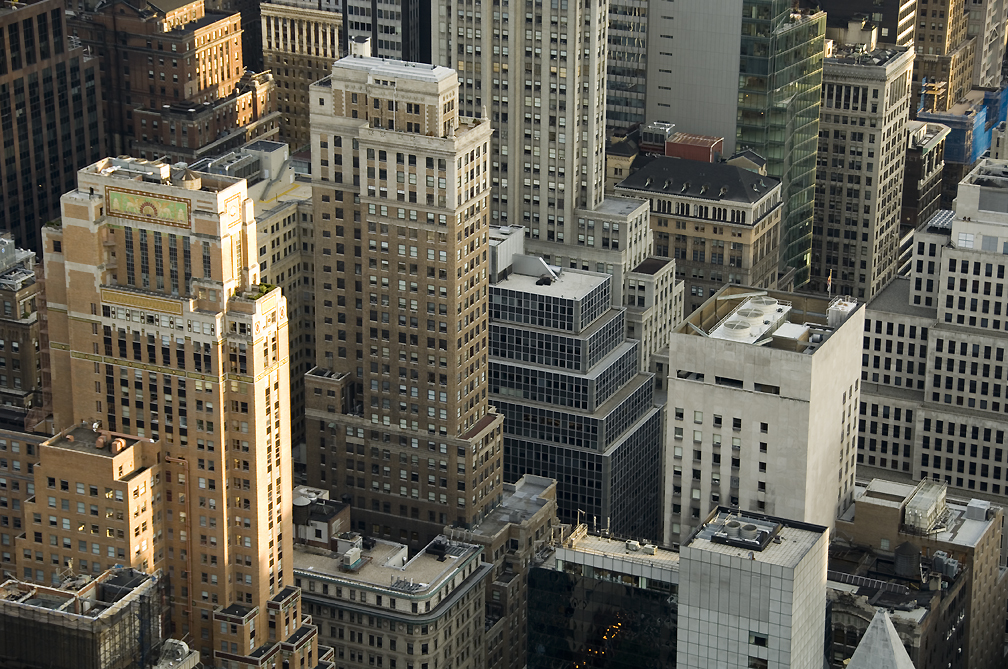
    Midtown Manhattan is the busiest commercial district in the United States. This photo, taken from the Rockefeller Center observatory, is a closeup of a small section along Fifth Avenue in the 40s and gives a good sense of the density of buildings (click here for another view).

    There is no precise, agreed upon definition of Midtown, but at the very least, it covers the area from Central Park to 34th Street and from 3rd Avenue to 9th Avenue. In this area alone, there are numerous districts, squares, stations, buildings, centers, and flagship retail stores – many of the sites known to visitors around the world are found in this small area of only about 2 square miles.

    One reason I chose this photo was that I was intrigued by the attractive slab skyscraper building on the far left with its large friezes at the crown. A little digging and research this morning revealed this to be the Fred F. French building, a deco gem built in 1927 by a real estate tycoon – I think I will cover this building in another post. In doing this photoblog, I am learning about a myriad of beautiful buildings which I never really noticed. I hope that you are enjoying the process of mutual discovery…


  • St. Patricks from the Rock

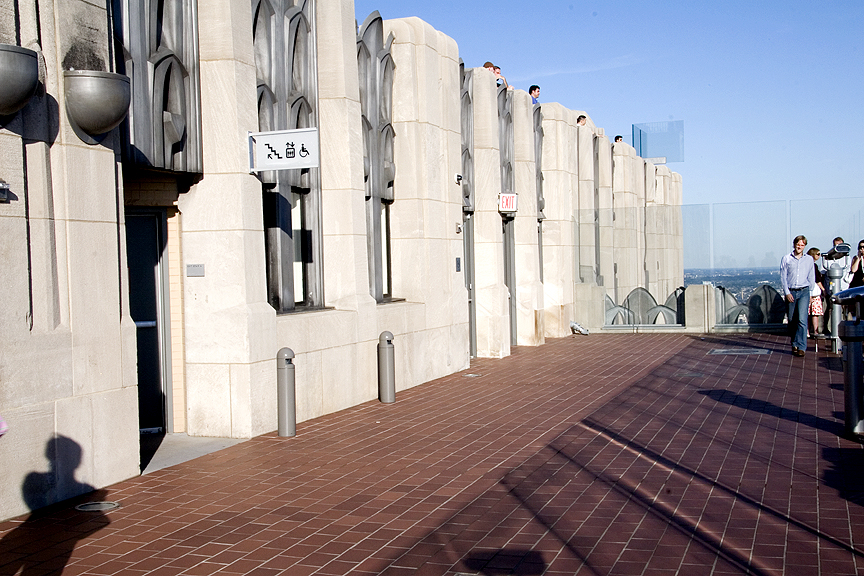
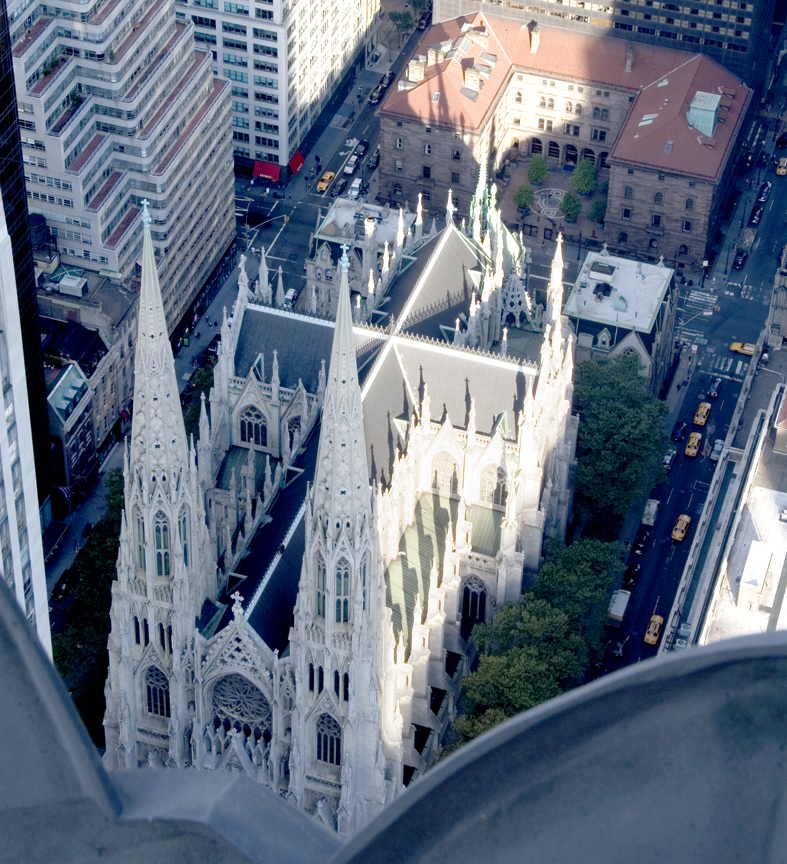
    This photo was taken from the recently reopened observation deck of Rockefeller Center now called Top of the Rock. Photography is challenging at the Rock – there are actually three observation decks. Two are surrounded by thick glass with spaces in between just large enough to squeeze a lens through. The third and uppermost deck (70th floor) is completely open, but set back, thereby preventing extreme downward shots (click here for a photo of the 69th floor deck – note the 70th floor deck on the upper left).

    In the photo facing East towards Fifth Avenue, you can see St. Patrick’s Cathedral (the subject of a future post) and behind it are the Villard Houses, a group of five brownstone mansions built in 1884 and attached to the New York Palace Hotel, built in 1980. I recommend the Rock Center deck – it’s open 365 days a year from 8AM to midnight, offering 360 degree views. Allow some time to enjoy…


  • Rose Reading Room

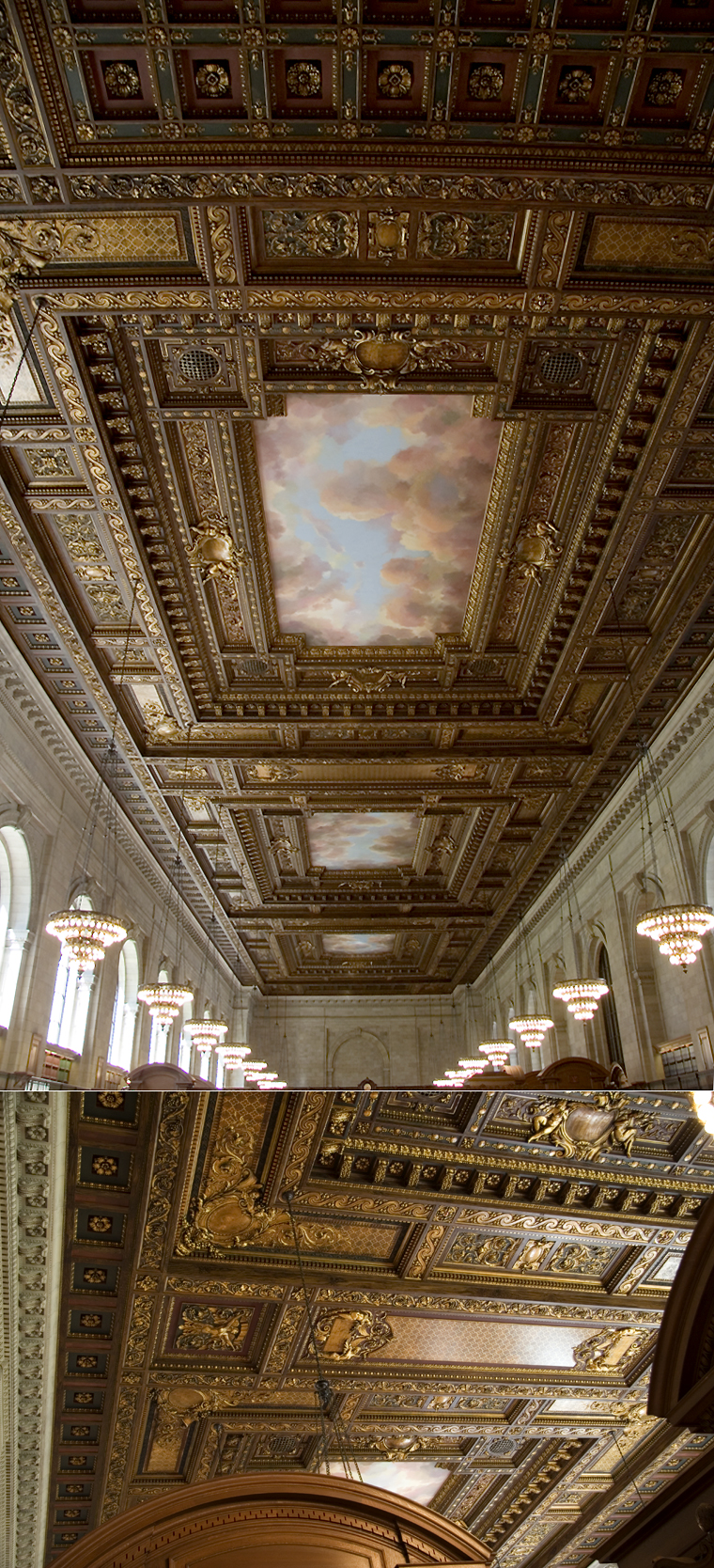
    The Rose Main Reading Room on the 3rd floor of the New York Public Library is one of the most spectacular rooms in the city and one of the world’s grandest interiors. However, over time, it fell into serious disrepair – the ceiling murals were barely discernible and windows remained blackened (done during World War II due to fear of air raids). A restoration was completed in 1998, with a 15 million dollar gift from the Rose family.

    The room is nearly two city blocks long (297 feet), 78 feet wide, and 51 feet high (note: this photo only shows one half of the room). It seats 636 people at its long oak tables with original bronze lamps and chandeliers. Here you can access 6 million books, 12 million manuscripts, and 2.8 million photos beneath magnificent ceilings with murals of blue sky and puffy clouds, inspired by Tiepolo and Tintoretto. See more photos here. This room is a must see for visitors and residents alike…


  • Bryant Park

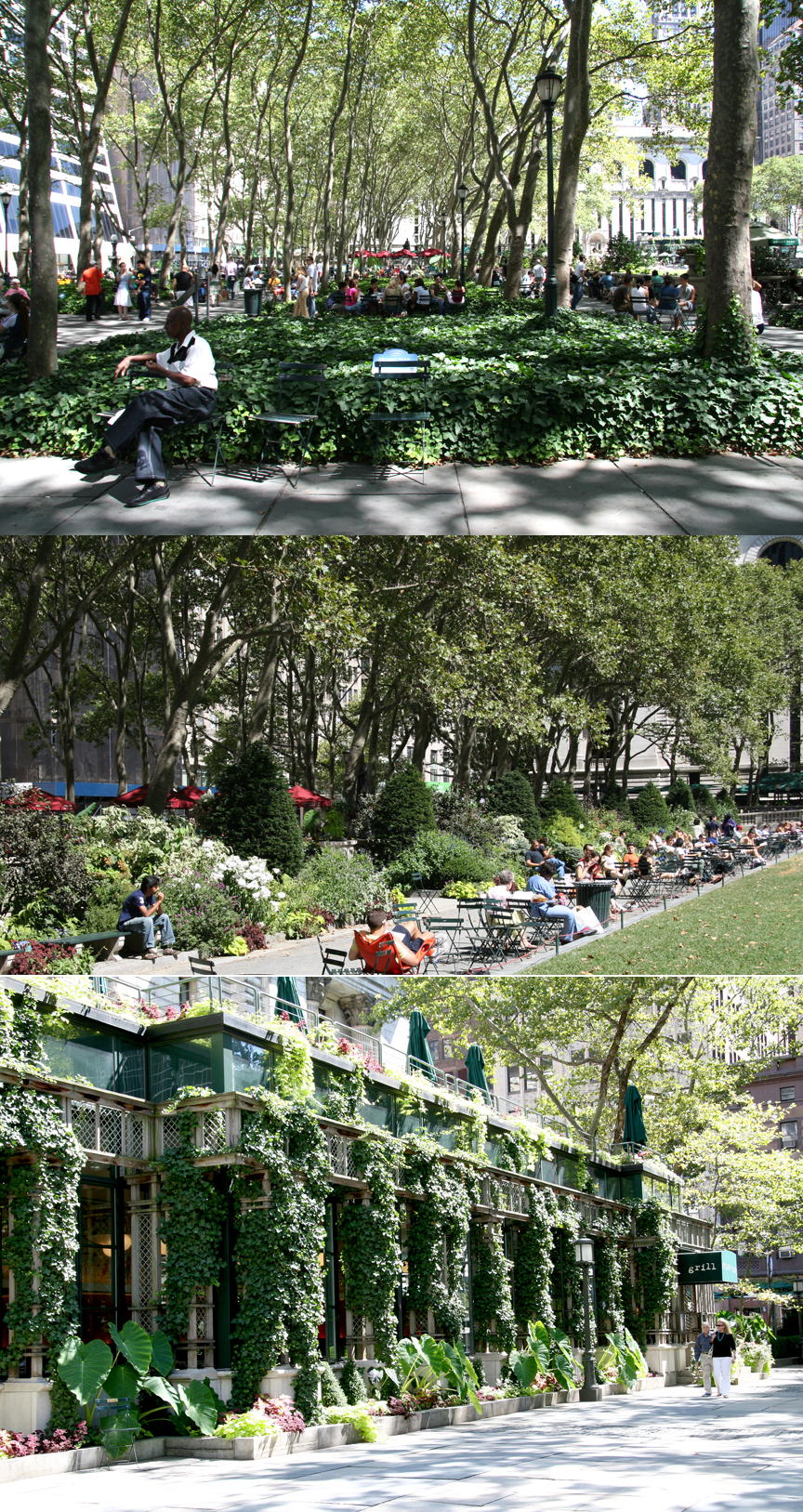
    Bryant Park, named after William Cullen Bryant, has had a long and uneven history – a potter’s field, Reservoir Park (sharing the block with the Croton Reservoir – future home of the NY Public Library), home of Civil War military drills, and the Crystal Palace Exhibition (1853). And it has gone through bleak periods – both in the 1930s and the 1970s, it became one of the worst parks in NYC. In the 1970s, the park was essentially dominated by drug dealers, prostitutes, and the homeless, often referred to as “Needle Park”. Click here for a history.

    In 1992, the park was reopened after a privately funded restoration. With its formal French gardens and crushed stone walkways, it is reminiscent of the Jardin du Luxembourg of Paris. The restoration has been one of the greatest turnaround successes in recent NYC history – the park is frequently cited as an example of how positive transformation can occur even in what appears to be a lost cause. Now the park has restaurants and cafes, kiosks, and free WIFI internet access (click here for more photos). On Mondays in the summer, HBO sponsors outdoor movies. The park also hosts many other programs and events. Check out the Bryant Park official site…


  • NYPL

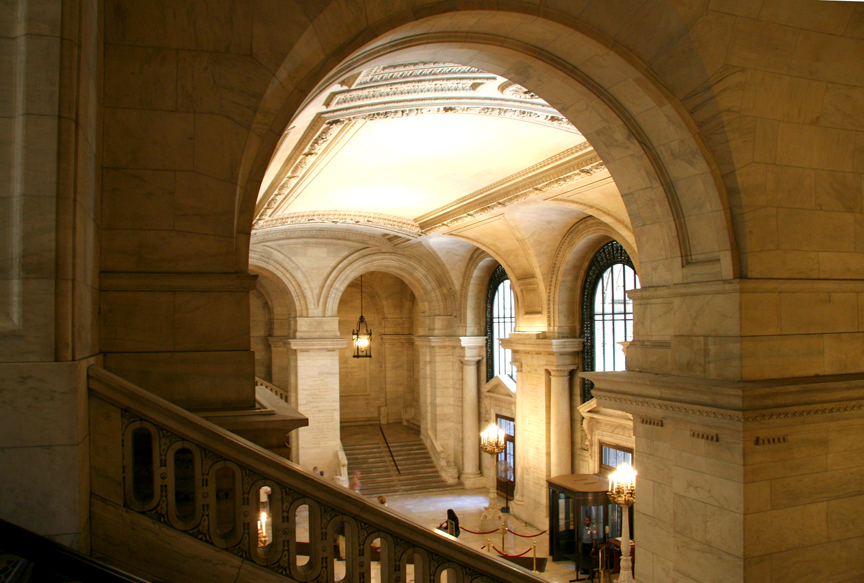
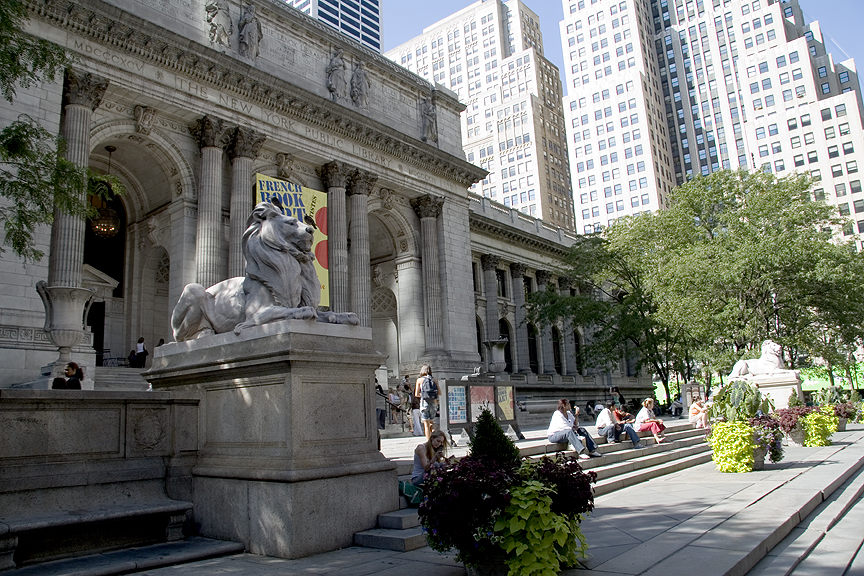
    No, this is not Paris or Italy. It’s the New York Public Library on Fifth Avenue in NYC, with its iconic set of lions flanking the entrance. The photo was taken from a stairwell looking down into the main lobby (click here for more photos). This majestic Beaux-Arts building replaced the Croton Reservoir (it took 2 years to dismantle) and became the largest marble project in the USA at its time – the entire project took 16 years from idea to completion (1895-1911). Its creation was the result of the consolidation of the two primary private libraries at the time: the Astor and Lenox (read a short history here at the NYPL’s website).

    In the 1980s, the library added 125,000 square feet of underground storage, which required the excavation of adjoining Bryant Park. I have found that this library is underappreciated by New Yorkers and tourists alike – I guess a library is not on the to-do list of the typical visitor. However, I highly recommend visiting it – it’s free, is centrally located, and one can get a good feel for it in a short visit…


  • Time Warner Center

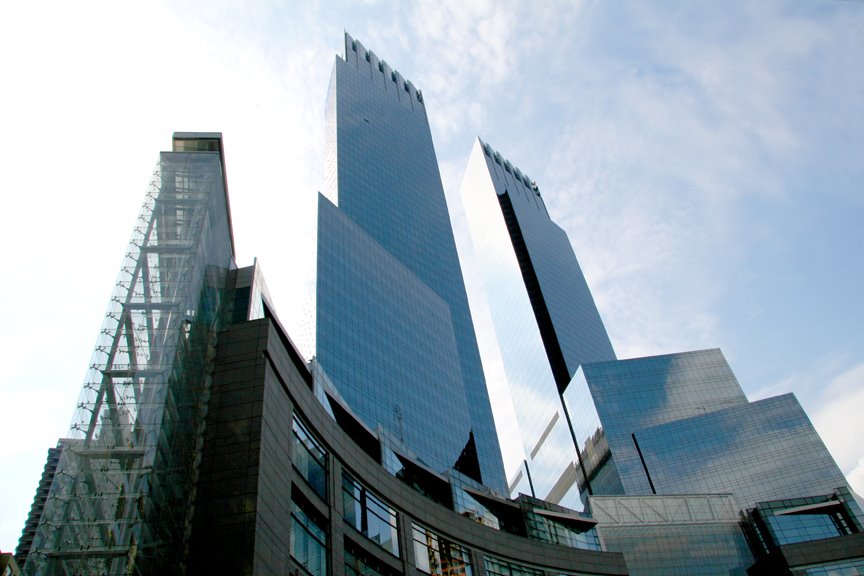
    This recently completed development, with its 750-foot towers, resides at Columbus Circle, an area which has posed design difficulties. It is an intersection for Central Park West and South, Eighth Avenue, and Broadway. It is the site of the former New York Coliseum building, a very unattractive structure built in 1954 and finally demolished in 2000. Click here for a photo history of the area.

    The battle amongst the many proposals was won by SOM (Skidmore, Owings & Merrill). The new glass and steel center consists of offices for Time Warner on the lower floors, a retail complex on the ground floor, the Mandarin Oriental Hotel on floors 34-54, Jazz at Lincoln Center, and One Central Park luxury condominiums, located on the upper floors. Click here for a New York Times article on the development.


  • The Dakota

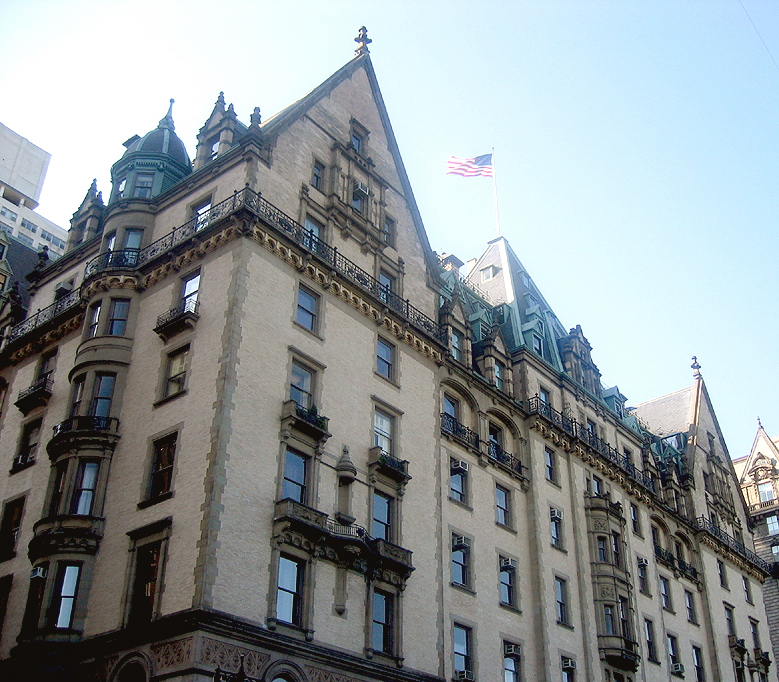
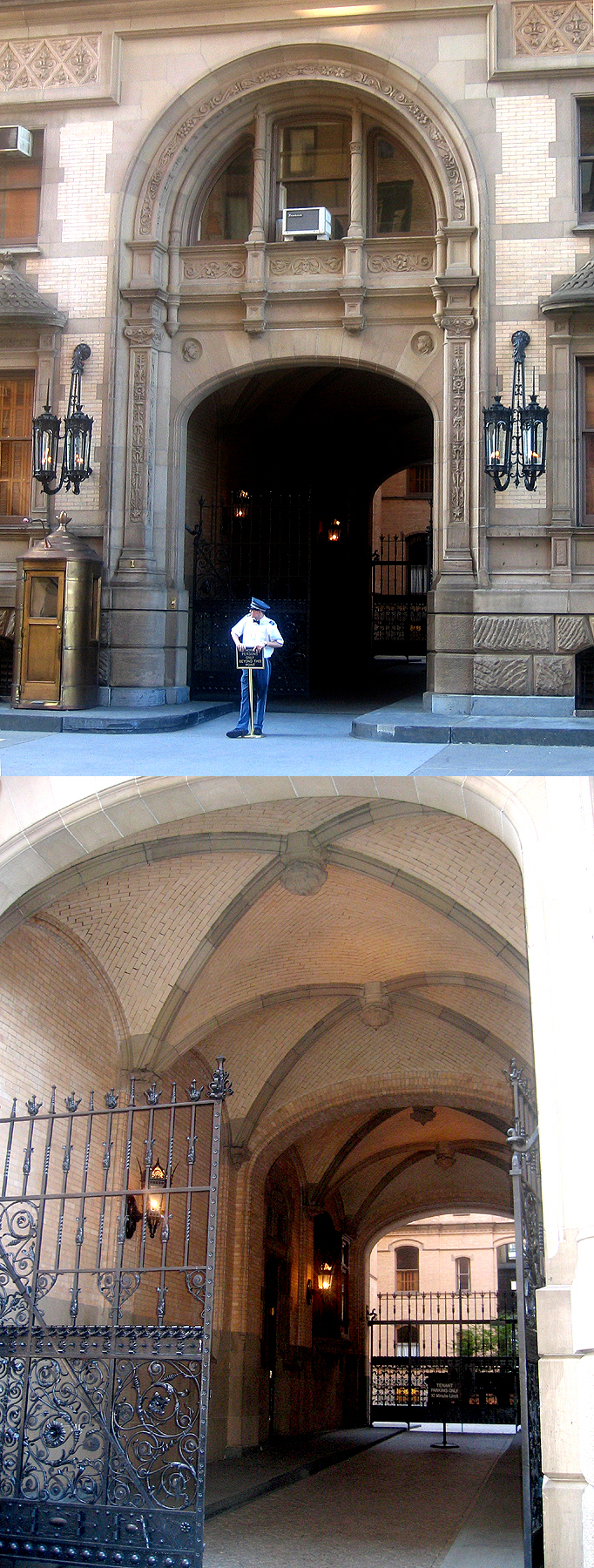
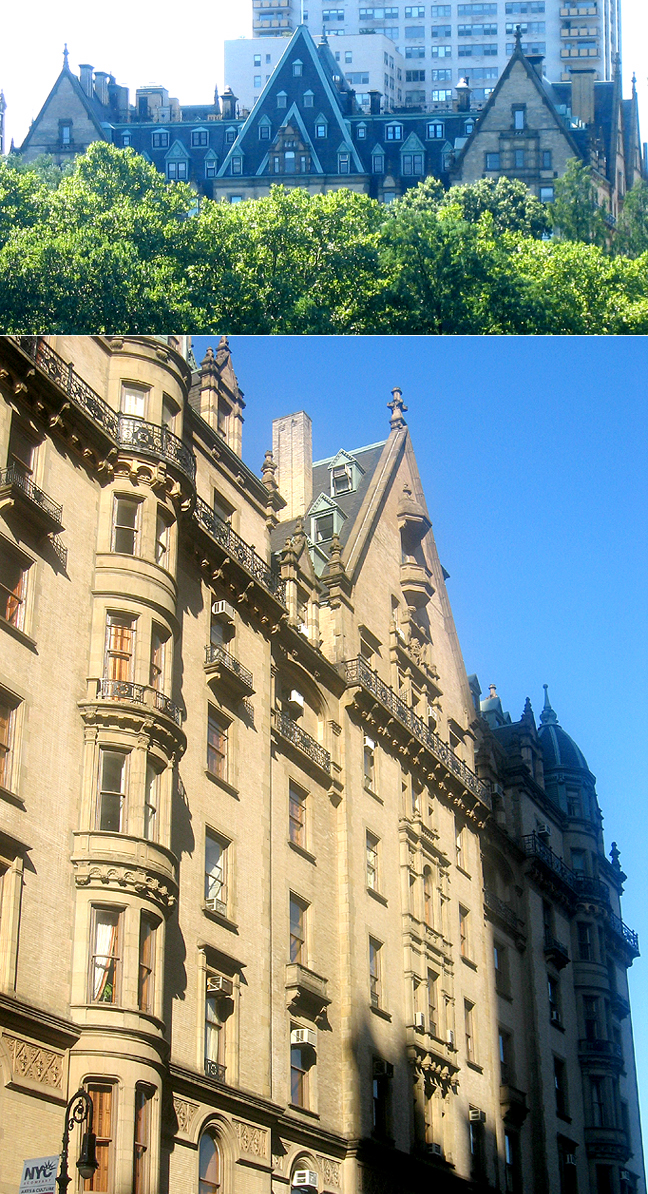
    At 72nd Street and Central Park West stands one New York’s most well known residences: The Dakota. For the few that did not know it, becoming John Lennon’s home and site of his murder in 1980 catapulted it to international status. Even a book has been written about it.

    Completed in 1884, folklore has it that it was named because, at the time, the area was as remote from NYC’s urban core as the Dakota Territory and thus known as Clark’s Folly (it was built for Edwin Clark, head of Singer Sewing Machine company, by architect Hardenbergh, who also designed the Plaza Hotel). It’s a spectacularly distinctive nine-story building with high gables, terracota spandrels and panels, balustrades, balconies, and a steeply pitched decorative slate and copper roof. It is built around a central courtyard with a large guarded entrance, originally designed to accommodate horse-drawn carriages. Based on Parisian models, the Dakota was a new concept in urban dwelling, with many affluent renters in one property with shared amenities. It was an immediate success and remains one of the most sought-after properties in NYC, with many celebrities in its roster. More photos here…


  • Bethesda Fountain and Terrace

    Posted on by Brian Dubé

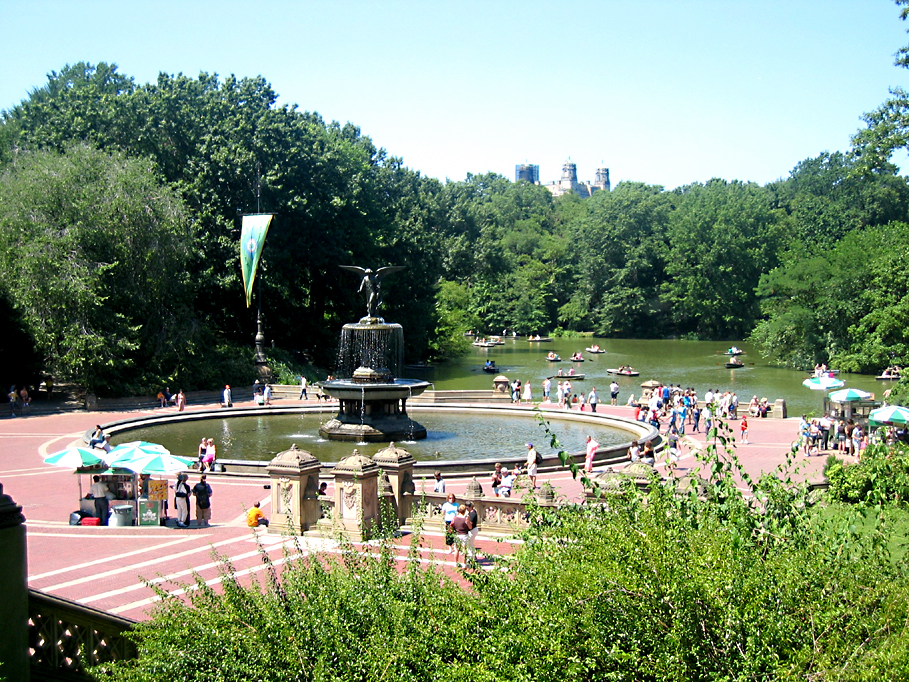
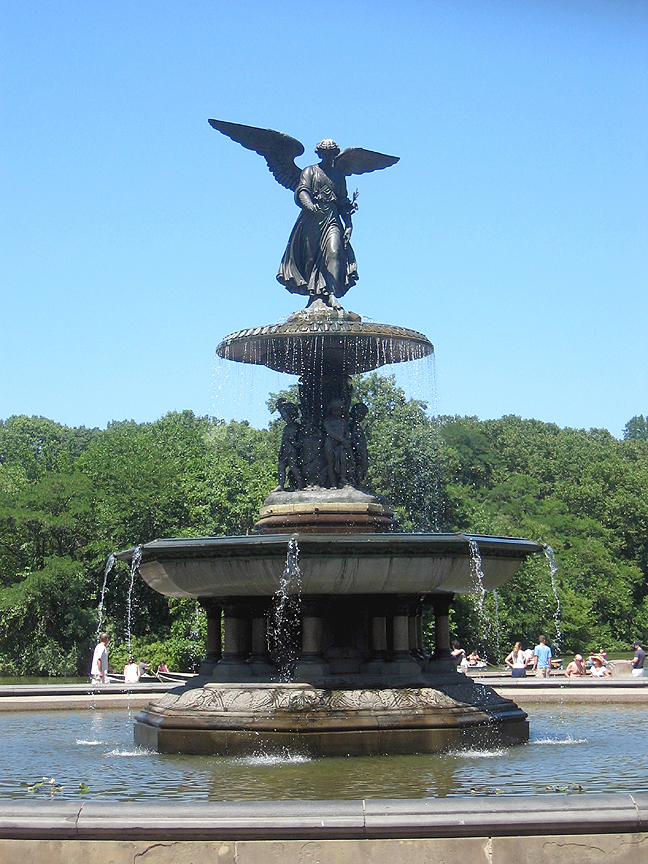
    Here we have one of the most photographed fountains in the world: Bethesda Fountain, which stands at the epicenter of Central Park. Officially known as the Angel of the Waters, it was dedicated in 1873. The artist’s brochure makes a reference to Bethesda (from a biblical verse from St. John), after which the fountain became popularly known. The winged figure symbolizes the bringing in of pure water to NYC after the Croton Aqueduct opened in 1842. The lily in her right hand represents purity; her other outreached hand blesses the water below. Click here for a closeup of the fountain with four cherubs below the angel, representing Peace, Health, Purity, and Temperance. Complete details about the fountain here.

    The fountain and terrace area stands at one end of the mall. In this photo, we are facing the Lake, with the wooded area known as the Ramble behind it. Click here for more on the Terrace itself, with photos and info…

    Posted on by Brian Dubé

  • Bow Bridge

    Posted on by Brian Dubé

    The Bow Bridge in Central Park is considered one of the world’s most beautiful small bridges. It certainly is one of the most visited and photographed areas. The graceful arc spanning over the Lake with its boaters and surrounding green instills great calm in an intense city such as New York. It is always a pleasant surprise to happen upon such a magnificent structure while strolling through the park. Kudos to the designers!

    The official Central Park website has many images, and three really nice Quicktime panoramas: Spring/Summer, Fall, and Winter (update: no longer available). You can see the bridge and its surroundings in all the seasons. Here are more photos I took going over the bridge itself…

    Posted on by Brian Dubé

  • Central Park Mall

    Posted on by Brian Dubé

    If you’ve traveled this far into Central Park, you will have noticed a number of things. It’s an amazing park – a triumph in urban landscaping. It’s quite large. It’s remarkably varied, and there are spots like this one where you can’t see any urban structures at all – very bucolic. And you could use a rest. So I recommend sitting on one of the benches here in the central spine of the park: this beautiful wide esplanade known as The Mall and Literary Walk, flanked with quadruple rows of tremendous old growth American elm trees, forming an enormous tunnel of green. Stately.

    Posted on by Brian Dubé

  • Strawberry Fields

    Posted on by Brian Dubé

    In Central Park near the entrance at 72nd Street near the Dakota, John Lennon’s former residence, is an beautiful wooded landscape area called Strawberry Fields. It was named after one of John’s songs, Strawberry Fields Forever, in his honor (John was shot nearby outside of his home in 1980). The song’s title, by the way, hearkens back to John’s youth, where he played in the trees behind a Salvation Army orphanage called Strawberry Field.

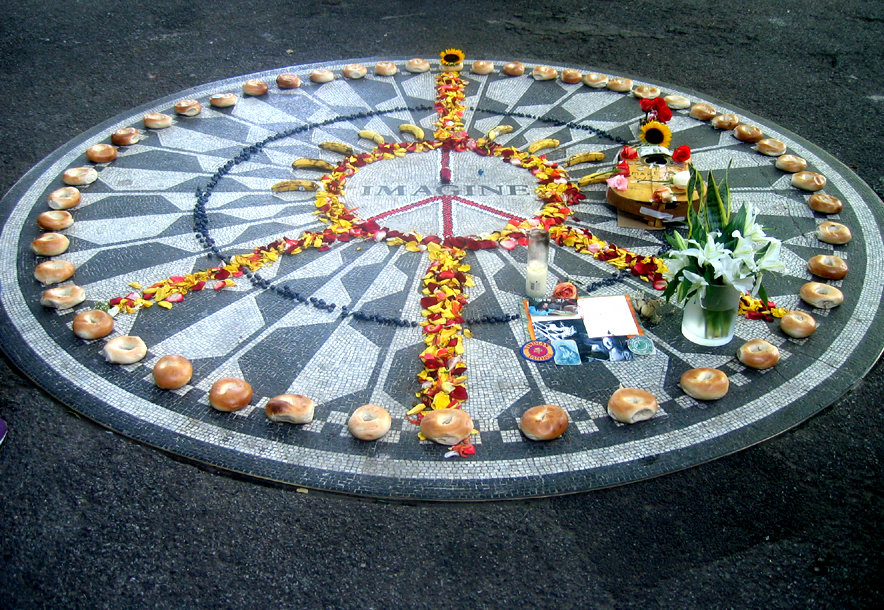
    In 1985, Yoko Ono donated 2.5 million to relandscape and maintain the area. The focal point is a large mosaic, a reproduction of a work from Pompei, made as a gift by artisans from Naples, Italy. The only change was the center inscription, Imagine, the title of another of John’s songs. It is typical to find the mosaic adorned with flowers, candles, and other items, left by his fans. On the anniversary of his birth (October 9th) and death (December 8th), people typically gather in tribute at the site. There is also a bronze plaque, embedded in a stone outcropping, listing 121 countries endorsing the area as a garden of peace

    Posted on by Brian Dubé

  • The Cyclone

    Posted on by Brian Dubé

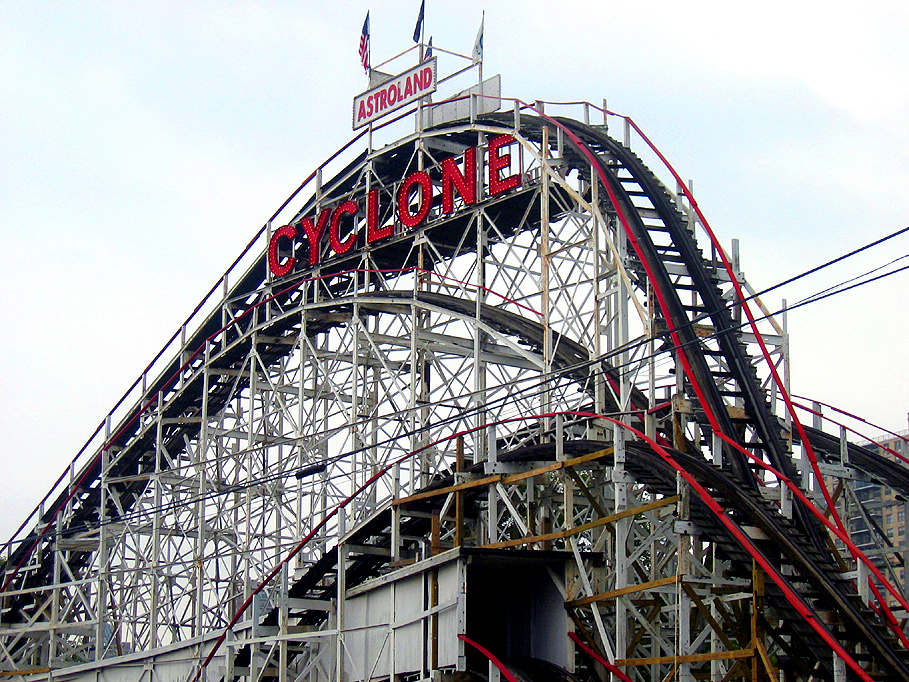
    The Cyclone, built in 1927 in Coney Island, is probably the world’s most famous roller coaster. I’ll leave the history and specifics to this article or the official site. I rode it once many years ago with a friend who grew up in Brooklyn. It really was terrifying, in part due to its really rough ride. It’s an old-style wooden structure, predating the high-tech engineered scream machines of current times – all the jerking and whipping action of this old coaster really intensifies the ride. Newer coasters are much smoother and safer feeling.

    When we took this photo just recently, the ride was not running – closed for maintenance – but this is controversial according to rumor and articles like this one. Here are more photos, including one great view from the top of the Wonder Wheel.

    Posted on by Brian Dubé

  • Biodiversity

    Posted on by Brian Dubé

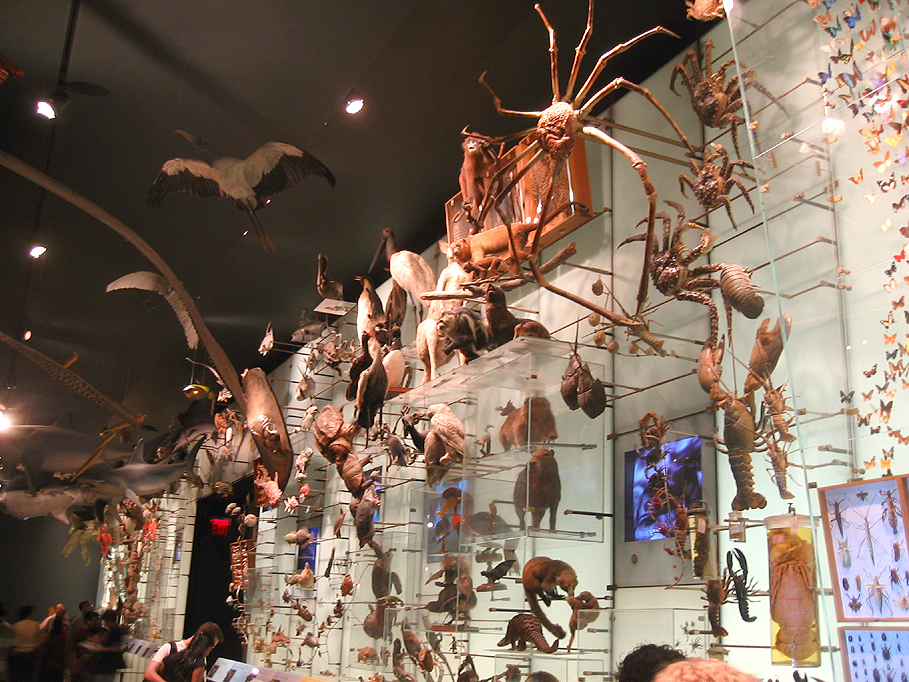
    The American Museum of Natural History has a Hall of Biodiversity, where they have arranged a 100-foot wall in a timeline of complexity (called the Spectrum of Life) showing animal life as it developed from simple single cells to furry mammals. The elements were taken from their famous vast collections of every kind of butterfly, insect, mollusk, and every variety of creature preserved in the late 19th century. They all have been sitting in the carefully catalogued storerooms of specimens assembled from all over the world.

    In a way, it is very sad to see these individuals arranged here because you know that this represents a life taken away from Nature. At the time, though, this was the method scientists used to do studies – it seemed right to them to hunt and capture as many examples of the exotic and extraordinary as they could get. However, at this point, to discard these examples would not undo the past. So they have displayed them in a beautiful and educational way, and in a way, this recycling honors the lives of these creatures. Some of the elements are very beautifully made representations, for example, the glass biota, created by methods no longer understood or able to be reproduced in the present.

    Posted on by Brian Dubé


  • dinamic_sidebar 4 none

©2026 New York Daily Photo Entries (RSS) and Comments (RSS)  Raindrops Theme