• Category Archives Secret NYC
  • Zena


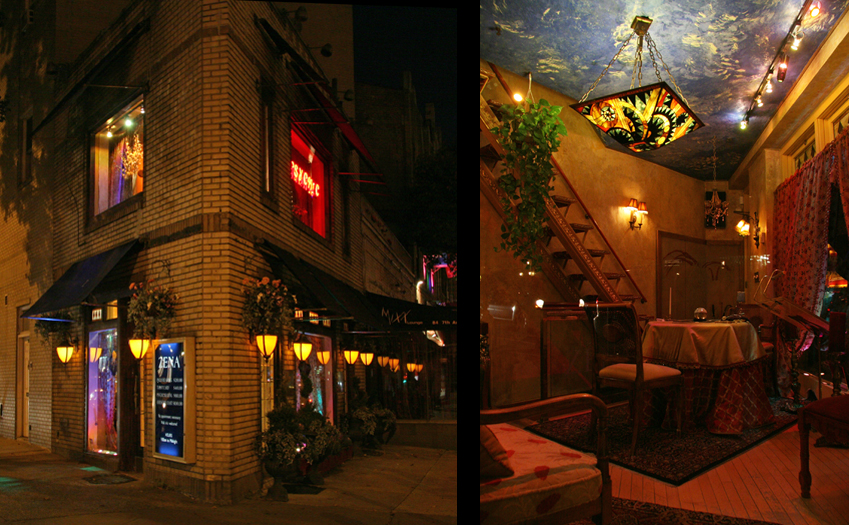
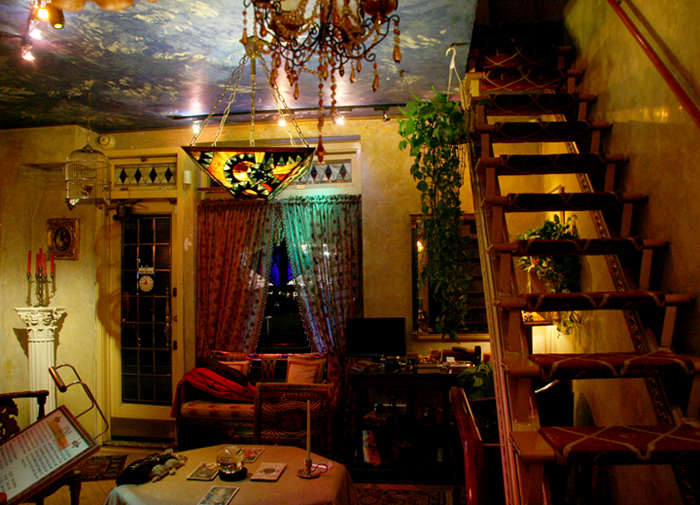
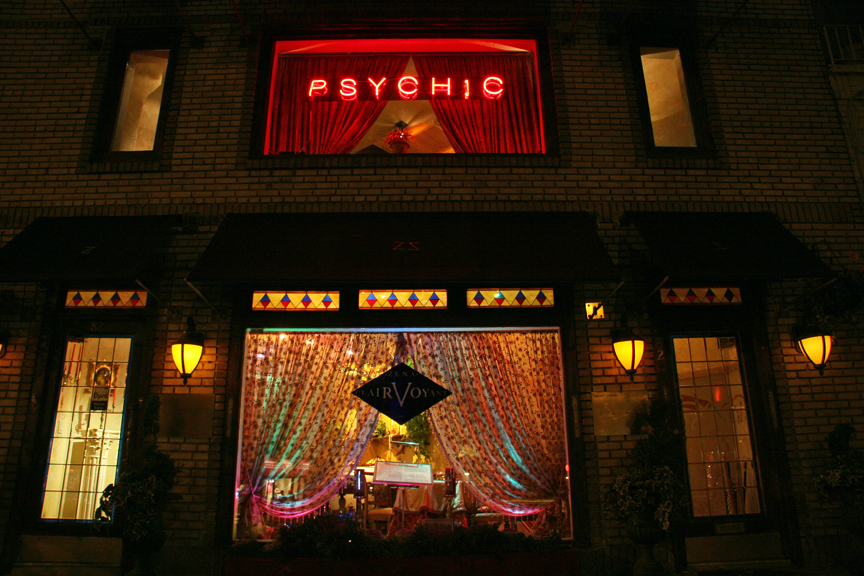
    I love small buildings and small mysteries. Here, at 82 7th Avenue and 301 Bleecker Street in the West Village, there is a remarkable, tiny, two-story building occupied only by Zena and her daughter, Sylvia, who practice their trade as psychic readers. The triangular building dates from 1910 and is only 468 square feet, 234 per floor. The place just exudes charm – windows face both Bleecker Street and 7th Avenue South and allow easy viewing of the interior from the street. A brass placard on the exterior wall says “Zena, New York & Cannes.” See the gallery of photos here.
    I have passed by this shop for decades. It is quiet, with its glowing interior beckoning to me. Last night, it was time to probe this mystery. As fate had it, while shooting from the outside, pressed up against the beveled glass windows, Zena came by to enter her shop and asked if I would prefer taking photos from the inside. I accepted the invitation and entered for the first time.

    This is one of the most comfortable small spaces I have ever been in. Everything is arranged and appointed just so. Soft fabrics, lighting, and warm colors are everywhere. There are stained glass lamps, solid brass finishes, and hardwood floors. A small stairway leads to the second floor, where more plush furnishings could be found, including a sofa. Zena told me that Architectural Digest had visited to do a story illustrating what can be done with small spaces.

    I always wondered how such a small enterprise could support a shop in a high-profile, high-rent district. There are many possible answers, but Zena gave me one that made the most sense: she has owned the building for the last 25 years.

    An elegant diamond-shaped sign hanging in the window proclaims “Clairvoyant.” A promo piece with a price schedule below lies below it. I cannot speak to claims of psychic abilities, and I have no experience with Zena or her daughter. For me, it was the mystery of the place that drew me to Zena’s…
  • Luray Caverns

    My first big family trip was to Luray Caverns and the Blue Ridge Mountains in Virginia. For wide-eyed children, the trip met all of our expectations, with the unexpected perk of Southern hospitality, which we all found so disarmingly wonderful that the family still talks of it today, decades later.

    Of course, after a long ride down, a road stop was in order for a hungry family. There was a spirit of vacation esprit, and I was able to order the deluxe breakfast, which, if I recall, was somewhere in the order of 50 cents and came with everything. My father, whose capacity for coffee knew no bounds, was delighted with the unlimited refills policy, something which he had not experienced before. We were all in heaven and had not even set foot in the caverns yet.

    The commercial cavern was an astounding display of dripstone – limestone formations created by the deposit of minerals which precipitate from dripping water. I learned about stalagmites and stalactites and how to remember the difference (“g” for ground, “c” for ceiling).

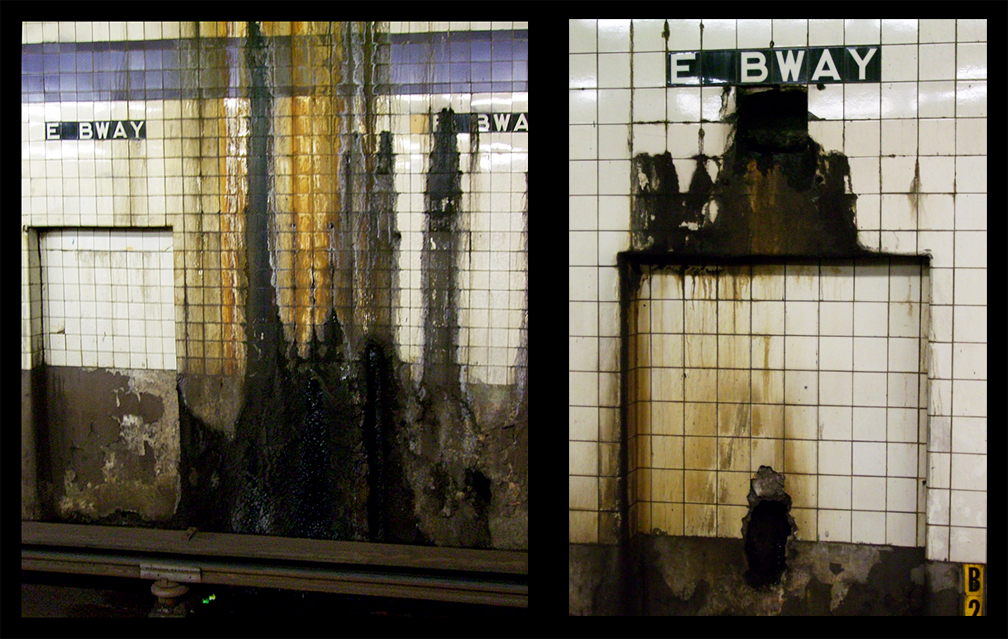
    While looking at the black ooze coming from openings in the hideous walls in the East Broadway subway station while waiting for the F train in New York City, it occurred to me that the same type of mineral sedimentation might be occurring. A conversation with two friends who have worked for a long time at the Transit Authority said the black ooze was a sedimentation of sorts, specifically insulation. They explained the reasons for this in detail – the construction of the walls, tunnels, rainfall, water accumulation, saturation, and oozing.

    The display is certainly not as dramatic or colorful as the world’s renowned show caves, and I doubt that anyone will be running tours. But the black color is so appropriate for a New York City subterranean gothic feel. Our own secret Luray Caverns 🙂


  • Paraíso


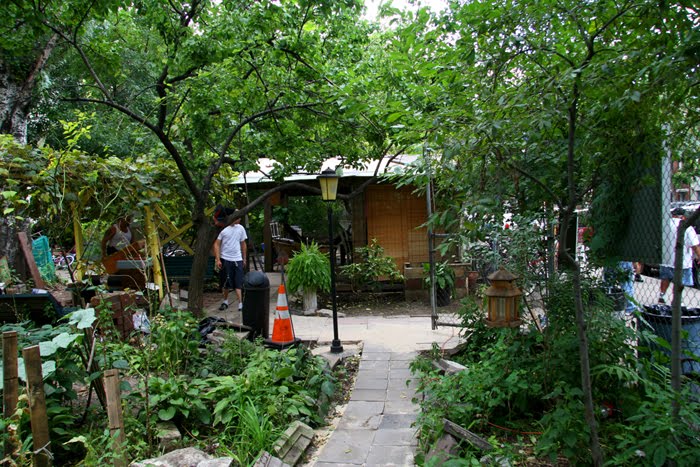
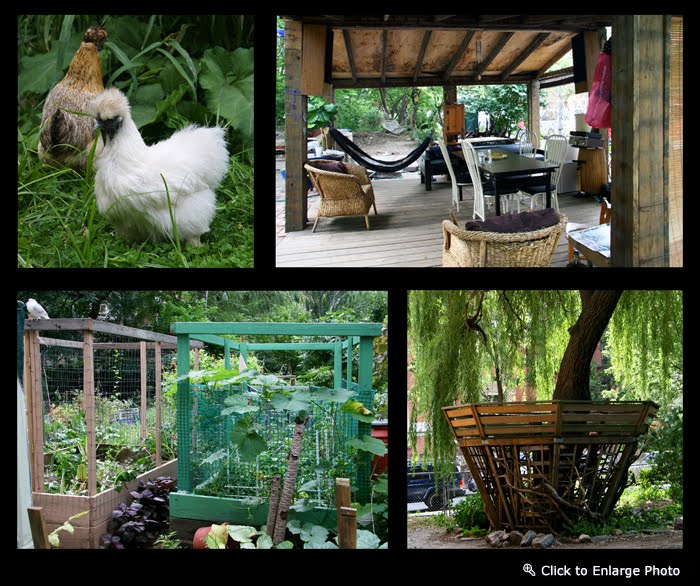
    Where can you find a rooster, chickens, ducks, rabbits, a turtle pond, a dog, herbs, grapes, tomatoes, and other produce being grown locally, with an octagonal tree house built at the base of a willow tree? In Manhattan, at El Jardin del Paraiso on East 5th Street between Avenues C and D.

    Normally, this area, deep in the heart of the very East Village, will be not be visited by visitors or residents of New York City. Even outsiders, slumming in the neighborhood, will not typically venture further east than Avenues B & C.

    The East Village is a mecca for community gardens. Many of these are absolutely extraordinary, idyllic urban oases. Some small, some larger – El Jardin is very large, extending through 5th to 4th streets, with an entrance at both streets. There is an open air cabana with a table, seating, and a hammock. Numerous awards and achievements have been bestowed upon El Jardin del Paraiso, including The National Wildlife Award and the Molly Parnis Dress Up Your Neighborhood Award. Read more at the East Village Parks Conservancy garden’s website here.

    In my tour of the garden, I encountered Cano, a local resident who was taking matters into his own hands. He complained of lack of progress on the part of those who manage the community garden. I have been witness to this type of community infighting and stalled efforts, so my sympathies were with him. He has invested over $10,000 of his own money to date and has recruited a few others to rehab the garden, which is now in a state of disrepair. He did not appear to be a power-hungry local activist spinning information to wrest control of the garden.

    A visit to the Jardin’s website shows a last update in 2006, so I got a sense that whatever visions and projects there were for this plot, momentum and drive do appear to have been lost. There is still a calendar, however, of events/activities in the garden.

    They say paraíso, I say paradise 🙂

    Photo Note: The white bird is a Silkie, a breed of chicken with unique, fluffy feathers. The chicken is known for its docile nature and is often kept as a pet. The flesh is dark blue/black and. although somewhat unappealing to the Western palate, is considered a delicacy in Asia.
    Origin of the Silkie is China/Asia.

    Visit the following related links: Shangri-La, Devil’s Playground, La Plaza Cultural Garden, Grapes, Stay Lean Stay HungryUrban Oasis, Alberts GardenWest Side Community GardenBird Country, Hua Mei Bird Garden


  • Affront To Dignity

    If there was a God of New York City, wasting space would be a mortal sin. In this city, we are obsessed with space. To find a convenient parking spot is considered a major achievement – worthy of announcement, with an expectation of hearty congratulations. Floor space, whether commercial, industrial, retail, or residential, is one of the key features of a place. For the city dweller, a visit to a museum is often as much about indulgence in space as it is about the art collection. In our homes, most of us optimize for efficient use of limited space. This is not a world known for foyers, entrance hallways, garages, basements, attics, and extra guest bedrooms. We even sell air rights in New York City – every cubic inch of 3D space is accounted for (see my story here).

    I recall having a conversation once with a relative who owned an industrial space in the suburbs and needed to expand. The solution was simple: tear down a wall and just build out. That seemed miraculous and inconceivable to me at the time, like a suprahuman act of creation.

    A terrace or garden is the ultimate spacial luxury in this city, as we add nature and the outdoors to sweeten the pot. Many high-rise apartments in New York City have tiny concrete slabs which, for the purposes of the real estate sales and promotion, are called “terraces.” This is laughable – you can see thousands of these affronts to human dignity dot the skyline of New York City. I’ve never seen anyone on them; often, they are used for storage and become aerial eyesores. It would be hard to argue that lack of use of these terraces is a wasted resource.

    However, in today’s photo, I submit to you evidence of a real space wasted. This wood-decked terrace is as large as many apartments, overlooks a quiet alley, and has good light, trees, plantings, and views of the Empire State Building. The terrace is attached to a two-floor apartment in an 1837 landmark brownstone. I know the tenants of this apartment and was told many years ago by the husband of the couple who lived there that he had not set foot in the space for 14 years.
    This outdoor space is still infrequently used. Most New Yorkers just drool at the prospect of an outdoor garden like this and fantasize about all the wonderful uses they would make of it. Some may argue that all outdoor terraces or gardens subject the users to a fishbowl effect -that there is virtually no privacy from the prying eyes of other apartment dwellers within eyeshot. I think in this case, many a New Yorker would welcome this invasion of privacy and find it no affront to dignity  🙂

    Related Posts: Seven Deadly Sins, Air Rights


  • The Hole

    Do you really want to be a pioneer? Find a place that may not quickly become overbought or overhyped? Then welcome to the Hole, a “hood” which I can assure you will not become the “next neighborhood” or be dotted with interesting cafes and nightclubs, like in Williamsburg, Brooklyn. See the photo gallery of my excursion here.

    I recently was forwarded an article by a friend on a small, virtually unknown area on the Queens/Brooklyn border known as the Hole. A handful of articles have been written, with features on sites such as Gothamist, Impose Magazine, Satan’s Laundromat, and Forgotten New York, which referred to it as “the true New York, this is NYC with pretense and artifice stripped away.”
    This wasteland certainly lived up to my expectations. I anticipated spending considerable time there, walking around, and photographing the area, but a few minutes there and I realized this did not have the charm of an abandoned ghost town in the West. This place truly was blighted, with outsiders clearly seen as outsiders.

    The Hole is a small triangular neighborhood bounded by South Conduit Boulevard, Linden Boulevard, and Drew Street, an area roughly five blocks by three blocks, surrounded by the neighborhoods of East New York, Ozone Park, Spring Creek, and Howard Beach. The area straddles Brooklyn and Queens, hence the reason the New York Times, in an article in 2004, said, “It is the closest thing New York has to a border town.” Ironically, the Hole also contains the “jewel” streets: Ruby, Emerald, Amber, and Sapphire Streets (now 78th Street).

    There are a handful of houses, inhabited and uninhabited, strewn across an area of weeded open lots, flooded streets with stray garbage, and no sidewalks. At one time occupied by farms and horses, this was also the former home of the Federation of Black Cowboys.

    The term “Hole” has a literal meaning in this neighborhood, which lies below grade and only a few feet above the water table. It is built on landfill over Spring Creek and is subject to frequent flooding – you can see this in today’s photo. The area is also not incorporated into New York City’s sewer system – the handful of homes here use cesspools.

    Any apprehension or creepiness you may feel here is not unfounded – the area is most notorious as a dumping ground for bodies in mafia mob wars for over 50 years. There are stories of 200 bodies being found. According to the New York Times, a lot of Ruby Street between Blake and Dumont Avenues was a suspected Gambino family burial ground. Alphonse Indelicato, Phillip Giaccone, and Dominick Trinchera, of the Bonnano family mob, were murdered and buried in a vacant lot in the Hole.

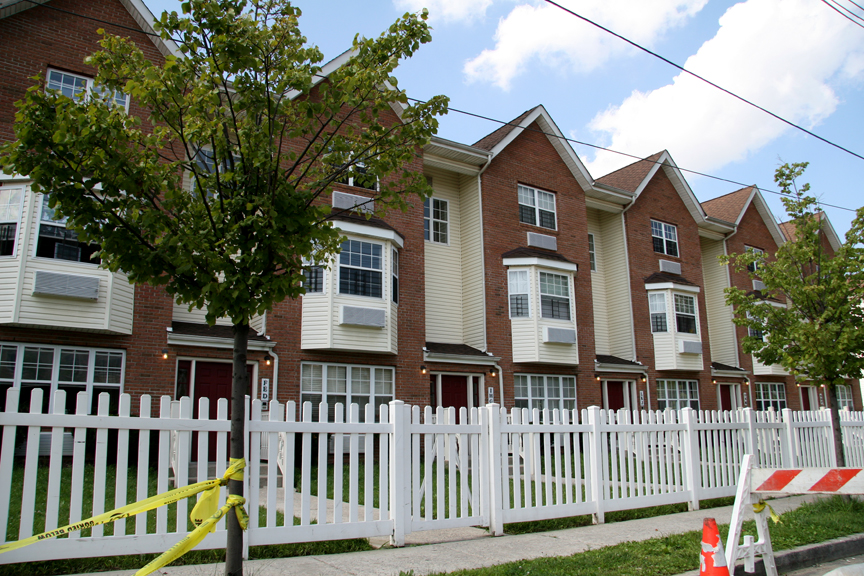
    There has been real estate speculation here – see the new row houses here on Ruby Street. However, projects here have stalled. The mountain of rubble in my photo series is an 8-acre plot which was slated to become Cobblestone Estates, a gated community. It is now in limbo – you can read about it here.


  • Secret Tunnel

    Did you ever have a nagging thought revolving around something unresolved? I recall reading in a secrets of New York City book that there was an underground tunnel in Chinatown, now some sort of shopping arcade. However, no one I knew had heard of such a place.

    I do love to find secrets in New York City. This is increasingly hard to do, so this mystery would typically make the prospect of search and discovery all the more exciting. However, in this case, all of the individuals I queried, including a long-time resident of Chinatown for 30 years and a few members of the Chinese community, had no idea as to what I was referring to. I began to seriously question whether such a thing existed.

    Some digging did finally uncover the existence of a tunnel on Doyers Street in Chinatown, but no address or precise location was given. I made an excursion to Doyers Street, a one-block alley between Pell Street and Chatham Square. This street, which makes a sharp 90° turn, was once known as the Bloody Angle, owing to the numerous shootings that took place there at one time. From the New York Times:

    Doyers Street, a crooked, one-block street off Pell Street in Chinatown that was near the Bowery and the notorious Five Points intersection, offered an ideal place for ambushes during the wars between the On Leong and Hip Sing tongs in the late 19th and early 20th century. Tabloids of the day christened the angle in the street, and the police said that more murders occurred on that spot than in any other place in an American city.

    I canvassed the entire street. There are many hair cutting salons on the street – it is sometimes known as “hair alley.” At 5 Doyers Street, mid-block, I found a staircase leading down below ground. It did not have the charm of a secret historic tunnel at all, but it was an underground passageway. I learned that this was known as the Wing Fat shopping arcade – a maze of quite nondesrcipt passageways with fluorescent lighting and acoustic tiled ceilings. A variety of merchants line the arcade: acupuncturists, dentists, a philatelic shop, and the office of Tin Sun metaphysics. The tunnel winds it way underground, leaving Doyers Street to exit in the lobby of the Wing Fat Mansion building at Chatham Square.

    This tunnel was apparently the main artery in a network of tunnels used by members of the Tong gangs as escape routes. It is interesting that there is no signage or advertising of this historic tunnel. In a way, it remains undiscovered…


  • Dreams

    Posted on by Brian Dubé

    There can be comfort in unrealized and unattainable dreams. A basket of these can provide a hidden agenda, and false hopes of realization can give one’s life purpose. These aspirations can be wielded in conversation: “One day I hope to…” And, perhaps, one is better without the realization, because not only is the dream lost, but also, with the accumulated expectations over time, the reality could be a disappointment.

    And so it has been for me with my love affair with Washington Square Arch, a monument which I have looked at nearly every day of my adult life and dreamed to enter and ascend to its roof. As a boy, I had the same passion for reaching the summit of the Washington Monument, which was an easily attainable goal: pay the admission fee and take the elevator.

    The Washington Square Arch stairway is rarely open to the public. Until recently. Late one night, I was informed by a park habitué that the small door at the foot of the west end of the base of the arch was open – or, in fairness, I should say ajar. My first reaction was indignation – how dare I not be told about this opportunity! After waiting for decades, wasn’t I the most worthy?
    It soon occurred to me, however, that rather than spend time being self-righteous, perhaps I should consider taking advantage of this rare opportunity and actually entering the Arch. After all, goals are attained by those who act, not whiners.

    There was no sign of prohibition at the door. Many an opportunity is missed by overthinking, overplanning, and excessive worry, so with little fanfare or deliberation, I entered.

    An extremely narrow spiral staircase winds its way to the top. Fortunately, it was left lit, so my journey was easy enough. At the top, there is a large, cavernous chamber. A staircase ascends further to a skylight trap door, leading to the roof of the arch (photo lower left). It appeared to be easily opened, but I decided not to press my luck. I took several photos through the transparent domed roof hatch (photo lower right).

    There is not a tremendous amount of information about this interior Guastavino terra cotta tile staircase and upper chamber. Typically, the story of Marcel Duchamp and his cronies is told – see my story here. I have done nearly ten stories involving the arch (see the list of links below).

    What do you do when a small lifetime dream is realized? Just refine and redefine. After all, what I really wanted to do was to exit that domed hatch and go the roof. I am told that such a thing can be arranged if one speaks to the right people. When I do that, you will be the first to know 🙂

    Related Posts: Flash of Light, Comfort and Joy, Arch Rebels, Constant, Evening Arch, Cello, Nested Embraces, Singing Bowls

    Posted on by Brian Dubé

  • Secret Discovery

    Posted on by Brian Dubé


    On my first trip alone to New York City with a friend, I recall some mutual back patting of how, in traveling without a group, we were able to avoid the touristy and eat in a place which was our own secret discovery. The place? Nathan’s at Times Square. Rather hilarious looking back on it, but being older has not entirely eliminated naivete.

    I “discovered” this unique building standing alone like a haunted mansion on a hill at 3rd Street and 3rd Avenue in Brooklyn. Silly in retrospect – how could anyone miss this anomaly on a major thoroughfare? No one has. I have read no less than two dozen articles on this building which not only stands as a beacon to passersby but also is the center of controversy.

    The surrounding property (but not the building itself) was purchased in 2005 by Whole Foods Market from Richard Kowalski, who still owns the 2 1/2 story Italianate building at 360 Third Avenue/Street near the Gowanus Canal. The Whole Foods project has been stalled for a number of reasons, including discovery that the property, a floodplain, contained toxic material.

    I found a tremendous amount of misinformation about this property, as bits and pieces of facts were cobbled together over the recent years. I believe its history has at last been clarified.

    The building, built by Edwin Clark Litchfield in 1872-3, became important as part of the history of concrete in America. The New York and Long Island Coignet Stone Company Building was landmarked in 2006.
    François Coignet was a pioneer in development of structural and reinforced concrete. In the late 1860s, a group of Americans trained in Coignet’s techniques in France brought his patents to Brooklyn. From the New York City Landmarks Preservation Commission website in 2006:

    The building originally was part of the New York and Long Island Coignet Stone Company, a five-acre factory complex near the Gowanus Canal that manufactured Coignet — or artificial –stone, a type of concrete invented by Francois Coignet in Paris in the 1850s. The factory supplied the arches and clerestory windows in St. Patrick’s Cathedral in Manhattan, the ornamental details for the Cleft Ridge Span in Prospect Park and the building materials for the first stages of construction at the Metropolitan Museum of Art and the American Museum of Natural History.

    Made entirely of concrete, the 25-by-40 foot rectangular structure was built to showcase the durability and versatility of Coignet’s inventive product, also known as “Béton (French for concrete) Coignet.” The company was reorganized and renamed the New York Stone Contracting Company in the mid-1870s, and continued to manufacture Coignet stone until 1882. Shortly after, the building housed the office of the Brooklyn Improvement Company, which was instrumental in Brooklyn’s residential and commercial development during the 19th and 20th centuries.

    I hope you get a chance to make a secret discovery of this property yourself, if you get a chance to pass by 🙂

    Note: The building has often been referred to as the Pippin building – it once housed offices for Pippin, a radiator distribution company.

    Posted on by Brian Dubé

  • A Deeper Look

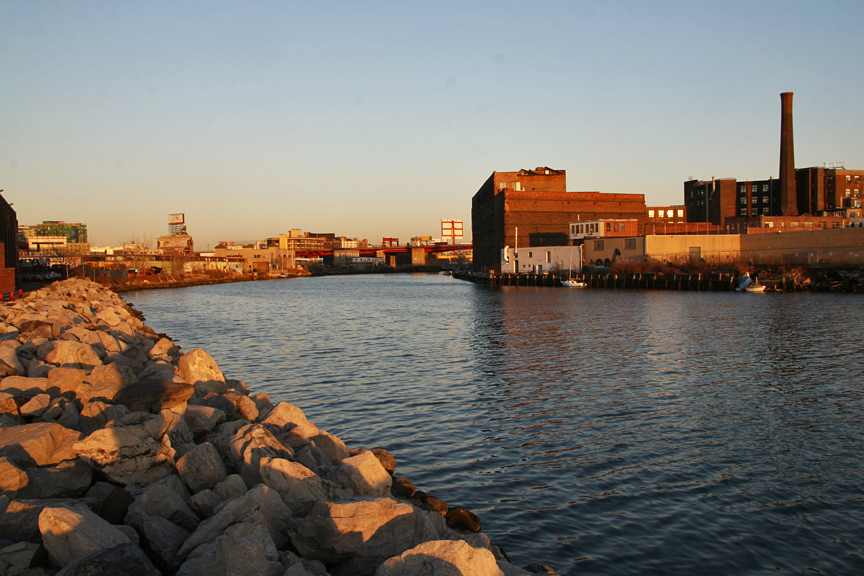
    There is a body of water separating four miles of Brooklyn and Queens called Newtown Creek. Never heard of it? Join the ranks of most New Yorkers who also are unfamiliar with this important waterway.
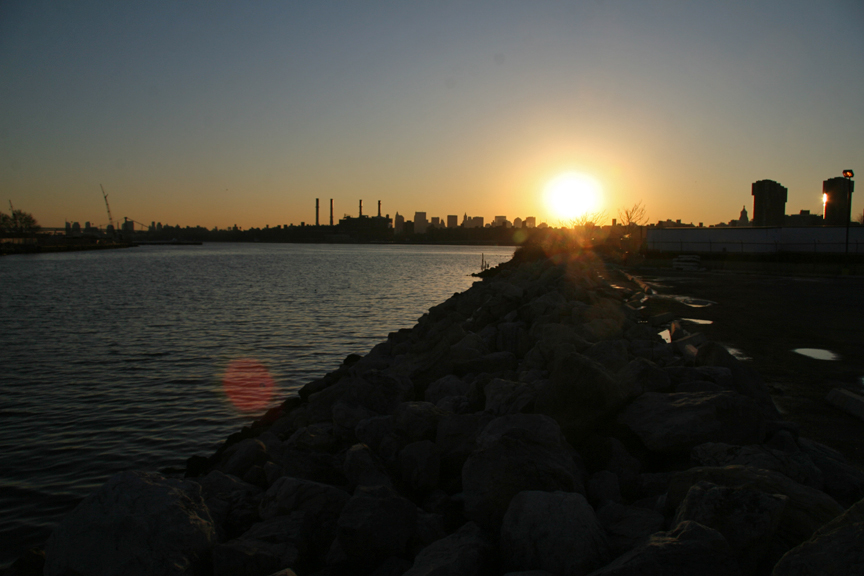
    The Dutch acquired the creek from the local Mespat tribe in 1614. It was named for New Town (Nieuwe Stad), the name of the Dutch and British settlement in what is now Elmhurst, Queens. From the Queens side, I found a rocky outcropping. At the right place, (ignoring the jangle of industry), at the right time in the orange glow of sunset, I found it quite beautiful and I could imagine myself somewhere on the coast of Maine. See second photo here.

    However, with a deeper look, one can understand why there would not be a land rush to the banks of Newtown Creek. This is one of the most polluted bodies of water in North America and is the oldest continuous industrial area in the United States.
    Newtown Creek had the country’s first kerosene refinery (1854) and first modern oil refinery (1867). At the end of the 19th century, Rockefeller had over 100 distilleries on both sides of Newtown Creek. The history of industry here is long (read more about it here at the Newton Creek Alliance website).

    There is no natural freshwater flow into the creek; all the historic tributaries were covered over in its 400-year history of industrialization. Read what the Newtown Creek Alliance has to say about this body of water:

    “Every year Newtown Creek receives 14,000 million gallons of combined sewage overflow, a mixture of rainwater runoff, raw domestic sewage, and industrial wastewater that overwhelms treatment plants every time it rains. There are also discharges from numerous permitted and unpermitted pollution sources. The creek is mostly stagnant, meaning all the pollutants that have entered the creek over the past two centuries have never left.”

    The bridges which pass over the creek are equally unattractive – the Kosciuszko Bridge, the Pulaski Bridge, and the J. J. Byrne Memorial Bridge. Newtown Creek is not readily visible from these bridges, and there is also limited access to the creek, so there it sits, mired in pollutants and obscurity.

    People love waterfront property, so it is remarkable how much of New York City’s water frontage is and has been so undesirable – Coney Island, the Gowanus Canal, Newtown Creek, the Brooklyn waterfront, and the piers along the Hudson River on the west side of Manhattan. But every dog has its day, and it is hard to imagine that one day this waterway will be desirable, lined with footpaths, residential buildings, cafes, etc. When that day will come, in 5 years or 50, I do not know. Climbing out of the sewer can be a slow process…


  • Spring Studio

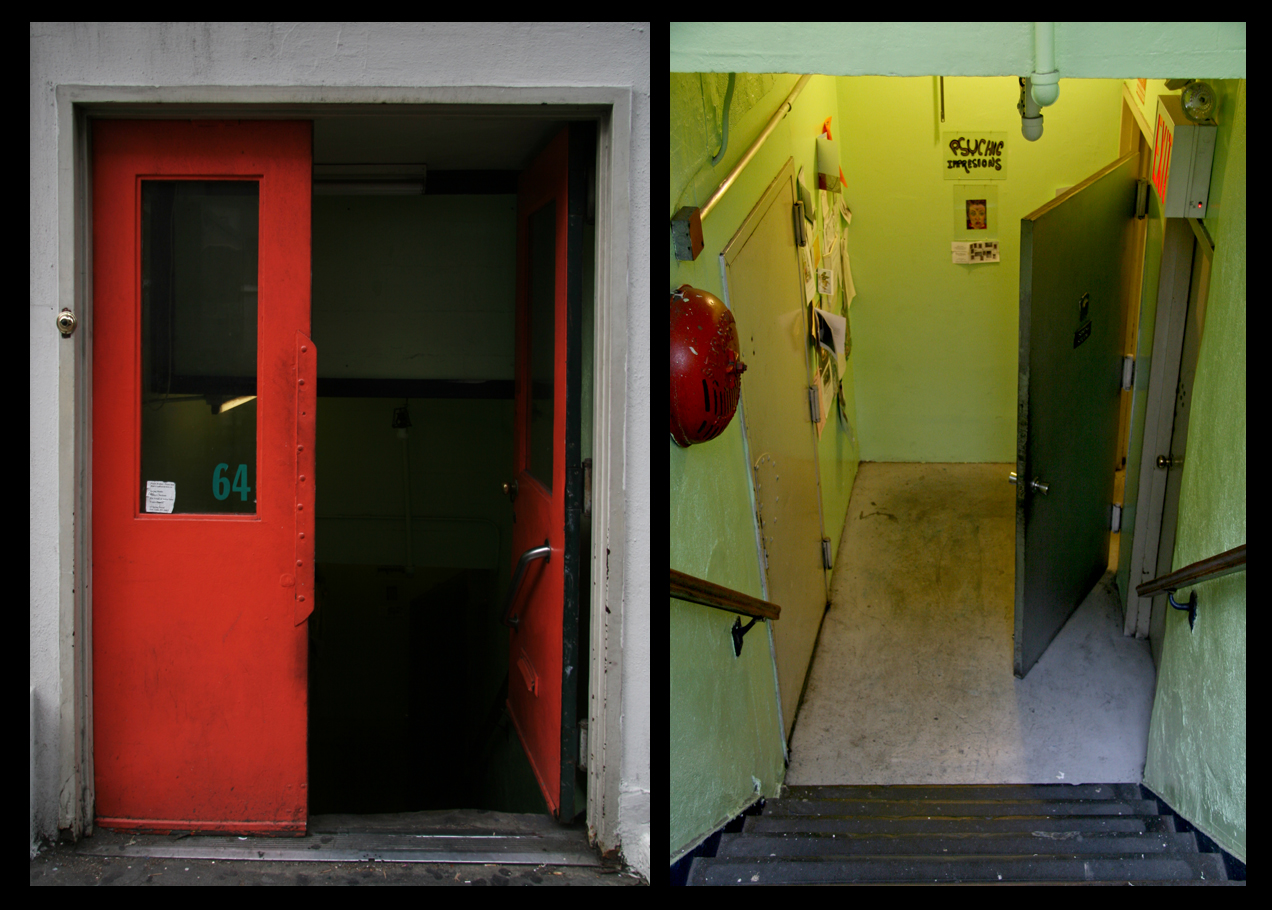
    Thousands walk by this nondescript red doorway everyday with barely a glance. The small bulletin board on the right side is certainly not enough to stop anyone at 64 Spring Street, a central thoroughfare in SoHo (technically 1/2 block east of the historic district), surrounded by places such as Kate’s Paperie, the MOMA (Museum of Modern Art) shop, and Balthazar.

    But then again, Minerva Durham, director of Spring Studio, is not looking for street traffic, and to have a location like this in 2008 is quite a coup. I think it is fair to call SoHo a former art district. There are vestiges – a few galleries and artists remain. Places like Spring Studio are virtually nonexistent here. Essentially, SoHo is an upscale neighborhood and shopping district.

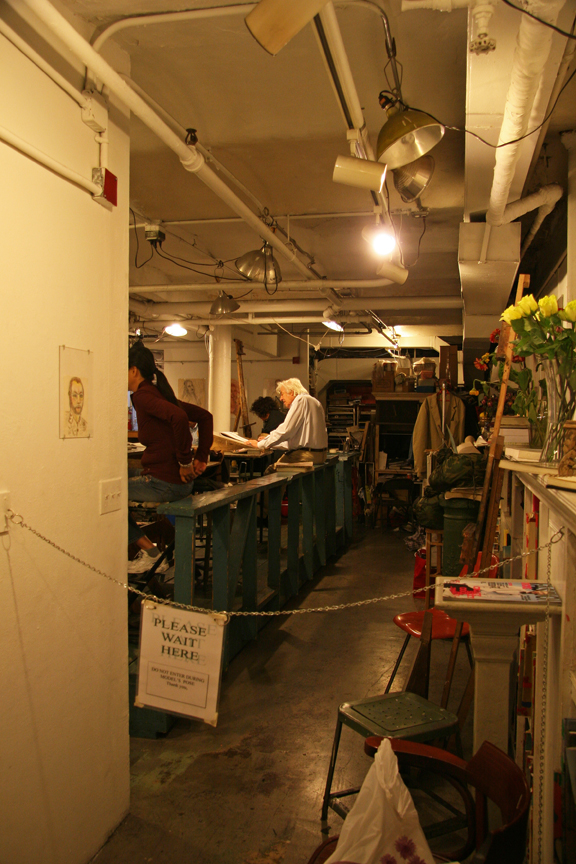
    Spring Studio was started in 1992 by Minerva and offers life drawing and classes 7 days per week. Minerva was cordial and granted me permission to take a photo downstairs, but only when I assured her I would shoot down the corridor to the classroom area from behind a chain and small sign reading “PLEASE WAIT HERE” (see here). Around the corner is a live model, nude or clothed. Students are attentive and focused on their work. Many artists consider this studio to be a great city resource and the best figure drawing studio in New York City. See their website here.

    This is exactly the type of place New Yorkers love to find when looking for those “secret” places. No frills or window dressing – a business driven only by the merit and quality of what it does or offers. A place where the proprietors have reduced the establishment to its essentials and stripped everything else away.

    That is not to say that places of merit must be this way or that places that have created a lavish environment are not places of merit (see Kate’s Paperie). It is partially an issue of economics – how much can an art studio afford to spend on decor (and why should they?). It’s also an issue of style – New Yorkers can be very practical and often champion the practical and the reduction to bare essentials as evidence of authenticity. I wrote of this in my article on Anthora, the famous Greek paper coffee cup, as well as in Very Practical. Having a New York egg cream while standing in a crowded newsstand (Gem’s Spa) just seems more authentic. And painting in a basement after going through an unmarked door and descending an unassuming staircase feels just like the kind of place where an artist should be drawing…


  • Mary Celeste

    Posted on by Brian Dubé

    I have been frequently asked by visitors, “Where do you get gas in the city? I don’t see any gas stations.” Or, “Are there any supermarkets?”
    Blinded by the oversaturation of stimuli and the plethora of all things manmade, the last thing noticed in the city are the mundane, particularly those places which provide basic services. But all the basic services do exist, tucked away here and there, perhaps in atypical and unlikely places. Laundry, dry cleaning, shoe repair, auto repair shops, street level doctors’ offices, hardware, paint supplies, plumbing supplies, lumberyards, gas stations, supermarkets, schools, and playgrounds. The number of many of these has declined substantially as the real estate market has heated up, but they all can still be found.

    One of the most mysterious things to me is the public and private schools. Virtually invisible, yet there are 1,400 schools in the five boroughs.
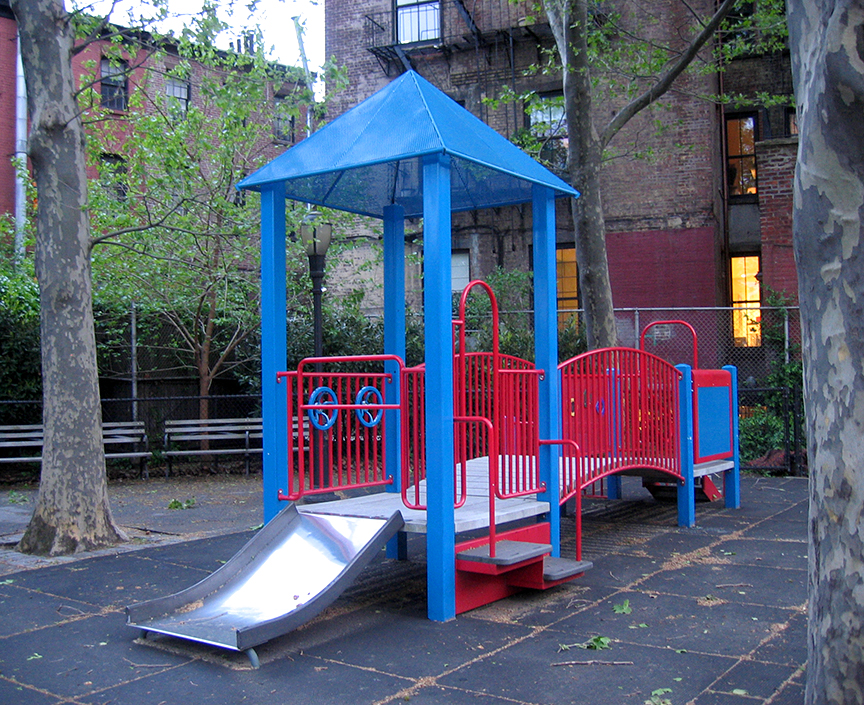
    And children need to play. Here, at one of the busiest intersections in Manhattan, Houston Street and 6th Avenue, we have the Playground of the Americas. But you never really notice it. In fact, I have walked by this playground for years, and this is the first time I have really looked at it.

    Due to my daily work schedule, I rarely see school children in action in the city, so schools and playgrounds are like the ghost ship Mary Celeste to me – cigarettes still burning in the ashtrays and food still cooking in the stove, but the crew and passengers have vanished…

    Note: The story of the Mary Celeste is a fascinating tale.

    Posted on by Brian Dubé

  • Metropolitan Club

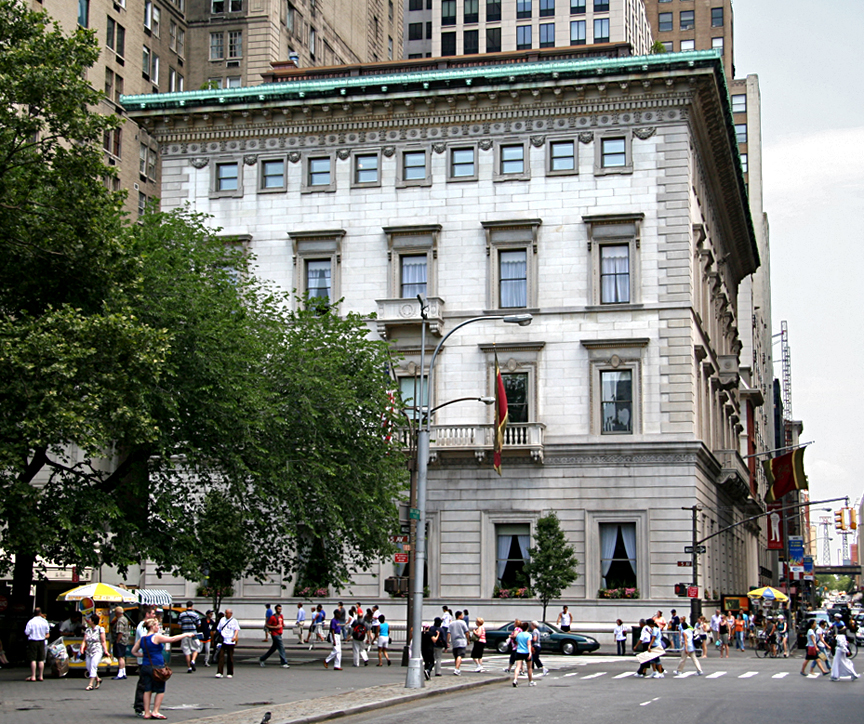
    What perhaps is most remarkable about the Metropolitan Club (like the Harmonie Club across the street) is how unknown it is to most visitors and residents, particularly given its prominent location – one of the finest in all the city –  at 60th Street and Fifth Avenue overlooking Central Park, as well as its prestigious neighbors. It abuts the Pierre Hotel, with the Sherry Netherland to the south, and sits across from Grand Army Plaza and the Plaza Hotel. One block south, we have the Apple store with its huge glass cube, and from there, the familiar, iconic Fifth Avenue flagship retail institutions: Bergdorf, Tiffany, Cartier, etc.

    The private club was organized by J.P. Morgan for his coterie of friends unable to gain admittance to other private clubs. The 1893 building is a McKim, Mead and White extravaganza with the feel of an Italian palazzo. I have not been inside, but I understand that the interior is quite grand, with Corinthian columns, scarlet carpeting, and a two-story marble hall with a double staircase. The entrance, at 1 East 60th Street, is colonnaded with a carriage entrance and courtyard (click here for photo)…

    Related Links: The Sherry, Apple and Sherry, Harmonie Club, Lotos Club


  • Shangri-La

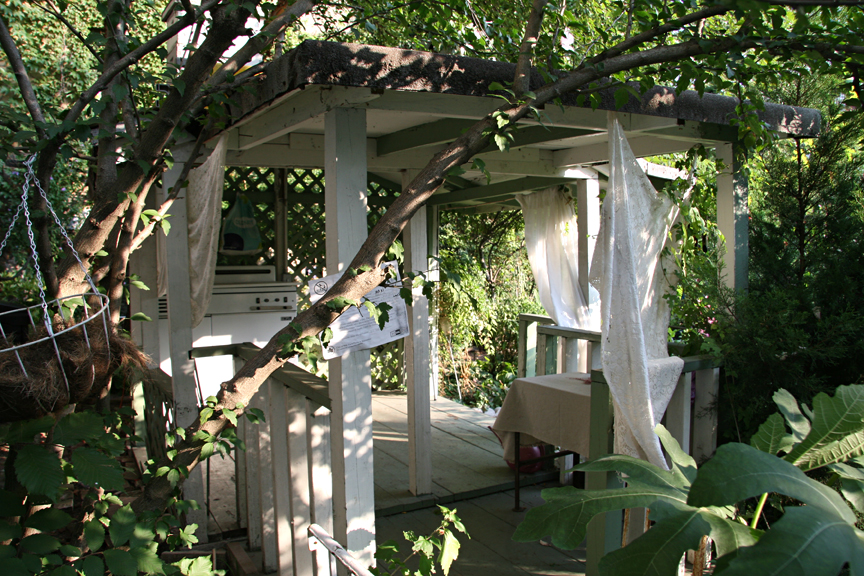
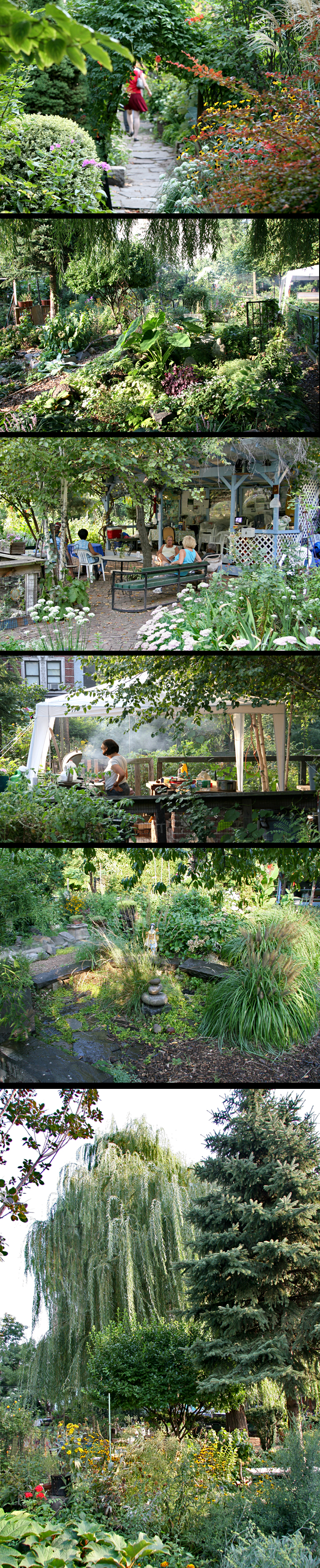
    Isn’t this amazing? This is the most remarkable garden space I have ever seen in NYC. One image does not do it justice, so here are six more photos. All the community gardens I have been to (I have featured most of them here on this site) are wonderful spaces – true oases from the urban world. But nothing beats the 9th Street Community Garden on Avenue C for transporting one to another place (or perhaps I should say places, with its varied environments).

    I recently visited with a friend. Upon entering, we took a pathway through a tunnel of shrubbery which felt like an English country garden. Then we passed through a small cabana (in the photo), which felt like a tiny country cottage. From there and out into the open, much of the garden has a tropical feel, with dense foliage and plantings. I used to travel to the West Indies, and this space truly made me feel like I was there again. There was barbecuing and picnicking going on in a tented area. Nearby, there was a large cabana with a porch, chairs, benches, tables, a kitchen with appliances, and housekeeping accouterments. I spoke with the women relaxing and expressed my awe. They confirmed my feelings that this garden was the best in NYC 🙂


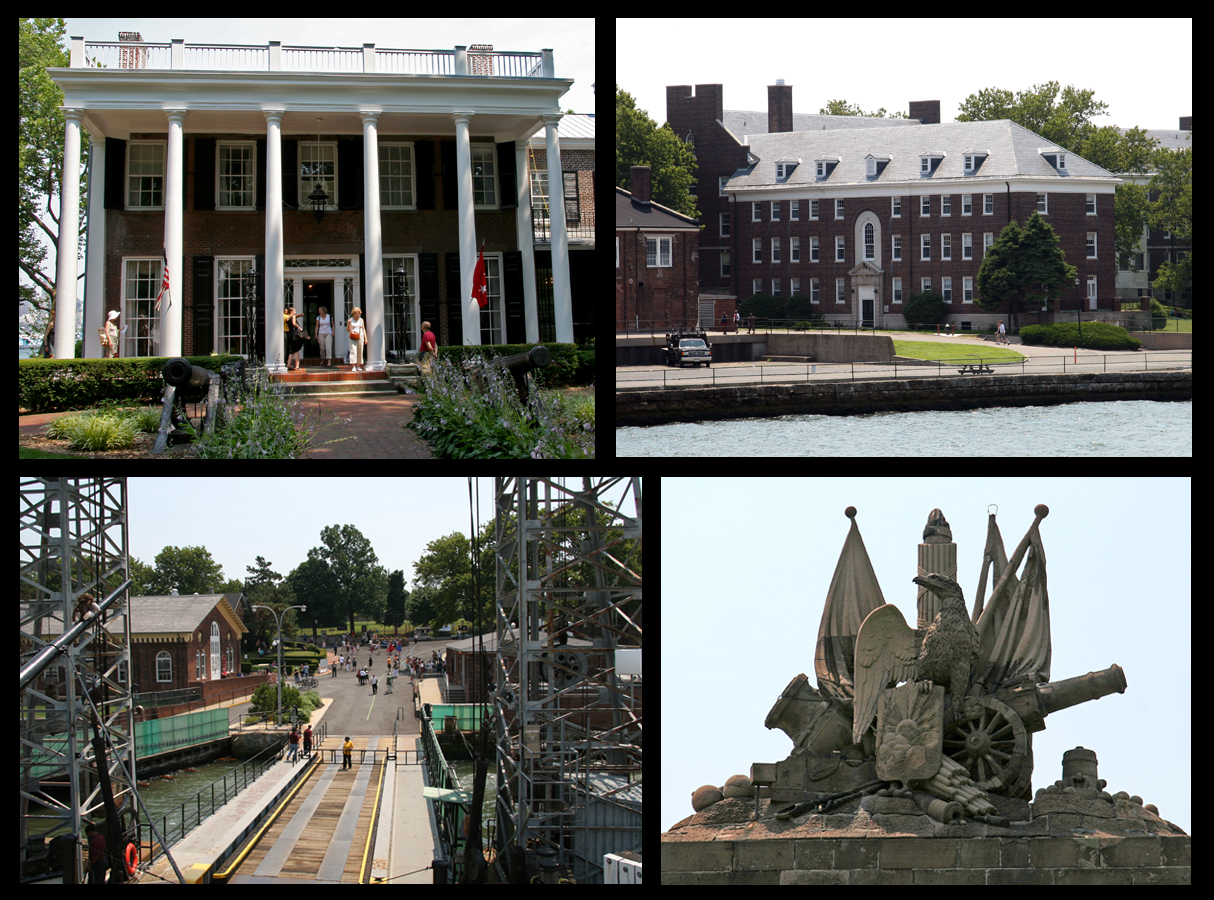
  • Governors Island

    Shrouded in mystery to most New Yorkers, Governor’s Island has only been opened to the public recently. Since 2003, visitors are permitted during the summer season (by a free ferry). This strategically-placed small island of 172 acres (20% the size of Central Park) in the New York Bay is only 1/2 mile from Manhattan and half that from the Brooklyn waterfront. The island has played a large role in the history of New York; Governor’s Island was the landing place of the first settlers (from the Netherlands) of the tri-state region in 1624 and has been recognized as the birthplace of New York State. First named by the Dutch explorer Adriaen Block, it was called Noten Eylant. In 1664, the English captured New Amsterdam, renaming it New York. The island switched hands between the British and the Dutch over the next 10 years until the British regained exclusive control for the “benefit and accommodation of His Majesty’s Governors,” hence the name. From 1783 to 1966, the island served as a U.S. Army post and from 1966 to 1996 as a major U.S. Coast Guard installation.

    There are over 200 buildings, featuring late 18th- and early 19th-century fortifications, pre-Civil War arsenal buildings, and Victorian and Romanesque Revival housing, as well as early 20th-century neo-classical architecture. Five buildings within the Historic District, including Fort Jay and Castle Williams, are individually listed in the National Register of Historic Places. This plot of prime real estate is a huge asset, with its unique location and spectacular vistas. Yet it lay fallow for years. In January 2001, President Clinton designated 22 acres of the Island, including the two great forts, as the Governors Island National Monument. 92 acres, or about half of the island, is historic district. In 2003, the federal government sold the island to NYC for $1. In 2006, a more proactive position was taken regarding development. Competitive proposals have been made for development, with announcements soon…


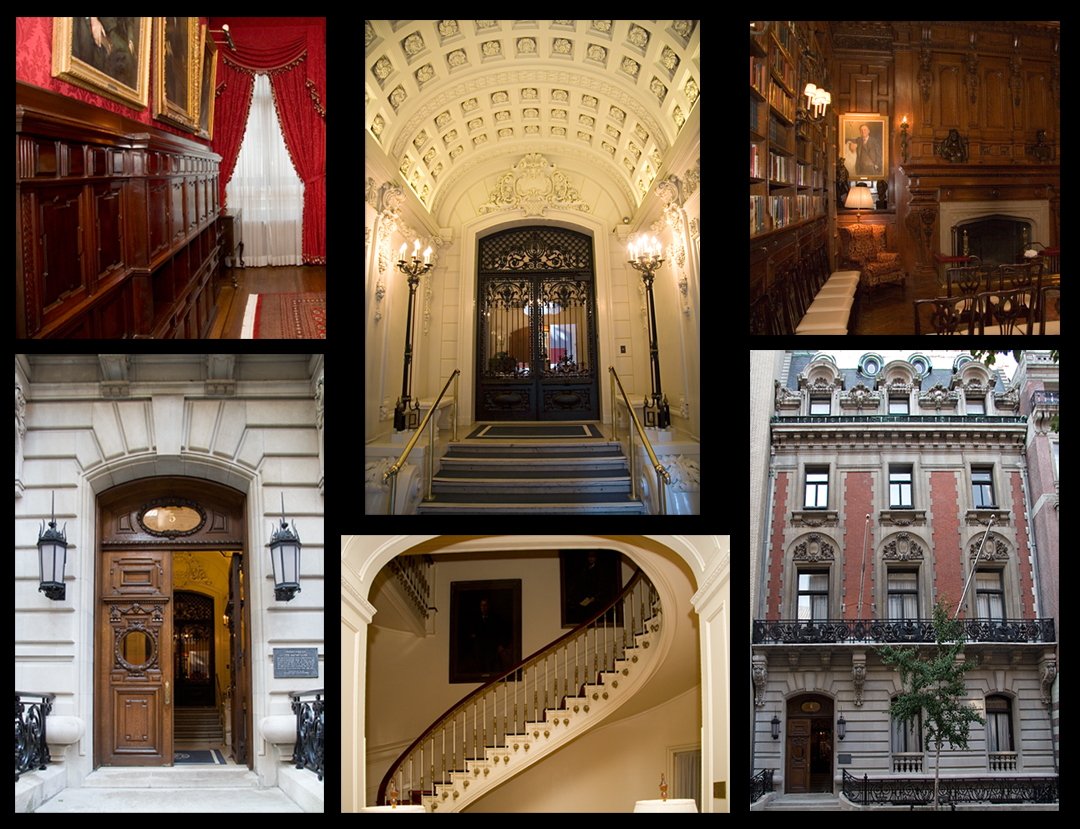
  • Lotos Club

    I was fortunate yesterday to be able to attend a function (the wedding of a friend) at the Lotos Club, one of the oldest literary clubs in the U.S. This private club is located at 5 East 66th Street in a brick and limestone French Renaissance building, designed by Richard Howland Hunt and built in 1900 by the daughter of William H. Vanderbilt.

    The club dates back to 1870 when a group of young New York journalists met in the office of the New York Leader. These men were De Witt Van Buren of the Leader (the first president), Andrew C. Wheeler of the Daily World, George W. Hows of the Evening Express, F. A. Schwab of the Daily Times, W. L. Alden of the Citizen, and J. H. Elliot of the Home Journal. Previous failures at creating a strictly literary organization had demonstrated that this was not viable, so membership to a broader group was decided upon. The stated primary object of the club was “to promote social intercourse among journalists, literary men, artists, and members of the theatrical profession.” The club has a long list of well-known members, such as Mark Twain. It has had a number of locations, from its first home at 2 Irving Place off 14th Street to its current location at 5 East 66th Street.

    NOTE: The selection of the name The Lotos Club was to convey “an idea of rest and harmony.”. The spelling of Lotos comes from Alfred Lord Tennyson’s poem, The Lotos Eaters, two lines of which were selected as the motto of the club:

    In the afternoon they came unto a land
    In which it seemed always afternoon

    The endless afternoon setting provided the ideal atmosphere to indulge in creative and stimulating thought and conversation…


  • dinamic_sidebar 4 none

©2026 New York Daily Photo Entries (RSS) and Comments (RSS)  Raindrops Theme