• CBGB

    Beautiful, isn’t it? This is the interior of CBGB, photographed before it closed. After a rent dispute, much speculation, and attempts to save the rock club, they finally closed their doors on Halloween. A final concert with Patti Smith was given on October 15. My request to take photos was welcomed – the employee at the door said that the owner has always encouraged photography, so I was free to wander throughout the club.

    The club owner, Hilly Kristal, is looking to move the club to Vegas, as I mentioned in a previous post (in which I included a photo of the bathrooms). They are aggressively marketing their brand, online store, and a retail shop, which will be opening in prime East Village at 19-23 St. Marks Place on November 24th. Click here for their website. They have a Myspace site, and on November 15th, there will be an ebay auction of their club fixtures and furniture. I think in an era of imaging and branding, nostalgia can generate more business than the original product…
  • Black Friday

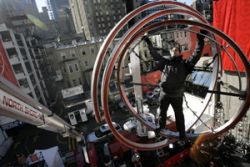
    Today is Black Friday, the day after Thanksgiving, which is considered the official start of the holiday season. It is the biggest shopping day of the year as defined by customer traffic. The origin of the term itself has a number of interesting theories (click here for a Wikipedia article).

    In the United States, the Christmas season has become extremely commercial – it now accounts for 20% of the year’s retail sales. For many merchants, the season is a make-or-break time – yearly profits depend on a good season; a bad season can push a retailer into bankruptcy. Every year I see holiday decoration and marketing start earlier, in many cases quite a bit before Black Friday. I do like the festive atmosphere and the distraction from the day-to-day grind. It’s just sad that a fundamentally religious holiday would become so enormously commercial…

    Above, David Blaine assists Target in a publicity stunt by escaping in time for their Black Friday sale starting at 6AM Friday. He was chained and suspended from a spinning gyroscope over Times Square. Above photo, AP/Seth Wenig – sorry folks, not my photo this time, but this AP photographer was able to capture the scene from above, and got a view of the city, while I was at my folks’ in Connecticut doing the traditional holiday thing…


  • Inflation

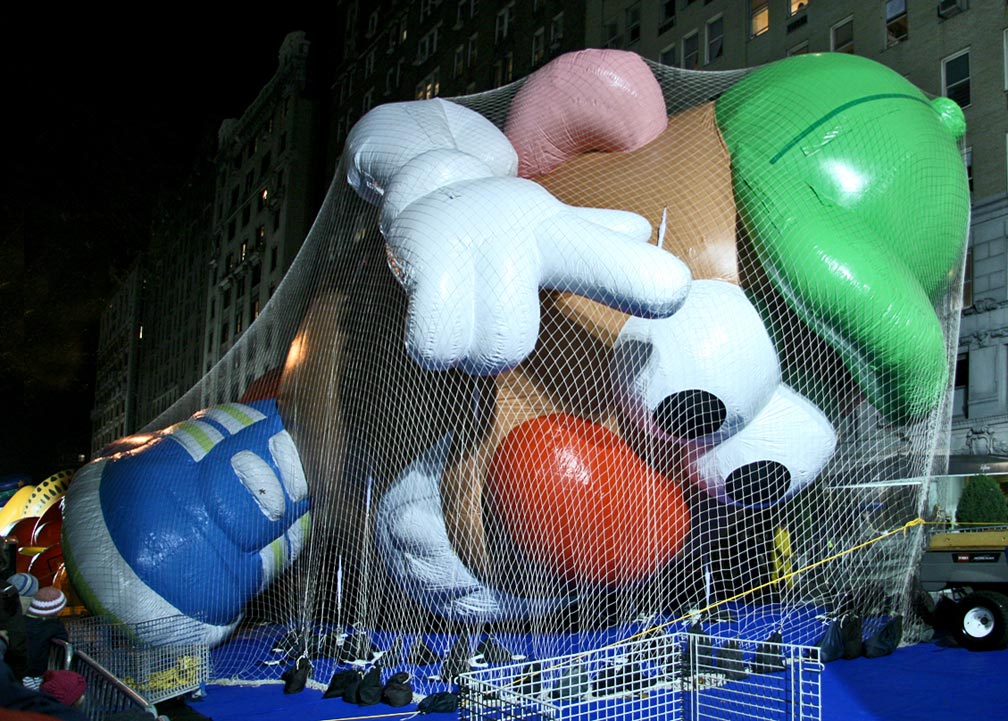
    This year is the 80th Macy’s Thanksgiving Day Parade, a major American media event, with over 2.5 million attending and 44 million watching at home. The parade kicks off the holiday season – at the end of every parade, Santa is welcomed into Herald Square. Click here for a link to the official site with info on the history, float making, parade lineup, etc.

    The inflation process itself (the day before) has become a major event – viewing is open from afternoon through the night. I went last night for the first time and was really surprised at the size of the crowd. Thousands of people, especially families with children, were there. The police had an area of several blocks completely cordoned off and were funneling and directing crowds. Traffic flow was controlled, and I had to go around several city blocks to get to an entrance going in the proper direction.
    The balloons are lined up on both sides of the Museum of Natural History (77th and 81st Streets). The inflation team consists of volunteers from Macy’s as well as students from Stevens Institute of Technology, in Hoboken, New Jersey, where the balloons and floats are designed and built. If you go, be forewarned. For those uninitiated to NYC crowds, it can be a harrowing experience. Or fun, if you can go with the flow…


  • Barbie In Furs

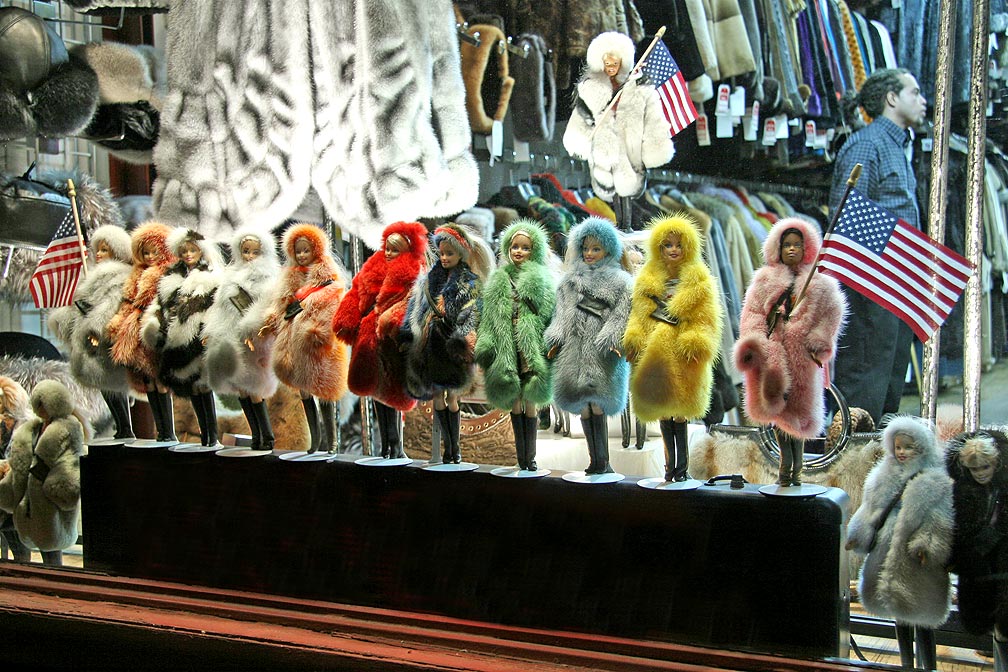
    Those are real Barbie dolls dressed in real furs. This is the unusual window display of Zamir Furs at 90 West Houston Street. Click here for more photos. The fur controversy should be enough to deter one from owning a fur shop, but how about locating it in the heart of SoHo/the Village – one of the most liberal neighborhoods in the country – and a stone’s throw from NYU? Yet their relatively peaceful existence here demonstrates the tolerance of New Yorkers and, perhaps, the view that “fur is back.”

    Described as a “leading fur specialty shop in Soho offering unique stylings from all over the world,” Zamir inventories furs and does custom work. They also have fur hats, headbands, cuffs, earmuffs, pillows, and blankets. Mattel (Barbie’s manufacturer) has tried to put a halt to the trend of selling furs for Barbie: “We would not have Barbie wear real fur — she’s a friend to animals.” And in a 1989 promo piece, The Barbie 30th Anniversary Magazine, a resume for Barbie gave her current occupation as “animal rights volunteer.” Mattel’s attorneys contacted Zamir furs in the late 1990s asking them to stop selling Barbie coats. But given that her furs are made from remnants, perhaps Barbie is just saying that she’s being very eco-conscious 🙂


  • Fanelli Cafe

    Fanelli Cafe is the 2nd oldest eating establishment in NYC, dating back to 1847. The bar is located in prime SoHo at 94 Prince Street at Mercer. The neighborhood has seen transformations and cycles, and although the architecture has been preserved, there are very few older business establishments. Fanelli is one of the few survivors, and a walk by it, with its glowing neon sign, does give a feeling of old New York. And, of course, the bar’s clientele has paralleled the transformations of the neighborhood.

    The name Nicholas Gerdes is etched in the glass transom above the doorway – Gerdes ran the saloon from 1878 to 1902. The place operated as a speakeasy from 1920 to 1933, so calling his place a cafe was a smart move in 1922, at the start of Prohibition, when retired boxer Michael Fanelli began his 60-year tenure as owner.
    Fanelli Cafe has a new website, not fully operational, but there is a nice detailed history (update: no longer online). The atmosphere is dark and woodsy, and there is a beautiful back bar with antique boxing photos from the turn of the century (sorry, I have no interior photos). The food is good, basic American fare – you can find a menu here. Beware, though. The place is no secret and gets very crowded with the bridge and tunnel gang – try to go off hours if you can…


  • Marshall Chess Club

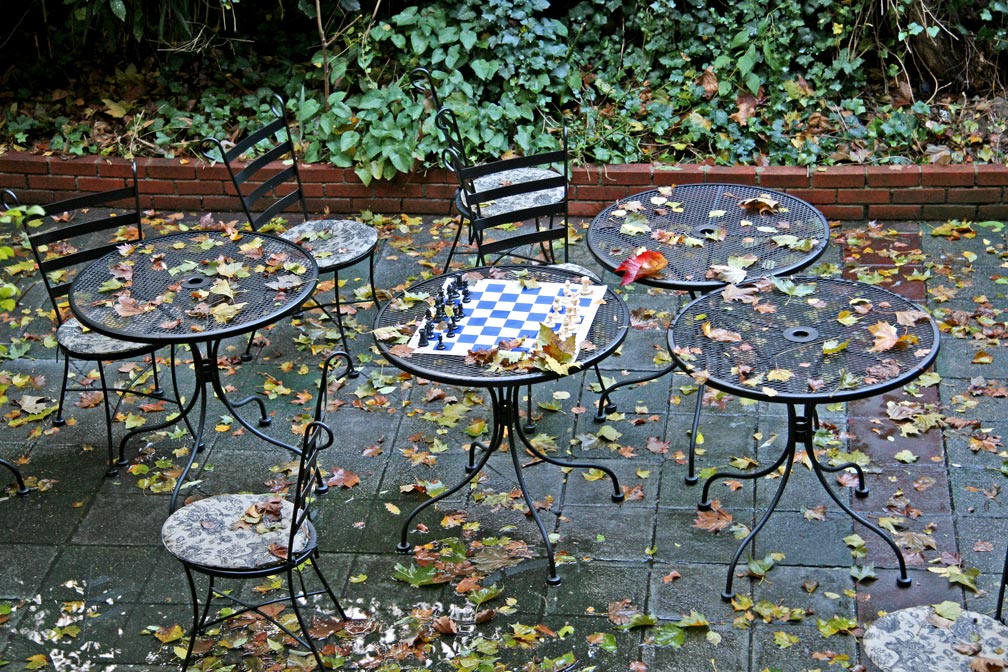
    I’ve always wondered how the Marshall Chess Club has managed to survive the real estate market in NYC. The last private, members-only club in New York, Marshall has its home at 23 W. 10th Street between 5th and 6th Avenues in the Village. This block is one of the nicest in the city – one survey rated it as the most romantic block in Manhattan. Click here for more photos, inside and out.

    The club was incorporated by Frank Marshall in 1922 and has been headquartered at the current location since 1931. Marshall was born in New York in 1877 and was a Grand Master of the game. He held the title of U.S. chess champion for nearly 30 years. The club has seen many great players, including legends such as Bobby Fischer, and is currently home for chess prodigy Hikaru Nakamura, the youngest American player to become a Grand Master. Some see him as Fischer’s heir and our next hope for world champion.
    The club’s secret? They own the building and offset costs with rental income from the apartments above. They occupy the first two floors – the photo is their rear garden…


  • Park Slope Limestones

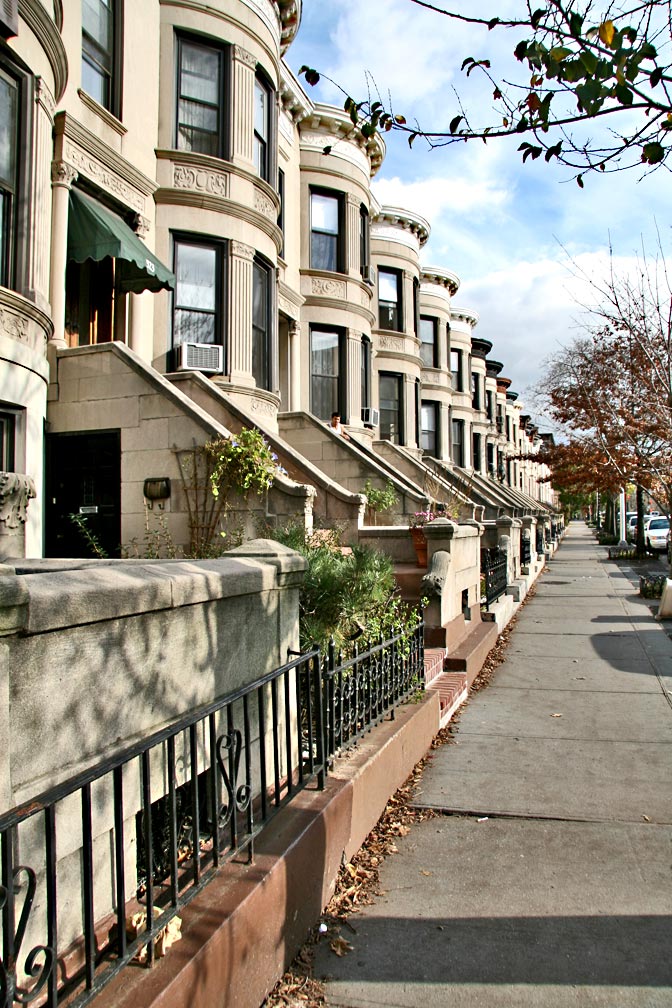
    This is 9th Street between 8th Avenue and Prospect Park in the Park Slope neighborhood of Brooklyn. Park Slope is much too large a topic to do any justice to in one posting, so click here for a Wikipedia article.

    Park Slope, along with Brooklyn Heights, is one of the premier residential neighborhoods in Brooklyn/NYC. The row houses here, as well as in other neighborhoods of New York, are frequently referred to as brownstones. This term is frequently used incorrectly – Park Slope has many buildings with elements of Romanesque and Beaux Arts architecture. This block of 9th Street is a good example, with a magnificent stretch of white limestone row houses from the early 1900s. These long rows of houses on wide tree-lined streets is fairly typical of many of the finer blocks in central Park Slope.

    Although the Slope has seen a period of decline, even with areas of widespread blight and abandonment with vacant buildings and lots, those days are long gone. Park Slope has been thoroughly gentrified – pioneers need not apply…


  • Stairwell

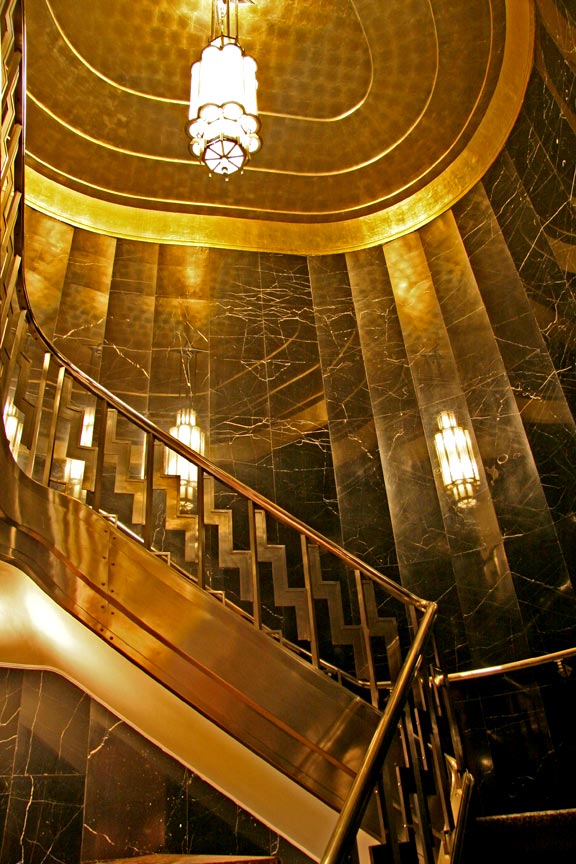
    This is a photo of one of the stairwells in the Chrysler Building. The same red Moroccan marble and chrome steel used in the lobby has been used in the stairwell. This photo was also taken as part of the Open House New York weekend. Click the links for my 3 other posts on the Chrysler Building: What & Where?, Trylon Towers, and Crown Jewel.

    Access to the Chrysler Building has always been somewhat difficult – it has no observatory or other public space. The Chrysler Building is an office building, so access is really only allowed if someone has business with a tenant.
    Since 9/11, things have gotten much more difficult, especially with any known landmarks. There is excess paranoia, and photography is being limited in many instances in NYC. I was told on one occasion that I was not allowed to take photos of the elevators (used to carry tourists up to the the observation deck) in the Empire State Building. So I was happy to get access to the lobby, stairwells, and elevators. And, of course, the exterior is free for everyone to enjoy. But that’s another post…


  • Urban Oasis

    In the heart of one of the busiest areas in Manhattan, surrounded by buildings, traffic, and commerce, lies the exquisite Jefferson Market Garden. This is literally an urban oasis, bounded on 4 sides by 10th Street, Avenue of the Americas (6th Ave.), Greenwich Avenue, and Christopher Street. The .36 acre plot of land abuts the Jefferson Market Library and was the former site of a prison (Women’s House of Detention), demolished in 1974. In 1975, the plot was transformed into a garden, designed by landscape architect Pamela Berdan in the spirit of Frederick Law Olmstead (co-designer of Central and Prospect Parks).

    A community garden, it is sustained by volunteer efforts and the support of residents and visitors. Originally only a viewing garden, it is now open to the public.There is a brick pathway circling the garden, with a variety of plantings around the perimeter and a green expanse with trees in the center. There are annuals, perennials. seasonal flowering plants, an area with ferns, a rose garden, a woodland garden, a greenhouse, and a pond with koi and goldfish. Various events, activities, educational programs for children, and concerts are held in the garden. Weddings are also hosted there. For more on all aspects of the garden, click here to go to their website


  • Eagle Warehouse

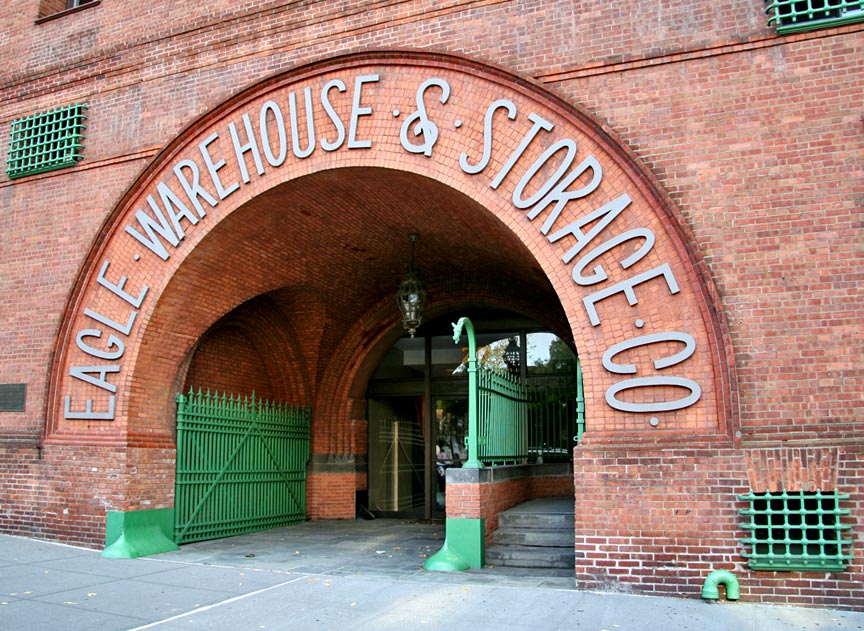
    The Eagle Warehouse stands at 28 Old Fulton Street in the Fulton Ferry Landing area of Brooklyn (between Brooklyn Heights and DUMBO). The photo shows the Romanesque Revival arched entrance.

    This massive medieval structure was built in 1893 (as the Eagle Warehouse and Storage Company) by architect Frank Freeman on the site of the old Brooklyn Eagle building (in its construction, the old three-story Brooklyn Eagle press room building was kept). The Brooklyn Eagle was a daily newspaper published in Brooklyn for 114 years (1841 to 1955). At one point, it was the most popular afternoon paper in the United States. Walt Whitman was its editor for two years; however, he was forced to leave when his antislavery views clashed with the paper’s management.

    The Eagle Warehouse was converted to condominium lofts in 1980. There is a large clock at the top of the building – its glass face is the window of one of the lofts. The Eagle Warehouse is a prominent landmark – check it out if you are in DUMBO…


  • Crown Jewel

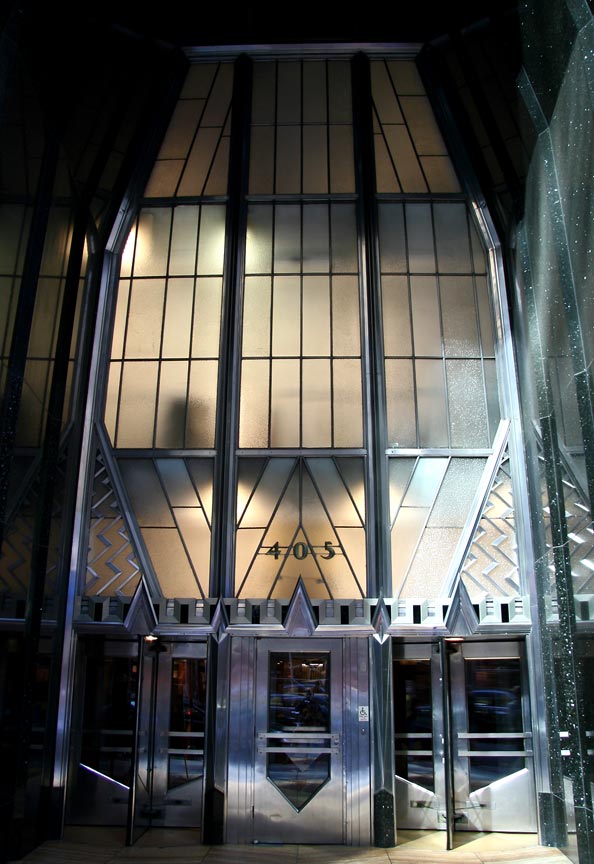
    This is the doorway to the Chrysler Building at 405 Lexington Avenue. The faceted steel, angular cut glass, the shadows, and the highlights all remind me of a cut jewel. The Chrysler Building is an Art Deco masterpiece and has continued to be a favorite of architects, historians, scholars, critics, New Yorkers, and the public.

    The doorway is frequently not shown in photo collections – the magnificent lobby, elevators, stairwells, and exterior with its distinctive decorative elements are generally favored. But the doorway’s design elements are consistent with the building in style and quality, and, being the entrance, are noteworthy.

    Please indulge me – I will feature different aspects of the building over a few different posts. There really is too much to do an adequate job in one post. And after all, isn’t it worthy of more than 15 minutes of fame?


  • Jefferson Market Library

    The Jefferson Market Library on 6th Avenue and 10th Street is one of the city’s most remarkable buildings. It’s an assemblage resembling Bavaria’s Neuschwanstein castle – stained glass windows, steeply sloping roofs, gables, turrets, Venetian Gothic embellishments, and an intricate tower and clock.

    Built 1874-77 (Vaux and Withers, architects), it served as a courthouse with an adjoining prison and market until 1945. A wood fire lookout tower (later replaced with the existing clock tower) was the first building on the site, built in 1833. It was located in the center of the merchants’ sheds of the Jefferson Market. The jail and market were torn down in 1927 and replaced with the high-rise Women’s House of Detention, which remained until 1974.

    Vacant from 1958, local residents saved and restored the structure and persuaded the city to use it as a branch of the New York Public Library, which opened in 1967. Read the entire story here. The exterior of the Library is currently undergoing renovation. I had hoped to photograph the building afterwards. However, with all the political squabble, funding issues, and resultant delays, I chose to shoot the library as best I could (avoiding scaffolding) rather than wait until the project is completed…


  • Squad 18 Firehouse

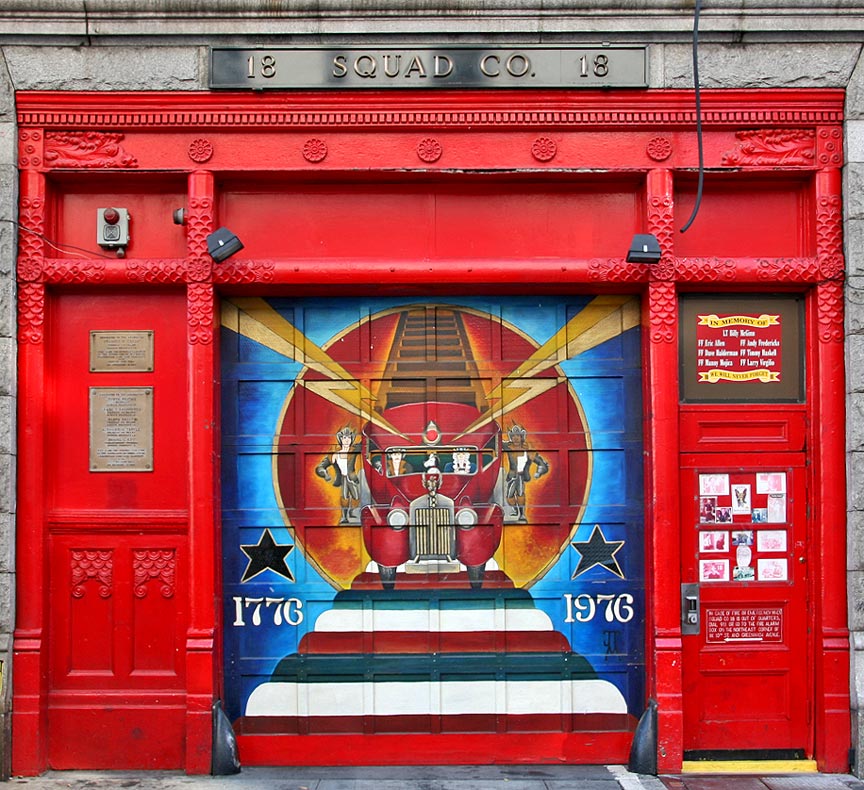
    The firehouse at 132 W. 10th Street is the home of Squad 18 of the New York Fire Department. This historic building, built in 1892, is admired (and photographed) by passersby for its most notable feature: the baydoor, which was painted in 1976 for the American bicentennial. The vibrant, detailed painting depicts responding firemen. NYC has funds set aside specifically for the restoration and preservation of this landmark. Click here for more photos.

    The building was recently renovated. During this period, their operations were temporarily relocated to SoHo. Click here for Squad 18’s website with more info about their operations, equipment, members, and a gallery of photos and calendar of “runs.” The Fire Department has always been held in high esteem for providing an absolutely critical emergency service. And, of course, in NYC, after 9/11, with all the firefighters who gave their lives, their work and sacrifice was highlighted and brought to the attention of everyone worldwide…


  • Street Magic

    Street performing has declined substantially in NYC since the 1970s-80s. At that time, one could find many acts performing simultaneously in the parks and in the evenings on the streets themselves. I have heard a number of explanations for this decline: territorial aggressiveness (and resulting intimidation) by some acts, increased cost of living in the city making it difficult to survive on the income from street work, and perhaps a cultural shift, with fewer people looking for alternative work styles.

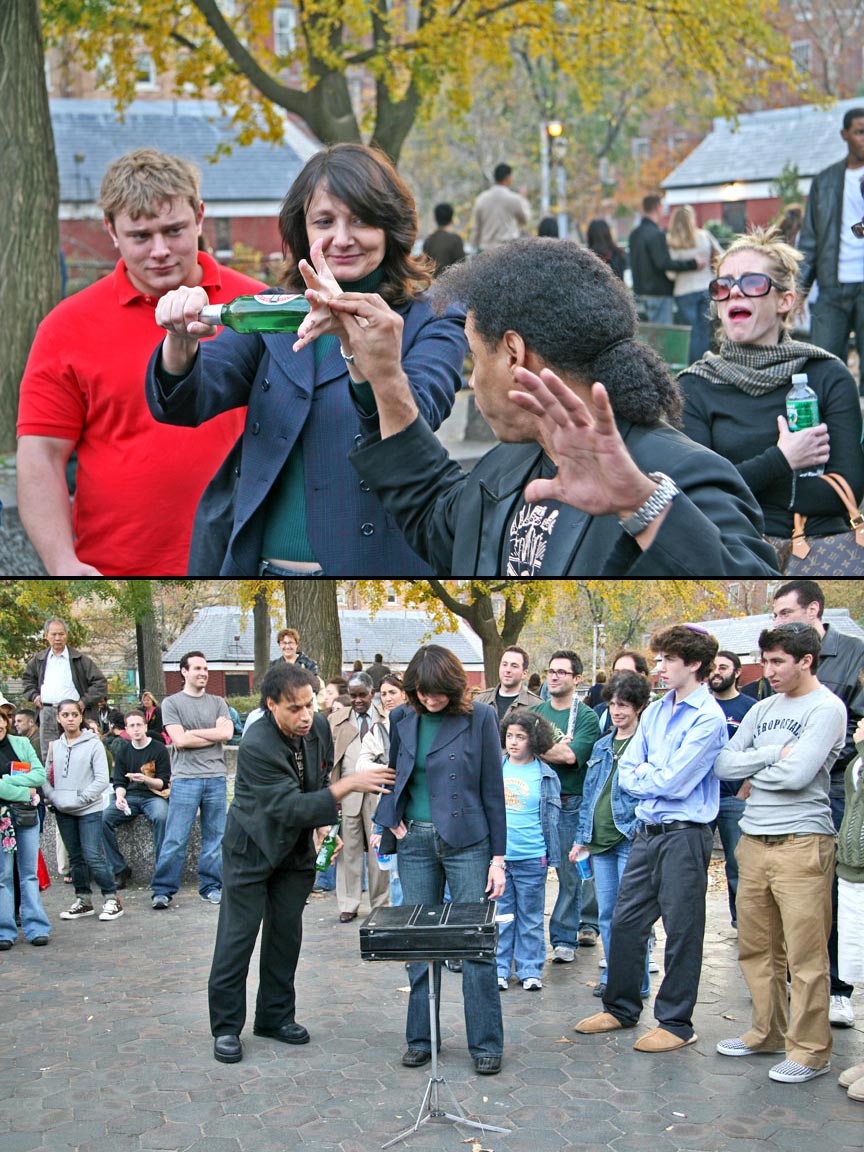
    Ramon is one of the best street performers working in NYC. He is a closeup magician with an excellent persona – funny, strong presence with a take-charge style, appropriately aggressive, but never abrasive. Fundamentally likeable. His act is crisp and professional, never dragging. Click here for his website. He is seen in this photo in Washington Square Park working with an audience member (who happens to be a friend). Click here for more photos.
    We have been having a “heat wave” in the city as of late with temperatures reaching the 60s. So, of course, everyone has been out to take advantage of the the last warm days before winter – performers, residents, and visitors. A street show is one of perks of being in the city, adding to the enjoyment of a beautiful day…


  • Southeast

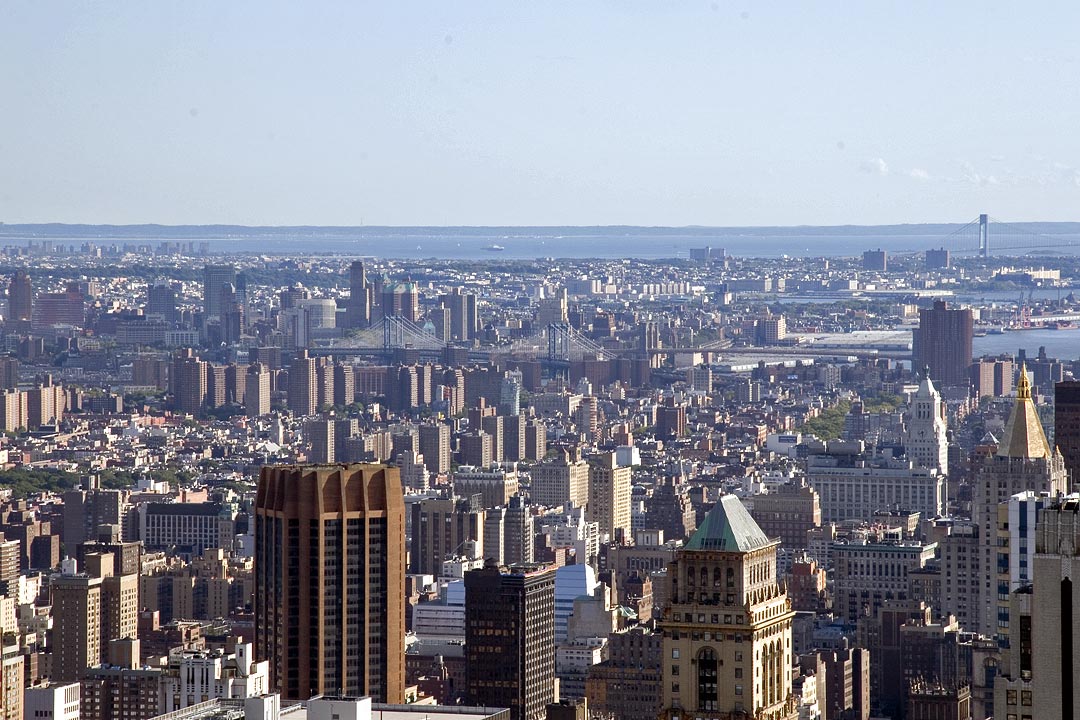
    Here is a vista looking southeast across midtown Manhattan, taken from the Rockefeller Center Observatory (as well as my views in other directions: North, South, East, and Midtown). The most prominent bridge in the center is the Manhattan Bridge, which connects Manhattan (via Canal Street) to Brooklyn (click the photo to get an enlarged view to see all these details). If you look very carefully behind it to the right, you can see part of the Brooklyn Bridge. Behind these bridges is Brooklyn, looking all the way out to Coney Island and Brighton Beach.

    The large patch of green at center left is Prospect Park, a large magnificent park designed by Olmsted & Vaux, who also did Central Park. The bridge at the upper right is the Verrazano-Narrows, which connects Brooklyn (in Bay Ridge) to the eastern end of Staten Island. The large body of water is the Lower New York Bay (with New Jersey behind it), leading out to the Atlantic Ocean…


  • dinamic_sidebar 4 none

©2026 New York Daily Photo Entries (RSS) and Comments (RSS)  Raindrops Theme